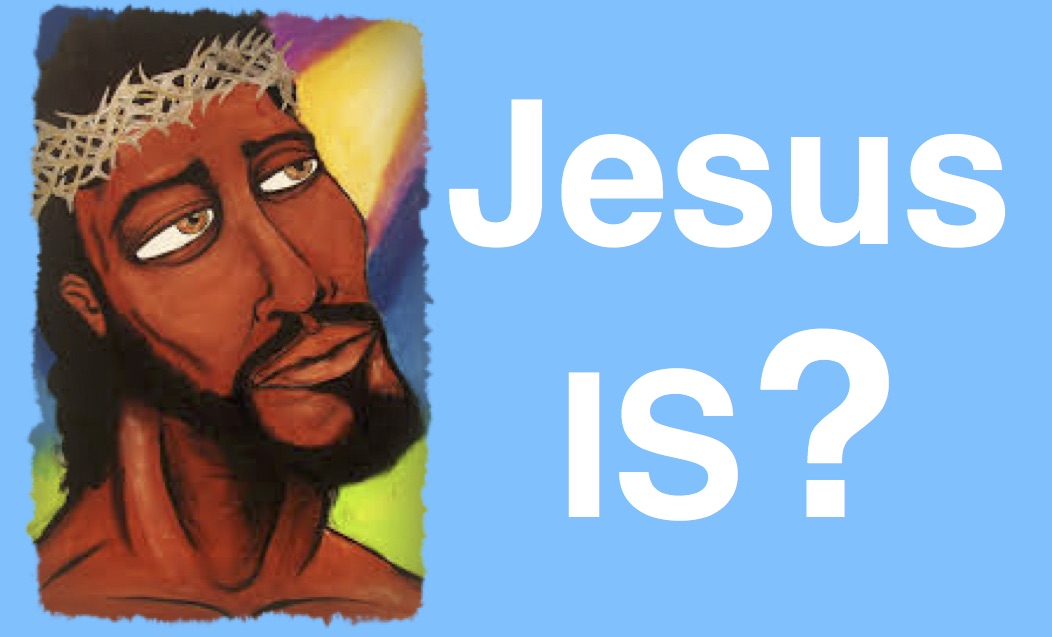
Peering Through New Windows – a bible study for the 3rd Sunday after Epiphany – Mark 1:14-20

In place of a sermon, we engaged in a bible-study of our Gospel text Mark 1:14 not from the perspective of The Church, but from the perspectives of history and justice. I’m indebted to the work of Ched Myers whose book – “Binding the Strong Man: A Political Reading of Mark’s Story of Jesus, provides a perspective that turned my own understanding of this text upside-down! We are all indebted to the excellent teaching of New Testament scholar John Dominic Crossan, whose visits to Holy Cross have empowered us to be more fervent followers of the Way! Below you will find my notes for the bible-study.

You can listen to the audio version of the study here

  • New windows – New perspectives
  • Very familiar Gospel text
  • My first memory of this text – “fishers of men” listening to a children’s choir
  • Solicit memories of the text – interpretations
  • What does it mean to be a follower of Jesus?
  • From the perspective of the church
  • For years we have been looking at this morning’s gospel reading from the perspective of the church
  • “I will make you fishers of men.”
  • Go out there and teach people about Jesus ð convert people and grow the church
  • We have seen the call to follow Jesus as call to become fishers of “men” the church has sent us out to spread the word and to call others into the church
  • Photographs of Cherilyn – on the Sea of Galilee
  • Reminding me of all that we learned from John Dominic Crossan about the Sea of Galilee
  • Fishing industry – first century Galilee
  • Pax Romana – Roman Empire
  • Fishing leases sold by the Empire through tax collectors
  • First century fishers were disenfranchised workers
  • What is the Anonymous Gospel Storyteller that we call Mark trying to tell us?
  • Follow me and I will make you fishers of humankind.”
  • This is one place where I happen to believe that it is a mistake to use inclusive language.
  • I have learned that Jesus used this language for a reason and I believe that in this instance Jesus is targeting “men”
  • “I will make you fishers of men.”
  • In order to understand this passage we must change our perspective
  • We need to look through new windows
  • Peering through the windows of history
  • What does it mean to be a disciple of Jesus?
  • When we look at this text from the lenses provided by the church, we interpret this Gospel as an instruction to go out and catch the church some fish
  • But looking back through the lenses of history we see a different story
  • Jesus never meant to create a church
  • Gift from Pastor Jon Fogleman: Ched Myers – “Binding the Strong Man: A Political Reading of Mark’s Story of Jesus”
  • Gospel of Mark written after 70 – the Empire has destroyed the Temple – the disenfranchised are suffering at the hands of the Empire
  • How are the persecuted to respond
  • According to the Gospel – Jesus invites them to become “fishers of men.”
  • If this means what we have learned from the perspective of the church, we are supposed to covert people – to grow the church
  • But what if it means something else?
  • What if fishing for men means more than we know?
  • Ched Myers suggests that we look back into the Hebrew Scriptures and look at how this phrase has been used by the Jewish prophets
  • When we peer through the lenses of history we discover that key to unlocking the revolutionary code of the Gospel account
  • The prophets Jeremiah (16:6), Amos (4:2) and Ezekiel (29:4) used the metaphor of “hooking a fish” as a euphemism for judgement upon the rich
  • Jesus is inviting the disenfranchised fishers to follow him to learn how to “hook fish “ and as good, observant, Jews, these fishers as well as those early hearers of this story would have understood the phrase to mean:
  • As Ched Myers puts it:“Jesus is inviting common folk to join him in his struggle to overturn the existing order of power and privilege.”
  • Looking through this new window on the text how might we hear this text today in our context?
  • “Jesus appeared in Galilee proclaiming the Good News of God:  “This is the time of fulfillment.  The reign of God is at hand! Change your hearts and minds, and believe this Good News!”
  • “the reign of God is at hand.”
  • The basilea of God ð the “kingdom” the “empire” or as our modern translation puts it “the realm of God”
  • What might this “realm of God” look like?
  • Who are we in this metaphor? – the fishers or the rich?
  • What does the realm of God look like to us?
  • “basilea theou”  Basilea – the Greek feminine noun for “sovereignty” traditionally translated as “kingdom” – dominion, empire
  • “basilea ouranou” – ouranos means sky or heaven but it is also the name of the father god of the Greeks – in Latin Uranus – “Ouranos was one of the primary realities, who, with his wife, Gaia, or Earth, brought forth all creatures. The creative father spirit imagined to exist in the fine ether of the sky, somewhat remote from earthly life yet very much involved in it. The cosmos began with these two realities, earth and sky, mother and father to all beings.” (Moore – Walking on Sand)
  • Realm of God – is at hand – the Empire of Rome cannot stand.
  • Peering through the windows of history we can see: Jesus is about to lead a movement that seeks justice for the disenfranchised.
  • “Follow me to usher in the Realm of God”
  • “follow me to seek justice for the oppressed, the disenfranchised, the persecuted, the poor; follow me and turn the world upside down.”
  • To follow Jesus is to join a revolutionary movement to turn the existing structures upside down.
  • What fishes need to be hooked today?
  • Are we prepared to hook a fish or two? Are we prepared to be hooked?
  • The invitation to follow Jesus is an invitation to be part of a radical quest for justice.
  • Are we prepared to usher in God’s realm of justice and peace.

Continue reading

Can anything good come from this shit-for-brains president?”

Martin Luther King Sunday – John 1:43-51 – Epiphany 2B

Audio only version here


“Can anything good come from Nazareth?” WOW! All over Christendom, where-ever the Revised Common Lectionary is used, preachers were busy preparing their sermons on this particular Gospel reading, when the most powerful man on the planet caused us all to hone in on these words: “Can anything good come from Nazareth?” I can assure you that the sermon that I had planned to preach this morning, was nothing like the sermon, I am compelled to preach. Dr. Martin Luther King is quoted as saying that “Our lives begin to end the day we become silent about things that matter.”

I must confess that I was not exactly articulate when I first heard the hate filled comments of the man whose name sticks in my throat. For the sake of decency, I shall not quote my own reaction, which can be expressed with the letters W T F followed by a question mark. But decency does not come easily to the current president of the United States. Watching this sorry excuse for a man, sign a proclamation declaring Martin Luther King Jr. Day, brought tears to my eyes for all the wrong reasons.   The hatred expressed on Thursday by a president who holds the futures of so many hopeful immigrants in his hands makes it clear that Dr. King’s dream is not yet realized.

Yes, many of us have come a long way. Some of us can still see Dr. King’s vision. Some of us have lived that dream. But we all received a real slap in the face that ought to wake us up to the reality that we have a long way to go before Dr. King’s vision can be embodied by all those who seek justice and freedom from poverty. Slapped in the face by a man who has ridden his own racism to the pinnacle of political power, we must awaken our sensibilities to the positions of privilege that we enjoy as a result of the legacy of tribalism that continues to enslave our world in systems of abuse that perpetuate fear; fear the enemy of compassion, fear the enemy of justice, fear that leads to hatred; hatred that divides us from one another and robs us of our humanity.   

“Can anything good come from Nazareth?” Indeed, how can anything good come from Nazareth? The soon to be disciple of Jesus, asked a question born out of the very tribalism that continues to haunt us. In Jesus’ day, Nazareth was what number 45 would call a “shit-hole”.  Nazareth, where Jesus was from, was located in Galilee, a hick-town in the Roman occupied backwater of Judea. Judea was characterized by its Roman occupiers as a real shit-hole, and Nazareth was a hot-bed of radical terrorists bent on overthrowing the established order. Nothing but trouble came from Nazareth. Nothing and nobody from Nazareth could be trusted.

“Can anything good come from Nazareth?” Nazareth, a shit-hole of a town, in the back of beyond. The last thing anyone in Jerusalem needs is a bunch of Nazareans coming into town to stir up a whole lot of trouble. The juxtaposition of this particular Gospel reading with the comments made in the White House on Thursday is tragic in and of itself. But add the memory of Dr. King to this horrendous outpouring of hatred and perhaps we might, just might, be able to shed some light on the darkness that has descended upon our world. Dr. King insisted that, “Darkness cannot drive out darkness; only light can do that.

Hate cannot drive out hate; only love can do that.” And while it is so very easy to hate the spewer of racist venom who wields more power than anyone else on the planet, Donald J. Trump is also our brother and we, my dear sisters and brothers, we are called to love even this sorry excuse for a human being. And while it is so very tempting to respond to his venom by asking, “Can anything good come from this shit-for-brains president?” two wrongs won’t make it right. As easy as it is to assume that Trump is beneath contempt, my hatred of Trump will not shed the kind of light that drives out hate, only love can do that.

So, how do I learn to love Donald J. Trump? I confess that a big part of me doesn’t want to learn to love this despicable excuse for a man. But bear with me for just a moment as I try to explore some things that Mr. Trump and I share; indeed, some things that I suspect we all share with Mr. Trump.

Let’s begin with the disciple Nathanael’s question:  “Can anything good come from Nazareth?” I suspect that each of us have asked a similar question at some point in our lives. As a child, I lived in Belfast, Northern Ireland. I was trained to believe that people from certain areas were worthy of my suspicion, simply because they inhabited Roman Catholic neighbourhoods. Later when we immigrated to Canada, I was taught to believe that people who came to town from reservations were lesser beings. I was taught to suspect that the people who lived on reservations, were lazy, no-good, drunks, who spent their lives freeloading off the government, and that nothing of much worth ever came off a reservation. As I grew to adulthood, I was taught to be suspicious of everyone who wanted to come to this country who was not British. My parents didn’t teach me this; this I learned in the playgrounds of the various schools I attended in both Ontario and British Columbia, where I learned to label fellow students as, “pakies and rag-heads” because they came from countries that our brother Mr. Trump would call “shit-holes”.

Take a moment. Look into your own lives. Do you remember the way people used to talk about our First Nations sisters and brothers? Do you remember the way people used to talk about immigrants? Most of us, I hope had enough compassion not to say these hate-filled things but if we are honest with ourselves, I suspect that the fear behind these hate-filled words, infected us to the extent that we became at the very least suspicious of people whose origins we did not share. Continue reading

Incarnation Changes Everything – a sermon for the first Sunday after Christmas – Luke 2:8-20

God In US pastorDawnI have tried to locate the source of the parable told in this sermon about the encounter between the little boy and the old woman. But despite the many authors who claim it as their own, I suspect that its origins go back farther than I have been able to trace. The Readings for this first Sunday after Christmas offer us the parable of the Presentation of in the Temple: Psalm 42:1-3, Galatians 4:4-7, Luke 2:8-20

You can listen to the sermon here

The nativity stories about the birth of Jesus of Nazareth are parables carefully crafted by the Gospel storytellers to make us think. This morning we have another parable that is also carefully crafted to make us think. The question 21st century readers of this parable may well ask is, “What is it that the gospel storytellers want us to think about this parable often referred to as the “Presentation of Jesus”?

One ancient way of discovering meaning in a parable is to tell the parable alongside another story and allow the second story to interpret the first. So, let me tell you a story about a little boy who wanted to meet God. The little boy knew it was a very long trip to where God Gives, so he packed his suitcase with some tubes of Smarties and some cans of Coke and he set off on his quest to meet God. When the little boy had gone half a mile or so, he met an old woman. She was sitting in the park just staring at some pigeons. The boy sat down next to the old woman and he opened up his suitcase. The little boy was about to take a drink from one of his cans of Coke when he noticed that the old lady looked hungry. So, he offered her some of his smarties. The old woman gratefully accepted the smarties and smiled at the little boy. Her smile lit up her whole face. I was so lovely, the boy wanted to see her smile again, so he offered her a drink of Coke. Once again, the old woman smiled at him and the little boy was delighted! They sat there all afternoon eating and smiling, but they never said a world. As it grew dark, the boy realized how tired he was and he bot up to leave, but before he’d gone more than just a few steps, he turned around, and ran back to the old woman and gave her a big hug. The old woman gave him her biggest smile ever. When the little boy opened the door to his own house a sort time later, his mother was surprised by the look of pure joy on his face. She asked him, “What did you do today that made you so happy?”          The little boy declared, “I had lunch with God.” And before his mother could respond, he added, “You know what? She’s got the most beautiful smile I’ve ever seen!”

Meanwhile, the old woman, also radiant with joy, returned to her home. Her son was stunned by the look of peace on his mother’s face and he asked, “Mother, what did you do today that made you so happy?” The old woman replied, “I ate Smarties in the park with God.” And before her son could respond, she added, “You know, God’s much younger than I expected.”

Our expectations have been groomed to point us up, up and away, out there, far beyond the everyday clatter of our lives. Sometimes, we expect that just for a moment the sacred will pierce our reality. At other times, when we are in need, we summon up the sacred in the guise of a god all dressed up in majesty, strength, wisdom, authority, and immense power, yet gentle, loving, and attentive to our every need. Continue reading

Sermons for Christmas Eve/Day

homeless-nativity

Click on these links for some of the sermons I have preached on Christmas Eve

Preaching Christmas Eve in the Wake of New Testament Scholarship

Shattered Angel: an Imperfect Christmas Story

Mary’s Story  (also found in Christmas Stories – just scroll down)

Living Nativity

Keeping Christmas Well

The Nativity: A Parable So Simple a Child Can Understand It

The Power of LOVE Who Lives In Us

Cheap, Small, and Plastic: a Christmas Eve Sermon for Progressive Christians

Tell Us About God. We Have Almost Forgotten

Christ Is Born Anew

Christ is Born In You


Sermons for the Fourth Sunday in Advent

women Matthew1

On the Fourth Sunday of Advent we try to reach beyond the lectionary to the folks who won’t make it to church on Christmas Eve or on Christmas morning by forgoing the prescribed readings in favour of reading the entire Birth Narrative.

Click on these links to find  sermons I have preached on Advent 4

Keeping Christmas Well: a Christmas Resurrection Story

The Greatest Birth Story Ever???

The Nativity: A Parable So Simple a Child Can Understand It!

Mary and Elizabeth: Visitation or Escape 

Fear Not for the Progressive Grinch Who Stole Christmas Does Indeed Have a Heart

“The Force Be With You” or “Live Long and Prosper” 

Like All Myths, the Stories of Jesus’ Birth are True, For Myths Only Become Untrue When they are Presented as Facts

Like All Myths, the Stories of Jesus’ Birth are True, for Myths Only Become Untrue When they are Presented as Facts – a sermon for the Fourth Sunday in Advent

refugee-nativity-erbile

Readings from the first chapter of Luke included the stories of the Angel Gabriel’s Annunciation to Mary, Mary’s Visitation to Elizabeth and Mary’s radical song – The Magnificat.   Listen to the sermon here

Last night my brother Alan and I were chatting online about Christmases past. We reminisced about the Secret Sam Attaché Case he got the year I had to settle for a Chatty Cathy Doll. My Brother’s toy transformed him into a secret agent allowing him to peer around corners with a Secret Sam periscope, and take photographs, while the case was closed. Alan’s toy transformed him into a spy capable of holding his own in the world of counterespionage, while I had to settle for Chatty Cathy Doll that could only say a few words when I pulled the string on the back of her neck. We both agreed that girls’ toys sucked. That is until the following Christmas when I talked my Dad into buying me my very own microscope and my brother and I spent the holidays looking at pond scum. We would head down to the pond and fill jars with the scummiest water we could find and then head home to look at the microscopic creatures that inhabited this strange little world. While we were chatting, my brother told me about a colleague whose son died quite suddenly last year. Suddenly, without warning the nostalgia of Christmas disappeared as we contemplated the horror of losing a child. For so many families this and every year Christmas is forever transformed from the simple joys of nostalgia to the painful experience of longing for simpler, gentler times, when all Christmas had to do was jingle a bell or two to bring out the child in us. Life is a complicated mystery. Life is full of unanswerable questions. Life is filled with all sorts of experiences and emotions. Yet, every year we look to our Christmas traditions, stories and rituals to open us to the possibility of all the joy and peace that life has to offer.

I ended our chat by sharing a treasured memory of good old simpler days, when my brother Alan and I would enjoy our very own Christmas Eve tradition of watching the old black and white version of A Christmas Carol; the one in which Alistair Sim plays Scrooge.  So, last night, I dozed off with Alistair Sim’s Scrooge dancing in my head and singing, “I don’t know anything. I never did know anything. But now I know that I don’t know. All on a Christmas morning.”

No ghosts visited me in the night, but just like Ebenezer Scrooge, I did dream dreams of Christmas’ long ago. You see, Scrooge wasn’t the only movie that my brother and I used to watch. Alan was particularly fond of science-fiction movies. Sometimes, when he would manage to convince me to watch one of these movies with him, I would complain after just a few minutes in, that the premise was just too unbelievable; I mean really nothing like that could ever actually happen. Alan would remind me that you don’t have to believe them; you just have to watch them, go with the story, see where it takes you.

When you really think about it, many of our best-loved stories never actually happened the way we tell them. Take Scrooge for example; does any one of us actually believe that Ebenezer was really visited by three ghosts?  We know that it is a story that never actually happened the way it has been told to us; and yet it has the power to take us somewhere, to move us as we watch the incredible transformation of old Scrooge and we too are moved to keep Christmas well. Continue reading

God Beyond Our Personifications, Images, and Idols: a sermon for the Third Sunday of Advent

Christ Sophia pastorDawnLuke 1:47-55, Meditations with Meister Eckhart, John 1:6-8, 19-28
View the readings Readings: here

O Holy Darkness, Loving Womb, O Come, Christ Sophia, Midwife Divine Now Calls Us and O Child Within The Christmas Scene

Listen to the sermon here

As is our custom, during the season of Advent we journey into the darkness so that we might seek the Light. Together, in that sacred darkness we hear the voice of the one who cries to us from the wilderness. John the Baptist strides across the Advent stage to point us toward the One who is, was, and evermore shall be the Light. Each of the four Gospels highlights the plaintiff cries of this strange, wildman who shouts to us from the wilderness, which inhabits the darkest recesses of our collective consciences.  According to the gospel storytellers Matthew, Mark, Luke and John this harbinger cries out warning everyone to repent, to turn around, to prepare the way for the One who is coming into our midst.  

No one knows who wrote the gospels according to Matthew, Mark, Luke, and John. We can say that Jesus’ disciples did not write them. The names Matthew, Mark, Luke, and John were given to the books long after they were written. Scholars tell us that the gospel known as Mark is the oldest, written sometime after the year 70, Matthew and Luke are dated somewhere between 80 and 90, and the Gospel according to John was written anywhere between 90 and 120. Last week I told you about the horrific context in which these gospels were written. The Romans were waging a full-blooded campaign against the Jewish people. Between the years, 66 and 73, then between 115 and 117, and finally, between 132 and 136 war between Roman and the Jewish people raged in what Rome called the Bellum Judaicum, “the Jewish War.” The scale of destruction was staggering. According to the history books millions of Jews were killed, Judea and Galilee were laid to waste and Jewish communities throughout the Mediterranean were attacked en masse. Some historians have gone so far as to label the Jewish War “the first Holocaust”.  Rome perpetrated violence upon the Jewish people because the Jews refused to submit to Roman ways. The Jewish people refused to worship Roman gods, claiming YAHWEH is the one, true God, and refusing to worship the various caesars and longing for a Messiah the likes of David to save them from their Roman over-lords.

In the midst of this terrible darkness the gospel storytellers crafted their stories of one such Messiah. During this darkness, the carnage would have been omnipresent. Historians tell us that thousands of men hung on crosses and untold numbers of women were raped and forced into slavery, while a multitude of infants whose bodies were torn apart were left to rot so as to terrorize the people. Rome was just being Rome, demanding total submission of a people who refused to submit. This standoff reached a climax when in May of the year 70 the Roman’s responded to a particular Jewish uprising with the destruction of the Temple and the raising to the ground of most of Jerusalem. The Temple was the very heart of Judaism; both the religious center of Jewish worship and the cultural center of the Jewish people. It was an apocalypse the likes of which would haunt the telling of the story of Jesus forever. All four of the gospels which have been handed down to us as canon were written in the midst of this apocalypse and born of the pain of YAHWEH’s people. The Temple dominates the story of Jesus because the Temple had been destroyed by Rome when the gospels were born. Continue reading

Shady Ladies, Forgotten Stories, and Images of God: Casualties of Our Advent Lectionary

women Matthew1

In the preface to her beautiful children’s book, “But God Remembered: Stores of Women from Creation to the Promised Land” Jewish writer Sandy Eisenberg Saso tells this revealing story:

“Before God created man and woman, God wanted to create Memory and Forgetfulness. But the angels protested.
The angel of Song said, ‘Do not create Forgetfulness. People will forget the songs of their ancestors.’
The Angel of Stories said, ‘If you create Forgetfulness, man and woman will forget many good stories.’ The Angel of Names said, ‘Forget songs? Forget stories? They will not even remember each other’s names.’
God listened to the complaints of the angels. And God asked the angels what kinds of things they remembered.
At first, the angels remembered what it was like before the world was formed. Then as the angels talked about the time before time existed, they recalled moments when they did not always agree.
One angel yelled at another, ‘I remember when your fiery sword burned the hem of my robe!’
‘And I remember when you knocked me down and tore a hole in my wing,’ screamed another.
As the angels remembered everything that ever happened, their voices grew louder and louder and louder until the heavens thundered.
God said, ‘FORGET IT!’
And there was Forgetfulness.
All at once the angels forgot why they were angry at each other and their voices became angelic again. And God saw that it was good.
God said, “There are some things people will need to forget.’
The angels objected. ‘People will forget what they should remember.’
God said, ‘I will remember all the important things. I will plant the seeds of remembrance in the soul of My people.’
And so it was that over time people forgot many of the songs, stories and names of their ancestors.
But God remembered.”

As we approach the Third Sunday of Advent, I can’t help wondering why the creators of the Revised Common Lectionary (RCL: the list of prescribed readings for Sunday worship) have failed to remember the stories and names of our foremothers? John the Baptist will strut across the stage again in this Sunday in churches all over the planet. The followers of the RCL will not hear the names of Tamar, Rahab, Ruth, or Bathsheba; no, even Mary is only suggested as an optional replacement for the reading of the Psalm! Unless worship planners are prepared to tinker with the lectionary Elizabeth and Mary will have to cede the stage to John the Baptist. So, all you worship planners and preachers out there, I say to you, “TINKER AWAY! TELL THE STORIES!” Continue reading

PREPARE THE WAY FOR OUR GOD! Become the Prophet Crying FOR the Wilderness! – a sermon preached on the Second Sunday of Advent when John the Baptist Cries

BCsunsetI didn’t know it at the time, but I actually met John the Baptist when I was fifteen years old. She didn’t look much like you’d imagine John the Baptist would look, but she had that same crazy intensity, that same focus on the fact that we’d better change our ways, we’d better repent, and start doing things differently or we’d be in real serious trouble. Lola was my friend Valerie’s mother and she simply couldn’t stop going on and on about the environment and how we were destroy the earth. At the time, I remember thinking she was a bit of a nut-case and on more than one occasion I wished she’d just shut up about it. I was just a kid, and the earth was just something I took for granted.  The earth was just there to provide for our needs. I couldn’t believe how much Lola went on and on about all the stuff we humans were doing to destroy the earth. I just wished she’d leave us along to get on with things, I couldn’t abide her incessant nonsense about how we were going to destroy the planet.  All her feeble little attempts to be kind to the earth, made me seriously question her sanity.

I tolerated Lola not just because she was my friend’s mother, but I didn’t really understand her until one day when the three of us were travelling together. We were coming home from church. I had only been going to church for a few months.  I was trying hard to understand this whole God thing. So, I went to church a lot.  My friend Valerie had persuaded me to start going to church with her and family had become like my second family as they supported me during my first attempts to explore the mysterious world into which I had begun to feel pulled. As we drove home from church, I was feeling a little glum. Try as I might, I couldn’t really understand this church thing; all that singing and praying didn’t really help me to feel closer to God. Mostly I just liked how people at church treated each other.  I liked how they went out of their way to help me feel at home. Whether or not God was there, well I really wasn’t sure. 

Anyway, we were driving along the road.  It was a partly over-cast day on the west coast of British Columbia, just a few clouds.  You could see the mountains off in the distance. We were chatting back and forth when all of a sudden Lola pulled the car over to the far side of the road, switched off the engine and got out.  Valerie followed her mother out of the car, so I figured I had better do the same.  Val and her mother scampered down from the road and onto the beach.  When they reached the water’s edge, they stopped and just looked off into the distance.  Apart from a tanker-ship making its way across the horizon, I couldn’t see much of anything. Lola had the most amazing expression on her face.  She positively glowed with happiness.  Valerie wore a similar expression.  I must have looked somewhat puzzled because Val smiled at me and said,  “Isn’t it the most beautiful thing you have ever seen?”  This only confused me more.  What were they looking at that had made them stop the car, scamper down the bank and stand there at the water’s edge on a cold autumn evening? 

Maybe my parents were right, these religious types are a little bit weird.  Happy, glowing, smiling people make me nervous. There they stood grinning from ear to ear.  What were they on?  And then, I saw it.  For the first time in my life, I saw it.  It had been there before.  But I had never really seen it before. The sky was amazing.  The colours were overwhelming.  It almost didn’t look real.  It looked like someone must have painted it that way.  It was magnificent, a work of art,  the most beautiful thing I have ever seen!

If you’ve never seen a late October, Pacific Coast Sunset before, you’ve missed one of the great wonders of the world. Neither Emily Carr’s paintings nor picture perfect post cards do a western sunset justice. Believe it or not, even though I had been living on the west coast for about four years, at that point I had never before really noticed just how beautiful a sunset could be.  No one in my experience had ever taken the time to stop and look at one. No one had ever pointed one out to me before.  I would never have dreamed of stopping a car and getting out to watch as the sun put on a show while setting. So I stood there. Overwhelmed by it all.  Amazed at just how beautiful it was. Wondering just who or what could be responsible for such a spectacular thing as this.  Before long my thoughts drifted to the Creator. Suddenly this God, that I had been trying so hard to fathom, was there. Right there.  Not just in the magnificence of the sunset, but right there on the beach.  At that moment, I was just as sure of God’s presence as I was of my own. I remember an overpowering feeling  of gratitude, gratitude for God’s presence, gratitude, because for the first time in all my life I was at home.  I knew that I was home. Home, not because of the place; home not because of the beauty of the sunset, but home because of God’s presence.  That longing that I had always felt; that longing that I have always labelled as homesickness, that over-powering longing was gone.  In that glorious moment, the presence of God, filled my longing and I was at home.

I’m sure that each of you could tell of a similar experience. So many of us have been blessed by the presence of God in creation. So many of us have had our longing for God filled by the wonder and majesty of creation. I suspect that our love of creation comes as a direct result of our relatedness to creation. For like creation and everything in creation we share a common Creator. My own love affair with creation kicked into high gear on the beach gazing at the magnificence of the setting sun and it has grown in intensity over the years. This past summer, Carol and I drove out to Vancouver and I have to say, if you want to renew your love for creation, drive across this magnificent country of ours.

You’ll find yourself absolutely besotted with creation as you fall in love all over again. By the time we reached my beloved Rocky Mountains, it was like some star-crossed lover, who simply couldn’t help herself from bubbling over with excitement. Not even the first rainy day of our trip could dampen my excitement as we drove south from Jasper toward the Columbia Ice fields. I couldn’t wait to gaze upon the grandeur of the glacier that I remembered from so many visits over the years. The rain was falling quite heavily as we pulled into the massive parking lot perfectly situated across from the ice-field. As we climbed the steps toward the viewing station, I couldn’t see much because I’d pulled my hood up over my head to protect me from the rain. When I reached the top and looked across the highway, it took my breath away, the mass of ice that was frozen in my memory, was gone.

I’m not sure if the drops of water falling down my cheeks were raindrops or teardrops, as I stood there frozen by a strange mixture of fear and sadness. In the decades that have passed since I first began to visit the ice-fields back in the 1970’s the ice has been receding at a rate of between 10 and 15 centimeters per decade. 120 centimeters may not seem like a great distance, but couple that with a decrease in the thickness of the ice and it is positively shocking to see the amount of ice that has vanished from view.

jokulsarlon-glacier-lakeTake a look at the iceberg that I asked Andrew to hang. This photograph was taken in a place I visited long ago. It’s a place were icebergs are born. I ended up there back in the days when I was in the travel business and ended up on a cheap Air Iceland flight that was delayed for a week in Reykjavík for a week. Back then Iceland’s airline must have had only two airplanes and when one of them suffered mechanical difficulties you literally had to wait around for them to fix it. It’s one of the reasons that flights were so cheap on Air Iceland.  You simply never knew how long your stopover in Iceland might be. I was trapped there for a week and during that time we decided to explore some of the most amazing geological sites that the earth has to offer. We travelled about 400 kilometers outside of Reykavik to the Jokulsarlon Lagoon; the birthplace of glaciers. It was in this strange lagoon, under an eerie twilight that lasted for the entire duration of my stay in Iceland, that I stud on the hull of a small tourist vessel, staring up at a magnificent glacier. I have no words to describe my terror. Continue reading

Gestating in Darkness: a sermon for the Second Sunday in Advent

gestatingThis sermon included quotes from James Carroll’s book “Christ Actually: The Son of God for the Secular Age” Carroll’s book is a splendid exploration prompted by Dietrich Bonhoeffer’s question “Who is Jesus for us today?”

Readings: Isaiah 40:1-11 and Mark 1:1-8. Our sermon hymn was “God Is Within”, Text by George Stuart to the Tune Ar Hyd Y Nos = All Through the Night

Listen to the sermon here

While the world out there is caught up in the hustle and bustle of the Christmas season, we here in the church embrace the season of Advent. Our Advent worship invites us to slow down so that we can take a journey into the darkness. Last week, I talked about the importance of darkness in the birthing process; for the seed needs the darkness of the earth to germinate and grow just as surely as we humans need the darkness of the womb to develop. So, as we prepare ourselves to give birth to the Christ, I invite you into the darkness precisely because in the darkness gestation happens and gestation gives rise to birth.

This Advent, our liturgy’s lectionary, the prescribed readings for worship in most mainline congregations, turns to the Gospel According to Mark. All year long, except for a few Sunday’s a reading is selected from the Gospel according to Mark. The Gospel of Mark was written in the darkness. We don’t know who wrote the Gospel of Mark. Tradition did what tradition often does and this writing was attributed to Mark because it was customary for important writings to be attributed to an important person.  The technical term for this is pseudepigrapha; a fancy way of describing the ancient practice of attaching the name of an important person to a piece of writing to ensure that that piece of writing garners some of the respect the name has acquired over the years. That’s why even though the four gospels were written long after the disciples of Jesus were around, each of these gospels bears the name of an Apostle. The gospels were not written by the disciples of Jesus. Scholars tell us that the Gospel according to Mark was written sometime after the year 70. That’s at least 40 years after the lifetime of Jesus of Nazareth. Continue reading

For Christ’s Sake! It’s Not About God! – a sermon on the Parable of the Talents, Matthew 25: 14-30

RiskThere’s a story that pastors like to tell. I think I first heard it when I was in seminary. It’s the story about a preacher who was leading a children’s sermon. This preacher told the children all about how squirrels gather nuts and hide them away for the winter. He explained to the children how important it was for the squirrels to store up nuts while they were available so that they’d have something to eat when the cold weather arrived. When he was finished, the preacher asked the children if they knew what his lesson about the squirrels was. One small child raised her hand, and she said, “I know, I know, it’s all about God.” The preacher was a little surprised, because he wasn’t talking about God at all, so he asked the little girl why she thought the lesson was about God, and she said, “because you’re the pastor and it’s always about God.”

Unfortunately, many of us have the same reaction when we hear Jesus’ parable of the talents. After all, it’s a story from the Bible, and Jesus told it, so the master handing out the talents must represent God. The only problem is, the master in Jesus’ parable is a real jerk! The kind of jerk, I for one, wouldn’t waste my time trying to worship.

The story says that the man gave the talents, which represent a huge amount of money, to his slaves. If the master in the story is God, then God must be very greedy indeed; expecting massive financial returns, without even bothering to communicate that expectation to the slaves. Fortunately for the first two slaves, they manage to double the master’s investment and the third slave managed to keep the master’s initial investment intact but couldn’t quite manage to earn any interest at all. Now, even given, the precious little I know about the stock market, I’d say the master had nothing at all to complain about. The master entrusted all he had to slaves, and they might have lost a great deal of money on their investments, but they managed to make their master richer than the master had a right to expect.

Let’s do the math. A talent represents about 15 years salary. Most scholars suggest you use a figure of $50,000 per year–times 15, that’s $750,000.00 per talent. So to the first slave the master gave 5 talents, that would be about three million seven hundred and fifty thousand dollars toady. To the second slave, the master gave two talents, that’s about a million and a half dollars today. To the third slave, the master gave, one talent; and that’s about $750,000.00.

According to the story this master had quite the reputation; upon the master’s return the third slave explains why he was so cautious with the master’s money. “Sir, I knew that you were a harsh man, reaping where you did not sow, and gathering where you did not scatter seed; so I was afraid, and I went and hid your talent in the ground.” According to the master’s reputation he is a thief who isn’t above taking what doesn’t belong to him. The third slave was prudent with the master’s money and did what was considered appropriate in the ancient world were banking methods were crude at best, and many people buried treasure for safekeeping; The third slave didn’t loose so much as a penny of the master’s money, and despite the fact that two of the his slaves have just returned to him an additional 7 talents, that’s a whopping great profit of about 5 and a quarter million dollars. Just imagine, that three of us managed to make our boss 5 and a quarter million dollars on an initial investment of 6 million dollars, that’s a return of 75%, well I don’t know where you do your investing but 75% profit is nothing to sneeze about. But instead of rewarding the trio, this master doesn’t deny his own reputation for reaping where he doesn’t sow, and he takes the talent from the fearful salve and gives it to the one who already has ten talents, and then declares that: “to all those who have, more will be given, and they will have an abundance; but from those who have nothing, even what they have will be taken away.” As for the fearful slave who played it safe, the master calls him worthless and orders that he be “thrown into the outer darkness, where there will be weeping and gnashing of teeth.

If this were all about God, then to say that God is harsh would be an understatement indeed. If this were all about God, then why in the world would anybody love God? For who can love such a cruel master? But more importantly, if this cruel master is God, then Jesus’ is describing a god that cannot be compared to the God Jesus boldly calls ABBA. For Jesus’ Abba would never be so greedy as to steal from another’s labour, nor would Jesus’ Abba take from the one who has the least, nor threaten to cast out the least of Jesus’ brothers for the crime of taking care of the gift that was given to him. Such a view of God is inconsistent with all that Jesus’ taught about Bod. So just because Jesus told a story, it doesn’t mean the main character in the story is necessarily God. Continue reading

Islam 101 – session 3

Adult Education at Holy Cross Lutheran Church

Before we begin the Living the Questions series “The Jesus Fatwah” we are familiarizing ourselves with the basics of Islam.  Join us on Sunday mornings at 9:15am. 


“Makarios” – Blessed, Happy, Fortunate, EVOLVED – a sermon for All Saints’ Sunday

All Saints’ Sunday readings:  Contemporary reading:  “A Return to Love: Reflections on the Principles of a Course in Miracles” by Marianne Williamson, Gospel:  MATTHEW 5:1-12 – extensive quote within the sermon from evolutionary scientist Stephen Jay Gould – the hymn sung before the gospel is “I Am the Dream” words: S. Curtis Tufts, Music: Rick Gunn

Listen to the sermon here

Our Gospel reading has often been called the Beatitudes. It is traditional to read the Beatitudes on All Saints’. Some years we read the eight Beatitudes as they have been passed down to us from the anonymous gospel storyteller known as Matthew, who sets Jesus’ sermon on the mount.  But this year is the year of Luke, so we read this anonymous storyteller’s version of the Beauties which appear in Jesus’ sermon on the Plain.  But whether it’s the sermon on the mount or the sermon on the plain what has been passed down to us is a description of the important characteristics of those who are blessed. There are all sorts of ways to interpret the word “makarios” which was translated into Latin as “beatus” the word for “blessed,” “happy, or “fortunate.” Today, I’d like to offer you another way of interpreting the Greek word “makarios”. “makarios” contains the Greek word “karios” Some of you will recognize the word “karios”,

here in Canada the mainline churches work together within the organization that bears the name “karios”. Karios is the organization through which we work together to achieve justice in Canada and in the world.  The name Karios was chosen because it is one of the Greek words for “time”, a special kind of time, the opportune time, or the supreme moment. Karios is used in the scriptures to mean that time when all is well, when people are making the best use of their time, when there is harmony or peace among people, or peace with God. Karios can also be used to describe the time when it is clear that the Divine has somehow visible right here and right now. Karios is sacred time. “Makarios” is related to Karios because a person who achieved “makarios” was said to be a person who had moved beyond the constraints of time and space. Continue reading

All Saints – Giving thanks for the Divine in One-another!

All Saints’ Day is a day for remembering.  The word saint simply means “holy”. In the New Testament, all those who believe and were baptized were referred to as saints. It wasn’t until round about the third century that the church began using the word saint to refer to those who had been martyred for the faith. Over time these martyred saints were held up for veneration and people used to pray to them to intercede on their behalf. I’m not going to go into all of the institutional abuses that led Martin Luther and the later reformers to abolish the veneration of the saints. Except to say, that while the Reformation put an end to the veneration of the saints in the protestant churches, it did not abolish the concept of sainthood.

Within the mainline protestant denominations, we use the term in much the same way as it was used in the New Testament to describe the faithful. We talk about the communion of saints to describe all the faithful who have gone before us who now rest in God, together with all the living who walk in faith. So today as we celebrate the saints, we give thanks for all the faithful those living and those who have gone before us.

Today, I remember and rejoice as I give thanks and praise to God for the witness of St. Joyce of Belfast. St. Joyce who in her own way taught her children to love God and to pray always. And so today, I give thanks and praise to God for the life and witness of St. Joyce of Belfast, my Mom, who was the first to teach me the Lord’s Prayer, and who puts flesh on Christ’s command that we love our neighbours as we love ourselves.

Today I remember and give thanks for the life and witness of St. John of Wales, whose life in the church as a choir-boy was followed by long years of self-exile and whose keen wit and lack of patience with hypocrisy instilled in me a desire for honesty and integrity in the articulation and living of the faith. I give thanks for St. John, my Dad, whose open heart has stretched his discerning mind and enabled many to see the humour in this God-given life we live.

Today, I remember and rejoice as I give thanks and praise to God for the witness of St. Valerie of Ladner. St. Valerie so loved and feared God that she dared to reach out and invite a wayward soul to come and worship God. St. Valerie sang God’s praise, rejoiced in the communion of saints and helped a young friend find a home in God’s holy church. And so toady, I give thanks and praise to God for the life and witness of St. Valerie, my high school friend, who was the first to invite me to come and worship God.

Today, I remember and rejoice as I give thanks and praise to God for the witness of St. Wilton of Lunenburg. St. Wilton loved God all the days of his life and served God with gladness and distinction. St. Wilton went far beyond his call as pastor, he opened up the scriptures to those who eagerly sought the truth of God’s Word with love and dedication and he went on to inspire a diligence to scholarship that nurtured the faith of so many young people. And so today, I give thanks and praise to God for the life and witness of St. Wilton, my first pastor, who taught me to be uncompromising in my study of the scriptures, and steadfast in my love for God. Continue reading

What if we won’t ever really understand Jesus’ life, death, and resurrection until we understand that God is dead? – a Reformation Sermon

Listen to the sermon here

All over the world, Lutheran churches celebrate the earth-shattering events that were set in motion on October 31st 1517, when a Roman Catholic priest named Martin Luther nailed his 95 Theses to the door of the church in Wittenberg. Luther challenged the most powerful institution that his world had ever known. Luther shook the very foundations upon which the reality of his fellow humans was based. The power of the Holy Roman Catholic Church rested upon an interpretation of reality that envisioned a God who sits in judgement upon a throne in the heavens, a God who commanded a quid pro quo relationship with HIS subjects; a God whose determination to tip the scales of justice was so precise that he sent HIS only Son to die as a sacrifice for the sins of humanity, a God who used the sacrifice of that Son to somehow atone for the sins of every man, woman, and child who ever lived; saving them from the wrath of this God who had no other choice but to condemn sinners to eternal torment in the fires of hell, a God who established the church on earth to oversee the administration of the atoning power of Jesus death upon the cross, a church so powerful that they could sell you a piece of paper called an indulgence that would whisk you or your loved one out of the pits of Hell and up, up, up into the willowing, billowing, soft, gentle fluffy whiteness of Heaven, so that you could spend all of eternity basking in the Glory of your Father in heaven’s presence. These indulgences were more valuable than gold and it’s no wonder that the Church was able to sell them like hot-cakes, pardon the pun, and yes, I’m been sarcastic in my telling of this tale. Yes, history is more complicated than I’m telling it right here and right now, because I’m trying to make a point. The selling of indulgences was just the tip of the iceberg when it comes to the abuses the church on earth and in heaven. Continue reading

Weeds Upon the Altar – a sermon in celebration of St. Francis of Assisi

On this the last Sunday of the Season of Creation we celebrate the teachings of St. Francis of Assisi. Our Gospel text was Matthew 6:25-28

Listen to the sermon here

Sisters and Brothers, hear again the words of St. Francis of Assisi:

I think God might be a little prejudiced.

For once God asked me to join God on a walk

through this world,

and we gazed into every heart on this earth,

and I noticed God lingered a bit longer

before any face that was

weeping,

and before any eyes that were

laughing.

And sometimes when we passed

a soul in worship

God too would kneel

down.

I have Come to learn:  God

adores God’s

creation.

In the spirit of St. Francis, I bid you peace. Please take a long deep breath…..Peace. Now if you would focus your attention upon these two beautiful bouquets upon the altar. Yes, I am well aware that these bouquets are little more than a collection of weeds. Yes, I know that many of us were taught by the Church, I’m talking here about the capital “C” Church; we were taught by the Church that flowers don’t belong upon the altar. Flowers upon the altar distract people from the presence of God and the acts of worshipping God, so if we must have flowers in the sanctuary, we were all trained to place them anywhere other than upon the altar; the holy of holies, the place where God works in, with, through, and under the bread and wine to touch us, love us, strengthen us, and empower us. We can’t, reasoned the Church, we can’t have people distracted from the actions of God that center upon the altar. So, the Church banished flowers from the altar. But on this the feast day of St. Francis, I asked Carol to gather up some bouquets of weeds and place upon the altar. I did so, because these bouquets are beautiful!

Take a good look…..In this beautiful season of autumn these particular weeds are everywhere. You cannot go for a walk or a drive in and around town without being confronted by the existence of these spectacular weeds. Take a good look….aren’t they beautiful.In the words of St. Francis,

I have Come to learn: 

God adores God’s

creation.

Now look around you, take a very good look at this spectacular gathering, this splendid bouquet of what some might call weeds but, if you look very closely you will see in one another a breathtakingly beautiful bouquet of awe-inspiring flowers.  Aren’t you lovely? Made from LOVE. Gathered around this makeshift altar of ours God will indeed work in, with, through, and under each one of us to touch us, to love us, to strengthen us and to love us. In, with, through, and under this is the way that Lutheran theology describes the way in which God comes to us in the bread and wine of holy communion. I have gotten into the habit of always reminding you that we live and move and have our being in God and that God lives and breathes in, with, through, and beyond us. I repeat this over and over again, not only to remind all of you but to remind myself that God is not some far off distant being, who lives up there or out there somewhere. God is here, right here, all around us, in us and beyond us just as surely as we are in God. So, on this the final Sunday in the Season of Creation it is so very appropriate for us to turn our attention to St. Francis who reminds us that all of creation is in God.

Francis was born into a wealthy merchant family and spent his young life striving to become a knight by actively participating in the completion between Italian cities to dominate the emerging capitalist system. Francis learned like each one of us must learn that acquiring things, amassing wealth, competing for power, these things cannot ever bring us peace. And so, Francis renounced things, gave up his wealth and powerful position in Italian society, and walked away from the competitive capitalist system.

Francis even went so far as to challenge the Church’s teachings about how to be a Christian. For centuries, the Church taught that the best way, the truest way to be a Christian in the world was to follow the example of the early followers of the Way that we find in the book of the Acts of the Apostles. Continue reading

“Who Do You Say I AM?” – Jesus IS? – part 3of3

This interactive sermon is the third in a series of sermons responding to the question “Who Do You Say I AM?” Part 1 can be found here and Part 2 here

The sermon is divided into two sections and the audio includes the readings as well as the songs. you can listen to the sermon here

“Jesus IS?” Section ONE: Questioning

We cannot un-know what we have learned. In the past one-hundred years biblical scholarship has exploded.  In the halls of academia, in the seminaries of mainline denominations the quest for knowledge about Jesus has born so very much fruit. Now thanks to the explosions of the information age, information that was once reserved to the carefully initiated, is available to everyone. Wander into your local bookstore, or turn on your computer and you will discover more information than any one person could ever digest on the subject of Jesus. And yet, despite more than 2000 years of scholarship, theologizing, speculating, preaching, and teaching, the question, put on the lips of Jesus by the anonymous gospel-storyteller that we call Matthew, remains a daunting question to answer. 

“Who do you say that I AM?”  This is a question designed by the storyteller to evoke a response from the listener. “Who do you say that I AM?” Our individual responses to this question are tinged by all that we have been taught, by our families, by the church, by the culture in which we live, by the communities to which we belong, by the books we have read, the movies we have seen, the documentaries we have watched, the lectures we have listened to. Those of us who have stayed behind in the church, long after the vast majority of the population have left, we have been trying to answer questions about Jesus have learned so much about Jesus.  But rather than help us answer the question, what we think we know about Jesus, has left us tong tied.

“Who do you say that I AM?”  The way in which we answer questions about the identity of Jesus matters in a world where so many of the answers that have already been offered continue to misrepresent the man who lies at the heart of Christianity. These days, what passes for Christianity often stands in direct opposition to the teachings of the man Christians profess to follow. The idol worshipped by millions depicts Jesus as a super-hero God, sent to die as a blood sacrifice for sin.  This idol has co-opted the story of Jesus the man who steadfastly refused to take up violence against his enemies. Worshippers of this idol seek the companionship of a personal saviour, sacrificed violently for their personal sin, while they turn their backs upon Jesus’ the man’s personal quest for peace through justice for all.  Worshippers of this idol follow a saviour who encourages them in their personal quest for happiness in this world and the next.  All too often, this personal quest for happiness, results in the oppression and suffering of others, requiring the followers of this idol to embrace violence.

“Who do you say that I AM?” The way in which we answer this question has implications for the way in which we live in the world. “Who do you say that I AM?”  – a human, a seeker of justice committed to non-violent resistance to oppressive systems, willing to give everything to achieve peace, peace for all.   A teacher offering insights into a way of being in the world that embodies LOVE. Or a super-human, blood-sacrifice, who demands obedience and conviction to a carefully crafted story designed to ensure that your tribe wins the battle to create a new world order, where your tribe wins not only in this life but in the next. “Who do you say that I AM?”

Section Two: Imagining

“Who do you say that I AM?” Before we can say who Jesus is, we must imagine who Jesus was.  David Steindl-Rast reminds us that, “religions start from mysticism. There is no other way to start a religion.” Steindl-Rast  compares this mystical experience “to a volcano that gushes forth…and then…the magma flows down the sides of the mountain and cools off. And when it reaches the bottom, it’s just rocks. You’d never guess that there was fire in it. So after a couple of hundred years, or two thousand years or more, what was once alive is dead rock. Doctrine becomes doctrinaire. Morals become moralistic. Ritual becomes ritualistic. What do we do with it? We have to push through the crust and go to the fire that’s within it.”

The fire that sparked Christianity is Jesus. The red-hot experience of the living breathing Jesus, bubbled up out of out of the mountain that  Judaism had become. Like red hot lava Jesus flowed through the towns and villages of first century Palestine sparking a revolution that has long since cooled. We are the inheritors of the dead rock formations that lie scattered about us.  If we are ever to push through the crust to experience the fire that lies within, we will need to have the courage to shatter the idol of Jesus that Christianity has fashioned out of the rock. That means imagining who Jesus was when the fire ignited so that we can determine who Jesus is, here and now, in this place and in this time.

 “Who do you say that I AM?”  Let’s begin where it always begins in ancient literature, let’s begin with the name. The name given to the experience of whatever it is that lies at the very source of reality. YAHWEH – I AM WHO I AM. The ancient name given by the Hebrew people to their experience of the Divine. I AM – from the verb to be… God – IS

The question put on the lips of Jesus by the anonymous gospel storyteller we call Matthew “Who do you say that I AM?” echo’s the very I AM that this same Jesus depicts in a whole new way.  It is all in the name.  Sadly, we’ve missed the fullness meaning of Jesus’ name. Jesus was known by two names in the ancient world. Can anybody tell me what those names were? ……Yeshua ben Yosef  …. Yeshua bar abba … Joshua  =  God is Gracious or God Saves

      Yeshua ben Yosef = Joshua son of Joseph

      Yeshua bar abba   = Joshua son of abba the name Jesus used for God

      Joshua – salvation a man or a god

      There in lies the question – Jesus divine or human?

      “Who do you say that I AM?”

      Last Sunday I talked about how the Creeds have shaped us. The Apostle’s and the Nicene Creeds were created in the 4th century after the life of Yeshua ben Yosef, or Yeshua bar Abba by the powers of the Roman Empire to ensure that there would be a consistent view of Yeshua throughout the emerging church. That consistent view served the Empire well and went a long way to solidify the idol of Jesus Christ that continues to pervade our culture.  So, let’s set aside the creeds for a moment and respond to the questions of Jesus’ identity in ways that give us a glimmer of the fire that gave birth to a way of being in the world.

“Who do you say that I AM?” conversation

Where two or three are gathered in my name

I AM there in their midst.”


I AM IS in our midst.


I AM WHO AM

IS

in our midst.

The experience of the I AM

burned so brightly in

Yeshua

May that flame burn brightly

in, with, through, beyond us.


Who Do You Say that I AM? part 2 – Matthew 16:13-28

This sermon is the second in a series of three sermons responding to questions about Jesus’ identity. You can explore the part one here

Part Two of this exploration of Jesus’ identity includes three reflections interspersed throughout the liturgy. The audio picks up the liturgy as the congregation is remembering our old friend Jesus by singing an old hymn that evokes our personal histories with the character Jesus. You can listen to the songs as well as the reflections here 

Reflection 1:            Remembering.

Can any of you remember the first hymn you ever learned? (responses)

 “Jesus loves me. Yes, Jesus loves me.”

What about the first prayer you ever learned?

(responses)

“Now I lay me down to sleep.”

“Come, Lord Jesus.”   graces

“The Lord’s Prayer”

“Psalm 23”

For those of you who were raised in the Lutheran Church, think back to your confirmation classes, do you remember learning the Creeds? I never went to church until I was 15.  I was considered too old for confirmation class. So, I received private instruction from my pastor. I remember weeks and weeks spent learning both the Apostle’s and Nicene Creeds. Remembering those creeds still influences the way I respond to the question that the anonymous gospel-storyteller that we call “Matthew” puts on the lips of Jesus:  “Who do you say that I AM.”

I remember, a few years back, when Emily Eastwood was helping us in our struggle to move the wider church to be more inclusive. Emily, insisted that the only way to reach out to those on the other side of the argument was to tell our story. Stories have the power to move us. Stories well-told can move us beyond the boundaries we have set for ourselves. So, Emily encouraged each of us to learn how to tell our own stories. Emily taught us to be able to tell our stories about being gay, or knowing someone who is gay, or about changing our minds about homosexuality.  Emily, insisted that we needed to be able to tell our stories in about 3 minutes. We were encouraged to seek out folks who we suspected might be among those who were working to limit the roles that LGBTQ folks in the church. In just 3 minutes, our personal stories were told. These stories humanized the issues that divided us and indeed divided the church. Putting a face on the pain made the issues that we were debating, more than just theological, they made them real, immediate, and personal. By moving out beyond the boundaries established by doctrine we could touch the pain caused by doctrine.

Remembering all those weeks of learning the Apostles’ and Nicene Creeds, which were designed by their 3rd and 4th century authors to answer, once and for all, all the questions surrounding the identity of the man we call Jesus, I can’t help but see the young woman that I was, reciting week after week, year after year, the doctrinal response to this pivotal question. For years, no for decades, my answer to Jesus’ question: “Who do you say I AM?”  was bound up in my belief that the Creeds had answered the question: “Who do you say I AM?”  All you need to do is remember and believe.

I believe in Jesus Christ, God’s only Son, our Lord,
who was conceived by the Holy Spirit,
born of the Virgin Mary,
suffered under Pontius Pilate,
was crucified, died, and was buried;
he descended to the dead.
On the third day he rose again;
he ascended into heaven,
he is seated at the right hand of the Father,
and he will come to judge the living and the dead.

Or the Nicene Creed:

We believe in one Lord, Jesus Christ,

the only Son of God,

eternally begotten of the Father,

God from God, Light from Light,

true God from true God,

begotten, not made,

of one Being with the Father;

through him all things were made.

For us and for our salvation

he came down from heaven,

was incarnate of the Holy Spirit

and the virgin Mary

and became man.

For our sake he was crucified under Pontius Pilate’

he suffered death and was buried.

On the third day he rose again

in accordance with the scriptures;

he ascended into heaven

and is seated at the right hand of the Father.

He will come again in glory

to judge the living and the dead,

and his kingdom will have no end.

I remember trusting and believing the answer to all my questions was Jesus. I remember trusting and believing that Jesus Christ is the only Son of God who came down from heaven, suffered, died and was buried. I remember believing that Jesus died for my sins. I remember believing that because God was gracious HE sent Jesus to die so that I might live. I remember believing that this grace of God was all I needed to understand who Jesus was and is. I remember believing that Jesus’ death upon the cross was necessary so that I could live forever. I remember believing that I knew exactly who Jesus was. I remember knowing without the shadow of a doubt that Jesus was the Lamb of God who takes away the sin of the world.”

I remember eagerly eating the Body of Christ and drinking the Blood of Christ trusting that: Christ has died, Christ is risen, Christ will come again.

I remember knowing who I knew Jesus was. I also remember my doubts. I remember worrying about the character of a God that I knew, because I am Lutheran after all, I knew God’s grace. But I could not, no matter how hard I tried, reconcile the notion of a loving and gracious God, with a God who could devise a plan to save me, that included the crucifixion of God’s beloved Son. I remember my doubts. Doubts squashed by doctrine.

I remember the very day that my dear pastor, the same pastor who had taught me the Creeds, dear Pastor Ernst invited me to join a Bible Study. Some of you may remember the old, Word and Witness program. Three years of intensive study of the Bible. A study based on the materials that seminaries were teaching prospective pastors. Pastor Ernst said I was too young for the program, but he thought I might just like to give it a try. Once again, I was the only one in the class. I remember well the day I learned the Jesus may not have said all the words that were clearly printed in red in my bible.

I remember the day I learned that the writers of the gospels were not actually Matthew, Mark, Luke, and John; not actually eye-witnesses to the life of Jesus. I remember the questions that began to flow freely from my lips.  I remember the freedom of asking questions that were beyond the carefully set boundaries of the Creeds. I remember the freedom. Continue reading

Augustine of Hippo – August 28

The feast day of Augustine of Hippo is a good time to recall what St. Augustine had to say on the literal meaning of Genesis:
“Usually, even a non-Christian knows something about the earth, the heavens, and the other elements of this world, about the motion and orbit of the stars and even their size and relative positions, about the predictable eclipses of the sun and moon, the cycles of the years and the seasons, about the kinds of animals, shrubs, stones, and so forth, and this knowledge he holds to as being certain from reason and experience. Now, it is a disgraceful and dangerous thing for an infidel to hear a Christian, presumably giving the meaning of Holy Scripture, talking nonsense on these topics; and we should take all means to prevent such an embarrassing situation, in which people show up vast ignorance in a Christian and laugh it to scorn. The shame is not so much that an ignorant individual is derided, but that people outside the household of faith think our sacred writers held such opinions, and, to the great loss of those for whose salvation we toil, the writers of our Scripture are criticized and rejected as unlearned men. If they find a Christian mistaken in a field which they themselves know well and hear him maintaining his foolish opinions about our books, how are they going to believe those books in matters concerning the resurrection of the dead, the hope of eternal life, and the kingdom of heaven, when they think their pages are full of falsehoods and on facts which they themselves have learnt from experience and the light of reason? Reckless and incompetent expounders of Holy Scripture bring untold trouble and sorrow on their wiser brethren when they are caught in one of their mischievous false opinions and are taken to task by those who are not bound by the authority of our sacred books. For then, to defend their utterly foolish and obviously untrue statements, they will try to call upon Holy Scripture for proof and even recite from memory many passages which they think support their position, although they understand neither what they say nor the things about which they make assertion.” (from Augustine’s commentary on Genesis: “The Literal Meaning of Genesis” (translated and annotated by John Hammond Taylor, S.J.; two volumes; Newman Press, New York, 1982; pages 42-43 of Volume 1)

Who Do You Say that I AM? part 1 – Matthew 16:13-20 and Romans 12: 1-8 – a sermon

Listen to the sermon here

“Who do you say that I Am?” For most of my life I have been trying to figure out who I think Jesus was and is. Your very presence here on a beautiful summer morning, suggests to me that many of you have also tried to figure out who Jesus was and is. From time to time, I suspect that most of us have believed that we have worked it out; that we know just who Jesus is. But Jesus, just like every person we have ever known and or ever loved, Jesus keeps changing on us.

The Jesus I knew when I was a child was little more than an imaginary friend. “Jesus loves me this I know!” “Yes! Jesus loves me! Yes! Jesus loves me!” not because the bible tells me so, but rather as my friend and biblical scholar Harold Remus always insists, “because my Mommy told me so!” When I was a kid the knowledge that Jesus loved me, earned Jesus the role of my imaginary friend. Later, when I was a teen-ager looking for more love than my family could give me, I found my way into the Church and discovered, “What a Friend I have in Jesus! All my sins and griefs to bear!” The idealism of my youth turned my imaginary friend Jesus into my radical friend Jesus who understood my passion for justice, and lead me into deep friendships with folks who were determined to practice what Jesus preached, as we proudly sought to be the kind of people that “They’ll know we are Christians by our love, by our love, yes they’ll know we are Christians by our love.”

Sadly though, after 25 years in the church, I found myself as a called and ordained minister of the Church of Christ, with the keys of the kingdom jangling in my pockets, firmly believing that Jesus was and is, the: “Lamb of God who takes away the sin of the world.”  It has taken years for me to get to know Jesus as something other than the sacrificial lamb of God. I stand in a long line of priests and pastors known as the Apostolic Succession. According to the story that comes to us from the anonymous gospel-storyteller that we call Matthew: Jesus handed the keys to the Kingdom of Heaven to Peter, the rock upon which the church was founded, and in doing so Jesus handed over the authority to bind and loose in heaven. For generations, this passage has been interpreted by the Church as the establishment of the priesthood. The Apostle Peter is given the keys to the kingdom of heaven, and becomes the first gate-keeper precisely because possession of these keys give him the power to decide just who will and won’t be forgiven. Generations of priests have been called and ordained, and thereby entrusted with the keys to the kingdom, holders of the power to forgive in Jesus name. When a called and ordained minister of the Church of Christ presides over the rite of public or private confession, we grant forgiveness of sin, in the name of Christ. We have the keys to the kingdom of heaven. WOW… Continue reading