Since I was thirteen years old, I have borne the mark of my enemy. It’s faded quite a bit over the years, but if I look carefully I can still make out the marks left behind by, let’s call her, Betty Cherie’s teeth. Way back in the eighth grade Betty Cherie and I fell afoul of one another. I don’t really remember what it was that started the whole thing. It was one of those grudges that only thirteen-year-old girls can hold onto with any kind of tenacity. All I can remember is that Betty Cherie and I hated each other and the whole school knew it.
One afternoon our rivalry reached the point of war. I still cringe when I remember it. After all I was thirteen and I should have known better. I’d like to say that she started it. But, I honestly don’t remember how we got ourselves to the point were we were to meet each other in the playground to fight it out. Our adolescent duel took place in full view of the student body. We met at high noon, out behind the portables, out of sight from the teachers. It began with two sworn enemies pushing each other around. There was some hair pulling, I think I even got in a punch or two before she bit me. Continue reading →
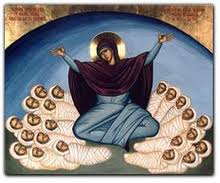
Readings included: Deuteronomy 30:15-20, Thomas Aquinas’ “Otherwise the Darkness’ (pictured above) and from the Sermon on the Mount: Matthew 5:21-37
Listen to the sermon:
I must confess to you all, right here and right now, that I thought I was so clever a few weeks ago when I decided in my ever so finite wisdom that we should spend the season of Epiphany delving into Jesus’ Sermon on the Mount. Sure, Jesus never actually preached the Sermon on the Mount, but it does represent a first century distillation of the teachings of Jesus. Whoever it was who wrote the Gospel according to Matthew put together a compilation of Jesus greatest hits and the Sermon on the Mount represents the teaching that Jesus died for. The Sermon on the Mount is the very heart of who Jesus of Nazareth was and so those of us who seek to follow Jesus in the 21st century ought to at the very least know what’s in these passages of scripture. So, I told you all that we’d take advantage of this unusually long Epiphany season to work our way through Jesus’ Sermon on the Mount. Apart from the Beatitudes which function as the introduction of the sermon, these passages of scripture rarely come up in our three-year lectionary cycle of gospel readings. I thought I was so smart when I came up with this idea. For the most part, I’ve enjoyed the challenge of the past five weeks of preaching on Jesus’ teachings. Well, Monday morning I got my comeuppance. Clearly, I’d forgotten all about today’s reading when I came up with this ingenious plan. Mondays are my day off, but sometimes I sneak into my office just to get the wheels in motion. I did a double take when I read these verses. I didn’t come out of my office for a couple of hours.
What was I thinking? But I told myself not to panic. If I stayed calm, I’d find a way through this mess. So, I picked some lovely hymns, thinking if nothing else Marney could lead us in some beautiful singing and you might forgive me for dragging us all into the hell fire and damnation that I was pretty sure these texts were going to take us to.
Tuesday morning, I thought I’d better check hat other preachers have said about these texts. Well, apart from some pretty conservative preachers, it was pretty slim pickings. Liberal and progressive preachers tend to leave these texts alone; most of the commentaries lead you back to the first reading from Deuteronomy and suggest sermons on the value of choosing life. Most Lutheran resources suggest the preacher fall upon God’s grace as the only solution; and Lord knows a few years ago, I might have taken that option…back when I still believed that we were all fallen sinners in need of God’s unmerited grace to save us from the punishment due to us under the law. But I’ve moved so far away from the doctrines of original sin and atonement theories that this particular option although appealing would sound somewhat hallow coming from me. So, even though I suspected that in the end, I’d fall back on grace, it couldn’t be the kind of grace that gets handed out by some super gracious, super-natural being up there in the sky. So, I began wondering what a progressive does with this text once we’ve located grace not in the hands of a super-natural being, but as a quality that permeates creation. Well it was clear that most of the progressives I was consulting just avoided the problem of these texts altogether. So, I consulted a few of my progressive colleagues around the world to see if they could help. But most of them had seen this one coming and had opted for the second option for the gospel reading for this the sixth Sunday after the Epiphany and they are preaching on a relatively tricky piece from the Gospel according to John and have enough problems of their own. One colleague, who no longer uses the prescribed readings, just laughed at me for not seeing this text coming while there was till time to do something about it. Needless to say, I didn’t get much sleep on Tuesday night. Visions of the fires of Gehenna danced through my head as I argued with Jesus. By Wednesday, I was feeling desperate.Continue reading →
The beatitudes, from the Gospel According to Matthew have become so very familiar to us that they have almost lost their ability to touch us. “Blessed are the poor in spirit; blessed are those who mourn, blessed are the meek, blessed are those who hunger and thirst for righteousness, blessed are the merciful, blessed are the pure in heart, blessed are the peacemakers, blessed are those who are persecuted for righteousness sake, blessed are you when people revile you and persecute you and utter all kinds of evil against you falsely on my account.” Blessed, blessed, blessed, yeah, yeah, yeah, we know, we know, we’ve heard all before. So, tell us something we don’t know.
These twelve verses are from the introduction to what’s known as Jesus’ Sermon on the Mount. A sermon that strikes fear and trembling into the hearts of any preacher worth her salt. I remember hearing that it’s insane to try to preach on Jesus’ sermon, after all it is the greatest sermon ever written. It has been said that preachers shouldn’t even try to preach on this, because it is in and of itself a sermon. We should simply read it and then sit down. Jesus is the preacher; he has said it all. He has said it like no has ever said it before or since. This sermon is the heart of the Christian message. It is what Jesus is all about. Blessed be the name of Jesus. Hallelujah! Pass the bread and wine and we’re ready to face the world as followers of Jesus.Continue reading →
When I was in my early twenties, I grew weary of sharing space and I decided that I wanted an apartment all to myself, despite the fact that I couldn’t really afford an apartment all to myself. But I was determined and that’s how I ended up living in a very rough neighborhood in the east end of Vancouver. My parents weren’t’ very happy about the neighbourhood and worried about the unsavory characters that lived in the run-down building where I found a spacious one bedroom apartment that I could just about afford. The apartment was just a couple of blocks away from the office where I worked, so I was able to walk to work. I ignored all the warnings of my family and friends and I convinced myself that I could handle anything that came my way.
In my heart of hearts I was rather pleased to be living in such a poor rough and tumble neighbourhood. I was young and foolish and the neighbourhood was exciting. Every Sunday I would make the trip back to my home church in the suburbs. Sometimes I would make a second trip out during the week to attend a Bible study. Like so many young people, I was harsh in my criticisms of the elaborate life-styles of my elders. At bible studies, I was always bringing up the plight of the poor and the oppressed and challenging people to do something. Various members of my own family often accused me of being a bleeding heart liberal. I wore their criticism with a certain amount of pride, convinced that I was living out my beliefs.
Although I walked to work each day, I didn’t know any of my neighbours, until one morning I was surprised by a knock on my apartment door. I wondered how anyone would get past the lock on the front door. So, I peered through the peephole and was relieved when I saw a young woman at my door. I unbolted the door and in swept Brenda. Brenda was all smiles and laughter as she explained that she and her roommates were out of coffee and she wondered if I might be able to lend them some coffee. When I explained that I had just used up the last of my coffee making my own morning brew, Brenda told me not to worry, she and her roommates would be happy to join me. When Brenda returned, she introduced her roommates, Janice and Sue and we all sat down together for our morning coffee. Continue reading →
I am indebted to John Shelby Spong for giving me the words to articulate my own objections to the label attached to Jesus by a late first century writer also known as John. Most if not all of this sermon is derived from Jack Spong’s work. For more details I would refer you to Jesus for the Non-Religious and The Fourth Gospel: Tales of a Jewish Mystic. We at Holy Cross were privileged to have Jack speak to us about both of these books. In fact a year before it was published, Holy Cross was the test audience for the material in The Fourth Gospel: Tales of a Jewish Mystic. This sermon ought to have all sorts of footnotes, but I trust you will forgive me for simply confessing that I can no longer tell were Jack leaves off and I begin. Suffice it to say that this sermon is my feeble attempt to put Jack’s work into the form of a sermon.
When I turn the gospel according to John and read about John the Baptist pointing to Jesus, saying: “Here is the Lamb of God who takes away the sin of the world!” I want to scream, “NO!” I have come to believe that our images of God are far too narrow. As far as I’m concerned most of our ideas about God fall far short of every even beginning to describe who God might be. One thing I’m absolutely certain of is if we can imagine ourselves being more loving, more gracious, or more merciful that our theology suggests that God is, then we had better go back to the drawing-board and think again. The ways in which we have traditionally interpreted the life, death and resurrection of Jesus the Christ, paint a picture of a God who is far less loving, gracious or merciful than you or I. Nobody in this room, would demand a blood sacrifice of a lamb, let alone the blood sacrifice of their own child. So, the image of God that is based on this kind of theology must be judged as inadequate to the task of evening beginning to provide us with a glimpse of who our God is.
As we go back to the drawing-board, we ought to take a long hard look at how we arrived at this image in the first place. Thank goodness for the work of our friend Jack Spong who has enabled us to see beyond the literal to the more-than-literal meanings of the various ways in which the followers of Jesus have understood the life and teachings of Jesus. During the years that followed the crucifixion, Jesus’ followers were left wondering what it was all about. How could someone in whom they had seen the fullness of God, be taken from them in such a horrendous way? How could their God allow it? What were they to do? Over the years that followed, Jesus’ followers looked back at the life, death, and resurrection of Christ through the lens of their own religious experiences. Jesus’ followers were primarily Jewish and so it didn’t take long for the familiar Jewish symbol of the Lamb of God to be applied to Jesus as a way of making some sense out of his death. Today most Christians associate the symbol of the Lamb of God with the Jewish celebration of Passover. While the Gospel narratives do indeed locate the time of Jesus death during the celebration of the Passover, and there is indeed a sacrificial lamb involved in the Passover, the actual phrase “the Lamb of God” comes not from the religious rites of Passover, but rather the religious rites of Yom Kippur: The Day of Atonement. Phrases like “the Lamb of God”, “died for our sins” and “washed in the blood of the lamb” can all be found in the religious rites of Yom Kippur. Continue reading →
Each year, I begin my preparations for preaching on the Baptism of Jesus with this video in which Heather Murray Elkins tells her story, “The Secret of Our Baptism.” Elkins opens us to a new way of hearing the Bat Col, the Daughter of a Sound, the Voice of the Divine, the Word, who speaks in this Sunday’s Gospel reading. Matthew 3:13-17
The art of blessing is often neglected. The birth of a New Year calls forth the desire in us to bestow a blessing upon those we love. Several years ago, John O”Donohue, one of my favorite Irish poet’s created a New Year’s blessing for his mother entitled Beannacht-for Josie. It is a blessing of superior quality. And so, on this New Year’s Eve, may you all receive this beannacht with my added blessing for a peace-filled New Year in which the God in whom all of creation is held, might find full expression in your miraculous life!
“A voice was heard in Ramah sobbing and lamenting loudly: it was Rachel weeping for her children; she refused to be consoled, for they were no more.” Matthew 2:18
Matthew 2:13-23 seems like such an offensive text to be reading so soon after Christmas. And yet, this gospel text, known as the “Slaughter of the Innocents” is indeed the prescribed lesson for the first Sunday of Christmas. Amid our celebrations, and in the midst of the gospel writer’s account of the birth of Christ, this horrendous story of the slaughter of innocents begs the question: WHY? It’s Christmas for heaven’s sake! My preaching professor, used to remind us of the first thing we should do when we are preparing a sermon on a particular text is to ask the obvious question. “So What?”
So What? Well for this child of the sixties, only one Christmas song comes to mind when I read of the slaughter of the innocents, it’s the one Christmas song that asks the question: So What? We’ve just celebrated Christmas? So what does this mean? Please listen. “So this is Christmas?”
John Lennon was murdered on December 8, 1980. Shot by a deranged fan. And so is it any wonder, the melancholy why in which he sang this song, haunts our Christmases? So, what possible difference can Christmas make? We haven’t even had a chance to finish our celebrations and the news is far from good. Thousands continue to die in Syria, and the Sudan, Palestine is a mess. The people of the Philippians continue to suffer in the aftermath of disaster. The war on Terror rages on as one side scores points on the other at the cost of human flesh and the word “drone” has taken on a horrific meaning. Hunger continues to claim the lives of the poor despite the fact that we have more than enough food to feed the world. Poverty continues to enslave millions the world over. In just a couple of weeks the most powerful nation on Earth will hand over the reins of power to a man whose temperament for office is terrifying.
And so this is Christmas, and what have we done?
For we are the ones to whom a child was born.
We are the ones to whom a saviour was given.
A saviour who is Christ the Lord.
A saviour sent to provide hope to the world.
And we are the ones in whom Christ lives.
The Spirit of the Lord is upon us, for God has done great things for us!
Christ lives and breathes in us.
So, we are the ones God has sent to save the world.
So, this is Christmas and what have you done?
Clearly we have work to do!
The work of Christmas has barely begun.
If the slaughter of innocents is to end, we had better get busy.
Rachel is weeping for her children.
And God knows why she weeps.
Rachel weeps because her children are no more.
And Rachel, their mother, refuses to be comforted.
Rachel’s children—our children, yours and mine—born for love and mercy, die from neglect and ugliness and Rachel weeps bitterly. There’s a little book of prayers called: “Children’s Letters to God”. The prayers in that book have the power to make you smile and cry all at once. The very first letter to God in that book reads: “Dear God, in Sunday School they told us what you do. Who does it, God, when you are on vacation?” We may smile, but sometimes it feels as if for all intents and purposes, God is on vacation. For surely God would not stand idly by and allow so many innocents to perish?
Once we broaden our images of God; the source of our being, the One who dwells in us, we can begin to see that the place where we have traditionally located the Divine One changes from up there to in and around here and we can begin to seek God not out there but within and around us. If God is on vacation, it is because we are on vacation. For the Divine one works in, with and through us to sooth the pain caused by violence and greed.
So, let me assure you sisters and brothers, our God is not on vacation. Despite appearances to the contrary, our God is not absent, but God is surely weeping. For in Christ God showed us the way. The Christmas story insists that our God is in-fleshed and dwells among us. This changes everything. It’s not enough to pray with words expecting some far off deity to change the world. The changing of this world will happen when we begin to live into our full humanity and the sacred nature of our very being shines forth with LOVE. In, with and through us is how the LOVE we call God changes the world.. For we are God’s people on earth; Christ’s body on earth and it is through Christ’s body that God will save the innocents. There’s no time for us to waste feeling overwhelmed by the magnitude of the problems. It’s time for us to roll up our sleeves and get busy.
There’s a song that helps me to remember the hope born in Bethlehem. These Hands
And so this is Christmas… Rachel weeps. We’ve been on vacation long enough. Our God has taken on flesh and dwells among us! It’s time for the work of Christmas to begin again. We are God’s hands!
While the world hurdles toward the New Year celebrations, we linger in the Twelve Days of Christmas. This is the second day of Christmas, which means there is still time to enjoy the music of Christmas and so, I offer up one of my favourite singers: Odetta proclaiming the Good News in her own splendid style with Go Tell it on the Mountain.
One of my favorite Christmas movies. Produced in England in 1952, there is no sentimentality here. The story is raw and engaging. Clergy will hear the echoes of their lives in the frustration and doubts expressed by the Parson who is brilliantly portrayed by Ralph Richardson. This movie was censored in the United States because too many of the characters do not believe in God and say so. The ending does not resolve their unbelief. It is a brilliant snapshot of another time that reminds us that the good old days never really where. I love this film’s honest unresolved angst. Enjoy!
This sermon was preached last Christmas Eve at Holy Cross Lutheran Church. Listen to the sermon here
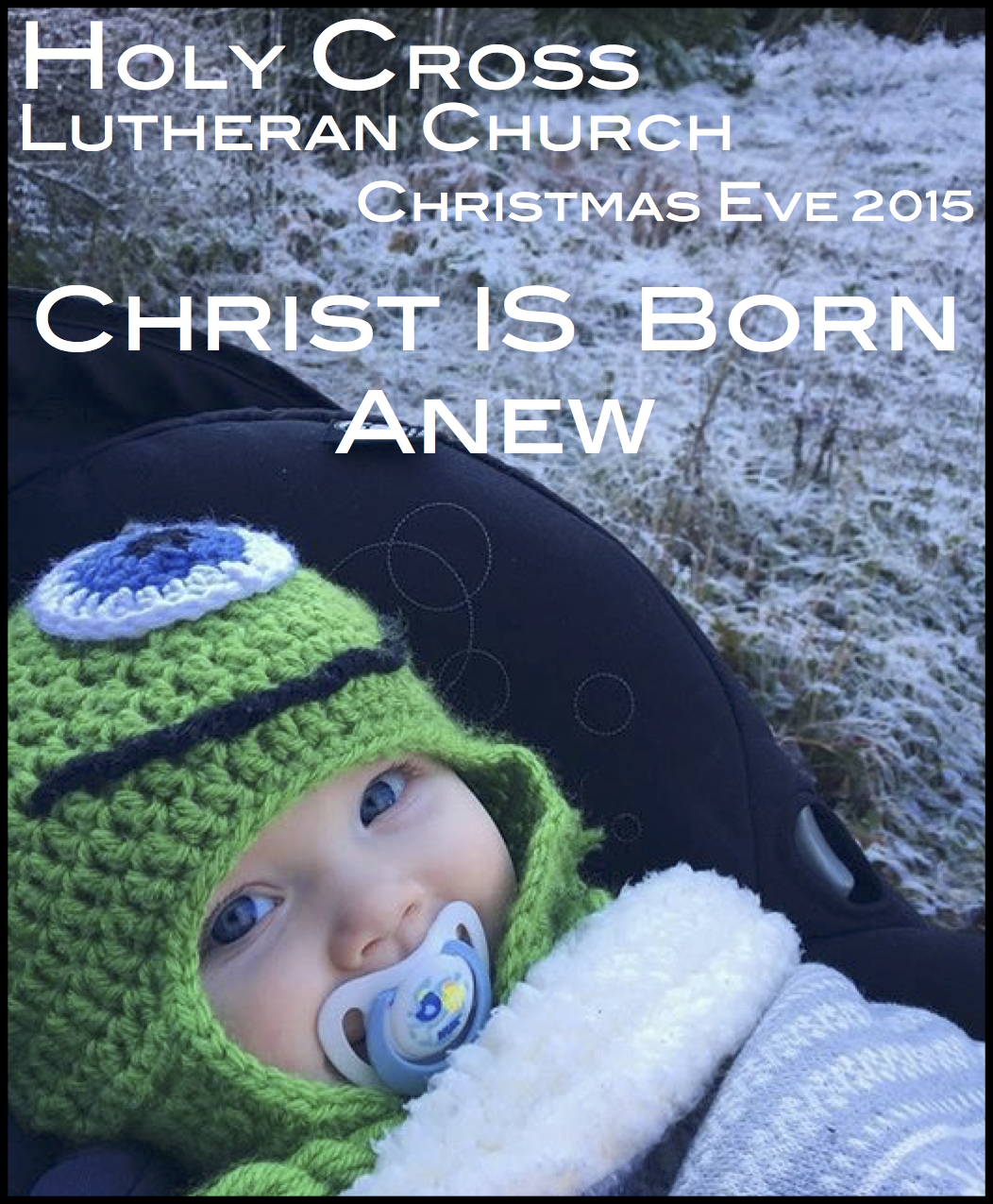
The little fellow on our bulletin is my great-nephew, Sawyer in whom I continue to see the face of the Christ-Child! May we all see in everyone the face of Christ!
It has been said that the shortest distance between humanity and the truth is a story. On this night of nights, we gather together around a story that reveals the truth of our humanity. Together, on this holy night, we participate in the birth of a child. Tonight, we see in the image of a new born baby swaddled in our hopes and dreams. All our longings for love and peace rest in the images that live and breathe in this story that has been handed down to us. It is a story we know so well and yet, it is a story that we have barely begun to understand. Like all stories, we can simply listen to it, or read it, and respond with little more than a nostalgic nod to simpler times when hoped that someone or something out there or up there would come and save us from ourselves and our warring madness, and selfish greed or we can open ourselves to the transformative power of that some stories have and
We can dare to participate in the story, engage it, wrestle with it, and make it our own. If we let it, this story can open us to that which lives and breathes beyond the words of the story. The characters in this story can live and breathe and have their being in us.
Sadly, we all too often get bogged down in the words themselves, measuring them and testing them as we try to pinpoint the origins of the words and miss all together the many truths that this story can convey. Some folks never get past arguing about the history. They just can’t seem to understand the power of myth to convey truth. The ancient scribes, who passed this story on to us, knew well the wisdom using mythology to convey truth. So, on this holy night, in the presence of one another, let us seek the wisdom of the ages remembering that wisdom is a precarious treasure; a treasure that has the ability to enrich our lives.Continue reading →
Readings from the first chapter of Luke included the stories of the Angel Gabriel’s Annunciation to Mary, Mary’s Visitation to Elizabeth and Mary’s radical song – The Magnificat. Listen to the sermon here
On the Fourth Sunday of Advent we try to reach beyond the lectionary to the folks who won’t make it to church on Christmas Eve or on Christmas morning by forgoing the prescribed readings in favour of reading the entire Birth Narrative.
Click on these links to find sermons I have preached on Advent 4
I didn’t know it at the time, but I actually met John the Baptist when I was fifteen years old. She didn’t look much like you’d imagine John the Baptist would look, but she had that same crazy intensity, that same focus on the fact that we’d better change our ways, we’d better repent, and start doing things differently or we’d be in real serious trouble. Lola was my friend Valerie’s mother and she simply couldn’t stop going on and on about the environment and how we were destroy the earth. At the time, I remember thinking she was a bit of a nut-case and on more than one occasion I wished she’d just shut up about it. I was just a kid, and the earth was just something I took for granted. The earth was just there to provide for our needs. I couldn’t believe how much Lola went on and on about all the stuff we humans were doing to destroy the earth. I just wished she’d leave us along to get on with things, I couldn’t abide her incessant nonsense about how we were going to destroy the planet. All her feeble little attempts to be kind to the earth, made me seriously question her sanity.
I tolerated Lola not just because she was my friend’s mother, but I didn’t really understand her until one day when the three of us were travelling together. We were coming home from church. I had only been going to church for a few months. I was trying hard to understand this whole God thing. So, I went to church a lot. My friend Valerie had persuaded me to start going to church with her and family had become like my second family as they supported me during my first attempts to explore the mysterious world into which I had begun to feel pulled. As we drove home from church, I was feeling a little glum. Try as I might, I couldn’t really understand this church thing; all that singing and praying didn’t really help me to feel closer to God. Mostly I just liked how people at church treated each other. I liked how they went out of their way to help me feel at home. Whether or not God was there, well I really wasn’t sure.
Anyway, we were driving along the road. It was a partly over-cast day on the west coast of British Columbia, just a few clouds. You could see the mountains off in the distance. We were chatting back and forth when all of a sudden Lola pulled the car over to the far side of the road, switched off the engine and got out. Valerie followed her mother out of the car, so I figured I had better do the same. Val and her mother scampered down from the road and onto the beach. When they reached the water’s edge, they stopped and just looked off into the distance. Apart from a tanker-ship making its way across the horizon, I couldn’t see much of anything. Lola had the most amazing expression on her face. She positively glowed with happiness. Valerie wore a similar expression. I must have looked somewhat puzzled because Val smiled at me and said, “Isn’t it the most beautiful thing you have ever seen?” This only confused me more. What were they looking at that had made them stop the car, scamper down the bank and stand there at the water’s edge on a cold autumn evening? Continue reading →
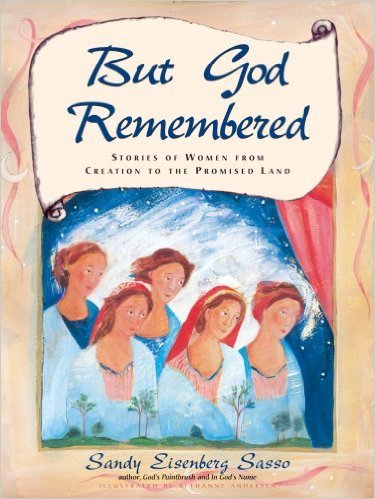
In the preface to her beautiful children’s book, “But God Remembered: Stores of Women from Creation to the Promised Land” Jewish writer Sandy Eisenberg Saso tells this revealing story: “Before God created man and woman, God wanted to create Memory and
Forgetfulness. But the angels protested.
The angel of Song said, ‘Do not create Forgetfulness. People will forget the songs of their ancestors.’
The Angel of Stories said, ‘If you create Forgetfulness, man and woman will forget many good stories.’ The Angel of Names said, ‘Forget songs? Forget stories? They will not even remember each other’s names.’
God listened to the complaints of the angels. And God asked the angels what kinds of things they remembered.
At first, the angels remembered what it was like before the world was formed. Then as the angels talked about the time before time existed, they recalled moments when they did not always agree.
One angel yelled at another, ‘I remember when your fiery sword burned the hem of my robe!’
‘And I remember when you knocked me down and tore a hole in my wing,’ screamed another.
As the angels remembered everything that ever happened, their voices grew louder and louder and louder until the heavens thundered.
God said, ‘FORGET IT!’
And there was Forgetfulness.
All at once the angels forgot why they were angry at each other and their voices became angelic again. And God saw that it was good.
God said, “There are some things people will need to forget.’
The angels objected. ‘People will forget what they should remember.’
God said, ‘I will remember all the important things. I will plant the seeds of remembrance in the soul of My people.’
And so it was that over time people forgot many of the songs, stories and names of their ancestors.
But God remembered.”
As we approach the Season of Advent, I can’t help wondering why the creators of the Revised Common Lectionary (the list of prescribed readings for Sunday worship) have failed to remember the stories and names of our foremothers? John the Baptist will strut across the stage again in this Sunday in churches all over the planet. We have begun a new cycle in the RCL in what is know as Year A the lectionary Gospel readings will focus upon readings from the Gospel according to Matthew. But followers of the RCL will not hear the names of Tamar, Rahab, Ruth, or Bathsheba; no, not even Mary will put in an appearance despite the fact that all of these women are mentioned in the very first chapter of the Gospel according to Matthew! Last year was the same even though the RCL focussed upon the Gospel according to Luke, neither of the women of the Luke’s first chapter make an appearance without a great deal of effort. Unless worship planners are prepared to tinker with the lectionary Elizabeth and Mary will have to cede the stage to John the Baptist. So, all you worship planners and preachers out there, I say to you, “TINKER AWAY! TELL THE STORIES!”
As this is the year of Matthew, why not invite onto centre stage those “Shady Ladies” from Matthew Chapter 1: Tamar, Rahab, Ruth, and Bathsheba, verses 1-17 make an excellent reading! John Shelby Spong is an excellent resource, you can find a transcript of his excellent sermon here. At Holy Cross we will use Matthew 1:1-17 as our first reading and Matthew 18-24 as our Gospel reading. This will allow us to usher Mary onto centre stage. Then on the Fourth Sunday of Advent we will switch over to the Gospel according to Luke for all three readings: First Reading – Luke 1:26-38, Second Reading – Luke 1:39-45, Gospel Reading – 1:46-59.
I am forever hearing people despair about biblical illiteracy as clergy and church-insiders bemoan the collective forgetfulness of our culture. I suspect that the snippets of readings that we hear year after year may be a factor in the gaps of our collective memory when it comes to the women of the New Testament. Let this Advent be different. Invite the women of the gospels onto the stage. John the Baptist will be happy out there in the wilderness until his feast day in June!
In October of 1977, I was twenty years old. I was young and adventurous and with a rail pass in my hand, a back pack slung over my shoulders and several hundred dollars worth of American Express Travellers cheques in my pocket, I boarded a train in Zurich, Switzerland, bound for Athens, Greece.
I was tired. Several months of backpacking in Northern Europe had left me weary. In just five days my rail-pass would expire, so I decided to head for Greece, where the living is easy, where the warm sun, blue skies and equally blue waters held the promise of rest and relaxation.
As the train made its way through the Alps, I remembered a similar trip which I had made the year before and I tried to calculate whether my remaining funds would allow me to return to the village of Hannia on the island of Crete. I knew that in Crete I could find work. I planned to mix a lot of rest and relaxation with just a little work and try to live out the winter on the Mediterranean.
As the train rattled through Austria toward what was then Yugoslavia it began to get dark. I was disappointed that my journey through Yugoslavia would be completed in darkness. I remembered my previous journey, by car, through Yugoslavia and how at the time, I had marvelled at the diversity of this strange little country. I remembered men and women driving oxen as they ploughed their fields in much the same way as there ancestors had done. I also remembered my surprise at entering the ultra modern city of Belgrade; the showcase of Tito’s communist regime. I fell asleep pondering the sharp differences between the lives of the poor people in the villages who appeared to live without any modern conveniences at all and the lives of those who inhabited the city of Belgrade with its towering skyscrapers and streets filled with automobiles. Several centuries seemed to co-exist in Yugoslavia.
I was awakened by the sound of people shuffling to find their papers as the train conductor instructed us to get our passports and visas ready for customs inspection. When the Yugoslavian custom officials, with their rifles over their shoulders boarded our train they were preceded by men guided by vicious looking German shepherds. Even though I knew that I had all the right papers and that my back pack contained nothing more offensive than some dirty laundry, the sight of the dogs, guns and uniformed officials struck fear into my heart. I nervously handed over my precious passport to an official who looked younger than my twenty years. He carefully read over the visa which I had obtained in Zurich the day before; a visa that I could not read because it was written in an unfamiliar language and an unfamiliar alphabet. Continue reading →
All Saints’ Sunday readings: Contemporary reading: “A Return to Love: Reflections on the Principles of a Course in Miracles” by Marianne Williamson, Gospel: Luke:6:20-31 – extensive quote within the sermon from evolutionary scientist Stephen Jay Gould – the hymn sung before the gospel is “I Am the Dream” words: S. Curtis Tufts, Music: Rick Gunn
All Saints’ Day is a day for remembering. The word saint simply means “holy”. In the New Testament, all those who believe and were baptized were referred to as saints. It wasn’t until round about the third century that the church began using the word saint to refer to those who had been martyred for the faith. Over time these martyred saints were held up for veneration and people used to pray to them to intercede on their behalf. I’m not going to go into all of the institutional abuses that led Martin Luther and the later reformers to abolish the veneration of the saints. Except to say, that while the Reformation put an end to the veneration of the saints in the protestant churches, it did not abolish the concept of sainthood.
Within the mainline protestant denominations, we use the term in much the same way as it was used in the New Testament to describe the faithful. We talk about the communion of saints to describe all the faithful who have gone before us who now rest in God, together with all the living who walk in faith. So today as we celebrate the saints, we give thanks for all the faithful those living and those who have gone before us.
Today, I remember and rejoice as I give thanks and praise to God for the witness of St. Joyce of Belfast. St. Joyce who in her own way taught her children to love God and to pray always. And so today, I give thanks and praise to God for the life and witness of St. Joyce of Belfast, my Mom, who was the first to teach me the Lord’s Prayer, and who puts flesh on Christ’s command that we love our neighbours as we love ourselves.
Today I remember and give thanks for the life and witness of St. John of Wales, whose life in the church as a choir-boy was followed by long years of self-exile and whose keen wit and lack of patience with hypocrisy instilled in me a desire for honesty and integrity in the articulation and living of the faith. I give thanks for St. John, my Dad, whose open heart has stretched his discerning mind and enabled many to see the humour in this God-given life we live.
Today, I remember and rejoice as I give thanks and praise to God for the witness of St. Valerie of Ladner. St. Valerie so loved and feared God that she dared to reach out and invite a wayward soul to come and worship God. St. Valerie sang God’s praise, rejoiced in the communion of saints and helped a young friend find a home in God’s holy church. And so toady, I give thanks and praise to God for the life and witness of St. Valerie, my high school friend, who was the first to invite me to come and worship God.
Today, I remember and rejoice as I give thanks and praise to God for the witness of St. Wilton of Lunenburg. St. Wilton loved God all the days of his life and served God with gladness and distinction. St. Wilton went far beyond his call as pastor, he opened up the scriptures to those who eagerly sought the truth of God’s Word with love and dedication and he went on to inspire a diligence to scholarship that nurtured the faith of so many young people. And so today, I give thanks and praise to God for the life and witness of St. Wilton, my first pastor, who taught me to be uncompromising in my study of the scriptures, and steadfast in my love for God.Continue reading →

 Since I was thirteen years old, I have borne the mark of my enemy. It’s faded quite a bit over the years, but if I look carefully I can still make out the marks left behind by, let’s call her, Betty Cherie’s teeth. Way back in the eighth grade Betty Cherie and I fell afoul of one another. I don’t really remember what it was that started the whole thing. It was one of those grudges that only thirteen-year-old girls can hold onto with any kind of tenacity. All I can remember is that Betty Cherie and I hated each other and the whole school knew it.













 pastordawn