Tickled By the Racy Svetlana; Otherwise Known as the Woman Evangelist Who Rocked Jesus’ World! – a sermon on John 4:1-42

For those of you who may be using the Narrative Gospel reading this coming Sunday, here’s a sermon that was inspired by Teresa of Avila’s image of being tickled by God.

TickledThere’s a commercial currently running on the TV and each time it comes on, I can’t help myself, it makes me smile and if I let myself, it makes me laugh. It’s a collection of scenes in which lovely little babies laugh. They laugh and they laugh and they laugh and before you know it you’re hooked and you just can’t help yourself you are laughing too. Laughter is a great tonic! Laughter is good for the soul! And yet, for some unknown reason we tend to exclude laughter from our religious life. Religion is serious business and so we don’t laugh much in worship. There’s a quote from St. Teresa of Avila that served as a warning sign for me as I was preparing this sermon. “NOT YET TICKLED” writes St. Teresa, “How did those priests ever get so serious and preach all that gloom? I don’t think God tickled them yet. Beloved—hurry.” The thought of being tickled by God is delightfully refreshing.

I must confess that I don’t spend much time laughing with God. Listen to this quote from the writings of St. Teresa: “Just these two words God spoke changed my life, “Enjoy Me.” “What a burden I thought I was to carry—a crucifix, as did Christ. “Love” which is Teresa’s name for God. “Love once said to me, ‘I know a song would you like to hear it?’ And laughter came from every brick in the street and from every pore in the sky. After a night of prayer, God changed my life when God sang, “Enjoy Me.” Enjoy Me. What a different place the world would be if we could only hear God beseeching us, “Enjoy Me.”

We are a serious lot we Christians. Duty, responsibility, guilt, and consternation have left us precious little time to “Enjoy!” We’ve got things to do, stuff to learn, values to instill and standards to uphold, so we’ve put enjoyment on the back-burner. After all, God is far too high and mighty to be trifling with, we daren’t laugh in the presence of our God. And yet, God continues to tickle us. Over and over again, with the most absurd wonders, and we can’t help ourselves, but smile. Creation is so full of laughs. Life is so funny! And church, I mean, whenever I think of the ridiculous things we get up to in church, well its enough to make you laugh until you cry. So to those of you who insist upon personifying our Creator,  don’t you try to tell me that the Creator of all that is or ever shall be, the one who is responsible for creating humour itself, doesn’t just roar with laughter at the stuff that we get up to. So, isn’t it just possible that when it comes to laughing babies, God has plenty of scope for delighting in us? Surely, laughter is one of the most sublime forms of prayer? We ought to lighten up and enjoy our time with God. Cause lord knows, serious people are all well and good but who wants to spend time with a bunch of folks who can’t enjoy a joke.

So with that said, let’s turn to this mornings Gospel reading. This story is a real tickler! But in order to get the jokes, you’ve got to know some of the stuff the insiders knew. It’s a bit like trying to understand British humour, sometimes you don’t quite get the joke, if you don’t know something about life in Britain. The Gospel of John is full of stories that play on the local humour of Palestine in the first century. This story, about the Woman at the Well is full of double en-ton-dras. Indeed, this story is so outrageous that when the powers that be were sitting around deciding which books would make it into the New Testament, The Gospel of John almost didn’t make the cut. This story was far too racy and I mean racy in both senses of the word, this story was about race and it was far too risqué for the likeings of the religious authorities who were functioning as the thought police for the early church. So, sit back and allow yourselves to be tickled as I let you in on the jokes. Continue reading

The Beatitudes and the Power of One: a sermon for Epiphany 4A – Matthew 5:1-12

sad EckhartMost us us have heard the words from Matthew 5, known as the Beatitudes, so many times that we can recite them from memory. Indeed, the Beatitudes are at the very core of our Christian tradition. But there is a danger in our familiarity with these words because it allows us to distance ourselves from them as we relegate them to some idealized notion of some unattainable goal.

I have studied these words many times and I do not believe that Jesus intended these words to become a prescription for how to be a better Christian. So, I won’t be encouraging anyone to be poor in spirit, to mourn, or to be meek in the hope that they might gain the kindom of heaven, or be comforted, or inherit the earth. While hungering and thirsting for righteousness is in and of itself a good thing, along with being merciful, pure of heart, and peace-making, all of which I heartily encourage. However, these attributes or beatitudes are not a prescription for holiness or wholeness.

So, if Jesus wasn’t prescribing the beatitudes from atop the mountain, what was he doing? Well, there’s an old storytellers’ ploy that I’d suggest in order to better understand Jesus words. The ploy doesn’t have a name, but most of us are very familiar with the trick. It’s the one where you tell an unfamiliar story alongside of a very familiar story in the hope that the unfamiliar story will help to shed some new light on the words of the familiar story. The unfamiliar story is taken from Bryce Courtenay’s autobiographical novel “The Power of One.” The Power of One was are into a movie about twenty years ago, so the story may be somewhat familiar. Continue reading

Contemplating the Beatitudes: preparing to preach on Matthew 5:1-12; Epiphany 4A

The gospel reading for this coming Sunday is Matthew 5:1-12, known as the Beatitudes. The reading is so familiar that we all too often read the beatitudes as if they were a  prescription. However, when read as a description they take on a whole new meaning. Jesus climbed up above the crowd, looked around and saw the poor, the grieving, the gentle, those who were hungry and thirsty for justice, the merciful, the righteous, the peacemakers and the persecuted; and Jesus comforted, uplifted and inspired them with the truth that they are blessed. Jesus was not telling the crowd how to live he was recognizing and affirming who they are. Can we hear this affirmation of our lives? As I prepare to preach on this text, I see the faces my congregation and I know that they are blessed for they too are the poor, the grieving, the gentle, those who are hungry and thirsty for justice, the merciful, the righteous, the peacemakers and the persecuted. The Good News is that the Kindom of Heaven is theirs. 

Walk With Me: Mary Youngblood

Blanket Exercise at Holy Cross in Newmarket

IMG_0190Yesterday, the Holy Cross’ Global Justice Team hosted a Kairos Blanket Exercise. The experience of participating in the Blanket Exercise was  powerful, humbling, enlightening and inspiring. The Global Justice Team did a splendid job of guiding us through Indigenous Canadian history.  We were blessed by the presence of indigenous leaders: Suzanne Smoke (The Georgina Arts Centre and Gallery) and Cathy Elliott (DAREarts). Suzanne brought along her sacred bundle and graciously led a smudge ceremony and talking circle. Cathy gifted us by singing and drumming. Reflecting on the range of emotions that the experience generated, it is clear that in addition to providing a powerful educational experience the gathering opened our hearts and minds to a history which many of us have remained ignorant of for far too long. We have been challenged and inspired to continue to advocate for our First Nations sisters and brothers. 

I am not by any stretch of the imagination a filmmaker, but I did manage to collect a few clips to give you a taste of the experience.

The Global Justice Team has organized a followup to the Blanket Exercise in the form of a Book Club. Check out the titles:

Blanket Exercise Book Club

To view a video of a Kairos Blanket Exercise recorded at New Hope in Calgary click here

Following Wherever Christ Leads: a sermon for Epiphany 3A

IMG_0635

This afternoon our congregation is hosting a Blanket Exercise designed to help us to listen to the histories of Canada’s First Nations. Our worship was designed to open us so that we might engage in the exercise with open hearts, ears and minds. Our readings included Acts 10:9-16, 2 Corinthians 5:17-20 and Matthew 4:12-13.

Birdsong, Human Creativity, Richard Holloway and Richard Maybey

hollowayIf you are familiar with postings on this blog, you will know just how brilliant I think Richard Holloway is. If you don’t know about this amazing, iconoclastic, barmy former Anglican primate and self-described “agnostic Christian”,  you can begin reading about him here and here

Children Praying a New Story by Michael Morwood

Children PrayingMichael Morwood is an “Adult Faith Educator” whose various books help adults to “re-imagine and re-evaluate their faith in light of the contemporary ‘story’ about our universe.” In Children Praying A New Story, Morwood turns his attention to the task of education children from the perspective of a thinking twenty-first century Christian. Morwood offers insights about teaching children to pray, not to an external, listening Deity but to the Source and Ground of our being. This book has helped me as I craft the prayers of our congregation and I know that parents, grandparents and anyone who is engaged with children and their spirituality will find inspiration in Morwood’s approach. We are looking forward to hearing from Michael Morwood in person; when he visits Holy Cross the weekend of May 2-4. 

Prayer: A State of Communion – Richard Rohr

Following Prostitutes and Christ – a sermon for Epiphany 3A – Matthew 4:12-23

Vancouver's east endWhen I was in my early twenties, I grew weary of sharing space and I decided that I wanted an apartment all to myself, despite the fact that I couldn’t really afford an apartment all to myself. But I was determined and that’s how I ended up living in a very rough neighborhood in the east end of Vancouver. My parents weren’t’ very happy about the neighbourhood and worried about the unsavory characters that lived in the run-down building where I found a spacious one bedroom apartment that I could just about afford. The apartment was just a couple of blocks away from the office where I worked, so I was able to walk to work. I ignored all the warnings of my family and friends and I convinced myself that I could handle anything that came my way.

In my heart of hearts I was rather pleased to be living in such a poor rough and tumble neighbourhood. I was young and foolish and the neighbourhood was exciting. Every Sunday I would make the trip back to my home church in the suburbs. Sometimes I would make a second trip out during the week to attend a Bible study. Like so many young people, I was harsh in my criticisms of the elaborate life-styles of my elders. At bible studies, I was always bringing up the plight of the poor and the oppressed and challenging people to do something. Various members of my own family often accused me of being a bleeding heart liberal. I wore their criticism with a certain amount of pride, convinced that I was living out my beliefs.

Although I walked to work each day, I didn’t know any of my neighbours, until one morning I was surprised by a knock on my apartment door. I wondered how anyone would get past the lock on the front door. So, I peered through the peephole and was relieved when I saw a young woman at my door. I unbolted the door and in swept Brenda. Brenda was all smiles and laughter as she explained that she and her roommates were out of coffee and she wondered if I might be able to lend them some coffee.  When I explained that I had just used up the last of my coffee making my own morning brew, Brenda told me not to worry, she and her roommates would be happy to join me. When Brenda returned, she introduced her roommates, Janice and Sue and we all sat down together for our morning coffee. Continue reading

Foolishness: Jesus the Cover-Up

In the Epistle Reading for this coming Sunday, 1 Corinthians 1:10-18, the Apostle Paul talks about the “foolishness” of the message about the cross. As I begin to prepare myself for a serious engagement of the scripture readings, I am reminded of the foolishness with which various interpreters of the life and death of Jesus have developed the various theories of atonement. This little video, sarcastically holds up a mirror to those theories. Laughter seems like a good place to begin a conversation about this foolishness. Surely, any serious engagement of the Jesus experience must set aside the follies of our attempts to turn Jesus into something he was not.

Let Freedom Ring Through You!

Martin Luther King2

Epiphany 2A; John 1:29-42 Jan.19, 2014.  A sermon in celebration of the life and witness of the Rev. Dr. Martin Luther King, Jr.

A pdf of the worship bulletin here:

The audio includes the Acclamation, sermon and Hymn of the Day:

Listen to the sermon:

https://pastordawn.com/wp-content/uploads/2014/01/epiphany_2a-mlk.m4a

Let Freedom Ring

MLK FREEDOMWednesday would have been Martin Luther King’s 85 birthday and on Monday our neighbours to the south will celebrate Martin Luther King day. So, this Sunday our worship will commemorate the life and witness of this martyr of the faith. I know that there are some who say that as Canadians we don’t celebrate MLK Day. However, the gospel reading assigned for tomorrow includes Jesus’ early followers first attempts to figure out who Jesus was and hints at what it might mean to follow Jesus. While we have many images of what a follower of Jesus looks like, the life and witness of Martin Luther King, Jr. provides a concrete example of what it actually looks like to follow Jesus.  We will spend some time exploring what our lives might look like should we have the courage to follow Jesus. 

We will sing as our Hymn of the Day what was once known as “The Negro National Anthem,” Lift Every Voice and Sing. I have known a good many people who insist that “white people” ought not to sing this particular hymn. For a time I shared their reluctance, knowing that I have absolutely no idea what it means to live as a person of colour in a predominately white culture. However, over the years I have been convinced that Left Every Voice and Sing speaks to Dr. King’s dream of a world in which we are all freed from the shackles imposed upon us by the colour of our skin. The empathy engendered by this powerful hymn opens us to the possibilities inherent in Dr. King’s dream. 

This video of the ‘ Negro National Anthem’ was originally screened at the historic African-American Church Inaugural Ball in Washington, DC on January 18th, 2009. Many of the esteemed individuals featured in this video in attendance and we presented with the ‘ Keepers of the Flame’ award for the monumental contributions to social justice. This version of the song was performed by the Grace Baptist Church Cathedral Choir, conducted by Derrick James.  While Canadians might balk at the overtly “American” images, we would do well to remember the history we share with our American cousins and the work that both countries need to engage in in order to move us closer to realizing Dr.King’s dream.

I include this pdf of tomorrow’s worship bulletin here, which includes preambles to some of the music we will be singing. Worship begins at 10:45am

Why Should We Pursue Happiness? Karen Armstrong

happiness 4Happiness, the word comes to us from the word for “happenstance,” is not something that happens to us. In her own expansive style, Karen Armstrong explores the contours of happiness.

Children and the Epic of Gilgamesh

Gilgamesh the kingMarcus Borg is often quoted as having said something to the effect that the average adult has but a grade five understanding of Christianity. Which is okay if you are in grade five but it won’t sustain you through a lifetime of questions. While I agree with Borg that a good many people have rejected Christianity on the basis of what they learned as children and we have a great deal of work to do to educate adults about the breadth and depth of the Christian faith, I wonder what it would mean for the church if we stepped up our game when it comes to the education of children.

I can still remember taking my first religious studies class as an adult and being The Last Quest of Gilgameshblown away by the revelation that so many of the biblical stories that I was struggling with actually had their origins in tales that were told long before a wandering Aramean went down to Egypt. I remember being both fascinated with the story of Gilgamesh and angry at the Church for failing to let me in on the reality that human’s have been myth-making since forever. I’m sure that I would have been far less traumatized by the realization that the biblical writers engaged in the ancient art of myth-making had I been introduced to it in my adolescence. Needless to say, since I have been teaching Confirmation classes (ages 11-15) I have taken the opportunity to introduce the Epic of Gilgamesh as a precursor to discussions on the book of Genesis.

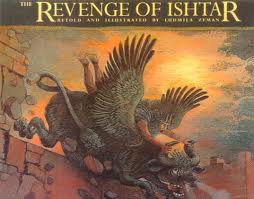
revenge of ishtarSeveral years ago, the task of introducing Gilgamesh to young people was illuminated by the discovery of a two of books by Ludmila Zeman designed to bring the tales first carved onto clay tables in Mesopotamia to life. Both Gilgamesh the King and The Last Quest of Gilgamesh are beautiful illustrated and even though they are recommended for children ages 8 and up, provide an engaging experience for adolescents. For those Confirmation students who are particularly keen, I have added Zeman’s The Revenge of Ishtar  to the Confirmation class’s collection of resources. I have even been known to use this speeded little tomes in Adult Education Classes.  Ludmila Zeman emigrated to Canada from Czechoslovakia and lives, works and creates in Vancouver.

Jesus, the Lamb of God Who Takes Away the Sin of the World? It ain’t necessarily so! (a sermon for Epiphany 2A – John 1:29-42)

Lamb of GodLooking back upon what I preached the last time John 1:29-42 appeared in the lectionary, I realize just how indebted I am to John Shelby Spong for giving me the words to articulate my own objections to the label attached to Jesus by a late first century writer also known as John. Most if not all of this sermon is derived from Jack Spong’s work. For more details I would refer you to Jesus for the Non-Religious and The Fourth Gospel: Tales of a Jewish Mystic. We at Holy Cross were privileged to have Jack speak to us about both of these books. In fact a year before it was published, Holy Cross was the test audience for the material in The Fourth Gospel: Tales of a Jewish Mystic. This sermon ought to have all sorts of footnotes, but I trust you will forgive me for simply confessing that I can no longer tell were Jack leaves off and I begin. Suffice it to say that this sermon is my feeble attempt to put Jack’s work into the form of a sermon.

When I turn the gospel according to John and read about John the Baptist pointing to Jesus, saying:  “Here is the Lamb of God who takes away the sin of the world!”  I want to scream,  “NO!” I have come to believe that our images of God are far too narrow. As far as I’m concerned most of our ideas about God fall far short of every even beginning to describe who God might be. One thing I’m absolutely certain of is if we can imagine ourselves being more loving, more gracious, or more merciful that our theology suggests that God is, then we had better go back to the drawing-board and think again. The ways in which we have traditionally interpreted the life, death and resurrection of Jesus the Christ, paint a picture of a God who is far less loving, gracious or merciful than you or I. Nobody in this room, would demand a blood sacrifice of a lamb, let alone the blood sacrifice of their own child. So, the image of God that is based on this kind of theology must be judged as inadequate to the task of evening beginning to provide us with a glimpse of who our God is.

As we go back to the drawing-board, we ought to take a long hard look at how we arrived at this image in the first place. Thank goodness for the work of our friend Jack Spong who has enabled us to see beyond the literal to the more-than-literal meanings of the various ways in which the followers of Jesus have understood the life and teachings of Jesus. During the years that followed the crucifixion, Jesus’ followers were left wondering what it was all about. How could someone in whom they had seen the fullness of God, be taken from them in such a horrendous way? How could their God allow it?   What were they to do? Over the years that followed, Jesus’ followers looked back at the life, death, and resurrection of Christ through the lens of their own religious experiences. Jesus’ followers were primarily Jewish and so it didn’t take long for the familiar Jewish symbol of the Lamb of God to be applied to Jesus as a way of making some sense out of his death.  Today most Christians associate the symbol of the Lamb of God with the Jewish celebration of Passover.  While the Gospel narratives do indeed locate the time of Jesus death during the celebration of the Passover, and there is indeed a sacrificial lamb involved in the Passover, the actual phrase “the Lamb of God” comes not from the religious rites of Passover, but rather the religious rites of Yom Kippur: The Day of Atonement.  Phrases like “the Lamb of God”, “died for our sins” and “washed in the blood of the lamb” can all be found in the religious rites of Yom Kippur.  Continue reading

Benedictus: “For Longing” by John O’Donohue

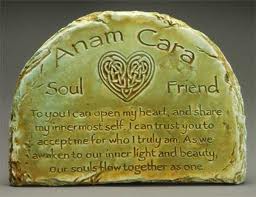
anam caraThe art of creating blessings is not what it once was. There are days when I wonder if the lost art of blessing will ever escape the dull drums of the hallmark-esk drivel that is passed around to masquerade as sacred text. John O’Donohue is one of my favourite poets. He manages to delve into his Celtic roots to tap into the desire to bless another without resorting to the trite  cliches that dominate our modern attempts at this ancient art art form. His blessings are so carefully crafted to open our very selves to the possibility of the Divine. 

For Longing John O'Donohue pastordawn

A Progressive Christian Wades into the Waters of Baptism

baptism 33A sermon for the celebration of the Baptism of Jesus

Matthew 3:13-17

Listen to the sermon here:

God Is a River – Peter Mayer

riverPeter Mayer, one of my favourite folk singers, captures a hint of the essence of God when he sings. This morning our worship celebrates the baptism of Jesus and with so much water everywhere around us, the image of God as a river strikes some chords that I find both refreshing and challenging.

Wisdom from Our Spiritual Ancestors: Matthew Fox

Julian of Norwich Between pastordawn

I was introduced to the work of Matthew Fox long before I ever entertained the idea of becoming a student of religion. Fox’s groundbreaking book, “Original Blessing” introduced me to the work of the Christian mystics and helped me to see beyond the institutional theology of those who won the long forgotten theological battles of our past. His exploration of the work of those whose theology threatened the agendas of the powers that be and development of “creation spirituality” opened me to a new way of understanding and articulating Christianity.

Holy Miracle by Love Eternal

Thankyou babe