When I was a kid, the adults in my life were very fond of telling me how grateful I ought to be because things were so much harder back when they were kids. I’m sure most of us can remember being told by our elders just how tough times were when they were back in the day. My parents, grandparents, aunts and uncles and just about every adult I knew must have grown up poor. Why if I had a nickel for every time I heard someone say, “When I was a kid we were so poor that…..” well I’d have a whole lot of nickels.
Today, when I hear the words, “We were so poor that…” I brace myself for an outrageous claim like…. We were so poor that we couldn’t afford Kraft Dinner. Kraft Dinner, you were lucky, we were so poor that we couldn’t afford dinner, all we had was a cup of cold tea without milk or sugar. Cup of Tea, we were so poor that we only had filthy cracked teacups. Filthy cracked teacups, that’s nothing we were so poor that we couldn’t afford teacups, we used to have to drink our tea out of a rolled up newspaper. That’s nothing we were so poor that all we could we couldn’t afford newspapers so we had to suck our tea from a damp cloth.
Someone always chimes in with, “Well we might have been poor, but you know we were happy in those days. That’s right money can’t buy happiness. We used to live in a tiny house, with holes in the roof. “House? You were the lucky ones we were so poor that we had to live in one room, all 126 of us, with no furniture. Half the floor was missing; we were all huddled together in one corner for fear of falling! Ha! You were lucky to have a room! We used to have to live in a corridor! Ohhh we were so poor we used to dream of living in a corridor! A corridor would have been a palace to us. We used to live in an old water tank on a rubbish tip. We were woken up every morning by having a load of rotting fish dumped all over us!!! Rubbish tip, you were lucky, we were so poor that we lived in a hole in the ground covered by a piece of tarp, but it was a palace to us…especially after we were evicted from our hole in the ground and we had to go live in a lake. Lake, you were lucky to have a lake, there were a 160 of us living in a small cardboard box in the middle of the road. Cardboard, we were so poor we lived for three months in a brown paper back in a septic tank. We used to have to get up at six o’clock in the morning, clean the bag, eat a crust of stale bread, go to work down in the mines for 14 hours a day, week in week out. We had to get up out of that cardboard box at three o’clock in the morning and lick the road clean with our tongues. In case you didn’t recognize it, that was my interpretation of a classic Monty Python sketch, simply called the “We were so poor sketch”. (watch the video below)Continue reading →
On this the third Sunday of the Season of Creation, we turn our attention to the Wilderness on the very day when ten’s of thousands of people will be taking to the street to demand that the governments of the world focus their attention on the plight of our planet. On the eve of the United Nations Climate Summit, organizers of The People’s Climate March are hopeful that upwards of 100,000 people will turn out to march through midtown Manhattan to demand that world leaders agree on significant and substantial initiatives to move the world toward a path that will limit global warming.
The readings for the third Sunday in the Season of Creation can be found here
On this Canada Day, my wife and I begin our drive across this great land. Each time I make the trip from the east to the west, I am struck by the vastness of this land we call home. This year I take with me the deep impressions left upon my heart by our Synod’s Convention where we explored the Truth and Reconciliation Commission’s work to come to terms with our nation’s shameful history. I know that I shall travel this land with hope-filled eyes, trusting that the work we have begun will open us to the work of reconciliation with our First Nations sisters and brothers. As we celebrate this land, let us remember those whose welcome of our ancestors came at such great cost. Let us find ways to walk together into our future open to the possibilities of reconciliation. Happy Canada Day EVERYONE!
This Trinity Sunday sermon owes much to John Shelby Spong’s book a “New Christianity for a New World” You can listen to the sermon here then watch the tail end of the Wolf Blitzer interview mentioned in the sermon.
In the midst to the devastation and debris that was left of the town of More, Oklahoma, it was all to clear that the power of the tornado that whipped through such a heavily populated area had left behind the kind of destruction that tears not only the foundations of buildings but also of lives. In living rooms around the world millions of people watched as the news media descended on what was left in the wake of nature’s wrath. One particular news report is still reverberating around the Internet. I had just come from my office where I had spent the afternoon, reviewing the Doctrine of the Trinity in order to write this sermon. My wife Carol was in the kitchen cooking supper and I sat down to catch up on the news events of the day. I tuned into CNN and there amidst the rubble of More Oklahoma was the familiar face of Wolf Blitzer. It was the day after the tornado and the big name newscasters had been rushed to the scene in time to provide color-commentary on the evening news. Wolf was interviewing a young mother named Rebecca Vitsmun who was holding a squirming her 19 month old, toddler Anders in her arms. The young mother gave a blow-by-blow account of her narrow escape from. All afternoon Rebecca was paying attention to the weather reports. Rebecca was not from More, but rather from New Orleans and so she was not used to tornado warnings. She’d grown up with Hurricane warnings and so her first instinct was to evacuate the area. But her husband and neighbours had told her that the safest thing to do would be to take shelter. Six-teen minutes before the tornado struck the weather service issued a warning to take shelter. As Rebecca’s husband raced home from work, this young mother grabbed her laptop, a mattress and her toddler and took shelter in the bathtub. Huddled in the tub covered by a mattress she anxiously watched the reports on her laptop. Tracing the path of the tornado, Rebecca realized that the tornado was headed straight for her street. Rebecca’s New Orleans’ instinct kicked in and with her baby in her arms she jumped into her car and without taking time to put her baby in the car seat, she drove as fast as she could out on to the freeway where she pulled over and put Anders into his car seat and then drove some more. After the tornado, Rebecca reunited with her husband, and they headed back to what was left of their home. The bathtub was so full of debris that it was clear to them that Rebecca’s instincts had saved her life.
After telling her harrowing tale, Wolf Blitzer congratulated Rebecca for saving her baby’s life and then said to this young woman, “You gotta thank the Lord.” Rebecca was clearly taken aback by the comment and hesitated. I held my breath, annoyed as hell at Blitzer for asking such a stupid question. Rebecca’s hesitation gave Blitzer the opportunity to move on, but no he just had to have an answer, and so he persisted. “Do you thank the Lord?” Rebecca gave Blitzer the kind of look that says, “Are you kidding me?” Then Rebecca gave Blitzer an answer that he sure wasn’t expecting from an American from the heartland of Oklahoma; Rebecca smiled as she answered, “I’m actually an atheist.”
As Rebecca laughed awkwardly, I cheered so loudly that Carol came into the room to see what was going on. I was so proud of that young woman for not going along with Blitzer’s nonsense. Who in their right minds would believe in a Lord who would pluck one family out of a bathtub and let seven children die in an elementary school? I mean, if this Lord that Bilitzer is so willing to give credit too is such a great rescuer, why didn’t this Lord change the twister’s path and send it out over the cornfields where the only damage it could do would be to crops?
I know they say there are no atheists in fox-holes, but I for one think that that bathtub Rebecca was hunkered down in was indeed a fox-hole and I’m delighted that when all was said and done, she and little Anders were saved by her instinct for survival. As for this Lord of Blitzer’s, well, judging by the awkwardness that Blitzer exhibited after Rebecca stood her ground, I can only guess that this reporter misjudged the situation. Blitzer a city-slicker from New York, assumed that all the local yokels must be bible-thumping Christians, and he probably thought that his question would have received a mindless ra, ra, yeah God, kind of response from all Oklahomans. I trust he won’t make that mistake again. I kind of feel sorry for him, because after all it only took a few hours before some televangelist’s were suggesting that God did indeed send the tornado to teach people a lesson. According to some bible-thumpers, if people prayed hard enough they would have been saved. Some even went so far as to suggest that the tornado was punishment for gay marriage. Continue reading →
I don’t remember the first time I ever saw him. I was barely 18 months old when my brother Alan arrived. Despite the fact that he ruined my gig as an only child, Alan and I grew close over the years. We moved around a lot so we became one another’s best friends. But we went our separate ways when we became teenagers. When I tell the stories, I say that we went our separate ways because Alan became preoccupied with sports. I suspect that when Alan tells the stories, he says that we went our separate ways because I became preoccupied with the church. Either way you tell it, family and friends used to say that it was hard to believe that we grew up in the same household. Alan developed a reputation for being a bit of a redneck. I developed a reputation for being a bit of a radical. Alan drove four-wheel-drives and went hunting. I drove old beat up cars and lived at an ecumenical retreat centre. Alan learned a trade, settled down and raised a family. I travelled the world and didn’t get around to figuring out what I was going to be when I grew up, I went back to school at the age of 30.
Alan and I didn’t get around to understanding one another until we were in our mid-40’s. When I grew to appreciate the gentle man that he has become and Alan began to respect the person I’ve become. We still love to talk politics, but these days we tend to agree more than we disagree, I’m not sure who mellowed, the redneck or the radical. We don’t talk much about religion, though. Growing up, Alan would claim to be an atheist, and scoffed at my involvement with the church. These days, Alan, suggests he is an agnostic, and although he’s come to respect my life in the church, he still scoffs at the hypocrisy of the church.
I still remember the very first time that I saw Manjit. Her face was the colour of pure milk chocolate. Her jet-black hair was long and wavy. She sat at the very back of the classroom. When the teacher introduced me to Manjit, her toothy grin welcomed me. We were twelve years old. I was the new kid in town and Manjit was the only East Indian in the class. We were to share a double-desk for the remainder of the school year. I remember my first trip to Manjit’s home. A science project needed our attention. I can still smell the aroma of Manjit’s home where exotic curries released their pungency into the air. Over several meals at Manjit’s, I learned to like my food hot and spicy. Manjit’s mother would blend her own spices and she never forgot to send a package or two of her specially blended curries home with me.
Manjit is a gentle soul who introduced me to the wonders of her faith. Manjit is a Hindu. Manjit never tried to encourage me to become a Hindu. Although over the years she would remind me of the Hindu saying that admonishes Hindus to be better Hindus, Muslims to be better Muslims, Jews to be better Jews, Buddhists to be better Buddhists, and Christians to be better Christians. Manjit grew into a kind and gentle woman. She works as a social worker in Vancouver’s rough east-end neighborhoods. The last time I saw Manjit she was patiently guiding the students of a confirmation class that I taught, around her Temple. Later that evening Manjit and I talked a long time about Jesus. Manjit told me that she’d always been fascinated with Jesus’ teachings and that she had no problem believing that Jesus is God, but then she explained that Hindus have a thousand god’s.
I can still remember the very first time that Henry walked into my office. A long black beard together with the yarmulke that he wore on his head gave Henry away. So, from the very beginning I knew that Henry was Jewish. But it took a few years of working together before I discovered that in addition to being a graphic artist, Henry is also a rabbi. Henry became a dear friend of mine and over the years he shared so much of his wisdom with me. Many a night Henry and I sat up to the wee hours discussing the Scriptures. Henry even arranged for me to study Hebrew at his Yeshiva. I learned a great deal from Henry. We often talked about Jesus. We rarely agreed about Jesus, but we often talked about him.
Alan, Manjit and Henry, some would call them an unholy Trinity. But to me they are, each of them, sacred. Trinity Sunday is my least favorite Sunday of the Church year. It’s the only festival of the church year that is designed to celebrate not God, nor Jesus, not even the Holy Spirit, but rather a doctrine of the church. The notion that God is One in Three; a doctrine that was created by theologians to explain the inexpressible, a doctrine the church “fathers” began to cast in stone in the words of the Apostle’s, Nicene and Athanasian Creeds. Three Creeds that make up an unholy trinity in and of themselves. Three Creeds that the Lutheran Church continues to hold as articles of the faith. Three Creeds that continue to hold sway in our church.Three Creeds that in my humble opinion make up an unholy trinity. Three Creeds upon which the doctrine of the Trinity rests.Continue reading →
This Sunday is Trinity Sunday. In anticipation, preachers all over the world are dutifully pondering the Doctrine of the Trinity desperately searching for something to say to encourage their congregations.
Preachers will trot out tired old clichés conjuring up images of triangles, shamrocks around, or point to H20’s ability to appear as water, ice, or steam while still maintaining it’s unified essence. Or have you heard the one about the 3 blind men and the elephant in the room. That old chestnut is trotted out by many a desperate preacher struggling to put flesh on the doctrine of the trinity. But for the life of me I can’t see how 1 blind man touching the elephant’s trunk and presuming that there is a tree in the room, while a second blind man catching wind of the elephant’s ear is convinced that there is some sort of giant fan in the room, while a third man grabs hold of the tail and is sure that he has hold of a rope, helps you to conclude that just because they’re all sharing a room with an elephant you can now confess that God is indeed Father, Son, and Holy Spirit, one God, forever and ever amen. But all sorts of mental gymnastics will be exercised in the vain attempt to make some sort of sense of the doctrine of the Trinity!
On Trinity Sundays, mindful of the fact that trying to explain the doctrine of the Trinity usually leads to heresy: dusty theological books that have not seen the light of day since last Trinity Sunday have been poured over to ensure that the formula’s learned in seminary are repeated correctly and heresy scrupulously avoided. The imaginative among us have attempted to baffle our congregations with our theological intellect, the pragmatic among us have attempted to baffle our congregations with something akin to BS, while the desperate among us have simply tried to survive the Trinity Sunday hoping against hope that no one will notice that we haven’t a clue what we’re talking about.
Perhaps only dear old Dr. Martin Luther possessed the theological integrity sufficient to save a preacher from the perils of preaching on Trinity Sunday. So, before I launch, forth, let me remind you what the instigator of the Reformation had to say on the subject of the Trinity. Martin Luther warned that: “To deny the Trinity is to risk our salvation; to try and explain the Trinity is to risk our sanity.”
I will confess that Martin Luther had much more at stake, literally at stake, than I do, because the truth is that for centuries the punishment for heresy would have found many an ancient preacher burned at the stake. But while the death penalty for heresy has been lifted, the risk to one’s sanity remains.
Now, I will confess that when faced with a particularly difficult theological knot, I prefer to begin by quoting Jesus and not Luther, but alas Jesus remained silent on the issue of the Trinity. So, I did try to find something helpful in the words of the Apostle Paul. But alas, without some really amazing theological gymnastics that are beyond my abilities to comprehend, even the Apostle Paul remains mute on the issue of the Trinity. So keeping in mind Dr. Luther’s dire warning that to, “To deny the Trinity is to risk our salvation; but to try and explain the Trinity is to risk our sanity.”
Let me remind you that the Trinitarian formula appears in Scripture only once, in Matthew 28, during what is called the Great Commission, when Jesus commands the disciples to go forth, baptizing in the name of the Father, and of the Son, and of the Holy Spirit. But the doctrine of the Trinity does not appear in the Bible
– The doctrine of the trinity, as we know it, was first formulated in the fourth century, by a couple of guys named Gregory and a woman called Marcrina.
– The doctrine of the Trinity was then developed over hundreds of years
– The doctrine of the Trinity was at the heart of several wars
– Thousands of Christians were killed because they came down on the loosing side of arguments over the doctrine of the Trinity
– No one has ever been able to adequately explain the Trinity
– Every explanation of the Trinity that I have ever come across includes some form of heresy
By the way, just so we’re clear, I rummaged through some of my previous sermons on the doctrine of the Trinity and I must confess that if this were the twelfth century, an angry mob would be stoking up the fires beneath my feet because based on things I have proclaimed on various Trinity Sundays a charge of Modalism could very successfully be laid against me, as could a charge of Sabellianism. You might be interested to know, that more traditional preachers than I, will no doubt preach sermons this Sunday which will prove them guilty of Arianism or at the very least Subordinationism. All of these heresies in a bygone age would have left us with a severe shortage of clergy in the church, as many of us would be smoldering at the stake for our crimes. Deciding who is right and who is wrong, who is in and who is out is a deadly preoccupation of humanity, a preoccupation that the church has not been able to escape.Continue reading →
Leaving Behind the Miraculous Jesus to Welcome the Human Jesus
The celebration of Jesus’ Ascension is a church festival that I have always chosen to ignore. The ancient tradition that has Jesus floating up into the clouds stretches the credibility of the church to such an extent that I’ve always assumed that the less said about the Ascension the better. But I was challenged by a parishioner to try to make some sense out of the Ascension story so that 21st century Christians would not have to check their brains at the door should they happen upon a congregation that still celebrated the day. What follows is a transcript of my attempt to leave behind the miraculous Jesus in order to be better able to welcome the human Jesus down from the clouds. I am indebted to Bishop John Shelby Spong together with Clay Nelson of St Matthew-in-the-city for their liberating insights.
Traditionally, on the 40th day after Easter, the church celebrates the feast of the Ascension. But because so few people in the 21st century are willing to come to church during the week, the Ascension is celebrated by the church on the first Sunday after the feast of the Ascension. Since I have been your pastor we have not celebrated Ascension Sunday. But as this particular Ascension Sunday follows so closely after Jack Spong’s visit with us, I thought that it was about time that rather than avoid the Ascension, I’d like to try to confront it.
Jack has been telling his anti-Ascension story for quite a few years now. Just in case you’ve never heard it or have forgotten it, let me remind you. It seems that Jack was speaking with Carl Sagan, the world-renowned astronomer and astrophysicist. Jack says that Carl Sagan once told him “if Jesus literally ascended into the sky and traveled at the speed of light, then he hasn’t yet escaped our galaxy.”
With that said, let me just say, that the Ascension never actually happened. It is not an historical event. If a tourist with a video camera had been there in Bethany they would have recorded absolutely nothing.
I know what the Nicene Creed says, “Jesus ascended into heaven and is seated at the right hand of the Father.” But like the members of the early church, I do not have a literal understanding of the scriptures. And so, as I do not understand the Bible literally, neither do I understand the Nicene Creed to be a literal interpretation of the faith. Like all creeds the Nicene, Apostles and Athanasian creeds are snapshots of theology as it was at a particular time in history.
We would do well to remember that the Creeds were developed to answer questions about the faith in a time when people understood the cosmos to be comprised of a flat earth, where God resides above in the heavens and located beneath the earth were the pits of hell. I know that the universe is infinite. I also know about gravity. I also know that it is highly unlikely that Jesus had helium flowing through his veins. I’ve flown around the world, and I can tell you that there is no heaven above the clouds. So, I can say with confidence that: The very present Jesus of resurrection faith did not literally elevate into heaven while his disciples looked on.
The writer of the Gospel according to Luke and the Book of Acts are one and the same person. The same writer wrote the Gospel according to Luke to tell the story of the life of Jesus and the Book of Acts to tell the story of the Holy Spirit at work in the followers of Jesus. Although we don’t know who the author was, we do know that he was not an historian. Neither Luke nor Acts are historical accounts. They are both addressed to a character named Theopholus. Theopholus is Greek for lover of God. The books are addressed to the lovers of God, that’s you and me and the author makes it clear that he has written these books so that we, the lovers of God, can believe and have faith. The books were written somewhere near the end of the first century. Somewhere between 50 to 60 years after the death of Jesus. Perhaps between 80 and 95 of this Common Era.
The important question for most biblical scholars is not whether the Ascension actually happened but rather, what did the Ascension mean to the author in his context. And to that question we might add a more pressing question: Given what the Ascension meant in the first century, does it continue to have any relevance for those of us who live in the 21st century?
I believe that the followers of Jesus experiences of Jesus the man were so overwhelming that they saw in him the human face of God. I also believe that in very powerful ways the followers of Jesus continued to experience Jesus presence.
Those powerful experiences of Jesus after his death were so intense that they defied description. Given that Jesus was now dead and gone, yet his presence still seemed to be with them, the followers of Jesus used the Hebrew story of Elijah and Elisha to construct a belief about the Spirit of Jesus continuing to be powerfully among them.
By the time the writer of Luke and Acts got around to writing these stories down, there were different versions of the story being passed around in the early church. The writer of Luke/Acts paints a picture of a re-formed bodily Jesus going up into the heavens in the Ascension and a windy, fiery Spirit coming down at Pentecost. The writer uses powerful familiar Hebrew images to portray the experiences of Jesus’ followers after his death.
In order for us to move beyond the literal and beyond the historical and even beyond the metaphorical meaning to arrive at the meaning that the story of the Ascension can have for us today in this time and in this place, I’d like to tell you two stories that I heard about from a preacher who serves an Anglican parish in Auckland, New Zealand. Clay Nelson is a friend of Jack Spong who tells great stories. The first story is an actual, literal, historically accurate Ascension story followed by a metaphorical Ascension story.
The literal historical Ascension story took place in 1982. But it the story that actually began some twenty years earlier when Larry Walters was just 13 years old and he saw weather balloons hanging from the ceiling of an Army & Navy surplus store. It was then that Larry knew that some day he would be carried up to the heavens by balloons. Sure enough when he was 33 years old, on July 2nd 1982, Larry Walters tied 42 helium-filled balloons to a lawn chair in the backyard of his girlfriend’s house in San Pedro, California. With the help of his friends, Larry secured himself into the lawn chair that was anchored to the bumper of a friend’s car, by two nylon tethers. Larry packed several sandwiches and a six-pack of Miller Lite and loaded his pellet gun so that he could pop a few balloons when he was ready to come down. His goal was to sail across the desert and hopefully make it to the Rocky Mountains in a few days.
But things didn’t quite work out for Larry. When he cut the cord anchoring the lawn chair the second one snapped, launching Larry into the skies above Los Angeles. Instead of leveling off at about 30 feet as he’d planned, Larry rose to 16,000 feet and at that height Larry couldn’t risk shooting any of the balloons. So he stayed up there drifting cold and frightened for more than 14 hours when he found himself in the primary flight approach corridor for LAX.
Legend has it that a Pan Am pilot was the first to spot Larry and quickly radioed the tower telling them that he’d just passed a guy in a lawn chair with a gun. The Federal Aviation Administration was not amused. Larry started shooting out the balloons to start his descent but accidentally dropped the gun. After drifting for a couple of hours he eventually landed in a Long Beach neighbourhood entangled in some power lines. Larry survived without any serious injuries.
Now that is an historically accurate ascension story. It’s a funny story and a true story, but it is not a life changing story. But Larry did inspire a wonderful Australian movie, called Danny Deckchair, which is untrue, is in fact full of truth. Now when a New Zealander recommends an Australian movie, I take notice, so yesterday I watched Danny Deckchair and I do believe that it is a modern metaphorical interpretation of the Ascension.
The movie’s hero, Danny, is a bored labourer who drives a cement mixer. Danny is an unlikely Christ figure whose story is similar to Larry’s. Danny ascends from his backyard in Sydney during a barbecue and lands less than gracefully in a small town in the Australian outback. By this act of departure and arrival everything changes not only for Danny, but also for those he left behind and those he meets in the outback. Danny’s unique departure inspires those at home to take risks of their own: to live life more boldly, to act on their dreams, to become all they can be.
In acting out his dream, Danny finds new confidence and becomes the source of inspiration and affirmation for the townsfolk in the outback who used to see themselves as backwater hicks, but now see the importance of their actions in the life of their town. Everyone is transformed by Danny’s ascension. New Life and love accompany his resurrection.
The writer of Luke/Acts two versions of Jesus’ Ascension are not true like Larry’s lift off but are true like Danny Deckchair. While the event certainly did not happen in a literal way, the story does attempt to capture the quality of a real man whose coming and going in their lives changed them forever. The writer of Luke/Acts Ascension story is not so miraculous after all. The Ascension story is about the joy the disciples felt about the ongoing ever so real presence of Jesus after his death. The God they saw in Jesus they found in themselves. In Jesus’ departure they discovered that they could love as wastefully as he did. They could live abundantly as Jesus did. They could heal and reconcile just as Jesus did. With Jesus pointing the way they had found God and while Jesus was gone, the God that Jesus pointed to was everywhere, even in them.
If we are to move beyond the literal, beyond the historical, beyond the metaphorical to the life-changing meaning of the stories that have been handed down to us, we may just have to give up our tenacious hold upon the notion of Jesus as some sort of miracle worker who defies the laws of gravity, and time and space.
If we are to engage the stories about Jesus in a way that allows those stories to intersect with our lives we will have to embrace Jesus’ humanity. My Kiwi colleague Clay Nelson puts it like this: “If your faith is sustained by a miraculous understanding of Jesus that has to ignore what you know about the real world, then let me ask you: Is it a faith that can sustain you in the real world? Eventually this world of advancing scientific knowledge, that no longer requires a personal God to create, heal and sustain life will make the God we have had irrelevant, if it hasn’t already. I think God would rather be dead than irrelevant. And if God is irrelevant, Jesus, who has been portrayed by the author of Luke/Acts and the church as the incarnation of this God, will suffer the same fate. If he hasn’t already.”
Nelson reminds us that Jesus was human and the human Jesus does not suffer the fate of an irrelevant god..“The human Jesus, instead of only showing us God in all God’s glory, also shows us in all of ours. This Jesus becomes a window through which we can glimpse the mystery of love and life and being we are all called into. This Jesus through his radical love of even his enemies invites us into that mystery that surrounds us and is part of our very being. This Jesus becomes the doorway through which I’m willing to walk into that mystery. For this mystery, I am willing to die to have new life. Mystery makes sense to me, the miraculous doesn’t. The mysterious Jesus inspires me and calls me to new levels of being. The miraculous Jesus helps me as much as telling a child that Santa comes down chimneys. The mysterious Jesus sustains my faith. The miraculous Jesus impedes my faith.”
Like my Kiwi colleague Clay, I no longer need to believe in a miraculous Jesus in order to experience the mysterious Christ who lives and breathes in with and through Christ’s body here and now.
The writer of Luke/Acts is preparing his audience of God lovers for the arrival on the scene of the very Spirit of God that lived and breathed in with and through Jesus.
So, as we approach the celebration of Pentecost, may you find in these stories handed down to us by our ancestors in the faith an inkling of the powerful presence that Jesus’ first followers experienced after Jesus had left them.
May the joy they felt at the realization that the God they saw in Jesus they now found in themselves. May the realizations that those first followers experienced in Jesus’ departure, when they discovered they could love as extravagantly as Jesus did, that they could live as abundantly as Jesus did. That they could bring about healing and reconciliation just as Jesus did.
May these realizations live and breath and have their being in you. May you know the joy of seeing Jesus point the way, the joy of finding God, may you know the God Christ points to who is everywhere, even in you. May you love as extravagantly as Jesus loved. May you live as abundantly as Jesus lived. May you be Christ’s Body here and now, in this place in this time!
John chapter 10 causes me to remember Mrs Tanner, my grade ten english teacher. I can still see her handwriting all over my carefully crafted compositions. Red ink everywhere as she constantly admonished me not to mix my metaphors. Clearly the writer of the Gospel of John never had the benefit of Mrs. Tanner’s guidance, or he would not have dared to record Jesus words the way he does in his long and rambling I AM passages.
Before we even get to chapter 10, we read that Jesus says: “I AM the bread of life.” and “I AM the light of the world.” In chapter 10, we read, Jesus says, “I AM the gate,” “I AM the Good Shepherd.” Later we will read, that Jesus says, “I AM the Resurrection”, “I AM life.” “I AM the true vine.” “I AM the way.” “I AM in God.” “I AM in you.”
But in the tenth chapter the writer of the Gospel of John goes all out and has Jesus using not just a metaphor but a mixed metaphor. For in chapter 10, we read that Jesus declared: “I AM the Gate. The gate through which the sheep must pass.” and then mixes it up by saying, “I AM the Good Shepherd.”
Which is it? Gate or Shepherd, come on, I know your Jesus but I’m trying to understand how Jesus, who is after all, the lamb of God who takes away the sin of the world is both the Gate and the Shepherd.
I wonder if Mrs. Tanner ever took her red pen to the Gospel According to John? If she did, the letters MMX would have appeared all over this Gospel. MMX = mixed metaphor wrong! Looking back, I know that Mrs Tanner was just trying to help us to be more careful about our ideas. But today I would have to ask of her, and indeed of the writer of the Gospel of John, “What’s a meta for?”Continue reading →
In a world where rape remains an weapon of war as whole populations are transformed into refugees, in a nation where the number of aboriginal women murdered soars above a thousand, in communities where mothers continue to struggle to feed, cloth, and house their children, there is no time for sappy sentiments on the day established to call for peace. Peace can only be achieved through justice and justice for mothers requires action by women and men everywhere.
Preachers have several choices when it comes to proclaiming the Gospel on Mothers’ Day. We can of course ignore the fact that it is Mothers’ Day. After all Mothers’ Day does not appear on the Church calendar of feasts and commemorations. However, Mothers’ Day is reported to be the third highest attendance day; out numbered only by Easter and Christmas! I suspect that a great many offspring choose the day to placate their mothers. So ignoring the event seems like adding insult to injury to those guilt-ridden offspring who hope that their efforts won’t go unnoticed. Sadly, the presence of the Christmas and Easter crowd, all too often tempts the preacher to resort to sentimentality in order to entertain the infrequent worshippers. The history of the creation of Mothers’ Day ought to compel preachers to resist temptation and find the courage not to compromise.
Most of us think of Mothers’ Day as a kind of conventional holiday that celebrates traditional family values; the kind of traditional values that encourage women who are mothers to keep on keeping on. But celebrating the traditional motherhood is definitely not what Mothers’ Day was originally intended for. The very first Mothers’ Day was intended to be a celebration not just of mothers, but rather it was designed to be a call to action by all women.
One of the first founders of Mother’s Day was Anna Jarvis back in 1858. Anna Jarvis gathered women of the Appalachian mountains together in what she called mother’s day work clubs. Where women worked together to eliminate poverty. When the Civil War came about, the mother’s day work clubs created medical camps. They were places of nonviolence for men from both sides who were wounded in the war.
At the end of the Civil War, Anna Jarvis organized the Mother’s Day Friendship Day, which was a call for radical peace. Anna Jarvis brought together the leaders from the north and the south for a time of reconciliation. Mother’s Day was originally about reconciliation and peace.
Then along came a woman named, Julia Ward Howe who wrote “The Battle Hymn of the Republic”. Julia Ward Howe called for women to protest the cruelties of war everywhere and to gather together to call for peace. She called for a national day of peace for all women. She issued women’s’ declaration, and from the streets women shouted :
“Arise then women of this day, arise all women who have hearts, say firmly our husbands shall not come to us reeking with the carnage for caresses and applause. Arise women of peace.”
Anna Jarvis’ daughter also named Anna Jarvis approached President Wilson and petitioned for a national Mother’s Day. It was Woodrow Wilson who called for the second Sunday of May to be the national Mother’s Day. Shortly thereafter, n anti-suffragette movement spoke out against the women who were calling for peace. So instead of being a day for women who were active and present in the world, it became a day to celebrate mothers who stayed at home with the children.
Anna Jarvis the founder of Mother’s Day was so angry with Woodrow Wilson that she filed a law suit, that petitioned the courts to put a stop to Mother’s Day because as the court papers insisted, instead of it being run by women, suddenly Mother’s Day was being run by men in an effort to keep them in the house barefoot and pregnant.
Sadly, the world was not ready for such strong willed women to shout out loud. And so, Anna Jarvis was arrested at a Mother’s Day celebration and she spent the rest of her life in a sanatorium?
On mothers’ day we would all do well to remember Julia Ward Howe’s Mothers’ Day Proclamation. Dated 1870 but sadly it is still so very relevant today:
“Arise, then, women of this day! Arise, all women who have hearts, whether your baptism be that of water or tears!
Say firmly: “We will not have great questions decided by irrelevant agencies. Our husbands shall not come to us, reeking with carnage, for caresses and applause. Our sons shall not be taken from us to unlearn all that we have taught them of charity, mercy and patience. We women of one country will be too tender of those of another to allow our sons to be trained to injure theirs.”
From the bosom of the devastated earth, a voice goes up with our own. It says, “Disarm, Disarm!” The sword of murder is not the balance of justice. Blood not wipe out dishonor, nor violence indicate possession. As men have often forsaken the plow and the anvil at the summons of war, let women now leave all that may be left of home for a great and earnest day of counsel. Let them meet first, as women, to bewail & commemorate the dead. Let them solemnly take counsel with each other as to the means whereby the great human family can live in peace, each bearing after his own time the sacred impress, not of Caesars but of God.
In the name of womanhood and of humanity, I earnestly ask that a general congress of women without limit of nationality may be appointed and held at some place deemed most convenient and at the earliest period consistent with its objects, to promote the alliance of the different nationalities, the amicable settlement of international questions, the great and general interests of peace.”
To those of you who continue to point out that the Mothers’ Day apostrophe belongs between the r and the s, all I can say is: “Move it!” Until we can move beyond thoughts about our very own mother to the realization that mothers everywhere are worthy of celebration the vision of peace that this day is designed to call us all toward will remain but a dream. Let this day be about mothers everywhere!!! Moving the apostrophe is but a small reminder that the holiday does not belong to any individual mother but to mothers every where!!! Let peace break out this Mothers’ Day!!!
For additional resources for the celebration of MOTHERS’ DAY click here to listen to a MOTHERS’ DAY sermon click here
This sermon was inspired on my own journey to Emmaus where in the space of the same afternoon I heard a stranger declare: “Christianity is dead!” and Karen Armstrong’s now famous TED talk about her call for a world Charter for Compassion.
Has anybody here ever been to Emmaus? Which one? According to the latest issue of Biblical Archeology there are at least nine possible locations that are candidates for the Biblical town of Emmaus. Historians tell us that there is no record of any village called Emmaus in any other ancient source. We simply don’t know where Emmaus might have been. Tradition, tells us that it might have been a place just a few hours walk from Jerusalem. New Testament scholar, Marcus Borg suggests that Emmaus is nowhere. Emmaus is nowhere precisely because Emmaus is everywhere. Each and every one of us has at one time, or indeed for some of us, many times, traveled along the road to Emmaus.
I know that I have been on the road to Emmaus most of my life. I’ve had lots of company on the Road to Emmaus. I’ve had many conversations along the way discussing, with anyone who’d care to accompany me, the ifs, ands, and buts of Christianity, of religion, and indeed of life. If you haven’t traveled down the road to Emmaus you must be very skilled in the fine art of turning off your brain and if you check you just might discover that your heart isn’t actually beating.
It’s so easy to imagine, those two characters striding down the Road to Emmaus that we can almost hear them talking, maybe even arguing about what happened. What on earth were they to make of all this! Jesus was supposed to be the Messiah. Jesus was the One who had come to liberate Israel, to free the people from oppression. Jesus was the One who was supposed to draw the people back to God, restore the relationship between God and God’s people. Now Jesus was gone, and what had changed? Now, Jesus was gone, and the Roman Empire was still oppressing them, still inflicting such pain and hardship, still killing them. Was it all a mistake? Was it all a lie? Had they been fooled by some kind of cruel hoax—were they wrong to put their hopes in this man from Nazareth? They had trusted Jesus believed in Jesus, followed Jesus. Their lives had been changed. They had seen the lives of others changed and they had expected even greater changes to come. Jesus had confronted corrupt powers. Jesus had charmed great crowds. Jews and Gentiles alike responded to the truth of Jesus’ teaching. Rich and poor had come to Jesus, believing in Jesus’ healing power. But Jesus had been shamed, and ridiculed, and humiliated, and crucified and now Jesus was dead. Well, was Jesus dead? Some said they’d seen Jesus, alive! Not that Jesus had survived the crucifixion by some miracle of strength, but that Jesus had risen from the dead. They seemed so totally convinced by their own experience…were they confused by their own grief? Were they delirious? Had they loved this Jesus so much—invested so much hope in Jesus life and leadership—that they simply could not let him go? And what did ‘resurrection” mean? Apparently it was not the resuscitation of a corpse. Jesus wasn’t revived to resume his former life; to take up his broken body until the day he might die again. No, somehow this was some new mode of being that seemed to be spiritual to some and yet real to others. And, if Jesus were risen from the dead, what would be the point of all that? What was the point to a Messiah—to a presumed political and religious leader—if Jesus wasn’t able to lead people here on earth? How could Jesus restore Israel when he had so easily been defeated by a handful of Roman guards? How could he bring release to the captives, how could he bring justice for the poor, how could Jesus advocate for the widows and the homeless? How could Jesus call people to account for all the ways they had strayed from God’s intent, now? What good could come from some kind of spiritual ghost? We can hear these two friends wrestling with each other and with their own hearts on the road that day!Continue reading →
Christ is Risen! Christ is Risen Indeed! Alleluia! Here we are still in the early days of the fifty daylong celebration of Easter and I’m already wondering how long we should keep chanting that Christ is risen! Sometimes, it seems that after the first flush of Easter Sunday’s excitement, our shouting that Christ is Risen sounds a little like we doth protest too much. The crowds of Easter are pretty much gone and churches all over Christendom are trying to keep up the excitement with the remnant of believers who turn up at church more often than Christmas and Easters. Our shouts of Christ is risen seem a little feeble; almost as if we are trying to convince ourselves that the celebrations of last Sunday actually mean something. After all it’s pretty safe to shout that Christ is risen in church. Nobody is going to challenge us in here about what we mean by that. But what if we were shouting that Christ is risen on the street corners or at work? Would we be comfortable telling people what we mean?
Christ is risen! Are we really willing to shout when it comes to declaring our belief in the resurrection? And if we are willing to shout about the resurrection, what is it that we would be shouting about? After all people have been arguing about the resurrection ever since the rumors about the empty tomb first began and after 21 centuries we still can’t agree what happened to Jesus after he died. Over the centuries the word resurrection has taken on so much baggage that it is difficult for many of us to talk about resurrection because we all bring so much to the conversation whenever we try to discuss it. Most of us grew up believing that we needed to believe in physical resurrection in order to belong. So we have learned to accept that resurrection means the physical resuscitation of a corpse. Yet even the stories that we tell in church don’t necessarily insist that Jesus physically rose from the dead.
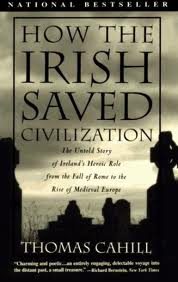
The Irish novelist who wrote the famous book about his childhood in Ireland called Angela’s Ashes, also wrote a less famous book about his early years as a teacher in the United States. The book was called T’is and even though it didn’t sell quite as well as his first novel, McCourt’s I love it because it lends some keen insights into a teaching and teaching is one of the things I love about being a pastor. McCourt tells a story about Humpty Dumpty that illustrates some of the difficulties we face when we begin a discussion of the resurrection. McCourt tells his class the story of Humpty Dumpty to his class and for a whole class period there’s a heated discussion of “Humpty Dumpty” itself. (I’m using the term “itself” because no where in this English nursery Rhyme does it indicate what gender Humpty Dumpty is) In McCourt’s class Humpty Dumpty’s gender was automatically assumed to be male. But it was the sixties and so nobody argued about Humpty’s gender when McCourt recited the well known rhyme: “Humpty Dumpty sat on the wall, Humpty Dumpty had a great fall; All the kings horses And all the king’s men Couldn’t put Humpty together again.” Then Frank asked his class what is going on in the nursery rhyme and all the hands shot up to say things like: This egg falls off the wall and if you study biology or physics you know that you can never put an egg back together again. I mean it’s common sense really. That’s when Frank asked the question that set the class at odds with him. “Who says it’s an egg? Of course it’s an egg! Everyone knows that! Where does it say that it’s an egg? The class is thinking. They’re searching the text for egg, any mention, any hint of egg. They just won’t give in. There are more hands and indignant assertions of egg. All their lives they knew this rhyme and there was never any doubt that Humpty Dumpty was an egg. They’re comfortable with the idea of egg and why do teachers have to come along and destroy everything with all this analysis. McCourt insists that he’s not destroying. He just wants to know where they got the idea that Humpty Dumpty is an egg. Because the class insists, it’s in all the pictures and whoever drew the first picture must have known the guy who wrote the poem or he’d never have made it an egg. So Frank says, All right. If you’re content with the idea of egg we’ll let it be but I know the future lawyers in this class will never accept egg where there is no evidence of egg. And so by tacit agreement Humpty Dumpty becomes now and always an egg. (I am indebted to Bernard Brandon Scott’s reminder of the story about Humpty Dumpty in Frank McCourt’s novel “T’is”)
For me the subject of the resurrection of Jesus has a great deal in common with Humpty Dumpty because by some sort of tacit agreement it was decided long ago that the resurrection of Jesus just has to be a physical resuscitation of a corpse; this despite the fact that the earliest writer on the subject of the resurrection, the Apostle Paul denies that the resurrection of Jesus was a physical resuscitation of a corpse.Continue reading →
I am indebted to Michael Morewood for the theological insights in his book“It’s Time: Challenges to the Doctrine of the Faith”for helping me to see beyond the idols in my head! This sermon was preached on Good Friday 2013 at Holy Cross Lutheran Church. Additional Good Friday sermons can be found here and here
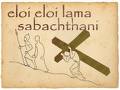
The account of Jesus’ execution that we have just heard from the Gospel according to John lacks the rawness of the earlier accounts of Jesus death. The author of this account wrote at the turn of the first century, some seventy to eighty years after the Romans executed Jesus. That’s enough time for two, maybe three, or possibly even four generations to have pondered these events. The first account of these events, the Gospel According to Mark was written slightly earlier, sometime after the year 70. Most scholars date it between the years 70 and 85. That’s still 40 to 65 years after the execution; still time for one or two generations to have pondered these events. Perhaps it’s the closer proximity of the Gospel according to Mark that gives it much shaper raw feeling when it is read. Or maybe it’s the decision of translators down through the ages to preserve the intensity of Jesus’ cry from the cross in Aramaic. I don’t know about you, but I cannot begin to contemplate the events of this dreadful day without hearing the echoes of Jesus’ plaintive cry, in his mother tongue: “Eloi, eloi, lama sabachthani?”
“Eloi, eloi, lama sabachthani?” “My God, my God, Why have you forsaken me?” The rawness, the bitterness, the desperation of this horrendous moment, and all the horrendous moments that have transpired before or since are captured in Jesus plea, “My God, My God, Why have you forsaken me?” I have always imagined a dying Jesus gathering up what little strength he has to raise his head to the heavens and cry: “Eloi, eloi, lama sabachthani?” In most of the films depicting the crucifixion that I can remember seeing, Jesus looks up, up toward the heavens to utter this painful cry to God.Jesus’ question has haunted the followers of Jesus for centuries as Christians have struggled to understand how and why Jesus died.This question has left the followers of Jesus tied up in knots for nearly 21 centuries as our ancestors in the faith have struggled to offer up answers to the questions of the faithful. Why did Jesus have to die?
In pulpits all over the planet, preachers are struggling to help their listeners cope with the realities of the violence that murdered the One whom we seek to follow. I have spent most of my life, struggling to understand exactly why Jesus died and what Jesus’ death means for all the generations who have trusted and followed Jesus. I have studied the answers that have been offered by successive generations of Jesus’ followers. I can recite chapter and verse of the various theories that have been offered by the church to explain Jesus’ death as all part of God’s grand plan to reconcile humanity to God. I can tell you about the Apostle Paul, who looked back to the Book of Genesis to try to fathom a reason for it all and settled upon the story of Adam’s disobedience as the source of our sinfulness. I could talk for hours about the theologies that hang on that apple. I know far too much about the fall and original sin and the need for reconciliation. I could recount the various theories of how God went about settling the score; of making us one with God. The theologians called this process of reconciliation with God, atonement and then proceeded to develop all sorts of theories of atonement. Lutheran pastors are required to study them all; all the way from the moral authority and ransom theories to the favorite of the last few centuries aptly named the satisfaction theory. Continue reading →
With St. Patrick’s Day just around the corner, I was asked about the sermon I preached last year when the celebration fell upon a Sunday. The person who asked about the sermon remembered laughing a lot during its delivery and encouraged me to re-post it. So, pour yourself a glass of your favourite tipple, sit back and enjoy a laugh.
Readings: Numbers 27: 1-11; Acts 13:44-51; John 12:1-8
St. Patrick’s Day doesn’t often fall on a Sunday, but as our congregation’s Annual Meeting would begin immediately following our worship service, I decided to be somewhat playful and irreverent with a sermon designed encourage folk to think beyond words on a page. The first reading brought the wonderful story of the Daughters of Zelophehad to church and as this reading does not appear in the Revised Common Lectionary it was fun to play with these feisty women. The reading from the book of Acts is actually the prescribed reading for the commemoration of St. Patrick and the Gospel text is prescribed for Lent 5C. The Guinness was just for fun! Enjoy.
Traditionally the season of Lent is a mournful time filled with calls to repentance and self-examination as we follow Jesus into the wilderness to be tempted and then on that long march to Jerusalem where the powers that be will have their wicked way with him. Our liturgies take a mournful tone as we lament our woeful human existence, confess our sinfulness, and hear exultations to take up our crosses so that we too can follow Jesus to the bitter end. Over and over again we are asked to remember that we are in bondage to sin and cannot free ourselves, as we gaze upon the cross remembering that Jesus our savior bled and died as a result of our wicked sinfulness.
Lent is a strange season that harkens back to a forgotten era. Unlike so many of the seasons of the church year it’s not exactly a season that attracts people to church. Not many of you got out of bed this morning and said, “Yippy it’s the first day of Lent. Oh goodie! We get to be reminded that we are sinful, that life is miserable and unless I’m willing to take up my cross and follow Jesus all the way to Golgotha, there’s precious little hope cause we’re all going to die and when the time comes we want Jesus to remember us.”
Now I know that there are some people who just love Lent and I must confess that I like the quieter, more somber tone that our liturgies take. I actually enjoy the opportunity to slow things done and be more reflective in our worship together. I savor the silences and the opportunities to be more contemplative. I love the colour purple with all its vibrant hues and the best part of all is that the beginning of Lent means that spring is just around the corner. What I don’t like about Lent are the signs, symbols, hymns and stories that make it so easy for us to fall back into the 11th century. Continue reading →
Three years ago, the Strange History of Transfiguration Sunday inspired this sermon. I offer it here because the words of Desmond Tutu speak volumes as I work on this year’s Transfiguration sermon.
When our images of God are tied to the idol of a supernatural sky-dweller who has the power to solve all our problems, despair is sure to follow as our super-hero fails time after time to impress us.
When I was a very little girl, I was absolutely convinced that I had the power to change the mind of God! Confident that I held such power, I never missed an opportunity to exercise it. Now, I’ll grant you that like most children, I was also convinced that the universe itself actually revolved around me, so believing that I was powerful enough to change God’s mind, wasn’t exactly much of a stretch. In fact, when I was a child, it wasn’t all that difficult to change God’s mind. For instance, I could stop God from breaking my mother’s back simply by leaping over a crack in the pavement. “Don’t step on a crack and break your mothers back.” Now, in my young mind the only one powerful enough to crush my mother’s powerful spine, must be God. I also knew that God wasn’t particularly fond of ladders, and that if I refrained from walking under them, God would smile upon me. Continue reading →
Fifteen years ago, I travelled to Newmarket to preach for the first time at Holy Cross Lutheran Church. It was Transfiguration Sunday and I was preaching for Call. I knew that the following Sunday the Congregation would gather to vote on whether or not to call me as their pastor. I’ve been serving as the Pastor of Holy Cross for almost fifteen years and over the years the people of Holy Cross have nourished and challenged me and transformed me into a pastor. What follows is a transcript of the sermon I preached on that long ago Transfiguration Sunday. Old sermons reveal our old selves. While my theology has changed over the years and I would not preach this sermon in the same way now, I treasure the memory of that hopeful candidate for call. To the people of Holy Cross: Thank-you for transfiguring me! Shalom!
When I was a teenager, I was always in a hurry. I wanted to see and do everything there was to see and do. When I was nineteen, I knew that I just had to get out there and see what the world had to offer. So with nothing more than a backpack, a three month Euro-rail pass, and eight-hundred dollars in travellers cheques, I boarded an airplane bound for Amsterdam.
I was searching for adventure and I was convinced that Europe held the excitement I was looking for. Inside my backpack was the book that would make it all possible. Europe on Ten Dollars a Day. I was determined to make my eight-hundred dollars stretch the length and breadth of Europe. I was going to see and do it all! It wasn’t easy. In fact when I look back on it now, it seems like such a lot of hard work. Up early in the morning sightseeing all day long. Meeting new people. Fighting my way through the crowds of tourists. Searching for cheap places to eat and sleep.
After two months of travelling from one European city to the next, I just couldn’t face one more castle or museum. I figured that it was time to get away from the cities so I headed for the Alps. After a long train ride from Munich, I arrived in the Swiss town of Interlaken. There I boarded a coggle train that would take me to the Alpine village of Grunewald. The train was filled with tourists anxious to fill their rolls of film with pictures of the mountains, but it was overcast and there were no mountains to be seen. Continue reading →
When I was in my early twenties, I grew weary of sharing space and I decided that I wanted an apartment all to myself, despite the fact that I couldn’t really afford an apartment all to myself. But I was determined and that’s how I ended up living in a very rough neighborhood in the east end of Vancouver. My parents weren’t’ very happy about the neighbourhood and worried about the unsavory characters that lived in the run-down building where I found a spacious one bedroom apartment that I could just about afford. The apartment was just a couple of blocks away from the office where I worked, so I was able to walk to work. I ignored all the warnings of my family and friends and I convinced myself that I could handle anything that came my way.
In my heart of hearts I was rather pleased to be living in such a poor rough and tumble neighbourhood. I was young and foolish and the neighbourhood was exciting. Every Sunday I would make the trip back to my home church in the suburbs. Sometimes I would make a second trip out during the week to attend a Bible study. Like so many young people, I was harsh in my criticisms of the elaborate life-styles of my elders. At bible studies, I was always bringing up the plight of the poor and the oppressed and challenging people to do something. Various members of my own family often accused me of being a bleeding heart liberal. I wore their criticism with a certain amount of pride, convinced that I was living out my beliefs.
Although I walked to work each day, I didn’t know any of my neighbours, until one morning I was surprised by a knock on my apartment door. I wondered how anyone would get past the lock on the front door. So, I peered through the peephole and was relieved when I saw a young woman at my door. I unbolted the door and in swept Brenda. Brenda was all smiles and laughter as she explained that she and her roommates were out of coffee and she wondered if I might be able to lend them some coffee. When I explained that I had just used up the last of my coffee making my own morning brew, Brenda told me not to worry, she and her roommates would be happy to join me. When Brenda returned, she introduced her roommates, Janice and Sue and we all sat down together for our morning coffee. Continue reading →
An Epiphany Sermon, preached in 2008. I had just read “The First Christmas” by John Dominic Crossan and Marcus Borg. Our congregation played host to Dom Crossan a month before I wrote this sermon. So, Dom’s insights run through this effort. But the heart of this sermon beats as the result of a sermon preached by Bruce Sanguin a self-proclaimed evolutionary christian who is a United Church Minister (Canadian Memorial Church, Vancouver). I had the privilege of meeting this modern mystic while on sabbatical this summer and his compelling way of unlocking the scriptures using the wealth of the christian tradition together with the insights of modern science and psychology borders upon the poetic. This sermon was anchored by Sanguin’s words (Epiphany 2007). Sermons are a “live” event. So, this manuscript is an approximation of what was actually preached.
Just five days before Christmas (2008), The Archbishop of Canterbury, The Most Reverend Doctor Rowan Williams, the leader of the worldwide Anglican Communion started a firestorm. During a BBC interview, His Grace was quoted to say that the story of the “three wise men is a legend”. The Archbishop was also heard to say that he remained unconvinced that there was indeed a star that led the legendary trio to the birth place of the Christ Child.
If that wasn’t enough to send folks off the deep-end, it has been revealed that the Presiding Bishop of the U.S. Episcopal Church The Most Reverend Doctor Katherine Jefferts Schori, who just happens to be the first woman elected primate in Anglican history, has fanned the flames of the fire-storm by sending out what has been judged by some to be an incendiary Christmas card.
I downloaded a copy of the offensive card, so that you could see for yourself. Her Grace’s choice of card has offended the good deacons of Ft Worth Texas who claim that their Primate’s actions defy explanation. As you can see the wise folks depicted on this image look a lot like women. Can you imagine the nerve of the first woman primate! How could she be so bold as to select such an offensive image? Leave it to straight talking Texans to set things straight: for despite the audacity of the Primate, the Texans have pledged to “stand for the traditional expression of the Faith.” Continue reading →













 pastordawn