 Third Sunday after Epiphany
Listen to the sermon here
January 27, 2013


 Epiphany 2C sermon John 2:1-11
The Wedding at Cana
As I begin to look at resources for this coming Sunday, this old sermon preached in 2007 reminds me that sometimes the world forgets just who it was that turned water in to wine! The theology about grace in this sermon is from Edward F. Markquart “Sermons from Seattle”, who has saved me from myself on many a late Saturday night!!! The story about my Nannie is best when it is served up with a big dollop of an Irish accent, preferably of the Belfast variety!
Last summer my family my family threw a wedding feast of our own. It was my niece’s wedding and in addition to attending I had the privilege of presiding. Working a family gig, as a pastor is an unusual experience; especially where my family is concerned. These folks knew me back in the day. So seeing me up there in my working duds, doing what we clergy do, well it’s a bit of a stretch for the folks you grew up with.
At the wedding feast, I ran into some folks that my brother and I went to high school with. Every once in a while I would catch him looking at me as if he was trying to figure something out.
Now fortunately, this particular wedding feast had an ample quantity of wine and over the course of the evening, my old classmate eventually sauntered over to my table and sat down. We exchanged a few pleasantries. Je told me a little about his life, reminding me that he had 3 kids, and explaining how he liked his work as a salesman for a manufacturing firm. It was a pretty dull conversation, until we got around to the part where I said, “Do you remember the time when we….” And then he said, “Yeah, but what about the time we…” And then I said, “Yeah, but that was nothing compared to the time we all….
So, we laughed together about those two crazy kids that we used to be all those years ago. And then Je just blurted it out. “How do you stand it?”, he asked. For a moment I thought he was asking me about getting older. It took me a while to figure out that he was truly mystified by my chosen profession. “How can you stand being a minister?”
“Well I….” He didn’t let me answer before he launched forth. “Don’t get me wrong! I don’t mind all that religious stuff. I mean Jesus was a really great guy and all that, but how can you stand to be around all those Christians all the time!”
It wasn’t the first time that someone had asked me such a question. And I really didn’t want to get into all this at my niece’s wedding, so I asked my old class-mate if he would like to dance. To which he replied, “Do they allow you people to dance?”
I didn’t dignify that one with an answer. I just grabbed my old frined’s empty glass and told him we were going to need to fill our glasses and on our way to the bar, my friend said he thought that they frowned on people like me enjoying themselves! To which I replied, “Have you heard the one about Jesus and the wedding party?”
Who was it that turned water into wine in the first place? My old friend wasn’t the first and I expect that he won’t be the last person who thinks that just because I wear a collar that I’m some sort of religious fanatic, whose forgotten how to have fun!
You see my old classmate’s understanding of Christianity is based on a few scattered childhood memories, together with a whole lot of what “they” say. You know, that grand and glorious “they” who seem to frown on everything that even remotely smells like it might be interesting, or fun, or even remotely useful. That ever present, humourless “they” who scream and shout about family values, and the Judeo-Christian tradition that must be maintained at all costs, regardless of what science, or common sense or decency, or kindness, or hospitality, or even Jesus tells us. That ubiquitous “they” whose message about Christianity, sounds more like bad news than the Good News that Christ proclaimed.
“They” who if they did manage to recognize grace because it had the audacity to fall into their laps, would probably make up some sort of rule so that people wouldn’t dare to expect that grace would ever come their way again. The almighty “they” who have managed to reduce the Good News of Jesus’ life death and resurrection to a list of thou shalt nots or else God’s gonna roast your sorry you know what in the fiery pits of hell forever and ever amen! So, wipe that silly smile off your face, and fall down on your knees and never ever forget that you are nothing but a lousy disgusting creature that God would just as soon smite rather than have to listen to. And the only chance you have of escaping the pits of hell, is if you open up your wallets and send a cheque right away so that “they” can send you a copy of the rules, so that you’ll be sure to know who’s in and who’s out, and how to go about making sure that when the end of the world arrives, your on the right and I do mean “right” side of Jeesuus!
Sisters and brothers if you’ll only empty your wallets, Jeesuus will be see to it that what ever you touch will turn to gold. Cause God wants you to be healthy, wealthy and wise, so if you just check your brain at the door and follow “them” you too can be on the path to glory!
Those are the kind of Christians that my old friend was talking about. The kind of Christians who have managed to give Christianity such a bad name. The kind of Christians who seem to be getting all the attention these days. And I’m with my old friend on this one: I can’t for the life of me figure out how people can stand to be around that kind of religious fanatic. If there is a hell, and just for the record, I don’t believe that there is such a place, but if I did believe in hell, hell for me would be to spend eternity with a bunch of religious fanatics. As for me, its just like the song says, “I’d rather laugh with the sinners than cry with the saints!” Cause if heaven is full of religious fanatics then I don’t want any part of it. Angels and fluffy clouds simply don’t appeal to me.
I’m with Mark Twain on this one, there’d better be good scotch and amazing conversation or I’m simply not interested. Choirs of angels is one thing, but I’ll be over with the Grateful Dead, and we’ll be jamming and that party will go on forever, cause there’ll have to be numbers from the likes of Louis Armstrong, John Lennon, Elvis, Patsy Cline, Judy Garland, and Chicofsky! Yeah, and when we get around to Vivaldi and the music is sweet and low, I want to have a word with Gandhi, and Einstein, Madam Curie, Bodacia, Simone de Bouveria, Emmerson, Tennison, and I’ve always wanted to find out exactly what Abraham, Jesus and Mohammad, have to say for themselves and what they really think about the mess we’ve made of all that they tried to teach us. And then, I want to hear from Sarah, Hagar, and Mary and I want to know what they think about all sorts of stuff. So, it’s a good thing that eternity goes on forever cause there’s so much to learn, to taste, to experience and to enjoy.
The Good News is that Jesus came so that we might have life and live it abundantly. Abundant life! It boggles the imagination! So, why oh why do so many people try to turn the Good News into bad news? How do we get from I want you to live abundantly to stop, wait, stand over there, don’t do this and definitely don’t do that and wipe that smile off your face cause the end is near?
Is it any wonder that the writer of the Gospel of John, decided to tell the story of Jesus’ turning water into to wine right up front? I mean really, if somebody asked you to tell the story of who Jesus is and why Jesus matters would you begin by telling them the one about the day Jesus turned water into wine. Well, maybe you would if all the religious types around you were so busy making rules and pointing out the rule breakers, worrying about who’s in and who’s out and telling everyone that God is gonna smite them if they don’t behave themselves.
The writer of the Gospel of John describes Jesus efforts at the wedding feast as a sign. He deliberately doesn’t call it a miracle. The writer of the Gospel, the Good News about Jesus Christ, says that this is the first of Jesus signs. A sign does not draw attention to itself but rather points us toward something else. The wonderful thing about this sign is not that Jesus was able to turn water into wine, but that Jesus gave us a sign to point the way.
Jesus took 180 gallons of water and turned it into 180 gallons of wine. 180 gallons of water; but not just any water; water that was used for rites of purification. Purification rites, things dreamed up by religious types to make sure that people who had broken the religious rules could make themselves right with God. Jesus takes these gallons of water that were designed to wash away the guilt of those who had broken the law; water that was designed to wash away guilt and Jesus transforms these gallons of water into the best wine you can imagine. Jesus first sign points to a new way as Jesus transforms gallons of guilt into gallons of grace. Gallons of grace and gallons of forgiveness! This new way of Jesus’ is a way of joy and happiness. It’s gallons of joy! (Edward F. Marquart)
Being a Christian is like going to a party. Have you heard the one about the party; you know the one that Jesus told? It seems that a whole bunch of people were invited to a wedding feast but they couldn’t come. They had all sorts of excuses why they couldn’t come like they had to fix a new house or take care of their stuff. People had excuses about why they couldn’t come to the party so the fellow giving the party had to put the word out and invite all sorts of other people to come. (Edward F. Marquart)Being a Christian is like going to a party. Maybe that’s why we followed Jesus and not John the Baptist. Cause if John was the founder of our religion, then discipleship would be all about rigorous fasting, with no good wines, and only repentance never grace. But we follow the guy who turned water into wine, guilt into grace! Christianity is not for sour pusses. Christianity is not for legalists. Christianity is not for people who love to wallow in their guilt like pigs like to wallow in the mud. Some religious people are like that; God forgive them! They just can’t seem to get enough of wallowing in their guilt. But the new way that Jesus’ signs point to is full to the brim of grace. This new way makes us free to love. (Edward F. Marquart)
This new way helps us to understand that we may indeed be a crummy Christian; we may not be very good at all, but the Gospel of grace insists that despite our tendency to fall short of what God created us to be; God refuses to give up on what God has created. But rather than make it all about the rules God has decided to try and love us into the fullness of life. Grace is God’s solution to the evil in the world. And in spite of our stupidity, our bunglings, our mistakes, our brokenness; God is going to keep on loving us, not because of who we are or what we can accomplish, but because of who God is and what God can accomplish through loving us.
Gallons and gallons of grace, designed to overwhelm us with the sheer magnitude of God’s love so that we can’t help but love in response to all that amazing grace. That’s the Good News!
God is love and God loves us, and you don’t have to look any further than Jesus to understand just how much God loves us and when you look at the life of Jesus and the way in which Jesus embodied that love you can see the way. The way to respond to all that grace with love; love for God and love for the world that God loves.
Jesus came that we might have life and live it abundantly. There’re gallons and gallons of grace to go around. That’s Good News indeed. News that needs to be shared.
But people have all sorts of excuses for not coming to the party. We’ve made such a mess of Christianity, and some of our wine has turned to vinegar! One whiff and people remember that their allergic to what we’re offering. So we’re going to have to do more than simply just invite folks to stop by for a taste of what we have to offer. It’s not enough for us to wait around for folks to drop by for some wine. We’re going to have to pack up some wine and go out into the world where the folks are at and ask them to take a sip to see for themselves. And we’ll need to remember Jesus’ warning not to put new wine in old wine skins. We’re going to have to find some new wine skins.
The News is Good! Abundant life, life beyond our imaginations. Life that defies our limited vision. Life that will not be bound by petty rules; small minds or weak temperaments, life that is abundant, filled with love that is steadfast and sure enough to be in the world active and loving, transforming the sorrows of this world into joy. And as for those sourpuss religious folks, how will we put up with them? Well there’s enough grace for them too. And when their rhetoric gets us down, we can take refuge here at Holy Cross, where the wine is sweet and good.
I’ve told this story before. But incase you’ve forgotten just how amazing the grace is around here, let me remind you. A few years ago my grandmother, Nannie came to visit me for a few months. Now Nannie has had her fill of Christians and so she doesn’t like churches. So, even though I’m the pastor here, no amount of invitations could convince my Nannie to come to church on Sunday morning. But when the Sunday of the Church Picnic rolled around; well back then we used to have our worship service in the park and then party after worship. So, rather than invite Nannie to come to church, we told her that we were going to a church picnic.
Nannie wasn’t sure at first but she loves a picnic and when I assured her that there’d probably be potato salad and that there’d definitely be wine; well Nannie agreed to come. She had a lovely time and that evening my Mother called to talk to her Mother and when I told Mom that Nannie had been to the church picnic my mother was more than a little intrigued. I handed Nannie the phone and Mom must have asked Nannie about you folks cause I heard my Nannie say this: “Auch Joyce, sure they were lovely; auch they were that nice sure you wouldn’t even know they were Christians.”
“They were that nice, sure you wouldn’t even know they were Christians.” It didn’t take you folks long to let my Nannie know that everything she believed about how horrible Christians are is not true about you. There are lots and lots of folk out there who can’t get past their distaste for Christianity and all the horrible things they’ve heard have caused them to assume that we are all about inflicting guilt.
It’s time to pack up some wine in new wine skins and take some of that grace out there into the world that God loves. So that the Good News of God’s grace can be heard, and felt and lived. So that the miracle of Holy Cross can be a sign pointing to the way of Christ; and all may know that Christ came because God wanted to remind us of the gift of abundant life.
 An Epiphany Sermon, preached in 2008. I had just read “The First Christmas” by John Dominic Crossan and Marcus Borg. Our congregation played host to Dom Crossan a month before I wrote this sermon. So, Dom’s insights run through this effort. But the heart of this sermon beats as the result of a sermon preached by Bruce Sanguin a self-proclaimed evolutionary christian who is a United Church Minister (Canadian Memorial Church, Vancouver). I had the privilege of meeting this modern mystic while on sabbatical this summer and his compelling way of unlocking the scriptures using the wealth of the christian tradition together with the insights of modern science and psychology borders upon the poetic. This sermon was anchored by Sanguin’s words (Epiphany 2007). Sermons are a “live” event. So, this manuscript is an approximation of what was actually preached.
Just five days before Christmas (2008), The Archbishop of Canterbury, The Most Reverend Doctor Rowan Williams, the leader of the worldwide Anglican Communion started a firestorm. During a BBC interview, His Grace was quoted to say that the story of the “three wise men is a legend”. The Archbishop was also heard to say that he remained unconvinced that there was indeed a star that led the legendary trio to the birth place of the Christ Child.
If that wasn’t enough to send folks off the deep-end, it has been revealed that the Presiding Bishop of the U.S. Episcopal Church The Most Reverend Doctor Katherine Jefferts Schori, who just happens to be the first woman elected primate in Anglican history, has fanned the flames of the fire-storm by sending out what has been judged by some to be an incendiary Christmas card.
I downloaded a copy of the offensive card, so that you could see for yourself. Her Grace’s choice of card has offended the good deacons of Ft Worth Texas who claim that their Primate’s actions defy explanation. As you can see the wise folks depicted on this image look a lot like women. Can you imagine the nerve of the first woman primate! How could she be so bold as to select such an offensive image? Leave it to straight talking Texans to set things straight: for despite the audacity of the Primate, the Texans have pledged to “stand for the traditional expression of the Faith.”
I must confess, that I deliberately chose our opening hymn. I wanted us to sing “We Three Kings” so that the traditional interpretation of this Gospel story would be fresh in your minds. It’s a lovely little song; I’ve been singing it since I was a child. It’s a lovely little song about a lovely little story; a story that’s been embellished over the centuries. A song that conjures up images of Caspar, Melchoir and Balthazar riding atop their camels, following the star to the stable where the baby Jesus lays waiting for their precious gifts of gold, frankincense and myrrh .
But, at the risk of offending our Texas cousins, I’m afraid that I much prefer to imagine the possibility that the magi may have been women, and although I would use the Archbishop of Canterbury’s exact words, I too believe that these events are not historical. And I don’t mind telling you, that despite the efforts of the biblical literalists to pinpoint the star or to determine the identity of the magi, I don’t believe that the writer of the Gospel of Matthew ever intended his readers to take this story literally. But, I do believe that the writer of the Gospel of Matthew did intend for us to take the story seriously. Very seriously indeed. For the writer of the Gospel of Matthew is trying to put into words that which words cannot explain.
The writer is trying to express the wonder that was experienced by those who encountered Jesus of Nazareth; an experience so real, so amazing so life transforming that only the language of parable could hope to capture even a hint of who Jesus was, is and ever more shall be.
The story of the magi’s visit is a parable; and like all parables it is a story that captures a timeless and enduring truth about the human condition. I don’t believe it actually happened. But then I don’t believe that the parables of the Good Samaritan or the Prodigal Son, actually happened either, but they couldn’t be more true.
That’s right, the visit of the magi never happened and yet it ‘s always happening. This wonderful tale of three astrologers scouring the heavens for signs of new happenings on the planet captures the imagination of every generation. You see, we humans are meaning-making creatures eternally searching for the Mystery at the heart of the universe that dignifies and enchants our lives. Human beings just can’t help trying to understanding the meaning of it all. We are constantly trying to understand the how and the why of existence.
But alas the indignity of our modern times lies precisely in our being told that the cosmos—this universe in which we live and move and have our being—is essentially purposeless, without meaning or direction.
There’s this thing that some people call Scientism afoot that threatens our ability to see beyond our noses. Scientism is the religion of those scientists who refuse to concede that the phrase, “I don’t know” is sometimes the only answer that we have. Scientism is science that slips into an ideology of materialism—an ideology of materialism is the idea that every thing and every body is nothing more than the random collision of atoms and molecules. Scientism is the assertion that we and the universe are nothing more than a cosmic fluke of enormous proportions going nowhere in particular. According to the dictates of scientism: any meaning that we might attribute to our existence is therefore just that—our own arbitrarily generated attributions of purpose to a journey to what is at the end of the day nothing more than the purposeless march of time. Unlike science, that provides for the possibility of a creator, scientism would have us believe, that there is no meaning behind our existence, we simply randomly evolved and we will someday randomly devolve, or dissolve into a pile of dust. (Sanguin)
That’s why I love the parable of the magi’s visit! For these ancient astrologers had their own ways of determining meaning,“the heavens are telling the glory of God, and the earth proclaims God’s handiwork”. A new star appears in the heavens and for those with enchanted hearts, it means that God is on the move—something new is about to happen. So they chased down the star, to see this thing that God had done.
Unlike our ancestors, we live in a culture in desperate need of enchantment and awe. We are so meaning-starved as citizens of the Western world in the 21st century that we chase after almost any kind of novel spiritual movement. The pendulum swings from scientific materialism to the latest cult so starved are we for spiritual re-enchantment. In our state of spiritual hunger we’ll accept any morsel from the smorgasbord of new age spirituality. But there are few among us who would take seriously the study of the stars. Apart from a fleeting glance at our own horoscope, we’ve long since given up the notion that there’s any wisdom in astrology.
But what of those modern day magi who study the stars, what wisdom can we gleam from the astronomers of our day who peer into the sky seeking the answers to our riddles? We may no longer care if the moon is in the seventh house or if Jupiter is aligned with mars, and I don’t even know if this is still the dawning of the age of Aquarius, or if we’ve moved on to some other season of the Zodiac, but I’ve heard tell of black-holes, the death of stars, and light-years.
The sages of our age, the astronomers who seek meaning from the skies are not all so quick to subscribe to the big bang theory of randomness. For they have seen great things in the sky and there are many among this wise folks who insist that the cosmos is infused with meaning and purpose—Indeed, they tell us that stars and the planetary bodies participate in this journey of cosmic meaning.
Those sages who are engaged in scientific study are not all followers of scientism. The notion of a creator, a first cause, or a driving force, dare we say God, as the power that drives all of existence is seriously explored by the wise folks of academia and science has refused to exclude the possibility. And yet there is the illusion afoot that the followers of science find faith incompatible with the pursuit of meaning. When the truth is that scientism seems to be the choice of those who have given up or forsaken the pursuit of meaning. Science itself would seem to deny scientism!
More and more, scientists, are beginning to speak out and more and more academics are joining the chorus of those who insist that there is indeed a power at work in the large-scale structures of the universe, in the evolutionary unfolding of the planet, and in our own personal and collective lives. To pursue knowledge is to continue the journey of the magi who pursued light, the timeless symbol of knowledge. To follow the light, to go where wisdom and knowledge lead, is to seek the answer to the age old questions: Where do we come from and where are we going? Why are we here?. You don’t need to be a scientist or an academic to ponder the secrets of existence. Like the magi, we too can seek the light. Just as the magi gazed up at the light in the heavens and followed it to the place where it lead—and found the Christ-child—we too can follow the light in our own lives.
Scientist Brian Swimme has a theory, a theory that coincidently, theologians and priests have been taking about for centuries. Swimme calls his theory the principle of allurement. According to this theory there is a power at work in the universe that works by alluring one body to another, until eventually all bodies are drawn into the very power that provides the force of allurement. (Sanguin)
In simple terms it works like this: five billion years ago, our planet became fascinated by an enormous star, a million times its own size. The earth spends a billion years just hanging out in its orbit in a relationship which physicists actually call adoration. There is something about the star that has the capacity to awaken this planet, and the planet gives this source of allurement its undivided “attention”. When it figures out how to make a chlorophyll molecule, the love affair really begins. Through photosynthesis, the earth, discovered how to convert the sun’s light into the energy required for the procession of life to emerge. This is why the earth found the sun’s presence so alluring. The sun had the capacity to awaken the latent potential of the planet earth to come to life. (Sanguin)The theory of allurement isn’t confined to astronomy, it dips into to theology and from the priest come palaeontologist, Pierre Teilhard de Chardin, it borrows the notion of the Omega Point. The Omega Point is the completion and perfection of all creation to which we are being drawn, no-coercively, gently, and in a way that respects our freedom. (Sanguin)
How do we find our way to the Omega Point? Well that’s the real beauty of this theory, you see it’s described as a completely natural process that kicks in the moment we decide to trust this Power—this power that goes by many names, you and I are bold enough to call this power God, some call it Wisdom, but there are other names. (Sanguin)
The point of the Omega Point, is that all we must do is to follow the way of the Magi and look for the light. Physicists call this quest for the light, “attending to our allurement”. The dynamic of allurement is a powerful force in the psychological make-up of the human being. (Sanguin)
Each of us is drawn by this mysterious force toward what for each of us provides ultimate meaning for our lives. If we resist the force, ignore it, deny it or fight it we loose our way. Like the Magi we must follow the light.
Think of the Christmas presents you were given as a child that charted a course for your life; the lego set for the future engineer, the microscope of the future biologist, Gretsky’s first hockey stick, the artist’s first set of water-colour paints. For me it was the books; those wonderful, marvellous books, that lead me through the words to The Word, and back to words about The Word.
The light shining in the darkness can draw us toward divinity, with books, music, other people, world events, dreams; anything and everything may function as the light. The spiritual journey involves following the light to its source—like the Magi.
God has made it easy to find God. The points of light to guide our feet to the Christ are as numerous as the stars in the sky. The essential skill to hone is the capacity to notice your life.
As you begin to take notice of your life, an enchanting awareness may surface—that there is a Mysterious Power at work weaving together all the various strands of your life into a unique and beautiful symmetry or tapestry.
The next step—after noticing that there is this Light guiding your path—is to set out upon a conscious spiritual journey. Become the Magi. Load up your metaphorical camels and set out across the landscape of your soul to where it is that the light stops. (Sanguin)
Here’s a little secret pearl of wisdom to take with you on your way: There is no single, final destination that we’re ever going to arrive at in our lifetime. Do you think that the Magi’s spiritual journey was over when they arrived at the stable—that they found Christ and then stopped growing spiritually? Don’t you believe it!
Christ is the ever-present light of our lives, beckoning from the many stars that allure us, calling us toward our own divine image and inspiring us to give our lives as an offering so that all of creation may continue to evolve. Evolution is not random; each of us has a unique role to play. But let’s not be naïve. Each of us possesses an inner Herod who doesn’t like that we’re paying homage to any king other than our self. The story of the Magi got this detail exactly correct. Something within us resists God—call it ego if you will—but there is something within us that thinks that it alone deserves gifts of gold, frankincense and myrrh. It does not want to worship or pay homage; it wants to be on the receiving end of both and will go to great lengths to make it happen. It wants to know where the light is leading, not to submit to it, not to give thanks, not to sing praise and be in awe, but rather to scope out it’s rival, in a vain attempt to outshine it, or even destroy it.
Herod is also found in our families, and in our social, political, economic and religious systems. Herod is present as the power of domination. Herod hates the fascination of others unless it is directed toward him. Herod—within and without—refuses to serve any higher power; Herod refuses to fit in, to take his place in grace. Herod will try to rule the show.
But fear not. Your inner Magi is very wise. And just like the parable teaches us, Herod may summon the Magi in an effort to find out where the light is leading. Herod may pretend to want to offer gifts. But another light shines upon the Magi. An angel; a messenger speaks to the Magi in a dream, warning them not to cooperate with Herod. The Magi ignore Herod, leave their gifts with the Christ child, and head home by another path.
This is the path of Epiphany, then; the “other” path, the path of spiritual wisdom that trust the light, follows it wherever it may lead, discerns the wily, violent intentions of the inner Herod, and returns home—always home—to the heart of God.
So, you see, the story of the Magi’s journey, never happened, and yet it is always happening. May the light of the world lead you home! Always home—to the heart of God! Amen.
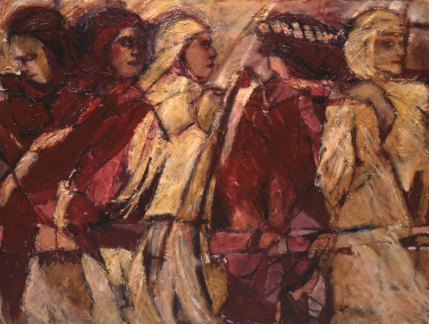
Tamar, Rahab, Ruth, Bathsheba, Mary by Sallie Poet
As we await the big celebration of the coming of Christ, it is important for us to remember who Jesus was. I offer this snippet from an Advent sermon given by Bishop John Shelbly Spong on the first seventeen verses of the Gospel according to Matthew. After exploring the lives of the women the gospel writer includes in the genealogy of Jesus, Bishop Song invites us to re-think our image of Jesus. You can read a rough transcript of Bishop Spong’s sermon here
In this snippet, Bishop Spong invites us to re-think our image of God in light of our knowledge of Jesus.
You are the Bethlehem point.
Let the power of God in Christ enable you to live and to love and to be.
Let the God presence within you flow through you so that the love of God might
be known among all the people that God has created
and that God still loves.
Be the light and love of the world,
In the name of Yahweh, Christ, and Spirit, One
Maranatha, Come Lord Jesus. Amen.
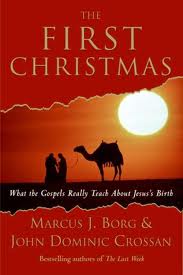 In 2008, our little congregation played host to John Dominic Crossan who has been acclaimed as world’s most famous New Testament scholar. Crossan’s visit to our congregation began with a public lecture based on his best-selling book The First Christmas in which he and Marcus Borg provide a splendid historical outline of the development of the birth narratives. I had the dubious honour of standing before his enlightened audience on Christmas Eve to preach in the great man’s wake. What follows is the Christmas Eve sermon I preached just three weeks after Dom’s illuminating visit.
Just a few weeks ago, this congregation was privileged to play host to a man who has the reputation of being the greatest New Testament scholar in the whole world. Dom, (we get to call him “Dom” now) wrote The First Christmas with Marcus Borg who is the guy who is heralded as the world’s leading expert on Jesus and Christianity in the 21st century. During his lecture, Dom provided us with all sorts of marvellous ways to understand the stories surrounding the birth of Jesus. Ever since that visit, there have been folks who listened very carefully to what Dom had to say and who have been positively gleeful when they’ve asked me what I’m going to do about preaching on Christmas Eve.
I mean what could I possibly say to you after so many of you have just finished hearing from the best in the business! And then there are those of you who bought the book and you’ve read what the experts have to say about the first Christmas. Some of you weren’t able to hide the smirks when you wondered out loud just exactly how I’d go about following the eminent Dr. John Dominic Crossan.
I don’t mind confessing that on several occasions since, I’ve woken up in the middle of the night and wondered what on earth I’d say to you this evening. Even those of you who didn’t manage to hear Dr. Crossan; you’ve probably seen him on TV this week on one of the dozen or so, documentaries on which he appears as the expert scholar who the media turns to in order to unravel the Mysteries of the Bible or to dig up the truth about Jesus. In this the age of information, you can simply go to YOUTUBE or to ITUNES U and download all sorts of podcasts where you’ll discover what pastors have been learning at seminaries for decades as the academic world has unlocked so many of the secrets of the ancient world in an effort to discover the real truth about what may or may not have happened so very long ago. Ever since: “The shepherds returned, glorifying and praising God for all they had heard and seen, as it had been told them.”
Since the end of the first century, some 1900 years now, the story of the nativity has been told. Lately the church has become a little embarrassed by the way in which this story has been told. All sorts of experts have weighed in to tell us that it could never have happened the way we all remember it. Biblical scholars, historians, theologians, bishops, pastors, professors even scientists have cast doubt on the details of the story of the nativity. But even though we know how impossible some of the details may be, we cling to this powerful story. Despite the wisdom of the experts, regardless of our doubts, this story still has the power to stop us in our tracks. No other story or image is more recognizable to people the world over than the Nativity scene of the birth of Jesus.
Tonight the images of a stable in Bethlehem, with Mary and Joseph gazing fondly at the baby Jesus, while the shepherds look on and the heavenly host sing their praises, these images are crystal clear to all of us. The story is part of us; it’s in our bones. And every year this story causes our lives to shift from the routine of winter, to the marvel of this night, when families are drawn together, and strangers greet one another with kindness and from near and far the hope of peace on earth is a dream shared by us all.
Now I know that somewhere in the deepest darkest recesses of our being, or for some of us, just beneath the surface of this dream, the wisdom of the experts causes a shiver to run across our spines as we wonder how the hope for peace on earth can possibly lie with such an unbelievable story. That shiver used to haunt me, until the day I recognized the power of the truth that lies in the story of the birth of Christ.
You see truth is an amazing reality. Truth is never simple. And yet truth is quite simple really. At least for those who have eyes to see and ears to hear. But before I tell you about the truth, let me do what I do every Christmas Eve, Let me tell you a story. It’s a true story about a story about a story.
You see, the easiest way I know to reveal the truth about a story is to tell a story that sheds light on a story. It’s the most ancient way to reveal the truth and it’s the way that Jesus used when he wanted to reveal the truth about the scriptures.
This story took place just about two weeks ago. Our Confirmation students had gathered together for our last class before the Christmas break. Their final assignment was due. Each of the students was required to tell a story that revealed something about the nature of God. They were asked to write a gospel according to them.
One by one they got up and from this very pulpit and they told their gospel stories. I asked one of the students for permission to re-tell their gospel story this evening. The student agreed on the condition that I not reveal to you who actually wrote the story. Which is perfect really because despite all our best efforts nobody can really say who actually wrote the four gospels attributed to Matthew, Mark, Luke and John. So, here I give you the gospel as it was told by one of Holy Cross’ confirmation students and recorded, after a fashion, by me.
It was a cold and snowy night in the town of Newmarket and a homeless couple wandered the streets of Davis and Yong searching for shelter and warmth. They were a strange looking couple; a man and a very, very, very, fat woman.
They were dirty and grubby and they wore layers and layers of clothes trying to  keep warm. They’d been wandering for a very long time and they were very, very, very hungry.
So they trudged up to Wendy’s, hoping to get a warm meal. But when they made their way up to the counter the guy behind the counter shouted at them and said, “Get outta here! We don’t serve fat people at Wendy’s!”
So the hungry couple headed over to Tim Horton’s, but the woman was so fat that she couldn’t fit through the door so the people told her to go away cause there was no room for fat people at Tim Hortons.
So, on they trudged up to MacDonalds and low and behold the fat woman made it through the door and the man managed to get the servers to provide them with a warm meal and just as they were settling into a booth, there appeared a great flood!
And the very, very, very, fat woman leaped up onto the table, right there in the middle of MacDonalds! And the woman began to scream and moan. Because she wasn’t just some fat homeless person, she was with child. And after a lot of screaming and moaning a baby was born in the city of Newmarket. And all the people rejoiced! For unto us a child was given, a child born in the poverty of MacDonalds. For if God came to earth today, God would come where we least expect God to be.
The Holy Gospel as it is told by a young person of this congregation. Thanks be to God.
So, if your struggling over some of the details of the nativity story, if the experts have left you perplexed, cynical or worried, do not be afraid, for I bring you tidings of great joy. The story is true, every last word of it is true. For just like Dom so wisely revealed to us, the story of the nativity is a parable and like all parable’s it represents a truth that cannot be fully expressed in words. Like all good parables the truth is not to be found in the details, but rather in the Spirit of God that breathes life into the parable. It’s a parable about so many things, but most of all it is a parable about peace on earth giving glory to God.
Now there are many down through the ages that have tried to weave stories of peace on earth, but none so everlasting as this. And yes some of us would have rather have had a road map or an expert to set us on the path to peace. But alas, all the experts have failed in their efforts to guide us. The truth that they impart has been rejected. So, once again we are left with this parable. A story so simple that even a child can understand it. A parable that depicts the truth that was experienced by those who walked and talked, loved and learned from Jesus. And the truth echoes through the centuries and the message is clear to everyone who has ears to hear.
“And suddenly there was with the angel a multitude of the heavenly host praising God and saying, “Glory to God in the highest heaven, and on earth peace, goodwill among all people.” And we are left wondering at the power of a love great enough to triumph over death and we claim a Christmas Truth greater than any of the tradition it inspires: the truth of the mystical longing of the creature for the creator—the finite for the infinite— the human for the divine. It’s a longing that transcends culture, religion, language and custom—a longing that is represented tonight for us in the baby in the manger—the sudden, amazing and incomprehensible gift of grace: a God who loved us enough to become one of us.
Yes, we embody the wonder of Christmas in the gifts given, the meals shared, the gathering of family and loved ones. But the greater wonder is that the God who is love incarnate comes down to be among us over and over again. Christ comes to show us how to share that love with a world in desperate need of it— to a world yearning for “peace on earth, good will among all people”.
That shalom—that peace—that unfamiliar hush is the peace on earth I’m praying for this Christmas— the shalom that doesn’t just mean the peace that comes when we’re no longer at war but the shalom that means that all human beings live together at peace with one another and with God, and in right relationship with all of the rest of God’s wondrous creation.
Shalom, the Hebrew word for what we might describe as “turning the human race into the human family” —the peace on earth that we, are called to be about as followers of Christ, not just at Christmas but all year long. The truth is that peace is the only way we can truly give Glory to God.
Peace is the only way to insure that every child born into this world will have an opportunity to play, to learn and to grow. To accomplish peace on earth we will all have to go out into this Christmas night and into this New Year and put our faith into action. That means prayers and protests; speaking up and stepping out; offering whenever and wherever possible the Good News of God’s shalom and realizing the truth of the angels chorus. For we are the followers of the one whose birth they herald. Howard Thurman, a fellow follower of Christ, put it best declaring that:
When the song of the Angel is stilled,
When the Star in the sky is gone,
When the kings and the princes are home,
When the shepherds are back with their flock,
The work of Christmas begins:
To find the lost,
To heal the broken,
To feed the hungry,
To release the prisoner,
To rebuild the nations,
To bring peace among brothers and sisters—
To make music in the heart.
And to radiate the Light of Christ,
every day, in every way,
in all that we do and in all that we say.
The work of Christmas lies before us.
So, dear friends, rejoice and be glad, for unto us a child has been born, a child who is Christ our Saviour. May Christ lead each of us as we go forth to make peace on earth and good will to all. Amen.
 The figure of John the Baptist looms large during the first half of Advent. This angry misfit shouts and us, convicting us of hastening the end. Do we have the courage to join him? Do we have the stamina to become a prophet of doom?
Listen to the sermon here

 This week the Feast of St. Nicholas, the ancient precursor to the modern Santa Claus, passed without much ado. Today, some will try to encourage us to resurrect St. Nicholas to save us all from Santa’s powers for we have gone astray. To those well meaning souls who would rid Christmas of its flagrant consumerism, I can only offer up a feeble, “Baa Humbug!”
The very best traditions about St. Nicholas suggest that he was a protector of children while the worst tradition has him providing dowries so that young girls could be married off by their father rather than be sold into slavery. Meanwhile, the modern character Santa Claus grooms children to take up their role as consumers in the cult materialism. Some parents may bemoan the little gimmie-monsters that their children become, but most adults are rendered helpless by our own remembered indoctrinations and so we join in what we choose to deem as harmless fun.
T’is the season for contradictions. ‘Tis the season when we prepare to celebrate the incarnation of God in human form while also waiting for Santa Claus to come down our chimneys. Face it; most of the folks dashing about in the malls are more worried about the imminent arrival of Santa Claus than they are about God. I’d even go so far as to say that a good number of people have unconsciously substituted Santa Claus for God. Santa Claus and the baby Jesus get into some pretty fierce competition at this time of year; and in the culture the larger loyalty belongs to Santa.
Besides, I don’t believe that consumerism is the most dangerous thing about Santa. So, before you accuse me of being a Scrooge or even a Grinch, ask yourself who it is that most children worship at this time of year, and I think you’ll agree that Santa is the one we’ve all been trained to bow down to, and not just at Christmas. It is difficult to deny that sometimes our view of God has been more influenced by Santa Claus than by Christ? I dare you to compare the number of children standing in the lines at the shopping centre to get their picture taken on Santa’s lap to the number of children in Sunday School? So many of us made that same trip to see Santa when we were little and when we finally got to Santa’s lap, he asked us the big Judgement Day question that Santa always seems to ask, “Have you been good this year?” There’s only one way to answer that question – even though we may have been as deviousness might qualify us as servants of that other mythical character that begins with santa and ends with n. For all too many people this laptop confession begins a pattern for interactions with an image we create of the Father-God, who watches and records our offences, making a list if only for the purpose of forgiving us because an appropriate blood sacrifice has been made on our behalf.
Think I’m being harsh? Just listen to that song that pours from muzak speakers, the song that spells out a theology of Santa Claus. “Oh, you better watch out. You better not cry. You better not pout. I’m telling you why. Santa Claus is coming to town. He knows when you’ve been sleeping. He knows when you’re awake. He knows if you’ve been bad or good, so be good for goodness sake. He’s making a list, checking it twice, gonna find out who’s naughty and nice. Santa Claus is coming to town.” The trouble with the theology of Santa Claus is that we keep applying it to God as we try to turn the Creator of all that is and ever shall be into a list-checking, gift-giver, whom we better watch out for, lest we be punished. Why then are we surprised that when our Santa-god fails to deliver or bad things happen to good people, that our childish faith in the Santa-god isn’t enough to sustain our trust?
Santa in his present incarnation is indeed pernicious, but like most mythical characters, he cannot be killed and any attempts to resurrect St. Nicholas to replace him are doomed, for the power of Santa’s materialism will always defeat the dim memories of St. Nicholas and his chocolate money. If we are going to break free of the cult of materialism, perhaps we out to try to convince Santa to use his mythical powers for goodness sake!
Yeah, that’s right, I’m going to say it, it’s time to let old St. Nick and his young assistant Santa die, so that a new Santa can be born; a Christmas resurrection if you will. We need a new Santa capable of changing our consuming ways. If the Coca Cola Company could use the advertising industry to transform St. Nick into Santa, surely we can resurrect Santa using the modern persuasive powers of social media to redesign the old salesman extraordinaire into a mythical character with powers fit for the needs of this century.

SANTINA- all decked out in her Advent blue!
Imagine if you will, a new and improved Santina, all decked out in Advent blue, she has the power to open young minds to the needs of our neighbours and travels the world via her magic transporter beam, to gather the hopes and dreams of the poor and oppressed into one internet feed, which she magically imprints in our hearts and minds, so that we change the world, creating peace through justice!
Oh, wait, we already have such a character. We don’t need St. Nicholas or Santa Claus, nor any new-fangled Santina. We need the One we’ve always needed. The One who comes in the guise of a person. The One we seek is Christ. The One who lives and breathes in, with, and through us to create peace on earth through justice and love. The One who uses our hands, our feet, our lives to change the world!
Enjoy this version of Let There Be Peace on Earth in which Vanessa Williams uses not only inclusive language, but celebrates the Earth as our Mother!

Antennae Galaxies. As two galaxies smash together, billions of stars are born.
First Sunday of Advent
The sermon is preceded by a solo performance by Gary Curran of Every Valley from Handel’s Messiah
Listen to the sermon here
 The written version of the sermon I preached the last time Luke 21:25-36 came around in the Lectionary. As always the written word is but an approximation of the Word preached.
We have learned to ask questions. Why did the followers of Jesus tell the stories they told about him? Why did the followers of Jesus they tell the stories about Jesus in the way they told them? These questions have revealed new insights into the scriptures and we helped us to understand how Jesus followers understood the life death and resurrection of Jesus.
As we begin a new church year, there is another question that we need to learn to ask. Why did the designers of the church lectionary decided that on this the first day all over the world church goers should read from this particular text from the Gospel according to Luke? It is the first Sunday in Advent, why not read something from the first chapter of the Gospel according to Luke? What are we doing in the 21st chapter of the Gospel According to Luke and why do we have to listen to Jesus going on about the end? Why did the designers of the lectionary decide that we needed to hear what has been described as Jesus’ mini account of the apocalypse? Why take us into this particular darkness?
“Signs will appear in the sun, the moon and the stars. On the earth, nations will be in anguish, distraught at the roaring of the sea and the waves. People will die of fright in anticipation of what is coming upon the earth. The powers in the heavens will be shaken. After that, people will see the Chosen One coming on a cloud with great power and glory. When these things begin to happen, stand up straight and raise your heads, because your ransom is near at hand.” And Jesus told them a parable: “Look at the fig tree, or any other tree. You see when they’re budding and know that summer is near. In the same way, when you see all these things happening, know that the reign of God is near. The truth is, this generation will not pass away until all this takes place. The heavens and the earth will pass away, but my words will not pass away.”
We know that the writer of the Gospel according to Luke wrote very near the end of the first century, some 50 to 70 years after the life, death and resurrection of Jesus. Some 20 to 30 years after the Romans destroyed Jerusalem and for all intents and purposes put an end to the world as Jews and the followers of Jesus had known it. Scholars tell us that in all likelihood the writer of the Gospel according to Luke created this story to reassure the followers of Jesus that even in their present darkness, even though it looked as if the heavens and the earth were passing away, Jesus words will not pass away. But why did the designers of the Revised Common Lectionary decided to begin the church year with this story of Jesus’ apocalyptic vision?
Well the Luke part is easy. This new year is the third in the lectionary’s 3 year cycle and so the mainline churches, that is the Roman Catholic, Anglican, Presbyterian, United, and many other denominations who get their weekly readings from the Revised Common Lectionary read primarily from the Gospel According to Matthew in year A, Mark in Year B and Luke in year C. (John does not have it’s own year and is only read during Christmas and Easter of years A,B, and C.) But why begin with chapter 21 of Luke? Why not Chapter One? Why not begin with that wonderful story of Elizabeth and Zechariah and the birth of John the Baptist? Surely a birth story is more fitting for the first Sunday in Advent when preachers are supposed to preach about hope?
I must confess that I am tempted to ignore the lectionary and skip the darkness of the apocalypse. But the more I read about darkness and the foreboding, the more I realize that at a time of the year when all the world wants to sentimentalize, trivialize and retailize the Christmas story, perhaps we who follow Christ ought to begin our preparations with a sojourn into the darkness.
We do well to remember that even now, for a great many of our sisters and brothers and perhaps even for us the world is coming to an end. And in even in the darkness we need not fear, for God is with us. In the darkness the realization that Christ is coming provides the hope we need to venture forth.
This year, I find myself venturing into Advent not dreading the end, but with the longing for the world to come to an end. I’d very much like the world as we know it to end. I’d like the wars in Afghanistan, Syria and Palestine to come to an end. I long for an end to the regime in Iran that insists on escalating the tensions between our two cultures with their ever-expanding nuclear program. I’d like our own government to live up to its own mandate to put an end to poverty and homelessness here in Canada. I’d like to see the end of an economic system that enslaves 80% of the world’s population in poverty. I’d like to see an end to violence, hunger, plagues and war. But I’ve long since given up the hope that we will be rescued from systemic evil that causes so much grief in the world by a divine rescuer swooping in from somewhere above the clouds.
My hope for the future does not in an apocalyptic vision of Jesus returning to sort out the good from the bad, the wheat from the chaff, rewarding the former and barbecuing the latter. This super-saviour that has long been the hope of Christian communities weighed down and oppressed by savage governments and their policies. While destruction, pain, and oppression are a part of our global reality, a spaceman-saviour is not. We know that, despite our wishes and projections, hope does not come from outer-space. Hope has to be found in our here and now. It has to be worked for, discovered, accepted and developed. This doesn’t mean that as so many pundits and pseudo-intellectuals would have us believe, that God does not exist and we should abandon all hope and run screaming from the church. This does mean that rather than looking to the heavens for salvation, we should look around us, and see that our God is located within our experience, our struggles, our communities and our hearts. Christians believe that God is love.
We believe that permeating our lives, our land, our communities, and all that is beyond us there is a powerful love that can touch our lives. That love is on our side, is for us, and can hold us. That love reaches out to us in a neighbour’s smile, in the strident concerns of a protester, the embrace of a lover and even in a government handout. Love comes in a myriad of ways. Just like hope. That love we call God. That love called God is with us. We are sacred, blest, and loved. The Holy Spirit of love is within us, like a seed waiting to grow and flourish.
Advent is the season pregnant with possibility, when we nurture that love within and prepare to give it birth. The seeds of love are waiting to grow and flourish. Even in the angriest person, in the most arrogant businessman, in the most ridiculous politician, in the toughest tyrant, or the worst murderer, there is a holy seed of love waiting. Those seeds need tending, they need nurturing and they will grow. Hope is not a mental exercise. You don’t just stand up and decide that you are going to be hope-filled. Hope is the result of a combination of encounters with others, our personal receptivity, and our awareness of the spiritual power of love that infuses all of life. Seeds will grow out of the darkness. Advent is a time to build hope. Advent is a time to prepare for Christmas by tending the hope-filled seeds within each other.
Advent is pregnant with possibility, a time to anticipate the coming of Christ by opening our eyes to the Christ growing within us. Advent is a time to acknowledge that at the heart of our world there is a power of love that reaches out to us, believes in us and sustains us, and that power of love is God.
We need not fear the darkness. For it is in the darkness that we will find the seeds. Hope lies in the darkness of our experience. The light of the Holy One is within us. And so this advent, as in all others. we will tell the stories of our experience. And in those stories we will discover the stirrings of Christ who waits to be born in us.
Many of those stories will begin in song. I don’t know what it is about we humans but we tend to sing our best stories. Music opens us in ways that mere words cannot. So let me begin our Advent journey with a story about songs sung in the darkness.
It was a dark and dreary time filled with fear and anticipation. Many years have past, but I can still remember her excitement at being chosen to play the part of the Angel Gabriel in the Sunday School Christmas pageant. Anna was just nine years old and never before had she been well enough at Christmas to take on a role in the annual church extravaganza. When she was just eighteen months old, Anna was diagnosed with leukemia and had spent most of her little life battling the disease.
But this year was different, this year Anna was ready she knew her lines and she must have tried on her angel costume about a million times. My memory is a little fuzzy but I believe that, that year, Christmas fell in the middle of the week.
The pageant was scheduled to take place the Sunday before Christmas Eve. On the Saturday before the pageant was to take place, Anna’s mother called me with the bad news. Anna was in hospital. Her white blood count was dangerously low and it didn’t look like Anna was going to make it home in time for Christmas let alone for the performance of the pageant. Anna’s mother asked me if I would help out with the hospital visiting.
Over the years, a group of us had become all too familiar with this particular routine. Anna had two siblings that kept her parents very busy. Anna didn’t like to be alone when she was in hospital and so friends of the family used to help out when needed. Because I lived only a few blocks from the children’s hospital and because Anna liked my bedtime stories I often found myself taking the night shift with Anna.
Bedtime at the hospital was quite the routine. Anna loved to be told the same bedtime stories over and over again. It sometimes took a couple of hours to get her to the point where she would even consider closing her eyes. And when she got to this point Anna always insisted that I sing to her.
Now you are all too well aware of the fact that my abilities as a chanteuse are severely limited. I’m simply not a great singer. God clearly didn’t see fit to grant me the ability to carry a tune. But this didn’t seem bother Anna. For some unknown reason – perhaps she was tone deaf— or maybe she just had a warped sense of humor—but Anna loved to hear me sing. And so on the Saturday evening before the pageant was to take place, I found myself at Anna’s bedside.
I had already told her several of her favorite bedtime stories when Anna asked if I would read her a story. She pointed to a brand new picture book that lay on the cabinet beside here bed. The book had no words, just pictures. The pictures told the story of Mary and Joseph’s journey to Bethlehem and the shepherds who were watching their flocks out in the fields.
As I turned the pages Anna and I took turns telling the various parts of the story to one another. When we got to the part where the Angel Gabriel appeared before the shepherds, Anna took over and she knew her part well. “Do not be afraid, for see—I am bringing you good news of great joy for all the people: to you is born this day in the city of David a Savior, who is the Messiah, the Lord. This will be a sign for you: you will find a child wrapped in bands of cloth and lying in a manger.”
Anna delivered her lines perfectly and then went on with the story. “And suddenly there was with the angel a multitude of the heavenly host, praising God and saying”Anna signalled to me to join her in the angels’ lines: “Glory to God in the highest heaven, and on earth peace among those whom God favours!”
As I spoke the all too familiar lines, a huge lump rose up in my throat. I wanted nothing more than to curse God. What kind of God allows a beautiful little angel to be stricken with a cruel disease? What kind of God allows the dreams of a beautiful little girl to be destroyed by lousy timing? What kind of God, promises peace on earth and then disappears for 2000 years leaving us to our own devices?
I managed to keep my questions to myself as we continued to turn the pages. When we got to the last scene of the book, Anna declared how wonderful it was that the baby Jesus and the shepherds and the wise guys and Mary and Joseph all got to hear the angels sing. I said that according to the story only the shepherds heard the angels’ song. But Anna told me not to be silly because surely the angels would have started singing again when they saw that everyone had finally arrived at the stable. I asked Anna what she thought the angels might have sung. Anna got a wicked little grin on her face and insisted that they probably sang her favorite bedtime song. I just laughed at the mere thought of angels singing that particular song to the baby Jesus.
You see, over the years of tucking Anna in, I was forced to try to sing quite a few lullabies to her. And with my limited abilities, I can assure you that it wasn’t easy. Not for me and not, I’m sure for the nurses who may have overheard my feeble attempts. But of all my crappy renditions, Anna’s absolute favourite was “You are my sunshine.” And so staring down at the picture of Mary and Joseph and the baby Jesus, the shepherds, wise guys and assorted angels, I began to sing Anna’s favourite lullaby for the baby Jesus.
In order to spare the other people in the ward, I sang ever so softly. “You are my sunshine, my only sunshine, you make me happy when skies are gray. You’ll never know dear how much I love you please don’t take my Sunshine away.”
When I’d finished singing, Anna sang a lullaby for the baby Jesus. And I’ve never heard Away in a Manger sung so sweetly. By the time Anna got to the last verse, a few others had joined in.
That’s how it began. A couple of nurses and some of the other children and their parents joined us in an impromptu caroling session. We sang all the Christmas carols we could think of. And when we couldn’t think of another carol Anna asked me to sing her other favorite.
I couldn’t remember what her other favorite was. Anna just smiled and said you know the one where I get to pretend to play the drum. I thought she meant the little drummer boy and I said that I was sorry but, I don’t think I ever knew that that was one of her favorites.
But from the expression on Anna’s face it was clear that I’d guessed wrong. Anna began to beat out a rhythm on the table by her bed.
And I remembered. Kum by Ah My Lord …someone’s crying lord;… someone’s fighting lord; ….someone’s hurting lord;….someone’s praying Lord;….Come by here
Little Anna didn’t win her battle with leukemia. She died that following spring. But like Christ, Anna lives. She lives in me and she lives in the lives of every life her little life touched.
In a world gone mad, in a world where we have yet to learn just how to love one another, Christ comes to us. When we are hurting or in pain, when our world is darkest, Christ comes to us. When we are sick and tired. Christ comes to us. When we have given up and can no longer bear to hope. Christ comes to us. Because our God is the one who takes on flesh and dwells among us.
Christ is Emmanuel, which means God is with us. Christ, laughs with us, cries with us, rejoices with us, suffers with us, heals with us, walks with us, shouts with us, struggles with us and loves with us. Christ dies with us and we are raised with Christ and born again. And because Christ is with us, death has lost its sting. Because our God is always with us, we will live forever more. And so, today God stands with us and speaks to us a word of hope a word that is the hope of the world.
Come by here my lord, come by here. Come by here and help us to bring the good news of great joy for all the people. Come by here and help us to sing Glory to God in the highest heaven and on earth peace good will to all. Come by here my Lord. Come by here. Amen
 Leftover People – Pastor Tom Doherty
Listen to the sermon here
Leftover People our Hymn of the Day: Leftover People
 Baptism Sermon Nov.18, 2012
Listen to the sermon here
I am indebted to the Rev. Robert Hensley who provided the turn of phrase “nothing butter” to describe reductionists and directed me to the work of John Polkinghorne whose book Quarks, Chaos and Christianity provides all of the physics cited in this sermon. I first discovered Polkinghorne’s work in his 2003 publication: Living with Hope: A Scientist Looks at Advent, Christmas & Epiphany and since then I have enjoyed his gentle way of opening my non-scientific mind to a plethora of possibilities.

Remembrance Day Sermon
I am indebted to Walter Wink for his excellent work on Jesus’ radical teachings on nonviolence.
Listen to the Audio here
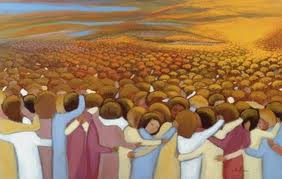 All Saints’ Sunday Sermon
Listen to the sermon here
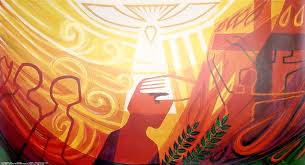 Reformation – Confirmation Sunday
Listen to the sermon here
On this Reformation Sunday, we at Holy Cross celebrated the Confirmation of five exceptional young people. It has been a wonderful journey! I can’t wait to see how they grow into all that God created them to be!

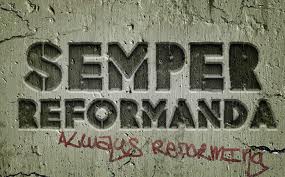 In the spirit of the Reformation motto: semper reformanda – always reforming, what say we abandon the fortresses of our traditions. Tomorrow, Lutheran churches all over the world will begin their Reformation Sunday worship services vigorously singing “A Mighty Fortress” and I for one wish they wouldn’t. I suspect that the hymn’s author Martin Luther might just agree with me. After all didn’t Luther write a Mighty Fortress in an attempt to bring the popular music of the day into the church? I am convinced that this particular Reformation Sunday tradition has dear old Martin spinning in his grave at the thought that the church that bears his name is still singing a tired old chestnut like A Mighty Fortress to celebrate the Reformation. The very idea of 21st century Lutheran’s celebrating the Reformation by clinging to the events of the 16th century is an affront to the memory of Martin Luther.
We should be singing this centuries music and rather than smugly resting on the laurels of the past, we should be plotting were the reformation goes from here. Perhaps in this the 21st century, when so many of the church’s traditions have seen the institution fall into the malaise of irrelevancy, we need to echo the cry: “Semper Reformanda” — “Always Reforming” the cry of the reformers who insisted that the church in every age stands in need of reformation.
Legend has it that on October 31st 1517, after taking a long hard look at the Roman Catholic Church and having fixed his sights on what he saw as the source of the rot that threatened to destroy the church’s ability to proclaim the Good News of God’s grace that is revealed in the life, death, and resurrection of Jesus Christ, Martin Luther took his 95 Theses on the abuses of the doctrine of indulgences into the streets of Wittenburg and nailed them on the doors of the church. Within a few short weeks, with the aid of the newest technology, copies of Luther’s 95 Theses spread throughout the Holy Roman Empire and sparked a Reformation the likes of which the church hadn’t seen since the Apostle Paul did away with the need to snip the male anatomy to gain entrance to the church. Luther’s words threatened the status quo of centuries of abuse. And the church as is her way, struck back with force so as to ensure that tradition might prevail. The rest, as they say, is history.
Ah history, safely ensconced in the past with its hoards of devils. Let the people rejoice because Martin Luther did it all and we can relax safe in the knowledge that we are justified by grace, through faith. Ain’t it great to be a Lutheran! “A mighty fortress is our God, who himself fights by our side with weapons of the spirit. Were they to take our house, goods, honour, child, or spouse, though life be wrenched away, they cannot win the day. The Kingdom’s ours forever!”
So tell me, if they fought the good fight in the sixteenth century and handed us everything we need, and God is on our side and wins salvation glorious: Where are the children? Where are the young people? Where are the neighbours? Where is everybody? How and why did the church of our ancestors manage to fall into such disrepair? How did we become so irrelevant?
Most of us, can look around and see for ourselves how broken the church is. If we are honest, we all have our own particular theories as to why and how this happened. Yet we continue to go about our business, hoping against hope that someone will notice and finally fix it. Year by year the church slips farther and farther into the morass of it’s own making and more and more people forget the wisdom of the ages and Christ seems to slip further and further from our grasp. We, who go by the name Lutheran, we can’t do much more than point to our glorious past as if we could only turn the clocks back the work of the reformers of old would save us. But time waits for no one and year after year, people drift away and churches close their doors, and those who are left react with fear.
Despite the fact that we’ve tried to immortalize him, it’s as if Martin Luther never lived at all. Back in the dim recess of memory Luther stands, frozen and impotent. And I can’t help but ask the question: “What would Martin do?”
Well in good old Lutheran style, a song comes to mind, a song of the people, a song from the streets, a drinking song…
“If I had a hammer, I’d hammer in the morning, I’d hammer in the evening, all over this land, I’d hammer out danger, I’d hammer out warning…
It’s time to stop celebrating the Reformation as if it is somehow over. The work of reformation continues precisely because the church is always in need of Reformation.
This week I re-read a little book by Matthew Fox. Fox was a Roman Catholic theologian until Mr Ratzinger silenced him. The Roman Catholic church’s loss was the Episcopal church’s gain. Shortly after Mr Ratzinger made himself pope, Matthew Fox took a long hard look at the church he’d served for so many years and became demoralized. Fox noticed the similarities between the sex-abuse scandals that continue to rock the church and the abuses wrought by indulgences, and asked himself what Martin Luther would do. That’s when Matthew Fox decided to write a few Theses of his own. Except where Luther wrote his 95 Theses to object to the practice of indulgences, Fox wrote 95 Theses to object to the many and various abuses of the church. It wasn’t difficult, over the course of a particularly dark night, Matthew Fox found that 95 Theses came flooding out of him. In the morning, he resolved to take his 95 Theses to Wittenburg and nail them to the very same doors where Martin Luther instigated the Reformation.
Well, things have changed a little over the course of nearly 500 years since that fateful day in Wittenburg. You can’t just waltz up to the doors at Wittenburg and nail things there. The doors are no longer made of wood and the city councilors require that you obtain a permit to protest at Wittenburg.
Fox was told that he would need to stay at least 500 feet from the doors, lest he interfere with the tourists who flock to visit the very spot were the church of the protester’s was born. Thus proving one of Fox’s thesis that the church has become for many nothing more than a museum for tourists.
Eventually the town council relented and after some careful construction, on October 31st 2005, Matthew Fox nailed his 95 Thesis to the doors of the church in Wittenburg. Rome took no notice. But the churches in Germany did. Just as Martin Luther’s action was aided by the invention of the printing press, Matthew Fox’s action was aided by the invention of the internet and thus began a conversation that led to the publication of Fox’s little book: A New Reformation: Creation Spirituality and the Transformation of Christianity. I return to Fox’s tome annually as part of my preparation to preach on Reformation Sunday.
Here’s a sample of Fox’s theses:
1) God is both Mother and Father.
3) God is always new, always young, and always “in the beginning.
4) God the Punitive Father is not a God worth honouring, but a false god and an idol that serves empire builders. The notion of a punitive, all-male God, is contrary to the full nature of the Godhead, who is as much female and motherly as masculine and fatherly.
5) “All the names we give to God come from an understanding of ourselves” (Meister Eckhart). thus people who worship a Punitive Father are themselves punitive.
6) Theism (the idea that God is “out there” or above and beyond the universe) is false. All things are in God and God is in all things (panentheism).
10) God loves all of creation, and science can help us more deeply penetrate and appreciate the mysteries and wisdom of God in creation. Science is no enemy of true religion.
15) Christians must distinguish between Jesus (a historical figure) and Christ (the experience of God-in-all-things).
16) Christians must distinguish between Jesus and Paul.
18) Eco-justice is a necessity for planetary survival and human ethics; without it we are crucifying the Christ all over again in the form of destruction of forests, waters, species, air, and soil.
20) A preferential option for the poor, as found in the base community movement, is far closer to the teaching and spirit of Jesus than is a preferential option for the rich and powerful, as found, for example, in Opus Dei.
23) Sexuality is a sacred act and a spiritual experience, a theophany (revelation of the Divine), a mystical experience. It is holy and deserves to be honoured as such.
24) Creativity is both humanity’s greatest gift and its most powerful weapon for evil, and so it ought to be both encouraged and steered to humanity’s most God-like activity, which all religions agree is compassion.
32) Original Sin is an ultimate expression of a punitive father God and is not a biblical teaching. Bit Original Blessing (goodness and grace) is biblical.
33) The term original wound better describes the separation humans experience on leaving the womb and entering the world–a world that is often unjust and unwelcoming–than does the term Original Sin.
59) Fourteen billion years of evolution and unfolding of the universe bespeak the intimate sacredness of all that is.
60) Jesus said nothing about condoms, birth control, or homosexuality.
71) A church that is more preoccupied with sexual wrongs than with wrongs of injustice is itself sick.
75) Poverty for the many and luxury for the few are not right or sustainable.
I’m sure that we all have thesis or two that you would like to nail to the door. I know that if I had a hammer, I’d hammer in the morning, I’d hammer in the evening all over this land, right up to the doors of churches everywhere, and I would nail a few theses to the more than a few church doors. I’d begin with a thesis about the need to move beyond the destructive theories of atonement that have only served to pervert the meaning of the life, death and resurrection of Jesus and separate people from the sure and certain knowledge that neither death, nor life nor anything in all of creation can separate us from the love of God in Christ.
I’d include a theses or two about the dumbing down of our best theology and our acceptance of easy answers that have turned most people’s vision of God into a sadomasochistic father who insists on the death of his own son in order to satisfy our definition of justice.
I’d go on and on about the wonders and beauty of creation, and insist that we confess that we are wonderfully made.
I’d confess our obsession with self that lies behind the sin of avarice that permeates our consumer culture and turns our energies toward violence.
I’d call for a return to the Jewish tradition of Sabbath that called upon believers to read the Song of Songs and make love on the Sabbath.
I’d call the church to its responsibility to instill a love of creation in all people so that we can walk upon the earth lightly.
I’d remind the powers that be that all people are created equally and that sexuality is a gift from God to be celebrated and not used to segregate some believers from the priesthood that belongs to all believers.
On this Reformation Sunday, lovers of the church everywhere need to free ourselves from the shackles of tradition and about our 95 theses.
What wisdom do you have to share with the church? What needs reforming? What needs preserving? What needs tossing out? What needs holding up and celebration? When should we cry out in solidarity? When should we sing out with joy and wonder? What should we do? What should we stop doing? Semper Reformanda! Always reforming!
This Reformation Sunday at Holy Cross Lutheran, we will sing new words by Miriam Therese Putzer to Luther’s traditional tune: EIN FESTE BURG which you can find here
You can watch the video of Matthew Fox talking about his book here



 pastordawn