Preaching is a delicate art. Sometimes, in the midst of turmoil, preachers are called to let theology take a backseat as we flex our storytelling muscles. John the Baptist has been known to bring out the worst in preachers. It is difficult for many preachers to resist the temptation to mimic John the Baptist’s shrill rhetoric. Far too many Advent sermons fail to empathize with the travails of the season. This story/sermon is an attempt to bring comfort to those who are busy hustling and bustling during Advent; a gentle reminder that peace begins in us.
It was just a shabby little basement apartment. It was far too damp for a newborn baby, but it was all they could afford. It was a damp rainy west coast November afternoon when Carol’s Aunt and Uncle brought little Liam home from the hospital. They must have fought in the car on the way home from the hospital because the argument that they were having when they got out of the car seemed like it had been underway for quite sometime. Carol was waiting in the driveway with her four-year-old cousin Michael and her parents. They had spent the morning getting the shabby little apartment ready for the new baby’s arrival and trying to convince Michael that a new baby brother was a wonderful thing. Carol had no idea what her aunt and uncle were arguing about. She heard her mother mutter something about saving their battle for another time; after all they were about introduce Michael to his new baby brother Liam.
Carol was just thirteen when Liam made his appearance in the world. In those days, thirteen was considered a prime age for babysitting. So, Carol would head over to Aunt Val’s and Uncle Dave’s every day after school to help out. It was Carol’s job to take Liam for a walk each afternoon so that her Aunt Val could get supper on the table in time for Uncle Dave’s arrival from work. Carol would pack Liam up in his pram regardless of the weather and head for the park. Michael would tag along behind them. In the weeks that followed Liam’s arrival, Michael changed quite a bit. He became unusually whiney. He didn’t seem to enjoy much in life. He whined about everything. He whined about going to the park and he whined about having to leave the park. He whined whenever he was told to be quiet because the baby was sleeping and he whined when he was asked to help with anything that had anything to do with his little brother. Carol’s Mom said that it was all very normal; children don’t much like it when a new baby takes their position as the only child.
Carol disagreed with her mother, but she kept her thoughts to herself. Carol was convinced that Michael’s whining had more to do with his parents’ whining. Ever since they had brought Liam home from the hospital, Val and Dave had taken up whining themselves. They whined about dirty diapers, about being tired all the time, about the messy apartment, about the crying baby, about how small the apartment was and about how much whining Michael was doing. When they weren’t whining, Val and Dave were fighting. They fought about everything. They fought about whether or not the baby should sleep in their bedroom. They fought about whether or not Michael should be sent to his room as punishment for waking up the baby. They fought about dinner being late; about whether or not Uncle Dave should have to change dirty diapers because he was too tired from working all day. They were always arguing about money. One time they even managed to have an argument about paying Carol the .25 cents an hour that she was paid for helping out after school. As Christmas approached they argued about how they were going to pay for Christmas. The more they argued, the whiner Michael got.Continue reading →
On this first Sunday in Advent we awakened ourselves to the cosmic contours of the darkness. Our first reading was The Star Within: a creation story by Dr. Paula Lehman & Rev. Sarah Griffith, followed by a musical video reflection My Soul by Peter Mayer which you can watch HERE Our Gospel reading was from Mark 13:24-37. Listen to the sermon here
As we embark on the journey of Advent, I need to take a poll, and there’s not much time left, so, we’ll conduct this particular poll by a show of hands. Before you answer this question, would you please close your eyes. Now, for the sake of this poll, I’m not going to continue until everyone has their eyes closed. Notice the darkness, the blackness that enfolds you. Now, I’d like you to remember the carefully and respond as honestly as possible: By a show of hands, when you were a child, how many of you were afraid of the dark? Pease answer as honestly as you can. Don’t worry about anyone knowing that you were afraid of the dark, I’m the only one who has their eyes open and I’m clergy, so I’m bound by the confidentiality of my profession and the privacy act, not to tell anyone.
Ok, those of you who were afraid of the dark when you were a child, you can put your hands down, but keep your eyes closed. Now, those of you who weren’t afraid of the dark when you were a child, please raise your hands. Ok, everyone keep your eyes closed. One more time, I need you to notice the darkness. Now, keep your eyes closed, do not open your eyes until I tell you to and listen carefully to the Gospel according to Mark:
Jesus said: “In those days, after that suffering, the sun will be darkened, and the moon will not give its light, and the stars will be falling from heaven, and the powers in the heavens will be shaken. Then they will see ‘the Son-of-Man coming in clouds’ with great power and glory. Then the Son-of-Man will send out the angels, and gather his elect from the four winds, from the ends of the earth to the ends of heaven. From the fig tree learn its lesson: as soon as its branch becomes tender and puts forth its leaves, you know that summer is near. So also, when you see these things taking place, you know that he is near, at the very gates. Truly I tell you, this generation will not pass away until all these things have taken place. Heaven and earth will pass away, but my words will not pass away.
But about that day or hour no one knows, neither the angels in heaven, nor the Son, but only the Father. Beware, keep alert; for you do not know when the time will come.
It is like someone going on a journey, who leaving home and putting the slaves in charge of their own work, commands the doorkeeper to be on the watch. Therefore, keep awake—for you do know when the lord of the house will come, in the evening, or at midnight, or at crockcrow, or at dawn, or else, coming suddenly, the lord may find you asleep.
And what I say to you I say to all: Keep awake.” The Gospel of Christ.
All right, everybody, WAKE-UP! I mean it! Wake up! There is darkness all around us!!!
Danger everywhere you look. I need you all to WAKE-UP FOR CHRIST’S SAKE!!!!
Don’t sit down! Are you crazy. Who sits down in the midst of darkness? If you sit down, you’re likely to fall back to sleep! I need you to keep awake! Keep awake—for you do know when the lord of the house will come, in the evening, or at midnight, or at crockcrow, or at dawn, or else, coming suddenly, the lord may find you asleep. And what I say to you I say to all: Keep awake.
KEEP AWAKE FOR CHIRST’S SAKE! This is the Gospel of Christ! Keep awake!
The good news is that there are those among us who have never been afraid of the dark. All right, if you promise to Keep AWAKE, you may open your eyes and sit down.
Welcome to the season of Advent. While the world is busy scurrying about preparing for the arrival of Santa Claus, we here inside the walls of the church are embarking on a journey into the darkness. Out there, t’is the season to be jolly! It is the season of good cheer, so everyone is busy getting all the stuff they need to be cheerful. There are decorations to be hung, lists to be made, presents to be bought, special food to be acquired, more presents to be bought, special drinks to be stockpiled, more presents to be bought, people to visit, more presents to buy, carols to be sung, parties to go to, people to visit, gifts to give, fun to be had as our world prepares for the arrival of the baby Jesus or Santa Claus depending on your particular point of view. But in here, inside the walls of the church, the Body of Christ, it is my job to tell you all to wait. Advent the season when the church does it’s level best to hold off our culture’s rush toward a happy, jolly, Christmas each year!!! Advent the season of the church year, when those of us who seek to follow the teachings of Jesus of Nazareth are invited to prepare ourselves not for the birth of a baby, but rather to prepare ourselves to give birth to Christ again and again and again.
Birth and darkness are intimately related to one another. Gestation takes place in the darkness; the seeds need the darkness of the earth, humans the darkness of the womb. Movements and revolutions are created in the darkness. The darkness of poverty and despair, the darkness of injustice and war, the darkness of danger and death germinate the seeds of movements and revolutions.
Beware! Be very aware! I am not inviting you into the darkness that is conducive to a winter’s nap. The darkness that I am inviting you into in this season of Advent, is a very dangerous darkness, the kind of darkness that requires you to KEEP AWAKE! WE ALL KNOW THIS DARKNESS WELL! We more than any of those who have gone before us are all too familiar with the darkness. We have more information about the darkness then generations of humans have ever had. At our very finger-tips we have devices which will bring word of the darkness to us 24 hours a day. In our living rooms, in our automobiles, even in the shopping malls, we can hear tell of the dangers of the darkness. Our earth is suffering under the weight of our filth. Continue reading →
Wisdom of Solomon 6:12-16 and Matthew 25:1-13 – Here’s a sermon that I preached several years ago when this coming Sunday’s readings prompted me to use/borrow/steal from the book “Wisdom’s Feast: Sophia in Study and Celebration”, by Susan Cady, Marian Ronan, Hal Taussig (Harper and Row, 1986).
The parable of the ten, what??? Bridesmaids??? Really, ten bridesmaids, it sounds like the set up for some elaborate joke. Ten bridesmaids were waiting for a bridegroom, they waited so long that they fell asleep! I don’t know, you fill in the rest! I’ve never been much good at telling jokes, I’m more of a storyteller. Part of the fun of a story is the journey itself, but when you tell a joke you have to worry about punch lines. I tend to forget punch lines, or if I do remember them, I usually manage to mess them up and loose the laugh. So, there were these ten bridesmaids waiting for a bridegroom. Five of the bridesmaids were wise and five of the bridesmaids were foolish. The wise bridesmaids brought along some extra oil for their lamps, the foolish bridesmaids did not. Long before the bridegroom arrived all ten of the bridesmaids fell asleep. Yada yada yada!
A little detail here, a little detail there and lo and behold we’re at the punch line. Turns out the bridegroom doesn’t know five of the bridesmaids so he shuts the door and says: “Truly I tell you, I do not know you. Keep awake therefore, for you know neither the day nor the hour.” Ha, ha, ha, very funny…. I simply don’t get it. For years and years, generation upon generation, people have been telling this one, and leaving people hanging with that punch line. Ha, ha, too bad, so sad, you just don’t get it. You don’t get to come into the party!
Okay, I know this is a parable and that means that like all parables there’s a trick of some sort that we have to work out. So, for generations preachers have been unraveling this one and the usual explanation goes something like this….“Keep awake! Don’t fall asleep! And for heaven’s sake be prepared! Cause if your not, Christ will bar the door and you won’t get into heaven! So, Keep awake, for you know neither the day nor the hour. Christ could come back at any moment and if your not ready! That’s it! Boom! Christ will deny you, the door will be shut and you’re not getting in. Oh and by the way, your going to burn in hell for all eternity. So, remember keep awake, be afraid be very afraid. Cause your gonna die! And if you haven’t brought along some extra oil for your lamp, well it ain’t gonna be pretty!”Continue reading →
All Saints’ Sunday readings: Contemporary reading: “A Return to Love: Reflections on the Principles of a Course in Miracles” by Marianne Williamson, Gospel: MATTHEW 5:1-12 – extensive quote within the sermon from evolutionary scientist Stephen Jay Gould – the hymn sung before the gospel is “I Am the Dream” words: S. Curtis Tufts, Music: Rick Gunn
Our Gospel reading has often been called the Beatitudes. It is traditional to read the Beatitudes on All Saints’. Some years we read the eight Beatitudes as they have been passed down to us from the anonymous gospel storyteller known as Matthew, who sets Jesus’ sermon on the mount. But this year is the year of Luke, so we read this anonymous storyteller’s version of the Beauties which appear in Jesus’ sermon on the Plain. But whether it’s the sermon on the mount or the sermon on the plain what has been passed down to us is a description of the important characteristics of those who are blessed. There are all sorts of ways to interpret the word “makarios” which was translated into Latin as “beatus” the word for “blessed,” “happy, or “fortunate.” Today, I’d like to offer you another way of interpreting the Greek word “makarios”. “makarios” contains the Greek word “karios” Some of you will recognize the word “karios”,
here in Canada the mainline churches work together within the organization that bears the name “karios”. Karios is the organization through which we work together to achieve justice in Canada and in the world. The name Karios was chosen because it is one of the Greek words for “time”, a special kind of time, the opportune time, or the supreme moment. Karios is used in the scriptures to mean that time when all is well, when people are making the best use of their time, when there is harmony or peace among people, or peace with God. Karios can also be used to describe the time when it is clear that the Divine has somehow visible right here and right now. Karios is sacred time. “Makarios” is related to Karios because a person who achieved “makarios” was said to be a person who had moved beyond the constraints of time and space.Continue reading →
All Saints’ Day is a day for remembering. The word saint simply means “holy”. In the New Testament, all those who believe and were baptized were referred to as saints. It wasn’t until round about the third century that the church began using the word saint to refer to those who had been martyred for the faith. Over time these martyred saints were held up for veneration and people used to pray to them to intercede on their behalf. I’m not going to go into all of the institutional abuses that led Martin Luther and the later reformers to abolish the veneration of the saints. Except to say, that while the Reformation put an end to the veneration of the saints in the protestant churches, it did not abolish the concept of sainthood.
Within the mainline protestant denominations, we use the term in much the same way as it was used in the New Testament to describe the faithful. We talk about the communion of saints to describe all the faithful who have gone before us who now rest in God, together with all the living who walk in faith. So today as we celebrate the saints, we give thanks for all the faithful those living and those who have gone before us.
Today, I remember and rejoice as I give thanks and praise to God for the witness of St. Joyce of Belfast. St. Joyce who in her own way taught her children to love God and to pray always. And so today, I give thanks and praise to God for the life and witness of St. Joyce of Belfast, my Mom, who was the first to teach me the Lord’s Prayer, and who puts flesh on Christ’s command that we love our neighbours as we love ourselves.
Today I remember and give thanks for the life and witness of St. John of Wales, whose life in the church as a choir-boy was followed by long years of self-exile and whose keen wit and lack of patience with hypocrisy instilled in me a desire for honesty and integrity in the articulation and living of the faith. I give thanks for St. John, my Dad, whose open heart has stretched his discerning mind and enabled many to see the humour in this God-given life we live.
Today, I remember and rejoice as I give thanks and praise to God for the witness of St. Valerie of Ladner. St. Valerie so loved and feared God that she dared to reach out and invite a wayward soul to come and worship God. St. Valerie sang God’s praise, rejoiced in the communion of saints and helped a young friend find a home in God’s holy church. And so toady, I give thanks and praise to God for the life and witness of St. Valerie, my high school friend, who was the first to invite me to come and worship God.
Today, I remember and rejoice as I give thanks and praise to God for the witness of St. Wilton of Lunenburg. St. Wilton loved God all the days of his life and served God with gladness and distinction. St. Wilton went far beyond his call as pastor, he opened up the scriptures to those who eagerly sought the truth of God’s Word with love and dedication and he went on to inspire a diligence to scholarship that nurtured the faith of so many young people. And so today, I give thanks and praise to God for the life and witness of St. Wilton, my first pastor, who taught me to be uncompromising in my study of the scriptures, and steadfast in my love for God.Continue reading →
All over the world, Lutheran churches celebrate the earth-shattering events that were set in motion on October 31st 1517, when a Roman Catholic priest named Martin Luther nailed his 95 Theses to the door of the church in Wittenberg. Luther challenged the most powerful institution that his world had ever known. Luther shook the very foundations upon which the reality of his fellow humans was based. The power of the Holy Roman Catholic Church rested upon an interpretation of reality that envisioned a God who sits in judgement upon a throne in the heavens, a God who commanded a quid pro quo relationship with HIS subjects; a God whose determination to tip the scales of justice was so precise that he sent HIS only Son to die as a sacrifice for the sins of humanity, a God who used the sacrifice of that Son to somehow atone for the sins of every man, woman, and child who ever lived; saving them from the wrath of this God who had no other choice but to condemn sinners to eternal torment in the fires of hell, a God who established the church on earth to oversee the administration of the atoning power of Jesus death upon the cross, a church so powerful that they could sell you a piece of paper called an indulgence that would whisk you or your loved one out of the pits of Hell and up, up, up into the willowing, billowing, soft, gentle fluffy whiteness of Heaven, so that you could spend all of eternity basking in the Glory of your Father in heaven’s presence. These indulgences were more valuable than gold and it’s no wonder that the Church was able to sell them like hot-cakes, pardon the pun, and yes, I’m been sarcastic in my telling of this tale. Yes, history is more complicated than I’m telling it right here and right now, because I’m trying to make a point. The selling of indulgences was just the tip of the iceberg when it comes to the abuses the church on earth and in heaven.Continue reading →
About ten days ago, I traveled up to Owen Sound for the funeral of a young colleague who died in a tragic motorcycle accident. During the two-and-a-half hour drive I couldn’t help wondering what life is all about. The stunning reality of the death of someone so young reminds us how very fragile life is. As I drove north the weather began to turn. So, by the time I reached Blue Mountain the wind was really howling. Driving along the shores of Lake Huron I could see waves rising. I’d been driving for over an hour, so I decided to pull over and take a walk before the rain began. Staring out over Nottawasaga Bay toward the vast grey horizon, I felt very small and insignificant. My mind wandered as my face was pelted by the sand that was kicked up by the wind. The sensation of the sand hitting my face awaked me to the reality that we are dust and to dust we shall return.
As my mind wandered, I caught sight of a small tuft of tall grass bent over by the force of the wind and sand. The long, tall grass shared my feeling of fragility as it was laid almost parallel to the beach by the strength of the wind. I thought about the Ruach, the wind, breath or Spirit of God, the power and majesty of the Ruach as it blows where it wills. Pelted by the wind, the sand, and the reality of death, the fragility of my own being struck me to my core as a deep, loud, “No!” rose up from my inner being. It was as much a plea to the Ruach as it was a staunch denial of the reality of fragility of life. “NO!” I shouted into the horizon. But the Ruach, the wind and the sand threw my “NO” back in my face as my tears mixed with the rain that began to fall.
The wind must have changed direction because when I looked back at the tuft of fragile grass it was standing tall even as the rain’s intensity increased. I took a long, deep, intake of breath. It was as if the very Ruach of God entered my being. I wiped the tears and the rain from my face, straightened my spine and walked back to the car ready to face the reality of our mortality, strengthened by the knowledge that I had encountered MYSTERY; the MYSTERY that is the source of All.
The Bible is full of stories that touch the deepest MYSTERY of life. The ancients knew that eternal truths are best communicated through stories, and so we plumb the depths of the scriptures’ parables, myths, and similes to discover our reality. Memories, stories, imaginings, myths, wonderings, and glimpses are the stuff of truth. We human creatures just can’t help wondering. How did we get here? Who made us? Why were we made? Why are we here? Where are we going? We humans can’t seem to help wondering, what’s it all about? From days of old, we’ve been sitting around campfires weaving tales about how we came to be, and what it’s all about; speculating on the nature of our creator. Story after story has been told; stories that weave in and out between our experiences and our wonderings, what’s real, what’s not, what’s true and what are imaginings. The best stories, the ones that captured our imagination and stimulated our wonderings, those stories were told over and over again. Handed down from one generation to the next. Some stories so profound that they just had to be written down. Elevated to the realm of the sacred these wonderings, took on the quality of myth. Sacred truth, so precious that over the years some have sought to defend these stories with their very lives. Others have built their world around these sacred truths, found their identities between the lines of their imaginings. Still others have feared the very wonderings that birthed these sacred truths. So afraid have they become that they’ve tried to insist that these sacred truths aren’t even ours, but rather the divine ramblings of our God. Whispered into the ears of scribes who jotted them down word for word, in the Kings English no less, holding between their lines not only sacred truths, but perfectly preserved history. So treasured are these sacred truths that some even claim that between their lines lie the for-telling of our future. So treasured are these sacred truths that the questioning of even the slightest detail has the power to set one tribe or nation against another.Continue reading →
Then Jesus spoke to them again in parables. He said, “The kindom of heaven is like this: there was a ruler who prepared a feast for the wedding of the family’s heir; but when the ruler sent out workers to summon the invited guests, they wouldn’t come. The ruler sent other workers, telling them to say to the guests, ‘I have prepared this feast for you. My oxen and fattened cattle have been slaughtered, and everything is ready; come to the wedding.’ But they took no notice; one went off to his farm, another to her business, and the rest seized the workers, attacked them brutally and killed them. The ruler was furious and dispatched troops who destroyed those murderers and burned their town. Then the ruler said to the workers, ‘The wedding feast is ready, but the guests I invited don’t deserve the honour. Go out to the crossroads in the town and invite everyone you can find.’ The workers went out into the streets and collected everyone they met, good and bad alike, until the hall was filled with guests. The ruler, however, came in to see the company at table and noticed one guest who was not dressed for a wedding. ‘My friend,’ said the ruler, ‘why are you here without a wedding garment?’ But the guest was silent. Then the ruler said to the attendants, ‘Bind this guest hand and foot, and throw the individual out into the darkness, where there will be wailing and gnashing of teeth.’ “Many are called, but few are chosen.” Matthew 22:1-14
Is this the Gospel of Christ? In Lutheran, Anglican, United, Roman Catholic and other mainline denominations this text will be read and in those congregations the preacher will conclude the reading with a proclamation declaring that this is, “The Gospel of Christ!” or “The Gospel of the Lord!” to which the people will declare “Praise to you O Christ!” But I ask you: “Is this the Gospel of Christ?” “Wailing and gnashing of teeth.” Is this the Gospel of Christ?
I must confess that when I realized that this text is the one assigned for this, the very Sunday when we are about to begin our “visioning process,” my heart sank. This gospel reading comes around every three years and I’ve always managed to be on vacation when that happens, so I’ve never actually had to preach this particular gospel text. I was sorely tempted to change our gospel reading to something more in keeping with the task that lies before us this afternoon. This text is hardly conducive to creating a new 21st century vision of what our church might become. “Bind this guest hand and foot, and throw the individual out into the darkness, where there will be wailing and gnashing of teeth. Many are called but few are chosen.”
Throw him out into the darkness for the crime of being badly dressed? What kind of vision is this for us, here, today? Are we not a progressive congregation? Do we not pride ourselves on being an inclusive community? “Many are called but few are chosen.” Is this the “Gospel of Christ?” “Praise to you O Christ!” I don’t think so.Continue reading →
Sisters and Brothers, hear again the words of St. Francis of Assisi:
I think God might be a little prejudiced.
For once God asked me to join God on a walk
through this world,
and we gazed into every heart on this earth,
and I noticed God lingered a bit longer
before any face that was
weeping,
and before any eyes that were
laughing.
And sometimes when we passed
a soul in worship
God too would kneel
down.
I have Come to learn: God
adores God’s
creation.
In the spirit of St. Francis, I bid you peace. Please take a long deep breath…..Peace. Now if you would focus your attention upon these two beautiful bouquets upon the altar. Yes, I am well aware that these bouquets are little more than a collection of weeds. Yes, I know that many of us were taught by the Church, I’m talking here about the capital “C” Church; we were taught by the Church that flowers don’t belong upon the altar. Flowers upon the altar distract people from the presence of God and the acts of worshipping God, so if we must have flowers in the sanctuary, we were all trained to place them anywhere other than upon the altar; the holy of holies, the place where God works in, with, through, and under the bread and wine to touch us, love us, strengthen us, and empower us. We can’t, reasoned the Church, we can’t have people distracted from the actions of God that center upon the altar. So, the Church banished flowers from the altar. But on this the feast day of St. Francis, I asked Carol to gather up some bouquets of weeds and place upon the altar. I did so, because these bouquets are beautiful!
Take a good look…..In this beautiful season of autumn these particular weeds are everywhere. You cannot go for a walk or a drive in and around town without being confronted by the existence of these spectacular weeds. Take a good look….aren’t they beautiful.In the words of St. Francis,
I have Come to learn:
God adores God’s
creation.
Now look around you, take a very good look at this spectacular gathering, this splendid bouquet of what some might call weeds but, if you look very closely you will see in one another a breathtakingly beautiful bouquet of awe-inspiring flowers. Aren’t you lovely? Made from LOVE. Gathered around this makeshift altar of ours God will indeed work in, with, through, and under each one of us to touch us, to love us, to strengthen us and to love us. In, with, through, and under this is the way that Lutheran theology describes the way in which God comes to us in the bread and wine of holy communion. I have gotten into the habit of always reminding you that we live and move and have our being in God and that God lives and breathes in, with, through, and beyond us. I repeat this over and over again, not only to remind all of you but to remind myself that God is not some far off distant being, who lives up there or out there somewhere. God is here, right here, all around us, in us and beyond us just as surely as we are in God. So, on this the final Sunday in the Season of Creation it is so very appropriate for us to turn our attention to St. Francis who reminds us that all of creation is in God.
Francis was born into a wealthy merchant family and spent his young life striving to become a knight by actively participating in the completion between Italian cities to dominate the emerging capitalist system. Francis learned like each one of us must learn that acquiring things, amassing wealth, competing for power, these things cannot ever bring us peace. And so, Francis renounced things, gave up his wealth and powerful position in Italian society, and walked away from the competitive capitalist system.
Francis even went so far as to challenge the Church’s teachings about how to be a Christian. For centuries, the Church taught that the best way, the truest way to be a Christian in the world was to follow the example of the early followers of the Way that we find in the book of the Acts of the Apostles.Continue reading →
On this the fourth Sunday of the Season of Creation, we are encouraged to celebrate rivers. Today, when hundreds of thousands of Porto Ricans living along the Guajataca River are being evacuated because the force of the river may cause a dam to burst, it is difficult to contemplate gentle pastoral images of rivers gently flowing past. It is difficult to imagine the peaceful waters and let’s face it most of us come to church on a Sunday morning hoping for some sanctuary from the realities that bombard us in the media. I don’t know about you, but between the rantings of the cyber-bully who currently occupies the most powerful office in the world, and the news of the suffering caused by hurricanes and earthquakes, I would really like to be able to luxuriate for a while in the gentle images of a peaceful river. I would love to take you all on a walk down by the river-side so that we could contemplate together the image of God as a river, gently caressing us, supporting us through life. If only Jesus would refrain from teaching in parables designed to disturb us.
Jesus parable about the workers in the vineyard bursts the dam of our complacency and sends us scrambling towards the shore in the vain hope that we can escape the knowledge, that while we bask aboard our luxurious pleasure-crafts, while all around us our neighbours are drowning. Sure, we could just allegorize Jesus parable and interpret it as a nice little story in which the Landowner becomes God, the workers at dawn are good Christians like you and I, while the workers who show up much later are those who convert on their deathbeds, and even though it may seem unfair, God the Landowner treats everyone the same and everyone is rewarded in some far and distant here-after because God is full of Grace. I’ve heard countless sermons that interpret Jesus’ parable as a nice little story. But the words of my preaching professor ring loudly in this preacher’s mind: “Beware of parables that become nice little stories. Parables are verbal hand-grenades and should be handled with care.” So, I hope you will forgive me if the raging waters of a river flowing violently were rivers are not supposed to be, rushes over my interpretation of Jesus parable about the kind of justice that demands so much from landowners like you and me because today as so many of our neighbours and friends are drowning, I cannot and will not allegorize this parable.
You see, when Jesus’ audience heard him tell this parable, they would have immediately understood who the landowners and who the workers were. Jesus audience lived under the occupation of the Romans. Jewish Landowners in occupied Palestine would have had very few choices. Landowners could oppose the Romans and lose their land and then have to resort to becoming day labourers themselves, or they could collaborate with their Roman oppressors and participate in the abuse of their neighbours. As an occupied people, the Jews were waiting for someone to come along and save them from Caesar’s oppressive rule. They longed for a Messiah who would change their world and end their oppression. The crowds that flocked to listen to Jesus’ are looking for some sort of revelation about when and how the oppressive Roman occupations that set neighbour against neighbour was going to end. Rather than point to some far off distant salvation at the hands of an intervening God, Jesus points directly at the very crowds longing for salvation and insists that only when land-owners stop oppressing their neighbours will the long dreamed of kindom of God become a reality.
Imagine for a moment that you are in the crowd. You have worked hard all your life. You have saved and invested wisely. You have a home on land you either rent or own. You and I, we are the land-owners. And each one of us, we want to pay the labourers, in whatever vineyard we are involved in, we want to pay less. Sure, an honest day’s pay for an honest day’s work is all well and good when it applies to us. But who among us is willing to pay more for our meals so that day labourers can receive salary that will feed and house their families?
Let’s face it we are more than willing to shop at Walmart without caring too much about how Walmart treats its employees provided Walmart offers us a bargain. We want to pay less and we know that if we pay less, Walmart will pay less. We are all too willing to shop in dollar stores even though we know that the bargains we scoop up were in all likelihood manufactured by people working as slaves. We want to pay less for our groceries and are smart enough to know that those Mexicans working on the Marsh will be the ones to pay the price for our cheap vegetables. You know that I love my devices, my iPad is precious to me, even though I know the price paid by the labourers in China so that I could we could have our fun. We want to pay less and we also want to get more. We want our investments, and our retirement savings funds, to earn us bigger and bigger dividends. We want our property values to increase, even tough we know that those increases will make it impossible for the vast majority of our young neighbours to ever be able to become landowners. We want our governments to do more with less because we want to pay less taxes.Continue reading →
Labour Day weekend marks a milestone in my life. You see 23 years ago, after a driving about 4,000 kilometres, all the way from Vancouver, I arrived in Waterloo, Ontario, just in time for the long Labour Day weekend. I didn’t know anyone in Waterloo. I didn’t have a place to live. But on the Tuesday after Labour Day, I was scheduled to report to Waterloo Lutheran Seminary to begin orientation for what would be a four year masters of Divinity program. In the course of that long ago Labour Day weekend, I found a place to live, unpacked all the belongings that I’d been able to stuff in to my old 84 Oldsmobile, and discovered that in Ontario, milk comes out of in plastic bags. You have no idea how mystified I was wondering just how those plastic bags functioned as an appropriate container for milk. I actually remember standing in the grocery store wondering what people here in Ontario did once they’d opened the plastic bag. Visions of milk spilling everywhere caused me to well up with such a feeling of homesickness. Since then, Labour Day Weekends have been strange combination of nostalgia for what once was and excitement for what is yet to be. I came to Ontario in the midst of a transition. I’d just completed a 4 year undergraduate degree in Religious Studies and I was about to begin Seminary. Both my undergraduate and my masters degree would qualify me to be a pastor. After a years in the travel industry working as both a tour wholesaler and an accountant, I wanted something more out of my work; I wanted something more than just a job I wanted a profession. Religion, Christianity, the Church, the inner workings of reality, books, studying, teaching, deep conversations, these things were and are expressions of my passion. Travel Brochures, numbers, spread-sheets, office politics, sales-figures, the day to day commute into the city, these things represented a means of making money to pay the bills. Don’t get me wrong, my work in the travel industry was usually interesting, sometimes challenging and often quite satisfying. But it had nothing what so ever to do with passion.I viewed my work as a job. What I wanted was a profession. I was caught up in a way of seeing that divided work into categories of meaningful and meaningless. I was incapable of seeing the sacred in my work. Despite the fact that I worked with interesting, beautiful, people and was privileged enough to enjoy the world in ways that some people can only dream of, I couldn’t see meaning in my work. I was for all intents and purposes an arrogant snob.I was raised in a culture and in a time when education, and fancy letters after one’s name, meant that your work was more important and therefore more meaningful than the work of folks who didn’t have a professional calling. Not surprisingly, I am a product of my experience. I was raised by British working-class parents who struggled to ensure that I had access to the kind of educational opportunities that would result in more than just a job. Their dreams and visions were of having their children become “someone”. A job was something anyone could get. A career was something special. A career meant that you were someone who was involved in something more; a career meant that you were a professional. Even the word job is designed to put the worker in their place. Job comes from the word “jobbe” which describes piece work. A person who does a job is like a cog in a wheel of a much larger machine, who preforms a task that is often disconnected from the end product. A profession is defined as a vocation, a calling that requires specialized educational training. I was tired of functioning in a job and I felt called to a profession in which I could put my own particular passions to work. It took me a long time to understand that a profession could also be just a job and that a job could indeed be the expression of one’s passion. While I was busy judging the quality of particular occupations, I failed to see the inherent dignity of work itself. The legacy of the class system that divided us into tribes based on the money our work could generate leaves many of us with the miss-guided notion that work is simply a means to an end. All too often we direct our attention to the end and judge the work by how much the worker is able to accumulate. How big is your pile of money? That becomes the point of our work. We express the value of our work in the size of our homes, our cars, the vacations we take, the clothes we wear, the toys we play with. The object of our work becomes the pile. How high can we build our towers? What mark can we leave upon the earth?
Seabright Farmhouse
Years ago, when I was working as a volunteer at a retreat centre, I remember the You see the main building of the retreat centre was an old farmhouse. The kitchen had an old and ugly linoleum floor. That floor had seen so much traffic that the the pattern was worn off in places. I remember getting up before sunrise, or wandering in late in the evening, to get down on my hands and knees and scrub that floor because it was a job best done when no one was around. First, I’d scrub it with a scrub brush and Comet; you know that old fashioned abrasive powder. Then I’d have to rinse it with hot water and a cloth. Then after it dried, I’d wax it. It wasn’t a very big kitchen, but it took a couple of hours to do it right. Yet, even when it was finished, that old linoleum wasn’t really up to much. But it was clean. You could have eaten off that floor. I knew full well that it would only take a few moments for the retreat centres’ inhabitants and visitors to destroy the floors lustre, and I sometimes wondered why I even bothered. But then one night and old theologian who regularly visited the retreat centre, was up and about late at night and he found me on my hands and knees scrubbing. I don’t remember much about the long conversation we had that evening, but I do remember the words on the thank-you card that Fritz left for me before he left the retreat centre. Written on the card were the words of the Persian poet Gibran: “Work is love made visible.” “Work is love made visible.” For just a moment the words penetrated my carefully held notions about the meaning of work and I understood why I felt so satisfied every time I scrubbed the floor. The work was my way of giving expression to the love I had for the people and the place. Years later I came across those words again. “Work is love made visible.” Joan Chittiser quoted Gibran in an essay I read and tucked away, back when I was trying to figure out what it means to be human. Chittister writes: “A spirituality of work is based on a heightened sense of sacramentality, of the idea that everything that is, is holy and that our hands consecrate it to the service of God. When we grow radishes in a small container in a city apartment, we participate in creation. When we sweep the street in front of a house, we bring new order to the universe. When we repair what has been broken or paint what is old or give away what we have earned that is above and beyond our own sustenance, we stoop down and scoop up the earth and breathe into it new life again. When we compost garbage and recycle cans, when we clean a room and put coasters under glasses, when we care for everything we touch and touch it reverently, we become the creators of a new universe. Then we sanctify our work and our work sanctifies us. A spirituality of work puts us in touch with our own creativity. Making a salad for supper becomes a work of art. Planting another evergreen tree becomes our contribution to the health of the world. Organizing a good meeting with important questions for the sake of preserving the best in human values enhances humanity. Work enables us to put our personal stamp of approval, our own watermark, the autograph of our souls on the development of the world. In fact, to do less is to do nothing at all. A spirituality of work draws us out of ourselves and, at the same time, makes us more of what we are meant to be. Good work — work done with good intentions and good effects, work that up builds the human race rather than reduces it to the monstrous or risks its destruction — develops qualities of compassion and character in me. My work also develops everything around it. There is nothing I do that does not affect the world in which I live. In developing a spirituality of work, I learn to trust beyond reason that good work will gain good things for the world, even when I don’t expect them and I can’t see them. In that way, I gain myself. Literally. I come into possession of a me that is worthwhile, whose life has not been in vain, who has been a valuable member of the human race. Finally, a spirituality of work immerses me in the search for human community. I begin to see that everything I do, everything, has some effect on someone somewhere. I begin to see my life tied up in theirs. I begin to see that the starving starve because someone is not working hard enough to feed them. And so I do. It becomes obvious, then, that the poor are poor because someone is not intent on the just distribution of goods of the earth. And so I am. I begin to realize that work is the lifelong process of personal sanctification that is satisfied only for the globe. I finally come to know that my work is God’s work, unfinished by God because God meant it to be finished by me.” Chittister’s view of work as an expression of our love, reminds me that the LOVE that we call God, finds expression in the work that we do. Indeed, the LOVE that IS God works in, with, through, and beyond us. On this Labour day weekend, may we all remember and honour the sacred work that has nourished, grounded, and sustained us in the blessed lives that we lead. May we honour the sacred workers who have provided a means for LOVE to find expression in the world. May we all find work that gives expression to our love for the world, our love for one another, and our love for our neighbours. Work is indeed LOVE made visible. LOVE is the source, and ground of our being. May our work, together, and beyond make the LOVE that is God visible. Now and always,Continue reading →
This sermon is the second in a series of three sermons responding to questions about Jesus’ identity. You can explore the part one here
Part Two of this exploration of Jesus’ identity includes three reflections interspersed throughout the liturgy. The audio picks up the liturgy as the congregation is remembering our old friend Jesus by singing an old hymn that evokes our personal histories with the character Jesus. You can listen to the songs as well as the reflections here
Reflection 1: Remembering.
Can any of you remember the first hymn you ever learned? (responses)
“Jesus loves me. Yes, Jesus loves me.”
What about the first prayer you ever learned?
(responses)
“Now I lay me down to sleep.”
“Come, Lord Jesus.” graces
“The Lord’s Prayer”
“Psalm 23”
For those of you who were raised in the Lutheran Church, think back to your confirmation classes, do you remember learning the Creeds? I never went to church until I was 15. I was considered too old for confirmation class. So, I received private instruction from my pastor. I remember weeks and weeks spent learning both the Apostle’s and Nicene Creeds. Remembering those creeds still influences the way I respond to the question that the anonymous gospel-storyteller that we call “Matthew” puts on the lips of Jesus: “Who do you say that I AM.”
I remember, a few years back, when Emily Eastwood was helping us in our struggle to move the wider church to be more inclusive. Emily, insisted that the only way to reach out to those on the other side of the argument was to tell our story. Stories have the power to move us. Stories well-told can move us beyond the boundaries we have set for ourselves. So, Emily encouraged each of us to learn how to tell our own stories. Emily taught us to be able to tell our stories about being gay, or knowing someone who is gay, or about changing our minds about homosexuality. Emily, insisted that we needed to be able to tell our stories in about 3 minutes. We were encouraged to seek out folks who we suspected might be among those who were working to limit the roles that LGBTQ folks in the church. In just 3 minutes, our personal stories were told. These stories humanized the issues that divided us and indeed divided the church. Putting a face on the pain made the issues that we were debating, more than just theological, they made them real, immediate, and personal. By moving out beyond the boundaries established by doctrine we could touch the pain caused by doctrine.
Remembering all those weeks of learning the Apostles’ and Nicene Creeds, which were designed by their 3rd and 4th century authors to answer, once and for all, all the questions surrounding the identity of the man we call Jesus, I can’t help but see the young woman that I was, reciting week after week, year after year, the doctrinal response to this pivotal question. For years, no for decades, my answer to Jesus’ question: “Who do you say I AM?” was bound up in my belief that the Creeds had answered the question: “Who do you say I AM?” All you need to do is remember and believe.
I believe in Jesus Christ, God’s only Son, our Lord,
who was conceived by the Holy Spirit,
born of the Virgin Mary,
suffered under Pontius Pilate,
was crucified, died, and was buried;
he descended to the dead.
On the third day he rose again;
he ascended into heaven,
he is seated at the right hand of the Father,
and he will come to judge the living and the dead.
Or the Nicene Creed:
We believe in one Lord, Jesus Christ,
the only Son of God,
eternally begotten of the Father,
God from God, Light from Light,
true God from true God,
begotten, not made,
of one Being with the Father;
through him all things were made.
For us and for our salvation
he came down from heaven,
was incarnate of the Holy Spirit
and the virgin Mary
and became man.
For our sake he was crucified under Pontius Pilate’
he suffered death and was buried.
On the third day he rose again
in accordance with the scriptures;
he ascended into heaven
and is seated at the right hand of the Father.
He will come again in glory
to judge the living and the dead,
and his kingdom will have no end.
I remember trusting and believing the answer to all my questions was Jesus. I remember trusting and believing that Jesus Christ is the only Son of God who came down from heaven, suffered, died and was buried. I remember believing that Jesus died for my sins. I remember believing that because God was gracious HE sent Jesus to die so that I might live. I remember believing that this grace of God was all I needed to understand who Jesus was and is. I remember believing that Jesus’ death upon the cross was necessary so that I could live forever. I remember believing that I knew exactly who Jesus was. I remember knowing without the shadow of a doubt that Jesus was the Lamb of God who takes away the sin of the world.”
I remember eagerly eating the Body of Christ and drinking the Blood of Christ trusting that: Christ has died, Christ is risen, Christ will come again.
I remember knowing who I knew Jesus was. I also remember my doubts. I remember worrying about the character of a God that I knew, because I am Lutheran after all, I knew God’s grace. But I could not, no matter how hard I tried, reconcile the notion of a loving and gracious God, with a God who could devise a plan to save me, that included the crucifixion of God’s beloved Son. I remember my doubts. Doubts squashed by doctrine.
I remember the very day that my dear pastor, the same pastor who had taught me the Creeds, dear Pastor Ernst invited me to join a Bible Study. Some of you may remember the old, Word and Witness program. Three years of intensive study of the Bible. A study based on the materials that seminaries were teaching prospective pastors. Pastor Ernst said I was too young for the program, but he thought I might just like to give it a try. Once again, I was the only one in the class. I remember well the day I learned the Jesus may not have said all the words that were clearly printed in red in my bible.
I remember the day I learned that the writers of the gospels were not actually Matthew, Mark, Luke, and John; not actually eye-witnesses to the life of Jesus. I remember the questions that began to flow freely from my lips. I remember the freedom of asking questions that were beyond the carefully set boundaries of the Creeds. I remember the freedom.Continue reading →
“Who do you say that I Am?” For most of my life I have been trying to figure out who I think Jesus was and is. Your very presence here on a beautiful summer morning, suggests to me that many of you have also tried to figure out who Jesus was and is. From time to time, I suspect that most of us have believed that we have worked it out; that we know just who Jesus is. But Jesus, just like every person we have ever known and or ever loved, Jesus keeps changing on us.
The Jesus I knew when I was a child was little more than an imaginary friend. “Jesus loves me this I know!” “Yes! Jesus loves me! Yes! Jesus loves me!” not because the bible tells me so, but rather as my friend and biblical scholar Harold Remus always insists, “because my Mommy told me so!” When I was a kid the knowledge that Jesus loved me, earned Jesus the role of my imaginary friend. Later, when I was a teen-ager looking for more love than my family could give me, I found my way into the Church and discovered, “What a Friend I have in Jesus! All my sins and griefs to bear!” The idealism of my youth turned my imaginary friend Jesus into my radical friend Jesus who understood my passion for justice, and lead me into deep friendships with folks who were determined to practice what Jesus preached, as we proudly sought to be the kind of people that “They’ll know we are Christians by our love, by our love, yes they’ll know we are Christians by our love.”
Sadly though, after 25 years in the church, I found myself as a called and ordained minister of the Church of Christ, with the keys of the kingdom jangling in my pockets, firmly believing that Jesus was and is, the: “Lamb of God who takes away the sin of the world.” It has taken years for me to get to know Jesus as something other than the sacrificial lamb of God. I stand in a long line of priests and pastors known as the Apostolic Succession. According to the story that comes to us from the anonymous gospel-storyteller that we call Matthew: Jesus handed the keys to the Kingdom of Heaven to Peter, the rock upon which the church was founded, and in doing so Jesus handed over the authority to bind and loose in heaven. For generations, this passage has been interpreted by the Church as the establishment of the priesthood. The Apostle Peter is given the keys to the kingdom of heaven, and becomes the first gate-keeper precisely because possession of these keys give him the power to decide just who will and won’t be forgiven. Generations of priests have been called and ordained, and thereby entrusted with the keys to the kingdom, holders of the power to forgive in Jesus name. When a called and ordained minister of the Church of Christ presides over the rite of public or private confession, we grant forgiveness of sin, in the name of Christ. We have the keys to the kingdom of heaven. WOW…Continue reading →
That annoying Canaanite woman is at it again and not even Jesus can catch a break. Every three years that annoying woman comes along to disturb us. The way the anonymous gospel storyteller that we call Matthew tells his story, this annoying woman exposes Jesus for the human being that he was and shatters our illusions of Jesus the god-like super-hero. We could just look the other way. We could do what people, all too often, do when someone brushes off another human being with a racial slur; we could pretend we didn’t hear it. We could do what, according to the story, Jesus’ followers wanted Jesus to do, when they urged him to: “Please get rid of her! She keeps calling after us”
It clear from the way that the story is told that Jesus was trying to ignore this annoying woman’s incessant pleas, but she will not leave him alone. As much as I’d like to ignore her and everything she represents, she just won’t give us a break. Yes, I know that according to the story this woman was worried about her child, but how dare she expose Jesus in this way?
It’s been a hell of a week and I don’t know about you, but I’ve heard more than enough about racism this week to last me a lifetime. I don’t want to have to think about racism today. I want to get away from all the noise about racism and I don’t want to have to think about the fact that even Jesus is guilty of uttering a racial slur. If I still believed in the kind of God who functions like a puppeteer in the sky, I would suspect that this gospel reading didn’t just appear on this particular Sunday by chance. Even though I don’t believe in that kind of God, every once in a while it would sure be nice to be able to blame this reading on God. But like I said, every three years this reading comes up in the lectionary and this annoying woman forces us to see Jesus for who he was, a man. Jesus was a man of his time; a man who was raised in an environment where women were to be seen and not heard; a man who was raised to believe that his people were superior to other people, a man who wasn’t about to be disturbed by the yammering of a woman who was after all was said and done nothing more than a Canaanite.
Jesus was after all a rabbi and a busy rabbi at that. Hadn’t he just fed the 5,000 and walked on water? He was a rabbi who was in demand, the crowds couldn’t get enough of him, Jesus had places to go and people to see. Just who did this woman think she was? It is clear from the way the story-teller recorded this story that she was a Canaanite woman, they were after all in the district of Tyre and Sidon and that place would have been full of Canaanites. Jesus and his disciples had wandered off the beaten track, probably trying to avoid the crowds that couldn’t get enough of Jesus. Well there’s just no telling who you might run into when you wander into neighbourhoods where those kinds of people live.Continue reading →
What a beautiful August morning this is! Refreshed by a month-long vacation, I returned to work on Wednesday, eager to engage today’s Gospel story of Jesus walking upon the water. I began work on the sermon for today, convinced that together we would be able to engage the text from our perspective as a “progressive Christian” community. Bearing in mind that summer Sundays require a light touch because most of us are busy enjoying ourselves and few of us are interested in anything that might interrupt our summertime vibe. So, even though the orange fellow down below our border issued an asinine incendiary threat that raised the world’s blood pressure, I decided not to lean into the fear-mongering that various news media were dabbling in. I selected some hymns for us to sing that would allow us to lightly touch our desire for peace on this summer morning and I began to prepare a little story that would help us to see that it matters how we approach the biblical stories; especially the stories in which Jesus engages in miracles like walking on water. So, I do have a gentle sermon designed to encourage us all to be the kind of Christians who look beneath the surface of this story to see beyond the miracles so that we can begin to understand the man that Jesus was rather than the super-hero that Christ has become.
I’d love to be able to preach that sermon to you on this beautiful summer’s day. However, as I look beyond the words of this morning’s Gospel reading, I can’t help but see a vision of Christ walking upon troubled waters and beckoning us to venture out upon those same troubled waters. Just like the Apostle Peter, I too feel like those very waters will swallow me up and I will drown. The waters are deep, they are murky, and I am afraid that we cannot cross over and yet, Christ continues to beckon: “Do not worry, it is me! Do not be afraid! Come!”
Well those are not the exact words that I heard. The embodiment of Christ that beckons me this morning came to me not in a vision, but rather, as invocations nowadays are won’t to do, via social media. Some of you will remember Kelly Fryer. Kelly was the second speaker in our very first year of our Re-Thinking Christianity speaker series. Kelly spent a weekend with us encouraging us as we began to look beyond the church to explore new ways of being Christians in the 21st century. Yesterday, Kelly waded into troubled waters and issued this challenge to preachers everywhere when she wrote: “If you are a white pastor and you pray for “healing and unity” this weekend but you don’t name the sin of racism that infects this nation, lead your people in an act of contrition and cry out for justice like an everflowing stream, you need to write your resignation letter first thing Monday morning.”
I thought I might be able to avoid stepping out into these troubled waters, because after all Kelly lives south of the border and the infection that she was talking about is south of the border. But suddenly my summer craft, was tossed about in the waves, which had been raised by the fierce winds. At about three in the morning, “Jesus came walking toward me on the lake.” Just as I had resolved to stick with my gentle approach, I noticed that our National Bishop Susan Johnson had tweeted out: “Dear #myELCIC now more than ever, we need to speak out against and work to end racism.” I felt the murky waters rising all around me as I sank deeper and deeper into the murky waters that threaten our peaceful summer excursion. Jesus said: “Come!”
So, let’s get out of our boat to walk on the water toward Jesus. But I warn you that once we dip our toes into the murky water we will begin to drown in the words, words, and more words, words like: “Fire and fury!” “Locked and loaded!” the words of Donald J. Trump Murky words like: “In the case of North Korea, God has given Trump authority to take out Kim Jong-Un, …the bible, in the book of Romans, is very clear: God has endowed rulers full power to use whatever means necessary—including war—to stop evil.” these are the words of the Rev. Robert Jeffress – who is touted as #45’s favorite pastor.
But wait, even if you can manage to stay afloat and keep walking toward Jesus with images of mushroom cloud’s dancing in your heads, there are more words from the orange man who holds a nuclear arsenal in his tiny little hands: “We have many options for Venezuela. And by the way, I’m not going to rule out a military option.”
Now, just like Peter who got out of the boat and began to walk on the water toward Jesus, we see how strong the wind is and we too are frightened. Our souls cry out, “Save me!” “Save us!” “Save us all.”
Peering through the image of mushroom cloud, it becomes more and more difficult to see Jesus and we long to scramble back into the safety of our boat and speed back to the tranquility of our summer. Let’s just sing some hymns and say a few prayers. If only the waters would stay calm…
A colleague who was struggling to write his sermon sent me these words in the wee hours, it is a message that was tweeted out from by Traci Blackmon as she worshipped at an interfaith gathering at St. Paul’s Memorial Church in Charlottesville on Friday night: “They are coming for the church! Police all around. They won’t let us go outside. Y’all these KKK are marching with torches!”
Yesterday, as film footage flooded the news media, I struggled to make out the words begin chanted by angry white men. “Blood and Soil” “Blood and Soil” I struggled to comprehend until an explanation was offered by an incredulous journalist: “Blut und Boden” “Blut und Boden” “Blood and Soil. Blood and Soil.” Words from what I believed was a bygone era. “Blut und Boden” a Nazi slogan first chanted in 1926 to emphasize the relationship between true Aryans and a rural life, because Hitler himself believed that true Germans came from the soil. Suddenly, the weight of Blood and Soil was too much to bear upon the murky waters that threaten to drown us all. “They are coming for the church! Police all around. They won’t let us go outside. Y’all these KKK are marching with torches!”
“Wait a minute,” I can hear some of you say. “We are not them. The waters are not nearly as murky up here. We can still see Jesus. We just need to put one foot in front of the other and show our southern cousins how it is done.”
If only it were that simple. But dear friends this boat of ours has far too many holes in it that have been plastered over too many times and the waters upon which we sail are just as murky. As long as children in this country languish in poverty, because of the colour of their skin, on Aboriginal lands bereft of safe drinking water we cannot claim the moral high ground. As long as, the very mention of “Black Lives Matter Toronto,” evokes an ambivalent response from us, we cannot claim that systemic racism does not inhabit our treasured institutions. As long as, we can continue to close our eyes to the sale of military hardware to Saudi Arabia, or ignore the civilian casualties in Arab nations, we cannot claim that we care about brown or beige lives; especially if they happen to be Muslim. As long as, we fail to confess our own white privilege we cannot claim that we are part of the solution.
For years and years, I believed that my status as a woman together with my status as a lesbian, shielded me from the charge of white privilege. After all, I belong to two groups who suffer from discrimination. But when I examine my life, the reality of my white privilege screams out to me from the depths of who I am. As s child, the government of Canada paid my airfare and the airfare of my family so that we could immigrate from Belfast to Canada. The government paid for me to come here at the very same time as the government was tearing children from the arms of indigenous parents and forcing those children to suffer the abuses of residential schools. My white privilege allowed me to grow and thrive in Canada despite the realities of the discrimination of women and LGBTQ folk in this country. As long as, far too many of us fail to face up to the realities of the privileges we enjoy as a result of our race, the horrors of the murdered and missing indigenous women of this land that we love, will continue be swept under the carpet of our nation’s denial.Continue reading →
So, today is Picnic Sunday and Trinity Sunday all rolled into one. As your preacher, on Trinity Sunday my job, is to explain the doctrine of the Trinity to you. As a Lutheran preacher, I have been trained to go to our creeds in order to explore what our forbearers have traditionally confessed to be true about the nature of the Trinity. And on Picnic Sunday, my job on is to preach a short sermon so that we can move on to enjoying our picnic. I wish for all our sakes that I was that good a preacher. If I could explain the Trinity to you, I would but I cannot, so I will do my best to keep it short. As for the creeds confessed by the Lutheran Church, well I haven’t been able to profess my faith using our traditional creeds for a long time now. I can say however, that: Martin Luther himself wasn’t able to explain the Trinity even though he wrote volumes and volumes on the subject. The concept of the Trinity is an ancient tradition that attempts to make sense of the Mystery that we call God. God is a Mystery, and mysteries by definition, are in and of themselves unexplainable.
So, let me tell you a story. It’s a story right out of the last chapter of John Shelby Spong’s book “A New Christianity for a New World.” The chapter is entitled: “The Courage to Move Into the Future”. In it Jack tells the story of a student he had at Harvard, who was pursuing a Master of Divinity Degree; that’s the degree you need to be a pastor in a mainline denomination like ours. Kathrin Ford, like many women who have taken on the task of preparing themselves for a career in the church, was struggling with the constraints of a patriarchal institution that the church has become and was wondering if the church, as she had experienced it, would ever be open to the direction she felt compelled to travel.
Jack describes the experience of being in class listening to her preach a sermon like this: “She stood before us quite still, quite silent, then she began. Slowly at first, she painted with words the picture of a town facing a major flood. The rains came with such relentlessness and over such a long period of time that the river rose dangerously. The people formed sandbag brigades to protect the things they valued. The sandbag walls rose, but the floodwaters rose faster. Soon water covered their fields, drowning first the wheat, then the canola, then the onions. The people, seeking safety inside their homes, watched with a sense of helplessness as their livelihoods were destroyed before their eyes. They wanted to flee, but their roots were too deeply planted; they were so totally attached to the values enshrined in their farms and town that they felt they could not leave. Still the river kept rising. It now covered the first floor of their homes. As they watched their family photographs—symbols of their past—curl up and float away on the water, they felt they were losing the very meaning of their lives. Soon their physical sustenance was so endangered: the floodwaters covering their town began to seep into the ground, contaminating their ground-water.
Their homes were becoming unlivable. If they stayed in this place, they would surely die. Yet something powerful and relentless inside themselves continued to urge them to remain where they were. Rationally they knew they had to leave, but emotionally they were immobilized.
Katie Ford described this scene with evocative images that kept her classmates raptly attentive. Yet they had no idea where she was going with the image or this theme, nor did Jack. Then with all of them caught up in her symbolic description of a killing flood, she began to speak the words of the Christian creed, beginning with the phrase, “I believe in God, the Father almighty.” This creed, she said, like that flooded town, “has become for me an unlivable place.” She then described the history of creedal formation. The creeds were “a response to debate,” she said, “designed to tell who was an insider in the Christian faith and who was not. A creed is a border-maker,” she added, fashioning her developing definition.
No Christian creed is “a full statement of faith,” she continued. It is only the Christian community’s ecclesiastical “response to arguments.” All the undebated issues, she said, have been left out. That is why in the creeds “there is no mention of love, no mention of the teachings of Jesus, no mention of the kingdom of God being present in our bodies and souls, no mention of God as the ground of life.”
The creeds have fallen on us, she asserted, like the rain over the centuries. They have been repeated endlessly, shaping our minds and our souls to the point where we cannot think of God outside the forms they affirm, or the boxes they create. They have permeated our land, shaped our values and yes, even entered the intimate assumptions of our living space. “Drop by Drop,” she said, our religion, as it come to be embodied in our creeds, has given us “a profoundly dangerous doctrine of God.” It has covered our fields, she said, and destroyed the very crops that Christians are supposed to harvest as their livelihood. It has contaminated our groundwater. “We have been drinking in the Father God our whole life.” “This creed,” she argued, “has, like that flood, rendered our traditional religious dwelling places no longer habitable.”
Yet this creed, and the definitions that arise from it, are so powerfully present in our emotions that even when we judge it to be a destructive document that is killing our very souls, still it whispers, “You cannot leave. You will be lost if you wander. You must stay where you are.” But we cannot stay. The price is too high. These creeds have given us a God, she said, “Who caused the death of his son, the damnation of disbelievers, the subordination of women, the bloody massacre of the crusades, the terror of judgment, the wrath toward homosexuals, the justification of slavery.”
She went on to delineate that God of history: “The Father almighty God embodied in the creeds is a deity who chooses some of the world’s children while rejecting others. He is the father who needs a blood sacrifice, the father of wrath, the father of patriarchal marriage, the father of male ordination and female submission, the father of heterosexual privilege, the father of literal and spiritual slavery.”
She examined and dismissed the ways various church people have tried to address the “unlivability” of the creeds, the no-longer-belivable quality of the Father God as traditionally defined. Some do it, she said, by nibbling or tinkering around the edges of reform. Making God-language less masculine and more inclusive is a positive step, she conceded, but it does not go deep enough.
The real issue, she continued, “is that God is not a person. God is not a being. God is Being itself.” There was stunned silence in the room as Katie drove her conclusion home. This God, who is “Being itself, is not the father of life,” she countered. “This god is life.” Our creeds, she concluded, have now made it impossible for us Christians to continue to live in the place to which these creeds have taken us.”
This story mirrors my own dilemma. These are exciting times in which to live in the church. I believe that we are living smack dab in the middle of a reformation. I’m not alone in that belief. Reformations may be exciting but they are not the most comfortable places to be. I confess that there are days when I long for the Blessed Assurance of a bygone era. But the rains began to fall a long time ago and the waters have been rising and it’s time to go. The Church, this old boat might have sprung a leak or two, and there are quite a few souls who’ve felt the need to abandon ship. But she can still float and I believe that it’s up to those of us who are still aboard not to scuttle her, but to begin to bail her out. Fortunately, there’s still enough of us left and if we start bailing know we just might be able to through enough water over-board to get us where we need to go.Continue reading →
I cannot begin to explain to you what happened on that day in Jerusalem, without explaining to you who I am. My name is Mary and I come from the village of Magdala. You may know me as Mary Magdalene. But you have no idea who I am. There are many stories that have been told about me. Some of the things that have been said about me make my head spin. Over the years, thanks to the twisted interpretations of the men in the church that I helped to give birth to, I have gained quite a reputation for being a prostitute, a whore, an adulterer. Now I will lay claim to being a sinner and God knows I have had my share of demons, but prostitution, adultery, whore, where do people get these ideas? It seems that all you need to do is use the words sinner and woman in the same sentence and all some people can think about is sex.
Read your bibles and you will discover that, people have made me out to be something that I am not. It does not say anywhere in the New Testament that I, Mary of Magdala was ever a prostitute, the New Testament doesn’t say that, the men of the Church did that. The New Testament simply says I was a sinner who just happened to come from the city. If you insist on calling me a prostitute based on this evidence, that says more about you than it does about me.
You see, I come from a good family in Magdala. Magdala is a wealthy city on the Sea of Galilee, just south of Capernaum. My family made a lot of money in the fishing industry in Magdala. While I was growing up I lacked nothing. But I was not happy. I was sick. I would sit around the house moping and complaining and make everyone miserable. I was so distraught. Often, I was so upset that I pulled out my own hair. Sometimes I would be so excited that people couldn’t stop me from talking. I ran up all sorts of bills in the market place which my parents had to pay. I was always cooking up some mad scheme or other. I would rant and rave at the slightest provocation. From time to time I would become ill and stay in bed for weeks on end. I knew something was terribly wrong and nothing seemed to ease my anxieties. I was a prisoner inside my own mind. Then I met Jesus. Continue reading →
Pentecost Sunday is a day for stories about the nearness of God. So we begin with the story of the Tower of Babel from Genesis 11:1-9, then make our way to the anonymous gospel-storyteller we call Luke’s story of the early followers of Jesus’ encounter with the Holy Spirit at Pentecost in Acts 2:1-21, and then the anonymous gospel-storyteller we call John’s story of Jesus’ insistence that he and God are one, before rounding off with Sandy Eisenberg Sasso’s excellent children’s book God In Between.
There’s a children’s Book that I love. I won’t tell you the name of the book because the book’s title is also the book’s ultimate meaning. I will tell you that the book is written by Sandy Eisenberg Sasso, who just happens to be the second woman to be ordained as a rabbi back in 1974. She is also the first rabbi to become a mother. Sandy Eisenberg Sasso brings the wisdom she has learned as a rabbi to her children’s books. As the Christian celebration of Pentecost is intimately tied to the Jewish festival of Shavout, when the Jewish people read the Book of Ruth, it seems fitting to read to you from the book of a Jewish Rabbi. Shandy Eisenberg Sasso’s story begins:
“Once there was a town at the foot of a hill with no roads and almost no windows.
Without roads the people of the town had nowhere to go, and they wondered what was on the other side of the hill.
Whenever they tried to leave their homes, they would sneeze through tall tangled weeds, tumble into deep holes and trip over rocks as large as watermelons.
Without windows they would sleep late into the day, and they often wondered when the sun turned night into morning.
Their houses were closed up like boxes sealed with tape.
They could never look out and their neighbours could never look in.
Pentecost is the birthday of the Church. Birthday celebrations lend themselves to the telling of stories. So, we begin with a parable by the radical theologian Peter Rollins. So, sit back and try to imagine that you live not at the beginning of the 21st century but at the middle of the 21st century; say about 2050. The world has changed quite a bit. “It seems that in the future laws will be passed declaring that all those who follow the teachings of Jesus are subversive. Churches have been banned and to be a follower of Jesus is illegal. You have just been accused of being a believer. You’ve been arrested, and dragged before a court. You have been under clandestine surveillance for some time now, and so the prosecution has been able to build up quite a case against you. They begin the trial by offering the judge dozens of photographs that show you attending underground church meetings, speaking at religious events, and participating in various prayer and worship services. After this, they present a selection of items that have been confiscated from your home: religious books that you own, worship CDs, and other Christian artifacts. Then they step up the pace by displaying many of the poems, pieces of prose, and journal entries that you had lovingly written concerning your faith. Finally, in closing, the prosecution offers your Bible to the judge. This is a well-worn book with scribbles, notes, drawings, and underlinings throughout, evidence, if it were needed, that you had read and reread this sacred text many times. Throughout the case you have been sitting silently in fear and trembling. You know deep in your heart that with the large body of evidence that has been amassed by the prosecution you face the possibility of a long imprisonment or even execution. At various times throughout the proceedings you have lost all the confidence and have been on the verge of standing up and denying Christ. But while this thought has plagued your mind throughout the trial, you resist the temptation and remain focused.
Once the prosecution has finished presenting their case the judge proceeds to ask if you have anything to add, but you remain silent and resolute, terrified that if you open your mouth, even for a moment, you might deny the charges made against you. Like Christ you remain silent before your accusers. In response you are led outside to wait as the judge ponders your case. The hours pass slowly as you sit under guard in the foyer waiting to be summoned back. Eventually a young man in uniform appears and leads you into the courtroom so that you may hear the verdict and receive word of your punishment. Once you have been seated in the dock the judge, a harsh and unyielding man, enters the room, stands before you, looks deep into your eyes and begins to speak. “On the charges that have been brought forward I find the accused not guilty.”
“Not guilty?” your heart freezes. Then, in a split second, the fear and terror that had moments before threatened to strip your resolve are swallowed up by confusion and rage. Despite the surroundings, you stand defiantly before the judge and demand that he give an account concerning why you are innocent of the charges in light of the evidence. “What evidence?” asks the judge in shock.
“What about the poems and prose that I wrote?” you ask. “They simply show that you think of yourself as a poet, nothing more.” “But what about the services I spoke at, the times I wept in church and the long, sleepless nights of prayer?” “Evidence that you are a good speaker and an actor, nothing more,” replied the judge. “It is obvious that you deluded those around you, and perhaps at times you even deluded yourself, but this foolishness is not enough to convict you in a court of law.” “But this is madness!” you shout. “It would seem that no evidence would convince you!” “Not so,” replies the judge as if informing you of a great long-forgotten secret. “The court is indifferent toward your Bible reading and church attendance; it has no concern for worship with words and a pen. Continue to develop your theology, and use it to paint pictures of love. We have no interest in such armchair artists who spend their time creating images of a better world. We exist only for those who would lay down that brush, and their life, in a Christlike endeavor to create a better world. So, until you live as Christ and Christ’s followers did, until you challenge this system and become a thorn in our side, until you die to yourself and offer your body to the flames, until then, my friend, you are no enemy of ours.” “
Rollins insists that this parable is true right here and right now. We don’t have to imagine a world were Christianity is illegal for this parable to be true. Rollins insists that: “If you or I were really to take the teachings of Jesus seriously, would we not sooner or later, find ourselves being dragged before the authorities? If we were really to live a life that reflected the subversive and radical message of love that gives a voice to the voiceless and a place to those who are displaced, if we were really to stand up against systemic oppression perpetrated by those in power, then would we not find ourselves on the wrong side of the lawmakers?”Continue reading →

 Preaching is a delicate art. Sometimes, in the midst of turmoil, preachers are called to let theology take a backseat as we flex our storytelling muscles. John the Baptist has been known to bring out the worst in preachers. It is difficult for many preachers to resist the temptation to mimic John the Baptist’s shrill rhetoric. Far too many Advent sermons fail to empathize with the travails of the season. This story/sermon is an attempt to bring comfort to those who are busy hustling and bustling during Advent; a gentle reminder that peace begins in us.






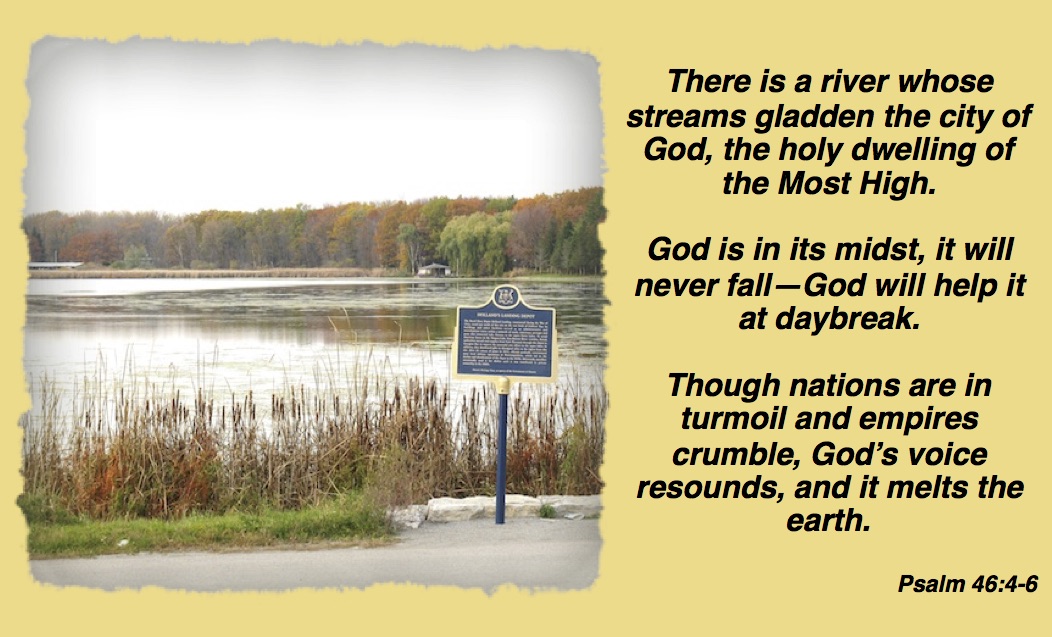


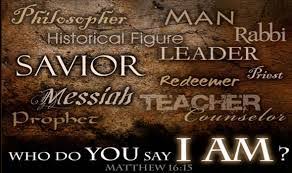






 pastordawn