Jesus, the Lamb of God Who Takes Away the Sin of the World? It ain’t necessarily so! (a sermon for Epiphany 2A – John 1:29-42)

Lamb of GodI am indebted to John Shelby Spong for giving me the words to articulate my own objections to the label attached to Jesus by a late first century writer also known as John. Most if not all of this sermon is derived from Jack Spong’s work. For more details I would refer you to Jesus for the Non-Religious and The Fourth Gospel: Tales of a Jewish Mystic. We at Holy Cross were privileged to have Jack speak to us about both of these books. In fact a year before it was published, Holy Cross was the test audience for the material in The Fourth Gospel: Tales of a Jewish Mystic. This sermon ought to have all sorts of footnotes, but I trust you will forgive me for simply confessing that I can no longer tell were Jack leaves off and I begin. Suffice it to say that this sermon is my feeble attempt to put Jack’s work into the form of a sermon.

When I turn the gospel according to John and read about John the Baptist pointing to Jesus, saying:  “Here is the Lamb of God who takes away the sin of the world!”  I want to scream,  “NO!” I have come to believe that our images of God are far too narrow. As far as I’m concerned most of our ideas about God fall far short of every even beginning to describe who God might be. One thing I’m absolutely certain of is if we can imagine ourselves being more loving, more gracious, or more merciful that our theology suggests that God is, then we had better go back to the drawing-board and think again. The ways in which we have traditionally interpreted the life, death and resurrection of Jesus the Christ, paint a picture of a God who is far less loving, gracious or merciful than you or I. Nobody in this room, would demand a blood sacrifice of a lamb, let alone the blood sacrifice of their own child. So, the image of God that is based on this kind of theology must be judged as inadequate to the task of evening beginning to provide us with a glimpse of who our God is.

As we go back to the drawing-board, we ought to take a long hard look at how we arrived at this image in the first place. Thank goodness for the work of our friend Jack Spong who has enabled us to see beyond the literal to the more-than-literal meanings of the various ways in which the followers of Jesus have understood the life and teachings of Jesus. During the years that followed the crucifixion, Jesus’ followers were left wondering what it was all about. How could someone in whom they had seen the fullness of God, be taken from them in such a horrendous way? How could their God allow it?   What were they to do? Over the years that followed, Jesus’ followers looked back at the life, death, and resurrection of Christ through the lens of their own religious experiences. Jesus’ followers were primarily Jewish and so it didn’t take long for the familiar Jewish symbol of the Lamb of God to be applied to Jesus as a way of making some sense out of his death.  Today most Christians associate the symbol of the Lamb of God with the Jewish celebration of Passover.  While the Gospel narratives do indeed locate the time of Jesus death during the celebration of the Passover, and there is indeed a sacrificial lamb involved in the Passover, the actual phrase “the Lamb of God” comes not from the religious rites of Passover, but rather the religious rites of Yom Kippur: The Day of Atonement.  Phrases like “the Lamb of God”, “died for our sins” and “washed in the blood of the lamb” can all be found in the religious rites of Yom Kippur.  Continue reading

Wear Your Baptism in Ways that Others Might See a Visible Means of Grace in You – a sermon on Baptism

img_6946

Readings:  Isaiah 42:1-9 and Matthew 3:13-17

Listen to the sermon here

Baptism of Jesus

epiphany-2017

Join us tomorrow as we celebrate the Baptism of Jesus. Everyone is welcome!

See you at 10:45am at Holy Cross Lutheran Church

Our Hymn of the Day will be Marty Haugen’s Song Over the Waters

A Progressive Christian Wades into the Waters of Baptism

baptism 33A sermon for the celebration of the Baptism of Jesus – Matthew 3:13-17

Listen to the sermon here

Wading into the waters of baptism is no simple matter for a progressive Christian. Once you leave the myth of perfection in some distant garden back there in the mists of time, reject the notion of humanity’s fall from grace as a result of original sin, and give up worshipping the sadistic image of a god who demands a blood sacrifice, it’s difficult to navigate the waters of baptism without spouting notions that the institutional church condemns as heresy. But today is the day when the church celebrates the baptism of Jesus and the stories about the baptism of Jesus that have been handed down to us by our ancestors suggest that on this day of all days, we should have the courage to follow Jesus into the river of life even if it does challenge some of our long held assumptions about what it means to be a child of God.

I venture into these troubled waters as someone who treasures the sacrament of baptism. Long before I ever entertained the idea that I might one day respond to the call to become a baptizer, I became a lover of this particular sacrament of the church. I am now, and I have always been one of those people who find it almost impossible not to shed a tear or two at baptisms. The beauty of all that hope and expectation all wrapped up in the guise of a tiny little human has a way of generating in me a watery contribution as my tears join the sprinkling to wet the babies head. When the baptized is an adult my tears flow even more bountifully. Let’s face it folks these days the reality is that infant baptisms are rare enough. Adult baptisms, especially in mainline churches are so rare that the nostalgia alone is enough to send us into spasms of uncontrollable weeping for seer joy at the thought that it is even remotely possible that someone has been able to see beyond the church’s doctrine long enough to embrace the amazing possibilities of the sacrament to provide any benefit in this the twenty-first century.

When we look back to the stories told in the synoptic gospels about the baptism of Jesus we are sometimes so distracted by the opening of the heavens, the descent of the dove and the voice of God declaring Jesus to be the beloved, that we miss an important detail of the way in which the early followers of the Way chose to tell the story of Jesus public coming out party. New Testament scholars remind us that the stories told by the writers of the gospels were written at the end of the first century; a time when it would have been clear to all those who had ears to hear, that by going down to the river Jordan to be baptized by John would have stirred up the political and religious waters. John the Baptist was a revolutionary who made no bones about the fact that the religious authorities and the political rulers were leading the people down the wrong path. John’s shouting in the wilderness was his way of warning the people to repent; to literally turn around and follow a different path. John was doing far more than ranting when he condemned the religious authorities as a brood of vipers; he was calling on the people to reject the teachings of the authorities. John’s insistence on repentance was a call to revolution, a revolution designed to overthrow  the status quo. John was out there in the wilderness because it wasn’t safe for him to spout his own particular brand of incendiary fire and brimstone rhetoric within earshot of the authorities. By going down to the River Jordon and submitting to John’s baptism of repentance Jesus was choosing to identify himself with a political revolutionary.

That the writers of the gospels chose to tell there story in ways that see the God of Israel give Jesus a shout out, and the very spirit of God descending like a dove onto the shoulders of Jesus, turns John’s baptism of repentance into a kind of passing of the torch from one revolutionary to the next. Yet, despite the gospel-writers having cast Jesus into the role of revolutionary torchbearer none of the gospel writers shows Jesus following the ways of his predecessor John. There is no record of Jesus calling people to repent nor is there any record of Jesus ever having baptized anyone. All we have is Jesus “Great Commission” which if New Testament scholars are to be believed, Jesus probably never even said, “go therefore and baptize them in the name of the Father and of the Son and of the Holy Spirit.” Yes, it’s true, most preachers, dare I say modern-day baptizers, learned in seminary that rather than being an instruction given by Jesus the Great Commission was actually added to the story by the early followers of Jesus. But I digress, the point I’d like to emphasize about Jesus’ trip down to the waters of the Jordan, is that by choosing to publicly submit to John’s baptism, Jesus was making an important statement about his own public ministry. For just like John, Jesus intended to challenge the religious and political authorities.

That the gospel writers have Jesus head off into the wilderness to find his own way prepares us to follow Jesus down a completely different path than the one his predecessor John pointed toward.

So on a day, when the church looks back upon the baptism of Jesus, surely we can take courage from Jesus’ example of wandering off into the wilderness to find our own way of challenging the religious authorities of our day. Continue reading

Bat Qol – The Daughter of a Sound: Hearing the Word Utter Our Name

Preparing to Preach on Jesus’ Baptism

BAT QOL pastordawnEach year, I begin my preparations for preaching on the Baptism of Jesus with this video in which  Heather Murray Elkins tells her story, “The Secret of Our Baptism.” Elkins opens us to a new way of hearing the Bat Col, the Daughter of a Sound, the Voice of the Divine, the Word, who speaks in this Sunday’s Gospel reading. Matthew 3:13-17

“Happy New Year” even if the forecast looks bleak! a sermon for New Year’s Day

forecast-realityWhat does it mean to bid someone a “Happy New Year” when we all know the future looks bleak? Our readings included: Matthew 2:13-23; Luke 2:15-21 & 2:22-38. Listen to the sermon here:

A Blessing for the New Year (John O’Donohue)

The art of blessing is often neglected. The birth of a New Year calls forth the desire in us to bestow a blessing upon those we love. Several years ago, John O”Donohue, one of my favorite Irish poet’s created a New Year’s blessing for his mother entitled Beannacht-for Josie. It is a blessing of superior quality. And so, on this New Year’s Eve, may you all receive this beannacht with my added blessing for a peace-filled New Year in which the God in whom all of creation is held, might find full expression in your miraculous life! 

Beannacht John O'Donohue pastorDawn.pages

So this is Christmas: Rachel Weeping!

Rachel weeping“A voice was heard in Ramah sobbing and lamenting loudly: it was Rachel weeping for her children; she refused to be consoled, for they were no more.” Matthew 2:18

Matthew 2:13-23 seems like such an offensive text to be reading so soon after Christmas. And yet, this gospel text, known as the “Slaughter of the Innocents” is indeed the prescribed lesson for the first Sunday of Christmas.  Amid our celebrations, and in the midst of the gospel writer’s account of the birth of Christ, this horrendous story of the slaughter of innocents begs the question:  WHY? It’s Christmas for heaven’s sake! My preaching professor, used to remind us of the first thing we should do when we are preparing a sermon on a particular text is to ask the obvious question. “So What?”

So What? Well for this child of the sixties, only one Christmas song comes to mind when I read of the slaughter of the innocents, it’s the one Christmas song that asks the question:    So What? We’ve just celebrated Christmas? So what does this mean? Please listen. “So this is Christmas?”


John Lennon was murdered on December 8, 1980. Shot by a deranged fan. And so is it any wonder, the melancholy why in which he sang this song, haunts our Christmases? So, what possible difference can Christmas make? We haven’t even had a chance to finish our celebrations and the news is far from good. Thousands continue to die in Syria, and the Sudan, Palestine is a mess. The people of the Philippians continue to suffer in the aftermath of disaster.  The war on Terror rages on as one side scores points on the other at the cost of human flesh and the word “drone” has taken on a horrific meaning.   Hunger continues to claim the lives of the poor despite the fact that we have more than enough food to feed the world. Poverty continues to enslave millions the world over. In just a couple of weeks the most powerful nation on Earth will hand over the reins of power to a man whose temperament for office is terrifying.

And so this is Christmas, and what have we done?

For we are the ones to whom a child was born.

We are the ones to whom a saviour was given.

A saviour who is Christ the Lord.

A saviour sent to provide hope to the world.

And we are the ones in whom Christ lives.

The Spirit of the Lord is upon us, for God has done great things for us!

Christ lives and breathes in us.

So, we are the ones God has sent to save the world.

So, this is Christmas and what have you done?

Clearly we have work to do!

The work of Christmas has barely begun.

If the slaughter of innocents is to end, we had better get busy.

Rachel is weeping for her children.

And God knows why she weeps.

Rachel weeps because her children are no more.

And Rachel, their mother, refuses to be comforted.

Rachel’s children—our children, yours and mine—born for love and mercy, die from neglect and ugliness and Rachel weeps bitterly. There’s a little book of prayers called: “Children’s Letters to God”. The prayers in that book have the power to make you smile and cry all at once. The very first letter to God in that book reads: “Dear God, in Sunday School they told us what you do. Who does it, God, when you are on vacation?” We may smile, but sometimes it feels as if for all intents and purposes, God is on vacation. For surely God would not stand idly by and allow so many innocents to perish?

Once we broaden our images of God; the source of our being, the One who dwells in us, we can begin to see that the place where we have traditionally located the Divine One changes from up there to in and around here and we can begin to seek God not out there but within and around us. If God is on vacation, it is because we are on vacation. For the Divine one works in, with and through us to sooth the pain caused by violence and greed.

So, let me assure you sisters and brothers, our God is not on vacation. Despite appearances to the contrary, our God is not absent, but God is surely weeping. For in Christ God showed us the way. The Christmas story insists that our God is in-fleshed and dwells among us.  This changes everything. It’s not enough to pray with words expecting some far off deity to change the world. The changing of this world will happen when we begin to live into our full humanity and the sacred nature of our very being shines forth with LOVE. In, with and through us is how the LOVE we call God changes the world.. For we are God’s people on earth; Christ’s body on earth and it is through Christ’s body that God will save the innocents. There’s no time for us to waste feeling overwhelmed by the magnitude of the problems. It’s time for us to roll up our sleeves and get busy.

There’s a song that helps me to remember the hope born in Bethlehem. These Hands


And so this is Christmas… Rachel weeps.  We’ve been on vacation long enough. Our God has taken on flesh and dwells among us!  It’s time for the work of Christmas to begin again. We are God’s hands!


It’s time to reclaim religion: Rabbi Sharon Brous

sharon-brous“At a moment when the world seems to be spinning out of control, religion might feel irrelevant — or like part of the problem. But Rabbi Sharon Brous believes we can reinvent religion to meet the needs of modern life. In this impassioned talk, Brous shares four principles of a revitalized religious practice and offers faith of all kinds as a hopeful counter-narrative to the numbing realities of violence, extremism and pessimism.”


Go Tell It on the Mountain!!!

OdettaWhile the world hurdles toward the New Year celebrations, we linger in the Twelve Days of Christmas. This is the second day of Christmas, which means there is still time to enjoy the music of Christmas and so, I offer up one of my favourite singers: Odetta proclaiming the Good News in her own splendid style with Go Tell it on the Mountain.

Christ is Born In You – Christmas Eve sermon

christmas-eve-2016Merry Christmas one and ALL!!! Here’s the Christmas Eve sermon based on the Gospel readings from Luke 1:26-38; 1:39-55; 2:1-20. I cannot remember where I first heard the story I tell in the sermon. I suspect it is from some sermon I heard long ago because the outline is on a fading piece of foolscap in my barely legible handwriting. I did a quick search and could only discover the was a version of the story in a sermon by Janis B. Scott who does not site her source. My retelling/elaboration of the story is, I hope, a reflection of the MYSTERY that is once again born on this holy night.

Listen to the sermon here

The Holly and the Ivy

One of my favorite Christmas movies. Produced in England in 1952, there is no sentimentality here. The story is raw and engaging. Clergy will hear the echoes of their lives  in the frustration and doubts expressed by the Parson who is brilliantly portrayed by Ralph Richardson. This movie was censored in the United States because too many of the characters do not believe in God and say so. The ending does not resolve their unbelief. It is a brilliant snapshot of another time that reminds us that the good old days never really where. I love this film’s honest unresolved angst. Enjoy!

The Birth of Jesus Is Not Very Original, Just a Birth Story Fit For An Ancient Hero

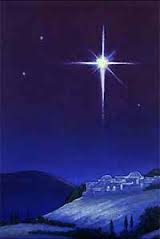
star-eastSome have said that the birth of Jesus is the most amazing birth story ever told. Jesus birth narrative heralded the arrival of a child who was praised as the Son of God, the Saviour of the World who was said to be the personification of peace on earth; God incarnate; fully divine and fully human. Not everyone agrees that this is the most amazing birth story ever told. Indeed, the story of Jesus birth can’t even claim to be unique.  Some claim that Jesus’ birth story is just one of a long line of birth stories. Jesus’ birth story, some claim, is only considered to be unique because it’s our story; a story we tell over and over at the expense of other birth stories that are just as great. Well it’s really not all that difficult to Google  “greatest birth story ever told”, select one or two of the greats and put them together to expose Jesus’ birth story as one in a line of ancient birth stories. Allow me to demonstrate.

Among the ancients, some insisted that the story Alexander the Great’s birth was weladat-alexander-mathaf-beirut
the greatest story every told. Alexander the Great’s birth story is truly one of the greats. He was, after all the, son of a Queen and a god and a king. His mother, Olympias was a Queen, betrothed to Philip of Macedonia. The night before they were married, Queen Olympias dreamed that a thunderbolt fell upon her body, which kindled a great fire, whose divided flames dispersed themselves all around her, and then as if by magic they were extinguished. Philip dreamed that he sealed up his Queen’s lady parts with a seal, which bore the impression of a lion. The high priests who interpreted the dream warned Philip not to even entertain the idea of consummating the marriage because one wouldn’t go to the trouble of sealing up something that was empty. So Queen Olympias must already be with child, who would undoubtedly be a boy with the courage of a lion. If that wasn’t enough to put Philip off he found a serpent lying beside Queen Olympias as se slept, which was said to have abated his passion. Later the oracle of Apollo at Delphi went on to explain that this was no ordinary serpent, no this was the incarnation of the God Zeus. The day that Alexander the Great was born, one of the Seven Wonders of the World burnt to the ground. The temple of the goddess Artemis in Ephesus was the home of the Goddess Artemis who was said to have been attending to the birth of Alexander at the time. Alexander the Great was heralded as the Son of God and Saviour of the World and as one of the greatest warriors the world has ever known, he went on to conquer a good portion of the planet. Continue reading

Sermons for Christmas Eve/Day

homeless-nativity

Click on these links for some of the sermons I have preached on Christmas Eve

Preaching Christmas Eve in the Wake of New Testament Scholarship

Shattered Angel: an Imperfect Christmas Story

Mary’s Story  (also found in Christmas Stories – just scroll down)

Living Nativity

Keeping Christmas Well

The Nativity: A Parable So Simple a Child Can Understand It

The Power of LOVE Who Lives In Us

Cheap, Small, and Plastic: a Christmas Eve Sermon for Progressive Christians

Tell Us About God. We Have Almost Forgotten

Christ Is Born Anew


Christ IS Born Anew – a Christmas Eve Sermon

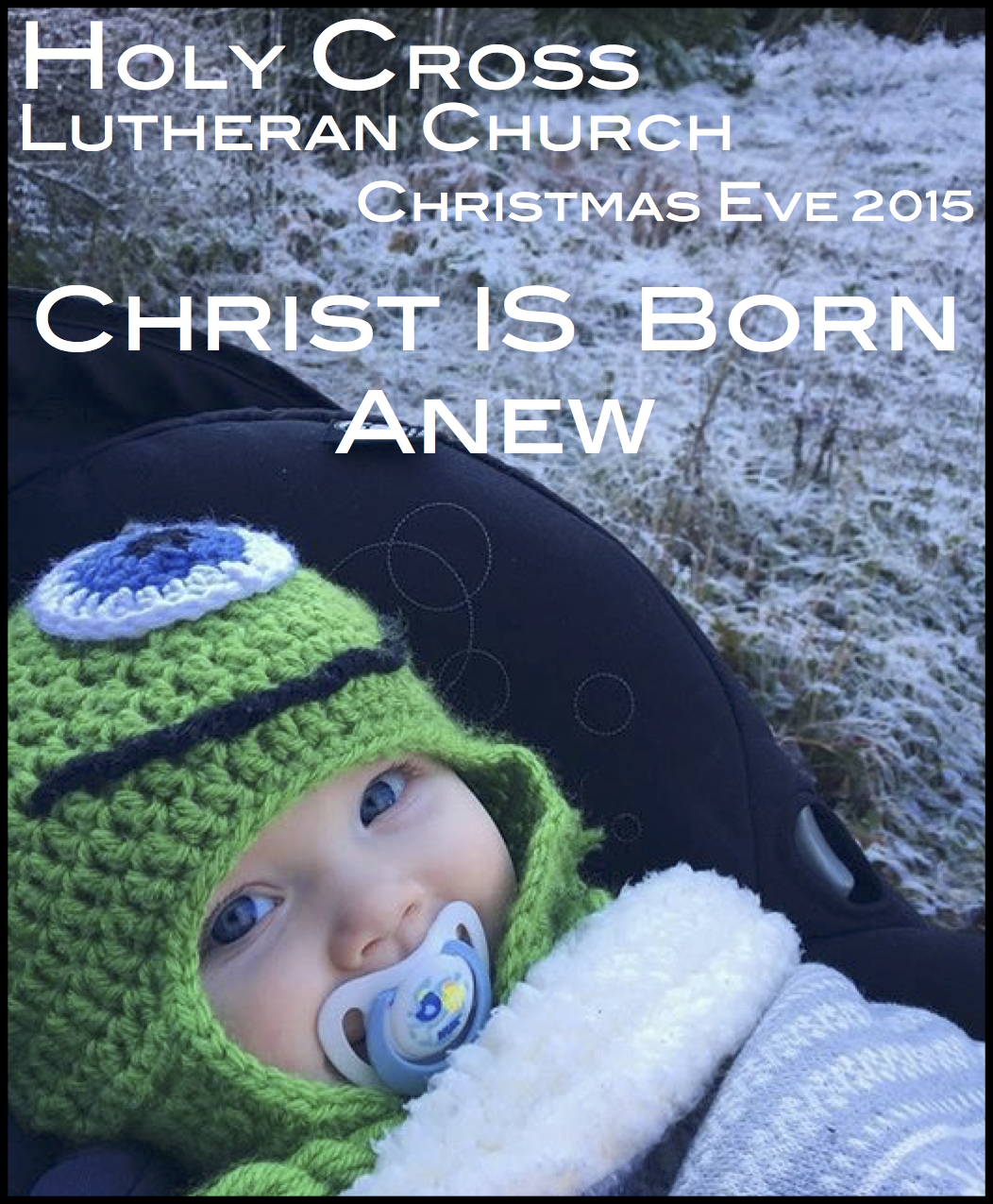
Christmas EVE 2015 cover

This sermon was preached last Christmas Eve at Holy Cross Lutheran Church. Listen to the sermon here

The little fellow on our bulletin is my great-nephew, Sawyer in whom I continue to see the face of the Christ-Child! May we all see in everyone the face of Christ!

It has been said that the shortest distance between humanity and the truth is a story. On this night of nights, we gather together around a story that reveals the truth of our humanity. Together, on this holy night, we participate in the birth of a child. Tonight, we see in the image of a new born baby swaddled in our hopes and dreams.  All our longings for love and peace rest in the images that live and breathe in this story that has been handed down to us. It is a story we know so well and yet, it is a story that we have barely begun to understand. Like all stories, we can simply listen to it, or read it, and respond with little more than a nostalgic nod to simpler times when hoped that someone or something out there or up there would come and save us from ourselves and our warring madness, and selfish greed or we can open ourselves to the transformative power of that some stories have and

We can dare to participate in the story, engage it, wrestle with it, and make it our own. If we let it, this story can open us to that which lives and breathes beyond the words of the story. The characters in this story can live and breathe and have their being in us.

Sadly, we all too often get bogged down in the words themselves, measuring them and testing them as we try to pinpoint the origins of the words and miss all together the many truths that this story can convey.   Some folks never get past arguing about the history. They just can’t seem to understand the power of myth to convey truth. The ancient scribes, who passed this story on to us, knew well the wisdom using mythology to convey truth. So, on this holy night, in the presence of one another, let us seek the wisdom of the ages remembering that wisdom is a precarious treasure; a treasure that has the ability to enrich our lives. Continue reading

Preaching Christmas Eve in the Wake of New Testament Scholarship

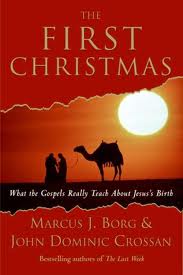
the first christmasIn 2008, our little congregation played host to John Dominic Crossan who has been acclaimed as world’s most famous New Testament scholar. Crossan’s visit to our congregation began with a public lecture based on his best-selling book The First Christmas in which he and Marcus Borg provide a splendid historical outline of the development of the birth narratives. I had the dubious honour of standing before his enlightened audience on Christmas Eve to preach in the great man’s wake. What follows is the Christmas Eve sermon I preached just three weeks after Dom’s illuminating visit.

Just a few weeks ago, this congregation was privileged to play host to a man who has the reputation of being the greatest New Testament scholar in the whole world. Dom, (we get to call him “Dom” now) wrote The First Christmas with Marcus Borg who is the guy who is heralded as the world’s leading expert on Jesus and Christianity in the 21st century. During his lecture, Dom provided us with all sorts of marvellous ways to understand the stories surrounding the birth of Jesus.  Ever since that visit, there have been folks who listened very carefully to what Dom had to say and who have been positively gleeful when they’ve asked me what I’m going to do about preaching on Christmas Eve.

I mean what could I possibly say to you after so many of you have just finished hearing from the best in the business! And then there are those of you who bought the book and you’ve read what the experts have to say about the first Christmas. Some of you weren’t able to hide the smirks when you wondered out loud just exactly how I’d go about following the eminent Dr. John Dominic Crossan. Continue reading

“The Force Be With You” or “Live Long and Prosper”

A sermon for the Fourth Sunday of Advent – Luke 1

Recognizing that many do not make it to church on Christmas Eve or Christmas morning, we usually read the entire birth narrative on the Fourth Sunday of Advent. This weekend’s release of Star Wars: Rouge One makes this sermon particularly appropiate. 

star-trek-vs-star-wars

The quotes in this sermon are from Steven Pinker’s book “The Better Angels of Our Nature” and Joseph Holub’s “Fear Not” The Acclamation sung, on the audio recording, prior to the sermon is “The Magnificat” from Holden Evening Prayer, by Marty Haugen, featuring Gary Curran and Linda Condy:   Listen to the sermon here

This week as millions of people flock to theatres all over the world to see the latest Star Wars epic (Rogue One), I am reminded of the old joke: you know you might be Lutheran if, when you hear: “The force be with you.” you must fight the urge to say, “And also with you.” While I confess that I have not yet seen the new Star Wars movie, and my memories of the original Star Wars movie are decades old, my social media feeds have been filled with allusions to “The Force”. Over the course of the past few days, I’ve read more than a few articles from would be theologians, which insist that “The Force” of Star Wars is akin to the way many progressive Christians describe our understanding of God. While it is true that may of us who have long since given up images of God the portray the super-natural being who lives off in a galaxy far, far, away, who from time to time meddles in the affairs of earthlings, and many of us have indeed have embraced notions of God that reflect early Christian teachings about the One in whom we live and move and  have our being.

The panentheistic view of God as the one who both lies at the very heart of reality and permeates reality so that God is in all and yet more that all, the one who lives and breathes, in, with, through, and beyond us, may on the surface bear a slight resemblance to “The Force” I can assure you that God is so very much more than the limited notions of “The Force”.

Right about now, I expect that some of you are wondering, why on earth I am rambling on about a childish science fiction movie just days before Christmas when I have all the ramifications of the greatest story every told from which to draw a sermon on this the fourth Sunday of Advent. Well bear with me for a bit, and if we are lucky and the force is with me, I try to explain just how Mary’s response to an angelic annunciation relates to our cultures fascination with “the force” and maybe just maybe assure you of the Good News that the God in whom we live and move and have our being is so much more of a force than the force that would be Jedi warriors all over the planet are embracing. The little that I do know about George Lucas’ force is that it inhabits a dualistic universe that is divided into to camps. On one side, we have “The Empire”, the dark evil side represented by the Sith, on the other side, the good side, the Rebellion, represented by the Jedi. The Force, is the name given to the collection of the energies of all living things that are fed into one Cosmic Force. The Force that is available to both Jedi Rebellion and the Empire of the Sith because The Force has two sides. The Force is neither malevolent or benevolent, neither good nor evil it has a bad side involving hate and fear, and it has a good side, involving love, charity, fairness and hope. The Force can be used for good or for evil. The Force is if you will, humanity write large, or the human psyche deified. The Force is nothing more than our collective strengths and weaknesses writ large.

Continue reading

Joseph and the Shady Ladies: The Revealing Story of Emmanuel – Matthew 1:18-24

emmanuel with us

A sermon for the Third Sunday of Advent: all around us the world is hustling and bustling toward Christmas. With less and less time devoted to the telling of the Christmas story, perhaps we in the Church might consider changing the lectionary so as to provide more opportunities to engage the birth narrative in Matthew. Advent 3 is a perfect opportunity to substitute two readings into the lectionary. Here’s what happened when we tried this:

Readings Matthew 1:1-17 and Matthew 1:18-24

Listen to the sermon here

It has been said that the shortest distance between humanity and the truth is a story.[1] I would add that,  the truth we find in a story teaches about our humanity. So, as we seek to embrace our humanity we would do well to pay close attention to the stories we tell. The unknown writer of the Gospel according to Matthew had a great story to tell and in order to get to the truth of who and what the man Jesus was, he chose a particular way to tell the story so that all those who heard the story would know the truth of who Jesus is in the grand scheme of humanity’s story. Sadly over the centuries that have elapsed since this story was first told have seen the tellers and listeners of this story haggle over the truth. Some have forgotten the power of story to bridge the gap between humanity and truth, and they have insisted that the truth will be found in the absolute accuracy of each and every detail.  Fortunately, many more have remembered that stories are just that, they are stories and while we know that events did not actually happen in they way they are told, they happen just that way all the time.

So, as we begin in the beginning of the Gospel, the Good News according to Matthew, let me remind you that we know that the story of Jesus birth did not happen the way it is told in the story, and we know that birth is always happening this way. For the writer of the Gospel according to Matthew was a skilled storyteller and he wrapped the story of Jesus of Nazareth in the stories of his ancestors. Written in the style of his own ancestors the gospel-writer begins his story, with the same words that every one of his listeners would have remembered from the sacred book of Genesis which begins, “In the beginning”. A sort of once upon a time, if you will, the gospel-writer begins with, the genesis of Jesus the Messiah and then proceeds to connect Jesus to the ancestors of the Jewish faith, will making sure that the truth of Jesus’ connection to those outside the faith will also be made clear.

The gospel-writer’s inclusion of the women who Bishop John Shelby has dubbed the “shady ladies” would have alerted Jewish listeners that Jesus is a different kind of Messiah; a Messiah who will transcend race, creed, or clan. Rahab, who was a Canaanite; a foreigner, was known as the mother of Israel for saving Joshua in Canaan, just happened to run a brothel there. Tamar, also a foreigner, was married to Judah’s son who according to Genesis is killed by God, and as was the custom his younger brother married her to ensure that his older brother’s name would be carried on. When that son dies, Tamar is left a childless widow, a fate worse than death in a patriarchal culture.  Tamar is known for impersonating a prostitute to trick Judah into knowing her, in the biblical sense of the verb to know, so that her father-in-law could impregnate her. Continue reading

Dorothy Day: I will never call you a saint!

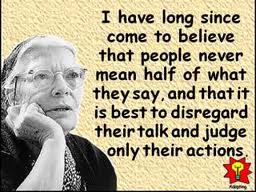
DorothyDay poor Jesus in DisguiseDorothy Day is a shero of mine! But I will never call her a saint! The tradition of commemorating saints on the day of their death makes today a day for celebrating Dorothy Day! But, Dorothy Day objected, “Don’t call me a saint! I don’t want to be dismissed so easily!”

Dorothy Day died in 1980, at the age of 83. She was one of the greatest religious figures of the century, and one of the most paradoxical. She was a Catholic and she was an anarchist. She condemned poverty and she advocated against it. She founded the Catholic Worker, a loose aggregation of ”houses of hospitality,” communal farms, newspapers and round-table discussions for ”further clarification of thought” — and called her memoirs ”The Long Loneliness.” The movement was wary of authority, yet revered her as its leader.Dorothy actions

When she died, a multitude came down to the old dwelling off the Bowery to pay their respects, the way people had come to Catholic Worker houses for soup ever since the Depression. There were Catholic Workers, social workers, migrant workers, the unemployed; addicts, alcoholics, anarchists; Protestants, Jews and agnostics; the devout and the strident and the curious, there to see what a saint looked like. 

On this day, I celebrate the life and witness of Dorothy Day a shero, a Christian mystic with all the attributes of a saint!

REPENT! TURN AROUND! REPENT! Become the Prophet Crying For the Wilderness! – a sermon preached on the Second Sunday of Advent when John the Baptist Cries

BCsunsetI didn’t know it at the time, but I actually met John the Baptist when I was fifteen years old. She didn’t look much like you’d imagine John the Baptist would look, but she had that same crazy intensity, that same focus on the fact that we’d better change our ways, we’d better repent, and start doing things differently or we’d be in real serious trouble. Lola was my friend Valerie’s mother and she simply couldn’t stop going on and on about the environment and how we were destroy the earth. At the time, I remember thinking she was a bit of a nut-case and on more than one occasion I wished she’d just shut up about it. I was just a kid, and the earth was just something I took for granted.  The earth was just there to provide for our needs. I couldn’t believe how much Lola went on and on about all the stuff we humans were doing to destroy the earth. I just wished she’d leave us along to get on with things, I couldn’t abide her incessant nonsense about how we were going to destroy the planet.  All her feeble little attempts to be kind to the earth, made me seriously question her sanity.

I tolerated Lola not just because she was my friend’s mother, but I didn’t really understand her until one day when the three of us were travelling together. We were coming home from church. I had only been going to church for a few months.  I was trying hard to understand this whole God thing. So, I went to church a lot.  My friend Valerie had persuaded me to start going to church with her and family had become like my second family as they supported me during my first attempts to explore the mysterious world into which I had begun to feel pulled. As we drove home from church, I was feeling a little glum. Try as I might, I couldn’t really understand this church thing; all that singing and praying didn’t really help me to feel closer to God. Mostly I just liked how people at church treated each other.  I liked how they went out of their way to help me feel at home. Whether or not God was there, well I really wasn’t sure. 

Anyway, we were driving along the road.  It was a partly over-cast day on the west coast of British Columbia, just a few clouds.  You could see the mountains off in the distance. We were chatting back and forth when all of a sudden Lola pulled the car over to the far side of the road, switched off the engine and got out.  Valerie followed her mother out of the car, so I figured I had better do the same.  Val and her mother scampered down from the road and onto the beach.  When they reached the water’s edge, they stopped and just looked off into the distance.  Apart from a tanker-ship making its way across the horizon, I couldn’t see much of anything. Lola had the most amazing expression on her face.  She positively glowed with happiness.  Valerie wore a similar expression.  I must have looked somewhat puzzled because Val smiled at me and said,  “Isn’t it the most beautiful thing you have ever seen?”  This only confused me more.  What were they looking at that had made them stop the car, scamper down the bank and stand there at the water’s edge on a cold autumn evening?  Continue reading