Mary Speaks: “The Testament of Mary” and “The Confession Stone” a Midrash for Palm Sunday

Palm Sunda 2015Judas, Peter, Pilate, Caiaphas, and John – these are the names most often heard in the stories we hear during Holy Week….the men who failed Jesus or who conspired against Jesus, their names we hear during this holiest of weeks. But what of the women who stood by Jesus, who wept for Jesus, who bore witnesses to the betrayal, the trial, the execution, and the death of Jesus. Where are their stories during this week of weeks? For centuries, the church has failed to listen to the voices of the women whose lives were intertwined with Jesus’ life. The stories of these faithful women have been hidden in the mists of time. This Palm Sunday we turned to one of those women; to Mary the mother of Jesus. Her voice has been silenced by the church. She has been confined to works of art that speak not with words. 

So, as we enter Holy Week we turn to two new works of art that give voice to Mary’s story. Anne Keith and I will do our best to give voice to Mary’s story using the words of the Irish writer Colm Tóibín whose book, “The Testament of Mary” imagines Mary as an old woman, nearing the end of her life, looking back on the life of her beloved child Jesus. You will hear cynicism in the voice of Mary who is visited by the men who will tell her son’s story; men who are determined to make a particular meaning out of Jesus life and death. Mary does not share their enthusiasm for the tragedy that robbed her of her child, nor will she twist her own story to suit their needs.

Mary’s voice will also come to you through music. Mezzo soprano, Linda Condy, accompanied by our Musical Director: Marney Curran, B.S.M., A.R.C.T., will preform “The Confession Stone: Songs of Mary” composed by Canadian Robert Fleming based on the poems of Owen DodsonOwen Dodson was an African-American poet whose work is part of what has been dubbed the Harlem Renaissance. Dodson’s poetry brings a lively humanity to the Mary empowering her voice to evoke the passion of a mother’s loss.

Both Owen Dodson and Colm Tóibín provide a powerful midrash with which to begin our Holy Week. 

Faith and Begorrrah – A St. Patrick’s Day Sermon

Tomorrow is  St. Patrick’s Day and I was asked about the sermon I preached two years ago when the celebration fell upon a Sunday. The person who asked about the sermon remembered laughing a lot during its delivery and encouraged me to re-post it. So, pour yourself a glass of your favourite tipple, sit back and enjoy a laugh.

Readings:  Numbers 27: 1-11; Acts 13:44-51; John 12:1-8

guinnessbeerSt. Patrick’s Day doesn’t often fall on a Sunday, but as our congregation’s Annual Meeting would begin immediately following our worship service, I decided to be somewhat playful and irreverent with a sermon designed encourage folk to think beyond words on a page. The first reading brought the wonderful story of the Daughters of Zelophehad to church and as this reading does not appear in the Revised Common Lectionary it was fun to play withirish these feisty women. The reading from the book of Acts is actually the prescribed reading for the commemoration of St. Patrick and the Gospel text is prescribed for Lent 5C. The Guinness was just for fun! Enjoy.

Read a transcript of the sermon here

Listen to the sermon

https://pastordawn.com/wp-content/uploads/2013/03/st_patricks_sermon.m4a

Beyond the Serpent. Beyond the Idol Jesus. Beyond the Beyond and Beyond that Also: a sermon Lent 4B – John 3:14-21

bronze serpentA sermon that peers beyond the mess we have made of John 3:16. 

Listen to the sermon here


Approaching the Resurrection – What Did Paul Actually Say?

trouble with resurrection

Far too many preachers stumble into the celebration of Easter without doing our homework. Resurrection is a central tenant of the Christian faith and Easter is the primary celebration of resurrection and yet, too many of us fail to open ourselves to current scholarship surrounding the doctrine of resurrection. Questions about the nature of the resurrection ought to send us back to the words of the Apostle Paul. Bernard Brandon Scott is a charter member of the Jesus Seminar. His book “The Trouble with Resurrection” is a must read for those who preach during the Easter Season.

If you are planning to write a sermon or listen to a sermon this Easter, this video provides essential background information about the words of the Apostle Paul on the nature of the resurrection which may surprise you. Scott’s treatment of 1 Cor. 15 provides a new understanding of resurrection which is compelling as well as liberating.


Learning to Die Daily: a sermon for the second Sunday in Lent

let suffering speak

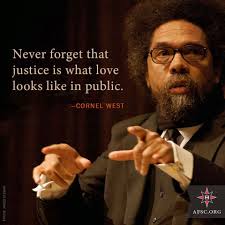
Lent 2B – Mark 8:31-38 this sermon is inspired by my study of the work of Dr. Cornel West. His words flow through this lines of this sermon and his prophetic imagination provides the hope-filled vision of LOVE parading around the world as justice.

Listen to the sermon here

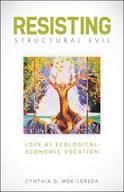
Resisting Structural Evil: Love As Ecological-Economic Vocation by Cynthia D. Moe-Lobeda

Resisting Structural EvilIn the midst of teaching an adult education class on evil from the perspective of progressive Christianity, I was contacted by Dr. Cynthia Moe-Lobeda who had come across this website and wondered if I would be interested in her new book. What followed has been a splendid introduction to the work of a progressive christian ethicist who, despite the fact that she just happens to be Lutheran, I have failed to discover before now! That our little class just happens to be struggling with the problems of systemic evil and looking for signs of hope in the midst of our entanglement with institutions and structures which bind us up in evil that is hurting, oppressing, and condemning whole populations to poverty, prompted me to latch on to Dr. Moe-Lobeda’s invitation to take a look at her new book, if only for the resonance of the title  Resisting Structural Evil: Love as Ecological-Economic Vocation with our current struggles.

Dr. Moe-Lobeda’s resume includes her work as Wismer Professor of Gender and Diversity Studies at Seattle University where she teaches Christian ethics and lectures and consults international on climate justice, economic globalization, white privilege, moral agency, Earth ethics, and being public church. 

ResistingstructuralevilResisting Structural Evil is a must read for those of us who are seeking ways to live in a world where we benefit from systems beyond our control which oppress and abuse whole populations and threaten entire ecosystems. Confronting the evil in which we are all implicated is a task so daunting that many of us are loath to engage the powers of evil lest we be overwhelmed by the multitude of problems in the world. Dr. Moe-Lobeda’s work provides a framework for a spirituality which can nurture and sustain us as we embrace our call to resist evil. After reading her excellent articulation of the moral crisis, enriched by Moe-Lobeda’s ability to embody ethics with stories that resonate with our deep hunger for justice, structural evils are unmasked with an eye to countering hopelessness. Sowing seeds of hope with a spirituality of love that is capable of engaging both Mystery and reality is not for the feint of heart. Yet, Moe-Lobeda’s carefully laid out, totally approachable, framework for the kind of morality capable of  responding to the vision of justice which permeates her work, provides the reader with the courage to see new ways of being Love in the world!

Our little class has already benefited from Dr. Cynthia Moe-Lobeda’s invitation to resist structural evil. We began by devoting ourselves to unpacking the wisdom is the lecture she gave to the Common Good Cafe at University Temple United Methodist Church in Seattle, WA. entitled A Spirituality of Resistance. The talk provides a wonderful overview of Dr. Moe-Lobeda’s important work. Watch the video and see for yourself. Then, order her book! I know that we will be spending more time working with her book as we digest the rich nourishment of her wisdom!     

Liturgies for Lenten Evening Prayer Inspired by the Mystics

I have been asked to re-post our Lenten Evening Prayer liturgies in one convenient spot. These have been used several times at Holy Cross, so you can listen to the audio recordings or check out the worship bulletins.

Liturgical texts and readings taken from the writings of the mystics.

Intended for use during the season of Lent.

EVENING PRAYER:  JULIAN OF NORWICH

Click here to download the Worship Bulletin which is to be printed double-sided

Click here to listen to the Worship Service

EVENING PRAYER:  THOMAS AQUINAS

2 Evening Prayer Lent which is to be printed double-sided

EP 2 Thomas Aquinas — the silences are intentional

LENTEN EVENING PRAYER: MECHTHILD OF MAGDEBURG

Evening Prayer Service Bulletin which is to be printed double-sided.

Evening Prayer Service audio – the silences are intentional – enjoy them.

LENTEN EVENING PRAYER: FRANCIS OF ASSISI

Evening Prayer Service Bulletin which is to be printed double-sided

Evening Prayer Audio – the silences are intentional.  Enjoy!

LENTEN EVENING PRAYER: HILDEGARD VON BINGEN

Evening Prayer Service Bulletin which is to be printed double-sided

Evening Prayer Audio – the silences are intentional.  Enjoy!

Parables Ancient and Modern: Lenten Evening Prayer with readings from the Orthodox Heretic

Orthodox HereticA series of Lenten Evening Prayer Services which use readings from the Parables of Jesus together with readings from Peter Rollins’ “The Orthodox Heretic and Other Impossible Tales.” Prayers are drawn from the writings of the Christian Mystics. Each service includes the worship bulletin as well as an audio recording of the service at Holy Cross Lutheran Church. 

One:  NO CONVICTION

A Copy of the worship bulletin can be found here – it is designed to be printed double-sided and folded into a booklet.

Listen to the worship service here (service begins at the 48 sec. mark)

Peter Rollins reads NO CONVICTION

Two:  Translating the Word

A copy of the worship bulletin can be found here – it is designed to be printed double-sided and folded into a booklet.

Listen to the worship service here

 Three: Great Misfortune

Evening Prayer a copy of the worship bulletin can be found here – it is designed to be printed double-sided and folded into a booklet.

Listen to the worship service here

Four: The Book of Love

 Evening Prayer a copy of the worship bulletin can be found here – it is designed to be printed double-sided and folded into a booklet.

Listen to the worship service here

Five: Betrayal

Evening Prayer a copy of the worship bulletin can be found here – it is designed to be printed double-sided and folded into a booklet.

Listen to the worship service here

Awe and Wonder: A Lenten Practice

AWE copySo many of our Lenten practices revolve around theories of atonement that cast the HOLY ONE as a participant in a grand bargain that saw Jesus of Nazareth die as a sacrifice for sin. For those of us who have left behind theories of atonement that set Jesus up as  payment for our sin, Lent can seem a very lonely place. While many churches busy themselves with rituals that encourage repentance from the perspective of confessing our unworthiness to a grand-inquistor deity,  it is tempting to give up the season of Lent all together. But with the explosion of information about the nature, beauty and complexity of the cosmos, perhaps we can achieve the humility that the ritual of confession offers in ways that do not require us to adopt the attitude that human’s are unworthy creatures in need of a god who would demand satisfaction at the expense of a blood sacrifice. 

Each time I look up into a starlit sky I am overcome with a sense of awe and wonder that is in and of itself a prayer that inspires humility in me. A sense of awe and wonder at that which is beyond ourselves is the beginning of a prayer that always leads me to a sense of ONENESS with all that IS. 

This morning, my Lenten devotion came to me in the form of this splendid video The Overview, which describes the awe and wonder of those who have had the privilege of looking at the earth from the perspective of space. They describe their awe and wonder, their prayer if you will, as the “overview effect”. The overview effect serves to connect these space travellers to the earth itself and moves them to the kind of humility that helps me to realize that awe and wonder can serve as nourishment for my own Lenten journey.

As we gaze in awe at our marvellous planet perhaps we can be moved to tread more lightly upon her. Perhaps awestruck by the beauty and wonder of creation, we can look to all the inhabitants of the earth and see that they too are fearfully and wonderfully made. I trust that a humility based not on a belief that we are wicked, unworthy creatures, but rather on a experience of awe and wonder, will lead us on a Lenten journey to a place where we will have the courage to gaze upon the cross and see beyond the violence to the hope of resurrection.

Beyond the Wildernesses: a sermon for Lent 1B

JusticeThis sermon is inspired by the work of Dr. Cornel West whose words and challenges infuse this sermon with courage and passion. The questions which frame the challenges are from W.E.B du Bois as quoted by Cornel West. Listen to the sermon here

Since You Asked: I Refuse to Take on Any Lenten Disciplines!

JOHN OF THE CROSS wordsIn the midst of this brutally cold winter I can find no signs that spring is around the corner. To say that it is cold outside is an understatement of epic proportions. Regardless of the challenges of this wild winter, I cannot simply retreat to the warmth of the fireside. I have places to go and people to see. By the time the driveway is shovelled, the ice is scraped, the windshield juice is topped up in my car and all the extra time it takes to navigate the roads in this weather, I can barely complete the regular tasks this busy modern life of ours demands, let alone feel guilty because I’m not adopting some contemplative spiritual exercises that harken back to a simpler time! I heard someone say, “If you are currently not experiencing any stress in your life, you should immediately lie down because it appears that you may be dead.” So, please don’t ask me to take on any Lenten disciplines!

I have also heard it said,  that in Canada the most common response to the question “How are you doing?” is the word “Busy!”. Canadians and I suspect Americans, Europeans, and most inhabitants of the so-called First World, seem to feel the need to justify our existance by assuring others that we are leading busy lives. While I am absolutely convinced that lives lived in the twenty-first century are busier than the lives of our ancestors, I’m not so sure that being busy is something we ought to be proud of.

Growing up, I remember all sorts of predictions about how life in our immediate future would be filled with so much leisure time as a direct result of the technology that would be at our fingertips. But as technology advances, our ability to work wherever and whenever the need arises has severely curtailed our leisure time. Our lives are busy and we have forgotten what it means to be human beings because most of us have become human doers. We have forgotten how to simply be.

I find it reassuring, comforting even, that our ancestors understood  our Creator as YAHWEH, which translated can be understood as “I AM WHO I AM or I SHALL BE WHO I SHALL BE. That the name of God should be understood as the verb “to be” helps me to understand myself as one who is created in the image of the great I AM and not the great I DO. I am a human being not a human doer! What I need from a season like Lent is not a prescription for more things to do. But rather, the encouragement to simply be. 

Might I suggest that we can begin this encouragement to simply be by simply greeting people with a simple word of peace. If such a greeting seems awkward to you then perhaps simply asking people how they “are” rather than how they are “doing” will suffice. Such a subtle change may not be enough for some people to refrain from telling you what or how they are “doing” and you may find them insisting that they are indeed “busy”. But a little gentle persistence may enable some to respond about their very being. Reminding one another that we are beings and not just doers might lead us toward some peace. Shalom, As-salam alaykum, Peace dear beings, Peace…..

The Challenges of Jesus, Confronting Evil, and ISIS – a sermon for Epiphany 5B – Mark 1:29-39

Canada ISISReadings included Mark 1:29-39: Jesus raises up Peter’s Mother-in-law, and Aleksandr Solzhenitsyn, “The Gulag Archipelago 1918-1956”

“If only it were all so simple! If only there were evil people somewhere insidiously committing evil deeds, and it were necessary only to separate them from the rest of us and destroy them. But the line dividing good and evil cuts through the heart of every human being. And who is willing to destroy a piece of his own heart?”

listen to the sermon here

https://pastordawn.com/wp-content/uploads/2015/02/epiphany_5b-feb8-2015.m4a

What the Blankety Blank? A New Authority??? a sermon for Epiphany 4B; Mark 1: 21-28

Blankety blankReadings included: Psalm 111 and Mark 1:25-28, prior to the sermon we viewed the video The Awe Factor of God which can be viewed here

Listen to the sermon here


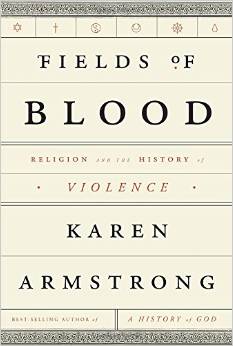
Fields of Blood: Religion and the History of Violence – Karen Armstrong

Fields of BloodSince 911, the rhetoric has been dialled up to piercing levels when it comes to the relationship between religion and violence. The constant noise has numbed us to the realities of history as many of us accept the judgments of the endless cacophony of popular voices proclaiming that violence is a natural consequence of religion. Karen Armstrong’s meticulous research challenges the popular doctrine of both atheists, theists, and all those who would lay claim to the notion that religion is responsible for violence, terrorism, and war. Armstrong surveys a wide sweep of history, beginning 3000 years before the Common Era with the kind of vigour that has lead readers of her previous epics to trust her conclusions. Adept as Armstrong is when it comes to revealing her encyclopedic knowledge of world religions, Fields of Blood is a must read for all those who work in the field of religion as well as an enlightening read for all those who find themselves on the receiving end of modern pundits of both the religious and political varieties. 

In the video below, Karen Armstrong provides an overview of her work which will no doubt compel you to add Fields of Blood to your reading list. Filmed at Chautauqua in August of 2014.


Jonah: I love a big fish story!!!

jonahThe first reading prescribed for this coming Sunday is from the first chapter of the book of Jonah; a great big fish story! I believe that I was all of ten years old when I first read Hemingway’s “The Old Man and the Sea.”  I loved each and every mesmerizing page of it and I’ve been a fan of big fish stories ever since. I didn’t actually read the Book of Jonah until I was in my twenties and it took me many more years to appreciate it too as a splendid big fish story. This short film written by Jack Thorne and directed by Kibwe Tavares revisits the Jonah story with prophetic urgency and reminds me that though we may never go back to the way things were, we can dream of how things may be, so that we might never have to long so desperately to return. Enjoy this feast for the eyes! 

Let Freedom Ring Through You!

Martin Luther King2

Today as our neighbours to the south celebrate the life of the Rev. Dr. King, I offer this sermon (John 1:29-42) preached last year at Holy Cross when our worship service celebrated the life and witness of Dr. King. You can listen to the audio which  includes the Acclamation, sermon and a stirring rendition of the Hymn Lift Every Voice and Sing:

Listen to the sermon below or click here:

https://pastordawn.com/wp-content/uploads/2014/01/epiphany_2a-mlk.m4a

“Darkness cannot drive out darkness; only light can do that.

Hate cannot drive out hate; only love can do that.”

During the struggle to open the Evangelical Lutheran Church in Canada to the full participation of gay, lesbian, bisexual, and transgendered people, there were some very dark days. As many of you know, during my first years in ministry, it was not a struggle that I did not want any part of.  I was for all intents and purposes living in the closet, even if it was the most transparent of closets, the walls of that closet made it very clear to me that my job would be at risk if I spoke publicly about who I am. So, in the early years, I was determined to keep my mouth shut about my own sexuality and fight the good fight from the relative safety of the background. Then by virtue of my office, I was asked to speak publicly at a forum being held by York region, mental health professionals who were gathering resources to support GLBT youth. The organizers of the forum knew that many young people suffered as a result of their family’s involvement in churches that propagated hatred toward gays and lesbians and they wanted me to speak directly to these issues so that mental health professionals might be equipped to begin to counter some of the religious propaganda that was damaging so many young people.

A few days after I spoke at this public forum a note was hand delivered to the mailbox at the parsonage. The note contained two quotes from the book of Leviticus: “Thou shalt not lie with mankind, as with womankind it is abomination” and “If a man also lie with mankind, as he lieth with a woman, both of them have committed an abomination: they shall surely be put to death; their blood shall be upon them.”

I was shaken by the quotes and even more shaken by the fact that they were hand delivered to my home. I tried to shake off my fear by telling myself that the note represented the ravings of a fool. But when I shared the note with members of the church council, I was reminded that in my world these words represented Bible quotes but in the real world they actually constituted a death threat. Continue reading

A Progressive Christian Wades into the Waters of Baptism

baptism 33A sermon for the celebration of the Baptism of Jesus  Mark 1:4-11 

Listen to the sermon here

Wading into the waters of baptism is no simple matter for a progressive Christian. Once you leave the myth of perfection in some distant garden back there in the mists of time, reject the notion of humanity’s fall from grace as a result of original sin, and give up worshipping the sadistic image of a god who demands a blood sacrifice, it’s difficult to navigate the waters of baptism without spouting notions that the institutional church condemns as heresy. But today is the day when the church celebrates the baptism of Jesus and the stories about the baptism of Jesus that have been handed down to us by our ancestors suggest that on this day of all days, we should have the courage to follow Jesus into the river of life even if it does challenge some of our long held assumptions about what it means to be a child of God.

I venture into these troubled waters as someone who treasures the sacrament of baptism. Long before I ever entertained the idea that I might one day respond to the call to become a baptizer, I became a lover of this particular sacrament of the church. I am now, and I have always been one of those people who find it almost impossible not to shed a tear or two at baptisms. The beauty of all that hope and expectation all wrapped up in the guise of a tiny little human has a way of generating in me a watery contribution as my tears join the sprinkling to wet the babies head. When the baptized is an adult my tears flow even more bountifully. Let’s face it folks these days the reality is that infant baptisms are rare enough. Adult baptisms, especially in mainline churches are so rare that the nostalgia alone is enough to send us into spasms of uncontrollable weeping for seer joy at the thought that it is even remotely possible that someone has been able to see beyond the church’s doctrine long enough to embrace the amazing possibilities of the sacrament to provide any benefit in this the twenty-first century.

When we look back to the stories told in the synoptic gospels about the baptism of Jesus we are sometimes so distracted by the opening of the heavens, the descent of the dove and the voice of God declaring Jesus to be the beloved, that we miss an important detail of the way in which the early followers of the Way chose to tell the story of Jesus public coming out party. New Testament scholars remind us that the stories told by the writers of the gospels were written at the end of the first century; a time when it would have been clear to all those who had ears to hear, that by going down to the river Jordan to be baptized by John would have stirred up the political and religious waters. John the Baptist was a revolutionary who made no bones about the fact that the religious authorities and the political rulers were leading the people down the wrong path. John’s shouting in the wilderness was his way of warning the people to repent; to literally turn around and follow a different path. John was doing far more than ranting when he condemned the religious authorities as a brood of vipers; he was calling on the people to reject the teachings of the authorities. John’s insistence on repentance was a call to revolution, a revolution designed to overthrow  the status quo. John was out there in the wilderness because it wasn’t safe for him to spout his own particular brand of incendiary fire and brimstone rhetoric within earshot of the authorities. By going down to the River Jordon and submitting to John’s baptism of repentance Jesus was choosing to identify himself with a political revolutionary.

That the writers of the gospels chose to tell there story in ways that see the God of Israel give Jesus a shout out, and the very spirit of God descending like a dove onto the shoulders of Jesus, turns John’s baptism of repentance into a kind of passing of the torch from one revolutionary to the next. Yet, despite the gospel-writers having cast Jesus into the role of revolutionary torchbearer none of the gospel writers shows Jesus following the ways of his predecessor John. There is no record of Jesus calling people to repent nor is there any record of Jesus ever having baptized anyone. All we have is Jesus “Great Commission” which if New Testament scholars are to be believed, Jesus probably never even said, “go therefore and baptize them in the name of the Father and of the Son and of the Holy Spirit.” Yes, it’s true, most preachers, dare I say modern-day baptizers, learned in seminary that rather than being an instruction given by Jesus the Great Commission was actually added to the story by the early followers of Jesus. But I digress, the point I’d like to emphasize about Jesus’ trip down to the waters of the Jordan, is that by choosing to publicly submit to John’s baptism, Jesus was making an important statement about his own public ministry. For just like John, Jesus intended to challenge the religious and political authorities. Continue reading

Bat Qol – The Daughter of a Sound: Hearing the Word Utter Our Name

Preparing to Preach on Jesus’ Baptism

BAT QOL pastordawnEach year, I begin my preparations for preaching on the Baptism of Jesus with this video in which  Heather Murray Elkins tells her story, “The Secret of Our Baptism.” Elkins opens us to a new way of hearing the Bat Col, the Daughter of a Sound, the Voice of the Divine, the Word, who speaks in this Sunday’s Gospel reading. Mark 1:4-11

Wisdom Seeks Wisdom – an Epiphany sermon for the Second Sunday of Christmas – Matthew 2:1-12


Thomas 70 pastordawn

The readings included John 1:1-9; the Gospel of Thomas 70, and Matthew 2:1-12

You can listen to the sermon here


James Carroll – Christ Actually: The Son of God for the Secular Age

Christ ActuallyI have just completed reading James Carroll’s latest book “Christ Actually: The Son of God for the Secular Age” for the second time. I know that I will read it many more times as I continue my own work of articulating an understanding of Jesus for the 21 century. Carroll’s way of exploring Christianity has always been enlightening and refreshing because he has the courage to question the tradition from the vantage point of someone who has lived the tradition with passion. Carroll is former Roman Catholic priest who now serves as Distinguished Scholar-in-Residence at Suffolk University and is a columnist for The Boston Globe, whose books include:  “Constantine’s Sword: The Church and the Jews,” “American Requiem: God My Father,” and the “War That Came Between Us, Crusade: Chronicles of an Unjust War,” “Toward a New Catholic Church: The Promise of Reform,” as well as eleven novels. 

Carroll’s critique of Christianity is infused with a sense of responsibility for the ways in which our anti-Jewish texts have misremembered the story of Jesus. His exploration of first century history points to the profound influence of the Roman destruction of the Temple in 70 C.E.  upon the way in which the gospel-storytellers crafted their accounts of Jesus for their late first century communities.  Insisting that we must measure everything we say about Jesus now against Jesus’ Jewishness, Carroll asks a compelling question: “What if the so-called divinity of Jesus lays bare not so much the mystery of God as it does the majesty of what it means to be human?”  Carroll sees that the divinity of Jesus in some way suggests the Divinity in which we all participate. Carroll’s work is a must read for those of us who are working to articulate a 21st century Christology!

The video below was recorded at First Parish in Cambridge on Wednesday, December 10, 2014