Heading to the Joint Assembly!

Ottawa Convention Center

Ottawa Convention Center:
site of the Joint Assembly

It has been almost two years since the Evangelical Lutheran Church in Canada voted on a series of motions designed to end the discrimination against GLBT people in our church. Prior to the passage of these motions, I assumed that once we voted to allow same-gendered marriage and the ordination of openly gay candidates for the ministry of word and sacrament we would be well on the way to equality for GLBT folk in our congregations. I had hoped that our church’s affirmative votes would mean that I could finally set aside studies related to sex in the Bible. As an ordained woman who just happens to be gay, I had grown weary of sexual politics in the church and longed to turn my attentions to theological matters that might lead to a re-articulation of the Christ experience for 21st century thinkers. My naive notions failed to take into account the fact that it has been close to 37 years since the ELCIC voted to ordain women and sadly there are still bastions of prejudices against women that remain in the ELCIC.

Voting doesn’t make it so. As the National Assembly of the ELCIC draws near, I have begun to receive questions about: 1) what it’s like to be an “out lesbian” serving in an ELCIC parish, 2) how many individual congregations have voted to affirm the ELCIC’s policies, are served by openly gay clergy, or are preforming same-gendered weddings, and 3) what needs doing in order that we might have more congregations that actually welcome GLBT folk into full membership?

In response to the various questions that are littering my inbox I can only say, “I don’t know?” You see I live in a bubble. The congregation I serve is a fully inclusive congregation. Shortly after the ELCIC voted to allow openly gay clergy to serve, I was finally able to celebrate by marrying my long-time partner. Our wedding celebration was also a congregational celebration. While I am relieved to be able to speak publicly about who I am, my gayness is not central to my ministry. We at Holy Cross are busy working to be a congregation that dwells in the 21st century. We are constantly exploring what it means to follow the ways of Jesus in a post-Christendom world. We have moved so far beyond the sexuality questions which obsessed the ELCIC for nearly two decades. I rather like the freedom that our particular bubble has afforded us to float away from the endless conversations about sexuality. So, it is with great trepidation that I began to engage the questions that are frequenting my inbox.

This Joint Assembly marks the first time that the Evangelical Lutheran Church and the Anglican Church in Canada have gathered together for our national conventions. As full communion partners there is so much that unites us. However, the Anglican Church of Canada, unlike the Evangelical Lutheran Church in Canada, has not yet voted to remove all of the barriers to full inclusion for its LGBTQ members. While our experiences in the ELCIC prove that voting doesn’t make it so, it does make it possible for us to claim our place in the church. So, while I applaud the sentiments that bring us together for this Assembly, I can’t help wondering about the quality of our “full communion”?Joint-Assembly-logo_FINAL_full2

I shall endeavour to blog during this Joint Assembly. I’ve added a page to this website where related blogs will be posted. In the meantime I travel in hope!

Only in Canada Eh? – Canayjuns, Injuns, Paula Deen, the N-Word, and Racism – a sermon for Canada Sunday

children's futureI am indebted to Father Jim O’Shea for his article in the Huffpost and to Robert LoveLace for his parable about Chickens which appeared in The Rabble.

Listen to the sermon here

A Way to Understand the Resurrection – Richard Holloway

Peter Callesen's Papercut Resurrection

Peter Callesen’s Papercut Resurrection

Richard Holloway, the former Primate of the Scottish Episcopal Church, interprets the story of the resurrection not as an historical tale, but as our own story. Holloway has written of his longing for a humbled and broken church. His own humility and brokenness shines through this video as Holloway embodies his own longing.

Faith and Doubt: “a whisper will be heard” – Richard Holloway

hollowayI have just completed reading Richard Holloway’s “Leaving Alexandria: A Memoir of Faith and Doubt”.  As someone who struggles to stay in the institutional church, I can hear the whispers of which this former Primate of the Scottish Episcopal Church writes. leaving alexandria

After a lifetime in the church, Holloway continues to respond to whispers, “The thing that keeps me religious is the possibility that there might be an ultimate purpose to the universe and it might, as certain rumours suggest in sacred texts, be unconditional love. And it seems to me to live as if that might be the case is not a bad way go be going; especially if it makes us kind to one another.” 

Richard Holloway’s vision of the church he longs for is a vision I too long for. As he ponders the question “Am I still a Christian?” Holloway insists,  “God has always been elusive in me. He’s always felt like an absence that felt like a presence. I was tantalized by God, that resonant absence again. The God that I was being told about, the God who was punishing my gay friends, the God who denounced me was cruel I and I couldn’t be part of that. And yet I am still tugged by the longing that had gotten me into this, the possibility of transcendence, that there is meaning and that the meaning might be a great pity, not a cruelty, but an absolute compassion, an absolute unconditional love, a love like the father of the prodigal in Luke’s great parable who runs to meet his broken son and doesn’t condemn and doesn’t even wait  for the confession before embracing him, and bringing him home. There is that God. That’s the God of Jesus….So I’m kind of in and yet out of the Christian Church. I want it to continue. But I want it humbled. I don’t want it cruel and bullying. I want it modest and serving. I want it to feel broken like the broken Jesus and not trying to sort people into very precise understandings of humanity. I want it to accept the totality of broken humanity. Most of us are broken in one way or another and we struggle with our own meaning, with our own integrity, and our own sinfulness. And the thing I found in Jesus and the thing you can still find in some churches is an understanding of that. ‘Come onto me all ye who travail and heavy laden and I will give you rest.’   So, I’m back. But I can’t proclaim. I can’t evangelize. I can’t say what this is the truth. I don’t know what the absolute truth is. But I still catch a glimpse of the tiny figure of Jesus on a distant seashore kindling a fire, a fire of compassion and kindness. And I’ve become increasingly allergic to religious certainties. They seem to me only to crucify people…”

For those of us who remain and for those who have joined the church alumni, Holloway’s story is a compelling whisper that speaks with the very compassion for which he and we long for. He may no longer be a bishop in the institution, but he remains a shepherd to those who long to catch a glimpse of the tiny figure of Jesus who continues to call the religious out from under the tables that clutter our temples.

The Doubt Essential to Faith – Lesley Hazleton

CoexistI have featured Lesley Hazleton on this blog before. Hazleton’s insights into faith come from her unique perspective as an agnostic Jew whose fascination with Islam has produced two biographies of the Prophet Mohammad.

In her latest TED talk (June 23/13) Hazleton looks to the doubts experienced by the Prophet Mohammad to explore the relationship between faith and doubt, calling for a new appreciation of doubt as pivotal in the struggle to end the fundamentalism of all religions. It is well worth a listen!!!

A New Harmony: Re-Imagining St. Paul’s Vision of Oneness

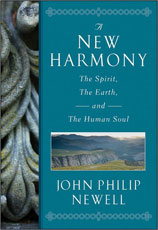
interfaceThinking about this Sunday’s epistle reading, Galatians 3:23-29 and wondering how we might  re-imagine  the Apostle Paul’s insistence that in Christ “There is no longer Jew or Greek, there is no slave or free, there is no longer male and female; for all of you are one in Christ Jesus.” Might it be that those of us who follow the way of Jesus need to consider subtracting our language about “Jesus Christ” as the source of our ONENESS in the One In Whom All Life Is Rooted? Can we begin to re-imagine language for what we mean by “Christ”? What can we learn from sisters and brothers who follow a different way to ONENESS?A New Harmony

John Philip Newell’s recent book, “New Harmony: The Spirit, The Earth, and The Human Soul” provides an Eastern perspective from which I’m looking anew at the Galatians reading. You can hear Newell reading from the chapter “Every Bush Is Burning” in which I trust preachers and seekers alike will find much to contemplate. Enjoy!

Open Hands – Pentecost 4C Sermon

open handsI am indebted to Dr. Martha Ellen Stortz for the metaphor of open hands.

Listen to the sermon here

In the Sweet By and By, I’ll Fly Away!

Metaphor - pastordawnThird Sunday after Pentecost

June 9, 2013 – Readings: 1 Kings 17:17-24 and Luke 7:11-17

Listen to the sermon here

“Isness is God” – Meister Eckhart

Isness IS God Eckhart Fox Pastor Dawn

Back in the 19th century, Rudolf Otto described the Holy One that we encounter as: “mysterium, tremendum et fascinans.” “Mysterium” captures the indescribable nature of the Holy. “Tremendum” …we get our word tremble from this; and in the presence of the Holy we tremble because the Holy is so far beyond our abilities to cope with. And yet we are “facinans,” fascinated to the point where we long to return over and over again into the presence of the Holy. Sadly, the image of God that has been created for us by religion can’t possibly contain all that the Holy IS.  images

In his book  “Insurrection” Peter Rollins insists that, for a multitude of reasons we are all too willing to settle for what Bonheoffer called the God of Religion. For Bonheoffer, the Church approached God as a “deus ex machina.” God was merely an idea clumsily dropped into our world in order to fulfill a task. God was introduced into the world on our terms in order to resolve a problem rather than expressing a lived reality. The result is a God who simply justifies our beliefs and helps us sleep comfortable at night. God is brought into the picture only when we face a problem of some kind that doesn’t lend itself to solution by other means. This “deus ex machina” falls far short of the God we meet in the Thin Places of our lives; those places or events in which we encounter the Divine. Only by letting go of the god we have created for ourselves can we begin to describe the encounter with the ONE who IS. 


The Wisdom of God Is Deep Within Us – John Philip Newell

dear longsLast night I had the privilege of attending a lecture by John Philip Newell who spoke about his recent book, “New Harmony: The Spirit, The Earth, and The Human Soul”. So many images and phrases linger in my imagination. Newell’s gentle, provocative, prophetic call to live into what Thomas Berry calls this “moment of grace” in order to heal the Earth moved me beyond words. I am so grateful to Newell for uncovering Wisdom who lives in the Christian Household; especially Julian of Norwich’s conviction that “we are not just made by God, we are made of God.”

This video contains a Prayer for Presence, followed by the chant: As the Deer Longs, by Newell. For more on Newell follow this link

The First Book of God

sad Eckhart

It has been said that there are two books that reveal the nature of our Creator, the second of which is the Bible. The first and foremost book that reveals the nature of our Creator is creation itself. Folksinger Peter Mayer’s “The Play” strikes me as a prayer of gratitude for this most splendid revelation of the ONE WHO IS, WAS, and EVERMORE SHALL BE, our CREATOR, CHRIST and SPIRIT, ONE. I offer it here in preparation for Sunday’s onslaught of machinations on the Doctrine of the Trinity.

Does Science Reveal that Death is No Less Sacred than Life? – Michael Dowd

evolutionary christianityEvolutionary Christian, Michael Dowd suggests that we are in the early states of what he calls an “evidential reformation” that is where our best map of what is real and what is important doesn’t come from the church hierarchy or the Bible but with scientific evidence.  In this video Dowd looks to Big History, Human Nature, and Death and Chaos from an “evidential standpoint” to offer an “Inspiring Vision of the Future” and “enrich our communion with reality”.

For more on Michael Dowd follow this link

The Church is Like a Desert in an Oasis: Peter Rollins

Crucified Identities Peter Rollins PastorDawn

The Athanasian Creed and an Unholy Trinity – A sermon for Trinity Sunday

Beyond the Beyond - Dawn Hutchings

I don’t remember the first time I ever saw him. I was barely 18 months old when my brother Alan arrived. Despite the fact that he ruined my gig as an only child, Alan and I grew close over the years. We moved around a lot so we became one another’s best friends. But we went our separate ways when we became teenagers. When I tell the stories, I say that we went our separate ways because Alan became preoccupied with sports.  I suspect that when Alan tells the stories, he says that we went our separate ways because I became preoccupied with the church. Either way you tell it, family and friends used to say that it was hard to believe that we grew up in the same household. Alan developed a reputation for been a bit of a redneck. I developed a reputation for being a bit of a radical. Alan drove four-wheel-drives and went hunting. I drove old beat up cars and lived at an ecumenical retreat centre.  Alan learned a trade, settled down and raised a family. I travelled the world and didn’t get around to figuring out what I was going to be when I grew up, I went back to school at the age of 30.

Alan and I didn’t get around to understanding one another until we were in our mid-40’s. When I grew to appreciate the gentle man that he has become and Alan began to respect the person I’ve become. We still love to talk politics, but these days we tend to agree more than we disagree, I’m not sure who mellowed, the redneck or the radical. We don’t talk much about religion, though. Growing up, Alan would claim to be an atheist, and scoffed at my involvement with the church. These days, Alan, calls suggests he is an agnostic, and although he’s come to respect my life in the church, he still scoffs at the hypocrisy of the church.

I still remember the very first time that I saw Manjit. Her face was the colour of pure milk chocolate. Her jet-black hair was long and wavy. She sat at the very back of the classroom. When the teacher introduced me to Manjit, her toothy grin welcomed me. We were twelve years old. I was the new kid in town and Manjit was the only East Indian in the class. We were to share a double-desk for the remainder of the school year. I remember my first trip to Manjit’s home. A science project needed our attention. I can still smell the aroma of Manjit’s home where exotic curries released their pungency into the air. Over several meals at Manjit’s, I learned to like my food hot and spicy. Manjit’s mother would blend her own spices and she never forgot to send a package or two of her specially blended curries home with me.

Manjit is a gentle soul who introduced me to the wonders of her faith. Manjit is a Hindu. Manjit never tried to encourage me to become a Hindu.  Although over the years she would remind me of the Hindu saying that admonishes Hindus to be better Hindus, Muslims to be better Muslims, Jews to be better Jews, Buddhists to be better Buddhists, and Christians to be better Christians.  Manjit grew into a kind and gentle woman. She works as a social worker in Vancouver’s rough east-end neighborhoods. The last time I saw Manjit she was patiently guiding the students of a confirmation class that I taught, around her Temple. Later that evening Manjit and I talked a long time about Jesus. Manjit told me that she’d always been fascinated with Jesus’ teachings and that she had no problem believing that Jesus is God, but then she explained that Hindus have a thousand god’s.

I can still remember the very first time that Henry walked into my office. A long black beard together with the yarmulke that he wore on his head gave Henry away. So, from the very beginning I knew that Henry was Jewish. But it took a few years of working together before I discovered that in addition to being a graphic artist, Henry is also a rabbi. Henry became a dear friend of mine and over the years he shared so much of his wisdom with me. Many a night Henry and I sat up to the wee hours discussing the Scriptures. Henry even arranged for me to study Hebrew at his Yeshiva. I learned a great deal from Henry. We often talked about Jesus. We rarely agreed about Jesus, but we often talked about him.

Alan, Manjit and Henry, some would call them an unholy Trinity. But to me they are, each of them, sacred. Trinity Sunday is my least favorite Sunday of the Church year. It’s the only festival of the church year that is designed to celebrate not God, nor Jesus, not even the Holy Spirit, but rather a doctrine of the church. The notion that God is One in Three; a doctrine that was created by theologians to explain the inexpressible, a doctrine the church “fathers” began to cast in stone in the words of the Apostle’s, Nicene and Athanasian Creeds.  Three Creeds that make up an unholy trinity in and of themselves. Three Creeds that the Lutheran Church continues to hold as articles of the faith. Three Creeds that continue to hold sway in our church.Three Creeds that in my humble opinion make up an unholy trinity. Three Creeds upon which the doctrine of the Trinity rests.

The Apostles’ and Nicene creeds are familiar to most people who’ve spent time in the churches of Christendom. But it’s the 3rd creed of this unholy Trinity that makes Trinity Sunday my least favorite Sunday of the Church year and for me calls into question the entire doctrine of the Trinity. I still remember the first time I actually heard the third creed. I was about 20. I’d been attending church for about five years and I’d already learned to recite the Apostles creed which we used almost every Sunday and the Nicene Creed which we used on the high holy days like Easter, Pentecost and Christmas. But somehow in those five years I never came across the Athanasian Creed. I must have missed a few Trinity Sundays because in the Lutheran Church tradition dictates that on Trinity Sunday the Athanasian Creed be used. So, on this particular Sunday after the Hymn of the Day the pastor instructed us to turn to page 54 in our Lutheran Book of Worship.    Continue reading

Global Engagement, Chaos Theory, the Butterfly Effect and a New Pentecost

Expands God's Being

This sermon speaks to the experience of our Global Justice Team’s attempts to respond ethically to global injustice. We were guided by the Rev. Jonathan Schmidt of the Canadian Churches Forum for Global Ministries. John Philip Newell’s recent book New Harmony: The Spirit, The Earth, and The Human Soul provided new insights for the vision of a New Pentecost. The Gospel reading from Mark 2:1-12 replaced the regular Pentecost reading.

Readings can be found here

Listen to the sermon here the audio begins with the Acclamation Veni Sanctus Spiritus

God Is a River – Peter Mayer

riverPeter Mayer, one of my favourite folk singers, captures a hint of the essence of God when he sings. I have long since given up thinking of God as “My Rock and Salvation” and the image of God as a river in which I flow helps me to capture a hint of the ONE who is so much more than any of our images or metaphors can begin to capture.  

This morning I will lead our Adult Education Class in a conversation about “eternal life”. As our images of God expand to include all we are learning about the cosmos, this song connects me to the Source of Life. I can’t help wondering how far our conversation will take us. I suspect that new images will emerge. I hope that we can learn to live in the ambiguity of our questions. 

The Power of Laughter – John O’Donohue

Laughter St Teresa

“So, When People Say, ‘That Doesn’t Line Up With Lutheran Doctrine’ I Couldn’t Care Less!”

Bell bkFor me the heart of this conversation is expressed by Rob Bell: “The word ‘evangelical’ means ‘good news’ right? Yea, so we’re all about good news, right? So whatever else that word means, I would hope that we are all people of good news. So, if that word refers to a tribal group deeply aligned with an industrial military complex and the furthering of an empire that has on occasion stormed through the world a little more briskly than we would like, tied into a political party that has an agenda often run by multi-national corporations, I’m not interested. But if its referring to an open tomb and hope for everybody, I’m in. “

“So, you either walk away from the word, and say I don’t want anything to do with that, or the word ‘radical’ has its root in the word radix which is a Latin word that means root. The radical is the person who goes back to the roots. So, you either walk away from it or you grab it and say, ‘No, this is what it means.’ And you just hold on tightly. Secondly, I’m interested in anybody who has fresh word about Jesus: Lutherans or Methodists or Anglicans or Evangelicals, or Catholics, or Jedi. If you have fresh insight into Jesus, that’s what I’m interested in. So, when people say that doesn’t line up with Lutheran doctrine, I couldn’t care less. Is that a fresh word about Jesus?”

“I actually think that what you are realizing right now is that some of these tribal systems are falling apart because all of a sudden I’m having fish tacos with Richard Rohr and Peter Rollins shows up and its just an absolute potluck of  Jesusness. I think what’s tipping now is people are going, ‘You’re interested in following Jesus and I’m interested in follow Jesus and that trumps whatever institution we get our pay-cheque from.”

Video recorded in April 2013 at the Seattle School of Theology. The interviewer lacks depth, but if you fast forward to the Q & A (28min mark) the students questions provide Bell with an opportunity to delve a little deeper.

Pentecost Tongues Aflame with the Prayer attributed to Jesus

flaming tonguesIt was the first prayer I ever learned. I suspect my Mother taught it to me, but I have no memory of ever learning it. It is part of who I am. I suspect that the origins of this prayer are as murky as my own memory of learning it. Many New Testament scholars have disputed the historicity of Jesus’ authorship of this prayer. While I agree that the prayer’s antecedents can be found in the Jewish tradition, I’ll leave those arguments to another post and turn my attention to the various interpretations of the prayer. All translations are in and of themselves translations. The festival of Pentecost with it’s images of speaking in tongues provides an excellent opportunity to explore some of the many interpretations of the prayer.

In the language of Aramaic, Jesus is said to have taught his followers the prayer we know as “The Lord’s Prayer.” It was then translated into Greek and recorded in the Gospels (Matt. 6:9-13; Luke 11:2-4).  Since then this prayer attributed to Jesus has been translated into hundred’s of languages. Most familiar to many of us are the English translations based on adaptations of the King James and NRSV versions of the Bible. The fact that language continues to change over time, means that the work of translation is never complete. Jesus’ prayer is alive and well in all the world and many translations embody the breath of life that this rich Word of God inspires.

For several years our Pentecost liturgy has included a cacophony of voices as our worshipping tongues pray this prayer using an interpretation of their choice. A selection of interpretations is printed in a folder and while the presider prays the prayer in Aramaic the congregation prays an interpretation. Follow this link for a copy of the interpretations (designed to be printed double-sided and folded together in a booklet) and enjoy the video which will give you an idea of how the Aramaic may have sounded.

This Pentecost practice moved our community beyond the “contemporary versus traditional” arguments over which translation of the “Lord’s Prayer” ought to be used in worship. We know have a plethora of choices!

Celebrating Pentecost in the 21st Century

pentecost celebrate 2Michael Morwood has the uncanny ability to articulate progressive Christianity in ways that enable worshippers to move beyond images and ideas that entrap us in ancient world views. I love his prayers and use them often in worship!

Adapted from “Praying a New Story” by Michael Morwood

The Celebration of Pentecost in the 21st century moves us beyond the story of Jesus ascending to “heaven” in order to send the Spirit upon us.  Pentecost is the wonderful story of God’s Spirit always present, always active in human development and given total and free expressing in human form by Jesus of Nazareth.

It is the amazing story of people coming to awareness through reflection on the life of Jesus that the same Spirit that moved in Jesus moved in them.  They realized it was no their responsibility to give witness to the Spirit in their lives as totally and as freely as Jesus had.

Pentecost is the wonderful good news that all people who live in love live in God and God lives in them. Pentecost presents a challenge to humanity:  What would life on earth be like if the actions of all people were motivated by their awareness of being “temples of God’s Spirit”?

by Michael Morwood

by Michael Morwood