Silent night, holy night is a perennial favourite! T’is the season for nostalgia. But what if we are serious about providing more than nostalgia in our worship? Can we, or do we even dare to offer worshippers new images that endeavour to engage our reality? Can we touch the spiritual but not religious crowds that wander into our sanctuaries seeking an encounter with the Mystery we call God, with a hint of our unknowing. Or are we content to address only the nostalgia seekers with safe images designed only to warm and not excite the imagination? Dare we beacon the nostalgia seeks beyond their memories toward the future? I wonder? Maybe we can summon up the courage to compromise by simply adding a few new verses?
The challenge belongs to all of us to write new words to enable us to sing our praise with integrity. Here’s a sample, with thanks to Keith Mesecher.
Some have said that the birth of Jesus is the most amazing birth story ever told. Jesus birth narrative heralded the arrival of a child who was praised as the Son of God, the Saviour of the World who was said to be the personification of peace on earth; God incarnate; fully divine and fully human. Not everyone agrees that this is the most amazing birth story ever told. Indeed, the story of Jesus birth can’t even claim to be unique. Some claim that Jesus’ birth story is just one of a long line of birth stories. Jesus’ birth story, some claim, is only considered to be unique because it’s our story; a story we tell over and over at the expense of other birth stories that are just as great. Well it’s really not all that difficult to Google “greatest birth story ever told”, select one or two of the greats and put them together to expose Jesus’ birth story as one in a line of ancient birth stories. Allow me to demonstrate.
Among the ancients, some insisted that the story Alexander the Great’s birth was
the greatest story every told. Alexander the Great’s birth story is truly one of the greats. He was, after all the, son of a Queen and a god and a king. His mother, Olympias was a Queen, betrothed to Philip of Macedonia. The night before they were married, Queen Olympias dreamed that a thunderbolt fell upon her body, which kindled a great fire, whose divided flames dispersed themselves all around her, and then as if by magic they were extinguished. Philip dreamed that he sealed up his Queen’s lady parts with a seal, which bore the impression of a lion. The high priests who interpreted the dream warned Philip not to even entertain the idea of consummating the marriage because one wouldn’t go to the trouble of sealing up something that was empty. So Queen Olympias must already be with child, who would undoubtedly be a boy with the courage of a lion. If that wasn’t enough to put Philip off he found a serpent lying beside Queen Olympias as se slept, which was said to have abated his passion. Later the oracle of Apollo at Delphi went on to explain that this was no ordinary serpent, no this was the incarnation of the God Zeus. The day that Alexander the Great was born, one of the Seven Wonders of the World burnt to the ground. The temple of the goddess Artemis in Ephesus was the home of the Goddess Artemis who was said to have been attending to the birth of Alexander at the time. Alexander the Great was heralded as the Son of God and Saviour of the World and as one of the greatest warriors the world has ever known, he went on to conquer a good portion of the planet. Continue reading →
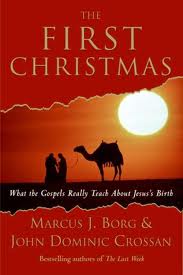
In 2008, our little congregation played host to John Dominic Crossan who has been acclaimed as world’s most famous New Testament scholar. Crossan’s visit to our congregation began with a public lecture based on his best-selling book The First Christmas in which he and Marcus Borg provide a splendid historical outline of the development of the birth narratives. I had the dubious honour of standing before his enlightened audience on Christmas Eve to preach in the great man’s wake. What follows is the Christmas Eve sermon I preached just three weeks after Dom’s illuminating visit.
Just a few weeks ago, this congregation was privileged to play host to a man who has the reputation of being the greatest New Testament scholar in the whole world. Dom, (we get to call him “Dom” now) wrote The First Christmas with Marcus Borg who is the guy who is heralded as the world’s leading expert on Jesus and Christianity in the 21st century. During his lecture, Dom provided us with all sorts of marvellous ways to understand the stories surrounding the birth of Jesus. Ever since that visit, there have been folks who listened very carefully to what Dom had to say and who have been positively gleeful when they’ve asked me what I’m going to do about preaching on Christmas Eve.
I mean what could I possibly say to you after so many of you have just finished hearing from the best in the business! And then there are those of you who bought the book and you’ve read what the experts have to say about the first Christmas. Some of you weren’t able to hide the smirks when you wondered out loud just exactly how I’d go about following the eminent Dr. John Dominic Crossan.Continue reading →
A sermon for the Third Sunday of Advent: all around us the world is hustling and bustling toward Christmas. With less and less time devoted to the telling of the Christmas story, perhaps we in the Church might consider changing the lectionary so as to provide more opportunities to engage the birth narrative in Matthew. Advent 3 is a perfect opportunity to substitute two readings into the lectionary. Here’s what happened when we tried this:
Readings Matthew 1:1-17 and Matthew 1:18-24
Listen to the sermon here
It has been said that the shortest distance between humanity and the truth is a story.[1] I would add that, the truth we find in a story teaches about our humanity. So, as we seek to embrace our humanity we would do well to pay close attention to the stories we tell. The unknown writer of the Gospel according to Matthew had a great story to tell and in order to get to the truth of who and what the man Jesus was, he chose a particular way to tell the story so that all those who heard the story would know the truth of who Jesus is in the grand scheme of humanity’s story. Sadly over the centuries that have elapsed since this story was first told have seen the tellers and listeners of this story haggle over the truth. Some have forgotten the power of story to bridge the gap between humanity and truth, and they have insisted that the truth will be found in the absolute accuracy of each and every detail. Fortunately, many more have remembered that stories are just that, they are stories and while we know that events did not actually happen in they way they are told, they happen just that way all the time.
So, as we begin in the beginning of the Gospel, the Good News according to Matthew, let me remind you that we know that the story of Jesus birth did not happen the way it is told in the story, and we know that birth is always happening this way. For the writer of the Gospel according to Matthew was a skilled storyteller and he wrapped the story of Jesus of Nazareth in the stories of his ancestors. Written in the style of his own ancestors the gospel-writer begins his story, with the same words that every one of his listeners would have remembered from the sacred book of Genesis which begins, “In the beginning”. A sort of once upon a time, if you will, the gospel-writer begins with, the genesis of Jesus the Messiah and then proceeds to connect Jesus to the ancestors of the Jewish faith, will making sure that the truth of Jesus’ connection to those outside the faith will also be made clear.
The gospel-writer’s inclusion of the women who Bishop John Shelby has dubbed the “shady ladies” would have alerted Jewish listeners that Jesus is a different kind of Messiah; a Messiah who will transcend race, creed, or clan. Rahab, who was a Canaanite; a foreigner, was known as the mother of Israel for saving Joshua in Canaan, just happened to run a brothel there. Tamar, also a foreigner, was married to Judah’s son who according to Genesis is killed by God, and as was the custom his younger brother married her to ensure that his older brother’s name would be carried on. When that son dies, Tamar is left a childless widow, a fate worse than death in a patriarchal culture. Tamar is known for impersonating a prostitute to trick Judah into knowing her, in the biblical sense of the verb to know, so that her father-in-law could impregnate her.Continue reading →
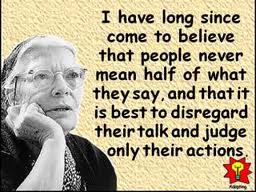
Dorothy Day is a shero of mine! But I will never call her a saint! The tradition of commemorating saints on the day of their death makes today a day for celebrating Dorothy Day! But, Dorothy Day objected, “Don’t call me a saint! I don’t want to be dismissed so easily!”
Dorothy Day died in 1980, at the age of 83. She was one of the greatest religious figures of the century, and one of the most paradoxical. She was a Catholic and she was an anarchist. She condemned poverty and she advocated against it. She founded the Catholic Worker, a loose aggregation of ”houses of hospitality,” communal farms, newspapers and round-table discussions for ”further clarification of thought” — and called her memoirs ”The Long Loneliness.” The movement was wary of authority, yet revered her as its leader.
When she died, a multitude came down to the old dwelling off the Bowery to pay their respects, the way people had come to Catholic Worker houses for soup ever since the Depression. There were Catholic Workers, social workers, migrant workers, the unemployed; addicts, alcoholics, anarchists; Protestants, Jews and agnostics; the devout and the strident and the curious, there to see what a saint looked like.
On this day, I celebrate the life and witness of Dorothy Day a shero, a Christian mystic with all the attributes of a saint!
I didn’t know it at the time, but I actually met John the Baptist when I was fifteen years old. She didn’t look much like you’d imagine John the Baptist would look, but she had that same crazy intensity, that same focus on the fact that we’d better change our ways, we’d better repent, and start doing things differently or we’d be in real serious trouble. Lola was my friend Valerie’s mother and she simply couldn’t stop going on and on about the environment and how we were destroy the earth. At the time, I remember thinking she was a bit of a nut-case and on more than one occasion I wished she’d just shut up about it. I was just a kid, and the earth was just something I took for granted. The earth was just there to provide for our needs. I couldn’t believe how much Lola went on and on about all the stuff we humans were doing to destroy the earth. I just wished she’d leave us along to get on with things, I couldn’t abide her incessant nonsense about how we were going to destroy the planet. All her feeble little attempts to be kind to the earth, made me seriously question her sanity.
I tolerated Lola not just because she was my friend’s mother, but I didn’t really understand her until one day when the three of us were travelling together. We were coming home from church. I had only been going to church for a few months. I was trying hard to understand this whole God thing. So, I went to church a lot. My friend Valerie had persuaded me to start going to church with her and family had become like my second family as they supported me during my first attempts to explore the mysterious world into which I had begun to feel pulled. As we drove home from church, I was feeling a little glum. Try as I might, I couldn’t really understand this church thing; all that singing and praying didn’t really help me to feel closer to God. Mostly I just liked how people at church treated each other. I liked how they went out of their way to help me feel at home. Whether or not God was there, well I really wasn’t sure.
Anyway, we were driving along the road. It was a partly over-cast day on the west coast of British Columbia, just a few clouds. You could see the mountains off in the distance. We were chatting back and forth when all of a sudden Lola pulled the car over to the far side of the road, switched off the engine and got out. Valerie followed her mother out of the car, so I figured I had better do the same. Val and her mother scampered down from the road and onto the beach. When they reached the water’s edge, they stopped and just looked off into the distance. Apart from a tanker-ship making its way across the horizon, I couldn’t see much of anything. Lola had the most amazing expression on her face. She positively glowed with happiness. Valerie wore a similar expression. I must have looked somewhat puzzled because Val smiled at me and said, “Isn’t it the most beautiful thing you have ever seen?” This only confused me more. What were they looking at that had made them stop the car, scamper down the bank and stand there at the water’s edge on a cold autumn evening? Continue reading →
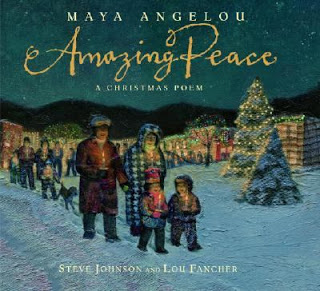
Occasionally we replace one of the Sunday Bible readings with a contemporary. On the First Sunday of Advent three years ago (Advent 1A) we used the poem “Amazing Peace” by Maya Angelou. It was first recited at the lighting of the National Christmas Tree in Washington. Since then it has been illustrated by Steve Johnson and Lou Fancher. The poem captures the longing for peace that permeates the Advent and Christmas seasons.
Sometimes it feels like a progressive thief has stolen Advent and Christmas from us! Sometimes being a progressive Christian is about as sad as being a who down in Who-ville; why sometimes I even miss old Santa Claus himself and in my nostalgic haze, I long for a simpler time and faith! How are we supposed to celebrate Advent and look forward to the coming of Christ, when some of the best stories of the season never actually happened they way we’ve been lead to believe? In this sermon (preached on Advent 1A – Dec.1, 2013) the beloved myths of a birth long ago are proclaimed as transformational stories that have the power to open to what lies beyond the words to the Word. Readings: Isaiah 2:1-5, “Amazing Peace” by Maya Angelou, Matthew 24:36-44
I couldn’t believe that this was happening to me. You read and hear about it in the newspapers and on TV, but you never expect it to happen to you. You know that it happens all over the place, but you somehow believe that you are immune to the dangers. You take precautions, you’re not stupid, but you can’t live your life in fear. Then one day, when you least expect it, you find yourself face to face with a nightmare.
The back alley of a downtown street sounds like a risky place to be; a place you should never go alone. But when it’s the alley behind your own apartment building, the alley where you park your car, well you take the risk. Sometimes it made me nervous, sometimes I would rush from my car to the apartment because I thought I heard something in the darkness. But most evenings, I never gave the dangers of city life much thought and then one night, when I wasn’t expecting it, it happened. I was half way across the alley when from behind a parked car, he jumped out at me. He grabbed me by the arm and spun me around. There was no time to think – – pure terror filled my mind. He pushed me up against a wall and for a moment just a moment I thought the unthinkable. Every fiber of my being decided immediately to resist and I managed to shake him off. That’s when he pulled out the knife. It wasn’t much of a knife really, just a tiny penknife, but it had the power to capture all my attention. His hand was trembling. I took my eyes off the knife long enough to see that his whole body was trembling. I took a deep breath and looked him in the eyes. His face was filled with fear. Sweat was dripping down from his forehead. He was breathing with a great deal of difficulty. We stood there in the darkness, staring at one another, both of us breathing heavily.
“Money! Money give me your money!” Never did I ever imagine that these words would cause relief. He wasn’t after me; he was after my money. Then I realized that I had no money. But he didn’t believe me. So, I tried to explain that I never carried cash. I use my bankcard for everything. I could see the panic race across his face. He was in bad shape. He needed money. No doubt he needed a fix. But I had no money on me.
What kind of fool walks around in the city without any cash? I decided that if he was in as bad a condition as he looked, I just might be able to convince him. So, I told him that I had about twenty dollars upstairs in my apartment. I begged him to let me go upstairs and get the money for him. He shook his head in confusion, so I went on. If he just let me go upstairs, I’d get his money and then he could be on his way, there might even be more than twenty dollars. The state he was in made it impossible for him to think straight. Why else would he have agreed? He let go of me. I raced to the apartment. It took several attempts before I could get the key in the door, but finally it opened and I dashed inside and pushed the door shut. I raced up the three flights of stairs and into my own apartment grabbed the phone and began explaining to the 911 operator that my attacker was waiting for me down in the alley. By the time the police arrived, he’d figured things out and was long gone. But they picked him up a few hours later. The next morning when I went into the police station to make a formal statement, an officer explained to me just how lucky I was. Often when an addict doesn’t get what they want, things don’t work out quite so well. The officer explained that I probably wouldn’t have to go to court because they had enough other things they could charge him with and I might as well save myself the trouble. Besides this guy knew where I lived. So, I went home vowing to be more careful, to stay alert. To keep watch. The thief in the night changed the way I lived my life in the city. I became much more careful and to this day, I always make sure to have at least twenty dollars in my purse.Continue reading →
This sermon was preached at Holy Cross Lutheran November 28, 2010, sadly racism continues to live on in ways that threaten so many lives and the question of this sermon seems even more urgent today. The readings included Isaiah 2:1-5, “Amazing Peace” by Maya Angelou, and Matthew 24:36-44, during the sermon I read from the Qur’an Sura 19:1-30 which you can find by following the link in the body of the sermon.
While I was studying for an undergraduate degree in Religious Studies at the University of British Columbia, I worked as a volunteer women’s center. Because I was studying the religions of the world, women who were being persecuted as a result of religious belief were often referred to me.
I’d been working with a young woman who was being abused by her father and brothers because they felt that she was adopting Canadian ways and thereby abandoning Islam. I remember visiting her in the hospital emergency room after her brothers had beaten her nearly to death. She told me that the last thing her brother said to her before tossing her out of the back of a van, was that she should consider herself lucky that they had talked their father into letting them beat her, instead of doing what he had ordered in the first place which was to kill her. I sat at her bedside wondering how a brother could do such a thing to his sister. I decided that they must be religious fanatics and I wondered how any religion could drive a father to seek the death of his own daughter.
The next morning I didn’t feel much like going to my Religious Studies Methodology Seminar. The Seminar was comprised of 7 students from various faith traditions along with 4 atheists and 3 agnostics. Together we studied the various methods of studying religion. We were about to embark on the phenomenological approach to the study of religion. “The Phenomenology of Religion” is a fancy academic way of describing the study of actual religious experiences of the divine. As we stumbled to our seats the professor announced that he would be dividing us into groups of two and he wanted us to learn all that we could about our partner’s religious experience. We would have two weeks to come up with a 1,000 words describing on the phenomenology of our partner’s religious life. I was paired with an Imam who was studying Western approaches to religion prior to taking up a position in a local mosque. Ibrahim was a recent immigrant from Pakistan. But he might as well have been from Mars as far as I was concerned. On that day of all days, Muslim men were not exactly my favorite characters. Continue reading →
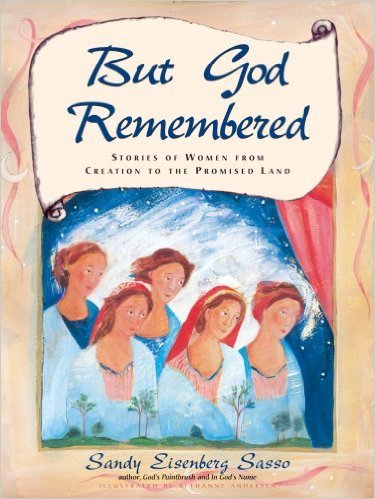
In the preface to her beautiful children’s book, “But God Remembered: Stores of Women from Creation to the Promised Land” Jewish writer Sandy Eisenberg Saso tells this revealing story: “Before God created man and woman, God wanted to create Memory and
Forgetfulness. But the angels protested.
The angel of Song said, ‘Do not create Forgetfulness. People will forget the songs of their ancestors.’
The Angel of Stories said, ‘If you create Forgetfulness, man and woman will forget many good stories.’ The Angel of Names said, ‘Forget songs? Forget stories? They will not even remember each other’s names.’
God listened to the complaints of the angels. And God asked the angels what kinds of things they remembered.
At first, the angels remembered what it was like before the world was formed. Then as the angels talked about the time before time existed, they recalled moments when they did not always agree.
One angel yelled at another, ‘I remember when your fiery sword burned the hem of my robe!’
‘And I remember when you knocked me down and tore a hole in my wing,’ screamed another.
As the angels remembered everything that ever happened, their voices grew louder and louder and louder until the heavens thundered.
God said, ‘FORGET IT!’
And there was Forgetfulness.
All at once the angels forgot why they were angry at each other and their voices became angelic again. And God saw that it was good.
God said, “There are some things people will need to forget.’
The angels objected. ‘People will forget what they should remember.’
God said, ‘I will remember all the important things. I will plant the seeds of remembrance in the soul of My people.’
And so it was that over time people forgot many of the songs, stories and names of their ancestors.
But God remembered.”
As we approach the Season of Advent, I can’t help wondering why the creators of the Revised Common Lectionary (the list of prescribed readings for Sunday worship) have failed to remember the stories and names of our foremothers? John the Baptist will strut across the stage again in this Sunday in churches all over the planet. We have begun a new cycle in the RCL in what is know as Year A the lectionary Gospel readings will focus upon readings from the Gospel according to Matthew. But followers of the RCL will not hear the names of Tamar, Rahab, Ruth, or Bathsheba; no, not even Mary will put in an appearance despite the fact that all of these women are mentioned in the very first chapter of the Gospel according to Matthew! Last year was the same even though the RCL focussed upon the Gospel according to Luke, neither of the women of the Luke’s first chapter make an appearance without a great deal of effort. Unless worship planners are prepared to tinker with the lectionary Elizabeth and Mary will have to cede the stage to John the Baptist. So, all you worship planners and preachers out there, I say to you, “TINKER AWAY! TELL THE STORIES!”
As this is the year of Matthew, why not invite onto centre stage those “Shady Ladies” from Matthew Chapter 1: Tamar, Rahab, Ruth, and Bathsheba, verses 1-17 make an excellent reading! John Shelby Spong is an excellent resource, you can find a transcript of his excellent sermon here. At Holy Cross we will use Matthew 1:1-17 as our first reading and Matthew 18-24 as our Gospel reading. This will allow us to usher Mary onto centre stage. Then on the Fourth Sunday of Advent we will switch over to the Gospel according to Luke for all three readings: First Reading – Luke 1:26-38, Second Reading – Luke 1:39-45, Gospel Reading – 1:46-59.
I am forever hearing people despair about biblical illiteracy as clergy and church-insiders bemoan the collective forgetfulness of our culture. I suspect that the snippets of readings that we hear year after year may be a factor in the gaps of our collective memory when it comes to the women of the New Testament. Let this Advent be different. Invite the women of the gospels onto the stage. John the Baptist will be happy out there in the wilderness until his feast day in June!
I usually have the presence of mind to book my vacation or some sort of continuing education event that takes me far away from the pulpit on Reign of Christ Sunday. Formerly known as “Christ the King Sunday” an attempt to move beyond exclusively male imagery for Christ (in whom there is no east nor west, male nor female) some church-folk have attempted to change the name of this festival to Reign of Christ Sunday. But merely changing the title fails to get beyond the struggles I have with this festival of the church year!!!!
Born in an age that was birthing fascist regimes, this particular festival of the church clings to it’s christian imperialist past. Instituted in 1925, by Pope Pius XI, (you can read the full proclamation here) the festival was designed to remind the world that Christ is the King of the World. The irony of proclaiming Christ as “King” when the life of Jesus of Nazareth positively denies “kingliness” seems lost on the church. The appropriateness of asserting Christ over the religions of the world lacks the kind of humility embodied by Jesus of Nazareth. So, this year I am not prepared to celebrate Christ the King or the Reign of Christ Sunday. Instead, we will take a leaf out of Matthew Fox’s book and craft our worship around the theme of the Quest for the Cosmic Christ.
Years ago, long before I ventured to seminary, Matthew Fox’s book Original Blessing opened me to the wonders of Creation Spirituality. So, I eagerly worked my way through his book The Coming of the Cosmic Christ. I confess that my first reading of Fox’s tome left me in the dust of my own lack of understanding of traditional Christology. But even back then, without the benefit of theological training, I sensed something of the MYSTERY that I had always trust Christ to BE. I have returned to Fox’s work many times over the years and over and over again I have discovered a WISDOM that moves me beyond the limitations of the historical Jesus toward a more holistic vision of Christ, which like Fox I believe, has the potential to move us to a more wholistic relationship with Creation. I trust that the WISDOM of the Cosmic Christ will lead us into the Season of Advent so that we can be about the work of birthing the Cosmic Christ.
In October of 1977, I was twenty years old. I was young and adventurous and with a rail pass in my hand, a back pack slung over my shoulders and several hundred dollars worth of American Express Travellers cheques in my pocket, I boarded a train in Zurich, Switzerland, bound for Athens, Greece.
I was tired. Several months of backpacking in Northern Europe had left me weary. In just five days my rail-pass would expire, so I decided to head for Greece, where the living is easy, where the warm sun, blue skies and equally blue waters held the promise of rest and relaxation.
As the train made its way through the Alps, I remembered a similar trip which I had made the year before and I tried to calculate whether my remaining funds would allow me to return to the village of Hannia on the island of Crete. I knew that in Crete I could find work. I planned to mix a lot of rest and relaxation with just a little work and try to live out the winter on the Mediterranean.
As the train rattled through Austria toward what was then Yugoslavia it began to get dark. I was disappointed that my journey through Yugoslavia would be completed in darkness. I remembered my previous journey, by car, through Yugoslavia and how at the time, I had marvelled at the diversity of this strange little country. I remembered men and women driving oxen as they ploughed their fields in much the same way as there ancestors had done. I also remembered my surprise at entering the ultra modern city of Belgrade; the showcase of Tito’s communist regime. I fell asleep pondering the sharp differences between the lives of the poor people in the villages who appeared to live without any modern conveniences at all and the lives of those who inhabited the city of Belgrade with its towering skyscrapers and streets filled with automobiles. Several centuries seemed to co-exist in Yugoslavia.
I was awakened by the sound of people shuffling to find their papers as the train conductor instructed us to get our passports and visas ready for customs inspection. When the Yugoslavian custom officials, with their rifles over their shoulders boarded our train they were preceded by men guided by vicious looking German shepherds. Even though I knew that I had all the right papers and that my back pack contained nothing more offensive than some dirty laundry, the sight of the dogs, guns and uniformed officials struck fear into my heart. I nervously handed over my precious passport to an official who looked younger than my twenty years. He carefully read over the visa which I had obtained in Zurich the day before; a visa that I could not read because it was written in an unfamiliar language and an unfamiliar alphabet. Continue reading →
For those of you preaching on the text from Genesis 32:3-31:
You may not be able to tell from looking at me. But let me assure you that you are looking at someone who used to be a champion wrestler. Believe it or not, my wrestling skills actually helped me rise to the level of a world champion wrestler. Well, perhaps I should qualify that statement. When I was an amateur wrestler, I was a world-class champion wrestler. But like so many athletes, when my status changed from amateur to professional, I lost my championship status and although I still qualify as a professional wrestler, and I like to see myself as a champion, I’m no longer what you would call world-class.
Like many professional wrestlers my career began when I was but a child. Growing up I had a very clear advantage as I developed my wrestling skills. You see having a brother who was just 18 months younger than me meant that I had ample opportunities to hone my wrestling skills. My brother and I were always at it. I’ve got to say that even though we shared the same weight class for most of our childhood, when it came to world class wrestling holds, I had him beat. I had this wicked arm-hold sleeper, and that together with my full Nelson followed by a knee-arm press, was guaranteed to have my brother screaming uncle and agreeing to be my obedient servant until in no time at all. For years I reigned as the champion of our little world! I was unbeatable. My brother didn’t stand a chance. My reign as world champion would have continued if it weren’t for the abrupt ending of my amateur status.
One morning when I was about 13 and my brother was 9 and a half, we were going at it, and to his credit my bother had me in an ingenious hold. Somehow, he’d managed to secure me with what we professional wrestlers call an arm bar. That’s where you’re opponent wrenches your arm behind your back and applies just enough pressure to cause pain, but not enough to break anything. But just when Alan was approaching the point of no return, I managed with a feat of superhuman strength to rise up, twist around and swing for all I was worth and connect with what I though must be my brothers chest. I expected that such a thrust would have released my arm from Alan’s iron grip. But he still had me. I was about to hit him again, when for no apparent reason Alan released me from his grip. In an instant I wiggled free, spun around and connected with what I figured would be a fatal blow. Just before my blow connected with it’s victim, I realized that I was doomed.
I am indebted to Pastor Michael Rodgers for preaching a sermon long ago that stuck with me for decades. This sermon is inspired by his work!
Jesus you’ve got to be kidding! “Whoever comes to me and does not hate father and mother, wife and children, brothers and sisters, yes and even life itself, cannot be my disciple?…None of you can become my disciple if you do not give up all your possessions?”
Hate your father; hate your mother; hate your wife; hate your children; hate you brothers; hate your sisters; hate even life itself and oh yes while you are at it give up all you possessions and then, and only then will you be ready to take up your cross and follow Jesus. What is Jesus talking about? Has Jesus forgotten about the fourth commandment? Are we to forget about honouring our parents? Wasn’t it Jesus who said that we are to love our neighbours as we love ourselves? Didn’t Jesus try to talk people into loving their enemies? Has Jesus forgotten that God is love? Why does Jesus rant and rave about hating our father’s, mothers, children, sisters, brothers and even life itself?
It is difficult to recognize the Jesus in this text. This is not the gentle Jesus of my childhood. This is not the happy Jesus who smiled out from the pictures in my illustrated Bible.This is not the Jesus that the rightwing conservative Christians point to when they harp on about family values. This is not the gentle Jesus we have come to expect. This Jesus sounds to harsh. This Jesus wants to turn us into religious fanatics who hate everybody and give up everything, even life itself.
For a few years now, there has stood on the shelf above my desk a quotation from Deuteronomy 30. I put it there so that these word’s of God might guide me in my decision making. According to the writers of Deuteronomy, God says: “I have set before you life and death, blessings and curses. Choose life so that you and your descendants may live”. God says “Choose life!” How do I reconcile this to the Gospel lesson in which Jesus says whoever does not hate even life itself, cannot be a disciple of Jesus? Why was Jesus so harsh? What is going on here? Continue reading →
Earlier this week I was reminded of the fact that one of the most basic parts of my job of being a pastor is pointing out the sacred. Most of what I do revolves around noticing when we are in the presence of the Holy, the Mystery, the One who is so much more that we are, the Love that lies at the heart of all that is. My job is to point to the sacred Oneness, the Love that many call God and say “there,” or “here,” or “now,” “don’t miss it.” All too often we find ourselves in the company of angels, messengers of the LOVE that IS God, and we don’t even notice it. For the most part we humans can’t quite grasp the magnitude of the Mystery that lies at the very heart of reality and so we do what humans always do: we personify this ONEness, or we use symbols and metaphors to indicate the presence of the sacred in our midst, and we tell stories. Stories that include burning bushes, ladders into the sacred realm, shepherds, lost coins, all sorts of symbols and metaphors that point to the ONE who IS. We have told some of those stories so often that the Reality of the Mystery that these stories were created to bring down to earth, seems ever so distant and far away, lost in the mists of time. The Reality that so many call God has been cast out there far away beyond our reach. So, week after week, I try to bring the stories, symbols and metaphors a little closer to the world that we inhabit so that you might be able to see in your own stories the angels that you have entertained without even knowing it. This morning I’d like to tell you a story that I’ve told twice before. It’s been about seven years since I last told this story, so some of you may not have heard it before and those of you who have heard it before; well we’ve been on quite a journey here at Holy Cross, and you’ve all helped me to understand my own story in a completely new way. The story takes place back in October of 1977, when I was twenty years old. I was young and adventurous. With a rail pass in my hand, a back pack slung over my shoulders and several hundred dollars worth of American Express Travellers cheques in my pocket, I boarded a train in Zurich, Switzerland, bound for Athens, Greece. I was tired. Several months of back-packing in Northern Europe had left me weary. In just five days my rail-pass would expire, so I decided to head for Greece, where the living is easy, where the warm sun, blue skies and equally blue waters held the promise of rest and relaxation. As the train made its way through the Alps, I remembered a similar trip which I had made the year before and I tried to calculate whether my remaining funds would allow me to return to the village of Chania on the island of Crete. I knew that on Crete I could find work. So, I planned to mix a lot of rest and relaxation with just a little work and try to live out the winter on the Mediterranean. As the train rattled through Austria, towards what was then called Yugoslavia, it began to get dark. I was disappointed that my journey through Yugoslavia would be completed in darkness. I remembered my previous journey, by car, through Yugoslavia and how at the time, I had marvelled at the diversity of this strange little country. I remembered men and women driving oxen as they ploughed their fields in much the same way as their ancestors had done. I also remembered my surprise at entering the ultra modern city of Belgrade; the showcase of what was then Tito’s communist regime.I fell asleep pondering the sharp differences between the lives of the poor people in the villages who appeared to live without any modern conveniences at all and the lives of those who inhabited the city of Belgrade with its towering sky-scrapers and streets filled with automobiles. Several centuries seemed to co-exist in Yugoslavia. I was awakened from my dreams by the sound of people shuffling to find their papers as the train conductor instructed us to get our passports and visas ready for customs inspection. When the Yugoslavian custom officials, with their rifles over their shoulders boarded our train they were preceded by men guided by vicious looking German shepherds. Even though I knew that I had all the right papers and that my back pack contained nothing more offensive than some dirty laundry, the sight of the dogs, guns, and uniformed officials struck fear into my heart. I nervously handed over my precious passport to an official who looked younger than my twenty years. He carefully read over the Visa which I had obtained in Zurich the day before; a visa that I could not read because it was written in an unfamiliar language and an unfamiliar alphabet.The young man handed my passport over to an older official and before I knew what was happening, I was being escorted off the train. I was shaking so badly that the young men on either side of me had to hold me up. I am not sure that my feet even touched the ground. After a long lonely wait in a drab windowless room, a woman entered. In broken English she told me that my visa was not in order. I gathered from what she was trying unsuccessfully to explain to me, that my passport contained the visa from my previous visit to Yugoslavia, but was missing an official exit stamp. She demanded to know why there was no exit stamp in my passport. Needless to say, I could not explain. I told her that I had only spent a little over a week in Yugoslavia the year before and then gone on to Greece. I told her that I didn’t know that an exit stamp was necessary and that I couldn’t understand why the Yugoslavian consulate would have issued my current visa if my paper work was not in order. She kept insisting that I needed an exit stamp. After several fruitless attempts to try and get her to tell me what I was supposed to do, I found myself in a small room. Its only window was reinforced with bars. In the darkness of a Yugoslavian holding cell, I sat down and I began to cry. I cried like I have never cried before or since. I was terrified and my sobbing was uncontrollable. After a while I became conscious of a sound that did not come from me. “Susssssssssh.” I realized that I was not alone in the darkness. Someone else was in the room with me. In the shadows, I could make out the shape of a woman. My sobbing began to subside as she continued, “Shussssssh.” The woman began to pace back and forth in our tiny room and gradually her shusssh turned into humming. She hummed unfamiliar tunes that somehow managed to calm me. Occasionally her humming would turn to singing. She sang softly and quietly and my sobbing began to ease. In the shadows I could not tell how old she was. Her hair was long, dark and curly. She wore a plain cotton dress, ankle socks and a beaten up pair of shoes, whose laces flapped back and forth as she paced. It took only a few hours for my travelling companion to contact the British Embassy, sort out the mess and secure my freedom. The sunlight was just beginning to find its way into our room when my captor arrived to release me. As I left, I took a close look at my roommate. I smiled, hoping that she would understand my smile as gratitude for her kindness. Her tender sounds had calmed me and helped me through one of the darkest nights of my life. She returned my smile and added a wave of her own. Then the guard roughly escorted me out into the bright lights of the customs house. Before I boarded a train that would take me safely out of Yugoslavia, I thought that perhaps I should try to help my roommate. Maybe I should try to find out why she was being detained. Perhaps I should try to help her get out. But this was not a place that welcomed questions and the warm sun of Greece beckoned me. And so, I boarded the train and I left. My few hours of captivity – I chalked up to just one more adventure on the road and I rarely thought of my room-mate again.Continue reading →
I have often heard Jesus’ teaching about who sits where at a wedding feast used to encourage a kind of humility that requires those who would follow Jesus to take a back seat or better still adopt a cloak of invisibility lest we be mistaken for the proud and self-righteous. Canadians have a special affinity for this particular way of interpreting this text. It seems to me that the image of Canadian humility suggests that Canadian Christianity has had a huge impact upon our national psyche. I know that there are many who would insist that our humble national character is a direct result of living in the shadow of the Americans, whose national identity is anything but humble. I have to admit that the constant drumbeat of “We’re number one!”, “We’re number one!” coupled with a patriotism that champions the idea of American Exceptionalism which is the notion that the United States alone has the right, whether by divine sanction or moral obligation, to bring civilization, or democracy, or liberty to the rest of the world, by violence if necessary. With such pride of place, you can be sure that each and every one of our American cousins is endowed with the confidence on knowing exactly where they belong at the head table. So, is it any wonder that living next-door to a nation that instills such patriotic ardor in its citizens, that we Canadians would find a more humble approach more appealing.
Don’t get me wrong; I know that stereotypes rarely express the full character of a nation and so, it would be a mistake to paint all Americans with the same brush. But I dare say that you’d be hard pressed to find a Canadian who would disagree that even the most enlightened of our American cousins who might be found from time to time to speak softly, doesn’t underneath it all carry a big stick. Where Bravado flows through our American cousin’s national character, most Canadians prefer a quieter, softer, gentler approach, lest we be confused with the worst of American stereotypes: “the ugly American.” Continue reading →
It was hot. Already the sun had parched the earth. The air was still. The ground beneath her feet radiated the heat. She was tired. Earlier she had thought about staying at home. Her weary body could use a rest. All week long she had toiled in the heat of the sun. On this Sabbath she longed to rest her crumpled, aching body. She tried to ignore the weakness she felt. She had suffered long and hard. She couldn’t even remember when or how she had become so weak. Over the years, her weakened spirit had left her body bent and crippled. The evidence of her heavy burdens could be seen in her crooked spine. She was ashamed of her appearance.
It had been eighteen long years since she had stood straight and tall. She vaguely remembered running when she was a child. She ran everywhere back then. She ran faster than anyone else in the town. She loved to run. Running made her feel free.
Her mother used to warn her not to run. Her mother tried to stop her. But she was so full of life. She wanted to see everything. She wanted to do everything. She wanted to go everywhere.
Her mother warned her not to be so curious. Her mother tried to keep her busy. Her mother tried to keep her out of trouble. But it was no use, no matter how many tasks her mother gave her; she always managed to find time to explore. She had so many questions. She wanted to know how things worked. Life was so very exciting. She dashed from one adventure to the next. She ran everywhere, everyday. Except of course on the Sabbath. On the Sabbath she walked. She walked with her family to the synagogue. She loved to go to the synagogue. As her father and brothers took their places at the feet of the rabbis, she sat quietly with her mother and sisters and the other women and girls in the back of the synagogue. She listened carefully as the men and boys talked. Continue reading →
Readings: Genesis 15:1-6, Hebrews 11:1-16, Luke 12:32-40
Listen to the sermon
‘‘Have no fear little flock. Have no fear little flock. It is you Abba’s good pleasure to give you the kin-dom.” Have no fear. Do not be afraid. But what is it that we are all afraid of? What is fear is Jesus trying to sooth? What fear drives us? In the deepest darkest hours of the night what are we afraid of? Does it all come down to the darkness in the end? Darkness in the end? Darkness in the end? Have no fear. Do not be afraid. But how can I not be afraid? What if in the end it all comes down to darkness? Have faith! Have faith. ”Faith is the reality of all that is hoped for; faith is the proof of all that is unseen.” Have no fear little flock. Do not be afraid. Have faith. But what is faith? The reality of all that is hoped for; faith is the proof of all that is unseen. I’d love to get me some of that. I’d love to have faith; faith that in the end all is not darkness. If I only had faith, I could believe that in the end I will not be left in the darkness of the abyss. If I only I had faith. After this morning’s worship, I will begin five weeks of vacation. Five glorious weeks to do whatever I want, whenever I want to.I am richly blessed!!! Not only do I have five weeks stretching before me. My vacation begins at the peak of the Perseids. In fact the absolute best time to view the most spectacular meteor shower of the year will be tonight and tomorrow night. From about 10:30 to 4:30 am the universe will be putting on a show. It will start off slowly and then peek just before dawn and if you lie out under there’ll be more falling stars to wish upon than you’ll be able to count. I’ve spoken to you many times about my experiences out under the stars. I’ve been a fan of the Perseids ever since I was a teenager and felt the nearness of something so much bigger than myself under a starlight night. Stars have always given me the courage to peer into the darkness and trust that we are not alone. Stars in the night-sky and not doctrines, or theologies or creeds or a list of things I ought to believe, but stars in the darkness of the night sky. Stars in the night sky take me back to all hope filled nights I’ve spent peering into the darkness for a trace of the One for whom my heart yearns. Stars in the night sky help me to see beyond the darkness. Stars in the night sky are best viewed far away from the lights of the city. In the city there is too much man-made light interfering with our view. In the city there is just too much of everything and there is good reason to be afraid. I still remember my first trip to New York City. I was a young woman, and the hustle, and bustle, and reputation of New York City gave me so much to be afraid of. New York City is dirty and gritty. In an effort to escape the stickiness of the busy streets, I ducked into the Museum of Modern Art. Back then I didn’t have much of an appreciation for great art, but even I was left breathless when I turned a corner and was confronted by Van Gogh’s masterpiece, Starry Night. Vincent Van Gogh’s image of the night sky swirls across the canvas full of vitality and power that speaks of God’s presence. The stars don’t just sparkle; they explode in radiance. Looking closer, I could see that the earth itself seems to respond to the movement in the heavens, forming its own living waves in the mountains and the rolling trees beneath them. In the sleepy village, the windows of the houses glow with the same light that illuminates the universe. The church steeple in the center seems to struggle to point to God, who is so alive in this scene. But the little church is dwarfed by the cypress trees at the left, which seem to capture the joy of the inhabited creation around them by erupting in a living flame of praise. I spent a couple of hours standing and sitting in front of that masterpiece and that afternoon was just the beginning of my love affair with Vincent Van Gogh’s work. Over the years I have travelled to Amsterdam many times and spent hours in the Van Gogh museum gazing in wonder at the work of this master. If you have only ever seen a print of a Van Gogh then you have missed the wonder of the thousands and thousands of brush strokes that make up one of his masterpieces and you have missed the opportunity to be mesmerized by the wonders of the details imbedded in each painting. I have traipsed around Europe exploring the various museums that contain Van Goghs and I have often gone out of my way to catch a glimpse of a Van Gogh tour. I’ve seen hundreds of his masterpieces, but none can compare to the splendour of Starry Night.

 Silent night, holy night is a perennial favourite! T’is the season for nostalgia. But what if we are serious about providing more than nostalgia in our worship? Can we, or do we even dare to offer worshippers new images that endeavour to engage our reality? Can we touch the spiritual but not religious crowds that wander into our sanctuaries seeking an encounter with the Mystery we call God, with a hint of our unknowing. Or are we content to address only the nostalgia seekers with safe images designed only to warm and not excite the imagination? Dare we beacon the nostalgia seeks beyond their memories toward the future? I wonder? Maybe we can summon up the courage to compromise by simply adding a few new verses?













 pastordawn
