UNDONE: Faith as Resistance to Ego, Orthodoxy and Empire: Robin Meyers

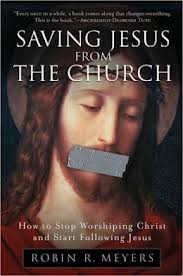
Underground churchRobin Meyers gives the 2013 Beecher Lectures at Yale Divinity School. “The three lectures, given by Meyers, are entitled “UNDONE: Faith as Resistance to Ego, Orthodoxy, and Empire.” Instead of conceiving of the church as an institution that promotes faith as a belief system, defending doctrinal claims as essential to salvation and good works, UCC pastor and author Robin Meyers will make the case that the Jesussaving church Movement was in the beginning, and must be again, a Beloved Community of Resistance. Confronting our illusions with help from Kierkegaard, and drawing the poetry of Anna Kamienska, each lectures will focus on three areas that demand resistance: ministry as performance (ego), ministry as right belief and worship (orthodoxy), and ministry as sentimental surrender to the status quo (Empire).”
Children and the Epic of Gilgamesh

Gilgamesh the kingMarcus Borg is often quoted as having said something to the effect that the average adult has but a grade five understanding of Christianity. Which is okay if you are in grade five but it won’t sustain you through a lifetime of questions. While I agree with Borg that a good many people have rejected Christianity on the basis of what they learned as children and we have a great deal of work to do to educate adults about the breadth and depth of the Christian faith, I wonder what it would mean for the church if we stepped up our game when it comes to the education of children.

I can still remember taking my first religious studies class as an adult and being The Last Quest of Gilgameshblown away by the revelation that so many of the biblical stories that I was struggling with actually had their origins in tales that were told long before a wandering Aramean went down to Egypt. I remember being both fascinated with the story of Gilgamesh and angry at the Church for failing to let me in on the reality that human’s have been myth-making since forever. I’m sure that I would have been far less traumatized by the realization that the biblical writers engaged in the ancient art of myth-making had I been introduced to it in my adolescence. Needless to say, since I have been teaching Confirmation classes (ages 11-15) I have taken the opportunity to introduce the Epic of Gilgamesh as a precursor to discussions on the book of Genesis.

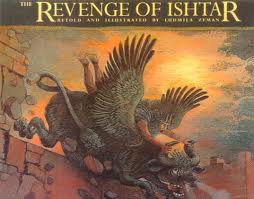
revenge of ishtarSeveral years ago, the task of introducing Gilgamesh to young people was illuminated by the discovery of a two of books by Ludmila Zeman designed to bring the tales first carved onto clay tables in Mesopotamia to life. Both Gilgamesh the King and The Last Quest of Gilgamesh are beautiful illustrated and even though they are recommended for children ages 8 and up, provide an engaging experience for adolescents. For those Confirmation students who are particularly keen, I have added Zeman’s The Revenge of Ishtar  to the Confirmation class’s collection of resources. I have even been known to use this speeded little tomes in Adult Education Classes.  Ludmila Zeman emigrated to Canada from Czechoslovakia and lives, works and creates in Vancouver.

Jesus, the Lamb of God Who Takes Away the Sin of the World? It ain’t necessarily so! (a sermon for Epiphany 2A – John 1:29-42)

Lamb of GodLooking back upon what I preached the last time John 1:29-42 appeared in the lectionary, I realize just how indebted I am to John Shelby Spong for giving me the words to articulate my own objections to the label attached to Jesus by a late first century writer also known as John. Most if not all of this sermon is derived from Jack Spong’s work. For more details I would refer you to Jesus for the Non-Religious and The Fourth Gospel: Tales of a Jewish Mystic. We at Holy Cross were privileged to have Jack speak to us about both of these books. In fact a year before it was published, Holy Cross was the test audience for the material in The Fourth Gospel: Tales of a Jewish Mystic. This sermon ought to have all sorts of footnotes, but I trust you will forgive me for simply confessing that I can no longer tell were Jack leaves off and I begin. Suffice it to say that this sermon is my feeble attempt to put Jack’s work into the form of a sermon.

When I turn the gospel according to John and read about John the Baptist pointing to Jesus, saying:  “Here is the Lamb of God who takes away the sin of the world!”  I want to scream,  “NO!” I have come to believe that our images of God are far too narrow. As far as I’m concerned most of our ideas about God fall far short of every even beginning to describe who God might be. One thing I’m absolutely certain of is if we can imagine ourselves being more loving, more gracious, or more merciful that our theology suggests that God is, then we had better go back to the drawing-board and think again. The ways in which we have traditionally interpreted the life, death and resurrection of Jesus the Christ, paint a picture of a God who is far less loving, gracious or merciful than you or I. Nobody in this room, would demand a blood sacrifice of a lamb, let alone the blood sacrifice of their own child. So, the image of God that is based on this kind of theology must be judged as inadequate to the task of evening beginning to provide us with a glimpse of who our God is.

As we go back to the drawing-board, we ought to take a long hard look at how we arrived at this image in the first place. Thank goodness for the work of our friend Jack Spong who has enabled us to see beyond the literal to the more-than-literal meanings of the various ways in which the followers of Jesus have understood the life and teachings of Jesus. During the years that followed the crucifixion, Jesus’ followers were left wondering what it was all about. How could someone in whom they had seen the fullness of God, be taken from them in such a horrendous way? How could their God allow it?   What were they to do? Over the years that followed, Jesus’ followers looked back at the life, death, and resurrection of Christ through the lens of their own religious experiences. Jesus’ followers were primarily Jewish and so it didn’t take long for the familiar Jewish symbol of the Lamb of God to be applied to Jesus as a way of making some sense out of his death.  Today most Christians associate the symbol of the Lamb of God with the Jewish celebration of Passover.  While the Gospel narratives do indeed locate the time of Jesus death during the celebration of the Passover, and there is indeed a sacrificial lamb involved in the Passover, the actual phrase “the Lamb of God” comes not from the religious rites of Passover, but rather the religious rites of Yom Kippur: The Day of Atonement.  Phrases like “the Lamb of God”, “died for our sins” and “washed in the blood of the lamb” can all be found in the religious rites of Yom Kippur.  Continue reading

Benedictus: “For Longing” by John O’Donohue

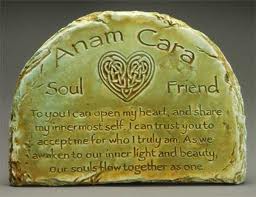
anam caraThe art of creating blessings is not what it once was. There are days when I wonder if the lost art of blessing will ever escape the dull drums of the hallmark-esk drivel that is passed around to masquerade as sacred text. John O’Donohue is one of my favourite poets. He manages to delve into his Celtic roots to tap into the desire to bless another without resorting to the trite  cliches that dominate our modern attempts at this ancient art art form. His blessings are so carefully crafted to open our very selves to the possibility of the Divine. 

For Longing John O'Donohue pastordawn

A Progressive Christian Wades into the Waters of Baptism

baptism 33A sermon for the celebration of the Baptism of Jesus

Matthew 3:13-17

Listen to the sermon here:

God Is a River – Peter Mayer

riverPeter Mayer, one of my favourite folk singers, captures a hint of the essence of God when he sings. This morning our worship celebrates the baptism of Jesus and with so much water everywhere around us, the image of God as a river strikes some chords that I find both refreshing and challenging.

Baptism of Jesus

Epiphany worship pastordawn

Join us tomorrow as we celebrate the Baptism of Jesus. Everyone is welcome!

See you at 10:45am at Holy Cross Lutheran Church

Our Hymn of the Day will be Marty Haugen’s Song Over the Waters

What the Universe Reveals – When God Is Elusive

Image

Universe Reveals O'Murchu pastordawn

Wisdom from Our Spiritual Ancestors: Matthew Fox

Julian of Norwich Between pastordawn

I was introduced to the work of Matthew Fox long before I ever entertained the idea of becoming a student of religion. Fox’s groundbreaking book, “Original Blessing” introduced me to the work of the Christian mystics and helped me to see beyond the institutional theology of those who won the long forgotten theological battles of our past. His exploration of the work of those whose theology threatened the agendas of the powers that be and development of “creation spirituality” opened me to a new way of understanding and articulating Christianity.

Holy Miracle by Love Eternal

Thankyou babe

Baptism A Mystery of the Faith: a sermon for the celebration of the Baptism of Jesus

baptism 33There’s a definition of what it means to be a priest that has always daunted me. A priest it has been said is “a keeper of the mysteries; a keeper of the sacred mysteries of our faith. People often confuse the idea of mystery with the idea of secret. But I can assure you that as a keeper of the mysteries of the faith it is not my job, nor is it any other priest’s job, to keep the mysteries of our faith a secret. Yes, as an ordained pastor, one of my responsibilities is to be a keeper of the mysteries of our faith. As a keeper of the mysteries I am responsible for ensuring that the community I serve holds those mysteries sacred. We do so, by remembering that the reality that we call God works in, with, and through those mysteries. 

Baptism is considered to be one of the mysteries of our faith. Baptism is a sacrament of the church and by definition a sacrament takes ordinary stuff – water – mixes that ordinary stuff with the Word and in the combination of water and the Word you have a tangible means of God’s grace. God’s grace is revealed in the sacrament of Baptism by the act of our gathering together and mixing the stuff of the earth with the Word. We have only two sacraments in the Lutheran church Baptism and Eucharist, and both of those things are sacraments because we gather together take ordinary stuff – bread and wine, or water and mix it with the Word of Jesus the Christ and in the water, the bread and the wine the means of God’s grace is made visible to us.

So, there you have it the technical definition of the sacraments, the mysteries of Baptism and Communion, in which the reality that we call God works in, with, through and under. But like all technical definitions of mysteries, these definitions fail to capture the essence of the mystery that lies at their very heart; the mystery of the reality that we call God. As a keeper of the mysteries, one would think that a priest, a pastor, ought to be able to reveal, by way of definition something of the nature of the reality of the Divine. The truth is I have no real definition to offer you of this reality that we call God. I read once, I wish I could remember where the wisdom of a priest far more skilled than I who declared that he’d given up trying to explain God to anyone because in the end, he said, “I cannot lead you to God, anymore than anyone can lead a fish to water.”

The most important thing I learned in seminary is that “I don’t know is an answer.” The truth is the more we learn the more we know that we don’t know. But this unknowing can be so unsatisfying, precisely because we believe that God is the one in whom we live and breath and have our being, we want to know the very nature of the One who is the ultimate Reality.

Now, if these words haven’t already become so vague that the veil of unknowing has begun to make any tangible means of God’s grace seem invisible and so beyond our grasp, let me leave the theology behind and tell you a story. One thing I do know for sure is that the shortest distance between the questions of what it means to be human and understanding our humanity is a story. Continue reading

Being Honest to God: Richard Holloway

hollowayHe was once the Primate of the Episcopal Church in Scotland but these days Richard Holloway describes himself as an agnostic Christian hungering after transcendency and preaching a gospel of uncertainty. His memoir “Leaving Alexandria: A Memoir of Faith and Doubt” is a favourite of mine. In this video he explores being honest to God and understanding religion as an art form. Holloway’s words both challenge and comfort me as he plumbs the depths of our longing through the poiesis of ultimate meaning.

Bat Col – The Daughter of a Sound: Hearing the Word Utter Our Name

Preparing to Preach on Jesus’ Baptism

BAT QOL pastordawnHeather Murray Elkins tells her story, “The Secret of Our Baptism” and opens us to a new way of hearing the Bat Col, the Daughter of a Sound, the Voice of the Divine, the Word, who speaks in this Sunday’s Gospel reading. Matthew 3:13-17

The Bat Qol – The Daughter of A Sound – The Still Small Voice

Preparing to Preach on Jesus’ Baptism:

BAT QOL pastordawnIn this coming Sunday’s gospel text (Matthew 3:13-17) we will hear echo’s of the Bat Qol which speaks at Jesus’ baptism as the heavens are torn open. The hebrew “bat qol” (bat cole) is often translated as “the still small voice” but when translated literally it is the “daughter of a sound”. The voice of God speaks to declare love. May you hear yourself named and called by that voice, for you are the daughters and sons of God, beloved of God!

A little music to tune your ears with. Enjoy you beloved daughters and sons of God! Then be the lovers you are created to be.

Epiphany: Evolution is Shedding New Light on Our Lives – Joan Chittister

sad EckhartThanks to science and all we have learned about creation, we are beginning to develop new images of the ultimate reality we call God. New images of God challenge the patriarchal misogyny of religious traditions. When it comes to re-imagining the faith, Sister Joan Chittister paints a picture of God as One Who Summons from among us – Emmanuel. The Summoning One calls and encourages us toward a world of equals. “Evolution is shedding new light on our lives.”

Don’t Forget the Mystery of Our Faith!

Thomas 70 pastordawn

Christ Has Died. Christ Is Risen.

Christ Will Come Again, and Again, and Again, and Again…

A sermon for the Second Sunday of Christmas: 

Readings:  John 1:1-9; Thomas 70; Matthew 2:1-12

Listen to the sermon: 

Holy Morn: Tina Malia

The Big Question – Bruce Sanguin

bruce sanguinEvolutionary Christian theologian Bruce Sanguin’s current article in the United Church observer tackles “The Big Question” – Is God a Seperate Being ??? For those of us who are struggling to move beyond our limited images of God, Sanguin offers a resting place along the way. Just click on the link below to read the article. I highly recommend it!!! Bruce Sanguin, a minister in the United Church of Canada, is one of the principal contributors to the new Living the Questions interactive DVD series “Painting the Stars”

The Big Question – The United Church Observer.

Bruce Sanguin LTQ

From Alienation to Belonging – John O’Donohue

These post-celebration days, provide us with an opportunity to find our natural rhythm. Irish mystic, theologian, philosopher John O’Donohue offers wisdom for our journey.

Matthew’s Nativity Story Wrapped in Exodus: John Shelby Spong

For those who are preparing to preach on Matthew 1:1-12 this coming Sunday, Jack Spong provides an important view of the context.