Unknown's avatar

About Rev. Dawn Hutchings

Retired progressive Lutheran Pastor. Exploring the DIVINE MYSTERY that some call, "GOD," hoping to learn about the LOVE which is BEYOND the BEYOND and BEYOND that also.

A Little Self-Involved? Try Looking Outward! – a sermon for Lent 2A, John 3:1-17

Trinity copyWhen I was just a kid, I had what can best be described as an adolescent crush on a teacher. Looking back on it now, I’d have to say that I fell head over heels in love with my teacher. It was the kind of love that only a 13 year-old girl could have; so intense and all consuming. I came to believe that this teacher was the wisest, kindest, most interesting person in all the world. This teacher knew more than anyone else, especially my parents. This teacher was cooler, funnier, more daring and definitely more in tune with my life than anyone I had ever met. I was convinced that if I could only be just like this teacher would mean that I too would be cooler, funnier, more daring and definitely more in tune with life. So, like most adolescent girls who are suffering from a crush I became obsessed with this teacher. I was young and I was in love, and like most thirteen year-old’s the I was convinced that the world revolved around me, so I set about pursuing my passion. This teacher taught English, so naturally, I decided that when I grew up I too would teach English. This teacher loved poetry, so I too became passionate about poetry.

One day this teacher announced that we could gain extra-credit if we wanted to enter a local poetry writing contest; and even though I was pretty sure that year I’d be getting a mark that would be somewhat better than an A, I began to write poetry. I was very serious about my poetry writing.  I carried a pad of paper with me everywhere I went, and I began to ruminate about my life. I don’t remember any of those early attempts to wax poetical, but I do remember that each and every one of those poems was about me; me and my life, me and my unrequited love, me and my passion, me and the horrible way that no one paid much attention to me. Me, Me, Me, Me, it was all about me.

As the time drew near for us to submit our poetry to the competition, my teacher announced that there would be a special class after school, so that those of us who were planning to enter the competition could get some feedback on our efforts. So, by the end of the week, I would have to choose one of my great works for feedback. I spent hours pouring over one poem in particular. Tinkering with the words, trying to get things just right. I was so very proud of the final draft. I’d carefully copied it out on to a crisp piece of foolscap. Arranged the letters in the middle of the page so that they looked just so. I could hardly wait for school to be over so that I could rush to see what comments my beloved teacher had placed in the margin. There were barely a handful of us who stayed after school.

Looking back on that scene, we were a nerdy little crew. I was positively breathless as my teacher handed my offering back to me. To this day, I can’t remember a single line of my great work, but I can tell you word for ward what was scribbled in red in the margin of the ever so white foolscap. “A little self-involved, try looking outward.” I was devastated. How could anyone be so cruel? I’d poured my heart out only to have it stomped on by the indifference of truth. Continue reading

Facing Our Demons – a sermon on Matthew 4:1-11, Lent 1A

1100Listen to the sermon HERE

A long time ago, when I was just a young woman, I think I was about 22 or 23, still young enough to believe that all the answers to all my questions were out there somewhere, just waiting for me to discover. I was a serious young woman full of serious questions, always pondering the meanings of thins – big things like life and death, goodness and evil, love and hate, sickness and health, sin and forgiveness, God and no-god. I truly believed that if I actually applied myself to my questions, I would be able to discover the answers. It was the pursuit of particular answers that lead me into the wilderness of the desert.

Now, it may come as a surprise to some of you, but there are real deserts in British Columbia. You will discover one of those deserts as you travel between Ashcroft down to Merritt.  They’ve improved the roads since then, but back in the day that particular route was quite the challenge. Mind you, it didn’t help that I was driving an old beat up 1969 Austin 1100, that had no business being on mountain roads, let alone mountain roads that wound their way through a desert. Now if you don’t know what an Austin 1100 looks like, picture an old Austin Mini; an 1100 is only slightly bigger than an Austin Mini, and my old 1100 was purchased for the grand sum of $300.00. About the only thing this car had going for it was my faith in it to take me places.

 On this trip, I had loaded my little car down with all sorts of camping equipment along with several plastic milk jugs that held a gallon of water each, because the car’s radiator had a nasty habit of overheating. The woman that I am know, looks back on the young woman that I was, and I can’t help wondering what possessed me to head out into the desert in that stupid little car. I can almost see myself sitting on the side of the road waiting for the radiator to cool down, so that I could risk loosening the radiator cap, to fill it up with cool water so that I could travel another hour or so, before it over-heated again.

To say that I was young and foolish, would be an understatement. But I was also, adventurous and inquisitive. I had traveled into the wilderness to do some thinking. I needed to find some answers. I had some decisions to make; decisions, that at the time, felt like life and death. I truly believed that some time away by myself would guarantee me the kind of peace and quiet I needed to discover the answers to my questions.

Sitting there, on a rock, hoping against hope, that the 95 degree heat from the blazing sun would be enough to guarantee that any rattle snacks would remain tucked away in some distant shade, I couldn’t believe that I’d been driving for two hours without seeing another car on the road. I was out there in the middle of nowhere, which is exactly where I had intended to be. I had travelled into the wilderness to find a place where there were no distractions, so that I could apply myself to finding an answer that I desperately needed. You see, some stuff had happened in my life; stuff that had lead me to doubt the god that over the years I had come to love.

Looking back, I think that I went out into the wilderness looking for a sign; a sign that God existed. My faith in the God who lives out there somewhere, who from time to time hears my prayer and decides to intervene in my life, my faith in that God, had been fairly strong, right up to the point where some really tough stuff started to happen to some folks I cared a great deal about, and no matter how long or how hard I prayed, the great Sky God that I had been taught to worship, simply refused to show himself. So, I decided to take a page or two out of the bible and follow Jesus right out into the wilderness to see if God would show up. Sitting there on a rock, roasting in the hot sun, as the tumble-weeds tumbled by, I wondered what I would do, if I discovered that God wasn’t really there. What if it was all just wishful thinking? I desperately wanted to meet the god that I’d been taught to believe in to be there in the wilderness. Isn’t that why Jesus wandered out into the wilderness of the desert? Surely, he didn’t go out there to meet the devil? Or did he? Maybe Jesus went out into the wilderness to meet his demons.

Over the years, I’ve learned enough about the anonymous  gospel storytellers to know that their stories are more than just history. I’ve learned to read beyond the words that have been handed down to us, to ponder the multi-layered texture of meanings that lie hidden waiting to be discovered. The storytellers’ careful crafting of their tale of Jesus time in the wilderness uses images and illusions that harken back to earlier stories of Moses leading the people of Israel into the wilderness where they spent not 40 days, but 40 years forming themselves into the nation that would go on to inhabit the promised land. In the wilderness, Jesus encountered his own demons. I can well imagine Jesus contemplating his own future and realizing his own desires for power were actual temptations that would distract him from his overriding desire to embody a new way of being in the world. A quest for power would have seen Jesus giving the people what they wanted a leader who could feed them with bread and everything that bread represents, wealth and power; the kind of power that would enable them to fight their Roman oppressors. The temptation to be the kind of messiah that the people wanted was Jesus’ temptation.

In the wilderness, alone with his desires and temptations Jesus fought his personal demons. According to the gospel storytellers, Jesus didn’t conquer his demons, “The Devil awaited another opportunity.” As the storytellers follow Jesus to Jerusalem and beyond, the temptation to forsake the new way of being in the world that Jesus embodied, in favour of being the kind of messiah that the people wanted continues to haunt Jesus. Jesus steadfastly refuses to take the mantle of power that so many would have handed to him the power to form an army the likes of King David, to rise up and violently resist the tyranny of Rome. As tempting as it may have been for Jesus to become the people’s messiah, Jesus summons up the courage to be a new kind of messiah. Jesus chooses to embody a posture of non-violent resistance to evil even though he knows full well that such a posture against the Romans could get him killed. Jesus refuses to give into his fears, trusting that even death cannot defeat the LOVE that he chooses to embody. Continue reading

Awe and Wonder: A Lenten Practice

awe-copySo many of our Lenten practices revolve around theories of atonement that cast the HOLY ONE as a participant in a grand bargain that saw Jesus of Nazareth die as a sacrifice for sin. For those of us who have left behind theories of atonement that set Jesus up as  payment for our sin, Lent can seem a very lonely place. While many churches busy themselves with rituals that encourage repentance from the perspective of confessing our unworthiness to a grand-inquistor deity,  it is tempting to give up the season of Lent all together. But with the explosion of information about the nature, beauty, and complexity of the cosmos, perhaps we can achieve the humility that the ritual of confession offers in ways that do not require us to adopt the attitude that human’s are unworthy creatures in need of a god who would demand satisfaction at the expense of a blood sacrifice. 

Each time I look up into a starlit sky I am overcome with a sense of awe and wonder that is in and of itself a prayer that inspires humility in me. A sense of awe and wonder at that which is beyond ourselves is the beginning of a prayer that always leads me to a sense of ONENESS with all that IS. 

This morning, my Lenten devotion came to me in the form of this splendid video The Overview, which describes the awe and wonder of those who have had the privilege of looking at the earth from the perspective of space. They describe their awe and wonder, their prayer if you will, as the “overview effect”. The overview effect serves to connect these space travellers to the earth itself and moves them to the kind of humility that helps me to realize that awe and wonder can serve as nourishment for my own Lenten journey.

As we gaze in awe at our marvellous planet perhaps we can be moved to tread more lightly upon her. Perhaps awestruck by the beauty and wonder of creation, we can look to all the inhabitants of the earth and see that they too are fearfully and wonderfully made. I trust that a humility based not on a belief that we are wicked, unworthy creatures, but rather on a experience of awe and wonder, will lead us on a Lenten journey to a place where we will have the courage to gaze upon the cross and see beyond the violence to the hope of resurrection.

Lent: Letting Go of Our Tightly Held Piety to See Our Need of Confession

JOHN OF THE CROSS as
Little Crystal was only two and a half years old when she got hopelessly stuck.
 And when she got stuck she did what all small children do, when they have gotten themselves into a situation that the can’t get out of, little Crystal cried for help. She went into her mother’s study, holding in one hand a family treasure and her other hand couldn’t be seen.  Crystal cried out, “Mommy I’m stuck”. Her unseen hand was stuck inside her great-grandmother’s vase.  The precious vase had been handed down from her great-grandmother to her grandmother, to her mother. Crystal had always been told that one day the magnificent vase would be hers.

Crystal’s mother tried to move quickly without panicking. She scooped the vase and her little girl up into her arms and carried them to the kitchen sink. She used warm soapy water to try to loosen the toddler’s hand, which was stuck all right. When soap didn’t work she reached for the butter. While greasing her child’s wrist like a cake pan, she asked the obvious “mother question.” “How in the world did you do this, child?” Crystal carefully explained that she had dropped candy down into the vase to see if she could still see it when it was at the very bottom. But she couldn’t see it, so she reached in for her candy and that’s when she got stuck and she couldn’t get her hand back out.

Well, as time passed, the situation became more and more serious. Crystal’s mother called for re-enforcements. She phoned her own mother and told her to get there as fast as she could. A neighbour suggested Vaseline. The apartment manager got out some WD40. Still no luck.  It began to seem like the only way to get Crystal’s hand out was to break the family heirloom.

When Grandma finally arrived, both Crystal and her mother were almost hysterical. They were both more than a little relieved to have Grandma’s calming presence. Grandma sat little Crystal on her knee. 

Crystal was very upset and still very stuck. Grandma took a good look at the vase that used to sit on her mother’s kitchen table all those years ago.  She looked at the miserable look on her grand-daughter’s face, and she said, “Crystal, sweetheart.  Your mommy told me that you reached into the vase for candy.  Is that right?”

Crystal was a little breathless from all the crying she had been doing and all she could manage was a whimpered, “Mmm hummm.” “Honey, tell grandma the truth now. Do you still have a hold of that candy?” “Mmm humm”.  Crystal sobbed. Then Grandma rubbed little Crystal’s back, held her close and gentle, but firmly said: “Let it go, child.  Let it go.” Sure enough, the vase slipped off as smooth as silk. (I have searched for the source of this story, without success. I first heard it at a retreat on the West Coast a lifetime ago)

In this fast paced world of ours, I often find myself in little Crystal’s predicament.  Surrounded by a treasured family heirloom, desperately clinging to a treasure.  My predicament often makes it difficult for me to appreciate the beauty of the heirloom. Letting go isn’t as simple as it sounds. But sometimes letting go is the only way to preserve the integrity of the heirloom. When I think about the church’s practice of public confession, I can see how desperately I have been holding on to candies that no longer satisfy my need for forgiveness.  Continue reading

We Don’t Know What We Don’t Know: a sermon for Lent 1A

Sky's Sheets

Readings from Teresa of Avila can be found in the Worship Bulletin here

Listen to the sermon 

During the season of Lent we are invited to follow Jesus on a journey out into the wilderness. Lent is a time to leave behind the safe and familiar and journey out into the wilderness of the unknown. The wilderness can be a frightening place. Unknowing is not a posture we like to adopt. The temptation for us sentient thinking beings is to fill the wilderness void of unknowing with words, ideas and stories that both comfort us and help us to deny our state of unknowing. But our journey, whether we like it or not is the kind of journey where the destination itself is not known and so the wilderness places that we encounter along the way can create in us the kind of fears that cause us to deny reality.

Earlier this week some of us gathered in this sanctuary for Ash Wednesday, the day that marks the beginning of Lent; the beginning of our journey into the wilderness. One of the things we do on Ash Wednesday is to remind ourselves that we are dust and to dust we shall return. In other words we were born and we shall die. This part of the journey will end for all of us in death and there is so much about death that we do not know and that not knowing can fascinate us, it can infuriate us, and it can frighten us.

Sometimes this not knowing can frighten us so much that we deny the reality that in the end death comes to us all. When death does make its presence known to us, we find ourselves tempted to deny our unknowing with ideas about what will happen to us when we die; ideas that some of us insist must be believed. We’ve crafted those ideas about what will happen to us when we die into all sorts of doctrines and dogmas that we’ve imbued with the power to determine how we live, before we die. You know if we believe and we behave, then when we die we will be rewarded or if we don’t believe and we don’t behave when we die we will be punished. The temptation is to believe that these ideas, doctrines, dogmas, beliefs, and behaviors can save us. The reality is that we simply don’t know what is going to happen to us when we die.

A while back, I was asked to visit a woman who’d been raised to believe that these ideas, doctrines, dogmas, beliefs, and behaviours could save her from her fears and anxieties about her eventual demise. For the purposes of this sermon, I’m going to call this woman Grace, not because that’s her real name, but because my encounters with her were so grace-filled that I know whenever I think of her I shall always remember how full of grace this life of ours can be. I was summoned to speak to Grace because she’d attended a baptism here at Holy Cross and based on what she heard that day, she believed that I would be a good person to help her drive away her fears about dying. Grace was in her early eighties and she had been raised in the Lutheran Church, baptized and confirmed in the Lutheran Church. But it had been quite a few years since she’d attended church on a regular basis; just the odd, baptism, wedding or funeral brought her to church these days. Faced with her own mortality, Grace wanted to get a few things straightened out before she died. Continue reading

Giving Up God for Lent?

Eckhart rid me of GodAn article by Brandon Ambrosino in the Religion section of the Hufington Post sent the wheels in motions. I am indebted to Pete Rollins  book the Idolatry of God as well as his video Atheism for Lent for providing me with the courage to preach this sermon. Lent 1 – February 17, 2013 – Listen to the sermon here.

I swear to you it happens to me every year! It usually happens when the first person asks me what I’m giving up for Lent. When you’re in the line of work that I’m in, I suppose you should just get used to it. But somehow that particular question makes me wish I did something else for a living. People don’t usually mean much by asking the question. At this time of the year, “What are you giving up for Lent?” is sort of like when people ask you, “How are you doing?” They’re not really interested unless you have a pithy answer. I I must confess that over the years, I’ve come up with more than a few pithy answers. Like the time, shortly after I first came to Newmarket to be a pastor and my Mother, who does not observe Lent asked me what I was giving up for Lent and in a feeble attempt to make my Mother laugh, I told her I was giving up drugs and sex for Lent. Things went very quiet on Mom’s end of the phone line.  The truth is that the answer I most feel like giving when people ask me what I’m giving up for Lent requires so much time to explain that I rarely answer the question truthfully. But t’is the season for confession, so please forgive me but I’d really, really, really, like to give up Lent for Lent! I mean who among you, woke up this morning and said to yourself, “Oh goodie it’s the first Sunday in Lent! Yippie!!!”

I remember when I first started going to church, I was a teenager, and I don’t mind telling you that my first experience of Lent almost sent me packing. All I heard was that we are in bondage to sin and cannot free ourselves. All that talk about sin made me feel so guilty and worthless. I was just 15 years old and I hadn’t had much of an opportunity to commit much in the way of sin, and all I kept hearing was repent, repent! The message I received loud and clear during those first few Lents in the church was that I was nothing but a wicked sinner, a worthless worm! Poor, poor, pitiful me! But have no fear, cause Jeeezus can make you better. And all you have to do is give something up for Lent!!! Jeeezus, he’s on his way to be executed on a cross, because of you, so you owe it to Jesus to feel lousy because he’s going to sacrifice everything for you. They’re going to nail him to a cross because of you. You wicked sinner. The least you can do is give something up for Lent. Continue reading

What a Joke: These Stories Never Actually Happened! – a sermon for the First Sunday in Lent – Genesis 2:15-17; 3:1-7, Matthew 4:1-11

Eve & AdamI am indebted to the exegetical work of John Holbert for the insights into Hebrew humour!

Each year as Lent approaches, I find myself flirting with the idea of giving up Lent for Lent. Lent is just too much work. For centuries, during Lent the church has emphasized so many concepts that seem alien to the 21st century mind. Each year during Lent preachers are required to undertake the unenviable task of unpacking unpopular, seemingly antiquated concepts in an effort to encourage the contemporary churchgoer to entertain the equally antiquated rituals of Lent. I mean Christmas and Easter might attract a few more people to our sanctuary, but how do you attract people with talk about repentance or fasting? Just look at our readings for this morning. Temptation is the order for toady. Eve and Adam succumbing to temptation, the Apostle Paul prattling on, heaping condemnation upon the first parents for having given in to temptation, and then Jesus himself resisting temptation from non-other than the Devil. Not exactly cheery stuff designed to bring comfort on a cold damp winter morning, where apart from the time change, there are very few signs of a longed for spring.

But Lent has arrived and so we must tuck into this dish of temptation hoping that it will reveal some hint of the promise of what lays beyond our long Lenten journey as we travel toward Easter’s resurrection joy. But these are not easy readings to unpack.

I could begin by warning against taking these texts literally. But you have heard warnings against taking the text literally and I know that you understand that the story about Eve and Adam is just a story. It never really happened. Most of you, even though you might be tempted to think that Jesus literally went out into the wilderness and was tempted by the Devil, most of you have long since realized that the Devil doesn’t actually exist. If you’re still tempted to believe that this story actually happened, well, the fact that in the story itself, Jesus goes out into the desert all by himself ought to at least make you pause to ask, who wrote this story down, if there was nobody there but Jesus and the Devil?

These stories are just that, they are stories. In the words of Marcus Borg, “The events in these stories never actually happened. But the events in these stories are always happening.” Let me say that again, lest there be any doubt: They never actually happened, but they are always happening. That’s what makes these stories such great stories. The stuff in these stories is always happening over and over again. Temptation is the stuff of our lives. Each and every one of us, each and every day struggles with temptation, each and every one of us and all of us together as humanity. This grand human experiment that we are caught up in requires that we all struggle with temptation. Continue reading

Giving Up Theories of Atonement for Lent in Favour of Listening for God’s Laughter

Laughter St Teresa

Traditionally the season of Lent is a mournful time filled with calls to repentance and self-examination as we follow Jesus into the wilderness to be tempted and then on that long march to Jerusalem where the powers that be will have their wicked way with him. Our liturgies take a mournful tone as we lament our woeful human existence, confess our sinfulness, and hear exultations to take up our crosses so that we too can follow Jesus to the bitter end. Over and over again we are asked to remember that we are in bondage to sin and cannot free ourselves, as we gaze upon the cross remembering that Jesus our savior bled and died as a result of our wicked sinfulness.

Lent is a strange season that harkens back to a forgotten era. Unlike so many of the seasons of the church year it’s not exactly a season that attracts people to church. Not many of you got out of bed this morning and said, “Yippy it’s the first day of Lent. Oh goodie!  We get to be reminded that we are sinful, that life is miserable and unless I’m willing to take up my cross and follow Jesus all the way to Golgotha, there’s precious little hope cause we’re all going to die and when the time comes we want Jesus to remember us.”

Now I know that there are some people who just love Lent and I must confess that I like the quieter, more somber tone that our liturgies take. I actually enjoy the opportunity to slow things done and be more reflective in our worship together. I savor the silences and the opportunities to be more contemplative. I love the colour purple with all its vibrant hues and the best part of all is that the beginning of Lent means that spring is just around the corner. What I don’t like about Lent are the signs, symbols, hymns and stories that make it so easy for us to fall back into the 11th century. Continue reading

On Ash Wednesday, Let Us Revel in the Knowledge that We are Dust and to Dust We Shall Return

Ash Wed. 2014 Mortality

On Ash Wednesday, we dare to speak the truth. We speak the truth not in the refreshing light of the morning but in the cold darkness of a winter’s night. We are dust and to dust we shall return. We will die. We are mortal beings and so our lives will end. Our culture has taught us to deny death. Even our funerals have become celebrations of life. But life without the reality of death is lived cheaply, shallowly, in a half-sleep always pushing away and denying reality. So, on Ash Wednesday let us revel in the knowledge that we are dust and to dust we shall return. Revel in this knowledge because it liberates us!

On Ash Wednesday, the realty that we are part of something so much bigger than ourselves is born out in the knowledge that we are stardust, elements of the universe molded together over eons, molded together by a force bigger than we can even begin to imagine, a force we call God, whom we have come to know is LOVE. LOVE breathed into the timeless elements and from the dust our ancestors emerged. Each one of us lives and breathes and has our being as a result of the confluence of so many miracles we shall never be able to count. The LOVE who is God lives and breathes in with through and beyond us.

I have only words to describe the brilliant beings that each of you are. The splendor of what has emerged from the dust and what shall return to the dust is magnificent. That magnificence is made all the more spectacular with the knowledge that it is fleeting. The knowledge that we are dust and to dust we shall return liberates us from delusions of grandeur for we know that this spectacular, magnificent, life that we are currently experiencing will end and we shall die. There’s an Irish expression that I have come to love, it translates from the Gaelic into something like: “We’ll be lying down in the earth for about fifteen million years and we have only a short time here; a brief collection of moments. If that isn’t motivation for each and every one of us to live everything that is within us, then perhaps we have already died.

So, much of what passes for life in the 21st century is merely a distraction from the reality that we shall die. Preoccupied by our distractions we forget that we are part of something so much bigger than our minds can grasp. Each one of us was billions and billions and billions of years in the making and each and every molecule of who and what we are will continue to be for billions and billions and billions of years to come.

Who and what we are is beyond our ability to comprehend. We are part of something so much bigger than we can imagine. This small part of that reality this little piece that we call our life is a precious part of reality. If there is a sin that we must all confess, it is the sin of a life unlived. Our overwhelming fear of the unknown causes so many of us to settle for less. We cannot know what or how eternity shall unfold so we settle for something smaller, something more manageable and we live within the confines of what makes us feel safe. We dare not risk the temptation to wonder at the enormous reality of which we are all a part. We dare not begin to imagine how infinitesimal our time in this part of reality shall be. So, we settle for less, less wondering, less imagining, less dreaming, less reality, less life, and yes even less eternity.

On Ash Wednesday, the liberating knowledge that none of the distractions that make us feel safe can separate us from the truth that from dust we came and to dust we shall return, ought to at the very least empower us to live fully, here and now. On Ash Wednesday, we sit with the power of our own death to return us to the dust from whence we came. We spend a few moments mourning the missed opportunities, the failures and the pain and we talk a long, slow, deep, cleansing breath; a breath that reminds us of the first breath, the ruach of which our ancestors spoke, the breath, wind, spirit, that first breathed life into our dust-formed self; the breath, wind, spirit, that breathes even now, in, with, through, and beyond us, and we trust that that breath, wind, spirit, ruach comes from the Reality that lies at the very heart of all that is, the reality that we call God, the reality that we know is LOVE.

In and out we breathe, trusting that the One who is LOVE will breath in, with, through, and beyond us so that when our life here comes to its inevitable end, all that lies Beyond the Beyond, and Beyond that also will receive our dusty selves into the LOVE which is God.

Such freedom. Remember that we are dust and to dust we shall return. Such liberation. Let us live fully, here and now, savoring each and every moment of this wondrous life. Let us not settle for anything less than the magnitude of each and every moment. For we are dust, molded and shaped by LOVE, for LOVE, and to the dust we shall return. We are part of something so much greater than we can even begin to imagine. We are wonderfully and fearfully made, fit for life, here and now. We shall all die, return to the dust and there are billions and billions and billions of years to come. Our part in those years is a mystery; a mystery beyond our ability to begin to imagine.

Embrace eternity if you dare. Remember that we are dust and to dust we shall return and rejoice in the freedom that the knowledge of our death brings; the freedom to live fully here and now. Let it be so, dear friends. Let it be so!

Ash Wednesday homilies:

Evolution – There’s No Going Back here

Embracing Mortality: a reflection here

Stardust here

We Are ONE here


Shrove Tuesday – Such Frivolity!

ShroveTuesdaylrShrove-Tuesday, at whose entrance in the morning all the whole kingdom is inquiet, but by that time the clocke strikes eleven, which (by the help of a knavish sexton) is commonly before nine, then there is a bell rung, cal’d the Pancake-bell, the sound whereof makes thousands of people distracted, and forgetful either of manners or humanitie; then there is a thing called wheaten floure, which the cookes do mingle with water, eggs, spice, and other tragical, magical inchantments, and then they put it by little and little into a frying pan of boiling suet, where it makes a confused dismal hissing, (like the Lernean Snakes in the reeds of Acheron, Stix, or Phlegeton) until at last, by the skill of the Cooke, it is transformed into the forme of a Flip-Jack, cal’d a Pancake, which ominous incantation the ignorant people doe devoure very greedily.  John Taylor, English poet (August 24, 1580 – 1654)

Shrove comes from the old English word shrive = to shrive is to be absolvedshrove following confession.  Those who have received absolution are the shriven.  The priest who dose the shriving is the shriver. The shriven would feast using up all the foods that were avoided during Lent.

The practice of feasting is not complete without revelry and merrymaking. Many of the rules of acceptable behaviour are  set aside so as to ensure that a “wild time” is had by all:

  • Men dressed as women and women dressed as men (Prussia 15th century)
  • Football was played with wild abandon in the streets to ensure that windows were broken and gardens disturbed
  • Dancing in long meandering lines through the streets was encouraged
  • Church clipping:  clasping hands and surrounding the church
  • Jokes were told
  • Magic usually forbidden was preformed
  • Skipping (usually forbidden) was encouraged with up to ten people skipping together using the same rope (considered scandalous at other times of the year)
  • Fortune telling was allowed
  • Dancing was encouraged on church property!
  • Children were encouraged to mock their elders!
  • Tricks were played on members of the clergy.
  • Clergy decked in all their finery engaged in races.
  • Little boys and girls went from house to house knocking on doors and then running away.
  • Water was poured over the heads of officials.
  • Unspeakable things were done to chickens.
  • Eggs were tossed.

Pagan Roots:  the grand battle between Winter and Spring

  • Masks were worn to scare Winter away
  • the pancake is the symbol of the sun
  • music and revelry frightens Winter and Welcomes Spring
  • Church bells were rung at odd times to confuse Winter
  • Skipping made the earth more fertile
  • Boys and girls were encouraged to sneak away together so that matches might become inevitable.
  • Sledding down snowy slopes on Shrove Tuesday encourages the land to be fertile.

Did you know?

  • The faithful once believed that it was advantageous to hang one’s laundry out on Shrove Tuesday because chances were that the laundress having just received absolution, hanging laundry in a town full of folks who had just received absolution was sure to mean that the whites would dry whiter than white!
  • Certain works were forbidden on Shrove Tuesday: mending, sewing, hair combing, rope twisting and grindstone milling. Disobeying these bans will bring about summer storms, winds will rip off roofs, chicken will scratch in gardens, meat will have worms and fingers will swell.
  • Carnival = fare well to carni = meat

Twinkle, Twinkle, Little Star, How I Wonder What You Are? – reflecting on Transfiguration

night-sky

Readings:  Exodus 32:1-6, Matthew 17:1-9. Listen to the sermon here

Monday, Tuesday, Wednesday, and Thursday of this week, I found myself studying the transfiguration of Jesus. So much has been written and said about this strange little story given to us by the early followers of Jesus. I was planning to do what I’ve done here on many Transfiguration Sundays and preach to you about the power of myth to open us to new ways of understanding who and what Jesus embodies. Then two things happened on Thursday that transfigured my own images of the transfiguration of Jesus.

Where once my images were shaped by the mythological language used by the crafters of the story of Jesus’ transfiguration, the experiences I had on Thursday have transfigured Jesus in ways that reveal the glory of God beyond the pages of scripture and into the realms of the cosmos and beyond. The first thing that happened on Thursday, happened not just to me but to the whole world.

You see on Thursday, NASA, announced, and I quote: “the discovery of seven worlds orbiting a small, cool star some 40 light-years away, all of them in the ballpark of our home planet in terms of their heft (mass) and size (diameter). Three of the planets reside in the “habitable zone” around their star, TRAPPIST-1, where calculations suggest that conditions might be right for liquid water to exist on their surfaces—though follow-up observations are needed to be sure. All seven are early ambassadors of a new generation of planet-hunting targets.”

NASA’s announcement was accompanied by an artist’s rendition of what has taken place. Watch for yourselves…

As I struggled to wrap my brain around the reality of what has been discovered, our little grand-daughters came for a sleepover.Audrey is three and Evelyn is two and together they are a force to be reckoned with. I’d almost forgotten all about Trappist 1 when I found myself leaning over little Evelyn’s travel cot as she began to sing. It took a moment or two before I recognized her tentative little voice attempt to capture the tune. It didn’t take too long for me to join her: “Twinkle, Twinkle, little star how I wonder what you are. Up above the sky so high, Like a diamond in the sky. Twinkle, twinkle, little star, how I wonder what you are. In a darkened room, I stroked my granddaughter’s cheek and I was transported to a long-ago darkness that still overwhelms me. The memory of a long-ago night, far, far, far, away, in an alpine meadow at the foot of the Black Tusk mountain, near Whistler.   After a long day’s hike up the Black Tusk trail, we’d camped out in Taylor Meadows, a spectacular spot located more than 7,000 feet above sea-level.  Twinkle, twinkle, little star, evoked an intense memory of staring into the night sky, mesmerized by the sight of more than my mind could comprehend.

Darkness, darkness, like you never experience near the city. Darkness so deep and so vast. Darkness full of twinkling lights. Twinkle, twinkle, little star. How I wonder what you are. Vast, immensities, stretching, beyond, the beyond, and beyond that also. 40 light years from here. Continue reading

Transfiguration Sermons

transfigurationSermons for Transfiguration Sunday:

Beyond the Veil: a story of Transfiguration here

LOVE Transforms here

Looking Back at the Way Forward here

You Have the Power to Transfigure the Face of God here

Transfiguration Just an Old-Fashioned Love Song here


We Are ONE: Deep Within the MYSTERY We Call GOD

we-are-oneReadings: Ephesians 4:1-6; 1Corinthians 12:12-27; Acts 17:22-29

Between the readings we were treated to a performance of Neil Bertram’s  “Theory of Relativity” performed by Amelia DePiero, Rachel Miller, Linda Condy, Gary Curran, and Kyle Merrithew, accompanied by Marney Curran. This dynamic piece set the tone for the sermon’s exploration of MYSTERY.

Listen to the sermon Here

Theory of Relativity by Neil Bertram – lyrics

“There is one body and one Spirit,” “The body is one,” “God is the One who gives everyone life, breath-everything.” These words attributed to the Apostle Paul in the New Testament echo an even more ancient notion of Oneness. For thousands and thousands of years, in various cultures and religions, humans have shared an intuitive sense of oneness. Indeed, it could be said that this innate notion that our individual stories are part of something bigger than ourselves lives in each one of us.

My own relationship with this idea of “Oneness” with all that is and ever shall be dates back not to the bible, but rather to some old Trixie Belden mysteries. As a little girl, I remember devouring Trixie Belden mysteries. Trixie Belden, Nancy Drew, and even the Hardy Boys gave way to Agatha Christie mysteries, followed by Sir Arthur Conan Doyle’s Sherlock Holmes mysteries, giving way to John la Carre mysteries of international intrigue. You just can’t beat a good P.D. James murder mystery.  These days I don’t have a lot of time for mystery novels so I satisfy my lust for mystery with great British TV dramas. American TV mysteries tend to be too easy to solve. Nobody does murder like the Brits, so whether it’s Midsummer Murders, Broadchurch, Inspector Morse, Wallander, or the latest incarnation of Sherlock, count me in. I like nothing better than a TV mystery that you can’t figure out until the last few minutes of the show when all is revealed. Clever, ingenious, solutions, to devious mysteries that keep you guessing, lead you up various garden paths, and delight you with one wrong turn after another, only to dumbfound you with the final reveal; now that’s entertainment. Continue reading

The Power of Love: a sermon for Epiphany 7A – Matthew 5:38-48

love enemies erlander

This sermon is a departure from my usual style; a teaching sermon, working without a manuscript. Using Keynote various images where projected to assist in setting the context for Jesus teaching on non-violent resistance. My a reflection on the creative and transformational power of love explores the tactics of empires that dehumanize enemies. The two video presentations in the Keynote point to the power of seeing the humanity of our enemies. The audio of the sermon is included below as is the Keynote that accompanied it.

The ideas in this teaching sermon were developed into a sermon on the text that was preached on Remembrance Day and can be read here

Listen to the teaching sermon: 

vimeo 9761188 w=600&h=337]

[vimeo 64250360 w=600&h=337]

We Have Enemies, And So, We Pray: a sermon for Epiphany 7A on Matthew 5:38-48

NowSince I was thirteen years old, I have borne the mark of my enemy. It’s faded quite a bit over the years, but if I look carefully I can still make out the marks left behind by, let’s call her, Betty Cherie’s teeth.  Way back in the eighth grade Betty Cherie and I fell afoul of one another. I don’t really remember what it was that started the whole thing.  It was one of those grudges that only thirteen-year-old girls can hold onto with any kind of tenacity. All I can remember is that Betty Cherie and I hated each other and the whole school knew it.

One afternoon our rivalry reached the point of war. I still cringe when I remember it. After all I was thirteen and I should have known better. I’d like to say that she started it. But, I honestly don’t remember how we got ourselves to the point were we were to meet each other in the playground to fight it out. Our adolescent duel took place in full view of the student body. We met at high noon, out behind the portables, out of sight from the teachers. It began with two sworn enemies pushing each other around. There was some hair pulling, I think I even got in a punch or two before she bit me. Continue reading

Preparing to Preach on Jesus’ Teaching on Non-Violence: Matthew 5:38-48

In the Gospel According to Matthew, the Sermon on the Mount provides a distillation of the teachings of Jesus; teachings Jesus lived for, teachings that eventually made Jesus so dangerous to the oppressive Roman Empire that they executed him as an enemy of the state. The very heart of the Sermon on the Mount is Jesus’ teaching on non-violence.  I can think of no better way to begin my own preparations to preach on this crucial text than to look to the work of the great Walter Wink.  I will always be indebted to this amazing teacher for all that I have learned and continue to learn from him. The videos below comprise the various parts of a lecture that Wink offered on the subject of Jesus’ teaching on Non-Violence. For anyone who aspires to follow Jesus this lecture is a must see. Wink’s books are well worn friends that I have often thumbed through to find more than a nugget or two to enable me to teach anew something that I have long since come to know as a result of Wink’s excellent work! His enlightening trilogy: Naming the Powers, Engaging the Powers, and The Powers that Be along with Jesus and Nonviolence: A Third Way should be at every preacher’s fingertips as we proclaim Jesus’ radical way of being in the world.  Follow this link to a sermon based on these resources.

Living Between the Old Story and the Emergence of the New Sunday: Evolution Sunday sermon

fullsizeoutput_544e

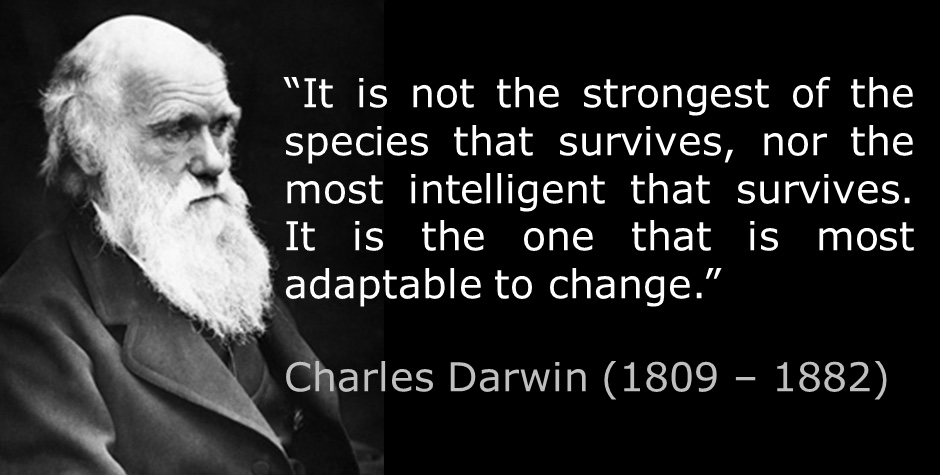
On this the 208th anniversary of Charles Darwin’s birth, progressive Christian communities celebrate Evolution Sunday

Readings from Thomas Berry and John 10:10 can be found here

I am indebted to the work of Richard Rohr for several insights found in his audio recordings of lectures entitled “The Sermon on the Mount”

Listen to the sermon here


D.I.V.O.R.C.E. – Tammy Wynette and googling biblical texts? – a sermon for Epiphany 6A

Aquinas purposeReadings included: Deuteronomy 30:15-20, Thomas Aquinas’ “Otherwise the Darkness’ (pictured above) and from the Sermon on the Mount: Matthew 5:21-37 

Listen to the sermon:  

I must confess to you all, right here and right now, that I thought I was so clever a few weeks ago when I decided in my ever so finite wisdom that we should spend the season of Epiphany delving into Jesus’ Sermon on the Mount. Sure, Jesus never actually preached the Sermon on the Mount, but it does represent a first century distillation of the teachings of Jesus. Whoever it was who wrote the Gospel according to Matthew put together a compilation of Jesus greatest hits and the Sermon on the Mount represents the teaching that Jesus died for. The Sermon on the Mount is the very heart of who Jesus of Nazareth was and so those of us who seek to follow Jesus in the 21st century ought to at the very least know what’s in these passages of scripture. So, I told you all that we’d take advantage of this unusually long Epiphany season to work our way through Jesus’ Sermon on the Mount. Apart from the Beatitudes which function as the introduction of the sermon, these passages of scripture rarely come up in our three-year lectionary cycle of gospel readings. I thought I was so smart when I came up with this idea. For the most part, I’ve enjoyed the challenge of the past five weeks of preaching on Jesus’ teachings. Well, Monday morning I got my comeuppance. Clearly, I’d forgotten all about today’s reading when I came up with this ingenious plan. Mondays are my day off, but sometimes I sneak into my office just to get the wheels in motion. I did a double take when I read these verses. I didn’t come out of my office for a couple of hours.

What was I thinking? But I told myself not to panic. If I stayed calm, I’d find a way through this mess. So, I picked some lovely hymns, thinking if nothing else Marney could lead us in some beautiful singing and you might forgive me for dragging us all into the hell fire and damnation that I was pretty sure these texts were going to take us to.

Tuesday morning, I thought I’d better check hat other preachers have said about these texts. Well, apart from some pretty conservative preachers, it was pretty slim pickings. Liberal and progressive preachers tend to leave these texts alone; most of the commentaries lead you back to the first reading from Deuteronomy and suggest sermons on the value of choosing life.  Most Lutheran resources suggest the preacher fall upon God’s grace as the only solution; and Lord knows a few years ago, I might have taken that option…back when I still believed that we were all fallen sinners in need of God’s unmerited grace to save us from the punishment due to us under the law. But I’ve moved so far away from the doctrines of original sin and atonement theories that this particular option although appealing would sound somewhat hallow coming from me. So, even though I suspected that in the end, I’d fall back on grace, it couldn’t be the kind of grace that gets handed out by some super gracious, super-natural being up there in the sky. So, I began wondering what a progressive does with this text once we’ve located grace not in the hands of a super-natural being, but as a quality that permeates creation. Well it was clear that most of the progressives I was consulting just avoided the problem of these texts altogether. So, I consulted a few of my progressive colleagues around the world to see if they could help. But most of them had seen this one coming and had opted for the second option for the gospel reading for this the sixth Sunday after the Epiphany and they are preaching on  a relatively tricky piece from the Gospel according to John and have enough problems of their own. One colleague, who no longer uses the prescribed readings, just laughed at me for not seeing this text coming while there was till time to do something about it. Needless to say, I didn’t get much sleep on Tuesday night. Visions of the fires of Gehenna danced through my head as I argued with Jesus. By Wednesday, I was feeling desperate. Continue reading

We do not grieve like those with no hope. – a sermon for Epiphany 5A

hope-we-do-not-greive-pastordawn-com-pages-copy

Readings included: Mary Oliver, Swan: Poems and Prose Poems
1 Thessalonians 4:13 & Matthew 5:13-20
Listen to the sermon here

Like the poet Mary Oliver, “Sometimes I grow weary of the days, with all their fits and starts. I want to climb some old gray mountains, slowly, taking the rest of my lifetime to do it, resting often, sleeping under the pines or, above them, on the unclothed rocks. I want to see how many stars are still in the sky that we have smothered for years now, a century at least. I want to look back at everything, forgiving it all, and peaceful, knowing the last thing there is to know. All that urgency! Not what the earth is about! How silent the trees, their poetry being of themselves only. I want to take slow steps, and think appropriate thoughts. In ten thousand years, maybe, a piece of the mountain will fall.”

It has been a crazy few weeks; weeks in which the unthinkable has become the norm. We had a few months to prepare ourselves for the inauguration of a leader that most of us had allowed our minds to relegate to the level of a cartoon character. We allowed the swooping waves of hair above the orange hue to help us laugh our way into believing that this fool would be controlled by wiser heads. Then in swooped a darker, more menacing character to firmly place white-supremacy clearly within ear-shot of a man all too willing to abandon common decency in favor of wild conspiracy theories. As tragic as the travel ban is/was/maybe who knows, just thank your lucky stars you’re not the one trying to decide if your skin is the right colour to grant you safe passage while the question of your eligibility is decided in the courts. As distressing as it is to contemplate the individual hardships of refugees, there was some consolation in the reality that we here in Canada are not like them.

We are not Americans. Their troubles may impact our lives in various ways, but we are not like them. We are a welcoming people. We are a multicultural culture. We are a peaceful nation. We are a sane people; sane enough to recognize the need for sensible gun laws. We are not a violent people. We welcome refugees. We “tolerate” people of all faiths and of no faith.   The noise coming from the south, was just that, chatter, that we can turn off, tune out, or shut down any time we “grow weary of all their fits and starts.” “We can wander outside, to see how many stars are still in the sky.” We know in our heart of hearts, “All that urgency!” it is “not what the earth is about.

From sea, to sea, to sea, we feel safe, some might say, smug, in our assurance that the “universe is unfolding as it should.” So, we did our best to put the travel ban into perspective. We trusted that wiser courts would prevail. We resolved to grin and bear it. “Have a nice day.” we said.

“Have a nice day.” And then, it all went horribly wrong. Our nice day turned into tragedy and the unthinkable act of a deluded young man wrenched us from our delusions of immunity from the madness that threatens to encroach on our notions of our treasured reality. It can happen here. It can happen here. It can happen here. It can’t happen here. It can’t happen here. It can’t happen here. Not in Canada. Not here. It’s too much. I can’t even… Continue reading

You Are the Salt of the Earth Oh People!!!

One of the joys of this blog is the community that gathers here in this virtual space. I am so richly blessed by your feedback, encouragement, and challenges!!! Thank-you so much for the comments, emails, cards, letters and even donations to Holy Cross Lutheran Church which underwrites the blog. Recently, a regular follower of this blog responded to the audio of Sunday’s sermon by sending me a link to the video below and encouraging me to post it! She encouraged me to challenge those of you who appreciate these blogposts to consider making a donation to Holy Cross Lutheran Church to encourage them to continue their generous support of this blog. While I generally shudder at the idea of asking for donations, I know that the good folks at Holy Cross have given generously to ensure that the progressive theology expressed on this site continues to shine a light on new ways of articulating Christianity!  So, if you’d like to help out, consider clicking on the link for Holy Cross’ address and do it old-school via a cheque and snail-mail. Thank-you for supporting the many ministries of Holy Cross. Let it shine!!!