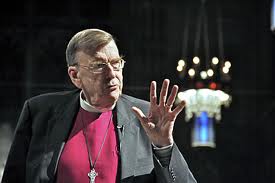
“I don’t even like religious people.” – Bishop John Shelby Spong

jack spongBishop Spong is not exactly enamoured of religion and or religiosity.  Speaking at the Seattle Rotary Club on August 28th 2013, Jack Spong tackles a number of subjects as only Jack can, including his friendship with Desmond Tutu, his belief that the Gay Marriage debate in North America is over, his latest book, number 24, The Fourth Gospel: Tales of a Jewish Mystic, and of course why “Christianity must change or die!”  As he often does, Jack reminds us that “Jesus didn’t come to make us religious, but to make us whole, so that we may live life abundantly.” Enjoy!!!

Hell Is Here On Earth – a sermon for Pentecost 19C on Luke 16:19-31

1 percentI will be preaching on St. Michael and All Angels this coming Sunday. But for those of you who are working on the Parable of Lazarus and the Rich Man, here’s a copy of a sermon I preached a few years ago.

I moved out of my parent’s house when I was quite young and like most young people I didn’t have much money so I lived in some pretty weird places. I once shared a house with a bunch of people that I met working in the travel industry. I didn’t know them very well when I first moved in but as the months dragged on, I got to know some of them better than I would have liked. There were five of us living in a four-bedroom house about a block from Spanish Banks in Vancouver. The house’s proximity to the beach made up for some of my roommates’ shortcomings and the rent was cheap.  So, even though I didn’t like the idea, I didn’t kick up much of a fuss when one of my roommates brought home a puppy.

Now there are those people who would argue that all puppies are cute, I just don’t happen to be one of them. Besides this thing was a Doberman and I don’t care if it was cute, I don’t like Dobermans. I was trying to convince my roommate David that he couldn’t possibly keep a Doberman in our house, when two of my other roommates showed up and quickly became besotted with the creature. One of my roommates when so far as to insist that the puppy was the cutest thing she had ever seen and that we simply had to keep it. While she was hugging and kissing the puppy, David got quite annoyed and pulled the puppy away from her and insisted that this dog was not going to be a pet. He declared that we needed this dog to grow up and be a guard dog, and if that was going to happen then we needed to start treating this dog as we meant to continue.

I had no intention of sharing a house with a Doberman, let a lone a guy who wanted to have one as a guard dog, so I started looking for another place to live. Before I moved out of that house, I had the unfortunate opportunity to watch David as he tried to train his puppy. First of all, David had to give the dog a name and it had to be a name that would instill fear into people, so that’s how the puppy ended up with a name like Vader as in Darth Vader.  None of us were supposed to cuddle the dog or pat the dog or play with the dog. That was just fine with me. But one of our roommates, Ellen was forever getting into trouble for treating the puppy like a baby. So, David insisted that Vader be chained up outside. A few months after I moved out of the house, I went back to visit and discovered that even Ellen was afraid to go into the backyard because Vader was actually turning into a viscous guard dog. She told me that David had been leaving Vader chained up for longer and longer periods of time and no one in the house would dare to go out into the back yard to feed Vader. I found out from the others that even though they’d tried to get David to pay more attention to Vader, he insisted that it there was nothing wrong with the way he was treating Vader. For months David left Vader chained in the backyard for days at a time and as the dog got bigger and bigger, the three roommates that were left in the house with David became more and more afraid of the dog and eventually they had to insist that David move out.  A few months later, I heard that David and Vader had parted ways. It seems that Vader had taken a chunk out of David’s arm and David had to have the poor creature put down. For some reason Jesus’ parable about Lazarus reminded me of Vader the Doberman. Continue reading

Introducing “Painting the Stars” Contributors: Bruce Sanguin

bruce sanguin

This coming Sunday, we at Holy Cross will begin the new Living the Questions interactive DVD adult education program Painting the Stars. Throughout this week I will be posting introductions to the various contributors to the program. So, if you are anywhere near Newmarket this Sunday consider joining us as we explore the dynamic relationship between science and faith!

One of the primary contributors to the program is Canadian Bruce Sanguin. Until recently, Evolutionary Christian Bruce Sanguin was the minister at the Canadian Memorial United Church in Vancouver. This summer Sanguin left parish ministry to pursue his writing and expanding his speaking career.

Bruce has  written several books that have to inspired my own worship planning. Two of his books are of particular value to any pastor who seeks to plan worship without slipping into the trap of words that re-inscribe old theological patterns:  Darwin, Divinity and the Dance of the Cosmos: An Ecological Christianity and If Darwin Prayed: Prayers for Evolutionary Mystics. Sanguin’s latest book The Advance of Love: Reading the Bible with an Evolutionary Heart explores the relationship between science and faith to shed light on biblical texts.

This video in which Bruce is interviewed by fellow evolutionary Andrew Cohen will wet your appetite for Bruce’s work while giving you an interesting look into evolutionary Christianity.   Enjoy!

Through the Lens of Grace Held Firmly in 21st Century Frames

lens of grace

Homecoming Sermon September 22, 2013

Creation IV – Proverbs 8:22-31, Colossians 1:15-20, John 6:41-51

Companion from the Latin “com pinionem” for “with bread” or “bread fellow”

“Painting the Stars” begins at Holy Cross Sunday Sept. 29

painting the stars flyer

Liberal Perspectives on Christianity

imageOver and over again, in conversations with people who have long since left the institution of church behind I hear: “Why don’t clergy pass on what they learned at seminary?” The plea usually comes after I’ve articulated Christianity in a way that makes sense to a 21st century mind.  Below are a series of snippets of Church of England clergy articulating what they call “liberal” perspectives of Christianity. I am all too aware of the multitude of reasons/excuses that prevent some clergy from articulating Christianity the way it is taught in the academy, but I can’t help believing that there is a great hunger out there for the kind of theology that does not require church-goers to check their brains at the door!

Jesus You’ve Got to be Kidding!!! a sermon Luke 14:25-33 and Deuteronomy 30:15-20 for Pentecost 16C

choose lifeStill enjoying a wonderful vacation, and I am grateful not to have to preach on the difficult text assigned for this Sunday. Here’s a facsimile of the sermon I preached a number of years ago on the gospel text.

Now large crowds were travelling with Jesus and he turned and said to them,  “Whoever comes to me and does not hate father and mother, wife and children, brothers and sisters, yes, and even life itself, cannot be my disciple. Whoever does not carry the cross and follow me cannot be my disciple. For which of you, intending to build a tower, does not first sit down and estimate the cost, to see whether he has enough to complete it?  Otherwise, when the foundation is laid and the tower cannot be finished, all who see it will begin to ridicule the builder, saying, “This person began to build and was not able to finish.’  Or what king, going out to wage war against another king, will not sit down first and consider whether he is able with ten thousand to oppose the one who comes against him with twenty thousand?  If not, then, while the other is still far away, he sends a delegation and asks for the terms of peace.  So therefore, none of you can become my disciple if you do not give up all you possession                    Luke: 14:25-33

Jesus you’ve got to be kidding! “Whoever comes to me and does not hate father and mother, wife and children, brothers and sisters, yes and even life itself, cannot be my disciple?…None of you can become my disciple if you do not give up all your possessions?”

Hate your father; hate your mother; hate your wife; hate your children; hate you brothers; hate your sisters; hate even life itself and oh yes while you are at it give up all you possessions and then, and only then will you be ready to take up your cross and follow Jesus. What is Jesus talking about? Has Jesus forgotten about the fourth commandment? Are we to forget about honouring our parents? Wasn’t it Jesus who said that we are to love our neighbours as we love ourselves? Didn’t Jesus try to talk people into loving their enemies?  Has Jesus forgotten that God is love? Why does Jesus rant and rave about hating our father’s, mothers, children, sisters, brothers and even life itself?

It is difficult to recognize the Jesus in this text. This is not the gentle Jesus of my childhood. This is not the happy Jesus who smiled out from the pictures in my illustrated Bible.This is not the Jesus that the rightwing conservative Christians point to when they harp on about family values. This is not the gentle Jesus we have come to expect. This Jesus sounds to harsh. This Jesus wants to turn us into religious fanatics who hate everybody and give up everything, even life itself.

For a few years now, there has stood on the shelf above my desk a quotation from Deuteronomy 30. I put it there so that these word’s of God might guide me in my decision making. According to the writers of Deuteronomy, God says:  “I have set before you life and death, blessings and curses. Choose life so that you and your descendants may live”. God says “Choose life!” How do I reconcile this to the Gospel lesson in which Jesus  says whoever does not hate even life itself, cannot be a disciple of Jesus? Why was Jesus so harsh?  What is going on here? Continue reading

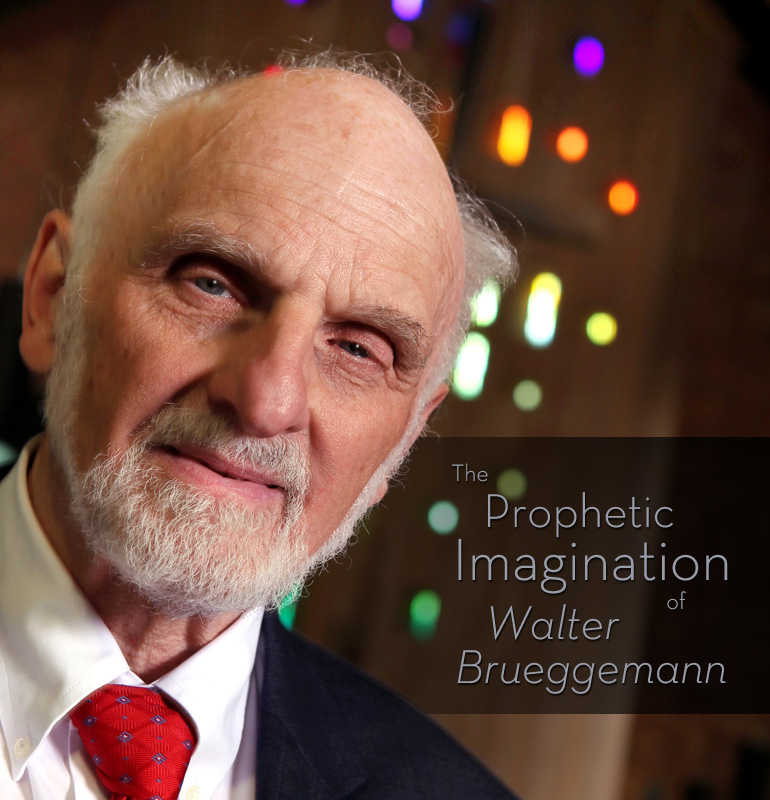
Prophetic Imagination: Walter Brueggemann

prophetic-imagination_leadThose of us who presume to preach on the prophetic books of the Bible do so at our own peril. One of the best ways to avoid much of that peril is to first consult the work of the great Walter Brueggemann. Krista Trippett’s extended interview of this eminent theologian provides delightful insights into the faith of the man who has influenced several generations of preachers. Enjoy!

Radically Faithful: Passionate Christianity Confronting Empire and Savage Inequality – John Dominic Crossan

John Dominic CrossanJohn Dominic Crossan is by far my favourite New Testament scholar. That he just happens to be one of the leading New Testament scholars in the world has something to do with why I hold his work in such high esteem. More importantly, my love for Dom stems from the generosity with which he has shared his gifts, talents, wit and considerable charm with our little congregation. Holy Cross has been blessed to play host to Dom twice and during his weekends with us we  learned so very much from him. 

In the videos below, Dom delivers three lectures at All Saints Church in Pasadena (2010). The dvd education program mentioned at the beginning, “The Challenge of Jesus” is brilliant. Holy Cross’ Adult Education Class used it in 2011 and I highly recommend it!!!

The Guests Watched Jesus Closely: sermon – Pentecost 15C – Luke 14:1, 7-14

On vacation, so:

here’s a facsimile of the sermon I preached three years ago when Luke 14:1, 7-14 last appeared in the lectionary. 

One Sabbath, when Jesus came to eat a meal in the house of one of the leading Pharisees, the guests watched him closely. Jesus went on to address a parable to the guests, noticing how they were trying to get a place of Honour at the table. “When you’re invited to a wedding party, don’t sit in the place of honour, in case someone more distinguished has been invited. Otherwise the hosts might come and say to you, ‘Make room for this person,’ and you would have to proceed shamefacedly to the lowest place. What you should do is go and sit in the lowest place, so that when your hosts approach you they’ll say, ‘My friend, come up higher.’ This will win you the esteem of the other guests. For all who exalt themselves will be humbled, and those who humble themselves will be exalted.” Then Jesus said to the host, “Whenever you give a lunch or dinner, don’t invite your friends or colleagues or relatives or wealth neighbours. They might invite you in return and thus repay you. No, when you have a reception, invite those who are poor or have physical infirmities or are blind. You should be pleased that they can’t repay you, for you’ll be repaid at the resurrection of the just.

humbleI have often heard Jesus’ teaching about who sits where at a wedding feast used to encourage a kind of humility that requires those who would follow Jesus to take a back seat or better still adopt a cloak of invisibility lest we be mistaken for the proud and self-righteous.  Canadians have a special affinity for this particular way of interpreting this text. It seems to me that the image of Canadian humility suggests that Canadian Christianity has had a huge impact upon our national psyche. I know that there are many who would insist that our humble national character is a direct result of living in the shadow of the Americans, whose national identity is anything but humble. I have to admit that the constant drumbeat of “We’re number one!”, “We’re number one!” coupled with a patriotism that champions the idea of American Exceptionalism which is the notion  that the United States alone has the right, whether by divine sanction or moral obligation, to bring civilization, or democracy, or liberty to the rest of the world, by violence if necessary. With such pride of place, you can be sure that each and every one of our American cousins is endowed with the confidence on knowing exactly where they belong at the head table. So, is it any wonder that living next-door to a nation that instills such patriotic ardor in its citizens, that we Canadians would find a more humble approach more appealing.

Don’t get me wrong; I know that stereotypes rarely express the full character of a nation and so, it would be a mistake to paint all Americans with the same brush. But I dare say that you’d be hard pressed to find a Canadian who would disagree that even the most enlightened of our American cousins who might be found from time to time to speak softly, doesn’t underneath it all carry a big stick. Where Bravado flows through our American cousin’s national character, most Canadians prefer a quieter, softer, gentler approach, lest we be confused with the worst of American stereotypes:  “the ugly American.” Continue reading

The Bible, Women and Violence: Amy-Jill Levine

violence against womenAs always Dr. Amy-Jill Levine’s consummate scholarship encourages and enables her listeners to seriously and holistically engage biblical texts. Violence against women in all its forms, whether they be physical, sexual, emotional, economical, or psychological types of violence, is a global, national, denominational and domestic problem that has all too often been enabled by interpretations of the bible that fail to take the bible seriously or engage its texts adequately. Please watch, listen, digest, and go forth and do likewise. 

Starry, Starry, Darkness: sermon for Pentecost 12C

van-gogh-vincent-starry-night-79005662Sermon August 11, 2013

Readings:  Genesis 15:1-6, Hebrews 11:1-16, Luke 12:32-40

Listen to the sermon

I’m a Doubter Not a Believer – Preparing to Preach on FAITH

Preaching on Luke 12:32-40 and Hebrews 11:1-16

doubters welcome“Do not be afraid, little flock, for it is your Abba’s good pleasure to give you the kin-dom” So begins the gospel reading for this coming Sunday. But I am afraid and my fear is not about the the thief who this text insists may break into my house or that the Human One is coming at some unexpected hour. No my fear is wrapped up in my desire to pay little or no attention to the second reading prescribed for this Sunday from the letter to the Hebrews:

“Faith is the reality of all that is hoped for; faith is the proof of all that is unseen. Because of faith, our ancestors were approved b God. By faith, we understand the world was created by the word from God, and that what is visible came into being through the invisible…..”

Do I have faith? Do any of us have faith? For that matter: What is faith? According to Hebrews faith “is the reality of all that is hoped for; faith is the proof of all that is unseen.” Faith is the stuff that makes it possible for us to hear Jesus words: “Do not be afraid, little flock, for it is your Abba’s good pleasure to give you the kin-dom.”  Faith is the stuff that makes it possible for us to believe. So I wonder: Do I have faith? Do I have the faith that makes it possible for me to believe? Do you? Do any of us?

I write this as one who finds it difficult and sometimes even impossible to believe much of anything. I am a doubter by nature. Doubting is part of who I am. I know that there are those who are more inclined to believe and I am envious of believers. I envy those who are sure and are able to find comfort in the Scriptures. For a very long time I was ashamed of my inability to believe. I often sat in church and wondered if I might just be a hypocrite. I wondered if someone who had as many doubts as I have belongs in the church. And so, I tried to conquer my doubts by studying the Scriptures. Continue reading

Doubt: Preparing to Preach on Hebrews 11:1-16

The Place Where We Are RightLooking over the readings for this coming Sunday and the subject of faith jumps out from the Hebrews reading (Hebrews 11:1-16) which begs questions about doubt.  I recently read and blogged about Richard Holloway’s “Faith and Doubt” and Lesley Hazleton’s insistence that “Doubt is Essential to Faith” and both posts provide an interesting jumping off point. This little video of Richard Holloway on “Why doubt is a good thing” drives my thoughts toward preaching on doubt as the foundation of faith??? 

Preaching on Hosea

Hosea and GomerAs they did last Sunday, this Sunday’s readings include a section from the Book of the Prophet Hosea. To say that this is a strange little book is an understatement. However, I’m tempted try my hand at writing a sermon on this ancient soap opera. For those colleagues who are considering doing the same these short videos provide images to get you in the mood. Of course you could just tune into a modern soap opera to get your creative juices flowing.

Preparing to Preach on Prayer: Shush!

BATH QOLIn this coming Sunday’s gospel reading Luke 11:1-13, Jesus’ disciples ask him to teach them to pray. As a pastor I have been asked to teach people to pray. Each time I have been asked to teach someone to pray I have cringed inside because I do not feel up to the task. For some reason the old hymn “I Come to the Garden Alone” keeps playing in my mind. I keep telling it to, “Shush!” so that I might hear the “bath qol” but the daughter of a sound eludes me. Below is a portion of a sermon I preached a couple of years ago on the subject of prayer. If nothing else, it reminds me to shush!

I began this sermon by asking the congregation to sing from memory the old hymn: I Come to the Garden Along. Feel free to sing it to yourself!

I think my earliest memory of prayer is a distant memory I have of skipping along the sidewalk chanting a familiar refrain: “Don’t step on a crack or you’ll break your mother’s back.” Most of us can remember a moment from our childhood when a superstition was instilled in us that caused us to perform some ritual in order to placate the unseen power that could determine our fate. Whether it was avoiding cracks, or walking under ladders or black cats, we were trained from an early age to believe that there were powers out there that could determine our future.   Continue reading

Basileia of God: A Kin-dom

basileiaβασιλεία, “basileia” the Greek feminine noun for sovereignty is traditionally translated into english as “kingdom.” Both the greek and english words were generated by kyirarchal world views. Kyiarchal is a word coined by Elisabeth Schussler Fiorenza to replace the term patriarchy. Kyriarchy emphasizes”the rule of the emperor/master/lord/father/husband of his subordinates.” Fiorenza argues for a different understanding of patriarchy, “one which does not limit it to the sex/gender system but conceptualizes it in terms of interlocking structures of domination, i.e., elite male, relations of ruling.” The kyriarchal translation of “basileia” as “kingdom” fails to capture the literal meaning this word which is after all is said and done the feminine plural of majesty. I have often joked that it is more accurately translated as “queendom”. Over the years I have often used words like “reign” “dominion” or “empire” in place of kingdom. These days, I have come to appreciate “kin-dom” as a better approximation of the meaning of basileia.  With that in mind, I offer Laurence Freeman’s explanation of  basileia. 

“Martha, Martha, Martha!” – Preparing to preach on an all too familiar text!

From an Academic Paper to a Sermon

martha 2I am usually on vacation at this time of the year. So, I have only had one opportunity to opportunity to preach on this coming Sunday’s gospel text (Luke 10:38-42). The story of Jesus’ sojourn at the home of Mary and Martha is such a familiar text, which over the years has been used and abused by preachers to inflict such harm on their listeners. During my seminary years, this text awakened the feminist in me in ways that I am still unpacking. So, in preparation to write only my second sermon on this text, I went back to my seminary years to uncover an academic treatment of this text that I included in my Masters Comprehensive paper in 1998. Reading the paper took me back to a time when I seriously doubted my call to ordained ministry. Back then I was unsure about my ability to tolerate the institutional church or indeed whether or not the institutional church would be able to tolerate me. I am happy to report that there are pockets of the institutional church were feminists can thrive and I have been blessed to be called to serve in one of those pockets. 

The only time I preached on this text was in 2004 and so I post both the academic paper and the sermon based on the paper as a resources for those of you who will take up the text this week. I have not edited the sermon, despite my inclination to do so. Old sermons provide a snapshot of old preachers. Like most snapshots, I’m not altogether happy with the picture of myself. The good news is that this week I have the opportunity to create another snapshot.

You can read the academic paper here   and   the sermon here

Jonah: I love a big fish story!!!

jonahI believe that I was all of ten years old when I first read Hemingway’s “The Old Man and the Sea.”  I loved each and every mesmerizing page of it and I’ve been a fan of big fish stories ever since. I didn’t actually read the Book of Jonah until I was in my twenties and it took me many more years to appreciate it too as a splendid big fish story. This short film written by Jack Thorne and directed by Kibwe Tavares revisits the Jonah story with prophetic urgency and reminds me that though we may never go back to the way things were, we can dream of how things may be, so that we might never have to long so desperately to return. Enjoy this feast for the eyes!

Mary and Elizabeth: Visitation or Escape?

rape victimsMay 31st is the day the Church commemorates “The Visitation” the story of Mary’s visit to Elizabeth  as it is recorded in the Gospel According to Luke 1:39-56. Since reading Jane Schalberg’s “The Illegitimacy of Jesus”, I can’t help but wonder if Mary’s visited her cousin Elizabeth or escaped to her cousin Elizabeth seeking protection for the crime of being raped in a culture that all too often blamed the victim.  Historians estimate that Mary may have been all of twelve years old when she became pregnant. There is ample evidence in the New Testament accounts of Mary’s story that suggest that she may indeed have been raped.  So rather than sweep the possibility under the rug, on this the Feast of the Visitation, I’m reposting a sermon I preached a few years ago during Advent.  I do so because women young and old continue to be raped and to this day, are forced to flee from the accusations and persecutions of cultures that continue to blame the victim. What follows is a written approximation of the sermon which in addition to Jane Schalberg is also indebted to John Shelby Spong’s “Born of a Woman” and “Jesus for the Non Religious” along with John Dominic Crossan and Marcus Borg’s “The First Christmas”.

Sadly, one doesn’t have to travel too far into the past to arrive at the time when women’s voices were not heard. Indeed, in the Lutheran church, it was only a few short decades ago.  For most of us that time is within our own lifetime. For generations, men have told our sacred stories. Men have decided which stories made it into the canon of Sacred Scriptures. Men have interpreted the stories that were allowed to be told. Men have translated, taught, and commented upon those stories from pulpits, in universities, in seminaries, in commentaries and in the public square. Continue reading