To the Tune of a Welcoming God: Moving God to Tears of Joy

welcomeDavid R. Weiss’ “To the Tune of a Welcoming God: Lyrical reflections on sexuality, spirituality, and the widness of God’s welcome” is a wonderful resource for worship planners who are searching for ways to engage worshippers in the difficult task of breaking down barriers to inclusion. As I wrote in the previous post, “they don’t go home humming the sermon!” Music opens our very selves toTo the Tune of a Welcoming God that which is beyond ourselves and Weiss has written some powerful texts that can be coupled with well loved, familiar hymn tunes. I was first exposed to Weiss’ way with words a number of years ago when Lutheran’s Concerned included his “O Christ Who Came” in their worship resources for the celebration of Reconciling in Christ Sunday. When set to the tune of LONDONDERRY AIR (that’s O’ Danny Boy, for the uninitiated), Weiss’ words provide an expansive welcome that we have often sung with gusto at Holy Cross. So, I was delighted to discover, on iTunes of all places, the album “To the Tune of a Welcoming God” by Sara Kay. After quickly downloading, I began to listen to all sorts of possibilities for worship in Weiss’ splendid texts set to familiar tunes. In addition to providing hymn texts that expand our vision of what it means to extend a welcome to the GLBT community, Weiss’ texts open worshippers to images of God that move us beyond words as they open us to theologies that embrace the reality of the cosmos. You can follow this link to find a copy of the hymn texts.

In addition to the hymn texts, Weiss’ book provides a collection of essays in which Weiss offers a vision of what the Church can become. Weiss is writes from his own Lutheran perspective reflecting his own struggles in work of building a more inclusive church. Weiss opens the book with his own “Credo” which I look forward to using in liturgy as an “Affirmation of Faith”. 

Credo: By David R. Weiss

I believe in God,
The Great Mystery that is the Source of all that is,
I believe that God is beyond our words
And surely beyond our genders,
But that we are still invited to name God as best we can,
With humility and wonder.
I believe in God’s love for all creation, not just humanity.
I believe in God’s yearning,
That justice hold sway in every corner of creation
And in God’s anxious longing
For Sabbath joy to fill the cosmos.

I believe that the deep beauty of Jesus’ life
Is a true revelation of God’s desire to see compassion
At the center of human community.
I believe that Jesus’ healings, parables, and table fellowship
Reveal the truth of God active in our midst.
And I believe that in Jesus’ life
We hear an invitation to echo such compassion
In our own lives.

I believe that Jesus’ death
Reminds us that oppressive power
Will stop at nothing –
Then or now – to silence compassion.
And I believe that resurrection
Names the miracle that takes place –
Then and now – whenever we rededicate
Our lives to compassion
Thereby announcing that even death
Cannot silence the love of God.

I believe that besides Jesus’ life
And besides the biblical text,
Other lives and other texts also bear the truth of God –
And that our lives are richer for listening well
To the movement of God in many places.

I believe that God continues to be present still today
And that the Holy Breath of God blows
Whenever and wherever compassion is born,
Whether in our words, deeds, or rituals.
I believe we have a special responsibility
To gather in community and share rituals,
Both ancient and fresh,
That exercise our imaginations,
Both bodily and spiritually
For the practice of compassion.

I believe that in our lives
We have the capacity to move God,
This loving mystery that dwells at the heart of all that is,
To the point of tears.

And I commit myself,
With my brothers and sisters and the whole of creation,
To living in ways that seek to move God to tears of joy.

Amen.

They Don’t Go Home Humming the Sermon!

humLiturgy has the power to from us in ways that preachers can only dream of. The truth is worshippers don’t go home humming the sermon. What we sing in worship matters precisely because music has the power to both open us up and shut us down to change. As our theology evolves, so too what we sing in worship must evolve. But familiar chestnuts  are familiar for a reason. Our favourite hymns are singable! Sadly, so many of the best loved hymns inscribe theologies that posit a god that few of us are willing to worship. But rather than throw the babies out with the bath water, we can give the best loved hymn tunes a new lease on life with texts that do not re-inscribe theories of atonement that we are trying to leave behind. I have been asked to share some of the resources that we have found helpful at Holy Cross and over the next few weeks I hope to post several resources.

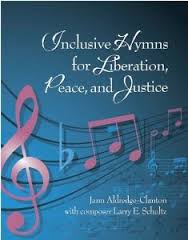
Inclusive Hymns Aldredge-ClantonIt hasn’t been easy to find new words with which to resurrect old hymns. But there are two resources that warm the heart of this particular worship planner. Both “Inclusive Hymns For Liberating Christians” and “Inclusive Hymns for Liberation, Peace, and Justice” are the work of Jann Aldredge-Clanton who is responsible for the hymn texts and Larry E. Schultz who provides a few new tunes for Aldredge-Clanton’s texts. I highly recommend both volumes for those progressive Christian worship planners who seek to use music to open people to the possibilities of  more expansive theologies. Aldredge-Clanton’s texts go far beyond “inclusive language” for God and for people.Inclusive hymns for liberation

Jann Aldredge-Clanton currently serves as adjunct professor at Perkins School of Theology and Richland Community College, Dallas, Texas. Her vivid imagery opens the mind while familiar tunes comfort the spirit.  

The good news is that although these resources are not easy to get in Canada, I ordered mine from Amazon.com in the U.S. and the shipping charges were minimal. Better yet, with the purchase of 10 or more you get permission to reproduce hymns for worship.

Here are two videos that provide of just two of the pieces sung in very different worship styles.

Feast Day of Saint Francis of Assisi

On this the Feast Day of Saint Francis, an evening prayer service with texts from St. Francis. The liturgy was developed for use during Lent. But on this rainy autumn afternoon St. Francis’ words provide warmth and peace. Enjoy!

Evening Prayer Service Bulletin which is to be printed double-sided

Evening Prayer Audio – the silences are intentional.  Enjoy!

Prayer: the Perspective of a Process Theologian – Catherine Keller

quantum thoughtToday, preachers all over the world (myself included) will be tackling what the writer of the gospel of Luke had to say about prayer in Luke 11:1-13. It is a daunting task for any preacher, let alone for those of us who have given up images of the Divine that conjure up notions of a super-hero in the sky who interferes in our lives. Catherine Keller is a process theologian who teaches Constructive Theology at  Drew University (New Jersey). Her comments about prayer as a kind of allurement are enlightening. 

Preparing to Preach on Prayer: 21st Century Questions – There’s an App for that!

prayer appAs I continue to work on this Sunday’s sermon, (see earlier posts here … here …and here), Jesus’ teaching on prayer in the gospel reading Luke 11:1-13 leaves me wondering what an enlightened 21st humanoid is supposed to do with Jesus 1st century ideas???

Cast you minds back to another time and place and tell what the numbers 33, 45, and 78 have in common??? Vinyl Records anyone? When I was a kid music came from a portable RCA record player. The sound quality wasn’t all that great, but somehow we didn’t seem to care. Later when I was a teenager, my parents got a fancy state of the art Phillips stereo cabinet and suddenly sound seemed to be coming from booth ends of the room. I never did understand how those old record players managed to pick up sound from the grooves in the vinyl to45 produce music. I still remember my father’s first reel-to-reel tape recorder, and then there were the eight-tracks, followed by cassettes, followed by CD’s.  I can remember these things, but I have no idea how they made music. It doesn’t matter how many times people try to explain it to me, I still think it’s a miracle that such beautiful sounds can come out of machines.

These days I don’t use records, tapes or CDs to listen to music. My music is stored in “the cloud” and when I want to hear I song I make sweeping motions on my iphone screen and presto, I can make music fill the room. I don’t know what the cloud is. I asked the personal assistant on my iPhone, her name is Siri and she told me she was sorry but she couldn’t tell me because Steve told her not to tell anyone. Some people think the cloud is located in a 225-acre facility that Apple built in North Carolina. Continue reading

Morning Prayer Liturgy: John Philip Newell

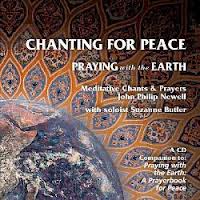
Chanting for PeaceMorning Prayer Liturgy from Casa del Sol, Ghost Ranch. Led by John Philip Newell, Ali Newell, David E. Poole, Winona Poole. Chants from “Chanting For Peace, Praying with the Earth”

As Evening Approaches

John Phillip Newell’s “Prayer for Mystery” and “Chant: Hidden Things” provides a gentle transition into the evening.

The Wisdom of God Is Deep Within Us – John Philip Newell

dear longsLast night I had the privilege of attending a lecture by John Philip Newell who spoke about his recent book, “New Harmony: The Spirit, The Earth, and The Human Soul”. So many images and phrases linger in my imagination. Newell’s gentle, provocative, prophetic call to live into what Thomas Berry calls this “moment of grace” in order to heal the Earth moved me beyond words. I am so grateful to Newell for uncovering Wisdom who lives in the Christian Household; especially Julian of Norwich’s conviction that “we are not just made by God, we are made of God.”

This video contains a Prayer for Presence, followed by the chant: As the Deer Longs, by Newell. For more on Newell follow this link

The First Book of God

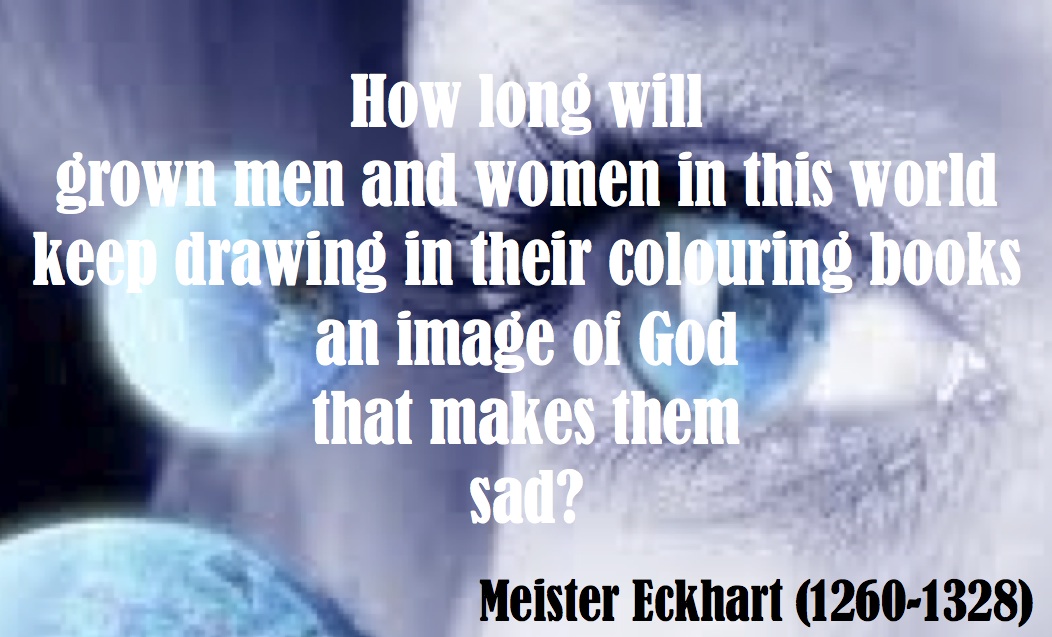
sad Eckhart

It has been said that there are two books that reveal the nature of our Creator, the second of which is the Bible. The first and foremost book that reveals the nature of our Creator is creation itself. Folksinger Peter Mayer’s “The Play” strikes me as a prayer of gratitude for this most splendid revelation of the ONE WHO IS, WAS, and EVERMORE SHALL BE, our CREATOR, CHRIST and SPIRIT, ONE. I offer it here in preparation for Sunday’s onslaught of machinations on the Doctrine of the Trinity.

The Athanasian Creed and an Unholy Trinity – A sermon for Trinity Sunday

Beyond the Beyond - Dawn Hutchings

I don’t remember the first time I ever saw him. I was barely 18 months old when my brother Alan arrived. Despite the fact that he ruined my gig as an only child, Alan and I grew close over the years. We moved around a lot so we became one another’s best friends. But we went our separate ways when we became teenagers. When I tell the stories, I say that we went our separate ways because Alan became preoccupied with sports.  I suspect that when Alan tells the stories, he says that we went our separate ways because I became preoccupied with the church. Either way you tell it, family and friends used to say that it was hard to believe that we grew up in the same household. Alan developed a reputation for been a bit of a redneck. I developed a reputation for being a bit of a radical. Alan drove four-wheel-drives and went hunting. I drove old beat up cars and lived at an ecumenical retreat centre.  Alan learned a trade, settled down and raised a family. I travelled the world and didn’t get around to figuring out what I was going to be when I grew up, I went back to school at the age of 30.

Alan and I didn’t get around to understanding one another until we were in our mid-40’s. When I grew to appreciate the gentle man that he has become and Alan began to respect the person I’ve become. We still love to talk politics, but these days we tend to agree more than we disagree, I’m not sure who mellowed, the redneck or the radical. We don’t talk much about religion, though. Growing up, Alan would claim to be an atheist, and scoffed at my involvement with the church. These days, Alan, calls suggests he is an agnostic, and although he’s come to respect my life in the church, he still scoffs at the hypocrisy of the church.

I still remember the very first time that I saw Manjit. Her face was the colour of pure milk chocolate. Her jet-black hair was long and wavy. She sat at the very back of the classroom. When the teacher introduced me to Manjit, her toothy grin welcomed me. We were twelve years old. I was the new kid in town and Manjit was the only East Indian in the class. We were to share a double-desk for the remainder of the school year. I remember my first trip to Manjit’s home. A science project needed our attention. I can still smell the aroma of Manjit’s home where exotic curries released their pungency into the air. Over several meals at Manjit’s, I learned to like my food hot and spicy. Manjit’s mother would blend her own spices and she never forgot to send a package or two of her specially blended curries home with me.

Manjit is a gentle soul who introduced me to the wonders of her faith. Manjit is a Hindu. Manjit never tried to encourage me to become a Hindu.  Although over the years she would remind me of the Hindu saying that admonishes Hindus to be better Hindus, Muslims to be better Muslims, Jews to be better Jews, Buddhists to be better Buddhists, and Christians to be better Christians.  Manjit grew into a kind and gentle woman. She works as a social worker in Vancouver’s rough east-end neighborhoods. The last time I saw Manjit she was patiently guiding the students of a confirmation class that I taught, around her Temple. Later that evening Manjit and I talked a long time about Jesus. Manjit told me that she’d always been fascinated with Jesus’ teachings and that she had no problem believing that Jesus is God, but then she explained that Hindus have a thousand god’s.

I can still remember the very first time that Henry walked into my office. A long black beard together with the yarmulke that he wore on his head gave Henry away. So, from the very beginning I knew that Henry was Jewish. But it took a few years of working together before I discovered that in addition to being a graphic artist, Henry is also a rabbi. Henry became a dear friend of mine and over the years he shared so much of his wisdom with me. Many a night Henry and I sat up to the wee hours discussing the Scriptures. Henry even arranged for me to study Hebrew at his Yeshiva. I learned a great deal from Henry. We often talked about Jesus. We rarely agreed about Jesus, but we often talked about him.

Alan, Manjit and Henry, some would call them an unholy Trinity. But to me they are, each of them, sacred. Trinity Sunday is my least favorite Sunday of the Church year. It’s the only festival of the church year that is designed to celebrate not God, nor Jesus, not even the Holy Spirit, but rather a doctrine of the church. The notion that God is One in Three; a doctrine that was created by theologians to explain the inexpressible, a doctrine the church “fathers” began to cast in stone in the words of the Apostle’s, Nicene and Athanasian Creeds.  Three Creeds that make up an unholy trinity in and of themselves. Three Creeds that the Lutheran Church continues to hold as articles of the faith. Three Creeds that continue to hold sway in our church.Three Creeds that in my humble opinion make up an unholy trinity. Three Creeds upon which the doctrine of the Trinity rests.

The Apostles’ and Nicene creeds are familiar to most people who’ve spent time in the churches of Christendom. But it’s the 3rd creed of this unholy Trinity that makes Trinity Sunday my least favorite Sunday of the Church year and for me calls into question the entire doctrine of the Trinity. I still remember the first time I actually heard the third creed. I was about 20. I’d been attending church for about five years and I’d already learned to recite the Apostles creed which we used almost every Sunday and the Nicene Creed which we used on the high holy days like Easter, Pentecost and Christmas. But somehow in those five years I never came across the Athanasian Creed. I must have missed a few Trinity Sundays because in the Lutheran Church tradition dictates that on Trinity Sunday the Athanasian Creed be used. So, on this particular Sunday after the Hymn of the Day the pastor instructed us to turn to page 54 in our Lutheran Book of Worship.    Continue reading

While Preachers Dutifully Ponder the Doctrine of the Trinity, Our Congregations Shrink???

This Sunday is Trinity Sunday.  In anticipation, preachers all over the world are dutifully pondering the Doctrine of the Trinity desperately searching for something to say to encourage their congregations.

Preachers will trot out tired old clichés conjuring up images of triangles, shamrocks around, or point to H20’s ability to appear as water, ice, or steam while still maintaining it’s unified essence. Or have you heard the one about the 3 blind men and the elephant in the room. That old chestnut is trotted out by many a desperate preacher struggling to put flesh on the doctrine of the trinity. But for the life of me I can’t see how 1 blind man touching the elephant’s trunk and presuming that there is a tree in the room, while a second blind man catching wind of the elephant’s ear is convinced that there is some sort of giant fan in the room, while a third man grabs hold of the tail and is sure that he has hold of a rope, helps you to conclude that just because they’re all sharing a room with an elephant you can now confess that God is indeed Father, Son, and Holy Spirit, one God, forever and ever amen. But all sorts of mental gymnastics will be exercised in the vain attempt to make some sort of sense of the doctrine of the Trinity!

On Trinity Sundays, mindful of the fact that trying to explain the doctrine of the Trinity usually leads to heresy: dusty theological books that have not seen the light of day since last Trinity Sunday have been poured over to ensure that the formula’s learned in seminary are repeated correctly and heresy scrupulously avoided. The imaginative among us have attempted to baffle our congregations with our theological intellect, the pragmatic among us have attempted to baffle our congregations with something akin to BS, while the desperate among us have simply tried to survive the Trinity Sunday hoping against hope that no one will notice that we haven’t a clue what we’re talking about.

Perhaps only dear old Dr. Martin Luther possessed the theological integrity sufficient to save a preacher from the perils of preaching on Trinity Sunday. So, before I launch, forth, let me remind you what the instigator of the Reformation had to say on the subject of the Trinity. Martin Luther warned that: “To deny the Trinity is to risk our salvation; to try and explain the Trinity is to risk our sanity.”

I will confess that Martin Luther had much more at stake, literally at stake, than I do, because the truth is that for centuries the punishment for heresy would have found many an ancient preacher burned at the stake. But while the death penalty for heresy has been lifted, the risk to one’s sanity remains.

Now, I will confess that when faced with a particularly difficult theological knot, I prefer to begin by quoting Jesus and not Luther, but alas Jesus remained silent on the issue of the Trinity. So, I did try to find something helpful in the words of the Apostle Paul. But alas, without some really amazing theological gymnastics that are beyond my abilities to comprehend, even the Apostle Paul remains mute on the issue of the Trinity. So keeping in mind Dr. Luther’s dire warning that to,  “To deny the Trinity is to risk our salvation; but to try and explain the Trinity is to risk our sanity.”

Let me remind you that the Trinitarian formula appears in Scripture only once, in Matthew 28, during what is called the Great Commission, when Jesus commands the disciples to go forth, baptizing in the name of the Father, and of the Son, and of the Holy Spirit. But the doctrine of the Trinity does not appear in the Bible

– The doctrine of the trinity, as we know it, was first formulated in the fourth century, by a couple of guys named Gregory and a woman called Marcrina.

– The doctrine of the Trinity was then developed over hundreds of years

– The doctrine of the Trinity was at the heart of several wars

– Thousands of Christians were killed because they came down on the loosing side of arguments over the doctrine of the Trinity

– No one has ever been able to adequately explain the Trinity

– Every explanation of the Trinity that I have ever come across includes some form of heresy

By the way, just so we’re clear, I rummaged through some of my previous sermons on the doctrine of the Trinity and I must confess that if this were the twelfth century, an angry mob would be stoking up the fires beneath my feet  because based on things I have proclaimed on various Trinity Sundays a charge of Modalism could very successfully be laid against me, as could a charge of Sabellianism. You might be interested to know, that more traditional preachers than I, will no doubt preach sermons this Sunday which will prove them guilty  of Arianism or at the very least Subordinationism. All of these heresies in a bygone age would have left us with a severe shortage of clergy in the church, as many of us would be smoldering at the stake for our crimes. Deciding who is right and who is wrong, who is in and who is out is a deadly preoccupation of humanity, a preoccupation that the church has not been able to escape.

So, with apologies to Dr. Luther, I’m going to go ahead and risk my salvation by declaring that the doctrine of the trinity is but a feeble attempt to comprehend the incomprehensible mystery of the very nature of our God.  We can echo all the creeds of Christendom with as much confidence as we can muster, and as enlightening as some of those creeds may be, they cannot begin to unravel the mystery of the creator of everything that ever was and ever shall be, nor can they fully describe the magnitude of the revelation provided in the life, death and resurrection of the one we call Christ, and when it comes to the power of the Holy Spirit, all our creeds together cannot tell the story of her wondrous beauty.

The doctrine of the trinity is just a tool to help us along the way, the trinity is not God, nor is God the trinity. The trinity is merely a way to speak of the unspeakable. And yet down through the centuries we have used the doctrine of the trinity as an idol and demanded that we worship the trinity as if it were God’s very self.

We have worried more about believing in the trinity than relating to the very One whose relationship the Trinity attempts to describe. For when it comes down to it, what we know of our God finds expression our attempts to describe God as a relational being. For what is the doctrine of the Trinity if it is not the declaration that God is Creator, Christ and Spirit, intimately connected as One; at God’s very core we find a relationship. This should be our first clue that any understanding of God must begin with relationship. Surely it is more important to experience God than to explain God. Surely it is more important to relate to God than it is to preserve a doctrine that has long since failed to describe God.

You’d think that after nearly 2000 years the Christian church would have learned to be more humble in its declarations about God. And yet, today, as we strive to learn more and more about creation, some things remain out of bounds. The church remains unwilling to revisit long established doctrines, choosing instead to insist that we simply believe, because what was good enough for grandma ought to be good enough for us. And if we should doubt the doctrine of the Trinity then all we need to do is study harder and we will eventually understand. And if we are unwilling to work at understanding the Trinity we should simply trust that folks much smarter than us have figured it out so we should simply stop questioning and simply mouth the words. Let the tired clichés and the worn out illustrations suffice, forget about our questions and simply drink the kool-aid and our doubts will somehow magically disappear. And so together we focus on believing what has been handed down to us. And for a great many people that’s good enough. All we really need to do is believe, to have faith and all will be well. But oh so many more of us have grown weary of the tired insistence on belief; you only have to think of the children missing from our churches to know that our doctrines are failing to engender relationship.

I’d like to be able to say, here just learn this and believe this and all will be well,  all we need to do is figure out more up to date methods to deliver the same old doctrines and your grown children will learn to believe, but  I too have my doubts.   You see I don’t believe that the point of a religion is to engender belief. I believe that the point of religion is much bigger than belief. For if a religion does no help you relate to God or to God’s creatures, or enhance your experience of creation, then religion is not life giving and all its doctrines are but fleeting attempts to deny death.

It is far more important to have a relationship with our God than it is to understand doctrines about God. In so far as the doctrine of the trinity helps us to relate to God then it can be said to be life-giving. When the doctrine of the trinity helps us relate to God’s creatures and to God’s creation, then it can be said to be life-giving. But reduced to a formula that we must believe the doctrine of the trinity runs the risk of inhibiting our experience of God and robbing us of a life-giving relationship with God and with the world that God loves.

I am convinced that the only way to ensure that the doctrine of the trinity remains life-giving is to free it from the confines of the past. Despite it’s fear, the church must re-examine its creeds and confessions, open up our dusty doctrines to the light of the 21st century so that those that fail to enhance our relationship to God and to one another can be given a decent Christian burial and those that nurture our relationship to God and to one another can thrive.

We need to prioritize relationship and experience over ancient creeds and doctrines, least our preoccupation with correct belief causes us to miss an encounter with our God.

Trying to understand the very nature of God, is, when you think about it actually an arrogant thing for simple creatures such as we. We cannot hope to understand the nature of God.  So perhaps the most faithful sermon on the Trinity is one that merely sniffs around the edges of the mystery, hunting for something closer to an experience rather than an understanding.  God is the elusive stranger.

Sometimes it is possible to identify God, before God gets away. But most of the time we only recognize God after God is gone, like the drifter who wants to tell you his story only you do not have time, so you hand him a dollar and walk away.  Or the woman with the tearstained face who disappears while you decide whether to ask her what is wrong; or the bewildered child whose mother scolds him for being alive and whose sorrowful eyes catch yours just as she drags him away. These are the strangers who lay claim to our hearts, although they make no claims for themselves.  In their presence we fail them.  It is only after they are gone that we know who they were.  That is why it is so easy for us to sacrifice them.  We did not know.  How could we have known?  Who expected Christ to show up looking like that?

Is it possible for us to attend to our peripheral vision, to see out of the corner of our eyes, to notice those faint sounds of birdsong in the background, to catch those elusive fragrances, that might well be God, the Holy One, coming to us in ordinary space and matter, longing for an intimate encounter?

Let us be ready to notice the Spirit of God in a burning bush, to turn aside for a moment in order to encounter the mysterious, intimate God who comes to us, so that in the power of the trinity we ourselves may be made holy!

            Heirs with Christ –  inheritors and distributers of all God’s love.

            There you see, I’m not suggesting that we toss it all away.

            Down through the centuries God has revealed so much.

            I’m simply pleading that we walk humbly with our God.

            And revel in the mystery.

In a dusty library years ago, I discovered a pearl about the Trinity, which I treasure. It came from St. Augustine, a 4th century bishop who helped to craft the doctrine of the trinity.

            Augustine’s metaphor for the Trinity is that

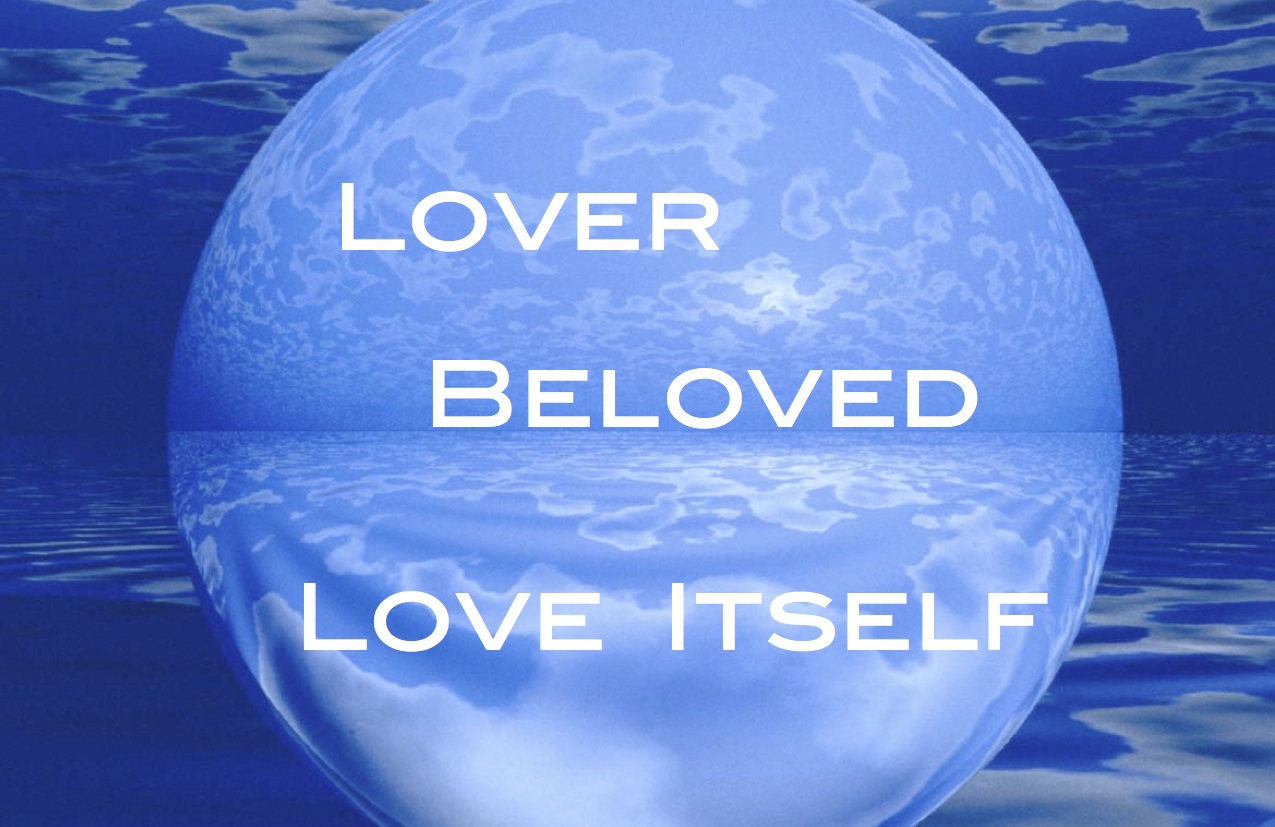
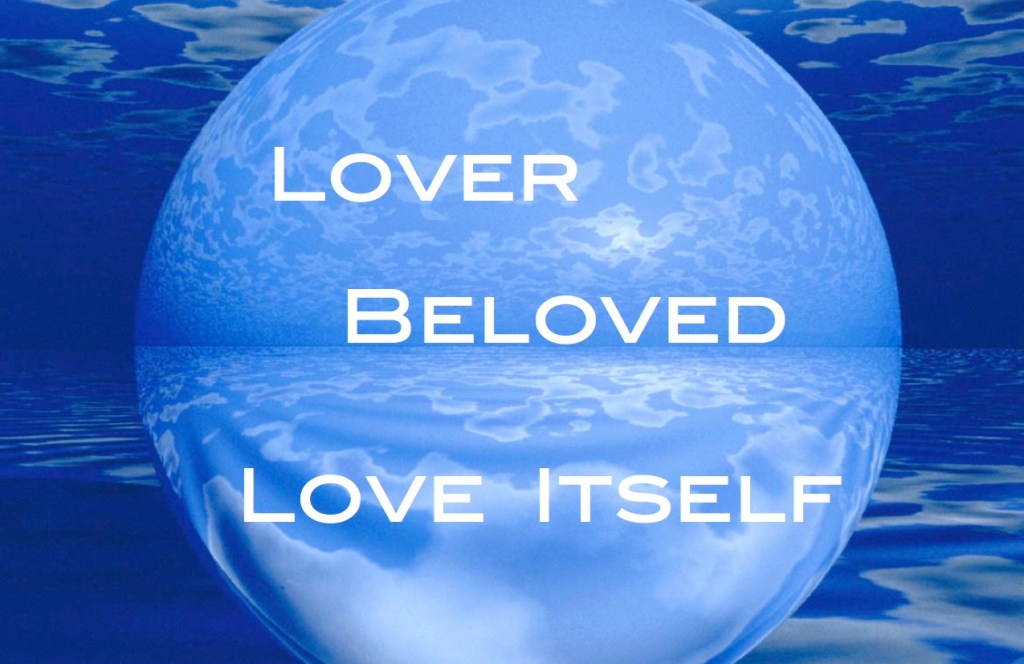
            God is:  Lover, Beloved, and Love itself.  

            May we learn to walk humbly with that love.
Pentecost Tongues Aflame with the Prayer attributed to Jesus

flaming tonguesIt was the first prayer I ever learned. I suspect my Mother taught it to me, but I have no memory of ever learning it. It is part of who I am. I suspect that the origins of this prayer are as murky as my own memory of learning it. Many New Testament scholars have disputed the historicity of Jesus’ authorship of this prayer. While I agree that the prayer’s antecedents can be found in the Jewish tradition, I’ll leave those arguments to another post and turn my attention to the various interpretations of the prayer. All translations are in and of themselves translations. The festival of Pentecost with it’s images of speaking in tongues provides an excellent opportunity to explore some of the many interpretations of the prayer.

In the language of Aramaic, Jesus is said to have taught his followers the prayer we know as “The Lord’s Prayer.” It was then translated into Greek and recorded in the Gospels (Matt. 6:9-13; Luke 11:2-4).  Since then this prayer attributed to Jesus has been translated into hundred’s of languages. Most familiar to many of us are the English translations based on adaptations of the King James and NRSV versions of the Bible. The fact that language continues to change over time, means that the work of translation is never complete. Jesus’ prayer is alive and well in all the world and many translations embody the breath of life that this rich Word of God inspires.

For several years our Pentecost liturgy has included a cacophony of voices as our worshipping tongues pray this prayer using an interpretation of their choice. A selection of interpretations is printed in a folder and while the presider prays the prayer in Aramaic the congregation prays an interpretation. Follow this link for a copy of the interpretations (designed to be printed double-sided and folded together in a booklet) and enjoy the video which will give you an idea of how the Aramaic may have sounded.

This Pentecost practice moved our community beyond the “contemporary versus traditional” arguments over which translation of the “Lord’s Prayer” ought to be used in worship. We know have a plethora of choices!

Celebrating Pentecost in the 21st Century

pentecost celebrate 2Michael Morwood has the uncanny ability to articulate progressive Christianity in ways that enable worshippers to move beyond images and ideas that entrap us in ancient world views. I love his prayers and use them often in worship!

Adapted from “Praying a New Story” by Michael Morwood

The Celebration of Pentecost in the 21st century moves us beyond the story of Jesus ascending to “heaven” in order to send the Spirit upon us.  Pentecost is the wonderful story of God’s Spirit always present, always active in human development and given total and free expressing in human form by Jesus of Nazareth.

It is the amazing story of people coming to awareness through reflection on the life of Jesus that the same Spirit that moved in Jesus moved in them.  They realized it was no their responsibility to give witness to the Spirit in their lives as totally and as freely as Jesus had.

Pentecost is the wonderful good news that all people who live in love live in God and God lives in them. Pentecost presents a challenge to humanity:  What would life on earth be like if the actions of all people were motivated by their awareness of being “temples of God’s Spirit”?

by Michael Morwood

by Michael Morwood

A Tough Week for the Planet: Earth Sunday Sermon

earth-day-2013On the heels of Peter Rollins visit to our congregation last weekend, this Earth Sunday sermon flows out of Peter’s work. You can listen to Peter’s sermon which is the jumping off point for this Earth Day sermon here

Listen to the Earth Day sermon here

Worship Bulletin here

The readings are here

The video of the excerpt from Chief Seattle’s Response is below


Lenten Evening Prayer: Parables Ancient and Modern – Great Misfortune

Orthodox HereticThis year our Lenten Evening Prayer services draw on Peter Rollins collection of Parables found in “The Orthodox Heretic and Other Impossible Tales”. Prayers are drawn from the writings of the Christian Mystics. Each week an audio recording of the service will be posted as well as a copy of our worship bulletin. 

Evening Prayer a copy of the worship bulletin can be found here – it is designed to be printed double-sided and folded into a booklet.

Listen to the worship service here

Letting Go of our Tightly Held Piety to See Our Need of Confession

JOHN OF THE CROSS as
Little Crystal was only two and a half years old when she got hopelessly stuck.
 And when she got stuck she did what all small children do, when they have gotten themselves into a situation that the can’t get out of, little Crystal cried for help. She went into her mother’s study, holding in one hand a family treasure and her other hand couldn’t be seen.  Crystal cried out, “Mommy I’m stuck”. Her unseen hand was stuck inside her great-grandmother’s vase.  The precious vase had been handed down from her great-grandmother to her grandmother, to her mother. Crystal had always been told that one day the magnificent vase would be hers.

Crystal’s mother tried to move quickly without panicking. She scooped the vase and her little girl up into her arms and carried them to the kitchen sink. She used warm soapy water to try to loosen the toddler’s hand, which was stuck all right. When soap didn’t work she reached for the butter. While greasing her child’s wrist like a cake pan, she asked the obvious “mother question.” “How in the world did you do this, child?” Crystal carefully explained that she had dropped candy down into the vase to see if she could still see it when it was at the very bottom. But she couldn’t see it, so she reached in for her candy and that’s when she got stuck and she couldn’t get her hand back out.

Well, as time passed, the situation became more and more serious. Crystal’s mother called for re-enforcements. She phoned her own mother and told her to get there as fast as she could. A neighbour suggested Vaseline. The apartment manager got out some WD40. Still no luck.  It began to seem like the only way to get Crystal’s hand out was to break the family heirloom.

When Grandma finally arrived, both Crystal and her mother were almost hysterical. They were both more than a little relieved to have Grandma’s calming presence. Grandma sat little Crystal on her knee. 

Crystal was very upset and still very stuck. Grandma took a good look at the vase that used to sit on her mother’s kitchen table all those years ago.  She looked at the miserable look on her grand-daughter’s face, and she said, “Crystal, sweetheart.  Your mommy told me that you reached into the vase for candy.  Is that right?”

Crystal was a little breathless from all the crying she had been doing and all she could manage was a whimpered, “Mmm hummm.” “Honey, tell grandma the truth now. Do you still have a hold of that candy?” “Mmm humm”.  Crystal sobbed. Then Grandma rubbed little Crystal’s back, held her close and gentle, but firmly said: “Let it go, child.  Let it go.” Sure enough, the vase slipped off as smooth as silk. (I have searched for the source of this story, without success. I first heard it at a retreat on the West Coast a lifetime ago)

In this fast paced world of ours, I often find myself in little Crystal’s predicament.  Surrounded by a treasured family heirloom, desperately clinging to a treasure.  My predicament often makes it difficult for me to appreciate the beauty of the heirloom. Letting go isn’t as simple as it sounds. But sometimes letting go is the only way to preserve the integrity of the heirloom. When I think about the church’s practice of public confession, I can see how desperately I have been holding on to candies that no longer satisfy my need for forgiveness.  Continue reading

Why Is There Suffering In the World? – Thomas Keating

Thomas KeatingThomas Keating is a Trappist Monk who is credited with the development of the contemplative practice of Centering Prayer. “Centering Prayer is a method of silent prayer that prepares us to receive the gift of contemplative prayer, prayer in which we experience God’s presence within us, closer than breathing, closer than thinking, closer than consciousness itself. This method of prayer is both a relationship with God and a discipline to foster that relationship.”

At the age of 90, Keating continues to reflect upon the need to integrate our expanding knowledge of the cosmos into our ever-changing theology.  In this video clip, Keating responds to the question of suffering in the world that I find totally refreshing.  I’ll wet your appetite with this short video. But rest assured, as I read more of his work, I’ll be posting more of Keating’s insights.

Lenten Evening Prayer: Parables Ancient and Modern

Orthodox HereticThis year our Lenten Evening Prayer services draw on Peter Rollins collection of Parables found in “The Orthodox Heretic and Other Impossible Tales”. Prayers are drawn from the writings of the Christian Mystics. Each week an audio recording of the service will be posted as well as a copy of our worship bulletin. 

Evening Prayer-Feb. 20 2013 NO CONVICTION

A Copy of the worship bulletin can be found hereit is designed to be printed double-sided and folded into a booklet.

Listen to the worship service here (service begins at the 48 sec. mark)

Peter Rollins reads NO CONVICTION

Voices Bouncing Off the Moon

hatfield bareA beloved legend insists that Martin Luther brought popular music or drinking songs into the church. While the veracity of this legend is questionable, the truth of the sacred nature of music’s power to move us beyond ourselves toward communion with all that is continues to call forth new forms of worship.

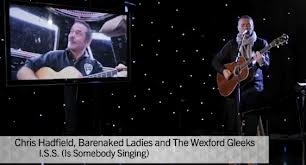
This particular cosmic Canadian collaboration between astronaut Chris Hadfield, the Barenaked Ladies’ Ed Robertson and Toronto’s Wexford Gleeks preforming I.S.S. (Is Someone Singing), positively exudes the sacred beauty of music’s power to open us to infinite possibility. I can’t help but wonder what new songs of praise might find their ways into our sanctuaries? 

Creator of the Cosmos, We Honour You

cosmic hands

A Eucharistic Prayer of the Cosmos for the 21st Century

For those of us who love liturgy, the reality that liturgical practices shape and form us in the faith is no surprise. So, is it any wonder that practices crafted by words and images offered by humans who understood creation as a three-tiered universe often fail those of us who are seeking to be shaped and formed for faith in the 21st century? In the past few decades our knowledge about creation has expanded at a staggering rate. With new understandings comes the need for offerings of new words and images to transform ancient practices from the confines of limited imaginations into practices that can nourish, ground and sustain us in faith.

In this video, Father Sean O’Laorie Ph.D. offers a Eucharistic Prayer based not on sin and redemption-through-crucifixion but on the reality that all creatures are the Word-of-God-made-flesh.