Recently, I have found myself cornered on several occasions by individuals who ask, somewhat accusingly, how and why I continue consider myself to be a Christian if I do not believe in Hell. On these occasions, I have assured my inquisitors that as someone who attempts to follow Jesus, I do indeed believe in “Hell” even if I do not believe in “hell“. The hell that I believe in is a condition here on earth. The Hell that I suspect my inquisitors wish me to affirm does not exist except in the corners of our imaginations. Nor is belief this mythical place called Hell a prerequisite of the faith. Christianity is not about being saved from eternal damnation to the fiery pits of Hell. Christianity is about following the teachings of Jesus with regard to peace through justice in order to create Heaven right here, right now.
Several years ago we at Holy Cross Lutheran began a speaker series entitled ReThinking Christianity and were privileged to host Quakers Philip Gulley and James Mulholland who co-authored “If God Is Love” and “If Grace Is True.” Phil has since gone on to write “If the Church Were Christian” and “The Evolution of Faith.” In addition to his theological works, Phil is a master story-teller whose Harmony series together with Porch Tales stories have cause some to dub him the Quaker Garrison Keillor. Phil has received two Emmy Awards for his Indiana PBS program.
My own ministry has been enhanced by Phil’s work and so it was a happy and timely coincidence that brought a video into my inbox which I had forgotten all about. Phil’s story about Heaven & Hell followed by an interview in which Phil shares his conviction that “Hell is killing us!” say it all so much better than I can. Phil’s gentle manner reveals a way forward for those who wish to leave Hell behind and move on toward building heaven on Earth. Phil’s latest publication “Living the Quaker Way: Timeless Wisdom for a Better Life Today” provides a window into spiritual practices to nourish those who seek to live in peace in a world where so many have chosen to perpetuate Hell on Earth. The book is an essential read for progressives who seek to embody a way of being that will contribute to creating peace. Enjoy!!!
For those of you preaching on the text from Genesis 32:3-31:
You may not be able to tell from looking at me. But let me assure you that you are looking at someone who used to be a champion wrestler. Believe it or not, my wrestling skills actually helped me rise to the level of a world champion wrestler. Well, perhaps I should qualify that statement. When I was an amateur wrestler, I was a world-class champion wrestler. But like so many athletes, when my status changed from amateur to professional, I lost my championship status and although I still qualify as a professional wrestler, and I like to see myself as a champion, I’m no longer what you would call world-class.
Like many professional wrestlers my career began when I was but a child. Growing up I had a very clear advantage as I developed my wrestling skills. You see having a brother who was just 18 months younger than me meant that I had ample opportunities to hone my wrestling skills. My brother and I were always at it. I’ve got to say that even though we shared the same weight class for most of our childhood, when it came to world class wrestling holds, I had him beat. I had this wicked arm-hold sleeper, and that together with my full Nelson followed by a knee-arm press, was guaranteed to have my brother screaming uncle and agreeing to be my obedient servant until in no time at all. For years I reigned as the champion of our little world! I was unbeatable. My brother didn’t stand a chance. My reign as world champion would have continued if it weren’t for the abrupt ending of my amateur status.
One morning when I was about 13 and my brother was 9 and a half, we were going at it, and to his credit my bother had me in an ingenious hold. Somehow, he’d managed to secure me with what we professional wrestlers call an arm bar. That’s where you’re opponent wrenches your arm behind your back and applies just enough pressure to cause pain, but not enough to break anything. But just when Alan was approaching the point of no return, I managed with a feat of superhuman strength to rise up, twist around and swing for all I was worth and connect with what I though must be my brothers chest. I expected that such a thrust would have released my arm from Alan’s iron grip. But he still had me. I was about to hit him again, when for no apparent reason Alan released me from his grip. In an instant I wiggled free, spun around and connected with what I figured would be a fatal blow. Just before my blow connected with it’s victim, I realized that I was doomed.
On this Canada Day, my wife and I begin our drive across this great land. Each time I make the trip from the east to the west, I am struck by the vastness of this land we call home. This year I take with me the deep impressions left upon my heart by our Synod’s Convention where we explored the Truth and Reconciliation Commission’s work to come to terms with our nation’s shameful history. I know that I shall travel this land with hope-filled eyes, trusting that the work we have begun will open us to the work of reconciliation with our First Nations sisters and brothers. As we celebrate this land, let us remember those whose welcome of our ancestors came at such great cost. Let us find ways to walk together into our future open to the possibilities of reconciliation. Happy Canada Day EVERYONE!
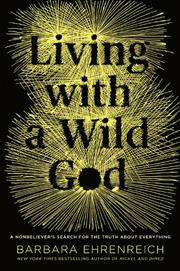
After listening to my sermon from this past Sunday, a blog follower recommended Barbara Ehrenreich’s latest book, Living with a Wild God. The suggestion that my tentative attempts to express my personal mystical experiences might be improved by reading Enrenreich’s engaging memoir, which chronicles her own encounters with the inexpressible, propelled me into a sleepless night of reading as I devoured Erenreich’s stellar work that recounts her epic quest to make sense out of experiences that are so often never spoken of.
Suggesting that I turn to Erenreich for enlightenment is like suggesting that I return to an wise, familiar friend. I first encountered Enrenreich’s thinking way back in the late seventies when I was growing into the radical feminist movement and “For Her Own Good” awakened me to Enrenreich’s genius and introduced me to a way of articulating my own innate suspicions of the advice that was coming my way. Enrenreich’s wit left me hoping that I might grow up to become a careful thinker who could use incisive humour to move mountains. Recently her exploration of the darker side of positive thinking caused me to cheer out loud as I turned page after page of “Smile or Die,” in which Enrenreich’s observations revealed “How Positive Thinking Fooled America and the World”
I never would have imagined that Enrenreich would pen a “spiritual” memoir that reveals her personal mystical experiences. The book chronicles the mature, dare I say curmudgeonly adult’s relationship with her teenage self. While Enrenreich herself is mortified by the word “spiritual” the epiphanies of her younger self reveal so very much about the human quest for meaning. Enrenreich enjoyed an earlier career as a molecular biologist and her rational approach toward the examination of her experiences is priceless! The book speaks of the unspeakable in ways that defy easy or esoteric answers. As always Enrenreich’s considerable writing skills provide a compelling window into the human condition as she attempts to make meaning out of her experiences while steadfastly refusing to glorify her epiphanies. Will I doubt that either theists or atheists will be pleased with the book, those of us who are willing to live in the questions can’t help but applaud Enenreich’s courage! Enjoy CBC’s Mary Hynes interview in which Enreneich exhibits her characteristic surliness that makes her writing so engaging and refreshing!
This Trinity Sunday sermon owes much to John Shelby Spong’s book a “New Christianity for a New World” You can listen to the sermon here then watch the tail end of the Wolf Blitzer interview mentioned in the sermon.
In the midst to the devastation and debris that was left of the town of More, Oklahoma, it was all to clear that the power of the tornado that whipped through such a heavily populated area had left behind the kind of destruction that tears not only the foundations of buildings but also of lives. In living rooms around the world millions of people watched as the news media descended on what was left in the wake of nature’s wrath. One particular news report is still reverberating around the Internet. I had just come from my office where I had spent the afternoon, reviewing the Doctrine of the Trinity in order to write this sermon. My wife Carol was in the kitchen cooking supper and I sat down to catch up on the news events of the day. I tuned into CNN and there amidst the rubble of More Oklahoma was the familiar face of Wolf Blitzer. It was the day after the tornado and the big name newscasters had been rushed to the scene in time to provide color-commentary on the evening news. Wolf was interviewing a young mother named Rebecca Vitsmun who was holding a squirming her 19 month old, toddler Anders in her arms. The young mother gave a blow-by-blow account of her narrow escape from. All afternoon Rebecca was paying attention to the weather reports. Rebecca was not from More, but rather from New Orleans and so she was not used to tornado warnings. She’d grown up with Hurricane warnings and so her first instinct was to evacuate the area. But her husband and neighbours had told her that the safest thing to do would be to take shelter. Six-teen minutes before the tornado struck the weather service issued a warning to take shelter. As Rebecca’s husband raced home from work, this young mother grabbed her laptop, a mattress and her toddler and took shelter in the bathtub. Huddled in the tub covered by a mattress she anxiously watched the reports on her laptop. Tracing the path of the tornado, Rebecca realized that the tornado was headed straight for her street. Rebecca’s New Orleans’ instinct kicked in and with her baby in her arms she jumped into her car and without taking time to put her baby in the car seat, she drove as fast as she could out on to the freeway where she pulled over and put Anders into his car seat and then drove some more. After the tornado, Rebecca reunited with her husband, and they headed back to what was left of their home. The bathtub was so full of debris that it was clear to them that Rebecca’s instincts had saved her life.
After telling her harrowing tale, Wolf Blitzer congratulated Rebecca for saving her baby’s life and then said to this young woman, “You gotta thank the Lord.” Rebecca was clearly taken aback by the comment and hesitated. I held my breath, annoyed as hell at Blitzer for asking such a stupid question. Rebecca’s hesitation gave Blitzer the opportunity to move on, but no he just had to have an answer, and so he persisted. “Do you thank the Lord?” Rebecca gave Blitzer the kind of look that says, “Are you kidding me?” Then Rebecca gave Blitzer an answer that he sure wasn’t expecting from an American from the heartland of Oklahoma; Rebecca smiled as she answered, “I’m actually an atheist.”
As Rebecca laughed awkwardly, I cheered so loudly that Carol came into the room to see what was going on. I was so proud of that young woman for not going along with Blitzer’s nonsense. Who in their right minds would believe in a Lord who would pluck one family out of a bathtub and let seven children die in an elementary school? I mean, if this Lord that Bilitzer is so willing to give credit too is such a great rescuer, why didn’t this Lord change the twister’s path and send it out over the cornfields where the only damage it could do would be to crops?
I know they say there are no atheists in fox-holes, but I for one think that that bathtub Rebecca was hunkered down in was indeed a fox-hole and I’m delighted that when all was said and done, she and little Anders were saved by her instinct for survival. As for this Lord of Blitzer’s, well, judging by the awkwardness that Blitzer exhibited after Rebecca stood her ground, I can only guess that this reporter misjudged the situation. Blitzer a city-slicker from New York, assumed that all the local yokels must be bible-thumping Christians, and he probably thought that his question would have received a mindless ra, ra, yeah God, kind of response from all Oklahomans. I trust he won’t make that mistake again. I kind of feel sorry for him, because after all it only took a few hours before some televangelist’s were suggesting that God did indeed send the tornado to teach people a lesson. According to some bible-thumpers, if people prayed hard enough they would have been saved. Some even went so far as to suggest that the tornado was punishment for gay marriage. Continue reading →
I don’t remember the first time I ever saw him. I was barely 18 months old when my brother Alan arrived. Despite the fact that he ruined my gig as an only child, Alan and I grew close over the years. We moved around a lot so we became one another’s best friends. But we went our separate ways when we became teenagers. When I tell the stories, I say that we went our separate ways because Alan became preoccupied with sports. I suspect that when Alan tells the stories, he says that we went our separate ways because I became preoccupied with the church. Either way you tell it, family and friends used to say that it was hard to believe that we grew up in the same household. Alan developed a reputation for being a bit of a redneck. I developed a reputation for being a bit of a radical. Alan drove four-wheel-drives and went hunting. I drove old beat up cars and lived at an ecumenical retreat centre. Alan learned a trade, settled down and raised a family. I travelled the world and didn’t get around to figuring out what I was going to be when I grew up, I went back to school at the age of 30.
Alan and I didn’t get around to understanding one another until we were in our mid-40’s. When I grew to appreciate the gentle man that he has become and Alan began to respect the person I’ve become. We still love to talk politics, but these days we tend to agree more than we disagree, I’m not sure who mellowed, the redneck or the radical. We don’t talk much about religion, though. Growing up, Alan would claim to be an atheist, and scoffed at my involvement with the church. These days, Alan, suggests he is an agnostic, and although he’s come to respect my life in the church, he still scoffs at the hypocrisy of the church.
I still remember the very first time that I saw Manjit. Her face was the colour of pure milk chocolate. Her jet-black hair was long and wavy. She sat at the very back of the classroom. When the teacher introduced me to Manjit, her toothy grin welcomed me. We were twelve years old. I was the new kid in town and Manjit was the only East Indian in the class. We were to share a double-desk for the remainder of the school year. I remember my first trip to Manjit’s home. A science project needed our attention. I can still smell the aroma of Manjit’s home where exotic curries released their pungency into the air. Over several meals at Manjit’s, I learned to like my food hot and spicy. Manjit’s mother would blend her own spices and she never forgot to send a package or two of her specially blended curries home with me.
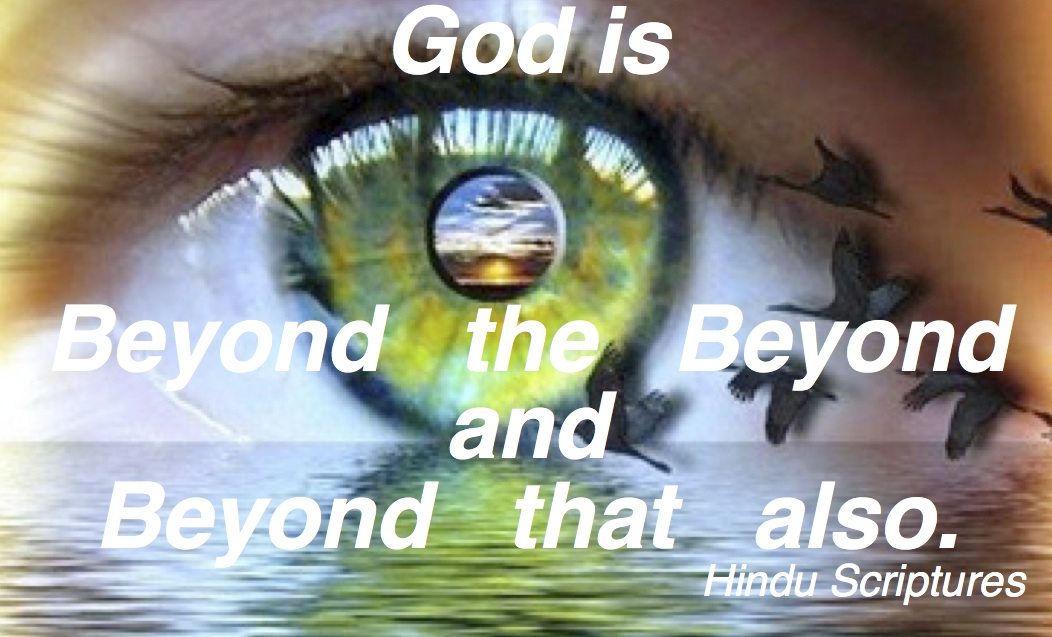
Manjit is a gentle soul who introduced me to the wonders of her faith. Manjit is a Hindu. Manjit never tried to encourage me to become a Hindu. Although over the years she would remind me of the Hindu saying that admonishes Hindus to be better Hindus, Muslims to be better Muslims, Jews to be better Jews, Buddhists to be better Buddhists, and Christians to be better Christians. Manjit grew into a kind and gentle woman. She works as a social worker in Vancouver’s rough east-end neighborhoods. The last time I saw Manjit she was patiently guiding the students of a confirmation class that I taught, around her Temple. Later that evening Manjit and I talked a long time about Jesus. Manjit told me that she’d always been fascinated with Jesus’ teachings and that she had no problem believing that Jesus is God, but then she explained that Hindus have a thousand god’s.
I can still remember the very first time that Henry walked into my office. A long black beard together with the yarmulke that he wore on his head gave Henry away. So, from the very beginning I knew that Henry was Jewish. But it took a few years of working together before I discovered that in addition to being a graphic artist, Henry is also a rabbi. Henry became a dear friend of mine and over the years he shared so much of his wisdom with me. Many a night Henry and I sat up to the wee hours discussing the Scriptures. Henry even arranged for me to study Hebrew at his Yeshiva. I learned a great deal from Henry. We often talked about Jesus. We rarely agreed about Jesus, but we often talked about him.
Alan, Manjit and Henry, some would call them an unholy Trinity. But to me they are, each of them, sacred. Trinity Sunday is my least favorite Sunday of the Church year. It’s the only festival of the church year that is designed to celebrate not God, nor Jesus, not even the Holy Spirit, but rather a doctrine of the church. The notion that God is One in Three; a doctrine that was created by theologians to explain the inexpressible, a doctrine the church “fathers” began to cast in stone in the words of the Apostle’s, Nicene and Athanasian Creeds. Three Creeds that make up an unholy trinity in and of themselves. Three Creeds that the Lutheran Church continues to hold as articles of the faith. Three Creeds that continue to hold sway in our church.Three Creeds that in my humble opinion make up an unholy trinity. Three Creeds upon which the doctrine of the Trinity rests.Continue reading →
Tutu: “Isn’t it wonderful that we have this Doctrine of the Trinity that speaks of God as a fellowship, a community. And so, you have this wonderful image of the community that is God, the Trinity. So that, all eternity the One who is called Father pours out all of God’s being into the Son….and the Son returning from all eternity this love and you have this movement between the two that is so tremendous that it is God the Holy Spirit.”
Desmond Tutu received the Templeton Prize in recognition of his lifelong work in advancing spiritual principles of love and forgiveness. This video was made to commemorate the honour.
This Sunday is Trinity Sunday. In anticipation, preachers all over the world are dutifully pondering the Doctrine of the Trinity desperately searching for something to say to encourage their congregations.
Preachers will trot out tired old clichés conjuring up images of triangles, shamrocks around, or point to H20’s ability to appear as water, ice, or steam while still maintaining it’s unified essence. Or have you heard the one about the 3 blind men and the elephant in the room. That old chestnut is trotted out by many a desperate preacher struggling to put flesh on the doctrine of the trinity. But for the life of me I can’t see how 1 blind man touching the elephant’s trunk and presuming that there is a tree in the room, while a second blind man catching wind of the elephant’s ear is convinced that there is some sort of giant fan in the room, while a third man grabs hold of the tail and is sure that he has hold of a rope, helps you to conclude that just because they’re all sharing a room with an elephant you can now confess that God is indeed Father, Son, and Holy Spirit, one God, forever and ever amen. But all sorts of mental gymnastics will be exercised in the vain attempt to make some sort of sense of the doctrine of the Trinity!
On Trinity Sundays, mindful of the fact that trying to explain the doctrine of the Trinity usually leads to heresy: dusty theological books that have not seen the light of day since last Trinity Sunday have been poured over to ensure that the formula’s learned in seminary are repeated correctly and heresy scrupulously avoided. The imaginative among us have attempted to baffle our congregations with our theological intellect, the pragmatic among us have attempted to baffle our congregations with something akin to BS, while the desperate among us have simply tried to survive the Trinity Sunday hoping against hope that no one will notice that we haven’t a clue what we’re talking about.
Perhaps only dear old Dr. Martin Luther possessed the theological integrity sufficient to save a preacher from the perils of preaching on Trinity Sunday. So, before I launch, forth, let me remind you what the instigator of the Reformation had to say on the subject of the Trinity. Martin Luther warned that: “To deny the Trinity is to risk our salvation; to try and explain the Trinity is to risk our sanity.”
I will confess that Martin Luther had much more at stake, literally at stake, than I do, because the truth is that for centuries the punishment for heresy would have found many an ancient preacher burned at the stake. But while the death penalty for heresy has been lifted, the risk to one’s sanity remains.
Now, I will confess that when faced with a particularly difficult theological knot, I prefer to begin by quoting Jesus and not Luther, but alas Jesus remained silent on the issue of the Trinity. So, I did try to find something helpful in the words of the Apostle Paul. But alas, without some really amazing theological gymnastics that are beyond my abilities to comprehend, even the Apostle Paul remains mute on the issue of the Trinity. So keeping in mind Dr. Luther’s dire warning that to, “To deny the Trinity is to risk our salvation; but to try and explain the Trinity is to risk our sanity.”
Let me remind you that the Trinitarian formula appears in Scripture only once, in Matthew 28, during what is called the Great Commission, when Jesus commands the disciples to go forth, baptizing in the name of the Father, and of the Son, and of the Holy Spirit. But the doctrine of the Trinity does not appear in the Bible
– The doctrine of the trinity, as we know it, was first formulated in the fourth century, by a couple of guys named Gregory and a woman called Marcrina.
– The doctrine of the Trinity was then developed over hundreds of years
– The doctrine of the Trinity was at the heart of several wars
– Thousands of Christians were killed because they came down on the loosing side of arguments over the doctrine of the Trinity
– No one has ever been able to adequately explain the Trinity
– Every explanation of the Trinity that I have ever come across includes some form of heresy
By the way, just so we’re clear, I rummaged through some of my previous sermons on the doctrine of the Trinity and I must confess that if this were the twelfth century, an angry mob would be stoking up the fires beneath my feet because based on things I have proclaimed on various Trinity Sundays a charge of Modalism could very successfully be laid against me, as could a charge of Sabellianism. You might be interested to know, that more traditional preachers than I, will no doubt preach sermons this Sunday which will prove them guilty of Arianism or at the very least Subordinationism. All of these heresies in a bygone age would have left us with a severe shortage of clergy in the church, as many of us would be smoldering at the stake for our crimes. Deciding who is right and who is wrong, who is in and who is out is a deadly preoccupation of humanity, a preoccupation that the church has not been able to escape.Continue reading →
May 31st is the day the Church commemorates “The Visitation” the story of Mary’s visit to Elizabeth as it is recorded in the Gospel According to Luke 1:39-56. Since reading Jane Schalberg’s “The Illegitimacy of Jesus”, I can’t help but wonder if Mary’s visited her cousin Elizabeth or escaped to her cousin Elizabeth seeking protection for the crime of being raped in a culture that all too often blamed the victim. Historians estimate that Mary may have been all of twelve years old when she became pregnant. There is ample evidence in the New Testament accounts of Mary’s story that suggest that she may indeed have been raped. So rather than sweep the possibility under the rug, on this the Feast of the Visitation, I’m reposting a sermon I preached a few years ago during Advent. I do so because women young and old continue to be raped and to this day, are forced to flee from the accusations and persecutions of cultures that continue to blame the victim. What follows is a written approximation of the sermon which in addition to Jane Schalberg is also indebted to John Shelby Spong’s “Born of a Woman” and “Jesus for the Non Religious” along with John Dominic Crossan and Marcus Borg’s “The First Christmas”.
Sadly, one doesn’t have to travel too far into the past to arrive at the time when women’s voices were not heard. Indeed, in the Lutheran church, it was only a few short decades ago. For most of us that time is within our own lifetime. For generations, men have told our sacred stories. Men have decided which stories made it into the canon of Sacred Scriptures. Men have interpreted the stories that were allowed to be told. Men have translated, taught, and commented upon those stories from pulpits, in universities, in seminaries, in commentaries and in the public square. Continue reading →
“I”ve learned that people will forget what you said, people will forget what you did, but people will never forget how you made them feel.” Yes and no. We will not forget what you said and I will never forget how you made me feel!
In a world where rape remains an weapon of war as whole populations are transformed into refugees, in a nation where the number of aboriginal women murdered soars above a thousand, in communities where mothers continue to struggle to feed, cloth, and house their children, there is no time for sappy sentiments on the day established to call for peace. Peace can only be achieved through justice and justice for mothers requires action by women and men everywhere.
Preachers have several choices when it comes to proclaiming the Gospel on Mothers’ Day. We can of course ignore the fact that it is Mothers’ Day. After all Mothers’ Day does not appear on the Church calendar of feasts and commemorations. However, Mothers’ Day is reported to be the third highest attendance day; out numbered only by Easter and Christmas! I suspect that a great many offspring choose the day to placate their mothers. So ignoring the event seems like adding insult to injury to those guilt-ridden offspring who hope that their efforts won’t go unnoticed. Sadly, the presence of the Christmas and Easter crowd, all too often tempts the preacher to resort to sentimentality in order to entertain the infrequent worshippers. The history of the creation of Mothers’ Day ought to compel preachers to resist temptation and find the courage not to compromise.
Most of us think of Mothers’ Day as a kind of conventional holiday that celebrates traditional family values; the kind of traditional values that encourage women who are mothers to keep on keeping on. But celebrating the traditional motherhood is definitely not what Mothers’ Day was originally intended for. The very first Mothers’ Day was intended to be a celebration not just of mothers, but rather it was designed to be a call to action by all women.
One of the first founders of Mother’s Day was Anna Jarvis back in 1858. Anna Jarvis gathered women of the Appalachian mountains together in what she called mother’s day work clubs. Where women worked together to eliminate poverty. When the Civil War came about, the mother’s day work clubs created medical camps. They were places of nonviolence for men from both sides who were wounded in the war.
At the end of the Civil War, Anna Jarvis organized the Mother’s Day Friendship Day, which was a call for radical peace. Anna Jarvis brought together the leaders from the north and the south for a time of reconciliation. Mother’s Day was originally about reconciliation and peace.
Then along came a woman named, Julia Ward Howe who wrote “The Battle Hymn of the Republic”. Julia Ward Howe called for women to protest the cruelties of war everywhere and to gather together to call for peace. She called for a national day of peace for all women. She issued women’s’ declaration, and from the streets women shouted :
“Arise then women of this day, arise all women who have hearts, say firmly our husbands shall not come to us reeking with the carnage for caresses and applause. Arise women of peace.”
Anna Jarvis’ daughter also named Anna Jarvis approached President Wilson and petitioned for a national Mother’s Day. It was Woodrow Wilson who called for the second Sunday of May to be the national Mother’s Day. Shortly thereafter, n anti-suffragette movement spoke out against the women who were calling for peace. So instead of being a day for women who were active and present in the world, it became a day to celebrate mothers who stayed at home with the children.
Anna Jarvis the founder of Mother’s Day was so angry with Woodrow Wilson that she filed a law suit, that petitioned the courts to put a stop to Mother’s Day because as the court papers insisted, instead of it being run by women, suddenly Mother’s Day was being run by men in an effort to keep them in the house barefoot and pregnant.
Sadly, the world was not ready for such strong willed women to shout out loud. And so, Anna Jarvis was arrested at a Mother’s Day celebration and she spent the rest of her life in a sanatorium?
On mothers’ day we would all do well to remember Julia Ward Howe’s Mothers’ Day Proclamation. Dated 1870 but sadly it is still so very relevant today:
“Arise, then, women of this day! Arise, all women who have hearts, whether your baptism be that of water or tears!
Say firmly: “We will not have great questions decided by irrelevant agencies. Our husbands shall not come to us, reeking with carnage, for caresses and applause. Our sons shall not be taken from us to unlearn all that we have taught them of charity, mercy and patience. We women of one country will be too tender of those of another to allow our sons to be trained to injure theirs.”
From the bosom of the devastated earth, a voice goes up with our own. It says, “Disarm, Disarm!” The sword of murder is not the balance of justice. Blood not wipe out dishonor, nor violence indicate possession. As men have often forsaken the plow and the anvil at the summons of war, let women now leave all that may be left of home for a great and earnest day of counsel. Let them meet first, as women, to bewail & commemorate the dead. Let them solemnly take counsel with each other as to the means whereby the great human family can live in peace, each bearing after his own time the sacred impress, not of Caesars but of God.
In the name of womanhood and of humanity, I earnestly ask that a general congress of women without limit of nationality may be appointed and held at some place deemed most convenient and at the earliest period consistent with its objects, to promote the alliance of the different nationalities, the amicable settlement of international questions, the great and general interests of peace.”
To those of you who continue to point out that the Mothers’ Day apostrophe belongs between the r and the s, all I can say is: “Move it!” Until we can move beyond thoughts about our very own mother to the realization that mothers everywhere are worthy of celebration the vision of peace that this day is designed to call us all toward will remain but a dream. Let this day be about mothers everywhere!!! Moving the apostrophe is but a small reminder that the holiday does not belong to any individual mother but to mothers every where!!! Let peace break out this Mothers’ Day!!!
For additional resources for the celebration of MOTHERS’ DAY click here to listen to a MOTHERS’ DAY sermon click here
Richard Holloway, the former Primate of the Scottish Episcopal Church, interprets the story of the resurrection not as an historical tale, but as our own story. Holloway has written of his longing for a humbled and broken church. His own humility and brokenness shines through this video as Holloway embodies his own longing.
This Sunday the gospel text invites us to travel down our own road to Emmaus. Stephane Brozek Cordier is a poet whose words have the power to open us to our deepest wonderings as we wander down that road.
John Philip Newell is a poet, author, and peacemaker. He is the co-founder of Salva Terra: A Vision Towards Earth’s Healing. Formerly Warden of Iona Abbey in the Western Isles of Scotland, he is currently Companion Theologian for the American Spirituality Center of Casa del Sol at Ghost Ranch in the high desert of New Mexico. For more about Newell follow this link Newell’s progressive insights are permeated by his deep understanding of Celtic spirituality. It is no surprise then that Newell calls for a renewed understanding of the sacredness of matter.
In response to the current crisis of institutional Christianity, Newell sees three responses: denial of the crisis, shoring up of the old, or to ask “What is it that is trying to be born? What is it that is trying to emerge from the human soul and how can we within the Christian household be part of leading that and serving it with humility?” Newell’s gentle invitation is challenging the church to serve the deep knowing that is in the hearts of people everywhere and to empower the deep knowing of the sacredness of the knowings that come up from the deepness of our being which is of God.
It happens every year as Doubting Thomas makes his Easter appearance. It’s a kind of resurrection of a glimmer of the faith that I long to recall in my flesh. I harken back to the time when I could embrace those wounds as proof. Oh how that faith comforted me. Resurrecting the memory of Thomas, who for years functioned as a trusted hero in my scant faith, now sends me into the dream of belief as the answer in and of itself; a kind of innocence that once gone is never forgotten. My nostalgia for my faith in belief will pass. But for just a moment or two, I pause to embrace the wounds, waiting for my doubts to open me to the evolving reality of now. Jump!!!
Now that Holy Week has come and gone and we are shouting our Alleluias, perhaps we can begin to turn our minds to the expectation of some sacred downtime. Barbara Brown Taylor is a preacher from whom I have learned so very much. I am currently enjoying the luxury of enjoying her latest book for the first time. Taylor’s earlier books are like old friends that I return to often. So her latest book, Learning to Walk in the Dark holds all the promise of a new treasured friendship. While searching for a video to introduce her new book, I came upon this video, recorded in the spring of 2009 and only recently posted online, in which Taylor offers a welcome reminder of the contours of downtime. Looking forward to a few busy weeks, and longing for those lazy, hazy days of summer, Taylor has reminded me to stop and luxuriate in the splendour of springtime. So, rather than speed through Learning to Walk in the Dark, I shall take my time and write about it when we’ve become better friends. In the
meantime enjoy Sacred Downtime…..

 Recently, I have found myself cornered on several occasions by individuals who ask, somewhat accusingly, how and why I continue consider myself to be a Christian if I do not believe in Hell. On these occasions, I have assured my inquisitors that as someone who attempts to follow Jesus, I do indeed believe in “Hell” even if I do not believe in “hell“. The hell that I believe in is a condition here on earth. The Hell that I suspect my inquisitors wish me to affirm does not exist except in the corners of our imaginations. Nor is belief this mythical place called Hell a prerequisite of the faith. Christianity is not about being saved from eternal damnation to the fiery pits of Hell. Christianity is about following the teachings of Jesus with regard to peace through justice in order to create Heaven right here, right now.











 pastordawn