While We Wait for Resurrection: a reminder from John Shelby Spong
Reply

I have been asked to repost this particular post. It first appeared during my first months of blogging and I am often asked about this post. Its contents continue to invoke the wrath of some and the appreciation of many. I offer it here, mindful that in the intervening two years since I first posted it, I have had the opportunity to explore progressive and evolutionary theologies which have nourished me in my efforts to proclaim the Easter story in ways that move beyond the tired debate over the physical resuscitation of a corpse toward an understanding of resurrection that permeates my daily quest to know the unknowable ONE who lies at the heart of reality.

Peter Callesen’s Papercut Resurrection
Blogging is sometimes a very strange medium and I must say that I am overwhelmed by the responses to my recent posts about resurrection. While many have emailed or posted their ardent “amens” others have been scathing and some hostile to my remarks. I am grateful to everyone who has responded. All of your comments help me as I continue to ponder the theological and practical implications of the Easter story. For those of you who have suggested that I have no business calling myself a Christian or a pastor and have suggested that I ought to consider leaving the church, I offer the following.
A while back, I got together with clergy colleagues to talk about the challenges of preaching during Holy Week. When the subject of the crucifixion and the resurrection came up, the conversation became very lively as the traditionalists challenged the progressives. Toward the end of our conversation, it became clear that because I was unwilling to concede to the notion that Jesus corpse was physically resuscitated; I stood accused of having denied the resurrection.
Some colleagues rose to my defense and insisted that I wasn’t saying anything different than what we all learned in seminary. But they also insisted that most lay-people simply don’t want to hear it. So, I asked them if they were going to preach about what they had learned in seminary and beyond and the general consensus was that there are too many guests on Easter Sunday to tackle theology.
Some said, they were simply too afraid of the fundamentalists in their congregations to ever even attempt to preach what they knew. A few confessed that they were working up to it; but not on Easter Sunday.
The traditionalists in the group were disgusted. One colleague went so far as to insist that I had no business being in the church because my very presence puts the beliefs of the faithful at risk. He wondered aloud, “Why do you stay in the church if you don’t believe? If the church’s theology no longer works for you, why don’t you just leave?” Continue reading
A Good Friday Sermon preached at Holy Cross Lutheran Church in 2012
 The memory of it still haunts me to this day. I was 18 years old. Some friends of mine from church convinced me to go to a big youth gathering. I don’t remember who sponsored the gathering, I do remember that most of the Lutheran youth groups in the greater Vancouver area were in attendance and various Lutheran pastors were involved in the leadership. At some point near the beginning of the event we were each given a small nail, divided into groups and asked to line up behind one of the three wooden crosses that were laying in the hall. We were then given our instructions. We were about to hear a dramatic reading of the Gospel According to John’s account of the crucifixion. When the reading was over we would be invited to proceed to the cross nearest us, knell down, take a hammer, and drive our nail into the cross. With each blow upon the nail we were asked to remember our own responsibility for the death of Jesus. We were asked to remember that it was we who had crucified Jesus, for we were the guilty sinners for whom Jesus died. It was a powerful, gut wrenching experience that still haunts me to this day.
I wasn’t the only young person who wept buckets that day. I immersed myself into the ritual act as I recounted inwardly the list of my own sins. Together with my friends, we left that hall believing that Jesus died because of us. We left judged, convicted, guilty, tormented, anguished, and full of hope, for we knew that Jesus had died to save us from our sinfulness. Like so many who have gone before us and like so many who will gather on this Good Friday, we left that hall believing that God sent Jesus to die for us; to pay the price for our sin. Continue reading

Reposted today as the Church commemorates the life and witness of Dietrich Bonhoeffer.
When I was just a teenager, I was introduced to the writings of Dietrich Bonhoeffer by a wise Lutheran Pastor. I remember devouring Bonhoeffer’s “Life Together” and “Letters and Papers from Prison”. To this day, I credit Bonhoeffer for making me a Lutheran. While a great deal of water has flowed under a good many bridges since I was first enamoured of Lutheran theology, to this day I am grateful to that wise old Lutheran pastor who gave me my first taste of Bonhoeffer. Of late, there has been much ado about a little phrase that has been extracted from Bonhoeffer’s work: “religionless Christianity”.
(click here for full quotations from Letter and Papers from Prison)
“It is not for us to prophecy the day when men will once more ask God that the world be changed and renewed. But when that day arrives there will be a new language, perhaps quite non-religious. But liberating and redeeming as was Jesus language. It’ll shock people. It’ll shock them by its power. It’ll be the language of a new truth proclaiming God’s peace with men.” Bonhoeffer: Agent of Grace
Tragically, Bonhoeffer was executed before he had the opportunity to expand on his idea of Christianity beyond religion. The phrase “religionless Christianity” has intrigued agnostics, atheists, humanists, liberal christians and progressive christians. Eric Metaxas, author of “Bonhoeffer” dismisses the idea that Bonhoeffer was anything but a serious, orthodox Lutheran pastor right up to the end.
Despite the historical evidence of Bonhoeffer’s religious orthodoxy, the notion of religionless Christianity will not die. Bishop John Shelby Spong is among those who have tried to build on Bonhoeffer’s phrase and his book “Jesus for the Non Religious” has certainly moved the conversation along among progressive christians.
The dream of religionless christianity has moved well beyond Bonhoeffer as twenty-first century christians wrestle with archaic images of God and move beyond the religious trappings of traditional christianity. The notion of moving beyond religion has always intrigued me. Years ago, while studying Hinduism my professor offered a definition of God from one of the Vedas: “God is beyond the beyond, and beyond that also”. As I continue to explore the life and teachings of the man none as Jesus of Nazareth it becomes more and more evident that such a definition is compatible with his portrait of God. Jesus of Nazareth attempted to move his co-religionists beyond their religious images of God. What might our images of God become if we move beyond the idols offered to us by the religion of Christianity? Might we move toward images of God that more closely resemble the teachings of Jesus by moving toward a religionless christianity?
Sometimes we can better reflect upon our own tradition from the perspective of another tradition. In the video below, twentieth century philosopher and theologian Alan Watts explores the concept of the Religion of No Religion.
“Beyond the Beyond and Beyond that also.” Letting go of our images is the gift of faith that moves us beyond religion. I can hear Jesus call us to let go!
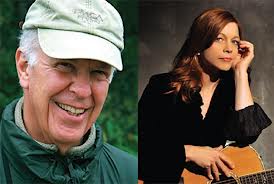 I have been a fan of Carrie Newcomer for years – her gentle way of opening me to wonder both sooths and enlightens. I can still remember discovering Parker J. Palmer when I was in seminary and having many of my assumptions about teaching challenged. So, discovering their collaboration was pure joy!!! I’ve been listening to this piece over and over again. Enjoy!!!
 “We know what we are. We know not what we may be.” William Shakespeare (1564-1618) Jason Silva is a performance philosopher and filmmaker whose work stimulates and challenges in the blink of an eye. Using the medium of short-film Silva posits questions and ideas that drive his viewers to the brink of possibility. Our quest to understand what it means to be human may be an eternal search, but Silva invites us on a detour of exploration which promises to stretch our understanding beyond the safety of the known toward the parameters of our reach and then back again to the deep limits of ourselves. In two short minutes Silva caused me to wonder: If we are to become the chief agents of of human evolution, will religion play a role? and, Will Christianity be able to re-articulate its narrative in time to be relevant to the discussion?.
 Dave Van Ronk, aka The Mayor of MacDougal Street, haunted my teen-age years with folk songs that still inhabit my soul. Some say The Mayor is the inspiration behind the movie Inside Llweyn Davis. But to me the growly voiced Mayor remains a poet who inspired me to put pen to paper. As I prepare to tickle my keyboard to create a sermon about John 4:1-42, his voice echo’s in my soul. van Ronk died in 2002 and imagining his journey “on down to Galilee, on that promenade in green” soothes the ache of his absence even as it inspires me to speculate on the rocky road the Samaritan woman travelled to that ancient well. “uka duke soda cracker!”
 Followers of this blog know that John O’Donohue is one of my favourite sages. I am indebted to a follower of the blog for sending me this podcast of Krista Tripett’s interview of John O’Donohue recorded shortly before his death in 2008. O’Donohue’s words continue to open my soul.
 I have a condition common among members of the clergy this week: black thumb. It lingers long after Wednesday’s ashes have been smeared on the heads of our parishioners. Thoughts of mortality and eternity haunt the pores beneath my thumbnail. The knowledge that we are dust and to dust we shall return continues to delight me.
 So many of our Lenten practices revolve around theories of atonement that cast the HOLY ONE as a participant in a grand bargain that saw Jesus of Nazareth die as a sacrifice for sin. For those of us who have left behind theories of atonement that set Jesus up as payment for our sin, Lent can seem a very lonely place. While many churches busy themselves with rituals that encourage repentance from the perspective of confessing our unworthiness to a grand-inquistor deity, it is tempting to give up the season of Lent all together. But with the explosion of information about the nature, beauty and complexity of the cosmos, perhaps we can achieve the humility that the ritual of confession offers in ways that do not require us to adopt the attitude that human’s are unworthy creatures in need of a god who would demand satisfaction at the expense of a blood sacrifice.
Each time I look up into a starlit sky I am overcome with a sense of awe and wonder that is in and of itself a prayer that inspires humility in me. A sense of awe and wonder at that which is beyond ourselves is the beginning of a prayer that always leads me to a sense of ONENESS with all that IS.
This morning, my Lenten devotion came to me in the form of this splendid video The Overview, which describes the awe and wonder of those who have had the privilege of looking at the earth from the perspective of space. They describe their awe and wonder, their prayer if you will, as the “overview effect”. The overview effect serves to connect these space travellers to the earth itself and moves them to the kind of humility that helps me to realize that awe and wonder can serve as nourishment for my own Lenten journey.
As we gaze in awe at our marvellous planet perhaps we can be moved to tread more lightly upon her. Perhaps awestruck by the beauty and wonder of creation, we can look to all the inhabitants of the earth and see that they too are fearfully and wonderfully made. I trust that a humility based not on a belief that we are wicked, unworthy creatures, but rather on a experience of awe and wonder, will lead us on a Lenten journey to a place where we will have the courage to gaze upon the cross and see beyond the violence to the hope of resurrection.

Little Crystal was only two and a half years old when she got hopelessly stuck. And when she got stuck she did what all small children do, when they have gotten themselves into a situation that the can’t get out of, little Crystal cried for help. She went into her mother’s study, holding in one hand a family treasure and her other hand couldn’t be seen. Crystal cried out, “Mommy I’m stuck”. Her unseen hand was stuck inside her great-grandmother’s vase. The precious vase had been handed down from her great-grandmother to her grandmother, to her mother. Crystal had always been told that one day the magnificent vase would be hers.
Crystal’s mother tried to move quickly without panicking. She scooped the vase and her little girl up into her arms and carried them to the kitchen sink. She used warm soapy water to try to loosen the toddler’s hand, which was stuck all right. When soap didn’t work she reached for the butter. While greasing her child’s wrist like a cake pan, she asked the obvious “mother question.” “How in the world did you do this, child?” Crystal carefully explained that she had dropped candy down into the vase to see if she could still see it when it was at the very bottom. But she couldn’t see it, so she reached in for her candy and that’s when she got stuck and she couldn’t get her hand back out.
Well, as time passed, the situation became more and more serious. Crystal’s mother called for re-enforcements. She phoned her own mother and told her to get there as fast as she could. A neighbour suggested Vaseline. The apartment manager got out some WD40. Still no luck. It began to seem like the only way to get Crystal’s hand out was to break the family heirloom.
When Grandma finally arrived, both Crystal and her mother were almost hysterical. They were both more than a little relieved to have Grandma’s calming presence. Grandma sat little Crystal on her knee.
Crystal was very upset and still very stuck. Grandma took a good look at the vase that used to sit on her mother’s kitchen table all those years ago. She looked at the miserable look on her grand-daughter’s face, and she said, “Crystal, sweetheart. Your mommy told me that you reached into the vase for candy. Is that right?”
Crystal was a little breathless from all the crying she had been doing and all she could manage was a whimpered, “Mmm hummm.” “Honey, tell grandma the truth now. Do you still have a hold of that candy?” “Mmm humm”. Crystal sobbed. Then Grandma rubbed little Crystal’s back, held her close and gentle, but firmly said: “Let it go, child. Let it go.” Sure enough, the vase slipped off as smooth as silk. (I have searched for the source of this story, without success. I first heard it at a retreat on the West Coast a lifetime ago)
In this fast paced world of ours, I often find myself in little Crystal’s predicament. Surrounded by a treasured family heirloom, desperately clinging to a treasure. My predicament often makes it difficult for me to appreciate the beauty of the heirloom. Letting go isn’t as simple as it sounds. But sometimes letting go is the only way to preserve the integrity of the heirloom. When I think about the church’s practice of public confession, I can see how desperately I have been holding on to candies that no longer satisfy my need for forgiveness. Continue reading
 Shrove-Tuesday, at whose entrance in the morning all the whole kingdom is inquiet, but by that time the clocke strikes eleven, which (by the help of a knavish sexton) is commonly before nine, then there is a bell rung, cal’d the Pancake-bell, the sound whereof makes thousands of people distracted, and forgetful either of manners or humanitie; then there is a thing called wheaten floure, which the cookes do mingle with water, eggs, spice, and other tragical, magical inchantments, and then they put it by little and little into a frying pan of boiling suet, where it makes a confused dismal hissing, (like the Lernean Snakes in the reeds of Acheron, Stix, or Phlegeton) until at last, by the skill of the Cooke, it is transformed into the forme of a Flip-Jack, cal’d a Pancake, which ominous incantation the ignorant people doe devoure very greedily. John Taylor, English poet (August 24, 1580 – 1654)
Shrove comes from the old English word shrive = to shrive is to be absolved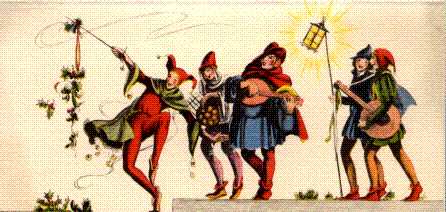 following confession. Those who have received absolution are the shriven. The priest who dose the shriving is the shriver. The shriven would feast using up all the foods that were avoided during Lent.
The practice of feasting is not complete without revelry and merrymaking. Many of the rules of acceptable behaviour are set aside so as to ensure that a “wild time” is had by all:
Pagan Roots: the grand battle between Winter and Spring
Did you know?
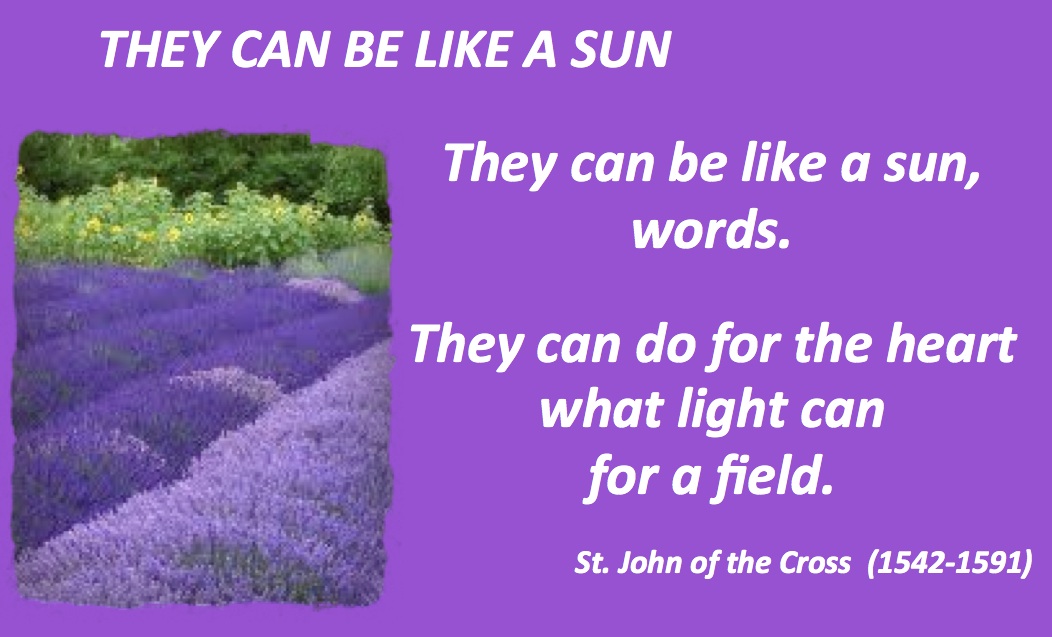 In the midst of this brutally cold winter I can find no signs that spring is around the corner. To say that it is cold outside is an understatement of epic proportions. Regardless of the challenges of this wild winter, I cannot simply retreat to the warmth of the fireside. I have places to go and people to see. By the time the driveway is shovelled, the ice is scraped, the windshield juice is topped up in my car and all the extra time it takes to navigate the roads in this weather, I can barely complete the regular tasks this busy modern life of ours demands, let alone feel guilty because I’m not adopting some contemplative spiritual exercises that harken back to a simpler time! I heard someone say, “If you are currently not experiencing any stress in your life, you should immediately lie down because it appears that you may be dead.” So, please don’t ask me to take on any Lenten disciplines!
I have also heard it said, that in Canada the most common response to the question “How are you doing?” is the word “Busy!”. Canadians and I suspect Americans, Europeans, and most inhabitants of the so-called First World, seem to feel the need to justify our existance by assuring others that we are leading busy lives. While I am absolutely convinced that lives lived in the twenty-first century are busier than the lives of our ancestors, I’m not so sure that being busy is something we ought to be proud of.
Growing up, I remember all sorts of predictions about how life in our immediate future would be filled with so much leisure time as a direct result of the technology that would be at our fingertips. But as technology advances, our ability to work wherever and whenever the need arises has severely curtailed our leisure time. Our lives are busy and we have forgotten what it means to be human beings because most of us have become human doers. We have forgotten how to simply be.
I find it reassuring, comforting even, that our ancestors understood our Creator as YAHWEH, which translated can be understood as “I AM WHO I AM or I SHALL BE WHO I SHALL BE. That the name of God should be understood as the verb “to be” helps me to understand myself as one who is created in the image of the great I AM and not the great I DO. I am a human being not a human doer! What I need from a season like Lent is not a prescription for more things to do. But rather, the encouragement to simply be.
Might I suggest that we can begin this encouragement to simply be by simply greeting people with a simple word of peace. If such a greeting seems awkward to you then perhaps simply asking people how they “are” rather than how they are “doing” will suffice. Such a subtle change may not be enough for some people to refrain from telling you what or how they are “doing” and you may find them insisting that they are indeed “busy”. But a little gentle persistence may enable some to respond about their very being. Reminding one another that we are beings and not just doers might lead us toward some peace. Shalom, As-salam alaykum, Peace dear beings, Peace…..
Over the years, I have learn so much from Parker Palmer. In this video Palmer warns of the perils of using effectiveness as our only measure and insists that by asking ourselves the question: “Am I being faithful to the opportunities and talents we have been given?” allows us to see beyond our obsession with numbers, results and immediate effects so that we can be about the work of love, justice, and peace.
[vimeo 35028736 w=600&h=338]
 “Remember that you are dust and to dust you shall return.” are the words that are spoken during Ash Wednesday’s Imposition of Ashes. I have always thought of the dust of the earth, funerals, and death during this age-old ritual. But last year during our worship, we added a new reading to our Ash Wednesday Liturgy. This new creation story embraces a perspective on reality that is all together different than that of our ancestors in the faith. This new perspective turned my thoughts toward life and eternity.
More and more I have come to believe that unless our worship together can embrace reality as it is viewed in the 21st century, we will fail in our efforts to make worship relevant in the 21st century.
The Star Within
a creation story by Dr. Paula Lehman & Rev. Sarah Griffith
The sun is rising and its rays shine through my office window welcoming me into this new day. I reflect those rays through squinting eyes with a heart filled with gratitude and expectation: a good day.
 I have often wondered why hymnody prevails on Sundays in most Christian sanctuaries. Perhaps its because the alternatives on offer with their praise bandy shallowness insult the intelligence of those who have made the effort to gather together on the off chance of an encounter with the Divine. Radical theologian, Peter Rollins has suggested that worship leaders ought to consider inviting musicians who sing the blues into our churches to facilitate worship that includes all of life. When I consider the plethora of musical styles that could be employed in worship to open us to the breadth and depth of our abundant lives, I wonder if those of us employed in the art of worship planning need to look beyond our hymnals and song sheets to discover the endless possibilities that might facilitate worship that opens us to the deepest mysteries of this life.
As a teaser, I offer two videos that interpret the work of English folk rock musician, Keaton Henson’s piece “You”. Both interpretations, the first by the poet himself, the second by the brilliant actor Derek Jacobi, function as both prayer and praise. Can I get an “Amen”???
“Everything a person perceives, has already happened.” All we have is the past!
When I was just a little girl, my father introduced me to the “champion of the working-class.” It was on Dad’s high-fi that I first heard Pete Seeger herald the unions while protesting the abuses of the bosses. As a rebellious teenager, from a tiny portable reel-to-reel tape machine, I listened and sang along to Seeger, the anti-war hero, as my own politics were being formed. Later in my adolescence, on the streets, protesting the testing of nuclear bombs off the coast of British Columbia, we sang Pete’s anti-nuclear songs. As a young woman protesting the military forays into South American countries, Seeger’s musical cries for justice inspired us. When the AIDs crisis began to take friends from us Pete’s songs helped us to demand research dollars and program funding. For a long time now, Pete’s anguished cries on behalf of this fragile planet have not only inspired us to speak out on behalf of the environment, they have motivated us to change our ways and try to touch the earth lightly.
Pete Seeger has been described as “America’s conscience”, but I suspect that he is the conscience of all the have-nations of the world. I certainly know that my own conscience was aided in its development by the life and witness of Pete Seeger. I am not blessed with a talent for singing. But, Seeger’s music encouraged me to sing along and in the singing my voice was honed so that I too am able to cry out for justice, peace and compassion.
Pete Seeger’s passing, although expected, brings tears of sadness; for we shall not see his like again. But then some people are worth weeping over. Let our sadness move our hearts and minds to the things that Pete was passionate about. Let us lend our voices to the poor, the working-class, the quest for justice, the cries for peace, and the plight of our planet. Let us use our voices the way he taught us. Let our actions be his legacy! We shall overcome!
 pastordawn