Ash Wednesday – Stardust

purple universe“Remember that you are dust and to dust you shall return.” are the words that are spoken during Ash Wednesday’s Imposition of Ashes. I have always thought of the dust of the earth, funerals, and death during this age-old ritual. But last year during our worship, we added a new reading to our Ash Wednesday Liturgy. This new creation story embraces a perspective on reality that is all together different than that of our ancestors in the faith. This new perspective turned my thoughts toward life and eternity.

More and more I have come to believe that unless our worship together can embrace reality as it is viewed in the 21st century, we will fail in our efforts to make worship relevant in the 21st century.   

The Star Within

a creation story by Dr. Paula Lehman & Rev. Sarah Griffith

In the beginning, the energy of silence rested over an infinite horizon of pure nothingness.

The silence lasted for billions of years, stretching across aeons that the human mind cannot even remotely comprehend.

 Out of the silence arose the first ripples of sound, vibrations of pure energy that ruptured the tranquil stillness as a single point of raw potential, bearing all matter, all dimension, all energy, and all time: exploding like a massive fireball.

It was the greatest explosion of all time!

An irruption of infinite energy danced into being. It had a wild and joyful freedom about it, and like a dance it was richly endowed with coherence, elegance, and creativity.

The universe continued to expand and cool until the first atoms came into being. The force of gravity joined the cosmic dance; atoms clustered into primordial galaxies.

Giant clouds of hydrogen and helium gases gathered into condensed masses, giving birth to stars!

Generations of stars were born and died, born and died, and then our own star system, the solar system, was formed from a huge cloud of interstellar dust, enriched by the gifts of all those ancestral stars.

Planet Earth condensed out of a cloud that was rich in a diversity of elements.

Each atom of carbon, oxygen, silicon, calcium, and sodium had been given during the explosive death of ancient stars. These elements, this stuff of stars, included all the chemical elements necessary for the evolution of carbon-based life.

With the appearance of the first bacteria, the cosmic dance reached a more complex level of integration.

Molecules clustered together to form living cells!

Later came the algae, and then fish began to inhabit the waters!

Thence the journey of life on land and in the sky.

Insects, amphibians, birds, reptiles, and mammals: all flourished and diversified and elaborated the themes of life. And now it is our time, too.

This is our story.

The story of our beginning, our cosmology.

And so we commence our Lenten Journey this night – this Ash Wednesday, with open hearts in the midst of our Creator.

As we partake in our daily things of life may we see them as sacred.

May we be empowered to perform simple acts of concern and love, and real works of reform and renewal.

Let us love deeply the earth which gives us
 air to breathe, water to drink, and food to sustain us.

May we remember that life is begotten from stardust, radiant in light and heat.

We are all one – all of creation, all that now live, 
all that have ever lived.

Remember we are stardust, and to stardust we return.

Remember we are part of the great mystery.

Remember we are stardust and to stardust we return!


Transfiguration: Just An Old-Fashioned Love Song

Truly Madly DeeplyThe mythical stories of Jesus’ transfiguration remind me of old-fashioned love songs. You know the kind of songs that were playing on the radio when you first met, and when you hear them, you are instantly taken back to the days when you first fell in love.  My wife Carol and I we have a love song and whenever our song comes on the radio, well, I swoon. “Truly, Madly, Deeply” by a group called Savage Garden; it doesn’t matter where or when, but if “Truly, Madly, Deeply” begins to play, well we are transported back to those early days. The words of the chorus are particularly appropriate for Transfiguration: “I wanna stand with you on a mountain, I wanna bathe with you in the sea.” Now I won’t go on because the lyrics of this particular love song are embarrassing. But I wanna talk to you about love songs and more particularly about standing on a mountain. How many of you have been to a mountaintop? I’ve been to the mountaintop! It’s so beautiful up there on top of the mountain. You can see forever up there. You can breathe deeply and feel the very Spirit of God breathing in you. It all makes sense up there on the mountaintop! It is so beautiful that you just never want to leave. There is nothing quite like being on top of the world.

I still remember some of my first mountaintop experiences in church. I didn’t begin to attend church until I was fifteen. So, it took me a while to get to the top of the mountain but I can still remember exactly what it felt like. Those trips up to the top of the mountain, the way I felt up there in the clouds, well it’s those mountaintop experiences that kept me coming to the church. It’s the Jesus that I met all those years ago that made me stay. The Jesus that I met all those years ago was simply amazing. I fell in love with Jesus and that love took me to great heights.  The church I attended back then, was a lot like this place. The congregation was small and they loved to sing and they could certainly sing! All our trips up to the mountaintop began with a song. Singing those songs together lifted us up to the mountain and opened us up in ways that let us see Jesus. “And we walked with him and we talked with him, and he told us we were his own and the joy we shared as we tarried there, none other has ever known.” When that congregation sang they could take me to places I’d never dreamed. I knew that there in the midst of all that singing that, “Just as I am without one plea,” “God’s Amazing Grace would save a wretch like me,” and I learned from all that singing, “What a friend we have in Jesus, all our sins and grief to bear,” as each Sunday we washed ourselves “in the blood of the Lamb.”

I didn’t know it then, because I was in the fresh flush of my love affair with Jesus, but those old songs, those old songs molded and shaped me in the faith. I don’t remember the words of the sermons I heard, but I can remember each and every word of those old hymns that we sang. Today, I must confess that as a preacher it saddens me to say it, but it is most certainly true, that people don’t go home humming the sermon. No, no matter how eloquent the preacher, the people will always go home humming they hymns and not the sermon. Those mountaintop experiences that I remember from my early days in the church, each and every single one of those mountaintop experiences were punctuated by hymns. Those old hymns molded and shaped me in the faith. Those old hymns taught me the faith of the generations that went before me, they nurtured my developing faith, and in so very many ways they came to define my faith. Continue reading

You Have the Power to Transfigure the Face of God

mushroom Cloud

Three years ago, the Strange History of Transfiguration Sunday inspired this sermon. I offer it here because the words of Desmond Tutu speak volumes as I work on this year’s Transfiguration sermon.

When our images of God are tied to the idol of a supernatural sky-dweller who has the power to solve all our problems, despair is sure to follow as our super-hero fails time after time to impress us.

When I was a very little girl, I was absolutely convinced that I had the power to change the mind of God! Confident that I held such power, I never missed an opportunity to exercise it. Now, I’ll grant you that like most children, I was also convinced that the universe itself actually revolved around me, so believing that I was powerful enough to change God’s mind, wasn’t exactly much of a stretch. In fact, when I was a child, it wasn’t all that difficult to change God’s mind. For instance, I could stop God from breaking my mother’s back simply by leaping over a crack in the pavement. “Don’t step on a crack and break your mothers back.” Now, in my young mind the only one powerful enough to crush my mother’s powerful spine, must be God. I also knew that God wasn’t particularly fond of ladders, and that if I refrained from walking under them, God would smile upon me. Continue reading

TRANSFIGURATION – Looking Back at the Way Forward.

transfiguration

Fifteen years ago, I travelled to Newmarket to preach for the first time at Holy Cross Lutheran Church.  It was Transfiguration Sunday and I was preaching for Call.  I knew that the following Sunday the Congregation would gather to vote on whether or not to call me as their pastor.  I’ve been serving as the Pastor of Holy Cross for almost fifteen years and over the years the people of Holy Cross have nourished and challenged me and transformed me into a pastor.  What follows is a transcript of the sermon I preached on that long ago Transfiguration Sunday.  Old sermons reveal our old selves.  While my theology has changed over the years and I would not preach this sermon in the same way now,  I treasure the memory of that hopeful candidate for call.  To the people of Holy Cross:  Thank-you for transfiguring me!  Shalom!

When I was a teenager, I was always in a hurry.  I wanted to see and do everything there was to see and do.  When I was nineteen, I knew that I just had to get out there and see what the world had to offer.  So with nothing more than a backpack, a three month Euro-rail pass, and eight-hundred dollars in travellers cheques, I boarded an airplane bound for Amsterdam. 

I was searching for adventure and I was convinced that Europe held the excitement I was looking for. Inside my backpack was the book that would make it all possible.  Europe on Ten Dollars a Day.  I was determined to make my eight-hundred dollars stretch the length and breadth of Europe.  I was going to see and do it all!  It wasn’t easy.  In fact when I look back on it now, it seems like such a lot of hard work.  Up early in the morning sightseeing all day long. Meeting new people.   Fighting my way through the crowds of tourists.  Searching for cheap places to eat and sleep. 

After two months of travelling from one European city to the next, I just couldn’t face one more castle or museum.  I figured that it was time to get away from the cities so I headed for the Alps. After a long train ride from Munich, I arrived in the Swiss town of Interlaken.  There I boarded a coggle train that would take me to the Alpine village of Grunewald.  The train was filled with tourists anxious to fill their rolls of film with pictures of the mountains, but it was overcast and there were no mountains to be seen.  Continue reading

The Power of Love: a sermon for Epiphany 7A – Matthew 5:38-48

love enemies erlander

This sermon is a departure from my usual style; a teaching sermon, working without a manuscript. Using Keynote various images where projected to assist in setting the context for Jesus teaching on non-violent resistance. My a reflection on the creative and transformational power of love explores the tactics of empires that dehumanize enemies. The two video presentations in the Keynote point to the power of seeing the humanity of our enemies. The audio of the sermon is included below as is the Keynote that accompanied it.

Listen to the sermon: 

vimeo 9761188 w=600&h=337]

[vimeo 64250360 w=600&h=337]

A Good Day: David Steindl-Rast

The sun is rising and its rays shine through my office window welcoming me into this new day. I reflect those rays through squinting eyes with a heart filled with gratitude and expectation: a good day.

Parables Ancient and Modern: Lenten Evening Prayer with readings from the Orthodox Heretic

Orthodox HereticA series of Lenten Evening Prayer Services which use readings from the Parables of Jesus together with readings from Peter Rollins’ “The Orthodox Heretic and Other Impossible Tales.” Prayers are drawn from the writings of the Christian Mystics. Each service includes the worship bulletin as well as an audio recording of the service at Holy Cross Lutheran Church. 

One:  NO CONVICTION

A Copy of the worship bulletin can be found here – it is designed to be printed double-sided and folded into a booklet.

Listen to the worship service here (service begins at the 48 sec. mark)

Peter Rollins reads NO CONVICTION

Two:  Translating the Word

A copy of the worship bulletin can be found here – it is designed to be printed double-sided and folded into a booklet.

Listen to the worship service here

 Three: Great Misfortune

Evening Prayer a copy of the worship bulletin can be found here – it is designed to be printed double-sided and folded into a booklet.

Listen to the worship service here

Four: The Book of Love

 Evening Prayer a copy of the worship bulletin can be found here – it is designed to be printed double-sided and folded into a booklet.

Listen to the worship service here

Five: Betrayal

Evening Prayer a copy of the worship bulletin can be found here – it is designed to be printed double-sided and folded into a booklet.

Listen to the worship service here

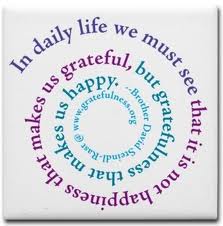
Want To Be Happy? Be Grateful! – David Steindl-Rast

gratefulness Steindl-Rast“If you think its happiness that makes you grateful, think again! It is gratefulness that makes us happy.”

Liturgies for Lenten Evening Prayer Inspired by the Mystics

I have been asked to re-post our Lenten Evening Prayer liturgies in one convenient spot. These have been used several times at Holy Cross, so you can listen to the audio recordings or check out the worship bulletins.

Liturgical texts and readings taken from the writings of the mystics.

Intended for use during the season of Lent.

EVENING PRAYER:  JULIAN OF NORWICH

Click here to download the Worship Bulletin which is to be printed double-sided

Click here to listen to the Worship Service

EVENING PRAYER:  THOMAS AQUINAS

2 Evening Prayer Lent which is to be printed double-sided

EP 2 Thomas Aquinas — the silences are intentional

LENTEN EVENING PRAYER: MECHTHILD OF MAGDEBURG

Evening Prayer Service Bulletin which is to be printed double-sided.

Evening Prayer Service audio – the silences are intentional – enjoy them.

LENTEN EVENING PRAYER: FRANCIS OF ASSISI

Evening Prayer Service Bulletin which is to be printed double-sided

Evening Prayer Audio – the silences are intentional.  Enjoy!

LENTEN EVENING PRAYER: HILDEGARD VON BINGEN

Evening Prayer Service Bulletin which is to be printed double-sided

Evening Prayer Audio – the silences are intentional.  Enjoy!

Science, Inspiration, and Sustainability Intersect: Michael Dowd

Michael DowdEvolutionary theologian Michael Dowd insists that “any understanding of God that is not synonymous with the all, reality, ultimacy, or nature is a trivial and inconsequential notion of God.” He warns that how we think about God matters because our attitudes about reality lead to real-world problems. 

We Have Enemies, And So, We Pray: a sermon for Epiphany 7A on Matthew 5:38-48

NowSince I was thirteen years old, I have borne the mark of my enemy. It’s faded quite a bit over the years, but if I look carefully I can still make out the marks left behind by, let’s call her, Betty Cherie’s teeth.  Way back in the eighth grade Betty Cherie and I fell afoul of one another. I don’t really remember what it was that started the whole thing.  It was one of those grudges that only thirteen-year-old girls can hold onto with any kind of tenacity. All I can remember is that Betty Cherie and I hated each other and the whole school knew it.

One afternoon our rivalry reached the point of war. I still cringe when I remember it. After all I was thirteen and I should have known better. I’d like to say that she started it. But, I honestly don’t remember how we got ourselves to the point were we were to meet each other in the playground to fight it out. Our adolescent duel took place in full view of the student body. We met at high noon, out behind the portables, out of sight from the teachers. It began with two sworn enemies pushing each other around. There was some hair pulling, I think I even got in a punch or two before she bit me. Continue reading

Preparing to Preach on Jesus’ Teaching on Non-Violence: Matthew 5:38-48

In the Gospel According to Matthew, the Sermon on the Mount provides a distillation of the teachings of Jesus; teachings Jesus lived for, teachings that eventually made Jesus so dangerous to the oppressive Roman Empire that they executed him as an enemy of the state. The very heart of the Sermon on the Mount is Jesus’ teaching on non-violence.  I can think of no better way to begin my own preparations to preach on this crucial text than to look to the work of the great Walter Wink.  I will always be indebted to this amazing teacher for all that I have learned and continue to learn from him. The videos below comprise the various parts of a lecture that Wink offered on the subject of Jesus’ teaching on Non-Violence. For anyone who aspires to follow Jesus this lecture is a must see. Wink’s books are well worn friends that I have often thumbed through to find more than a nugget or two to enable me to teach anew something that I have long since come to know as a result of Wink’s excellent work! His enlightening trilogy: Naming the Powers, Engaging the Powers, and The Powers that Be along with Jesus and Nonviolence: A Third Way should be at every preacher’s fingertips as we proclaim Jesus’ radical way of being in the world.  Follow this link to a sermon based on these resources.

D.I.V.O.R.C.E. – a sermon for Epiphany 6A

Aquinas purposeReadings included: Deuteronomy 30:15-20, Thomas Aquinas’ “Otherwise the Darkness’ (pictured above) and from the Sermon on the Mount: Matthew 5:21-37 

Listen to the sermon:  

Atheism for Lent

Atheism for LentFor more details click on this link:  ATHEISM for LENT details

Womb of All Creation Flowing: Jann Aldredge-Clanton

Womb of God pastor dawn

Jann Aldredge-Clanton’s hymn texts open us to new visions of the Divine! For details of where to locate her hymnal see my previous post on her work here

Atonement? – John Shelby Spong

Jack speaking at Holy Cross

Jack speaking at Holy Cross

Bishop John Shelby Spong’s weekly column continues to provide so very much wisdom. Today Jack responded to a reader’s question about “atonement” and the nature of God. Jack is succinct, insightful, wise and inspirational in his response. If you don’t subscribe to Jack’s weekly column, you can find the details here

Question:

God is defined as an Almighty being. An Almighty being does not require atonement (for “sins”). Therefore if God requires atonement as the Bible says, he is imperfect and not Almighty. Does this make sense? In other words, philosophically, the need for atonement indicates a lack of something, which detracts from the perfection which God should have. I would appreciate your thoughts.    

 Answer:   Dear Raymond,

I don’t think that elementary equations in logic are the way to do theology. So let me start my answer by looking at your givens. “God is defined as an Almighty being.” By whom and on what authority? The traditional idea of God present at the heart of Christianity certainly tends to express this, but is it accurate? Can God ever be defined by human beings? Are the limits of the human brain able to be transcended sufficiently so that the fullness and mystery of God can be embraced and articulated? I do not think so.

I consider the popular definition of God as “a being,” who lives in a realm that is external to this world and who is equipped with supernatural power, to be not only inadequate but idolatrous. That is the meaning of theism. If theism as the definition of God becomes inadequate, then the only alternative is atheism. If, however, theism is an inadequate or even inaccurate attempt to define God, then atheism is simply a conviction that the theistic definition, not God, but the theistic definition of God, is not a proper way to understand the holy. In that sense I am certainly not a theist, but I am not an atheist either. The fact that I reject the theistic definition of God does not mean that I reject the reality of the God experience.

Your second given assumes that atonement is the experience of bringing God and human life into a state of oneness, and that somehow this is the goal of religion in general and Christianity in particular. I think atonement theology is bankrupt in that it is built upon a definition of human life as sinful and fallen and then it proceeds to portray God as a rescuer and the savior of the fallen, sinful life.

When I look at the origins of human life, I do not see an original perfection broken by original sin and the subsequent need for divine intervention to save the sinner. I see rather evolving life that went from single cells to complex self-conscious human beings. If there was no original perfection, there was no fall from perfection and therefore no need for a savior and the whole system collapses.

I see God as a presence and a power that leads to expanded life, expanded love and expanded being, and even the experience of an expanded consciousness. Atonement is not the word to characterize this understanding of either God or life. So, rather than worrying about whether God can be understood in terms of atonement, I would prefer to remove atonement from the Christian vocabulary altogether. I hope these brief comments will serve to open up new possibilities in your theological thinking.

My best, John Shelby Spong

Atonement? – John Shelby Spong

Jack speaking at Holy Cross

Jack speaking at Holy Cross

Bishop John Shelby Spong’s weekly column continues to provide so very much wisdom. Today Jack responded to a reader’s question about “atonement” and the nature of God. Jack is succinct, insightful, wise and inspirational in his response. If you don’t subscribe to Jack’s weekly column, you can find the details here

Question:

God is defined as an Almighty being. An Almighty being does not require atonement (for “sins”). Therefore if God requires atonement as the Bible says, he is imperfect and not Almighty. Does this make sense? In other words, philosophically, the need for atonement indicates a lack of something, which detracts from the perfection which God should have. I would appreciate your thoughts.    

 Answer:   Dear Raymond,

I don’t think that elementary equations in logic are the way to do theology. So let me start my answer by looking at your givens. “God is defined as an Almighty being.” By whom and on what authority? The traditional idea of God present at the heart of Christianity certainly tends to express this, but is it accurate? Can God ever be defined by human beings? Are the limits of the human brain able to be transcended sufficiently so that the fullness and mystery of God can be embraced and articulated? I do not think so.

I consider the popular definition of God as “a being,” who lives in a realm that is external to this world and who is equipped with supernatural power, to be not only inadequate but idolatrous. That is the meaning of theism. If theism as the definition of God becomes inadequate, then the only alternative is atheism. If, however, theism is an inadequate or even inaccurate attempt to define God, then atheism is simply a conviction that the theistic definition, not God, but the theistic definition of God, is not a proper way to understand the holy. In that sense I am certainly not a theist, but I am not an atheist either. The fact that I reject the theistic definition of God does not mean that I reject the reality of the God experience.

Your second given assumes that atonement is the experience of bringing God and human life into a state of oneness, and that somehow this is the goal of religion in general and Christianity in particular. I think atonement theology is bankrupt in that it is built upon a definition of human life as sinful and fallen and then it proceeds to portray God as a rescuer and the savior of the fallen, sinful life.

When I look at the origins of human life, I do not see an original perfection broken by original sin and the subsequent need for divine intervention to save the sinner. I see rather evolving life that went from single cells to complex self-conscious human beings. If there was no original perfection, there was no fall from perfection and therefore no need for a savior and the whole system collapses.

I see God as a presence and a power that leads to expanded life, expanded love and expanded being, and even the experience of an expanded consciousness. Atonement is not the word to characterize this understanding of either God or life. So, rather than worrying about whether God can be understood in terms of atonement, I would prefer to remove atonement from the Christian vocabulary altogether. I hope these brief comments will serve to open up new possibilities in your theological thinking.

My best, John Shelby Spong

You Are the Salt of the Earth Oh People!!!

One of the joys of this blog is the community that gathers here in this virtual space. I am so richly blessed by your feedback, encouragement, and challenges!!! Thank-you so much for the comments, emails, cards, letters and even donations to Holy Cross Lutheran Church which underwrites the blog. Yesterday, a regular follower of this blog responded to the audio of Sunday’s sermon by sending me a link to the video below and encouraging me to post it! She encouraged me to challenge those of you who appreciate these blogposts to consider making a donation to Holy Cross Lutheran Church to encourage them to continue their generous support of this blog. While I generally shudder at the idea of asking for donations, I know that the good folks at Holy Cross have given generously to ensure that the progressive theology expressed on this site continues to shine a light on new ways of articulating Christianity!  So, if you’d like to help out, consider clicking on the link for Holy Cross’ address and do it old-school via a cheque and snail-mail, and support the many ministries of Holy Cross. Let it shine!!!