Today, rather than a traditional sermon, we engaged in a reflection on what is known as Jesus’ first sermon from Luke 4:14-21…a bible study of sorts. The Acclamation sung before the reading is “God of My Childhood” by Miriam Therese Winter Listen to the reflection here
This sermon explores the need to set the captives free. It was inspired by a Globe and Mail article written by David Clayton Thomas, former lead singer of Blood, Sweat & Tears and dedicated to the memory of an old friend who did not “go naturally” and will never be forgotten! You can listen to the sermon here to get you in the mood, watch the video of Blood, Sweat & Tears below
The year was 1969. I was just twelve years old and my family had only recently moved to Ladner, a small village south of Vancouver. I was the new kid in a tightly knit grade seven class. I remember being angry, a lot. Being twelve is tough, but being twelve and new in town; well that’s a kind of hell I wouldn’t wish on anyone. There were only two places I felt safe: One was my bedroom where I could escape into my books or listen to music. The other place was music class. We had a really cool, young teacher, she must have been fresh out of teachers’ college, because she had all these new ideas about something she called music appreciation. The songs we sang in Miss Conroy’s class were songs off the radio. Some days she’d let us put our heads down on our desks and she’d just play music and all we had to do was appreciate it. Not all of the music was stuff we’d heard on the radio, sometimes Miss Conroy would sneak in some jazz; not any kind of jazz I’d ever heard before, improvisational jazz; it was so cool to my twelve year-old ears that I gave Miss Conroy a pass when she would slip into teacher mode and put some classical music on the record player.
One day, Miss Conroy announced that we’d been listening to her music long enough; it was time we began to listen to our music. Miss Conroy explained that she was going to divide us into pairs and each pair would have to work together to select a piece of music to bring to class and share it. We would have to explain to the class, why the piece that we choose was worth paying attention to. Now even though there were all sorts of pieces of music that I thought would be great for this assignment, I began to panic. Who on earth would want to work with me on such a project? The thought of being teamed up with anyone of my classmates struck fear into my heart. I didn’t have any real friends in this class and as the new kid I knew that nobody would want to be stuck with me. Vision’s of being left out, all alone without a partner began to overwhelm me, as Mrs. Conroy announced that we would be drawing names out of a hat in order to determine who our partners would be. When my turn came to pull a partner’s name out of the hat, I didn’t even know what to hope for. I didn’t know people well enough to want anyone in particular to be my partner, there was only one person in the whole class that I knew that I knew well enough to know that I didn’t want to be my partner. I, like all my classmates was positively terrified of, for the sake of this sermon I’m going to call him Kenny. Kenney sure wasn’t twelve; he was a few years older than the rest of us. He was a big guy; dark hair, good looking, and unlike the other adolescent boys in the class, Kenny had already started shaving. Once during the lunch hour I witnessed Kenny bullying a younger boy into eating an apple core that had been discarded a few days earlier. The kid ate the rotting core rather than face whatever it was Kenny was threatening him with. Kenny was big, tough and loud. Most of us were frightened of Kenny and because kids are cruel, behind his back we diagnosed him as crazy. But there was something about Kenny, maybe it was his good looks, maybe it was the buckskin fringe jacket that he sported, or maybe it was just his wildness that made him the talk of the jittering boy-crazed girls in the class. So, I was more than a bit upset when of all people, I pulled Kenny’s name out of the hat. What piece of music could the two of us possibly have in common and how was I even going to talk to him? Miss Conroy slipped perilously into my bad books on the day she forced me into the company of the dreaded Kenny.
Ours was an uneasy partnership. There was precious little conversation involved. Kenny picked the piece of music. Kenny told me what I was going to tell the class about our piece of music. Fortunately, I actually knew and liked the piece that Kenny had chosen. It had been a big hit the previous summer and I owned a copy of the record. The only problem was that my copy was a 45. Kenny insisted that we just had to use the version that was on the album; not the version that they played on the radio off the 45. The version on the album included the trumpet solo that never made it onto the 45. It would have made the song too long for the hit parade! And that’s how I ended up in front of my classmates, standing beside a boy, who though handsome and tough had suddenly become monosyllabic as I struggle to explain why our choice of Blood, Sweat and Tears, Spinning Wheel, was music well worth appreciating.
What goes up must come down
spinning wheel got to go round
Talking about your troubles it’s a crying sin
Ride a painted pony
Let the spinning wheel spin
You got no money, and you, you got no home
Spinning wheel, spinning all alone
Talking about your troubles and you,
you never learn
Ride a painted pony
let the spinning wheel turn.
Did you find a directing sign
on the straight and narrow highway?
Would you mind a reflecting sign
Just let it shine within your mind
And show you the colours that are real
Someone is waiting just for you
spinning wheel is spinning true
Drop all your troubles, by the river side
Catch a painted pony
On the spinning wheel ride
Someone is waiting just for you
spinning wheel is spinning true
Drop all your troubles, by the river side
Ride a painted pony
Let the spinning wheel fly.
They just don’t write songs like that anymore. Kenny was right, the trumpet solo, is a must. Blood, Sweat and Tears had the best horn section. They could take a mediocre song and turn it into something special: “Spinning Wheel,” “You’ve Made Me So Very Happy,” “God Bless the Child,” “Hidey Ho, Hidey Hi,” “And When I Die.” Thanks to Kenny, I bought every LP that Blood, Sweat and Tears ever recorded.
So, what has any of this got to do with this morning’s Gospel reading? Well the words that the writer of the Gospel of Luke puts into the mouth of Jesus of Nazareth have been spinning round in my head all week long. I keep hearing Jesus quote the words of the prophet Isaiah. “The Spirit of our God is upon me: because the Most High has anointed me to bring Good News to those who are poor. God has sent me to proclaim liberty to those held captive, recovery of sight to those who are blind, and release to those in prison—to proclaim the year of God’s favour.” The year of God’s favour is the prophet Isaiah’s way of describing the year of Jubilee. Written into the Jewish law was a provision meant to address the systemic injustices that creep into the law as time goes by. It is said that every 50 years a Jubilee would be declared.Continue reading →
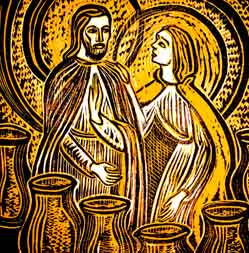
Reflecting upon the more-than-literal meanings in today’s reading from the Gospel according to John tells the story of the wedding at Cana I was prompted to ask some questions about the eucharist’s ability to continue to nourish us. These questions prompted me to dispense with my usual practice of preaching from a manuscript. Inspired by John Shelby Spong’s work in “The Fourth Gospel: Tales of a Jewish Mystic” to see the characters in this story as symbols of entities much bigger than they first appear, I have begun to see that just as the early followers of Jesus found themselves in a time of transition that gave birth to new practices, we 21st century followers of Jesus find ourselves in the midst of transitions that have the potential to give birth to new ways of being in the world. As always I am indebted to Jack Spong, who has visited Holy Cross three times to share his work with eager learners. Indeed, in the Preface of “The Fourth Gospel” Jack thanks Holy Cross for being a place where his book “first found public expression. Jack’s insights continue to challenge us. You can listen to this morning’s reflection here and Jack lecturing on the symbolism of the characters of the Mother of Jesus and the Disciple who Jesus loved here. This morning’s reflection begins a congregational conversation on our worship together.
Reflections on the Eucharist: Epiphany 2C, John 2:1-11:
The gospel according to John is my favourite of all the gospels. Maybe it’s my Irish heritage but I just love a good story and the more outrageous the better. The Irish have never been known to let the facts get in the way of a good story, and neither did the writer of the Gospel we can John. This gospel was the last of the four gospels to be written and it nearly didn’t make it into the biblical cannon because the religious powers that be cited all sorts of problems with this particular portrait of Jesus. Not the least of which are all the signs and wonders that Jesus commands in this gospel. So, just for the record, let me say that I don’t believe that this particular story happened exactly the way it was written. I don’t believe that the man Jesus of Nazareth had the ability to instantaneously change water into wine. I do believe that getting hung up on whether or not Jesus could actually work miracles is to miss the point of this story all together.
This morning rather than go into a long and drawn out explanation of the historical critical method of studying the scriptures in order to explain why the writer of the gospel of John wrote this particular story and speculate upon the particular theological points the author was trying to make to his second century audience, I would like to set the history aside for a moment and look at what the author might have been trying to inspire in the people who would hear and read his or her story about the Wedding at Cana. To do that I want to get to the heart of this story to explore what it might be like for the people who actually encountered the Man Jesus of Nazareth. I mean on the surface of it this story is about a kind of intoxication that happened to people who come into the presence of this strange man from Nazareth. The best way I know of interpreting a story is to lay down another story right beside it and let one story interpret another.
Once upon a time, I remember it was a damp and dreary day in Vancouver that stood out from all the other damp and dreary days. It was in the middle of February; it had been overcast or raining for weeks and weeks and weeks. I was riding on the bus to work. It was the same bus that I had been riding on for two years. Every weekday morning I would commute by bus from the suburbs to the heart of the city. Every morning at six-fifteen, I would stand with the same people at the same bus stop and get on the same bus, which carried all the same people to their same jobs. On a good day the trip would usually take 45 minutes. Nobody ever spoke on that bus. Occasionally people would nod or smile at the all too familiar faces of their travelling companions, but conversation would be reserved for sunny days, when people could only manage a word or two. It was like there was this unwritten rule that nobody had the energy or the inclination to break. We saw one another almost every day, and yet we knew absolutely nothing about one another and that was the way we were determined to keep it.
On this particular February morning in addition to being tired, I was also wet. The wind was really blowing and I had to rely on my hooded jacket to keep me dry. The bus was running late and the water was just beginning to seep threw my jacket. I sat in my usual seat on the bus and I was determined to ignore the damp and get in a short nap before we reached the city. I was just dozing off when the bus screeched to a halt. Several passengers climbed aboard. All but one of them, were recognizable. I’d seen them a hundred times before. But the young man, who loudly greeted the bus driver with a “Hello,” him I’d never seen before. He struggled to fold his broken umbrella as he stumbled to the rear of the bus. He sat opposite me, and proceeded to greet everyone around him. People weren’t sure how to take this. Some just nodded and then looked away. Others mumbled a greeting before fixing their gaze out the window. I smiled, nodded and then closed my eyes, determined to escape into sleep.
The young man, continued to fuss with his umbrella. He explained in a loud voice that the umbrella was a gift from his sister and he hoped that it wasn’t ruined. He asked the gentleman seated beside him if he could help him to fold it. The somewhat flustered gentleman proceeded to fold the umbrella without a word. When the task was completed the young man, thanked the gentleman and asked him what his name was. He said he wanted to be able to tell his sister, who the nice man was, that had helped him with his umbrella. Without revealing his name the gentleman assured the young man that it wasn’t necessary to thank him. The young man on the other hand, proceeded to break all the rules, and said that his name was Michael and he told us all that he had never ridden on this bus before. He usually had to get a bus that went to the city in the afternoon and then he would get a ride home after dinner with his sister. But on this day, he would begin to work full days at his job. So he had to catch the bus in the dark. He went on to tell us that the bus we were riding in was much nicer than the one he usually caught. He decided that this bus must be a new bus, and weren’t we lucky to get to ride on a new bus. Then Michael took off his hat, held it out in front of him so we could all see it, and declared that he was the luckiest person in the world because his mother had bought him this wonderful hat that kept his head dry.
Michael went on to tell us all sorts of details about his life. At first people managed to listen, without responding. But as Michael went on describing his wonderful life, people found that in spite of themselves they were drawn into the conversation. As we approached the tunnel, that normally causes traffic to back up in rush hour, it was clear that there must have been some sort of accident in the tunnel. It would be a long wait. There would be no escaping Michael’s enthusiasm. Before long we all knew that Michael worked in the mailroom of a securities company. He assured us that this security company was a safe place to work, because they didn’t take care of the safety of people, but just took care of pieces of paper that were called stocks and bonds. Michael told us just how much he loved his job. Having a job was the best thing. Before he had the job he didn’t have any money to help his parents. But now he had enough money to help his parents and lots left over. Michael told us that he was really lucky because he worked with really nice people who took good care of him and let him do all kinds of fun jobs.Continue reading →
There’s a definition of what it means to be a priest that has always daunted me. A priest it has been said is “a keeper of the mysteries; a keeper of the sacred mysteries of our faith. People often confuse the idea of mystery with the idea of secret. But I can assure you that as a keeper of the mysteries of the faith it is neither my job nor any other priest’s job to keep the mysteries of our faith a secret. Yes, as an ordained pastor, one of my responsibilities is to be a keeper of the mysteries of our faith by ensuring that the communities that I serve hold those mysteries sacred. It is my job to hold the mysteries in such reverence that we all remember that the reality that we call God works in with and through those mysteries. Baptism is considered to be one of the mysteries of our faith. Baptism is a sacrament of the church and by definition a sacrament takes ordinary stuff – water – mixes that ordinary stuff with the Word and in the combination of water and the Word you have a tangible means of God’s grace. God’s grace is revealed in the sacrament of Baptism by the act of our gathering together and mixing the stuff of the earth with the Word. We have only two sacraments in the Lutheran church Baptism and Eucharist, and both of those things are sacraments because we gather together take ordinary stuff – bread and wine, or water and mix it with the Word of Jesus the Christ and in the water, the bread and the wine the means of God’s grace is made visible to us.
So, there you have it the technical definition of the sacraments, the mysteries of Baptism and Communion, in which the reality that we call God works in, with, through and under. But like all technical definitions of mysteries, these definitions fail to capture the essence of the mystery that likes at their very heart, the mystery of the reality that we call God. As a keeper of the mysteries, one would think that a priest, a pastor ought to be able to reveal, by way of definition something of the nature of the reality of the Divine.
The truth is I have no real definition to offer you of this reality that we call God. I read once, I wish I could remember where the wisdom of a priest far more skilled than I who declared that he’d given up trying to explain God to anyone because in the end, he said, “I cannot lead you to God, anymore than anyone can lead a fish to water.” The most important thing I learned in seminary is that “I don’t know is an answer.” The truth is the more we learn the more we know that we don’t know. But this unknowing can be so unsatisfying, precisely because we believe that God is the one in whom we live and breath and have our being, we want to know the very nature of the One who is the ultimate Reality. Now, if these words haven’t already become so vague that the veil of unknowing has begun to make any tangible means of God’s grace seem invisible and so beyond our grasp, let me leave the theology behind and tell you a story. Because one thing I do know for sure is that the shortest distance between the questions of what it means to be human and understanding our humanity is a story.
It happened on Thursday night. All week long I’ve been thinking about what I would say about the Baptism of Jesus and I wasn’t getting very far. It’s been a busy week, with lots of things to do as programs around here gear up again after the lull of the holidays. After teaching Confirmation on Thursday, I got home at about 9:30. The house was empty because Carol was off visiting the grandchildren for a few days. It had been a long day, and I quickly got into my pajamas, switched on the fireplace, and settled into my recliner in front of the television. The PVR was full of shows for me to watch and the opening scenes of Gray’s Anatomy dragged me into the complications of lives I would never have to minister to and I began to relax. The drama of medical emergencies mixed with the complications of various love affairs pulled me into a world where there was absolutely nothing expected of me and I was loving it right up until the moment that the telephone rang. Modern technology means that the name of the person calling usually appears on right there on the TV screen so that I can decide whether or not I’m going to answer the call. When the phone rang I expected it to be Carol calling to say goodnight, so I’d already pushed the pause button, expecting that after a quick goodnight I could get back to my shows. Buy the time I realized that there was no name on the TV screen but only a phone number, it was too late and I was already saying hello.
The caller was someone I’d heard from only once before. They were already halfway through a very nasty tale of woe when I realized that they were asking me to come out. It was a call for help. It was a call that I had every right not to respond to. I mean the caller wasn’t even a member of this congregation. It was late. I was already in my pajamas. It was dark outside.
I was annoyed. I mean really. Couldn’t this person have called me before I left Newmarket? What gave them the right to think that I would come out so late, in the dark, for someone I’d only met once before? The audacity. The sheer audacity of such a request was enough to make you scream. Give me a break. I listened to the caller’s plight with precious little sympathy. I asked her to hold on for a moment so that I could try to think of a way to help. What I really meant was: is there anyone in Newmarket that I can disturb at this time of night and ask them to go over and help. Some of you have offered to help in this way in the past. You know who you are and you can be sure that your names went through my mind as I tried to avoid leaving the comfort of my warm snug. It was only the thought of how annoyed I was to be disturbed at such a late hour that kept me from disturbing one of you. So I told the caller to hold on and I would be there in about half an hour.
I was cursing to bet the band as I went upstairs to get dressed. The air was positively blue. I was angry. I was going out, on what in my mind was the middle of the night, it was ridiculous. Hell, it was dangerous. It was dark. Yeah we were going to meet in a public place. But why the expletive, curse, fill in the blank your self, why the ………blanket blank, should I? I certainly wasn’t going out of love for my neighbour. I was ticked. I was going because it’s my job to go. Sure I knew that I had every right to refuse to go. But if I didn’t go, my shows would be ruined. How could I possible sit there and enjoy my shows when I knew that someone needed my help? Forget the shows, if I didn’t go, I knew darn well I wouldn’t get any sleep.Continue reading →
In this sermon, I attempt a method of interpretation which places one story beside another in order to reveal the sacred. The modern legend of Joshua Bell playing Bach in the subway told alongside the story of the baptism of Jesus provides epiphanies about the sacred in the other and begs questions about the way in which we tell our stories. This sermon was preached last year in the wake of tragic events in Paris. Listen to the sermon here
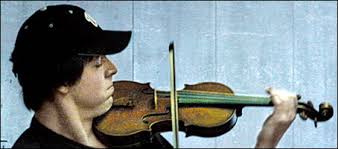
In April of 2007 an article appeared in the Washington Post, which earned its author, Gene Weingarten, a self-described “heathen” a Pulitzer Prize. The story went virile and over the years I have read and heard all sorts of sermons that include a version of the story loosely based on Weingarten’s article. For reasons, which I hope, will become clear, I’d like to quote Weingarten’s article without any of the usual embellishments.
“HE EMERGED FROM THE METRO AT THE L’ENFANT PLAZA STATION AND POSITIONED HIMSELF AGAINST A WALL BESIDE A TRASH BASKET. By most measures, he was nondescript: a youngish white man in jeans, a long-sleeved T-shirt and a Washington Nationals baseball cap. From a small case, he removed a violin. Placing the open case at his feet, he shrewdly threw in a few dollars and pocket change as seed money, swiveled it to face pedestrian traffic, and began to play. It was 7:51 a.m. on Friday, January 12, the middle of the morning rush hour. In the next 43 minutes, as the violinist performed six classical pieces, 1,097 people passed by. Almost all of them were on the way to work, which meant, for almost all of them, a government job. L’Enfant Plaza is at the nucleus of federal Washington, and these were mostly mid-level bureaucrats with those indeterminate, oddly fungible titles: policy analyst, project manager, budget officer, specialist, facilitator, consultant. Each passerby had a quick choice to make, one familiar to commuters in any urban area where the occasional street performer is part of the cityscape: Do you stop and listen? Do you hurry past with a blend of guilt and irritation, aware of your cupidity but annoyed by the unbidden demand on your time and your wallet? Do you throw in a buck, just to be polite? Does your decision change if he’s really bad? What if he’s really good? Do you have time for beauty? Shouldn’t you? What’s the moral mathematics of the moment?
On that Friday in January, those private questions would be answered in an unusually public way. No one knew it, but the fiddler standing against a bare wall outside the Metro in an indoor arcade at the top of the escalators was one of the finest classical musicians in the world, playing some of the most elegant music ever written on one of the most valuable violins ever made. His performance was arranged by The Washington Post as an experiment in context, perception and priorities — as well as an unblinking assessment of public taste: In a banal setting at an inconvenient time, would beauty transcend? The musician did not play popular tunes whose familiarity alone might have drawn interest. That was not the test. These were masterpieces that have endured for centuries on their brilliance alone, soaring music befitting the grandeur of cathedrals and concert halls. The acoustics proved surprisingly kind. Though the arcade is of utilitarian design, a buffer between the Metro escalator and the outdoors, it somehow caught the sound and bounced it back round and resonant.
The violin is an instrument that is said to be much like the human voice, and in this musician’s masterly hands, it sobbed and laughed and sang — ecstatic, sorrowful, importuning, adoring, flirtatious, castigating, playful, romancing, merry, triumphal, sumptuous.”
Some of you may recognize this article and those of you who do will know that the violinist was Joshua Bell. In the course of his article, Weingarten goes on to describe the complexity and the beauty of the 6 classical pieces that the virtuoso Bell played, which included masterpieces from Bach, Massenet, Schubert, Ponce, and Mendelssohn. What happened in the Washington Metro station is the stuff that legends are made of. If you read or hear this story from the 169,000 posts on the web, you will read a fairly consistent tale, which lends itself well to repetition and is the stuff great sermons are made of. However, in the retelling of this story, the details have been exaggerated in order to make a point.
There is a video of the events, which took place, so the facts can be checked. But when have we ever let facts get in the way of a good story; especially when we are trying to make a moral point. In the popular version of this story, the greatest violinist on the planet, played for 45 minutes and thousands and thousands of busy rush hour commuters passed by without paying any notice what so ever, except for one middle aged man, who slowed down and paused for just 6 seconds, later a women threw a dollar in Bell’s violin case. The one who paid the most attention was a 3 year-old boy. His mother dragged him along, but the kid stopped to look at the violinist. Finally the mother pushed hard and the child continued to walk turning his head al the time. This action was repeated by several children. All the parents, without exception, forced them to move on. In the 45 minutes that Bell played, only 6 people stopped and paid any attention, 20 tossed money as they hurried by. No One applauded and no one recognized Joshua bell.
These are the details of this popular myth. However, the Washington Post, Pulitzer Prize winning article and the videotape tell a more modest story. Exactly 1,097 people passed by, not thousands and thousands. Several people stopped and paid quite a bit of attention; one woman was heard to say that she really didn’t want to leave. As for the child, he managed to delay his mother for only 3 seconds, no other children appear on the video to take any notice and Joshua Bell was in fact recognized by a woman who couldn’t believe her good fortune and waited around until Bell’s magnificent performance was over to introduce herself to Bell before placing a twenty-dollar bill in his violin case. For his virtuoso performance Joshua Bell earned a grand total of $52.17 and a legend was born. Despite the exaggerated details in this legend, the essence of truth remains: One of the greatest violin players alive today, played some of the best music ever written, on one of the best violins in the world, and most of the people who where there that day never even noticed.
When I read the stories about the Baptism of Jesus, I get the impression that something similar has happened to this myth. The fantastic details as they are told by the gospel-story-teller known to us as Mark are pretty incredible. I don’t mean the characterization of John the Baptizer who is described as wearing camels’ hair and a leather belt around his waist, and who ate nothing but grasshoppers and wild honey. According to the gospel-story-teller we know as Mark, “Jesus came from Nazareth in Galilee and was baptized in the Jordan River by this wild-baptizer John. Immediately upon coming out of the, Jesus saw the heavens opening and the Spirit descending on him like a dove. Then a voice came from the heavens: “You are my Beloved, my Own. On you my favour rests.”Continue reading →
Wading into the waters of baptism is no simple matter for a progressive Christian. Once you leave the myth of perfection in some distant garden back there in the mists of time, reject the notion of humanity’s fall from grace as a result of original sin, and give up worshipping the sadistic image of a god who demands a blood sacrifice, it’s difficult to navigate the waters of baptism without spouting notions that the institutional church condemns as heresy. But today is the day when the church celebrates the baptism of Jesus and the stories about the baptism of Jesus that have been handed down to us by our ancestors suggest that on this day of all days, we should have the courage to follow Jesus into the river of life even if it does challenge some of our long held assumptions about what it means to be a child of God.
I venture into these troubled waters as someone who treasures the sacrament of baptism. Long before I ever entertained the idea that I might one day respond to the call to become a baptizer, I became a lover of this particular sacrament of the church. I am now, and I have always been one of those people who find it almost impossible not to shed a tear or two at baptisms. The beauty of all that hope and expectation all wrapped up in the guise of a tiny little human has a way of generating in me a watery contribution as my tears join the sprinkling to wet the babies head. When the baptized is an adult my tears flow even more bountifully. Let’s face it folks these days the reality is that infant baptisms are rare enough. Adult baptisms, especially in mainline churches are so rare that the nostalgia alone is enough to send us into spasms of uncontrollable weeping for seer joy at the thought that it is even remotely possible that someone has been able to see beyond the church’s doctrine long enough to embrace the amazing possibilities of the sacrament to provide any benefit in this the twenty-first century.
When we look back to the stories told in the synoptic gospels about the baptism of Jesus we are sometimes so distracted by the opening of the heavens, the descent of the dove and the voice of God declaring Jesus to be the beloved, that we miss an important detail of the way in which the early followers of the Way chose to tell the story of Jesus public coming out party. New Testament scholars remind us that the stories told by the writers of the gospels were written at the end of the first century; a time when it would have been clear to all those who had ears to hear, that by going down to the river Jordan to be baptized by John would have stirred up the political and religious waters. John the Baptist was a revolutionary who made no bones about the fact that the religious authorities and the political rulers were leading the people down the wrong path. John’s shouting in the wilderness was his way of warning the people to repent; to literally turn around and follow a different path. John was doing far more than ranting when he condemned the religious authorities as a brood of vipers; he was calling on the people to reject the teachings of the authorities. John’s insistence on repentance was a call to revolution, a revolution designed to overthrow the status quo. John was out there in the wilderness because it wasn’t safe for him to spout his own particular brand of incendiary fire and brimstone rhetoric within earshot of the authorities. By going down to the River Jordon and submitting to John’s baptism of repentance Jesus was choosing to identify himself with a political revolutionary.
That the writers of the gospels chose to tell there story in ways that see the God of Israel give Jesus a shout out, and the very spirit of God descending like a dove onto the shoulders of Jesus, turns John’s baptism of repentance into a kind of passing of the torch from one revolutionary to the next. Yet, despite the gospel-writers having cast Jesus into the role of revolutionary torchbearer none of the gospel writers shows Jesus following the ways of his predecessor John. There is no record of Jesus calling people to repent nor is there any record of Jesus ever having baptized anyone. All we have is Jesus “Great Commission” which if New Testament scholars are to be believed, Jesus probably never even said, “go therefore and baptize them in the name of the Father and of the Son and of the Holy Spirit.” Yes, it’s true, most preachers, dare I say modern-day baptizers, learned in seminary that rather than being an instruction given by Jesus the Great Commission was actually added to the story by the early followers of Jesus. But I digress, the point I’d like to emphasize about Jesus’ trip down to the waters of the Jordan, is that by choosing to publicly submit to John’s baptism, Jesus was making an important statement about his own public ministry. For just like John, Jesus intended to challenge the religious and political authorities.
That the gospel writers have Jesus head off into the wilderness to find his own way prepares us to follow Jesus down a completely different path than the one his predecessor John pointed toward.
So on a day, when the church looks back upon the baptism of Jesus, surely we can take courage from Jesus’ example of wandering off into the wilderness to find our own way of challenging the religious authorities of our day.Continue reading →
Each year, I begin my preparations for preaching on the Baptism of Jesus with this video in which Heather Murray Elkins tells her story, “The Secret of Our Baptism.” Elkins opens us to a new way of hearing the Bat Col, the Daughter of a Sound, the Voice of the Divine, the Word, who speaks in this Sunday’s Gospel reading. Luke 3:15-17, 21-22
I am indebted to the work of John Phillip Newell; especially his book “The Rebirthing of God: Christianity’s Struggle for New Beginnings” for the insights into the burning bushes that surround us. Listen to the sermon here
The readings included John 1:1-9; the Gospel of Thomas 70, and Matthew 2:1-12 You can listen to the sermon here
This year, in addition to all of the many holiday festivities that we are accustomed to enjoying over the Christmas holidays many of us added the time-consuming guilty pleasure of binge-watching. Binge-watching is a relatively new phenomenon which results in hours and hours spent watching entire seasons of a TV series in one or two days. Thanks to things like Netflix, Apple TV and YouTube there are a so many TV series available but one that has me in its grip at the moment has more power to demand my attention as a result of a passion that developed in me when I was but a child.
When I was just ten years old, we lived in Newmarket for less than a year. By that time I had already lived in Birmingham, England, Belfast, Northern Ireland, Toronto and Newmarket. I was in grade five and I went to J.L.R. Bell public school. My teacher, Mr. Jones, was a particularly gifted storyteller. Mr. Jones had the ability to hold our little class in the palm of his hand simply by weaving tales of the world beyond our little lives. I can still remember the wonder and excitement that he generated when he announced that we were going to begin to study the explorers. I had no idea what an explorer was, but the globe that Mr. Jones spun on his desk as he explained that for years and years and years everyone believed that the earth was flat and that if you travelled far enough you ran the risk of falling off the edge, well I was hooked. Then he pulled down a large display map that was suspended on what looked to my ten-year-old eyes to be a window-blind and pointed to what looked like a funny shaped boot and told us that our study of the exploration of the world would begin in Venice, Italy in the year 1384, with the birth of Marco Polo.
I had absolutely no idea what he was talking about. Venice, Italy, 1384, Marco, Polo, none of these words meant anything to me except for one, so I was hooked. What was a Venice? What was Italy? What could he possibly mean by 1384? Whatever was a Marco and what on earth did a Marco have to do with a Polo? Polo’s were the little mints that my Nannie kept in her purse.
At the tender age of ten, Mr. Jones launched me upon a grand adventure, which would lead to my life-long love of history and of words. For days and days and days, Mr. Jones wove fabulous tales of the discoveries of Marco Polo as he traveled upon the Silk Route to China where he met the fascinating Kublai Kahn whose very name summoned up both mystery and danger. The adventures of Marco Polo had me hooked on history but Mr. Jones didn’t stop there, no. Vasco da Gama, Christopher Columbus, Ferdinand Magellan, John Cabot, Jacque Cartier, Henry Hudson and a host of others who Mr. Jones taught us about with only the globe and that mesmerizing map of his to aid him, all served to open me up to ideas and concepts that turned me into a student of history and a lover of stories.
I had to leave Mr. Jones class before the end of term because once again my family was on the move. We were right in the middle of following Thomas Cook to the shores of what would eventually become my home on the west coast of British Columbia, when I handed over the atlas that Mr. Jones had lent me. I was trying hard not to cry as I bid, the man who was at that very moment my favorite person in the whole world, good-bye. It was when Mr. Jones encouraged me to continue my journey into the past that I had what I know recognize as an epiphany. With that great big wall map as a backdrop and the globe in front of me, I knew that I too was an explorer. What I didn’t know, what that particular epiphany didn’t reveal, was that I was also a storyteller.
Epiphanies are marvelous, miraculous events that have the power to reveal the very depths of who and what we are. Strictly speaking an epiphany is a flash of insight. The word epiphany comes from the Greek for the appearance of the divine. When the word was first explained to me, my teacher suggested that the word epiphany could be used to describe that moment in a cartoon when the light-bulb appears above a character’s head. A flash of insight! A moment of discovery that enlightens the mind and can change a life, open up a whole new world, herald a new way of being, unravel a mystery, or reveal the Divine in our midst.
It is hardly and any wonder, that the celebration of the Epiphany, was once second only to Easter in the church year. The recognition of God in our midst, no that’s something to celebrate! Over the years, Christmas has eclipsed the celebration of Epiphany. We won’t even bother coming to church on Tuesday for the feast of Epiphany. These days most Christians don’t even wait until Epiphany to take down their Christmas decorations. Yesterday, I saw Valentine’s Day decorations in the grocery store. The world scarcely pauses to notice. Perhaps the wise-guys are to blame.Continue reading →
This sermon owes much to the work of Richard Rohr whose work opens me to the LOVE who lies at the core of REALITY, the ONE we call God. The source of the story that I tell about a Christmas Eve way back when has been lost to me. I cannot remember when I first heard it. It’s power to open me to the LOVE that is God remains with me and so I treasure the story and tell it so as to open others. To open ourselves to the cosmic nature of the Christ we used different scripture readings. The readings can be foundhereDuring the sermon copious amounts of chocolate oranges were smashed open and distributed. You can listen to the sermonhere
Christmas Eve is a night when the phrase “way back when” is uttered by storytellers often. I remember way back when I was just a little girl, you know long, long, ago, way back when Christmas celebrations were so different. Way back when I was a child, we didn’t hang fancy, especially dedicated stockings on the chimney with care, in hopes that St. Nicholas soon would be there. No, way back when, people didn’t have the money to waste on special, fancy, Christmas stockings that were only used once a year. Way back when, we just went into our sock draw and pulled out the largest sock we could find and we’d hang it up, in the hope that if we’d been good we’d get some goodies instead of the dreaded lump of coal that our parents had been threatening us with for weeks. Come Christmas morning, way back when, we were happy when our sock was filled not with stocking-stuffers like we have these days, but with the same thing we got every Christmas in our stockings, an apple, an orange, a few toffee’s and a couple of coins. You see way back when, fruit was seasonal and fresh apples and oranges were a real treat. These days we can haul crates of tiny delectable oranges from the grocery store all year long. But way back when, oranges at Christmas were a real treat.
Now I never did like oranges very much, so I would always try to trade my orange with my brother so that I could have two apples instead. You see way back when children were easier to please and Christmas was different. Which leads me to another story. I don’t remember when or where I first heard this story about way back when World War II had just ended and refugees were loaded into camps until the world could figure out what to do with the millions of displaced people. Back then; refugee camps were filled to overflowing with children who’d lost their families during the war. Apparently there was this little boy in a camp in France; we’ll call him Andre. Andre couldn’t have been more than about seven years old and he could barely remember the family he lost almost three years before the war ended. He’d been living in the refugee camp, more of an orphanage really, for almost a year. A few nuns who never could scrap together enough money to feed the children properly ran the camp. But they did there best and the children were, after all was said and done, lucky to be alive. The children hardly noticed that Christmas was approaching until one of the nuns announced that a neighbour had promised to come by on Christmas Eve to drop off a sack of oranges. Andre had only a vague memory of an orange. The year before a stranger had shared an orange with him and he remembered the taste of the three tiny sections of his share of the orange that oozed precious juice down his half starved throat. Andre spent the days leading up to Christmas Eve dreaming of having a whole orange of his very own. He thought about the smell of the orange, dreamed of peeling the orange, and carefully considered whether or not to devour each and every section of the orange all at once or whether he should divided it and save a section or two for Christmas morning.Continue reading →
The quotes in this sermon are from Steven Pinker’s book “The Better Angels of Our Nature” and Joseph Holub’s “Fear Not” The Acclamation sung prior to the sermon is “The Magnificat” from Holden Evening Prayer, by Marty Haugen, featuring Gary Curran and Linda Condy: Listen to the sermon here
The story told in this sermon can be found in Maeve Binchy’s book of short stories “This Year it Will be Different.” As always I am indebted to those progressive grinches Marcus Borg, John Dominic Crossan, John Shelby Spong, and Michael Morwood for their insights into the sacred. Our sermon hymn was No Obvious Angels. The readings were all from Luke 1:1-56.
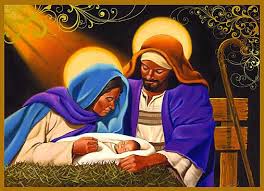
Years ago, I struggled with most of the stuff I was reading both in the bible and about the bible. I’d been attending church every Sunday since I was 15 and I was doing my best to be a Christian. But the more I read the bible, the more I studied the stories in the bible, the more difficult it became to reconcile all of the inconsistencies. Nowhere are those inconsistencies more apparent than in the stories about the birth of Jesus. Long before I ever dreamed of going to seminary to become a pastor, I was introduced to the work of progressive scholars like Marcus Borg, Dom Crossan and Jack Spong. It was a relief to learn how to take the bible seriously without taking it literally. It was also a relief to discover that my pastor and indeed most of the pastors I knew didn’t take the bible literally. But I have to admit that Christmas in the Church just hasn’t been the same since I learned that the stories about the birth of Jesus that appear in the Gospels according to Matthew and Luke are not historical narratives. I must also confess that since we here in this community embarked upon this grand adventure together of ReThinking our Christianity, the celebration of Christmas in our worship together has become more and more of a challenge. There are days when I feel like a progressive Grinch who is determined to steal Christmas. Then there are other days when I feel like the Grinch’s little dog, who try as he might he just can’t seem to balance those reindeer antlers on his tiny little head. There are days, and some sleepless nights when I simply long for the good old days, when we could sink into the sentimentality of the season without having to delve into scholarship or worry about our evolving theology.
I miss those Advents when we all acted as though prophets foretold the birth of Jesus centuries before it happened, when we suspended disbelief and went along with the idea that angels visited Mary and Joseph, and we marveled at the fact that Mary conceived will still a virgin. It was easier when that Star guided wise guys and heavenly hosts actually visited shepherds abiding in their fields. Damn those progressive Grinches who’ve robbed us of our simple ways of celebrating the birth of Jesus
and as for those radical Grinches who have us questioning everything from the divinity of Jesus to the cosmic reality of the Christ, well I for one wish they’d leave us alone to sing our songs in peace. We Whos did just fine down here in Who-ville before those Grinches tossed all the elements of the birth stories upon their sleighs and left us here wondering what to do and how to sing. For however shall we celebrate the birth of the Son of God now that we know Mary couldn’t have been a virgin, and Matthew and Luke were the worst historians ever?
Well fear not my friends, because like all Christmas stories ours too has a happy ending. The good news is that those progressive Grinches who have stolen Christmas, do indeed have a heart after all. Even that Grinch Marcus Borg knows a thing or two about opening his heart to the wonder of the stories about Jesus birth. Yes, Borg, just like the rest of those Grinches like Spong, Crossan, and Morewood, leads us to understand that the stories of Jesus birth didn’t actually happen the way the gospel storytellers wrote them. The good news is that Borg, just like the rest of those Grinches, does have a heart big enough not to just stop with the reality that the birth stories are not history. Borg’s heart is big enough to cope with his mind’s ability to give us a better question than, “Did the birth stories happen they way they were written? When Borg encourages us to ask: “why did the gospel story-tellers tell their stories they way they told them?”
Borg’s heart leads him to remind us that the stories may not have happened exactly the way they are written, but they are absolutely true because these stories are always happening. The sacred is always being discovered in the ordinary stuff of life. Every birth is sacred because in every birth their lies among the muck and the mess of birth the reality of Divinity which lives in, with, through, and beyond each and everyone of us. The birth narratives open us to the reality of the sacred, which lies at the very heart of life; all life. Humanity is born over and over again, and over and over again comes the sacred possibility of abundant life; life in which we are capable of living deeply and loving more fully that we can possibly imagine.
In the life and teachings of Jesus people experienced this divine abundance and it opened them up to the possibilities of a world in which the reign of God who is LOVE accomplishes peace through justice. Why did the gospel storytellers write about the birth of Jesus they way they did? Could it be that the divinity embodied in the life of Jesus of Nazareth could not be killed by the worst that the Romans could conceive? The storytellers told the story of Jesus birth using the tools that they had available to them to open their contemporaries to the reality that in Jesus the sacred dimension of life was experienced in the flesh. These parables about the birth of Jesus have opened generations to the sacred Holy One in whom we live and move and have our being. When we begin to experience the more-than-literal meaning of these parables about the birth of Jesus, we are opened to the sacred in our midst in ways that only LOVE can open humans.Continue reading →

 Today, rather than a traditional sermon, we engaged in a reflection on what is known as Jesus’ first sermon from Luke 4:14-21…a bible study of sorts. The Acclamation sung before the reading is “God of My Childhood” by Miriam Therese Winter Listen to the reflection here












 pastordawn