Some Virgins and a Rabbi meet Sophia: a sermon on the Parable of the Ten Bridesmaids and Sophia

SophiaDoveChaliceHranaJantoWisdom of Solomon 6:12-16 and Matthew 25:1-13 – Here’s a sermon that I preached several years ago when this coming Sunday’s readings prompted me to use/borrow/steal from the book “Wisdom’s Feast: Sophia in Study and Celebration”, by Susan Cady, Marian Ronan, Hal Taussig (Harper and Row, 1986). 

The parable of the ten, what??? Bridesmaids??? Really, ten bridesmaids, it sounds like the set up for some elaborate joke. Ten bridesmaids were waiting for a bridegroom, they waited so long that they fell asleep! I don’t know, you fill in the rest! I’ve never been much good at telling jokes, I’m more of a storyteller. Part of the fun of a story is the journey itself, but when you tell a joke you have to worry about punch lines. I tend to forget punch lines, or if I do remember them, I usually manage to mess them up and loose the laugh. So, there were these ten bridesmaids waiting for a bridegroom. Five of the bridesmaids were wise and five of the bridesmaids were foolish. The wise bridesmaids brought along some extra oil for their lamps, the foolish bridesmaids did not. Long before the bridegroom arrived all ten of the bridesmaids fell asleep. Yada yada yada!

A little detail here, a little detail there and lo and behold we’re at the punch line. Turns out the bridegroom doesn’t know five of the bridesmaids so he shuts the door and says: “Truly I tell you, I do not know you. Keep awake therefore, for you know neither the day nor the hour.” Ha, ha, ha, very funny…. I simply don’t get it. For years and years, generation upon generation, people have been telling this one, and leaving people hanging with that punch line. Ha, ha, too bad, so sad, you just don’t get it. You don’t get to come into the party!

Okay, I know this is a parable and that means that like all parables there’s a trick of some sort that we have to work out. So, for generations preachers have been unraveling this one and the usual explanation goes something like this….“Keep awake! Don’t fall asleep! And for heaven’s sake be prepared! Cause if your not, Christ will bar the door and you won’t get into heaven! So, Keep awake, for you know neither the day nor the hour. Christ could come back at any moment and if your not ready! That’s it! Boom! Christ will deny you, the door will be shut and you’re not getting in. Oh and by the way, your going to burn in hell for all eternity. So, remember keep awake, be afraid be very afraid. Cause your gonna die! And if you haven’t brought along some extra oil for your lamp, well it ain’t gonna be pretty!” Continue reading

All Saints’ Sermon: Pastor Carla Blakley – Guest Preacher

Pastor Carla Blakley, the Community Relations Director for Canadian Lutheran World Relief (CLWR) was our Guest Preacher on All Saints’ Sunday and preached a powerful sermon on Matthew 5:1-12. 

“Makarios” – Blessed, Happy, Fortunate, EVOLVED – a sermon for All Saints’ Sunday

All Saints’ Sunday readings:  Contemporary reading:  “A Return to Love: Reflections on the Principles of a Course in Miracles” by Marianne Williamson, Gospel:  MATTHEW 5:1-12 – extensive quote within the sermon from evolutionary scientist Stephen Jay Gould – the hymn sung before the gospel is “I Am the Dream” words: S. Curtis Tufts, Music: Rick Gunn

Listen to the sermon here

Our Gospel reading has often been called the Beatitudes. It is traditional to read the Beatitudes on All Saints’. Some years we read the eight Beatitudes as they have been passed down to us from the anonymous gospel storyteller known as Matthew, who sets Jesus’ sermon on the mount.  But this year is the year of Luke, so we read this anonymous storyteller’s version of the Beauties which appear in Jesus’ sermon on the Plain.  But whether it’s the sermon on the mount or the sermon on the plain what has been passed down to us is a description of the important characteristics of those who are blessed. There are all sorts of ways to interpret the word “makarios” which was translated into Latin as “beatus” the word for “blessed,” “happy, or “fortunate.” Today, I’d like to offer you another way of interpreting the Greek word “makarios”. “makarios” contains the Greek word “karios” Some of you will recognize the word “karios”,

here in Canada the mainline churches work together within the organization that bears the name “karios”. Karios is the organization through which we work together to achieve justice in Canada and in the world.  The name Karios was chosen because it is one of the Greek words for “time”, a special kind of time, the opportune time, or the supreme moment. Karios is used in the scriptures to mean that time when all is well, when people are making the best use of their time, when there is harmony or peace among people, or peace with God. Karios can also be used to describe the time when it is clear that the Divine has somehow visible right here and right now. Karios is sacred time. “Makarios” is related to Karios because a person who achieved “makarios” was said to be a person who had moved beyond the constraints of time and space. Continue reading

All Saints – Giving thanks for the Divine in One-another!

All Saints’ Day is a day for remembering.  The word saint simply means “holy”. In the New Testament, all those who believe and were baptized were referred to as saints. It wasn’t until round about the third century that the church began using the word saint to refer to those who had been martyred for the faith. Over time these martyred saints were held up for veneration and people used to pray to them to intercede on their behalf. I’m not going to go into all of the institutional abuses that led Martin Luther and the later reformers to abolish the veneration of the saints. Except to say, that while the Reformation put an end to the veneration of the saints in the protestant churches, it did not abolish the concept of sainthood.

Within the mainline protestant denominations, we use the term in much the same way as it was used in the New Testament to describe the faithful. We talk about the communion of saints to describe all the faithful who have gone before us who now rest in God, together with all the living who walk in faith. So today as we celebrate the saints, we give thanks for all the faithful those living and those who have gone before us.

Today, I remember and rejoice as I give thanks and praise to God for the witness of St. Joyce of Belfast. St. Joyce who in her own way taught her children to love God and to pray always. And so today, I give thanks and praise to God for the life and witness of St. Joyce of Belfast, my Mom, who was the first to teach me the Lord’s Prayer, and who puts flesh on Christ’s command that we love our neighbours as we love ourselves.

Today I remember and give thanks for the life and witness of St. John of Wales, whose life in the church as a choir-boy was followed by long years of self-exile and whose keen wit and lack of patience with hypocrisy instilled in me a desire for honesty and integrity in the articulation and living of the faith. I give thanks for St. John, my Dad, whose open heart has stretched his discerning mind and enabled many to see the humour in this God-given life we live.

Today, I remember and rejoice as I give thanks and praise to God for the witness of St. Valerie of Ladner. St. Valerie so loved and feared God that she dared to reach out and invite a wayward soul to come and worship God. St. Valerie sang God’s praise, rejoiced in the communion of saints and helped a young friend find a home in God’s holy church. And so toady, I give thanks and praise to God for the life and witness of St. Valerie, my high school friend, who was the first to invite me to come and worship God.

Today, I remember and rejoice as I give thanks and praise to God for the witness of St. Wilton of Lunenburg. St. Wilton loved God all the days of his life and served God with gladness and distinction. St. Wilton went far beyond his call as pastor, he opened up the scriptures to those who eagerly sought the truth of God’s Word with love and dedication and he went on to inspire a diligence to scholarship that nurtured the faith of so many young people. And so today, I give thanks and praise to God for the life and witness of St. Wilton, my first pastor, who taught me to be uncompromising in my study of the scriptures, and steadfast in my love for God. Continue reading

Echoing the Divine Plea: “I Lay Before You Life and Death. Choose Life!” a Reformation Sermon

Listen to the sermon Here

As you can see and hear, our granddaughters are spending the weekend with us. As many of you know, because you have experienced it yourselves, when little children come into your life, they completely change your perspective. For the past several weeks, my focus and indeed, our focus together has been upon our Visioning Process as we try to envision the kind of church we here at Holy Cross want to be over the course of the next five years. There have been many questions and conversations about who and what we are together as a congregation and where and how we want to engage our talents and resources; questions and conversations about what it means to be a congregation in the 21st century and how we might respond to the circumstances in which we find ourselves. What do we have to offer? How can we play to our strengths? How might we make a difference in and with the various communities that we currently serve? How can we do more? What is the more that we can and should be doing? What are we as a congregation being called to be and do? What is the importance of our Lutheran heritage? What does our reputation for being a “progressive church” mean to us, to the communities that we serve, and to the future we see for ourselves? How can we stay relevant in a world where the church is continually being judged as irrelevant? How will we choose what is most important? Which needs or whose needs can and must we meet, and which needs, or whose needs must we say no to because we can’t possibly hope to meet everyone’s needs? Where will the energy, time, and resources come from so that we can fully live into all that we envision for ourselves?

Semper Reformanda, Always Reforming can and is so very exhausting. But Semper Reformanda, Always Reforming is also challenging, invigorating, and vital! So, “here I stand” on this Reformation Sunday, charged with the responsibility to proclaim the Gospel, the Good News in ways that will challenge us all to be bold, to be the Church that Martin Luther set loose on the world 500 years ago.  So, since our Visioning Session last Sunday, I’ve been all up in my head trying to figure out exactly what I could possibly preach to you that would help us to break the log-jam in which we find ourselves as we try to figure out where we are going and what we are called to do. I’ve been reading and studying, going over and over where we’ve been, what we’ve been doing, and what we have been considering and my mind has been full of questions and concerns, and hopes, and dreams. That is until Friday evening when the little girls arrived. Suddenly, I was jolted out of my head and into the fierce immediacy of now! Now Gran? Gran, can we? Gran, can you get me? Gran, I want!!! Gran, NOW!!! Followed by me, saying, In a minute. Just a minute. Wait, I’m coming. Look out! You’re going to hurt yourself. Stop that please! Wait, hold-on, maybe, let me see, I don’t know, maybe, let’s wait and see, OK, Yea, OK, I said, “NO”. What, leave her alone. Don’t do that! Do this! Please. Please Gran. Can we Gran, can we? Playing with and responding to the needs of a 4-year-old and a 2-year-old has shifted my focus.  It’s exhausting and it’s liberating and there’s nothing quite like little ones to get you out of your head and into your heart.

So, today, despite all the grand and glorious questions that are swimming around in my head as we approach the 500th anniversary of the Reformation and regardless of all our concerns about our future together as a congregation, one question looms very large in my mind and perhaps more importantly, in my heart. Today, my response to Martin Luther’s challenge to the church to be “Semper Reformanda!” – “Always Reforming” comes from my heart’s concern for my grandchildren. Looking toward the future of these little people, I cannot help but wonder what kind of church they will encounter as they grow into all that they have been created to be. Will they encounter an irrelevant, out of touch, Church, that is in so much denial about the realities of existence, that fails to respond to our changing understanding of what it means to be human, a church that holds tightly to ideas, doctrines and dogmas of a bygone era and cannot respond to the needs of the poor, the hungry, or the powerless? Or will they encounter a Church that has died a slow, agonizing death? Or maybe they will meet a living, thriving, vibrant Church that is relevant, responsive, and vital? Continue reading

What if we won’t ever really understand Jesus’ life, death, and resurrection until we understand that God is dead? – a Reformation Sermon

Listen to the sermon here

All over the world, Lutheran churches celebrate the earth-shattering events that were set in motion on October 31st 1517, when a Roman Catholic priest named Martin Luther nailed his 95 Theses to the door of the church in Wittenberg. Luther challenged the most powerful institution that his world had ever known. Luther shook the very foundations upon which the reality of his fellow humans was based. The power of the Holy Roman Catholic Church rested upon an interpretation of reality that envisioned a God who sits in judgement upon a throne in the heavens, a God who commanded a quid pro quo relationship with HIS subjects; a God whose determination to tip the scales of justice was so precise that he sent HIS only Son to die as a sacrifice for the sins of humanity, a God who used the sacrifice of that Son to somehow atone for the sins of every man, woman, and child who ever lived; saving them from the wrath of this God who had no other choice but to condemn sinners to eternal torment in the fires of hell, a God who established the church on earth to oversee the administration of the atoning power of Jesus death upon the cross, a church so powerful that they could sell you a piece of paper called an indulgence that would whisk you or your loved one out of the pits of Hell and up, up, up into the willowing, billowing, soft, gentle fluffy whiteness of Heaven, so that you could spend all of eternity basking in the Glory of your Father in heaven’s presence. These indulgences were more valuable than gold and it’s no wonder that the Church was able to sell them like hot-cakes, pardon the pun, and yes, I’m been sarcastic in my telling of this tale. Yes, history is more complicated than I’m telling it right here and right now, because I’m trying to make a point. The selling of indulgences was just the tip of the iceberg when it comes to the abuses the church on earth and in heaven. Continue reading

Glimpses of the MYSTERY we call GOD – Exodus 33

Listen to the sermon here

About ten days ago, I traveled up to Owen Sound for the funeral of a young colleague who died in a tragic motorcycle accident. During the two-and-a-half hour drive I couldn’t help wondering what life is all about. The stunning reality of the death of someone so young reminds us how very fragile life is. As I drove north the weather began to turn. So, by the time I reached Blue Mountain the wind was really howling. Driving along the shores of Lake Huron I could see waves rising. I’d been driving for over an hour, so I decided to pull over and take a walk before the rain began. Staring out over Nottawasaga Bay toward the vast grey horizon, I felt very small and insignificant. My mind wandered as my face was pelted by the sand that was kicked up by the wind. The sensation of the sand hitting my face awaked me to the reality that we are dust and to dust we shall return.

As my mind wandered, I caught sight of a small tuft of tall grass bent over by the force of the wind and sand. The long, tall grass shared my feeling of fragility as it was laid almost parallel to the beach by the strength of the wind. I thought about the Ruach, the wind, breath or Spirit of God, the power and majesty of the Ruach as it blows where it wills. Pelted by the wind, the sand, and the reality of death, the fragility of my own being struck me to my core as a deep, loud, “No!” rose up from my inner being. It was as much a plea to the Ruach as it was a staunch denial of the reality of fragility of life. “NO!” I shouted into the horizon. But the Ruach, the wind and the sand threw my “NO” back in my face as my tears mixed with the rain that began to fall.

The wind must have changed direction because when I looked back at the tuft of fragile grass it was standing tall even as the rain’s intensity increased. I took a long, deep, intake of breath. It was as if the very Ruach of God entered my being. I wiped the tears and the rain from my face, straightened my spine and walked back to the car ready to face the reality of our mortality, strengthened by the knowledge that I had encountered MYSTERY; the MYSTERY that is the source of All.

The Bible is full of stories that touch the deepest MYSTERY of life. The ancients knew that eternal truths are best communicated through stories, and so we plumb the depths of the scriptures’ parables, myths, and similes to discover our reality. Memories, stories, imaginings, myths, wonderings, and glimpses are the stuff of truth.  We human creatures just can’t help wondering. How did we get here?  Who made us? Why were we made? Why are we here? Where are we going? We humans can’t seem to help wondering, what’s it all about? From days of old, we’ve been sitting around campfires weaving tales about how we came to be, and what it’s all about; speculating on the nature of our creator.  Story after story has been told; stories that weave in and out between our experiences and our wonderings, what’s real, what’s not, what’s true and what are imaginings. The best stories, the ones that captured our imagination and stimulated our wonderings, those stories were told over and over again. Handed down from one generation to the next. Some stories so profound that they just had to be written down. Elevated to the realm of the sacred these wonderings, took on the quality of myth. Sacred truth, so precious that over the years some have sought to defend these stories with their very lives. Others have built their world around these sacred truths, found their identities between the lines of their imaginings. Still others have feared the very wonderings that birthed these sacred truths. So afraid have they become that they’ve tried to insist that these sacred truths aren’t even ours, but rather the divine ramblings of our God. Whispered into the ears of scribes who jotted them down word for word, in the Kings English no less, holding between their lines not only sacred truths, but perfectly preserved history. So treasured are these sacred truths that some even claim that between their lines lie the for-telling of our future. So treasured are these sacred truths that the questioning of even the slightest detail has the power to set one tribe or nation against another. Continue reading

Wailing and Gnashing of Teeth: Is this the Gospel of Christ? – Matthew 22:1-14

Listen to the sermon here

Then Jesus spoke to them again in parables. He said,  “The kindom of heaven is like this: there was a ruler who prepared a feast for the wedding of the family’s heir; but when the ruler sent out workers to summon the invited guests, they wouldn’t come. The ruler sent other workers, telling them to say to the guests, ‘I have prepared this feast for you. My oxen and fattened cattle have been slaughtered, and everything is ready; come to the wedding.’  But they took no notice; one went off to his farm, another to her business, and the rest seized the workers, attacked them brutally and killed them. The ruler was furious and dispatched troops who destroyed those murderers and burned their town. Then the ruler said to the workers, ‘The wedding feast is ready, but the guests I invited don’t deserve the honour. Go out to the crossroads in the town and invite everyone you can find.’  The workers went out into the streets and collected everyone they met, good and bad alike, until the hall was filled with guests. The ruler, however, came in to see the company at table and noticed one guest who was not dressed for a wedding. ‘My friend,’ said the ruler, ‘why are you here without a wedding garment?’ But the guest was silent. Then the ruler said to the attendants, ‘Bind this guest hand and foot, and throw the individual out into the darkness, where there will be wailing and gnashing of teeth.’   “Many are called, but few are chosen.” Matthew 22:1-14

Is this the Gospel of Christ? In Lutheran, Anglican, United, Roman Catholic and other mainline denominations this text will be read and in those congregations the preacher will conclude the reading with a proclamation declaring that this is, “The Gospel of Christ!” or “The Gospel of the Lord!” to which the people will declare “Praise to you O Christ!” But I ask you: “Is this the Gospel of Christ?” “Wailing and gnashing of teeth.”  Is this the Gospel of Christ?

I must confess that when I realized that this text is the one assigned for this, the very Sunday when we are about to begin our “visioning process,” my heart sank. This gospel reading comes around every three years and I’ve always managed to be on vacation when that happens, so I’ve never actually had to preach this particular gospel text.  I was sorely tempted to change our gospel reading to something more in keeping with the task that lies before us this afternoon. This text is hardly conducive to creating a new 21st century vision of what our church might become.  “Bind this guest hand and foot, and throw the individual out into the darkness, where there will be wailing and gnashing of teeth. Many are called but few are chosen.”

Throw him out into the darkness for the crime of being badly dressed? What kind of vision is this for us, here, today? Are we not a progressive congregation? Do we not pride ourselves on being an inclusive community?  “Many are called but few are chosen.” Is this the “Gospel of Christ?” “Praise to you O Christ!” I don’t think so. Continue reading

The Blessing of Michael’s Story – a Thanksgiving

Listen to the story here

I went to bed early last night with only a rough outline for today’s sermon. I usually struggle with Thanksgiving sermons. It’s not easy to come up with something new to say about Thanksgiving. So, I spent most of yesterday digging deeply into what other people have written about the power of gratitude so that I might be better able to encourage you to express your gratitude on this Thanksgiving Sunday. But no matter how deeply I dug into the wisdom of gratitude, I couldn’t quite pull this sermon together. So, I went to bed early, hoping that something would come to me in the night and I would arise early in the morning and somehow pull it all together.  

I was awakened in the wee hours of this morning by a howling wind and the sound of rainfall. The sounds reminded me of winter in Vancouver and my mind wandered off into a dream about the doldrums Februarys in Vancouver. February can be the most challenging month that the weather in Vancouver can throw at you. Usually by about the middle of February it has been so wet, damp, and grey for so long, that most Vancouverites cannot remember what the sun looks like. There’s a kind of malaise that rolls in over the city like a fog, that seems as if it will never lift. There are days when it seems as though the entire population is suffering from seasonal affected disorder. People don’t smile very much and depression is the order of the day. During February in Vancouver, the suicide rate is higher than at any other time of the year; and this in a city that has the highest suicide rate in North America.

I remember one damp and dreary day in Vancouver that stands out from all the other damp and dreary days. It had been a particular damp, grey February. It had been overcast or raining for weeks and weeks and weeks. I was riding on the busy to work. It was the same bus that I had been riding on for two years. Every weekday morning, I would commute by bus from the suburbs into the heart of the city. At six-fifteen, I would stand with the same people at the same bus stop and get on the same bus, that carried all the same people to their same jobs. On a good day, the trip would usually take 45 minutes. Nobody ever spoke on that bus. Occasionally people would nod or smile at the all too familiar faces of their daily travelling companions, but conversation would be reserved for sunny days, when people could only manage a word or two. It was like there was this unwritten rule that nobody had the energy or the inclination to break. We saw one another almost every day, and yet, we knew absolutely nothing about one another and that was the way we were determined to keep it. On this particular dull, depressing, February morning, in addition to being tired, I was also wet. The wind was really blowing so I carried my umbrella in vain. Unable to open my umbrella, I had to rely on my hooded jacket to keep me dry. The bus was running late and the water was just beginning to seep through my jacket.  When I finally climbed aboard, the windows of the bus were totally steamed, obscuring the view of the darkened wet world. I was determined to ignore the damp and settled in for what I hoped would be a short nap before we reached the city. I was just managing to doze off when the bust screeched to a halt. Several passengers climbed aboard. All but one of the passengers were recognizable. I’d seen them a hundred times before. But the young man, who loudly greeted the bus driver with a “Hello”, him I’d never seen before. He struggled to fold his broken umbrella as he stumbled to the rear of the bus. He sat opposite me, and proceed to greet everyone around him.  People weren’t sure how to take this.  Some just nodded and then looked away.  Others mumbled a greeting before fixing their gaze out the window. I smiled, nodded and then closed my eyes, determined to escape into sleep. Continue reading

Weeds Upon the Altar – a sermon in celebration of St. Francis of Assisi

On this the last Sunday of the Season of Creation we celebrate the teachings of St. Francis of Assisi. Our Gospel text was Matthew 6:25-28

Listen to the sermon here

Sisters and Brothers, hear again the words of St. Francis of Assisi:

I think God might be a little prejudiced.

For once God asked me to join God on a walk

through this world,

and we gazed into every heart on this earth,

and I noticed God lingered a bit longer

before any face that was

weeping,

and before any eyes that were

laughing.

And sometimes when we passed

a soul in worship

God too would kneel

down.

I have Come to learn:  God

adores God’s

creation.

In the spirit of St. Francis, I bid you peace. Please take a long deep breath…..Peace. Now if you would focus your attention upon these two beautiful bouquets upon the altar. Yes, I am well aware that these bouquets are little more than a collection of weeds. Yes, I know that many of us were taught by the Church, I’m talking here about the capital “C” Church; we were taught by the Church that flowers don’t belong upon the altar. Flowers upon the altar distract people from the presence of God and the acts of worshipping God, so if we must have flowers in the sanctuary, we were all trained to place them anywhere other than upon the altar; the holy of holies, the place where God works in, with, through, and under the bread and wine to touch us, love us, strengthen us, and empower us. We can’t, reasoned the Church, we can’t have people distracted from the actions of God that center upon the altar. So, the Church banished flowers from the altar. But on this the feast day of St. Francis, I asked Carol to gather up some bouquets of weeds and place upon the altar. I did so, because these bouquets are beautiful!

Take a good look…..In this beautiful season of autumn these particular weeds are everywhere. You cannot go for a walk or a drive in and around town without being confronted by the existence of these spectacular weeds. Take a good look….aren’t they beautiful.In the words of St. Francis,

I have Come to learn: 

God adores God’s

creation.

Now look around you, take a very good look at this spectacular gathering, this splendid bouquet of what some might call weeds but, if you look very closely you will see in one another a breathtakingly beautiful bouquet of awe-inspiring flowers.  Aren’t you lovely? Made from LOVE. Gathered around this makeshift altar of ours God will indeed work in, with, through, and under each one of us to touch us, to love us, to strengthen us and to love us. In, with, through, and under this is the way that Lutheran theology describes the way in which God comes to us in the bread and wine of holy communion. I have gotten into the habit of always reminding you that we live and move and have our being in God and that God lives and breathes in, with, through, and beyond us. I repeat this over and over again, not only to remind all of you but to remind myself that God is not some far off distant being, who lives up there or out there somewhere. God is here, right here, all around us, in us and beyond us just as surely as we are in God. So, on this the final Sunday in the Season of Creation it is so very appropriate for us to turn our attention to St. Francis who reminds us that all of creation is in God.

Francis was born into a wealthy merchant family and spent his young life striving to become a knight by actively participating in the completion between Italian cities to dominate the emerging capitalist system. Francis learned like each one of us must learn that acquiring things, amassing wealth, competing for power, these things cannot ever bring us peace. And so, Francis renounced things, gave up his wealth and powerful position in Italian society, and walked away from the competitive capitalist system.

Francis even went so far as to challenge the Church’s teachings about how to be a Christian. For centuries, the Church taught that the best way, the truest way to be a Christian in the world was to follow the example of the early followers of the Way that we find in the book of the Acts of the Apostles. Continue reading

Called to Pay More and Get Less – reflecting on the Workers in the Vineyard Parable – Matthew 20:1-16

Listen to the sermon here

On this the fourth Sunday of the Season of Creation, we are encouraged to celebrate rivers. Today, when hundreds of thousands of Porto Ricans living along the Guajataca River are being evacuated because the force of the river may cause a dam to burst, it is difficult to contemplate gentle pastoral images of rivers gently flowing past. It is difficult to imagine the peaceful waters and let’s face it most of us come to church on a Sunday morning hoping for some sanctuary from the realities that bombard us in the media. I don’t know about you, but between the rantings of the cyber-bully who currently occupies the most powerful office in the world, and the news of the suffering caused by hurricanes and earthquakes, I would really like to be able to luxuriate for a while in the gentle images of a peaceful river. I would love to take you all on a walk down by the river-side so that we could contemplate together the image of God as a river, gently caressing us, supporting us through life.  If only Jesus would refrain from teaching in parables designed to disturb us.

Jesus parable about the workers in the vineyard bursts the dam of our complacency and sends us scrambling towards the shore in the vain hope that we can escape the knowledge, that while we bask aboard our luxurious pleasure-crafts, while all around us our neighbours are drowning. Sure, we could just allegorize Jesus parable and interpret it as a nice little story in which the Landowner becomes God, the workers at dawn are good Christians like you and I, while the workers who show up much later are those who convert on their deathbeds, and even though it may seem unfair, God the Landowner treats everyone the same and everyone is rewarded in some far and distant here-after because God is full of Grace. I’ve heard countless sermons that interpret Jesus’ parable as a nice little story. But the words of my preaching professor ring loudly in this preacher’s mind: “Beware of parables that become nice little stories. Parables are verbal hand-grenades and should be handled with care.”  So, I hope you will forgive me if the raging waters of a river flowing violently were rivers are not supposed to be, rushes over my interpretation of Jesus parable about the kind of justice that demands so much from landowners like you and me because today as so many of our neighbours and friends are drowning, I cannot and will not allegorize this parable.

You see, when Jesus’ audience heard him tell this parable, they would have immediately understood who the landowners and who the workers were. Jesus audience lived under the occupation of the Romans. Jewish Landowners in occupied Palestine would have had very few choices. Landowners could oppose the Romans and lose their land and then have to resort to becoming day labourers themselves, or they could collaborate with their Roman oppressors and participate in the abuse of their neighbours. As an occupied people, the Jews were waiting for someone to come along and save them from Caesar’s oppressive rule. They longed for a Messiah who would change their world and end their oppression. The crowds that flocked to listen to Jesus’ are looking for some sort of revelation about when and how the oppressive Roman occupations that set neighbour against neighbour was going to end. Rather than point to some far off distant salvation at the hands of an intervening God, Jesus points directly at the very crowds longing for salvation and insists that only when land-owners stop oppressing their neighbours will the long dreamed of kindom of God become a reality.

Imagine for a moment that you are in the crowd. You have worked hard all your life. You have saved and invested wisely. You have a home on land you either rent or own. You and I, we are the land-owners. And each one of us, we want to pay the labourers, in whatever vineyard we are involved in, we want to pay less. Sure, an honest day’s pay for an honest day’s work is all well and good when it applies to us. But who among us is willing to pay more for our meals so that day labourers can receive salary that will feed and house their families?

Let’s face it we are more than willing to shop at Walmart without caring too much about how Walmart treats its employees provided Walmart offers us a bargain. We want to pay less and we know that if we pay less, Walmart will pay less. We are all too willing to shop in dollar stores even though we know that the bargains we scoop up were in all likelihood manufactured by people working as slaves. We want to pay less for our groceries and are smart enough to know that those Mexicans working on the Marsh will be the ones to pay the price for our cheap vegetables. You know that I love my devices, my iPad is precious to me, even though I know the price paid by the labourers in China so that I could we could have our fun. We want to pay less and we also want to get more. We want our investments, and our retirement savings funds, to earn us bigger and bigger dividends. We want our property values to increase, even tough we know that those increases will make it impossible for the vast majority of our young neighbours to ever be able to become landowners. We want our governments to do more with less because we want to pay less taxes. Continue reading

Nightmares, Daymares, and Dreams – a sermon for Homecoming on this Wilderness Sunday

Listen to the sermon here

This week, as I was thinking about Homecoming Sunday, I couldn’t help remembering all the various places I that I have called home. To say that we moved around a lot when I was a kid would be a massive understatement. Sometimes, it felt like every time I got comfortable enough to think of a place as home we were on the move. I was always the new kid in school. Being the new kid is not a pleasant experience. The stress of a new school, the confusion of unfamiliar ways, and strange kids to get to know could be unbearable at times. To this day, the pain of homesickness that all that moving around created in me can still move me to tears. Moving from house to house, country to country, school to school, classroom to classroom, was traumatizing. I suppose the stress of trying to find my way in new places together with the fear of meeting new people is what inspired a recurring nightmare that can still invade my dreams.

The nightmare was always the same. I was always breathless from running away from some frightening experience. I would arrive at what I believed to be the front door of my home. The door was the only thing that ever changed in the dream. Sometimes, it was a blue door, sometimes a red door, sometimes a green door, sometimes a brown door, but somehow, I always knew that beyond this door I would find relief from the pressures of the newness in which I found myself. Beyond the door, no matter what the colour, beyond the door, I would be safe. All I needed to do was open the door and I would be home.

We were latch-key kids. For those of you too young or too privileged to remember, latch-key kinds were kids whose mothers worked. So, we fended for ourselves when we got home from school. So that we wouldn’t lose them, we carried the keys to our home on chains around our necks. In my stress induced nightmares, I would arrive breathless at my new front door, take the key from around my neck, so that I could let myself into the safety of my home, only to discover that the key never fit into the lock because the key that I carried was always the key to the last house that I had lived in. Upon discovering that I was locked out of my home, I would wake-up in a cold sweat terrified of what the next day might bring me.

This recurring nightmare fed my longing for the home of my dreams. Looking back on my younger self, I can almost feel the ache of that longing that I can only describe to you as a kind of homesickness – homesickness for the kind of home that I never really had. The kind of home I longed for was a place where I was safe and secure from all my deepest fears, a place I could count on to always be there, full of people who would love me and keep me safe.

So, this week as I was working on this Homecoming sermon I felt something of that old homesickness that haunted my childhood nightmares. The longing that I felt for the safety of the home of my dreams was accentuated by the fact that in addition to this being Homecoming Sunday it is also the Third Sunday of the Season of Creation that focusses up the Wilderness. The task of combining Homecoming Sunday with Wilderness Sunday is daunting to say the least. Try as I might, every idea I had about celebrating the beauty of the wilderness, was spoiled by the reality of what is happening in wildernesses all over the planet.   Creation is groaning under the weight of generations of abuse. Wildernesses around the world are on fire.

This summer my beloved British Columbia is on track to set an all-time record for wild fires as more than one million-one-hundred-and-ninety-three-thousand hectares have burned across the province. Records are also being broken in the Northwest Territories and vast portions of Alberta, Saskatchewan, Manitoba, and Northern Ontario are on fire even as I speak. In the United States 5.8 million acres of land has been scorched by infernos. Enormous fires are also burning in Italy, Romania, Portugal, and Serbia. Spurred on by temperatures that have caused the media to name the current heat-wave in Europe: “Lucifer.”

In Ireland, my old homeland, this they have experienced 75 percent less rainfall than normal and for the first time in generations the Irish are also battling forest fires. Wildfires are burning in large swaths across Brazil.  Earlier this year the fires in South Africa, New Zealand, and Chile caused some commentators to speculate that Hell may have sprung a leak. Scientists are warning us that the infernos of 2017 are just the beginning and we should expect more and more as the effects of climate change continue to disrupt the planet we call home.

If only the fires were all we have to worry about. While record droughts spark fires, record breaking storms are dumping epic amounts of water and millions of acres have been flooded in Texas and Florida, the Caribbean, Mumbai, Nepal, Bangladesh, Pakistan, and China. This very morning floods are only beginning to recede in Vietnam, the Philippines, Croatia, Cameroon, and Sierra Leon. The earth is groaning and humanity’s anxieties are rising almost as high as the floodwaters. I can feel the stress as we gather for Homecoming looking for safety in the presence of one another, longing for relief from the fear that is inspired by all we know about the disasters that are wreaking havoc on our planet. It’s almost as if we have arrived breathless at our own front door desperate to get in so that we can feel at home, so that we can relax and take refuge from the storms in this sanctuary. The groaning of the Earth, the turmoil of our planet is almost more than we can bear. We are so tempted to hunker down in the familiar patterns of old so that we can fortify ourselves in the safety we find within the walls we have built. But, look closely and I think I you will see that we have the wrong keys hanging around our necks. Can our old keys save us from all that haunts us or are they the keys to houses we must move beyond?

A long time ago, when the stress in my life was almost more than I could bear, I told a friend of mine that I wasn’t sleeping very well because every time I drifted off to sleep my old recurring nightmare was there to meet me. I couldn’t bear standing in front of that door not being able to get in because I had the wrong key. The friend I told, was someone I’ve told you about before. Henry Myair is a Jewish Rabbi that I met years ago when we were both working in the travel business. Henry is a wise man whose many kindnesses have touched me in ways that continue to bless me to this day. After asking me a few questions about my recurring nightmare Henry suggested that I try summoning up my nightmare as a “daymare.” I’d never heard of a “daymare” before, so it took a while for Henry to convince me that I should try to walk around inside my nightmare in the middle of the day to see what I might discover. I agreed to venture into my fears, on the condition that Henry would come with me into my “daymare.”

We began by talking a little about the various anxieties that were creating my stress. It didn’t take long for us to arrive at a very large, imposing, black, door. I reached for the key that hung around my neck and just like always that key didn’t fit. Henry invited me to toss the key away. After all, that key belonged to my old home and so, it wasn’t the key I needed. I protested that I was so homesick that maybe I should just try to find the door that the key fitted into. Maybe if I found the right door, I’d finally be able to go home.

Then Henry asked me a question that tipped me over the edge, “Where are you when you have your nightmares?”

At first I didn’t understand, “I’m running away.” I almost pleaded to Henry.

“No, That’s not the question. The question is not what is happening in your nightmare.

The question is: When you are actually dreaming your nightmare, where are you?”

I still didn’t get it.  So, Henry offered me an answer. “You are at home in your own bed. You are already home. You are already safe. Now, look around, see if you can find a window. Resist the temptation to hide away. Go to the window and look outside. What can you see? Now look at the door. You don’t need that old key to get into your home, you are already there, you are already safe. Open the door, open the door and go outside.

As I peered through the window I saw a hallway full of people. The people were carrying back-packs and books. I imagined that the hallway was a school. Henry encouraged me to dream may way out through the door so that I could look around. I dreamed I was walking onto the campus of a university. My nightmare became my daymare and my daymare became my dream.

Sometimes, when fear rises in me, I long for a home that never really existed and the old nightmare returns. But now I know that the door in my nightmare opens both ways and I don’t need the key around my neck because I’m already home, I’m already safe. I can take comfort from the familiarity of my home and the LOVE that dwells in and around my home, comfort that gives me the strength to go outside.

Dear friends, look around, we are home, we are safe. We don’t need to escape our anxieties about what is happening in the world. We are home, we are safe. We can share our fears trusting that the LOVE that dwells among us is strong enough to hold us. Look around and take comfort from the LOVE that dwells among us and draw strength from the familiar surroundings. Know that you are home.  Know that you are safe. Safe even if we do have some old keys hanging around our necks; keys that no longer work their magic. Take strength from one another, give one another the courage to set those keys aside and look out through the windows. What can we see out there? Remember you are already home. You are already safe.

The LOVE that dwells among us also dwells beyond us, beyond the doors and walls that we have built. The LOVE that soothes us here at home, that same LOVE also calls us out into the world.

What can we see out there? What dreams are waiting to be dreamt? The nightmares exist and they are frightening. But in the bright light of day, we can see that we are already home, we already safe. The Love that dwells among us also dwells beyond us.

Together, let us have the courage to experience the realities of our daymares, so that we can dream dreams that will carry us out into the world out there. Let us dream beyond our fears. Let us dream into the LOVE that is God.         


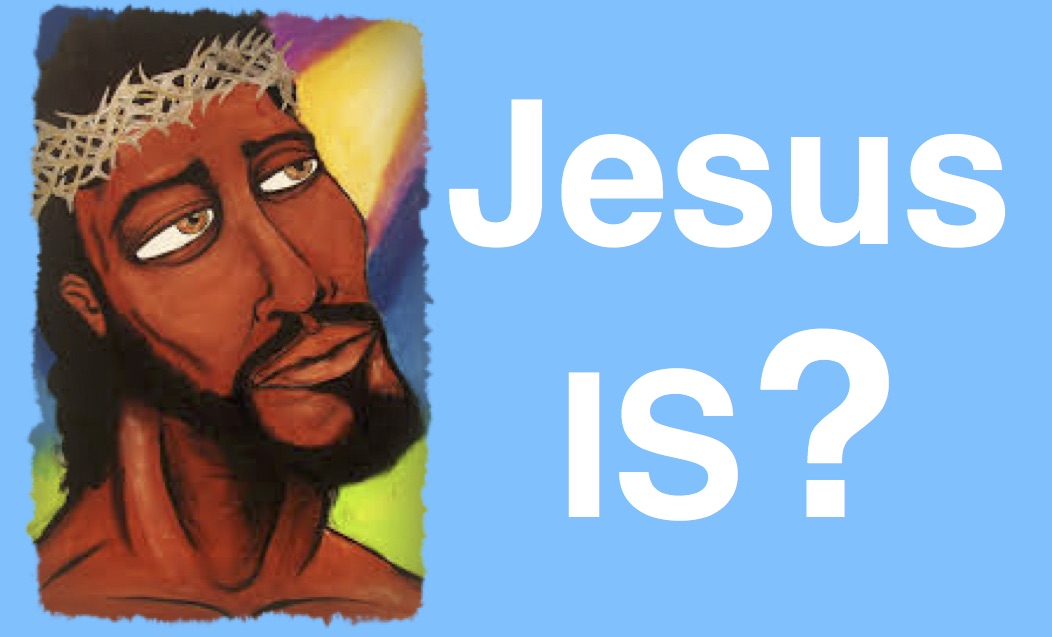
“Who Do You Say I AM?” – Jesus IS? – part 3of3

This interactive sermon is the third in a series of sermons responding to the question “Who Do You Say I AM?” Part 1 can be found here and Part 2 here

The sermon is divided into two sections and the audio includes the readings as well as the songs. you can listen to the sermon here

“Jesus IS?” Section ONE: Questioning

We cannot un-know what we have learned. In the past one-hundred years biblical scholarship has exploded.  In the halls of academia, in the seminaries of mainline denominations the quest for knowledge about Jesus has born so very much fruit. Now thanks to the explosions of the information age, information that was once reserved to the carefully initiated, is available to everyone. Wander into your local bookstore, or turn on your computer and you will discover more information than any one person could ever digest on the subject of Jesus. And yet, despite more than 2000 years of scholarship, theologizing, speculating, preaching, and teaching, the question, put on the lips of Jesus by the anonymous gospel-storyteller that we call Matthew, remains a daunting question to answer. 

“Who do you say that I AM?”  This is a question designed by the storyteller to evoke a response from the listener. “Who do you say that I AM?” Our individual responses to this question are tinged by all that we have been taught, by our families, by the church, by the culture in which we live, by the communities to which we belong, by the books we have read, the movies we have seen, the documentaries we have watched, the lectures we have listened to. Those of us who have stayed behind in the church, long after the vast majority of the population have left, we have been trying to answer questions about Jesus have learned so much about Jesus.  But rather than help us answer the question, what we think we know about Jesus, has left us tong tied.

“Who do you say that I AM?”  The way in which we answer questions about the identity of Jesus matters in a world where so many of the answers that have already been offered continue to misrepresent the man who lies at the heart of Christianity. These days, what passes for Christianity often stands in direct opposition to the teachings of the man Christians profess to follow. The idol worshipped by millions depicts Jesus as a super-hero God, sent to die as a blood sacrifice for sin.  This idol has co-opted the story of Jesus the man who steadfastly refused to take up violence against his enemies. Worshippers of this idol seek the companionship of a personal saviour, sacrificed violently for their personal sin, while they turn their backs upon Jesus’ the man’s personal quest for peace through justice for all.  Worshippers of this idol follow a saviour who encourages them in their personal quest for happiness in this world and the next.  All too often, this personal quest for happiness, results in the oppression and suffering of others, requiring the followers of this idol to embrace violence.

“Who do you say that I AM?” The way in which we answer this question has implications for the way in which we live in the world. “Who do you say that I AM?”  – a human, a seeker of justice committed to non-violent resistance to oppressive systems, willing to give everything to achieve peace, peace for all.   A teacher offering insights into a way of being in the world that embodies LOVE. Or a super-human, blood-sacrifice, who demands obedience and conviction to a carefully crafted story designed to ensure that your tribe wins the battle to create a new world order, where your tribe wins not only in this life but in the next. “Who do you say that I AM?”

Section Two: Imagining

“Who do you say that I AM?” Before we can say who Jesus is, we must imagine who Jesus was.  David Steindl-Rast reminds us that, “religions start from mysticism. There is no other way to start a religion.” Steindl-Rast  compares this mystical experience “to a volcano that gushes forth…and then…the magma flows down the sides of the mountain and cools off. And when it reaches the bottom, it’s just rocks. You’d never guess that there was fire in it. So after a couple of hundred years, or two thousand years or more, what was once alive is dead rock. Doctrine becomes doctrinaire. Morals become moralistic. Ritual becomes ritualistic. What do we do with it? We have to push through the crust and go to the fire that’s within it.”

The fire that sparked Christianity is Jesus. The red-hot experience of the living breathing Jesus, bubbled up out of out of the mountain that  Judaism had become. Like red hot lava Jesus flowed through the towns and villages of first century Palestine sparking a revolution that has long since cooled. We are the inheritors of the dead rock formations that lie scattered about us.  If we are ever to push through the crust to experience the fire that lies within, we will need to have the courage to shatter the idol of Jesus that Christianity has fashioned out of the rock. That means imagining who Jesus was when the fire ignited so that we can determine who Jesus is, here and now, in this place and in this time.

 “Who do you say that I AM?”  Let’s begin where it always begins in ancient literature, let’s begin with the name. The name given to the experience of whatever it is that lies at the very source of reality. YAHWEH – I AM WHO I AM. The ancient name given by the Hebrew people to their experience of the Divine. I AM – from the verb to be… God – IS

The question put on the lips of Jesus by the anonymous gospel storyteller we call Matthew “Who do you say that I AM?” echo’s the very I AM that this same Jesus depicts in a whole new way.  It is all in the name.  Sadly, we’ve missed the fullness meaning of Jesus’ name. Jesus was known by two names in the ancient world. Can anybody tell me what those names were? ……Yeshua ben Yosef  …. Yeshua bar abba … Joshua  =  God is Gracious or God Saves

      Yeshua ben Yosef = Joshua son of Joseph

      Yeshua bar abba   = Joshua son of abba the name Jesus used for God

      Joshua – salvation a man or a god

      There in lies the question – Jesus divine or human?

      “Who do you say that I AM?”

      Last Sunday I talked about how the Creeds have shaped us. The Apostle’s and the Nicene Creeds were created in the 4th century after the life of Yeshua ben Yosef, or Yeshua bar Abba by the powers of the Roman Empire to ensure that there would be a consistent view of Yeshua throughout the emerging church. That consistent view served the Empire well and went a long way to solidify the idol of Jesus Christ that continues to pervade our culture.  So, let’s set aside the creeds for a moment and respond to the questions of Jesus’ identity in ways that give us a glimmer of the fire that gave birth to a way of being in the world.

“Who do you say that I AM?” conversation

Where two or three are gathered in my name

I AM there in their midst.”


I AM IS in our midst.


I AM WHO AM

IS

in our midst.

The experience of the I AM

burned so brightly in

Yeshua

May that flame burn brightly

in, with, through, beyond us.


Sometimes You Just Have to Be a Bitch! – Matthew 14:21-28

Listen to the sermon here

That annoying Canaanite woman is at it again and not even Jesus can catch a break. Every three years that annoying woman comes along to disturb us. The way the anonymous gospel storyteller that we call Matthew tells his story, this annoying woman exposes Jesus for the human being that he was and shatters our illusions of Jesus the god-like super-hero. We could just look the other way. We could do what people, all too often, do when someone brushes off another human being with a racial slur; we could pretend we didn’t hear it. We could do what, according to the story, Jesus’ followers wanted Jesus to do, when they urged him to: “Please get rid of her! She keeps calling after us”

It clear from the way that the story is told that Jesus was trying to ignore this annoying woman’s incessant pleas, but she will not leave him alone. As much as I’d like to ignore her and everything she represents, she just won’t give us a break. Yes, I know that according to the story this woman was worried about her child, but how dare she expose Jesus in this way?

It’s been a hell of a week and I don’t know about you, but I’ve heard more than enough about racism this week to last me a lifetime. I don’t want to have to think about racism today. I want to get away from all the noise about racism and I don’t want to have to think about the fact that even Jesus is guilty of uttering a racial slur. If I still believed in the kind of God who functions like a puppeteer in the sky, I would suspect that this gospel reading didn’t just appear on this particular Sunday by chance. Even though I don’t believe in that kind of God, every once in a while it would sure be nice to be able to blame this reading on God. But like I said, every three years this reading comes up in the lectionary and this annoying woman forces us to see Jesus for who he was, a man. Jesus was a man of his time; a man who was raised in an environment where women were to be seen and not heard;  a man who was raised to believe that his people were superior to other people, a man who wasn’t about to be disturbed by the yammering of a woman who was after all was said and done nothing more than a Canaanite.

Jesus was after all a rabbi and a busy rabbi at that. Hadn’t he just fed the 5,000 and walked on water? He was a rabbi who was in demand, the crowds couldn’t get enough of him, Jesus had places to go and people to see. Just who did this woman think she was? It is clear from the way the story-teller recorded this story that she was a Canaanite woman, they were after all in the district of Tyre and Sidon and that place would have been full of Canaanites. Jesus and his disciples had wandered off the beaten track, probably trying to avoid the crowds that couldn’t get enough of Jesus. Well there’s just no telling who you might run into when you wander into neighbourhoods where those kinds of people live. Continue reading

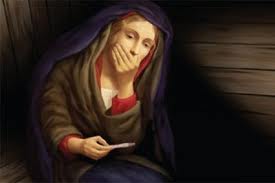
Commemoration of Saint Mary: Was Mary a Virgin or Was Mary Raped?

pregnancy test

Mary Pregnant? St. Matthew-in-the-City (Auckland, NZ)

Today the Church celebrates the feast of St. Mary the Mother of Jesus or as it is still called in the Roman Catholic Church The Feast of the Assumption of St. Mary into Heaven. This enigmatic  woman has remained in the shadows for centuries. All too often the epithet “virgin” has been applied to the young woman who fell pregnant so long ago. So on this festival day I this re-post this sermon which I preached a couple of years ago in which I asked some questions about Mary. At the time I was reading Jane Schalberg’s “The Illegitimacy of Jesus”, John Shelby Spong’s “Born of a Woman” and “Jesus for the Non Religious” along with John Dominic Crossan and Marcus Borg’s “The First Christmas” and this sermon is laced with their scholarship. As always the written text is but a reflection of the sermon preached on the Fourth Sunday of Advent 2009.  

Sadly, one doesn’t have to travel too far into the past to arrive at the time when women’s voices were not heard. Indeed, in the Lutheran church, it was only a few short decades ago.  For most of us that time is within our own lifetime. For generations, men have told our sacred stories. Men have decided which stories made it into the canon of Sacred Scriptures. Men have interpreted the stories that were allowed to be told. Men have translated, taught, and commented upon those stories from pulpits, in universities, in seminaries, in commentaries and in the public square.  Continue reading

Relinquish White Privilege: Rev. Jordan Cantwell, Moderator of the United Church of Canada, passionately preached to the National Convention of the ELCIC

The closing worship of Evangelical Lutheran Church in Canada’s National Convention was richly blessed by the Rev. Jordan Cantwell, the Moderator of the United Church of Canada! Rev. Cantwell’s presence throughout the convention enriched us in ways that I am still unpacking. Take some time to listen to this passionate preacher and be challenged by her call to relinquish white privilege. 

Erotic Playfulness: Our Bodies are Sacred Instruments Designed to Play in the Sacred Dance of Desire: Song of Solomon 2:8-13; Matthew 11:16-19, 25-30, Pentecost 5A

“What comparison can I make with this generation? They are like children shouting to others as they sit in the market place. ‘We piped you a tune, but you wouldn’t dance. We sang you a dirge, but you wouldn’t mourn.’ For John came neither eating nor drinking, and they say, ‘He is possessed.’ The Chosen One comes, eating and drinking, and they say, ‘This one is a glutton and a drunkard, a friend of tax collectors and sinners. ’Wisdom will be vindicated by her actions.”

Wisdom will be vindicated by her deeds.  In Jesus’ words, we can here the dim echoes of a time gone by.  Long before Jesus came there was a character who called out in the marketplaces.   You can read about her in the Old Testament books of Proverbs and Job, in the Wisdom of Solomon and Ecclesiasticus.  What students of the Bible call the “Wisdom literature” is full of stories about a character who so many people have never heard of. In the book of Proverbs, she claims to have been there when God was busy with creation and she declares:  “When God set the heavens in place, I was present, when God drew a ring on the surface of the deep, when God fixed the clouds above, when God fixed fast the wells of the deep, when God assigned the sea its limits…when God established the foundations of the earth, I was by God’s side, a master craftswoman. Delighting God day after day, ever at play by God’s side, at play everywhere in God’s domain, delighting to be with the children of humanity.”   

Who is this master craftswoman?  Job insists that, “we have heard reports of her”. But, “God alone has traced her path and found out where she lives.” The writer of Ecclesiasticus admonishes the reader to: “court her with all your soul, and with all your might keep her ways; go after her and seek her; she will reveal herself to you; once you hold her, do not let her go.  For in the end you will find rest in her and she will take the form of joy for you.” In the Wisdom of Solomon, she is described as ” quicker to move than any motion; she is so pure, she pervades and permeates all things. She is a breath of the power of God, pure emanation of the glory of the Almighty; hence nothing impure can find a way into her. She is a reflection of the eternal light, untarnished mirror of God’s active power, image of God’s goodness. Although alone, she can do all things; herself unchanging she makes all things new. In each generation, she passes into holy souls, she makes them friends of God and prophets.”

You may not know who she is, but Jesus certainly did. Tales of her deeds were popular in Jesus’ day. Jesus, a student of the scriptures who was referred to as a rabbi, would certainly have known who this heroine of the scriptures was. In the ancient Hebrew texts of the Wisdom Literature she is called “CHOKMAH.”  In the ancient Greek translations of these texts she is called “SOPHIA.” In our English translations of these texts she is simply known as “wisdom.” The ancient Hebrew and Greek languages were written without punctuation. There were no spaces between the words.  Until long after Jesus’ day there were only capital letters.  Upper and lower case letters were not used. Unlike our system were personal names begin with capital and are followed with lower case letters, ancient texts consist of lines of unbroken capitals. Words do not have spaces between them and so translating these texts into English is tricky. This is just one of the reasons why Sophia’s story has remained hidden from most of us.  When you read the texts that describe wisdom, it is clear that they are, at the very least, speaking about wisdom as though wisdom were a person.  Sophia is wisdom personified. Sophia is spoken of as being around from the beginning–before creation. She was with Yahweh at the time of creation; creation couldn’t happen without her presence.  Other biblical passages show her coming to be with humanity, reaching out to people to be in relationship with them.  She walks through the streets, calling out to people, trying to get them to listen–to follow her.   She’s also a welcoming hostess inviting people to her table, a bountiful provider of food, the source of all good things.  She is the way to life abundant. She is also a trickster and play is one of the ways she gets things done. You may not have heard of her, but when Jesus speaks to the people about children calling to one another in the marketplaces, the people would have remembered Sophia standing in the marketplaces and calling the people out to dance. But the people refused to join in Sophia’s playful dance. Sophia’s reputation for playfulness led the people to refuse her invitation. Jesus who came eating and drinking, called out to the people. But his reputation led the people to label him a glutton and a drunkard, a friend of tax collectors and sinners!

Jesus declares:  “We played the flute for you, and you did not dance”. Jesus harkens back to the images of Sophia in the Scriptures and insists that, “wisdom will be vindicated by her deeds.” Sophia’s reputation as a trickster who accomplishes great deeds through play and Jesus’ reputation as a glutton and a drunkard who comes to the world eating and drinking aren’t usually emphasized by those who tout their religion in the public square.

I can honestly say I have never heard of members of the religious right taking to the airwaves to encourage society to eat, drink, and be merry. And yet, this stuff is in the Bible. The Bible describes playfulness as an important part of the God in whose image we are created. All too often those of us who profess to follow Jesus, refuse to hear Jesus: ‘We piped you a tune, but you wouldn’t dance.”

Jesus is calling us out to play. Yes, I know it is summer and I just go out to the lake and splash and play in the water. I can’t help myself. I just want to let Jesus’ words take me back to the words of Sophia, so that we can play together in the words of the scriptures.

In the Bible, it is Sophia who is first given the task of calling God’s people out to play, and that playfulness goes way beyond dancing. Despite the church’s attempts to contain and or constrain our playfulness Jesus continues to call us out to play!

On this glorious summer Sunday, on a weekend when it is meet right and salutary to celebrate, we can listen to the tune Jesus is piping and we can dance for joy for we are wondrously and gloriously made. Weekends are not the only things designed for play, we are. In the books of the Old Testament that are known as Wisdom Literature, it is made very clear that our bodies are blessings given by God so that we might delight in them. Playfulness, includes exploring the pleasures that one body can give to another body. There’s a little book in the Bible called that we call the Song of Solomon, but that for centuries was simply known as the Song of Songs and there you will find words that can make televangelists positively apoplectic.  “Look, there my love stands behind our wall, gazing in at the windows, looking through the lattice. My beloved speaks and says to me:  ‘Arise, my love, my fair one, and come away; and come away; for now the winter is past, the rain is over and gone. Let my love kiss me with kisses on the mouth!”

How did this get into the Bible? The Song of Solomon, or as it is sometimes called, the Song of Songs is surely the most erotic book of the Bible. This erotic song of songs is a long poem in which a woman, “Black and beautiful,” and a man, “radiant and ruddy,” speak the language of desire, cataloguing every inch of each other’s body, every smell and every taste. The radiant young man declares to his lover, “Your navel is a rounded bowl that never lacks mixed wine.” and she tells anyone who will listen that,  “His cheeks are like beds of spices, yielding fragrance. His lips are lilies, distilling liquid myrrh,” He responds by exclaiming that her, “two breasts are like two fawns, twins of a gazelle. I am my beloved’s” she exults, “and his desire is for me.”

The Song of Songs is a song about desire, and so it is also a song about the pain of separation, of missed meetings, and of absence. “O that his left hand were under my head,” the woman sings with palpable yearning, “and that his right hand embraced me!” and when her lover knocked on her door and she hesitated for a moment to open it, the woman speaks some of the sexist lines in any literature.

“My beloved thrust his hand into the opening and my inmost being yearned for him. I arose to open to my beloved, and my hands dripped with myrrh, my fingers with liquid myrrh, upon the handles of the bolt.” When she opens the door, however, he is gone, and she heads out into the city to search for him. “I implore you, O daughters of Jerusalem, if you find my beloved, tell him this: I am faint with love.”

I know, I know, enough already.  This is a church! Surely eroticism doesn’t belong within the sacred walls of a sanctuary! How did this erotic love poem make it into the Bible? No one knows for sure. But scores of interpreters, both Jewish and Christian, have found in it the song of human yearning for God and God’s desire to be in intimate relationship with humanity. The Song of Songs is read at the festival of the Passover as a reminder that God delivered Israel from slavery not only because God was bound by the covenant to do so, but also because God loved the people of Israel and desired goodness for them. The ancient Christian writer Bernard of Clarvaux wrote more than eighty sermons on the Song without even making it past the third chapter. According to Clarvaux the poem provided a means by which the individual believer could come into intimate relationship with God. Like all great poetry, the Song of Songs can easily sustain a wide range of interpretations.   But it resists being read only as a spiritual text about human beings and God. Clairvaux warned young monks and nuns not to read it until their faith matured, because of the sexual feelings it is able to inspire. Continue reading

Canada: Not the Promised Land – But a Land Full of Promise – a sermon in celebration of Canada

Readings for Canada Day weekend: Deuteronomy 26:1-11; Psalm 72:1-8a; Matthew 5:43-48

Listen to the sermon here

“A wandering Aramean was my ancestor; he went down into Egypt and lived there as an alien, few in number and there became a great nation, mighty and populous.”  So, mighty and so populous that some of our ancestors wandered all the way to Northern Ireland. As a child in Belfast a long time ago, longer than I care to remember, so long  ago that life was very different than it is now. Life in Belfast during the sixties was simple. We didn’t have much. Life was simple and basic and so many of the things that we take for granted, simply didn’t exist back then.  Looking back on it now, I suppose you could say that we were poor. The truth is, we may indeed have been poor but I never knew it. Back then “the troubles” were reigniting in Northern Ireland as protestants and Roman Catholics began to slip back into their old violent ways. Looking back, I realize that the poverty and violence of Belfast in the 1960’s made it a tough place to raise a family. So, it makes sense that my family would leave Belfast as what today we would call refugees, fleeing both economic hardships as well as the threat of violence. But as a child in neither knew nor understood the realities of our migration. Nevertheless, arriving in Canada was just like arriving in the “Promised Land.”

On this Canada Day weekend, I can still vividly remember my first full day in Canada, even though it happened so very long ago. My Mother, my brother, and I arrived at the old Malton Airport. I don’t have any actual memories of walking across the tarmac, but legend has it that it was snowing on what should have been a spring day.  I do have memories of my very first car-ride. I can still see the massive 1957 Plymoth.  It was the first car my family ever owned and it had these huge fins at the back that were taller than I was at the time. The back seat was positively enormous and riding back there, I was thoroughly convince that my Dad had struck it rich in Canada. 

We pulled into the parking lot of the tallest building I had ever seen and Dad announced that we were home.  He pointed out a balcony way up on the fourth floor and said that this was our flat.Then we climbed aboard an elevator. I had never been in an elevator before and I was amazed at the skill with which my father took charge of the controls. When the door magically slide open, we walked down a long hallway to arrive at our front door.  I can still see the gold numbers on the door, “407”. We must be rich indeed, if we had good on our front door. I could hardly believe my eyes when Dad opened the door.  I remember the shiny wood floors, the brand new furniture, and the big TV set.

 As we toured the rest of the apartment, I simply couldn’t speak. This new home looked nothing like the homes I was used to.  What’s more inside the kitchen stood a sparkling white refrigerator. I had never seen such a thing. All I remember is that this refrigerator had magic powers that allowed us to keep food cold. Visions of ice-cream must have danced through my head.  Just imagine the marvelous ability to be able to keep ice-cream in your very own kitchen. No more walking to the corner shop or waiting for the ice-cream man to pass by.Ice-cream right there as cold as you like in your very own home. It blew my tiny little mind!

You can’t imagine how rich I though we had become. Especially when off we went on my very first trip to a grocery store.  A grocery store, not a shop or a market, but a grocery store in Canada, is a very magical place.  I can still remember playing with my brother on the magic entrance to the grocery store.  We had never before seen automatic doors and we were delighted to step over and over again on the magic mat that caused the doors to open. Then there was the big cart that people in Canada used to pile all their groceries in.   People in Canada bought so much food that they needed a cart to carry it all out to their cars so that they could fill their marvelous refrigerators up to the brim. It must have blown my Mom’s mind to think that she would no longer have to shop every day, but could actually shop once a week because we had a fridge to store everything in.

I have this vague memory of standing in front of boxes and boxes of cereal. I had never seen so many boxes of cereal.  So much choice.  I remember choosing a box with a bear on the package…it was a cartoon bear… but it was a bear, I couldn’t wait to see a real bear.  Canada, I thought must be full of bears. Perhaps the sugar pops, would make me strong enough to stand in front of a bear? I remember watching a square box of ice-cream travel down a magic counter and later watching as it was loaded into the massive boot of our massive car, and finally as it was placed in our very own freezer. Chocolate, vanilla, and strawberry ice-cream came out of that box. It was delicious.  I remember several times, sneaking into the kitchen and opening up the fridge and then peering into the freezer to see if any of the ice-cream was leaking out of the box. Wonder of wonders, in Canada people are so rich that they can keep ice-cream for days and days and days in their very own homes.  Canada is just like I imagined heaven to be. Canada was, to that little girl that I was way back then, Heaven here on earth.

Canada is an amazing land. I am not the first refugee, and I certainly won’t be the last refugee to discover that Canada is more lovely than the Promised Land of any wandering migrants dreams. The wealth of our land surpasses the wildest dreams of most of the people on this planet. We have been richly blessed. Listen to the words of Deuteronomy, they might just as well have been written for us:  “For the Lord your God is bringing you into a good land, a land with flowing streams, with springs and underground waters welling up in valleys and hills, a land of wheat and barley, of vines and fig trees and pomegranates, a land of olive trees and honey, a land where you may eat bread without scarcity, where you will lack nothing, a land whose stones are iron and from whose hills you may mine copper.  You shall eat your fill and bless the Lord your God for the good land that God has given you.”

Welcome to the promised land!  Look around you.   Rejoice and be glad for God has been gracious to you. Praise God for the bounty, which God has laid before us. Don’t let it be said of you, “that none of them was found to return and give praise to God except this foreigner”.  Let it be said that, “we shall eat our fill and bless our God for the good land that God has given us. Take care that you do not forget God.  When we have eaten our fill and have built fine houses and live in them, and when our wealth has multiplied, our silver and our gold is multiplied, and all that we have is multiplied, then do not exalt yourself, forgetting God, who brought us out of the great and terrible wilderness.” Do not let us say to ourselves, “My power and the might of my own hand have gotten me this wealth.” But remember God, for it is God who gives you power to get wealth, so that God may confirm God’s covenant that God swore to our ancestors, as God is doing today.”

Alas, like our ancestors, we too are like wandering Arameans,  for just like every other immigrant who ever came upon the beauty of a land not their own, we did not wander into an empty land. We are migrants, settlers, colonizers. Looking around this room, I think it is safe to say that, regardless of whether it was us our or our ancestors, our people, our tribe, took this land from the indigenous in habitants of this land. Our ancestors may have believed that they had a god-given right to this land. But the texts we revere as sacred cannot disguise the reality of the crimes that were committed when our forbearers took this land from the peoples and nations that had inhabited this land for centuries before any Europeans every dreamed that Turtle Island existed.  We are setters in this land, descendants of colonizers, our wealth came and continues to come at great cost to the indigenous peoples of this land that we love.

We come from a long tradition that looks back upon our ancestors as wandering Arameans who when they arrived at what they believed to be their Promised Land, they believed that their god was providing them with all the blessings they needed to thrive as a nation. The reality is that those wandering Arameans were settlers and colonizers in the land of Canaan. The Canaanites lost their land to the Israelites and the tragedy of colonization still reverberates down to this very day as Israelis and Palestinians fight over the blessings of the Promised Land.

As the celebrations of “Canada 150” fade, perhaps we can turn our attention to the many blessings of this land. Perhaps we can finally begin to move beyond the sins of our fathers and mothers, and set aside our own sins of omission. Perhaps we can begin to hear the words of the One we profess to follow and learn to love one another in ways that do not put one another into categories of native and non-native, indigenous and settler, colonizer and colonized, neighbour and enemy, but rather sisters and brothers in a land rich with promise.  We have relied for too long on the ravages of our past which trained us well to be colonizers. Surely, it is time for us to set aside our childish ways, and look not to the tribalism of our past but rather to the sense of blessedness that called upon our ancestors to remember that we have been blessed to be a blessing.  Surely, we can begin the next 150 years by finding ways to be a blessing to our sisters and brothers who have suffered the perils of colonization. If Canada is to grow out of our childish churlish ways, we will need to learn from our indigenous sisters and brothers so that together we can cherish this land where the abundance of the earth provides so much promise that all who live here can find peace together.

Canada is not the Promised Land given to us by God so that we can gather up all the milk and honey. Canada is a land filled with promise; a land of nations of indigenous peoples and settlers have many blessings to share with the world. Before the promise of Canada can be realized, it is time for us to clean-up the mess of “Canada 150” by atoning for the sins of our mothers and fathers as well as our sins of omission. We can do that by ensuring that our all our sisters and brothers have access to the milk and honey.  We can do that by learning from our indigenous sisters and brothers how to live in harmony with the land, how to respect the blessings of Turtle Island, how to share the blessings in ways that ensure that this great land continues to thrive.  We can do that by repairing the damage that has been done while ensuring that every child feels as richly blessed as we do. Only when everyone of us is free to embrace with dignity the promise of this great land will we truly begin to embrace the blessedness that abounds all around us in ways that will be a blessing to the world.

 May we all learn to look beyond “Canada 150”, so that together we can see our blessedness not as our own, but as god-given so that we might be a blessing to others. We have been richly blessed.  And, to those to whom much has been given, much is expected. We have been blessed to be a blessing. The party is over, let the clean-up begin. Set your minds upon the ways in which you might embrace your blessings so as to be a blessing to others. Let it be so. Amen.

“Canada 150” Spitting in the Face of Indigenous Sisters and Brothers – a sermon in preparation for the celebrations

Readings:  Genesis 2:15-17, 3:1-7; Acts 2:44-46; Matthew 5:21-26

Listen to the sermon here

According to the anonymous gospel storyteller that we call Matthew, Jesus said, “But I tell you that everyone who is angry with sister or brother is subject to judgment; anyone who says to sister or brother, ‘I spit in your face!’ will be subject to the Sanhedrin; and anyone who vilifies them with name-calling will be subject to the fires of Gehenna.”

“Gehenna” a valley outside of Jerusalem where people burned their garbage. Gehenna a filthy stinking kind of place where, in the heat of the day, fires consumed the trash of the city. Gehenna a loathsome place that looms large in our collective imaginations as the mythical hell that haunts our culture, tormenting so us with nightmares of our own making.

“Anyone who says to sister or brother, “I spit in your face!’ will be subject to the Sanhedrin” – the Sanhedrin – the people’s court – a place where society judges our actions, “anyone who vilifies” a sister or brother, with name-calling bill be subject to the fires of Gehenna.”

What is this doing in the Bible? Where is the Good News? Why did our ancestors in the faith preserve this particular piece of storytelling? “Anyone who says to a sister or brother, ‘I spit in your face!’ will be subject to the fires of Gehenna.”? What is the anonymous gospel storyteller that we call Matthew trying to tell us? “If you bring your gift to the altar and there remember that your sister or brother has a grudge against you, leave your gift there at the altar. Go to be reconciled to them, and then come and offer your gift. Lose no time in settling with your opponents—do so while still on the way to the courthouse with them. Otherwise your opponents may hand you over to the judge, and the judge hand you over to the bailiff, who will through you into prison. I warn you, you won’t get out until you have paid the last penny.”

I suspect that the anonymous gospel storyteller, that we call Matthew, knew a great deal about the kind of disputes that may have inspired Jesus to want to cast members of his own tribe upon the dung-heap of his society.  Remember, Jesus own people were colonizers in the land of Palestine. Colonizers all too often resort to spitting, both metaphorically and quite literally in the eyes of the people that they are colonizing. So, I can well imagine the kinds of disputes that would have been rampant in a land of Palestine that had been colonized over and over again. Jesus’ own tribe, the Jewish people, had colonized the Canaanites. In Jesus’ day, the first inhabitants along with the Jewish colonizers were in turn colonized by the Romans. Inter-tribal disputes were a dime, or should I say, a shekel a dozen. I can well imagine that there was a lot of spitting going on.

Land claims; we here in Canada suffer under the delusion that we are the only ones who must deal with complications over who owns the land. But this kind of tribal turmoil has been going on since long before the Hebrews wandered off into the wilderness of the desert and found themselves dreaming of a Promised Land. One person’s promised land is another person’s home. It seems to me that the only way to justify driving a fellow human-being off their homeland is to dehumanize them. Human history is filled with examples of one group of humans moving in on another group of humans and it usually begins with one human deciding that the other human is less of a human than they are. Colonizers, by definition, dehumanize the colonized. Dehumanizing others, inspires the kind of contempt that allows some of us to spit in the faces of others of us.

First century Palestine, like 21st century Palestine afforded all sorts of people the opportunity to spit in the faces of all sorts of people. When you scratch the surface of all the spitting you can usually discover some sort of dispute over land. We humans suffer from the original sin of believing that we can actually own the land; as if the land is ours and ours alone. And yet, every tribe in every land, has an innate sense that the land comes to us as pure gift from the Creator of the land. This Creator of land, however our particular tribe imagines this Creator, is the ONE we look to as the ultimate owner of the land. But we humans have this ugly snake that lives deep down inside us, that fills our heads with delusions of grandeur, that deceive us into believing that we and we alone are the ones who are wise enough to occupy a particular place in a particular time. Oh, we humans are very adept at dressing up our naked aggression, but there hasn’t been a fig leaf made that can disguise our hubris. And so, we spit in the face of those who reflect our nakedness back to us.

This particular allegory of Jesus insisting that such contempt will lead us all to the rotting, smoldering, garage heap that haunts our deepest nightmares, is not a particularly cheery tale for a Sunday morning. These verses from our sacred scripture don’t get much airplay in our sacred spaces. You don’t often hear about the dire consequences of our contempt for one another. Oh, sure we know that these verses are there, but we’d rather forget about them, and we certainly don’t want to be reminded of Gehenna on a summer Sunday. Which brings me full circle to what I want to remind us of on this particular summer Sunday. For like these uncomfortable verses of scripture that remind each of us of the contempt that slithers about in the dark places of our psyche, there’s a particular kind of contempt that most of us don’t particularly want to be reminded of at this particular time of the year. As our nation prepares to celebrate “Canada 150,” none of us want to think about the many ways our celebrations are spitting in the face of our sisters and brothers, who continue to suffer from the realities of the colonization which continues to benefit each of us as settlers in these lands that we love.

“Canada 150,” as if our various tribes’ appearance in these lands, marks the starting point of Canada. 12 to 15 thousand years, that’s how long the experts insist indigenous peoples had lived upon the lands we call Canada. Indigenous: “originating or occurring naturally in a particular place” As opposed to, settlers who colonized, these lands, displacing the indigenous by whatever means necessary so that our peoples could become the masters of these lands. Our ancestors, the original colonizers, brought diseases that wiped out whole nations of peoples. Our ancestors, the original settlers, inspired by contempt for the First Nations of these lands, drove millions off their various homelands. Our ancestors, came in waves, to settle these lands and over generations adopted tactics designed to rid these lands of “Indians”.

But just like our sacred scriptures that warn against the folly of spitting in the face of our opponents, the colonization of these lands happened a long time ago. We’d rather forget about all that and move on. The trouble is we settlers keep spitting in the faces of our indigenous sisters and brothers. And for those of us, who believe that we are not like our ancestors, the reality that our government is spending half-a-billion dollars this year to celebrate “Canada 150” while 134 indigenous communities do not have safe drinking water — well if that is not spiting in the face of our sisters and brothers, I’m not sure that we setters will ever understand what the anonymous gospel story teller that we call Matthew was trying to tell us, let alone what Jesus lived and died for.

Listen to the words of our Metis sister, Christi Belcourt as she reacts to the spit that has landed on her face.

“Canada,

I can cite for you

150

Lists of the dead

150 languages no longer spoken

150 rivers poisoned

150 Indigenous children taken into care last month

150 Indigenous communities without water

150 grieving in a hotel in Winnipeg

150 times a million lies

told to our faces

to steal our lands.

Canada,

I can cite for you

150

Forms of resistance

150 battles to the death

150 water warriors walking

150 naming ceremonies

150 ways we shake the ground with dance and song

150 tattooed expressions of sovereignty

150 times 2 million days faces were painted

with earth of this land.

Canada,

I can cite for you 

150

Summers coming of resurgence

150 thousand babies birthed in ceremonies

150 thousand status cards burned

150 thousand youth marching for water

150 thousand children with braids and feathers in their hair

150 thousand Indigenous words being spoken without English

150 summers coming 

of Mother Earth calling out to our hearts

150 summers coming

where you too, will finally come to understand

the power and spirit of these lands and waters

as our ancestors have known and have been trying to tell you for 500 years.”

Christi Belcourt is calling upon you and I to recognize that our “Canada 150” celebrations are in fact a celebration of 150 years of colonization. Perhaps it is time for us to really hear the words of our own sacred scriptures: “If you bring your gift to the altar and there remember that your sister or brother has a grudge against you, leave your gift there at the altar.Go to be reconciled to them, and then come and offer your gift. Lose no time in settling with your opponents—do so while still on the way to the courthouse with them. Otherwise your opponents may hand you over to the judge, and the judge hand you over to the bailiff, who will through you into prison. I warn you, you won’t get out until you have paid the last penny.”

Justice, real justice would extract a high price from those of us who continue to enjoy the benefits of 150 years of colonization. Fortunately, our indigenous sisters and brothers are not insisting upon an eye-for-an-eye kind of justice. Our indigenous sisters and brothers are inviting us to sit down with them to work together to find a way forward upon these lands that we all love. They are inviting us to do what the members of our Christian tribe have done since the first followers of the way began to chart a path in the wilderness of their own colonial nightmare. Our ancestors in the faith gathered together and in the words of the Acts of the Apostles: “Those who believed lived together, shared all things in common; they would sell their property and goods, sharing the proceeds with one another as each had need. They met in the Temple and they broke bread together in their homes every day. With joyful and sincere hearts, they took their meals in common, praising God and winning the approval of all the people.”

Our indigenous sisters and brothers are inviting us to sit down together to break bread with one another, so that we can find ways to share the blessings of these lands that we love. We are being invited to share in a process that is embodied in the smudging ceremony that purifies the space to permit the sacred energy that exists between peoples to lead us forward in peace.

So, during the days of celebration, let us open ourselves to the possibilities of peace among the lovers of these lands. Let us remember twelve to fifteen thousand years of history on these lands, and let us honour all those who have gone before us, all those who will come after us, by learning to live in harmony with our sisters and brothers upon these lands that we call Canada.


Make some noise and let the walls come tumblin down! – a sermon for York Pride: Joshua 6:1-5

Listen to the sermon here

Earlier this week, I drove down Main Street. Main Street is all dressed up for Pride. On the lampposts, you can see beautiful rainbow banners announcing the York Pride Festival. I must tell you that I was so overcome by the sight of these Pride banners that I had to pull over and have a little cry. The sight of these banners flapping in the wind for all to see may seem totally unremarkable to some people. But to some of us, the sight of those banners moves us beyond words to tears that spring from a very deep place within our soul; tears that reflect so many emotions born of pain, defiance, struggle, isolation, relief, hope, and joy! As I wept, I couldn’t help but marvel at how very much has changed since I first began to become aware of who I am.

I was only ten years old in 1967, when Pierre Trudeau declared that, “There’s no place for the state in the bedrooms of the nation.” I was too young to understand the news in 1968, when Canada decriminalized homosexual acts. I don’t remember being aware of the Stonewall riots that erupted in 1969. As a teen-ager in the 1970’s, what went on between consenting adults was something seldom talked about. It wasn’t until the early 80’s when the reality of the AID’s epidemic drove conversations about homosexuality into the public square, that I began to pay attention to the cause of gay rights. Living in Vancouver and working in the travel industry, I lost friends, good friends, to a disease that devastated the gay community. Later as I began to allow myself to understand who I am, I remember trying and failing to find the courage to march in Vancouver’s Gay Pride parade. I don’t know what frightened me more, being seen at the parade or seeing myself for who I am. Fear is a long, long way, from pride. So, it took me longer than I care to admit to summon up the courage to participate in the pride parade in 1986. Later as I was preparing myself to become a pastor, I had the very good fortune to fall in love. Falling in LOVE is a very empowering experience. But falling in LOVE in 1997, when your church says things like “love the sinner, hate the sin”, well let’s just say, that when I was called here to Holy Cross in 1999, it wasn’t just fear that kept Carol and I quiet on the subject of our relationship, it was the reality that if I said anything at all, I wouldn’t survive as a pastor for very long. “Don’t ask don’t tell,” was the unofficial policy of the ELCIC. So, you didn’t ask, and I didn’t tell. Newmarket, I was told was a conservative town. Well a lot has changed over the years. Many of us worked for a very long time at considerable cost to change the policies of our government and our church. The benefits of equal marriage in Canada, and full inclusion in the Evangelic Lutheran Church in Canada are life-changing and I confess that there are days when I still feel like pinching myself. “Can it actually be true? Can I actually be married to the woman I love and still be a pastor?”

The relief and the joy of being who I am without fear of persecution, makes me proud not only of who I am, but of who you are, who we are as a community and as a country. My pride runs deep and so it is a joy to see how very far we have come. Sitting in my car weeping, I couldn’t help but marvel at the courage of so many people who paved the way for us. Those banners on Main Street and all the happy pride-goers yesterday, and all of us gathered here today to celebrate, we have so much to be thankful for. But I can’t help remembering a conversation with someone who will remain nameless. This person insisted that she, “loves the gays”, but she just wishes that they wouldn’t make such a big deal out of everything. She just couldn’t approve of gay pride. “I mean really, why do they need to flaunt their sexuality in public the way that they do. Can’t they just keep it to themselves.”  This person went on to declare, “I don’t flaunt my heterosexuality in public.”

Well her inability to flaunt her heterosexuality in public was all too clear. Her sexuality was very clearly suffering from her inability to see beyond all the stuff she’d ever been taught about her body;

sadly, I suspect that most of the stuff that had her so tightly wound up she must have learned from the church. For centuries our public institutions, all too often encouraged or justified by the institutional church, confined generations of lesbian, gay, bisexual, transgendered, queer, and straight people in closets so dark that we could none of us see who we are.

One of the blessings that we religious types have is a plethora of metaphors and stories that were created to liberate people from prisons of our own making. One of the stories that I have always loved is this morning’s first reading from the book of Joshua. I can hear that old spiritual, “Joshua fit the battle of Jericho and the walls come tumbling down,” each and every time some uptight, repressed individual begins to complain about those gay’s and their parades. The very idea of the children of Israel, those ancient Hebrew migrants, persecuted and excluded marching and hollering all around the mighty city of Jericho, with its walls erected to keep the riff raft out, well the metaphor is too perfect.  I can see it all now day after day, people making an ungodly racket. The sound of the shofar’s loudly blasting a radical tune. I’ll bet there was dancing and singing and hootin and hollerin. No wonder those walls come a tumblin down.

The scriptures are full of stories created to provide hope to the downtrodden, the oppressed, the persecuted, the suffering, the outcast, even the sinners. Yes, the walls may be tall, the structures that keep you out may be entrenched, but make enough racket and you’ll see those walls crumble. So, today I give thanks to all those rowdy folks who marched in spite of the fact that the walls erected by our society to keep them in the closet seemed insurmountable.  Today, I celebrate all the brave pride-goers who brought the walls of injustice down so that we can be all that we are created to be without fear. It has been a long and difficult struggle, and our pride celebrations inspire such joy. So, we sing, we dance, we make noise and yeah, we flaunt our sexuality in public! And I’m guessing that the gay rights movement has liberated more than just the LGBTQ communities. I’m guessing that our straight sisters and brothers have learned a great deal about who they are. I’m pretty sure that liberation and freedom from sexual repression are indeed a blessing that more than just a few of us are grateful for. The reality that we a wonderfully and beautifully made, creatures of mysterious and sublime wonder is a blessing of unfathomable joy.

So today, we celebrate who we are! But with each and every utterance of, the words “Happy Pride!” we cannot forget that our joy is tinged with sadness for all our sisters and brothers around the world who continue to live and die in fear. The Pride movement is still in its infancy.

We have come a long way. But we have miles to go and so many more wall to break down; walls that will require a whole lot of noise before they come tumblin down! We are blessed to live in a place where we can be who we are and love one another without fear of the state. Sadly, there are still places here where some of us are afraid to hold hands. There are places where some of us fear to go. We will need to do a whole lot more marching. We will also need to make a great deal of noise so that our government opens gaps in our walls so that we can provide sanctuary to LGBTQ refugees. We will need to make a great deal more noise so that hate-filled states like Chechnya will stop the killings and Malaysia will stop the public floggings. Those of us who remain in the Church must continue to make a whole lot of noise so that our institutions repent the abuses of our past and stop the abuses that continue to be perpetrated in the name of Jesus. We must do our best to join our voices to the voices of those outside our walls so as to hasten their crumbling. We must open up dialogues and we must tell our stories so that the LOVE that lives in us can inspire hope as it breaks down walls. We must remember that the one whom we profess to follow this Jesus fellow, is the one who said over and over again, “Do not be afraid. Have no fear!”  The very one who reached out beyond the confines of the walls established by the structures and institutions of his day, to love his neighbours. The same one who insisted that God is LOVE.

So, as we celebrate today, we do so mindful that there is more noise for us to make and hopeful that as we make that noise together the walls will come tumblin down. Happy Pride everyone! May the LOVE that is God empower all of us to be all that we are created to be.