If I could explain the Trinity to you, I would, but I cannot. I’m not that good a preacher! – a sermon of sorts for Trinity Sunday

Listen to the sermon here


So, today is Picnic Sunday and Trinity Sunday all rolled into one. As your preacher, on Trinity Sunday my job, is to explain the doctrine of the Trinity to you. As a Lutheran preacher, I have been trained to go to our creeds in order to explore what our forbearers have traditionally confessed to be true about the nature of the Trinity. And on Picnic Sunday, my job on is to preach a short sermon so that we can move on to enjoying our picnic. I wish for all our sakes that I was that good a preacher. If I could explain the Trinity to you, I would but I cannot, so I will do my best to keep it short. As for the creeds confessed by the Lutheran Church, well I haven’t been able to profess my faith using our traditional creeds for a long time now. I can say however, that: Martin Luther himself wasn’t able to explain the Trinity even though he wrote volumes and volumes on the subject. The concept of the Trinity is an ancient tradition that attempts to make sense of the Mystery that we call God. God is a Mystery, and mysteries by definition, are in and of themselves unexplainable.

So, let me tell you a story. It’s a story right out of the last chapter of John Shelby Spong’s book “A New Christianity for a New World.” The chapter is entitled:  “The Courage to Move Into the Future”. In it Jack tells the story of a student he had at Harvard, who was pursuing a Master of Divinity Degree; that’s the degree you need to be a pastor in a mainline denomination like ours. Kathrin Ford, like many women who have taken on the task of preparing themselves for a career in the church, was struggling with the constraints of a patriarchal institution that the church has become and was wondering if the church, as she had experienced it, would ever be open to the direction she felt compelled to travel.

Jack describes the experience of being in class listening to her preach a sermon like this: “She stood before us quite still, quite silent, then she began. Slowly at first, she painted with words the picture of a town facing a major flood. The rains came with such relentlessness and over such a long period of time that the river rose dangerously. The people formed sandbag brigades to protect the things they valued. The sandbag walls rose, but the floodwaters rose faster. Soon water covered their fields, drowning first the wheat, then the canola, then the onions. The people, seeking safety inside their homes, watched with a sense of helplessness as their livelihoods were destroyed before their eyes. They wanted to flee, but their roots were too deeply planted; they were so totally attached to the values enshrined in their farms and town that they felt they could not leave. Still the river kept rising. It now covered the first floor of their homes. As they watched their family photographs—symbols of their past—curl up and float away on the water, they felt they were losing the very meaning of their lives. Soon their physical sustenance was so endangered:  the floodwaters covering their town began to seep into the ground, contaminating their ground-water.

Their homes were becoming unlivable. If they stayed in this place, they would surely die. Yet something powerful and relentless inside themselves continued to urge them to remain where they were. Rationally they knew they had to leave, but emotionally they were immobilized.

Katie Ford described this scene with evocative images that kept her classmates raptly attentive. Yet they had no idea where she was going with the image or this theme, nor did Jack. Then with all of them caught up in her symbolic description of a killing flood, she began to speak the words of the Christian creed, beginning with the phrase, “I believe in God, the Father almighty.” This creed, she said, like that flooded town, “has become for me an unlivable place.” She then described the history of creedal formation. The creeds were “a response to debate,” she said, “designed to tell who was an insider in the Christian faith and who was not. A creed is a border-maker,” she added, fashioning her developing definition.

No Christian creed is “a full statement of faith,” she continued. It is only the Christian community’s ecclesiastical “response to arguments.” All the undebated issues, she said, have been left out. That is why in the creeds “there is no mention of love, no mention of the teachings of Jesus, no mention of the kingdom of God being present in our bodies and souls, no mention of God as the ground of life.”

The creeds have fallen on us, she asserted, like the rain over the centuries. They have been repeated endlessly, shaping our minds and our souls to the point where we cannot think of God outside the forms they affirm, or the boxes they create. They have permeated our land, shaped our values and yes, even entered the intimate assumptions of our living space. “Drop by Drop,” she said, our religion, as it come to be embodied in our creeds, has given us “a profoundly dangerous doctrine of God.” It has covered our fields, she said, and destroyed the very crops that Christians are supposed to harvest as their livelihood. It has contaminated our groundwater. “We have been drinking in the Father God our whole life.” “This creed,” she argued, “has, like that flood, rendered our traditional religious dwelling places no longer habitable.”

Yet this creed, and the definitions that arise from it, are so powerfully present in our emotions that even when we judge it to be a destructive document that is killing our very souls, still it whispers, “You cannot leave.  You will be lost if you wander. You must stay where you are.”  But we cannot stay. The price is too high. These creeds have given us a God, she said, “Who caused the death of his son, the damnation of disbelievers, the subordination of women, the bloody massacre of the crusades, the terror of judgment, the wrath toward homosexuals, the justification of slavery.”

She went on to delineate that God of history: “The Father almighty God embodied in the creeds is a deity who chooses some of the world’s children while rejecting others. He is the father who needs a blood sacrifice, the father of wrath, the father of patriarchal marriage, the father of male ordination and female submission, the father of heterosexual privilege, the father of literal and spiritual slavery.”

She examined and dismissed the ways various church people have tried to address the “unlivability” of the creeds, the no-longer-belivable quality of the Father God as traditionally defined. Some do it, she said, by nibbling or tinkering around the edges of reform. Making God-language less masculine and more inclusive is a positive step, she conceded, but it does not go deep enough.

The real issue, she continued, “is that God is not a person. God is not a being. God is Being itself.” There was stunned silence in the room as Katie drove her conclusion home. This God, who is “Being itself, is not the father of life,” she countered. “This god is life.” Our creeds, she concluded, have now made it impossible for us Christians to continue to live in the place to which these creeds have taken us.”

This story mirrors my own dilemma. These are exciting times in which to live in the church. I believe that we are living smack dab in the middle of a reformation. I’m not alone in that belief. Reformations may be exciting but they are not the most comfortable places to be. I confess that there are days when I long for the Blessed Assurance of a bygone era.  But the rains began to fall a long time ago and the waters have been rising and it’s time to go. The Church, this old boat might have sprung a leak or two, and there are quite a few souls who’ve felt the need to abandon ship. But she can still float and I believe that it’s up to those of us who are still aboard not to scuttle her, but to begin to bail her out. Fortunately, there’s still enough of us left and if we start bailing know we just might be able to through enough water over-board to get us where we need to go. Continue reading

“I Pray God, Rid Me of God” – sermons for Trinity Sunday

Eckhart rid me of GodMeister Eckhart’s fervent plea: “I pray God, rid me of God” becomes a sort of mantra for me whenever the task of contemplating the Trinity rolls around on the liturgical calendar. Once again, I have failed to have the foresight to book my holidays so as to avoid the task of preaching on this festival of the church, so I find myself plumbing previous sermons in search of a way through the quagmire of doctrines which threaten to overcome even the most dedicated of preachers. I offer them here to my fellow preachers as my way of saying, “I pray God, rid me of God!!!” Shalom

click on the sermon title

While Preachers Dutifully Ponder the Doctrine of the Trinity,

Our Congregations Shrink???


“Trinity: Image of the Community that is God” Desmond Tutu

The Athanasian Creed and an Unholy Trinity

Wolf Blitzer Learned that there are Indeed Atheists in Fox-holes

Poor Old Nicodemus – Doomed to Play the Fool – John 3:1-17

While Preachers Dutifully Ponder the Doctrine of the Trinity, Our Congregations Shrink???

This Sunday is Trinity Sunday.  In anticipation, preachers all over the world are dutifully pondering the Doctrine of the Trinity desperately searching for something to say to encourage their congregations.

Preachers will trot out tired old clichés conjuring up images of triangles, shamrocks around, or point to H20’s ability to appear as water, ice, or steam while still maintaining it’s unified essence. Or have you heard the one about the 3 blind men and the elephant in the room. That old chestnut is trotted out by many a desperate preacher struggling to put flesh on the doctrine of the trinity. But for the life of me I can’t see how 1 blind man touching the elephant’s trunk and presuming that there is a tree in the room, while a second blind man catching wind of the elephant’s ear is convinced that there is some sort of giant fan in the room, while a third man grabs hold of the tail and is sure that he has hold of a rope, helps you to conclude that just because they’re all sharing a room with an elephant you can now confess that God is indeed Father, Son, and Holy Spirit, one God, forever and ever amen. But all sorts of mental gymnastics will be exercised in the vain attempt to make some sort of sense of the doctrine of the Trinity!

On Trinity Sundays, mindful of the fact that trying to explain the doctrine of the Trinity usually leads to heresy: dusty theological books that have not seen the light of day since last Trinity Sunday have been poured over to ensure that the formula’s learned in seminary are repeated correctly and heresy scrupulously avoided. The imaginative among us have attempted to baffle our congregations with our theological intellect, the pragmatic among us have attempted to baffle our congregations with something akin to BS, while the desperate among us have simply tried to survive the Trinity Sunday hoping against hope that no one will notice that we haven’t a clue what we’re talking about.

Perhaps only dear old Dr. Martin Luther possessed the theological integrity sufficient to save a preacher from the perils of preaching on Trinity Sunday. So, before I launch, forth, let me remind you what the instigator of the Reformation had to say on the subject of the Trinity. Martin Luther warned that: “To deny the Trinity is to risk our salvation; to try and explain the Trinity is to risk our sanity.”

I will confess that Martin Luther had much more at stake, literally at stake, than I do, because the truth is that for centuries the punishment for heresy would have found many an ancient preacher burned at the stake. But while the death penalty for heresy has been lifted, the risk to one’s sanity remains. Continue reading

Dream Dreams – a Pentecost sermon – Acts 1 and 2

Listen to the sermon here

I cannot begin to explain to you what happened on that day in Jerusalem, without explaining to you who I am.  My name is Mary and I come from the village of Magdala. You may know me as Mary Magdalene. But you have no idea who I am. There are many stories that have been told about me. Some of the things that have been said about me make my head spin.  Over the years, thanks to the twisted interpretations of the men in the church that I helped to give birth to, I have gained quite a reputation for being a prostitute, a whore, an adulterer. Now I will lay claim to being a sinner and God knows I have had my share of demons, but prostitution, adultery, whore, where do people get these ideas? It seems that all you need to do is use the words sinner and woman in the same sentence and all some people can think about is sex. 

Read your bibles and you will discover that, people have made me out to be something that I am not. It does not say anywhere in the New Testament that I, Mary of Magdala was ever a prostitute, the New Testament doesn’t say that, the men of the Church did that. The New Testament simply says I was a sinner who just happened to come from the city. If you insist on calling me a prostitute based on this evidence, that says more about you than it does about me.

You see, I come from a good family in Magdala. Magdala is a wealthy city on the Sea of Galilee, just south of Capernaum. My family made a lot of money in the fishing industry in Magdala. While I was growing up I lacked nothing.  But I was not happy.  I was sick. I would sit around the house moping and complaining and make everyone miserable. I was so distraught. Often, I was so upset that I pulled out my own hair. Sometimes I would be so excited that people couldn’t stop me from talking. I ran up all sorts of bills in the market place which my parents had to pay. I was always cooking up some mad scheme or other. I would rant and rave at the slightest provocation.  From time to time I would become ill and stay in bed for weeks on end. I knew something was terribly wrong and nothing seemed to ease my anxieties. I was a prisoner inside my own mind. Then I met Jesus.  Continue reading

God In Between – Pentecost Sunday sermon

God In Between

Pentecost Sunday is a day for stories about the nearness of God. So we begin with the story of the Tower of Babel from Genesis 11:1-9, then make our way to the anonymous gospel-storyteller we call Luke’s story of the early followers of Jesus’ encounter with the Holy Spirit at Pentecost in Acts 2:1-21, and then the anonymous gospel-storyteller we call John’s story of Jesus’ insistence that he and God are one, before rounding off with Sandy Eisenberg Sasso’s excellent children’s book God In Between. 

Listen to the sermon here

           There’s a children’s Book that I love. I won’t tell you the name of the book because the book’s title is also the book’s ultimate meaning. I will tell you that the book is written by Sandy Eisenberg Sasso, who just happens to be the second woman to be ordained as a rabbi back in 1974. She is also the first rabbi to become a mother.  Sandy Eisenberg Sasso brings the wisdom she has learned as a rabbi to her children’s books.  As the Christian celebration of Pentecost is intimately tied to the Jewish festival of Shavout, when the Jewish people read the Book of Ruth, it seems fitting to read to you from the book of a Jewish Rabbi. Shandy Eisenberg Sasso’s story begins:

“Once there was a town at the foot of a hill with no roads and almost no windows.  
Without roads the people of the town had nowhere to go, and they wondered what was on the other side of the hill.
Whenever they tried to leave their homes, they would sneeze through tall tangled weeds, tumble into deep holes and trip over rocks as large as watermelons.
Without windows they would sleep late into the day, and they often wondered when the sun turned night into morning.
Their houses were closed up like boxes sealed with tape.
They could never look out and their neighbours could never look in.

Continue reading

Excuse me, this is important, I need you to pay attention. I’m here! I AM right here! – a sermon on Eternal Life – Easter 7a – John 17:1-11

Listen to the sermon here

Last Saturday, Carol and I were at a family gathering at which all our grandchildren were present. Saturdays are usually sermon preparation days for me.  So, Saturday events can be challenging as I tend to be more than a little distracted because a sermon is never finished until it is preached. I have this habit of going over it and over it in my mind, tweaking and revising. At one point during this gathering, I found myself in a room with my three-year-old granddaughter Audrey. Audrey was chattering away showing me all her toys. My mind clearly was not where it should have been because suddenly Audrey leaned in close, grabbed my face between her two little hands and said, “Excuse me Gran, this is important, I need you to pay attention.” There’s nothing quite like the ire of a three-year-old to bring you to attention. With my head in a vice-grip, Audrey announced with great flourish: “I’m here! I’m right here!”

Suitably chastised, I awoke from my distractions and replied, “I know, I know, there you are Audrey! There you are!”

My darling Audrey released me from her grip and gave me one of her tight, tight, hugs and together we set about exploring all the wonders that surrounded us. Excuse me, this is important, I need you to pay attention. I’m here!  I AM right here! Over and over again this week, Audrey’s words have awakened me from my distractions.

“Abba, the hour has come! Glorify your Only Begotten that I may glorify you, through the authority you’ve given me over all humankind, by bestowing eternal life on all those you gave me. And this is eternal life: to know you, the only true God, and the one you have sent, Jesus, the Messiah.”….“and this is eternal life: to know you, the only true God.”

For years, I thought of eternal life as a quality of time and I confused eternal with everlasting. It is only in the past decade or so that I have understood the real meaning of eternal, is limitless. Limitless, by definition, cannot be time-bound. Limitless has no beginning and no end. Limitless is not a quality of time.

So, if eternal life is not about life everlasting, then what exactly might the gift of eternal life be? One of the qualities that I have come to understand is the limitlessness of grace, which comes to us as an integral part of life. The gift of breath itself is pure grace. Thirteen billion years of evolution have resulted in the cosmos producing human life and each and every breath we breathe is pure gift. We are living breathing, walking, talking, loving, miracles. The breath that flows through us, enlivens us, and empowers us.  This breath is the Spirit of all life, that emanates from the One who is the source of our being. The eternal quality of our life, of all our lives is knowing; knowing. To know, is to experience deeply. The ancients understood this as the essence of what it means to be human; to know.

The storyteller we call John, puts into the mouth of Jesus words that I am only beginning to know, to experience deeply. Jesus said, “And this is eternal life: to know you, the only true God.” The words translated from the Greek as “to know” are the same words used in the scriptures to describe the intimacy of love-making. This is eternal life, to know, to make love to God. Eternal life is a quality of living that shares a deep intimacy with the One who is the source of our being. Excuse me, this is important, I need you to pay attention. I’m here!  I AM right here! Knowing the presence of the I AM the ONE who IS wakes us from our distractions.

This week as I went about my tasks, I kept hearing,  “Excuse me, this is important, I need you to pay attention. I’m here!  I AM right here!”  Knowing the I AM, is a daunting way to be. As I helped to tend our garden, I was overwhelmed by the sights and sounds of the flowers and the birds.  The sheer magnitude of creation’s beauty awakened me to the intimacy and wonder of the love-making in which the Source-of-All that IS engages in with Creation all day long. The eternal quality of living draws us into this intimacy, in ways that can inspire such joy.

But this eternal quality of living can also draw us into a LOVE that pierces our hearts. As the reports came in from Manchester, I was overcome with emotion. Little girls not much older than my precious Audrey, caught up in an explosive rage that tears at the very heart of our souls. Memories of walking through Victoria Station, past Manchester Arena flooded my mind, and as the pain and anger rose in me, threatening to move me toward the kind of rage that fosters hatred, suddenly I heard, “Excuse me, this is important, I need you to pay attention. I’m here!  I AM right here!”

Beyond the words, I saw an image of the ONE who IS the Source and Ground of Being weeping like a prodigal parent tormented by a wayward son whose twisted sense of life, turned him into a killer. Eternal life is not all sweetness and light. Limitless LOVE demands a kind of attention that opens us to the pain of all those with whom we share this precious gift of life. LOVE-making is a kind of knowing that can break our hearts just as surely as it can cause our hearts to race with a passion for intimacy. To know the Sacred, the Divine ONE is to see LOVE weep, to feel the pain of violence, oppression, and greed.

The temptation is to look away, to protect our fragile hearts, and fill our days with distractions, to flee from eternal life, from this knowing that brings such intensity.  Excuse me, this is important, I need you to pay attention. I’m here!  I AM right here! I AM here. YAHWEH. I AM WHO AM. I AM here.

This gift of eternal life, this knowing, this love-making, is intense. Such deep intimacy with the ONE who is the Source-of-All-Being is not for the faint of heart. But this intimacy, this Eternal life, makes the flowers smell so very sweet, and the birdsong sound so sublime. Excuse me, this is important, I need you to pay attention. I’m here!  I AM right here! I AM here. YAHWEH. I AM WHO AM. I AM here: rejoicing, weeping, longing, singing, dancing, grieving, shouting, playing, living, breathing, waiting, touching, dying, rising, laughing, crying, feeding, loving, in, with, through, and beyond you. I AM here!

To approach intimacy with the One Who Is Was and Every More Shall Be LOVE, is life eternal. To make LOVE with the Sacred, the Divine, the HOLY ONE, is life eternal. Life without limits. Light beyond Light. Light that penetrates our distractions. A light that shines on the beauty and the pain of life; all life with an intimacy that opens us to a way of being that is eternal. I AM here. YAHWEH. I AM WHO AM.
May you know, may you experience deeply,
the power and the intimacy of eternal life,
here and now,
now and always
as you awaken to the LOVE that is God,
our LOVER, BELOVED, and LOVE ITSELF.


Excuse me, this is important, I need you to pay attention. I’m here! I AM right here! – a sermon on Eternal Live – Easter 7a – John 17:1-11

Listen to the sermon here

Last Saturday, Carol and I were at a family gathering at which all our grandchildren were present. Saturdays are usually sermon preparation days for me.  So, Saturday events can be challenging as I tend to be more than a little distracted because a sermon is never finished until it is preached. I have this habit of going over it and over it in my mind, tweaking and revising. At one point during this gathering, I found myself in a room with my three-year-old granddaughter Audrey. Audrey was chattering away showing me all her toys. My mind clearly was not where it should have been because suddenly Audrey leaned in close, grabbed my face between her two little hands and said, “Excuse me Gran, this is important, I need you to pay attention.” There’s nothing quite like the ire of a three-year-old to bring you to attention. With my head in a vice-grip, Audrey announced with great flourish: “I’m here! I’m right here!”

Suitably chastised, I awoke from my distractions and replied, “I know, I know, there you are Audrey! There you are!”

My darling Audrey released me from her grip and gave me one of her tight, tight, hugs and together we set about exploring all the wonders that surrounded us. Excuse me, this is important, I need you to pay attention. I’m here!  I AM right here! Over and over again this week, Audrey’s words have awakened me from my distractions.

“Abba, the hour has come! Glorify your Only Begotten that I may glorify you, through the authority you’ve given me over all humankind, by bestowing eternal life on all those you gave me. And this is eternal life: to know you, the only true God, and the one you have sent, Jesus, the Messiah.”….“and this is eternal life: to know you, the only true God.”

For years, I thought of eternal life as a quality of time and I confused eternal with everlasting. It is only in the past decade or so that I have understood the real meaning of eternal, is limitless. Limitless, by definition, cannot be time-bound. Limitless has no beginning and no end. Limitless is not a quality of time.

So, if eternal life is not about life everlasting, then what exactly might the gift of eternal life be? One of the qualities that I have come to understand is the limitlessness of grace, which comes to us as an integral part of life. The gift of breath itself is pure grace. Thirteen billion years of evolution have resulted in the cosmos producing human life and each and every breath we breathe is pure gift. We are living breathing, walking, talking, loving, miracles. The breath that flows through us, enlivens us, and empowers us.  This breath is the Spirit of all life, that emanates from the One who is the source of our being. The eternal quality of our life, of all our lives is knowing; knowing. To know, is to experience deeply. The ancients understood this as the essence of what it means to be human; to know.

The storyteller we call John, puts into the mouth of Jesus words that I am only beginning to know, to experience deeply. Jesus said, “And this is eternal life: to know you, the only true God.” The words translated from the Greek as “to know” are the same words used in the scriptures to describe the intimacy of love-making. This is eternal life, to know, to make love to God. Eternal life is a quality of living that shares a deep intimacy with the One who is the source of our being. Excuse me, this is important, I need you to pay attention. I’m here!  I AM right here! Knowing the presence of the I AM the ONE who IS wakes us from our distractions.

This week as I went about my tasks, I kept hearing,  “Excuse me, this is important, I need you to pay attention. I’m here!  I AM right here!”  Knowing the I AM, is a daunting way to be. As I helped to tend our garden, I was overwhelmed by the sights and sounds of the flowers and the birds.  The sheer magnitude of creation’s beauty awakened me to the intimacy and wonder of the love-making in which the Source-of-All that IS engages in with Creation all day long. The eternal quality of living draws us into this intimacy, in ways that can inspire such joy.

But this eternal quality of living can also draw us into a LOVE that pierces our hearts. As the reports came in from Manchester, I was overcome with emotion. Little girls not much older than my precious Audrey, caught up in an explosive rage that tears at the very heart of our souls. Memories of walking through Victoria Station, past Manchester Arena flooded my mind, and as the pain and anger rose in me, threatening to move me toward the kind of rage that fosters hatred, suddenly I heard, “Excuse me, this is important, I need you to pay attention. I’m here!  I AM right here!”

Beyond the words, I saw an image of the ONE who IS the Source and Ground of Being weeping like a prodigal parent tormented by a wayward son whose twisted sense of life, turned him into a killer. Eternal life is not all sweetness and light. Limitless LOVE demands a kind of attention that opens us to the pain of all those with whom we share this precious gift of life. LOVE-making is a kind of knowing that can break our hearts just as surely as it can cause our hearts to race with a passion for intimacy. To know the Sacred, the Divine ONE is to see LOVE weep, to feel the pain of violence, oppression, and greed.

The temptation is to look away, to protect our fragile hearts, and fill our days with distractions, to flee from eternal life, from this knowing that brings such intensity.  Excuse me, this is important, I need you to pay attention. I’m here!  I AM right here! I AM here. YAHWEH. I AM WHO AM. I AM here.

This gift of eternal life, this knowing, this love-making, is intense. Such deep intimacy with the ONE who is the Source-of-All-Being is not for the faint of heart. But this intimacy, this Eternal life, makes the flowers smell so very sweet, and the birdsong sound so sublime. Excuse me, this is important, I need you to pay attention. I’m here!  I AM right here! I AM here. YAHWEH. I AM WHO AM. I AM here: rejoicing, weeping, longing, singing, dancing, grieving, shouting, playing, living, breathing, waiting, touching, dying, rising, laughing, crying, feeding, loving, in, with, through, and beyond you. I AM here!

To approach intimacy with the One Who Is Was and Every More Shall Be LOVE, is life eternal. To make LOVE with the Sacred, the Divine, the HOLY ONE, is life eternal. Life without limits. Light beyond Light. Light that penetrates our distractions. A light that shines on the beauty and the pain of life; all life with an intimacy that opens us to a way of being that is eternal. I AM here. YAHWEH. I AM WHO AM.
May you know, may you experience deeply,
the power and the intimacy of eternal life,
here and now,
now and always
as you awaken to the LOVE that is God,
our LOVER, BELOVED, and LOVE ITSELF.


Jesus Dancing Upon the Rings of Saturn – a sermon for Good Shepherd Sunday, Easter 4A

Readings included:  Acts 2:42-47; Psalm 23, John 10:1-10

Technical difficulties resulted in a failure to record the audio of today’s sermon. You can read the sermon below.  Before you read the sermon watch the video: Crashing Into Saturn

As a little girl, I remember staring long and hard at a model of our solar system. My young eyes were drawn to Saturn. Round and round and round my eyes followed those rings marvelling at the mystery of those colourful rings. I remember wondering if Jesus could dance upon the rings. I didn’t have much of a grasp of who Jesus was but I had the distinct impression that Jesus existed somewhere in the great beyond; a place beyond our grasp, out of reach, far away. I imagined Jesus dancing upon the rings of Saturn followed by a large flock of sheep, bouncing up and down much the way sheep do in meadows; colourful meadows, that’s how I saw those mysterious rings; colourful meadows on which Jesus danced, and sheep bounced.

This week, as I watched the animation of  Casini crashing through the rings of Saturn and listened to the sounds of something and nothing brushing against the outside of the spacecraft, I heard a sound emanating from my imagination: “Baaa, Baaa, Baaa!”  and there on the big screen inside my tiny brain, I saw Jesus dancing, and sheep bouncing.

The Cosmos is a vast, expansive, MYSTERY in which we live and move and have our being. “The Lord is my Shepherd, I shall not want.” Within this vast, expansive, Mystery I have everything I need to live life abundantly. I can lie down in not just green, but colourful pastures.

My English teachers always insisted that we ought not mix our metaphors, but as Casini crashes through Saturn’s rings, I am overwhelmed by the mixtures of metaphors that dart all around us, encircling us in a plethora of abundances. We don’t have words to convey the splendor with which our cups runneth over.

“Baaa, Baaa, Baaa!” We are like sheep darting back and forth not knowing where to begin to partake of the sweet, succulent grasses that promise to nourish, ground, and sustain us all the days of our lives. Jesus insisted that he came that you might have life and live it abundantly.

Abundant life! Allow me if you will to ask a good Lutheran question, a question that Lutherans have been trained for 500 years, to ask, a question that Luther asked over and over again in his Small Catechism: “What does this mean?” Abundant life, what does it mean to have life and live it abundantly?

Today, as the rain falls, and the grass grows, we can’t help but see spring bursting forth. We are in the midst of the abundance of Creation. Abundant life, abounding life, generous life, bountiful life, large life, huge life, great life, bumper life, liberal life, prolific life, teeming life, plentiful life, bounteous life.  Look around and you will see the Cosmos living abundantly.  Take a deep breath and you can taste the abundance of life, teeming life, bounteous life, plentiful life, abounding life.  The life of the Cosmos is indeed abundant.

Jesus said, “I have come that they may have life and live it abundantly!”

Sadly, over and over again, generation upon generations of the followers of Jesus have failed to embrace the Gospel, which Jesus lived as he proclaimed the Good News of abundant life, by living fully, loving extravagantly and being all that he was created to be.  For too long now the followers of Jesus have failed to embrace abundance as the core, the very essence of the gospel.   We have opted for a smaller, lesser, more confining, indeed, a more restricting narrative with which to proclaim the gospel.  For most of the past 2000 years, the master narrative the followers of Jesus have chosen to tell has been the story of the fall of Adam and Eve and the need from redemption through the suffering, crucifixion, and resurrection of Jesus the Christ.  Humanity has been defined as fallen, broken, in bondage, sinful, less than, small, worthy of contempt.  The followers of the One whose passion was the gift of abundant life, have opted for a story that portrays life as little more than a testing ground for some other life, some after-life, some place other than where we are now, a place to which we can escape the smallness of this life.

But look around, taste and see that it is as our ancestors imagined our Creator declaring after each marvelous day in the Genesis of Creation, it is good, it is very good. Continue reading

A Buddhist fascinated with Christianity and a Christian fascinated with Buddhism meet on the bonnie banks: a sermon on the Road to Emmaus

Read Luke 24:13-35 here

Listen to the sermon here

My twenty-year-old self, my Australian traveling companion, two Swiss women, an American, a German, a Bahamian, and a Japanese guy, where hiking on “the bonnie, bonnie, banks of Loch Lomond.”  We were a strange lot, gathered together by chance. Each of us backpacking our way through Europe in search of adventure. “By yon bonnie banks and by yon bonnie braes, Where the sun shines bright on Loch Lomond.” We met on the train to Fort William and we were headed on foot to the Youth Hostel at Rowardennan on the shores of Loch Lomond.

I haven’t been back in a while, and expect that it has changed more than a wee bit since the late 70’s. But back then there was only a single cart lane to Rowardennan, so we didn’t see any cars, on our long hike. Most of us were caught up in our own thoughts, or too tired from our travels, to make conversation. But not the Japanese guy, who simply wouldn’t shut up. He was positively annoying. There we were on “yon bonnie banks” leaning into the beauty that surrounded us, longing to be swept away by the majesty of it all, and this guy couldn’t keep his mouth shut long enough for us to escape in to the wonder of our surroundings.

I kept hoping that he’d “take the high road” so I could “take the low road” and we’d “never meet again on the bonnie, bonnie banks of Loch Lomond.” But alas, we were stuck with each other. I tried lagging behind the others, humming softly to myself. But Japanese guy, he saw this as some sort of invitation to hang back for a one-on-one conversation. His questions didn’t let up.

“Where was I from?” “How long had I been backpacking?” “Why did I choose Scotland?” “Was Scotland what I thought it would be?”

On and on went the questions and when my abrupt answers didn’t clue him into the fact that I didn’t feel like talking, I decided to resort what little of Robbie Burns that I could remember. Placing my finger to my lips, to shush him, I summoned up the bard:

“The wee birdies sing and the wild flowers spring

And in sunshine the waters are sleeping

But the broken heart it kens na second spring again

And the woeful may cease from their greetin’.”

Not even Burns sung badly out of tune, could silence Japanese guy. So, I ran to catch up with our companions so that they too could share in the conversation.

When we finally arrived at the Hostel, we all spent the evening avoiding Japanese guy. The next morning we were all reunited over breakfast and it turned out that we all had the same plan to climb Ben Lomond. For those of you who “dinnie kin,” a Ben is what the Scottish call a mountain. Ben Lomond is just under a 1,000 meters about a dozen kilometers to the top. We were young and the Hostel Manager assured us that we could get to the top in about five hours, have enough time for a quick lunch, and then hike back down to the hostel in time for dinner. Great a dozen hours with Japanese guy, who by now we were calling by his real name, Ichiro. Continue reading

Christ Appeared on the Road to Emmaus and I Almost Didn’t Recognize Her – a sermon for Easter 3A – Luke 24:36b-48

emergencyMy most memorable journey on the road to Emmaus was taken behind the wheel of a 1981 Oldsmobile, Cutlass, Brougham. I loved that car. It was a thing of beauty. It was a gift from my home congregation so that I could travel back and forth across the country to and from seminary. Despite its propensity to guzzle gas it was the perfect combination of power and elegance. It had the most amazingly plush interior with every imaginable power amenity of its day. It handled like a dream and even though I loved driving that car, neither it nor I faired well on our journey on the road to Emmaus. Five weeks into my Clinical training at the Grand River Hospital and I’d just completed one of the toughest weeks of my life when I set off for Emmaus. Clinical Pastoral Education is what the Church calls it but seminary students have other names for it, like boot camp, torture or hell. Twelve weeks of on the job training in a busy hospital combined with daily psychotherapy, group sessions, and sleep deprivation. It’s all designed to help seminarians put two years of academic study into practice before sending them off on a yearlong internship. Ask most pastors about their Clinical Pastoral Education and they’re likely to sit you down and tell you story after story about how intense an experience it was. Many of my colleagues will tell you that it almost broke them into little pieces, or that it almost destroyed their faith, or that they didn’t think they’d survive, or how they never thought that it was possible to be that scared or insecure for that many hours every day. Boot camp, torture, or hell, it all depended on whether or not you were able to get any sleep or if the demons you faced on the wards managed to destroy whatever self-confidence you might be able to muster.

The week before I set off on the road to Emmaus, wasn’t as bad as all that. I felt like I was just beginning to get the hang of things. I thought that the worst might be over. I’d managed to conquer my fear of being called Chaplain and being expected to help people who were sick, in pain, in distress, or dying. Why that week I’d even managed to help one or two of my patients. Those nagging doubts that haunted me during the first month of Clinical training were beginning to fade. It was becoming easier to believe that God was there in the midst of all the turmoil. I thought that maybe just maybe I could do the job and the terror wasn’t quite so intense when my pager went off. I remember saying to a colleague that maybe we’d be able to get through our Clinical training without coming up against the inevitable crisis of the faith that so many of our fellow students had warned us about. I wasn’t even nervous about having pulled the short straw for the long-weekend shift. 72 hours as the on-call emergency chaplain for the entire hospital. I felt like I was ready; that with God’s help, I could face anything that came my way.

I wasn’t particularly nervous when my pager went off and I calmly dialed the operator who announced that there’d been an MVA and six patients were on route; two of them were vital signs absent. MVA – Multiple vehicle accident. Vital signs absent = that usually means dead, but only a doctor can actually pronounce death so patients without vital signs are transported to the hospital before being pronounced dead. Continue reading

Resurrection is not about believing! Resurrection is about rising up! – a sermon for the Second Sunday of Easter

Readings included:  John 20:1-18, Philippians 3:10-14, John 20:12-31

Listen to the sermon here

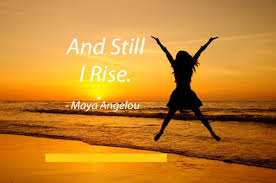
The video played during the sermon was of Maya Angelou – And Still I Rise

Can the ways in which we tell the stories of resurrection transform us into followers of Jesus who embody a way of being in the world that can nourish, ground, and sustain the kind of peace that the world yearns for?

resurrectionA sermon for the
Second Sunday of Easter

Our first reading was the traditional gospel story for the Second Sunday of Easter in which we heard the story of Doubting Thomas for John 20:19-31. This was followed by a video in which Richard Holloway retells the story of Peter’s denial and the encounter between the resurrected Jesus and Peter. You can view the video here . This was followed by the gospel reading from John 21:15-20 You can listen to the sermon here

A long time ago my father was in a car accident. His hand was crushed in the accident and despite the doctors’ best efforts it wouldn’t heal properly. So, several months after the accident the doctors amputated one of my father’s fingers. When my father was still recovering from the surgery, my niece Sarah was just a baby. To this day, I believe it was the joy that only a first grandchild can bring that got my father through those painful weeks after the surgery. Now it just so happens that a few years before my Dad lost his finger, my sister-in-law’s father also lost one of his fingers in an accident at work. So, both of Sarah’s grandfathers were missing the forefinger of their right hands.

Now, I never really thought much about this bizarre coincidence until one day, when Sarah was about three years old, and I introduced her to a friend of mine called Ernie. Now Ernie loved children and so he tried his best to make friends with Sarah, but she was going through one of those shy stages and so Ernie couldn’t make any headway at all. In desperation, he explained to Sarah that he had a granddaughter just the same age as she was and that one of his favorite things in the whole world was being a grandfather.  But Ernie’s announcement didn’t impress Sarah one single bit. In fact, little Sarah put her hands on her hips and declared that Ernie couldn’t be anybody’s granddad at all. At this point I decided to give Ernie a hand and so I assured Sarah that Ernie was indeed a granddad, in fact, not only did Ernie have a granddaughter that was the same age as Sarah he also had a little grandson who had just been born. Well this was the final straw for Sarah, she told me in no uncertain terms that Ernie couldn’t be anybody’s granddad because Ernie had too many fingers. For Sarah, at the tender age of three, because both of her grandfathers only three fingers on their right hand, then surely all grandfathers must have only three fingers on their right hand.

Based upon the available physical evidence Sarah came to the only possible conclusion. The idea that a grandfather could be somebody who had ten fingers was unimaginable. All too often, we restrict our vision of the person in front of us based upon our past experiences of that person or indeed, our past experiences of people like that person. Our inability to envision what someone might be, or become, can have tragic consequences.  It’s bad enough when we limit our vision of someone based on their physical appearance, or physical challenges, but when we insist upon limiting our vision of someone based on that person’s past behavior, we run the risk of limiting what just might be possible. Continue reading

Humpty Dumpty, Doubting Thomas, and Resurrection – John 20:19-31 – Easter 2A

humpty dumptyChrist is Risen! Christ is Risen Indeed! Alleluia! Here we are still in the early days of the fifty daylong celebration of Easter and I’m already wondering how long we should keep chanting that Christ is risen! Sometimes, it seems that after the first flush of Easter Sunday’s excitement, our shouting that Christ is Risen sounds a little like we doth protest too much. The crowds of Easter are pretty much gone and churches all over Christendom are trying to keep up the excitement with the remnant of believers who turn up at church more often than Christmas and Easters. Our shouts of Christ is risen seem a little feeble; almost as if we are trying to convince ourselves that the celebrations of last Sunday actually mean something. After all it’s pretty safe to shout that Christ is risen in church. Nobody is going to challenge us in here about what we mean by that. But what if we were shouting that Christ is risen on the street corners or at work? Would we be comfortable telling people what we mean?

Christ is risen! Are we really willing to shout when it comes to declaring our belief in the resurrection? And if we are willing to shout about the resurrection, what is it that we would be shouting about? After all people have been arguing about the resurrection ever since the rumors about the empty tomb first began and after 21 centuries we still can’t agree what happened to Jesus after he died. Over the centuries the word resurrection has taken on so much baggage that it is difficult for many of us to talk about resurrection because we all bring so much to the conversation whenever we try to discuss it. Most of us grew up believing that we needed to believe in physical resurrection in order to belong. So we have learned to accept that resurrection means the physical resuscitation of a corpse. Yet even the stories that we tell in church don’t necessarily insist that Jesus physically rose from the dead.

The Irish novelist who wrote the famous book about his childhood in Ireland called Angela’s Ashes, also wrote a less famous book about his early years as a teacher in the United States. The book was called T’is and even though it didn’t sell quite as well as his first novel, McCourt’s I love it because it lends some keen insights into a teaching and teaching is one of the things I love about being a pastor. McCourt tells a story about Humpty Dumpty that illustrates some of the difficulties we face when we begin a discussion of the resurrection. McCourt tells his class the story of Humpty Dumpty to his class and for a whole class period there’s a heated discussion of “Humpty Dumpty” itself. (I’m using the term “itself” because no where in this English nursery Rhyme does it indicate what gender Humpty Dumpty is) In McCourt’s class Humpty Dumpty’s gender was automatically assumed to be male. But it was the sixties and so nobody argued about Humpty’s gender when McCourt recited the well known rhyme: “Humpty Dumpty sat on the wall, Humpty Dumpty had a great fall; All the kings horses And all the king’s men Couldn’t put Humpty together again.” Then Frank asked his class what is going on in the nursery rhyme and all the hands shot up to say things like: This egg falls off the wall and if you study biology or physics you know that you can never put an egg back together again. I mean it’s common sense really. That’s when Frank asked the question that set the class at odds with him. “Who says it’s an egg? Of course it’s an egg! Everyone knows that! Where does it say that it’s an egg? The class is thinking. They’re searching the text for egg, any mention, any hint of egg. They just won’t give in. There are more hands and indignant assertions of egg. All their lives they knew this rhyme and there was never any doubt that Humpty Dumpty was an egg. They’re comfortable with the idea of egg and why do teachers have to come along and destroy everything with all this analysis. McCourt insists that he’s not destroying. He just wants to know where they got the idea that Humpty Dumpty is an egg. Because the class insists, it’s in all the pictures and whoever drew the first picture must have known the guy who wrote the poem or he’d never have made it an egg. So Frank says, All right. If you’re content with the idea of egg we’ll let it be but I know the future lawyers in this class will never accept egg where there is no evidence of egg. And so by tacit agreement Humpty Dumpty becomes now and always an egg. (I am indebted to Bernard Brandon Scott’s reminder of the story about Humpty Dumpty in  Frank McCourt’s novel “T’is”)

For me the subject of the resurrection of Jesus has a great deal in common with Humpty Dumpty because by some sort of tacit agreement it was decided long ago that the resurrection of Jesus just has to be a physical resuscitation of a corpse; this despite the fact that the earliest writer on the subject of the resurrection, the Apostle Paul denies that the resurrection of Jesus was a physical resuscitation of a corpse. Continue reading

Easter: 50 Days to Practice Resurrection!

Sermon for the Second Sunday of Easter

resurrection

A few years ago on the Second Sunday of Easter, I tried something new for me at the time: introducing a video clip into the sermon! You can view the video within the written text of the sermon below or listen to the audio version provided. I am indebted to the work of James Rowe Adams for much of the New Testament Scholarship in this sermon.

The Scripture texts were John chapter 20:19-31 and Acts 4:32-35

Audio Version of the Sermon click here

Practicing Resurrection

Christ is Risen! Christ is Risen indeed!  Alleluia!

So, Christ is Risen!  So What???

What can it possibly mean to you and to me, that a rag-tag bunch of Jesus’ followers gathered together in an upper-room and talked about their experiences of Jesus and decided that not even death could extinguish the life that they experienced in Jesus? What difference does it make to you or to I that Christ is risen?

The truth is that it can make absolutely no difference what so ever. Now there are a whole lot of people who will tell you that the important thing about resurrection is that you believe it. Those same folks absolutely love the story of doubting Thomas. And so every year on the second Sunday of Easter we read the story of doubting Thomas as a kind of inoculation against Thomas’ disease.

I sometimes think that the designers of the lectionary were trying to build up our resistance to doubt. Having problems believing in resurrection, well don’t do what Thomas did, don’t doubt, because you’ll be proven wrong. Jesus is alive, the wounds in his hands proved that to Doubting Thomas, so have no doubt about it the resurrection happened!  Believe in the resurrection!

The trouble with believing in stuff is that it belief can make absolutely no difference what so ever. I can believe in justice for all, but unless I’m prepared to seek justice, to be fair, or to resist injustice, it makes absolutely no difference what so ever. You can shout, “Christ is risen!” all you want but unless you are willing to live it, the resurrection means very little at all.

In order to live the resurrection you have to begin practicing resurrection. In order to practice something, you have to know what it looks like, what it sounds like, or what it feels like.

I’ve been trying to figure out how to show you what resurrection looks like in the flesh. Then I remembered a video that’s been doing the rounds on the internet, so I want you to watch this modern miracle of resurrection.

WATCH THE VIDEO CLIP FROM:  Alive Inside

Christ is Risen! Christ is Risen indeed!  Alleluia!

2000 years ago a bunch of rag-tag Jesus followers were huddled together in fear. Their beloved leader had been brutally executed by the powers that be and they were terrified that they would be next. Paralyzed by their fear, hiding behind a locked door, something happened that gave them the strength to burst forth from their own tomb and change the world.

Ever since they began to practice resurrection, people have been trying to figure out exactly what happened; what could have changed these bumbling, terrified, betrayers, abandoners, who seemed to be always getting things wrong, into a bunch of leaders who began a movement that spread through out the Empire within their own life-times and then based on the power of their witness, spread throughout the world and continues to nourish and sustain millions of people from generation to generation?

Now there are those that insist that it was the power of Jesus having been physically resuscitated from the dead that motivated his followers to change their lives and the lives of millions who have come after them.  But we live in the 21st century and we have access to all sorts of information that the generations who have gone before us did not. Most of us, myself included, are not swayed by arguments about a physical resuscitation of Jesus’ body. But I can tell you without a doubt that I do believe in resurrection and I know that Christ is risen and I also know that the same power that the early followers of Jesus used to change the world is available to you and to me.  And now more than ever the world needs us to start using that power. It’s long past time for us to start practicing resurrection.

So, if they weren’t talking about a physical resuscitation when they spoke of Jesus’ resurrection, what did the early followers of Jesus actually mean when they spoke of Jesus having been raised from the dead? During the first century many Jews had adopted a vision of the future that dealt with the prevailing question of the day:  “How could a just God allow his people to suffer endlessly at the hands of their enemies?” Or as Dom Crossan puts it:   When was God going to clean up the world so that justice could prevail? Continue reading

Oh Me of Little Faith: reflecting upon Doubting Thomas

leap of doubt pastorDawnIt happens every year as Doubting Thomas makes his Easter appearance. It’s a kind of resurrection of a glimmer of the faith that I long to recall in my flesh. I harken back to the time when I could embrace those wounds as proof. Oh how that faith comforted me. Resurrecting the memory of Thomas, who for years functioned as a trusted hero in my scant faith, now sends me into the dream of belief as the answer in and of itself; a kind of innocence that once gone is never forgotten. My nostalgia for my faith in belief will pass. But for just a moment or two, I pause to embrace the wounds, waiting for my doubts to open me to the evolving reality of now.  Jump!!!

Nickel Creek – A Doubting Thomas

LOVE is Risen! LOVE is Risen Indeed! Alleluia! – an Easter sermon

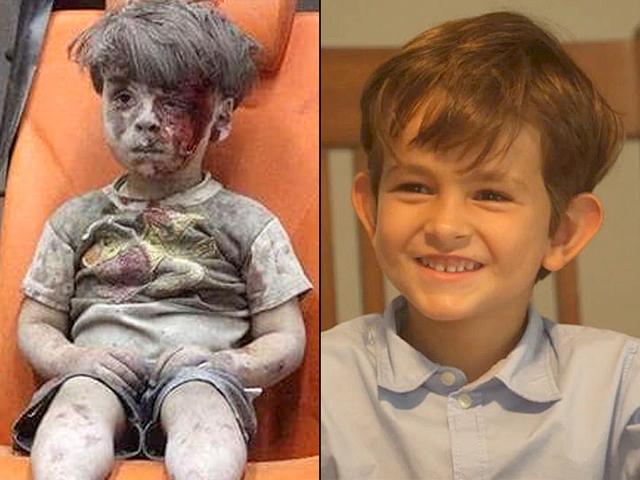
embodied LOVE: Omran Daqneesh and embodied LOVE: Alex

Listen to the sermon here

Christ is Risen! Christ is Risen Indeed! Christ is risen indeed – SO WHAT! Today, we gather to proclaim that the LOVE that we call God is more powerful than death. On Good Friday, we gathered here in this sanctuary surround by images of death. I had posted all sorts of photographic images of the kind of human failures that proclaim the power of death; images collected from the news of the day. On these walls, hung examples of human failure – graphic representations of the reality that the embodiment of LOVE, which is what we call Christ, continues to be crucified. The crucifixion did not happen once and for all when Jesus, the embodiment of the LOVE that we call God, was executed by the powers that be.

Today, over and over again, the embodiment of LOVE dies at the hands of the powers that be. The embodiment of LOVE, which is what we can the Christ, continues to be crucified each time LOVE is impoverish, starved, bombed, executed, imperiled, tortured, neglected, murdered, or forsaken, by the powers of death; powers that put selfishness, greed, indifference, and lust for power above LOVE. And so, on this Good Friday you would have seen examples of modern crucifixions in which the Earth was being ravaged and abused by our greed and indifference, animals driven out and killed by pollution and climate change, children starving in parts of the world we would prefer not to think about, First Nations people suffering without adequate housing or drinking water, homeless people neglected on our streets, war-torn ravaged villages, and a collection of modern martyrs who like Jesus, have been crucified as a result of their passion for justice. These disturbing images formed our Stations of the Cross as we lamented so many crucifixions. 

 After our Maundy Thursday service when we’d finished remembering Jesus’ new commandment that we love one another, I hung the evidence of the death of embodied LOVE upon these walls. One of the images, reduced me to tears. I suspect that the image that undid me, lies in each of your minds because this image was beamed all over the world. Continue reading

Jesus’ Resurrection is Extraordinary Precisely Because Any Thing At All Made It Out of That Bloody Tomb! – an Easter sermon

Christ Is Risen in Us pastordawn

Readings included: Luke 24:1-12, 1 Corinthians 15:1-11; and John 20:1-18. I am indebted to Clay Nelson for reminding me of “ordinary resurrections,” Bernard Brandon Scott for his excellent exegesis of 1 Corinthians 15:1-11, and most of all to Clara Thomas for always embodying the LOVE that we call God in ways that continue to encourage me to wake-up and stand-up. You can listen to the sermon here

Years ago, long before I ever became a pastor, I had a friend who was nearing the end of her life. During my last few visits with her, Clara would ask me over and over again, “Am I going to be alright?” I would always answer her with words designed to assure her that all would be well. Unlike some people I have known since, Clara never asked me what was going to happen to her when she died, just, “Am I going to be alright?” At the time, I thought that she was worried about the pain she might encounter or the fear that she might feel. So, I would assure her that the care that she was getting was the best there is and that the doctors and nurses would make sure that she could manage whatever pain came her way. I also assured her that her loved ones would be there with her, and furthermore I believed that the very source of her being, would be there to embrace her. My friend wasn’t particularly religious, so the words that I’d learned in church to offer as comfort, were not words she wanted to hear. So, I spoke of God, in vague and general terms. Even though back then, I still imagined God as some sort of supernatural being.

The last time I saw my friend Clara, I knew that the end was near. I was feeling woefully inadequate I wasn’t sure how long I could bear to be in the same room with my friend. I remember hearing a rattling sound as she struggled with each breath. My own breath slowed and became quite shallow as if my body was trying to mimic hers. It is a moment in time that lives in my memory not because of the intensity of my feelings at that time, but rather because of the way in which our parallel breathing took me to a place of knowing where the wizened dying body in the bed was transformed into a beautiful young woman. Continue reading

I’m still working on getting my body out of the tomb in which it was laid all those years ago. – reflecting on everyday crucifixions

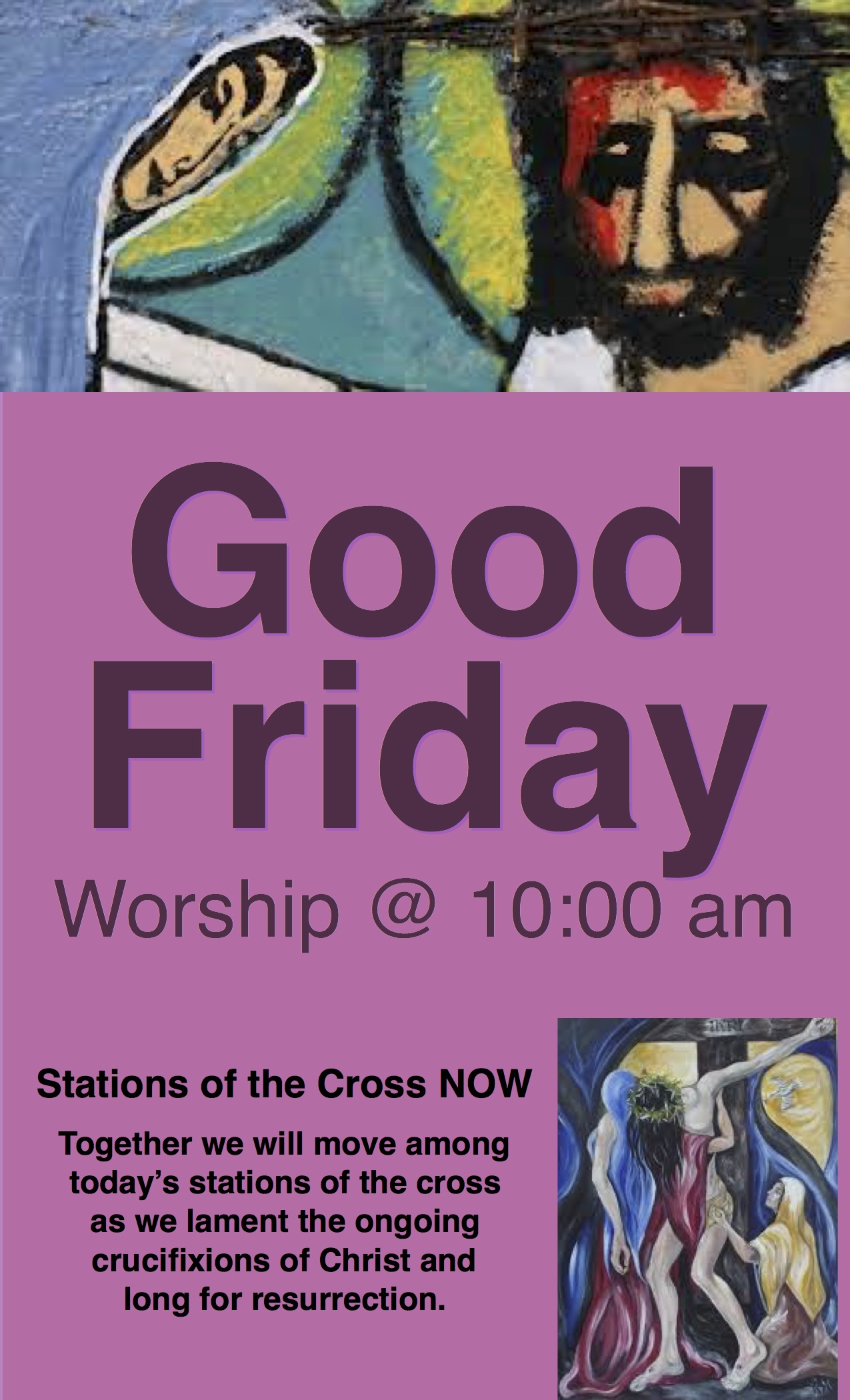
This Good Friday reflection was offered following we explored The Stations – a collection of posters designed to inspire worshippers to reflect upon the crucifixions that happen each and every day. You can view the posters here the art work is by Graeme Mortimer Evelyn

“The tomb was nearby, they laid Jesus there.” Jesus lived so fully, loved so extravagantly, and allowed his passion to help him become all that he was created to be and in Jesus his friends and followers  and generations to come are able to see the embodiment of the LOVE that we call God.

On Good Friday, we remember that passion and we do so knowing full well that the embodiment of the LOVE that is God, failed, suffered, died, and was placed in a tomb. This morning, as we have explored the via Delarosa the Way of Sorrows, we have been reminded of our passions as we have gazed upon reminders of the failures of LOVE. We stand in the midst of images of suffering: the suffering of those who shared a vision for justice and who were executed, the suffering of innocents, starving children, poor children, dead children, the suffering of the oppressed, the suffering of our planet, the suffering of our fellow creatures. recent suffering designed to strike terror into our hearts. Around us the suffering of life in this amazing creation of which we are a part is write large. But not all suffering is of this magnitude. Passion can be laid in a tomb all too easily. It doesn’t take events as horrific as an execution to entomb passion. Most of our suffering is done on a much smaller scale. Many of us have seen our passion die a subtler death. Our passions have been laid in the tomb and without our passion we cannot live fully, love extravagantly, and be all that we are created to be.

I remember a little girl full of life. I must have been about twelve or thirteen. My body was bursting forth as my womanhood was beginning to come alive. I’d saved up all of my babysitting money and bought myself a new outfit. I remember it well. It was the end of the 1960’s and I managed to buy myself a pair of hot pants. They wouldn’t even qualify as short shorts today. But back then, wooo HOT PANTS. And a peasant blouse and a pair of huarache sandals. Oh my, I looked good. I felt good. I felt like I could in the words of Hellen Reddy, “do anything….as the song goes, “I am strong. I am invincible, I Am Woman.”

I was a passionate young thing, ready to face the world and be all that I could be. I had a babysitting job, a good one that paid over the going rate. The kids loved me, because I was the best babysitter that I could be and I looked marvelous. Suddenly, without warning, my employer’s tongue was in my mouth. I didn’t invite it there. I was shocked, dumbfounded, I didn’t know what was happening. He was an old man. He was stronger than me. I couldn’t understand what was happening. All I knew was that I didn’t want his tongue in my mouth. With all my strength, I tried to push him away. But he was bigger and stronger than me.

I’m not sure how I managed to get away. But get away I did. I ran and I ran and I ran. I was a child. I didn’t understand what had happened. I only knew that it was wrong, so very wrong. I also knew that it must be my fault. I was the one who got all dressed up in my Hot Pants. I was to blame. I buried those damn hot pants in the back-yard and it was decade or more before I ever wore shorts again. I buried my childhood that afternoon. My confidence in myself, my appearance, my womanhood, died and was buried.

I wasn’t sure if I could tell you this story today. Not because it is so very tragic or sad. But because as some of you must know, the residue of this particular death, lingers with me still. It is no secret that to this day, I struggle with my body image. I have, for most of my life, tried to hide behind my weight and I became a master of wearing layers and layers of clothing to cover up what became for me my horrific body. I’m still working on getting my body out of the tomb in which it was laid all those years ago.

Each one of us could tell a story about the death of our passion. We have all laid to rest some passion. Our passion for justice, may have died at the hands of our own cynicism. Our passion for the environment, killed by our own sense of being overwhelmed by the sheer magnitude task of taking on the empires of our day. Our passion for endangered species killed by our own inability to know where to begin. Our passion for the plight of the poor, overcome and snuffed out by the overwhelming need that we can never seem to achieve enough. Our passion for the oppressed smothered by the sheer numbers. Our passion for justice strangled by our need to pay the bills. Our passion for love snuffed out by our failures. Continue reading

MAUNDY THURSDAY – When you don’t believe that Jesus was a sacrifice for sin!

I was asked by a colleague, “So, if you do not believe that Jesus died for your sins, then why bother celebrating the events of Holy Week?”  Behind this question lies the assumption that the only way to understand Jesus’ death is to frame it within the context of the theology of “penal sacrificial atonement” ie “we are judged to be sinful creatures, punishment is required, God sends Jesus to pay the price for our sin”.  That Anslem’s theory of sacrificial atonement was formulated in the 11th century and continues to hold sway in the minds of so many followers of Christ is a testament to the power of our liturgies and hymns to form our theology.  However, Anslem’s theory is not they only faithful way to understand Jesus’ death.  

When one seriously engages the question, “What kind of god would demand a blood sacrifice?” the answers often render God impotent at best and at worst cruel and vindictive. I have often said that atonement theories leave God looking like a cosmic son of #%#%# !  Progressive Christian theologians are opening up new ways of understanding the death and resurrection of Jesus that empower the faithful to see new possibilities.  To my colleague, who fears that I am leading the faithful astray, and to those who find little comfort in the theories of an 11th century monastic, I the following notes, crafted in my preparation to lead Maundy Thursday worship.

Jesus said, “I give you a new commandment:  Love one another.   And you’re to love one another the way I have loved you. This is how all will know that you’re my disciples: that you truly love one another.” That we should love one another is not a new commandment. There have been many before Jesus and many who came after Jesus who have commanded, advised, encouraged, implored, and even begged us to, “love one another.”

What is new about Jesus commandment is that we are to love one another the way that Jesus loved us. Which begs the question:  How exactly did Jesus love? I believe that Jesus loved in ways that I am only beginning to understand. I believe that Jesus was so open to the power of the LOVE that is God; that Jesus was able to live his life fully without fear. I believe that Jesus wanted more than anything else for his followers to be so open to the power of LOVE that is God so that they too would live their lives fully without fear. I believe that that’s what Jesus meant when he said, “I have come that you might have life and live it abundantly.” I believe that Jesus lived life abundantly and that means that he loved abundantly and without fear. Jesus was so open to the power of LOVE that is God that Jesus would not let the powers of darkness stop him from loving and living fully.

The kind of LOVE that Jesus embodied and taught has no boundaries.  No darkness, no power, no fear, not even death can limit the power of LOVE. For if LOVE is limited by death, then love will always be qualified and quantified. That Jesus was willing to LOVE without boundaries, came at great cost to himself. But Jesus was willing to pay that price in order to show  others the way. The way to LOVE without limit, without fear, without boundaries.

LOVE without boundaries is abundant life. That Jesus’ LOVE endured the worst that the world could send his way, that Jesus’ LOVE was for all the world, dead and buried, and yet bursts free from the grave, bears witness to the power of LOVE. That Jesus LOVE could not be destroyed, not even by the thing we fear the most, death itself, saves us from the need to fear death.

Jesus has shown us the way. We can live abundantly lives that are free from the fear of death. Because Jesus has shown us the way we are free to live fully, to love extravagantly and be all that we were created to be.

LOVE shines in the darkness and darkness shall not overcome LOVE.

If Jesus, life, death, and resurrection teach us anything, surely they teach us not to be afraid.

Not to be afraid of the darkness.

Not to be afraid of living fully.

Not to be afraid of loving extravagantly.

Not to be afraid of the powers of evil.

Not to be afraid of the power of death.

LOVE will endure.

All will be well.

Jesus can’t save us from life.

There is evil to contend with.

There will be darkness and there will be death.

Jesus couldn’t save himself and he cannot save us from life. Darkness and death are part of life.  Each of us must walk into the darkness that lies before us.  We can beg God to take the cup from us!  But the darkness will still come.  And there will be days when the darkness will triumph.  There are good Fridays too many to mention out there.  We can shout all we want for Jesus to save us, but in the end we too will have to take up our cross and find a way to follow Jesus into the darkness and beyond, trusting that even though it feels for all the world that God has forsaken us, we will make it beyond the darkness.

The cross will not look the same for each of us. But there will be crosses to bear. Jesus has showed us the way. If we are to follow Jesus, then we must love one another they way that Jesus loved.  It is the way beyond the darkness. Do not be afraid of evil, of death, or of the darkness. Follow Jesus who by love frees us from the power of darkness to hold us captive to our fears so that we can have life and live it abundantly.

How exactly did Jesus love?

Without limit.

What did Jesus save us from?

Our fears.

Trading Our Palm Branches for Tomahawk Missiles or White Helmets? – a Palm Sunday sermon

In the wake of a week that saw sarin gas released once again on the people of Sryria, followed by the firing of U.S. tomahawk missiles, parading around waving Palm Branches seems as foolish as it did when Jesus lead a parade into Jerusalem to face the Roman Empire on an ass. Today’s gospel picks up where the Gospel According to Matthew’s story of Jesus’ parade into Jerusalem ends, when Jesus overturns the tables of the moneychangers in the Temple – Matthew 21:12-16. Listen to the sermon here:

Hosanna! Hosanna! Hosanna! Save us! Save us! Save us! This morning, as we shout our Hosannas to the world, the world remains entangled in a vain attempt to achieve peace through violence. The two most powerful nations on earth are leading the charge: as I speak the United States has dispatched an aircraft carrier-led strike group to the waters off the coast of North Korea, while the Russian Navy has dispatched a frigate to the Mediterranean Sea so that its cruise missiles will be in striking distance of Syria. We’ve been here so many times before; seeking peace through violence.

On Friday, according to CNN, “Raytheon, the company that makes the Tomahawk missiles used in the air strikes on Syria by the United States, saw its stocks rise. Investors seem to be betting that President Trump’s decision to retaliate against Syria after the chemical attack on Syrian citizens earlier this week may mean the Pentagon will need more Tomahawks. The US Department of Defense asked for $2 billion dollars over five years to buy 4,000 Tomahawks for the US Navy in its fiscal 2017 budget last February.

Nearly five dozen Tomahawk cruise missiles were launched at military bases in Syria from U.S. warships in the Mediterranean Sea late on Thursday. Raytheon wasn’t the only defense stock that rose sharply on Friday. Lockheed Martin which partners with Raytheon on the Javelin missile launcher system and also makes Hellfire missiles, gained nearly 1%. Defense stocks General Dynamics and Northrop Grumman also rallied Friday, a day when the broader market was flat due to a mixed US jobs report. It’s unclear whether President Trump and his Defense Secretary James Mattis will ask for a lot more money for Tomahawks once they officially submit a fiscal 2018 budget request. But Trump said in his preliminary budget blueprint last month that a brad increase in defense spending was needed.  A sizable chunk of that was earmarked for upgrading warships, fighter planes and missiles. So it should come as no surprise that defense stocks are among the top performers on Wall Street not just on Friday, but for all of this year.”

What this CNN report doesn’t say, is that according to his own disclosure forms filed during the election, Trump hold a substantial amount of stock in Raytheon.   Now, the cynic in me can’t help but marvel at the Commander-in-chief’s selection of Tomahawk missiles as the pathway to peace. If I only I could figure out which tables to over-turn I would lead the parade. Continue reading