What are you looking for? – John 1:29-42

“What are you looking for?” It takes a special kind of person to venture out on a cold and snowy January morning to come to church. So, let me ask you again,            “What are you looking for?” 

The people of Jesus’ day were looking for a Messiah to come and save them from the injustices perpetrated by the Romans.  Many of them believed that they’d found the kind of saviour that they were looking for in Jesus. But Jesus refused to be the kind of messiah that they were looking for. Jesus refused to lead them in an armed revolt against the Romans.  Jesus called them to a different path; a path that required them to renounce violence, hatred, and greed; a path that demanded not violent resistance, love of enemy, and care for the poor and marginalized among them. Jesus’ way of being in the world was not an easy path to walk.

Already, in the gospel according to John we see those early followers of Jesus, retelling the story of Jesus in ways that recast him into the role of the messiah that they longed for. Over time, the storytellers, the theologians, and the church has pointed to Jesus and declared, “Look, there’s God’s sacrificial lamb, who takes away the world’s sin!” For generations, too many of us have looked to Jesus to take away our sin. Believing that all we need to do is believe and Jesus will save us. Like so many who have gone before us we have wanted Jesus to be the kind of saviour who would save us from our sinfulness.

 Our ancestors defined sin as missing the mark. Who can live a life without missing the mark? Surely, there is someone, who can offer us some way of living a life without missing the mark, for each time we miss the mark, there is sadness, pain, suffering and death.  Surely there is someone who can save us from all this?             But Jesus refuses to be the kind of messiah that we want. Jesus calls us not to believe in him, but follow him, follow him to passionately non-violently resist injustice, follow him by loving our enemies, follow him to care for the poor and the marginalized among us.

Believing in Jesus won’t save us. Becoming a Christian, Muslim, Jew, agnostic, atheist, Buddhist, or New Ager won’t save us. Only our shared humanity will save us. Jesus lived and taught a way of being human that spoke directly to our common humanity and called us to walk a path that would lead humanity to a new way of being in the world. But what are we looking for? Are we looking for a different kind of Messiah than one who will not save us from our troubles?

Our friend Pete Rollins tells a story of this kind of longing. Pete speaks of an: “old Buddhist parable that tells the story of a young woman who gives birth to a beautiful baby girl. But after only a few weeks the child dies and the woman is distraught.  She wraps the child’s body in linen and then she wraps the child’s body to her own, and she goes in search of someone, of anyone who could resuscitate her child. She goes to faith healers, and witch-doctors.  She talks to the tribal elders. But nobody can help. Continue reading

Jesus, the Lamb of God Who Takes Away the Sin of the World? It ain’t necessarily so! Epiphany 2A – John 1:29-42

Lamb of GodWhen I turn the gospel according to John and read about John the Baptist pointing to Jesus, saying:  “Here is the Lamb of God who takes away the sin of the world!”  I want to scream,  “NO!” I have come to believe that our images of God are far too narrow. As far as I’m concerned most of our ideas about God fall far short of ever even beginning to describe who God might be. One thing I’m absolutely certain of is if we can imagine ourselves being more loving, more gracious, or more merciful that our theology suggests that God is, then we had better go back to the drawing-board and think again. The ways in which we have traditionally interpreted the life, death and resurrection of Jesus the Christ, paint a picture of a God who is far less loving, gracious or merciful than you or I. Nobody in this room, would demand a blood sacrifice of a lamb, let alone the blood sacrifice of their own child. So, the image of God that is based on this kind of theology must be judged as inadequate to the task of evening beginning to provide us with a glimpse of who our God is.

As we go back to the drawing-board, we ought to take a long hard look at how we arrived at this image in the first place. Thank goodness for the work of our friend Jack Spong who has enabled us to see beyond the literal to the more-than-literal meanings of the various ways in which the followers of Jesus have understood the life and teachings of Jesus. During the years that followed the crucifixion, Jesus’ followers were left wondering what it was all about. How could someone in whom they had seen the fullness of God, be taken from them in such a horrendous way? How could their God allow it?   What were they to do? Over the years that followed, Jesus’ followers looked back at the life, death, and resurrection of Christ through the lens of their own religious experiences. Jesus’ followers were primarily Jewish and so it didn’t take long for the familiar Jewish symbol of the Lamb of God to be applied to Jesus as a way of making some sense out of his death.  Today most Christians associate the symbol of the Lamb of God with the Jewish celebration of Passover.  While the Gospel narratives do indeed locate the time of Jesus death during the celebration of the Passover, and there is indeed a sacrificial lamb involved in the Passover, the actual phrase “the Lamb of God” comes not from the religious rites of Passover, but rather the religious rites of Yom Kippur: The Day of Atonement.  Phrases like “the Lamb of God”, “died for our sins” and “washed in the blood of the lamb” can all be found in the religious rites of Yom Kippur.  Continue reading

Sacrament of Resistance: the Baptism of Jesus

On Monday, Western Christendom celebrated Epiphany as we heralded the arrival of wise folk from the East, from a place we know call Iran. By Wednesday, the world was mourning the crash of Ukrainian Airlines flight 752 over the skies of Iran. By Friday, it was clear that the crash was no accident, that 176 people were murdered by some not so wise folk from the East in retaliation for the assassination of the most celebrated of all Iranian Generals. By Saturday, the pundits, the folks who claim to be wise, continued to argue over who is to blame. Was Iran totally responsible or does the orange ruler who sits on the most powerful throne on the planet ultimately to blame for plunging the world into madness? Today, still reeling from the reality that so many of the victims of this insanity were our very own kin, returning to Canada after visiting family and friends. Today, Canadians and Iranians are united in grief; grief at the loss of life, grief at the apparent inevitability of war as systems of domination clash. Today, we gather to do what Christians do on the Sunday after Epiphany, we gather to remember our baptism through the stories told by our ancestors about the baptism of Jesus of Nazareth.

What possible wisdom, comfort, or challenges can this story of a baptism which happened in the Jordan River nearly 2000 years ago offer to us on a day like today? Not much.  Not much that is if we choose to remember this story the way the church all too often remembers this story. For centuries the church has adopted a kind of collective amnesia when it comes to baptism. We have chosen to forget the power of this story to inspire resistance to the very systems which continue to prevent us from living in peace. We have forgotten so very many of the contours of this story which, if remembered drag us out of our preoccupation with our own selfish needs toward a lifestyle of resistance to what has become the status quo. Where once the story of Jesus Baptism inspired his followers to deny allegiances to the powers that be so in order to take upon themselves a new way of being in the world, generations of amnesia have left us marching in lock-step to the drumbeat of violence even as we claim allegiance to the Prince of Peace.

So, what have we 21st century would be followers of Jesus, forgotten about this story of Jesus baptism in the first century? Well, for starters we have forgotten that our first century ancestors risked everything when they chose to be baptized. Jesus contemporaries lived under the oppression of not one but two domination systems. Under the domination of what was the mightiest Empire the world had ever seen, first century people living in Palestine whether they be Jew or Gentile were required on pain of death to swear allegiance to Rome. The act of swearing allegiance was called in Latin a “sacramentum” – that’s right our word sacrament comes from the word sacrementum which means “to vow” or to “swear an oath” or “to pledge allegiance.” Continue reading

Wear Your Baptism in Ways that Others Might See a Visible Means of Grace in You – a sermon on Baptism

img_6946

Listen to the sermon here

How many of you know what this is? Where I come from it is often referred to as a dog-collar and the folks who wear them are called God-Bothers. Back when I first started seminary, I resolved that I wouldn’t wear a clerical shirt and collar. I didn’t like the idea of being set apart from others. I really didn’t want to be seen as one of those holier-than-thou types, who took themselves so seriously. Learning the history of clerical garb didn’t help me to warm up to the idea of wearing them. Apparently, back in the middle ages fashion dictated that educated professionals wear black. Also, during the middle ages, long before shirts had collars it was all the rage to let your white undergarments show around your neck. This was the precursor to shirt-collars. Apparently during the reformation, this trend fell out of fashion but clergy, who couldn’t afford to keep up with fashion continued to wear black shirts with their white under-garment showing.      

Over time, the church does what the church often does and applied a liturgical meaning to explain what is already happening. So, the church began to explain clerical attire theologically. If you google it, you will discover that, pastors are just like everyone else, they are in bondage to sin and cannot free themselves. So, they wear a black shirt to signify their sinfulness, but they wear a white collar to signify that the words they speak are not their own, but God’s words, because you see the collar covers the pastors voice-box to signify that we speak the Word of God. Now the presumption that I or anyone else speaks on behalf of God is rather daunting to say the least and did nothing to encourage me to wear a clerical collar, nor did the obscure explanation of the tab collar, which insists that this little white notch is placed strategically over the Adam’s apple to cover over the reminder of Adam’s sin. Not having an Adam’s apple, myself, I wasn’t much taken with the idea of wearing special clothing to set me apart. But when I first became a pastor, I was insecure and believe it or not I didn’t want to rock the boat. So, I ever so hesitatingly began wearing a clerical collar. I was uncomfortable wearing the collar, so I decided that I would only wear it on Sundays, or to protest marches, and sometimes when I was visiting people in the hospital, because in hospitals, wearing a collar makes it easier to gain access to patients.

Well one day, I needed some candles and so I dashed into the Zellers over the road to quickly grab a couple. I was having difficulty finding just the right candles when a store clerk came up to me and asked me if I would come with her. I figured that I’d been lingering over the candles for so long that she must have mistaken me for a shoplifter, but as we hurried along, she explained to me that there was a man in housewares who was abusing his wife and child. I’d forgotten that I was wearing a collar, but the reality of what this clerk was asking me to do choked me into realizing that the collar had led her to believe that I could actually do something. Not knowing what she expected me to do, I told her to call 911. She assured me that they had already called, but that in the meantime perhaps I could help. We stopped just before the aisle where the abuse was taking place. The store clerk whispered that, “they are just over there.”  As she pointed, I realized that she wanted me to go on alone. So, not knowing what to expect, I took a deep breath and walked in on a scene that was way beyond my abilities. A big burly guy was twisting the arm of a woman while a little girl of about 4 or 5 stood crying. The man was yelling obscenities when I interrupted him. When he looked at me, I saw the fear in his eyes as he immediately let go of the woman who fell to the floor. The little girl ran to her mother. I expected the man to turn on me, but instead he just stared at me, as he began to cry, “I’m sorry pastor, forgive me.” It wasn’t I who stood before him, but the church, his church, the church that had taught him right from wrong. The collar I wore made the church visible to him and made it impossible for him to forget who he was. As a child of God, he couldn’t continue what he was doing. As a child of God, he knew in his bones that he was wrong. He wept until the police arrived. From that day on, I’ve known the power of the collar to make the church visible in the world and so I wear it a lot more often than I’d ever expected I would. Continue reading

Bat Qol – The Daughter of a Sound: Hearing the Word Utter Our Name

Preparing to Preach on Jesus’ Baptism

BAT QOL pastordawnEach year, I begin my preparations for preaching on the Baptism of Jesus with this video in which  Heather Murray Elkins tells her story, “The Secret of Our Baptism.” Elkins opens us to a new way of hearing the Bat Col, the Daughter of a Sound, the Voice of the Divine, the Word, who speaks in this Sunday’s Gospel reading. Matthew 3:13-17

The Journey of the Magi never happened and yet it is always happening.

Epiphany-Wise+WomenAn Epiphany Sermon, preached in 2008. I had just read “The First Christmas” by John Dominic Crossan and Marcus Borg. Our congregation played host to Dom Crossan a month before I wrote this sermon. So, Dom’s insights run through this effort. But the heart of this sermon beats as the result of a sermon preached by Bruce Sanguin a self-proclaimed evolutionary christian who is a United Church Minister (Canadian Memorial Church, Vancouver). I had the privilege of meeting this modern mystic while on sabbatical this summer and his compelling way of unlocking the scriptures using the wealth of the christian tradition together with the insights of modern science and psychology borders upon the poetic. This sermon was anchored by Sanguin’s words (Epiphany 2007). Sermons are a “live” event. So, this manuscript is an approximation of what was actually preached.   

Just five days before Christmas (2008), The Archbishop of Canterbury, The Most Reverend Doctor Rowan Williams, the leader of the worldwide Anglican Communion started a firestorm.  During a BBC interview, His Grace was quoted to say that the story of the “three wise men is a legend”. The Archbishop was also heard to say that he remained unconvinced that there was indeed a star that led the legendary trio to the birth place of the Christ Child.

If that wasn’t enough to send folks off the deep-end, it has been revealed that the Presiding Bishop of the U.S. Episcopal Church The Most Reverend Doctor Katherine Jefferts Schori, who just happens to be the first woman elected primate in Anglican history, has fanned the flames of the fire-storm by sending out what has been judged by some to be an incendiary Christmas card.

I downloaded a copy of the offensive card, so that you could see for yourself. HerEpiphany-Wise+Women Grace’s choice of card has offended the good deacons of Ft Worth Texas who claim that their Primate’s actions defy explanation. As you can see the wise folks depicted on this image look a lot like women. Can you imagine the nerve of the first woman primate! How could she be so bold as to select such an offensive image? Leave it to straight talking Texans to set things straight: for despite the audacity of the Primate, the Texans have pledged to “stand for the traditional expression of the Faith.” Continue reading

So, This Is Christmas? – Matthew 2:13-23 – Christmas 1a

The baby that was “borned” was God! – Christmas Eve

Christmas Eve is a holy night; a night when the distinctions between the sacred and the ordinary fall away and we are able to see beyond the boundaries which limit our vision. On this holy night, if we look closely, we can see visions of the LOVE which is the Source of All Reality, the LOVE that many of us call God. The best way to see beyond the boundaries which limit our vision is through a story. The fellow whose birth we celebrate tomorrow was particularly fond of revealing truth through stories. Jesus would often tell a new story alongside a familiar sacred story in order to reveal unseen truths within the familiar. So, on this holy night, I’ll tell you a new story, in the hope that it will help us to see once again the truth revealed in the stories that our ancestors used to tell about the birth of Jesus….   

Not so very long ago, a young woman, let’s call her Dora, short for Doreatha, which comes from the Greek phrase “gift from God.” Dora spent most of her childhood dreading Christmas. Christmas in Dora’s family was a volatile affair. Dora’s father never needed much of an excuse to drink too much.  Most of the holidays were consumed by the fallout from his excessive drinking. After far too many devastating Christmas Eves which ended in tears, Dora figured out that the best thing she could do to protect herself from the trauma of her family’s gatherings was to stay away from home on Christmas Eve. Fortunately, Dora was blessed with friends from church who regularly welcomed her into their home each Christmas Eve. Beth and Michael had three small children the youngest of which, little Sophia was Dora’s goddaughter.  

With her family of choice, Dora new exactly what to expect on Christmas Eve. First a trip into the woods to find the perfect Christmas tree, which they would trim together before sitting down to a traditional feast, followed by Michael’s dramatic reading of the Christmas story from the gospel of Luke. When the children were safely tucked into bed with dreams of, well not so much sugarplums dancing in their heads, but rather visions of packages which would magically arrive whilst they slept, Dora and Beth would slip out quietly to attend the Christmas Eve candlelight communion service.

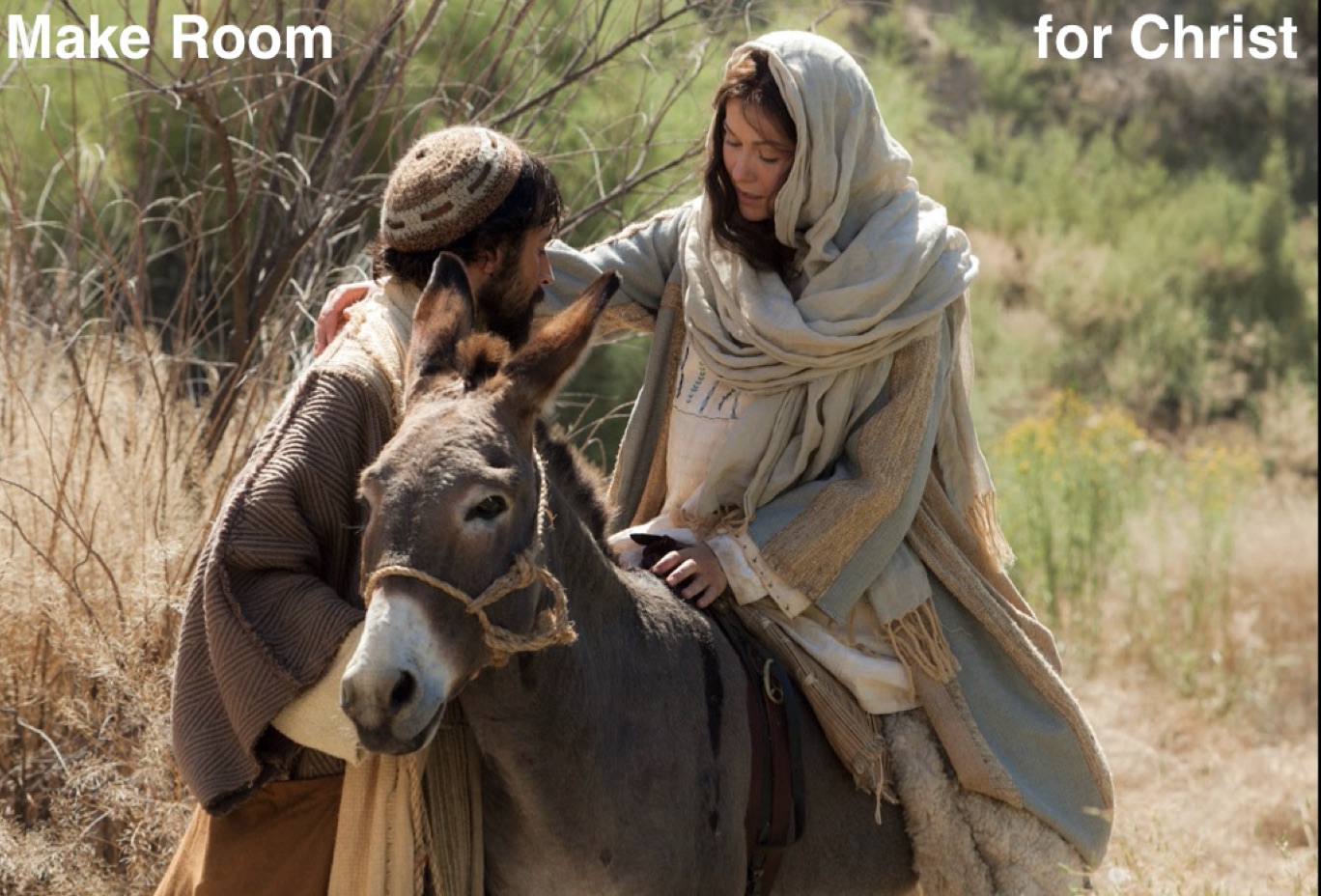
Well, one Christmas Eve, Dora found herself alone in the house trying to amuse her goddaughter Sophia, who was very, very, unhappy. Her parents had decided that the unusually cold weather, together with the deep snow, were too severe for a three-year-old to trudge through. Sophia and Dora were given the task of getting the living room ready to receive the Christmas tree. Sophia was not pleased at all happy about being left behind. But it didn’t take long for the boxes of decorations to catch her attention. All through the Advent season, little Sophia had been learning the Christmas story. As they tackled the sorting out the decorations, Sophia began to regale Dora with her own version of the Christmas story. As they unpacked the shepherds, wise guys and angels, little Sophia told Dora how:  “Once upon a time, before they had picture books or TVs,  there wasn’t anything fun to do, because there was no Santa to bring anybody any presents. And there weren’t any cars, so Mary who was going to have a baby, had to ride on a donkey and Joseph walked because he had longer legs. And they walked and they walked all day long until it was dark and then when they got where they were going, they were very hungry, but there wasn’t any food, so they went into a stable where they talked to the animals until they weren’t hungry anymore. It was dark but they weren’t afraid because there was a big star shining up in the sky so they could see what was happening. And soon it was time for a big surprise, but not the kind of surprise that Santa brings; this was a really big surprise.” Sophia’s eyes lit up as she told Dora about this big surprise. She said, when the animals fell asleep, “then the baby was borned.”  Sophia asked Dora, “Do you know who the baby was?” Dora played along, asking, “Tell me, who was the baby who was borned?”  Sophia climbed up onto her lap and whispered into Dora’s ear: “The baby was God!” With that, Sophia jumped down and began to dance around the room. Rarely is the good news told with such earnest appreciation for the amazing surprise. Continue reading

Mary: Rebel With A Cause – Luke 1:26-56

The anonymous gospel-storyteller that we call Luke addresses his depiction of the life of Jesus of Nazareth to a character named Theophilus.  Our storyteller begins with these words:  “Many others have undertaken to compile a narrative of the events which have been fulfilled among us, exactly as those happenings were passed on to us by the original eyewitnesses and ministers of the Word. I too have investigated everything, carefully from the beginning and I have decided to set it down in writing for you, noble Theophilus, so that you may know the truth concerning the things which you have been instructed.”  As I have told you many times before, pay close attention to the names. Ancient storytellers are well known for selecting the names of their characters with great care. The character Theophilus is a case in point. Theophilus comes from the Greek words which mean “lover or lovers of God”. Our anonymous gospel-storyteller is addressing his account of the life and times of Jesus to everyone who is a lover of God.

In the ancient world, a miraculous birth story was part of being a famous person. Jesus was a famous person and so Jesus needed a birth story. Birth stories were used by storytellers to set their heroes apart from all the others. Luke’s birth story certainly set Jesus apart from all the other would be messiahs of his day. For starters, Luke weaves his story from the perspective of Mary, and there’s something about Mary that we modern readers tend to miss. Today, more often than not, modern depictions of Mary fail to mention the revolutionary character of this ancient protagonist. Mary is no bit player in this story. The role of Mary is revolutionary! Over the years generations of listeners and readers have taken the author’s depiction of Mary and created an image of Mary that is marginal at best. But there is a dark side to our images of Mary. The popular image of Mary paints her as the ideal woman, the ideal woman no woman could ever live up to. The image of Mary is that of both virgin and mother, meek and mild, obedient and perfect. She is impossible as a role model of course and totally unreal.

This idealization of Mary is a major factor in the Santa-fication of Christmas. The ideal popular image of Mary fails to reveal the true nature of the Christ child that she bears. In order to see Jesus, we have to move beyond Mary’s popular image and look at what the author of Luke actually wrote about Mary. It is in the words of the Magnificat that the author reveals the revolutionary character of Mary. The Magnificat is the song Mary sings when she meets Elizabeth. When read in its original Greek it is clear that Mary bursts into song. The text of the song is a revolutionary text full of historical meaning that would have been clear to its first century listeners, but the radical nature of this song has been lost as successive generations have set it to music and prettied it up as best they can. But in the first century, Mary was seen as a revolutionary. Continue reading

Welcome Home to the MYSTERY that IS LOVE – Christmas Eve sermon

A number of years ago, back when I had only been a pastor for a couple of years, on the Sunday just before Christmas, immediately after our worship service, I travelled over to the hospital to pay a visit to a member of this church. I was all decked out in my Sunday best.

So, I very much looked the part of a pastor. Back then, I was very unsure of myself in my new role as a pastor. Nothing made me more uncomfortable than hospital visits. I felt like I was a bit of impostor. It was the Sunday before Christmas, and even though the collar around my neck often felt like it might choke the life out of me, that collar proclaimed to everyone at the hospital that I was there in my professional capacity.

I enjoyed a very pleasant visit with one of the seasoned members of this congregation, who went out of her way to ensure that we both enjoyed the visit. As I was leaving the floor, a woman beckoned me into a visitors’ lounge, ever so quietly she asked, “Could you please help me?”

I sat down beside her and listened to her story. When you’re wearing a clergy collar people presume all sorts of things about who you are. This distraught young woman presumed from my attire that I was a competent professional who could accomplish what she could not. Tearfully, she told me that her farther, from whom she’d been estranged for many years, was dying and needed a priest. She had called the Roman Catholic churches in town and none of the priests were available to come right away. The young woman explained that she was afraid that there may not be enough time to wait for a Roman Catholic priest. She asked me if I would be able to administer the Last Rites to her father. I hesitated as I considered her request.

I was frantically going over what I had been taught about the Roman Catholic practices commonly known as “the Last Rites:” Confession, Absolution, Communion, Anointing the Sick. I had been trained to do all of these as a Lutheran, but not as a Roman Catholic. The Last Rites always were intended to provide comfort to those who were dying. But for centuries, many Roman Catholics had come to believe that the dying needed to receive the Last Rites in order to assure their place in heaven. This popular misconception created all sorts of anxiety about securing the services of a priest. While I was tossing this over in my mind, the young woman, grabbed my arm and loudly asked: “Protestants do have Last Rites, don’t you?” Continue reading

Sermons for the Fourth Sunday in Advent

On the Fourth Sunday of Advent we try to reach beyond the lectionary to the folks who won’t make it to church on Christmas Eve or on Christmas morning by forgoing the prescribed readings in favour of reading the entire Birth Narrative.

Click on these links to find  sermons I have preached on Advent 4. They may also inspire some Christmas reflections.

Dreams Inspired by the Dreamer Joseph

Keeping Christmas Well: a Christmas Resurrection Story

The Greatest Birth Story Ever???

The Nativity: A Parable So Simple a Child Can Understand It!

Mary and Elizabeth: Visitation or Escape 

Fear Not for the Progressive Grinch Who Stole Christmas Does Indeed Have a Heart

“The Force Be With You” or “Live Long and Prosper” 

Like All Myths, the Stories of Jesus’ Birth are True, For Myths Only Become Untrue When they are Presented as Facts

A Newborn Baby Positively Oozes with the Aura of the MYSTERY that Lies at the Very Core of Reality

Christmas: a Cacophony of Chaos!

Christmas: a Cacophony of Chaos! – Advent 4

Watch this sermon here

For days now, I’ve had an ear-worm.  I suppose that it is more than fitting for a pastor to suffer from this particular ear-worm at this particular time of the year. Tomorrow is Christmas Eve and it must be the struggle to get everything ready for the Holy Night that has put this particular ear-worm on an endless loop. Consider this an early Christmas gift, I won’t sing it. I’ll let you sing it in your own minds. Maybe then I can give you my ear-worm for Christmas. My ear-worm is the Christmas carol, O Holy Night. It’s not the whole Carol, just the one line of the Carol that repeats itself:   “A thrill of hope the weary world rejoices”

“A thrill of hope the weary world rejoices.” Over and over again, I hear: “A thrill of hope the weary world rejoices.” T’is the season for being weary! Hands up all you who are weary! Apart from the fact that there is so much to be done, the news is full not of glad-tidings but of tales of woe. Everywhere we turn, the media is doing its level best to instill fear into our hearts, rather than tidies of comfort and joy. The world is weary of worrying about the strange fellow who occupies the Whitehouse, weary of populist, authoritarian, politicians like the fellow we have up here, prancing around Queens Park; weary of begging the powers that be to do something about climate change; weary of economic inequality; weary of corporate greed, weary of catastrophic fires, tsunamis, earthquakes, stock-market crashes,  weary of war and rumors of war.

Sure, we can turn off our devices in the hope that we can avoid the bad tidings. But then, we have our own bad news to deal with, quarrelsome families, troublesome friends, sick or dying loved ones, the day to day grind of making a living, and our own personal angst and insecurities. To top it all off, if regular life isn’t wearisome enough, tomorrow is Christmas Eve. “A thrill of hope the weary world rejoices.”

“A thrill of hope the weary world rejoices.” Fall on your knees?  If I fall on my knees, I’ll never be able to get up!!! In times like these, that it is as if our lives are in a constant state of chaos.  I’ll let you in on a little secret, one of my favorite parts of Christmas is Silent Night. I positively long for Silent Night, because when we’re singing Silent Night, here at Holy Cross, my work is done.  We don’t have a Christmas Day service, unless Christmas falls on a Sunday. For those of you who haven’t had the pleasure, our Christmas Eve service always ends with the singing of Silent Night. We turn out all the lights, light candles and hold them high as we sing. Silent Night, holy night, all is calm…

….all is calm….all is calm…all is bright. Now there’s an ear-worm I’m happy to live with. But there’s a lot of chaos to be endured between here and Silent Night. As much as we try the sound of Christmas is not Silent Night. The sound of Christmas is far more discordant than that. Do me a favour, make some noise. I mean it. I’m going to count to three. When I get to three, I want you to create a cacophony of chaos. I want us to raise a little hell. Ready, One, two, three…………….

In order to get the true sound of Christmas, you would need to add to our cacophony, the sounds of traffic, car crashes, waves crashing, hungry children crying, poor parents weeping, homeless sisters and brothers shivering in the cold, bombs dropping, babies crying, the Earth suffering…and you will have but a taste of the sounds of chaos. Christmas, no matter how you understand Christmas, Christmas doesn’t much sound like silent night. The sound of Christmas is a cacophony of chaos. Christmas is the sound of messiness, the sound of unpredictability and confusion. So, is it any wonder that in the midst of all the chaos of living we should long for a Silent Night? The trouble is, the story of new birth is never a Silent Night. Life itself is chaotic, and if we’re waiting for the birth of Jesus to arrive in Heavenly peace, I doubt that we’ll ever understand the Christmas story. Continue reading

A Newborn Baby Positively Oozes with the Aura of the MYSTERY that Lies at the Very Core of Reality

Every Christmas, the parables, myths, stories, metaphors, and symbols that proclaim the birth of God among us do more than recount the birth of a baby in an ancient faraway land. Every Christmas, these parables, myths, stories, metaphors, and symbols proclaim the birth of hope in us; hope not just that some far off supernatural being is going to come and save us from the worst of who we are, but hope that the Source of ALL, the Creator of Universes, the ONE Who IS, WAS, and Every More Shall BE, the ONE in Whom we LIVE and MOVE and Have our Being, this ONE who lies at the very heart of reality, is born over and over again to live and breathe in, with, through, and beyond us. The words just don’t do this reality justice, so we resort to the power of these parables, myths, stories, metaphors, and symbols, to move us beyond words so that we might approach the truth of our humanity. It has been said that the shortest distance between humanity and the truth is a story. So, is it any wonder that we approach this sacred celebration of who and what we are, by telling stories.

Together, at Christmas, we participate in the birth of a child. We see in the image of a new born baby swaddled in our hopes and dreams.  All our longings for LOVE and peace rest in the images that live and breathe in this story that has been handed down to us. It is a story we know so well and yet, it is a story that we have barely begun to understand. Like all stories, we can simply listen to it, or read it, and respond with little more than a nostalgic nod to simpler times when we hoped that someone or something out there, or up there, would come and save us from ourselves, our warring madness, and selfish greed, or we can open ourselves to the transformative power that some stories have and we can boldly dare to participate in the story, engage it, wrestle with it, and make it our own. If we let it, this story can open us to that which lives and breathes beyond the words of the story. The characters in this story can live and breathe and have their being in us.

Sadly, we all too often get bogged down in the words themselves, measuring them and testing them as we try to pinpoint the origins of the words and miss all together the many truths that this story can convey.  Some folks never get past arguing about the history. They just can’t seem to understand the power of myth to convey truth. The ancient scribes, who passed this story on to us, knew well the wisdom using mythology to convey truth. So, on this Christmas Eve, in the presence of one another, let us seek the wisdom of the ages remembering that wisdom is a precarious treasure; a treasure that has the ability to enrich our lives. At the heart of this story is a newborn baby. Each and every one of us is wise enough to know that there is nothing like a newborn baby to help you get to the very heart of reality. For who among us can hold a newborn in our arms and not wonder? Awe and wonder is the place where wisdom begins. A newborn baby positively oozes with the aura of the mystery that lies at the very core of reality. Who is this little creature? Where did it come from? How did get here? Who created it? What is it? What is life? What is it all about? Continue reading

Dreams Inspired by Joseph the Dreamer – Matthew 1:18-25

Christmas music has been playing all over the place for weeks now. So, much so that many of us have been developing earworms; songs we simply can’t get out of our heads. Not surprisingly, this story from the anonymous gospel-storyteller that we call Matthew has inspired an earworm in my head. But the song is not what most people would consider Christmas music.  It is a song that I remember from my childhood. It is a song my Granda used to sing when he was in his cups.

It’s an old World War II classic made popular by Vera Lynn:

When I grow too old to dream

I’ll have you to remember

When I grow too old to dream

Your love will live in my heart

So kiss me my sweet

And so let us part

And when I grow too old to dream

That kiss will live in my heart

My Granda could make me weep when he sang that song. I was too young back then to understand the myriad of meaning in this song, but the very idea of being too old to dream, brought tears to my eyes. Perhaps it was just childish of me to have believed that the ability to dream would last as long as life itself. Somehow the very thought of being too old to dream seemed like an impossibility. As I’ve grown older, I can well imagine life without dreaming. Life in the world can shatter dreams and sometimes even rob us of the desire to dream. Over the years I’ve known more than a few people who have given up on their dreams, and others who refuse to waste their time dreaming, and even some who are too weary to even bother dreaming. Continue reading

The Story of Jesus’ Birth is a Subversive Parable

Some have said that the birth of Jesus is the most amazing birth story ever told. Jesus birth narrative heralded the arrival of a child who was praised as the Son of God, the Saviour of the World who was said to be the personification of peace on earth; God incarnate; fully divine and fully human. Not everyone agrees that this is the most amazing birth story ever told. Indeed, the story of Jesus birth can’t even claim to be unique. Some claim that Jesus’ birth story is just one of a long line of birth stories. Jesus’ birth story, some claim, is only considered to be unique because it’s our story; our story that we tell over and over at the expense of other birth stories from other communities that are just as great.

Well it’s really not all that difficult to Google, “greatest birth story ever told”, select one or two of the greats and put them together to expose Jesus’ birth story as simply one birth story in a long line of ancient birth stories. Allow me to demonstrate.

Among the ancients, some insisted that the story of Alexander the Great’s birth was the greatest story ever told. Alexander the Great’s birth story is truly one of the greats. He was, after all the, son of a Queen and a god and a king. His mother, Olympias was a Queen, betrothed to King Philip of Macedonia. The night before they were married, Queen Olympias dreamed that a thunderbolt fell upon her body, which kindled a great fire, whose divided flames dispersed themselves all around her, and then as if by magic they were extinguished.

King Philip dreamed that he sealed up his Queen’s lady parts with a seal, which bore the impression of a lion. The high priests who interpreted the dream warned Philip not to even entertain the idea of consummating the marriage because one wouldn’t go to the trouble of sealing up something that was empty.  So, Queen Olympias must already be with child, who would undoubtedly be a boy with the courage of a lion. If that wasn’t enough to put Philip off, he found a serpent lying beside Queen Olympias as she slept, which was said to have abated his passion. Later the oracle of Apollo at Delphi went on to explain that this was no ordinary serpent; NO, this was the incarnation of the God Zeus. The day that Alexander the Great was born, one of the Seven Wonders of the World burnt to the ground. The temple of the goddess Artemis in Ephesus was the home of the Goddess Artemis who was said to have been attending to the birth of Alexander at the time.   Continue reading

Emmanuel, God-Is-with-Us: Michael Morwood

Image

A Christmas Prayer

“You Brood of Vipers!” How Dare You? – Matthew 3:1-13 – Advent Two

You brood of vipers! How Dare you? How dare you continue to Santa-fy the incarnation of Christ? John the Baptist is our annual reminder of that darkness is all around us. Sadly, despite this annual reminder, we are all too willing to glorify this terrifying messenger as we relegate his apocalyptic warnings about the catastrophic events that are happening all around us. Repent! the very word itself means “turn around.” Repent! Turn around! Stop focusing on your efforts to Santa-fy the coming of Christ. Repent and see that John the Baptist’s warnings continue to cry out to us from the wilderness to warn us of the fires that threaten to burn. You brood of vipers! Behold! A prophet cries in the wilderness!  This is what she looks like…

Watch Greta Thunberg’s warning. (see the video above)

Every Advent, John the Baptist’s warnings are served up on a silver platter as we remember the darkness of his wilderness. After John came the ONE in whom the LOVE that is DIVINITY was embodied. Jesus of Nazareth embodied LOVE. In Jesus we can see a new way of being in the world which promises to user in the Reign of LOVE. Not the heart and flowers kind of love, but rather, the LOVE that is the source of reality itself. The kind of LOVE that is capable of changing the world, the LOVE that is willing to sacrifice and to suffer for the all of Creation. The LOVE that is the ONE we call God.

The Reign of LOVE is calling upon each of us to embody LOVE as Jesus embodied LOVE. John the Baptist described the realities of his day accurately, but John was so wrong about what the Reign of God would look like. John envisioned the wrath of God. But the ONE who IS God did not come dressed in wrath to inflict punishment, doom, and destruction. The ONE who IS God came as LOVE.  In Jesus we can see that LOVE – dressed in human flesh, a baby yes, a baby subject to all the perils and dangers of life in the world; but also, as a fully-grown human being. A human being that embodied the LOVE that IS God in ways that offered us a glimpse of a new way of being in the world. Continue reading

St. Nicholas Is Too Old and Too Tired to Defeat the Selling Power of Santa Claus!

santa_as_satanToday: the Feast of St. Nicholas, the ancient precursor to the modern Santa Claus, will pass without much ado. Some will try to encourage us to resurrect St. Nicholas to save us all from Santa’s powers for we have gone astray.  To those well meaning souls who would rid Christmas of its flagrant consumerism, I can only offer up a feeble, “Baa Humbug!”

The very best traditions about St. Nicholas suggest that he was a protector of children while the worst tradition has him providing dowries so that young girls could be married off by their father rather than be sold into slavery. Meanwhile, the modern character Santa Claus grooms children to take up their role as consumers in the cult materialism. Some parents may bemoan the little gimmie-monsters that their children become, but most adults are rendered helpless by our own remembered indoctrinations and so we join in what we choose to deem as harmless fun.

‘Tis the season for contradictions.  ‘Tis the season when we prepare to celebrate  the incarnation of God in human form while also waiting for Santa Claus to come down our chimneys. Face it; most of the folks dashing about in the malls are more worried about the imminent arrival of Santa Claus than they are about God. I’d even go so far as to say that a good number of people have unconsciously substituted Santa Claus for God.  Santa Claus and the baby Jesus get into some pretty fierce competition at this time of year; and in the culture the larger loyalty belongs to Santa. Continue reading

Not Even Jesus of Nazareth Can Contain ALL that Christ IS – Second Sunday of Advent

You can view this sermon as it was preached at Holy Cross in Newmarket here

By now most of us are well on our way to “Preparing the Way.” Unlike John the Baptist’s plaintive cry to clear a straight path, fill every valley, and level every mountain, our preparations find us harkening back to the Christmases of our childhood, so that we might capture the love and joy that we imagine awaits us if only we prepare to do Christmas, the way it was done way back when. Right about now, in gatherings all over the place people are telling stories about how it was “way back when.”  You know, “way back when” people knew just how to prepare the way for Christmas. I remember way back when I was just a little girl, you know long, long, ago, way back when Christmas celebrations were so different. Way back when I was a child, we didn’t hang fancy, specially dedicated stockings on the chimney with care, in hopes that St. Nicholas soon would be there. No, way back when, people didn’t have the money to waste on special, fancy, Christmas stockings that were only used once a year.  Way back when, we just went into our sock draw and pulled out the largest sock we could find, and we hung it up, in the hope that if we’d been good, our stockings would be filled with treats, instead of the dreaded lump of coal that our parents had been threatening us with for weeks. Come Christmas morning, way back when, we were happy when our sock was filled not with stocking-stuffers like we have these days, but with the same thing we got every Christmas in our stockings, an apple, an orange, a few toffee’s and a couple of coins.

You see way back when, fruit was seasonal and fresh apples and oranges were a real treat. These days we can haul crates of tiny delectable oranges from the grocery store all year long. But, way back when, oranges at Christmas time, they were a real treat. I never did like oranges very much, so I would always try to trade my orange with my brother so that I could have two apples instead. You see, way back when, children were easier to please and Christmas was different.

Which leads me to another story. I don’t remember when or where I first heard this story about way back when, World War II had just ended, and refugees were loaded into camps until the world could figure out what to do with the millions of displaced people. Back then, refugee camps were filled to overflowing with children who’d lost their families during the war. Apparently, there was this little boy in a camp in France, we’ll call him Andre. Andre couldn’t have been more than about seven years old and he could barely remember the family he lost almost three years before the war ended. He’d been living in the refugee camp, more of an orphanage really, for almost a year.

The camp was run by a few nuns who never could scrap together enough money to feed the children properly. But they did their best, and the children were, after all was said and done, lucky to be alive. The children hardly noticed that Christmas was approaching until one of the nuns announced that a neighbour had promised to come by on Christmas Eve to drop off a sack of oranges. Andre had only a vague memory of an orange. The year before a stranger had shared an orange with him and he remembered the taste of the three tiny sections of his share of the orange that oozed precious juice down his half-starved throat. Andre spent the days leading up to Christmas Eve dreaming of having a whole orange of his very own. He thought about the smell of the orange, dreamed of peeling the orange, and carefully considered whether or not to devour each and every section of the orange all at once or whether he should divide it and save a section or two for Christmas morning. Continue reading

A Kick Ass Messiah or Jesus??? – a sermon for the second Sunday in Advent

kickass-jesusThis sermon is an adaptation and expansion of a sermon preached way back when by one of my favourite preachers: Glynn Cardy. Glynn’s work continues to inspire me!!! We both source our favourite New Testament scholars John Dominic Crossan and Robert Funk. My adaptation is also inspired by John Shelby Spong. It is always a pleasure to work with such great material!!! The Gospel Reading was Matthew 3:1-12. You can listen to the sermonhere

Yesterday, some of us enjoyed ourselves at a carol sing. I had a marvelous time as together with all sorts of people, from various backgrounds we sang our way through most of our favourite Christmas carols and we sounded wonderful. As you might expect, all the music printed for us, so that everyone could participate. It made no difference whether you were a practiced virtuoso or an untalented wanna-be like me, our voices blended as the powerful singers among us carried the weaker singers along. The collection of carols to choose from was extensive and most of our requests were happily accommodated. That is until somebody yelled out a request for the Hallelujah Chorus from Handel’s Messiah. The Music was not available. But the lack of preparedness didn’t daunt this group of merry carolers.  A  few copies of Handel’s Messiah that lay hidden near the piano, were found, and before too long we were off, singing the Chorus from memory.

For the lord God omnipotent reigneth

Hallelujah hallelujah hallelujah hallelujah

For the lord God omnipotent reigneth

Hallelujah hallelujah hallelujah hallelujah

For the lord God omnipotent reigneth (Hallelujah hallelujah hallelujah hallelujah)

And He shall reign forever and ever

And He shall reign forever and ever (And He shall reign forever and ever)

And He shall reign forever and ever (And He shall reign forever and ever)

And he shall reign forever and ever (And He shall reign forever and ever)

King of kings (Forever and ever hallelujah hallelujah)

And lord of lords (Forever and ever hallelujah hallelujah)

King of kings (Forever and ever hallelujah hallelujah)

And lord of lords (Forever and ever hallelujah hallelujah)

King of kings (Forever and ever hallelujah hallelujah)

And lord of lords

King of kings and lord of lords

Yesterday, we sounded like a choir of angels and all but a few of us were singing from memory. From memory. Silent night, or Away in a Manger, these are carols that most of us can sing from memory. But the Chorus from Handel’s Messiah, now that’s impressive, George Frederic himself would have been impressed. Handel’s Messiah conjures up images of a Messiah that I suspect the character that we know as John the Baptist would have loved.

Handel’s Messiah, like the Messiah that John the Baptist longed for, is a real kick ass Messiah. King of Kings, and Lord of Lords, forever and ever, and ever, and ever. Handel’s Messiah is the kind of Messiah that underdogs, the oppressed, and the down-trodden have longed for since the beginning of time, forever and ever and ever, give us a kick ass Messiah to go into battle and defeat our enemies. Give us the Lord God omnipotent.

Omnipotent, of all the omnis, omnipotent is by far, over and above the favorite of huddled masses everywhere. You can have your omniscience and omnipresence! But give us omnipotence! What good is omniscience or omnipresence when you’re being downtrodden. All knowing, ever-present are all well and good, but we’ll take the all-powerful messiah, thank-you very much. Given the choice between wisdom and presence and we’ll take power and might when it comes to a Messiah. Give us a savoir who can kick the what’s it out of our enemies and we’ll sing more hallelujah’s than any oppressor can shake a stick at. Good old John the Baptist he knew a messiah when he saw one.

Come to think of it, good old John the Baptist now there’s a man who knew what it meant to be oppressed. Downtrodden, don’t even get the Baptist started. He could tell you about being downtrodden and condemn a brood of vipers while he was at it. That Baptist, he had it all sussed. He had it all figured out. He knew who to blame. Those vipers, those Pharisees and Sadducees sold the people out! They’ll get theirs when the Messiah comes. The Messiah will turn it all upside-down and shake up those high and mighty mucky mucks who are living it up in the Capital, selling the people out. When the Messiah comes, he’s gonna kick some ass. No stone will be left unturned. The Messiah is going to make Jerusalem great again! Mark my words. Continue reading