Recognizing the Sacred In and Beyond the Stories We Tell: the Baptism of Jesus

Joshua bell Subway1In this sermon, I attempt a method of interpretation which places one story beside another in order to reveal the sacred. The modern legend of Joshua Bell playing Bach in the subway told alongside the story of the baptism of Jesus provides epiphanies about the sacred in the other and begs questions about the way in which we tell our stories.  This sermon was preached last year in the wake of tragic events in Paris. Listen to the sermon here

In April of 2007 an article appeared in the Washington Post, which earned its author, Gene Weingarten, a self-described “heathen” a Pulitzer Prize. The story went virile and over the years I have read and heard all sorts of sermons that include a version of the story loosely based on Weingarten’s article. For reasons, which I hope, will become clear, I’d like to quote Weingarten’s article without any of the usual embellishments.

“HE EMERGED FROM THE METRO AT THE L’ENFANT PLAZA STATION AND POSITIONED HIMSELF AGAINST A WALL BESIDE A TRASH BASKET. By most measures, he was nondescript: a youngish white man in jeans, a long-sleeved T-shirt and a Washington Nationals baseball cap. From a small case, he removed a violin. Placing the open case at his feet, he shrewdly threw in a few dollars and pocket change as seed money, swiveled it to face pedestrian traffic, and began to play. It was 7:51 a.m. on Friday, January 12, the middle of the morning rush hour. In the next 43 minutes, as the violinist performed six classical pieces, 1,097 people passed by. Almost all of them were on the way to work, which meant, for almost all of them, a government job. L’Enfant Plaza is at the nucleus of federal Washington, and these were mostly mid-level bureaucrats with those indeterminate, oddly fungible titles: policy analyst, project manager, budget officer, specialist, facilitator, consultant. Each passerby had a quick choice to make, one familiar to commuters in any urban area where the occasional street performer is part of the cityscape: Do you stop and listen? Do you hurry past with a blend of guilt and irritation, aware of your cupidity but annoyed by the unbidden demand on your time and your wallet? Do you throw in a buck, just to be polite? Does your decision change if he’s really bad? What if he’s really good? Do you have time for beauty? Shouldn’t you? What’s the moral mathematics of the moment? 

On that Friday in January, those private questions would be answered in an unusually public way. No one knew it, but the fiddler standing against a bare wall outside the Metro in an indoor arcade at the top of the escalators was one of the finest classical musicians in the world, playing some of the most elegant music ever written on one of the most valuable violins ever made. His performance was arranged by The Washington Post as an experiment in context, perception and priorities — as well as an unblinking assessment of public taste: In a banal setting at an inconvenient time, would beauty transcend? The musician did not play popular tunes whose familiarity alone might have drawn interest. That was not the test. These were masterpieces that have endured for centuries on their brilliance alone, soaring music befitting the grandeur of cathedrals and concert halls. The acoustics proved surprisingly kind. Though the arcade is of utilitarian design, a buffer between the Metro escalator and the outdoors, it somehow caught the sound and bounced it back round and resonant.

The violin is an instrument that is said to be much like the human voice, and in this musician’s masterly hands, it sobbed and laughed and sang — ecstatic, sorrowful, importuning, adoring, flirtatious, castigating, playful, romancing, merry, triumphal, sumptuous.”

Some of you may recognize this article and those of you who do will know that the violinist was Joshua Bell. In the course of his article, Weingarten goes on to describe the complexity and the beauty of the 6 classical pieces that the virtuoso Bell played, which included masterpieces from Bach, Massenet, Schubert, Ponce, and Mendelssohn. What happened in the Washington Metro station is the stuff that legends are made of. If you read or hear this story from the 169,000 posts on the web, you will read a fairly consistent tale, which lends itself well to repetition and is the stuff great sermons are made of. However, in the retelling of this story, the details have been exaggerated in order to make a point.

There is a video of the events, which took place, so the facts can be checked. But when have we ever let facts get in the way of a good story; especially when we are trying to make a moral point. In the popular version of this story, the greatest violinist on the planet, played for 45 minutes and thousands and thousands of busy rush hour commuters passed by without paying any notice what so ever, except for one middle aged man, who slowed down and paused for just 6 seconds, later a women threw a dollar in Bell’s violin case. The one who paid the most attention was a 3 year-old boy. His mother dragged him along, but the kid stopped to look at the violinist. Finally the mother pushed hard and the child continued to walk turning his head al the time. This action was repeated by several children. All the parents, without exception, forced them to move on. In the 45 minutes that Bell played, only 6 people stopped and paid any attention, 20 tossed money as they hurried by. No One applauded and no one recognized Joshua bell.
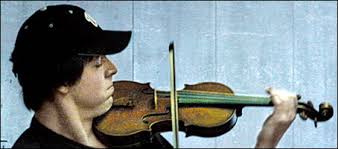
Joshua Bell subwayThese are the details of this popular myth. However, the Washington Post, Pulitzer Prize winning article and the videotape tell a more modest story. Exactly 1,097 people passed by, not thousands and thousands. Several people stopped and paid quite a bit of attention; one woman was heard to say that she really didn’t want to leave. As for the child, he managed to delay his mother for only 3 seconds, no other children appear on the video to take any notice and Joshua Bell was in fact recognized by a woman who couldn’t believe her good fortune and waited around until Bell’s magnificent performance was over to introduce herself to Bell before placing a twenty-dollar bill in his violin case. For his virtuoso performance Joshua Bell earned a grand total of $52.17 and a legend was born. Despite the exaggerated details in this legend, the essence of truth remains: One of the greatest violin players alive today, played some of the best music ever written, on one of the best violins in the world, and most of the people who where there that day never even noticed.

When I read the stories about the Baptism of Jesus, I get the impression that something similar has happened to this myth. The fantastic details as they are told by the gospel-story-teller known to us as Mark are pretty incredible. I don’t mean the characterization of John the Baptizer who is described as wearing camels’ hair and a leather belt around his waist, and who ate nothing but grasshoppers and wild honey. According to the gospel-story-teller we know as Mark, “Jesus came from Nazareth in Galilee and was baptized in the Jordan River by this wild-baptizer John. Immediately upon coming out of the, Jesus saw the heavens opening and the Spirit descending on him like a dove. Then a voice came from the heavens: “You are my Beloved, my Own. On you my favour rests.” Continue reading

So this is Christmas…I hope you have fun: a sermon for the Second Sunday of Christmas, Matthew 2:1-12

IMG_1254I am indebted to the work of John Phillip Newell; especially his book “The Rebirthing of God: Christianity’s Struggle for New Beginnings” for the insights into the burning bushes that surround us. Listen to the sermon here

Do You See What I See on the the Fifth Day of Christmas?

baby in a tree

     Do you see the baby?

Some of us have followed the star, we have journeyed to Bethlehem and we have seen the ONE who comes into the world as a child. Now what? Do we see the needs of the child? Are we ready to roll up our sleeves and be about the work of ushering in the Reign of Justice that this child, any child needs in order to live in peace? I wonder? 

I still hear the echoes of Rachel’s voice weeping unconsolable in Ramah; weeping for the lost children of Syria and every place where violence, greed, madness or neglect robs the child of those things that belong to children: playful laughter, safe homes, warmth, nourishment, learning, embraces, peace….a future. 

Mystic, poet, philosopher, and theologian Howard Thurman’s poem “The Work of Christmas” comes to me as a challenge for the days, months and year ahead:

When the song of the angels is stilled,
When the star in the sky is gone,
When the kings and princes are home,
When the shepherds are back with their flock,
The work of Christmas begins:

To find the lost,
To heal the broken,
To feed the hungry,
To release the prisoner,
To rebuild the nations,
To bring peace among brothers,
To make music in the heart.

The Herods of this world have had their way for far too long. Let the slaughter of innocents end. We have seen the child and we know the wonders of a star-lit peace-filled night. So, let the work of Christmas begin with all of us seeking justice and making peace so that children everywhere can grow in LOVE. Shalom!

Jesus: A Recalcitrant Adolescent??? – a sermon for the First Sunday of Christmas – Luke 2:41-52

Christmas 1C 2015Listen to the sermon here


Christ IS Born Anew – Christmas Eve Sermon

Christmas EVE 2015 cover

Listen to the sermon here

“The Force Be With You” or “Live Long and Prosper”

A sermon for the Fourth Sunday of Advent – Luke 1

star-trek-vs-star-wars

The quotes in this sermon are from Steven Pinker’s book “The Better Angels of Our Nature” and Joseph Holub’s “Fear Not” The Acclamation sung prior to the sermon is “The Magnificat” from Holden Evening Prayer, by Marty Haugen, featuring Gary Curran and Linda Condy:   Listen to the sermon here

 live long and prosper

Fear Not for the Progressive Grinch Who Stole Christmas Does Indeed Have a Heart – a sermon for Advent 4

GrinchThe story told in this sermon can be found in Maeve Binchy’s book of short stories “This Year it Will be Different.” As always I am indebted to those progressive grinches Marcus Borg, John Dominic Crossan, John Shelby Spong, and Michael Morwood for their insights into the sacred. Our sermon hymn was No Obvious Angels. The readings were all from Luke 1:1-56.

You can listen to the sermon here  

Years ago, I struggled with most of the stuff I was reading both in the bible and about the bible. I’d been attending church every Sunday since I was 15 and I was doing my best to be a Christian. But the more I read the bible, the more I studied the stories in the bible, the more difficult it became to reconcile all of the inconsistencies. Nowhere are those inconsistencies more apparent than in the stories about the birth of Jesus. Long before I ever dreamed of going to seminary to become a pastor, I was introduced to the work of progressive scholars like Marcus Borg, Dom Crossan and Jack Spong. It was a relief to learn how to take the bible seriously without taking it literally. It was also a relief to discover that my pastor and indeed most of the pastors I knew didn’t take the bible literally. But I have to admit that Christmas in the Church just hasn’t been the same since I learned that the stories about the birth of Jesus that appear in the Gospels according to Matthew and Luke are not historical narratives. I must also confess that since we here in this community embarked upon this grand adventure together of ReThinking our Christianity, the celebration of Christmas in our worship together has become more and more of a challenge. There are days when I feel like a progressive Grinch who is determined to steal Christmas. Then there are other days when I feel like the Grinch’s little dog, who try as he might he just can’t seem to balance those reindeer antlers on his tiny little head. There are days, and some sleepless nights when I simply long for the good old days, when we could sink into the sentimentality of the season without having to delve into scholarship or worry about our evolving theology.

I miss those Advents when we all acted as though prophets foretold the birth of Jesus centuries before it happened, when we suspended disbelief and went along with the idea that angels visited Mary and Joseph, and we marveled at the fact that Mary conceived will still a virgin. It was easier when that Star guided wise guys and heavenly hosts actually visited shepherds abiding in their fields. Damn those progressive Grinches who’ve robbed us of our simple ways of celebrating the birth of Jesus

and as for those radical Grinches who have us questioning everything from the divinity of Jesus to the cosmic reality of the Christ, well I for one wish they’d leave us alone to sing our songs in peace. We Whos did just fine down here in Who-ville before those Grinches tossed all the elements of the birth stories upon their sleighs and left us here wondering what to do and how to sing. For however shall we celebrate the birth of the Son of God now that we know Mary couldn’t have been a virgin, and Matthew and Luke were the worst historians ever?

Well fear not my friends, because like all Christmas stories ours too has a happy ending. The good news is that those progressive Grinches who have stolen Christmas, do indeed have a heart after all. Even that Grinch Marcus Borg knows a thing or two about opening his heart to the wonder of the stories about Jesus birth. Yes, Borg, just like the rest of those Grinches like Spong, Crossan, and Morewood, leads us to understand that the stories of Jesus birth didn’t actually happen the way the gospel storytellers wrote them. The good news is that Borg, just like the rest of those Grinches, does have a heart big enough not to just stop with the reality that the birth stories are not history. Borg’s heart is big enough to cope with his mind’s ability to give us a better question than, “Did the birth stories happen they way they were written? When Borg encourages us to ask: “why did the gospel story-tellers tell their stories they way they told them?”

Borg’s heart leads him to remind us that the stories may not have happened exactly the way they are written, but they are absolutely true because these stories are always happening. The sacred is always being discovered in the ordinary stuff of life. Every birth is sacred because in every birth their lies among the muck and the mess of birth the reality of Divinity which lives in, with, through, and beyond each and everyone of us. The birth narratives open us to the reality of the sacred, which lies at the very heart of life; all life. Humanity is born over and over again, and over and over again comes the sacred possibility of abundant life; life in which we are capable of living deeply and loving more fully that we can possibly imagine.

In the life and teachings of Jesus people experienced this divine abundance and it opened them up to the possibilities of a world in which the reign of God who is LOVE accomplishes peace through justice. Why did the gospel storytellers write about the birth of Jesus they way they did? Could it be that the divinity embodied in the life of Jesus of Nazareth could not be killed by the worst that the Romans could conceive? The storytellers told the story of Jesus birth using the tools that they had available to them to open their contemporaries to the reality that in Jesus the sacred dimension of life was experienced in the flesh. These parables about the birth of Jesus have opened generations to the sacred Holy One in whom we live and move and have our being. When we begin to experience the more-than-literal meaning of these parables about the birth of Jesus, we are opened to the sacred in our midst in ways that only LOVE can open humans. Continue reading

Christmas in the Ordinary – Advent 3 – Luke 1:1-38

baby in a tree

Readings Luke 1: 1-4, 5-25, 26-38 Listen to the sermon here

Know Thyself – a sermon for Advent 2C – Luke 3:1-6

knowThyselfQuotes from John Shelby Spong’s essay “Looking at Christmas Through a Rear-View Window” and Ralph Waldo Emerson’s poem Gnothi Seauton: Know Thyself

Listen to the sermon here

St. Nicholas Is Too Old and Too Tired to Defeat the Selling Power of Santa Claus!

santa_as_satanThis Sunday, the Feast of St. Nicholas, the ancient precursor to the modern Santa Claus, will pass without much ado. Some will try to encourage us to resurrect St. Nicholas to save us all from Santa’s powers for we have gone astray.  To those well meaning souls who would rid Christmas of its flagrant consumerism, I can only offer up a feeble, “Baa Humbug!”

The very best traditions about St. Nicholas suggest that he was a protector of children while the worst tradition has him providing dowries so that young girls could be married off by their father rather than be sold into slavery. Meanwhile, the modern character Santa Claus grooms children to take up their role as consumers in the cult materialism. Some parents may bemoan the little gimmie-monsters that their children become, but most adults are rendered helpless by our own remembered indoctrinations and so we join in what we choose to deem as harmless fun.

‘Tis the season for contradictions.  ‘Tis the season when we prepare to celebrate  the incarnation of God in human form while also waiting for Santa Claus to come down our chimneys. Face it; most of the folks dashing about in the malls are more worried about the imminent arrival of Santa Claus than they are about God. I’d even go so far as to say that a good number of people have unconsciously substituted Santa Claus for God.  Santa Claus and the baby Jesus get into some pretty fierce competition at this time of year; and in the culture the larger loyalty belongs to Santa.

Besides, I don’t believe that consumerism is the most dangerous thing about Santa. So, before you accuse me of being a Scrooge or even a Grinch, ask yourself who it is that most children worship at this time of year, and I think you’ll agree that Santa is the one we’ve all been trained to bow down to, and not just at Christmas. It is difficult to deny that sometimes our view of God has been more influenced by Santa Claus than by Christ?  I dare you to compare the number of children standing in the lines at the shopping centre to get their picture taken on Santa’s lap to the number of children in Sunday School? So many of us made that same trip to see Santa when we were little and when we finally got to Santa’s lap, he asked us the big Judgement Day question that Santa always seems to ask, “Have you been good this year?” There’s only one way to answer that question – even though we may have been as deviousness might qualify us as servants of that other mythical character that begins with santa and ends with  n.  For all too many people this laptop confession begins a pattern for interactions with an image we create of the Father-God, who watches and records our offences, making a list if only for the purpose of forgiving us because an appropriate blood sacrifice has been made on our behalf.

Think I’m being harsh? Just listen to that song that pours from muzak speakers, the song that spells out a theology of Santa Claus.  “Oh, you better watch out.  You better not cry.  You better not pout. I’m telling you why. Santa Claus is coming to town.  He knows when you’ve been sleeping. He knows when you’re awake.  He knows if you’ve been bad or good, so be good for goodness sake. He’s making a list, checking it twice, gonna find out who’s naughty and nice. Santa Claus is coming to town.” The trouble with the theology of Santa Claus is that we keep applying it to God as we try to turn the Creator of all that is and ever shall be into a list-checking, gift-giver, whom we better watch out for, lest we be punished. Why then are we surprised that when our Santa-god fails to deliver or bad things happen to good people, that our childish faith in the Santa-god isn’t enough to sustain our trust?

Santa in his present incarnation is indeed pernicious, but like most mythical characters, he cannot be killed and any attempts to resurrect St. Nicholas to replace him are doomed, for the power of Santa’s materialism will always defeat the dim memories of St. Nicholas and his chocolate money. If we are going to break free of the cult of materialism, perhaps we out to try to convince Santa to use his mythical powers for goodness sake!

Yeah, that’s right, I’m going to say it, it’s time to let old St. Nick and his young assistant Santa die, so that a new Santa can be born; a Christmas resurrection if you will. We need a new Santa capable of changing our consuming ways. If the Coca Cola Company could use the advertising industry to transform St. Nick into Santa, surely we can resurrect Santa using the modern persuasive powers of social media to redesign the old salesman extraordinaire into a mythical character with powers fit for the needs of this century.

blue santina

SANTINA- all decked out in her Advent blue!

Imagine if you will, a new and improved Santina, all decked out in Advent blue, she has the power to open young minds to the needs of our neighbours and travels the world via her magic transporter beam, to gather the hopes and dreams of the poor and oppressed into one internet feed, which she magically imprints in our hearts and minds, so that we change the world, creating peace through justice! 

Oh, wait, we already have such a character. We don’t need St. Nicholas or Santa Claus, nor any new-fangled Santina.  We need the One we’ve always needed. The One who comes in the guise of a person. The One we seek is Christ. The One who lives and breathes in, with, and through us to create peace on earth through justice and love. The One who uses our hands, our feet, our lives to change the world!

Re-Birthing God: a sermon for Advent 1C

Made of God Julian pastordawn copyThis sermon relies on the work of John Philip Newell in his book, The Rebirthing of God: Christianity’s Struggle for New Beginnings. On this, the first Sunday of Advent our readings included “The Star Within” a creation story by Dr. Paula Lehman and Rev. Sarah Griffith, Luke 21:25-36, and John 3:1-9. A deliberate choice was made not to use the traditional Advent reading from Jeremiah so as to avoid the trap of the false Christian appropriation of the Hebrew prophets as foretellers of Jesus as the Messiah. Listen to the sermon here

Christ Will Come Again, and Again, and Again – a sermon for Advent 1C – Luke 21:25-38, 34-36

Old SpiceChrist has died. Christ is risen. Christ will come again. Outside the world is hurtling toward the Christmas; toward the celebration of the birth of a baby. While the world prepares for the birth, the church says, “wait”. Wait, keep watch, and beware, for the world is ending. While the church cries out:

“Signs will appear in the sun, the moon and the stars. On the earth, nations will be in anguish, distraught at the roaring of the sea and the waves. People will die of fright in anticipation of what is coming upon the earth.” the world sings: “You better watch out, you better not pout, you better not cry, Santa Clause is coming to town.” And all the while we declare the mystery of our faith, “Christ has died. Christ is risen. Christ will come again.”

Somewhere between our deepest fear and our deepest longings we wait, the world prepares and we wait and watch, knowing all the while that, “Christ has died. Christ is risen. Christ will come again.” knowing that because the world will end, our hope lies in the knowledge that Christ, the Anointed One, the Messiah, will come again.

Advent, the very word means come; tis the season of coming. Advent is not about waiting; waiting for Christmas, or waiting for the birth of a baby; Advent is about coming, the coming of Christ. In the darkness of the end, we long for Christ to come. Yes, we will have to wait for Christmas to come; but Christmas will come as it always does. The point is not the waiting, the point is in the midst of darkness, in the trials and tribulations of the end, Christ will come; the point is Christ will come. In the midst of the darkness of the end, our deepest longings are stirred up, our longings for hope, for peace, for love and for joy.

All around us we can see the signs of the end; death is everywhere. Galaxies collide and stars die, and there is darkness, the end. Dreams die, and there is darkness, the end. Barriers go up, bullets fly, bombs explode, people die; there is darkness, the end. Words are spoken, promises broken, hopes are dashed; there is darkness, the end. The work dries up, the job ends, funds are exhausted, the bills pile up; there is darkness, the end. Illness overwhelms, shadows on x-rays frighten, scans scare, falls break us, dreams are dashed; there is darkness, the end. In the darkness of the end, we long for hope, for peace, for love, for joy.

I remember, when I was a kid; I was about thirteen, we’d just moved to the West Coast and I can still remember it as if it was yesterday. I set off on my bicycle in search of the perfect Christmas I was as moody and emotional as any thirteen year-old could be. I was lonely, because we’d moved around so much that my only close friend was my younger brother; and what thirteen year-old girl, wants to admit that her only real friend is her eleven year-old brother. My parents were worried sick about money. We’d moved, Dad’s job was unstable and Mom’s job barely paid anything. About the only good news in my life was that I was twelve and back in those days, at twelve you were considered old enough for babysitting and babysitting meant money. Every weekend, I would babysit. Looking back on it now, I can’t believe that at thirteen, I was actually left in charge of little children. I remember getting a couple of bucks for babysitting on Friday and Saturday night; and I do mean a couple of bucks, two dollars for two nights of babysitting.

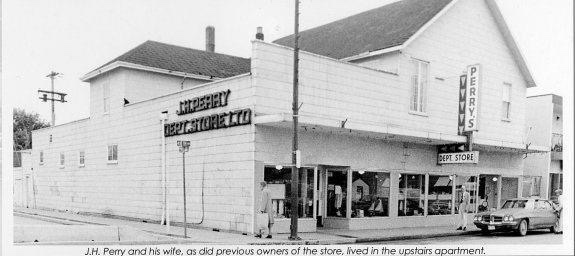
IMG_1220I remember, calculating that by the time Christmas arrived, I should have $27 dollars saved up. Twenty-seven dollars should be just enough to buy presents for my Mom and Dad, my brother, my aunt and uncle, and my two little cousins. I still remember heading off on my bicycle, into the bustling metropolis of Ladner. Ladner was just a small fishing village back then. There were just three stores worth looking for Christmas presents in: Perry’s Department store proved to be far too expensive for my blood. So, I headed off to the 5 and 10 store. For those of you who don’t know what a five and ten store was, just think dollar store, only back then it was the 5 and dime and you could actually get stuff for five and ten cents. I spent hours in there trying to figure out the perfect gifts for my brother and my two little cousins. I left thinking that I could take care of their gifts with about five dollars. So it was off to the drug store to figure out what to get for my Mom and Dad and Aunt and Uncle. That took another couple of hours as I agonized over the various Old Spice gift sets. I could just about afford a 3-piece set for my Dad that included saving cream, after-shave and a soap-on-a-rope. Surely my uncle would be happy with a soap-on-a-rope. Then it was a Yardly gift set for my Mom, dusting powder, perfume and soap all for about six dollars; which would leave enough left over for a small bottle of perfume for my aunt. Continue reading

Home in the Love We Call God – a sermon for Jesus the Christ Sunday- Luke 15

prodigalRather than the recent church tradition of celebrating the Reign of Christ/Christ the King Sunday, on this the last Sunday of the church year, we chose to celebrate our complex relationship with Jesus the Christ. Our readings included the parables of the lost form Luke 15:1-32. 

Listen to the sermon here

Preparing to Preach or Not to Preach on Reign of Christ Sunday

cosmic christI usually have the presence of mind to book my vacation or some sort of continuing education event that takes me far away from the pulpit on Reign of Christ Sunday. Formerly known as “Christ the King Sunday” an attempt to move beyond exclusively male imagery for Christ (in whom there is no east nor west, male nor female) some church-folk have attempted to change the name of this festival to Reign of Christ Sunday. But merely changing the title fails to get  beyond the struggles I have with this festival of the church year!!!!

Born in an age that was birthing fascist regimes, this particular festival of the church clings to it’s christian imperialist past. Instituted in 1925, by Pope Pius XI,  (you can read the full proclamation here) the festival was designed to remind the world that Christ is the King of the World. The irony of proclaiming Christ as “King” when the life of Jesus of Nazareth positively denies “kingliness” seems lost on the church. The appropriateness of asserting Christ over the religions of the world lacks the kind of humility embodied by Jesus of Nazareth. So, this year I am not prepared to celebrate Christ the King or the Reign of Christ Sunday. Last year, we took a leaf out of Matthew Fox’s book and crafted our worship around the theme of the Quest for the Cosmic Christ.

Cosmic ChristYears ago, long before I ventured to seminary, Matthew Fox’s book Original Blessing opened me to the wonders of Creation Spirituality. So, I eagerly worked my way through his book The Coming of the Cosmic Christ. I confess that my first reading of Fox’s tome left me in the dust of my own lack of understanding of traditional Christology. But even back then, without the benefit of theological training, I sensed something of the MYSTERY that I had always trust Christ to BE. I have returned to Fox’s work many times over the years and over and over again I have discovered a WISDOM that moves me beyond the limitations of the historical Jesus toward a more holistic vision of Christ which like Fox I believe has the potential  to move us to a more wholistic relationship with Creation. I trust that the WISDOM of the Cosmic Christ can lead us into the Season of Advent so that we can be about the work of birthing the Cosmic Christ. (you can check out last year’s sermon on the Cosmic Christ hereThis year, we at Holy Cross will begin our quest for the Cosmic Christ by looking back to remember our treasured relationships with Jesus as we explore the relationship of Jesus, both our own personal Jesus and the historical Jesus, to our visions of the Cosmic Christ.

Wars and Rumours of Wars: The End is Near – a sermon for the 25th Sunday after Pentecost – Mark 13:1-8

Jean Jullien - Nov.13/15

Jean Jullien – Nov.13/15

Listen to the sermon here

Here We Stand, For We Can Do No Other – a sermon for Reformation Sunday

Simcoe Landing

Simcoe Landing

Listen to the sermon here

Watch the video that was shown in place of the traditional readings for Reformation: Thomas Berry and the Earth Community here

Gospel Text: John 8:31-36

The View from Job’s Dung-heap: Peering Beyond the Heavens Toward a Theory of Everything?

string theoryRuminating over this Sunday’s prescribed reading from Job 38, my mind harkens back to 2012, when I had the privilege of attending a series of lectures given by the great Phyllis Tickle who described the current reformation that the church is experiencing as part of a cultural phenomenon that happens about every 500 years, which she calls “The Great Emergence”. When asked what skills religious leaders will need to navigate the information age, Tickle insisted that the best advice we could give to anyone considering a religious vocation was that they should study physics. Inwardly I groaned, remembering my feeble attempts to come to grips with the most rudimentary theories of quantum physics. But I also nodded in agreement, knowing that so many of our religious narratives strive to make meaning of the cosmos as it was perceived by ancient minds. When our ancestors looked into the heavens they had no way of knowing the wonders of the cosmos that we are beginning to discover. While physicists can ignore theology, theologians who ignore physics will find themselves stuck atop Job’s dung-heap impotently shaking their fists at the Divine.  Perhaps Tickle is correct and the clerics of the future will out of necessity need to be physicists.  Theoretical physicist Michio Kaku speculates that the universe is “a symphony of strings” and the “mind of God would be cosmic music resonating through eleven dimensional hyper-space”.  If you have the courage to climb down from the dung-heap, take a look at Michio Kaku’s “The Universe in a Nutshell”. If the Divine bollocking that Job endured makes you wonder if ignorance might just be bliss, then take a peek at “Is God a Mathematician?” or “The Mind of God”. Who knows, maybe if a few more of us dare to dwell in the questions we might just come up with imaginative narratives to help us fathom what it means to be human. 

Today We Celebrate the Life and Witness of St. Teresa of Avila

An excerpt from “Love Poems From God” by Daniel Ladinsky,

(Penguin Compass, London: 2002)

(1515-1582)  “Teresa was born in Avila, a beautiful high mountain village of Spain.  She was one of thirteen children, three girls and ten boys, in a wealthy family.  The Spain in which Teresa grew up was permeated with 700 years of Arabian culture; the eradication of Arab power was followed by one of Spain’s darkest periods, the insanity of the Inquisitions, which, in the fourteenth century, along with other grievous deeds, forced mass conversions of Jews to Christianity.”

“Teresa was her father’s favourite child, and the most spirited.  Her mother died during childbirth when Teresa was thirteen, after which she had little supervision.  It is believed she had a lover at the age of fifteen, which caused her father to send her to a convent boarding school, only to see her return home two years later because of poor health.  When she was twenty-one, Teresa ran away from home to join a convent.  At that time many convents were more like hotels for women, allowing them a great deal more independence than they would be allowed at home, though after two years at the convent Teresa had a near-death experience that changed her life.  A spiritual awakening began in which she cultivated a system of meditation that sought quieting the mind to such an extent that God could then be heard speaking.  Over the next twenty years she experienced many mystical states but not until she was fifty did she begin the most far-reaching aspects of her life’s work.” Continue reading

A Feminist, the Niqab, St. Francis and the Sultan: a sermon for the Commemoration of St. Francis

niqabThe Season of Creation ends today with the commemoration of St. Francis and the rhetoric of election season together with  the events chronicled in Paul Moses book “The Saint and the Sultan: The Crusades, Islam, and Francis of Assisi’s Mission of Peace” inspired this sermon.

The reading from St. Francis and the Scripture reading can be found here

Listen to the sermon here

Jesus Is the Memory of Our Future – a sermon for Creation 4B

GrandaThis long forgotten photograph of my Granda, William Anderson, moved my sermon beyond my miss-remembering as I attempt to respond to Dietrich Bonhoeffer’s question: “Who is Christ actually for us today?” I first encountered the phrase “Jesus Is the Memory of Our Future” on a t-shirt from Holden Village. Readings for this the fourth Sunday of the Season of Creation included: Dietrich Bonhoeffer’s Letters from Prison (to Eberhart Bethge, 1944), Mark 12:28-34, Mark 16: 14-16 – click here to read texts

Listen to the sermon here