
A Little Knowledge Is A Dangerous Thing: a sermon for Pentecost 2B
Reply

 When I was just a kid, I had what can best be described as an adolescent crush on a teacher. Looking back on it now, I’d have to say that I fell head over heels in love with my teacher. It was the kind of love that only a 13 year-old girl could have; so intense and all consuming. I came to believe that this teacher was the wisest, kindest, most interesting person in all the world. This teacher knew more than anyone else, especially my parents. This teacher was cooler, funnier, more daring and definitely more in tune with my life than anyone I had ever met. I was convinced that if I could only be just like this teacher would mean that I too would be cooler, funnier, more daring and definitely more in tune with life. So, like most adolescent girls who are suffering from a crush I became obsessed with this teacher. I was young and I was in love, and like most thirteen year-old’s the I was convinced that the world revolved around me, so I set about pursuing my passion. This teacher taught English, so naturally, I decided that when I grew up I too would teach English. This teacher loved poetry, so I too became passionate about poetry.
One day this teacher announced that we could gain extra-credit if we wanted to enter a local poetry writing contest; and even though I was pretty sure that year I’d be getting a mark that would be somewhat better than an A, I began to write poetry. I was very serious about my poetry writing. I carried a pad of paper with me everywhere I went, and I began to ruminate about my life. I don’t remember any of those early attempts to wax poetical, but I do remember that each and every one of those poems was about me; me and my life, me and my unrequited love, me and my passion, me and the horrible way that no one paid much attention to me. Me, Me, Me, Me, it was all about me.
As the time drew near for us to submit our poetry to the competition, my teacher announced that there would be a special class after school, so that those of us who were planning to enter the competition could get some feedback on our efforts. So, by the end of the week, I would have to choose one of my great works for feedback. I spent hours pouring over one poem in particular. Tinkering with the words, trying to get things just right. I was so very proud of the final draft. I’d carefully copied it out on to a crisp piece of foolscap. Arranged the letters in the middle of the page so that they looked just so. I could hardly wait for school to be over so that I could rush to see what comments my beloved teacher had placed in the margin. There were barely a handful of us who stayed after school.
Looking back on that scene, we were a nerdy little crew. I was positively breathless as my teacher handed my offering back to me. To this day, I can’t remember a single line of my great work, but I can tell you word for ward what was scribbled in red in the margin of the ever so white foolscap. “A little self-involved, try looking outward.” I was devastated. How could anyone be so cruel? I’d poured my heart out only to have it stomped on by the indifference of truth. Continue reading


 Currently the Adult Education Class at Holy Cross Lutheran Church is exploring ways in which the church can once again become communities of resistance. We began with an exploration of Cynthia Moe-Lobeda’s book “Resisting Structural Evil Love As Ecological-Economic Vocation” and we have moved on to the excellent work of Robin Meyers whose Beecher Lectures have been published in “Spiritual Defiance: Building a Beloved Community of Resistance”. Below you will find the 3rd lecture in the series, UNDONE: Faith as Resistance to Empire, which we are studying in depth. For those who would like to delve deeper all three Beecher Lectures, along with a brief bio of Robin Meyers, can be found here
Join us for conversation at 9:15am this Sunday
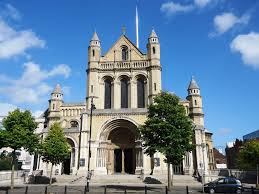 Listen to the sermon here

John chapter 10 causes me to remember Mrs Tanner, my grade ten english teacher. I can still see her handwriting all over my carefully crafted compositions. Red ink everywhere as she constantly admonished me not to mix my metaphors. Clearly the writer of the Gospel of John never had the benefit of Mrs. Tanner’s guidance, or he would not have dared to record Jesus words the way he does in his long and rambling I AM passages.
Before we even get to chapter 10, we read that Jesus says: “I AM the bread of life.” and “I AM the light of the world.” In chapter 10, we read, Jesus says, “I AM the gate,” “I AM the Good Shepherd.” Later we will read, that Jesus says, “I AM the Resurrection”, “I AM life.” “I AM the true vine.” “I AM the way.” “I AM in God.” “I AM in you.”
But in the tenth chapter the writer of the Gospel of John goes all out and has Jesus using not just a metaphor but a mixed metaphor. For in chapter 10, we read that Jesus declared: “I AM the Gate. The gate through which the sheep must pass.” and then mixes it up by saying, “I AM the Good Shepherd.”
Which is it? Gate or Shepherd, come on, I know your Jesus but I’m trying to understand how Jesus, who is after all, the lamb of God who takes away the sin of the world is both the Gate and the Shepherd.
I wonder if Mrs. Tanner ever took her red pen to the Gospel According to John? If she did, the letters MMX would have appeared all over this Gospel. MMX = mixed metaphor wrong! Looking back, I know that Mrs Tanner was just trying to help us to be more careful about our ideas. But today I would have to ask of her, and indeed of the writer of the Gospel of John, “What’s a meta for?” Continue reading
 For this sermon I used a video within the sermon to help illustrate resurrection. You can view the video within the written text of the sermon below or listen to the audio version provided. I am indebted to the work of James Rowe Adams for much of the New Testament Scholarship in this sermon.
The Scripture texts were John chapter 20:19-31 and Acts 4:32-35
Audio Version of the Sermon click here
Practicing Resurrection
Christ is Risen! Christ is Risen indeed! Alleluia! So, Christ is Risen! So What???What can it possibly mean to you and to me, that a rag-tag bunch of Jesus’ followers gathered together in an upper-room and talked about their experiences of Jesus and decided that not even death could extinguish the life that they experienced in Jesus? What difference does it make to you or to I that Christ is risen? The truth is that it can make absolutely no difference what so ever. Now there are a whole lot of people who will tell you that the important thing about resurrection is that you believe it. Those same folks absolutely love the story of doubting Thomas. And so every year on the second Sunday of Easter we read the story of doubting Thomas as a kind of inoculation against Thomas’ disease.
I sometimes think that the designers of the lectionary were trying to build up our resistance to doubt. Having problems believing in resurrection, well don’t do what Thomas did, don’t doubt, because you’ll be proven wrong. Jesus is alive, the wounds in his hands proved that to Doubting Thomas, so have no doubt about it the resurrection happened! Believe in the resurrection!
The trouble with believing in stuff is that it belief can make absolutely no difference what so ever. I can believe in justice for all, but unless I’m prepared to seek justice, to be fair, or to resist injustice, it makes absolutely no difference what so ever. You can shout, “Christ is risen!” all you want but unless you are willing to live it, the resurrection means very little at all. In order to live the resurrection you have to begin practicing resurrection. In order to practice something, you have to know what it looks like, what it sounds like, or what it feels like.
I’ve been trying to figure out how to show you what resurrection looks like in the flesh. Then I remembered a video that’s been doing the rounds on the internet, so I want you to watch this modern miracle of resurrection.
WATCH THE VIDEO CLIP FROM: Alive Inside
Christ is Risen! Christ is Risen indeed! Alleluia! Almost 2000 years ago, a bunch of rag-tag Jesus followers were huddled together in fear. Their beloved leader had been brutally executed by the powers that be and they were terrified that they would be next. Paralyzed by their fear, hiding behind a locked door, something happened that gave them the strength to burst forth from their own tomb and change the world. Continue reading
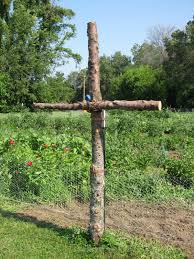 I am indebted to Marcus Borg for once again guiding me through Holy Week. Marcus’ words echo throughout this sermon. His last book (sadly his last book, what shall we do without him?) Convictions: How I Learned What Matters Most provided me with a way of seeing beyond the cross for which I am grateful. I am also grateful to James Carroll whose book Christ Actually: The Son of God for the Secular Age, remains a constant source of inspiration.
Listen to the Good Friday sermon here
 Holy Week marks a sharp uptick in visitors to this blog. From comments, messages, and emails I hear from fellow preachers who, like me, are daunted by the task of preparing the Good Friday sermon. That task is even more daunting for those of us who serve progressive communities. My fellow progressive-christian-preachers tell me of the dearth of progressive-christian Good Friday sermons to be found on the internet and encourage me to re-post my own attempts to rise to the occasion. So, here are the links to some of the Good Friday sermons I have preached over the years of my journey with the progressive community which I serve. The people Holy Cross Lutheran Church has over the years provided an invigorating space for me to pursue my questions. They have also provided the resources which make this blog possible. So, if you find the work posted here of value to you and your community, please consider supporting this ministry of Holy Cross. I rarely solicit donations. But Holy Cross is a small community that continues to give to others in so many ways and your encouragement is greatly appreciated!!! (Holy Cross Lutheran Church, 1035 Wayne Dr., Newmarket, On. L3Y 1N3)
Follow the links to Good Friday sermons and feel free to use/adapt/repost
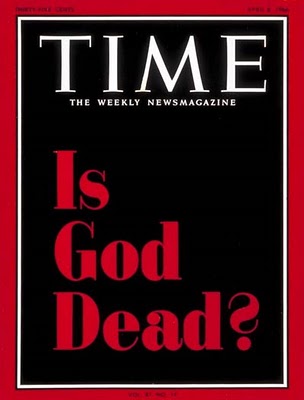 This Good Friday sermon (preached 2014) was born of the theological struggles our congregations has engaged in over the past few years. It mirrors our theological journey. This year members and friends of our congregation engaged in an “Atheism for Lent” study and so the sermon begins with a parable from an atheist critique of Christianity. I am grateful to the members and friends of Holy Cross Lutheran Church for the courage and wisdom they have shared with one another as together we seek to know the unknowable. You can listen to the audio of the sermon or read the manuscript.
Jesus of Nazareth taught using parables. So, in the shadows of the horrors of the cross, let us turn to a parable; not one of Jesus’ parables, but a modern parable. This parable was first told in 1887. It was reprinted in 1969, in the Time Magazine that bore the iconic “Is God Dead?” cover.
“Have you not heard of that madman who lit a lantern in the bright morning hours, ran to the market-place, and cried incessantly: “I am looking for God! I am looking for God!” As many of those who did not believe in God were standing together there, he excited considerable laughter. Have you lost him, then? said one. Did he lose his way like a child? said another. Or is he hiding? Is he afraid of us? Has he gone on a voyage? or emigrated? Thus they shouted and laughed.
The madman sprang into their midst and pierced them with his glances. “Where has God gone?” he cried. “I shall tell you. We have killed him – you and I. We are his murderers. But how have we done this? How were we able to drink up the sea? Who gave us the sponge to wipe away the entire horizon? What did we do when we unchained the earth from its sun? Whither is it moving now? Whither are we moving now? Away from all suns? Are we not perpetually falling? Backward, sideward, forward, in all directions? Is there any up or down left? Are we not straying as through an infinite nothing? Do we not feel the breath of empty space? Has it not become colder? Is it not more and more night coming on all the time? Must not lanterns be lit in the morning? Do we not hear anything yet of the noise of the gravediggers who are burying God? Do we not smell anything yet of God’s decomposition? Gods too decompose. God is dead. God remains dead. And we have killed him. How shall we, murderers of all murderers, console ourselves? That which was the holiest and mightiest of all that the world has yet possessed has bled to death under our knives. Who will wipe this blood off us? With what water could we purify ourselves? What festivals of atonement, what sacred games shall we need to invent? Is not the greatness of this deed too great for us? Must we not ourselves become gods simply to be worthy of it? There has never been a greater deed; and whosoever shall be born after us – for the sake of this deed he shall be part of a higher history than all history hitherto.”
Here the madman fell silent and again regarded his listeners; and they too were silent and stared at him in astonishment. At last he threw his lantern to the ground, and it broke and went out. “I have come too early,” he said then; “my time has not come yet. The tremendous event is still on its way, still travelling – it has not yet reached the ears of men. Lightning and thunder require time, the light of the stars requires time, deeds require time even after they are done, before they can be seen and heard. This deed is still more distant from them than the distant stars – and yet they have done it themselves.”
It has been further related that on that same day the madman entered various churches and there sang a requiem. Led out and quietened, he is said to have retorted each time: “what are these churches now if they are not the tombs and sepulchres of God?”
This parable first printed in 1882, is known as The Parable of the Mad Man.” It was written by Friderich Nietzsche. One of the characteristics of a parable is that it surprises us with a truth that we already know. God is dead and we have killed him! Continue reading
 A powerful series contemplating resurrection in ever deepening ways in order to explore what a risen christianity might look like in terms of its offering of healing and blessing for the earth. Created by John Philip Newell a poet, pastor and scholar who opens our eyes o a vision beyond doctrines and dogmas that fail to proclaim the wonders of the universe in which we live. “Christianity will rise again to the extent that we remember the sacredness of everything that has been born in the universe.”
 Judas, Peter, Pilate, Caiaphas, and John – these are the names most often heard in the stories we hear during Holy Week….the men who failed Jesus or who conspired against Jesus, their names we hear during this holiest of weeks. But what of the women who stood by Jesus, who wept for Jesus, who bore witnesses to the betrayal, the trial, the execution, and the death of Jesus. Where are their stories during this week of weeks? For centuries, the church has failed to listen to the voices of the women whose lives were intertwined with Jesus’ life. The stories of these faithful women have been hidden in the mists of time. This Palm Sunday we turned to one of those women; to Mary the mother of Jesus. Her voice has been silenced by the church. She has been confined to works of art that speak not with words.
So, as we enter Holy Week we turn to two new works of art that give voice to Mary’s story. Anne Keith and I will do our best to give voice to Mary’s story using the words of the Irish writer Colm Tóibín whose book, “The Testament of Mary” imagines Mary as an old woman, nearing the end of her life, looking back on the life of her beloved child Jesus. You will hear cynicism in the voice of Mary who is visited by the men who will tell her son’s story; men who are determined to make a particular meaning out of Jesus life and death. Mary does not share their enthusiasm for the tragedy that robbed her of her child, nor will she twist her own story to suit their needs.
Mary’s voice will also come to you through music. Mezzo soprano, Linda Condy, accompanied by our Musical Director: Marney Curran, B.S.M., A.R.C.T., will preform “The Confession Stone: Songs of Mary” composed by Canadian Robert Fleming based on the poems of Owen Dodson. Owen Dodson was an African-American poet whose work is part of what has been dubbed the Harlem Renaissance. Dodson’s poetry brings a lively humanity to the Mary empowering her voice to evoke the passion of a mother’s loss.
Both Owen Dodson and Colm Tóibín provide a powerful midrash with which to begin our Holy Week.
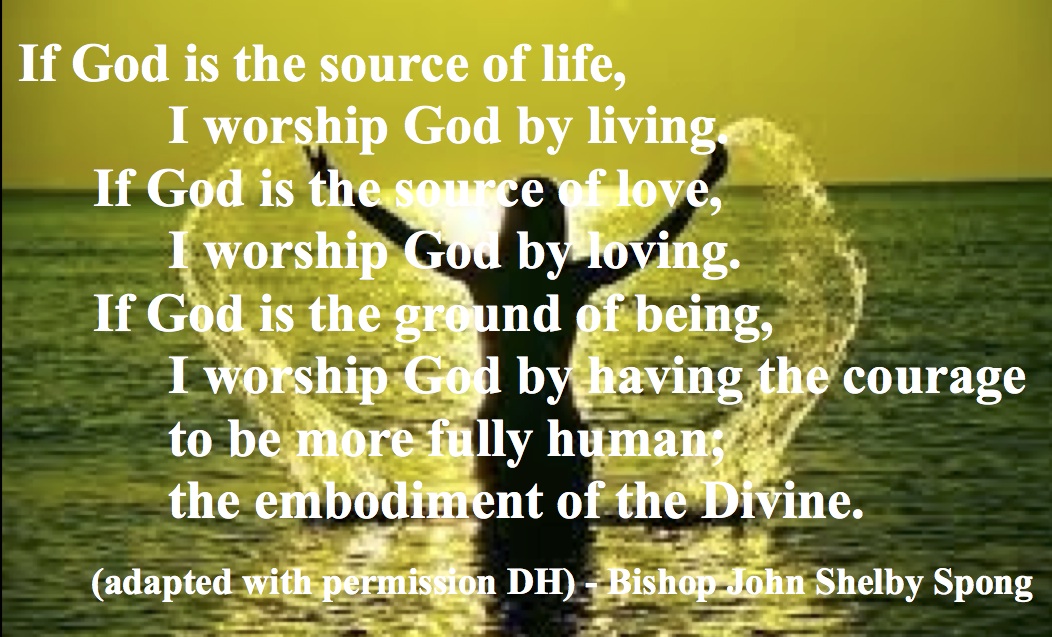 “….when he returned to the city…Jesus entered the Temple precincts and began teaching. The chief priests and the elders of the people came to him and said, ‘By what authority are you doing what you do? Who gave you this authority?’ And I,” replied Jesus, ‘Will ask you a single questions; if you give me the answer, I will tell you my authority for these actions. What was the origin of John’s right to baptize? Was it divine or was it human?” They discussed it among themselves and said, ‘If we say, ‘divine,’ he will respond, ‘Then why did you refuse to believe him?” But if we say ‘human’ we have the people to fear, for they regard John as a prophet,’ So they replied to Jesus, “We don’t know.” (Matthew 23:23-27)
Divine or human? We don’t know? Really? Of course we know? Divine or Human? You bet we know! We’re just afraid to say. These few verses are usually ignored during the lead up to the big events of Holy Week. It seems to me, that they may well provide those of us who live in the 21st century about as much angst as they provided to people of the first century, but for entirely different reasons. I think perhaps, the writer of the gospel according to Matthew, whoever he was, may have been messing with his first century audience. “Human or divine?” was just as much of a loaded question in the first century as it is in the 21st century but for entirely different reasons. The writer of the Gospel According to Matthew may have placed the question in the mouth of Jesus, but today, just as I’m sure it did all those centuries ago, the question echoes back and forth between Jesus and the listeners to the narrative until it is not so much about John the Baptist’s authority to baptize as it is about Jesus himself. Which is exactly what the author designed the interchange to do in the hearts and minds of his listeners. “By what authority are you doing what you do? Who gave you this authority?”
In good rabbinic style the author of this text has Jesus reply to a question with a question. “I will ask you a single question; if you give me the answer, I will tell you my authority for these actions.” Do you want to know why I came riding in here on an ass? Do you want to know what gives me the right to mock your notions of Messiah? Do you want to know by whose authority I rube the Roman’s noses in it, parading into town mocking their leadership with a farce designed to make you laugh at the way they dare to laud their power over us? Do you want to know what or who gives me the right to march into the Temple at Passover and turn the place upside down, attacking the financial system that lies at the heart of our peoples’ collaboration with Roman oppression? Do you really want to know by whose authority I challenge the injustice that surrounds us? Do you really want to know? Well I’ll tell you if you answer me this? “What was the origin of John’s right to baptize? Come on you tell me. Was it divine or was it human?” They lopped of John’s head for daring to challenge injustice. Served it up on a silver platter for the crime of challenging Roman authority. Do you really want to challenge my authority? Human or divine? Come on tell me, I dare you.
They discussed it among themselves and they knew they were trapped. “If we say, ‘divine,” he will respond, ‘Then why did you refuse to believe him?” But if we say, ‘human” we have the people to fear, for they regard him as a prophet.” So they replied to Jesus, “We don’t know?”
Human or divine? We don’t know. Of course they knew! They know and we know. We are just afraid to say. Because if we say, we know full well what the next question will be and we don’t want to go there. Human or divine may not be a 21st century question. It is a question that has different implications in our day than it did back when the writer of the Gospel According to Matthew put it into the mouth of Jesus. To question someone’s authority in the first century meant pretty much what it does today. We, like our first century ancestors in the faith, want to know if Jesus has the right stuff to challenge the system. If Jesus has the right stuff; then maybe just maybe he’s worth paying attention to. Show us your credentials Jesus. We want to know who you are before we take any advice from you; especially advice that will have us taking a stand against the powers that be. Continue reading
 I wrote this sermon years ago, when I’d first given up theologies which required a subscription to the notion that humans fell from grace and need a Messiah to save them. It’s funny how we cling to ideas about what it means to be human as if centuries of human evolution have no bearing on who and what we are. The illustrations in this story come from an old shoebox of clippings; they do not cite the source, but the name Ed Riegert is scribbled in the margins. Ed was my homiletics professor. He used to encourage us to keep a file of stories that we might tell. That old shoebox has long since been replaced by a hard-drive. But the shoebox still draws me back from time to time. This sermon was a first attempt to move beyond notions of atonement that paint a picture of humanity I no longer cling to. Perhaps it will be helpful to those who are beginning open themselves to a new understanding of who Jesus is.
For previous Palm Sunday sermons click here, here, or here
There was once a man who suffered from various illnesses for a very long time. This man had seen countless doctors who over the years had performed countless tests on him and had prescribed lots of medicine. But, the man’s condition did not improve. This man even tried home remedies to make himself feel better. He drank herbal teas, and took mega-doses of vitamins along with his prescriptions. But still he did not feel any better. Then one day the man heard about a doctor who was said to be an outstanding diagnostician. So the man called the doctor to make an appointment and even though the doctor was booked for months in advance the man was delighted when the receptionist managed to fit him in. As the date of his appointment drew near the man was excited by the prospect of finally getting to the bottom of his problem. At last, he would find out just what was wrong with him and in no time he was sure that this brilliant doctor whose praises were sung by one and all, this doctor would be able to cure him. The day of the appointment arrived. After the doctor had thoroughly examined the man and had reviewed his tests, she sat down with him and she said, “My friend, you are not a healthy man. But you can be well again if you will only follow my advice. What you need to do is lose about sixty pounds, get involved in a regular program of exercise, and eat more grain, fruit, and vegetables. You don’t need to take any more of the medicine that has been prescribed for you and you don’t need all those vitamin pills.” When the man heard this, he was indignant. He demanded that the doctor prescribe some new medicine for him, possibly some experimental drug not yet on the market, which would cure his illness. The doctor smiled patiently and repeated her advice. “You don’t need medicine,” she said. “You need to change your lifestyle.” The man simply cursed the doctor and stomped out of the office. For the rest of his sickly life, he told everyone that she was a quack who didn’t deserve to be called a doctor. Continue reading
 In our parish, on Palm Sunday our liturgy stays with the commemoration of Jesus’ entry into Jerusalem. Trusting that our members will join us on Good Friday, we have not adopted the practice of rushing to the Passion of Christ. This allows us time to linger over our Hosannas. Our worship began outside with the reading of Matthew 21:1-11, followed by a procession of palm waving, hosanna cheering congregation. This year I changed the first reading to the story of Jacob’s wounding during a wrestling match with God in Genesis 32:22-31, followed by an feminist interpretation of Psalm 118, and the Gospel text John 12:12-15. I am indebted to Michael Morewood’s book “Is Jesus God” for the inspiration behind this sermon and to John Dominic Crossan and Marcus Borg’s “The Last Week” for the historical details.
For previous Palm Sunday sermons click here, here, here, or here
Hosanna! Hosanna! Hosanna! Save us! Save us! Save us! Save us from who? Save us from what? Save us for what? What is all the shouting about?
Two millennia ago, on the outskirts of Jerusalem, when Jesus mounted that donkey it was pretty clear who needed saving from who; it was clear what they needed saving from and it was fairly clear what people longed to be saved for. The people longed for freedom: freedom from the brutality of their Roman rulers, freedom from the ravages of poverty, freedom from the strict oppression of their religious authorities, and freedom from the fear of illness and death. Life among the conquered peoples of first century Palestine was cruel, oppressive, impoverished and filled with fear and suspicion. Whatever hope of deliverance there was all too often false hope. Among the oppressed there are always calls for revolution and the conquered people of first century Palestine had seen more than their fair share of wanna-be saviours. Some of their young people had fallen prey to the incitement of the Zealots and in youthful, exuberant, impatience had taken up arms against their Roman oppressors. Some of their neighbours had betrayed their own people and taken up whatever crumbs the Romans were offering, sold their souls and become collaborators, lining their own pockets at the expense of their own people. But far too many people had given up and given in, settling for whatever life they could eke out under the cruel regime hoping against hope, that someday, someone, somehow would come along and save them from the horrors of life. And so, they longed for the good old days; The days when their people and not the Romans dominated the land, the days when one of their own was king. But not just any king, they wanted a king like David; a king who would ride at the head of their army full of pride and power and conquer all their enemies. The elders, the wise ones, pointed to the past and heralded David as a Messiah; an anointed one; anointed by God to lead the people. How they longed for such a messiah to rise up among them and lead them; lead them to victory against all their foes and save them from their miserable existence. One by one, they’d hear these wanna-be messiahs, these trumped up saviours, call the people to rise up. But they knew, with each successive saviour, there was no hope that they could triumph over the mighty Roman army and so over and over again, they hunkered down, waiting and watching, longing and hoping for the one who could save them. Continue reading
 A series of Lenten Evening Prayer Services which use readings from the Parables of Jesus together with readings from Peter Rollins’ “The Orthodox Heretic and Other Impossible Tales.” Prayers are drawn from the writings of the Christian Mystics. Each service includes the worship bulletin as well as an audio recording of the service at Holy Cross Lutheran Church.
A Copy of the worship bulletin can be found here – it is designed to be printed double-sided and folded into a booklet.
Listen to the worship service here (service begins at the 48 sec. mark)
Peter Rollins reads NO CONVICTION
A copy of the worship bulletin can be found here – it is designed to be printed double-sided and folded into a booklet.
Listen to the worship service here
Evening Prayer a copy of the worship bulletin can be found here – it is designed to be printed double-sided and folded into a booklet.
Listen to the worship service here
Evening Prayer a copy of the worship bulletin can be found here – it is designed to be printed double-sided and folded into a booklet.
Listen to the worship service here
Evening Prayer a copy of the worship bulletin can be found here – it is designed to be printed double-sided and folded into a booklet.
Listen to the worship service here
 In the midst of this brutally cold winter I can find no signs that spring is around the corner. To say that it is cold outside is an understatement of epic proportions. Regardless of the challenges of this wild winter, I cannot simply retreat to the warmth of the fireside. I have places to go and people to see. By the time the driveway is shovelled, the ice is scraped, the windshield juice is topped up in my car and all the extra time it takes to navigate the roads in this weather, I can barely complete the regular tasks this busy modern life of ours demands, let alone feel guilty because I’m not adopting some contemplative spiritual exercises that harken back to a simpler time! I heard someone say, “If you are currently not experiencing any stress in your life, you should immediately lie down because it appears that you may be dead.” So, please don’t ask me to take on any Lenten disciplines!
I have also heard it said, that in Canada the most common response to the question “How are you doing?” is the word “Busy!”. Canadians and I suspect Americans, Europeans, and most inhabitants of the so-called First World, seem to feel the need to justify our existance by assuring others that we are leading busy lives. While I am absolutely convinced that lives lived in the twenty-first century are busier than the lives of our ancestors, I’m not so sure that being busy is something we ought to be proud of.
Growing up, I remember all sorts of predictions about how life in our immediate future would be filled with so much leisure time as a direct result of the technology that would be at our fingertips. But as technology advances, our ability to work wherever and whenever the need arises has severely curtailed our leisure time. Our lives are busy and we have forgotten what it means to be human beings because most of us have become human doers. We have forgotten how to simply be.
I find it reassuring, comforting even, that our ancestors understood our Creator as YAHWEH, which translated can be understood as “I AM WHO I AM or I SHALL BE WHO I SHALL BE. That the name of God should be understood as the verb “to be” helps me to understand myself as one who is created in the image of the great I AM and not the great I DO. I am a human being not a human doer! What I need from a season like Lent is not a prescription for more things to do. But rather, the encouragement to simply be.
Might I suggest that we can begin this encouragement to simply be by simply greeting people with a simple word of peace. If such a greeting seems awkward to you then perhaps simply asking people how they “are” rather than how they are “doing” will suffice. Such a subtle change may not be enough for some people to refrain from telling you what or how they are “doing” and you may find them insisting that they are indeed “busy”. But a little gentle persistence may enable some to respond about their very being. Reminding one another that we are beings and not just doers might lead us toward some peace. Shalom, As-salam alaykum, Peace dear beings, Peace…..
 pastordawn