God Beyond Our Personifications, Images, and Idols: a sermon for the Third Sunday of Advent

Christ Sophia pastorDawnLuke 1:47-55, Meditations with Meister Eckhart, John 1:6-8, 19-28

View the readings Readings: here

O Holy Darkness, Loving Womb, O Come, Christ Sophia, Midwife Divine Now Calls Us and O Child Within The Christmas Scene

Listen to the sermon here


Shady Ladies, Forgotten Stories, and Images of God: Casualties of Our Advent Lectionary

women Matthew1

In the preface to her beautiful children’s book, “But God Remembered: Stores of Women from Creation to the Promised Land” Jewish writer Sandy Eisenberg Saso tells this revealing story:

“Before God created man and woman, God wanted to create Memory and Forgetfulness. But the angels protested.
The angel of Song said, ‘Do not create Forgetfulness. People will forget the songs of their ancestors.’
The Angel of Stories said, ‘If you create Forgetfulness, man and woman will forget many good stories.’ The Angel of Names said, ‘Forget songs? Forget stories? They will not even remember each other’s names.’
God listened to the complaints of the angels. And God asked the angels what kinds of things they remembered.
At first, the angels remembered what it was like before the world was formed. Then as the angels talked about the time before time existed, they recalled moments when they did not always agree.
One angel yelled at another, ‘I remember when your fiery sword burned the hem of my robe!’
‘And I remember when you knocked me down and tore a hole in my wing,’ screamed another.
As the angels remembered everything that ever happened, their voices grew louder and louder and louder until the heavens thundered.
God said, ‘FORGET IT!’
And there was Forgetfulness.
All at once the angels forgot why they were angry at each other and their voices became angelic again. And God saw that it was good.
God said, “There are some things people will need to forget.’
The angels objected. ‘People will forget what they should remember.’
God said, ‘I will remember all the important things. I will plant the seeds of remembrance in the soul of My people.’
And so it was that over time people forgot many of the songs, stories and names of their ancestors.
But God remembered.”

As we approach the Third Sunday of Advent, I can’t help wondering why the creators of the Revised Common Lectionary (RCL: the list of prescribed readings for Sunday worship) have failed to remember the stories and names of our foremothers? John the Baptist will strut across the stage again in this Sunday in churches all over the planet. The followers of the RCL will not hear the names of Tamar, Rahab, Ruth, or Bathsheba; no, even Mary is only suggested as an optional replacement for the reading of the Psalm! Unless worship planners are prepared to tinker with the lectionary Elizabeth and Mary will have to cede the stage to John the Baptist. So, all you worship planners and preachers out there, I say to you, “TINKER AWAY! TELL THE STORIES!” Continue reading

Gestating in Darkness: a sermon for the Second Sunday in Advent

gestatingThis sermon included quotes from James Carroll’s new book “Jesus Actually: The Son of God for the Secular Age” Carroll’s book is a splendid exploration prompted by Dietrich Bonhoeffer’s question “Who is Jesus for us today?”

Readings: Isaiah 40:1-11 and Mark 1:1-8. Our sermon hymn was “God Is Within”, Text by George Stuart to the Tune Ar Hyd Y Nos = All Through the Night

Listen to the sermon here

Movements are Shaking Monuments: Bishop Yvette Flunder

Acts 16-28Many progressive Christians were introduced to  Bishop Yevette Flunder by the Living the Questions interactive dvd series. She is a phenomenal preachers whose extraordinary gifts  have the power to shake us out of our safe, comfortable, ways of being church. As we at Holy Cross Lutheran continue our ReVisioning process, Flunder’s sermon to the community at Drew Theological Seminary (2012) reminds me that there’s a whole lot of shaking going on in and around the church. Which begs the questions: What needs to continue to stand? and What needs a good shaking to make it fall down to make room for something else? Flunder’s sermon sent me back to the Book of the Acts of the Apostles, (16:23-28) to review the story that inspired her powerful images. There I noticed for the first time a line which has previously eluded me. Following the shaking of the great earthquake, Paul and Silas’ jailer presumes that they have fled the scene. But the Apostle Paul shouts: “Don’t harm yourself! We’re all still here!.” Despite the shake up of christianity which progressive and evolutionary thinkers are championing: Don’t worry! We’re all still here!” Some of our great monuments have fallen and more will follow suit. But they give way so that something new can be born. Sounds like resurrection to me!

Questions, Questions, Questions – ReVisioning Sunday

puzzle on copyOur worship this morning preceded a congregational gathering in which we began the work of ReVisioning our congregation. After years of ReThinking Christianity we are beginning to move on to the work of articulating those things what it is that we do hold in common.

Using the Parable of the Good Samaritan the sermon explores the art of living in the questions. Listen to the sermon here

Parable of the Talents! It Really Isn’t About God!

Yesterday’s post about the the parable Jesus told in Matthew 25:14-30 inspired some feedback which suggested that I was reading too much into the parable. It seems to me that the whole point of storytelling is to evoke something in the audience. The best storytellers (of which Jesus is one) recognize that they can have absolutely no control over where their audiences might take their stories. Parables are stories designed to shock and transform their audiences. Jesus could have selected a different style of storytelling. That the stories that have been passed down to us by Jesus’ followers come to us as parables suggests that shocking interpretations are consistent with the desires of those who pass them on. But for those who insist that God is the slave-master in the parable of the talents, here’s a little animated version of the parable; no dialogue, just the actions. I’m not prepared to identify the master in this tale with the Divine One who Jesus described as Love. It isn’t really about about God. But then again, it IS.

For Christ’s Sake! It’s Not About God! – a sermon on the Parable of the Talents, Matthew 25: 14-30

RiskThere’s a story that pastors like to tell. I think I first heard it when I was in seminary. It’s the story about a preacher who was leading a children’s sermon. This preacher told the children all about how squirrels gather nuts and hide them away for the winter. He explained to the children how important it was for the squirrels to store up nuts while they were available so that they’d have something to eat when the cold weather arrived. When he was finished, the preacher asked the children if they knew what his lesson about the squirrels was. One small child raised her hand, and she said, “I know, I know, it’s all about God.” The preacher was a little surprised, because he wasn’t talking about God at all, so he asked the little girl why she thought the lesson was about God, and she said, “because you’re the pastor and it’s always about God.”

Unfortunately, many of us have the same reaction when we hear Jesus’ parable of the talents. After all, it’s a story from the Bible, and Jesus told it, so the master handing out the talents must represent God. The only problem is, the master in Jesus’ parable is a real jerk! The kind of jerk, I for one, wouldn’t waste my time trying to worship.

The story says that the man gave the talents, which represent a huge amount of money, to his slaves. If the master in the story is God, then God must be very greedy indeed; expecting massive financial returns, without even bothering to communicate that expectation to the slaves. Fortunately for the first two slaves, they manage to double the master’s investment and the third slave managed to keep the master’s initial investment intact but couldn’t quite manage to earn any interest at all. Now, even given, the precious little I know about the stock market, I’d say the master had nothing at all to complain about. The master entrusted all he had to slaves, and they might have lost a great deal of money on their investments, but they managed to make their master richer than the master had a right to expect.

Let’s do the math. A talent represents about 15 years salary. Most scholars suggest you use a figure of $50,000 per year–times 15, that’s $750,000.00 per talent. So to the first slave the master gave 5 talents, that would be about three million seven hundred and fifty thousand dollars toady. To the second slave, the master gave two talents, that’s about a million and a half dollars today. To the third slave, the master gave, one talent; and that’s about $750,000.00.

According to the story this master had quite the reputation; upon the master’s return the third slave explains why he was so cautious with the master’s money. “Sir, I knew that you were a harsh man, reaping where you did not sow, and gathering where you did not scatter seed; so I was afraid, and I went and hid your talent in the ground.” According to the master’s reputation he is a thief who isn’t above taking what doesn’t belong to him. The third slave was prudent with the master’s money and did what was considered appropriate in the ancient world were banking methods were crude at best, and many people buried treasure for safekeeping; The third slave didn’t loose so much as a penny of the master’s money, and despite the fact that two of the his slaves have just returned to him an additional 7 talents, that’s a whopping great profit of about 5 and a quarter million dollars. Just imagine, that three of us managed to make our boss 5 and a quarter million dollars on an initial investment of 6 million dollars, that’s a return of 75%, well I don’t know where you do your investing but 75% profit is nothing to sneeze about. But instead of rewarding the trio, this master doesn’t deny his own reputation for reaping where he doesn’t sow, and he takes the talent from the fearful salve and gives it to the one who already has ten talents, and then declares that: “to all those who have, more will be given, and they will have an abundance; but from those who have nothing, even what they have will be taken away.” As for the fearful slave who played it safe, the master calls him worthless and orders that he be “thrown into the outer darkness, where there will be weeping and gnashing of teeth.

If this were all about God, then to say that God is harsh would be an understatement indeed. If this were all about God, then why in the world would anybody love God? For who can love such a cruel master? But more importantly, if this cruel master is God, then Jesus’ is describing a god that cannot be compared to the God Jesus boldly calls ABBA. For Jesus’ Abba would never be so greedy as to steal from another’s labour, nor would Jesus’ Abba take from the one who has the least, nor threaten to cast out the least of Jesus’ brothers for the crime of taking care of the gift that was given to him. Such a view of God is inconsistent with all that Jesus’ taught about Bod. So just because Jesus told a story, it doesn’t mean the main character in the story is necessarily God. Continue reading

Jesus and ISIS – adult education class 2

Jesus & ISIS

Listen to the class here

Walter Wink video shown during the class:

You Are the Saints – a sermon in response to Psalm 34

All Saints d

Listen to the sermon here

To the Saints Dwelling Among Us: L’Chaim

L’Chaim – To Life!!! To all those blessed saints who have touched and continue to touch my life!!! All too often we forget the sacredness of the people in our lives! So here’s too all those saints who parade around us each and every day. May we have the wisdom to see the sacred in, with, and through them.

Empire of Faith: A Brief History of Islam

Jesus & ISISAt Holy Cross, our adult education class has been involved in a conversation about Jesus’ teachings about non-violent resistance and loving our enemies and how or what impact those teachings have on our response to ISIS. During our conversations, many participants have expressed concern about our lack of knowledge about Islam. Without an understanding of the history, traditions, teachings and practices of Islam it is difficult to comprehend just how far violent jihadists deviate from the Islamic faith.  I loved history when I was in school, but I do not recall ever learning anything about the history of Islam. Over the years, I have been blessed with friends and associates who have helped me to realize just how much I have to learn about the faith of my neighbours. My love of history continues to serve me well as I explore the wonders of Islam. I realize that many people just don’t have the time or inclination to put in the hours it takes to gain a working knowledge of Islam. However, we do owe it to our neighbours to gain an inkling of their traditions.  So, as a way to begin to understand the history of Islam, I suggest watching the excellent PBS documentary series, Empire of Faith. Our conversation continue Sunday Oct 26 at 9:15am

Jesus and ISIS – adult education class

This past Sunday, while studying the prayer attributed to Jesus, various questions arose about “forgiving those who trespass against us” which led to a conversation about loving our neighbours. One question in particular: “How can we love ISIS?” revealed how many of us are wrestling with the question of violence. As a class we decided to change the Adult Education schedule so that we might spend more time talking together about questions arising as a result of Canada’s involvement in the current struggle with ISIS. None of us could have imagined the tragic events of this week. As we struggle to come to terms with the violence which has been perpetrated in Canada, the loss of innocent victims, and the loss of innocence our nation is grappling with, it seems even more important for us to gather as a community to think, pray, respond, and support one another.

So, this Sunday our Adult Education class began to consider questions concerning the challenging teachings of Jesus and our responses to violence, especially in regard to the struggle against ISIS. Below is an audio recording of the conversation and a copy of the Keynote presentation used during the class. Our conversation continues next Sunday Nov. 2nd. 

Big Bang, Darwin, and Evolutionary Images of Divinity

Benediction LightIn the words of our ancestors as they grappled to tell the story of the Divine Mystery we call God, it is written. “Then God spoke all these words, and said, “I AM YAHWEH who brought you out of the land of Egypt, out of the house of bondage. Do not worship any gods except me! Do not make for yourselves any carved mage or likeness of anything in heaven above or on the earth beneath or in the waters of the earth, and do not bow down to them or serve them! For I, YAHWEH, am a jealous God.” (Exodus 20:1-5)

Joan Chittister, a Roman Catholic nun and brilliant theologian, tells a story about a little girl named Katie who was a second-grader in one of the schools of Chittister’s community. One Friday during art class as the teacher roamed the aisles checking progress, she stopped at Katie’s desk and asked, “Well, Katie, what are you drawing?” “I am drawing a picture of God,” Katie said proudly. “Katie,” the teacher answered, “you can’t draw a picture of God. Nobody knows what God looks like.” Katie said, “They will when I’m finished.”

I never was much good at drawing, but like little Katie I to have tried my hand at creating an image of God. For me my image making really took off when I wasn’t much older than little Katie. I must have been about nine or ten years old when my dreams came true one Christmas morning and I became the proud owner of a microscope. At the time I was convinced that my microscope was the most sophisticated tool ever designed. It came in it’s own wooden box and I distinctly remember the metal clasp on that box had a small clasped that was designed to allow a pad lock to slip through so that the box could be safely secured from less sophisticated explorers like my little brother from opening it to reveal the splendor of a tool that could turn its owner into a scientist. Along with my microscope came a box of small glass slides, an eyedropper and a sample jar. My father explained to me that we could go to a local pond to collect our samples. Dad assured me that a small jar of pond-water would contain enough samples to keep me busy for days. Dad was absolutely correct and I spent many an afternoon squinting into my microscope, painstakingly adjusting the focus so that I could get just the right magnification to see the wonders of a miniature world of creatures I had never before even dreamed existed. I was an explorer of pond scum. I was a scientist, enthralled by the tiny little world, wondering in amazement a splendor of creation. I marveled at the tiny creatures that swam franticly in and out of my view. I sometimes pretended that I was their Queen and who with godlike powers could scoop them up out of their native pond home and deliver them to my royal laboratory and command them to dance for me. And dance they would, providing hours and hours of entertainment for me and in return I lavished such care and attention on their little world. Sadly, for reasons beyond my control, their little lives always came to an end after just a few days as the pond water became even too rancid for my little subjects. But I was a benevolent monarch and rather than flush their little worlds down the toilet, I would always travel back to the pond from which they came and with great dignity and more than a little ceremony dump the foul smelling evidence of their watery demise back into the waters of their birth. I remember thinking that God too must be just as dignified when He, back then it was definitely He, attended our funerals, for God had been watching over us in much the same way as I watched my little creatures. Continue reading

Six Marks of a True Religion – Brian McLaren

religion defineBrian McLaren briefly describes the work of religion which harkens back to both the etymology and the “literal” definition of the word itself. Proving once again that, the more-than-literal meaning of the word religion points to a broader understanding. Recorded last month at Greenbelt. Enjoy!

Who are the Canaanites and Why Should We Care? – Pentecost 10A: a dialogue sermon

Palestinian womanSummer Sundays are laid back at Holy Cross and so we engaged in a dialogue sermon. The Gospel reading from (Matthew 14:21-28) about Jesus’ encounter with the Canaanite woman begged the question inspired by Marcus Borg, “Why did the author of the Gospel According to Matthew write this story the way he did and what can we learn from it?” 

Our readings also included:

Hebrew Scriptures:  Isaiah 56:1, 6-8

Contemporary Reading: from Dorothee Soelle  Quoted from Matthew Fox’s book “Christian Mystics”, New World Library, 2011

“If Jesus of Nazareth was the poor man from Galilee who was tortured to death, then Christ is that which cannot be destroyed, which came into the world with him and lives through us in him. When I say Christ, I always think also of Francis of Assisi and Hildegard of Bingen and Martin Luther King, Jr. and of Ita Ford, the American nun who was murdered in El Salvador – as well as all resistance fighters who are sitting in prison today. Christ is a name which for me expresses solidarity, hence suffering with, struggling with. Christ is the mysterious power which was in Jesus and which continues on and sometimes makes us into “fools in Christ,” who without hope of success and without any objective, share life with others.”

Listen to the dialogue sermon here:

Beneath the Surface: a sermon for Pentecost 9A – Matthew 14:22-33 and 1 Kings19:9-18

BATH QOLReadings included:  1 Kings 19:9-18 in which Elijah hears the still small voice of God and Matthew 14:22-33 in which Jesus walks on water.

Listen to the sermon here:


Wrestling With the Almighty: Locating Our Very Selves in the Sacred Story (Genesis 32:3-31)

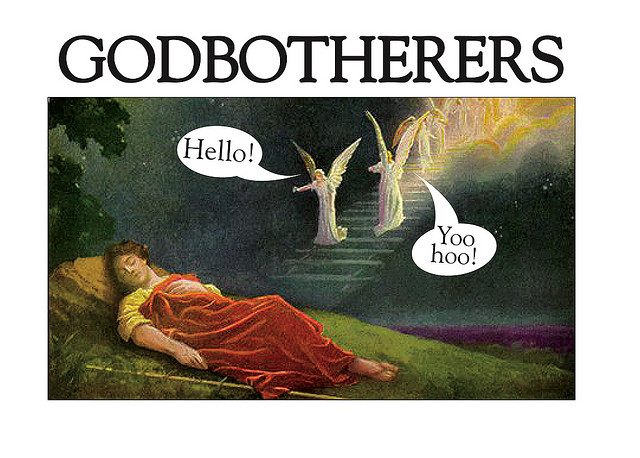
Godbotherers

For those of you preaching on the text from Genesis 32:3-31:

You may not be able to tell from looking at me. But let me assure you that you are looking at someone who used to be a champion wrestler. Believe it or not, my wrestling skills actually helped me rise to the level of a world champion wrestler. Well, perhaps I should qualify that statement. When I was an amateur wrestler, I was a world-class champion wrestler. But like so many athletes, when my status changed from amateur to professional, I lost my championship status and although I still qualify as a professional wrestler, and I like to see myself as a champion, I’m no longer what you would call world-class.

Like many professional wrestlers my career began when I was but a child. Growing up I had a very clear advantage as I developed my wrestling skills. You see having a brother who was just 18 months younger than me meant that I had ample opportunities to hone my wrestling skills. My brother and I were always at it. I’ve got to say that even though we shared the same weight class for most of our childhood, when it came to world class wrestling holds, I had him beat. I had this wicked arm-hold sleeper, and that together with my full Nelson followed by a knee-arm press, was guaranteed to have my brother screaming uncle and agreeing to be my obedient servant until in no time at all. For years I reigned as the champion of our little world! I was unbeatable. My brother didn’t stand a chance. My reign as world champion would have continued if it weren’t for the abrupt ending of my amateur status.

One morning when I was about 13 and my brother was 9 and a half, we were going at it,  and to his credit my bother had me in an ingenious hold. Somehow, he’d managed to secure me with what we professional wrestlers call an arm bar. That’s where you’re opponent wrenches your arm behind your back and applies just enough pressure to cause pain, but not enough to break anything. But just when Alan was approaching the point of no return, I managed with a feat of superhuman strength to rise up, twist around and swing for all I was worth and connect with what I though must be my brothers chest. I expected that such a thrust would have released my arm from Alan’s iron grip. But he still had me. I was about to hit him again, when for no apparent reason Alan released me from his grip. In an instant I wiggled free, spun around and connected with what I figured would be a fatal blow. Just before my blow connected with it’s victim, I realized that I was doomed.

Continue reading

Only in Canada Eh? – Canayjuns, Injuns, Paula Deen, the N-Word, and Racism – a sermon for Canada Sunday

1st Nations' CanadaOn this Canada Day, my wife and I begin our drive across this great land. Each time I make the trip from the east to the west, I am struck by the vastness of this land we call home. This year I take with me the deep impressions left upon my heart by our Synod’s Convention where we explored the Truth and Reconciliation Commission’s work to come to terms with our nation’s shameful history. I know that I shall travel this land with hope-filled eyes, trusting that the work we have begun will open us to the work of reconciliation with our First Nations sisters and brothers.  As we celebrate this land, let us remember those whose welcome of our ancestors came at such great cost. Let us find ways to walk together into our future open to the possibilities of reconciliation. Happy Canada Day EVERYONE!

Here’s a re-posting of a sermon preached last Canada Day which explores some of the work that lies before us:
I am indebted to Father Jim O’Shea for his article in the Huffpost and to Robert LoveLace for his parable about Chickens which appeared in The Rabble.

Listen to the sermon here

Wolf Blitzer Learned that there are Indeed Atheists in Fox-holes! – a sermon for Trinity Sunday

Eckhart rid me of GodThis Trinity Sunday sermon owes much to John Shelby Spong’s book a “New Christianity for a New World” You can listen to the sermon here then watch the tail end of the Wolf Blitzer interview mentioned in the sermon.   

In the midst to the devastation and debris that was left of the town of More, Oklahoma, it was all to clear that the power of the tornado that whipped through such a heavily populated area had left behind the kind of destruction that tears not only the foundations of buildings but also of lives. In living rooms around the world millions of people watched as the news media descended on what was left in the wake of nature’s wrath. One particular news report is still reverberating around the Internet. I had just come from my office where I had spent the afternoon, reviewing the Doctrine of the Trinity in order to write this sermon. My wife Carol was in the kitchen cooking supper and I sat down to catch up on the news events of the day. I tuned into CNN and there amidst the rubble of More Oklahoma was the familiar face of Wolf Blitzer. It was the day after the tornado and the big name newscasters had been rushed to the scene in time to provide color-commentary on the evening news. Wolf was interviewing a young mother named Rebecca Vitsmun who was holding a squirming her 19 month old, toddler Anders in her arms. The young mother gave a blow-by-blow account of her narrow escape from. All afternoon Rebecca was paying attention to the weather reports. Rebecca was not from More, but rather from New Orleans and so she was not used to tornado warnings. She’d grown up with Hurricane warnings and so her first instinct was to evacuate the area. But her husband and neighbours had told her that the safest thing to do would be to take shelter. Six-teen minutes before the tornado struck the weather service issued a warning to take shelter. As Rebecca’s husband raced home from work, this young mother grabbed her laptop, a mattress and her toddler and took shelter in the bathtub. Huddled in the tub covered by a mattress she anxiously watched the reports on her laptop. Tracing the path of the tornado, Rebecca realized that the tornado was headed straight for her street. Rebecca’s New Orleans’ instinct kicked in and with her baby in her arms she jumped into her car and without taking time to put her baby in the car seat, she drove as fast as she could out on to the freeway where she pulled over and put Anders into his car seat and then drove some more. After the tornado, Rebecca reunited with her husband, and they headed back to what was left of their home. The bathtub was so full of debris that it was clear to them that Rebecca’s instincts had saved her life.

After telling her harrowing tale, Wolf Blitzer congratulated Rebecca for saving her baby’s life and then said to this young woman, “You gotta thank the Lord.” Rebecca was clearly taken aback by the comment and hesitated. I held my breath, annoyed as hell at Blitzer for asking such a stupid question. Rebecca’s hesitation gave Blitzer the opportunity to move on, but no he just had to have an answer, and so he persisted. “Do you thank the Lord?” Rebecca gave Blitzer the kind of look that says, “Are you kidding me?” Then Rebecca gave Blitzer an answer that he sure wasn’t expecting from an American from the heartland of Oklahoma; Rebecca smiled as she answered, “I’m actually an atheist.”

As Rebecca laughed awkwardly, I cheered so loudly that Carol came into the room to see what was going on. I was so proud of that young woman for not going along with Blitzer’s nonsense. Who in their right minds would believe in a Lord who would pluck one family out of a bathtub and let seven children die in an elementary school? I mean, if this Lord that Bilitzer is so willing to give credit too is such a great rescuer, why didn’t this Lord change the twister’s path and send it out over the cornfields where the only damage it could do would be to crops?

I know they say there are no atheists in fox-holes, but I for one think that that bathtub Rebecca was hunkered down in was indeed a fox-hole and I’m delighted that when all was said and done, she and little Anders were saved by her instinct for survival. As for this Lord of Blitzer’s, well, judging by the awkwardness that Blitzer exhibited after Rebecca stood her ground, I can only guess that this reporter misjudged the situation. Blitzer a city-slicker from New York, assumed that all the local yokels must be bible-thumping Christians, and he probably thought that his question would have received a mindless ra, ra, yeah God, kind of response from all Oklahomans. I trust he won’t make that mistake again. I kind of feel sorry for him, because after all it only took a few hours before some televangelist’s were suggesting that God did indeed send the tornado to teach people a lesson. According to some bible-thumpers, if people prayed hard enough they would have been saved. Some even went so far as to suggest that the tornado was punishment for gay marriage. Continue reading

The Athanasian Creed and an Unholy Trinity – a sermon for Trinity Sunday

Beyond the Beyond - Dawn Hutchings

I don’t remember the first time I ever saw him. I was barely 18 months old when my brother Alan arrived. Despite the fact that he ruined my gig as an only child, Alan and I grew close over the years. We moved around a lot so we became one another’s best friends. But we went our separate ways when we became teenagers. When I tell the stories, I say that we went our separate ways because Alan became preoccupied with sports.  I suspect that when Alan tells the stories, he says that we went our separate ways because I became preoccupied with the church. Either way you tell it, family and friends used to say that it was hard to believe that we grew up in the same household. Alan developed a reputation for being a bit of a redneck. I developed a reputation for being a bit of a radical. Alan drove four-wheel-drives and went hunting. I drove old beat up cars and lived at an ecumenical retreat centre.  Alan learned a trade, settled down and raised a family. I travelled the world and didn’t get around to figuring out what I was going to be when I grew up, I went back to school at the age of 30.

Alan and I didn’t get around to understanding one another until we were in our mid-40’s. When I grew to appreciate the gentle man that he has become and Alan began to respect the person I’ve become. We still love to talk politics, but these days we tend to agree more than we disagree, I’m not sure who mellowed, the redneck or the radical. We don’t talk much about religion, though. Growing up, Alan would claim to be an atheist, and scoffed at my involvement with the church. These days, Alan, suggests he is an agnostic, and although he’s come to respect my life in the church, he still scoffs at the hypocrisy of the church.

I still remember the very first time that I saw Manjit. Her face was the colour of pure milk chocolate. Her jet-black hair was long and wavy. She sat at the very back of the classroom. When the teacher introduced me to Manjit, her toothy grin welcomed me. We were twelve years old. I was the new kid in town and Manjit was the only East Indian in the class. We were to share a double-desk for the remainder of the school year. I remember my first trip to Manjit’s home. A science project needed our attention. I can still smell the aroma of Manjit’s home where exotic curries released their pungency into the air. Over several meals at Manjit’s, I learned to like my food hot and spicy. Manjit’s mother would blend her own spices and she never forgot to send a package or two of her specially blended curries home with me.

Manjit is a gentle soul who introduced me to the wonders of her faith. Manjit is a Hindu. Manjit never tried to encourage me to become a Hindu.  Although over the years she would remind me of the Hindu saying that admonishes Hindus to be better Hindus, Muslims to be better Muslims, Jews to be better Jews, Buddhists to be better Buddhists, and Christians to be better Christians.  Manjit grew into a kind and gentle woman. She works as a social worker in Vancouver’s rough east-end neighborhoods. The last time I saw Manjit she was patiently guiding the students of a confirmation class that I taught, around her Temple. Later that evening Manjit and I talked a long time about Jesus. Manjit told me that she’d always been fascinated with Jesus’ teachings and that she had no problem believing that Jesus is God, but then she explained that Hindus have a thousand god’s.

I can still remember the very first time that Henry walked into my office. A long black beard together with the yarmulke that he wore on his head gave Henry away. So, from the very beginning I knew that Henry was Jewish. But it took a few years of working together before I discovered that in addition to being a graphic artist, Henry is also a rabbi. Henry became a dear friend of mine and over the years he shared so much of his wisdom with me. Many a night Henry and I sat up to the wee hours discussing the Scriptures. Henry even arranged for me to study Hebrew at his Yeshiva. I learned a great deal from Henry. We often talked about Jesus. We rarely agreed about Jesus, but we often talked about him.

Alan, Manjit and Henry, some would call them an unholy Trinity. But to me they are, each of them, sacred. Trinity Sunday is my least favorite Sunday of the Church year. It’s the only festival of the church year that is designed to celebrate not God, nor Jesus, not even the Holy Spirit, but rather a doctrine of the church. The notion that God is One in Three; a doctrine that was created by theologians to explain the inexpressible, a doctrine the church “fathers” began to cast in stone in the words of the Apostle’s, Nicene and Athanasian Creeds.  Three Creeds that make up an unholy trinity in and of themselves. Three Creeds that the Lutheran Church continues to hold as articles of the faith. Three Creeds that continue to hold sway in our church.Three Creeds that in my humble opinion make up an unholy trinity. Three Creeds upon which the doctrine of the Trinity rests. Continue reading