 The Beatitudes: Matthew 5:1-12
Listen to the sermon:

The Beatitudes: Matthew 5:1-12
Listen to the sermon:
 I have often wondered why hymnody prevails on Sundays in most Christian sanctuaries. Perhaps its because the alternatives on offer with their praise bandy shallowness insult the intelligence of those who have made the effort to gather together on the off chance of an encounter with the Divine. Radical theologian, Peter Rollins has suggested that worship leaders ought to consider inviting musicians who sing the blues into our churches to facilitate worship that includes all of life. When I consider the plethora of musical styles that could be employed in worship to open us to the breadth and depth of our abundant lives, I wonder if those of us employed in the art of worship planning need to look beyond our hymnals and song sheets to discover the endless possibilities that might facilitate worship that opens us to the deepest mysteries of this life.
As a teaser, I offer two videos that interpret the work of English folk rock musician, Keaton Henson’s piece “You”. Both interpretations, the first by the poet himself, the second by the brilliant actor Derek Jacobi, function as both prayer and praise. Can I get an “Amen”???
 When I was in my early twenties, I grew weary of sharing space and I decided that I wanted an apartment all to myself, despite the fact that I couldn’t really afford an apartment all to myself. But I was determined and that’s how I ended up living in a very rough neighborhood in the east end of Vancouver. My parents weren’t’ very happy about the neighbourhood and worried about the unsavory characters that lived in the run-down building where I found a spacious one bedroom apartment that I could just about afford. The apartment was just a couple of blocks away from the office where I worked, so I was able to walk to work. I ignored all the warnings of my family and friends and I convinced myself that I could handle anything that came my way.
In my heart of hearts I was rather pleased to be living in such a poor rough and tumble neighbourhood. I was young and foolish and the neighbourhood was exciting. Every Sunday I would make the trip back to my home church in the suburbs. Sometimes I would make a second trip out during the week to attend a Bible study. Like so many young people, I was harsh in my criticisms of the elaborate life-styles of my elders. At bible studies, I was always bringing up the plight of the poor and the oppressed and challenging people to do something. Various members of my own family often accused me of being a bleeding heart liberal. I wore their criticism with a certain amount of pride, convinced that I was living out my beliefs.
Although I walked to work each day, I didn’t know any of my neighbours, until one morning I was surprised by a knock on my apartment door. I wondered how anyone would get past the lock on the front door. So, I peered through the peephole and was relieved when I saw a young woman at my door. I unbolted the door and in swept Brenda. Brenda was all smiles and laughter as she explained that she and her roommates were out of coffee and she wondered if I might be able to lend them some coffee. When I explained that I had just used up the last of my coffee making my own morning brew, Brenda told me not to worry, she and her roommates would be happy to join me. When Brenda returned, she introduced her roommates, Janice and Sue and we all sat down together for our morning coffee. Continue reading
 Wednesday would have been Martin Luther King’s 85 birthday and on Monday our neighbours to the south will celebrate Martin Luther King day. So, this Sunday our worship will commemorate the life and witness of this martyr of the faith. I know that there are some who say that as Canadians we don’t celebrate MLK Day. However, the gospel reading assigned for tomorrow includes Jesus’ early followers first attempts to figure out who Jesus was and hints at what it might mean to follow Jesus. While we have many images of what a follower of Jesus looks like, the life and witness of Martin Luther King, Jr. provides a concrete example of what it actually looks like to follow Jesus. We will spend some time exploring what our lives might look like should we have the courage to follow Jesus.
We will sing as our Hymn of the Day what was once known as “The Negro National Anthem,” Lift Every Voice and Sing. I have known a good many people who insist that “white people” ought not to sing this particular hymn. For a time I shared their reluctance, knowing that I have absolutely no idea what it means to live as a person of colour in a predominately white culture. However, over the years I have been convinced that Left Every Voice and Sing speaks to Dr. King’s dream of a world in which we are all freed from the shackles imposed upon us by the colour of our skin. The empathy engendered by this powerful hymn opens us to the possibilities inherent in Dr. King’s dream.
This video of the ‘ Negro National Anthem’ was originally screened at the historic African-American Church Inaugural Ball in Washington, DC on January 18th, 2009. Many of the esteemed individuals featured in this video in attendance and we presented with the ‘ Keepers of the Flame’ award for the monumental contributions to social justice. This version of the song was performed by the Grace Baptist Church Cathedral Choir, conducted by Derrick James. While Canadians might balk at the overtly “American” images, we would do well to remember the history we share with our American cousins and the work that both countries need to engage in in order to move us closer to realizing Dr.King’s dream.
I include this pdf of tomorrow’s worship bulletin here, which includes preambles to some of the music we will be singing. Worship begins at 10:45am
 Robin Meyers gives the 2013 Beecher Lectures at Yale Divinity School. “The three lectures, given by Meyers, are entitled “UNDONE: Faith as Resistance to Ego, Orthodoxy, and Empire.” Instead of conceiving of the church as an institution that promotes faith as a belief system, defending doctrinal claims as essential to salvation and good works, UCC pastor and author Robin Meyers will make the case that the Jesus
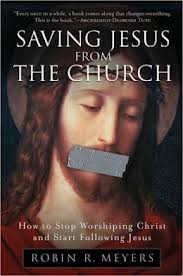 Movement was in the beginning, and must be again, a Beloved Community of Resistance. Confronting our illusions with help from Kierkegaard, and drawing the poetry of Anna Kamienska, each lectures will focus on three areas that demand resistance: ministry as performance (ego), ministry as right belief and worship (orthodoxy), and ministry as sentimental surrender to the status quo (Empire).”
 Looking back upon what I preached the last time John 1:29-42 appeared in the lectionary, I realize just how indebted I am to John Shelby Spong for giving me the words to articulate my own objections to the label attached to Jesus by a late first century writer also known as John. Most if not all of this sermon is derived from Jack Spong’s work. For more details I would refer you to Jesus for the Non-Religious and The Fourth Gospel: Tales of a Jewish Mystic. We at Holy Cross were privileged to have Jack speak to us about both of these books. In fact a year before it was published, Holy Cross was the test audience for the material in The Fourth Gospel: Tales of a Jewish Mystic. This sermon ought to have all sorts of footnotes, but I trust you will forgive me for simply confessing that I can no longer tell were Jack leaves off and I begin. Suffice it to say that this sermon is my feeble attempt to put Jack’s work into the form of a sermon.
When I turn the gospel according to John and read about John the Baptist pointing to Jesus, saying: “Here is the Lamb of God who takes away the sin of the world!” I want to scream, “NO!” I have come to believe that our images of God are far too narrow. As far as I’m concerned most of our ideas about God fall far short of every even beginning to describe who God might be. One thing I’m absolutely certain of is if we can imagine ourselves being more loving, more gracious, or more merciful that our theology suggests that God is, then we had better go back to the drawing-board and think again. The ways in which we have traditionally interpreted the life, death and resurrection of Jesus the Christ, paint a picture of a God who is far less loving, gracious or merciful than you or I. Nobody in this room, would demand a blood sacrifice of a lamb, let alone the blood sacrifice of their own child. So, the image of God that is based on this kind of theology must be judged as inadequate to the task of evening beginning to provide us with a glimpse of who our God is.
As we go back to the drawing-board, we ought to take a long hard look at how we arrived at this image in the first place. Thank goodness for the work of our friend Jack Spong who has enabled us to see beyond the literal to the more-than-literal meanings of the various ways in which the followers of Jesus have understood the life and teachings of Jesus. During the years that followed the crucifixion, Jesus’ followers were left wondering what it was all about. How could someone in whom they had seen the fullness of God, be taken from them in such a horrendous way? How could their God allow it? What were they to do? Over the years that followed, Jesus’ followers looked back at the life, death, and resurrection of Christ through the lens of their own religious experiences. Jesus’ followers were primarily Jewish and so it didn’t take long for the familiar Jewish symbol of the Lamb of God to be applied to Jesus as a way of making some sense out of his death. Today most Christians associate the symbol of the Lamb of God with the Jewish celebration of Passover. While the Gospel narratives do indeed locate the time of Jesus death during the celebration of the Passover, and there is indeed a sacrificial lamb involved in the Passover, the actual phrase “the Lamb of God” comes not from the religious rites of Passover, but rather the religious rites of Yom Kippur: The Day of Atonement. Phrases like “the Lamb of God”, “died for our sins” and “washed in the blood of the lamb” can all be found in the religious rites of Yom Kippur. Continue reading
 Peter Mayer, one of my favourite folk singers, captures a hint of the essence of God when he sings. This morning our worship celebrates the baptism of Jesus and with so much water everywhere around us, the image of God as a river strikes some chords that I find both refreshing and challenging.

 There’s a definition of what it means to be a priest that has always daunted me. A priest it has been said is “a keeper of the mysteries; a keeper of the sacred mysteries of our faith. People often confuse the idea of mystery with the idea of secret. But I can assure you that as a keeper of the mysteries of the faith it is not my job, nor is it any other priest’s job, to keep the mysteries of our faith a secret. Yes, as an ordained pastor, one of my responsibilities is to be a keeper of the mysteries of our faith. As a keeper of the mysteries I am responsible for ensuring that the community I serve holds those mysteries sacred. We do so, by remembering that the reality that we call God works in, with, and through those mysteries.
Baptism is considered to be one of the mysteries of our faith. Baptism is a sacrament of the church and by definition a sacrament takes ordinary stuff – water – mixes that ordinary stuff with the Word and in the combination of water and the Word you have a tangible means of God’s grace. God’s grace is revealed in the sacrament of Baptism by the act of our gathering together and mixing the stuff of the earth with the Word. We have only two sacraments in the Lutheran church Baptism and Eucharist, and both of those things are sacraments because we gather together take ordinary stuff – bread and wine, or water and mix it with the Word of Jesus the Christ and in the water, the bread and the wine the means of God’s grace is made visible to us.
So, there you have it the technical definition of the sacraments, the mysteries of Baptism and Communion, in which the reality that we call God works in, with, through and under. But like all technical definitions of mysteries, these definitions fail to capture the essence of the mystery that lies at their very heart; the mystery of the reality that we call God. As a keeper of the mysteries, one would think that a priest, a pastor, ought to be able to reveal, by way of definition something of the nature of the reality of the Divine. The truth is I have no real definition to offer you of this reality that we call God. I read once, I wish I could remember where the wisdom of a priest far more skilled than I who declared that he’d given up trying to explain God to anyone because in the end, he said, “I cannot lead you to God, anymore than anyone can lead a fish to water.”
The most important thing I learned in seminary is that “I don’t know is an answer.” The truth is the more we learn the more we know that we don’t know. But this unknowing can be so unsatisfying, precisely because we believe that God is the one in whom we live and breath and have our being, we want to know the very nature of the One who is the ultimate Reality.
Now, if these words haven’t already become so vague that the veil of unknowing has begun to make any tangible means of God’s grace seem invisible and so beyond our grasp, let me leave the theology behind and tell you a story. One thing I do know for sure is that the shortest distance between the questions of what it means to be human and understanding our humanity is a story. Continue reading
 He was once the Primate of the Episcopal Church in Scotland but these days Richard Holloway describes himself as an agnostic Christian hungering after transcendency and preaching a gospel of uncertainty. His memoir “Leaving Alexandria: A Memoir of Faith and Doubt” is a favourite of mine. In this video he explores being honest to God and understanding religion as an art form. Holloway’s words both challenge and comfort me as he plumbs the depths of our longing through the poiesis of ultimate meaning.
 Heather Murray Elkins tells her story, “The Secret of Our Baptism” and opens us to a new way of hearing the Bat Col, the Daughter of a Sound, the Voice of the Divine, the Word, who speaks in this Sunday’s Gospel reading. Matthew 3:13-17

A sermon for the Second Sunday of Christmas:
Readings: John 1:1-9; Thomas 70; Matthew 2:1-12
Listen to the sermon:
 Evolutionary Christian theologian Bruce Sanguin’s current article in the United Church observer tackles “The Big Question” – Is God a Seperate Being ??? For those of us who are struggling to move beyond our limited images of God, Sanguin offers a resting place along the way. Just click on the link below to read the article. I highly recommend it!!! Bruce Sanguin, a minister in the United Church of Canada, is one of the principal contributors to the new Living the Questions interactive DVD series “Painting the Stars”
The Big Question – The United Church Observer.

These post-celebration days, provide us with an opportunity to find our natural rhythm. Irish mystic, theologian, philosopher John O’Donohue offers wisdom for our journey.
 Maybe it’s because I’ve directed too many Christmas pageants, but when I hear the story of the Magi visiting the baby Jesus, I don’t think of three kings at all. No visions of regal visitors decked out in their finest riding atop camels guided by a star for me. Just memories of little boys, decked out in colourful shiny robes that threaten to trip them up, giggling and roughhousing, with their cardboard crowns askew. Of all the little boy kings that I’ve tried to corral one of them stands out from all the rest. Perhaps I remember him so well because he was so little that we couldn’t have him knell at the manger for fear that he would disappear into the hay and our audience would only see two Wise Guys paying homage. Or maybe it was the speed with which he dashed in and out of the gang of shepherds who threatened to trip him up with their crooks. But I really think it was the ingenious way he solved the problem of his lost gold, that makes little, for the purposes of this sermon let’s call him Jay, stand out from all the other little boy kings.
Little Jay’s mother, like all the mothers of all the kings, was responsible for creating a facsimile of the gift her wise son would bestow on the baby Jesus. Unlike some of the feeble efforts that I’ve seen over the years, Jay’s gift of gold was a cut above the rest. Inside an elaborately carved box that his Dad had picked up on his travels to the Middle East, Jay’s mother had placed upon a bed of statin a carefully created block of wood wrapped in golden gift paper. It positively sparkled. It must have impressed Jay, because he was forever opening up his box to show his fellow cast-members his treasure. During the dress rehearsal, Jay’s performance was perfect. Jay positively perfected the art of gazing up at the makeshift star that hung above the altar just east of our makeshift manger. When he arrived at the place where the newborn baby Jesus, who just happened to be a little girl that year, Jay strode right up to her mother Mary and opened the box containing his treasure and proudly announced his gift of gold for the new born king. They, whoever they are, say that if the rehearsal doesn’t go well then the performance will be wonderful. So, I was more than a little worried when our dress rehearsal went off so splendidly because that could mean only one thing, and I wasn’t looking forward to a performance where things went wrong. Sure enough, unbeknownst to me, on the morning of his big performance, somewhere between his home and church, Jay lost his golden treasure. All he had was an empty box when he showed up at his father’s pew wailing because all was lost. Jay had no gold to give to the baby Jesus.
This story reminds me of a story that Joan Chittister tells that I’ve told you before but like all good stories it is worth telling over and over again. It’s the story of a Sufi master who was found scratching through the sand in the middle of the road. “What are you doing?” some pilgrims asked the Sufi as they passed. The old Sufi looked up and said, “I’m looking for my treasure. I’ve lost it.” the old man said. So the pilgrims, good people all dropped to their knees to help. They sifted sand. They dug under stones. They sweat under the waxing midday sun. Until, finally, hungry, soaking wet and exhausted, one of the travellers asked of the Sufi, “Sufi, are you sure you lost your treasure here?” And the old man said, “Oh, no. No, I didn’t loose my treasure here, I lost it over there on the other side of those mountains.” Continue reading
John O’Donohue was an Irish, mystic, philosopher, poet whose way with words opens hearts and minds to eternity.
 While the world hurdles toward the New Year celebrations, we linger in the Twelve Days of Christmas. I do believe that the counting begins on the first day after Christmas; which means this is only the Third Day of Christmas. That means there is still time to enjoy the music of Christmas and so, I offer up one of my favourite singers: Odetta proclaiming the Good News in her own splendid style with Go Tell it on the Mountain.
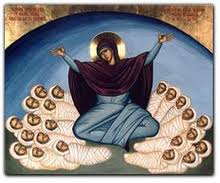 “A voice was heard in Ramah sobbing and lamenting loudly: it was Rachel weeping for her children; she refused to be consoled, for they were no more.” Matthew 2:18
Matthew 2:13-23 seems like such an offensive text to be reading so soon after Christmas. And yet, this gospel text, known as the “Slaughter of the Innocents” is indeed the prescribed lesson for the first Sunday of Christmas. Amid our celebrations, and in the midst of the gospel writer’s account of the birth of Christ, this horrendous story of the slaughter of innocents begs the question: WHY? It’s Christmas for heaven’s sake! My preaching professor, used to remind us of the first question that we should ask when we are preparing a sermon on a particular text. After reading the text over several times,we were encouraged us to ask the obvious question. “So What?”
So What? Well for this child of the sixties, only one Christmas song comes to mind when I read of the slaughter of the innocents, it’s the one Christmas song that asks the question: So What? We’ve just celebrated Christmas? So what does this mean? Please listen. “So this is Christmas?”
John Lennon was murdered on December 8, 1980. Shot by a deranged fan. And so is it any wonder, the melancholy why in which he sang this song, haunts our Christmases? So, what possible difference can Christmas make? We haven’t even had a chance to finish our celebrations and the news is far from good. Thousands continue to die in Sudan, Palestine is a mess. The people of the Philippians continue to suffer in the aftermath of disaster. Militants in Afghanistan are growing stronger despite the presence of foreign forces, violence and death are the order of the day in Syria where hundreds and thousands have been slaughtered. Millions have died in Darfur and still the world cannot find a solution so today thousands more will se-come to starvation and genocide. The war on Terror rages on as one side scores points on the other at the cost of human flesh and the word “drone” has taken on a horrific meaning. AID’s continues to ravage Africa and still we withhold the money and the medicines that could save millions. Hunger continues to claim the lives of the poor despite the fact that we have more than enough food to feed the world. Poverty continues to enslave millions the world over.
Rachel’s children—our children, yours and mine—born for love and mercy, die from neglect and ugliness and Rachel weeps bitterly. There’s a little book of prayers called: “Children’s Letters to God”. The prayers in that book have the power to make you smile and cry all at once. The very first letter to God in that book reads: “Dear God, in Sunday School they told us what you do. Who does it, God, when you are on vacation?” We may smile, but sometimes it feels as if for all intents and purposes, God is on vacation. For surely God would not stand idly by and allow so many innocents to perish?
Once we broaden our images of God; the source of our being, the One who dwells in us, we can begin to see that the place where we have traditionally located the Divine One changes from up there to in and around here and we can begin to seek God not out there but within and around us. If God is on vacation, it is because we are on vacation. For the Divine one works in, with and through us to sooth the pain caused by violence and greed.
So, let me assure you sisters and brothers, our God is not on vacation. Despite appearances to the contrary, our God is not absent, but God is surely weeping. For in Christ God showed us the way. The Christmas story insists that our God is in-fleshed and dwells among us. This changes everything. It’s not enough to pray with words expecting some far off deity to change the world. The changing of this world will happen when we begin to live into our full humanity and the sacred nature of our very being shines forth with LOVE. In, with and through us is how the LOVE we call God changes the world.. For we are God’s people on earth; Christ’s body on earth and it is through Christ’s body that God will save the innocents. There’s no time for us to waste feeling overwhelmed by the magnitude of the problems. It’s time for us to roll up our sleeves and get busy.
There’s a song that helps me to remember the hope born in Bethlehem. These Hands
And so this is Christmas… Rachel weeps. We’ve been on vacation long enough. Our God has taken on flesh and dwells among us! It’s time for the work of Christmas to begin again. We are God’s hands!
We know that the birth of Christ did not happen the way it is described in the gospels according to Matthew and Luke. But we know that the birth of Christ happens that way each and every day, everywhere!!! Let us always be open to the presence of Christ in all of humanity, on this day and every day!
The Boy: produced by the Reformed Church of Hungary
 pastordawn