
You are the Light of the World here
The Journey of the Magi never happened and yet it is always happening. here
Don’t Forget the Mystery of Our Faith here

 A sermon preached on the Second Sunday after Christmas – the readings for this sermon include: John 1:1-9, The Gospel of Thomas 70; Matthew 2:1-12. You can listen to the sermon here
Two cars were waiting at a stoplight. The light turned green, but the man didn’t notice it. A woman in the car behind him was watching traffic pass around them. The woman began pounding on her steering wheel and yelling at the man to move. The man didn’t move. The woman started to go ballistic inside her car; she ranted and raved at the man, pounding on her steering wheel. The light turned yellow. The woman began to blow her car horn; she flipped off the man, and screamed curses at him. The man, hearing the commotion, looked up, saw the yellow light and accelerated through the intersection just as the light turned red. The woman was beside herself, screaming in frustration because she missed her chance to get through the intersection. As she is still in mid-rant she hears a tap on her window and looks up into the barrel of a gun held by a very serious looking policeman. The policeman tells her to shut off her car while keeping both hands in sight. She complies, speechless at what is happening. After she shuts off the engine, the policeman orders her to exit her car with her hands up. She gets out of the car and he orders her to turn and place her hands on her car. She turns, places her hands on the car roof and quickly is cuffed and hustled into the patrol car. She is too bewildered by the chain of events to ask any questions and is driven to the police station where she is fingerprinted, photographed, searched, booked, and placed in a cell.
After a couple of hours, a policeman approaches the cell and opens the door for her. She is escorted back to the booking desk where the original officer is waiting with her personal effects. He hands her the bag containing her things, and says, “I’m really sorry for this mistake. But you see, I pulled up behind your car while you were blowing your horn, flipping that guy off, and cussing a blue streak at the car in front of you, and then I noticed the “What Would Jesus Do” and “Follow Me to Sunday School” bumper stickers, and the chrome plated Christian fish emblem on the trunk, so naturally I assumed that you had stolen the car.”
We can scoff at this, but I must tell you that one of the things I had to learn when I first began to wear a clergy collar was that I could no longer give people the finger when I was driving. If you give people the finger when you are driving, it’s not you giving that person the finger but the whole of Christian Church; people will use your outburst to condemn the hypocrisy of the entire church.
During Advent we used a question from Meister Eckhart not once but twice during each of our worship services: “What good is it to me if Mary gave birth to Christ twenty centuries ago and I don’t give birth to Christ in my person and my culture and my times?” And now, in this the last day of Christmas, I find myself wondering what it actually means for Christ to be born in me or in you. Continue reading
 An Epiphany Sermon, preached in 2008. I had just read “The First Christmas” by John Dominic Crossan and Marcus Borg. Our congregation played host to Dom Crossan a month before I wrote this sermon. So, Dom’s insights run through this effort. But the heart of this sermon beats as the result of a sermon preached by Bruce Sanguin a self-proclaimed evolutionary christian who is a United Church Minister (Canadian Memorial Church, Vancouver). I had the privilege of meeting this modern mystic while on sabbatical this summer and his compelling way of unlocking the scriptures using the wealth of the christian tradition together with the insights of modern science and psychology borders upon the poetic. This sermon was anchored by Sanguin’s words (Epiphany 2007). Sermons are a “live” event. So, this manuscript is an approximation of what was actually preached.
Just five days before Christmas (2008), The Archbishop of Canterbury, The Most Reverend Doctor Rowan Williams, the leader of the worldwide Anglican Communion started a firestorm. During a BBC interview, His Grace was quoted to say that the story of the “three wise men is a legend”. The Archbishop was also heard to say that he remained unconvinced that there was indeed a star that led the legendary trio to the birth place of the Christ Child.
If that wasn’t enough to send folks off the deep-end, it has been revealed that the Presiding Bishop of the U.S. Episcopal Church The Most Reverend Doctor Katherine Jefferts Schori, who just happens to be the first woman elected primate in Anglican history, has fanned the flames of the fire-storm by sending out what has been judged by some to be an incendiary Christmas card.
I downloaded a copy of the offensive card, so that you could see for yourself. Her Grace’s choice of card has offended the good deacons of Ft Worth Texas who claim that their Primate’s actions defy explanation. As you can see the wise folks depicted on this image look a lot like women. Can you imagine the nerve of the first woman primate! How could she be so bold as to select such an offensive image? Leave it to straight talking Texans to set things straight: for despite the audacity of the Primate, the Texans have pledged to “stand for the traditional expression of the Faith.” Continue reading
 This sermon owes much to the work of Richard Rohr whose work opens me to the LOVE who lies at the core of REALITY, the ONE we call God. The source of the story that I tell about a Christmas Eve way back when has been lost to me. I cannot remember when I first heard it. It’s power to open me to the LOVE that is God remains with me and so I treasure the story and tell it so as to open others. To open ourselves to the cosmic nature of the Christ we used different scripture readings. The readings can be found here
You can listen to the sermon here
 The story told in this sermon can be found in Maeve Binchy’s book of short stories “This Year it Will be Different.” As always I am indebted to those progressive grinches Marcus Borg, John Dominic Crossan, John Shelby Spong, and Michael Morwood for their insights into the sacred. Our sermon hymn was No Obvious Angels. The readings were all from Luke 1:1-56.
You can listen to the sermon here
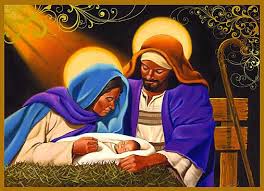
 You can listen to this sermon here
There’s a story that I love to tell. So many of you have heard it before. But this is the night for telling stories over and over again and because I love this story, tonight’s the night! I first heard it from a very wise seminary professor and since then I’ve heard Marcus Borg and Parker Palmer tell it. I’m not sure that this story actually happened, but I am sure that it is absolutely true!
It’s a story about a three-year-old girl who was the only child in her family. Her mom is pregnant, and this three-year-old girl is very excited about having a baby in the house. The day comes where the mother-to-be delivered, and the mom and dad go off to the hospital. A couple of days later they come home with a new baby brother. And the little girl is just delighted. But after they’ve been home for a couple of hours, the little girl tells her parents that she wants to be with the baby in the baby’s room, alone, with the door shut. She’s absolutely insistent about the door being shut.
It kind of gives her folks the willies, you know? They know she’s a good little girl, but they’ve heard about sibling rivalry and their not sure about what they should do. Then they remember that they’ve recently installed an intercom system in preparation for the arrival of the new baby, and they realize that they can let their little girl do this, and if they hear the slightest weird thing happening, they can be in there in a flash.
So they let their little girl go into the room. They close the door behind her. They race to the listening post. They hear her footsteps move across the room. They imagine her now standing over the baby’s crib, and then they hear her say to her two-day-old baby brother, “Tell me about God. I’ve almost forgotten.”
Tonight we are all that child, standing over the baby’s crib hoping against hope that the newborn baby will tell us about God; maybe because we have almost forgotten, maybe because we don’t believe, maybe because we want to believe, maybe because we’ve lost hope, maybe because we are endlessly curious, or maybe just because T’s the season! Regardless of why, here we are gazing into the crib at the newborn baby hoping that this child will tell us about God. But all we have is this story; a story so simple it sounds as if it was created for children; poor homeless refugees, far from home, in the darkness of a winter’s night, struggling to keep warm amongst the dung of a stable, a tiny baby, swaddled in what we imagine as rags and lying in a feed trough, shepherds, angels and a star in the night sky. It’s a lovely story. A story that warms our hearts, told over and over again in the darkness of so many winters as we struggle to keep our demons at bay. We’ve told it so often that we’ve forgotten why it was told in the first place. We’ve lugged so much of our own baggage into that stable that we can scarcely see the baby. We’ve heaped our expectations and longings onto the images and our need to know has demanded that the facts confirm our desires. Continue reading
 As always, I am indebted to the scholarship of John Dominic Crossan and Marcus Borg whose book The First Christmas is the gift that keeps on giving! You can listen to the sermon here
For those looking for a different approach to Advent 4B check out the sermon posted here
Some have said that it was the most amazing birth story ever told. This birth narrative heralded the arrival of a child who was praised as the Son of God, the Saviour of the World who was said to be the personification of peace on earth; God incarnate; fully divine and fully human. Not everyone agrees that this is the most amazing birth story ever told. Among the ancients, some insisted that the story Alexander the Great’s birth was the greatest story every told.
Alexander the Great’s birth story is truly one of the greats. His was, after all the, son of a Queen and a god and a king. His mother, Olympias was a Queen, betrothed to Philip of Macedonia. The night before they were married, Queen Olympias dreamed that a thunderbolt fell upon her body, which kindled a great fire, whose divided flames dispersed themselves all around her, and then as if by magic they were extinguished. Philip dreamed that he sealed up his Queen’s lady parts with a seal which bore the impression of a lion. The high priests who interpreted the dream warned Philip not to even entertain the idea of consummating the marriage because one wouldn’t go to the trouble of sealing up something that was empty. So Queen Olympias must already be with child, who would undoubtedly be a boy with the courage of a lion. If that wasn’t enough to put Philip off he found a serpent lying beside Queen Olympias as se slept, which was said to have abated his passion. Later the oracle of Apollo at Delphi went on to explain that this was no ordinary serpent, no this was the incarnation of the God Zeus.
The day that Alexander the Great was born, one of the seven wonders of the world burnt to the ground. The temple of the goddess Artemis in Ephesus was the home of the Goddess Artemis who was said to have been attending to the birth of Alexander at the time. Alexander the Great was heralded as the Son of God and Saviour of the World and as one of the greatest warriors the world has ever known, he went on to conquer a good portion of the planet. But by the time our hero was born, the glory days of the Greeks had long since passed. The Empire of Rome had replaced the Greeks as rulers of the world and they had the conquered lands to prove it. By the time our hero was born, Julius Caesar had established an Empire the likes of which the world had never seen before. Gaius Julius’ prowess on the battlefield was matched only by his cunning in the senate and together had one him the title of Caesar. But as great and marvellous a leader as Julius Caesar may have been, history tells us that he and his wife were not blessed with children. Alas, Caesar did have a son by virtue of his dalliance with Cleopatra but that’s another story all together; suffice it to say, that that little fellow didn’t stand a chance against the one Julius would appoint as his heir. Born to Julius Caesar’s niece, little Octavian was eventually adopted as his great-uncle’s heir apparent who eventually amassed powers that far outshone his illustrious uncle’s. Continue reading
 This sermon for the first Sunday of Advent was inspired by a sermon written by Ian Lawton entitled “The Mother of All Virgin Births” in which I was captivated by his use of the phrase “pregnant with possibility.” I read Lawton’s sermon after first reading John Dominic Crossan and Marcus Borg’s book “The First Christmas” in anticipation of Dom Crossan’s first visit to our congregation (2008). I was so eager to prepare the congregation for Dom’s historical approach to Christmas that I fear the sermon is overflowing, perhaps a little too pregnant with details. Luckily, the congregation was treated to the wonders of Dom Crossan’s brilliance for several days and learned well from the master about the delights of historical details. I post the sermon here, trusting that some of the details may be enlightening as we once again prepare ourselves for the Season of Advent.
Let me tell you a story from down-under; an Australian story that was doing the rounds a few years ago. Like all stories it may never have actually happened, but it is absolutely true because it happen again and again, in various and myriad ways. This story happened a while ago in Brisbane, Australia…
“The story begins in the dark. A university student named John was on the side of the road hitch hiking on a very dark night and in the midst of a storm. The night was rolling on and no car went by. The storm was so strong John could hardly see a few feet ahead of him. Suddenly he saw a car slowly coming towards him and slowly it stopped. John was desperate for shelter and without thinking about it; he got in the car and closed the door.
It took only a moment for John to realize that there was nobody behind the wheel and the engine wasn’t on! But the car started moving slowly. John looked at the road and saw a curve approaching. John was so scared, that he started to pray, begging for his life. Then, just before he hit the curve, a hand appeared through the window and turned the wheel. John, paralyzed with terror, watched how the hand repeatedly came through the window but never harmed him. Eventually, John saw the lights of a pub down the road and so gathering his strength, he jumped out of the car and ran into the pub. Wet and out of breath, he rushed inside and started telling everybody about the horrible experience he had just had. A silence enveloped the pub when everybody realized he was crying and he wasn’t drunk. Suddenly two other people walked into the pub. They, like John, were also wet and out of breath. They looked around and saw John sobbing at the bar, one of the men said to the other, ‘Look, Bruce, there’s that idiot that got into the car while we were pushing it.’
Spiritual Philosopher, Ian Lawton insists, “There is always more to life than meets the eye. There is more to life than what our sight is able to see. Our eyes don’t simply pick up information relayed from an outside world and relay it to our brains. Information relayed from the outside through the eye accounts for only 20 percent of what we use to create a perception. At least 80 percent of what the brain works with is information already in the brain. We only use a small fraction of our brainpower. We very rarely exercise the full potential of our physical strength. We rarely access all that is available to our senses. We rarely maximize the potential of our mind, body and spirit in harmony. There is always more to life than meets the eye.” Continue reading
 Readings included: 1 Kings 19:9-18 in which Elijah hears the still small voice of God and Matthew 14:22-33 in which Jesus walks on water.
Listen to the sermon here:
 May 31st is the day the Church commemorates “The Visitation” the story of Mary’s visit to Elizabeth as it is recorded in the Gospel According to Luke 1:39-56. Since reading Jane Schalberg’s “The Illegitimacy of Jesus”, I can’t help but wonder if Mary’s visited her cousin Elizabeth or escaped to her cousin Elizabeth seeking protection for the crime of being raped in a culture that all too often blamed the victim. Historians estimate that Mary may have been all of twelve years old when she became pregnant. There is ample evidence in the New Testament accounts of Mary’s story that suggest that she may indeed have been raped. So rather than sweep the possibility under the rug, on this the Feast of the Visitation, I’m reposting a sermon I preached a few years ago during Advent. I do so because women young and old continue to be raped and to this day, are forced to flee from the accusations and persecutions of cultures that continue to blame the victim. What follows is a written approximation of the sermon which in addition to Jane Schalberg is also indebted to John Shelby Spong’s “Born of a Woman” and “Jesus for the Non Religious” along with John Dominic Crossan and Marcus Borg’s “The First Christmas”.
Sadly, one doesn’t have to travel too far into the past to arrive at the time when women’s voices were not heard. Indeed, in the Lutheran church, it was only a few short decades ago. For most of us that time is within our own lifetime. For generations, men have told our sacred stories. Men have decided which stories made it into the canon of Sacred Scriptures. Men have interpreted the stories that were allowed to be told. Men have translated, taught, and commented upon those stories from pulpits, in universities, in seminaries, in commentaries and in the public square. Continue reading
 Way back when I first began going to church, I had one of those bibles…and I dare say many of you have probably had one too…I had a red-letter bible. For those of you who’ve never had one, a red-letter bible is a bible where all the words of Jesus are printed in red and for a long time I actually believed that if it was printed in red, then Jesus actually must have said it and there are hundreds of thousands, possibly millions of Christians who still believe that if they are printed in red they are the actually words of Jesus.
When I first began reading the New Testament, many of those red-letter words were difficult to read. The 14th chapter of the Gospel according to John was just one of the many texts that I read with great trepidation. “I am the way, the truth and the life no one comes to the Father except through me.” These particular words in red led me to believe that my family and most of the people I loved, were doomed, because they didn’t believe in Jesus. So, you can imagine my delight when I went to a young adults’ retreat and one of the pastors told us that just because words are printed in red, it doesn’t mean that Jesus actually said those words. I remember going back to my home parish and asking my pastor why he never told us about the things he was taught at the seminary about the words of Jesus and I can still hear him answering, “Most laypeople aren’t ready to hear that. It would destroy their faith.”
It’s an old argument amongst the clergy. It’s as if some of, “them” whoever “they” are, believe that the world as they know it will come to an end as they know it if they were to let lay-people in on the secrets of the trade. Should we or should we not teach laypeople about the historical critical methods that we all learned in seminary. When I say we all learned, I’m talking about the vast majority of clergy from the mainline denominations, like the Lutheran church, the Anglicans, the United Church, Mennonites, even Roman Catholics, and I dare say more than a few Baptists. We all learn the historical critical methods that academic scholars have been perfecting over the years. But the sad truth is that very few of us actually teach the historical critical methods that we have learned when we get into the parish. Many of my colleagues still argue that either laypeople aren’t ready to hear it, or that they don’t want to hear it. Either way, they’re not about to start preaching it from the pulpit and run the risk of destroying people’s faith. Besides, the folks who clearly don’t want to hear any of it just might run them out of town.
I’ve never really understood this attitude. I think perhaps the fact that as a layperson I was relieved to hear that Jesus didn’t actually say all the stuff that’s printed in red. So, from the beginning, I’ve always tried to teach the historical critical methods that I have learned to apply to my own study of the bible. Continue reading
A Good Friday Sermon preached at Holy Cross Lutheran Church in 2012
 The memory of it still haunts me to this day. I was 18 years old. Some friends of mine from church convinced me to go to a big youth gathering. I don’t remember who sponsored the gathering, I do remember that most of the Lutheran youth groups in the greater Vancouver area were in attendance and various Lutheran pastors were involved in the leadership. At some point near the beginning of the event we were each given a small nail, divided into groups and asked to line up behind one of the three wooden crosses that were laying in the hall. We were then given our instructions. We were about to hear a dramatic reading of the Gospel According to John’s account of the crucifixion. When the reading was over we would be invited to proceed to the cross nearest us, knell down, take a hammer, and drive our nail into the cross. With each blow upon the nail we were asked to remember our own responsibility for the death of Jesus. We were asked to remember that it was we who had crucified Jesus, for we were the guilty sinners for whom Jesus died. It was a powerful, gut wrenching experience that still haunts me to this day.
I wasn’t the only young person who wept buckets that day. I immersed myself into the ritual act as I recounted inwardly the list of my own sins. Together with my friends, we left that hall believing that Jesus died because of us. We left judged, convicted, guilty, tormented, anguished, and full of hope, for we knew that Jesus had died to save us from our sinfulness. Like so many who have gone before us and like so many who will gather on this Good Friday, we left that hall believing that God sent Jesus to die for us; to pay the price for our sin. Continue reading
 I am indebted to John Dominic Crossan and Gretta Vosper for the content and the challenges of this sermon.
Readings: Ezekiel 37:1-14, John 11:1-45
Advice to preachers from the best New Testament scholar I’ve ever met!!! What a preacher needs to have, at a bare minimum, is a “passionate commitment to the Christian vision!” If you don’t have that, stick to worrying about the church’s leaky roof and stay out of the pulpit! Perhaps, it’s his Irish lilt that allows him to make inflammatory statements sound like ordinary common sense. Dom’s passion for the Christian vision comes through in his articulation of the Jesus’ vision of peace through justice. Enjoy this interview recorded on Dec. 16, 2013
An Epiphany Sermon, preached in 2008. I had just read “The First Christmas” by John Dominic Crossan and Marcus Borg. Our congregation played host to Dom Crossan a month before I wrote this sermon. So, Dom’s insights run through this effort. But the heart of this sermon beats as the result of a sermon preached by Bruce Sanguin a self-proclaimed evolutionary christian who is a United Church Minister (Canadian Memorial Church, Vancouver). I had the privilege of meeting this modern mystic while on sabbatical this summer and his compelling way of unlocking the scriptures using the wealth of the christian tradition together with the insights of modern science and psychology borders upon the poetic. This sermon was anchored by Sanguin’s words (Epiphany 2007). Sermons are a “live” event. So, this manuscript is an approximation of what was actually preached.
Just five days before Christmas (2008), The Archbishop of Canterbury, The Most Reverend Doctor Rowan Williams, the leader of the worldwide Anglican Communion started a firestorm. During a BBC interview, His Grace was quoted to say that the story of the “three wise men is a legend”. The Archbishop was also heard to say that he remained unconvinced that there was indeed a star that led the legendary trio to the birth place of the Christ Child.
If that wasn’t enough to send folks off the deep-end, it has been revealed that the Presiding Bishop of the U.S. Episcopal Church The Most Reverend Doctor Katherine Jefferts Schori, who just happens to be the first woman elected primate in Anglican history, has fanned the flames of the fire-storm by sending out what has been judged by some to be an incendiary Christmas card.
I downloaded a copy of the offensive card, so that you could see for yourself. Her Grace’s choice of card has offended the good deacons of Ft Worth Texas who claim that their Primate’s actions defy explanation. As you can see the wise folks depicted on this image look a lot like women. Can you imagine the nerve of the first woman primate! How could she be so bold as to select such an offensive image? Leave it to straight talking Texans to set things straight: for despite the audacity of the Primate, the Texans have pledged to “stand for the traditional expression of the Faith.” Continue reading
Listen to the Christmas Eve sermon
Christmas Eve sermons are a challenge for any preacher who takes the gathering of folk on a dark and holy night seriously. I am indebted to Marcus Borg, John Dominic Crossan, Parker Palmer, Michael Morwood, Matthew Fox, and Michael Dowd for much of the inspiration for this sermon.
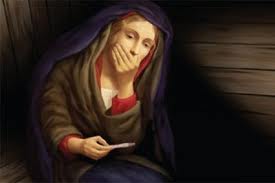
Mary Pregnant? St. Matthew-in-the-City (Auckland, NZ)
Mary, this enigmatic woman has remained in the shadows for centuries. All too often the epithet “virgin” has been applied to the young woman who fell pregnant so long ago. As her Advent appearance approaches, I this re-post this sermon which I preached a couple of years ago in which I asked some questions about Mary. At the time I was reading Jane Schalberg’s “The Illegitimacy of Jesus”, John Shelby Spong’s “Born of a Woman” and “Jesus for the Non Religious” along with John Dominic Crossan and Marcus Borg’s “The First Christmas” and this sermon is laced with their scholarship. As always the written text is but a reflection of the sermon preached on the Fourth Sunday of Advent 2009.
Sadly, one doesn’t have to travel too far into the past to arrive at the time when women’s voices were not heard. Indeed, in the Lutheran church, it was only a few short decades ago. For most of us that time is within our own lifetime. For generations, men have told our sacred stories. Men have decided which stories made it into the canon of Sacred Scriptures. Men have interpreted the stories that were allowed to be told. Men have translated, taught, and commented upon those stories from pulpits, in universities, in seminaries, in commentaries and in the public square. Continue reading
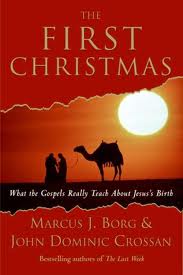 In 2008, our little congregation played host to John Dominic Crossan who has been acclaimed as world’s most famous New Testament scholar. Crossan’s visit to our congregation began with a public lecture based on his best-selling book The First Christmas in which he and Marcus Borg provide a splendid historical outline of the development of the birth narratives. I had the dubious honour of standing before his enlightened audience on Christmas Eve to preach in the great man’s wake. What follows is the Christmas Eve sermon I preached just three weeks after Dom’s illuminating visit.
Just a few weeks ago, this congregation was privileged to play host to a man who has the reputation of being the greatest New Testament scholar in the whole world. Dom, (we get to call him “Dom” now) wrote The First Christmas with Marcus Borg who is the guy who is heralded as the world’s leading expert on Jesus and Christianity in the 21st century. During his lecture, Dom provided us with all sorts of marvellous ways to understand the stories surrounding the birth of Jesus. Ever since that visit, there have been folks who listened very carefully to what Dom had to say and who have been positively gleeful when they’ve asked me what I’m going to do about preaching on Christmas Eve.
I mean what could I possibly say to you after so many of you have just finished hearing from the best in the business! And then there are those of you who bought the book and you’ve read what the experts have to say about the first Christmas. Some of you weren’t able to hide the smirks when you wondered out loud just exactly how I’d go about following the eminent Dr. John Dominic Crossan.
I don’t mind confessing that on several occasions since, I’ve woken up in the middle of the night and wondered what on earth I’d say to you this evening. Even those of you who didn’t manage to hear Dr. Crossan; you’ve probably seen him on TV this week on one of the dozen or so, documentaries on which he appears as the expert scholar who the media turns to in order to unravel the Mysteries of the Bible or to dig up the truth about Jesus. In this the age of information, you can simply go to YOUTUBE or to ITUNES U and download all sorts of podcasts where you’ll discover what pastors have been learning at seminaries for decades as the academic world has unlocked so many of the secrets of the ancient world in an effort to discover the real truth about what may or may not have happened so very long ago. Ever since: “The shepherds returned, glorifying and praising God for all they had heard and seen, as it had been told them.”
Since the end of the first century, some 1900 years now, the story of the nativity has been told. Lately the church has become a little embarrassed by the way in which this story has been told. All sorts of experts have weighed in to tell us that it could never have happened the way we all remember it. Biblical scholars, historians, theologians, bishops, pastors, professors even scientists have cast doubt on the details of the story of the nativity. But even though we know how impossible some of the details may be, we cling to this powerful story. Despite the wisdom of the experts, regardless of our doubts, this story still has the power to stop us in our tracks. No other story or image is more recognizable to people the world over than the Nativity scene of the birth of Jesus.
Tonight the images of a stable in Bethlehem, with Mary and Joseph gazing fondly at the baby Jesus, while the shepherds look on and the heavenly host sing their praises, these images are crystal clear to all of us. The story is part of us; it’s in our bones. And every year this story causes our lives to shift from the routine of winter, to the marvel of this night, when families are drawn together, and strangers greet one another with kindness and from near and far the hope of peace on earth is a dream shared by us all.
Now I know that somewhere in the deepest darkest recesses of our being, or for some of us, just beneath the surface of this dream, the wisdom of the experts causes a shiver to run across our spines as we wonder how the hope for peace on earth can possibly lie with such an unbelievable story. That shiver used to haunt me, until the day I recognized the power of the truth that lies in the story of the birth of Christ.
You see truth is an amazing reality. Truth is never simple. And yet truth is quite simple really. At least for those who have eyes to see and ears to hear. But before I tell you about the truth, let me do what I do every Christmas Eve, Let me tell you a story. It’s a true story about a story about a story.
You see, the easiest way I know to reveal the truth about a story is to tell a story that sheds light on a story. It’s the most ancient way to reveal the truth and it’s the way that Jesus used when he wanted to reveal the truth about the scriptures.
This story took place just about two weeks ago. Our Confirmation students had gathered together for our last class before the Christmas break. Their final assignment was due. Each of the students was required to tell a story that revealed something about the nature of God. They were asked to write a gospel according to them.
One by one they got up and from this very pulpit and they told their gospel stories. I asked one of the students for permission to re-tell their gospel story this evening. The student agreed on the condition that I not reveal to you who actually wrote the story. Which is perfect really because despite all our best efforts nobody can really say who actually wrote the four gospels attributed to Matthew, Mark, Luke and John. So, here I give you the gospel as it was told by one of Holy Cross’ confirmation students and recorded, after a fashion, by me.
It was a cold and snowy night in the town of Newmarket and a homeless couple wandered the streets of Davis and Yong searching for shelter and warmth. They were a strange looking couple; a man and a very, very, very, fat woman.
They were dirty and grubby and they wore layers and layers of clothes trying to  keep warm. They’d been wandering for a very long time and they were very, very, very hungry.
So they trudged up to Wendy’s, hoping to get a warm meal. But when they made their way up to the counter the guy behind the counter shouted at them and said, “Get outta here! We don’t serve fat people at Wendy’s!”
So the hungry couple headed over to Tim Horton’s, but the woman was so fat that she couldn’t fit through the door so the people told her to go away cause there was no room for fat people at Tim Hortons.
So, on they trudged up to MacDonalds and low and behold the fat woman made it through the door and the man managed to get the servers to provide them with a warm meal and just as they were settling into a booth, there appeared a great flood!
And the very, very, very, fat woman leaped up onto the table, right there in the middle of MacDonalds! And the woman began to scream and moan. Because she wasn’t just some fat homeless person, she was with child. And after a lot of screaming and moaning a baby was born in the city of Newmarket. And all the people rejoiced! For unto us a child was given, a child born in the poverty of MacDonalds. For if God came to earth today, God would come where we least expect God to be.
The Holy Gospel as it is told by a young person of this congregation. Thanks be to God.
So, if your struggling over some of the details of the nativity story, if the experts have left you perplexed, cynical or worried, do not be afraid, for I bring you tidings of great joy. The story is true, every last word of it is true. For just like Dom so wisely revealed to us, the story of the nativity is a parable and like all parable’s it represents a truth that cannot be fully expressed in words. Like all good parables the truth is not to be found in the details, but rather in the Spirit of God that breathes life into the parable. It’s a parable about so many things, but most of all it is a parable about peace on earth giving glory to God.
Now there are many down through the ages that have tried to weave stories of peace on earth, but none so everlasting as this. And yes some of us would have rather have had a road map or an expert to set us on the path to peace. But alas, all the experts have failed in their efforts to guide us. The truth that they impart has been rejected. So, once again we are left with this parable. A story so simple that even a child can understand it. A parable that depicts the truth that was experienced by those who walked and talked, loved and learned from Jesus. And the truth echoes through the centuries and the message is clear to everyone who has ears to hear.
“And suddenly there was with the angel a multitude of the heavenly host praising God and saying, “Glory to God in the highest heaven, and on earth peace, goodwill among all people.” And we are left wondering at the power of a love great enough to triumph over death and we claim a Christmas Truth greater than any of the tradition it inspires: the truth of the mystical longing of the creature for the creator—the finite for the infinite— the human for the divine. It’s a longing that transcends culture, religion, language and custom—a longing that is represented tonight for us in the baby in the manger—the sudden, amazing and incomprehensible gift of grace: a God who loved us enough to become one of us.
Yes, we embody the wonder of Christmas in the gifts given, the meals shared, the gathering of family and loved ones. But the greater wonder is that the God who is love incarnate comes down to be among us over and over again. Christ comes to show us how to share that love with a world in desperate need of it— to a world yearning for “peace on earth, good will among all people”.
That shalom—that peace—that unfamiliar hush is the peace on earth I’m praying for this Christmas— the shalom that doesn’t just mean the peace that comes when we’re no longer at war but the shalom that means that all human beings live together at peace with one another and with God, and in right relationship with all of the rest of God’s wondrous creation.
Shalom, the Hebrew word for what we might describe as “turning the human race into the human family” —the peace on earth that we, are called to be about as followers of Christ, not just at Christmas but all year long. The truth is that peace is the only way we can truly give Glory to God.
Peace is the only way to insure that every child born into this world will have an opportunity to play, to learn and to grow. To accomplish peace on earth we will all have to go out into this Christmas night and into this New Year and put our faith into action. That means prayers and protests; speaking up and stepping out; offering whenever and wherever possible the Good News of God’s shalom and realizing the truth of the angels chorus. For we are the followers of the one whose birth they herald. Howard Thurman, a fellow follower of Christ, put it best declaring that:
So, dear friends, rejoice and be glad, for unto us a child has been born, a child who is Christ our Saviour. May Christ lead each of us as we go forth to make peace on earth and good will to all. Amen.
 Some have said that the birth of Jesus is the most amazing birth story ever told. Jesus birth narrative heralded the arrival of a child who was praised as the Son of God, the Saviour of the World who was said to be the personification of peace on earth; God incarnate; fully divine and fully human. Not everyone agrees that this is the most amazing birth story ever told. Indeed, the story of Jesus birth can’t even claim to be unique. Some claim that Jesus’ birth story is just one of a long line of birth stories. Jesus’ birth story, some claim, is only considered to be unique because it’s our story; a story we tell over and over at the expense of other birth stories that are just as great. Well it’s really not all that difficult to Google “greatest birth story ever told”, select one or two of the greats and put them together to expose Jesus’ birth story as one in a line of ancient birth stories. Allow me to demonstrate.
Among the ancients, some insisted that the story Alexander the Great’s birth was  the greatest story every told. Alexander the Great’s birth story is truly one of the greats. He was, after all the, son of a Queen and a god and a king. His mother, Olympias was a Queen, betrothed to Philip of Macedonia. The night before they were married, Queen Olympias dreamed that a thunderbolt fell upon her body, which kindled a great fire, whose divided flames dispersed themselves all around her, and then as if by magic they were extinguished. Philip dreamed that he sealed up his Queen’s lady parts with a seal, which bore the impression of a lion. The high priests who interpreted the dream warned Philip not to even entertain the idea of consummating the marriage because one wouldn’t go to the trouble of sealing up something that was empty. So Queen Olympias must already be with child, who would undoubtedly be a boy with the courage of a lion. If that wasn’t enough to put Philip off he found a serpent lying beside Queen Olympias as se slept, which was said to have abated his passion. Later the oracle of Apollo at Delphi went on to explain that this was no ordinary serpent, no this was the incarnation of the God Zeus. The day that Alexander the Great was born, one of the Seven Wonders of the World burnt to the ground. The temple of the goddess Artemis in Ephesus was the home of the Goddess Artemis who was said to have been attending to the birth of Alexander at the time. Alexander the Great was heralded as the Son of God and Saviour of the World and as one of the greatest warriors the world has ever known, he went on to conquer a good portion of the planet. Continue reading
 pastordawn