The Fox is in the Henhouse – a sermon for Lent 2C – Luke 13:31-35

Written 3 years ago, before the fox became the most power person on the planet.

Sadly, it still resonates.

Drawing the connection between the French word “lent” as meaning slow and the historical Lenten practice of fasting, we began our Lenten journey with the suggestion that we adopt a spiritual practice of slowing down for lent by fasting from fast. So, following a delightfully slow start on Monday morning, I read the assigned gospel text for this Sunday and spent some time luxuriating in the study of fables about foxes in henhouses.  The gospel’s description of Jesus describing himself as a mother hen longing to gather up her chicks in the safety of her breast so to protect them from encounters with Herod the fox created images that suggested that we lean into the Mystery that we call God. If as our friend Dom Crossan is fond of saying, Jesus really “is what God looks like in sandals,” then surely the gospel-storyteller’s casting Jesus as someone who compares himself to a mother hen, must tell us something about how Jesus want’s his hearers to understand the nature of God. So, I began thinking about preparing a liturgy devoted to gently leaning into the MYSYERY of God.

Part of my lenten practice of fasting from fasting from fast caused me to shun my regular Monday morning consumption of news media, as most of you know, I’m a bit of a news-aholic and so on my day off, I usually spend way too much time catching up on the news of the world. These days the news tends to send my blood pressure racing so, I avoided my usual media haunts in favour of enjoying a few movies and some exercise.  As the week wore on, I developed a cold and so Wednesday and Thursday were spent drifting in and out of consciousness as I tried to sleep off the effects of fever and congestion. So, imagine my horror when I finally tuned back into the news of the world on Friday. The fox was actually in the hen house. There he was a fox whose sly cunning makes Herod Antapis look tame, attacking a beautiful tender sweet hen, who over and over again wants for nothing more than to gather children as a mother hen collects her babies beneath her wings. Donald John Trump was attacking the Pope! At first, I thought the decongestants that I was taking were causing hallucinations! Talk about foxes in the hen houses!

Herod Antipas wanted nothing more than to be King of the Jews and Trump wants nothing more than to be King of the World! Herod Antipas scandalized the first century and Trump is well on his way to scandalizing the 21st century. Jesus Christ shocked the first century by comparing himself to a hen.

Donald Trump continues to shock this century with the size of his ego. For over a billion Roman Catholics, Pope Francis is Christ’s representative on earth, billions more see him as a religious leader of impeccable credentials, others see him as a kindly old gentleman who is struggling to bring a stodgy religious institution into the 21st century by opening the doors to welcome in the poor and marginalized.  Donald Trump is a narcissist of epic proportions; a real-estate mogul, who despite his three financial bankruptcies has managed to translate his business savvy into reality show ratings that paved the way to a media career which he is currently trying to translate into a political career in his quest for the White House. Responding to a question about the astonishing popularity of Donald Trump, the Pope said something to the effect that “any person who focusses on building walls and not trying to build bridges is not a Christian.” And that audacious fox stopped dead in his tracks just long enough to insist that the Pope is and I quote, “disgraceful”.

Can you blame me for suspecting that I’d taken one too many decongestants?  I turned the TV off lest I discover that aliens were about to land on earth and lock us all up for our own safety. Back in the relative safety of my office I returned to biblical commentaries to read about metaphors for God. What exactly is the anonymous gospel-storyteller we call Luke getting at with this particular metaphor?  I mean why a chicken? Why not something more elegant or graceful or majestic; an eagle perhaps, or a lion, or a bear? This are metaphors for God that were good enough for other biblical storytellers, but not for this one. Now I have only ever really had a relationship with one chicken in my life.  I’ve got to say a chicken is the last thing I would want to be compared to let along something I’d compare myself too. If Jesus is comparing himself to a mother hen collecting her babies under her wings, and the gospel-storyteller wants us to think of Jesus as God then is the gospel-storyteller actually asking us to think of God as a mother hen?

Let me tell you about the one chicken I have actually known personally. Her name was Betty, Betty the Broiler. We called her Betty the Broiler because she wasn’t anything much to look at. You see back in the day, when I was helping to run a retreat centre, among the various animals we kept on Seabright Farm were chickens. Seabright chickens to be exact.  Seabright chickens were breed to as ornamental chickens and a flock of seabrights are about as beautiful a flock of chickens as ever adorned a farmyard. For some unknown reason, our flock of seabright chicks came complete with a rather plain looking banti hen that was anything but a seabright, she was a plain white hen which we nicknamed Betty the Broiler on account of how she looked like a generic hen fit for broiling.

But Betty was anything but generic. Betty thought she was human. Right from the start rather than scratch about with the other hens, Betty liked nothing better than to follow the children wherever they went. The kids on the farm loved Betty and because they loved her, they fed her stuff that the average hen never eats; sandwiches, crackers, bananas, berries, ice-cream, Betty’s favourite food was hot dogs. The kids used to squeal with laughter as Betty chased them around the yard demanding that they share their food with her. Well one day, depending on whose telling the story, either one of the dogs on the farm, wanted to share in the food that the kids were eating or a strange dog wandered onto the property to only to attack one of the kids, anyway long story short the kids ran into the farmhouse screaming for help because “a dog tried to kill Betty.” By the time we got to her Betty was gasping on the lawn surrounded by feathers. Her throat had clearly been cut. Betty looked ready for the broiler.

But the children insisted, and so none of the adults had the heart to do what seemed like the kind thing and simply finish her off. Instead against better judgement of the adults, Betty the broiler was rushed to the vet, who even though he thought the so-called adults had taken leave of their senses, agreed to stitch Betty up. The vet had never before tried to rescue a chicken, so when he handed her back to the adults, he suggested that she might be in considerable pain, but rather than prescribe costly drugs, he suggested that we might try alcohol to ease her pain. Continue reading

Bows and Arrows – sermon for Lent 2C

This morning’s sunshine has left me longing for spring. I know that when all is said and done this winter will probably go into the record books as a particularly mild one. But even so, I’ve grown weary of the trappings of winter and I cannot wait for spring to arrive. On Friday I found myself suffering from a case of cabin fever. I’d spent the day working in my office and even though my desk faces a large window, the dull grey hue of the cold, overcast, afternoon made me long for spring, when the sunshine would entice me to open my widow and I’d hear the sounds of the world out there waking up from its long winter nap. From my office window I caught a glimpse of some kids who judging from the time of day, were heading home from school. As they trudged along the sidewalk, the sight of their mother tagging along behind them made me incredibly sad. Those poor kids were being escorted by their mother. How in the world were they ever going to have any adventures with their mother tagging along behind them? I know that the world has changed some since I was a kid, but the adventures that we could have on the way home from school, well let’s just say, what our mothers don’t know can’t hurt them. The kids walking down the street on Friday, were going straight home; something we rarely did. We wandered home from school, and it could take hours to get home. Now I know that some of you may be fond of saying that when we were kids, we had to walk for miles and miles and miles, and it was all uphill and the sidewalks weren’t ploughed back in the day and the snow, well you should have seen it back then it was piled as high as the rooftops and we had to trudge through snow drifts that were taller than we were. Yeah, yeah, kids today, they just don’t know how well off they really are. Or are they?

Kids are escorted home from school and there’s no time for dilly-dallying. I’ve got to say that dilly-dallying on my way home from school was some of the best fun I can remember. After a day spent at school there was nothing quite like the fun we could get up to on our way home. I remember one spring my friends and I spent days and weeks collecting tree branches. We wandered here and there trying to find branches with just the right amount of sap in them to make them supple and pliable. You had to be able to bend them just so and unless they had lots of sap in them, they would snap in two. We needed branches that we could bend into bows and when we found those branches, we collected other branches that we could fashion into arrows. It wasn’t difficult because all of us had jack knives and we would take those branches and with our jack knives we’d sharpen them just so. When we had all our bows and arrows ready, we’d practice shooting arrows. Continue reading

Carcasses Torn Asunder – Do We Really Have to Listen to This In Church? Lent 2C

Genesis 15:1-12,17-18 – Musing About Genesis Bloody Carcasses

Genesis 15From time to time, the prescribed readings from the Common Lectionary fill me with dread and despair. Something about those bloodied, split, rotting carcasses that sealed the deal between God and Abraham makes me wonder about the nature of the god we have projected into the heavens and ask: Have we evolved or has God? The story of God’s promises to the “Chosen People” portrays God as a churlish player in humanity’s game of tribal rivalry. While I’d rather not preach on the text from Genesis this Sunday, I know full well that simply reading this text during worship without elaboration, will if folk are paying attention, leave a distasteful oder in the sanctuary  that will surely spoil our appetite for our common meal of body and blood disguised as bread and wine.

The readings for this coming Sunday have me thinking about tribalism. There’s always more than one way to look at things. Tribalism has served us well. New people to meet can be exciting or it can be frightening. Taking comfort with your own people is wonderful, but taking too much pride in your own kind is dangerous. One minute you’re cheering for your team the next minute you’re hurling insults at the other guy and one too many insults and the next thing you know you’re at war. A little tribalism is a good thing, but how much tribalism is too much? Tribalism is a basic human survival instinct. Tribalism is lodged deep within our psyches and has been from the very beginning of time. Tribal is part of our primordial selves. Tapping into this basic human instinct can mean the difference between survival and death.

Tribal thinking exists on almost every level of human life, from the international to the local. Attack a human on any level and that human will resort to instinctive behaviour. When threatened humans have two basic instincts, fight or flight and the choice between the two often comes down to tribalism. If you have enough people to back you, you’ll probably choose to fight. Not enough people and you’ll probably choose flight.

Human kind has evolved a great deal over the centuries but we haven’t evolved very far from our basic instincts. You don’t have to scratch a fan too deeply to find the primitive tribal mentality. Tribalism is seen in the way we portray our rivals. I once heard a Kiwi say, “I root for two teams, New Zealand and whoever is playing Australia.” Sporting competition is all well and good, but when tribalism is carried to its worst possible conclusion, wars beak out. Tribal feeling is then exacerbated in times of war, and tribal propaganda is used to dehumanize our enemies to make it easier to hate or kill without any qualms of conscience.           We don’t kill human beings in war; our victims are not someone’s child, spouse, or parent.  NO, one kills either, the Huns, the Krauts, the Japs, the Nips, the VC, the insurgents, the fanatics or the terrorists.

There is within us all a basic, dominant, intrinsic fear of those tribes different from our own, a predisposition to be on guard against them, to reject them, to attack and even to kill them. This tribal tradition arises out of our deep-seated survival mentality and it feeds something at the heart of our insecure humanity. We are tribal people to our core. Far more than we will consciously admit, the religions of the world including Christianity rise out of and undergird our tribal thinking. Continue reading

Don’t Give up Chocolate, Give Up God for Lent: a sermon for the first Sunday in Lent

Eckhart rid me of GodAn article by Brandon Ambrosino in the Religion section of the Hufington Post sent the wheels in motions. I am indebted to Pete Rollins  book the Idolatry of God as well as his video Atheism for Lent for providing me with the courage to preach this sermon.

I swear to you it happens to me every year! It usually happens when the first person asks me what I’m giving up for Lent. When you’re in the line of work that I’m in, I suppose you should just get used to it. But somehow that particular question makes me wish I did something else for a living. People don’t usually mean much by asking the question. At this time of the year, “What are you giving up for Lent?” is sort of like when people ask you, “How are you doing?”  They’re not really interested unless you have a pithy answer. I must confess that over the years, I’ve come up with more than a few pithy answers. Like the time, shortly after I first came to Newmarket to be your pastor and my Mother, who does not observe Lent asked me what I was giving up for Lent and in a feeble attempt to make my Mother laugh, I told her I was giving up drugs and sex for Lent. Things went very quiet on Mom’s end of the phone line. The truth is that the answer I most feel like giving when people ask me what I’m giving up for lent requires so much time to explain that I rarely answer the question truthfully. But t’is the season for confession, so please forgive me but I’d really, really, really, like to give up Lent for Lent. I mean who among you, woke up this morning and said to yourself, “Oh goodie it’s Lent! Yippie!!!”

I remember when I first started going to church, I was a teenager, and I don’t mind telling you that my first experience of Lent almost sent me packing. All I heard was that we are in bondage to sin and cannot free ourselves. All that talk about sin made me feel so guilty and worthless. I was just 15 years old and I hadn’t had much of an opportunity to commit much in the way of sin, and all I kept hearing was repent, repent! The message I received loud and clear during those first few Lents in the church was that I was nothing but a wicked sinner, a worthless worm! Poor, poor, pitiful me! But have no fear, cause Jeeeeesus can make you better. All you have to do is give something up for Lent!!!  Jeeeeesus, he’s on his way to be executed on a cross, because of you, so you owe it to Jesus to feel lousy because he’s going to sacrifice everything for you. They’re going to nail him to a cross because of you. You wicked sinner. The least you can do is give something up for Lent. I know, how about a little chocolate? That’s it, that’s it, just give up some chocolate for Jeeeeesus! Hands up anybody who has ever thought about giving up chocolate for Lent. Now Lord knows, I could sure do with giving up chocolate, I mean lets face it, I could give up chocolate and maybe loose a few pounds andhave something to say to folks when they ask me what I’m giving up for Lent.

I remember years ago, listening in on a conversation between two little kids about the merits of giving up chocolate for Lent. Little Katie asked her big brother why people were giving up chocolate for Lent and her big brother carefully explained that: “We have to give up chocolate for 40 days and 40 nights so that when Easter comes, we can really, really enjoy the lots and lots of chocolate that the Easter Bunny brings us.”

So, while I’m busy confessing my distaste for Lent, let me move on to that other Lenten subject that I love so very much: temptation! Chocolate!!!! First of all, let me just say: I firmly believe that chocolate is a sublime pleasure, not a sin. Yes, chocolate can be sinful. When I have all the chocolate and you have none; that’s a sin. So, I brought you all a little taste of temptation. The very idea of giving up something you love for Lent strikes me at the very least as self-indulgent. So, I brought enough chocolate for everyone to have a taste, because today I want to see if we can move on from wanting to give up Lent for Lent.

Let me remind you that there is indeed some very good news about Lent. You see Lent doesn’t appear in the Bible. Lent is not based on any biblical instruction. Nowhere in scripture will you find anybody saying, “You shall keep a holy Lent; ponder your sinfulness; give up your pleasures; for you are a worthless worm.” Lent is a season that was developed by the church to encourage people to fast, confess, repent and pray. Now the people the church was trying to convince to fast, confess, repent, and pray were for the most part uneducated, superstitious and illiterate and to keep the masses in line the clergy used fear and intimidation. Death was all around and so why not play on people’s fear of death. Life was full of danger and all sorts of evils lurked around every corner, so why not play on people’s fascination with the temptations of evil. So, over the centuries the church developed what some theologians like to call worm theology. Miserable sinners that we are: why we deserve to have to wallow in Lent. I mean if we want people to rejoice in the glories of God’s grace why not deprive them for a while so that they can really whoop it up come Easter. Now, I know I’m over simplifying things here. But I hope you get the idea. Lent is a season that was designed by the Church to control its members (pardon the pun). All that excessive wallowing in guilt went a little over the top and even the church has had to re-think Lent. For years now the church has been encouraging people to forget about giving up things for Lent and instead try taking something positive for Lent. But even these attempts at putting a positive spin on Lent hasn’t done much to encourage people to embrace the season of Lent. I mean come to church all you good, busy people, and we’ll make you feel so guilty that you’ll feel compelled to add one more thing to your busy days. For forty days and forty nights, excluding Sundays, you can take on some Lenten discipline or other to make yourself feel good about you.

Well, not this year!  We don’t have to keep up the control games of Lent. This year, I’m going to suggest something really radical for Lent. Something that ought to move us beyond the trivial self-indulgent, control games that we are tempted by the traditions of Lent to give up or take on. Before you get excited, I’m not going to suggest that we actually give up Lent for Lent. What I have in mind is more radical that simply giving up something that doesn’t really make much of a difference to the world. This Lent, I’m going to put it all on the table. This year for Lent I’d like you to consider the possibility of giving something up for Lent. This year, how about giving God up for Lent? Continue reading

Please Don’t Ask Me to Take On Any Lenten Disciplines!

JOHN OF THE CROSS wordsIt’s March. It’s cold outside. I have places to go, people to see, and by the time the driveway is shovelled, the ice is scraped, the windshield juice is topped up in my car and all the extra time it takes to navigate the roads in this weather, I can barely complete the regular tasks that this busy modern life of ours demands, let alone feel guilty because I’m not adopting some contemplative spiritual exercise! I heard someone say, “If you are currently not experiencing any stress in your life, you should immediately lie down because it appears that you may be dead.” So, please don’t ask me to take on any Lenten disciplines!

I have also heard it said, that in Canada the most common response to the question “How are you doing?” is the word “Busy!”. Canadians and I suspect Americans, Europeans, and most inhabitants of the so-called Developed World, seem to feel the need to justify our existence by assuring others that we are leading busy lives. While I am absolutely convinced that lives lived in the twenty-first century are busier than the lives of our ancestors, I’m not so sure that being busy is something we ought to be proud of.

Growing up, I remember all sorts of predictions about how life in our immediate future would be filled with so much leisure time as a direct result of the technology that would be at our fingertips. But as technology advances, our ability to work wherever and whenever the need arises has severely curtailed our leisure time. Our lives are busy and we have forgotten what it means to be human beings because most of us have become human doers. We have forgotten how to simply be. Continue reading

Embrace Your Mortality in MYSTERY: Ash Wednesday Our Wake-up Call!

I’m not sure that I need any ashes to remind me of my mortality. I think the wake-up call that Ash Wednesday provides rang for me over a week ago. I was driving down the road – distracted by thoughts of this and that, when all of a sudden it happened, a car came at you out of nowhere and I slammed on the breaks and quickly swerved to avoid a disaster. I could have been killed. I could have killed someone. My life or someone else’s life could have been radically changed in an instant. As I pulled back into traffic, I was ever so conscious of the weight of my foot on the accelerator and I swore out loud to no one in particular! I began to scold myself. What was I thinking? Why wasn’t I paying attention? Wake-up you could have been killed!

Well, just in case you haven’t had a wake-up call like that recently, welcome to Ash Wednesday. What have you been thinking? Why weren’t you paying attention? Wake-up — you are going to die!!! Ash Wednesday is our winter wake-up call. Some of us may not need the wake-up call. Some of us know all too well that death is all around us. Some of us have lost someone dear, others are walking with someone who is close to death. Some of you may have felt that fear in the pit of your belly when the doctor suggested a particular test. Wake-up calls come in all sorts of ways.

Traditional Ash Wednesday worship would require us to focus on the brevity of life and remember that none of us will get out of this life alive. Our ancestors in the faith, entered into a morose season of Lent via the awesome reminder that they came from dust and soon they shall return to the dust.  Lent was a season of lament and repentance based on a particular understanding of what it means to be human. Since the 11thcentury most of Christianity has understood the human condition as that of those who have fallen from grace. But we live in a post-modern world. We no longer believe that Adam and Eve were the first humans. We read Genesis not as history but as myth. We understand that humans evolved over millions of years. There was no perfect human condition for us to fall from. What happens when you reject the theological construct of original sin? What happens when you embrace the idea that we are fiercely and wonderfully made? What happens when you see humanity as originally blessed? Continue reading

Lent: Letting Go of our Tightly Held Piety to See Our Need of Confession

JOHN OF THE CROSS as
Little Crystal was only two and a half years old when she got hopelessly stuck.
 And when she got stuck she did what all small children do, when they have gotten themselves into a situation that the can’t get out of, little Crystal cried for help. She went into her mother’s study, holding in one hand a family treasure and her other hand couldn’t be seen.  Crystal cried out, “Mommy I’m stuck”. Her unseen hand was stuck inside her great-grandmother’s vase.  The precious vase had been handed down from her great-grandmother to her grandmother, to her mother. Crystal had always been told that one day the magnificent vase would be hers.

Crystal’s mother tried to move quickly without panicking. She scooped the vase and her little girl up into her arms and carried them to the kitchen sink. She used warm soapy water to try to loosen the toddler’s hand, which was stuck all right. When soap didn’t work she reached for the butter. While greasing her child’s wrist like a cake pan, she asked the obvious “mother question.” “How in the world did you do this, child?” Crystal carefully explained that she had dropped candy down into the vase to see if she could still see it when it was at the very bottom. But she couldn’t see it, so she reached in for her candy and that’s when she got stuck and she couldn’t get her hand back out.

Well, as time passed, the situation became more and more serious. Crystal’s mother called for re-enforcements. She phoned her own mother and told her to get there as fast as she could. A neighbour suggested Vaseline. The apartment manager got out some WD40. Still no luck.  It began to seem like the only way to get Crystal’s hand out was to break the family heirloom.

When Grandma finally arrived, both Crystal and her mother were almost hysterical. They were both more than a little relieved to have Grandma’s calming presence. Grandma sat little Crystal on her knee. 

Crystal was very upset and still very stuck. Grandma took a good look at the vase that used to sit on her mother’s kitchen table all those years ago.  She looked at the miserable look on her grand-daughter’s face, and she said, “Crystal, sweetheart.  Your mommy told me that you reached into the vase for candy.  Is that right?”

Crystal was a little breathless from all the crying she had been doing and all she could manage was a whimpered, “Mmm hummm.” “Honey, tell grandma the truth now. Do you still have a hold of that candy?” “Mmm humm”.  Crystal sobbed. Then Grandma rubbed little Crystal’s back, held her close and gently, but firmly said: “Let it go, child.  Let it go.” Sure enough, the vase slipped off as smooth as silk. (I have searched for the source of this story, without success. I first heard it at a retreat on the West Coast a lifetime ago)

In this fast paced world of ours, I often find myself in little Crystal’s predicament.  Surrounded by a treasured family heirloom, desperately clinging to a treasure.  My predicament often makes it difficult for me to appreciate the beauty of the heirloom. Letting go isn’t as simple as it sounds. But sometimes letting go is the only way to preserve the integrity of the heirloom. When I think about the church’s practice of public confession, I can see how desperately I have been holding on to candies that no longer satisfy my need for forgiveness.  Continue reading

Transforming Into Something More Beautiful – Transfiguration Sunday

Following our worship, our Annual Congregational Meeting began and we had plenty of opportunities to talk about the things we value about Holy Cross and the various transformations that we have experienced as well as our hopes and dreams for the future. 

the notes used for this sermon can be found here

Suffering from Anemic LOVE – Luke 6:27-38

As many of you know, one of my favorite ways of attempting to name the DIVINE comes from the fourth century Bishop Augustine of Hippo. Augustine’s trinitarian formulations describes the DIVINE Creator as the LOVER, Christ as the BELOVED, and the Holy Spirit as the LOVE that binds them together. LOVER, BELOVED, and LOVE Herself! Remember that Spirit is feminine in both Hebrew and Latin. LOVER, BELOVED, and LOVE Herself!

Now the trouble with words is that words let us down. Words are after all simply symbols pointing beyond themselves to something other than the words. Words are a way to make meaning and to share whatever meaning we make with one another. The trouble with words is that words tend to let us down when it comes to making meaning of our experiences of the DIVINE MYSTERY. Words simply aren’t capable of giving us more than a glimpse of the DIVINE MYSTERY that is the LOVE that we call GOD.

So, even though I’m particularly fond of Augustine’s attempt to describe the DIVINE MYSTERY as LOVER, BELOVED, and LOVER Herself, I realize that even this lovely, pardon the pun, even this lovely gathering of words gives us but a glimpse of the LOVE that we call GOD. Part of the problem is the word “love”. In these parts and in these times the word “love” has become rather wish-washy. I am a child of the 60’s when the word “love” appeared all over the place in stylized letters, with flowers; often daisies, incorporated into the O.  “PEACE, LOVE, and Rock ‘n roll,” “Looking for love and feeling groovy…”

In the decades since the sixties the flower-children have all grown up and the groovy part has faded. But from our comfortable positions of North American, upper-middle class privilege, we have a tendency to over-sentimentalize the world “love”. That’s why I had Pat read, Dr. King’s warnings about the kind of love that is sentimental and anemic. Anemic love is endemic these days. Anemic love is rampant in our culture, our politics, and sadly in our churches. LOVER, BELOVED, and LOVE Herself is certainly NOT anemic love. The kind of love that Jesus taught in his sermon on the mount in the gospel according to Matthew, or in the sermon on the plain in today’s gospel from the anonymous-gospel-story teller that we call Luke.  Anemic love is simply not up to the task of empowering us to love our enemies. Anemic lovers aren’t capable of doing good to those who hate them, or blessing those who curse them, or praying for those who mistreat them. That kind of love, the kind of love that Jesus is talking about, the kind of love that Jesus taught with his very life and death, that kind of love is anything but anemic. That kind of love is powerful. In the words of Dr. King:

“Now, we’ve got to get this thing right. What is needed is a realization that power without love is reckless and abusive, and love without power is sentimental and anemic. Power at its best is love implementing the demands of justice, and justice at its best is love correcting everything that stands against love.”

Dr. King had that kind of love. I was just eleven years old, when Dr. King’s power was cut down.  I can still vividly remember the stunned emotions that poured out from the adults in my life when news of Dr. King’s assassination came over the radio. Dr. King was a hero of mine. I’d followed his quest for freedom and justice for his people and cheered him on from the safety of my living room. To this day, I’m convinced that it was Dr. King’s embodiment of the teachings of Jesus that inspired the curiosity in me that led me to first seek out my mother’s bible so that I could read for myself what it was that this Jesus actually taught. I never went to church as a kid. Most of what I knew about Jesus, I picked up by osmosis. Dr. King’s speeches mesmerized me.  But I was just a kid and it would take me decades to begin to grasp the magnitude of Dr. King’s non-violent resistance. Eventually, I would learn that Dr. King was mentored in non-violent resistance by the Reverend Doctor Howard Thurman, who intern was inspired by Mahatma Gandhi. Gandhi’s non-violent resistance overthrew what was at the time one the most powerful empire on the planet. Howard Thurman had traveled to India as early as 1935 where he met Gandhi whose commitment to ahimsa, the Hindu principle of refusing to do harm to any creatures, sent Thurman back to the gospels to discover anew Jesus’ commitment to non-violence. In 1949, Dr. Thurman wrote a little book that Dr. King carried with him throughout his struggles for civil rights. Thurman’s little book entitled, “Jesus and the Disinherited” revolutionized the civil rights movement.  In his book, Thurman reminds us that Jesus was a Jewish man and as a Jew he was a member of an oppressed race. Jesus was also poor. Jesus was a member of a race that was oppressed by the power of an Empire that had been established through violence, an Empire that maintained its power through violence and injustice perpetuated upon the poor oppressed. Thurman insisted that as a poor and oppressed man, Jesus new what it meant to suffer at the hands of the powerful. Jesus’ concern for justice was born out of his love for his sisters and brothers who like him were poor and oppressed. Jesus had absolutely no interest in being worshipped or believed in. Jesus wanted to be believed and followed. Jesus could preach good news to the poor because he was one of them. Jesus understood what it meant to preach release from captivity because Jesus and his people were captives. Jesus taught a radical form of non-violent resistance. Jesus’ commitment to non-violent resistant lead him to Jerusalem where he would confront the powers of empire. Jesus’ teachings continue to resonate with the poor and the oppressed where-ever people suffer from the abuses of empire; be they political, military, or commercial empires. Continue reading

Preaching on Luke 6:27-38: Jesus’ Teaching on Non-Violent Resistance

In the Gospels According to Matthew and Luke, the Sermon on the Mount, and the Plain provide distillations of the teachings of Jesus; teachings Jesus lived for, teachings that eventually made Jesus so dangerous to the oppressive Roman Empire that they executed him as an enemy of the state. The very heart of these sermons is Jesus’ teaching on non-violence.  I can think of no better way to begin my own preparations to preach on this Luke 6:27-38 than to look to the work of the great Walter Wink.  I will always be indebted to this amazing teacher for all that I have learned and continue to learn from him. The videos below comprise the various parts of a lecture that Wink offered on the subject of Jesus’ teaching on Non-Violence. For anyone who aspires to follow Jesus this lecture is a must see. Wink’s books are well worn friends that I have often thumbed through to find more than a nugget or two to enable me to teach anew something that I have long since come to know as a result of Wink’s excellent work! His enlightening trilogy: Naming the Powers, Engaging the Powers, and The Powers that Be along with Jesus and Nonviolence: A Third Way should be at every preacher’s fingertips as we proclaim Jesus’ radical way of being in the world.  Follow this link to a sermon based on these resources.

What the World Needs Now is Love! 1 Corinthians 13:1-13 – Epiphany 4C

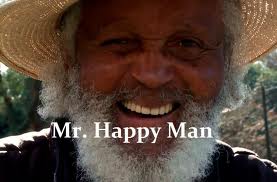
Mr Happy ManThe Epistle Reading (Second Reading) for this coming Sunday is 1 Corinthians 13:1-13. Most of us have heard this reading over and over again at weddings as if it were some sort of recipe for happiness between lovers. So often we hear it as an impossible recipe and cast it aside as something nice but unattainable. What would happen if we could hear this passage not as a prescriptive recipe but as a descriptive revelation of the LOVE that is God. Couple this revelation with the knowledge that God dwells in, with, through, and beyond us and it becomes a description of the possibilities for each of us being LOVE in the world. The knowledge that LOVE dwells in us might just open us to being the love that the world so desperately needs. 

91 year-old, Johnny Barnes is a Bermuda native who embodies the LOVE that dwells in him. How might we embody the LOVE that dwells in us? What does, would, could, will the embodiment of LOVE look like in you?

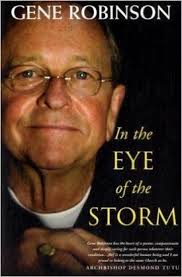
Act As If… a sermon on Luke 4 by Bishop Gene Robinson

eye of the stormThe Rt. Rev. Gene Robinson understands what it means to be threatened because of the Gospel he embodies. While reflecting on the threatening reaction of those who heard Jesus’ first sermon as it is recorded in Luke 4, Bishop Robinson challenges us all to stand on the clifftop with the courage of Jesus. Well worth a listen to all those who are preparing to preach on this text on Sunday.

TODAY!!! – reflecting on Luke 4:14-21

Luke 4The last time Luke 4:15-21 came up in the lectionary, we engaged in a reflection on what we know of  Jesus’ first sermon…a bible study of sorts. I offer it here for those of you who are preparing to preach on this text.


The Acclamation sung before the reading is “God of My Childhood” by Miriam Therese Winter Listen to the reflection here

Spinning Wheel – A Sermon on Luke 4:14-21 for Epiphany 3C

Blood Sweat & Tears

This sermon explores the need to set the captives free. It was inspired by a Globe and Mail article written by David Clayton Thomas, former lead singer of Blood, Sweat & Tears and dedicated to the memory of an old friend who did not “go naturally” and will never be forgotten! You can listen to the sermon here to get you in the mood, watch the video of Blood, Sweat & Tears below

The year was 1969. I was just twelve years old and my family had only recently moved to Ladner, a small village south of Vancouver. I was the new kid in a tightly knit grade seven class. I remember being angry, a lot. Being twelve is tough, but being twelve and new in town; well that’s a kind of hell I wouldn’t wish on anyone. There were only two places I felt safe: One was my bedroom where I could escape into my books or listen to music. The other place was music class. We had a really cool, young teacher, she must have been fresh out of teachers’ college, because she had all these new ideas about something she called music appreciation. The songs we sang in Miss Conroy’s class were songs off the radio. Some days she’d let us put our heads down on our desks and she’d just play music and all we had to do was appreciate it. Not all of the music was stuff we’d heard on the radio, sometimes Miss Conroy would sneak in some jazz; not any kind of jazz I’d ever heard before, improvisational jazz; it was so cool to my twelve year-old ears that I gave Miss Conroy a pass when she would slip into teacher mode and put some classical music on the record player.

One day, Miss Conroy announced that we’d been listening to her music long enough; it was time we began to listen to our music. Miss Conroy explained that she was going to divide us into pairs and each pair would have to work together to select a piece of music to bring to class and share it. We would have to explain to the class, why the piece that we choose was worth paying attention to. Now even though there were all sorts of pieces of music that I thought would be great for this assignment, I began to panic. Who on earth would want to work with me on such a project? The thought of being teamed up with anyone of my classmates struck fear into my heart. I didn’t have any real friends in this class and as the new kid I knew that nobody would want to be stuck with me. Vision’s of being left out, all alone without a partner began to overwhelm me, as Mrs. Conroy announced that we would be drawing names out of a hat in order to determine who our partners would be. When my turn came to pull a partner’s name out of the hat, I didn’t even know what to hope for. I didn’t know people well enough to want anyone in particular to be my partner, there was only one person in the whole class that I knew that I knew well enough to know that I didn’t want to be my partner. I, like all my classmates was positively terrified of, for the sake of this sermon I’m going to call him Kenny. Kenney sure wasn’t twelve; he was a few years older than the rest of us. He was a big guy; dark hair, good looking, and unlike the other adolescent boys in the class, Kenny had already started shaving. Once during the lunch hour I witnessed Kenny bullying a younger boy into eating an apple core that had been discarded a few days earlier. The kid ate the rotting core rather than face whatever it was Kenny was threatening him with. Kenny was big, tough and loud. Most of us were frightened of Kenny and because kids are cruel, behind his back we diagnosed him as crazy. But there was something about Kenny, maybe it was his good looks, maybe it was the buckskin fringe jacket that he sported, or maybe it was just his wildness that made him the talk of the jittering boy-crazed girls in the class. So, I was more than a bit upset when of all people, I pulled Kenny’s name out of the hat. What piece of music could the two of us possibly have in common and how was I even going to talk to him? Miss Conroy slipped perilously into my bad books on the day she forced me into the company of the dreaded Kenny.

Ours was an uneasy partnership. There was precious little conversation involved. Kenny picked the piece of music. Kenny told me what I was going to tell the class about our piece of music. Fortunately, I actually knew and liked the piece that Kenny had chosen. It had been a big hit the previous summer and I owned a copy of the record. The only problem was that my copy was a 45. Kenny insisted that we just had to use the version that was on the album; not the version that they played on the radio off the 45. The version on the album included the trumpet solo that never made it onto the 45. It would have made the song too long for the hit parade! And that’s how I ended up in front of my classmates, standing beside a boy, who though handsome and tough had suddenly become monosyllabic as I struggle to explain why our choice of Blood, Sweat and Tears, Spinning Wheel, was music well worth appreciating.

What goes up must come down

spinning wheel got to go round

Talking about your troubles it’s a crying sin

Ride a painted pony

Let the spinning wheel spin

You got no money, and you, you got no home

Spinning wheel, spinning all alone

Talking about your troubles and you,

you never learn

Ride a painted pony

let the spinning wheel turn.

Did you find a directing sign

on the straight and narrow highway?

Would you mind a reflecting sign

Just let it shine within your mind

And show you the colours that are real

Someone is waiting just for you

spinning wheel is spinning true

Drop all your troubles, by the river side

Catch a painted pony

On the spinning wheel ride

Someone is waiting just for you

spinning wheel is spinning true

Drop all your troubles, by the river side

Ride a painted pony

Let the spinning wheel fly.

They just don’t write songs like that anymore. Kenny was right, the trumpet solo, is a must. Blood, Sweat and Tears had the best horn section. They could take a mediocre song and turn it into something special:  “Spinning Wheel,” “You’ve Made Me So Very Happy,” “God Bless the Child,” “Hidey Ho, Hidey Hi,” “And When I Die.” Thanks to Kenny, I bought every LP that Blood, Sweat and Tears ever recorded.

So, what has any of this got to do with this morning’s Gospel reading? Well the words that the writer of the Gospel of Luke puts into the mouth of Jesus of Nazareth have been spinning round in my head all week long. I keep hearing Jesus quote the words of the prophet Isaiah. “The Spirit of our God is upon me: because the Most High has anointed me to bring Good News to those who are poor. God has sent me to proclaim liberty to those held captive, recovery of sight to those who are blind, and release to those in prison—to proclaim the year of God’s favour.” The year of God’s favour is the prophet Isaiah’s way of describing the year of Jubilee. Written into the Jewish law was a provision meant to address the systemic injustices that creep into the law as time goes by. It is said that every 50 years a Jubilee would be declared. Continue reading

Intoxicated on Life – Epiphany 2C Sermon – John 2:1-11

Intoxicated on lifeLooking back at old sermons can reveal the various ways in which our theology has developed.  This sermon was first preached in 2013. Since then, I have moved to a posture that has opened me to more humble statements about the nature of the MYSTERY that is the source and ground of our being, which causes me to refrain from using the word “God” to describe that MYSTERY. Re-reading this sermon, I was tempted to edit it in ways that better reflect my current posture. However I think, perhaps such edits are best left to those of you who may be tempted or inspired by this sermon to tell your own stories alongside the anonymous gospel-storyteller’s tale of the wedding at Cana and thus reveal your own intoxication with life!. 

Listen to the Sermon here

The gospel according to John is my favourite of all the gospels. Maybe it’s my Irish heritage but I just love a good story and the more outrageous the better. The Irish have never been known to let the facts get in the way of a good story, and neither did the anonymous writer of the Gospel we can John. This gospel was the last of the four gospels to be written and it nearly didn’t make it into the biblical cannon because the religious powers that be cited all sorts of problems with this particular portrait of Jesus. Not the least of which are all the signs and wonders that Jesus commands in this gospel. So, just for the record, let me say that I don’t believe that this particular story happened exactly the way it was written. I don’t believe that the man Jesus of Nazareth had the ability to instantaneously change water into wine. I do believe that getting hung up on whether or not Jesus could actually work miracles is to miss the point of this story all together.

This morning rather than go into a long and drawn out explanation of the historical critical method of studying the scriptures in order to explain why the anonymous writer of the gospel of John wrote this particular story and speculate upon the particular theological points the author was trying to make to his second century audience, I would like to set the history aside for a moment and look at what the author might have been trying to inspire in the people who would hear and read his or her story about the Wedding at Cana. To do that, I want to get to the heart of this story to explore what it might be like for the people who actually encountered the Man Jesus of Nazareth. I mean, on the surface of it this story is about a kind of intoxication that happened to people who come into the presence of this strange man from Nazareth. The best way I know of interpreting a story is to lay down another story right beside it and let one story interpret another.

Once upon a time, I remember it was a damp and dreary day in Vancouver that stood out from all the other damp and dreary days. It was in the middle of February; it had been overcast or raining for weeks and weeks and weeks. I was riding on the bus to work. It was the same bus that I had been riding on for two years. Every weekday morning I would commute by bus from the suburbs to the heart of the city. Every morning at six-fifteen, I would stand with the same people at the same bus stop and get on the same bus, which carried all the same people to their same jobs. On a good day the trip would usually take 45 minutes. Nobody ever spoke on that bus. Occasionally people would nod or smile at the all too familiar faces of their travelling companions, but conversation would be reserved for sunny days, when people could only manage a word or two. It was like there was this unwritten rule that nobody had the energy or the inclination to break. We saw one another almost every day, and yet we knew absolutely nothing about one another and that was the way we were determined to keep it.

On this particular February morning in addition to being tired, I was also wet. The wind was really blowing and I had to rely on my hooded jacket to keep me dry. The bus was running late and the water was just beginning to seep threw my jacket. I sat in my usual seat on the bus and I was determined to ignore the damp and get in a short nap before we reached the city. I was just dozing off when the bus screeched to a halt. Several passengers climbed aboard. All but one of them, were recognizable. I’d seen them a hundred times before. But the young man, who loudly greeted the bus driver with a “Hello,” him I’d never seen before. He struggled to fold his broken umbrella as he stumbled to the rear of the bus. He sat opposite me, and proceeded to greet everyone around him. People weren’t sure how to take this. Some just nodded and then looked away. Others mumbled a greeting before fixing their gaze out the window. I smiled, nodded and then closed my eyes, determined to escape into sleep.

The young man, continued to fuss with his umbrella. He explained in a loud voice that the umbrella was a gift from his sister and he hoped that it wasn’t ruined. He asked the gentleman seated beside him if he could help him to fold it. The somewhat flustered gentleman proceeded to fold the umbrella without a word. When the task was completed the young man, thanked the gentleman and asked him what his name was. He said he wanted to be able to tell his sister, who the nice man was, that had helped him with his umbrella. Without revealing his name the gentleman assured the young man that it wasn’t necessary to thank him. The young man on the other hand, proceeded to break all the rules, and said that his name was Michael and he told us all that he had never ridden on this bus before. He usually had to get a bus that went to the city in the afternoon and then he would get a ride home after dinner with his sister. But on this day, he would begin to work full days at his job. So he had to catch the bus in the dark. He went on to tell us that the bus we were riding in was much nicer than the one he usually caught. He decided that this bus must be a new bus, and weren’t we lucky to get to ride on a new bus. Then Michael took off his hat, held it out in front of him so we could all see it, and declared that he was the luckiest person in the world because his mother had bought him this wonderful hat that kept his head dry.

Michael went on to tell us all sorts of details about his life. At first people managed to listen, without responding. But as Michael went on describing his wonderful life, people found that in spite of themselves they were drawn into the conversation. As we approached the tunnel, that normally causes traffic to back up in rush hour, it was clear that there must have been some sort of accident in the tunnel. It would be a long wait. There would be no escaping Michael’s enthusiasm. Before long we all knew that Michael worked in the mailroom of a securities company. He assured us that this security company was a safe place to work, because they didn’t take care of the safety of people, but just took care of pieces of paper that were called stocks and bonds. Michael told us just how much he loved his job. Having a job was the best thing. Before he had the job he didn’t have any money to help his parents. But now he had enough money to help his parents and lots left over. Michael told us that he was really lucky because he worked with really nice people who took good care of him and let him do all kinds of fun jobs. Continue reading

The Things We Do For Jesus! – a sermon on the Baptism of Jesus

waters 4Baptism of Jesus Sermon — Luke 3:15-17, 21-22

Originally preached: Sunday January 13, 2013    Listen to the sermon here

There’s a definition of what it means to be a priest that has always daunted me. A priest it has been said is “a keeper of the mysteries; a keeper of the sacred mysteries of our faith. People often confuse the idea of mystery with the idea of secret. But I can assure you that as a keeper of the mysteries of the faith it is neither my job nor any other priest’s job to keep the mysteries of our faith a secret. Yes, as an ordained pastor, one of my responsibilities is to be a keeper of the mysteries of our faith by ensuring that the communities that I serve hold those mysteries sacred. It is my job to hold the mysteries in such reverence that we all remember that the reality that we call God works in with and through those mysteries. Baptism is considered to be one of the mysteries of our faith. Baptism is a sacrament of the church and by definition a sacrament takes ordinary stuff – water – mixes that ordinary stuff with the Word and in the combination of water and the Word you have a tangible means of God’s grace. God’s grace is revealed in the sacrament of Baptism by the act of our gathering together and mixing the stuff of the earth with the Word. We have only two sacraments in the Lutheran church Baptism and Eucharist, and both of those things are sacraments because we gather together take ordinary stuff – bread and wine, or water and mix it with the Word of Jesus the Christ, and in the water, the bread, and the wine the means of God’s grace is made visible to us.

So, there you have it the technical definition of the sacraments, the mysteries of Baptism and Communion, in which the reality that we call God works in, with, through and under. But like all technical definitions of mysteries, these definitions fail to capture the essence of the MYSTERY that likes at their very heart, the MYSTERY of the reality that we call God. As a keeper of the mysteries, one would think that a priest, a pastor ought to be able to reveal, by way of definition something of the nature of the reality of the DIVINE.

The truth is I have no real definition to offer you of this reality that we call God. I read once, I wish I could remember where, the wisdom of a priest far more skilled than I who declared that he’d given up trying to explain God to anyone because in the end, he said, “I cannot lead you to God, anymore than anyone can lead a fish to water.” The most important thing I learned in seminary is that “I don’t know is an answer.” The truth is the more we learn the more we know that we don’t know. But this unknowing can be so unsatisfying, precisely because we believe that God is the one in whom we live and breath and have our being, we want to know the very nature of the One who is the ultimate Reality. Now, if these words haven’t already become so vague that the veil of unknowing has begun to make any tangible means of God’s grace seem invisible, and so beyond our grasp, let me leave the theology behind and tell you a story. Because one thing I do know for sure is that the shortest distance between the questions of what it means to be human and understanding our humanity is a story.

It happened on Thursday night. All week long I’ve been thinking about what I would say about the Baptism of Jesus and I wasn’t getting very far. It’s been a busy week, with lots of things to do as programs around here gear up again after the lull of the holidays. After teaching Confirmation on Thursday, I got home at about 9:30. The house was empty because Carol was off visiting the grandchildren for a few days. It had been a long day, and I quickly got into my pajamas, switched on the fireplace, and settled into my recliner in front of the television. The PVR was full of shows for me to watch and the opening scenes of Gray’s Anatomy dragged me into the complications of lives I would never have to minister to and I began to relax. The drama of medical emergencies mixed with the complications of various love affairs pulled me into a world where there was absolutely nothing expected of me and I was loving it right up until the moment that the telephone rang. Modern technology means that the name of the person calling usually appears on right there on the TV screen so that I can decide whether or not I’m going to answer the call. When the phone rang I expected it to be Carol calling to say goodnight, so I’d already pushed the pause button, expecting that after a quick goodnight I could get back to my shows. Buy the time I realized that there was no name on the TV screen but only a phone number, it was too late and I was already saying hello.

The caller was someone I’d heard from only once before. They were already halfway through a very nasty tale of woe when I realized that they were asking me to come out. It was a call for help. It was a call that I had every right not to respond to. I mean the caller wasn’t even a member of this congregation. It was late. I was already in my pajamas. It was dark outside.

I was annoyed. I mean really. Couldn’t this person have called me before I left Newmarket? What gave them the right to think that I would come out so late, in the dark, for someone I’d only met once before? The audacity. The sheer audacity of such a request was enough to make you scream. Give me a break. I listened to the caller’s plight with precious little sympathy. I asked her to hold on for a moment so that I could try to think of a way to help. What I really meant was: is there anyone in Newmarket that I can disturb at this time of night and ask them to go over and help. Some of you have offered to help in this way in the past. You know who you are and you can be sure that your names went through my mind as I tried to avoid leaving the comfort of my warm snug. It was only the thought of how annoyed I was to be disturbed at such a late hour that kept me from disturbing one of you. So I told the caller to hold on and I would be there in about half an hour.

I was cursing to bet the band as I went upstairs to get dressed. The air was positively blue. I was angry. I was going out, on what in my mind was the middle of the night, it was ridiculous. Hell, it was dangerous. It was dark. Yeah we were going to meet in a public place. But why the expletive, curse, fill in the blank your self, why the ………blanket blank, should I? I certainly wasn’t going out of love for my neighbour. I was ticked. I was going because it’s my job to go. Sure I knew that I had every right to refuse to go. But if I didn’t go, my shows would be ruined. How could I possible sit there and enjoy my shows when I knew that someone needed my help? Forget the shows, if I didn’t go, I knew darn well I wouldn’t get any sleep. Continue reading

The Baptism of Jesus and The Missing Verses in the Lectionary Gospel Text

JB in prisonWhile musing on the readings for this coming Sunday, I came across these notes that I made when these readings came up – Baptism of Jesus 2010. I offer them to my preaching colleagues in the hope that we might move beyond the story as it has been read during worship so that we might challenge old assumptions and images of the Divine.

According to the Revised Common Lectionary, the appointed Gospel reading for this Sunday when the church celebrates the Baptism of Jesus is Luke: 3:15-17, 21-22. But what about the missing verses 18-20?

Whenever the RCL leaves verses out of an appointed reading, I can’t help wondering what they are afraid of. Could the missing verses contain some hidden information that might threaten some established Christian doctrine? 

Most of us have heard this story of Jesus baptism so many times that we think we know it all. John the Baptist, proclaimed that the Messiah was coming and that the children of God, needed to repent and be baptized. This baptism of repentance was popular among Jesus’ Jewish contemporaries but troublesome to the Roman Empire. As his first public act Jesus went down to the Jordan River and even though John protested that he was unworthy to baptize Jesus, Jesus submitted to John’s baptism of repentance.

That’s how so many people learned the story and the way most people remember it. That is after all pretty much what the what the Gospel according to Luke actually says provided you leave out verses 18 to 20.   Continue reading

Bat Qol – The Daughter of a Sound: Hearing the Word Utter Our Name

Preparing to Preach on Jesus’ Baptism

BAT QOL pastordawnEach year, I begin my preparations for preaching on the Baptism of Jesus with this video in which  Heather Murray Elkins tells her story, “The Secret of Our Baptism.” Elkins opens us to a new way of hearing the Bat Col, the Daughter of a Sound, the Voice of the Divine, the Word, who speaks in this Sunday’s Gospel reading. Luke 3:15-17, 21-22

A Blessing for the New Year (John O’Donohue)

The art of blessing is often neglected. The birth of a New Year calls forth the desire in us to bestow a blessing upon those we love. Several years ago, John O”Donohue, one of my favorite Irish poet’s created a New Year’s blessing for his mother entitled Beannacht-for Josie. It is a blessing of superior quality. And so, on this New Year’s Eve, may you all receive this beannacht with my added blessing for a peace-filled New Year in which the God in whom all of creation is held, might find full expression in your miraculous life! 

Beannacht John O'Donohue pastorDawn.pages

Incarnation Changes Everything – a sermon for the first Sunday of Christmas – Luke 2:8-20

Due to technical difficulties there is no video this week. You can listen to the sermon here

The nativity stories about the birth of Jesus of Nazareth are parables carefully crafted by the Gospel storytellers to make us think.  This morning we have another parable that is also carefully crafted to make us think. The question 21stcentury readers of this parable may well ask is,  “What is it that the gospel storytellers want us to think about this parable often referred to as the “Presentation of Jesus”?  One ancient way of discovering meaning in a parable is to tell the parable alongside another story and allow the second story to interpret the first.  So, let me tell you a story about a little boy who wanted to meet God.

The little boy knew it was a very long trip to where God Gives, so he packed his suitcase with some tubes of Smarties and some cans of Coke and he set off on his quest to meet God. When the little boy had gone half a mile or so, he met an old woman.  She was sitting in the park just staring at some pigeons.  The boy sat down next to the old woman and he opened up his suitcase. The little boy was about to take a drink from one of his cans of Coke when he noticed that the old lady looked hungry. So, he offered her some of his smarties. The old woman gratefully accepted the smarties and smiled at the little boy.  Her smile lit up her whole face. I was so lovely, the boy wanted to see her smile again, so he offered her a drink of Coke. Once again, the old woman smiled at him and the little boy was delighted! They sat there all afternoon eating and smiling, but they never said a world.  As it grew dark, the boy realized how tired he was and he got up to leave, but before he’d gone more than just a few steps, he turned around, and ran back to the old woman and gave her a big hug. The old woman gave him her biggest smile ever.

When the little boy opened the door to his own house a short time later, his mother was surprised by the look of pure joy on his face. She asked him, “What did you do today that made you so happy?” The little boy declared, “I had lunch with God.” And before his mother could respond, he added, “You know what? She’s got the most beautiful smile I’ve ever seen!”

Meanwhile, the old woman, also radiant with joy, returned to her home. Her son was stunned by the look of peace on his mother’s face and he asked, “Mother, what did you do today that made you so happy?” The old woman replied, “I ate Smarties in the park with God.”  And before her son could respond, she added, “You know, God’s much younger than I expected.”

Our expectations have been groomed to point us up, up and away, out there, far beyond the everyday clatter of our lives. Sometimes, we expect that just for a moment the sacred will pierce our reality. At other times, when we are in need, we summon up the sacred in the guise of a god all dressed up in majesty, strength, wisdom, authority, and immense power, yet gentle, loving, and attentive to our every need. Continue reading