A Progressive Christian Wades into the Waters of Baptism

baptism 33A sermon for the celebration of the Baptism of Jesus – Matthew 3:13-17

Listen to the sermon here

Wading into the waters of baptism is no simple matter for a progressive Christian. Once you leave the myth of perfection in some distant garden back there in the mists of time, reject the notion of humanity’s fall from grace as a result of original sin, and give up worshipping the sadistic image of a god who demands a blood sacrifice, it’s difficult to navigate the waters of baptism without spouting notions that the institutional church condemns as heresy. But today is the day when the church celebrates the baptism of Jesus and the stories about the baptism of Jesus that have been handed down to us by our ancestors suggest that on this day of all days, we should have the courage to follow Jesus into the river of life even if it does challenge some of our long held assumptions about what it means to be a child of God.

I venture into these troubled waters as someone who treasures the sacrament of baptism. Long before I ever entertained the idea that I might one day respond to the call to become a baptizer, I became a lover of this particular sacrament of the church. I am now, and I have always been one of those people who find it almost impossible not to shed a tear or two at baptisms. The beauty of all that hope and expectation all wrapped up in the guise of a tiny little human has a way of generating in me a watery contribution as my tears join the sprinkling to wet the babies head. When the baptized is an adult my tears flow even more bountifully. Let’s face it folks these days the reality is that infant baptisms are rare enough. Adult baptisms, especially in mainline churches are so rare that the nostalgia alone is enough to send us into spasms of uncontrollable weeping for seer joy at the thought that it is even remotely possible that someone has been able to see beyond the church’s doctrine long enough to embrace the amazing possibilities of the sacrament to provide any benefit in this the twenty-first century.

When we look back to the stories told in the synoptic gospels about the baptism of Jesus we are sometimes so distracted by the opening of the heavens, the descent of the dove and the voice of God declaring Jesus to be the beloved, that we miss an important detail of the way in which the early followers of the Way chose to tell the story of Jesus public coming out party. New Testament scholars remind us that the stories told by the writers of the gospels were written at the end of the first century; a time when it would have been clear to all those who had ears to hear, that by going down to the river Jordan to be baptized by John would have stirred up the political and religious waters. John the Baptist was a revolutionary who made no bones about the fact that the religious authorities and the political rulers were leading the people down the wrong path. John’s shouting in the wilderness was his way of warning the people to repent; to literally turn around and follow a different path. John was doing far more than ranting when he condemned the religious authorities as a brood of vipers; he was calling on the people to reject the teachings of the authorities. John’s insistence on repentance was a call to revolution, a revolution designed to overthrow  the status quo. John was out there in the wilderness because it wasn’t safe for him to spout his own particular brand of incendiary fire and brimstone rhetoric within earshot of the authorities. By going down to the River Jordon and submitting to John’s baptism of repentance Jesus was choosing to identify himself with a political revolutionary.

That the writers of the gospels chose to tell there story in ways that see the God of Israel give Jesus a shout out, and the very spirit of God descending like a dove onto the shoulders of Jesus, turns John’s baptism of repentance into a kind of passing of the torch from one revolutionary to the next. Yet, despite the gospel-writers having cast Jesus into the role of revolutionary torchbearer none of the gospel writers shows Jesus following the ways of his predecessor John. There is no record of Jesus calling people to repent nor is there any record of Jesus ever having baptized anyone. All we have is Jesus “Great Commission” which if New Testament scholars are to be believed, Jesus probably never even said, “go therefore and baptize them in the name of the Father and of the Son and of the Holy Spirit.” Yes, it’s true, most preachers, dare I say modern-day baptizers, learned in seminary that rather than being an instruction given by Jesus the Great Commission was actually added to the story by the early followers of Jesus. But I digress, the point I’d like to emphasize about Jesus’ trip down to the waters of the Jordan, is that by choosing to publicly submit to John’s baptism, Jesus was making an important statement about his own public ministry. For just like John, Jesus intended to challenge the religious and political authorities.

That the gospel writers have Jesus head off into the wilderness to find his own way prepares us to follow Jesus down a completely different path than the one his predecessor John pointed toward.

So on a day, when the church looks back upon the baptism of Jesus, surely we can take courage from Jesus’ example of wandering off into the wilderness to find our own way of challenging the religious authorities of our day. Continue reading

Wear Your Baptism in Ways that Others Might See a Visible Means of Grace in You – a sermon on Baptism

img_6946

Listen to the sermon here

How many of you know what this is? Where I come from it is often referred to as a dog-collar and the folks who wear them are called God-Bothers. Back when I first started seminary, I resolved that I wouldn’t wear a clerical shirt and collar. I didn’t like the idea of being set apart from others. I really didn’t want to be seen as one of those holier-than-thou types, who took themselves so seriously. Learning the history of clerical garb didn’t help me to warm up to the idea of wearing them. Apparently, back in the middle ages fashion dictated that educated professionals wear black. Also, during the middle ages, long before shirts had collars it was all the rage to let your white undergarments show around your neck. This was the precursor to shirt-collars. Apparently during the reformation, this trend fell out of fashion but clergy, who couldn’t afford to keep up with fashion continued to wear black shirts with their white under-garment showing.      

Over time, the church does what the church often does and applied a liturgical meaning to explain what is already happening. So, the church began to explain clerical attire theologically. If you google it, you will discover that, pastors are just like everyone else, they are in bondage to sin and cannot free themselves. So, they wear a black shirt to signify their sinfulness, but they wear a white collar to signify that the words they speak are not their own, but God’s words, because you see the collar covers the pastors voice-box to signify that we speak the Word of God. Now the presumption that I or anyone else speaks on behalf of God is rather daunting to say the least and did nothing to encourage me to wear a clerical collar, nor did the obscure explanation of the tab collar, which insists that this little white notch is placed strategically over the Adam’s apple to cover over the reminder of Adam’s sin. Not having an Adam’s apple, myself, I wasn’t much taken with the idea of wearing special clothing to set me apart. But when I first became a pastor, I was insecure and believe it or not I didn’t want to rock the boat. So, I ever so hesitatingly began wearing a clerical collar. I was uncomfortable wearing the collar, so I decided that I would only wear it on Sundays, or to protest marches, and sometimes when I was visiting people in the hospital, because in hospitals, wearing a collar makes it easier to gain access to patients.

Well one day, I needed some candles and so I dashed into the Zellers over the road to quickly grab a couple. I was having difficulty finding just the right candles when a store clerk came up to me and asked me if I would come with her. I figured that I’d been lingering over the candles for so long that she must have mistaken me for a shoplifter, but as we hurried along, she explained to me that there was a man in housewares who was abusing his wife and child. I’d forgotten that I was wearing a collar, but the reality of what this clerk was asking me to do choked me into realizing that the collar had led her to believe that I could actually do something. Not knowing what she expected me to do, I told her to call 911. She assured me that they had already called, but that in the meantime perhaps I could help. We stopped just before the aisle where the abuse was taking place. The store clerk whispered that, “they are just over there.”  As she pointed, I realized that she wanted me to go on alone. So, not knowing what to expect, I took a deep breath and walked in on a scene that was way beyond my abilities. A big burly guy was twisting the arm of a woman while a little girl of about 4 or 5 stood crying. The man was yelling obscenities when I interrupted him. When he looked at me, I saw the fear in his eyes as he immediately let go of the woman who fell to the floor. The little girl ran to her mother. I expected the man to turn on me, but instead he just stared at me, as he began to cry, “I’m sorry pastor, forgive me.” It wasn’t I who stood before him, but the church, his church, the church that had taught him right from wrong. The collar I wore made the church visible to him and made it impossible for him to forget who he was. As a child of God, he couldn’t continue what he was doing. As a child of God, he knew in his bones that he was wrong. He wept until the police arrived. From that day on, I’ve known the power of the collar to make the church visible in the world and so I wear it a lot more often than I’d ever expected I would. Continue reading

Bat Qol – The Daughter of a Sound: Hearing the Word Utter Our Name

Preparing to Preach on Jesus’ Baptism

BAT QOL pastordawnEach year, I begin my preparations for preaching on the Baptism of Jesus with this video in which  Heather Murray Elkins tells her story, “The Secret of Our Baptism.” Elkins opens us to a new way of hearing the Bat Col, the Daughter of a Sound, the Voice of the Divine, the Word, who speaks in this Sunday’s Gospel reading. Matthew 3:13-17

A Blessing for the New Year (John O’Donohue)

The art of blessing is often neglected. The birth of a New Year calls forth the desire in us to bestow a blessing upon those we love. Several years ago, John O”Donohue, one of my favorite Irish poet’s created a New Year’s blessing for his mother entitled Beannacht-for Josie. It is a blessing of superior quality. And so, on this New Year’s Eve, may you all receive this beannacht with my added blessing for a peace-filled New Year in which the God in whom all of creation is held, might find full expression in your miraculous life! 

Beannacht John O'Donohue pastorDawn.pages

The Journey of the Magi never happened and yet it is always happening.

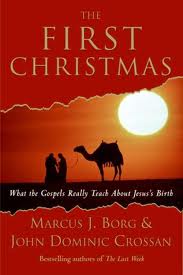
Epiphany-Wise+WomenAn Epiphany Sermon, preached in 2008. I had just read “The First Christmas” by John Dominic Crossan and Marcus Borg. Our congregation played host to Dom Crossan a month before I wrote this sermon. So, Dom’s insights run through this effort. But the heart of this sermon beats as the result of a sermon preached by Bruce Sanguin a self-proclaimed evolutionary christian who is a United Church Minister (Canadian Memorial Church, Vancouver). I had the privilege of meeting this modern mystic while on sabbatical this summer and his compelling way of unlocking the scriptures using the wealth of the christian tradition together with the insights of modern science and psychology borders upon the poetic. This sermon was anchored by Sanguin’s words (Epiphany 2007). Sermons are a “live” event. So, this manuscript is an approximation of what was actually preached.   

Just five days before Christmas (2008), The Archbishop of Canterbury, The Most Reverend Doctor Rowan Williams, the leader of the worldwide Anglican Communion started a firestorm.  During a BBC interview, His Grace was quoted to say that the story of the “three wise men is a legend”. The Archbishop was also heard to say that he remained unconvinced that there was indeed a star that led the legendary trio to the birth place of the Christ Child.

If that wasn’t enough to send folks off the deep-end, it has been revealed that the Presiding Bishop of the U.S. Episcopal Church The Most Reverend Doctor Katherine Jefferts Schori, who just happens to be the first woman elected primate in Anglican history, has fanned the flames of the fire-storm by sending out what has been judged by some to be an incendiary Christmas card.

I downloaded a copy of the offensive card, so that you could see for yourself. HerEpiphany-Wise+Women Grace’s choice of card has offended the good deacons of Ft Worth Texas who claim that their Primate’s actions defy explanation. As you can see the wise folks depicted on this image look a lot like women. Can you imagine the nerve of the first woman primate! How could she be so bold as to select such an offensive image? Leave it to straight talking Texans to set things straight: for despite the audacity of the Primate, the Texans have pledged to “stand for the traditional expression of the Faith.” Continue reading

So, This Is Christmas? – Matthew 2:13-23 – Christmas 1a

The Messiah Is Among Us!

Christ is born in youDuring these twelve days of Christmas we celebrate the birth of the Messiah. Messiah, is a word the ancient Hebrews used to describe the anointed one. The one whom God would send to change the world. In Greek the word for Messiah is Christ.

My thoughts swirl around a poem written by the unknown writer of the Gospel of John in which the birth of the Christ is describe as the WORD. It’s a mysterious cosmic poem that moves our minds away from the mundane everyday ordinary stuff of life to the extra-ordinary mysteries of creation, which when you think about it is what every birth does.

Just holding a newborn in your arms and before long you’ll find yourself pondering the mysteries of this life. Who are we and where do we come from?  Why are we here? What does it all mean? These are all perfectly wonderful questions and speculating upon the many possible answers to those questions is a fascinating process. But in the end, our words will always fail us when it comes to answers. As we are speculating about the birth of this beautiful little baby, the baby is alive and among us, and needs to be fed and changed, nurtured, guided and protected. Continue reading

Sermons for Christmas Eve/Day

homeless-nativity

Click on these links for some of the sermons I have preached on Christmas Eve

Preaching Christmas Eve in the Wake of New Testament Scholarship

Shattered Angel: an Imperfect Christmas Story

Mary’s Story  

Living Nativity

Keeping Christmas Well

The Nativity: A Parable So Simple a Child Can Understand It

The Power of LOVE Who Lives In Us

Cheap, Small, and Plastic: a Christmas Eve Sermon for Progressive Christians

Tell Us About God. We Have Almost Forgotten

Way Back When: Christmas Oranges

Christ Is Born Anew

Christ is Born In You

A Newborn Baby Positively Oozes with the Aura of the MYSTERY that Lies at the Very Core of Reality

 Every Christmas is a Thin Place

Christmas: a Cacophony of Chaos!

Welcome Home to the MYSTERY that IS LOVE

Christmas: a Cacophony of Chaos! – Advent 4

Watch this sermon here

For days now, I’ve had an ear-worm.  I suppose that it is more than fitting for a pastor to suffer from this particular ear-worm at this particular time of the year. Tomorrow is Christmas Eve and it must be the struggle to get everything ready for the Holy Night that has put this particular ear-worm on an endless loop. Consider this an early Christmas gift, I won’t sing it. I’ll let you sing it in your own minds. Maybe then I can give you my ear-worm for Christmas. My ear-worm is the Christmas carol, O Holy Night. It’s not the whole Carol, just the one line of the Carol that repeats itself:   “A thrill of hope the weary world rejoices”

“A thrill of hope the weary world rejoices.” Over and over again, I hear: “A thrill of hope the weary world rejoices.” T’is the season for being weary! Hands up all you who are weary! Apart from the fact that there is so much to be done, the news is full not of glad-tidings but of tales of woe. Everywhere we turn, the media is doing its level best to instill fear into our hearts, rather than tidies of comfort and joy. The world is weary of worrying about the strange fellow who occupies the Whitehouse, weary of populist, authoritarian, politicians like the fellow we have up here, prancing around Queens Park; weary of begging the powers that be to do something about climate change; weary of economic inequality; weary of corporate greed, weary of catastrophic fires, tsunamis, earthquakes, stock-market crashes,  weary of war and rumors of war.

Sure, we can turn off our devices in the hope that we can avoid the bad tidings. But then, we have our own bad news to deal with, quarrelsome families, troublesome friends, sick or dying loved ones, the day to day grind of making a living, and our own personal angst and insecurities. To top it all off, if regular life isn’t wearisome enough, tomorrow is Christmas Eve. “A thrill of hope the weary world rejoices.”

“A thrill of hope the weary world rejoices.” Fall on your knees?  If I fall on my knees, I’ll never be able to get up!!! In times like these, that it is as if our lives are in a constant state of chaos.  I’ll let you in on a little secret, one of my favorite parts of Christmas is Silent Night. I positively long for Silent Night, because when we’re singing Silent Night, here at Holy Cross, my work is done.  We don’t have a Christmas Day service, unless Christmas falls on a Sunday. For those of you who haven’t had the pleasure, our Christmas Eve service always ends with the singing of Silent Night. We turn out all the lights, light candles and hold them high as we sing. Silent Night, holy night, all is calm…

….all is calm….all is calm…all is bright. Now there’s an ear-worm I’m happy to live with. But there’s a lot of chaos to be endured between here and Silent Night. As much as we try the sound of Christmas is not Silent Night. The sound of Christmas is far more discordant than that. Do me a favour, make some noise. I mean it. I’m going to count to three. When I get to three, I want you to create a cacophony of chaos. I want us to raise a little hell. Ready, One, two, three…………….

In order to get the true sound of Christmas, you would need to add to our cacophony, the sounds of traffic, car crashes, waves crashing, hungry children crying, poor parents weeping, homeless sisters and brothers shivering in the cold, bombs dropping, babies crying, the Earth suffering…and you will have but a taste of the sounds of chaos. Christmas, no matter how you understand Christmas, Christmas doesn’t much sound like silent night. The sound of Christmas is a cacophony of chaos. Christmas is the sound of messiness, the sound of unpredictability and confusion. So, is it any wonder that in the midst of all the chaos of living we should long for a Silent Night? The trouble is, the story of new birth is never a Silent Night. Life itself is chaotic, and if we’re waiting for the birth of Jesus to arrive in Heavenly peace, I doubt that we’ll ever understand the Christmas story. Continue reading

Preaching Christmas Eve in the Wake of New Testament Scholarship

the first christmasIn 2008, our little congregation played host to John Dominic Crossan who has been acclaimed as world’s most famous New Testament scholar. Crossan’s visit to our congregation began with a public lecture based on his best-selling book The First Christmas in which he and Marcus Borg provide a splendid historical outline of the development of the birth narratives. I had the dubious honour of standing before his enlightened audience on Christmas Eve to preach in the great man’s wake. What follows is the Christmas Eve sermon I preached just three weeks after Dom’s illuminating visit.

Just a few weeks ago, this congregation was privileged to play host to a man who has the reputation of being the greatest New Testament scholar in the whole world. Dom, (we get to call him “Dom” now) wrote The First Christmas with Marcus Borg who is the guy who is heralded as the world’s leading expert on Jesus and Christianity in the 21st century. During his lecture, Dom provided us with all sorts of marvellous ways to understand the stories surrounding the birth of Jesus.  Ever since that visit, there have been folks who listened very carefully to what Dom had to say and who have been positively gleeful when they’ve asked me what I’m going to do about preaching on Christmas Eve.

I mean what could I possibly say to you after so many of you have just finished hearing from the best in the business! And then there are those of you who bought the book and you’ve read what the experts have to say about the first Christmas. Some of you weren’t able to hide the smirks when you wondered out loud just exactly how I’d go about following the eminent Dr. John Dominic Crossan. Continue reading

Joseph and the Shady Ladies: The Revealing Story of Emmanuel – Matthew 1:18-24

emmanuel with us

A sermon for the Third Sunday of Advent: all around us the world is hustling and bustling toward Christmas. With less and less time devoted to the telling of the Christmas story, perhaps we in the Church might consider changing the lectionary so as to provide more opportunities to engage the birth narrative in Matthew. Advent 3 is a perfect opportunity to substitute two readings into the lectionary. Here’s what happened when we tried this:

Readings Matthew 1:1-17 and Matthew 1:18-24

Listen to the sermon here

It has been said that the shortest distance between humanity and the truth is a story.[1] I would add that,  the truth we find in a story teaches about our humanity. So, as we seek to embrace our humanity we would do well to pay close attention to the stories we tell. The unknown writer of the Gospel according to Matthew had a great story to tell and in order to get to the truth of who and what the man Jesus was, he chose a particular way to tell the story so that all those who heard the story would know the truth of who Jesus is in the grand scheme of humanity’s story. Sadly over the centuries that have elapsed since this story was first told have seen the tellers and listeners of this story haggle over the truth. Some have forgotten the power of story to bridge the gap between humanity and truth, and they have insisted that the truth will be found in the absolute accuracy of each and every detail.  Fortunately, many more have remembered that stories are just that, they are stories and while we know that events did not actually happen in they way they are told, they happen just that way all the time.

So, as we begin in the beginning of the Gospel, the Good News according to Matthew, let me remind you that we know that the story of Jesus birth did not happen the way it is told in the story, and we know that birth is always happening this way. For the writer of the Gospel according to Matthew was a skilled storyteller and he wrapped the story of Jesus of Nazareth in the stories of his ancestors. Written in the style of his own ancestors the gospel-writer begins his story, with the same words that every one of his listeners would have remembered from the sacred book of Genesis which begins, “In the beginning”. A sort of once upon a time, if you will, the gospel-writer begins with, the genesis of Jesus the Messiah and then proceeds to connect Jesus to the ancestors of the Jewish faith, will making sure that the truth of Jesus’ connection to those outside the faith will also be made clear.

The gospel-writer’s inclusion of the women who Bishop John Shelby has dubbed the “shady ladies” would have alerted Jewish listeners that Jesus is a different kind of Messiah; a Messiah who will transcend race, creed, or clan. Rahab, who was a Canaanite; a foreigner, was known as the mother of Israel for saving Joshua in Canaan, just happened to run a brothel there. Tamar, also a foreigner, was married to Judah’s son who according to Genesis is killed by God, and as was the custom his younger brother married her to ensure that his older brother’s name would be carried on. When that son dies, Tamar is left a childless widow, a fate worse than death in a patriarchal culture.  Tamar is known for impersonating a prostitute to trick Judah into knowing her, in the biblical sense of the verb to know, so that her father-in-law could impregnate her. Continue reading

Emmanuel, God-Is-with-Us: Michael Morwood

Image

A Christmas Prayer

St. Nicholas Is Too Old and Too Tired to Defeat the Selling Power of Santa Claus!

santa_as_satanToday: the Feast of St. Nicholas, the ancient precursor to the modern Santa Claus, will pass without much ado. Some will try to encourage us to resurrect St. Nicholas to save us all from Santa’s powers for we have gone astray.  To those well meaning souls who would rid Christmas of its flagrant consumerism, I can only offer up a feeble, “Baa Humbug!”

The very best traditions about St. Nicholas suggest that he was a protector of children while the worst tradition has him providing dowries so that young girls could be married off by their father rather than be sold into slavery. Meanwhile, the modern character Santa Claus grooms children to take up their role as consumers in the cult materialism. Some parents may bemoan the little gimmie-monsters that their children become, but most adults are rendered helpless by our own remembered indoctrinations and so we join in what we choose to deem as harmless fun.

‘Tis the season for contradictions.  ‘Tis the season when we prepare to celebrate  the incarnation of God in human form while also waiting for Santa Claus to come down our chimneys. Face it; most of the folks dashing about in the malls are more worried about the imminent arrival of Santa Claus than they are about God. I’d even go so far as to say that a good number of people have unconsciously substituted Santa Claus for God.  Santa Claus and the baby Jesus get into some pretty fierce competition at this time of year; and in the culture the larger loyalty belongs to Santa. Continue reading

PREPARE THE WAY FOR OUR GOD! Become the Prophet Crying FOR the Wilderness! – a sermon preached on the Second Sunday of Advent when John the Baptist Cries

BCsunsetReading over sermons I have preached about John the Baptist crying in the wilderness, I came across this “cry for the wilderness” that I preached six years ago. Sadly, the wilderness has an even greater need today for prophets who are willing to cry out on its behalf! I offer my plaintiff cry here to inspire my colleagues as they prepare to prepare the way on this coming Sunday.

I didn’t know it at the time, but I actually met John the Baptist when I was fifteen years old. She didn’t look much like you’d imagine John the Baptist would look, but she had that same crazy intensity, that same focus on the fact that we’d better change our ways, we’d better repent, and start doing things differently or we’d be in real serious trouble. Lola was my friend Valerie’s mother and she simply couldn’t stop going on and on about the environment and how we were destroy the earth. At the time, I remember thinking she was a bit of a nut-case and on more than one occasion I wished she’d just shut up about it. I was just a kid, and the earth was just something I took for granted.  The earth was just there to provide for our needs. I couldn’t believe how much Lola went on and on about all the stuff we humans were doing to destroy the earth. I just wished she’d leave us along to get on with things, I couldn’t abide her incessant nonsense about how we were going to destroy the planet.  All her feeble little attempts to be kind to the earth, made me seriously question her sanity.

I tolerated Lola not just because she was my friend’s mother, but I didn’t really understand her until one day when the three of us were travelling together. We were coming home from church. I had only been going to church for a few months.  I was trying hard to understand this whole God thing. So, I went to church a lot.  My friend Valerie had persuaded me to start going to church with her and family had become like my second family as they supported me during my first attempts to explore the mysterious world into which I had begun to feel pulled. As we drove home from church, I was feeling a little glum. Try as I might, I couldn’t really understand this church thing; all that singing and praying didn’t really help me to feel closer to God. Mostly I just liked how people at church treated each other.  I liked how they went out of their way to help me feel at home. Whether or not God was there, well I really wasn’t sure. 

Anyway, we were driving along the road.  It was a partly over-cast day on the west coast of British Columbia, just a few clouds.  You could see the mountains off in the distance. We were chatting back and forth when all of a sudden Lola pulled the car over to the far side of the road, switched off the engine and got out.  Valerie followed her mother out of the car, so I figured I had better do the same.  Val and her mother scampered down from the road and onto the beach.  When they reached the water’s edge, they stopped and just looked off into the distance.  Apart from a tanker-ship making its way across the horizon, I couldn’t see much of anything. Lola had the most amazing expression on her face.  She positively glowed with happiness.  Valerie wore a similar expression.  I must have looked somewhat puzzled because Val smiled at me and said,  “Isn’t it the most beautiful thing you have ever seen?”  This only confused me more.  What were they looking at that had made them stop the car, scamper down the bank and stand there at the water’s edge on a cold autumn evening? 

Maybe my parents were right, these religious types are a little bit weird.  Happy, glowing, smiling people make me nervous. There they stood grinning from ear to ear.  What were they on?  And then, I saw it.  For the first time in my life, I saw it.  It had been there before.  But I had never really seen it before. The sky was amazing.  The colours were overwhelming.  It almost didn’t look real.  It looked like someone must have painted it that way.  It was magnificent, a work of art,  the most beautiful thing I have ever seen!

If you’ve never seen a late October, Pacific Coast Sunset before, you’ve missed one of the great wonders of the world. Neither Emily Carr’s paintings nor picture perfect post cards do a western sunset justice. Believe it or not, even though I had been living on the west coast for about four years, at that point I had never before really noticed just how beautiful a sunset could be.  No one in my experience had ever taken the time to stop and look at one. No one had ever pointed one out to me before.  I would never have dreamed of stopping a car and getting out to watch as the sun put on a show while setting. So I stood there. Overwhelmed by it all.  Amazed at just how beautiful it was. Wondering just who or what could be responsible for such a spectacular thing as this.  Before long my thoughts drifted to the Creator. Suddenly this God, that I had been trying so hard to fathom, was there. Right there.  Not just in the magnificence of the sunset, but right there on the beach.  At that moment, I was just as sure of God’s presence as I was of my own. I remember an overpowering feeling  of gratitude, gratitude for God’s presence, gratitude, because for the first time in all my life I was at home.  I knew that I was home. Home, not because of the place; home not because of the beauty of the sunset, but home because of God’s presence.  That longing that I had always felt; that longing that I have always labelled as homesickness, that over-powering longing was gone.  In that glorious moment, the presence of God, filled my longing and I was at home.

I’m sure that each of you could tell of a similar experience. So many of us have been blessed by the presence of God in creation. So many of us have had our longing for God filled by the wonder and majesty of creation. I suspect that our love of creation comes as a direct result of our relatedness to creation. For like creation and everything in creation we share a common Creator. My own love affair with creation kicked into high gear on the beach gazing at the magnificence of the setting sun and it has grown in intensity over the years. This past summer, Carol and I drove out to Vancouver and I have to say, if you want to renew your love for creation, drive across this magnificent country of ours.

You’ll find yourself absolutely besotted with creation as you fall in love all over again. By the time we reached my beloved Rocky Mountains, it was like some star-crossed lover, who simply couldn’t help herself from bubbling over with excitement. Not even the first rainy day of our trip could dampen my excitement as we drove south from Jasper toward the Columbia Ice fields. I couldn’t wait to gaze upon the grandeur of the glacier that I remembered from so many visits over the years. The rain was falling quite heavily as we pulled into the massive parking lot perfectly situated across from the ice-field. As we climbed the steps toward the viewing station, I couldn’t see much because I’d pulled my hood up over my head to protect me from the rain. When I reached the top and looked across the highway, it took my breath away, the mass of ice that was frozen in my memory, was gone.

I’m not sure if the drops of water falling down my cheeks were raindrops or teardrops, as I stood there frozen by a strange mixture of fear and sadness. In the decades that have passed since I first began to visit the ice-fields back in the 1970’s the ice has been receding at a rate of between 10 and 15 centimeters per decade. 120 centimeters may not seem like a great distance, but couple that with a decrease in the thickness of the ice and it is positively shocking to see the amount of ice that has vanished from view.

jokulsarlon-glacier-lakeTake a look at the iceberg that I asked Andrew to hang. This photograph was taken in a place I visited long ago. It’s a place were icebergs are born. I ended up there back in the days when I was in the travel business and ended up on a cheap Air Iceland flight that was delayed for a week in Reykjavík for a week. Back then Iceland’s airline must have had only two airplanes and when one of them suffered mechanical difficulties you literally had to wait around for them to fix it. It’s one of the reasons that flights were so cheap on Air Iceland.  You simply never knew how long your stopover in Iceland might be. I was trapped there for a week and during that time we decided to explore some of the most amazing geological sites that the earth has to offer. We travelled about 400 kilometers outside of Reykavik to the Jokulsarlon Lagoon; the birthplace of glaciers. It was in this strange lagoon, under an eerie twilight that lasted for the entire duration of my stay in Iceland, that I stud on the hull of a small tourist vessel, staring up at a magnificent glacier. I have no words to describe my terror. Continue reading

Keep Watch: John the Baptist, Like Christ, Has Many Disguises!

homeless-manThere was a  young woman who lived in an apartment, in a very rough neighbourhood.  It was the east end of a very large city.  Many of the people who lived in this neighbourhood got by on welfare, others earned their living any way they could.  The young woman moved into the apartment because it was close to the office where she worked, the rent was cheap and quite frankly she was young and foolish.  She ignored all the warnings of her family and friends and moved into the apartment convinced that she could handle anything that came her way.

Her neighbourhood contained the most unsavoury of characters.  The office where she worked was just down the street from her apartment and every morning as she walked to work she would meet some of her neighbours returning home from an evening of plying their trade on the streets and in the alleys.  Each morning, she would be met at the entrance to her office by an old man named Ed.

Ed had been living on the streets for years.  He was very hairy, very dirty, and he tended to rant and rave a lot.  Ed was a wild man.  He slept on the doorstep of the young woman’s office because it was somewhat protected from the winter weather.  Even though Ed made the young woman nervous, she got used to seeing him in her way.

Ed always gave the young woman a warm welcome when she arrived.  He knew that when she got inside, she would brew fresh coffee. He used to tease her that, she was a sucker for a sad face as he waited patiently for her to bring him a cup of coffee.  They never talked much, though.  Ed would just rant and rave about the injustices of the world.   The young woman never found out how Ed ended up on the streets.  She didn’t know how he spent his days. Continue reading

Advent Awake! – a sermon for Advent 1A

advent-awakeThis sermon is inspired by the work of the Reverend J. Edwin Bacon Jr. whose retelling of the Rev. Dr. Martin Luther King Jr.’s radical sermon “Remaining Awake Through a Great Revolution” inspires my own musings. Bacon is one of my favourite preachers and it is a privilege to be able to adapt and expand upon his work! Our readings included: “The Star Within” a creation story by Dr. Paula Lehman & Rev. Sarah Griffith, Matthew 1:1-17; and Matthew 24:36-44. Listen to the sermon here 

Perhaps, it’s the deeper and deeper periods of darkness as the nights go longer and longer. Maybe it’s the looming darkness of meaner and meaner politics as we endure the antics of the clown who masquerades as the most powerful man on the planet. Maybe it is the fearful darkness of the lives of half-a-million children trapped in the endless civil war in Syria. Or maybe, just maybe it is just the darkness that descends upon us as we begin to prepare for the most commercial, materialistic season of the year. Whatever the hue of this darkness, sometimes it feels like this is the season for sleepwalking as we stumble from one ritual tradition to another in our routine journey toward Christmas.

Once again the church’s season of Advent invites us to journey into the deepest darkness of our spirituality so that we might light a candle so that all the world might see; see though the darkness, see beyond our fear, beyond the despair, beyond the terror, beyond the mindless consumption, beyond the endless violence, to the hope that lies in the LOVE that we call God. But sometimes all this darkness lulls me into a state in which all I want to do is sleep. All too often, it is as if I am some sort of robotic, zombie, stumbling in my sleep toward the feint albeit unconvincing hope that it will all be worth it in the end. In my sleepwalking stupor I can scarcely even hear the Gospel’s cry to stay awake!  Awake, Awake, and greet the new morn! Keep awake! Wake and watch. Awake, awake, awake, wake-up, wake-up, wake-up. Light a candle against the darkness.

Week after week our Advent celebrations will begin with the lighting of one more candle in the Advent wreath. With each candle, we shine the light of hope, peace, love and joy into the ever-increasing darkness.

Hope, peace, love, and joy these are the dynamics of the enlightenment we little band of sleepwalkers are poked and prodded by the Gospel to offer to our world. Hope, peace, love, and joy, but the overarching value and dynamic represented by the increasing number of candles burning more brightly each week is the dynamic of enlightenment. Light. The ability to see what is going on in our lives. The value of alertness, of watchfulness of consciousness, of awareness.

The physician, Naomi Remen Stone, told Bill Moyers, when he interviewed her about healing and the mind in the early 90s, that all spiritual paths have four steps: show up, pay attention, tell the truth and don’t be attached to the results. Show up. Pay attention. Tell the truth. And don’t be attached to the results.

Jesus, the great healer, emphasized just how important it is for you and me not to sleepwalk through our lives, to wake-up and see exactly what is going on around us. Jesus is not the only religious founder to emphasize the importance of staying awake! The word “Buddha” contrary to popular misunderstanding is not the name of the founder of Buddhism. The word Buddha is a principle not a person. “Buddha” actually means, “awake”. When he was asked if he was a god the founder of Buddhism whose name was Gautama, responded, “No, I am not a God.” “Then what are you?”  he was asked. To which Gautama the man who would become the Buddha answered, “I am awake.” Continue reading

What Needs to Die So that Christ May Be Born In You? a sermon for Advent 1A

window4This sermon was preached at Holy Cross Lutheran November 28, 2010, sadly racism continues to live on in ways that threaten so many lives and the question of this sermon seems even more urgent today. The readings included Isaiah 2:1-5, “Amazing Peace” by Maya Angelou, and Matthew 24:36-44, during the sermon I read from the Qur’an Sura 19:1-30 which you can find by following the link in the body of the sermon.

While I was studying for an undergraduate degree in Religious Studies at the University of British Columbia, I worked as a volunteer women’s center. Because I was studying the religions of the world, women who were being persecuted as a result of religious belief were often referred to me.

I’d been working with a young woman who was being abused by her father and brothers because they felt that she was adopting Canadian ways and thereby abandoning Islam.  I remember visiting her in the hospital emergency room after her brothers had beaten her nearly to death. She told me that the last thing her brother said to her before tossing her out of the back of a van, was that she should consider herself lucky that they had talked their father into letting them beat her, instead of doing what he had ordered in the first place which was to kill her. I sat at her bedside wondering how a brother could do such a thing to his sister. I decided that they must be religious fanatics and I wondered how any religion could drive a father to seek the death of his own daughter.

The next morning I didn’t feel much like going to my Religious Studies Methodology Seminar. The Seminar was comprised of 7 students from various faith traditions along with 4 atheists and 3 agnostics. Together we studied the various methods of studying religion. We were about to embark on the phenomenological approach to the study of religion. “The Phenomenology of Religion” is a fancy academic way of describing the study of actual religious experiences of the divine. As we stumbled to our seats the professor announced that he would be dividing us into groups of two and he wanted us to learn all that we could about our partner’s religious experience. We would have two weeks to come up with a 1,000 words describing on the phenomenology of our partner’s religious life. I was paired with an Imam who was studying Western approaches to religion prior to taking up a position in a local mosque. Ibrahim was a recent immigrant from Pakistan. But he might as well have been from Mars as far as I was concerned. On that day of all days, Muslim men were not exactly my favorite characters. Continue reading

Has A Progressive Thief Stolen Advent and Christmas? a sermon for Advent 1A

o come o comeSometimes it feels like a progressive thief has stolen Advent and Christmas from us!  Sometimes being a progressive Christian is about as sad as being a “who down in Who-ville;” why sometimes I even miss old Santa Claus himself and in my nostalgic haze, I long for a simpler time and faith! How are we supposed to celebrate Advent and look forward to the coming of Christ, when some of the best stories of the season never actually happened they way we’ve been lead to believe?  In this sermon (preached on Advent 1A – Dec.1, 2013) the beloved myths of a birth long ago are proclaimed as  transformational stories that have the power to open to what lies beyond the words to the Word.  Readings: Isaiah 2:1-5, “Amazing Peace” by Maya Angelou, Matthew 24:36-44  

theifI couldn’t believe that this was happening to me.  You read and hear about it in the newspapers and on TV, but you never expect it to happen to you. You know that it happens all over the place, but you somehow believe that you are immune to the dangers. You take precautions, you’re not stupid, but you can’t live your life in fear. Then one day, when you least expect it, you find yourself face to face with a nightmare.

The back alley of a downtown street sounds like a risky place to be; a place you should never go alone. But when it’s the alley behind your own apartment building, the alley where you park your car, well you take the risk. Sometimes it made me nervous, sometimes I would rush from my car to the apartment because I thought I heard something in the darkness. But most evenings, I never gave the dangers of city life much thought and then one night, when I wasn’t expecting it, it happened. I was half way across the alley when from behind a parked car, he jumped out at me. He grabbed me by the arm and spun me around.  There was no time to think – – pure terror filled my mind. He pushed me up against a wall and for a moment just a moment I thought the unthinkable. Every fiber of my being decided immediately to resist and I managed to shake him off. That’s when he pulled out the knife. It wasn’t much of a knife really, just a tiny penknife, but it had the power to capture all my attention. His hand was trembling.  I took my eyes off the knife long enough to see that his whole body was trembling. I took a deep breath and looked him in the eyes.  His face was filled with fear. Sweat was dripping down from his forehead. He was breathing with a great deal of difficulty. We stood there in the darkness, staring at one another, both of us breathing heavily.

“Money!  Money give me your money!” Never did I ever imagine that these words would cause relief. He wasn’t after me; he was after my money. Then I realized that I had no money. But he didn’t believe me.   So, I tried to explain that I never carried cash. I use my bankcard for everything. I could see the panic race across his face. He was in bad shape. He needed money. No doubt he needed a fix. But I had no money on me.

What kind of fool walks around in the city without any cash?  I decided that if he was in as bad a condition as he looked, I just might be able to convince him. So, I told him that I had about twenty dollars upstairs in my apartment. I begged him to let me go upstairs and get the money for him. He shook his head in confusion, so I went on. If he just let me go upstairs, I’d get his money and then he could be on his way, there might even be more than twenty dollars. The state he was in made it impossible for him to think straight.   Why else would he have agreed? He let go of me. I raced to the apartment. It took several attempts before I could get the key in the door, but finally it opened and I dashed inside and pushed the door shut. I raced up the three flights of stairs and into my own apartment grabbed the phone and began explaining to the 911 operator that my attacker was waiting for me down in the alley. By the time the police arrived, he’d figured things out and was long gone. But they picked him up a few hours later. The next morning when I went into the police station to make a formal statement, an officer explained to me just how lucky I was. Often when an addict doesn’t get what they want, things don’t work out quite so well. The officer explained that I probably wouldn’t have to go to court because they had enough other things they could charge him with and I might as well save myself the trouble. Besides this guy knew where I lived. So, I went home vowing to be more careful, to stay alert.  To keep watch. The thief in the night changed the way I lived my life in the city. I became much more careful and to this day, I always make sure to have at least twenty dollars in my purse. Continue reading

Shady Ladies, Forgotten Stories, and Images of God: Casualties of Our Advent Lectionary

In the preface to her beautiful children’s book, “But God Remembered: Stores of Women from Creation to the Promised Land” Jewish writer Sandy Eisenberg Saso tells this revealing story:                                                                                             

“Before God created man and woman, God wanted to create Memory and Forgetfulness. But the angels protested. 

The angel of Song said, ‘Do not create Forgetfulness. People will forget the songs of their ancestors.’  

The Angel of Stories said, ‘If you create Forgetfulness, man and woman will forget many good stories.’

The Angel of Names said, ‘Forget songs? Forget stories? They will not even remember each other’s names.’

God listened to the complaints of the angels. And God asked the angels what kinds of things they remembered.
At first, the angels remembered what it was like before the world was formed. Then as the angels talked about the time before time existed, they recalled moments when they did not always agree.
One angel yelled at another, ‘I remember when your fiery sword burned the hem of my robe!’
‘And I remember when you knocked me down and tore a hole in my wing,’ screamed another.
As the angels remembered everything that ever happened, their voices grew louder and louder and louder until the heavens thundered.
God said, ‘FORGET IT!’
And there was Forgetfulness.
All at once the angels forgot why they were angry at each other and their voices became angelic again. And God saw that it was good.
God said, “There are some things people will need to forget.’
The angels objected. ‘People will forget what they should remember.’
God said, ‘I will remember all the important things. I will plant the seeds of remembrance in the soul of My people.’
And so it was that over time people forgot many of the songs, stories and names of their ancestors.
But God remembered.”

As we approach the Season of Advent, I can’t help wondering why the creators of the Revised Common Lectionary (RCL: the list of prescribed readings for Sunday worship) have failed to remember the stories and names of our foremothers? John the Baptist will strut across the stage again in this Sunday in churches all over the planet. We are about to begin a new cycle in the RCL. In what is know as “Year A”, the lectionary Gospel readings will focus upon readings from the Gospel according to  Matthew. But followers of the RCL will not hear the names of Tamar, Rahab, Ruth, or Bathsheba; no, not even Mary will put in an appearance despite the fact that all of these women are mentioned in the very first chapter of the Gospel according to Matthew! Last year was the same even though the RCL focussed upon the Gospel according to Luke, neither of the women of the Luke’s first chapter make an appearance without a great deal of effort. Unless worship planners are prepared to tinker with the lectionary Elizabeth and Mary will have to cede the stage to John the Baptist. So, all you worship planners and preachers out there, I say to you, “TINKER AWAY! TELL THE STORIES!”

As this is the year of Matthew, why not invite onto centre stage those “Shady gospel of matthewLadies” from Matthew Chapter 1: Tamar, Rahab, Ruth, and Bathsheba, verses 1-17 make an excellent reading! John Shelby Spong is an excellent resource, you can find a transcript of his excellent sermon here. At Holy Cross we will use Matthew 1:1-17 as our first reading and Matthew 18-24 as our Gospel reading. This will allow us to usher Mary onto centre stage. Then on the Fourth Sunday of Advent we will switch over to the Gospel according to Luke for all three readings: First Reading – Luke 1:26-38, Second Reading – Luke 1:39-45, Gospel Reading – 1:46-59.  

I am forever hearing people despair about biblical illiteracy as clergy and church-insiders bemoan the collective forgetfulness of our culture. I suspect that the snippets of readings that we hear year after year may be a factor in the gaps of our collective memory when it comes to the women of the New Testament. Let this Advent be different. Invite the women of the gospels onto the stage. John the Baptist will be happy out there in the wilderness until his feast day in June!

Preparing to Preach or Not to Preach on Reign of Christ Sunday

cosmic christI usually have the presence of mind to book my vacation or some sort of continuing education event that takes me far away from the pulpit on Reign of Christ Sunday. Formerly known as “Christ the King Sunday” an attempt to move beyond exclusively male imagery for Christ (in whom there is no east nor west, male nor female) some church-folk have attempted to change the name of this festival to Reign of Christ Sunday. But merely changing the title fails to get  beyond the struggles I have with this festival of the church year!!!!

Born in an age that was birthing fascist regimes, this particular festival of the church clings to it’s christian imperialist past. Instituted in 1925, by Pope Pius XI,  (you can read the full proclamation here) the festival was designed to remind the world that Christ is the King of the World. The irony of proclaiming Christ as “King” when the life of Jesus of Nazareth positively denies “kingliness” seems lost on the church. The appropriateness of asserting Christ over the religions of the world lacks the kind of humility embodied by Jesus of Nazareth. So, this year I am not prepared to celebrate Christ the King or the Reign of Christ Sunday. Instead, we will take a leaf out of Matthew Fox’s book and craft our worship around the theme of the Quest for the Cosmic Christ.

Cosmic ChristYears ago, long before I ventured to seminary, Matthew Fox’s book Original Blessing opened me to the wonders of Creation Spirituality. So, I eagerly worked my way through his book The Coming of the Cosmic Christ. I confess that my first reading of Fox’s tome left me in the dust of my own lack of understanding of traditional Christology. But even back then, without the benefit of theological training, I sensed something of the MYSTERY that I had always trust Christ to BE. I have returned to Fox’s work many times over the years and over and over again I have discovered a WISDOM that moves me beyond the limitations of the historical Jesus toward a more holistic vision of Christ, which like Fox I believe, has the potential to move us to a more wholistic relationship with Creation. I trust that the WISDOM of the Cosmic Christ will lead us into the Season of Advent so that we can be about the work of birthing the Cosmic Christ.