Embrace Your Mortality in MYSTERY: Ash Wednesday Our Wake-up Call!

I’m not sure that I need any ashes to remind me of my mortality. I think the wake-up call that Ash Wednesday provides rang for me over a week ago. I was driving down the road – distracted by thoughts of this and that, when all of a sudden it happened, a car came at you out of nowhere and I slammed on the breaks and quickly swerved to avoid a disaster. I could have been killed. I could have killed someone. My life or someone else’s life could have been radically changed in an instant. As I pulled back into traffic, I was ever so conscious of the weight of my foot on the accelerator and I swore out loud to no one in particular! I began to scold myself. What was I thinking? Why wasn’t I paying attention? Wake-up you could have been killed!

Well, just in case you haven’t had a wake-up call like that recently, welcome to Ash Wednesday. What have you been thinking? Why weren’t you paying attention? Wake-up — you are going to die!!! Ash Wednesday is our winter wake-up call. Some of us may not need the wake-up call. Some of us know all too well that death is all around us. Some of us have lost someone dear, others are walking with someone who is close to death. Some of you may have felt that fear in the pit of your belly when the doctor suggested a particular test. Wake-up calls come in all sorts of ways.

Traditional Ash Wednesday worship would require us to focus on the brevity of life and remember that none of us will get out of this life alive. Our ancestors in the faith, entered into a morose season of Lent via the awesome reminder that they came from dust and soon they shall return to the dust.  Lent was a season of lament and repentance based on a particular understanding of what it means to be human. Since the 11thcentury most of Christianity has understood the human condition as that of those who have fallen from grace. But we live in a post-modern world. We no longer believe that Adam and Eve were the first humans. We read Genesis not as history but as myth. We understand that humans evolved over millions of years. There was no perfect human condition for us to fall from. What happens when you reject the theological construct of original sin? What happens when you embrace the idea that we are fiercely and wonderfully made? What happens when you see humanity as originally blessed? Continue reading

Giving Up God for Lent?

Eckhart rid me of GodAn article by Brandon Ambrosino in the Religion section of the Hufington Post sent the wheels in motions. I am indebted to Pete Rollins  book the Idolatry of God as well as his video Atheism for Lent for providing me with the courage to preach this sermon. Lent 1 – February 17, 2013 – Listen to the sermon here.

I swear to you it happens to me every year! It usually happens when the first person asks me what I’m giving up for Lent. When you’re in the line of work that I’m in, I suppose you should just get used to it. But somehow that particular question makes me wish I did something else for a living. People don’t usually mean much by asking the question. At this time of the year, “What are you giving up for Lent?” is sort of like when people ask you, “How are you doing?” They’re not really interested unless you have a pithy answer. I I must confess that over the years, I’ve come up with more than a few pithy answers. Like the time, shortly after I first came to Newmarket to be a pastor and my Mother, who does not observe Lent asked me what I was giving up for Lent and in a feeble attempt to make my Mother laugh, I told her I was giving up drugs and sex for Lent. Things went very quiet on Mom’s end of the phone line.  The truth is that the answer I most feel like giving when people ask me what I’m giving up for Lent requires so much time to explain that I rarely answer the question truthfully. But t’is the season for confession, so please forgive me but I’d really, really, really, like to give up Lent for Lent! I mean who among you, woke up this morning and said to yourself, “Oh goodie it’s the first Sunday in Lent! Yippie!!!”

I remember when I first started going to church, I was a teenager, and I don’t mind telling you that my first experience of Lent almost sent me packing. All I heard was that we are in bondage to sin and cannot free ourselves. All that talk about sin made me feel so guilty and worthless. I was just 15 years old and I hadn’t had much of an opportunity to commit much in the way of sin, and all I kept hearing was repent, repent! The message I received loud and clear during those first few Lents in the church was that I was nothing but a wicked sinner, a worthless worm! Poor, poor, pitiful me! But have no fear, cause Jeeezus can make you better. And all you have to do is give something up for Lent!!! Jeeezus, he’s on his way to be executed on a cross, because of you, so you owe it to Jesus to feel lousy because he’s going to sacrifice everything for you. They’re going to nail him to a cross because of you. You wicked sinner. The least you can do is give something up for Lent. Continue reading

Giving Up Theories of Atonement for Lent in Favour of Listening for God’s Laughter

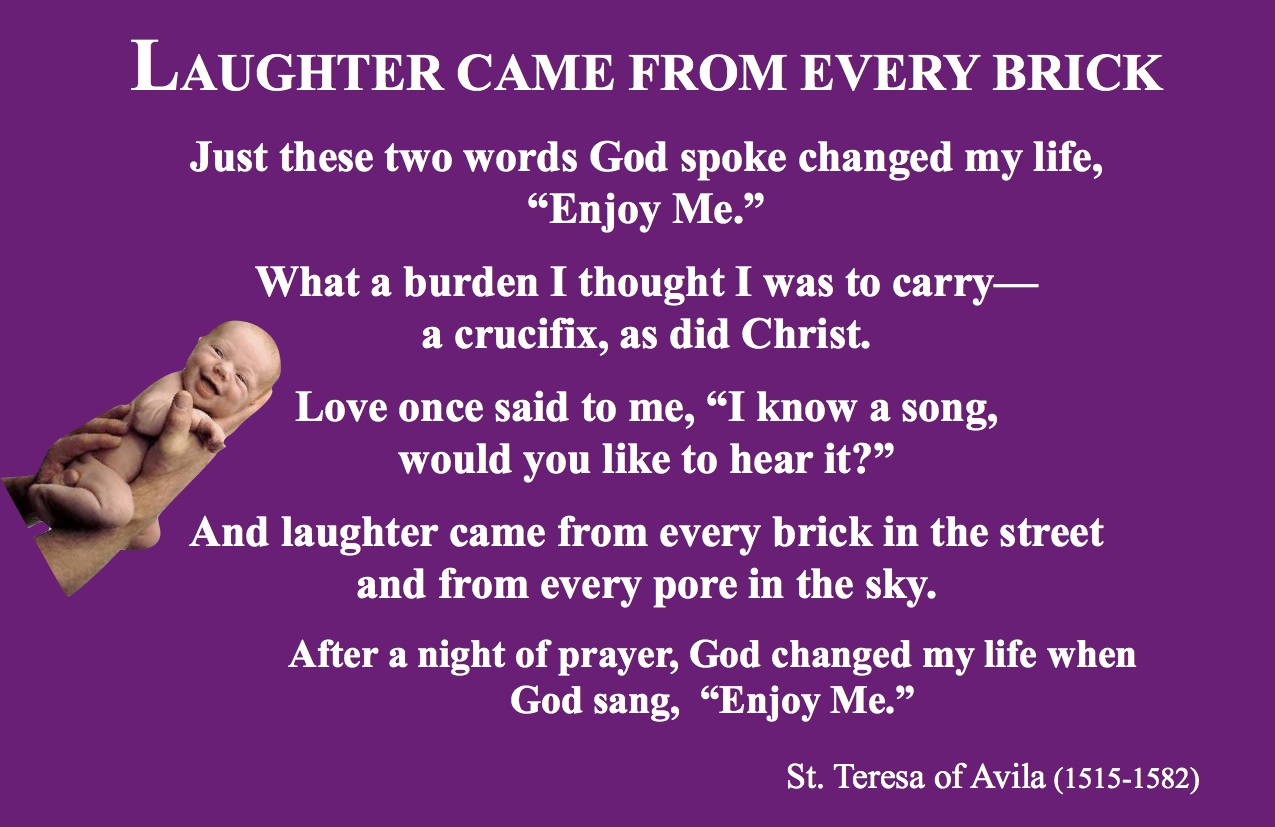
Laughter St Teresa

Traditionally the season of Lent is a mournful time filled with calls to repentance and self-examination as we follow Jesus into the wilderness to be tempted and then on that long march to Jerusalem where the powers that be will have their wicked way with him. Our liturgies take a mournful tone as we lament our woeful human existence, confess our sinfulness, and hear exultations to take up our crosses so that we too can follow Jesus to the bitter end. Over and over again we are asked to remember that we are in bondage to sin and cannot free ourselves, as we gaze upon the cross remembering that Jesus our savior bled and died as a result of our wicked sinfulness.

Lent is a strange season that harkens back to a forgotten era. Unlike so many of the seasons of the church year it’s not exactly a season that attracts people to church. Not many of you got out of bed this morning and said, “Yippy it’s the first day of Lent. Oh goodie!  We get to be reminded that we are sinful, that life is miserable and unless I’m willing to take up my cross and follow Jesus all the way to Golgotha, there’s precious little hope cause we’re all going to die and when the time comes we want Jesus to remember us.”

Now I know that there are some people who just love Lent and I must confess that I like the quieter, more somber tone that our liturgies take. I actually enjoy the opportunity to slow things done and be more reflective in our worship together. I savor the silences and the opportunities to be more contemplative. I love the colour purple with all its vibrant hues and the best part of all is that the beginning of Lent means that spring is just around the corner. What I don’t like about Lent are the signs, symbols, hymns and stories that make it so easy for us to fall back into the 11th century. Continue reading

Twinkle, Twinkle, Little Star, How I Wonder What You Are? – reflecting on Transfiguration

This week, we find ourselves studying the transfiguration of Jesus. So much has been written and said about this strange little story given to us by the early followers of Jesus. I was planning to do what I’ve done on many Transfiguration Sundays and preach  about the power of myth to open us to new ways of understanding who and what Jesus embodies. But then, I remembered to look beyond my theological perspective and low and behold what I discovered transfigured my own images of the transfiguration of Jesus.

My own images have been shaped by the mythological language used by the crafters of the story of Jesus’ transfiguration, peering beyond myth, has transfigured Jesus in ways that reveal the glory of DIVINE MYSTERY beyond the pages of scripture and into the realms of the cosmos and beyond. What our species has learned about the Cosmos impacts our images of the DIVINE in ways we have scarcely begun to articulate.

A while back, NASA, announced, and I quote: “the discovery of seven worlds orbiting a small, cool star some 40 light-years away, all of them in the ballpark of our home planet in terms of their heft (mass) and size (diameter). Three of the planets reside in the “habitable zone” around their star, TRAPPIST-1, where calculations suggest that conditions might be right for liquid water to exist on their surfaces—though follow-up observations are needed to be sure. All seven are early ambassadors of a new generation of planet-hunting targets.”

NASA’s announcement was accompanied by an artist’s rendition of what has taken place. Watch for yourselves…

Struggling to comprehend the reality of what has been discovered, I remembered o leaning over my little two-year-old granddaughter Evelyn’s travel cot as she began to sing. It took a moment or two before I recognized her tentative little voice attempt to capture the tune. It didn’t take too long for me to join her: “Twinkle, Twinkle, little star how I wonder what you are. Up above the sky so high, Like a diamond in the sky. Twinkle, twinkle, little star, how I wonder what you are. In a darkened room, I stroked my granddaughter’s cheek and I was transported to a long-ago darkness that still overwhelms me. The memory of a long-ago night, far, far, far, away, in an alpine meadow at the foot of the Black Tusk mountain, near Whistler.   After a long day’s hike up the Black Tusk trail, we’d camped out in Taylor Meadows, a spectacular spot located more than 7,000 feet above sea-level.  Twinkle, twinkle, little star, evoked an intense memory of staring into the night sky, mesmerized by the sight of more than my mind could comprehend.

Darkness, darkness, like you never experience near the city. Darkness so deep and so vast. Darkness full of twinkling lights. Twinkle, twinkle, little star. How I wonder what you are. Vast, immensities, stretching, beyond, the beyond, and beyond that also. 40 light years from here. 40 light years. That’s how long it would take you to travel to the newly discovered Trappist 1 system.  According to Google, travelling at a speed of 15 miles per second, it would take us just about 12,770 years to travel one light year. 12,770 years, that’s close to the entire history of humans since the dawn of civilization to travel one light year and to travel 40 light years, well it would take us about half a million years. That’s about twice as long as humans have existed on earth. Talk about beyond. Vastness beyond my mind’s ability to comprehend. And yet, staring into the night sky, or peering through the darkness to the outline of my beloved granddaughter’s little face, I can almost touch the face of God. Like all the generations who have gone before us, the energy that permeates all that is, this LOVE that Creates over and over again, this LOVE that brings forth life in all its glorious dimensions, this radiance which pervades all that is, this ISNESS that bursts forth in, with, through, and beyond the cosmos, this IS, that we call God, reveals ITSELF in the splendor that IS all around us. When I think back to our ancient forbearers wandering around in the wilderness, desperate for a sign that they were not alone and forsaken, I can almost hear the confusion of those who demanded to know the presence of the one who lies at the very heart of reality. Continue reading

Abundant Life in the Cosmos – Evolution Sunday

The extreme cold which we have been experiencing this week reminded me of an experience of the Cosmos which left me awestruck. It happened one long-ago spring when I was working in Whitehorse for a big tour company. One morning, my boss asked me to drive to Skagway to help oversee the meet and greet of a large cruise ship. I’d been on the road for about an hour, so it must have been about 8 o’clock in the morning. In the Yukon, at that time of the year the sun wouldn’t come for a least a couple of hours.  I had just pulled out of Carcross, a tiny town. In those days there was just a small general store in Carcross where, I’d picked up a cup of coffee for the road. I was sipping on the last of my coffee and thinking about how very bright the stars were up in the Yukon. The lack of city lights meant that the sky was illuminated in ways that were positively astonishing to this town dweller.  I was enjoying the view, when something began to happen which caused me to pull the car over and venture out into the cold.

Now if you know me, you know that once it gets down below zero, I’m not much interested in venturing out into the cold.  So, for me to have gotten out of my warm car when it was more than 25 below zero, you know that what was happening must have been something spectacular. The beauty of the star-filled sky began to dance with colours so dazzling that I could scarcely believe what I was seeing. I cannot adequately describe the dance of the Aurora Borealis. The magic of colours dancing across the sky evoked such wonder in me. I tried to imagine just how far the particles of colour had travelled in order to dance above me.

If you’ve ever had the privilege of experiencing the Northern Lights, you will understand when I say that the dance of colourful rays is breath-taking. But the sound of the Northern Lights is positively other-worldly. There’s a kind of crackling and hissing which rises to a gentle clapping as if the Cosmos itself is applauding the intricacies of the dance. Standing there in amazement, I couldn’t help but join the Cosmos in rapturous applause. Looking back on my frozen adventure, the profound beauty that continues to dance in my memory reminds me of a quote I love that comes from Sir Francis Bacon who insisted that: “God has, in fact, written two books, not just one.”  Of course, we are all familiar with the first book God wrote, namely Scripture.  But God has written a second book called creation. Lift up your hearts and listen again as the Cosmos declares in infinite and magnificent ways the Gospel of Christ: “I have come that they may have life and live it abundantly!”

Abundance:   the dictionary defines the word abundance as an adjective meaning “existing or available in large quantities: plentiful. Copious, ample, profuse, rich, lavish, abounding, liberal, generous, bountiful, large, huge, great, bumper, prolific, teeming, plentiful, bounteous. We stand in the midst of the abundance of Creation. Jesus said, “I have come that they may have life and live it abundantly!” Abundant life, abounding life, generous life, bountiful life, large life, huge life, great life, bumper life, liberal life, prolific life, teeming life, plentiful life, bounteous life. Look around and you, look outside the windows of this humble dwelling and you will see the Earth living abundantly. Take a deep breath and you can actually taste the abundance of life, teeming life, bounteous life, plentiful life, abounding life. Continue reading

Living Between the Old Story and the Emergence of the New Story

fullsizeoutput_544e

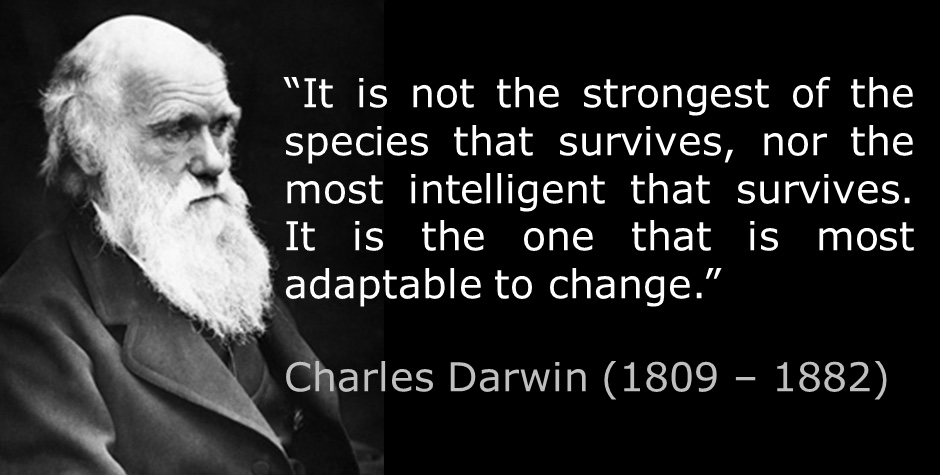
On this the 211th anniversary of Charles Darwin’s birth, progressive Christian communities are preparing to celebrate Evolution Sunday

Readings from Thomas Berry and John 10:10 can be found here

I am indebted to the work of Richard Rohr for several insights found in his audio recordings of lectures entitled “The Sermon on the Mount”


How many of you remember your very first day at school? When I think back to my very first day at school my memories are disjointed, filled not with words but with images and emotions. The over-riding emotion that floods my memories of my first day at school is excitement. I started school in Belfast, Northern, Ireland when I was only four-and-a-half years old and to this day I can still feel the excitement. So, many things happened that day and I can see flashes and images in my mind’s – eye, but in her in my gut I can feel the excitement. I remember the contours of the schoolroom and I can feel the excitement of wondering which desk would be mine. I don’t know about you, but my memories of the desks are quite vivid. I’d never in my short little life seen anything quite like a desk and to be told that one of them would be mine.    Well I just couldn’t wait to find out which one.

Back then, in Belfast, in the olden days, there was no kindergarten; at the tender age of 4 ½ I was enrolled in P1 – primary one and in primary one we had desks that had chairs attached to them, and a lid that went up and down. When I sat down at my very own desk, I opened and closed that lid over and over again, wondering what on earth I would be given to put inside the desk.   It was so exciting. I began imagining books, maybe they’d give us books. I can still feel the excitement I felt at the very idea of placing a book inside my very own desk; I couldn’t wait.

My desk was absolutely perfect in every way except for one. In the top right-hand corner of my beautiful desk there was a hole. I looked around at the other desks and sure enough each one of them had the same kind of hole. I couldn’t begin to imagine what the holes were for. I wanted to ask the teacher, but I remembered feeling like I should keep quiet, so I waited, and I waited for the teacher to tell us what the holes in our desks were for, but she never said a word. So, the first thing I did when my father picked me up from school was to ask him why all the desks at school had holes in them. My Dad knew absolutely everything there was to know about everything and sure enough he knew exactly what those holes were for. Ink. Inkwells. Every desk in my class had an inkwell built right into them.  So, what’s ink? And, what’s an inkwell? That very afternoon I learned about quills made of feathers, dipped into ink so that you could write letters. Dad was a fountain of knowledge about writing with ink.

That night I went to bed dreaming about quills, and feathers, and ink; lots and lots of lovely ink, and writing, writing lots and lots of words. School was going to be great! I couldn’t wait to get my quill. I dreamed a pretty pink feather. So, you can imagine my disappointment when the next day at school, after being told that we were going to learn how to print, because printing comes before writing, and I simply couldn’t wait, as the teacher announced she was going to give us slates and chalk which we could keep in our desks.  Slates and chalk. I had a slate at home. We even had some chalk. When would we get feathers? At that point I would have settled for a plain old black feather, but slates and chalk, what a disappointment.  I never did get a quill. We never even got the fabled fountain pens that my Dad spoke of with fondness. Eventually, we did get a pencil and some paper. But pens had to wait until P3. My slate was wonderful, and I did learn to print using the little broken pieces of chalk that we shared.

Right now, the image of my two-year-old grand-daughter begging me to lend her my iPad and imagine what wonders her fist day at school might bring. My old slate was about the same size as this iPad, but the wonders that my little granddaughter can access on this device make that old slate seem so very primitive indeed. It has been said that you and I have experienced in our lifetime more changes that any other generations before us and I expect that our grandchildren will experience even more changes that we can begin to imagine. Continue reading

Progressive Christianity: A Journey Flowing from Our Lutheran Heritage

“What do you mean when you say, ‘progressive christianity?'” I am often asked this question and so rather than a sermon, this Sunday’s reflection explores the contours of our journey as we wrestle with the MYSTERY that is our SOURCE.    

Below is a copy of our 9 points of progressive christianity which is adapted from http://www.progressivechristianity.org latest 8 Points of Progressive Christianity

You Are the Salt of the Earth Oh People!!!

One of the joys of this blog is the community that gathers here in this virtual space. I am so richly blessed by your feedback, encouragement, and challenges!!! Thank-you so much for the comments, emails, cards, letters and even donations to Holy Cross Lutheran Church which underwrites the blog. Several followers of this blog have chastised me for not being overt enough in asking for financial support. I have been challenged to urge those of you who appreciate these blogposts to consider making a donation to Holy Cross Lutheran Church to encourage them to continue their generous support of this blog. While I generally shudder at the idea of asking for donations, I know that the good folks at Holy Cross have given generously to ensure that the progressive theology expressed on this site continues to shine a light on new ways of articulating Christianity!  So, if you’d like to help out, consider clicking on the link to our Canada Helps page or here to find Holy Cross’ address so you can do it old-school via a cheque and snail-mail. Thank-you for supporting the many ministries of Holy Cross. Let it shine!!!

Blessed Are We Who Mourn – Matthew 5:1-12

She had no family.  She lived alone. For the purposes of this sermon I will call her Sophia. Sophia, the Greek word for wisdom. I became her pastor because she knew somebody who used to be a member here and when the doctors told her that she was dying she thought she ought to have a pastor. I was summoned to her bedside. I was afraid. I had been told that she only had a few weeks before “the cancer would take her,” not that she would die, but that “the cancer would take her.” No one used the word death or said that she was going to die. To be present to a stranger when they are so close to death is a daunting task.  No time for gentle hello’s, or warming up to one another, just a long, painful and sometimes awkward good-bye.

I went to Sophia’s bedside every day. Some days, when she was able, the questions just tumbled out of her. She wanted to know what I believed. No pat answers or trite platitudes if you please, just the facts. I liked her no-nonsense approach even though I knew that the meager facts that I possessed might not sustain us on our journey. It didn’t take me long to figure out that she’d spent a great deal of time in the church. Her parents saw to it that she was raised in the church, but a lifetime of tragedy and heartache had led her far away from the faith she’d grown up with. But as death drew near, she longed for the certainty of her youth. She’d like to believe. It would be nice to think that there would be a place for her, not exactly heaven per se but someplace heavenly, perhaps like Paris in the springtime. She so loved Paris in the springtime. If only heaven were full of cafés, or patisseries where she could while away the hours talking with others who appreciate the finer things of life. Life, would there be life beyond death? She’d like to believe so.

One morning, I stopped by the bakery that Eduard had on Main Street and picked out the most Parisian looking pastries I could find, then I swung by a coffee shop and had them grind some fresh beans. As I brewed the coffee in Sophia’s kitchen, the aroma wafted up the stairs and she shouted down and asked me to heat up some milk so that we could have lattes. It was as heavenly a breakfast as we could muster. Our conversation took us back to Paris and a springtime before I was born when Sophia was young and beautiful, and the men all fell at her feet. Some of her stories actually made me blush. We laughed and laughed and laughed until we cried.

After Paris, we travelled to London by way of some excellent fish n’ chips and a few glasses of cider. It was cold and wet in London. Sophia managed to complete her nursing studies even though a certain young man begged her to give up work and come and be his love. Over sausages and beer, we travelled to Hamburg, where Sophia fell in love with an orphanage full of refugee children.  By the time our conversations took us to India, Sophia was too ill for a curry, so we sipped tea as we wept over her stories of poverty and disease. One afternoon, I arrived to find Sophia’s care-worker crushing ice for mint juleps.  It took me a while to figure out that we were going deep into the southern states, where Sophia had worked long and hard to help establish a medical center among the poorest Americans.  By the time our travels led us back to Newmarket, Sophia was growing weak and I had gone from being a suspected bible-thumper to a trusted travelling companion. The most difficult part of our journey lay before us.

“What will become of me?” Sophia pleaded. I told her that the doctors would see to it that there was no pain. That wasn’t what she meant. “What will become of me? Will there just be darkness? Or Will I see a bright light?”

“I don’t know?” was all I could honestly say.

Sophia was patient with me. She asked me if I thought there was more to life or if death was the end. “No religious platitudes please. Just the facts.”

“I don’t know Sophia. I believe that we live and die in God and that God is LOVE and in LOVE we have nothing to fear. All will be well? I trust that in death we fall into the LOVE that IS God.”

Sophia took my hand firmly and confessed, “I’m afraid.”

I did not know how to comfort her, so I asked, “What are you afraid of Sophia?”

“Not of dying! Good God no! I’m not afraid of dying.” Sophia insisted, “I’m afraid of being forgotten. Who will remember me?”

Yesterday, I was struggling with this sermon. I’d been reading about our gospel text for hours and hours trying to figure exactly what to say to you about the line in Jesus’ Sermon on the Mount which kept jumping out at me. “Blessed are those who are mourning:  they will be consoled.” Some translations say, “Blessed are those who mourn, for they shall be comforted.” Mourning has fallen out of fashion these days. People don’t like to talk about mourning. They’d rather celebrate life than mourn a death. “Blessed are those who are mourning:  they will be consoled.” Continue reading

Blessed Are We Who Mourn – Matthew 4:1-12

She had no family.  She lived alone. For the purposes of this sermon I will call her Sophia. Sophia, the Greek word for wisdom. I became her pastor because she knew somebody who used to be a member here and when the doctors told her that she was dying she thought she ought to have a pastor. I was summoned to her bedside. I was afraid. I had been told that she only had a few weeks before “the cancer would take her,” not that she would die, but that “the cancer would take her.” No one used the word death or said that she was going to die. To be present to a stranger when they are so close to death is a daunting task.  No time for gentle hello’s, or warming up to one another, just a long, painful and sometimes awkward good-bye.

I went to Sophia’s bedside every day. Some days, when she was able, the questions just tumbled out of her. She wanted to know what I believed. No pat answers or trite platitudes if you please, just the facts. I liked her no-nonsense approach even though I knew that the meager facts that I possessed might not sustain us on our journey. It didn’t take me long to figure out that she’d spent a great deal of time in the church. Her parents saw to it that she was raised in the church, but a lifetime of tragedy and heartache had led her far away from the faith she’d grown up with. But as death drew near, she longed for the certainty of her youth. She’d like to believe. It would be nice to think that there would be a place for her, not exactly heaven per se but someplace heavenly, perhaps like Paris in the springtime. She so loved Paris in the springtime. If only heaven were full of cafés, or patisseries where she could while away the hours talking with others who appreciate the finer things of life. Life, would there be life beyond death? She’d like to believe so.

One morning, I stopped by the bakery that Eduard had on Main Street and picked out the most Parisian looking pastries I could find, then I swung by a coffee shop and had them grind some fresh beans. As I brewed the coffee in Sophia’s kitchen, the aroma wafted up the stairs and she shouted down and asked me to heat up some milk so that we could have lattes. It was as heavenly a breakfast as we could muster. Our conversation took us back to Paris and a springtime before I was born when Sophia was young and beautiful, and the men all fell at her feet. Some of her stories actually made me blush. We laughed and laughed and laughed until we cried.

After Paris, we travelled to London by way of some excellent fish n’ chips and a few glasses of cider. It was cold and wet in London. Sophia managed to complete her nursing studies even though a certain young man begged her to give up work and come and be his love. Over sausages and beer, we travelled to Hamburg, where Sophia fell in love with an orphanage full of refugee children.  By the time our conversations took us to India, Sophia was too ill for a curry, so we sipped tea as we wept over her stories of poverty and disease. One afternoon, I arrived to find Sophia’s care-worker crushing ice for mint juleps.  It took me a while to figure out that we were going deep into the southern states, where Sophia had worked long and hard to help establish a medical center among the poorest Americans.  By the time our travels led us back to Newmarket, Sophia was growing weak and I had gone from being a suspected bible-thumper to a trusted travelling companion. The most difficult part of our journey lay before us.

“What will become of me?” Sophia pleaded. I told her that the doctors would see to it that there was no pain. That wasn’t what she meant. “What will become of me? Will there just be darkness? Or Will I see a bright light?”

“I don’t know?” was all I could honestly say.

Sophia was patient with me. She asked me if I thought there was more to life or if death was the end. “No religious platitudes please. Just the facts.”

“I don’t know Sophia. I believe that we live and die in God and that God is LOVE and in LOVE we have nothing to fear. All will be well? I trust that in death we fall into the LOVE that IS God.”

Sophia took my hand firmly and confessed, “I’m afraid.”

I did not know how to comfort her, so I asked, “What are you afraid of Sophia?”

“Not of dying! Good God no! I’m not afraid of dying.” Sophia insisted, “I’m afraid of being forgotten. Who will remember me?”

Yesterday, I was struggling with this sermon. I’d been reading about our gospel text for hours and hours trying to figure exactly what to say to you about the line in Jesus’ Sermon on the Mount which kept jumping out at me. “Blessed are those who are mourning:  they will be consoled.” Some translations say, “Blessed are those who mourn, for they shall be comforted.” Mourning has fallen out of fashion these days. People don’t like to talk about mourning. They’d rather celebrate life than mourn a death. “Blessed are those who are mourning:  they will be consoled.” Continue reading

More than Just the Be Happy Attitudes: a sermon for Epiphany 4A

jesusThe beatitudes, from the Gospel According to Matthew have become  so very familiar to us that they have almost lost their ability to touch us. “Blessed are the poor in spirit; blessed are those who mourn, blessed are the meek, blessed are those who hunger and thirst for righteousness, blessed are the merciful, blessed are the pure in heart, blessed are the peacemakers, blessed are those who are persecuted for righteousness sake, blessed are you when people revile you and persecute you and utter all kinds of evil against you falsely on my account.”  Blessed, blessed, blessed, yeah, yeah, yeah, we know, we know, we’ve heard all before. So, tell us something we don’t know.

These twelve verses are from the introduction to what’s known as Jesus’ Sermon on the Mount. A sermon that strikes fear and trembling into the hearts of any preacher worth her salt. I remember hearing that it’s insane to try to preach on Jesus’ sermon, after all it is the greatest sermon ever written. It has been said that preachers shouldn’t even try to preach on this, because it is in and of itself a sermon. We should simply read it and then sit down. Jesus is the preacher; he has said it all. He has said it like no has ever said it before or since. This sermon is the heart of the Christian message. It is what Jesus is all about. Blessed be the name of Jesus. Hallelujah! Pass the bread and wine and we’re ready to face the world as followers of Jesus. Continue reading

Follow Me! I’m right behind you! – Matthew 4:12-23

Whenever I come across Jesus’ words, “Follow me”, I can’t help remembering my Nannie. Nannie was from Belfast and whenever we got into a tough spot, Nannie would laugh and say, “Follow me! I’m right behind you!” Like many Irish sayings, on the surface it sounds ridiculous, laughable. How can I follow you if you are behind me? And then the penny drops, and you realize how can I follow you if you aren’t behind me? Good leaders always have your back.

So, fellow followers of the Way, what does it mean for us to respond to Jesus’ invitation, “Come follow me, and I will make you fishers of people”? For generations this invitation has been interpreted by the church as a mission. Jesus wants you to go out there into the world and fish for people. There’s plenty of fish in the sea! So, let’s go out there and get them, hook, line, and sinker, and then let’s reel ‘em in, in here. Let’s fill up our nets, so that the church will be full to overflowing. As my Nannie would say, “Ah Jesus!”

Ah Jesus, if only it were as simple as that! Some of us are of an age where we can remember hordes of little children standing up in front of congregations, singing their little hearts out, casting imaginary fishing rods, and reeling em in.“I will make you fishers of men, fishers of men, fishers of men.  I will make you fishers of men, if you follow me.” If you follow me?

Ah Jesus? What are we doing wrong Jesus? Come on Jesus. How about it? Won’t you lead us back to the good old days? If only we could point Jesus in the right direction? It certainly would make following Jesus easier if only Jesus would lead us where we want to go? Trouble is, Jesus never was much interested in taking people where they want to go. Continue reading

Jesus, the Lamb of God Who Takes Away the Sin of the World? It ain’t necessarily so! Epiphany 2A – John 1:29-42

Lamb of GodWhen I turn the gospel according to John and read about John the Baptist pointing to Jesus, saying:  “Here is the Lamb of God who takes away the sin of the world!”  I want to scream,  “NO!” I have come to believe that our images of God are far too narrow. As far as I’m concerned most of our ideas about God fall far short of ever even beginning to describe who God might be. One thing I’m absolutely certain of is if we can imagine ourselves being more loving, more gracious, or more merciful that our theology suggests that God is, then we had better go back to the drawing-board and think again. The ways in which we have traditionally interpreted the life, death and resurrection of Jesus the Christ, paint a picture of a God who is far less loving, gracious or merciful than you or I. Nobody in this room, would demand a blood sacrifice of a lamb, let alone the blood sacrifice of their own child. So, the image of God that is based on this kind of theology must be judged as inadequate to the task of evening beginning to provide us with a glimpse of who our God is.

As we go back to the drawing-board, we ought to take a long hard look at how we arrived at this image in the first place. Thank goodness for the work of our friend Jack Spong who has enabled us to see beyond the literal to the more-than-literal meanings of the various ways in which the followers of Jesus have understood the life and teachings of Jesus. During the years that followed the crucifixion, Jesus’ followers were left wondering what it was all about. How could someone in whom they had seen the fullness of God, be taken from them in such a horrendous way? How could their God allow it?   What were they to do? Over the years that followed, Jesus’ followers looked back at the life, death, and resurrection of Christ through the lens of their own religious experiences. Jesus’ followers were primarily Jewish and so it didn’t take long for the familiar Jewish symbol of the Lamb of God to be applied to Jesus as a way of making some sense out of his death.  Today most Christians associate the symbol of the Lamb of God with the Jewish celebration of Passover.  While the Gospel narratives do indeed locate the time of Jesus death during the celebration of the Passover, and there is indeed a sacrificial lamb involved in the Passover, the actual phrase “the Lamb of God” comes not from the religious rites of Passover, but rather the religious rites of Yom Kippur: The Day of Atonement.  Phrases like “the Lamb of God”, “died for our sins” and “washed in the blood of the lamb” can all be found in the religious rites of Yom Kippur.  Continue reading

A Progressive Christian Wades into the Waters of Baptism

baptism 33A sermon for the celebration of the Baptism of Jesus – Matthew 3:13-17

Listen to the sermon here

Wading into the waters of baptism is no simple matter for a progressive Christian. Once you leave the myth of perfection in some distant garden back there in the mists of time, reject the notion of humanity’s fall from grace as a result of original sin, and give up worshipping the sadistic image of a god who demands a blood sacrifice, it’s difficult to navigate the waters of baptism without spouting notions that the institutional church condemns as heresy. But today is the day when the church celebrates the baptism of Jesus and the stories about the baptism of Jesus that have been handed down to us by our ancestors suggest that on this day of all days, we should have the courage to follow Jesus into the river of life even if it does challenge some of our long held assumptions about what it means to be a child of God.

I venture into these troubled waters as someone who treasures the sacrament of baptism. Long before I ever entertained the idea that I might one day respond to the call to become a baptizer, I became a lover of this particular sacrament of the church. I am now, and I have always been one of those people who find it almost impossible not to shed a tear or two at baptisms. The beauty of all that hope and expectation all wrapped up in the guise of a tiny little human has a way of generating in me a watery contribution as my tears join the sprinkling to wet the babies head. When the baptized is an adult my tears flow even more bountifully. Let’s face it folks these days the reality is that infant baptisms are rare enough. Adult baptisms, especially in mainline churches are so rare that the nostalgia alone is enough to send us into spasms of uncontrollable weeping for seer joy at the thought that it is even remotely possible that someone has been able to see beyond the church’s doctrine long enough to embrace the amazing possibilities of the sacrament to provide any benefit in this the twenty-first century.

When we look back to the stories told in the synoptic gospels about the baptism of Jesus we are sometimes so distracted by the opening of the heavens, the descent of the dove and the voice of God declaring Jesus to be the beloved, that we miss an important detail of the way in which the early followers of the Way chose to tell the story of Jesus public coming out party. New Testament scholars remind us that the stories told by the writers of the gospels were written at the end of the first century; a time when it would have been clear to all those who had ears to hear, that by going down to the river Jordan to be baptized by John would have stirred up the political and religious waters. John the Baptist was a revolutionary who made no bones about the fact that the religious authorities and the political rulers were leading the people down the wrong path. John’s shouting in the wilderness was his way of warning the people to repent; to literally turn around and follow a different path. John was doing far more than ranting when he condemned the religious authorities as a brood of vipers; he was calling on the people to reject the teachings of the authorities. John’s insistence on repentance was a call to revolution, a revolution designed to overthrow  the status quo. John was out there in the wilderness because it wasn’t safe for him to spout his own particular brand of incendiary fire and brimstone rhetoric within earshot of the authorities. By going down to the River Jordon and submitting to John’s baptism of repentance Jesus was choosing to identify himself with a political revolutionary.

That the writers of the gospels chose to tell there story in ways that see the God of Israel give Jesus a shout out, and the very spirit of God descending like a dove onto the shoulders of Jesus, turns John’s baptism of repentance into a kind of passing of the torch from one revolutionary to the next. Yet, despite the gospel-writers having cast Jesus into the role of revolutionary torchbearer none of the gospel writers shows Jesus following the ways of his predecessor John. There is no record of Jesus calling people to repent nor is there any record of Jesus ever having baptized anyone. All we have is Jesus “Great Commission” which if New Testament scholars are to be believed, Jesus probably never even said, “go therefore and baptize them in the name of the Father and of the Son and of the Holy Spirit.” Yes, it’s true, most preachers, dare I say modern-day baptizers, learned in seminary that rather than being an instruction given by Jesus the Great Commission was actually added to the story by the early followers of Jesus. But I digress, the point I’d like to emphasize about Jesus’ trip down to the waters of the Jordan, is that by choosing to publicly submit to John’s baptism, Jesus was making an important statement about his own public ministry. For just like John, Jesus intended to challenge the religious and political authorities.

That the gospel writers have Jesus head off into the wilderness to find his own way prepares us to follow Jesus down a completely different path than the one his predecessor John pointed toward.

So on a day, when the church looks back upon the baptism of Jesus, surely we can take courage from Jesus’ example of wandering off into the wilderness to find our own way of challenging the religious authorities of our day. Continue reading

Wear Your Baptism in Ways that Others Might See a Visible Means of Grace in You – a sermon on Baptism

img_6946

Listen to the sermon here

How many of you know what this is? Where I come from it is often referred to as a dog-collar and the folks who wear them are called God-Bothers. Back when I first started seminary, I resolved that I wouldn’t wear a clerical shirt and collar. I didn’t like the idea of being set apart from others. I really didn’t want to be seen as one of those holier-than-thou types, who took themselves so seriously. Learning the history of clerical garb didn’t help me to warm up to the idea of wearing them. Apparently, back in the middle ages fashion dictated that educated professionals wear black. Also, during the middle ages, long before shirts had collars it was all the rage to let your white undergarments show around your neck. This was the precursor to shirt-collars. Apparently during the reformation, this trend fell out of fashion but clergy, who couldn’t afford to keep up with fashion continued to wear black shirts with their white under-garment showing.      

Over time, the church does what the church often does and applied a liturgical meaning to explain what is already happening. So, the church began to explain clerical attire theologically. If you google it, you will discover that, pastors are just like everyone else, they are in bondage to sin and cannot free themselves. So, they wear a black shirt to signify their sinfulness, but they wear a white collar to signify that the words they speak are not their own, but God’s words, because you see the collar covers the pastors voice-box to signify that we speak the Word of God. Now the presumption that I or anyone else speaks on behalf of God is rather daunting to say the least and did nothing to encourage me to wear a clerical collar, nor did the obscure explanation of the tab collar, which insists that this little white notch is placed strategically over the Adam’s apple to cover over the reminder of Adam’s sin. Not having an Adam’s apple, myself, I wasn’t much taken with the idea of wearing special clothing to set me apart. But when I first became a pastor, I was insecure and believe it or not I didn’t want to rock the boat. So, I ever so hesitatingly began wearing a clerical collar. I was uncomfortable wearing the collar, so I decided that I would only wear it on Sundays, or to protest marches, and sometimes when I was visiting people in the hospital, because in hospitals, wearing a collar makes it easier to gain access to patients.

Well one day, I needed some candles and so I dashed into the Zellers over the road to quickly grab a couple. I was having difficulty finding just the right candles when a store clerk came up to me and asked me if I would come with her. I figured that I’d been lingering over the candles for so long that she must have mistaken me for a shoplifter, but as we hurried along, she explained to me that there was a man in housewares who was abusing his wife and child. I’d forgotten that I was wearing a collar, but the reality of what this clerk was asking me to do choked me into realizing that the collar had led her to believe that I could actually do something. Not knowing what she expected me to do, I told her to call 911. She assured me that they had already called, but that in the meantime perhaps I could help. We stopped just before the aisle where the abuse was taking place. The store clerk whispered that, “they are just over there.”  As she pointed, I realized that she wanted me to go on alone. So, not knowing what to expect, I took a deep breath and walked in on a scene that was way beyond my abilities. A big burly guy was twisting the arm of a woman while a little girl of about 4 or 5 stood crying. The man was yelling obscenities when I interrupted him. When he looked at me, I saw the fear in his eyes as he immediately let go of the woman who fell to the floor. The little girl ran to her mother. I expected the man to turn on me, but instead he just stared at me, as he began to cry, “I’m sorry pastor, forgive me.” It wasn’t I who stood before him, but the church, his church, the church that had taught him right from wrong. The collar I wore made the church visible to him and made it impossible for him to forget who he was. As a child of God, he couldn’t continue what he was doing. As a child of God, he knew in his bones that he was wrong. He wept until the police arrived. From that day on, I’ve known the power of the collar to make the church visible in the world and so I wear it a lot more often than I’d ever expected I would. Continue reading

Orange Is The New Black – In the beginning of a New Year and a New Decade, What are we to do?

“In the beginning there was the WORD; the WORD was in the presence of the HOLY ONE, and the WORD was the HOLY ONE.” Even the word WORD carries meaning beyond the page. In the context of the prologue of the Gospel according to John.  The word WORD is translated into English using a capitol W or in some translations in all-caps, to alert readers that the word Word is being used in a particular way. Words are powerful symbols which have the ability to capture the meaning of a thing. Or words can be used as symbols to point beyond themselves to something whose meaning cannot be captured by any word. As we have journeyed together exploring new ways of being Christian in this relatively new century, new ways of understanding have required us to find new words to express our images of the MYSTERY that cannot be captured with the word God. Finding words to use when we worship together has become more difficult. But nowhere is the task of finding words to express the inexpressibly more challenging than choosing hymns.

We love to sing together. Music moves us in ways that open us to the MYSTERY in which we live and move and have our being. Sadly, some of our favorite old hymns fail to express the freedom we have begun to discover in the LOVE that IS God. But the tunes, ah the tunes, the tunes continue to move us. Fortunately, we have been blessed with a multitude of new words to sing to those beloved old tunes. Sometimes those new words work well and sometimes not so well. Nowhere is that more apparent than during the Christmas season. The words to most Christmas Carols have been married to the tunes in ways that no one shall put asunder.

Take Silent Night for example. Christmas Eve just isn’t Christmas Eve unless we sing Silent Night.  You hear the first few notes and memories come to light as the familiar words come back to us. Now there have been some splendid new verses that have been written to Silent Night which expand our images beyond “round young virgin mother and child” to capture the Cosmic nature of the incarnation.

Silent night, holy night.

All is calm, all is bright.

Palan-ets Grace-full-y

Cir-cle the sun

Star-dust cy-cles through

Ev-er-y One

Life abounds upon Earth

Life abounds upon Earth     (by Keith Mesecher)

I love the imagery these words capture. I love the theology these words open us up to. These words give me a sense of the cosmos far beyond my childhood nativity images. But I can promise you now, that I would never dare to tinker with the words of Silent Night on Christmas Eve. The moment Marney’s fingers touch the keyboard, just the first few notes signify the beginning of a treasured nostalgic experience which cannot be tinkered with. From the very beginning of a tune, assumptions are made; assumptions which are inscribed in our very nature. So, just imagine the audacity of the anonymous gospel-storyteller that we call John, who dared to tinker with the most iconic beginning of all as far as his audiences were concerned. Remember, unlike 21st century worshippers, first century worshippers didn’t just commit hymns to memory, they committed the Hebrew Scriptures to memory.  So, when our anonymous gospel-storyteller began his story with the words, “In the beginning”  each and every one of his listeners would have been primed to hear what comes next… “In the beginning” Genesis, the very word Genesis translates as beginning. And so begins the prologue of our storytellers gospel of the life and times of the Joshua ben Joseph, you know Mary’s boy! “In the beginning” wait I know you think you know what comes next,  “In the beginning, God created the heavens and the earth.” Ah, but think again. “In the beginning…wait for it…in the beginning there was the LOGOS.” Continue reading

The Journey of the Magi never happened and yet it is always happening.

Epiphany-Wise+WomenAn Epiphany Sermon, preached in 2008. I had just read “The First Christmas” by John Dominic Crossan and Marcus Borg. Our congregation played host to Dom Crossan a month before I wrote this sermon. So, Dom’s insights run through this effort. But the heart of this sermon beats as the result of a sermon preached by Bruce Sanguin a self-proclaimed evolutionary christian who is a United Church Minister (Canadian Memorial Church, Vancouver). I had the privilege of meeting this modern mystic while on sabbatical this summer and his compelling way of unlocking the scriptures using the wealth of the christian tradition together with the insights of modern science and psychology borders upon the poetic. This sermon was anchored by Sanguin’s words (Epiphany 2007). Sermons are a “live” event. So, this manuscript is an approximation of what was actually preached.   

Just five days before Christmas (2008), The Archbishop of Canterbury, The Most Reverend Doctor Rowan Williams, the leader of the worldwide Anglican Communion started a firestorm.  During a BBC interview, His Grace was quoted to say that the story of the “three wise men is a legend”. The Archbishop was also heard to say that he remained unconvinced that there was indeed a star that led the legendary trio to the birth place of the Christ Child.

If that wasn’t enough to send folks off the deep-end, it has been revealed that the Presiding Bishop of the U.S. Episcopal Church The Most Reverend Doctor Katherine Jefferts Schori, who just happens to be the first woman elected primate in Anglican history, has fanned the flames of the fire-storm by sending out what has been judged by some to be an incendiary Christmas card.

I downloaded a copy of the offensive card, so that you could see for yourself. HerEpiphany-Wise+Women Grace’s choice of card has offended the good deacons of Ft Worth Texas who claim that their Primate’s actions defy explanation. As you can see the wise folks depicted on this image look a lot like women. Can you imagine the nerve of the first woman primate! How could she be so bold as to select such an offensive image? Leave it to straight talking Texans to set things straight: for despite the audacity of the Primate, the Texans have pledged to “stand for the traditional expression of the Faith.” Continue reading

So, This Is Christmas? – Matthew 2:13-23 – Christmas 1a

The Messiah Is Among Us!

Christ is born in youDuring these twelve days of Christmas we celebrate the birth of the Messiah. Messiah, is a word the ancient Hebrews used to describe the anointed one. The one whom God would send to change the world. In Greek the word for Messiah is Christ.

My thoughts swirl around a poem written by the unknown writer of the Gospel of John in which the birth of the Christ is describe as the WORD. It’s a mysterious cosmic poem that moves our minds away from the mundane everyday ordinary stuff of life to the extra-ordinary mysteries of creation, which when you think about it is what every birth does.

Just holding a newborn in your arms and before long you’ll find yourself pondering the mysteries of this life. Who are we and where do we come from?  Why are we here? What does it all mean? These are all perfectly wonderful questions and speculating upon the many possible answers to those questions is a fascinating process. But in the end, our words will always fail us when it comes to answers. As we are speculating about the birth of this beautiful little baby, the baby is alive and among us, and needs to be fed and changed, nurtured, guided and protected. Continue reading

Mary: Rebel With A Cause – Luke 1:26-56

The anonymous gospel-storyteller that we call Luke addresses his depiction of the life of Jesus of Nazareth to a character named Theophilus.  Our storyteller begins with these words:  “Many others have undertaken to compile a narrative of the events which have been fulfilled among us, exactly as those happenings were passed on to us by the original eyewitnesses and ministers of the Word. I too have investigated everything, carefully from the beginning and I have decided to set it down in writing for you, noble Theophilus, so that you may know the truth concerning the things which you have been instructed.”  As I have told you many times before, pay close attention to the names. Ancient storytellers are well known for selecting the names of their characters with great care. The character Theophilus is a case in point. Theophilus comes from the Greek words which mean “lover or lovers of God”. Our anonymous gospel-storyteller is addressing his account of the life and times of Jesus to everyone who is a lover of God.

In the ancient world, a miraculous birth story was part of being a famous person. Jesus was a famous person and so Jesus needed a birth story. Birth stories were used by storytellers to set their heroes apart from all the others. Luke’s birth story certainly set Jesus apart from all the other would be messiahs of his day. For starters, Luke weaves his story from the perspective of Mary, and there’s something about Mary that we modern readers tend to miss. Today, more often than not, modern depictions of Mary fail to mention the revolutionary character of this ancient protagonist. Mary is no bit player in this story. The role of Mary is revolutionary! Over the years generations of listeners and readers have taken the author’s depiction of Mary and created an image of Mary that is marginal at best. But there is a dark side to our images of Mary. The popular image of Mary paints her as the ideal woman, the ideal woman no woman could ever live up to. The image of Mary is that of both virgin and mother, meek and mild, obedient and perfect. She is impossible as a role model of course and totally unreal.

This idealization of Mary is a major factor in the Santa-fication of Christmas. The ideal popular image of Mary fails to reveal the true nature of the Christ child that she bears. In order to see Jesus, we have to move beyond Mary’s popular image and look at what the author of Luke actually wrote about Mary. It is in the words of the Magnificat that the author reveals the revolutionary character of Mary. The Magnificat is the song Mary sings when she meets Elizabeth. When read in its original Greek it is clear that Mary bursts into song. The text of the song is a revolutionary text full of historical meaning that would have been clear to its first century listeners, but the radical nature of this song has been lost as successive generations have set it to music and prettied it up as best they can. But in the first century, Mary was seen as a revolutionary. Continue reading