
Love Made Visible – a sermon for Labour Day Weekend
Reply

Recorded Aug 8/2016 at the Chautauqua Institution.
 Diana Butler Bass moves from her latest book Grounded‘s focus on nature to examine the sacredness of the city. Bass explores the theological images that appear in scripture that help us to think in new ways about the urban environments of our day. Seeking transformative images to usurp our tendency toward building empires toward a vision of the “urban cosmos” that empowers its inhabitants to live with justice, love, and humility, Bass paints a seductive vision of a universal city on a hill; a dwelling place of peace. In contrast to the system of globalization which seeks market control in the service of empire, Bass points to cosmopolitanism, a world view based upon our shared common humanity.
 Readings: Luke 14:1,7-14; Mechthild of Magdeburg’s “The Flowing Light of the Godhead”; Hebrews 13:1-3
Listen to the sermon here:
Earlier this week I was reminded of the fact that one of the most basic parts of my job of being a pastor is pointing out the sacred. Most of what I do revolves around noticing when we are in the presence of the Holy, the Mystery, the One who is so much more that we are, the Love that lies at the heart of all that is. My job is to point to the sacred Oneness, the Love that many call God and say “there,” or “here,” or “now,” “don’t miss it.” All too often we find ourselves in the company of angels, messengers of the LOVE that IS God, and we don’t even notice it.
For the most part we humans can’t quite grasp the magnitude of the Mystery that lies at the very heart of reality and so we do what humans always do: we personify this ONEness, or we use symbols and metaphors to indicate the presence of the sacred in our midst, and we tell stories. Stories that include burning bushes, ladders into the sacred realm, shepherds, lost coins, all sorts of symbols and metaphors that point to the ONE who IS. We have told some of those stories so often that the Reality of the Mystery that these stories were created to bring down to earth, seems ever so distant and far away, lost in the mists of time. The Reality that so many call God has been cast out there far away beyond our reach. So, week after week, I try to bring the stories, symbols and metaphors a little closer to the world that we inhabit so that you might be able to see in your own stories the angels that you have entertained without even knowing it. This morning I’d like to tell you a story that I’ve told twice before. It’s been about seven years since I last told this story, so some of you may not have heard it before and those of you who have heard it before; well we’ve been on quite a journey here at Holy Cross, and you’ve all helped me to understand my own story in a completely new way.
The story takes place back in October of 1977, when I was twenty years old. I was young and adventurous. With a rail pass in my hand, a back pack slung over my shoulders and several hundred dollars worth of American Express Travellers cheques in my pocket, I boarded a train in Zurich, Switzerland, bound for Athens, Greece. I was tired. Several months of back-packing in Northern Europe had left me weary. In just five days my rail-pass would expire, so I decided to head for Greece, where the living is easy, where the warm sun, blue skies and equally blue waters held the promise of rest and relaxation.
As the train made its way through the Alps, I remembered a similar trip which I had made the year before and I tried to calculate whether my remaining funds would allow me to return to the village of Chania on the island of Crete. I knew that on Crete I could find work. So, I planned to mix a lot of rest and relaxation with just a little work and try to live out the winter on the Mediterranean. As the train rattled through Austria, towards what was then called Yugoslavia, it began to get dark. I was disappointed that my journey through Yugoslavia would be completed in darkness. I remembered my previous journey, by car, through Yugoslavia and how at the time, I had marvelled at the diversity of this strange little country. I remembered men and women driving oxen as they ploughed their fields in much the same way as their ancestors had done. I also remembered my surprise at entering the ultra modern city of Belgrade; the showcase of what was then Tito’s communist regime.I fell asleep pondering the sharp differences between the lives of the poor people in the villages who appeared to live without any modern conveniences at all and the lives of those who inhabited the city of Belgrade with its towering sky-scrapers and streets filled with automobiles. Several centuries seemed to co-exist in Yugoslavia.
I was awakened from my dreams by the sound of people shuffling to find their papers as the train conductor instructed us to get our passports and visas ready for customs inspection. When the Yugoslavian custom officials, with their rifles over their shoulders boarded our train they were preceded by men guided by vicious looking German shepherds. Even though I knew that I had all the right papers and that my back pack contained nothing more offensive than some dirty laundry, the sight of the dogs, guns, and uniformed officials struck fear into my heart. I nervously handed over my precious passport to an official who looked younger than my twenty years. He carefully read over the Visa which I had obtained in Zurich the day before; a visa that I could not read because it was written in an unfamiliar language and an unfamiliar alphabet.The young man handed my passport over to an older official and before I knew what was happening, I was being escorted off the train. I was shaking so badly that the young men on either side of me had to hold me up. I am not sure that my feet even touched the ground. After a long lonely wait in a drab windowless room, a woman entered. In broken English she told me that my visa was not in order. I gathered from what she was trying unsuccessfully to explain to me, that my passport contained the visa from my previous visit to Yugoslavia, but was missing an official exit stamp. She demanded to know why there was no exit stamp in my passport. Needless to say, I could not explain. I told her that I had only spent a little over a week in Yugoslavia the year before and then gone on to Greece. I told her that I didn’t know that an exit stamp was necessary and that I couldn’t understand why the Yugoslavian consulate would have issued my current visa if my paper work was not in order. She kept insisting that I needed an exit stamp. After several fruitless attempts to try and get her to tell me what I was supposed to do, I found myself in a small room. Its only window was reinforced with bars.
In the darkness of a Yugoslavian holding cell, I sat down and I began to cry. I cried like I have never cried before or since. I was terrified and my sobbing was uncontrollable. After a while I became conscious of a sound that did not come from me. “Susssssssssh.”
I realized that I was not alone in the darkness. Someone else was in the room with me. In the shadows, I could make out the shape of a woman. My sobbing began to subside as she continued, “Shussssssh.” The woman began to pace back and forth in our tiny room and gradually her shusssh turned into humming. She hummed unfamiliar tunes that somehow managed to calm me. Occasionally her humming would turn to singing. She sang softly and quietly and my sobbing began to ease.
In the shadows I could not tell how old she was. Her hair was long, dark and curly. She wore a plain cotton dress, ankle socks and a beaten up pair of shoes, whose laces flapped back and forth as she paced. It took only a few hours for my travelling companion to contact the British Embassy, sort out the mess and secure my freedom. The sunlight was just beginning to find its way into our room when my captor arrived to release me. As I left, I took a close look at my roommate. I smiled, hoping that she would understand my smile as gratitude for her kindness. Her tender sounds had calmed me and helped me through one of the darkest nights of my life. She returned my smile and added a wave of her own. Then the guard roughly escorted me out into the bright lights of the customs house.
Before I boarded a train that would take me safely out of Yugoslavia, I thought that perhaps I should try to help my roommate. Maybe I should try to find out why she was being detained. Perhaps I should try to help her get out. But this was not a place that welcomed questions and the warm sun of Greece beckoned me. And so, I boarded the train and I left. My few hours of captivity – I chalked up to just one more adventure on the road and I rarely thought of my room-mate again. Continue reading
 Over and over again as I have explored the stories handed down to us by our ancestors, I have been struck by the significance of names in ancient literature. The ancient writers used names as a tool to reveal important details. A character’s name in a story can be used to remind us of other characters in other stories that also carried that name, or a character’s name can be taken from a word that has significant meaning. We can use the names of biblical characters to explore deeper meanings within the stories. We would do well to pay attention to the names of biblical characters. The lack of a name is just as important as any given name. I believe that there’s a reason that the anonymous gospel storyteller we call Luke failed to give a name to the woman we find bent over in chapter. The writer we call Luke can be very deliberate about names when he wants to be. I believe that the storyteller wants us to see this woman as our very selves.
So, let’s play along shall we? Stand up. Stand up and bend over. Please, if you are able stand up and lean over 45 degrees. I want you to have a sense of the woman’s predicament. For a few moments, just a few moments I want you to feel the strain on your back, and the burden on your shoulders that that woman felt for 18 years. I want you to look and see how being bent limits your vision. See how your perspective is shorter. Stooping, you cannot easily look into the faces of those around you, you can’t be on the same level with anyone, you can’t see the whole church. It’s not so easy to look toward the horizon to see a glorious sunrise or sunset. Vistas of God’s wondrous works on earth are restricted. So bent out of shape, how could you ever gaze into the awesome stars at night.
Listen to the story one more time: Jesus was teaching in one of the synagogues on the Sabbath. And there appeared a woman with a spirit that had crippled here for eighteen years. How many of us arrive on the Sabbath with spirits that have crippled us? She was bent and quite unable to stand up straight. She was bent….in Greek the word is “kyphotic.” She was a kyphotic woman. The word kyphotic literally translates as bent together or bent with. It is as if this woman is bent in on herself. It’s a picture of someone who has not only borne the yoke but who really owns it in her very body. She is not just a woman with an infirmity but the Scripture says, with the spirit of an infirmity. Whatever it was that had bent her, whatever emotional or physical burden she had borne, the Scripture suggests, ultimately became part of her until her very body was confirmed to its image. There is nothing she can do now to help herself out of the spiritual pretzel her life has become. Each of us knows this infirmity intimately. At one time or other, over and over again, we have all experienced this infirmity in our lives and in our bones.* (Jana Childers “The Kyphoptic Woman” 2005)
Each of us have been bent with the burdens of our relationships, our jobs, our finances, or our health and sometimes even our lovelessness. We have all been this woman who is bent out of shape by her burdens. We have all been bent in on ourselves. But today, I want to take the image of this woman a few steps further to see what she reveals about our culture.
Okay, you can sit down now. Sit back and relax as I tell you the story of two communions; two communions that are not limited in time or space to the actual communions that they reveal. The first communion is indeed my first communion. I was just 15 years old and I’d only just begun to attend church. It was a small Lutheran church and back then they only celebrated communion a few times a year. I wasn’t prepared for communion. I’d only been attending church for a few weeks and I had no idea what it was all about. I still remember wondering what I should do. I was leaning toward just sitting where I was and waiting until after the service so that I could ask the pastor for an appointment to talk to him about what I needed to do in order to make sure that I was prepared properly to go to the table. That’s when my friend’s mother Lola leaned over and asked me if I wanted to go up for communion with them. I whispered that I’d never been to communion before. She smiled and took my hand and said that’s okay, you’re welcome at the table. I didn’t see any table and I was sure that I was missing something. So, I stood there with my hand in hers and listened very carefully as the Pastor told the story, “In the night in which he was betrayed, our Lord Jesus took bread and gave thanks; broke it and gave it to his disciples saying: Take and eat; this is my body, given for you. Do this for the remembrance of me. Again after supper, he took the cup gave thanks and gave it for all to drink….” Continue reading
 It was hot. Already the sun had parched the earth. The air was still. The ground beneath her feet radiated the heat. She was tired. Earlier she had thought about staying at home. Her weary body could use a rest. All week long she had toiled in the heat of the sun. On this Sabbath she longed to rest her crumpled, aching body. She tried to ignore the weakness she felt. She had suffered long and hard. She couldn’t even remember when or how she had become so weak. Over the years, her weakened spirit had left her body bent and crippled. The evidence of her heavy burdens could be seen in her crooked spine. She was ashamed of her appearance.
It had been eighteen long years since she had stood straight and tall. She vaguely remembered running when she was a child. She ran everywhere back then. She ran faster than anyone else in the town. She loved to run. Running made her feel free.
Her mother used to warn her not to run. Her mother tried to stop her. But she was so full of life. She wanted to see everything. She wanted to do everything. She wanted to go everywhere.
Her mother warned her not to be so curious. Her mother tried to keep her busy. Her mother tried to keep her out of trouble. But it was no use, no matter how many tasks her mother gave her; she always managed to find time to explore. She had so many questions. She wanted to know how things worked. Life was so very exciting. She dashed from one adventure to the next. She ran everywhere, everyday. Except of course on the Sabbath. On the Sabbath she walked. She walked with her family to the synagogue. She loved to go to the synagogue. As her father and brothers took their places at the feet of the rabbis, she sat quietly with her mother and sisters and the other women and girls in the back of the synagogue. She listened carefully as the men and boys talked. Continue reading
 “Do not be afraid, little flock, for it is your Abba’s good pleasure to give you the kin-dom” So begins the gospel reading for this coming Sunday. But I am afraid and my fear is not about the the thief who this text insists may break into my house or that the Human One is coming at some unexpected hour. No my fear is wrapped up in my desire to pay little or no attention to the second reading prescribed for this Sunday from the letter to the Hebrews:
“Faith is the reality of all that is hoped for; faith is the proof of all that is unseen. Because of faith, our ancestors were approved b God. By faith, we understand the world was created by the word from God, and that what is visible came into being through the invisible…..”
Do I have faith? Do any of us have faith? For that matter: What is faith? According to Hebrews faith “is the reality of all that is hoped for; faith is the proof of all that is unseen.” Faith is the stuff that makes it possible for us to hear Jesus words: “Do not be afraid, little flock, for it is your Abba’s good pleasure to give you the kin-dom.” Faith is the stuff that makes it possible for us to believe. So I wonder: Do I have faith? Do I have the faith that makes it possible for me to believe? Do you? Do any of us?
I write this as one who finds it difficult and sometimes even impossible to believe much of anything. I am a doubter by nature. Doubting is part of who I am. I know that there are those who are more inclined to believe and I am envious of believers. I envy those who are sure and are able to find comfort in the Scriptures. For a very long time I was ashamed of my inability to believe. I often sat in church and wondered if I might just be a hypocrite. I wondered if someone who had as many doubts as I have belongs in the church. And so, I tried to conquer my doubts by studying the Scriptures. Continue reading
 I am indebted to Bishop John Shelby Spong for his insights into the Book of the Prophet Hosea. Without Jack’s thoughtful portrayal of Gomer, I would not have recognized her as the Leanne Battersby of her time. Also, thanks to Marcus Borg for his definition of the verb “believe”!
Listen to the sermon:
I must confess that I am one of the millions and millions of people across the globe who enjoys a guilty pleasure about five days a week. It’s a habit that began back when I was but a wee child. From time to time, circumstances have forced me to give up this guilty pleasure, but over the years, as technology has improved I’ve been able to indulge myself on a more regular basis than I would have thought possible back when I was just a little girl and only able to enjoy this pleasure during the summer holidays. Now a days, I can delay my indulgence to a convenient time. So about 5 times a week, I find myself relaxing in my favourite chair with a mug of tea, ready to enjoy a episode of my favourite soap opera.
 Jesus’ teaching on prayer in the gospel text Luke 11:1-13 begs the question: “To Whom Shall We Go?” Liberated from perceptions that reduce images of God to those of a cosmic superhero who abides up or out there ready to manipulate events here in the world at the request of those who pray, the activity of prayer takes on a whole new meaning and shape. Our images of who, where and what God is will direct our prayers in ways that impact our expectations of prayer. Who do we pray to and what we expect of the One who hears our prayers will shape how and why we pray.
Before we can even begin to understand what so much of the Christian tradition means when it talks about praying to God, we need to take a step back and look at what we mean when we say the word “god.” Throughout the Jewish and Christian traditions you can trace two very distinct ways of understanding and talking about God. Continue reading
 In this coming Sunday’s gospel reading Luke 11:1-13, Jesus’ disciples ask him to teach them to pray. As a pastor I have been asked to teach people to pray. Each time I have been asked to teach someone to pray I have cringed inside because I do not feel up to the task. For some reason the old hymn “I Come to the Garden Alone” keeps playing in my mind. I keep telling it to, “Shush!” so that I might hear the “bath qol” but the daughter of a sound eludes me. Below is a portion of a sermon I preached a couple of years ago on the subject of prayer. If nothing else, it reminds me to shush!
I began this sermon by asking the congregation to sing from memory the old hymn: I Come to the Garden Along. Feel free to sing it to yourself!
I think my earliest memory of prayer is a distant memory I have of skipping along the sidewalk chanting a familiar refrain: “Don’t step on a crack or you’ll break your mother’s back.” Most of us can remember a moment from our childhood when a superstition was instilled in us that caused us to perform some ritual in order to placate the unseen power that could determine our fate. Whether it was avoiding cracks, or walking under ladders or black cats, we were trained from an early age to believe that there were powers out there that could determine our future. Continue reading
 Bobby wasn’t like any other 10-year-old boy. Bobby had the face of an angel but the temperament of a devil. Bobby was a beautiful child. His blond hair and blue eyes together with his alabaster skin, pointed toward his Scandinavian heritage. At first sight, Bobby appeared to be the kind of child that any congregation would be proud to count as a member. But, Bobby’s physical appearance was deceiving and Bobby’s presence in church was not welcome. Bobby didn’t go down to Sunday school classes with the other children. The Sunday school teachers had tried to include Bobby, but after several parents threatened to withdraw their children, they asked Bobby’s parents not to send Bobby anymore. So Bobby stayed in the sanctuary with the adults. Most of the adult members tried to tolerate Bobby’s presence but for some, Bobby’s presence was simply unnerving. Bobby is autistic. Sitting and behaving in church was impossible for him. As long as we were singing hymns, Bobby was happy. He would catch the rhythms of the music and rock back and forth and sing. He never sang the same words as the rest of the congregation. But it was clear from his movements and the sounds that emanated from his lips that Bobby was singing. The trouble was that Bobby never stopped singing when we did. When his parents would attempt to put an end to Bobby’s song, he would flail about and sometime throw himself on the floor.
Now there are some churches where flailing about and throwing one’s self to the floor would be interpreted as a sign that the Holy Spirit was at work. But in this little Lutheran church, the reaction of the worshippers to Bobby’s outbursts made it clear that they feared that Bobby was possessed by spirits of the evil variety. Oh, they would never have come out and said that Bobby was possessed by demons, they just acted as if he were. Bobby’s favorite part of the service was communion. I think that he enjoyed the opportunity to walk up to the front of the church and kneel at the altar. When the Pastor would place a communion wafer in his hands, Bobby would giggle with glee. Bobby never ate the communion wafer; he would just hold it up to the light and smile. The communion wine was another thing altogether. Sometimes Bobby’s mother would try to help him drink from the common cup. Sometimes Bobby would dunk his wafer into the intinction cup and slop wine everywhere. At other times Bobby would be so preoccupied with his wafer that he just let the cup pass him by. On a good day Bobby’s behavior only made people uncomfortable. On a bad day, Bobby’s behavior embarrassed some, offended others, and sometimes outraged many.
I remember being summoned to an extra-ordinary council meeting. The meeting had been called to deal with the complaints and concerns of several long time members of the congregation that had decided that Bobby’s presence could now longer be tolerated at worship. The people who were complaining were not bad people. They were fine upstanding members of the congregation who found themselves unable to deal with Bobby’s presence in their midst. During the meeting we agonized over what to do. Continue reading
 The song sung prior to the Gospel is Jann Aldridge-Clanton’s “Welcome New Wineskins” sung to the tune of Blessed Assurance. (Inclusive Hymns for Liberating Christians). As for my appropriation of the Beach Boys, “Help Me Rhonda”…my apologies! I am indebted to Christopher B. Zeichmann’s article “Rethinking the Gay Centurion” in The Bible and Critical Theory Vol 11 #1, 2015.
Listen to the sermon here

Pentecost Sunday is a day for stories about the nearness of God. So we begin with the story of the Tower of Babel from Genesis 11:1-9, then make our way to the anonymous gospel-storyteller we call Luke’s story of the early followers of Jesus’ encounter with the Holy Spirit at Pentecost in Acts 2:1-21, and then the anonymous gospel-storyteller we call John’s story of Jesus’ insistence that he and God are one, before rounding off with Sandy Eisenberg Sasso’s excellent children’s book God In Between.
Listen to the sermon here
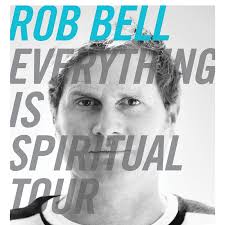 It is unusually cold and stormy here today. So, I walked on the treadmill and watched Rob Bell’s latest re-telling of the story of humanity. Well worth watching. To my colleagues who scoff at Bell, I dare you to watch this and not come away with several sermon ideas!!! To those of you who love Rob Bell, you’ll love this. If you’ve never heard of Rob Bell, “where’ve you been?” Enjoy!!! If you know where I can get my hands on a whiteboard like his, hook me up!

“In the night in which he was betrayed. Our Lord Jesus took bread, and gave thanks, broke it, and gave it to his disciples, saying: Take and eat this is my body, given for you.”
“In the night in which he was betrayed” these are the words of institution. I remember them well. I also remember the turmoil my pastor created in me when he had the audacity to change those words. It was 1979, I was 22 years old; young and full of ideas, hungry for knowledge and passionately faithful; excited about worship, in love with the church and determined to be the kind of Christian who had the courage not just to talk the talk, but walk the walk. The brand new Lutheran Book of Worship had only been in print for just over a year and as a dedicated member of our congregations Worship Committee I’d been to several workshops to learn all the new fangled changes that this ground-breaking new book introduced into the liturgy; new fangled changes based on a return to the traditions of the church’s glorious past. Three liturgical options, all based on the old Latin Mass of the 11th century. In all three settings of the liturgy these words were clear: “In the night in which he was betrayed. Our Lord Jesus took bread, and gave thanks, broke it, and gave it to his disciples, saying: Take and eat this is my body, given for you.”
So, why oh why, did our pastor get it so very wrong. Over and over again, no matter how hard we tried we could not get him to say the right words. Over and over again, he acted as if thousands of years of tradition meant nothing. Over and over again he insisted upon using different words. We tried to bring him back to the tradition. But it was as if he could not hear our well reasoned arguments. It was as if he didn’t care about the great crowd of witness who had gone before us. It was as if he thought he knew better than the Church; and not just the Lutheran Church but the ancient church; better than the writers of the gospels and St. Paul himself. Maybe even better than the Lord God himself, who after all had in my humble opinion, been responsible for inspiring the writing of these words. “In the night in which he was betrayed. Our Lord Jesus took bread, and gave thanks, broke it, and gave it to his disciples, saying: Take and eat this is my body, given for you.”
Jesus spoke these words, so why did our pastor believe that he had any business tinkering with these words. Sure he had a good reason for wanting to change the words. But if everyone felt free to change the words of the liturgy the next thing you know we’d have chaos; and where would the church be. I argued with him. I pleaded with him. Others argued with him and pleaded with him. Some, even threatened him. Say the words correctly or there’ll be trouble. We’ll report you to the bishop; we’ll leave the congregation. “In the night in which he was betrayed. Our Lord Jesus took bread, and gave thanks, broke it, and gave it to his disciples, saying: Take and eat this is my body, given for you.” And yet over and over again with his back turned to the congregation, because that’s how it was done in those days, when altars were up against the wall, and pastors held up the bread, up high as if God himself were up, there up high above our heads, looking down to ensure that everything was done just so. With the bread held high the pastor would insist upon saying, On the night before he died, Our Lord Jesus took bread, and gave thanks, broke it, and gave it to his disciples saying: Take and eat this is my body, given for you.” I loved that man dearly. He was a sweet, kind, generous, hard working, part-time pastor who scraped out a living as a small time farmer when he wasn’t working in the barn he was there for us. I loved him, but he was just plain wrong. Even if his reasons for being wrong were well intentioned, you just don’t mess with the tradition like that. The words are there, they way they are for reasons beyond our understanding. They are after all divinely inspired. And this is the Eucharist after all; the meal that lies at the very heart of who we are. Continue reading

Once the prosecution has finished presenting their case the judge proceeds to ask if you have anything to add, but you remain silent and resolute, terrified that if you open your mouth, even for a moment, you might deny the charges made against you. Like Christ you remain silent before your accusers. In response you are led outside to wait as the judge ponders your case. The hours pass slowly as you sit under guard in the foyer waiting to be summoned back. Eventually a young man in uniform appears and leads you into the courtroom so that you may hear the verdict and receive word of your punishment. Once you have been seated in the dock the judge, a harsh and unyielding man, enters the room, stands before you, looks deep into your eyes and begins to speak. “On the charges that have been brought forward I find the accused not guilty.”
“Not guilty?” your heart freezes. Then, in a split second, the fear and terror that had moments before threatened to strip your resolve are swallowed up by confusion and rage. Despite the surroundings, you stand defiantly before the judge and demand that he give an account concerning why you are innocent of the charges in light of the evidence. “What evidence?” asks the judge in shock.
“What about the poems and prose that I wrote?” you ask. “They simply show that you think of yourself as a poet, nothing more.” “But what about the services I spoke at, the times I wept in church and the long, sleepless nights of prayer?” “Evidence that you are a good speaker and an actor, nothing more,” replied the judge. “It is obvious that you deluded those around you, and perhaps at times you even deluded yourself, but this foolishness is not enough to convict you in a court of law.” “But this is madness!” you shout. “It would seem that no evidence would convince you!” “Not so,” replies the judge as if informing you of a great long-forgotten secret. “The court is indifferent toward your Bible reading and church attendance; it has no concern for worship with words and a pen. Continue to develop your theology, and use it to paint pictures of love. We have no interest in such armchair artists who spend their time creating images of a better world. We exist only for those who would lay down that brush, and their life, in a Christlike endeavor to create a better world. So, until you live as Christ and Christ’s followers did, until you challenge this system and become a thorn in our side, until you die to yourself and offer your body to the flames, until then, my friend, you are no enemy of ours.” “
Rollins insists that this parable is true right here and right now. We don’t have to imagine a world were Christianity is illegal for this parable to be true. Rollins insists that: “If you or I were really to take the teachings of Jesus seriously, would we not sooner or later, find ourselves being dragged before the authorities? If we were really to live a life that reflected the subversive and radical message of love that gives a voice to the voiceless and a place to those who are displaced, if we were really to stand up against systemic oppression perpetrated by those in power, then would we not find ourselves on the wrong side of the lawmakers?” Continue reading
 With readings from Julian of Norwich, Julia Ward Howe and the Gospel according to John 17:20-26, our Mothers’ Day was infused by Sophia! I am indebted to John Shelby Spong’s “The Fourth Gospel: Tales of a Jewish Mystic and John Philip Newell’s “Rebirthing of God: Christianity’s Struggle for New Beginnings” for insights beyond my own imaginings.
SERMON:
When I was just a kid, my mother would ask me a question that would be the beginning of a conversation, a routine of sorts that comes out of my Mom’s own childhood in Northern Ireland. The routine goes something like this. Mom would ask me: “How much do you love me?” and I would answer as I’d been taught to answer: “A big bag of sugar!” To which my Mom would reply, “I love you more, I love you two bags of sugar!” To which I would reply, that I loved my Mom, “Five big bags of sugar!”
Over the years I’ve met lots of people from Belfast who measure love in bags of sugar. As near as I can tell this loving conversation has something to do with sugar’s ability to make all things sweet and the fact that over the generations sugar was in short supply because most people simply couldn’t afford to buy sugar. I’ve also been told that during and after the two World Wars sugar was rationed, so a big bag of sugar was more sugar than most people ever saw. Sugar was a much sought after satisfying treat, that was essential to a happy life, so measuring love in bags of sugar is something that to this day, my great-nieces and nephews still learn from their elders. But these days even children know that sugar isn’t what it used to be. We all know too well the dangers of a big bag of sugar. Sugar in large quantities is bad for us! Loving someone today, often means limiting their sugar intake. I suspect that expressing love in terms of bags of sugar will soon go the way of Ring-around-the-rosie…while children still sing it they have no idea that it is all about the black plague that saw millions of children fall to their death…. Love measured in bags of sugar, like packets full of posey, is a thing of the past…vaguely remembered by only a few. Given a few generations and our ways of expressing things, like language changes over time.
Take for example our way of expressing the Divine, the Source of All that IS and all that Ever Shall be, the names we give to the ONE who is responsible for our Creation, the ONE in whom we live and move and have our being, the ONE we call God, has been known by many names over the centuries. The earliest name for the ONE credited with our Creation is quite simply “El”…”El” is if you will, the generic name for “God” El a word found in both the Ancient Sumerian and Canaanite languages translates as, god. In the ancient manuscripts of what we know call the Hebrew Scriptures, but our parents called the Old Testament, the earliest expression used for the God we were raised to worship is, El Shaddai, which is all too often incorrectly translated into English as God Almighty, but which quite literally translates into english as “breasted one” or the more accurate translation, “She Who Has Breasts”.
Elohim, often incorrectly translated as LORD, is the feminine plural word for “majesty”. El Shekinah, is the Ancient Hebrew expression for the presence of God, which quite literally means, “she who dwells among us”.
Chokhma is another Ancient Hebrew expression which was used to express the feminine spirit of the Divine which was later translated in to Greek as Sophia, we translate as Wisdom.
Ruach is the Ancient Hebrew way of expressing the very essence of God, in the Scriptures it is used in Genesis as the Ruach Elohim, which literally translates as the feminine, majestic “breath, wind, or spirit of God, which we now express as the Holy Spirit.
All these feminine ways of expressing what is meant by the word God, were supplemented with images of God as a mother eagle, a mother bear, a mother hen, a birthing mother, a suckling mother, a comforting mother, a woman in labour, and yes even as a woman looking for her lost coin; all these feminine ways of expressing the very nature of our God, were lost to us for generations. Slowly, we are rediscovering these old ways of understanding the nature of our God who is LOVE. LOVE infinitely sweeter than any old bag of sugar.
So, today as we read the words put into the mouth of Jesus by the anonymous gospel-storyteller that we call John, in which Jesus insists that he and God are ONE, I can’t help wondering about the ways in which this expression has changed over time. Our Gospel text this morning comes from what is commonly called Jesus’ farewell discourse or the High Priestly Prayer. The story-teller we call John puts Jesus in the garden at Gethsemane just before the events that happen on what we call Good Friday.
In this discourse Jesus prays for his followers, “I pray also for those who will believe in me through their message, that all may be one, as you, Abba, are in me and I in you; I pray that they may be one in us, so that the world may believe that you sent me. I have given them the glory you gave me that they may be one, as we are one—I in them, you in me—that they may be made perfect in unity. Then the world will know that you sent me, and that you loved them as you loved me.
That we may be ONE…so often this fervent prayer has been interpreted as a plea for unity.
Listen to what our friend Jack Spong has to say about the all too common ways this discourse has been used by Jesus’ followers: Jack writes: “The “high priestly prayer”..proceeds in three parts. The first is a prayer that Jesus utters for himself, the second is a prayer he prays for the disciples and the third is a prayer that is offered for those throughout history who will believe because of the witness of the disciples. The primary request in this prayer is that unity be achieved among believers. The desired outcome is not ecclesiastical unity,” (that is to say the unity of the church), which is how this prayer has been interpreted by the church. That interpretation, “that usage is always in the service of institutional power. Nor is it content or doctrinal unity, as various councils of the church have so often implied and sought to impose. It is not a unity imposed on any basis from outside the service of any agenda. No, the unity of which this prayer speaks is the oneness of the human with the divine that has been the constant theme of this gospel. It is the unity of the vine with the branches. That unity is found in understanding God, not as an external being, but as the essence of life. John even makes Jesus use the third-person name and title for himself to make his point: Unity comes in knowing “the only true God and Jesus Christ whom you have sent.” The Word of God comes from God, reveals the meaning of God and returns to God. It is a mystical experience of oneness-not a oneness in which individuality is lost, but a oneness in which individuality is affirmed, security is surrendered and new being is entered.”
What our friend Jack Spong is trying to open us up to is the way in which Jesus followers understood Jesus to be opening humanity up to a new understanding of what it means to be human. A way of being in the world that understands our origins in the ONE, our existence as ONE, and our passage into the ONE. This radical expression of our humanity as being ONE with the divine, or seeing divinity in humanity changes everything. But most importantly, it changes the way in which we relate to God. God is no longer expressed as some far off distant super-natural being, but rather as an intimate, integral, being, in which we live and move and have our being.
I reminded you at the beginning of our worship that today is also the feast day of Julian of Norwich, a 14th century woman who understood this ONEness in the same radical way. Julian of Norwich insisted that we are not just created from afar by a distant Creator. We are born from the very womb of the divine. John Philip Newell writes of Julian: “This is why Julian so loves to refer to God as Mother as well as Father. She sees us as coming forth from the essence of the ONE who is the Source of all things. What does it mean that we are made of God rather than simply by God? In part it means that the wisdom of God is deep within us, deeper than the ignorance of what we have done. It is to say that the creativity of God is deep within us, deeper than any barrenness in our lives or relationships, deeper than any endings in our families or our world. Within us—as a sheer gift of God—is the capacity to bring forth what has never been before, including what has never been imagined before. Above all else, as Julian says, the love-longings of God are at the heart of our being. We and all things have come forth from the ONE. Deep within us are holy, natural longings for oneness, primal sacred drives for union. We may live in tragic exile from these longings, or we may have spent a whole lifetime not knowing how to truly satisfy them, but they are there at the heart of our being, waiting to be born afresh.”
We are not just made by God, we are made of God. Think about it. You and I are made of God. When we begin to see our fellow human beings as ONE with God, this has profound implications for how we relate to one another. For as much as you do unto the least of these you do unto me. Jesus is teaching a whole new way of being in the world. Jesus knew this intimacy, this ONEness with God, and sought to instil the wisdom of this Unity, this divinity that finds expression in humanity, into his followers so that all would know the truth of our ONEness in the unity that finds expression in each of us.
The implications for how we live together are enormous. Bags and bags of sugar could not even begin to sweeten life in the way our ONEness with the LOVE that we call God offers to those who embrace this unity. God is not an external, distant entity; God is a life we enter, a love we share, the ground in which we are rooted. The call of Christ is not into religion, but into a new mystical oneness.
Jack Spong puts it this way: “The good news of the gospel, as John understands it, is not that you—a wretched, miserable, fallen sinner—have been rescued from your fate and saved from your deserved punishment by the invasive power of a supernatural, heroic God who came to your aid. Nowhere does John give credibility to the dreadful, guilt-producing and guis-filled mantra that “Jesus died for my sins.”
There is rather an incredible new insight into the meaning of life. We are not fallen; we are simply incomplete. We do not need to be rescued, but to experience the power of an all-embracing love.
Our call is not to be forgiven or even to be redeemed; it is to step beyond our limits into a new understanding of what it means to be human. It is to move from a status of self-consciousness to a realization that we share in a universal consciousness. John’s rendition of Jesus’ message is that the essence of life is discovered when one is free to give life away, that love is known in the act of loving and that the call of human life is to be all that each of us can be and then to be an agent of empowering others to be all that they can be.” Jack Spong, like Julian before him, like the anonymous gospel-storyteller we call John, see in Jesus the expression of the ONEness of which we are made.
How much do I love you? Well lets just say that once, I spoke like a child, I thought like a child. But when I became an adult, I put the ways of childhood behind me. Where once a bag of sugar, was enough to express my love, now I am beginning to understand that I was not just created by love, I am created of love, a love beyond my ability to imagine, a love in which I live and move and have my being.
The love that we call God, El Shaddai, the breasted one, Elohim, majesty, El Shekenia, She Who Dwells Among us, Sohpia, Wisdom, Mother of us all, Yahweh, I will be who I will be. The I AM, in which I live and move and have my being. And just as, if not more importantly, the I AM in which all humanity lives and moves and has being. The implications of this way of expressing Divinity and understanding humanity are as immense as the LOVE that makes us ONE. Amen.

Listen to the sermon here

I have come to believe that our lack of the peace of which Jesus speaks lies at the very heart of the lack of peace in the world. As I grew up I came to know up close and personal the kind of peace my mother longed for. Shortly after my eighteenth birthday, I packed my belongings into a backpack and boarded an airplane in Vancouver for a twelve-hour flight to Amsterdam. I’d been saving for about a year to raise the airfare and the eight hundred dollars in travellers’ cheques that was stuffed into a money belt around my waste. I desperately wanted to see the world and at the time, I actually believed the old tattered book that was stuffed into my daypack that I could indeed see Europe on $5.00 a day. By my reckoning $5.00 a day would buy me 160 days in Europe; just over 5 and a half months. Even if I allowed the odd extravagant day when I might spend $10.00 a day, I might be able to squeeze 5 months out of my $800.00 dollars, which along with my secret weapon should allow me to travel about Europe for at least a year. My secret weapon, was none other than my birth, because as a British citizen I am entitled to work anywhere in the European Common Market. I figured working a few weeks here and there ought to allow me the luxury of travelling about Europe for at least a year at which time I would head back to Vancouver to visit my family and work for a few months in order to head back out on the road, this time maybe to Australia or New Zealand. I had of course informed my friends of my grand plan. But to give my Mother a little peace, I told my parents that I’d probably be gone for between three to six months or so. I was full of bravado as I boarded the plane that would fly overnight over Canada’s vast frozen North to arrive in Amsterdam.
Somewhere after about 8 hours in the air, I began to be afraid; very afraid indeed. What if they didn’t really speak English in Amsterdam? How was I going to find my way to the hotel I had booked? I’d decided that for my first night I’d be better off being a little extravagant, just until I got my bearings straight; besides the week before, I’d learned that the price had gone up at Youth Hostels to $8.00 per night, so, plan of $5.00 a day had been increased to $10.00 a day. So, I’d have to find a work sooner than I’d thought? I’d be out there on my own for a year, exploring all sorts of new place and having all sorts of exciting adventures. I didn’t talk to anyone on the plane. I’m an introvert; a room full of strangers makes me nervous. So a metal tube, hurtling through the air filled with strangers, terrified me. I kept myself to myself and quietly mulled over the fate which awaited me.
By the time the plane landed two hours late in Amsterdam, I was exhausted and terrified. I’d spent 14 hours imagining all sorts of horrible things and I was left hoping that the frightening customs officer would refuse to let me enter Holland and send me home on the next flight. When I finally reached the hotel, they told me I couldn’t check in until the afternoon. My backpack weighed a ton as I walked around the block, afraid to wander too far, encase I got lost, or run over by a cyclist I found a bench and sat down to watch the world go by. I remember getting very, very angry as I sat there on that bench. I mean what in the world were my parents thinking? I was barely eighteen years old, how could they let me go off on my own like this. I mean what did I know about the world? I was probably going to get myself killed? Why didn’t they stop me? What kind of crazy parents did I have? If only they’d talked some sense into me, I would be all alone in a strange place about to meet my fate at the hands of some unknown villain who would make off with my $800.00 and leave me to fend for my self on the streets of Amsterdam. I had never been so frightened in my entire life. So, I decided right there and then, that just as soon as I could check into the hotel, I’d call the airline and book the next flight home. Continue reading

“Can the ways in which we tell the stories of resurrection transform us into followers of Jesus who embody a way of being in the world that can nourish, ground, and sustain the kind of peace that the world yearns for?” I preached this sermon on the raising of Tabitha years ago, as an attempt to convey the academic essay of New Testament scholar Rick Strelan into the form of a sermon. I believe that it is vital for preachers to convey the wealth of insights that are bandied about in the halls of academia, so that congregations can let go of so many interpretations of scripture that insult their intelligence, so that we can begin to explore the “more-than-literal meaning” (Marcus Borg) of biblical texts. Rick Strelan’s essay appeared in “Biblical Theology Bulletin, May 1, 2009, under the title “Tabitha: the gazelle of Joppa”.
Yesterday, I went for a walk. As I was walking along, minding my own business, a bright light appeared in the sky. The light nearly blinded me and so it took a while for me to figure out what was happening. Suddenly, it was so clear that the light was actually coming from a very large spaceship. I could scarcely believe by eyes. I stood frozen to the spot as the space ship landed in the middle of the road. You’ll never believe what happened after it landed. A couple of little green creatures with giant eyes gout out, took my picture, and then got back in the spaceship and flew off into the farthest reaches of space.
You don’t believe me, do you? You think that I’m making a joke of some sort, or maybe I’ve been working too hard and I’ve finally lost the plot. I know there’s probably nothing that I can say that would convince you that little green men have photographed me. Quite frankly that’s a relief because if you’ll believe that, you’d probably believe anything.
I do find it interesting that you won’t allow yourself to believe that I encountered aliens from another planet, and yet, you’ll suspend your disbelief when I tell you a story from the Bible. Or will you? Take our first lesson from the book of Acts. The miraculous story of how the Apostle Peter raised a disciple named Tabitha from the dead. You all know that when someone is dead, that’s it they are dead. You can pray over them all you want, but they’re never going to sit up, let alone stand up like Tabitha. There’s about as much chance of a person standing up after they’ve actually been dead as there is little green men from outer space landing on the street outside this church. The story of the raising of Tabitha is one of those stories that we wouldn’t believe for a second if it weren’t in the Bible. I suspect that when it comes to stories from the Bible, most of us don’t really believe that they happened exactly the way the Bible says they happened. Or do we?Now maybe you’re the generous type and so you say, “Don’t be too hasty, it could happen if the person wasn’t really dead.” I mean, maybe Tabitha’s friends got it wrong and she just appeared to be dead. The story says that Tabitha died, then her friends washed her body and laid her out in an upper room. Then, since Lydda was near Joppa, the disciples sent two couriers to Peter, who was in Lydda and they asked Peter to head back to Lydda, which was about 10 miles away. That’s a 20 mile round trip on foot with a walking speed of about 3 miles per hour it would take at least 7 hours. She was definitely dead. According to the story Peter sends everyone out of the room, knelt down and prayed and then said, “Tabitha, stand up!” and she did just that.
The story of the raising of Tabitha is one of those stories that we wouldn’t believe for a second if it weren’t in the Bible. I suspect that when it comes to stories from the Bible, most of us don’t really believe that they happened exactly the way the Bible says they happened. Or do we? Continue reading
 pastordawn
