Unknown's avatar

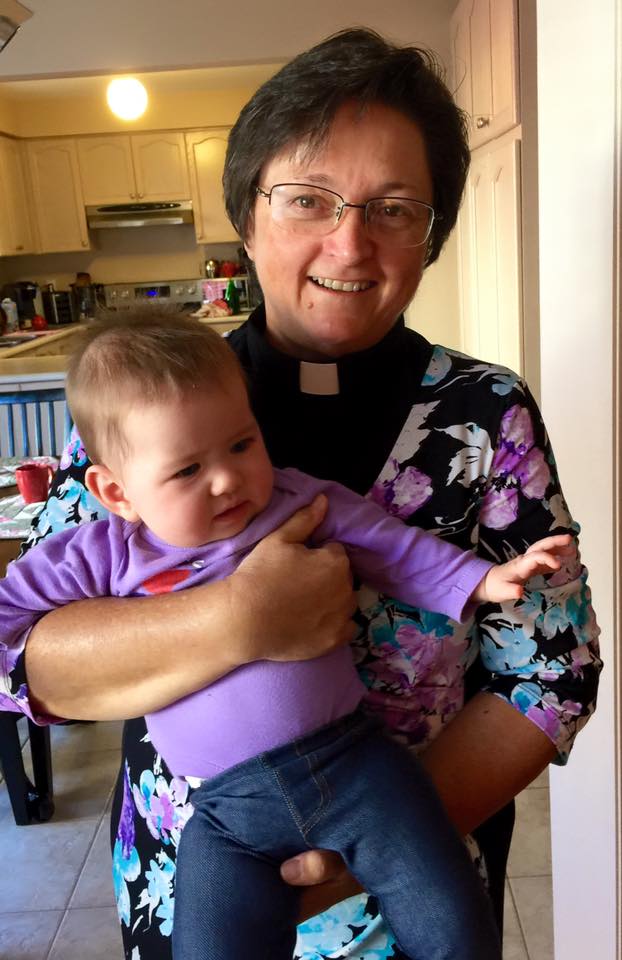
About Rev. Dawn Hutchings

Retired progressive Lutheran Pastor. Exploring the DIVINE MYSTERY that some call, "GOD," hoping to learn about the LOVE which is BEYOND the BEYOND and BEYOND that also.

Preparing to Preach or Not to Preach on Reign of Christ Sunday

cosmic christI usually have the presence of mind to book my vacation or some sort of continuing education event that takes me far away from the pulpit on Reign of Christ Sunday. Formerly known as “Christ the King Sunday” an attempt to move beyond exclusively male imagery for Christ (in whom there is no east nor west, male nor female) some church-folk have attempted to change the name of this festival to Reign of Christ Sunday. But merely changing the title fails to get  beyond the struggles I have with this festival of the church year!!!!

Born in an age that was birthing fascist regimes, this particular festival of the church clings to it’s christian imperialist past. Instituted in 1925, by Pope Pius XI,  (you can read the full proclamation here) the festival was designed to remind the world that Christ is the King of the World. The irony of proclaiming Christ as “King” when the life of Jesus of Nazareth positively denies “kingliness” seems lost on the church. The appropriateness of asserting Christ over the religions of the world lacks the kind of humility embodied by Jesus of Nazareth. So, this year I am not prepared to celebrate Christ the King or the Reign of Christ Sunday. Last year, we took a leaf out of Matthew Fox’s book and crafted our worship around the theme of the Quest for the Cosmic Christ.

Cosmic ChristYears ago, long before I ventured to seminary, Matthew Fox’s book Original Blessing opened me to the wonders of Creation Spirituality. So, I eagerly worked my way through his book The Coming of the Cosmic Christ. I confess that my first reading of Fox’s tome left me in the dust of my own lack of understanding of traditional Christology. But even back then, without the benefit of theological training, I sensed something of the MYSTERY that I had always trust Christ to BE. I have returned to Fox’s work many times over the years and over and over again I have discovered a WISDOM that moves me beyond the limitations of the historical Jesus toward a more holistic vision of Christ which like Fox I believe has the potential  to move us to a more wholistic relationship with Creation. I trust that the WISDOM of the Cosmic Christ can lead us into the Season of Advent so that we can be about the work of birthing the Cosmic Christ. (you can check out last year’s sermon on the Cosmic Christ hereThis year, we at Holy Cross will begin our quest for the Cosmic Christ by looking back to remember our treasured relationships with Jesus as we explore the relationship of Jesus, both our own personal Jesus and the historical Jesus, to our visions of the Cosmic Christ.


Wars and Rumours of Wars: The End is Near – a sermon for the 25th Sunday after Pentecost – Mark 13:1-8

Jean Jullien - Nov.13/15

Jean Jullien – Nov.13/15

Listen to the sermon here

Lest We Forget – A Peace Remembered

The young woman can still remember one particular Remembrance Day when her words and actions did nothing more than offend someone she loved very much. It was the one and only argument she ever had with her Grandmother and it happened over Remembrance Day. At the time, she was living in London. She remembers thinking that Londoners take Remembrance Day very seriously indeed. More so, she thought, than in her native Canada. She wondered if the blitz had something to do with it.

While most of the poppies people wore were red, she began to see white poppies appear on the lapels of more than just a few people.  She read in the newspaper that those who were committed to peace and believed that for the most part, Remembrance Day only serves to glorify war were donning white poppies.  You could pretty well draw a dividing line between the generations using the colors of poppies as your guide. Young people, who had never experienced war tended to wear white poppies, while those who were older and who had memories of war, tended to wear red poppies. In many homes poppies in and of themselves managed to start wars. 

The idealistic young woman was just twenty and her commitment to peace determined her choice. She was wearing a white poppy the day she traveled up to the Midlands to visit her Grandmother. It was the day before Remembrance Day when she arrived on her Grandmother’s doorstep. She’d forgotten all about the white poppy that adorned her lapel. She couldn’t help thinking that there was something odd about the reception she received from Grandmother. It wasn’t exactly what you would call warm. Her Grandmother was upset about something. But the young woman couldn’t quite figure out what, because her Grandmother appeared to be giving her the silent treatment. She just served dinner and listened quietly as the young woman chatted on about her week in London. Continue reading

Here We Stand, For We Can Do No Other – a sermon for Reformation Sunday

Simcoe Landing

Simcoe Landing

Listen to the sermon here

Watch the video that was shown in place of the traditional readings for Reformation: Thomas Berry and the Earth Community here

Gospel Text: John 8:31-36

The View from Job’s Dung-heap: Peering Beyond the Heavens Toward a Theory of Everything?

string theoryRuminating over this Sunday’s prescribed reading from Job 38, my mind harkens back to 2012, when I had the privilege of attending a series of lectures given by the great Phyllis Tickle who described the current reformation that the church is experiencing as part of a cultural phenomenon that happens about every 500 years, which she calls “The Great Emergence”. When asked what skills religious leaders will need to navigate the information age, Tickle insisted that the best advice we could give to anyone considering a religious vocation was that they should study physics. Inwardly I groaned, remembering my feeble attempts to come to grips with the most rudimentary theories of quantum physics. But I also nodded in agreement, knowing that so many of our religious narratives strive to make meaning of the cosmos as it was perceived by ancient minds. When our ancestors looked into the heavens they had no way of knowing the wonders of the cosmos that we are beginning to discover. While physicists can ignore theology, theologians who ignore physics will find themselves stuck atop Job’s dung-heap impotently shaking their fists at the Divine.  Perhaps Tickle is correct and the clerics of the future will out of necessity need to be physicists.  Theoretical physicist Michio Kaku speculates that the universe is “a symphony of strings” and the “mind of God would be cosmic music resonating through eleven dimensional hyper-space”.  If you have the courage to climb down from the dung-heap, take a look at Michio Kaku’s “The Universe in a Nutshell”. If the Divine bollocking that Job endured makes you wonder if ignorance might just be bliss, then take a peek at “Is God a Mathematician?” or “The Mind of God”. Who knows, maybe if a few more of us dare to dwell in the questions we might just come up with imaginative narratives to help us fathom what it means to be human. 

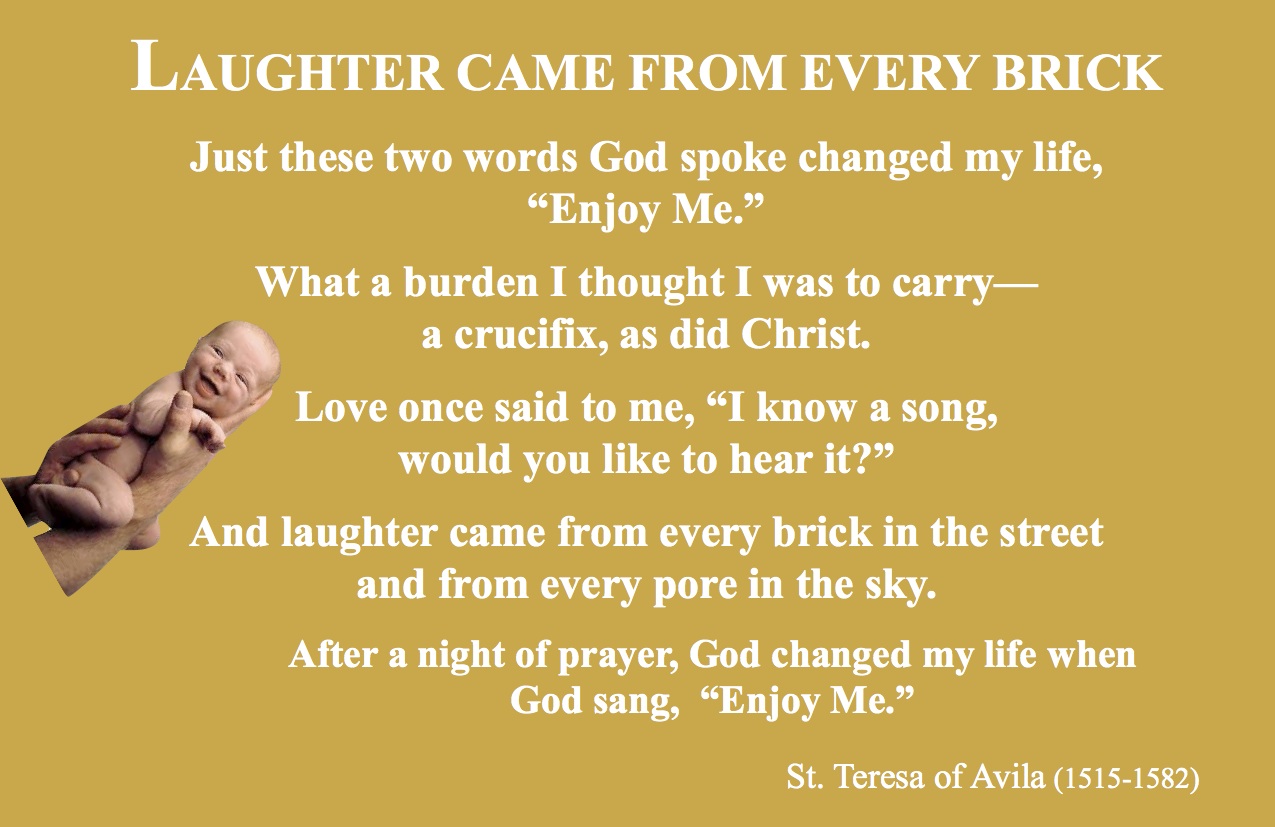
Today We Celebrate the Life and Witness of St. Teresa of Avila

An excerpt from “Love Poems From God” by Daniel Ladinsky,

(Penguin Compass, London: 2002)

(1515-1582)  “Teresa was born in Avila, a beautiful high mountain village of Spain.  She was one of thirteen children, three girls and ten boys, in a wealthy family.  The Spain in which Teresa grew up was permeated with 700 years of Arabian culture; the eradication of Arab power was followed by one of Spain’s darkest periods, the insanity of the Inquisitions, which, in the fourteenth century, along with other grievous deeds, forced mass conversions of Jews to Christianity.”

“Teresa was her father’s favourite child, and the most spirited.  Her mother died during childbirth when Teresa was thirteen, after which she had little supervision.  It is believed she had a lover at the age of fifteen, which caused her father to send her to a convent boarding school, only to see her return home two years later because of poor health.  When she was twenty-one, Teresa ran away from home to join a convent.  At that time many convents were more like hotels for women, allowing them a great deal more independence than they would be allowed at home, though after two years at the convent Teresa had a near-death experience that changed her life.  A spiritual awakening began in which she cultivated a system of meditation that sought quieting the mind to such an extent that God could then be heard speaking.  Over the next twenty years she experienced many mystical states but not until she was fifty did she begin the most far-reaching aspects of her life’s work.” Continue reading

Reckless Generosity – a Sermon for Thanksgiving

Gratitude Generosity

When I was a kid, the adults in my life were very fond of telling me how grateful I ought to be because things were so much harder back when they were kids. I’m sure most of us can remember being told by our elders just how tough times were when they were back in the day. My parents, grandparents, aunts and uncles and just about every adult I knew must have grown up poor. Why if I had a nickel for every time I heard someone say,  “When I was a kid we were so poor that…..” well I’d have a whole lot of nickels.

Today, when I hear the words, “We were so poor that…”  I brace myself for an outrageous claim like…. We were so poor that we couldn’t afford Kraft Dinner. Kraft Dinner, you were lucky, we were so poor that we couldn’t afford dinner,  all we had was a cup of cold tea without milk or sugar. Cup of Tea, we were so poor that we only had filthy cracked teacups. Filthy cracked teacups, that’s nothing we were so poor that we couldn’t afford teacups, we used to have to drink our tea out of a rolled up newspaper.  That’s nothing we were so poor that all we could we couldn’t afford newspapers so we had to suck our tea from a damp cloth.

Someone always chimes in with, “Well we might have been poor, but you know we were happy in those days. That’s right money can’t buy happiness. We used to live in a tiny house, with holes in the roof.  “House?  You were the lucky ones we were so poor that we had to live in one room, all 126 of us, with no furniture.  Half the floor was missing; we were all huddled together in one corner for fear of falling!  Ha!  You were lucky to have a room! We used to have to live in a corridor! Ohhh we were so poor we used to dream of living in a corridor! A corridor would have been a palace to us. We used to live in an old water tank on a rubbish tip. We were woken up every morning by having a load of rotting fish dumped all over us!!!   Rubbish tip, you were lucky, we were so poor that we lived in a hole in the ground covered by a piece of tarp, but it was a palace to us…especially after we were evicted from our hole in the ground and we had to go live in a lake. Lake, you were lucky to have a lake, there were a 160 of us living in a small cardboard box in the middle of the road. Cardboard, we were so poor we lived for three months in a brown paper back in a septic tank.  We used to have to get up at six o’clock in the morning, clean the bag, eat a crust of stale bread, go to work down in the mines for 14 hours a day, week in week out.  We had to get up out of that cardboard box at three o’clock in the morning and lick the road clean with our tongues.    In case you didn’t recognize it, that was my interpretation of a classic Monty Python sketch, simply called the “We were so poor sketch”. (watch the video below) Continue reading

Who IS God? – Not One, Not Two – a sermon for Thanksgiving Sunday

Thankyou autumnA sermon for Thanksgiving inspired by Garrison Keillor and Joan Chittister; two of the best storytellers I know.

Let me tell you a classic Thanksgiving story created by the brilliant Garrison Keillor, which takes place on the outskirts of Lake Wobegon, where “All the women are smart. The men are good looking. And the children are above average.”

“It’s been a quiet week in Lake Wobegon.” Keillor’s old home town. “There was a holiday this last week and the return of the exiles. The exiles who come back to their home. Children who’d grown up and moved away and had families, and learned how to complicate their lives in all sorts of new and interesting ways. They come back every year to a little town so much the same it’s hard to look at it and not believe you’re still twelve years old and that’s just how some of the returning children behaved too, when they came back.

A lot of them drive up from the cities with their families and they make a last stop at the Cross Roads Lounge, about ten miles down the road, as they come up over the rise and down into town, the last drags are taken on a lot of last cigarettes, and the first of a lot of breath mints are popped into their mouths and the last warnings are issued to their children, the grandchildren, in the back seat, not to talk about you know what, in front of grandpa and grandma, and remember that at grandpa and grandma’s house before we eat grandpa bows his head and we’re all supposed to be quiet that’s called asking the blessing or saying grace and grandpa is talking to God. So you remember to be quiet then and close your eyes and don’t say a word.

One of the Olsen boys was giving this speech to his children coming into town on Wednesday. He explained all of the rules and was surprised to hear a little voice pipe up from the backseat. And his daughter said, “Who is God daddy?”

He said, “Jesus Christ! What am I gonna do now?” “Two blocks from home! It’s a little late to get this kid shined up for the parents so she looks Lutheran you know.”
Continue reading

A Feminist, the Niqab, St. Francis and the Sultan: a sermon for the Commemoration of St. Francis

niqabThe Season of Creation ends today with the commemoration of St. Francis and the rhetoric of election season together with  the events chronicled in Paul Moses book “The Saint and the Sultan: The Crusades, Islam, and Francis of Assisi’s Mission of Peace” inspired this sermon.

The reading from St. Francis and the Scripture reading can be found here

Listen to the sermon here

Jesus Is the Memory of Our Future – a sermon for Creation 4B

GrandaThis long forgotten photograph of my Granda, William Anderson, moved my sermon beyond my miss-remembering as I attempt to respond to Dietrich Bonhoeffer’s question: “Who is Christ actually for us today?” I first encountered the phrase “Jesus Is the Memory of Our Future” on a t-shirt from Holden Village. Readings for this the fourth Sunday of the Season of Creation included: Dietrich Bonhoeffer’s Letters from Prison (to Eberhart Bethge, 1944), Mark 12:28-34, Mark 16: 14-16 – click here to read texts

Listen to the sermon here

Encountering the Divinity Within Us – Mark 9:33-37

Evie

Then Jesus brought a little child into their midst and putting his arm around the child, said to the Twelve, “Whoever welcomes a child such as this for my sake welcomes me. And whoever welcomes me welcomes not me but the One who sent me.” Readings included Exodus 40:34-38, Mark 9:33-37 

Listen to the sermon here 

The Truth Will Set You Free: a Homecoming sermon

truth

Homecoming after a splendid summer respite. Readings Proverbs 1:20-23; Ephesians 4:11-13 and John 8:30-32. I am indebted to Peter Rollins for his excellent insights into the need for church to be a place where we consult our suffering. I highly recommend the short video from which I have quoted which you can view here:  Peter Rollins video – Giving the Three Fingers. The story about the starfish on the beach is one I first heard many years ago. There is a version of the story in Marc Gellman’s book “And God Cried, Too: A Kid’s Book of Healing and Hope”

Listen to the sermon here


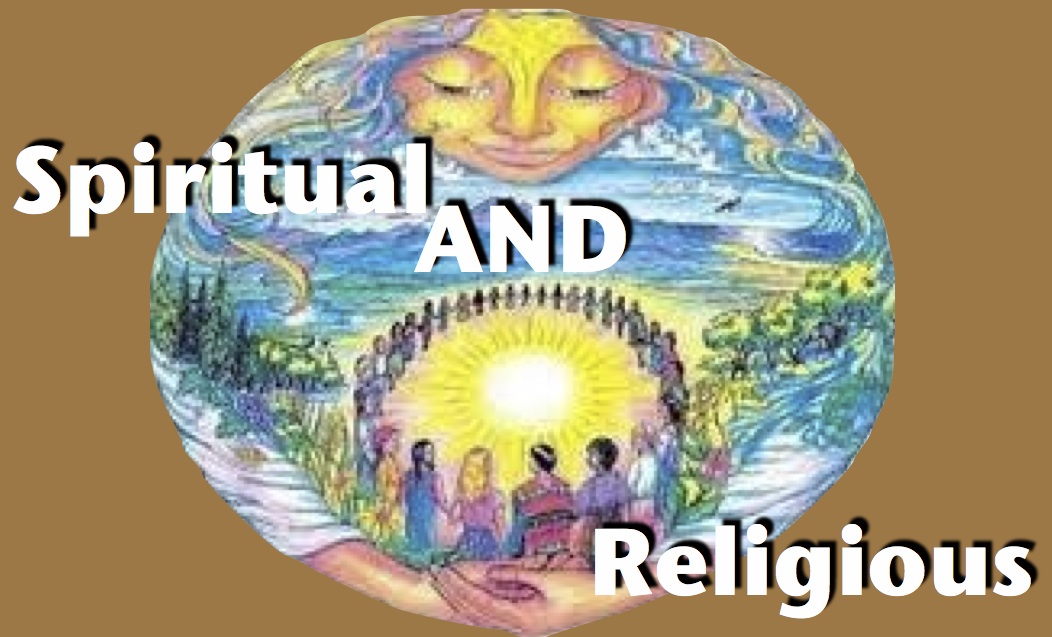
Spiritual AND Religious – a sermon for Pentecost 11B – John 6:35,41-51

Spiritual & Religious pastordawnListen to the sermon here

We Are the Bread of Heaven: a sermon on John 6:24-35 for Pentecost 10B

Hungry for?It is a holiday weekend here in Ontario. So, in the midst of our relaxed worship, I decided not to preach the sermon I had written and simply spoke briefly in response to the video animation which was shown after the reading of the Gospel John 6:24-35. You can watch the video: The Stonecutter here and listen to the recording of my comments here. The sermon which I prepared but did not preach is printed below. 

Following the video The Stonecutter (1960) Japanese Folklore  view here

Jesus said, “Do not work for the food that perishes, but for the food that endures for eternal life.” Food that endures for eternal life: WOW! Talk about satisfying. Who wouldn’t want some of that? Who isn’t hungry for food that does not perish but lasts for eternal life? No wonder the people cried out to Jesus. “Sir, give us some of that.” To which Jesus replied, “I AM it!” It’s clear that were not talking about ordinary food here. Jesus said to them, “I AM the bread of life. Whoever comes to me will never be hungry, and whoever believes in me will never be thirsty.”

But isn’t hunger and thirst the very stuff of life? Isn’t hunger, thirst, desire, longing, yearning, the very thing that drives us all? Don’t we all hunger for a better, fuller, more satisfying life? Don’t we all want to feed that emptiness that lies within? Aren’t we all looking for something?

If I were to try to tell that ancient Japanese fable in our modern Canadian context what might it sound like? You’re driving along in the car, widows open, listening to some tunes thinking hey look at me, I’ve got it pretty good, when all of a sudden a guy pulls up along side of you in a beautiful in a sleek e-type jag convertible, woe! If I could afford a car like that, just think about how great it would be to pull away from all the other traffic, the wind blowing through my hair, wouldn’t that be great. Well you save your pennies and you finally get the car of your dreams, and your driving along and you see this house, not just any house, but the most beautiful house in the neighbourhood, and you know there’s just got to be a pool in the backyard, and you wonder maybe, just maybe there’s a Jacuzzi in one of the dozen or so rooms and you know that if you could come home to a place like that, well then you’d be really happy. So you work hard and you scrimp and you save and one day, you get your hearts desire and you turn the key in the lock an all of a sudden your living in the house of your dreams. But there’s the pool to clean, and the gardens to maintain, and a lot of rooms that need dusting and you see that your neighbours have a pool boy, a gardener, and a housekeeper and you know if you could only afford to hire some help then you’d be happy. You know that with just a few more bucks in your bank account you’d be happy. So, you wish and you wish and one day you win the 649 and you have millions of dollars, several beautiful cars, lots of staff to keep everything ticking over, and no one to share it with. Continue reading

Jesus is the Human One: Just Look Beneath the Surface of the Text: a sermon on John 6:1-21 for Pentecost 9B

Fully HumanI am indebted to the work of Origen of Alexandria, John Dominic Crossan and Peter Rollins for providing a deeper understanding of the stories of Jesus’ Feeding of the Multitude and Walking on the Water. You can listen to the sermon here

Come Away With Me…Sanctuary for Refugees: a sermon for Pentecost 8B, Mark 6:30-34,53-56 and Ephesians 2:11-22

MerkelI chose to extract two readings from the lectionary to reflect upon sanctuary for refugees. Splitting the prescribed gospel text into the first and second readings and using the epistle text as the Gospel: Mark 6:30-34, Mark 6:53-56, Ephesians 2:11-22. The video which was shown during the sermon, along with the English translation, can be viewed here, listen to the sermon here

The Reign of God Is At Hand: Our Hands – a sermon for Pentecost 7B – Mark 6:14-29

John the Baptist's headThe beheading of John the Baptist is an unusual subject for a beautiful summer morning. However, from time to time the lectionary takes us where we are reluctant to go. Our readings included: Mark 1:1-11, Mark 1:14-15 and Mark 6:14-29

Listen to the sermon here

Time to stop holding our noses as we suspend reality! Let’s tinker with the rite of baptism…

Baptismal Liturgy pastordawnOver and over again, I hear from colleagues who find it difficult to use prescribed baptismal liturgies. In my own denomination, the Evangelical Lutheran Worship hymnal was published in the 21st century (2006). But the liturgical rite for Holy Baptism still prescribes the use of questions which contain images that harken back to medieval times. We have long since given up teaching our members to personify evil in the form of the devil. But the authors of our new liturgical texts insist that we continue to ask parents and sponsors to “renounce the devil an all the forces that defy God”; locking participants into some sort of cosmic battle in hich both evil and indeed God are personified in ways that most 21st century folks find archaic. As a confessional church, creeds continue to include proclamations of a virgin birth; an obstacle that seems laughable to people who have had the benefit of New Testament scholarship. Clergy who preside at baptisms are expected to hold our noses, while participants suspend reality and still the church continues to bemoan the fact that few and few parents bring their children to our fonts. In an effort to work with parents and sponsors to create baptismal rites that allow for the possibility that the Spirit is alive and well and working in, with, through, and beyond our feeble attempts to celebrate the miracle of new life, I have over the years tinkered with the rite of baptism. We have for several years now celebrated the rite of baptism using the liturgy which is provided here as an inspiration for others to tinker with the rite. 

click here for a pdf of our 21st Century Baptismal Liturgy

Peter Rollins on Radical Theology

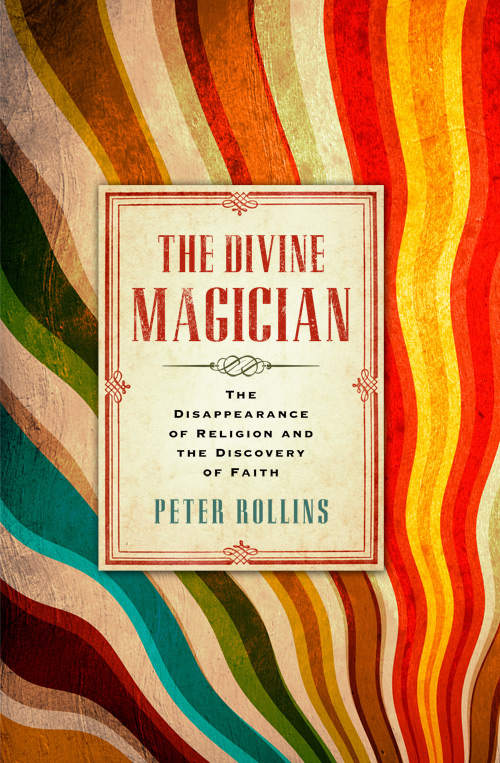
thedivinemagicianIn April, I had the privilege of travelling to Belfast to attend Peter Rollins’ Festival of Light where he gathered together some of the thinkers who have influenced his thinking. In his book The Divine Magician the fruit of this influence provides an expression of radical theology which has the power to ignite what Pete calls “pyrotheology”. Here are a few short videos which are designed to fan the flames. Enjoy!  

Baptism – Opening to the MORE – two baptism sermons

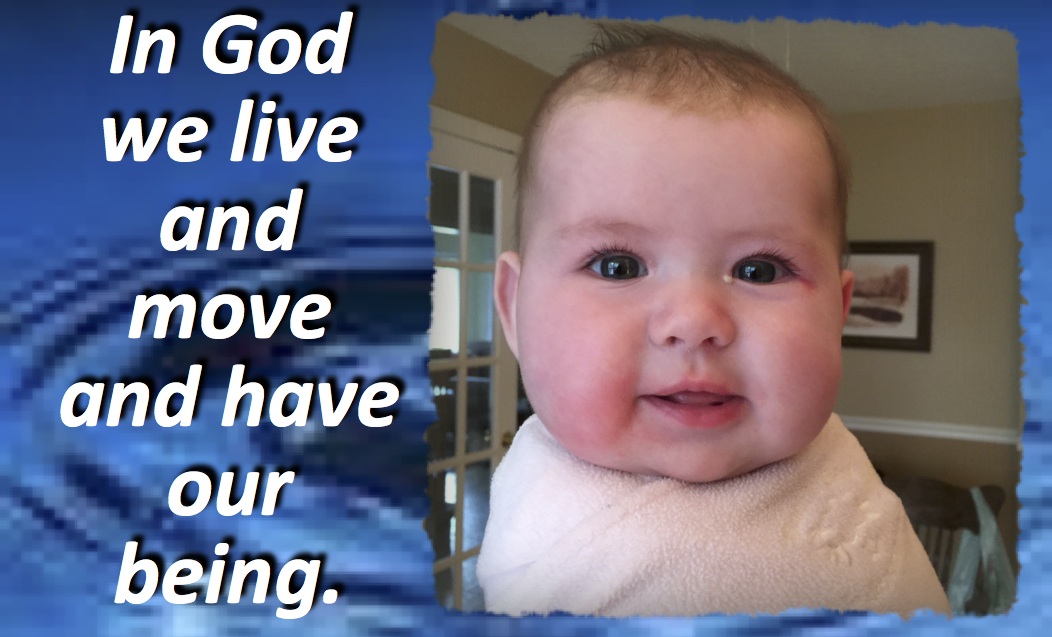
Evelyn AdeleThe opportunity to baptize my lovely granddaughter brought with it the task of preparing a sermon on the sacrament of baptism. So, I diligently prepared a carefully thought out sermon for the occasion. Standing in the pulpit after reading the Gospel text from Matthew  19:13-15, the sight of all seven grandchildren challenging the abilities of their parents and grandparents to maintain order and decorum gave me pause. Fortunately our pulpit at Holy Cross is on wheels, so I quickly pushed it aside and reached into my missal for a folder I had placed there so that during the announcements I could draw the attention of our members to some very good news about the success of a child of the congregation. The folder contained a story which I proceeded to tell in place of my carefully prepared sermon. You can listen to the story here. I am indebted to the author, Travis Dermott for providing the good news on this very happy occasion. As promised, the text of the carefully and lovingly prepared, undelivered sermon is provided below. 

Listen to the story here

When someone places a newborn human in your arms, it opens you to MORE. Humans have a strange relationship to MORE. Most of us spend our entire lives longing for more, looking for more, hungering for more, desiring more, striving for more, waiting for more, searching for more. Holding a newborn in your arms opens us to the power of MORE. I’m not talking about the more that the world so often gets caught up in seeking, more stuff, more money, more things, more wealth, more land, more resources, more power, more sex, more popularity, more gadgets, more food, more, more, more, more, for me and mine, more. I’m talking about the MORE with a capital M. MORE. The kind of MORE a newborn baby lying in your arms opens us to is the kind of MORE that poets, storytellers, artists, musicians, and messiah’s have been trying to capture for centuries. Holding a newborn in your arms opens us to this MORE because the reality of this new little being connects us to some Beyond ourselves.

Cradling a newborn you can’t help but wonder and marvel at the miracle of life itself. Gently rocking a newborn in your arms opens you to the powers of the cosmos coming together for billions and billions of years to create life. Gazing down at a newborn softly breathing in your arms fills your heart with emotions so powerful that in just an instant you can fall in love. Adoring a newborn in your arms transforms you out of the confines of the ordinary and mundane and into the reaches of time itself as you search for signs of ancestors long gone in tiny features that draw us into futures as yet unknown. And just when you think your heart is going to explode from the shear magnificence of the miracle in your arms, suddenly the newborn in your arms opens up the power of their new little lungs and you can’t help but be stunned by this tiny little creature’s ability to turn your world upside down. Continue reading