“Do not be afraid, little flock, for it is your Abba’s good pleasure to give you the kin-dom” So begins the gospel reading for this coming Sunday. But I am afraid and my fear is not about the the thief who this text insists may break into my house or that the Human One is coming at some unexpected hour. No my fear is wrapped up in my desire to pay little or no attention to the second reading prescribed for this Sunday from the letter to the Hebrews:
“Faith is the reality of all that is hoped for; faith is the proof of all that is unseen. Because of faith, our ancestors were approved b God. By faith, we understand the world was created by the word from God, and that what is visible came into being through the invisible…..”
Do I have faith? Do any of us have faith? For that matter: What is faith? According to Hebrews faith “is the reality of all that is hoped for; faith is the proof of all that is unseen.” Faith is the stuff that makes it possible for us to hear Jesus words: “Do not be afraid, little flock, for it is your Abba’s good pleasure to give you the kin-dom.” Faith is the stuff that makes it possible for us to believe. So I wonder: Do I have faith? Do I have the faith that makes it possible for me to believe? Do you? Do any of us?
I write this as one who finds it difficult and sometimes even impossible to believe much of anything. I am a doubter by nature. Doubting is part of who I am. I know that there are those who are more inclined to believe and I am envious of believers. I envy those who are sure and are able to find comfort in the Scriptures. For a very long time I was ashamed of my inability to believe. I often sat in church and wondered if I might just be a hypocrite. I wondered if someone who had as many doubts as I have belongs in the church. And so, I tried to conquer my doubts by studying the Scriptures. Continue reading →
Looking over the readings for this coming Sunday and the subject of faith jumps out from the Hebrews reading (Hebrews 11:1-16) which begs questions about doubt. I have read and blogged about Richard Holloway’s “Faith and Doubt” and Lesley Hazleton’s insistence that “Doubt is Essential to Faith” and both posts provide an interesting jumping off point. This little video of Richard Holloway on “Why doubt is a good thing” provides insights for preaching on doubt as the foundation of faith!!!
In this coming Sunday’s gospel reading Luke 11:1-13, Jesus’ disciples ask him to teach them to pray. As a pastor I have been asked to teach people to pray. Each time I have been asked to teach someone to pray I have cringed inside because I do not feel up to the task. For some reason the old hymn “I Come to the Garden Alone” keeps playing in my mind. I keep telling it to, “Shush!” so that I might hear the “bath qol” but the daughter of a sound eludes me. Below is a portion of a sermon I preached a couple of years ago on the subject of prayer. If nothing else, it reminds me to shush!
I began this sermon by asking the congregation to sing from memory the old hymn: I Come to the Garden Along. Feel free to sing it to yourself!
I think my earliest memory of prayer is a distant memory I have of skipping along the sidewalk chanting a familiar refrain: “Don’t step on a crack or you’ll break your mother’s back.” Most of us can remember a moment from our childhood when a superstition was instilled in us that caused us to perform some ritual in order to placate the unseen power that could determine our fate. Whether it was avoiding cracks, or walking under ladders or black cats, we were trained from an early age to believe that there were powers out there that could determine our future. Continue reading →
The next few Sundays will include readings from the Book of the Prophet Hosea. To say that this is a strange little book is an understatement. However, I’m tempted try my hand at writing a sermon on this ancient soap opera. For those colleagues who are considering doing the same these short videos provide images to get you in the mood. Of course you could just tune into a modern soap opera to get your creative juices flowing.
You can read the academic paperhereand the sermonhere
I am usually on vacation at this time of the year. So, I have only had a couple of opportunities to preach on this coming Sunday’s gospel text (Luke 10:38-42). The story of Jesus’ sojourn at the home of Mary and Martha is such a familiar text, which over the years has been used and abused by preachers to inflict such harm on their listeners. During my seminary years, this text awakened the feminist in me in ways that I am still unpacking. So, I went back to my seminary years to uncover an academic treatment of this text that I included in my Masters Comprehensive paper in 1998. Reading the paper took me back to a time when I seriously doubted my call to ordained ministry. Back then I was unsure about my ability to tolerate the institutional church or indeed whether or not the institutional church would be able to tolerate me. I am happy to report that there are pockets of the institutional church were feminists can thrive and I have been blessed to be called to serve in one of those pockets.
I preached on this text was in 2004 and I post both the academic paper and the sermon based on the paper as a resources for those of you who will take up the text this week. I have not edited the sermon, despite my inclination to do so. Old sermons provide a snapshot of old preachers. Like most snapshots, I’m not altogether happy with the picture of myself. I’ll post a copy of a more recent sermon on this text in the next blog post…stay tuned!
Jesus’ parable of the Good Samaritan is one of the most familiar stories of all time. The trouble with such a familiar story is that we all know it so well that we hear it on autopilot. We know the characters almost as well as we know how we are expected to respond to this story. We can point to the priest and the Levite and explain why they acted the way they did. We can even explain how shocking it would have been to a first century Jewish audience to hear a Samaritan described as “good.” Most of us have heard this parable interpreted so many times that we already know exactly how we are expected to feel when we hear it and what we are expected to learn from it. “Love God with all your heart, with all your soul, with all your strength, and with all your mind and love your neighbour as yourself” and who is your neighbour, why even the lowly Samaritan, the one you would least expect is your neighbour. We know this story backwards and forwards and yet like any good story, there is always something that we can learn from it or it wouldn’t have been told as often as we have all heard it. But just in case familiarity with the story is getting in our way of hearing the radically outrageous truth to which this story points, let me tell it one more time with a slightly different twist.
Like all parables this didn’t actually happen but then again it is always happening. Last week on my way back from Chautauqua, let’s say somewhere near Buffalo, I was attacked by a band of thieves. They stole my car and left me lying by the side of the road. A bishop happened to be passing on her way to Toronto, she saw me lying there bruised and battered, but she had people waiting for her, meetings to attend, and she could not be late, after all she is a bishop and people are counting on her. So, she put her foot down on the accelerator and hurried past me. Later, a bunch of pastors who were car-pooling home from a spirituality retreat came tooling down the highway. They saw me lying by the side of the road and they considered stopping to lend a hand but they had congregations to return to, members to visit, and sermons to consider. So after much consideration the pastors decided to hurry past lest they be waylaid by my problems. Suddenly, travelling from the opposite direction came a sleek, decked out bus with the words “TRUMP Make America Great Again!” in bold letters along the side. Lo and behold it was the orange fellow himself, Donald J. Trump heading up to Buffalo to appear before a “huuuge crowd” of adoring fans. Without hesitating for a moment, the Donald appears with a first-aid kit and begins to dress my wounds. I recognized him right away, and wanted to crawl away and die, but the Donald just loads me into the back of his bus and off we go to the nearest casino, which he just happens to own. At the casino the Donald puts me up in a room fit for a queen and instructs the staff to take very good care of me. It sure wasn’t easy being helped like that, by such a loathsome, despicable man. You know that I’d have to be in a very vulnerable state to accept help from the likes of Trump and his merry band of nut-bars. Thank goodness that this didn’t actually happen. But I can’t help wondering what I might learn about my own prejudices from such an encounter, or what I might learn about his woundedness, or indeed what we both might learn about our shared humanity. (stop it now!!! I know what you’re thinking…just try to remember the Donald is human)
Over the years, I believe that I have played most of the characters in the Parable of the Good Samaritan. I suspect that most of you have as well. Most of us have at one time or another played the role of the lawyer, trying to get Jesus to explain the secrets of life to us. Most of us have at one time or another played the role of the priest when we see a broken down car on the side of the road, with its occupants standing around looking desperate for help, but we pass by, not because we are bad people, but because the rules of our society tell us that only fools would consider stopping on the side of the road to help strangers. After all it might be a trap, and surely they have a cell phone so they can call the police who will surely come soon to help them and all of you have surely played the role of the Levite. Oh, you may want to be a good Samaritan, but there are just too many street people, too many requests for money, too many people sleeping out in the cold, and to many vacant faces staring up at us. It’s so difficult to know how or who to help. So, we strike up uneasy compromises with to salve our consciences. We give away whatever coins we happen to have as if a few coins can really help. We go about our business failing to even bother asking how we might help, for fear that from the vacant face, we might hear a voice that demands more of us. Continue reading →
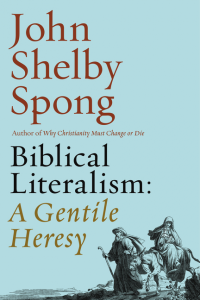
Thanks to the generosity of my congregation, I am provided with time for Continuing Education. So, last week I journeyed down to the Chautauqua Institution to listen to Jack Spong articulate the thesis of his latest “last” book: Biblical Literalism: A Gentile Heresy. Jack’s 85 years have afforded him much wisdom when it comes to exploring the sacred texts of Christianity in ways that can open us to new visions of a Christianity capable of nourishing 21st century minds. I’m happy to report that Jack has yet another “last” book scheduled for publication in 2018 under the working title: “Charting a New Reformation.” As always it was a blessing to be guided by Jack!!! Thanks to the Chautauqua Institution for making Jack’s lectures available to a wider audience.
May 31st is the day the Church commemorates “The Visitation” the story of Mary’s visit to Elizabeth as it is recorded in the Gospel According to Luke 1:39-56. Since reading Jane Schalberg’s “The Illegitimacy of Jesus”, I can’t help but wonder if Mary’s visited her cousin Elizabeth or escaped to her cousin Elizabeth seeking protection for the crime of being raped in a culture that all too often blamed the victim. Historians estimate that Mary may have been all of twelve years old when she became pregnant. There is ample evidence in the New Testament accounts of Mary’s story that suggest that she may indeed have been raped. So rather than sweep the possibility under the rug, on this the Feast of the Visitation, I’m reposting a sermon I preached a few years ago during Advent. I do so because women young and old continue to be raped and to this day, are forced to flee from the accusations and persecutions of cultures that continue to blame the victim. What follows is a written approximation of the sermon which in addition to Jane Schalberg is also indebted to John Shelby Spong’s “Born of a Woman” and “Jesus for the Non Religious” along with John Dominic Crossan and Marcus Borg’s “The First Christmas”.
Sadly, one doesn’t have to travel too far into the past to arrive at the time when women’s voices were not heard. Indeed, in the Lutheran church, it was only a few short decades ago. For most of us that time is within our own lifetime. For generations, men have told our sacred stories. Men have decided which stories made it into the canon of Sacred Scriptures. Men have interpreted the stories that were allowed to be told. Men have translated, taught, and commented upon those stories from pulpits, in universities, in seminaries, in commentaries and in the public square. Continue reading →
The song sung prior to the Gospel is Jann Aldridge-Clanton’s “Welcome New Wineskins” sung to the tune of Blessed Assurance. (Inclusive Hymns for Liberating Christians). As for my appropriation of the Beach Boys, “Help Me Rhonda”…my apologies! I am indebted to Christopher B. Zeichmann’s article “Rethinking the Gay Centurion” in The Bible and Critical Theory Vol 11 #1, 2015.
This Sunday is Trinity Sunday. In anticipation, preachers all over the world are dutifully pondering the Doctrine of the Trinity desperately searching for something to say to encourage their congregations.
Too many preachers will trot out tired old clichés conjuring up images of triangles, shamrocks around, or point to H20’s ability to appear as water, ice, or steam while still maintaining it’s unified essence. Or have you heard the one about the 3 blind men and the elephant in the room. That old chestnut is trotted out by many a desperate preacher struggling to put flesh on the doctrine of the trinity. But for the life of me I can’t see how 1 blind man touching the elephant’s trunk and presuming that there is a tree in the room, while a second blind man catching wind of the elephant’s ear is convinced that there is some sort of giant fan in the room, while a third man grabs hold of the tail and is sure that he has hold of a rope, helps you to conclude that just because they’re all sharing a room with an elephant you can now confess that God is indeed Father, Son, and Holy Spirit, one God, forever and ever amen. But all sorts of mental gymnastics will be exercised in the vain attempt to make some sort of sense of the doctrine of the Trinity!
On Trinity Sundays, mindful of the fact that trying to explain the doctrine of the Trinity usually leads to heresy: dusty theological books that have not seen the light of day since last Trinity Sunday have been poured over to ensure that the formula’s learned in seminary are repeated correctly and heresy scrupulously avoided. The imaginative among us have attempted to baffle our congregations with our theological intellect, the pragmatic among us have attempted to baffle our congregations with something akin to BS, while the desperate among us have simply tried to survive the Trinity Sunday hoping against hope that no one will notice that we haven’t a clue what we’re talking about.
Perhaps only dear old Dr. Martin Luther possessed the theological integrity sufficient to save a preacher from the perils of preaching on Trinity Sunday. So, before I launch, forth, let me remind you what the instigator of the Reformation had to say on the subject of the Trinity. Martin Luther warned that: “To deny the Trinity is to risk our salvation; to try and explain the Trinity is to risk our sanity.”
I will confess that Martin Luther had much more at stake, literally at stake, than I do, because the truth is that for centuries the punishment for heresy would have found many an ancient preacher burned at the stake. But while the death penalty for heresy has been lifted, the risk to one’s sanity remains.
Now, I will confess that when faced with a particularly difficult theological knot, I prefer to begin by quoting Jesus and not Luther, but alas Jesus remained silent on the issue of the Trinity. So, I did try to find something helpful in the words of the Apostle Paul. But alas, without some really amazing theological gymnastics that are beyond my abilities to comprehend, even the Apostle Paul remains mute on the issue of the Trinity. So keeping in mind Dr. Luther’s dire warning that to, “To deny the Trinity is to risk our salvation; but to try and explain the Trinity is to risk our sanity.”
Let me remind you that the Trinitarian formula appears in Scripture only once, in Matthew 28, during what is called the Great Commission, when Jesus commands the disciples to go forth, baptizing in the name of the Father, and of the Son, and of the Holy Spirit. But the doctrine of the Trinity does not appear in the Bible
– The doctrine of the trinity, as we know it, was first formulated in the fourth century, by a couple of guys named Gregory and a woman called Marcrina.
– The doctrine of the Trinity was then developed over hundreds of years
– The doctrine of the Trinity was at the heart of several wars
– Thousands of Christians were killed because they came down on the loosing side of arguments over the doctrine of the Trinity
– No one has ever been able to adequately explain the Trinity
– Every explanation of the Trinity that I have ever come across includes some form of heresy
By the way, just so we’re clear, I rummaged through some of my previous sermons on the doctrine of the Trinity and I must confess that if this were the twelfth century, an angry mob would be stoking up the fires beneath my feet because based on things I have proclaimed on various Trinity Sundays a charge of Modalism could very successfully be laid against me, as could a charge of Sabellianism. You might be interested to know, that more traditional preachers than I, will no doubt preach sermons this Sunday which will prove them guilty of Arianism or at the very least Subordinationism. All of these heresies in a bygone age would have left us with a severe shortage of clergy in the church, as many of us would be smoldering at the stake for our crimes. Deciding who is right and who is wrong, who is in and who is out is a deadly preoccupation of humanity, a preoccupation that the church has not been able to escape. Continue reading →
If you haven’t had an opportunity to learn from Amy-Jill Levine, don’t miss this opportunity!!! I have travelled far and wide to listen to Professor Levine and she has never failed to open the New Testament in ways that have changed my view of Jesus “The Misunderstood Jew”. Her book “short stories by Jesus” is my go-to for insights into the parables of Jesus. This year our congregation has benefited greatly from “The Jewish Annotated New Testament” edited by Amy-Jill Levine and Marc Zvi Brettler. Jewish New Testament scholars are a rare breed and Amy-Jill Levine is powerfully articulate in her approach to the teachings of the Jewish rabbi that we Christians long to follow. Members of Holy Cross: be sure to sign-up for the road trip we will be taking into the city to be a part of this event!!! For those who will be anywhere near Toronto, follow this link for details. In the meantime allow this video to whet your appetite.
“In the night in which he was betrayed. Our Lord Jesus took bread, and gave thanks, broke it, and gave it to his disciples, saying: Take and eat this is my body, given for you.”
“In the night in which he was betrayed” these are the words of institution. I remember them well. I also remember the turmoil my pastor created in me when he had the audacity to change those words. It was 1979, I was 22 years old; young and full of ideas, hungry for knowledge and passionately faithful; excited about worship, in love with the church and determined to be the kind of Christian who had the courage not just to talk the talk, but walk the walk. The brand new Lutheran Book of Worship had only been in print for just over a year and as a dedicated member of our congregations Worship Committee I’d been to several workshops to learn all the new fangled changes that this ground-breaking new book introduced into the liturgy; new fangled changes based on a return to the traditions of the church’s glorious past. Three liturgical options, all based on the old Latin Mass of the 11th century. In all three settings of the liturgy these words were clear: “In the night in which he was betrayed. Our Lord Jesus took bread, and gave thanks, broke it, and gave it to his disciples, saying: Take and eat this is my body, given for you.”
So, why oh why, did our pastor get it so very wrong. Over and over again, no matter how hard we tried we could not get him to say the right words. Over and over again, he acted as if thousands of years of tradition meant nothing. Over and over again he insisted upon using different words. We tried to bring him back to the tradition. But it was as if he could not hear our well reasoned arguments. It was as if he didn’t care about the great crowd of witness who had gone before us. It was as if he thought he knew better than the Church; and not just the Lutheran Church but the ancient church; better than the writers of the gospels and St. Paul himself. Maybe even better than the Lord God himself, who after all had in my humble opinion, been responsible for inspiring the writing of these words. “In the night in which he was betrayed. Our Lord Jesus took bread, and gave thanks, broke it, and gave it to his disciples, saying: Take and eat this is my body, given for you.”
Jesus spoke these words, so why did our pastor believe that he had any business tinkering with these words. Sure he had a good reason for wanting to change the words. But if everyone felt free to change the words of the liturgy the next thing you know we’d have chaos; and where would the church be. I argued with him. I pleaded with him. Others argued with him and pleaded with him. Some, even threatened him. Say the words correctly or there’ll be trouble. We’ll report you to the bishop; we’ll leave the congregation. “In the night in which he was betrayed. Our Lord Jesus took bread, and gave thanks, broke it, and gave it to his disciples, saying: Take and eat this is my body, given for you.” And yet over and over again with his back turned to the congregation, because that’s how it was done in those days, when altars were up against the wall, and pastors held up the bread, up high as if God himself were up, there up high above our heads, looking down to ensure that everything was done just so. With the bread held high the pastor would insist upon saying, On the night before he died, Our Lord Jesus took bread, and gave thanks, broke it, and gave it to his disciples saying: Take and eat this is my body, given for you.” I loved that man dearly. He was a sweet, kind, generous, hard working, part-time pastor who scraped out a living as a small time farmer when he wasn’t working in the barn he was there for us. I loved him, but he was just plain wrong. Even if his reasons for being wrong were well intentioned, you just don’t mess with the tradition like that. The words are there, they way they are for reasons beyond our understanding. They are after all divinely inspired. And this is the Eucharist after all; the meal that lies at the very heart of who we are.Continue reading →
El Shaddai, Eloheim, Rauach, Chokma, Rechem, YAHWEH, these are the ancient biblical Hebrew names for the reality that we call God. El Shaddai which translates as “she – breasted one, ”Eloheim which is the feminine plural for “majesty,” Rauach a feminine word for “wind” “breath” “spirit,” Chokma, a feminine word for “wisdom.” Rechem also a feminine word which translates as “ womb love” mother love, compassion. YAHWEH – I AM, WHO AM or I shall be who I shall be Ancient biblical Hebrew names for the reality that we call God.
During the time of Jesus there was another name for God that was used by the Jewish people: El Shekinah which translates as “she who dwells among us.” There were other words for the reality that we call God which the writers of the New Testament would have been so familiar with; Greek words like: Theos — a feminine noun which translates simply as “God,” Sophia – which is the Greek translation of the Hebrew word Rauach for “Wisdom,” Pnumena – the feminine noun which is the Greek translation of the Hebrew word Chokma which means: wind, breath or spirit. That these names for the reality that we call God are all feminine nouns is remarkable when you look at how these words were translated by the Roman Empire into Latin: Patris et Filii et Spiritus Sancti Father, Son, and Holy Spirit. Stripped of her breasts and her womb-love, the One we call God, the Chokma who Dwells among us, is given the aura of a powerful young Roman God as the word for breasts is translated as “Almighty” and whose Rechem – womb-love is reserved for those who fear HIM.
Yet despite the Empire’s attempt to penetrate the sacred feminine with masculinity’s youthful vigor, (yes, I did mean that pun) this reality we call God will age over the centuries to become a bearded old grandfather-like figure who lives up there somewhere, and woe to those who dare to expose His transgendered history; for God is male and that’s that. The image of the great I AM erected by the male hierarchy to be worshipped and glorified, forever and ever, as Father, Son, and yes, even the nebulous Holy Spirit becomes HE in order to penetrate His Bride the church. No room for talk of breasts or womb as SHE who dwells among us, Chokma, Sophia, Wisdom is banished to the mists of time. That is until women began to be admitted to the sacred halls of the academy; until women began in significant numbers to study the ancient texts and unravel the ancient languages and begin to question the work of their male predecessors and contemporaries. Female academics, female theologians, and female translators’ questions lead to the discover of the long hidden, often denied, and ever present breasts and womb which now that they have been exposed will never again be cast out from their dwelling place among us. Wisdom, Sophia has been emancipated she is woman hear her roar.Continue reading →
Leaving Behind the Miraculous Jesus to Welcome the Human Jesus
The celebration of Jesus’ Ascension is a church festival that I have always chosen to ignore. The ancient tradition that has Jesus floating up into the clouds stretches the credibility of the church to such an extent that I’ve always assumed that the less said about the Ascension the better. But last year I was challenged by a parishioner to try to make some sense out of the Ascension story so that 21st century Christians would not have to check their brains at the door should they happen upon a congregation that still celebrated the day. What follows is a transcript of my attempt to leave behind the miraculous Jesus in order to be better able to welcome the human Jesus down from the clouds. I am indebted to Bishop John Shelby Spong together with Clay Nelson (formally of St Matthew-in-the-city, now serving Auckland Unitarians) for their liberating insights.
Traditionally, on the 40th day after Easter, the church celebrates the feast of the Ascension. But because so few people in the 21st century are willing to come to church during the week, the Ascension is celebrated by the church on the first Sunday after the feast of the Ascension. Since I have been your pastor we have not celebrated Ascension Sunday. But as this particular Ascension Sunday follows so closely after Jack Spong’s visit with us, I thought that it was about time that rather than avoid the Ascension, I’d like to try to confront it.
Jack has been telling his anti-Ascension story for quite a few years now. Just in case you’ve never heard it or have forgotten it, let me remind you. It seems that Jack was speaking with Carl Sagan, the world-renowned astronomer and astrophysicist. Jack says that Carl Sagan once told him “if Jesus literally ascended into the sky and traveled at the speed of light, then he hasn’t yet escaped our galaxy.”
With that said, let me just say, that the Ascension never actually happened. It is not an historical event. If a tourist with a video camera had been there in Bethany they would have recorded absolutely nothing.
I know what the Nicene Creed says, “Jesus ascended into heaven and is seated at the right hand of the Father.” But like the members of the early church, I do not have a literal understanding of the scriptures. And so, as I do not understand the Bible literally, neither do I understand the Nicene Creed to be a literal interpretation of the faith. Like all creeds the Nicene, Apostles and Athanasian creeds are snapshots of theology as it was at a particular time in history.
We would do well to remember that the Creeds were developed to answer questions about the faith in a time when people understood the cosmos to be comprised of a flat earth, where God resides above in the heavens and located beneath the earth were the pits of hell. I know that the universe is infinite. I also know about gravity. I also know that it is highly unlikely that Jesus had helium flowing through his veins. I’ve flown around the world, and I can tell you that there is no heaven above the clouds. So, I can say with confidence that: The very present Jesus of resurrection faith did not literally elevate into heaven while his disciples looked on.
The writer of the Gospel according to Luke and the Book of Acts are one and the same person. The same writer wrote the Gospel according to Luke to tell the story of the life of Jesus and the Book of Acts to tell the story of the Holy Spirit at work in the followers of Jesus. Although we don’t know who the author was, we do know that he was not an historian. Neither Luke nor Acts are historical accounts. They are both addressed to a character named Theopholus. Theopholus is Greek for lover of God. The books are addressed to the lovers of God, that’s you and me and the author makes it clear that he has written these books so that we, the lovers of God, can believe and have faith. The books were written somewhere near the end of the first century. Somewhere between 50 to 60 years after the death of Jesus. Perhaps between 80 and 95 of this Common Era.
The important question for most biblical scholars is not whether the Ascension actually happened but rather, what did the Ascension mean to the author in his context. And to that question we might add a more pressing question: Given what the Ascension meant in the first century, does it continue to have any relevance for those of us who live in the 21st century?
I believe that the followers of Jesus experiences of Jesus the man were so overwhelming that they saw in him the human face of God. I also believe that in very powerful ways the followers of Jesus continued to experience Jesus presence.
Those powerful experiences of Jesus after his death were so intense that they defied description. Given that Jesus was now dead and gone, yet his presence still seemed to be with them, the followers of Jesus used the Hebrew story of Elijah and Elisha to construct a belief about the Spirit of Jesus continuing to be powerfully among them.
By the time the writer of Luke and Acts got around to writing these stories down, there were different versions of the story being passed around in the early church. The writer of Luke/Acts paints a picture of a re-formed bodily Jesus going up into the heavens in the Ascension and a windy, fiery Spirit coming down at Pentecost. The writer uses powerful familiar Hebrew images to portray the experiences of Jesus’ followers after his death.Continue reading →
When I am an old woman I shall wear purple
With a red hat which doesn’t go, and doesn’t suit me.
And I shall spend my pension on brandy and summer gloves
And satin sandals, and say we’ve no money for butter.
I shall sit down on the pavement when I’m tired
And gobble up samples in shops and press alarm bells
And run my stick along the public railings
And make up for the sobriety of my youth.
I shall go out in my slippers in the rain
And pick the flowers in other people’s gardens
And learn to spit.
You can wear terrible shirts and grow more fat
And eat three pounds of sausages at a go
Or only bread and pickle for a week
And hoard pens and pencils and beermats and things in boxes.
But now we must have clothes that keep us dry
And pay our rent and not swear in the street
And set a good example for the children.
We must have friends to dinner and read the papers.
But maybe I ought to practice a little now?
So people who know me are not too shocked and surprised
When suddenly I am old, and start to wear purple.
Lydia is one of the many mothers of Christianity. Lydia was the first European convert to Christianity. Lydia was the founder of the church at Philippi. The Scriptures tell us that before Paul and Silias proclaimed the Gospel to Lydia, she was a “God Fearer”. God Fearers, was the name given to people who were not Jewish but who were so intrigued with the God that the Jews worshipped that they lived their lives as if they were Jews. Indeed, most God Fearers followed all the Jewish laws except for circumcision. Circumcision, for adult males, living in the first century, when sanitary conditions were primitive and no antibiotics were available could lead to death. So, most male converts to Judaism, were not called Jews but God Fearers. Generally women were given the same designation as their husbands or fathers.
So right from the beginning of the story, Lydia is described in an unconventional way. We are told that Lydia was “a God fearer; a worshipper of God and a dealer in purple.” Now an introduction like that may not seem very unconventional to us but we have to remember that for the writer of the Book of Acts to have described a situation where, Paul and Silias, two strange men in town meet a woman, any woman was in and of itself unconventional.Continue reading →
Are we who gather in churches on a Sunday morning members of a church that is the living body of the risen Christ or are we mourners at the funeral of a religion that died in the last century because it did not have the stamina for the 21st century? As we continue to ask, “Can the ways in which we tell the stories of resurrection transform us into followers of Jesus who embody a way of being in the world that can nourish, ground, and sustain the kind of peace that the world years for?” we cannot ignore the tattered grave-clothes that litter the empty tomb the church is becoming. The tattered, raggedy, remains of original sin, virgin birth, theories of atonement that cast God as judge and executioner, physical resuscitation of a corpse, individual salvation, triumphalism, violence, greed, misogyny, doctrines, and dogma are the discarded grave-clothes that litter the empty tomb.
The resurrection stories of John 21 and Acts 9 were our readings today.
Our first reading was the traditional gospel story for the Second Sunday of Easter in which we heard the story of Doubting Thomas for John 20:19-31. This was followed by a video in which Richard Holloway retells the story of Peter’s denial and the encounter between the resurrected Jesus and Peter. You can view the video here . This was followed by the gospel reading from John 21:15-20 You can listen to the sermon here
Our first reading was the traditional gospel story for the Second Sunday of Easter in which we heard the story of Doubting Thomas for John 20:19-31. This was followed by a video in which Richard Holloway retells the story of Peter’s denial and the encounter between the resurrected Jesus and Peter. You can view the video here . This was followed by the gospel reading from John 21:15-20 You can listen to the sermon here
It has been said that, “The shortest between a human being and truth is a story.” It has also been said that the greatest story ever told is the story of resurrection. Like all really good stories, the story of resurrection has been told over and over again as storytellers attempt to convey the truth. We have heard Easter’s story of resurrection so many times that you would think the truth of resurrection would be obvious to us all and yet we struggle to find truth in Easter’s familiar story. Some of us have been shaped by this particular story. Some of us have built our lives around the truth that others have reported to us about this story. Some of us have rejected this story and filed it with all the other idle tales in which we can find no truth. Some of us have moved on from this story convinced that there is no longer any truth to be found. Some of us love to hear this story because it takes us back to familiar truths that inspire a nostalgic sense of well-being. Some of us, are determined to wrestle with this story until it releases all the truth that it harbors in, with, and between the lines which call us toward a new way of being that we long to embrace.
I myself, I am a wrestler. Like Jacob of old, I wrestle with this familiar story determined to get from this ancient tale not just truth but an inkling of the Divine who dwells in, with, through, and beyond all of our stories. The gospel storyteller who we know as John tells Easter’s resurrection story in a particular way, determined to reveal the truth that dwells in him and among the people with whom he dwelled. One of the things that we 21st century truth-seekers are particular fond of is deconstructing stories. We love to take stories apart. Dissecting every line. Examining each and every detail, each and every word so as not to miss a single nuance of the author’s intent. We are also skilled in the imperfect art of attempting to place stories back into their historical context so that we can establish exactly what was going on in the first century lives of the story-teller and his listeners. We look to the historical context in the hope that we can determine the original meaning of the story. Convinced that history can tell us what the story-teller cannot we wrestle with the facts, as best as we can determine them, so that we can be sure that the truth we thought we knew is more than just the summation of our mistaken interpretations.
Together, we have wrestled with Easter’s story of resurrection and together, I must say that we are pretty good wrestlers. We have deconstructed this story, we have applied the historical-critical method, we have approached it from all sorts of angles and employed the best 21st century scholars to aid us in our struggle to wrestle the truth from the piles and piles of dogma, which have been heaped upon it. But this morning, I’d like to approach Easter’s story of resurrection from the perspective, not of wrestlers determined to find the truth, but rather as people touched by the story itself. But even though we are not going to wrestle, like Jacob of old, we run the risk of being touched and even wounded by the truth as the Divine One is revealed and we are compelled by our wounds to walk in a different way.Continue reading →
Sermon for the Second Sunday of Easter April 15 2012
A few years ago on the Second Sunday of Easter, I tried something new for me at the time: introducing a video clip into the sermon! You can view the video within the written text of the sermon below or listen to the audio version provided. I am indebted to the work of James Rowe Adams for much of the New Testament Scholarship in this sermon.
The Scripture texts were John chapter 20:19-31 and Acts 4:32-35
Christ is Risen! Christ is Risen indeed! Alleluia!
So, Christ is Risen! So What???
What can it possibly mean to you and to me, that a rag-tag bunch of Jesus’ followers gathered together in an upper-room and talked about their experiences of Jesus and decided that not even death could extinguish the life that they experienced in Jesus? What difference does it make to you or to I that Christ is risen?
The truth is that it can make absolutely no difference what so ever. Now there are a whole lot of people who will tell you that the important thing about resurrection is that you believe it. Those same folks absolutely love the story of doubting Thomas. And so every year on the second Sunday of Easter we read the story of doubting Thomas as a kind of inoculation against Thomas’ disease.
I sometimes think that the designers of the lectionary were trying to build up our resistance to doubt. Having problems believing in resurrection, well don’t do what Thomas did, don’t doubt, because you’ll be proven wrong. Jesus is alive, the wounds in his hands proved that to Doubting Thomas, so have no doubt about it the resurrection happened! Believe in the resurrection!
The trouble with believing in stuff is that it belief can make absolutely no difference what so ever. I can believe in justice for all, but unless I’m prepared to seek justice, to be fair, or to resist injustice, it makes absolutely no difference what so ever. You can shout, “Christ is risen!” all you want but unless you are willing to live it, the resurrection means very little at all.
In order to live the resurrection you have to begin practicing resurrection. In order to practice something, you have to know what it looks like, what it sounds like, or what it feels like.
I’ve been trying to figure out how to show you what resurrection looks like in the flesh. Then I remembered a video that’s been doing the rounds on the internet, so I want you to watch this modern miracle of resurrection.
WATCH THE VIDEO CLIP FROM: Alive Inside
Christ is Risen! Christ is Risen indeed! Alleluia!
2000 years ago a bunch of rag-tag Jesus followers were huddled together in fear. Their beloved leader had been brutally executed by the powers that be and they were terrified that they would be next. Paralyzed by their fear, hiding behind a locked door, something happened that gave them the strength to burst forth from their own tomb and change the world.
Ever since they began to practice resurrection, people have been trying to figure out exactly what happened; what could have changed these bumbling, terrified, betrayers, abandoners, who seemed to be always getting things wrong, into a bunch of leaders who began a movement that spread through out the Empire within their own life-times and then based on the power of their witness, spread throughout the world and continues to nourish and sustain millions of people from generation to generation?
Now there are those that insist that it was the power of Jesus having been physically resuscitated from the dead that motivated his followers to change their lives and the lives of millions who have come after them. But we live in the 21st century and we have access to all sorts of information that the generations who have gone before us did not. Most of us, myself included, are not swayed by arguments about a physical resuscitation of Jesus’ body. But I can tell you without a doubt that I do believe in resurrection and I know that Christ is risen and I also know that the same power that the early followers of Jesus used to change the world is available to you and to me. And now more than ever the world needs us to start using that power. It’s long past time for us to start practicing resurrection.
So, if they weren’t talking about a physical resuscitation when they spoke of Jesus’ resurrection, what did the early followers of Jesus actually mean when they spoke of Jesus having been raised from the dead? During the first century many Jews had adopted a vision of the future that dealt with the prevailing question of the day: “How could a just God allow his people to suffer endlessly at the hands of their enemies?” Or as Dom Crossan puts it: When was God going to clean up the world so that justice could prevail? Continue reading →

 “Do not be afraid, little flock, for it is your Abba’s good pleasure to give you the kin-dom” So begins the gospel reading for this coming Sunday. But I am afraid and my fear is not about the the thief who this text insists may break into my house or that the Human One is coming at some unexpected hour. No my fear is wrapped up in my desire to pay little or no attention to the second reading prescribed for this Sunday from the letter to the Hebrews:













 pastordawn