Easter: Yes, Yes, Yes, Yes, Laugh, Laugh – an Easter Sermon

Easter Roll away the stoneWhen my niece Sarah was born, I was amazed at how quickly I fell in love with her. Just as soon as my brother placed her in my arms, I was consumed with a love so great that I thought my heart would burst. But as great as that love was, as the weeks and months passed and that love grew deeper and deeper. When Sarah was about 11 months old, my best friend gave birth to a daughter and when she placed her child in my arms for the first time, I fell deeply in love with darling little Rebekah. Fortunately, Sarah and Rebekah lived quite a distance away from one another and I was able to carve out enough time to spoil each of them separately and in their own unique ways. In fact, these darling little girls who were the apples of my eye never actually met until one Easter weekend, when Sarah was about 3 years old and Rebekah was almost 2. It was absolutely the worst Easter egg hunt I have ever attended. It was horrible. Every time a paid even the slightest bit of attention to one of those darling girls the other one would fly into a jealous snit. They vied in the most undignified way for my attention all afternoon. If I even so much as smiled at one of them the other one would feel the need to do something, anything to get my attention firmly focused back on them. If I picked one of them up, the other one would begin to moan and complain about something until I put the other one down and picked up the complainer. If one of them found an Easter egg the other would cry until the focus was returned to their quest for an egg. If one of them crawled up on my lap, the other one would try to physically remove that one so that they could crawl up in their place. The parents in attendance just laughed at my predicament and left me to the task of trying to assure my darling little girls that just because I loved one of them didn’t mean that I didn’t love the other.

Over the years, I’ve come to believe that the jealousy that I bore witness to on that long ago Easter weekend was born of a fear that lives inside each of us. For who among us has not worried about whether or not there’s going to be enough love for us. That fear lies at the very heart of who we are. Child psychologists describe the phenomenon of fear in children as coming in three basic forms: the fear of falling or failing, the fear of loud noises or catastrophe, and the fear of abandonment. They suggest that at the bottom of all these fears is the fear of death. We human’s are a strange lot, driven by our fears to commit the most outrageous acts. So many of us live lives controlled by our fears, and we wrap ourselves up in the fear that there just won’t be enough love for us; or enough success, or enough money, or enough time. So we become jealous of others, and we grab all the success and all the money we can before time runs out. We allow our fears to drive our emotions and so jealousy, greed and eventually hatred drive our actions and poverty, violence and war come to dominate our world. The fear of death is the primal terror that what awaits us at the end of our journey here is nothing but chaos or even judgement or punishment. Continue reading

Approaching the Resurrection – What Did Paul Actually Say?

trouble with resurrection

It may only be the early days of Lent, but many preachers are already beginning to make plans for Easter. Far too many preachers stumble into the celebration of Easter without doing our homework. Resurrection is a central tenant of the Christian faith and Easter is the primary celebration of resurrection and yet, too many of us fail to open ourselves to current scholarship surrounding the doctrine of resurrection. Questions about the nature of the resurrection ought to send us back to the words of the Apostle Paul. Bernard Brandon Scott is a charter member of the Jesus Seminar. His book “The Trouble with Resurrection” is a must read for those who preach during the Easter Season. (some may be familiar with Scott as a result of his contributions to the Living the Questions programs)

If you are planning to write a sermon or listen to a sermon this Easter, this video provides essential background information about the words of the Apostle Paul on the nature of the resurrection which may surprise you. Scott’s treatment of 1 Cor. 15 provides a new understanding of resurrection which is compelling as well as liberating.


What a Joke: These Stories Never Actually Happened! – a sermon for the First Sunday in Lent – Genesis 2:15-17; 3:1-7, Matthew 4:1-11

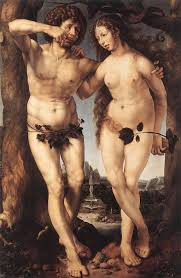
Eve & AdamI am indebted to the exegetical work of John Holbert for the insights into Hebrew humour!

Each year as Lent approaches, I find myself flirting with the idea of giving up Lent for Lent. Lent is just too much work. For centuries, during Lent the church has emphasized so many concepts that seem alien to the 21st century mind. Each year during Lent preachers are required to undertake the unenviable task of unpacking unpopular, seemingly antiquated concepts in an effort to encourage the contemporary churchgoer to entertain the equally antiquated rituals of Lent. I mean Christmas and Easter might attract a few more people to our sanctuary, but how do you attract people with talk about repentance or fasting? Just look at our readings for this morning. Temptation is the order for toady. Eve and Adam succumbing to temptation, the Apostle Paul prattling on, heaping condemnation upon the first parents for having given in to temptation, and then Jesus himself resisting temptation from non-other than the Devil. Not exactly cheery stuff designed to bring comfort on a cold damp winter morning, where apart from the time change, there are very few signs of a longed for spring.

But Lent has arrived and so we must tuck into this dish of temptation hoping that it will reveal some hint of the promise of what lays beyond our long Lenten journey as we travel toward Easter’s resurrection joy. But these are not easy readings to unpack.

I could begin by warning against taking these texts literally. But you have heard warnings against taking the text literally and I know that you understand that the story about Eve and Adam is just a story. It never really happened. Most of you, even though you might be tempted to think that Jesus literally went out into the wilderness and was tempted by the Devil, most of you have long since realized that the Devil doesn’t actually exist. If you’re still tempted to believe that this story actually happened, well, the fact that in the story itself, Jesus goes out into the desert all by himself ought to at least make you pause to ask, who wrote this story down, if there was nobody there but Jesus and the Devil?

These stories are just that, they are stories. In the words of Marcus Borg, “The events in these stories never actually happened. But the events in these stories are always happening.” Let me say that again, lest there be any doubt: They never actually happened, but they are always happening. That’s what makes these stories such great stories. The stuff in these stories is always happening over and over again. Temptation is the stuff of our lives. Each and every one of us, each and every day struggles with temptation, each and every one of us and all of us together as humanity. This grand human experiment that we are caught up in requires that we all struggle with temptation. Continue reading

D.I.V.O.R.C.E. – a sermon for Epiphany 6A

Aquinas purposeReadings included: Deuteronomy 30:15-20, Thomas Aquinas’ “Otherwise the Darkness’ (pictured above) and from the Sermon on the Mount: Matthew 5:21-37 

Listen to the sermon:  

More than Just the Be Happy Attitudes: a sermon for Epiphany 4A

jesusThe Beatitudes: Matthew 5:1-12

Listen to the sermon:

A Passionate Commitment to the Christian Vision: John Dominic Crossan

Advice to preachers from the best New Testament scholar I’ve ever met!!! What a preacher needs to have, at a bare minimum, is a “passionate commitment to the Christian vision!” If you don’t have that, stick to worrying about the church’s leaky roof and stay out of the pulpit! Perhaps, it’s his Irish lilt that allows him to make inflammatory statements sound like ordinary common sense.  Dom’s passion for the Christian vision comes through in his articulation of the Jesus’  vision of peace through justice.  Enjoy this interview recorded on Dec. 16, 2013

Jesus’ Sermon on the Mount

Before becoming a poet, Baraka Kanaan was a University Professor, his work was in re-articulating the Christ Figure. He studied dozens of translations, but came upon an Aramaic text & paraphrased what Jesus said in ‘The Sermon on the Mount’ from the book of Matthew; chapters 5,6, & 7. Here is a brief exploration of the purest essence of that message, made into modern day English, & escorted musically by the rare & exotic hijaz hang instrument. Delivered live at the Temple of Peace in Haiku, Maui… on Yom Kippur, or the Day of Forgiveness.

Contemplating the Beatitudes: preparing to preach on Matthew 5:1-12; Epiphany 4A

The gospel reading for this coming Sunday is Matthew 5:1-12, known as the Beatitudes. The reading is so familiar that we all too often read the beatitudes as if they were a  prescription. However, when read as a description they take on a whole new meaning. Jesus climbed up above the crowd, looked around and saw the poor, the grieving, the gentle, those who were hungry and thirsty for justice, the merciful, the righteous, the peacemakers and the persecuted; and Jesus comforted, uplifted and inspired them with the truth that they are blessed. Jesus was not telling the crowd how to live he was recognizing and affirming who they are. Can we hear this affirmation of our lives? As I prepare to preach on this text, I see the faces my congregation and I know that they are blessed for they too are the poor, the grieving, the gentle, those who are hungry and thirsty for justice, the merciful, the righteous, the peacemakers and the persecuted. The Good News is that the Kindom of Heaven is theirs. 

Walk With Me: Mary Youngblood

The Bat Qol – The Daughter of A Sound – The Still Small Voice

Preparing to Preach on Jesus’ Baptism:

BAT QOL pastordawnIn this coming Sunday’s gospel text (Matthew 3:13-17) we will hear echo’s of the Bat Qol which speaks at Jesus’ baptism as the heavens are torn open. The hebrew “bat qol” (bat cole) is often translated as “the still small voice” but when translated literally it is the “daughter of a sound”. The voice of God speaks to declare love. May you hear yourself named and called by that voice, for you are the daughters and sons of God, beloved of God!

A little music to tune your ears with. Enjoy you beloved daughters and sons of God! Then be the lovers you are created to be.

Don’t Forget the Mystery of Our Faith!

Thomas 70 pastordawn

Christ Has Died. Christ Is Risen.

Christ Will Come Again, and Again, and Again, and Again…

A sermon for the Second Sunday of Christmas: 

Readings:  John 1:1-9; Thomas 70; Matthew 2:1-12

Listen to the sermon: 

Matthew’s Nativity Story Wrapped in Exodus: John Shelby Spong

For those who are preparing to preach on Matthew 1:1-12 this coming Sunday, Jack Spong provides an important view of the context.

Cheap, Small, and Plastic: a Christmas Eve Sermon for Progressive Christians

I have been asked to post last year’s Christmas Eve sermon. You can listen to it or read a transcript.  The progressive version of God Rest Ye Progressive Christians appears in the transcript. I searched without success for its source. If you know who wrote it please let me know.

Listen to the sermon


Last night, while suffering from a serious case of writers’ block, panic set in as I desperately struggled to figure out what to say to you all this evening. I’d spent most of the afternoon in my office, reading and re-reading chapters, articles and sermons, searching for a way to express the inexpressible. Christmas Eve is a challenge for a preacher. You all know the story so well that there’s nothing new that I can say.  Then there’s the fact that many of you don’t make it to church all that often, so we preachers kinda want to make our Christmas Eve sermons something special, in the hope that we might just inspire you to come back some Sunday morning. Add to that the fact that we at Holy Cross fall in to a category of Christianity that has been called “progressive” which means that we’re pretty clear on the fact that the Christmas stories in the New Testament  are full of metaphors and symbols that point to various truths about the nature of the MYSTERY we call God, as well as truths about ourselves and our life in the world.

As Progressive Christians living in the 21st century, we are fond of using the best scholarship available as we study the scriptures and so we know that the New Testament stories about the birth of Jesus are not actual historical accounts of the events of Jesus’ birth. So, last night as the panic began to get the better of me, I did what writers do when we are in the midst of a serious block, under the threat of a looming dead-line, I looked for a way to distract myself in the hope that if I gave my brain a rest, something might occur to me. Well by the time I made it back to my computer, I was determined that I’d throw caution to the wind and write a very informative, scholarly sermon which would give you all a progressive Christian view of the nativity. But you can all relax because, thanks to the arrival of an email, you have all been saved from Satan’s power. The email was from a colleague in  Australia for whom the Christmas Eve deadline had already come and gone, so he was feeling more than a little smug about having finished his sermon. His message to me came in the lyric of a song, which I’d love to sing for you. But most of you know that with my singing voice it is better that I just read to you what he wrote:

“God rest ye Progressive Christians, let nothing you dismay.

Remember there’s no evidence that there was a Christmas day.

When Christ was born is just not known, no matter what they say.

Good tidings of reason and fact; reason and fact;

Good tidings of rea-son and fact.


There was no star of Bethlehem; there was no angel song.

There could have been no wise men for the journey was too long.

The stories in the Bible are historical-ly wrong.

Good tidings of reason and fact; reason and fact;

Good tidings of rea-son and fact.


Much of our Christmas custom comes from Persia and from Greece.

From solstice celebrations of the ancient Middle East.

We know this so-called holiday is but a pagan feast.

Good tidings of reason and fact; reason and fact;

Good tidings of rea-son and fact.”

Well after singing that over to myself, I shut down my computer and went to bed. I went to sleep longing for the good old simpler days, when my brother Alan and I could enjoy our very own Christmas Eve tradition of watching the old black and white version of A Christmas Carol; the one were Alistair Sim plays Scrooge. I told myself that if I just went to sleep, something would come to me and I’d wake up knowing just what to say to you all on this night of nights. So, I dozed off with Alistair Sim’s Scrooge dancing in my head and singing, “I don’t know anything. I never did know anything. But now I know that I don’t know. All on a Christmas morning.”

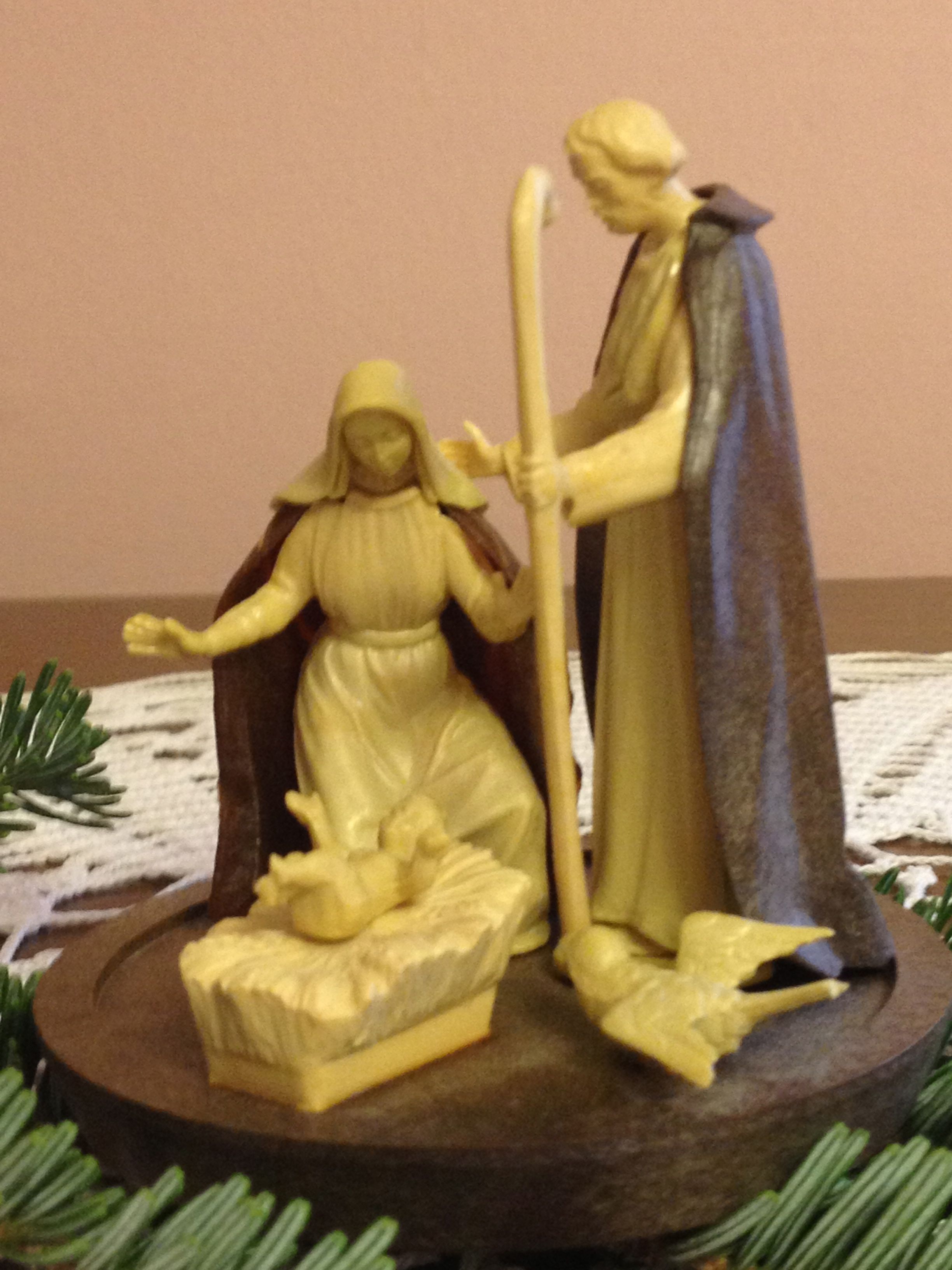
It may not have been the ghost of Christmas past who visited me last night, but it certainly was a Christmas from my past. I must have caught a glimpse of it earlier in the day, when the box of Christmas decorations was hauled upstairs. It’s a small thing really. Something I bought to adorn my very first apartment. You see, my first apartment was just a small studio, everything in one little room, so there was no room for a Christmas tree. So, I decided that if I couldn’t fit a tree in there, I might just be able to manage a nativity set. But I didn’t have much money to spare and all the nativity sets I liked were outrageously expensive and then one day I saw it on a store-shelf, a tiny little nativity that I could actually afford. It had been marked down, from $16 to $12.95. From where I was standing it looked like it had been carved out of the finest wood. I knew that I just had to have it. When I reached out to take it off the shelf, I realized that it was actually made of plastic and suddenly the $12.95 price tag seemed way too much to pay for this mass-produced piece of plastic. But the longer I looked at it the more I knew that my little apartment needed it. Would you like to see it?

It may be small. It may just be a cheap imitation, but when I look at it I see all the hopes and dreams of all the years as they are told in the story of stories. No more ghosts visited me in the night, but just like Ebenezer Scrooge, I woke up knowing just what I had to do. You see Scrooge wasn’t the only movie that my brother and I used to watch. Alan was particularly fond of science-fiction movies. Sometimes, when he would manage to convince me to watch one of this movies with him, I would complain after just a few minutes in, that the premise was just too unbelievable; I mean really nothing like that could ever actually happen. Alan would remind me that you don’t have to believe them; you just have to watch them, go with the story, see where it takes you. When you really think about it, many of our best-loved stories never actually happened the way we tell them. Take Scrooge for example; does any one of us actually believe that Ebenezer was really visited by three ghosts?  We know that it is a story that never actually happened the way it has been told to us; and yet it has the power to take us somewhere, to move us as we watch the incredible transformation of old Scrooge and we too are moved to keep Christmas well. Continue reading

The Nativity: A Parable So Simple a Child Can Understand It! – a sermon for Advent 4a

nativity drawningHistorian and spiritual philosopher, Ian Lawton describes the dilemma of those of us who seek to put a “little reason into the season” this way: “Picture the scene. Mary and Joseph are huddled together in a manger surrounded by farm animals. Joseph is drifting in and out of various dreams. Angels fly in and out of the manger singing songs and bringing earth-shattering messages. Three eastern kings gather around Mary and Joseph with gifts. Out of the window a large star can be seen in the day sky. Two sheep sit beneath the window having a conversation. One says to the other, “I don’t know why you’re being so stubborn. Let me go through this one more time. The virgin is having a baby. They’re naming him Jesus because of a dream. Angels told them that their baby would become the saviour of all humanity. Kings travelled hundreds of miles to find the place of birth like a needle in a haystack because they were led by a giant star moving through the day sky.  Now which part of this are you having trouble believing?” The Christmas story is fantastic in the literal sense of the word.  It is mostly fantasy.  Which parts of it do you have trouble believing?

You’re in good company.  This story is as unlikely as talking sheep. The laws of nature tell us that sheep don’t talk, virgins don’t have babies, stars don’t travel across the day sky and then hang like a blip over one home and angels don’t sing choruses. Even if a reliable source suggested that something happened that broke the laws of nature, you would demand evidence and there is little evidence for the details of the Christmas story outside of the Bible which has contradictory details.  All in all, the Christmas story is highly unlikely. But don’t let details get in the way of a good holiday story, right? If you’re like me, you’re torn between the desire to be true to your common sense that is skeptical and your heart that just wants to let the story be a good story.  The good news is that you can have both. You can question the literal account of the story AND you can enjoy the timeless message of the story. You can put a little reason into the season, and still take a yuletide joyride of inspired meaning. The Christmas story is mostly myth, but the message is real and powerful.”

Since the end of the first century, some 1900 years now, the Christmas story has been told. Lately the church has become a little embarrassed by the way in which this story has been told. All sorts of experts have weighed in to tell us that it could never have happened the way we all remember it. Biblical scholars, historians, theologians, bishops, pastors, professors even scientists have cast doubt on the details of the story of the nativity. But even though we know how impossible some of the details may be we cling to this power of the story.  Despite the wisdom of the experts, regardless of our doubts this story still has the power to stop us in our tracks. No other story or image is more recognizable to people the world over than the Nativity scene of the birth of Jesus. The images of an angel announcing the birth, a virgin responding in faith, a carpenter leading a woman on a donkey to a stable in Bethlehem, cumulating with Mary and Joseph gazing fondly at the baby Jesus, while the shepherds look on and the heavenly host sing their praises, these images are crystal clear to all of us. The story is part of us; it’s in our bones. Every year this story causes our lives to shift from the routine of winter, to marveling at the wonder of it all, as we enter into a sacred time, where families are drawn together, and strangers greet one another with kindness and from near and far the hope of peace on earth is a dream shared by us all.

Now, I know that somewhere in the deepest darkest recesses of our being, or for some of us, just beneath the surface of this dream, the wisdom of the experts causes a shiver to run across our spines as we wonder how the hope for peace on earth can possibly lie with such an unbelievable story. That shiver used to haunt me, until the day I recognized the power of the truth that lies in the story of the birth of Christ. It happened a few years back, when my youngest niece Sheri Lynn was about three years old. I have three nieces and over the years I’ve gained a bit of a reputation as their eccentric auntie. I can’t help myself, my love of stories and books just oozed over into my role as their auntie. And so to mark every occasion in their little lives their dear old Auntie Dawn showered them with books. Before every birthday, every Easter, and every Christmas every special occasion I could be found in the children’s section of the bookstore, scouring the shelves to find the perfect book that told the perfect story. My family used to tease me mercilessly and insist that I ought to get those little girls something they could play with. But only books were good enough for my nieces. So, you can just imagine the collection of books they have that tell the story of the Nativity. My family are not churchgoers, so on Christmas Eve I used to go to the Midnight service before heading over to my brother’s house to spend the night. Well the year that Sheri Lynn was just three, I arrived at my brother’s house at about 1:30 in the morning. My brother and his wife, my parents and my nieces were all safely tucked up in bed. On the dining room table were the remains of the milk and eating the cookies that had been left for some other visitor. I poked my head into the room where my youngest niece was sleeping. Little Sheri was snorting as little ones do when they sleep. In the glow of her nightlight I could see a rather unusual gathering on the floor by the foot of her bed. Standing upright on the floor was a large picture book opened to show a picture of an empty stable above which a star hung in the night sky. Beside the book was a doll’s cradle; inside the cradle was a naked doll covered only in a tea-towel. Sitting proudly with their legs sprayed out as if they were doing the splits were what could only be Mary and Joseph even tough they looked a lot like Barbie and Ken. Surrounding this scene were all sorts of little people, some smurfs, a few princesses all, no doubt, standing in for shepherds and angels. The most wonderful part was that all of God’s animals were there,  not just the donkey, the sheep and the cattle, but giraffes, zebras, horses, pigs, lions, tigers, turtles, alligators, elephants, hippos, bears and even an alligator and a snake. It was just as the prophet Isaiah had foretold a peaceable kingdom were all the animals lived in peace together and where the lion would eat straw with the ox and the wolf and the lamb would lie down together. The great thing about toddlers playing with animals is that in their minds all of the animals can play together. Sheri Lynn knew that the giraffe eats leaves because I saw her holding it up to the Christmas tree so that it could feast.  She knew that the horse and the cow and the sheep and the chickens lived over at the Fisher Price farm and that some of the other animals lived aboard Noah’s ark, and that snakes and alligators could be very scary indeed, but on this night all the animals played together, and all of them gathered together at the baby’s cradle to love and to warm and to care for the child, who lay naked and vulnerable before them. Sheri Lynn had created an image of the Nativity story; an image whose details weren’t exactly correct, but an image that told the truth about all our longings during this most holy season. Continue reading

Joseph and the Shady Ladies: The Revealing Story of Emmanuel

emmanuel with us

A sermon for the Third Sunday of Advent:

Readings Matthew 1:1-17 and Matthew 1:18-24

Listen to the sermon here

Preaching Christmas Eve in the Wake of New Testament Scholarship

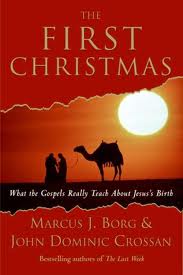
the first christmasIn 2008, our little congregation played host to John Dominic Crossan who has been acclaimed as world’s most famous New Testament scholar. Crossan’s visit to our congregation began with a public lecture based on his best-selling book The First Christmas in which he and Marcus Borg provide a splendid historical outline of the development of the birth narratives. I had the dubious honour of standing before his enlightened audience on Christmas Eve to preach in the great man’s wake. What follows is the Christmas Eve sermon I preached just three weeks after Dom’s illuminating visit.

Just a few weeks ago, this congregation was privileged to play host to a man who has the reputation of being the greatest New Testament scholar in the whole world. Dom, (we get to call him “Dom” now) wrote The First Christmas with Marcus Borg who is the guy who is heralded as the world’s leading expert on Jesus and Christianity in the 21st century. During his lecture, Dom provided us with all sorts of marvellous ways to understand the stories surrounding the birth of Jesus.  Ever since that visit, there have been folks who listened very carefully to what Dom had to say and who have been positively gleeful when they’ve asked me what I’m going to do about preaching on Christmas Eve.

I mean what could I possibly say to you after so many of you have just finished hearing from the best in the business! And then there are those of you who bought the book and you’ve read what the experts have to say about the first Christmas. Some of you weren’t able to hide the smirks when you wondered out loud just exactly how I’d go about following the eminent Dr. John Dominic Crossan.

I don’t mind confessing that on several occasions since, I’ve woken up in the middle of the night and wondered what on earth I’d say to you this evening. Even those of you who didn’t manage to hear Dr. Crossan; you’ve probably seen him on TV this week on one of the dozen or so, documentaries on which he appears as the expert scholar who the media turns to in order to unravel the Mysteries of the Bible or to dig up the truth about Jesus. In this the age of information, you can simply go to YOUTUBE  or to ITUNES U and download all sorts of podcasts where you’ll discover what pastors have been learning at seminaries for decades as the academic world has unlocked so many of the secrets of the ancient world in an effort to discover the real truth about what may or may not have happened so very long ago.  Ever since: “The shepherds returned, glorifying and praising God for all they had heard and seen, as it had been told them.”

Since the end of the first century, some 1900 years now, the story of the nativity has been told. Lately the church has become a little embarrassed by the way in which this story has been told. All sorts of experts have weighed in to tell us that it could never have happened the way we all remember it. Biblical scholars, historians, theologians, bishops, pastors, professors even scientists have cast doubt on the details of the story of the nativity. But even though we know how impossible some of the details may be, we cling to this powerful story.  Despite the wisdom of the experts, regardless of our doubts, this story still has the power to stop us in our tracks. No other story or image is more recognizable to people the world over than the Nativity scene of the birth of Jesus.

Tonight the images of a stable in Bethlehem, with Mary and Joseph gazing fondly at the baby Jesus, while the shepherds look on and the heavenly host sing their praises, these images are crystal clear to all of us. The story is part of us; it’s in our bones. And every year this story causes our lives to shift from the routine of winter, to the marvel of this night, when families are drawn together, and strangers greet one another with kindness and from near and far the hope of peace on earth is a dream shared by us all.

Now I know that somewhere in the deepest darkest recesses of our being, or for some of us, just beneath the surface of this dream,  the wisdom of the experts causes a shiver to run across our spines as we wonder how the hope for peace on earth can possibly lie with such an unbelievable story. That shiver used to haunt me, until the day I recognized the power of the truth that lies in the story of the birth of Christ.

You see truth is an amazing reality. Truth is never simple. And yet truth is quite simple really. At least for those who have eyes to see and ears to hear. But before I tell you about the truth, let me do what I do every Christmas Eve, Let me tell you a story. It’s a true story about a story about a story.

You see, the easiest way I know to reveal the truth about a story is to tell a story that sheds light on a story. It’s the most ancient way to reveal the truth and it’s the way that Jesus used when he wanted to reveal the truth about the scriptures.

This story took place just about two weeks ago. Our Confirmation students had gathered together for our last class before the Christmas break. Their final assignment was due. Each of the students was required to tell a story that revealed something about the nature of God. They were asked to write a gospel according to them.

One by one they got up and from this very pulpit and they told their gospel stories. I asked one of the students for permission to re-tell their gospel story this evening. The student agreed on the condition that I not reveal to you who actually wrote the story. Which is perfect really because despite all our best efforts nobody can really say who actually wrote the four gospels attributed to Matthew, Mark, Luke and John.  So, here I give you the gospel as it was told by one of Holy Cross’ confirmation students and recorded, after a fashion, by me.

It was a cold and snowy night in the town of Newmarket and a homeless couple wandered the streets of Davis and Yong searching for shelter and warmth. They were a strange looking couple; a man and a very, very, very, fat woman.

They were dirty and grubby and they wore layers and layers of clothes trying to macdsxmaskeep warm. They’d been wandering for a very long time and they were very, very, very hungry.

So they trudged up to Wendy’s, hoping to get a warm meal. But when they made their way up to the counter the guy behind the counter shouted at them and said, “Get outta here!  We don’t serve fat people at Wendy’s!”

So the hungry couple headed over to Tim Horton’s, but the woman was so fat that she couldn’t fit through the door so the people told her to go away cause there was no room for fat people at Tim Hortons.

So, on they trudged up to MacDonalds and low and behold the fat woman made it through the door and the man managed to get the servers to provide them with a warm meal and just as they were settling into a booth, there appeared a great flood!

And the very, very, very, fat woman leaped up onto the table, right there in the middle of MacDonalds! And the woman began to scream and moan. Because she wasn’t just some fat homeless person, she was with child. And after a lot of screaming and moaning a baby was born in the city of Newmarket. And all the people rejoiced! For unto us a child was given, a child born in the poverty of MacDonalds. For if God came to earth today, God would come where we least expect God to be. 

The Holy Gospel as it is told by a young person of this congregation. Thanks be to God.

So, if your struggling over some of the details of the nativity story, if the experts have left you perplexed, cynical or worried, do not be afraid, for I bring you tidings of great joy. The story is true, every last word of it is true. For just like Dom so wisely revealed to us, the story of the nativity is a parable and like all parable’s it represents a truth that cannot be fully expressed in words. Like all good parables the truth is not to be found in the details, but rather in the Spirit of God that breathes life into the parable. It’s a parable about so many things, but most of all it is a parable about peace on earth giving glory to God.

Now there are many down through the ages that have tried to weave stories of peace on earth, but none so everlasting as this.  And yes some of us would have rather have had a road map or an expert to set us on the path to peace. But alas, all the experts have failed in their efforts to guide us. The truth that they impart has been rejected. So, once again we are left with this parable.  A story so simple that even a child can understand it.  A parable that depicts the truth that was experienced by those who walked and talked, loved and learned from Jesus. And the truth echoes through the centuries and the message is clear to everyone who has ears to hear.

“And suddenly there was with the angel a multitude of the heavenly host praising God and saying, “Glory to God in the highest heaven, and on earth peace, goodwill among all people.” And we are left wondering at the power of a love great enough to triumph over death and we claim a Christmas Truth greater than any of the tradition it inspires: the truth of the mystical longing of the creature for the creator—the finite for the infinite— the human for the divine. It’s a longing that transcends culture, religion, language and custom—a longing that is represented tonight for us in the baby in the manger—the sudden, amazing and incomprehensible gift of grace: a God who loved us enough to become one of us.

Yes, we embody the wonder of Christmas in the gifts given, the meals shared, the gathering of family and loved ones. But the greater wonder is that the God who is love incarnate comes down to be among us over and over again. Christ comes to show us how to share that love with a world in desperate need of it— to a world yearning for “peace on earth, good will among all people”.           

That shalom—that peace—that unfamiliar hush is the peace on earth I’m praying for this Christmas— the shalom that doesn’t just mean the peace that comes when we’re no longer at war but the shalom that means that all human beings live together at peace with one another and with God, and in right relationship with all of the rest of God’s wondrous creation.        

Shalom, the Hebrew word for what we might describe as “turning the human race into the human family” —the peace on earth that we, are called to be about as followers of Christ, not just at Christmas but all year long.  The truth is that peace is the only way we can truly give Glory to God.

Peace is the only way to insure that every child born into this world will have an opportunity to play, to learn and to grow. To accomplish peace on earth we will all have to go out into this Christmas night and into this New Year and put our faith into action. That means prayers and protests; speaking up and stepping out; offering whenever and wherever possible the Good News of God’s shalom and realizing the truth of the angels chorus. For we are the followers of the one whose birth they herald. Howard Thurman, a fellow follower of Christ, put it best declaring that:

            When the song of the Angel is stilled,

            When the Star in the sky is gone,

            When the kings and the princes are home,

            When the shepherds are back with their flock,

            The work of Christmas begins:

            To find the lost,

            To heal the broken,

            To feed the hungry,

            To release the prisoner,

            To rebuild the nations,

            To bring peace among brothers and sisters—

            To make music in the heart.        

            And to radiate the Light of Christ,

            every day, in every way,

            in all that we do and in all that we say.

            The work of Christmas lies before us.

So, dear friends, rejoice and be glad, for unto us a child has been born, a child who is Christ our Saviour. May Christ lead each of us as we go forth to make peace on earth and good will to all.   Amen.

Shady Ladies, Forgotten Stories, and Images of God: Casualties of Our Advent Lectionary

women Matthew1

In the preface to her beautiful children’s book, “But God Remembered: Stores of Women from Creation to the Promised Land” Jewish writer Sandy Eisenberg Saso tells this revealing story:

“Before God created man and woman, God wanted to create Memory and Forgetfulness. But the angels protested.
The angel of Song said, ‘Do not create Forgetfulness. People will forget the songs of their ancestors.’
The Angel of Stories said, ‘If you create Forgetfulness, man and woman will forget many good stories.’ The Angel of Names said, ‘Forget songs? Forget stories? They will not even remember each other’s names.’
God listened to the complaints of the angels. And God asked the angels what kinds of things they remembered.
At first, the angels remembered what it was like before the world was formed. Then as the angels talked about the time before time existed, they recalled moments when they did not always agree.
One angel yelled at another, ‘I remember when your fiery sword burned the hem of my robe!’
‘And I remember when you knocked me down and tore a hole in my wing,’ screamed another.
As the angels remembered everything that ever happened, their voices grew louder and louder and louder until the heavens thundered.
God said, ‘FORGET IT!’
And there was Forgetfulness.
All at once the angels forgot why they were angry at each other and their voices became angelic again. And God saw that it was good.
God said, “There are some things people will need to forget.’
The angels objected. ‘People will forget what they should remember.’
God said, ‘I will remember all the important things. I will plant the seeds of remembrance in the soul of My people.’
And so it was that over time people forgot many of the songs, stories and names of their ancestors.
But God remembered.”

As we approach the Third Sunday of Advent, I can’t help wondering why the creators of the Revised Common Lectionary (the list of prescribed readings for Sunday worship) have failed to remember the stories and names of our foremothers? John the Baptist will strut across the stage again in this Sunday in churches all over the planet. We have begun a new cycle in the RCL in what is know as Year A the lectionary Gospel readings will focus upon readings from the Gospel according to  Matthew. But followers of the RCL will not hear the names of Tamar, Rahab, Ruth, or Bathsheba; no, not even Mary will put in an appearance despite the fact that all of these women are mentioned in the very first chapter of the Gospel according to Matthew! Last year was the same even though the RCL focussed upon the Gospel according to Luke, neither of the women of the Luke’s first chapter make an appearance without a great deal of effort. Unless worship planners are prepared to tinker with the lectionary Elizabeth and Mary will have to cede the stage to John the Baptist. So, all you worship planners and preachers out there, I say to you, “TINKER AWAY! TELL THE STORIES!” Continue reading

The Curtain Has Been Torn and The Temple Lies in Ruins: Luke 21:5-19 a sermon

Isaiah 65Our readings today were from Isaiah 65:17-25, Dietrich Bonheoffer’s “Letters from Prison, and Luke 21:5-19

A pdf of the worship bulletin which includes the Bonhoeffer reading can be found here (designed to be printed double-sided, landscape legal paper and folded into a booklet)

Pentecost 26C Nov 17 2013

The Historical Jesus: John Dominic Crossan

My favourite New Testament historian doing what Dom does best!!!

Whose Persistence? Preparing to Preach on the Parable of the Pleading Widow

pleading widowLooking back on a sermon I preached six years ago on this week’s readings from Genesis 32:22-31 and Luke 18:1-8, I am struck by how much my own images of the Divine One we call God have changed and yet remain oddly similar. The intervening years have afforded me the opportunities to begin to leave behind notions of an anthropomorphic God who intervenes in our lives. As I have embraced the writings of progressive and evolutionary theologians, I have struggled to understand and articulate God’s nature from the perspective of panentheism (everything is in God). There are those who suggest that this is a departure from the Christian tradition. Yet looking back, I am beginning to see this movement as a natural progression of the tradition. Indeed, so much of what I have always loved about Lutheran theology has freed me to explore this path. So, I offer this old sermon as a snapshot of my own pathway toward new visions of the Divine. I trust that my early efforts to move beyond the notion of God as the “unjust judge” will move some to begin to see God in, with, and through all those who persistently plead for justice. 

What little I know about the art of wrestling I learned from my brother Alan. He and I are just eighteen months apart in age and together we participated in many a wrestling match. All too often one or the other of us would be bothering the other and before we knew it we were rolling around on the floor wrestling. I’ll have you know that up until the age of about twelve I was quite a good wrestler. Up to that point I usually managed to hold my brother to the ground and with my knees firmly pinning his arms I would be able to get my brother to agree to my point of view. But my brother’s adolescent growth spurt put an end to my winning streak. Just as soon as my brother was big enough to pin me to the ground I decided to stop bothering him. Bothering my brother became dangerous and I had to give it up in order to save my dignity. Continue reading

Critical Thinking and Faith: Phyllis Tickle

critical thinkingPhyllis Tickle is a treasure!!! Let her no-nonsense, down-to-earth, humorous  way of articulating what should be obvious provide encouragement to the timid who sit quietly hoping that someone else will question the dogmas and doctrines that dull our senses. Let herrethinking questions inspire more questions and let set aside our carefully held notions of reality and embrace the awe and majesty of the Mystery we call God.