Bat Qol – The Daughter of a Sound: Hearing the Word Utter Our Name

Preparing to Preach on Jesus’ Baptism

BAT QOL pastordawnEach year, I begin my preparations for preaching on the Baptism of Jesus with this video in which  Heather Murray Elkins tells her story, “The Secret of Our Baptism.” Elkins opens us to a new way of hearing the Bat Col, the Daughter of a Sound, the Voice of the Divine, the Word, who speaks in this Sunday’s Gospel reading. Luke 3:15-17, 21-22

Epiphany Sermons

epiphany

You are the Light of the World here

The Journey of the Magi never happened and yet it is always happening. here 

Don’t Forget the Mystery of Our Faith here

Wisdom Seeks Wisdom here


Wisdom Seeks Wisdom – an Epiphany sermon for the Second Sunday of Christmas – Matthew 2:1-12

Thomas 70 pastordawn

The readings included John 1:1-9; the Gospel of Thomas 70, and Matthew 2:1-12 You can listen to the sermon here

This year, in addition to all of the many holiday festivities that we are accustomed to enjoying over the Christmas holidays many of us added the time-consuming guilty pleasure of binge-watching. Binge-watching is a relatively new phenomenon which results in hours and hours spent watching entire seasons of a TV series in one or two days. Thanks to things like Netflix, Apple TV and YouTube there are a so many TV series available but one that has me in its grip at the moment has more power to demand my attention as a result of a passion that developed in me when I was but a child.

When I was just ten years old, we lived in Newmarket for less than a year. By that time I had already lived in Birmingham, England, Belfast, Northern Ireland, Toronto and Newmarket. I was in grade five and I went to J.L.R. Bell public school. My teacher, Mr. Jones, was a particularly gifted storyteller. Mr. Jones had the ability to hold our little class in the palm of his hand simply by weaving tales of the world beyond our little lives. I can still remember the wonder and excitement that he generated when he announced that we were going to begin to study the explorers. I had no idea what an explorer was, but the globe that Mr. Jones spun on his desk as he explained that for years and years and years everyone believed that the earth was flat and that if you travelled far enough you ran the risk of falling off the edge, well I was hooked. Then he pulled down a large display map that was suspended on what looked to my ten-year-old eyes to be a window-blind and pointed to what looked like a funny shaped boot and told us that our study of the exploration of the world would begin in Venice, Italy in the year 1384, with the birth of Marco Polo.

I had absolutely no idea what he was talking about. Venice, Italy, 1384, Marco, Polo, none of these words meant anything to me except for one, so I was hooked. What was a Venice? What was Italy? What could he possibly mean by 1384? Whatever was a Marco and what on earth did a Marco have to do with a Polo? Polo’s were the little mints that my Nannie kept in her purse.

At the tender age of ten, Mr. Jones launched me upon a grand adventure, which would lead to my life-long love of history and of words. For days and days and days, Mr. Jones wove fabulous tales of the discoveries of Marco Polo as he traveled upon the Silk Route to China where he met the fascinating Kublai Kahn whose very name summoned up both mystery and danger. The adventures of Marco Polo had me hooked on history but Mr. Jones didn’t stop there, no. Vasco da Gama, Christopher Columbus, Ferdinand Magellan, John Cabot, Jacque Cartier, Henry Hudson and a host of others who Mr. Jones taught us about with only the globe and that mesmerizing map of his to aid him, all served to open me up to ideas and concepts that turned me into a student of history and a lover of stories.

I had to leave Mr. Jones class before the end of term because once again my family was on the move. We were right in the middle of following Thomas Cook to the shores of what would eventually become my home on the west coast of British Columbia, when I handed over the atlas that Mr. Jones had lent me. I was trying hard not to cry as I bid, the man who was at that very moment my favorite person in the whole world, good-bye. It was when Mr. Jones encouraged me to continue my journey into the past that I had what I know recognize as an epiphany. With that great big wall map as a backdrop and the globe in front of me, I knew that I too was an explorer. What I didn’t know, what that particular epiphany didn’t reveal, was that I was also a storyteller.

Epiphanies are marvelous, miraculous events that have the power to reveal the very depths of who and what we are. Strictly speaking an epiphany is a flash of insight. The word epiphany comes from the Greek for the appearance of the divine. When the word was first explained to me, my teacher suggested that the word epiphany could be used to describe that moment in a cartoon when the light-bulb appears above a character’s head. A flash of insight! A moment of discovery that enlightens the mind and can change a life, open up a whole new world, herald a new way of being, unravel a mystery, or reveal the Divine in our midst.

It is hardly and any wonder, that the celebration of the Epiphany, was once second only to Easter in the church year. The recognition of God in our midst, no that’s something to celebrate! Over the years, Christmas has eclipsed the celebration of Epiphany. We won’t even bother coming to church on Tuesday for the feast of Epiphany. These days most Christians don’t even wait until Epiphany to take down their Christmas decorations. Yesterday, I saw Valentine’s Day decorations in the grocery store. The world scarcely pauses to notice. Perhaps the wise-guys are to blame. Continue reading

Sermons for Christmas Eve/Day

nativity 3

Click on these links for some of the sermons I have preached on Christmas Eve

Preaching Christmas Eve in the Wake of New Testament Scholarship

Shattered Angel: an Imperfect Christmas Story

Mary’s Story  (also found in Christmas Stories – just scroll down)

Living Nativity

Keeping Christmas Well

The Nativity: A Parable So Simple a Child Can Understand It

The Power of LOVE Who Lives In Us

Cheap, Small, and Plastic: a Christmas Eve Sermon for Progressive Christians

Tell Us About God. We Have Almost Forgotten

Way Back When: Christmas Oranges 

Way Back When: Christmas Oranges – Christmas Eve Sermon

Christmas orangeThis sermon owes much to the work of Richard Rohr whose work opens me to the LOVE who lies at the core of REALITY, the ONE we call God. The source of the story that I tell about a Christmas Eve way back when has been lost to me. I cannot remember when I first heard it. It’s power to open me to the LOVE that is God remains with me and so I treasure the story and tell it so as to open others. To open ourselves to the cosmic nature of the Christ we used different scripture readings. The readings can be found here During the sermon copious amounts of chocolate oranges were smashed open and distributed. You can listen to the sermon here 

Christmas Eve is a night when the phrase “way back when” is uttered by storytellers often. I remember way back when I was just a little girl, you know long, long, ago, way back when Christmas celebrations were so different. Way back when I was a child, we didn’t hang fancy, especially dedicated stockings on the chimney with care, in hopes that St. Nicholas soon would be there. No, way back when, people didn’t have the money to waste on special, fancy, Christmas stockings that were only used once a year.  Way back when, we just went into our sock draw and pulled out the largest sock we could find and we’d hang it up, in the hope that if we’d been good we’d get some goodies instead of the dreaded lump of coal that our parents had been threatening us with for weeks. Come Christmas morning, way back when, we were happy when our sock was filled not with stocking-stuffers like we have these days, but with the same thing we got every Christmas in our stockings, an apple, an orange, a few toffee’s and a couple of coins. You see way back when, fruit was seasonal and fresh apples and oranges were a real treat. These days we can haul crates of tiny delectable oranges from the grocery store all year long. But way back when, oranges at Christmas were a real treat.

Now I never did like oranges very much, so I would always try to trade my orange with my brother so that I could have two apples instead. You see way back when children were easier to please and Christmas was different. Which leads me to another story. I don’t remember when or where I first heard this story about way back when World War II had just ended and refugees were loaded into camps until the world could figure out what to do with the millions of displaced people. Back then; refugee camps were filled to overflowing with children who’d lost their families during the war. Apparently there was this little boy in a camp in France; we’ll call him Andre. Andre couldn’t have been more than about seven years old and he could barely remember the family he lost almost three years before the war ended. He’d been living in the refugee camp, more of an orphanage really, for almost a year. A few nuns who never could scrap together enough money to feed the children properly ran the camp. But they did there best and the children were, after all was said and done, lucky to be alive. The children hardly noticed that Christmas was approaching until one of the nuns announced that a neighbour had promised to come by on Christmas Eve to drop off a sack of oranges. Andre had only a vague memory of an orange. The year before a stranger had shared an orange with him and he remembered the taste of the three tiny sections of his share of the orange that oozed precious juice down his half starved throat. Andre spent the days leading up to Christmas Eve dreaming of having a whole orange of his very own. He thought about the smell of the orange, dreamed of peeling the orange, and carefully considered whether or not to devour each and every section of the orange all at once or whether he should divided it and save a section or two for Christmas morning. Continue reading

“The Force Be With You” or “Live Long and Prosper”

A sermon for the Fourth Sunday of Advent – Luke 1

star-trek-vs-star-wars

The quotes in this sermon are from Steven Pinker’s book “The Better Angels of Our Nature” and Joseph Holub’s “Fear Not” The Acclamation sung prior to the sermon is “The Magnificat” from Holden Evening Prayer, by Marty Haugen, featuring Gary Curran and Linda Condy:   Listen to the sermon here

 live long and prosper

Sermons for the Fourth Sunday in Advent

women Matthew1

Click on these links to find  sermons I have preached on Advent 4

Keeping Christmas Well: a Christmas Resurrection Story

The Greatest Birth Story Ever???

The Nativity: A Parable So Simple a Child Can Understand It!

Mary and Elizabeth: Visitation or Escape 

Fear Not for the Progressive Grinch Who Stole Christmas Does Indeed Have a Heart


Fear Not for the Progressive Grinch Who Stole Christmas Does Indeed Have a Heart – a sermon for Advent 4

GrinchThe story told in this sermon can be found in Maeve Binchy’s book of short stories “This Year it Will be Different.” As always I am indebted to those progressive grinches Marcus Borg, John Dominic Crossan, John Shelby Spong, and Michael Morwood for their insights into the sacred. Our sermon hymn was No Obvious Angels. The readings were all from Luke 1:1-56.

You can listen to the sermon here  

Years ago, I struggled with most of the stuff I was reading both in the bible and about the bible. I’d been attending church every Sunday since I was 15 and I was doing my best to be a Christian. But the more I read the bible, the more I studied the stories in the bible, the more difficult it became to reconcile all of the inconsistencies. Nowhere are those inconsistencies more apparent than in the stories about the birth of Jesus. Long before I ever dreamed of going to seminary to become a pastor, I was introduced to the work of progressive scholars like Marcus Borg, Dom Crossan and Jack Spong. It was a relief to learn how to take the bible seriously without taking it literally. It was also a relief to discover that my pastor and indeed most of the pastors I knew didn’t take the bible literally. But I have to admit that Christmas in the Church just hasn’t been the same since I learned that the stories about the birth of Jesus that appear in the Gospels according to Matthew and Luke are not historical narratives. I must also confess that since we here in this community embarked upon this grand adventure together of ReThinking our Christianity, the celebration of Christmas in our worship together has become more and more of a challenge. There are days when I feel like a progressive Grinch who is determined to steal Christmas. Then there are other days when I feel like the Grinch’s little dog, who try as he might he just can’t seem to balance those reindeer antlers on his tiny little head. There are days, and some sleepless nights when I simply long for the good old days, when we could sink into the sentimentality of the season without having to delve into scholarship or worry about our evolving theology.

I miss those Advents when we all acted as though prophets foretold the birth of Jesus centuries before it happened, when we suspended disbelief and went along with the idea that angels visited Mary and Joseph, and we marveled at the fact that Mary conceived will still a virgin. It was easier when that Star guided wise guys and heavenly hosts actually visited shepherds abiding in their fields. Damn those progressive Grinches who’ve robbed us of our simple ways of celebrating the birth of Jesus

and as for those radical Grinches who have us questioning everything from the divinity of Jesus to the cosmic reality of the Christ, well I for one wish they’d leave us alone to sing our songs in peace. We Whos did just fine down here in Who-ville before those Grinches tossed all the elements of the birth stories upon their sleighs and left us here wondering what to do and how to sing. For however shall we celebrate the birth of the Son of God now that we know Mary couldn’t have been a virgin, and Matthew and Luke were the worst historians ever?

Well fear not my friends, because like all Christmas stories ours too has a happy ending. The good news is that those progressive Grinches who have stolen Christmas, do indeed have a heart after all. Even that Grinch Marcus Borg knows a thing or two about opening his heart to the wonder of the stories about Jesus birth. Yes, Borg, just like the rest of those Grinches like Spong, Crossan, and Morewood, leads us to understand that the stories of Jesus birth didn’t actually happen the way the gospel storytellers wrote them. The good news is that Borg, just like the rest of those Grinches, does have a heart big enough not to just stop with the reality that the birth stories are not history. Borg’s heart is big enough to cope with his mind’s ability to give us a better question than, “Did the birth stories happen they way they were written? When Borg encourages us to ask: “why did the gospel story-tellers tell their stories they way they told them?”

Borg’s heart leads him to remind us that the stories may not have happened exactly the way they are written, but they are absolutely true because these stories are always happening. The sacred is always being discovered in the ordinary stuff of life. Every birth is sacred because in every birth their lies among the muck and the mess of birth the reality of Divinity which lives in, with, through, and beyond each and everyone of us. The birth narratives open us to the reality of the sacred, which lies at the very heart of life; all life. Humanity is born over and over again, and over and over again comes the sacred possibility of abundant life; life in which we are capable of living deeply and loving more fully that we can possibly imagine.

In the life and teachings of Jesus people experienced this divine abundance and it opened them up to the possibilities of a world in which the reign of God who is LOVE accomplishes peace through justice. Why did the gospel storytellers write about the birth of Jesus they way they did? Could it be that the divinity embodied in the life of Jesus of Nazareth could not be killed by the worst that the Romans could conceive? The storytellers told the story of Jesus birth using the tools that they had available to them to open their contemporaries to the reality that in Jesus the sacred dimension of life was experienced in the flesh. These parables about the birth of Jesus have opened generations to the sacred Holy One in whom we live and move and have our being. When we begin to experience the more-than-literal meaning of these parables about the birth of Jesus, we are opened to the sacred in our midst in ways that only LOVE can open humans. Continue reading

Know Thyself – a sermon for Advent 2C – Luke 3:1-6

knowThyselfQuotes from John Shelby Spong’s essay “Looking at Christmas Through a Rear-View Window” and Ralph Waldo Emerson’s poem Gnothi Seauton: Know Thyself

Listen to the sermon here

Suddenly this God, that I had been trying hard to fathom, was there, right there! – a sermon for Advent 2C

jokulsarlon-glacier-lakeAs the world turns expectantly for news from the United Nations Climate Conference in Paris, we hope that leaders everywhere can find the courage to commit us all to change our ways. Prophets have been warning us for decades of the dangers of climate change. The figure of John the Baptist looms large during the first half of Advent. This angry misfit shouts and us, convicting us of hastening the end. This sermon from three years ago, asks questions which ring true today: Do we have the courage to join John the Baptist? Do we have the stamina to become a prophet of doom? Our planet may be depending on us! You can listen to the sermon here or read the text below. 

I didn’t know it at the time, but I actually met John the Baptist when I was fifteen years old. She didn’t look much like you’d imagine John the Baptist would look, but she had that same crazy intensity, that same focus on the fact that we’d better change our ways, we’d better repent, and start doing things differently or we’d be in real serious trouble. Lola was my friend Valerie’s mother and she simply couldn’t stop going on and on about the environment and how we were destroy the earth. At the time, I remember thinking she was a bit of a nut-case and on more than one occasion I wished she’d just shut up about it. I was just a kid, and the earth was just something I took for granted. The earth was just there to provide for our needs. I couldn’t believe how much Lola went on and on about all the stuff we humans were doing to destroy the earth. I just wished she’d leave us along to get on with things; I couldn’t abide her incessant nonsense about how we were going to destroy the planet. All her feeble little attempts to be kind to the earth, made me seriously question her sanity.

I tolerated Lola not just because she was my friend’s mother, but I didn’t really understand her until one day when the three of us were travelling together. We were coming home from church. I had only been going to church for a few months. I was trying hard to understand this whole God thing. So, I went to church a lot. My friend Valerie had persuaded me to start going to church with her and family had become like my second family as the supported me during my first attempts to explore the mysterious world into which I had begun to feel pulled. As we drove home from church, I was feeling a little glum. Try as I might, I couldn’t really understand this church thing; all that singing and praying didn’t really help me to feel closer to God. Mostly I just liked how people at church treated each other. I liked how they went out of their way to help me feel at home. Whether or not God was there, well I really wasn’t sure.

Anyway, we were driving along the road. It was a partly over-cast day on the west coast of British Columbia, just a few clouds. You could see the mountains off in the distance. We were chatting back and forth when all of a sudden; Lola pulled the car over to the far side of the road, switched off the engine and got out. Valerie followed her mother out of the car, so I figured I had better do the same. Val and her mother scampered down from the road and onto the beach. When they reached the water’s edge, they stopped and just looked off into the distance. Apart from a tanker-ship making its way across the horizon, I couldn’t see much of anything. Lola had the most amazing expression on her face. She positively glowed with happiness. Valerie wore a similar expression. I must have looked somewhat puzzled because Val smiled at me and said isn’t it the most beautiful thing you have ever seen. This only confused me more. What were they looking at that had made them stop the car, scamper down the bank and stand there at the water’s edge on a cold autumn evening. Maybe my parents were right, these religious types are a little bit weird. Happy, glowing, smiling people make me nervous. There they stood grinning from ear to ear. What were they on? And then, I saw it. For the first time in my life, I saw it. It had been there before. But I had never really seen it before. The sky was amazing. The colours were overwhelming. It almost didn’t look real. It looked like someone must have painted it that way. It was magnificent, a work of art. The most beautiful thing I have ever seen. Continue reading

Re-Birthing God: a sermon for Advent 1C

Made of God Julian pastordawn copyThis sermon relies on the work of John Philip Newell in his book, The Rebirthing of God: Christianity’s Struggle for New Beginnings. On this, the first Sunday of Advent our readings included “The Star Within” a creation story by Dr. Paula Lehman and Rev. Sarah Griffith, Luke 21:25-36, and John 3:1-9. A deliberate choice was made not to use the traditional Advent reading from Jeremiah so as to avoid the trap of the false Christian appropriation of the Hebrew prophets as foretellers of Jesus as the Messiah. Listen to the sermon here

Christ Will Come Again, and Again, and Again – a sermon for Advent 1C – Luke 21:25-38, 34-36

Old SpiceChrist has died. Christ is risen. Christ will come again. Outside the world is hurtling toward the Christmas; toward the celebration of the birth of a baby. While the world prepares for the birth, the church says, “wait”. Wait, keep watch, and beware, for the world is ending. While the church cries out:

“Signs will appear in the sun, the moon and the stars. On the earth, nations will be in anguish, distraught at the roaring of the sea and the waves. People will die of fright in anticipation of what is coming upon the earth.” the world sings: “You better watch out, you better not pout, you better not cry, Santa Clause is coming to town.” And all the while we declare the mystery of our faith, “Christ has died. Christ is risen. Christ will come again.”

Somewhere between our deepest fear and our deepest longings we wait, the world prepares and we wait and watch, knowing all the while that, “Christ has died. Christ is risen. Christ will come again.” knowing that because the world will end, our hope lies in the knowledge that Christ, the Anointed One, the Messiah, will come again.

Advent, the very word means come; tis the season of coming. Advent is not about waiting; waiting for Christmas, or waiting for the birth of a baby; Advent is about coming, the coming of Christ. In the darkness of the end, we long for Christ to come. Yes, we will have to wait for Christmas to come; but Christmas will come as it always does. The point is not the waiting, the point is in the midst of darkness, in the trials and tribulations of the end, Christ will come; the point is Christ will come. In the midst of the darkness of the end, our deepest longings are stirred up, our longings for hope, for peace, for love and for joy.

All around us we can see the signs of the end; death is everywhere. Galaxies collide and stars die, and there is darkness, the end. Dreams die, and there is darkness, the end. Barriers go up, bullets fly, bombs explode, people die; there is darkness, the end. Words are spoken, promises broken, hopes are dashed; there is darkness, the end. The work dries up, the job ends, funds are exhausted, the bills pile up; there is darkness, the end. Illness overwhelms, shadows on x-rays frighten, scans scare, falls break us, dreams are dashed; there is darkness, the end. In the darkness of the end, we long for hope, for peace, for love, for joy.

I remember, when I was a kid; I was about thirteen, we’d just moved to the West Coast and I can still remember it as if it was yesterday. I set off on my bicycle in search of the perfect Christmas I was as moody and emotional as any thirteen year-old could be. I was lonely, because we’d moved around so much that my only close friend was my younger brother; and what thirteen year-old girl, wants to admit that her only real friend is her eleven year-old brother. My parents were worried sick about money. We’d moved, Dad’s job was unstable and Mom’s job barely paid anything. About the only good news in my life was that I was twelve and back in those days, at twelve you were considered old enough for babysitting and babysitting meant money. Every weekend, I would babysit. Looking back on it now, I can’t believe that at thirteen, I was actually left in charge of little children. I remember getting a couple of bucks for babysitting on Friday and Saturday night; and I do mean a couple of bucks, two dollars for two nights of babysitting.

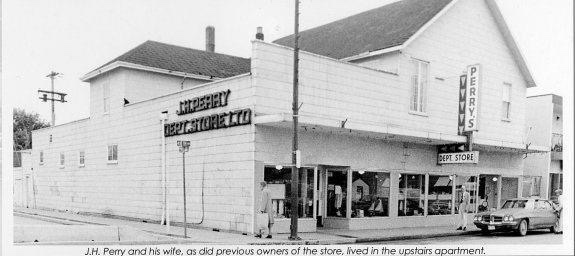
IMG_1220I remember, calculating that by the time Christmas arrived, I should have $27 dollars saved up. Twenty-seven dollars should be just enough to buy presents for my Mom and Dad, my brother, my aunt and uncle, and my two little cousins. I still remember heading off on my bicycle, into the bustling metropolis of Ladner. Ladner was just a small fishing village back then. There were just three stores worth looking for Christmas presents in: Perry’s Department store proved to be far too expensive for my blood. So, I headed off to the 5 and 10 store. For those of you who don’t know what a five and ten store was, just think dollar store, only back then it was the 5 and dime and you could actually get stuff for five and ten cents. I spent hours in there trying to figure out the perfect gifts for my brother and my two little cousins. I left thinking that I could take care of their gifts with about five dollars. So it was off to the drug store to figure out what to get for my Mom and Dad and Aunt and Uncle. That took another couple of hours as I agonized over the various Old Spice gift sets. I could just about afford a 3-piece set for my Dad that included saving cream, after-shave and a soap-on-a-rope. Surely my uncle would be happy with a soap-on-a-rope. Then it was a Yardly gift set for my Mom, dusting powder, perfume and soap all for about six dollars; which would leave enough left over for a small bottle of perfume for my aunt. Continue reading

Home in the Love We Call God – a sermon for Jesus the Christ Sunday- Luke 15

prodigalRather than the recent church tradition of celebrating the Reign of Christ/Christ the King Sunday, on this the last Sunday of the church year, we chose to celebrate our complex relationship with Jesus the Christ. Our readings included the parables of the lost form Luke 15:1-32. 

Listen to the sermon here

Quest for the Cosmic Christ – a sermon

Cosmic Christ pastordawnLast year, we at Holy Cross began our quest for the Cosmic Christ on  the last Sunday of the Church calendar; traditionally the festival of Christ the King or Reign of Christ Sunday. Our readings: John 1:1-6; Colossians 1:15-20; and Matthew 9:16-17. The sermon was the first in a series of sermons on our Quest for the Cosmic Christ which anticipates the season of Advent’s waiting and hoping for Christ to be born in us.

“No one sews a piece of unshrunken cloth onto an old cloak, because the patch will pull away from the cloak and the tear will get worse. Nor do people put new wine into old wineskins—if they do, the skins will burst, the wine will run out, and the skins will be ruined. No, they put new wine into new wineskins, and both are preserved.” Matthew 9:16-17

My one and only experience with old wineskins was not a pleasant one. If I’m honest, I have to admit that I’m not exactly sure that the offending wineskins were old when I encountered them. They were however old-fashioned. Indeed, I do believe that if Jesus tried to tell this story in the in this century instead of the first century, he would have cautioned us against putting new wine into old-fashioned wineskins. Few people use old-fashioned wineskins. The only time I’ve ever come across old-fashioned wineskins was about 35 years ago when I myself wasn’t so very old. I was backpacking around Europe on a very tight budget. In order to extend our stay we had to stretch every penny. So, from time to time we camped out. I remember one particular night, after securing our campsite and pitching our tent, we walked back into the nearest village. I don’t remember the name of the village, I only remember that we were somewhere north of Florence, Italy. After a cheap dinner in a local taverna, we were wandering back to our campsite, when one of us, I don’t remember who, decided that we needed some more wine. When you are travelling in Italy on the cheap, some wines are less expensive than bottled water. So, I’m sure my travelling companion was just trying to save us some money, when he came out of the shop and encouraged us all to go in and take advantage of the great deal he had just bought. For not much money he had purchased two wineskins full of what promised to be a charming little vintage. I do love a bargain, so in I went to purchase my first and my last old-fashioned wineskin full of a very decent little chianti. The rest of the way back to our campsite, we speculated over the source of the wineskin, but as to whether sheep, goats, or cattle had given up the ghost for these skins, I’ll never know. I do know that we consumed a great deal of wine over our campfire. Sometime during the early hours of the next morning, most of us ended up down by the riverside, tossing the contents of our own stomach. Later in the afternoon, convinced that we were dying, some of us managed to drag our sorry-selves to a nearby clinic where we discovered that we were not hung-over at all; we were in fact suffering from a type of poisoning. Apparently, if wineskins are not cured properly, bacteria that are normally generated in the stomach of the animal, whether it’s a goat, a sheep, or cattle, morphs into some kind of poison, which can in some cases be fatal. My friends and I got away with about four days of hugging a riverbank in a kind of agony that some would say we deserved for trusting old-fashioned wineskins; something the locals are loath to do. Continue reading

Wars and Rumours of Wars: The End is Near – a sermon for the 25th Sunday after Pentecost – Mark 13:1-8

Jean Jullien - Nov.13/15

Jean Jullien – Nov.13/15

Listen to the sermon here

Here We Stand, For We Can Do No Other – a sermon for Reformation Sunday

Simcoe Landing

Simcoe Landing

Listen to the sermon here

Watch the video that was shown in place of the traditional readings for Reformation: Thomas Berry and the Earth Community here

Gospel Text: John 8:31-36

The View from Job’s Dung-heap: Peering Beyond the Heavens Toward a Theory of Everything?

string theoryRuminating over this Sunday’s prescribed reading from Job 38, my mind harkens back to 2012, when I had the privilege of attending a series of lectures given by the great Phyllis Tickle who described the current reformation that the church is experiencing as part of a cultural phenomenon that happens about every 500 years, which she calls “The Great Emergence”. When asked what skills religious leaders will need to navigate the information age, Tickle insisted that the best advice we could give to anyone considering a religious vocation was that they should study physics. Inwardly I groaned, remembering my feeble attempts to come to grips with the most rudimentary theories of quantum physics. But I also nodded in agreement, knowing that so many of our religious narratives strive to make meaning of the cosmos as it was perceived by ancient minds. When our ancestors looked into the heavens they had no way of knowing the wonders of the cosmos that we are beginning to discover. While physicists can ignore theology, theologians who ignore physics will find themselves stuck atop Job’s dung-heap impotently shaking their fists at the Divine.  Perhaps Tickle is correct and the clerics of the future will out of necessity need to be physicists.  Theoretical physicist Michio Kaku speculates that the universe is “a symphony of strings” and the “mind of God would be cosmic music resonating through eleven dimensional hyper-space”.  If you have the courage to climb down from the dung-heap, take a look at Michio Kaku’s “The Universe in a Nutshell”. If the Divine bollocking that Job endured makes you wonder if ignorance might just be bliss, then take a peek at “Is God a Mathematician?” or “The Mind of God”. Who knows, maybe if a few more of us dare to dwell in the questions we might just come up with imaginative narratives to help us fathom what it means to be human. 

Who IS God? – Not One, Not Two – a sermon for Thanksgiving Sunday

Thankyou autumnA sermon for Thanksgiving inspired by Garrison Keillor and Joan Chittister; two of the best storytellers I know.

Let me tell you a classic Thanksgiving story created by the brilliant Garrison Keillor, which takes place on the outskirts of Lake Wobegon, where “All the women are smart. The men are good looking. And the children are above average.”

“It’s been a quiet week in Lake Wobegon.” Keillor’s old home town. “There was a holiday this last week and the return of the exiles. The exiles who come back to their home. Children who’d grown up and moved away and had families, and learned how to complicate their lives in all sorts of new and interesting ways. They come back every year to a little town so much the same it’s hard to look at it and not believe you’re still twelve years old and that’s just how some of the returning children behaved too, when they came back.

A lot of them drive up from the cities with their families and they make a last stop at the Cross Roads Lounge, about ten miles down the road, as they come up over the rise and down into town, the last drags are taken on a lot of last cigarettes, and the first of a lot of breath mints are popped into their mouths and the last warnings are issued to their children, the grandchildren, in the back seat, not to talk about you know what, in front of grandpa and grandma, and remember that at grandpa and grandma’s house before we eat grandpa bows his head and we’re all supposed to be quiet that’s called asking the blessing or saying grace and grandpa is talking to God. So you remember to be quiet then and close your eyes and don’t say a word.

One of the Olsen boys was giving this speech to his children coming into town on Wednesday. He explained all of the rules and was surprised to hear a little voice pipe up from the backseat. And his daughter said, “Who is God daddy?”

He said, “Jesus Christ! What am I gonna do now?” “Two blocks from home! It’s a little late to get this kid shined up for the parents so she looks Lutheran you know.”
Continue reading

Jesus Is the Memory of Our Future – a sermon for Creation 4B

GrandaThis long forgotten photograph of my Granda, William Anderson, moved my sermon beyond my miss-remembering as I attempt to respond to Dietrich Bonhoeffer’s question: “Who is Christ actually for us today?” I first encountered the phrase “Jesus Is the Memory of Our Future” on a t-shirt from Holden Village. Readings for this the fourth Sunday of the Season of Creation included: Dietrich Bonhoeffer’s Letters from Prison (to Eberhart Bethge, 1944), Mark 12:28-34, Mark 16: 14-16 – click here to read texts

Listen to the sermon here

Encountering the Divinity Within Us – Mark 9:33-37

Evie

Then Jesus brought a little child into their midst and putting his arm around the child, said to the Twelve, “Whoever welcomes a child such as this for my sake welcomes me. And whoever welcomes me welcomes not me but the One who sent me.” Readings included Exodus 40:34-38, Mark 9:33-37 

Listen to the sermon here