Contemplating the Beatitudes: preparing to preach on Matthew 5:1-12; Epiphany 4A

The gospel reading for this coming Sunday is Matthew 5:1-12, known as the Beatitudes. The reading is so familiar that we all too often read the beatitudes as if they were a  prescription. However, when read as a description they take on a whole new meaning. Jesus climbed up above the crowd, looked around and saw the poor, the grieving, the gentle, those who were hungry and thirsty for justice, the merciful, the righteous, the peacemakers and the persecuted; and Jesus comforted, uplifted and inspired them with the truth that they are blessed. Jesus was not telling the crowd how to live he was recognizing and affirming who they are. Can we hear this affirmation of our lives? As I prepare to preach on this text, I see the faces my congregation and I know that they are blessed for they too are the poor, the grieving, the gentle, those who are hungry and thirsty for justice, the merciful, the righteous, the peacemakers and the persecuted. The Good News is that the Kindom of Heaven is theirs. 

Walk With Me: Mary Youngblood

Following Wherever Christ Leads: a sermon for Epiphany 3A

IMG_0635

This afternoon our congregation is hosting a Blanket Exercise designed to help us to listen to the histories of Canada’s First Nations. Our worship was designed to open us so that we might engage in the exercise with open hearts, ears and minds. Our readings included Acts 10:9-16, 2 Corinthians 5:17-20 and Matthew 4:12-13.

Birdsong, Human Creativity, Richard Holloway and Richard Maybey

hollowayIf you are familiar with postings on this blog, you will know just how brilliant I think Richard Holloway is. If you don’t know about this amazing, iconoclastic, barmy former Anglican primate and self-described “agnostic Christian”,  you can begin reading about him here and here

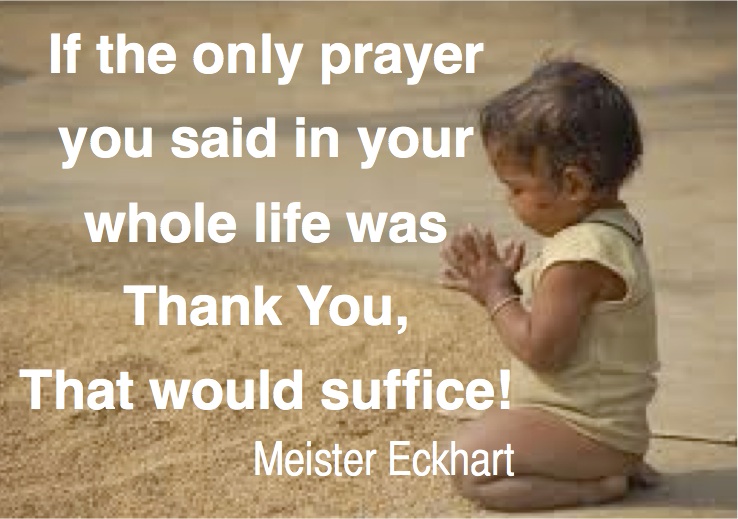
Prayer: A State of Communion – Richard Rohr

Foolishness: Jesus the Cover-Up

In the Epistle Reading for this coming Sunday, 1 Corinthians 1:10-18, the Apostle Paul talks about the “foolishness” of the message about the cross. As I begin to prepare myself for a serious engagement of the scripture readings, I am reminded of the foolishness with which various interpreters of the life and death of Jesus have developed the various theories of atonement. This little video, sarcastically holds up a mirror to those theories. Laughter seems like a good place to begin a conversation about this foolishness. Surely, any serious engagement of the Jesus experience must set aside the follies of our attempts to turn Jesus into something he was not.

WHY: by Nina Simone in honour of the Rev. Dr. Martin Luther King Jr.

Recorded on April 7, 1968 – just three days after the assignation of Dr. King, recorded live at the Westbury Music Fair. There’s a rawness to this performance that speaks volumes. The song was written by Nina Simone’s bass player Gene Taylor.

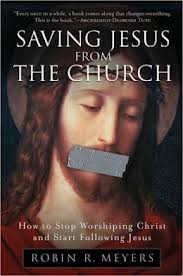
UNDONE: Faith as Resistance to Ego, Orthodoxy and Empire: Robin Meyers

Underground churchRobin Meyers gives the 2013 Beecher Lectures at Yale Divinity School. “The three lectures, given by Meyers, are entitled “UNDONE: Faith as Resistance to Ego, Orthodoxy, and Empire.” Instead of conceiving of the church as an institution that promotes faith as a belief system, defending doctrinal claims as essential to salvation and good works, UCC pastor and author Robin Meyers will make the case that the Jesussaving church Movement was in the beginning, and must be again, a Beloved Community of Resistance. Confronting our illusions with help from Kierkegaard, and drawing the poetry of Anna Kamienska, each lectures will focus on three areas that demand resistance: ministry as performance (ego), ministry as right belief and worship (orthodoxy), and ministry as sentimental surrender to the status quo (Empire).”

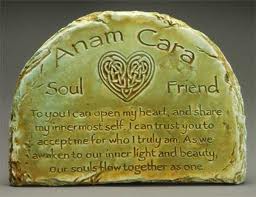
Benedictus: “For Longing” by John O’Donohue

anam caraThe art of creating blessings is not what it once was. There are days when I wonder if the lost art of blessing will ever escape the dull drums of the hallmark-esk drivel that is passed around to masquerade as sacred text. John O’Donohue is one of my favourite poets. He manages to delve into his Celtic roots to tap into the desire to bless another without resorting to the trite  cliches that dominate our modern attempts at this ancient art art form. His blessings are so carefully crafted to open our very selves to the possibility of the Divine. 

For Longing John O'Donohue pastordawn

A Progressive Christian Wades into the Waters of Baptism

baptism 33A sermon for the celebration of the Baptism of Jesus

Matthew 3:13-17

Listen to the sermon here:

God Is a River – Peter Mayer

riverPeter Mayer, one of my favourite folk singers, captures a hint of the essence of God when he sings. This morning our worship celebrates the baptism of Jesus and with so much water everywhere around us, the image of God as a river strikes some chords that I find both refreshing and challenging.

What the Universe Reveals – When God Is Elusive

Image

Universe Reveals O'Murchu pastordawn

Holy Miracle by Love Eternal

Thankyou babe

Baptism A Mystery of the Faith: a sermon for the celebration of the Baptism of Jesus

baptism 33There’s a definition of what it means to be a priest that has always daunted me. A priest it has been said is “a keeper of the mysteries; a keeper of the sacred mysteries of our faith. People often confuse the idea of mystery with the idea of secret. But I can assure you that as a keeper of the mysteries of the faith it is not my job, nor is it any other priest’s job, to keep the mysteries of our faith a secret. Yes, as an ordained pastor, one of my responsibilities is to be a keeper of the mysteries of our faith. As a keeper of the mysteries I am responsible for ensuring that the community I serve holds those mysteries sacred. We do so, by remembering that the reality that we call God works in, with, and through those mysteries. 

Baptism is considered to be one of the mysteries of our faith. Baptism is a sacrament of the church and by definition a sacrament takes ordinary stuff – water – mixes that ordinary stuff with the Word and in the combination of water and the Word you have a tangible means of God’s grace. God’s grace is revealed in the sacrament of Baptism by the act of our gathering together and mixing the stuff of the earth with the Word. We have only two sacraments in the Lutheran church Baptism and Eucharist, and both of those things are sacraments because we gather together take ordinary stuff – bread and wine, or water and mix it with the Word of Jesus the Christ and in the water, the bread and the wine the means of God’s grace is made visible to us.

So, there you have it the technical definition of the sacraments, the mysteries of Baptism and Communion, in which the reality that we call God works in, with, through and under. But like all technical definitions of mysteries, these definitions fail to capture the essence of the mystery that lies at their very heart; the mystery of the reality that we call God. As a keeper of the mysteries, one would think that a priest, a pastor, ought to be able to reveal, by way of definition something of the nature of the reality of the Divine. The truth is I have no real definition to offer you of this reality that we call God. I read once, I wish I could remember where the wisdom of a priest far more skilled than I who declared that he’d given up trying to explain God to anyone because in the end, he said, “I cannot lead you to God, anymore than anyone can lead a fish to water.”

The most important thing I learned in seminary is that “I don’t know is an answer.” The truth is the more we learn the more we know that we don’t know. But this unknowing can be so unsatisfying, precisely because we believe that God is the one in whom we live and breath and have our being, we want to know the very nature of the One who is the ultimate Reality.

Now, if these words haven’t already become so vague that the veil of unknowing has begun to make any tangible means of God’s grace seem invisible and so beyond our grasp, let me leave the theology behind and tell you a story. One thing I do know for sure is that the shortest distance between the questions of what it means to be human and understanding our humanity is a story. Continue reading

Being Honest to God: Richard Holloway

hollowayHe was once the Primate of the Episcopal Church in Scotland but these days Richard Holloway describes himself as an agnostic Christian hungering after transcendency and preaching a gospel of uncertainty. His memoir “Leaving Alexandria: A Memoir of Faith and Doubt” is a favourite of mine. In this video he explores being honest to God and understanding religion as an art form. Holloway’s words both challenge and comfort me as he plumbs the depths of our longing through the poiesis of ultimate meaning.

Bat Col – The Daughter of a Sound: Hearing the Word Utter Our Name

Preparing to Preach on Jesus’ Baptism

BAT QOL pastordawnHeather Murray Elkins tells her story, “The Secret of Our Baptism” and opens us to a new way of hearing the Bat Col, the Daughter of a Sound, the Voice of the Divine, the Word, who speaks in this Sunday’s Gospel reading. Matthew 3:13-17

Holy Morn: Tina Malia

From Alienation to Belonging – John O’Donohue

These post-celebration days, provide us with an opportunity to find our natural rhythm. Irish mystic, theologian, philosopher John O’Donohue offers wisdom for our journey.

YOU are the Light of the World: an Epiphany sermon

epiphanyMaybe it’s because I’ve directed too many Christmas pageants, but when I hear the story of the Magi visiting the baby Jesus, I don’t think of three kings at all. No visions of regal visitors decked out in their finest riding atop camels guided by a star for me. Just memories of little boys, decked out in colourful shiny robes that threaten to trip them up, giggling and roughhousing, with their cardboard crowns askew. Of all the little boy kings that I’ve tried to corral one of them stands out from all the rest. Perhaps I remember him so well because he was so little that we couldn’t have him knell at the manger for fear that he would disappear into the hay and our audience would only see two Wise Guys paying homage. Or maybe it was the speed with which he dashed in and out of the gang of shepherds who threatened to trip him up with their crooks. But I really think it was the ingenious way he solved the problem of his lost gold, that makes little, for the purposes of this sermon let’s call him Jay, stand out from all the other little boy kings.

Little Jay’s mother, like all the mothers of all the kings, was responsible for creating a facsimile of the gift her wise son would bestow on the baby Jesus. Unlike some of the feeble efforts that I’ve seen over the years, Jay’s gift of gold was a cut above the rest. Inside an elaborately carved box that his Dad had picked up on his travels to the Middle East, Jay’s mother had placed upon a bed of statin a carefully created block of wood wrapped in golden gift paper. It positively sparkled.  It must have impressed Jay, because he was forever opening up his box to show his fellow cast-members his treasure. During the dress rehearsal, Jay’s performance was perfect. Jay positively perfected the art of gazing up at the makeshift star that hung above the altar just east of our makeshift manger. When he arrived at the place where the newborn baby Jesus, who just happened to be a little girl that year, Jay strode right up to her mother Mary and opened the box containing his treasure and proudly announced his gift of gold for the new born king. They, whoever they are, say that if the rehearsal doesn’t go well then the performance will be wonderful. So, I was more than a little worried when our dress rehearsal went off so splendidly because that could mean only one thing, and I wasn’t looking forward to a performance where things went wrong. Sure enough, unbeknownst to me, on the morning of his big performance, somewhere between his home and church, Jay lost his golden treasure. All he had was an empty box when he showed up at his father’s pew wailing because all was lost. Jay had no gold to give to the baby Jesus.

This story reminds me of a story that Joan Chittister tells that I’ve told you before but like all good stories it is worth telling over and over again. It’s the story of a Sufi master who was found scratching through the sand in the middle of the road. “What are you doing?” some pilgrims asked the Sufi as they passed. The old Sufi looked up and said, “I’m looking for my treasure. I’ve lost it.” the old man said.  So the pilgrims, good people all dropped to their knees to help. They sifted sand.   They dug under stones. They sweat under the waxing midday sun. Until, finally, hungry, soaking wet and exhausted, one of the travellers asked of the Sufi,      “Sufi, are you sure you lost your treasure here?” And the old man said, “Oh, no. No, I didn’t loose my treasure here,  I lost it over there on the other side of those mountains.” Continue reading

The Journey of the Magi never happened and yet it is always happening.

Epiphany-Wise+WomenAn Epiphany Sermon, preached in 2008. I had just read “The First Christmas” by John Dominic Crossan and Marcus Borg. Our congregation played host to Dom Crossan a month before I wrote this sermon. So, Dom’s insights run through this effort. But the heart of this sermon beats as the result of a sermon preached by Bruce Sanguin a self-proclaimed evolutionary christian who is a United Church Minister (Canadian Memorial Church, Vancouver). I had the privilege of meeting this modern mystic while on sabbatical this summer and his compelling way of unlocking the scriptures using the wealth of the christian tradition together with the insights of modern science and psychology borders upon the poetic. This sermon was anchored by Sanguin’s words (Epiphany 2007). Sermons are a “live” event. So, this manuscript is an approximation of what was actually preached.   

Just five days before Christmas (2008), The Archbishop of Canterbury, The Most Reverend Doctor Rowan Williams, the leader of the worldwide Anglican Communion started a firestorm.  During a BBC interview, His Grace was quoted to say that the story of the “three wise men is a legend”. The Archbishop was also heard to say that he remained unconvinced that there was indeed a star that led the legendary trio to the birth place of the Christ Child.

If that wasn’t enough to send folks off the deep-end, it has been revealed that the Presiding Bishop of the U.S. Episcopal Church The Most Reverend Doctor Katherine Jefferts Schori, who just happens to be the first woman elected primate in Anglican history, has fanned the flames of the fire-storm by sending out what has been judged by some to be an incendiary Christmas card.

I downloaded a copy of the offensive card, so that you could see for yourself. Her Grace’s choice of card has offended the good deacons of Ft Worth Texas who claim that their Primate’s actions defy explanation. As you can see the wise folks depicted on this image look a lot like women. Can you imagine the nerve of the first woman primate! How could she be so bold as to select such an offensive image? Leave it to straight talking Texans to set things straight: for despite the audacity of the Primate, the Texans have pledged to “stand for the traditional expression of the Faith.” Continue reading

Inner History of a Day: by John O’Donohue

John O’Donohue was an Irish, mystic, philosopher, poet whose way with words opens hearts and minds to eternity.