Moving beyond doctrines of Original Sin, The Fall, and maybe even the Doctrine of Grace, so that we can embrace our role in the Evolution of Humanity – a sermon on Genesis 3:8-15 for Pentecost 2B

We Are Stardust!!! Billion Year Old Carbon!!!

We Are Stardust!!! Billion Year Old Carbon!!!

Try to remember the summer of 69. Pierre Trudeau had only been in office for a year. Richard Nixon was in the White House. The Vietnam was raging. Chappaquiddick and the Manson Murders dominated the news that summer. Neil Armstrong became the first man to walk on the moon. The Beatles’ Album Abbey Road was number one. Sesame Street debuted on Public television while the Brady Bunch debuted in prime time to compete with I Dream of Jeanie and Bewitched. In that last beautiful summer of the 60’s, 350,000 young people flocked to a farm in upstate New York for the three-day musical extravaganza that was Woodstock.

My family moved to Vancouver that summer and I turned twelve; too young to be a flower child of the sixties, but old enough to become a fan of the music of the sixties. Not many of us knew about Woodstock while it was happening. But when we found out, many of us wished we’d been there. Over the years millions of people have claimed that they were at Woodstock, despite the fact that the site could barely manage to accommodate the 350,000 thousand who did attend. News didn’t travel so quickly in those days. Woodstock may have captured the imaginations of millions but that was almost a year after the event when record albums began to hit the shelves.

Back then one of my prized possessions was my small transistor radio, which I held up to my ear so that I could listen to all my favorite tunes. The quality of the sound was abysmal. So, if you liked a song you heard you just had to rush out and buy a 45, for less than a dollar. I remember lining up to buy a copy of the number 1 tune that summer: Sugar Sugar by the Archies. But if you really liked a singer or a group, then you would have to save your money so that you could plunk down $5.00 for an LP, shot for Long Playing Album. That summer I spent weeks saving my baby-sitting money, about .25 cents an hour so that I could get my very own copy of The Fifth Dimension’s latest album, The Age of Aquarius. I was dancing and singing, “Let the Sunshine” and dreaming of becoming a teenager. Back then it took a whole year for the music from Woodstock to begin to seep into the culture. And so it was long after the summer of 69, that I got my very own copy of the quintessential album of the Woodstock generation: Crosby, Stills, Nash and Young – Déjà vu. I wore that album out. Our House, is a very, very, fine house! Teach your children well! Helpless, helpless, he…lpless! And then there was the best song on that album. Joni Mitchell may have written the song called Woodstock, but it took Crosby, Stills, Nash and Young to make it timeless.

Well, I came upon a child of God


He was walking along the road


And I asked him, Tell where are you going?


This he told me


Said, I’m going down to Yasgur’s Farm,


Gonna join in a rock and roll band.


Got to get back to the land and set my soul free.


I must have listened to that song a thousand times trying to learn the lyrics, but try as I might a line from the chorus eluded me. I just couldn’t figure out what they were saying. Do you remember the chorus? We are stardust, we are golden,
 We are ???? what was the next line? We are stardust, we are….something, something, and we’ve got to get ourselves back to the garden. We are stardust, we are golden… We are ….billion year old carbon,
 And we got to get ourselves back to the garden.

 Well, then can I walk beside you?


When I finally figured out the lyrics, I was no wiser, I was lost…I couldn’t for the life of me figure out what they were on about. But it sounded good!!! So, I kept playing and I kept singing.

Over the years, I’ve hummed and sung along, trusting that we’ve got to get ourselves back to the garden. And longing for a simpler time, when I was young and still believed that Adam and Eve had once frolicked blissfully in the pristine garden of Eden, and if we could only recapture the innocence of that garden all would be right with the world. I remember as a teenager, hearing sermons about Adam and Eve’s fall from grace, as the start of it all. Something went terribly wrong; if only Eve hadn’t have listened to that snake and if only Adam hadn’t listened to Eve, then evil wouldn’t have entered creation and we’d all be able to frolic in the garden with God. If only we could get ourselves back to the garden, Jesus would not have to suffer and die for us: “For we are in bondage to sin and cannot free ourselves. We have sinned against God in thought, word and deed, by what we have done and by what we have left undone. We have not loved God with our whole heart; we have not loved our neighbours as ourselves. And so for the sake of your Son , Jesus Christ, have mercy on us. Forgive us, renew us, and lead us, so that we may delight in our will and walk in your ways, to the glory of your holy name. Amen.” Week after week, year after year, Sunday after Sunday, I grew to understand that I along with all of humanity am in bondage to sin and we cannot free ourselves. Because Adam and Eve fell from grace, the stain of that original sin marks me as inherently sinful. Continue reading

“I Pray God, Rid Me of God” – sermons for Trinity Sunday

Eckhart rid me of GodMeister Eckhart’s fervent plea: “I pray God, rid me of God” becomes a sort of mantra for me whenever the task of contemplating the Trinity rolls around on the liturgical calendar. Once again, I have failed to have the foresight to book my holidays so as to avoid the task of preaching on this festival of the church, so I find myself plumbing previous sermons in search of a way through the quagmire of doctrines which threaten to overcome even the most dedicated of preachers. I offer them here to my fellow preachers as my way of saying, “I pray God, rid me of God!!!” Shalom

click on the sermon title

While Preachers Dutifully Ponder the Doctrine of the Trinity,

Our Congregations Shrink???

“Trinity: Image of the Community that is God” Desmond Tutu

The Athanasian Creed and an Unholy Trinity

Wolf Blitzer Learned that there are Indeed Atheists in Fox-holes

The Spirit Alive in Our Midst: a sermon for Pentecost Sunday

Pentecost Sunday

Readings included: Ezekiel 37:1-14; Romans 8:22-27 & Acts 1:12-2:21

You can listen to the sermon here

The Sheepskin Baggage We Bring to the Text: sermon for Easter 4B – John 10

good shepherdTraditionally the fourth Sunday in Easter is celebrated as Good Shepherd Sunday so it should not surprise us that a pesky lamb shows up. Readings:  Psalm 23, 1 John 3:16-24, John 10:11-18

Listen to the sermon here

Christ Appeared on the Road to Emmaus and I Almost Didn’t Recognize Her – a sermon for Easter 3B – Luke 24:36b-48

emergencyMy most memorable journey on the road to Emmaus was taken behind the wheel of a 1981 Oldsmobile, Cutlass, Brougham. I loved that car. It was a thing of beauty. It was a gift from my home congregation so that I could travel back and forth across the country to and from seminary. Despite its propensity to guzzle gas it was the perfect combination of power and elegance. It had the most amazingly plush interior with every imaginable power amenity of its day. It handled like a dream and even though I loved driving that car, neither it nor I faired well on our journey on the road to Emmaus. Five weeks into my Clinical training at the Grand River Hospital and I’d just completed one of the toughest weeks of my life when I set off for Emmaus. Clinical Pastoral Education is what the Church calls it but seminary students have other names for it, like boot camp, torture or hell. Twelve weeks of on the job training in a busy hospital combined with daily psychotherapy, group sessions, and sleep deprivation. It’s all designed to help seminarians put two years of academic study into practice before sending them off on a yearlong internship. Ask most pastors about their Clinical Pastoral Education and they’re likely to sit you down and tell you story after story about how intense an experience it was. Many of my colleagues will tell you that it almost broke them into little pieces, or that it almost destroyed their faith, or that they didn’t think they’d survive, or how they never thought that it was possible to be that scared or insecure for that many hours every day. Boot camp, torture, or hell, it all depended on whether or not you were able to get any sleep or if the demons you faced on the wards managed to destroy whatever self-confidence you might be able to muster.

The week before I set off on the road to Emmaus, wasn’t as bad as all that. I felt like I was just beginning to get the hang of things. I thought that the worst might be over. I’d managed to conquer my fear of being called Chaplain and being expected to help people who were sick, in pain, in distress, or dying. Why that week I’d even managed to help one or two of my patients. Those nagging doubts that haunted me during the first month of Clinical training were beginning to fade. It was becoming easier to believe that God was there in the midst of all the turmoil. I thought that maybe just maybe I could do the job and the terror wasn’t quite so intense when my pager went off. I remember saying to a colleague that maybe we’d be able to get through our Clinical training without coming up against the inevitable crisis of the faith that so many of our fellow students had warned us about. I wasn’t even nervous about having pulled the short straw for the long-weekend shift. 72 hours as the on-call emergency chaplain for the entire hospital. I felt like I was ready; that with God’s help, I could face anything that came my way.

I wasn’t particularly nervous when my pager went off and I calmly dialed the operator who announced that there’d been an MVA and six patients were on route; two of them were vital signs absent. MVA – Multiple vehicle accident. Vital signs absent = that usually means dead, but only a doctor can actually pronounce death so patients without vital signs are transported to the hospital before being pronounced dead. Continue reading

Practicing Resurrection: Forgiveness – a sermon for the Second Sunday of Easter

Practicing Resurrection pastordawnOur first reading was the traditional gospel story for the Second Sunday of Easter in which we heard the story of Doubting Thomas for John 20:19-31. This was followed by a video in which Richard Holloway retells the story of Peter’s denial and the encounter between the resurrected Jesus and Peter. You can view the video here . This was followed by the gospel reading from John 21:15-20

Listen to the sermon here

PRACTICING RESURRECTION – a sermon for the 2nd Sunday of Easter

resurrectionFor this sermon I used a video within the sermon to help illustrate resurrection. You can view the video within the written text of the sermon below or listen to the audio version provided. I am indebted to the work of James Rowe Adams for much of the New Testament Scholarship in this sermon.

The Scripture texts were John chapter 20:19-31 and Acts 4:32-35

Audio Version of the Sermon click here

Practicing Resurrection

Christ is Risen! Christ is Risen indeed!  Alleluia! So, Christ is Risen!  So What???What can it possibly mean to you and to me, that a rag-tag bunch of Jesus’ followers gathered together in an upper-room and talked about their experiences of Jesus and decided that not even death could extinguish the life that they experienced in Jesus? What difference does it make to you or to I that Christ is risen? The truth is that it can make absolutely no difference what so ever. Now there are a whole lot of people who will tell you that the important thing about resurrection is that you believe it. Those same folks absolutely love the story of doubting Thomas. And so every year on the second Sunday of Easter we read the story of doubting Thomas as a kind of inoculation against Thomas’ disease.

I sometimes think that the designers of the lectionary were trying to build up our resistance to doubt. Having problems believing in resurrection, well don’t do what Thomas did, don’t doubt, because you’ll be proven wrong. Jesus is alive, the wounds in his hands proved that to Doubting Thomas, so have no doubt about it the resurrection happened!  Believe in the resurrection!

The trouble with believing in stuff is that it belief can make absolutely no difference what so ever. I can believe in justice for all, but unless I’m prepared to seek justice, to be fair, or to resist injustice, it makes absolutely no difference what so ever. You can shout, “Christ is risen!” all you want but unless you are willing to live it, the resurrection means very little at all. In order to live the resurrection you have to begin practicing resurrection. In order to practice something, you have to know what it looks like, what it sounds like, or what it feels like.

I’ve been trying to figure out how to show you what resurrection looks like in the flesh. Then I remembered a video that’s been doing the rounds on the internet, so I want you to watch this modern miracle of resurrection.

WATCH THE VIDEO CLIP FROM:  Alive Inside

Christ is Risen! Christ is Risen indeed!  Alleluia!  Almost 2000 years ago, a bunch of rag-tag Jesus followers were huddled together in fear. Their beloved leader had been brutally executed by the powers that be and they were terrified that they would be next. Paralyzed by their fear, hiding behind a locked door, something happened that gave them the strength to burst forth from their own tomb and change the world. Continue reading

Words Will Always Fail Us: an Easter Sermon

Christ Is Risen in Us pastordawnLast year Michael Morwood preached an Easter sermon at Holy Cross in which I was reminded that the followers of Jesus, in all likelihood, told their resurrection stories using details they found in the scriptures of their ancestors. Michael’s words (you can listen here to Michael’s sermon here) provided the inspiration for this sermon. Our readings included Mark 16:1-8; 1 Corinthians 15:35-44 and John 20:1-18. The reference to the prophet Hosea is found in chapter 6:1-2. 

You can listen to the sermon here

I Will Remember You – Maundy Thursday sermon

Maundy Thursday

Pastor Tom Doherty’s Maundy Thursday meditation opened us to the pain and joy of memory. Listen to the sermon here

Mary Speaks: “The Testament of Mary” and “The Confession Stone” a Midrash for Palm Sunday

Palm Sunda 2015Judas, Peter, Pilate, Caiaphas, and John – these are the names most often heard in the stories we hear during Holy Week….the men who failed Jesus or who conspired against Jesus, their names we hear during this holiest of weeks. But what of the women who stood by Jesus, who wept for Jesus, who bore witnesses to the betrayal, the trial, the execution, and the death of Jesus. Where are their stories during this week of weeks? For centuries, the church has failed to listen to the voices of the women whose lives were intertwined with Jesus’ life. The stories of these faithful women have been hidden in the mists of time. This Palm Sunday we turned to one of those women; to Mary the mother of Jesus. Her voice has been silenced by the church. She has been confined to works of art that speak not with words. 

So, as we enter Holy Week we turn to two new works of art that give voice to Mary’s story. Anne Keith and I will do our best to give voice to Mary’s story using the words of the Irish writer Colm Tóibín whose book, “The Testament of Mary” imagines Mary as an old woman, nearing the end of her life, looking back on the life of her beloved child Jesus. You will hear cynicism in the voice of Mary who is visited by the men who will tell her son’s story; men who are determined to make a particular meaning out of Jesus life and death. Mary does not share their enthusiasm for the tragedy that robbed her of her child, nor will she twist her own story to suit their needs.

Mary’s voice will also come to you through music. Mezzo soprano, Linda Condy, accompanied by our Musical Director: Marney Curran, B.S.M., A.R.C.T., will preform “The Confession Stone: Songs of Mary” composed by Canadian Robert Fleming based on the poems of Owen DodsonOwen Dodson was an African-American poet whose work is part of what has been dubbed the Harlem Renaissance. Dodson’s poetry brings a lively humanity to the Mary empowering her voice to evoke the passion of a mother’s loss.

Both Owen Dodson and Colm Tóibín provide a powerful midrash with which to begin our Holy Week. 

LOVE Transforms: a sermon for Transfiguration Sunday

transformation

Readings include 2 Kings 2:1-14; Mark 9:2-10, Romans 8

Listen to the sermon here

Transfiguration Sermons

transfigurationSermons for Transfiguration Sunday:

Looking Back at the Way Forward here

You Have the Power to Transfigure the Face of God here

Transfiguration Just an Old-Fashioned Love Song here


Jonah: I love a big fish story!!!

jonahThe first reading prescribed for this coming Sunday is from the first chapter of the book of Jonah; a great big fish story! I believe that I was all of ten years old when I first read Hemingway’s “The Old Man and the Sea.”  I loved each and every mesmerizing page of it and I’ve been a fan of big fish stories ever since. I didn’t actually read the Book of Jonah until I was in my twenties and it took me many more years to appreciate it too as a splendid big fish story. This short film written by Jack Thorne and directed by Kibwe Tavares revisits the Jonah story with prophetic urgency and reminds me that though we may never go back to the way things were, we can dream of how things may be, so that we might never have to long so desperately to return. Enjoy this feast for the eyes! 

Let Freedom Ring Through You!

Martin Luther King2

Today as our neighbours to the south celebrate the life of the Rev. Dr. King, I offer this sermon (John 1:29-42) preached last year at Holy Cross when our worship service celebrated the life and witness of Dr. King. You can listen to the audio which  includes the Acclamation, sermon and a stirring rendition of the Hymn Lift Every Voice and Sing:

Listen to the sermon below or click here:

https://pastordawn.com/wp-content/uploads/2014/01/epiphany_2a-mlk.m4a

“Darkness cannot drive out darkness; only light can do that.

Hate cannot drive out hate; only love can do that.”

During the struggle to open the Evangelical Lutheran Church in Canada to the full participation of gay, lesbian, bisexual, and transgendered people, there were some very dark days. As many of you know, during my first years in ministry, it was not a struggle that I did not want any part of.  I was for all intents and purposes living in the closet, even if it was the most transparent of closets, the walls of that closet made it very clear to me that my job would be at risk if I spoke publicly about who I am. So, in the early years, I was determined to keep my mouth shut about my own sexuality and fight the good fight from the relative safety of the background. Then by virtue of my office, I was asked to speak publicly at a forum being held by York region, mental health professionals who were gathering resources to support GLBT youth. The organizers of the forum knew that many young people suffered as a result of their family’s involvement in churches that propagated hatred toward gays and lesbians and they wanted me to speak directly to these issues so that mental health professionals might be equipped to begin to counter some of the religious propaganda that was damaging so many young people.

A few days after I spoke at this public forum a note was hand delivered to the mailbox at the parsonage. The note contained two quotes from the book of Leviticus: “Thou shalt not lie with mankind, as with womankind it is abomination” and “If a man also lie with mankind, as he lieth with a woman, both of them have committed an abomination: they shall surely be put to death; their blood shall be upon them.”

I was shaken by the quotes and even more shaken by the fact that they were hand delivered to my home. I tried to shake off my fear by telling myself that the note represented the ravings of a fool. But when I shared the note with members of the church council, I was reminded that in my world these words represented Bible quotes but in the real world they actually constituted a death threat. Continue reading

Recognizing the Sacred: the Baptism of Jesus, Mark 1:4-11

baptism 33

Listen to the sermon here

Bat Qol – The Daughter of a Sound: Hearing the Word Utter Our Name

Preparing to Preach on Jesus’ Baptism

BAT QOL pastordawnEach year, I begin my preparations for preaching on the Baptism of Jesus with this video in which  Heather Murray Elkins tells her story, “The Secret of Our Baptism.” Elkins opens us to a new way of hearing the Bat Col, the Daughter of a Sound, the Voice of the Divine, the Word, who speaks in this Sunday’s Gospel reading. Mark 1:4-11

Don’t Forget the Mystery of Our Faith – an Epiphany sermon

Thomas 70 pastordawnA sermon preached on the Second Sunday after Christmas – the readings for this sermon include: John 1:1-9, The Gospel of Thomas 70; Matthew 2:1-12. You can listen to the sermon here

Two cars were waiting at a stoplight.  The light turned green, but the man didn’t notice it.  A woman in the car behind him was watching traffic pass around them. The woman began pounding on her steering wheel and yelling at the man to move.  The man didn’t move. The woman started to go ballistic inside her car; she ranted and raved at the man, pounding on her steering wheel. The light turned yellow. The woman began to blow her car horn; she flipped off the man, and screamed curses at him. The man, hearing the commotion, looked up, saw the yellow light and accelerated through the intersection just as the light turned red. The woman was beside herself, screaming in frustration because she missed her chance to get through the intersection. As she is still in mid-rant she hears a tap on her window and looks up into the barrel of a gun held by a very serious looking policeman. The policeman tells her to shut off her car while keeping both hands in sight.  She complies, speechless at what is happening. After she shuts off the engine, the policeman orders her to exit her car with her hands up.  She gets out of the car and he orders her to turn and place her hands on her car. She turns, places her hands on the car roof and quickly is cuffed and hustled into the patrol car.  She is too bewildered by the chain of events to ask any questions and is driven to the police station where she is fingerprinted, photographed, searched, booked, and placed in a cell.

After a couple of hours, a policeman approaches the cell and opens the door for her.  She is escorted back to the booking desk where the original officer is waiting with her personal effects.  He hands her the bag containing her things, and says, “I’m really sorry for this mistake.  But you see, I pulled up behind your car while you were blowing your horn, flipping that guy off, and cussing a blue streak at the car in front of you, and then I noticed the  “What Would Jesus Do” and “Follow Me to Sunday School” bumper stickers, and the chrome plated Christian fish emblem on the trunk, so naturally I assumed that you had stolen the car.”

We can scoff at this, but I must tell you that one of the things I had to learn when I first began to wear a clergy collar was that I could no longer give people the finger when I was driving. If you give people the finger when you are driving, it’s not you giving that person the finger but the whole of Christian Church; people will use your outburst to condemn the hypocrisy of the entire church.

During Advent we used a question from Meister Eckhart not once but twice during each of our worship services: “What good is it to me if Mary gave birth to Christ twenty centuries ago and I don’t give birth to Christ in my person and my culture and my times?” And now, in this the last day of Christmas, I find myself wondering what it actually means for Christ to be born in me or in you. Continue reading

The Messiah Is Among Us!

Christ is born in youDuring these twelve days of Christmas we celebrate the birth of the Messiah. Messiah, is a word the ancient Hebrews used to describe the anointed one. The one whom God would send to change the world. In Greek the word for Messiah is Christ.

My thoughts swirl around a poem written by the unknown writer of the Gospel of John in which the birth of the Christ is describe as the WORD. It’s a mysterious cosmic poem that moves our minds away from the mundane everyday ordinary stuff of life to the extra-ordinary mysteries of creation, which when you think about it is what every birth does.

Just holding a newborn in your arms and before long you’ll find yourself pondering the mysteries of this life. Who are we and where do we come from?  Why are we here? What does it all mean? These are all perfectly wonderful questions and speculating upon the many possible answers to those questions is a fascinating process. But in the end, our words will always fail us when it comes to answers. As we are speculating about the birth of this beautiful little baby, the baby is alive and among us, and needs to be fed and changed, nurtured, guided and protected.

Our speculations about the mysteries of creation are a little like our preparations for Christmas. All the preparations, the decorating, the shopping, the wrapping, the stuffing, the cooking, and the worrying, and in the end all our preparations aren’t really the point. The point is Christmas-tide is now and the guests are all around we’ve arrived and the Messiah has arrived, or not, its up to us to welcome the One who is Love in our midst, to celebrate Christmas.

The trouble is that sometimes, we are so preoccupied with the preparations, with the idea of getting it right that we forget the whole point of Christmas is the celebration itself; the gathering of the clans, the being with one another, the opportunity to be present to one another. It’s one of the reasons why I love the stories that the unknown writers of the gospels of Matthew and Luke put together.    In those familiar tales we hear a story of a couple of parents who were not at all prepared to welcome a child into the world. It’s an earthy story that brings the pungent aroma of a animal dung right into our carefully decorated living-rooms. And the Messiah that we greet in the story found in Matthew has no halo hovering over his head. The writer of Matthew makes it very clear that the Messiah comes from a very dubious pedigree, numbering a prostitute, a product of incest, an adulteress and sexual trickster among his ancestors. The Messiah’s parents were an unwed teenage girl and an unspeaking father, who wasn’t a father, and the pair of them appear to be homeless and then on the run, seeking shelter wherever they can find it.

Our romantic notions of a pretty little stable will have to wait a thousand years for St Francis to pretty up and launch us on a quest for cattle lowing, shepherds kneeling and magi bowing. Our expectations of the Messiah have become so very highfalutin, so otherworldly that I wonder if we are really prepared to welcome the Messiah among us. We hardly know what to expect from the Messiah. Are you really ready to welcome the Messiah? What do you expect?

There’s an old Jewish story, I can’t remember where I first heard or read it. I suspect I might have learned it from Scott Peck? The story is now deep in my bones. It surfaces most Christmas mornings to remind me that Christ is born in us.

Once there was a monastery with a long history of commerce and a thriving spiritual community. But as time wore on, fewer and fewer villagers visited the hallowed halls. Fewer people turned to the monastery for advice. Even the sale of their famous wines began to dwindle. The abbot began to despair for his community. “What should they do?” he wondered.

They prayed daily for guidance, but the brothers only became more dispirited. The monastery itself reflected their mood, becoming shabby and untidy. At last the Abbot, hearing that a wise Jewish rabbi was visiting, swallowed his pride and went to visit the rabbi to ask his advice. The abbot and the rabbi visited for a long time.

They talked of their respective religions, and the fickleness of human nature. The abbot explained his problem to the rabbi and asked for advice, but the Jewish sage only shook his head and smiled.

As the abbot sadly departed, the rabbi suddenly rose and shouted after him, “Ah, but take heart my friend for the Messiah lives amongst you!” All the way home the abbot pondered the rabbi’s words, “The Messiah lives amongst you.” What could he mean? Did the Messiah live in the abbey? The abbot knew all the brothers very well. Could one of them really be the Messiah? Surely he, the abbot, was not the Messiah… Was it possible?”

Upon reaching the monastery the abbot confided the rabbi’s words to another brother, who told another brother, who was overheard telling another brother. Soon the whole abbey had heard the news. “The Messiah lives amongst us!” “Who do you suppose he could be?”

As each brother speculated on who the Messiah could be, his view of his brothers began to change. Brother Louis no longer appeared simple, but rather innocent. Brother Jacques was no longer uncompromising, but rather striving for spiritual perfection.

The brothers began to treat each other with greater respect and courtesy; after all, one never knew when he might be speaking to the Messiah. And, as each brother discovered that his own words were taken seriously, the thought that he might become the Messiah would cross his humble mind. He would square his shoulders and attend his work with greater care and start acting like a Messiah.

Soon the neighboring villages began to notice the change that had come over the monastery. The brothers seemed so happy. Villagers flocked to the monastery and were energized by the spirit of the Brothers. And so the spirit grew and the monastery flourished. As each new brother was welcomed, the question arose, “Could he be the Messiah?”

Apparently the monastery still prospers today and it is often whispered both within its walls and in the surrounding towns that the Messiah lives amongst them. As you celebrate Christmas this year, remember that the Messiah lives among you.

If you are waiting for perfection, Christmas is going to be a lonely and frustrating time. If you are waiting for some future time, the wonders of this moment will pass you by. If you are expecting salvation outside yourself, you might miss your own wisdom. If you hold your loved ones to impossible standards you just might miss the Messiah who sits right next to you. I know that you’ve worked hard, and made all kinds of preparations, but today is the day it’s time to greet the Messiah, now. Don’t miss a moment of it. Enjoy. The Messiah arrives in you and right next to you! Enjoy!

Way Back When: Christmas Oranges- Christmas Eve Sermon 2014

Christmas orangeThis sermon owes much to the work of Richard Rohr whose work opens me to the LOVE who lies at the core of REALITY, the ONE we call God. The source of the story that I tell about a Christmas Eve way back when has been lost to me. I cannot remember when I first heard it. It’s power to open me to the LOVE that is God remains with me and so I treasure the story and tell it so as to open others. To open ourselves to the cosmic nature of the Christ we used different scripture readings. The readings can be found here

You can listen to the sermon here

Jian Ghomeshi, Bill Cosby, Mary the Mother of Jesus, and the Daughters of Jerusalem

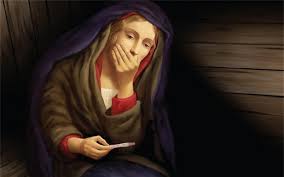
Mary pregnantFlipping through Bruce Sanguin’s  collection of sermons, “The Advance of Love: Reading the Bible with an Evolutionary Heart,” I was opened to a new way of pondering the myth of the “virginity” of Mary in Sanguin’s sermon on Luke 1:26-38 entitled “The Future Calls.” 

Sanguin writes, “What about the virgin birth? Despite being a mistranslation of a passage from Isaiah that speaks of a “young woman” and not a virgin, this story has tuck. But let’s explore if at face value. One of the most subversive meanings is captured in a single line from a Bruce Cockburn Christmas song: “Mary grows a child without the help of a man.” The assumptions of patriarchy–that men are favoured ones, that all good things must happen through the male gender, that men should hold all the power, and that women are naturally subservient–are overturned in this single detail. The virgin birth has nothing to do with concern over sexual impurity. The Jewish tradition affirms the body and sexuality as a gift of God. The myth of the Virgin birth is announcing the end of an age, patriarchy, and the beginning of a new creation in Christ. To be Christian is to consent to equality. We are now certain that one of the most radical features of the early Christian church was that women enjoyed equal status with men–unheard of anywhere in the world in the first century. It too men in the church a couple of centuries to wrest control back and exclude women. But the story stands in its affirmation that the world can run just fine without the illusion of the necessity of male dominance. In this story, Spirit bypasses patriarchy in the conception and birth of a new humanity, symbolized by the birth of Christ.”

Would that Sanguin’s reading of the gospel-storyteller’s intention were true! Sadly, whatever glimmer of hope for the end of the age of patriarchy may have been present at the turn of the first century, that glimmer was extinguished over and over again in the succeeding centuries. The slim flickers of equality do continue to burn. But that we need to continue to live in hope rather than the reality of equality is born out by the recent bad news of the downfall of cherished heroes like Bill Cosby and Jian Ghomeshi. That men of such prominence in our society should have resorted to dominance over rather than equality with women, bears testament to the reality that patriarchy continues to haunt our lives together. The peace we all long for continues to be threatened by the violence of patriarchy’s firm grip upon the psyche of so many.  

While Cosby and Ghomeshi are but puny players upon the stage our media has erected to  exhibit the morays of our culture, they are indicative of our delusional insistence that we have defeated the horrors of patriarchy. In a world where young girls continue to be abducted and sold into the slavery of the sex-trade, where so-called honour-killings continue, where little girls are shot in the head for daring to seek and education and we in the West respond by wringing our hands or turning away, we should not be surprised that our celebrated heroes should believe themselves to be impervious to rebuke. 

The crimes, indeed the horrors, which have been perpetrated and continue to be inflicted as a result of the continued inequality between women and men cannot all be linked to the church’s insistence that Jesus was born of a “virgin.” But the church must confess our culpability, for our structures and theologies uphold the delusions of the deranged who continue to cling to the power that patriarchy affords them. 

So this Christmas, as the myth of Mary’s virginity continues to haunt us, listen carefully and hear the cries of the Daughters of Jerusalem as they bewail the plight of the One we call the Christ. Listen to that One who responds to their cries, “Daughters of Jerusalem, don’t weep for me! Weep rather for ourselves and for your children!” And when our weeping is done, let us rise up in unison and equality to tend the wounds that patriarchy has wrought upon the earth so that this Christmas the “birth of a new humanity can be symbolized by the birth of Christ.”  We can begin by remembering that Jesus of Nazareth was, in the words of the Apostle Paul, “born of a woman,” a powerful woman indeed!