Big Bang, Darwin, and Evolutionary Images of Divinity

Benediction LightIn the words of our ancestors as they grappled to tell the story of the Divine Mystery we call God, it is written. “Then God spoke all these words, and said, “I AM YAHWEH who brought you out of the land of Egypt, out of the house of bondage. Do not worship any gods except me! Do not make for yourselves any carved mage or likeness of anything in heaven above or on the earth beneath or in the waters of the earth, and do not bow down to them or serve them! For I, YAHWEH, am a jealous God.” (Exodus 20:1-5)

Joan Chittister, a Roman Catholic nun and brilliant theologian, tells a story about a little girl named Katie who was a second-grader in one of the schools of Chittister’s community. One Friday during art class as the teacher roamed the aisles checking progress, she stopped at Katie’s desk and asked, “Well, Katie, what are you drawing?” “I am drawing a picture of God,” Katie said proudly. “Katie,” the teacher answered, “you can’t draw a picture of God. Nobody knows what God looks like.” Katie said, “They will when I’m finished.”

I never was much good at drawing, but like little Katie I to have tried my hand at creating an image of God. For me my image making really took off when I wasn’t much older than little Katie. I must have been about nine or ten years old when my dreams came true one Christmas morning and I became the proud owner of a microscope. At the time I was convinced that my microscope was the most sophisticated tool ever designed. It came in it’s own wooden box and I distinctly remember the metal clasp on that box had a small clasped that was designed to allow a pad lock to slip through so that the box could be safely secured from less sophisticated explorers like my little brother from opening it to reveal the splendor of a tool that could turn its owner into a scientist. Along with my microscope came a box of small glass slides, an eyedropper and a sample jar. My father explained to me that we could go to a local pond to collect our samples. Dad assured me that a small jar of pond-water would contain enough samples to keep me busy for days. Dad was absolutely correct and I spent many an afternoon squinting into my microscope, painstakingly adjusting the focus so that I could get just the right magnification to see the wonders of a miniature world of creatures I had never before even dreamed existed. I was an explorer of pond scum. I was a scientist, enthralled by the tiny little world, wondering in amazement a splendor of creation. I marveled at the tiny creatures that swam franticly in and out of my view. I sometimes pretended that I was their Queen and who with godlike powers could scoop them up out of their native pond home and deliver them to my royal laboratory and command them to dance for me. And dance they would, providing hours and hours of entertainment for me and in return I lavished such care and attention on their little world. Sadly, for reasons beyond my control, their little lives always came to an end after just a few days as the pond water became even too rancid for my little subjects. But I was a benevolent monarch and rather than flush their little worlds down the toilet, I would always travel back to the pond from which they came and with great dignity and more than a little ceremony dump the foul smelling evidence of their watery demise back into the waters of their birth. I remember thinking that God too must be just as dignified when He, back then it was definitely He, attended our funerals, for God had been watching over us in much the same way as I watched my little creatures. Continue reading
Teach Us to Pray – a recording of our second class

Below you will find a recording of our second class. The video of the Keynote presentation includes the Youtube video featuring Marcus Borg that was shown during the class together with an audio recording of the class (the audio is stilted in places but if you wait but a moment it will sync with the presentation). Or, below the video you will find an audio recording of the class.

The third class in this series is on Sunday Oct. 19 and will be posted on Oct. 21

Audio recording of the class:


The Saint and the Sultan Daring to Dance in the Midst of a March: a sermon for St. Francis Sunday

Saint Francis & Sultan

The Season of Creation ends today with the commemoration of St. Francis and this sermon is inspired by the events chronicled in Paul Moses book “The Saint and the Sultan: The Crusades, Islam, and Francis of Assisi’s Mission of Peace”  The reading from St. Francis and the Scripture reading can be found here 

You can listen to the sermon below or click here for the link

Teach Us to Pray – a recording of our first class

Below you will find a recording of our first class.  The video of the Keynote presentation includes the Youtube videos by John Shelby Spong and Fred Plumer that were shown during the class together with an audio recording of the class (the audio is stilted in places but if you wait but a moment it will sync with the presentation). Or, below the video you will find an audio recording of the class.

Unedited audio recording of the class.


God IS a River: a sermon for River Sunday

river flow2Today is the Fourth Sunday of the Season of Creation which celebrates River Sunday Our Readings included Ezekiel 47:6-12 and John 7:37-39 and a Contemporary Reflection in the form of a video recording of God IS a River by Peter Mayer.  You can find the texts here 

Lister to the sermon here or click here

Here’s the  video was played between the

reading of the Hebrew Scriptures and the Gospel 

Six Marks of a True Religion – Brian McLaren

religion defineBrian McLaren briefly describes the work of religion which harkens back to both the etymology and the “literal” definition of the word itself. Proving once again that, the more-than-literal meaning of the word religion points to a broader understanding. Recorded last month at Greenbelt. Enjoy!

Challenging Social, Political, and Religious Oppression – Peter Rollins

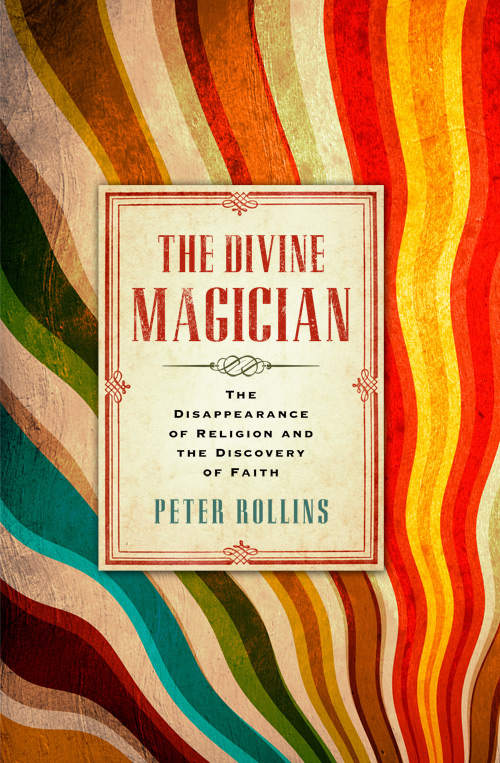
thedivinemagicianI just got my hands on an advance proof of Pete’s new book, “The Divine Magician: The Disappearance of Religion and the Discovery of Faith”.  This newly released video will have to tide me over until I can clear a space to read without interruption. Pete previewed some of this work when he visited us at Holy Cross. So, I for one am looking forward to the magic! Meantime, enjoy, An Evening with Peter Rollins from the Transgressions Tour, Live from the West End Wine Bar in Chapel Hill.

Gracie’s Grace IS Beyond Our Best Theologies: a sermon for Pentecost 16A – Matthew 21:23-32

Gracie pastorDawnAbout a dozen years ago, I traveled to Vancouver to attend an educational conference for Lutheran Mission Pastors. Most of the conference was spent inside a stuffy meeting room. But one afternoon about forty of us were loaded onto a school bus and we traveled down to the east-side of Vancouver to spend some time with Pastor Brian Heinrich, who ran the Lutheran Urban Ministry Society. I doubt that many of you have ever or will ever visit the downtown east side of Vancouver. Lutheran Urban Ministry was located near the corner of Main and Hastings in one of the poorest areas in all of Canada. It was the sort of place where forty Lutheran pastors stuck out like a sore thumb. At the time the downtown east-side was one of the roughest neighborhoods in Canada. This was before Olympic developers gentrified the neighbourhood.

As we arrived, I noticed the discomfort that was written all over the faces of my fellow clergy. Although I’d travelled to the eastside many times and even lived for a few months in a cheap apartment on the edge of the eastside, my journeys in the eastside were usually quick, with as few stops as I could manage, so that I could avoid the unpleasant sights and sounds that you encounter in places were poverty literally fills the air. Knowing that we were scheduled to spend the day in the eastside made me long for the mountaintops that I could see stretching up to the sky across the river. I could feel the same discomfort that was written on the faces of my colleagues take hold of my own face.

On the steps of the church, a young man was shooting up. In the alley next to the church, very young men and women were offering their bodies for sale. Inside the church we were greeted by several of Pastor Brian’s parishioners. Before we could get inside the sanctuary, a very smelly man extended a filthy hand in friendship. When I took his hand he grinned at me with his two remaining teeth and told me his name was David and that I should make myself at home. Eventually, Pastor Brian introduced us to about a half a dozen of his parishioners. All of them wore their poverty with a welcoming smile. Because the sight of forty Lutheran Pastors being guided around the neighborhood on a tour might have shaken up the local inhabitants, we were divided up into small groups and assigned guides. That’s how I met a woman, for the purposes of this sermon I’ll call, Gracie. Continue reading

Recovering the Sacredness of the Earth: Matthew Fox

Creation“We are the first species on this planet that can choose not to become extinct. Of course we haven’t made that decision yet.”

For those of us following the lectionary readings for The Season of Creation, this Sunday is “Land Sunday.” Matthew Fox’s challenge for to us to “wake up” provides much inspiration to develop worship that shakes us from our sleep and empowers us to work together to develop harmonious relationships with creation that will foster healing of the Earth.


Rebooting Religion for Climate Action – Michael Dowd

care Earth pastorDawnAt Holy Cross, we are currently celebrating The Season of Creation. As we ponder Christianity’s share of the responsibility for the abuse of the Earth, it is important to remember that we have a role to play in the protection of the planet. Evolutionary Christian Michael Dowd (Thank God for Evolution) insists that Christians need to remember our call to be a blessing to humanity. In this video, recorded Aug 25, 2014, Dowd insists that theology must include ecology and challenges us to move forward in ways that foster right-relationship with all of Creation. 

“The Great Turd Falling” – a sermon for Creation 1A – Forest Sunday

made of God Julian pastorDawn copyI am indebted to John Philip Newell’s new book “The Rebirthing of God: Christianity’s Struggle for New Beginnings” for inspiring this sermon. The Season of Creation is a relatively new addition to the Church calender and the first and Gospel readings are those prescribed for Forest Sunday: Genesis 2:4b-23 and John 3:1-16. The contemporary reading is from John Philip Newell.  The Scripture reading were taken from ‘the inclusive bible: The First Egalitarian Translation” which opens a new way of understanding both the Genesis story and the Gospel According to John simply by using more inclusive literal translations of the Hebrew and Greek. You can find all three readings here

Listen to the sermon here or click on this link

The Kingdom of God is Within You – from “The Great Dictator” – Charlie Chaplin

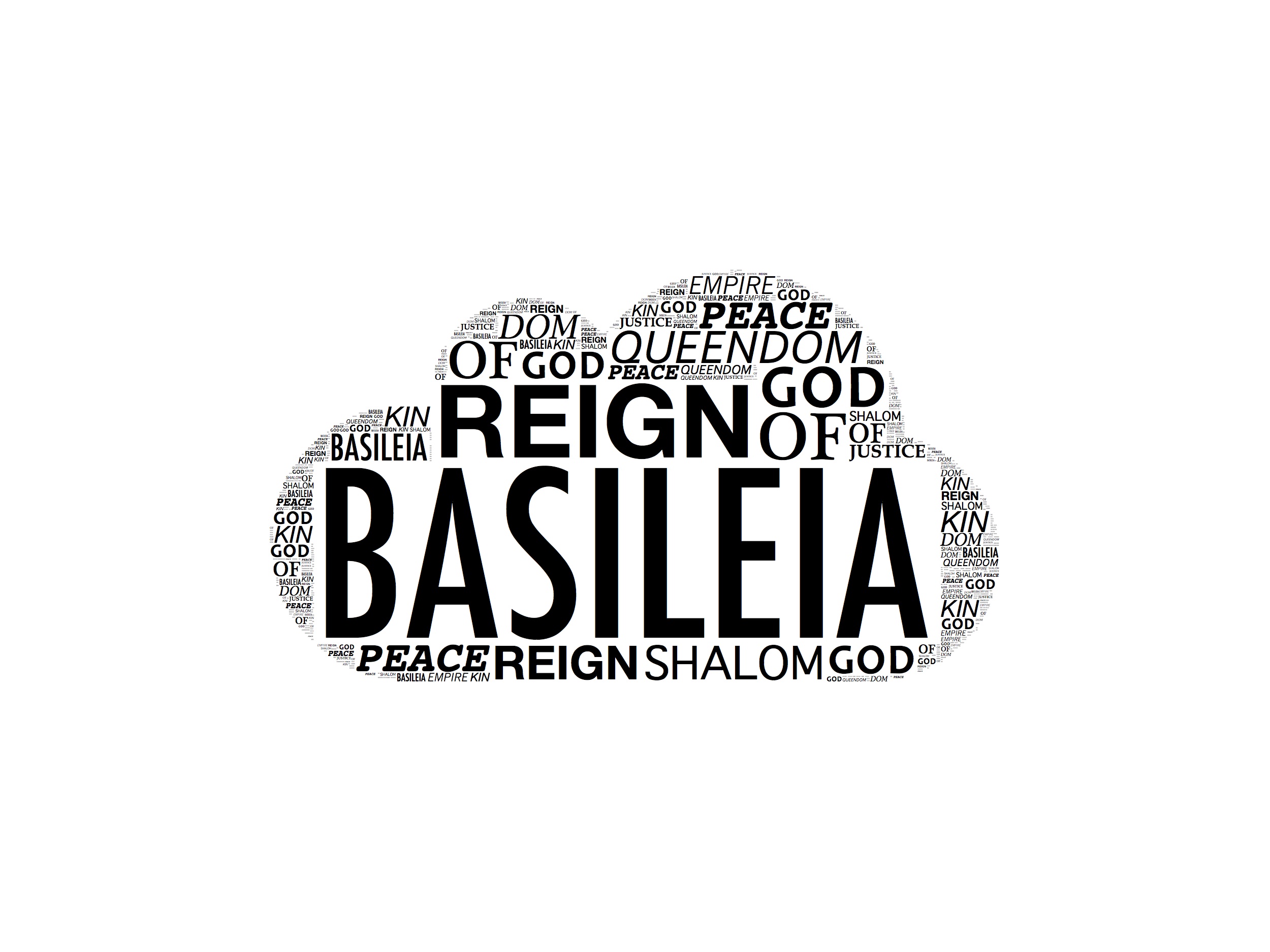
basileiaCharlie Chaplin’s speech at the end of “The Great Dictator” rings so true! Produced in 1940 the film features the silent-film comedian delivers a speech that speaks volumes about fascism, violence, freedom and democracy. However, the quote from the Gospel according to Matthew is often over-looked. That “the kingdom of God is within you” is indeed a revelation which we all too often forget. I wonder what life in the world would be like if we learned to live as if we actually believed that within us lies the power to usher in the “basileia ton Theou” lies within each of us. Might we be better able to live into our full humanity if we realized this reality?  basileia = feminine  plural for sovereignty  – what if we lived our lives as if this were true? What if our faith was about living into our full humanity? What if we were about the creating the  kin-dom of God? What might we be capable of becoming?


As humanity evolves, may it evolve in ways that embody Divine compassion!

Krista Tippett’s TED talk from 2010 provides an “important linguistic resurrection” of the word compassion. Tippett sees compassion as kindness, curiosity, empathy, forgiveness and reconciliation, the simple act of presence, a willingness to see beauty in the other, and “for the religious compassion also brings us into the territory of ‘mystery’ encouraging us to see not just beauty but perhaps also to look for the face of God in the moment of suffering, in the face of a stranger, in the face of the vibrant religious other.”  

womblove pastorDawnIn his book “Meeting Jesus AGAIN for the First Time”, New Testament scholar Marcus Borg writes about the Hebrew word for compassion ‘rakham’ – “The Hebrew word for ‘compassion’ whose singular form means ‘womb’ is often used of God in the Old Testament. It is translated as ‘merciful’ in the characterization of God as ‘gracious and merciful.’ It is present in that quite wonderful expression from the King James Bible the ‘tender mercies’ of God. It is found
in a passage in Jeremiah that has been translated as follows:

“Thus says Yahweh:
In Ephraim (Israel) my dear son? my darling child?
For the more I speak of him,
the more I do remember him.
Therefore my womb trembles for him;
I will truly show motherly-compassion upon him.

“Thus the Hebrew Bible speaks frequently of God as compassionate, with resonances of ‘womb’ close at hand.

“And so Jesus’ statement ‘Be compassionate as God is compassionate’ is rooted in the Jewish tradition. As an image for the central quality of God, it is striking, To say that God is compassionate is to say that God is ‘like a womb,’ is ‘womblike,’ or, to coin a word that captures the flavor of the original Hebrew, ‘wombish.’ What does it suggest to say that God is like a womb? Metaphoric and evocative, the phrase and its associative image provocatively suggest a number of connotations. Like a womb, God is the one who gives birth to us — the mother who gives birth to us. As a mother loves the children of her womb and feels for the children of her womb, so God loves us and feels for us, for all of her children. In its sense of ‘like a womb,’ compassionate has nuances of giving life, nourishing, caring, perhaps embracing and encompassing. For Jesus, this is what God is like.

“And, to complete the imitatio dei, to ‘be compassionate as God is compassionate’ is to be like a womb as God is like a womb. It is to feel as God feels and to act as God acts: in a life-giving and nourishing way. ‘To be compassionate’ is what is meant in the New Testament by the somewhat more abstract command ‘to love.’ According to Jesus, compassion is to be the central quality of a life faithful to God the compassionate one.”

Tippett’s storytelling helps us to connect with the divine image which exists within our flawed humanity. She insists that the flaws we see in compassionate people liberates us from our modern obsession with perfection and gives us the courage to be compassionate. Tippett paraphrases Albert Einstein to remind us that, “the future of humanity needs this technology as much as it needs all the others that have now connected us and set before us the terrifying and wondrous possibility of actually becoming one human race.”

Among progressive-christians the word ‘panentheism” – literally “all in god” is used to express the notion that, all is in god and god is in all. One way of understanding panentheisim is to expand on Acts 17:28 “In God we live and move and have our being” with a blessing I often use when I lead worship: “God dwells in, with, through, and beyond us.” To imagine the Divine Womb-Love in which we live and move and have our being dwelling in, with, through, and beyond us provides a compelling way of living into our Divine/Human compassionate-selves.   As humanity evolves, may it evolve in ways that embody Divine compassion!

Who are the Canaanites and Why Should We Care? – Pentecost 10A: a dialogue sermon

Palestinian womanSummer Sundays are laid back at Holy Cross and so we engaged in a dialogue sermon. The Gospel reading from (Matthew 14:21-28) about Jesus’ encounter with the Canaanite woman begged the question inspired by Marcus Borg, “Why did the author of the Gospel According to Matthew write this story the way he did and what can we learn from it?” 

Our readings also included:

Hebrew Scriptures:  Isaiah 56:1, 6-8

Contemporary Reading: from Dorothee Soelle  Quoted from Matthew Fox’s book “Christian Mystics”, New World Library, 2011

“If Jesus of Nazareth was the poor man from Galilee who was tortured to death, then Christ is that which cannot be destroyed, which came into the world with him and lives through us in him. When I say Christ, I always think also of Francis of Assisi and Hildegard of Bingen and Martin Luther King, Jr. and of Ita Ford, the American nun who was murdered in El Salvador – as well as all resistance fighters who are sitting in prison today. Christ is a name which for me expresses solidarity, hence suffering with, struggling with. Christ is the mysterious power which was in Jesus and which continues on and sometimes makes us into “fools in Christ,” who without hope of success and without any objective, share life with others.”

Listen to the dialogue sermon here:

Beneath the Surface: a sermon for Pentecost 9A – Matthew 14:22-33 and 1 Kings19:9-18

BATH QOLReadings included:  1 Kings 19:9-18 in which Elijah hears the still small voice of God and Matthew 14:22-33 in which Jesus walks on water.

Listen to the sermon here:


Hell Is Killing Us! – Philip Gulley

imagineRecently, I have found myself cornered on several occasions by individuals who ask, somewhat accusingly, how and why I continue consider myself to be a Christian if I do not believe in Hell. On these occasions, I have assured my inquisitors that as someone who attempts to follow Jesus, I do indeed believe in “Hell” even if I do not believe in “hell“. The hell that I believe in is a condition here on earth. The Hell that I suspect my inquisitors wish me to affirm does not exist except in the corners of our imaginations. Nor is belief this mythical place called Hell a prerequisite of the faith. Christianity is not about being saved from eternal damnation to the fiery pits of Hell. Christianity is about following the teachings of Jesus with regard to peace through justice in order to create Heaven right here, right now.

Several years ago we at Holy Cross Lutheran began a speaker series entitled ReThinking Christianity and were privileged to host Quakers Philip Gulley and James Mulholland who co-authored “If God Is Love” and “If Grace Is True.” Phil has since gone on to write “If the Church Were Christian” and “The Evolution of Faith.” In addition to his theological works, Phil is a master story-teller whose Harmony series together with Porch Tales stories have cause some to dub him the Quaker Garrison Keillor. Phil has received two Emmy Awards for his Indiana PBS program.

My own ministry has been enhanced by Phil’s work and so it was a happy and timely coincidence that brought a video into my inbox which I had forgotten all about. Phil’s story about Heaven & Hell followed by an interview in which Phil shares his conviction that “Hell is killing us!” say it all so much better than I can. Phil’s gentle manner reveals a way forward for those who wish to leave Hell behind and move on toward building heaven on Earth. Phil’s latest publication “Living the Quaker Way: Timeless Wisdom for a Better Life Today” provides a window into spiritual practices to nourish those who seek to live in peace in a world where so many have chosen to perpetuate Hell on Earth. The book is an essential read for progressives who seek to embody a way of being that will contribute to creating peace. Enjoy!!!


Returning to the blog after a summer break!

After a splendid summer break it’s time to return to regular posting. I begin with a Friendship Blessing from John O’Donohue

Friendship Blessing pastorDawn

Celtic Night Prayer

Video: Halianna Burhans: Music:  Rev. Will Burhans – Weight of Grace Text: John Philip Newell, Celtic Benediction: Morning and Night Prayer

The Fault In Our Stars by John Green: Teen Fiction for all ages

TFIOS pastorDawnIt has been a very long time since I read a novel categorized as “young adult” or “teen” fiction. But when a fourteen-year-old goes out of his way to recommend a novel to his pastor, I pay attention. I was delighted to discover that The Fault In Our Stars portrays young people living with big questions without resorting to easy answers. Indeed, the characters in John Green’s account of living with cancer, refuse to accept easy answers and learn to live with the ambiguity of life’s deepest mysteries even as they cope with the realities of impending death. This is a splendid read for all ages, especially for those of us who have long since left the coping strategies of the varieties of Christianity that are trapped within the limitations of a three tiered universe.  Green brilliantly captures the gallows humour of those who must endure the efforts of care-givers while steadfastly refusing to “buy into the cancer-book genre.” Green’s time as a chaplain in a children’s hospital shows as does his ability to live in the questions. Following the success of the book, which debuted at #1 on the New York Best Seller list, has opened at #1 at the box-office.  But, don’t let that stop you from enjoying this book which will make you laugh, cry, cheer, and think!! I have not yet experienced the movie for fear that it will interfere with my appreciation of the characters who live on in my imagination. Enjoy the first chapter, read by John Green.

The Role and Risk of the Public Intellectual in Church and State: Joan Chittister

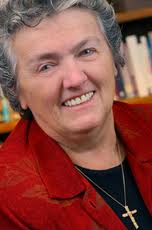
joanChittisterFilmed July 14, 2014 at Chautauqua, Sister Joan Chittister explores, as only she can, “the role of the public intellectual (that’s you) in a society crammed with talking points, canned news, and Maddison Avenue politics and politicians.” This lecture is a MUST-VIEW for anyone who engages in public discourse in order to move us beyond intellectual slavery to institutions and tradition!!! Enjoy!!!