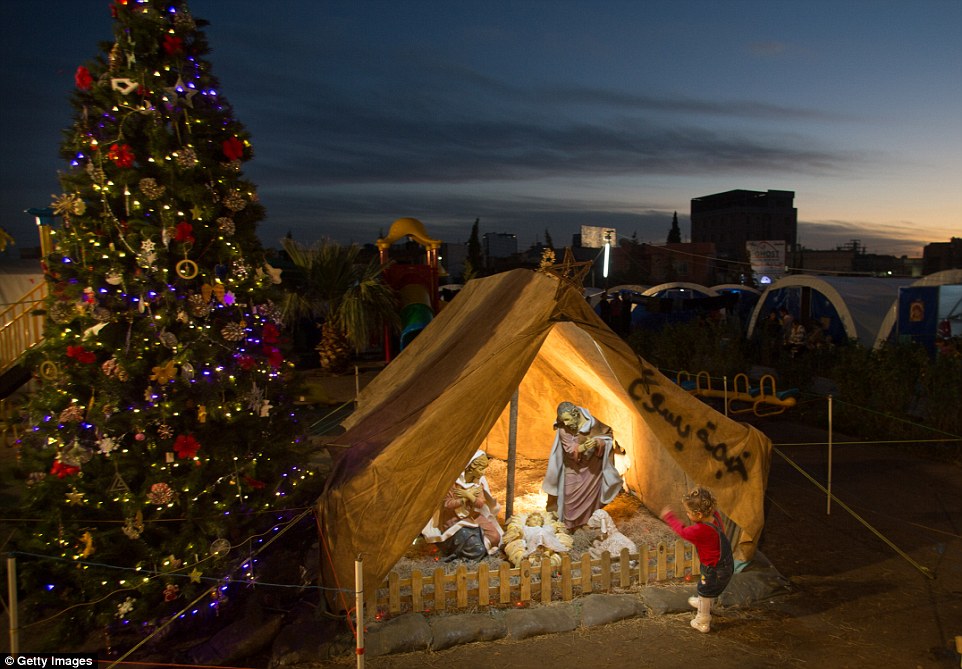
Readings from the first chapter of Luke included the stories of the Angel Gabriel’s Annunciation to Mary, Mary’s Visitation to Elizabeth and Mary’s radical song – The Magnificat. Listen to the sermon here

Readings from the first chapter of Luke included the stories of the Angel Gabriel’s Annunciation to Mary, Mary’s Visitation to Elizabeth and Mary’s radical song – The Magnificat. Listen to the sermon here


The quotes in this sermon are from Steven Pinker’s book “The Better Angels of Our Nature” and Joseph Holub’s “Fear Not” The Acclamation sung, on the audio recording, prior to the sermon is “The Magnificat” from Holden Evening Prayer, by Marty Haugen, featuring Gary Curran and Linda Condy: Listen to the sermon here

Readings include: Isaiah 35:1-10, Luke 1:46-55, Matthew 1:18-25
Listen to the sermon here
Enjoy Vera Lynn’s rendition

It has been said that the shortest distance between humanity and the truth is a story.[1] I would add that, the truth we find in a story teaches about our humanity. So, as we seek to embrace our humanity we would do well to pay close attention to the stories we tell. The unknown writer of the Gospel according to Matthew had a great story to tell and in order to get to the truth of who and what the man Jesus was, he chose a particular way to tell the story so that all those who heard the story would know the truth of who Jesus is in the grand scheme of humanity’s story. Sadly over the centuries that have elapsed since this story was first told have seen the tellers and listeners of this story haggle over the truth. Some have forgotten the power of story to bridge the gap between humanity and truth, and they have insisted that the truth will be found in the absolute accuracy of each and every detail. Fortunately, many more have remembered that stories are just that, they are stories and while we know that events did not actually happen in they way they are told, they happen just that way all the time.
So, as we begin in the beginning of the Gospel, the Good News according to Matthew, let me remind you that we know that the story of Jesus birth did not happen the way it is told in the story, and we know that birth is always happening this way. For the writer of the Gospel according to Matthew was a skilled storyteller and he wrapped the story of Jesus of Nazareth in the stories of his ancestors. Written in the style of his own ancestors the gospel-writer begins his story, with the same words that every one of his listeners would have remembered from the sacred book of Genesis which begins, “In the beginning”. A sort of once upon a time, if you will, the gospel-writer begins with, the genesis of Jesus the Messiah and then proceeds to connect Jesus to the ancestors of the Jewish faith, will making sure that the truth of Jesus’ connection to those outside the faith will also be made clear.
The gospel-writer’s inclusion of the women who Bishop John Shelby has dubbed the “shady ladies” would have alerted Jewish listeners that Jesus is a different kind of Messiah; a Messiah who will transcend race, creed, or clan. Rahab, who was a Canaanite; a foreigner, was known as the mother of Israel for saving Joshua in Canaan, just happened to run a brothel there. Tamar, also a foreigner, was married to Judah’s son who according to Genesis is killed by God, and as was the custom his younger brother married her to ensure that his older brother’s name would be carried on. When that son dies, Tamar is left a childless widow, a fate worse than death in a patriarchal culture. Tamar is known for impersonating a prostitute to trick Judah into knowing her, in the biblical sense of the verb to know, so that her father-in-law could impregnate her. Continue reading
 I didn’t know it at the time, but I actually met John the Baptist when I was fifteen years old. She didn’t look much like you’d imagine John the Baptist would look, but she had that same crazy intensity, that same focus on the fact that we’d better change our ways, we’d better repent, and start doing things differently or we’d be in real serious trouble. Lola was my friend Valerie’s mother and she simply couldn’t stop going on and on about the environment and how we were destroy the earth. At the time, I remember thinking she was a bit of a nut-case and on more than one occasion I wished she’d just shut up about it. I was just a kid, and the earth was just something I took for granted. The earth was just there to provide for our needs. I couldn’t believe how much Lola went on and on about all the stuff we humans were doing to destroy the earth. I just wished she’d leave us along to get on with things, I couldn’t abide her incessant nonsense about how we were going to destroy the planet. All her feeble little attempts to be kind to the earth, made me seriously question her sanity.
I tolerated Lola not just because she was my friend’s mother, but I didn’t really understand her until one day when the three of us were travelling together. We were coming home from church. I had only been going to church for a few months. I was trying hard to understand this whole God thing. So, I went to church a lot. My friend Valerie had persuaded me to start going to church with her and family had become like my second family as they supported me during my first attempts to explore the mysterious world into which I had begun to feel pulled. As we drove home from church, I was feeling a little glum. Try as I might, I couldn’t really understand this church thing; all that singing and praying didn’t really help me to feel closer to God. Mostly I just liked how people at church treated each other. I liked how they went out of their way to help me feel at home. Whether or not God was there, well I really wasn’t sure.
Anyway, we were driving along the road. It was a partly over-cast day on the west coast of British Columbia, just a few clouds. You could see the mountains off in the distance. We were chatting back and forth when all of a sudden Lola pulled the car over to the far side of the road, switched off the engine and got out. Valerie followed her mother out of the car, so I figured I had better do the same. Val and her mother scampered down from the road and onto the beach. When they reached the water’s edge, they stopped and just looked off into the distance. Apart from a tanker-ship making its way across the horizon, I couldn’t see much of anything. Lola had the most amazing expression on her face. She positively glowed with happiness. Valerie wore a similar expression. I must have looked somewhat puzzled because Val smiled at me and said, “Isn’t it the most beautiful thing you have ever seen?” This only confused me more. What were they looking at that had made them stop the car, scamper down the bank and stand there at the water’s edge on a cold autumn evening? Continue reading
 Sometimes it feels like a progressive thief has stolen Advent and Christmas from us! Sometimes being a progressive Christian is about as sad as being a who down in Who-ville; why sometimes I even miss old Santa Claus himself and in my nostalgic haze, I long for a simpler time and faith! How are we supposed to celebrate Advent and look forward to the coming of Christ, when some of the best stories of the season never actually happened they way we’ve been lead to believe? In this sermon (preached on Advent 1A – Dec.1, 2013) the beloved myths of a birth long ago are proclaimed as transformational stories that have the power to open to what lies beyond the words to the Word. Readings: Isaiah 2:1-5, “Amazing Peace” by Maya Angelou, Matthew 24:36-44
 I couldn’t believe that this was happening to me. You read and hear about it in the newspapers and on TV, but you never expect it to happen to you. You know that it happens all over the place, but you somehow believe that you are immune to the dangers. You take precautions, you’re not stupid, but you can’t live your life in fear. Then one day, when you least expect it, you find yourself face to face with a nightmare.
The back alley of a downtown street sounds like a risky place to be; a place you should never go alone. But when it’s the alley behind your own apartment building, the alley where you park your car, well you take the risk. Sometimes it made me nervous, sometimes I would rush from my car to the apartment because I thought I heard something in the darkness. But most evenings, I never gave the dangers of city life much thought and then one night, when I wasn’t expecting it, it happened. I was half way across the alley when from behind a parked car, he jumped out at me. He grabbed me by the arm and spun me around. There was no time to think – – pure terror filled my mind. He pushed me up against a wall and for a moment just a moment I thought the unthinkable. Every fiber of my being decided immediately to resist and I managed to shake him off. That’s when he pulled out the knife. It wasn’t much of a knife really, just a tiny penknife, but it had the power to capture all my attention. His hand was trembling. I took my eyes off the knife long enough to see that his whole body was trembling. I took a deep breath and looked him in the eyes. His face was filled with fear. Sweat was dripping down from his forehead. He was breathing with a great deal of difficulty. We stood there in the darkness, staring at one another, both of us breathing heavily.
“Money! Money give me your money!” Never did I ever imagine that these words would cause relief. He wasn’t after me; he was after my money. Then I realized that I had no money. But he didn’t believe me. So, I tried to explain that I never carried cash. I use my bankcard for everything. I could see the panic race across his face. He was in bad shape. He needed money. No doubt he needed a fix. But I had no money on me.
What kind of fool walks around in the city without any cash? I decided that if he was in as bad a condition as he looked, I just might be able to convince him. So, I told him that I had about twenty dollars upstairs in my apartment. I begged him to let me go upstairs and get the money for him. He shook his head in confusion, so I went on. If he just let me go upstairs, I’d get his money and then he could be on his way, there might even be more than twenty dollars. The state he was in made it impossible for him to think straight. Why else would he have agreed? He let go of me. I raced to the apartment. It took several attempts before I could get the key in the door, but finally it opened and I dashed inside and pushed the door shut. I raced up the three flights of stairs and into my own apartment grabbed the phone and began explaining to the 911 operator that my attacker was waiting for me down in the alley. By the time the police arrived, he’d figured things out and was long gone. But they picked him up a few hours later. The next morning when I went into the police station to make a formal statement, an officer explained to me just how lucky I was. Often when an addict doesn’t get what they want, things don’t work out quite so well. The officer explained that I probably wouldn’t have to go to court because they had enough other things they could charge him with and I might as well save myself the trouble. Besides this guy knew where I lived. So, I went home vowing to be more careful, to stay alert. To keep watch. The thief in the night changed the way I lived my life in the city. I became much more careful and to this day, I always make sure to have at least twenty dollars in my purse. Continue reading
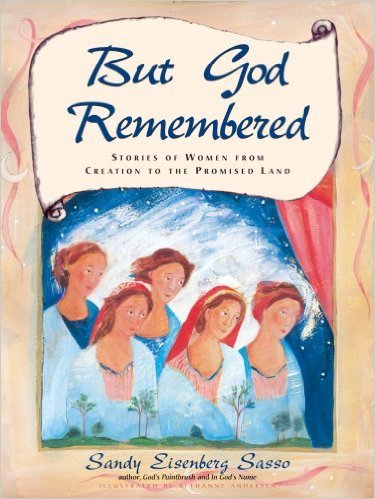
As we approach the Season of Advent, I can’t help wondering why the creators of the Revised Common Lectionary (the list of prescribed readings for Sunday worship) have failed to remember the stories and names of our foremothers? John the Baptist will strut across the stage again in this Sunday in churches all over the planet. We have begun a new cycle in the RCL in what is know as Year A the lectionary Gospel readings will focus upon readings from the Gospel according to Matthew. But followers of the RCL will not hear the names of Tamar, Rahab, Ruth, or Bathsheba; no, not even Mary will put in an appearance despite the fact that all of these women are mentioned in the very first chapter of the Gospel according to Matthew! Last year was the same even though the RCL focussed upon the Gospel according to Luke, neither of the women of the Luke’s first chapter make an appearance without a great deal of effort. Unless worship planners are prepared to tinker with the lectionary Elizabeth and Mary will have to cede the stage to John the Baptist. So, all you worship planners and preachers out there, I say to you, “TINKER AWAY! TELL THE STORIES!”
As this is the year of Matthew, why not invite onto centre stage those “Shady  Ladies” from Matthew Chapter 1: Tamar, Rahab, Ruth, and Bathsheba, verses 1-17 make an excellent reading! John Shelby Spong is an excellent resource, you can find a transcript of his excellent sermon here. At Holy Cross we will use Matthew 1:1-17 as our first reading and Matthew 18-24 as our Gospel reading. This will allow us to usher Mary onto centre stage. Then on the Fourth Sunday of Advent we will switch over to the Gospel according to Luke for all three readings: First Reading – Luke 1:26-38, Second Reading – Luke 1:39-45, Gospel Reading – 1:46-59.
I am forever hearing people despair about biblical illiteracy as clergy and church-insiders bemoan the collective forgetfulness of our culture. I suspect that the snippets of readings that we hear year after year may be a factor in the gaps of our collective memory when it comes to the women of the New Testament. Let this Advent be different. Invite the women of the gospels onto the stage. John the Baptist will be happy out there in the wilderness until his feast day in June!
 Rather than the recent church tradition of celebrating the Reign of Christ/Christ the King Sunday, on the last Sunday of the church year, we at Holy Cross celebrate our complex relationship with Jesus the Christ. readings include the parables of the lost from Luke 15:1-32.
Listen to the sermon here
A number of years ago, I’d only been doing this job for a couple of years, immediately after a worship service, I went over to the hospital to visit one of you. I was all decked out in my Sunday best, so I very much looked the part of a pastor. Even though, I still felt more than a little like an impostor. I’ve been at this for over sixteen years now and sometimes I still feel like I have so much to learn before I’ll feel like a real pastor. But it was Sunday and even though the collar around my neck often felt like it might choke the life out of me, it proclaimed to everyone at the hospital that I was there in my professional capacity. I enjoyed a very pleasant visit with one of the seasoned members of this congregation who went out of their way to ensure that we both enjoyed the visit.
As I was leaving the floor a woman beckoned me over to the visitors’ lounge, “Could I please help her.” I sat down beside her and listened to her tale. When you’re wearing a clergy collar people presume all sorts of things about who you are. This distraught young woman presumed that I was a competent professional who could accomplish what she could not. She told me that her father from whom she’d been estranged for many years was dying and needed a priest. They’d called both the Roman Catholic churches in town and none of the priests would be available for a few hours. She was afraid that that might be too late for her father and wondered if I was willing to administer the last rites.
I hesitated. The young woman presumed my hesitation was because I was obviously not a Roman Catholic priest. She asked me, “Protestants do have last rites don’t they?”
I refrained from telling her that since Vatican Two Roman Catholics no longer have last rites. Instead I simply told her what I had been trained to tell her during my scant few months of training as a hospital chaplain. Which was that I’d be happy to spend some time with her father. The young woman persisted, “Can you give my Dad the last rites? Please!”
I nodded and asked her for a few details about her Dad. Armed with only some basic details and the fear that I was in way over my head, we entered the room and the daughter announced to her father that this nice Lutheran priest had come to give him the last rites.
With that, the young woman slipped out of the room and I was left with a man not much older than myself, who looked very much worse the wear.
I introduced myself and explained that none of the local Roman Catholic priests were available for a few hours and that I would be happy to stay with him until one of the priests arrived.
“You’re a priest?” the man in the bed looked unconvinced.
I assured him that I was indeed a priest although in the Lutheran church we call priests pastors. I was babbling. I do that when I’m nervous.
He told me that he’d never met a priest who was a woman. He’d met lots of priests who acted like old women, but never a priest who was actually a woman. He reached out and took my hand, “Can you hear my confession?” Continue reading
 Traditionally the festival of Christ the King or Reign of Christ Sunday. At Holy Cross we celebrate Jesus the Christ Sunday. This sermon explores our complicated relationship with the Jesus we meet upon the cross who shared our human desire to transcend death.
Listen to the sermon here:
She had no family. She lived alone. For the purposes of this sermon I will call her Sophia. Sophia the Greek word for wisdom. I became her pastor because she knew somebody who used to be a member here and when the doctors told her that she was dying she thought she ought to have a pastor. I was summoned to her bedside. I was afraid. I had been told that she only had a few weeks before the cancer would take her. To be present to a stranger when they are so close to death is a daunting task. No time for gentle hello’s, or warming up to one another, just a long, painful and sometimes awkward good-bye.
I went to Sophia’s bedside every day. Some days, when she was able, the questions just tumbled out of her. She wanted to know what I believed. No pat answers or trite platitudes if you please, just the facts. I liked her no-nonsense approach even though I knew that the meager facts that I possessed might not sustain us on our journey. It didn’t take me long to figure out that she’d spent a great deal of time in the church. Her parents saw to it that she was raised in the church, but a lifetime of tragedy and heartache had lead her far away from the faith she’d grown up with. But as death drew near she longed for the certainty of her youth.
She’d like to believe. It would be nice to think that there would be a place for her, not exactly heaven per se but someplace heavenly, perhaps like Paris in the springtime. She so loved Paris in the springtime, if only heaven were full of cafés, or patisseries where she could while away the hours talking with others who appreciate the finer things of life.
Life, would there be life beyond death? She’d like to believe so.
One morning, I stopped by Eduard’s bakery on Main Street and picked out the most European pastries I could find, then I swung by Starbuck’s and had them grind some fresh beans. As I brewed the coffee in Sophia’s kitchen, the aroma wafted up the stairs and she shouted down and asked me to heat up some milk so that we could have lattes. It was as heavenly a breakfast as we could muster and our conversation took us back to Paris and a springtime before I was born when Sophia was young and beautiful and the men fell at her feet.
Some of her stories actually made me blush. We laughed and laughed and laughed until we cried. After Paris, we travelled to London by way of some excellent fish n’ chips and a few glasses of cider. It was cold and wet in London and Sophia managed to complete her nursing studies even though a certain young man begged her to give up work and come and be his love. Over sausages and beer, we travelled to Hamburg where Sophia fell in love with an orphanage full of refugee children. By the time our conversations took us to India, Sophia was too ill for a curry so we sipped tea as we wept over her stories of poverty and disease. Continue reading
 I usually have the presence of mind to book my vacation or some sort of continuing education event that takes me far away from the pulpit on Reign of Christ Sunday. Formerly known as “Christ the King Sunday” an attempt to move beyond exclusively male imagery for Christ (in whom there is no east nor west, male nor female) some church-folk have attempted to change the name of this festival to Reign of Christ Sunday. But merely changing the title fails to get beyond the struggles I have with this festival of the church year!!!!
Born in an age that was birthing fascist regimes, this particular festival of the church clings to it’s christian imperialist past. Instituted in 1925, by Pope Pius XI, (you can read the full proclamation here) the festival was designed to remind the world that Christ is the King of the World. The irony of proclaiming Christ as “King” when the life of Jesus of Nazareth positively denies “kingliness” seems lost on the church. The appropriateness of asserting Christ over the religions of the world lacks the kind of humility embodied by Jesus of Nazareth. So, this year I am not prepared to celebrate Christ the King or the Reign of Christ Sunday. Instead, we will take a leaf out of Matthew Fox’s book and craft our worship around the theme of the Quest for the Cosmic Christ.
 Years ago, long before I ventured to seminary, Matthew Fox’s book Original Blessing opened me to the wonders of Creation Spirituality. So, I eagerly worked my way through his book The Coming of the Cosmic Christ. I confess that my first reading of Fox’s tome left me in the dust of my own lack of understanding of traditional Christology. But even back then, without the benefit of theological training, I sensed something of the MYSTERY that I had always trust Christ to BE. I have returned to Fox’s work many times over the years and over and over again I have discovered a WISDOM that moves me beyond the limitations of the historical Jesus toward a more holistic vision of Christ, which like Fox I believe, has the potential to move us to a more wholistic relationship with Creation. I trust that the WISDOM of the Cosmic Christ will lead us into the Season of Advent so that we can be about the work of birthing the Cosmic Christ.
 Our readings included Ecclesiastes 3:1-8 and Luke 21:5-19, our Contemporary Psalm was “Anthem” by Lenard Cohen
Listen to the sermon here
 Our readings today were from Isaiah 65:17-25, Dietrich Bonheoffer’s “Letters from Prison, and Luke 21:5-19
A pdf of the worship bulletin which includes the Bonhoeffer reading can be found here Pentecost 26C Nov 17 2013
Listen to the sermon here
You better watch out. You better not pout. You better not cry. You know who is coming to town. Yes, this is the weekend. In cities, towns, and villages all over the place you know who is coming to town. He knows if you’ve been sleeping. He knows if you’re awake. He knows if you’ve been bad or good so be good for goodness sake! I’m not too old to remember a time when I believed in the person you know in Canada as Santa Claus, but when I was a kid in Belfast we called him “Father Christmas”. I remember the excitement I felt about his pending arrival and I remember trying ever so hard to be good. I don’t remember being disappointed when I realized that Father Christmas was a conspiracy of sorts. Somewhere, somehow in my little child’s brain, I sort of transferred all the love, affection, anticipation, and fear that I harbored for Father Christmas over to THE FATHER. FATHER GOD, who I imagined as a grey-bearded old man who lived up there in heaven. We never went to church, but somehow the adults in my life managed to communicate to me that, I’d better watch out, I’d better not cry, cause HE knows if I’ve been bad our good and I’d better be good for goodness sake. I learned to say my prayers, to thank the Father for all the good stuff in my life, and to ask the Father to take care of Mummy & Daddy, Nannie and Granda, Gran, my aunts and uncles and oh yes don’t forget my brother Alan, even if little brothers are annoying, please Father take care of him and maybe make sure that Mummy and Daddy have all the money they need to buy us Christmas presents and if there’s time help us all to live in peace.
My childish notions about HIM, up there, eventually gave way to adolescent wonderings about why HE let bad stuff happen to all the good people, and why people died in accidents, or people got hurt, or sick and died. I remember being particularly preoccupied with thoughts about why bad, evil, nasty people got away with stuff; I mean why didn’t HE just use some of HIS all powerfulness to stop bad things from happening? Eventually, when I found my way into the church, I began to add qualities to the character of the FATHER. Gradually, the FATHER became gentler, kinder, wiser, and more gracious. Continue reading
 In October of 1977, I was twenty years old. I was young and adventurous and with a rail pass in my hand, a back pack slung over my shoulders and several hundred dollars worth of American Express Travellers cheques in my pocket, I boarded a train in Zurich, Switzerland, bound for Athens, Greece.
I was tired. Several months of backpacking in Northern Europe had left me weary. In just five days my rail-pass would expire, so I decided to head for Greece, where the living is easy, where the warm sun, blue skies and equally blue waters held the promise of rest and relaxation.
As the train made its way through the Alps, I remembered a similar trip which I had made the year before and I tried to calculate whether my remaining funds would allow me to return to the village of Hannia on the island of Crete. I knew that in Crete I could find work. I planned to mix a lot of rest and relaxation with just a little work and try to live out the winter on the Mediterranean.
As the train rattled through Austria toward what was then Yugoslavia it began to get dark. I was disappointed that my journey through Yugoslavia would be completed in darkness. I remembered my previous journey, by car, through Yugoslavia and how at the time, I had marvelled at the diversity of this strange little country. I remembered men and women driving oxen as they ploughed their fields in much the same way as there ancestors had done. I also remembered my surprise at entering the ultra modern city of Belgrade; the showcase of Tito’s communist regime. I fell asleep pondering the sharp differences between the lives of the poor people in the villages who appeared to live without any modern conveniences at all and the lives of those who inhabited the city of Belgrade with its towering skyscrapers and streets filled with automobiles. Several centuries seemed to co-exist in Yugoslavia.
I was awakened by the sound of people shuffling to find their papers as the train conductor instructed us to get our passports and visas ready for customs inspection. When the Yugoslavian custom officials, with their rifles over their shoulders boarded our train they were preceded by men guided by vicious looking German shepherds. Even though I knew that I had all the right papers and that my back pack contained nothing more offensive than some dirty laundry, the sight of the dogs, guns and uniformed officials struck fear into my heart. I nervously handed over my precious passport to an official who looked younger than my twenty years. He carefully read over the visa which I had obtained in Zurich the day before; a visa that I could not read because it was written in an unfamiliar language and an unfamiliar alphabet. Continue reading
 Listen to the sermon here

Run-off pond at Simcoe Landing
Listen to the sermon here
Despite the fact that my parents named me Dawn, I have never been much of a morning person. Those who know me well would probably agree that I should have been called Dusk instead of Dawn. But Dawn I am and so from time to time, I actually venture out to explore this phenomenon for which I am named. Earlier this week, after a long sleepless night, of tossing and turning, wondering and worrying, I decided that as sleep was eluding me, I might as well give up and get up. The sun was about to rise and so out I went into the quiet world of our little subdivision. We moved into our subdivision nine years ago. The subdivision was built about six years before we moved in, so our little community is only about fifteen years old. Before the subdivision was built, the land was used by a farmer to grow corn. On the fringes of our subdivision, they are expanding further into the cornfields. The neighbourhood is expanding, growing, and changing. The demands of modern life are encroaching on a lifestyle that is disappearing from countrysides all over the planet. Modern subdivisions are built to a pretty standard plan. Before the streets and infrastructure can be developed, some pretty basic problems need to be addressed, not the least of which is water run-off. As near as I can tell, modern developers deal with the problem of drainage by establishing ponds which function as catchment basins for rainwater runoff. At the foot of our subdivision there are four such ponds around which the developers created footpaths so that we suburbanites can at our leisure have someplace to take a walk.
When we first moved in, the ponds weren’t exactly picturesque. Just open pits into which runoff had poured, surrounded by paths and building sites. In the beginning these ponds were more like scares on the landscape and failed to inspire us to wander past very often. Indeed, if we wanted to take a walk, Carol and I would often get in the car and drive to a nicer spot to walk. But over the past nine years something miraculous has happen and in our neck of the woods Mother Nature has healed the Earth’s wounds and those ponds have become a favorite place to walk. Where once there was just muck and the open wounds of the Earth, now there are well healed pathways, beautiful bushes, fruit filled trees, and a whole host of wildfowl. Nature has repaired what we humans came close to destroying.
So, as the sun was rising in the east, I couldn’t help thinking about the natural rhythms and blessings of this life. And because I had been kept awake by worrying about the content of this Reformation sermon, my mind began to think about the similarities between the relationship of nature to the pond which humans created where once there was no pond and the relationship between God and the church humans created where once there was no church. Continue reading
Preparing for Reformation Sunday? Some of these posts might be useful:
 Listen to the sermon here
Recorded Oct.16, 2016: Matthew Fox preaches on Luke 18:1-8 at All Saints Church in Pasadena. Fox defines prayer as, “a radical response to life; a profound or deep response to life.” As such, working for justice is the embodiment of our response.
 In place of the sermon this Sunday, we watched the video “An Experiment in Gratitude” followed by brief comments about embodied gratitude. You can watch the video below and listen to our conversation here below are the notes from on which the comments are based:
 pastordawn