Wolf Blitzer Learned that there are Indeed Atheists in Fox-holes! – a sermon for Trinity Sunday

Eckhart rid me of GodThis Trinity Sunday sermon owes much to John Shelby Spong’s book a “New Christianity for a New World” You can listen to the sermon here then watch the tail end of the Wolf Blitzer interview mentioned in the sermon.   

In the midst to the devastation and debris that was left of the town of More, Oklahoma, it was all to clear that the power of the tornado that whipped through such a heavily populated area had left behind the kind of destruction that tears not only the foundations of buildings but also of lives. In living rooms around the world millions of people watched as the news media descended on what was left in the wake of nature’s wrath. One particular news report is still reverberating around the Internet. I had just come from my office where I had spent the afternoon, reviewing the Doctrine of the Trinity in order to write this sermon. My wife Carol was in the kitchen cooking supper and I sat down to catch up on the news events of the day. I tuned into CNN and there amidst the rubble of More Oklahoma was the familiar face of Wolf Blitzer. It was the day after the tornado and the big name newscasters had been rushed to the scene in time to provide color-commentary on the evening news. Wolf was interviewing a young mother named Rebecca Vitsmun who was holding a squirming her 19 month old, toddler Anders in her arms. The young mother gave a blow-by-blow account of her narrow escape from. All afternoon Rebecca was paying attention to the weather reports. Rebecca was not from More, but rather from New Orleans and so she was not used to tornado warnings. She’d grown up with Hurricane warnings and so her first instinct was to evacuate the area. But her husband and neighbours had told her that the safest thing to do would be to take shelter. Six-teen minutes before the tornado struck the weather service issued a warning to take shelter. As Rebecca’s husband raced home from work, this young mother grabbed her laptop, a mattress and her toddler and took shelter in the bathtub. Huddled in the tub covered by a mattress she anxiously watched the reports on her laptop. Tracing the path of the tornado, Rebecca realized that the tornado was headed straight for her street. Rebecca’s New Orleans’ instinct kicked in and with her baby in her arms she jumped into her car and without taking time to put her baby in the car seat, she drove as fast as she could out on to the freeway where she pulled over and put Anders into his car seat and then drove some more. After the tornado, Rebecca reunited with her husband, and they headed back to what was left of their home. The bathtub was so full of debris that it was clear to them that Rebecca’s instincts had saved her life.

After telling her harrowing tale, Wolf Blitzer congratulated Rebecca for saving her baby’s life and then said to this young woman, “You gotta thank the Lord.” Rebecca was clearly taken aback by the comment and hesitated. I held my breath, annoyed as hell at Blitzer for asking such a stupid question. Rebecca’s hesitation gave Blitzer the opportunity to move on, but no he just had to have an answer, and so he persisted. “Do you thank the Lord?” Rebecca gave Blitzer the kind of look that says, “Are you kidding me?” Then Rebecca gave Blitzer an answer that he sure wasn’t expecting from an American from the heartland of Oklahoma; Rebecca smiled as she answered, “I’m actually an atheist.”

As Rebecca laughed awkwardly, I cheered so loudly that Carol came into the room to see what was going on. I was so proud of that young woman for not going along with Blitzer’s nonsense. Who in their right minds would believe in a Lord who would pluck one family out of a bathtub and let seven children die in an elementary school? I mean, if this Lord that Bilitzer is so willing to give credit too is such a great rescuer, why didn’t this Lord change the twister’s path and send it out over the cornfields where the only damage it could do would be to crops?

I know they say there are no atheists in fox-holes, but I for one think that that bathtub Rebecca was hunkered down in was indeed a fox-hole and I’m delighted that when all was said and done, she and little Anders were saved by her instinct for survival. As for this Lord of Blitzer’s, well, judging by the awkwardness that Blitzer exhibited after Rebecca stood her ground, I can only guess that this reporter misjudged the situation. Blitzer a city-slicker from New York, assumed that all the local yokels must be bible-thumping Christians, and he probably thought that his question would have received a mindless ra, ra, yeah God, kind of response from all Oklahomans. I trust he won’t make that mistake again. I kind of feel sorry for him, because after all it only took a few hours before some televangelist’s were suggesting that God did indeed send the tornado to teach people a lesson. According to some bible-thumpers, if people prayed hard enough they would have been saved. Some even went so far as to suggest that the tornado was punishment for gay marriage. Continue reading
The Athanasian Creed and an Unholy Trinity – a sermon for Trinity Sunday

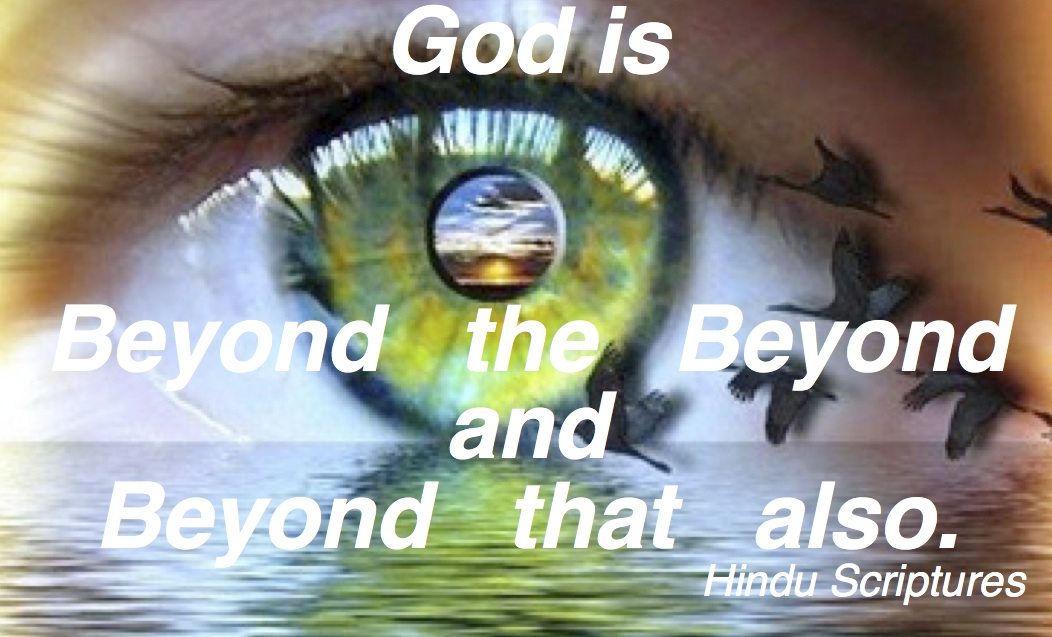
Beyond the Beyond - Dawn Hutchings

I don’t remember the first time I ever saw him. I was barely 17 months old when my brother Alan arrived. Despite the fact that he ruined my gig as an only child, Alan and I grew close over the years. We moved around a lot so we became one another’s best friends. But we went our separate ways when we became teenagers. When I tell the stories, I say that we went our separate ways because Alan became preoccupied with sports.  I suspect that when Alan tells the stories, he says that we went our separate ways because I became preoccupied with the church. Either way you tell it, family and friends used to say that it was hard to believe that we grew up in the same household. Alan developed a reputation for being a bit of a redneck. I developed a reputation for being a bit of a radical. Alan drove four-wheel-drives and went hunting. I drove old beat up cars and lived at an ecumenical retreat centre.  Alan learned a trade, settled down and raised a family. I travelled the world and didn’t get around to figuring out what I was going to be when I grew up, I went back to school at the age of 30.

Alan and I didn’t get around to understanding one another until we were in our mid-40’s. When I grew to appreciate the gentle man that he has become and Alan began to respect the person I’ve become. We still love to talk politics, but these days we tend to agree more than we disagree, I’m not sure who mellowed, the redneck or the radical. We don’t talk much about religion, though. Growing up, Alan would claim to be an atheist, and scoffed at my involvement with the church. These days, Alan, suggests he is an agnostic, and although he’s come to respect my life in the church, he still scoffs at the hypocrisy of the church.

I still remember the very first time that I saw Manjit. Her face was the colour of pure milk chocolate. Her jet-black hair was long and wavy. She sat at the very back of the classroom. When the teacher introduced me to Manjit, her toothy grin welcomed me. We were twelve years old. I was the new kid in town and Manjit was the only East Indian in the class. We were to share a double-desk for the remainder of the school year. I remember my first trip to Manjit’s home. A science project needed our attention. I can still smell the aroma of Manjit’s home where exotic curries released their pungency into the air. Over several meals at Manjit’s, I learned to like my food hot and spicy. Manjit’s mother would blend her own spices and she never forgot to send a package or two of her specially blended curries home with me.

Manjit is a gentle soul who introduced me to the wonders of her faith. Manjit is a Hindu. Manjit never tried to encourage me to become a Hindu.  Although over the years she would remind me of the Hindu saying that admonishes Hindus to be better Hindus, Muslims to be better Muslims, Jews to be better Jews, Buddhists to be better Buddhists, and Christians to be better Christians.  Manjit grew into a kind and gentle woman. She works as a social worker in Vancouver’s rough east-end neighborhoods. The last time I saw Manjit she was patiently guiding the students of a confirmation class that I taught, around her Temple. Later that evening Manjit and I talked a long time about Jesus. Manjit told me that she’d always been fascinated with Jesus’ teachings and that she had no problem believing that Jesus is God, but then she explained that Hindus have a thousand god’s.

I can still remember the very first time that Henry walked into my office. A long black beard together with the yarmulke that he wore on his head gave Henry away. So, from the very beginning I knew that Henry was Jewish. But it took a few years of working together before I discovered that in addition to being a graphic artist, Henry is also a rabbi. Henry became a dear friend of mine and over the years he shared so much of his wisdom with me. Many a night Henry and I sat up to the wee hours discussing the Scriptures. Henry even arranged for me to study Hebrew at his Yeshiva. I learned a great deal from Henry. We often talked about Jesus. We rarely agreed about Jesus, but we often talked about him.

Alan, Manjit and Henry, some would call them an unholy Trinity. But to me they are, each of them, sacred. Trinity Sunday is my least favorite Sunday of the Church year. It’s the only festival of the church year that is designed to celebrate not God, nor Jesus, not even the Holy Spirit, but rather a doctrine of the church. The notion that God is One in Three; a doctrine that was created by theologians to explain the inexpressible, a doctrine the church “fathers” began to cast in stone in the words of the Apostle’s, Nicene and Athanasian Creeds.  Three Creeds that make up an unholy trinity in and of themselves. Three Creeds that the Lutheran Church continues to hold as articles of the faith. Three Creeds that continue to hold sway in our church.Three Creeds that in my humble opinion make up an unholy trinity. Three Creeds upon which the doctrine of the Trinity rests.

The Apostles’ and Nicene creeds are familiar to most people who’ve spent time in the churches of Christendom. But it’s the 3rd creed of this unholy Trinity that makes Trinity Sunday my least favorite Sunday of the Church year and for me calls into question the entire doctrine of the Trinity. I still remember the first time I actually heard the third creed. I was about 20. I’d been attending church for about five years and I’d already learned to recite the Apostles creed which we used almost every Sunday and the Nicene Creed which we used on the high holy days like Easter, Pentecost and Christmas. But somehow in those five years I never came across the Athanasian Creed. I must have missed a few Trinity Sundays because in the Lutheran Church tradition dictates that on Trinity Sunday the Athanasian Creed be used. So, on this particular Sunday after the Hymn of the Day the pastor instructed us to turn to page 54 in our Lutheran Book of Worship.    Continue reading

God In Between – Pentecost Sunday sermon

God In Between

Pentecost Sunday is a day for stories about the nearness of God. So we begin with the story of the Tower of Babel from Genesis 11:1-9, then make our way to the anonymous gospel-storyteller we call Luke’s story of the early followers of Jesus’ encounter with the Holy Spirit at Pentecost in Acts 2:1-21, and then the anonymous gospel-storyteller we call John’s story of Jesus’ insistence that he and God are one, before rounding off with Sandy Eisenberg Sasso’s excellent children’s book God In Between. 

Listen to the sermon here

Everything Is Spiritual – Rob Bell (2016 Tour Film)

rb EISIt is unusually cold and stormy here today. So, I walked on the treadmill and watched Rob Bell’s latest re-telling of the story of humanity. Well worth watching. To my colleagues who scoff at Bell, I dare you to watch this and not come away with several sermon ideas!!! To those of you who love Rob Bell, you’ll love this. If you’ve never heard of Rob Bell, “where’ve you been?” Enjoy!!! If you know where I can get my hands on a whiteboard like his, hook me up!

The Spirit Alive in Our Midst: a sermon for Pentecost Sunday

Pentecost Sunday

You can listen to the sermon here

“In the night in which he was betrayed. Our Lord Jesus took bread, and gave thanks, broke it, and gave it to his disciples, saying: Take and eat this is my body, given for you.”

“In the night in which he was betrayed” these are the words of institution. I remember them well. I also remember the turmoil my pastor created in me when he had the audacity to change those words. It was 1979, I was 22 years old; young and full of ideas, hungry for knowledge and passionately faithful; excited about worship, in love with the church and determined to be the kind of Christian who had the courage not just to talk the talk, but walk the walk. The brand new Lutheran Book of Worship had only been in print for just over a year and as a dedicated member of our congregations Worship Committee I’d been to several workshops to learn all the new fangled changes that this ground-breaking new book introduced into the liturgy; new fangled changes based on a return to the traditions of the church’s glorious past. Three liturgical options, all based on the old Latin Mass of the 11th century. In all three settings of the liturgy these words were clear: “In the night in which he was betrayed. Our Lord Jesus took bread, and gave thanks, broke it, and gave it to his disciples, saying: Take and eat this is my body, given for you.”

So, why oh why, did our pastor get it so very wrong. Over and over again, no matter how hard we tried we could not get him to say the right words. Over and over again, he acted as if thousands of years of tradition meant nothing. Over and over again he insisted upon using different words. We tried to bring him back to the tradition. But it was as if he could not hear our well reasoned arguments. It was as if he didn’t care about the great crowd of witness who had gone before us. It was as if he thought he knew better than the Church; and not just the Lutheran Church but the ancient church; better than the writers of the gospels and St. Paul himself. Maybe even better than the Lord God himself, who after all had in my humble opinion, been responsible for inspiring the writing of these words. “In the night in which he was betrayed. Our Lord Jesus took bread, and gave thanks, broke it, and gave it to his disciples, saying: Take and eat this is my body, given for you.”

Jesus spoke these words, so why did our pastor believe that he had any business tinkering with these words. Sure he had a good reason for wanting to change the words. But if everyone felt free to change the words of the liturgy the next thing you know we’d have chaos; and where would the church be. I argued with him. I pleaded with him. Others argued with him and pleaded with him. Some, even threatened him. Say the words correctly or there’ll be trouble. We’ll report you to the bishop; we’ll leave the congregation. “In the night in which he was betrayed. Our Lord Jesus took bread, and gave thanks, broke it, and gave it to his disciples, saying: Take and eat this is my body, given for you.” And yet over and over again with his back turned to the congregation, because that’s how it was done in those days, when altars were up against the wall, and pastors held up the bread, up high as if God himself were up, there up high above our heads, looking down to ensure that everything was done just so. With the bread held high the pastor would insist upon saying, On the night before he died, Our Lord Jesus took bread, and gave thanks, broke it, and gave it to his disciples saying: Take and eat this is my body, given for you.” I loved that man dearly. He was a sweet, kind, generous, hard working, part-time pastor who scraped out a living as a small time farmer when he wasn’t working in the barn he was there for us. I loved him, but he was just plain wrong. Even if his reasons for being wrong were well intentioned, you just don’t mess with the tradition like that. The words are there, they way they are for reasons beyond our understanding. They are after all divinely inspired. And this is the Eucharist after all; the meal that lies at the very heart of who we are. Continue reading

Fanning the Flames: Pentecost Sunday sermons

fanning flames pastorDawn

Click on these link for previous Pentecost sermons:

Pentecost: a Human Phenomenon

Beyond Tribalism – Preaching a 21st Century Pentecost

Celebrating Pentecost in the 21st Century

Pentecost Tongues Aflame with the Prayer attributed to Jesus

Global Engagement, Chaos Theory, the Butterfly Effect and a New Pentecost

Pentecost is the birthday of the Church. Birthday celebrations lend themselves to the telling of stories. So, we begin with a parable by the radical theologian Peter Rollins. So, sit back and try to imagine that you live not at the beginning of the 21st century but at the middle of the 21st century; say about 2050. The world has changed quite a bit. “It seems that in the future laws will be passed declaring that all those who follow the teachings of Jesus are subversive. Churches have been banned and to be a follower of Jesus is illegal. You have just been accused of being a believer. You’ve been arrested, and dragged before a court. You have been under clandestine surveillance for some time now, and so the prosecution has been able to build up quite a case against you. They begin the trial by offering the judge dozens of photographs that show you attending underground church meetings, speaking at religious events, and participating in various prayer and worship services. After this, they present a selection of items that have been confiscated from your home: religious books that you own, worship CDs, and other Christian artifacts. Then they step up the pace by displaying many of the poems, pieces of prose, and journal entries that you had lovingly written concerning your faith. Finally, in closing, the prosecution offers your Bible to the judge. This is a well-worn book with scribbles, notes, drawings, and underlinings throughout, evidence, if it were needed, that you had read and reread this sacred text many times. Throughout the case you have been sitting silently in fear and trembling. You know deep in your heart that with the large body of evidence that has been amassed by the prosecution you face the possibility of a long imprisonment or even execution. At various times throughout the proceedings you have lost all the confidence and have been on the verge of standing up and denying Christ. But while this thought has plagued your mind throughout the trial, you resist the temptation and remain focused.

Once the prosecution has finished presenting their case the judge proceeds to ask if you have anything to add, but you remain silent and resolute, terrified that if you open your mouth, even for a moment, you might deny the charges made against you. Like Christ you remain silent before your accusers. In response you are led outside to wait as the judge ponders your case. The hours pass slowly as you sit under guard in the foyer waiting to be summoned back. Eventually a young man in uniform appears and leads you into the courtroom so that you may hear the verdict and receive word of your punishment. Once you have been seated in the dock the judge, a harsh and unyielding man, enters the room, stands before you, looks deep into your eyes and begins to speak. “On the charges that have been brought forward I find the accused not guilty.”

“Not guilty?” your heart freezes. Then, in a split second, the fear and terror that had moments before threatened to strip your resolve are swallowed up by confusion and rage. Despite the surroundings, you stand defiantly before the judge and demand that he give an account concerning why you are innocent of the charges in light of the evidence. “What evidence?” asks the judge in shock.

“What about the poems and prose that I wrote?” you ask. “They simply show that you think of yourself as a poet, nothing more.” “But what about the services I spoke at, the times I wept in church and the long, sleepless nights of prayer?” “Evidence that you are a good speaker and an actor, nothing more,” replied the judge. “It is obvious that you deluded those around you, and perhaps at times you even deluded yourself, but this foolishness is not enough to convict you in a court of law.” “But this is madness!” you shout. “It would seem that no evidence would convince you!” “Not so,” replies the judge as if informing you of a great long-forgotten secret. “The court is indifferent toward your Bible reading and church attendance; it has no concern for worship with words and a pen. Continue to develop your theology, and use it to paint pictures of love. We have no interest in such armchair artists who spend their time creating images of a better world. We exist only for those who would lay down that brush, and their life, in a Christlike endeavor to create a better world. So, until you live as Christ and Christ’s followers did, until you challenge this system and become a thorn in our side, until you die to yourself and offer your body to the flames, until then, my friend, you are no enemy of ours.” “orthodox herretic pastorDawn

Rollins insists that this parable is true right here and right now. We don’t have to imagine a world were Christianity is illegal for this parable to be true. Rollins insists that: “If you or I were really to take the teachings of Jesus seriously, would we not sooner or later, find ourselves being dragged before the authorities? If we were really to live a life that reflected the subversive and radical message of love that gives a voice to the voiceless and a place to those who are displaced, if we were really to stand up against systemic oppression perpetrated by those in power, then would we not find ourselves on the wrong side of the lawmakers?” Continue reading

Practicing Resurrection: Sophia/Wisdom – a sermon for Mothers’ Day

Christ Sophia pastorDawnThe sermon hymn: “When Masks of God Both Age and Die” can be found here

Listen to the Mothers’ Day sermon here

El Shaddai, Eloheim, Rauach, Chokma, Rechem, YAHWEH, these are the ancient biblical Hebrew names for the reality that we call God. El Shaddai which translates as “she – breasted one, ”Eloheim which is the feminine plural for “majesty,”  Rauach a feminine word for “wind” “breath” “spirit,” Chokma, a feminine word for “wisdom.” Rechem  also a feminine word which translates as “ womb love” mother love, compassion. YAHWEH – I AM, WHO AM or I shall be who I shall be Ancient biblical Hebrew names for the reality that we call God.

During the time of Jesus there was another name for God that was used by the Jewish people:  El Shekinah which translates as “she who dwells among us.” There were other  words for the reality that we call God which the writers of the New Testament would have been so familiar with; Greek words like: Theos — a feminine noun which translates simply as “God,” Sophia – which is the Greek translation of the Hebrew word Rauach for “Wisdom,” Pnumena – the feminine noun which is the Greek translation of the Hebrew word Chokma which means: wind, breath or spirit.   That these names for the reality that we call God are all feminine nouns is remarkable when you look at how these words were translated by the Roman Empire into Latin: Patris et Filii et Spiritus Sancti Father, Son, and Holy Spirit. Stripped of her breasts and her womb-love, the One we call God, the Chokma who Dwells among us, is given the aura of a powerful young Roman God as the word for breasts is translated as “Almighty” and whose Rechem – womb-love is reserved for those who fear HIM.

Yet despite the Empire’s attempt to penetrate the sacred feminine with masculinity’s youthful vigor, (yes, I did mean that pun) this reality we call God will age over the centuries to become a bearded old grandfather-like figure who lives up there somewhere, and woe to those who dare to expose His transgendered history; for God is male and that’s that. The image of the great I AM erected by the male hierarchy to be worshipped and glorified, forever and ever, as Father, Son, and yes, even the nebulous Holy Spirit becomes HE in order to penetrate His Bride the church.  No room for talk of breasts or womb as SHE who dwells among us, Chokma, Sophia, Wisdom is banished to the mists of time. That is until women began to be admitted to the sacred halls of the academy; until women began in significant numbers to study the ancient texts and unravel the ancient languages and begin to question the work of their male predecessors and contemporaries. Female academics, female theologians, and female translators’ questions lead to the discover of the long hidden, often denied, and ever present breasts and womb which now that they have been exposed will never again be cast out from their dwelling place among us. Wisdom, Sophia has been emancipated she is woman hear her roar. Continue reading

Wonderfully Made, Ever-Evolving Humans in an Ever-Changing Cosmos – a sermon for Easter 6C – John 14:23-29

Love Julian bw

Listen to the sermon here

Where Is God? – Diana Butler Bass

For those who were not able to attend our Pub Night, here’s the video that kicked off our conversations. Diana Butler Bass, speaking at All Saints’ in Pasadena in December of 2015 introduces her book Grounded: Finding God in the World, A Spiritual Revolution. The struggle between the conventional images of God and the emerging images of God sparked some interesting conversation!

Where is God? DBB

We Have Forgotten What We Have Forgotten: Earth Sunday Sermon

earth-day-2013Readings: Romans 818:24 and Exodus 3:1-22
Listen to the sermon here

Every Bush Is Burning: Earth Sunday Sermon

earth-day-2013Three years ago, on the heels of Peter Rollins visit to our congregation, I preached this Earth Sunday sermon which flows out of Peter’s work. You can listen to Peter’s sermon which is the jumping off point for this Earth Day sermon here

Listen to the Earth Day sermon here

Worship Bulletin here

The readings are here

The video of the excerpt from Chief Seattle’s Response is below

On April 22nd this planet will celebrate Earth Day; a time to pause and celebrate the wonders of this planet and to consider the fate of this planet. The church has no day on its calendar to either celebrate the Earth or to pray for the survival of the Earth. Indeed, there are churches in Christendom that actively pray for the demise of the planet, so as to hasten the arrival of Christ.  We here at Holy Cross have been celebrating Earth Sunday since 2007. This week I went back over my sermons for the past six Earth Sundays and discovered that I usually point out some ecological disaster and encourage us all to take better care of the planet.  While there are plenty of ecological disasters that I could point to that’s not what I want to talk to you about today because let’s face it, I’d only be preaching to the choir. All of you know that the planet is in grave danger and that we all have a role to play in saving the planet. Today, I want to talk to you about something that lies at the very heart of our abuse not only of the planet but of one another. You see all week; I’ve been haunted by a line from Pete Rollins sermon last week.

Peter was talking about the gift that Christianity has to offer the world a gift that has the potential to move us beyond religion toward a more connected holistic way of being in the world. The line that has been haunting me all week came near the end of Peter’s sermon. It was almost a throwaway line and with Belfast Peter’s accent and the speed with which he speaks, I almost missed it. Peter said that all too often what we see in religion is our desire to have some sort of holy experience; a burning bush experience like Moses. We want to find this place where the Holy is and there always seems to be things getting in the way of our having this holy experience.

There are people getting in the way and structures getting in the way of this burning bush experience. Pete insisted that in the what he described as the Apostle Paul’s conversion of bedazzlement, in this incomprehensible blinding revelation that seems so incomprehensible, so transformative has the power to transform us so that we can see inside of ourselves and we can begin to see that every bush is burning. We can begin to see that the sacred are everywhere; that the persecuted ones are the place of our transformation and our conversion. Continue reading

Nanny’s Mugs: The Agony of Dementia – A Sermon for Easter 5C

NANNY'S MUGSIn my kitchen there are some teacups that we call Nanny’s mugs. They are smaller and more delicate than all the other mugs in the cupboard. Whenever I drink tea from them, I think of my Grandmother. That first summer, I moved to Newmarket; some 3,000 miles from my home, my Grandmother decided that she was going to move in with me.  She lived with me in the parsonage for about 3 months.  It was an impulse decision on her part; a decision that I had very little say in. Nanny decided that I was the only one in the family she could trust and so she would move in with me. She was in her late eighties at the time. I didn’t fully understand her lack of faith in the other members of the family. I never dreamed that her suspicions about the relative trustworthiness of our relatives was the beginning of the end.  I loved my Nanny and I was determined to provide a home for her. I was delighted when she arrived. I was always delighted when my Nanny arrived. I remember as a child, I would long for Nanny to arrive.

Nanny was always full of fun and I have all sorts of wonderful memories of usImage 19 getting into trouble together.  Nanny was all of 5 feet tall, she was just a wee little woman, but there was more power and strength in that wee little woman from Belfast than in most of the women I’ve ever met in my life. She was kindness and fierceness all rolled up into a woman who loved nothing better than a good laugh. Nanny was born in Belfast the oldest of 14 children. When all three of her children ended up living in Canada, even though they were well into their sixties she and my Grandda immigrated to Canada to begin a new life in a new country. Immigrating at any age is an incredible undertaking, but immigrating in your 60’s takes guts. I was twelve years old when my Grandparents arrived in Vancouver. I watched my Grandda begin a new job and my Nanny try to make the best of life far away from everything that was familiar to her. Nanny’s homesickness was palpable. Continue reading

The Raising of LOVE: the “more-than-literal” meaning of the Raising of Tabitha – a sermon on Acts 9:36-41

dorcas

“Can the ways in which we tell the stories of resurrection transform us into followers of Jesus who embody a way of being in the world that can nourish, ground, and sustain the kind of peace that the world yearns for?”  I preached this sermon on the raising of Tabitha years ago, as an attempt to convey the academic essay of New Testament scholar Rick Strelan into the form of a sermon. I believe that it is vital for preachers to convey the wealth of insights that are bandied about in the halls of academia, so that congregations can let go of so many interpretations of scripture that insult their intelligence, so that we can  begin to explore the “more-than-literal meaning” (Marcus Borg) of biblical texts. Rick Strelan’s essay appeared in “Biblical Theology Bulletin, May 1, 2009, under the title “Tabitha: the gazelle of Joppa”. 

Yesterday, I went for a walk. As I was walking along, minding my own business, a bright light appeared in the sky. The light nearly blinded me and so it took a while for me to figure out what was happening. Suddenly, it was so clear that the light was actually coming from a very large spaceship. I could scarcely believe by eyes. I stood frozen to the spot as the space ship landed in the middle of the road. You’ll never believe what happened after it landed. A couple of little green creatures with giant eyes gout out, took my picture, and then got back in the spaceship and flew off into the farthest reaches of space.

You don’t believe me, do you? You think that I’m making a joke of some sort, or maybe I’ve been working too hard and I’ve finally lost the plot. I know there’s probably nothing that I can say that would convince you that little green men have photographed me. Quite frankly that’s a relief because if you’ll believe that, you’d probably believe anything.

I do find it interesting that you won’t allow yourself to believe that I encountered aliens from another planet, and yet, you’ll suspend your disbelief when I tell you a story from the Bible. Or will you? Take our first lesson from the book of Acts.    The miraculous story of how the Apostle Peter raised a disciple named Tabitha from the dead. You all know that when someone is dead, that’s it they are dead. You can pray over them all you want, but they’re never going to sit up, let alone stand up like Tabitha. There’s about as much chance of a person standing up after they’ve actually been dead as there is little green men from outer space landing on the street outside this church. The story of the raising of Tabitha is one of those stories that we wouldn’t believe for a second if it weren’t in the Bible. I suspect that when it comes to stories from the Bible, most of us don’t really believe that they happened exactly the way the Bible says they happened. Or do we?Now maybe you’re the generous type and so you say, “Don’t be too hasty, it could happen if the person wasn’t really dead.”  I mean, maybe Tabitha’s friends got it wrong and she just appeared to be dead. The story says that Tabitha died, then her friends washed her body and laid her out in an upper room. Then, since Lydda was near Joppa, the disciples sent two couriers to Peter, who was in Lydda and they asked Peter to head back to Lydda, which was about 10 miles away. That’s a 20 mile round trip on foot with a walking speed of about 3 miles per hour it would take at least 7 hours. She was definitely dead. According to the story Peter sends everyone out of the room, knelt down and prayed and then said, “Tabitha, stand up!”  and she did just that.

The story of the raising of Tabitha is one of those stories that we wouldn’t believe for a second if it weren’t in the Bible. I suspect that when it comes to stories from the Bible, most of us don’t really believe that they happened exactly the way the Bible says they happened. Or do we? Continue reading

Sometimes I wonder if our liturgical utterances of resurrection are in danger of becoming the last gasps of a Church that is all but dead. – a sermon for the Third Sunday of Easter

grave-clothesAre we who gather in churches on a Sunday morning members of a church that is the living body of the risen Christ or are we mourners at the funeral of a religion that died in the last century because it did not have the stamina for the 21st century? As we continue to ask, “Can the ways in which we tell the stories of resurrection transform us into followers of Jesus who embody a way of being in the world that can nourish, ground, and sustain the kind of peace that the world years for?” we cannot ignore the tattered grave-clothes that litter the empty tomb the church is becoming. The tattered, raggedy, remains of original sin, virgin birth, theories of atonement that cast God as judge and executioner, physical resuscitation of a corpse, individual salvation, triumphalism, violence, greed, misogyny, doctrines, and dogma are the discarded grave-clothes that litter the empty tomb.

The resurrection stories of John 21 and Acts 9 were our readings today.

You can listen to the sermon here

“Resurrection: Not a One-Time Miracle” – Richard Rohr

richard rohr

Can the ways in which we tell the stories of resurrection transform us into followers of Jesus who embody a way of being in the world that can nourish, ground, and sustain the kind of peace that the world yearns for? In responding to this question, our understanding of the Christ all too often restricts the way in which we tell our stories of resurrection. Richard Rohr’s sermon preached at All Saint’s in Pasadena follows readings from Acts 5:27-32 and John 20:19-31 and pushes us to broaden our visions of the risen Christ. 

“Forgive and Forget: What a load of bollocks!” – a sermon on John 21:1-19

Practicing Resurrection pastordawnOur first reading was the traditional gospel story for the Second Sunday of Easter in which we heard the story of Doubting Thomas for John 20:19-31. This was followed by a video in which Richard Holloway retells the story of Peter’s denial and the encounter between the resurrected Jesus and Peter. You can view the video here . This was followed by the gospel reading from John 21:15-20 You can listen to the sermon here

It has been said that, “The shortest between a human being and truth is a story.” It has also been said that the greatest story ever told is the story of resurrection. Like all really good stories, the story of resurrection has been told over and over again as storytellers attempt to convey the truth. We have heard Easter’s story of resurrection so many times that you would think the truth of resurrection would be obvious to us all and yet we struggle to find truth in Easter’s familiar story. Some of us have been shaped by this particular story. Some of us have built our lives around the truth that others have reported to us about this story. Some of us have rejected this story and filed it with all the other idle tales in which we can find no truth. Some of us have moved on from this story convinced that there is no longer any truth to be found. Some of us love to hear this story because it takes us back to familiar truths that inspire a nostalgic sense of well-being. Some of us, are determined to wrestle with this story until it releases all the truth that it harbors in, with, and between the lines which call us toward a new way of being that we long to embrace.

I myself, I am a wrestler. Like Jacob of old, I wrestle with this familiar story determined to get from this ancient tale not just truth but an inkling of the Divine who dwells in, with, through, and beyond all of our stories. The gospel storyteller who we know as John tells Easter’s resurrection story in a particular way, determined to reveal the truth that dwells in him and among the people with whom he dwelled. One of the things that we 21st century truth-seekers are particular fond of is deconstructing stories. We love to take stories apart. Dissecting every line. Examining each and every detail, each and every word so as not to miss a single nuance of the author’s intent. We are also skilled in the imperfect art of attempting to place stories back into their historical context so that we can establish exactly what was going on in the first century lives of the story-teller and his listeners. We look to the historical context in the hope that we can determine the original meaning of the story. Convinced that history can tell us what the story-teller cannot we wrestle with the facts, as best as we can determine them, so that we can be sure that the truth we thought we knew is more than just the summation of our mistaken interpretations.

Together, we have wrestled with Easter’s story of resurrection and together, I must say that we are pretty good wrestlers. We have deconstructed this story, we have applied the historical-critical method, we have approached it from all sorts of angles and employed the best 21st century scholars to aid us in our struggle to wrestle the truth from the piles and piles of dogma, which have been heaped upon it. But this morning, I’d like to approach Easter’s story of resurrection from the perspective, not of wrestlers determined to find the truth, but rather as people touched by the story itself. But even though we are not going to wrestle, like Jacob of old, we run the risk of being touched and even wounded by the truth as the Divine One is revealed and we are compelled by our wounds to walk in a different way. Continue reading

Oh Me of Little Faith: reflecting upon Doubting Thomas

leap of doubt pastorDawnIt happens every year as Doubting Thomas makes his Easter appearance. It’s a kind of resurrection of a glimmer of the faith that I long to recall in my flesh. I harken back to the time when I could embrace those wounds as proof. Oh how that faith comforted me. Resurrecting the memory of Thomas, who for years functioned as a trusted hero in my scant faith, now sends me into the dream of belief as the answer in and of itself; a kind of innocence that once gone is never forgotten. My nostalgia for my faith in belief will pass. But for just a moment or two, I pause to embrace the wounds, waiting for my doubts to open me to the evolving reality of now.  Jump!!!

Nickel Creek – A Doubting Thomas

Good Friday Sermons

Good Friday 2016Holy Week marks a sharp uptick in visitors to this blog. From comments, messages, and emails I hear from fellow preachers who, like me, are daunted by the task of preparing the Good Friday sermon. That task is even more daunting for those of us who serve progressive communities. My fellow progressive-christian-preachers tell me of the dearth of progressive-christian Good Friday sermons to be found on the internet and encourage me to re-post my own attempts to rise to the occasion. So, here are the links to some of the Good Friday sermons I have preached over the years of my journey with the progressive community which I serve. The people Holy Cross Lutheran Church has over the years provided an invigorating space for me to pursue my questions. They have also provided the resources which make this blog possible. So, if you find the work posted here  of value to you and your community, please consider supporting this ministry of Holy Cross. I rarely solicit donations. But Holy Cross is a small community that continues to give to others in so many ways and your encouragement is greatly appreciated!!! (Holy Cross Lutheran Church, 1035 Wayne Dr., Newmarket, On. L3Y 1N3)

Follow the links to Good Friday sermons and feel free to use/adapt/repost

2015 Not Salvation! Solidarity and Transformation click here

2014 God Is Dead? click here

2013 Giving Up the Theories of Atonement in Order to Move Toward an Evolutionary Understanding of Jesus. click here

2012 Good Friday Rituals or Crimes Against Divinity? click here

Good Friday: Not Salvation! Solidarity and Transformation

Listen to a version of this here:

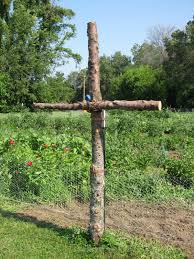
rough crossAccording to the American novelist, Joyce Carol Oates: “Homo sapiens is the species that invents symbols in which to invest passion and authority, then forgets that symbols are inventions.” Following last year’s Maundy Thursday worship, I received a very rude reminder of our all too human habit of investing passion and authority in invented symbols. Our efforts to remember the life and death of Jesus of Nazareth are bolstered year after year, decade after decade, century after century by the symbols we followers of the Way have invented and invested with passion and authority. So, after our regular Maundy Thursday ritual of removing invented symbols from the sanctuary, I went looking for our own sacred Good Friday symbol. Each Maundy Thursday, we followers of the Way get together to remember Jesus by focusing upon the symbols which represent to us the events of the night before Jesus died, when he gathered his followers together to eat the Passover meal. At that supper Jesus took bread, gave thanks and broke it and the rest as they say is history. Our Maundy Thursday Eucharist is packed with symbols, from the hand-basins in which we ritually wash one another to remember Jesus washing of his followers feet, bread and wine which we ritually consume as Christ given and poured out for us, to the ritual stripping of the sanctuary of all of the symbols in which we have invested passion and authority, in our efforts to re-member Jesus.

The rituals of Maundy Thursday prepare us for the rituals of Good Friday and so after our worship, I went downstairs to venture into the cupboard under the stairs to retrieve the stark symbols of this congregation’s Good Friday rituals. It is the same every year, a rough-hewn cross, fashioned out of the trunk of a Christmas tree that once adorned this sanctuary. A Christmas tree – evergreen, a symbol in which we invest our passion for everlasting life, stripped of it’s branches so that only the trunk remains and then cut so that the top section can be lashed with twin to the main section to fashion a cross of sorts. A rough-hewn cross in which we invest our passion for what we have come to call the passion of Christ. Each year, once the sanctuary is stripped of  all the symbols which we have invented to facilitate our ritual remembering, I journey down beneath the stairs to retrieve our rough-hewn cross to facilitate our Good Friday remembering. This year, I had designed our remembering ritual, so that we could pay particular attention to our rough-hewn cross. This sermon was built around an exercise of re-membering which I hoped would help us to participate in the very act for which symbols are invented. Symbols are created to point beyond themselves, to direct our focus to that which lies beyond the symbol. This year, my Lenten sermons had focused on a definition of Divinity which describes God as beyond the beyond and beyond that also. So, this Good Friday sermon was written to use our rough-hewn cross to examine the work of the cross in the lives of the followers of Jesus, so that we might see beyond the symbol to the One who is beyond the beyond and beyond that also. I planned to place the rough-hewn cross here on the floor of the sanctuary, right in the middle of our circle so that as the Gospel according to John’s symbolic narrative, which has become known as the Passion Narrative, was read you could gaze upon our rough hewn cross and as my sermon began I would literally and figuratively take apart our invented symbol so that we might peer beyond it. I planned to sit here in the midst of you and unlash the vine that held our rough-hewn cross together and as I untied the vine, I would do my level best to untie the bonds that our religious tradition have placed upon the symbol of the cross and perhaps encourage you to question the passion and authority which is all too often invested in this invent symbol of the life, death, and resurrection of Jesus of Nazareth. Then with dramatic flare, I planned to put it back together again. As I used the old Christmas tree trunk to pull together our history and tradition, and the withered vine to lash our troubled attempts to remember back into the form of the cross in the hope that we might see the cross from the perspective of the 21st century followers of the way which on this day of days we struggle to be. Continue reading

Hosanna! Hosanna! Hosanna! Yada, Yada, Yada, we’ve heard it all before…a sermon for Palm Sunday

on a donkeyOur worship began outside in the bright sunshine of the first morning of springtime, where we spoke of the reenactment of one of the two parades that took place in Jerusalem nearly 2000 years ago. Embracing Jesus’ political act of performance art we processed into the sanctuary waving our palm branches and shouting our hosannas. Rather than the familiar Palm Sunday readings our worship included the story from Genesis chapter 32 which tells of Jacob wrestling with God, Psalm 118, and John 12:12-15. you can read them here and listen to the sermon here