God In Between

Over and over again, I am asked about Christian resources for children that do not re-inscribe old damaging theologies. The questions often come from progressives who are searching for gifts for their grandchildren. Having experienced the challenge myself, I fully understand their frustration.  So, over the course of the next few weeks I’ll try to post a few good books that are currently on the market. These suggestions will be posted here on the home page and on together on the new page which you will see above “Children’s Resources”.

God In BetweenLet me begin with an old favourite:  “God In Between” by Sandy Eisenberg Sasso, illustrated by Sally Sweetland. Sandy Eisenberg Sasso is the first woman to be ordained a rabbi. She serves a Reformed congregation in Philadelphia. She has written numerous children’s books (some of which I will post about soon), of which “God In Between” is by far my favourite! The book tells the tale of a town’s quest for God and their delight at finding God in the very midst of life.  I discovered the book shortly after it was first published in 1998 and over the years I have given numerous copies to the children in my life. I have also used the book during worship in place of the dreaded children’s sermon. I’ve read it to children from four to eighty!
Religion, Politics, and Equality

The discussion during the dialogue with Willf Blitzer on Saturday, Sept. 28, pointed to an inescapable truth that clearly is emerging – the intersection of politics, religion and LGBT equality is pointing to a different direction forward. The conversation has a decidedly American flavour. However, Canadians are not immune to those interpretations and articulations of Christianity that damage the psyche. The hope I see in this conversation is a “mainstream media celebrity” like Blitzer is involved. While Blitzer’s ignorance is at times mortifying, it is representitave of the ignorance that all too often prevails in conversations that dare to mix religion and politics. That the conversation takes place in Raleigh, North Carolina, a bastion of rightwing religion and politics, is quite remarkable.

Panelists for the evening were Mitchell Gold and Rev. Dr. T. Anthony Spearman, both of Hickory, N.C., and Rev. Dr. Jack McKinney of Raleigh, N.C.

God Is Dead: Beyond Dogma

keep calm God is DeadSo, I learned something about myself at our PubNight: I need a manuscript! Even though I had committed the talk I intended to give to memory, when I got up to speak the entire talk disappeared from my memory banks and I was pretty much reduced to babbling. So, for those of you who were there here’s the talk I thought I had committed to memory. For those of you who weren’t there, here’s what you might have missed:

I know that I’m supposed to tell you something that will provoke you into thinking differently about Christianity. But the truth is I’d much rather you thought less about Christianity and more about living. That’s why this little talk was advertised under the title “Beyond Dogma”. You see I happen to believe that there is so much more to life than Christianity. But what do I know really. After all I’m always getting things wrong, especially when it comes to Christianity. I mean ever since I was a kid, I’ve been getting Christianity wrong. I just didn’t get it.

I remember the first so-called “Christian” event I ever went to I must have been five or six years old. It wasn’t church or Sunday School. No the first “Christian” thing I ever went to was a funeral. It was amazing. I’d never been inside a church before. And the first time I saw that guy hanging up there in his underwear, I had absolutely no idea who he was or how he got there. So, I asked my Dad and I simply couldn’t believe it when he told me it was Jesus.

“How did Jesus get up there?” I asked

“He was nailed up there, a long time ago?” Dad answered.

“Why Daddy, why did they nail him up there?”

“So he would die?”

“What? You mean they killed the baby Jesus? Why did they kill the baby Jesus Daddy?”

At this point my mother had had enough! So she tried to baffle me with the facts of the matter. “Jesus died for you, for all of us, because we’ve been bad. Jesus died so that we could all get into heaven?”

“Why Mommy? Why can’t  we all just go to heaven? Why doesn’t God just let us in?”

“Because we’ve done bad things. Bad things must be punished.  So. Jesus died on the cross so that we wouldn’t have to?”

By this point all I wanted to do was to get out of there. I mean, the murdering so and so’s killed the baby Jesus.Nailed him up there on the cross so that he would die. And all because of something I’d done? It was awful?

I remember watching the guy up at the front. I didn’t even want to ask why he was wearing a dress. And he kept doing this X (crossing himself)  And when he did this X he kept mumbling something but I couldn’t figure out what he was saying. So, I spent the rest of the service waiting and watching for him to do this  X  and trying to figure out what he was saying when he did this X.

Well it wasn’t until we got out to the grave-side where I could get closer to the action that I finally figured out what the guy in the frock was saying when he did this  X  “In the name of the father and of the son and into the hole he goes!!!” For months after that funeral I would do this X, cross myself and repeat the magic words:  “In the name of the father and of the son and into the hole he goes!!!” Now for those of you who don’t recognize it, I stole that routine from the great Irish comedian Dave Allen. I hoped it would make you laugh. But I also hoped that it would help you to think how ridiculous Christianity can be. Most of us have been hanging around Christianity for so long that we can’t or won’t see the humour in it. But it’s not all funny or laughable. It’s full of tragedy as well. Continue reading

The Curtain Has Been Torn and The Temple Lies in Ruins: Luke 21:5-19 a sermon

Isaiah 65Our readings today were from Isaiah 65:17-25, Dietrich Bonheoffer’s “Letters from Prison, and Luke 21:5-19

A pdf of the worship bulletin which includes the Bonhoeffer reading can be found here (designed to be printed double-sided, landscape legal paper and folded into a booklet)

Pentecost 26C Nov 17 2013

Ecology is the New Theology: Michael Dowd

Evolutionary Christian, Michael Dowd preaches through the lenses of evidentiary faith. His refreshing articulation of “God” as the personification of reality points us to a panentheistic understanding of reality (not to be confused with pantheism). Dowd sees right-relationship with reality as the domain of ecology rather than theology. 

Michael Dowd, a self-proclaimed Evolutionary Evangelist is committed to spreading the good news that evolution is humanity’s common creation story as he proclaims that science illuminates the evidence with which God is communicating to humans today.

A Quantum View of the World: Dean Radin

Dean Radin puts the emphasis on relationship in his understanding of the quantum view of the world. “The world begins to look like a giant thought not a giant machine.” 

“Dean Radin PHD., is the chief scientist at the Institute of Noetic Sciences and teaches at Sonoma State University. Before joining the research staff at IONS in 2001, he held appointments at AT&T Bell Labs, Princeton University, University of Edinburgh, and SRI International, where he worked on a classified program investigating psychic phenomena for the US government. He is author or coauthor of over 200 technical and popular articles, a dozen book chapters, and three books including the award-winning The Conscious Universe(HarperOne, 1997), Entangled Minds (Simon & Schuster, 2006), and most recently, SUPERNORMAL (Random House, 2013).”

The Historical Jesus: John Dominic Crossan

My favourite New Testament historian doing what Dom does best!!!

As Evening Approaches

John Phillip Newell’s “Prayer for Mystery” and “Chant: Hidden Things” provides a gentle transition into the evening.

Way of Peace Dialogue, Jesus and Buddha

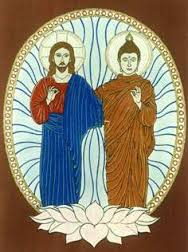
Jesus & BuddhaA humble conversation between Tenzin Gyatso, His Holiness the Dalai Lama and Laurence Freeman OSB (Roman Catholic priest and a Benedictine monk of Turvey Abbey in England and Director of the World Community for Christian Meditation).

The Convergence of Science and “Spirituality”

religion scienceDean Radin defines “spirituality” as an internal knowledge that there is something more and connecting with that more in a meaningful way. He asks whether science can begin to explore this connectivity and suggests that rather than a convergence of science and spirituality there will be a broadening of scientific perspective. 

“Radin PHD., is the chief scientist at the Institute of Noetic Sciences and teaches at Sonoma State University. Before joining the research staff at IONS in 2001, he held appointments at AT&T Bell Labs, Princeton University, University of Edinburgh, and SRI International, where he worked on a classified program investigating psychic phenomena for the US government. He is author or coauthor of over 200 technical and popular articles, a dozen book chapters, and three books including the award-winning The Conscious Universe(HarperOne, 1997), Entangled Minds (Simon & Schuster, 2006), and most recently, SUPERNORMAL (Random House, 2013).”


To Believe is Human; To Doubt, Divine: Peter Rollins

peter rollinsPeter Rollins, leader of the “radical Christianity movement” challenges many of the religious assumptions and indeed the religiosity of Christianity in this lecture delivered in early November 2013 at the Festival of Dangerous Ideas in Sydney, Australia.

“Rollins argues for a radical and initially disturbing Gospel: we can’t be satisfied, life is tough, and we don’t know the secret. We should attack the idea of God as that which makes us whole, removes our suffering, and offers us the truth. Rollins is less concerned with the question of life after death than with the possibility of a life before death, and his “churches” challenge escapist versions of spirituality, inviting us to embrace complexity, ambiguity and pain. Doubt is part of life, and religion should be able to explore it — instead of presenting an all-singing, all-dancing distraction.”  

Shusssh…Peace…Shalom…Shusssh… Oh No! the apocalypse is here in this Sunday’s Gospel Reading from Luke 21:5-19

The end is nearIn October of 1977, I was twenty years old.  I was young and adventurous and with a rail pass in my hand, a back pack slung over my shoulders and several hundred dollars worth of American Express Travellers cheques in my pocket, I boarded a train in Zurich, Switzerland, bound for Athens, Greece.

I was tired.  Several months of backpacking in Northern Europe had left me weary.  In just five days my rail-pass would expire, so I decided to head for Greece, where the living is easy, where the warm sun, blue skies and equally blue waters held the promise of rest and relaxation.

As the train made its way through the Alps, I remembered a similar trip which I had made the year before and I tried to calculate whether my remaining funds would allow me to return to the village of Hannia on the island of Crete.  I knew that in Crete I could find work.  I planned to mix a lot of rest and relaxation with just a little work and try to live out the winter on the Mediterranean.

As the train rattled through Austria toward what was then Yugoslavia it began to get dark. I was disappointed that my journey through Yugoslavia would be completed in darkness.  I remembered my previous journey, by car, through Yugoslavia and how at the time, I had marvelled at the diversity of this strange little country.  I remembered men and women driving oxen as they ploughed their fields in much the same way as there ancestors had done.  I also remembered my surprise at entering the ultra modern city of Belgrade; the showcase of Tito’s communist regime. I fell asleep pondering the sharp differences between the lives of the poor people in the villages who appeared to live without any modern conveniences at all and the lives of those who inhabited the city of Belgrade with its towering skyscrapers and streets filled with automobiles.  Several centuries seemed to co-exist in Yugoslavia.

I was awakened by the sound of people shuffling to find their papers as the train conductor instructed us to get our passports and visas ready for customs inspection.  When the Yugoslavian custom officials, with their rifles over their shoulders boarded our train they were preceded by men guided by vicious looking German shepherds.  Even though I knew that I had all the right papers and that my back pack contained nothing more offensive than some dirty laundry, the sight of the dogs, guns and uniformed officials struck fear into my heart.  I nervously handed over my precious passport to an official who looked younger than my twenty years.  He carefully read over the visa which I had obtained in Zurich the day before; a visa that I could not read because it was written in an unfamiliar language and an unfamiliar alphabet. Continue reading

Peacekeepers, Diplomacy and Humanitarian Aid: a Remembrance Sunday Sermon

war on warI am indebted to Joshua S. Goldstein’s book “Winning the War on War: The Decline of Armed Conflict Worldwide” and his brilliant statistical analysis and summation of the successes won by peacekeepers, diplomacy and humanitarian aid.  

Our liturgy this Remembrance Sunday was a service of lament. Our readings included a section from Elie Wiesel’s book “Night”.  Here you will find a copy of our bulletin which contains the readings as well as the words to Brian Wren’s hymn “The Horrors of Our History” with which our Choir opened our lament.  (pdf of the bulletin laid out to be printed double sided on legal paper)

Subconscious War and the Culture of Violence

To say that this video is disturbing is an understatement. I post it here because the images contained in the video continue to haunt me as I work on the sermon for tomorrow’s Remembrance Sunday. Perhaps this video itself ought to be the sermon. It’s images say so much more than any sermon I will be able to preach. It certainly serves as a reminder of the precious nature of our humanity. Lest we forget the humanity of our sisters and brothers, we would do well to question the impact of our distractions.


Radical Christian Meets New Atheist: Peter Rollins and Lawrence Krauss

Recorded Nov.2013: Festival of Dangerous Ideas at the Sydney Opera House, the Radical Christian Peter Rollins debates New Atheist Lawrence Krauss.

Lest We Forget Who We Are and Whose We Are: Followers of Jesus’ Ways of Non-Violent Resistance – Matthew 5:38-48

lest we forgetLest we forget” is a phrase that has become synonymous with Remembrance Day. Sadly, our Remembrance Day commemorations have become disconnected from our history and the vast majority of those of us who observe Remembrance Day have forgotten its origins. Our collective amnesia about the phrase, “Lest we forget” is a case in point. I have always assumed that the phrase was coined to encourage the world not to forget those who have served, fought and in too many cases died to protect our freedoms. While the phrase’s attachment to Remembrance Day has served as a call to collective remembrance, it was coined for a far more humbling purpose than to honour the fallen heroes of foreign wars. The phrase, “Lest we forget” was coined by the great poet laureate of the British Empire Rudyard Kipling, in his daunting poem, “Recessional” written to commemorate Queen Victoria’s Diamond Jubilee in 1897. Kipling’s poem was a sobering call to humility at a time when the British people were basking in the glory of Empire. Recessional served as a reminder that the sun might never set on the British Empire, but God was still in God’s heaven and thus, the sun rises upon the evil as well as the good. Kipling warned those drunk on the excesses of Empire that God was sovereign and not the British people.

The entire poem is addressed to God as a prayer, and serves as a call to the Empire’s powerful Victorians to remember their place.

God of our fathers, known of old—

Lord of our far-flung battle line—

Beneath whose awful hand we hold

Dominion over palm and pine—

Lord God of Hosts, be with us yet,

Lest we forget—lest we forget!


The tumult and the shouting dies—

The Captains and the Kings depart—

Still stands Thine ancient sacrifice,

An humble and a contrite heart.

Lord God of Hosts, be with us yet,

Lest we forget—lest we forget!


Far-called our navies melt away—

On dune and headland sinks the fire—

Lo, all our pomp of yesterday

Is one with Nineveh and Tyre!

Judge of the Nations, spare us yet,

Lest we forget—lest we forget!


If, drunk with sight of power, we loose

Wild tongues that have not Thee in awe—

Such boastings as the Gentiles use,

Or lesser breeds without the Law—

Lord God of Hosts, be with us yet,

Lest we forget—lest we forget!


For heathen heart that puts her trust

In reeking tube and iron shard—

All valiant dust that builds on dust,

And guarding calls not Thee to guard.

For frantic boast and foolish word,

Thy Mercy on Thy People, Lord!   Amen.

Amongst the pomp and circumstance of this solemn day, it is all to easy for those of us who aspire to be Christians, to forget who we are and whose we are. For we are a people who follow a man whose life was given to the cause of non-violence; a man who resisted the temptation to fight even in the face of the most brutal occupation army that the world had seen in first century. Jesus of Nazareth refused to take up arms against cruel oppression. Jesus proclaimed a radical new response to violence. Continue reading

Differentiated ONENESS: John Philip Newell

ONENESS at the Heart of the World: Thomas Keating

Oneness“In this talk, Father Thomas Keating discusses the dynamic nature of God and the paradox implicit in experiencing divine oneness. With humor and wisdom, he explores the practice of contemplative prayer, and how we might begin to approach God through being present to our senses.”

Einstein’s Big Idea: What Does It Mean?

einsteinA while back, I had the privilege of attending a lecture series given by Phyllis Tickle. During the Question and Answer session, Tickle was asked what advice she would give to someone who was preparing themselves to serve in parish ministry. “Study physics” was Tickle’s reply before going on to speak about the many ways in which theology is changing and will continue to change as a result of our expanding knowledge about the nature of reality. I have been struggling for years to make up for all the things I failed to study before entering the parish and Tickle’s advice rings true. However, physics textbooks are beyond my abilities. That’s why I love this video, which provides a brief glimpse into some of the most dynamic developments in the recent history of physics. For those of us who are practicing theology with our hands tied behind our backs as a result of our lack of scientific knowledge, this video is a fun place to begin to lay a scientific foundation. Using brief biographical dramatizations the filmmakers create a narrative that is both engaging and informative. Enjoy!

Rob Bell Gets the Full Oprah Treatment On Super Soul Sunday

Bell bkWhile Rob Bell’s theology only begins to pierce the dogmas that continue to plague Christianity, he does have the common touch necessary to provoke and encourage Christians to begin to question what they have long been taught about the nature of reality. If you’ve been questioning dogma for some time, you will find a kindred spirit in Bell even as you wish he’d move a little farther and deeper into his vision of what Christianity might have to offer in this new century. But his latest book “What We Talk About When We Talk About God” is worth considering as a gift to someone you might know who is just beginning to open themselves to the possibilities of a new way of exploring and articulating Christianity.  In the videos below, Bell’s common touch is demonstrated as Oprah gives him ample opportunities to demonstrate his deftness at expressing Christianity in ways that encourage viewers to re-think what they thought they knew about Christianity.

You can watch the full episode here