Peter Rollins on Radical Theology

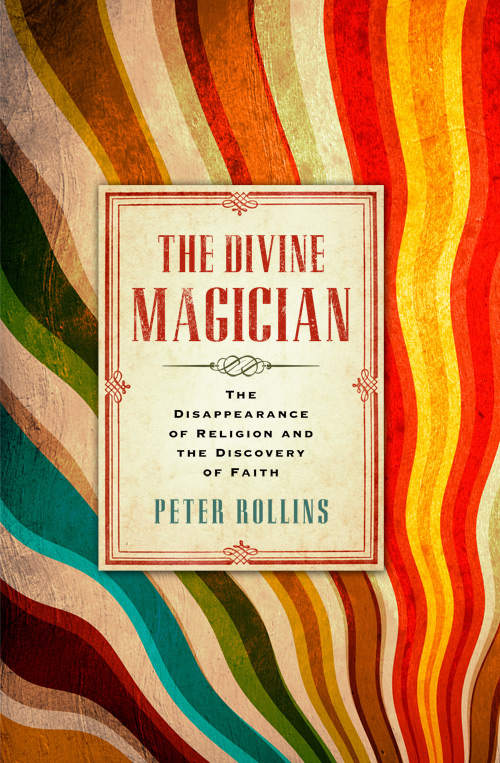
thedivinemagicianIn April, I had the privilege of travelling to Belfast to attend Peter Rollins’ Festival of Light where he gathered together some of the thinkers who have influenced his thinking. In his book The Divine Magician the fruit of this influence provides an expression of radical theology which has the power to ignite what Pete calls “pyrotheology”. Here are a few short videos which are designed to fan the flames. Enjoy!  

Fellow Tricksters – Belfast 2015

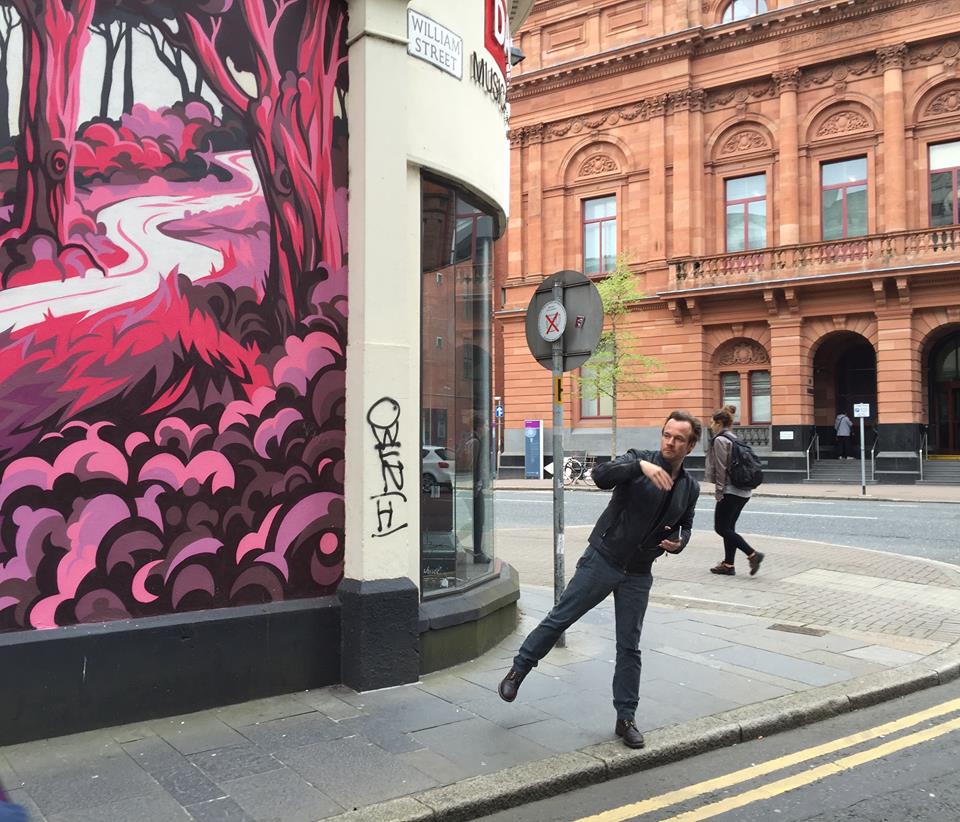
Tricky PeteA month ago, I journeyed back to the city where I lived when I was but a child to attend Peter Rollins’ Tricks of the Light Festival. There I was privileged to  explore radical theology with about fifty fellow tricksters from around the world. It was an amazing experience which took me into the realm of the Great Beyond. This merry band was collected together by glimpses of magic each of us has garnered from Pete Rollins’ work. Together we encouraged, challenged, comforted and inspired one another to step beyond ourselves, our ideas, our carefully constructed realities, so that we might see visions of the Perhaps that lives in, with, through, and beyond us all. For three amazing days and four rollicking nights we let loose our trickster-selves on the city of Belfast.

Fellow trickster, Laura Landry created the video below which captures the flavour of our experiences together. Iain Archer, who preformed a private concert on the closing night of the festival, provides the musical backdrop and you will see glimpses of the amazing tricksters who spoke at the festival including: John Caputo, Kester Brewin, Barry Taylor, Gladys Ganiel, the God-father of Punk – Terry Hooley, and the man himself – Peter Rollins. A big thank-you to Belfast’s own fearless, intrepid, trickster Adam Turkington  not only for keeping Pete from leading us all astray, but for ensuring that each and every one of us enjoyed so many of the sights, sounds, pleasures, and magic of Belfast! 

As for Pete, the instigator of this grand adventure, when he’s not inspiring tricksters in the flesh, he’s doing so with his work. Check out his latest book The Divine Magician: The Disappearance of Religion and the Discovery of Faith. But be warned: Pete’s work will inspire you to more than a few tricks of your own!!! As for me, I am forever changed, transformed by the tricks of the light Pete magically creates!!!

Fanning the Flames: Pentecost Sunday

Pentecost: a Human Phenomenon

fanning flames pastorDawnLast year, in the Spirit of Pentecost, I preached without a manuscript and conscripted the congregation into helping me to describe mystical experiences. The cacophony of voices you will hear captures what happened. If you fast forward past the congregational uproar you will hear a recap using Rudolph Otto’s description of the experience o the Numinous which he describes as “Mysterium, Tremendum et Facinans – Mysterious, Tremendous and Fascinating.    

You Can listen to the sermon by clicking here

Click Here to find the notes I used to prepare myself

to lead this interactive sermon.

Resources for Pentecost Sunday from previous posts:

Beyond Tribalism – Preaching a 21st Century Pentecost

Celebrating Pentecost in the 21st Century

Pentecost Tongues Aflame with the Prayer attributed to Jesus

Global Engagement, Chaos Theory, the Butterfly Effect and a New Pentecost

Fanning the Flames: a sermon for Pentecost Sunday:

Pentecost is the birthday of the Church. Birthday celebrations lend themselves to the telling of stories. So, we begin with a parable by the radical theologian Peter Rollins. So, sit back and try to imagine that you live not at the beginning of the 21st century but at the middle of the 21st century; say about 2050. The world has changed quite a bit. “It seems that in the future laws will be passed declaring that all those who follow the teachings of Jesus are subversive. Churches have been banned and to be a follower of Jesus is illegal. You have just been accused of being a believer. You’ve been arrested, and dragged before a court. You have been under clandestine surveillance for some time now, and so the prosecution has been able to build up quite a case against you. They begin the trial by offering the judge dozens of photographs that show you attending underground church meetings, speaking at religious events, and participating in various prayer and worship services. After this, they present a selection of items that have been confiscated from your home: religious books that you own, worship CDs, and other Christian artifacts. Then they step up the pace by displaying many of the poems, pieces of prose, and journal entries that you had lovingly written concerning your faith. Finally, in closing, the prosecution offers your Bible to the judge. This is a well-worn book with scribbles, notes, drawings, and underlinings throughout, evidence, if it were needed, that you had read and reread this sacred text many times. Throughout the case you have been sitting silently in fear and trembling. You know deep in your heart that with the large body of evidence that has been amassed by the prosecution you face the possibility of a long imprisonment or even execution. At various times throughout the proceedings you have lost all the confidence and have been on the verge of standing up and denying Christ. But while this thought has plagued your mind throughout the trial, you resist the temptation and remain focused.

Once the prosecution has finished presenting their case the judge proceeds to ask if you have anything to add, but you remain silent and resolute, terrified that if you open your mouth, even for a moment, you might deny the charges made against you. Like Christ you remain silent before your accusers. In response you are led outside to wait as the judge ponders your case. The hours pass slowly as you sit under guard in the foyer waiting to be summoned back. Eventually a young man in uniform appears and leads you into the courtroom so that you may hear the verdict and receive word of your punishment. Once you have been seated in the dock the judge, a harsh and unyielding man, enters the room, stands before you, looks deep into your eyes and begins to speak. “On the charges that have been brought forward I find the accused not guilty.”

“Not guilty?” your heart freezes. Then, in a split second, the fear and terror that had moments before threatened to strip your resolve are swallowed up by confusion and rage. Despite the surroundings, you stand defiantly before the judge and demand that he give an account concerning why you are innocent of the charges in light of the evidence. “What evidence?” asks the judge in shock.

“What about the poems and prose that I wrote?” you ask. “They simply show that you think of yourself as a poet, nothing more.” “But what about the services I spoke at, the times I wept in church and the long, sleepless nights of prayer?” “Evidence that you are a good speaker and an actor, nothing more,” replied the judge. “It is obvious that you deluded those around you, and perhaps at times you even deluded yourself, but this foolishness is not enough to convict you in a court of law.” “But this is madness!” you shout. “It would seem that no evidence would convince you!” “Not so,” replies the judge as if informing you of a great long-forgotten secret. “The court is indifferent toward your Bible reading and church attendance; it has no concern for worship with words and a pen. Continue to develop your theology, and use it to paint pictures of love. We have no interest in such armchair artists who spend their time creating images of a better world. We exist only for those who would lay down that brush, and their life, in a Christlike endeavor to create a better world. So, until you live as Christ and Christ’s followers did, until you challenge this system and become a thorn in our side, until you die to yourself and offer your body to the flames, until then, my friend, you are no enemy of ours.” “orthodox herretic pastorDawn
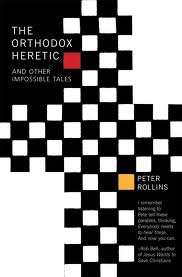
Rollins insists that this parable is true right here and right now. We don’t have to imagine a world were Christianity is illegal for this parable to be true. Rollins insists that: “If you or I were really to take the teachings of Jesus seriously, would we not sooner or later, find ourselves being dragged before the authorities? If we were really to live a life that reflected the subversive and radical message of love that gives a voice to the voiceless and a place to those who are displaced, if we were really to stand up against systemic oppression perpetrated by those in power, then would we not find ourselves on the wrong side of the lawmakers?” Continue reading

Leap of Doubt – How Do We Believe Resurrection? – an interactive sermon (Easter 2)

Leap of Doubt pastorDawnThis sermon is an interactive exploration which was recorded last year. It provides a timely reminder of the journey we have been on in our progressive Christian community. Below, you will find the text of my introduction to this powerful conversation which took place in the midst of an internet furor that erupted on the internet following several posts in which I denied the resurrection of the body.  Many thanks to the people of Holy Cross for their participation and to Peter Rollins for his beautiful words from his book Insurrection. Readings:  John 20:1-18, Philippians 3:10-14, John 20:19-31

Listen to the sermon here 

“They gathered in an upper room and the doors were locked because they were afraid of the religious authorities.” While I struggled to write this morning’s sermon, I was tempted not to lock the doors but rather to make sure that the recording device was turned off when I preached on the resurrection. I thought that I might just have a bit of a lock in, just you and me, no recording for our followers on the internet, so that together we could explore the ways in which some of us are beginning to understand the meaning of resurrection. Whenever I have posted anything on the resurrection, traffic on the blog goes up. Some visitors are just like us, trying to find ways to understand resurrection in light of all that we are learning about the nature of the cosmos There are some visitors who stop by the site to confirm their suspicions that I am a heretic and they take great delight in reporting my heresy to the religious authorities.

When letters are written in which charges are made and discipline is demanded those letters usually make reference to something I’ve posted on the subject of resurrection.So, rather than incur the wrath of those who know for sure that Jesus physically rose from the dead, I thought why not just turn off the recorder and have a private conversation among ourselves about the nature of the resurrection, not because we are afraid of the religious authorities, but just because we’d be able to go much further if we didn’t have to worry about the people who know exactly what happened But then I remembered an email that I received during last year’s Easter season. The email came from a life-long Lutheran who had been struggling to believe in the resurrection; let’s call him FRED…

Fred lives in Alberta of all places. Fred is tempted to leave his congregation, because every time Easter rolled around and he heard the story of Thomas’ encounter with the risen Christ, he knew that if he’d been Thomas he would have stuck his fingers in those wounds just to make sure that they were real. Fred wrote that during the Easter season he feels like a hypocrite because for the life of him he cannot bring himself to believe in the physical resuscitation of a corpse. Fred’s pretty sure that the people sitting in the pews with him each Sunday are also struggling to believe in the physical resuscitation of a corpse but none of them are willing to take the risk of saying anything about their struggles for fear of the religious authorities. So, even though it’s tempting to turn off the recording and lock our doors, so to speak, let’s throw caution to the wind, trusting that the wind; the breath, the Ruach, the Spirit will live and breath in, with, through and beyond us. So, I hope that you are willing to engage in as open a conversation as we can have together about the nature of the resurrection, knowing that people will be listening in to our conversation.

Now we have been blessed in this congregation by having enjoyed multiple visits from two of the world’s leading progressive Christian thinkers; John Shelby Spong has been here three times and John Dominic Crossan has been here twice and we have learned a great deal from both of them. But despite all the work we’ve done studying the historical and theological materials that have been generated about the resurrection, I suspect that just like Fred, some of us, myself included, are left wondering exactly how a 21st Century Christian can reconcile our expanding knowledge of the cosmos with the church’s teachings about resurrection

So, I’m going to stop talking for a bit and take a big risk here and ask you to be brave and share your thoughts about the resurrection…..Now I realize that this is a big subject, so let me help you with a question: Do you think it necessary to believe that Jesus physically rose from the dead in order to call yourself a Christian?  What do you think happened? Is resurrection physical, or more than physical?

Conversation. At the end of our conversation I reminded the congregation of Peter Rollins powerful words on Resurrection

 Peter Rollins: “Without equivocation or hesitation I fully and completely admit that I deny the resurrection of Christ. This is something that anyone who knows me could tell you, and I am not afraid to say it publicly, no matter what some people may think… I deny the resurrection of Christ every time I do not serve at the feet of the oppressed, each day that I turn my back on the poor; I deny the resurrection of Christ when I close my ears to the cries of the downtrodden and the oppressed. Every time I do not serve my neighbour, every time I walk away from the poor. I deny the resurrection every time I participate in an unjust system. However there are moments when I affirm that resurrection, few and far between as they are. I affirm the resurrection when I stand up for those who are forced to live on their knees, I affirm the resurrection when I speak for those who have had their tongues torn out,  I affirm the resurrection, when I cry for those who have no more tears left to shed. I affirm the resurrection each and every time I look into your eyes and see the face of Christ.”

Christ has died. Christ has risen. Christ will come again and again. This is the mystery of our faith. Christ is Risen! Christ is Risen Indeed! Alleluia! Christ is risen in you and in me and beyond you and I. In the words of Martin Luther:  “This is most certainly true!” Can I get an Amen?

Other sermons for the Second Sunday in Easter: 

Humpty Dumpty, Doubting Thomas, and Resurrection click here

Oh Me of Little Faith: reflecting upon Doubting Thomas click here

Practicing Resurrection click here

Parables Ancient and Modern: Lenten Evening Prayer with readings from the Orthodox Heretic

Orthodox HereticA series of Lenten Evening Prayer Services which use readings from the Parables of Jesus together with readings from Peter Rollins’ “The Orthodox Heretic and Other Impossible Tales.” Prayers are drawn from the writings of the Christian Mystics. Each service includes the worship bulletin as well as an audio recording of the service at Holy Cross Lutheran Church. 

One:  NO CONVICTION

A Copy of the worship bulletin can be found here – it is designed to be printed double-sided and folded into a booklet.

Listen to the worship service here (service begins at the 48 sec. mark)

Peter Rollins reads NO CONVICTION

Two:  Translating the Word

A copy of the worship bulletin can be found here – it is designed to be printed double-sided and folded into a booklet.

Listen to the worship service here

 Three: Great Misfortune

Evening Prayer a copy of the worship bulletin can be found here – it is designed to be printed double-sided and folded into a booklet.

Listen to the worship service here

Four: The Book of Love

 Evening Prayer a copy of the worship bulletin can be found here – it is designed to be printed double-sided and folded into a booklet.

Listen to the worship service here

Five: Betrayal

Evening Prayer a copy of the worship bulletin can be found here – it is designed to be printed double-sided and folded into a booklet.

Listen to the worship service here

Challenging Social, Political, and Religious Oppression – Peter Rollins

thedivinemagicianI just got my hands on an advance proof of Pete’s new book, “The Divine Magician: The Disappearance of Religion and the Discovery of Faith”.  This newly released video will have to tide me over until I can clear a space to read without interruption. Pete previewed some of this work when he visited us at Holy Cross. So, I for one am looking forward to the magic! Meantime, enjoy, An Evening with Peter Rollins from the Transgressions Tour, Live from the West End Wine Bar in Chapel Hill.

World Pride and Jesus: a sermon for the Third Sunday after Pentecost – Matthew 10:37-42

world prideThis week as the city of Toronto welcomes millions to the World Pride Celebration, it is so very appropriate that the lectionary provides a reading that has the potential to open us up to a more radical understanding of what WELCOME might mean for those who yearn to follow Jesus. This sermon on Matthew 10:37-42 uses two stories to posit questions about who Jesus might be. The context of World Pride provides us all with an invitation to welcome the ONE who comes to us in all sorts of shapes, sizes, and gender-identities. The imagined conversation with Jesus is taken from New Zealand preacher Clay Nelson’s excellent sermon on this text entitled “I Know I Am a Priest, But Am I A Christian?”.

There’s a story that I learned years ago when I was exploring the riches of the Buddhist religion and rediscovered in Wayne Muller’s LEGACY OF THE HEART. (p. 136) 

There once was…. “A young widower, who loved his five-year-old son very much, was away on business, and bandits came, burned down his whole village, and took his son away. When the man returned, he saw the ruins and panicked. He took the charred corpse of an infant to be his own child, and he began to pull his hair and beat his chest, crying uncontrollably. He organized a cremation ceremony, collected the ashes, and put them in a very beautiful velvet pouch.  Working, sleeping, or eating, he always carried the bag of ashes with him. One day his real son escaped from the robbers and found his way home. He arrived at his father’s new cottage at midnight, and knocked at the door. You can imagine, at that time, the young father was still carrying the bag of ashes and crying. He asked, “Who is there?” And the child answered, “It’s me, Papa. Open the door, it’s your son.”

In his agitated state of mind the father thought that some mischievous boy was making fun of him, and he shouted at the child to go away, and continued to cry. The boy knocked again and again, but the father refused to let him in. Some time passed, and finally the child left. From that time on, father and son never saw one another. Continue reading

Preparing to Fan the Flames: preaching on Pentecost Sunday

Resources for Pentecost Sunday from previous posts:
Beyond Tribalism – Preaching a 21st Century Pentecost
Celebrating Pentecost in the 21st Century
Pentecost Tongues Aflame with the Prayer attributed to Jesus
Global Engagement, Chaos Theory, the Butterfly Effect and a New Pentecost

fanning flames pastorDawnFanning the Flames: a sermon for Pentecost Sunday:

Pentecost is the birthday of the Church. Birthday celebrations lend themselves to the telling of stories. So, we begin with a parable by the radical theologian Peter Rollins. So, sit back and try to imagine that you live not at the beginning of the 21st century but at the middle of the 21st century; say about 2050. The world has changed quite a bit. “It seems that in the future laws will be passed declaring that all those who follow the teachings of Jesus are subversive. Churches have been banned and to be a follower of Jesus is illegal. You have just been accused of being a believer. You’ve been arrested, and dragged before a court. You have been under clandestine surveillance for some time now, and so the prosecution has been able to build up quite a case against you. They begin the trial by offering the judge dozens of photographs that show you attending underground church meetings, speaking at religious events, and participating in various prayer and worship services. After this, they present a selection of items that have been confiscated from your home: religious books that you own, worship CDs, and other Christian artifacts. Then they step up the pace by displaying many of the poems, pieces of prose, and journal entries that you had lovingly written concerning your faith. Finally, in closing, the prosecution offers your Bible to the judge. This is a well-worn book with scribbles, notes, drawings, and underlinings throughout, evidence, if it were needed, that you had read and reread this sacred text many times. Throughout the case you have been sitting silently in fear and trembling. You know deep in your heart that with the large body of evidence that has been amassed by the prosecution you face the possibility of a long imprisonment or even execution. At various times throughout the proceedings you have lost all the confidence and have been on the verge of standing up and denying Christ. But while this thought has plagued your mind throughout the trial, you resist the temptation and remain focused.

Once the prosecution has finished presenting their case the judge proceeds to ask if you have anything to add, but you remain silent and resolute, terrified that if you open your mouth, even for a moment, you might deny the charges made against you. Like Christ you remain silent before your accusers. In response you are led outside to wait as the judge ponders your case. The hours pass slowly as you sit under guard in the foyer waiting to be summoned back. Eventually a young man in uniform appears and leads you into the courtroom so that you may hear the verdict and receive word of your punishment. Once you have been seated in the dock the judge, a harsh and unyielding man, enters the room, stands before you, looks deep into your eyes and begins to speak. “On the charges that have been brought forward I find the accused not guilty.”

“Not guilty?” your heart freezes. Then, in a split second, the fear and terror that had moments before threatened to strip your resolve are swallowed up by confusion and rage. Despite the surroundings, you stand defiantly before the judge and demand that he give an account concerning why you are innocent of the charges in light of the evidence. “What evidence?” asks the judge in shock.

“What about the poems and prose that I wrote?” you ask. “They simply show that you think of yourself as a poet, nothing more.” “But what about the services I spoke at, the times I wept in church and the long, sleepless nights of prayer?” “Evidence that you are a good speaker and an actor, nothing more,” replied the judge. “It is obvious that you deluded those around you, and perhaps at times you even deluded yourself, but this foolishness is not enough to convict you in a court of law.” “But this is madness!” you shout. “It would seem that no evidence would convince you!” “Not so,” replies the judge as if informing you of a great long-forgotten secret. “The court is indifferent toward your Bible reading and church attendance; it has no concern for worship with words and a pen. Continue to develop your theology, and use it to paint pictures of love. We have no interest in such armchair artists who spend their time creating images of a better world. We exist only for those who would lay down that brush, and their life, in a Christlike endeavor to create a better world. So, until you live as Christ and Christ’s followers did, until you challenge this system and become a thorn in our side, until you die to yourself and offer your body to the flames, until then, my friend, you are no enemy of ours.” “orthodox herretic pastorDawn

Rollins insists that this parable is true right here and right now. We don’t have to imagine a world were Christianity is illegal for this parable to be true. Rollins insists that: “If you or I were really to take the teachings of Jesus seriously, would we not sooner or later, find ourselves being dragged before the authorities? If we were really to live a life that reflected the subversive and radical message of love that gives a voice to the voiceless and a place to those who are displaced, if we were really to stand up against systemic oppression perpetrated by those in power, then would we not find ourselves on the wrong side of the lawmakers?”

On this the birthday of the church, we would do well to remember the stories our ancestors wove together about what it was like back in the beginning. Sure it was like they were on fire! There they were huddled together in fear. Afraid to go outside, incase the authorities might spot them. Tormented by their grief. Afraid the dream might be over. Some of them were even considering giving up and giving in. The Romans were just too big, too entrenched, too powerful, they didn’t stand a chance against the powers that be. Just look what they did to Jesus. Jesus had dared to speak out. Jesus had dared to challenge it all, the Empire, the religious institution and the culture itself, all in the name of freedom. Jesus had tried to set us free from the oppression of the Empire, from the power of the religious authorities, free from our prejudices, free from the lure of our own self-centeredness. Jesus had tried to let us see that there was so much more to life than survival. Jesus had taught us so much, helped us to question so much. And look where it got him. The powers that be had done their very worst and know Jesus was dead. Sure there were those who insisted that Jesus wasn’t gone, that they felt his presence, that there was no need to give up or given in, that we could still change the world. But, what to do? How do we go on? And then it was as if we were on fire! Suddenly we were alive with all that Jesus had taught us. You should have been there as the flames of justice flashed about igniting us with passion, with courage, with love. Oh we had fire in our bellies! Yes it was chaos back then with everyone from all over the place talking all at once, putting their two cents worth in to the mix. But stuff got done. We changed the world because the very Spirit of God that lived and breathed in Jesus, was living and breathing in us. You should have seen us back then; we were on fire; so much so that people came from far and wide just to try and figure out what had given us the courage to be who we were created to be. Continue reading

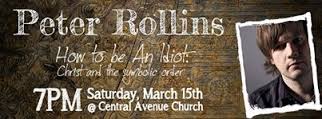
How to Be an Idiot: Christ and the Symbolic Order – Peter Rollins

Peter Rollins is a master at disrupting that which we have become unaware is there in order to open his listeners to transformation. Recorded March 15, 2014


Resurrection: Leap of Doubt – Easter 2A sermon

Leap of Doubt pastorDawnThis sermon is an interactive exploration. Many thanks to the people of Holy Cross for their participation and to Peter Rollins for his beautiful words from his book Insurrection. Readings:  John 20:1-18, Philippians 3:10-14, John 20:19-31

Listen to the sermon here 

How To Be An Idiot: Christ and the Symbolic Order

rollins idiotRecorded on March 15, 2014 – Those familiar with Pete Rollins work will recognize some familiar themes and stories at the beginning of this video which then moves into some interesting new ideas about “morons, idiots and imbeciles.” Rollins provocative ideas about the relationship of Christ to the symbolic order challenges us all to move beyond our moronic ideas and practices into the roll of idiots so that we might become imbeciles. Well worth a listen for those familiar with Rollins work and for those who have never encountered him before!!!

Parables Ancient and Modern: Lenten Evening Prayer with readings from the Orthodox Heretic

Orthodox HereticA series of Lenten Evening Prayer Services which use readings from the Parables of Jesus together with readings from Peter Rollins’ “The Orthodox Heretic and Other Impossible Tales.” Prayers are drawn from the writings of the Christian Mystics. Each service includes the worship bulletin as well as an audio recording of the service at Holy Cross Lutheran Church. 

One:  NO CONVICTION

A Copy of the worship bulletin can be found here – it is designed to be printed double-sided and folded into a booklet.

Listen to the worship service here (service begins at the 48 sec. mark)

Peter Rollins reads NO CONVICTION

Two:  Translating the Word

A copy of the worship bulletin can be found here – it is designed to be printed double-sided and folded into a booklet.

Listen to the worship service here

 Three: Great Misfortune

Evening Prayer a copy of the worship bulletin can be found here – it is designed to be printed double-sided and folded into a booklet.

Listen to the worship service here

Four: The Book of Love

 Evening Prayer a copy of the worship bulletin can be found here – it is designed to be printed double-sided and folded into a booklet.

Listen to the worship service here

Five: Betrayal

Evening Prayer a copy of the worship bulletin can be found here – it is designed to be printed double-sided and folded into a booklet.

Listen to the worship service here

Atheism for Lent

Atheism for LentFor more details click on this link:  ATHEISM for LENT details

You – What Worship Might Be?

youI have often wondered why hymnody prevails on Sundays in most Christian sanctuaries. Perhaps its because the alternatives on offer with their praise bandy shallowness insult the intelligence of those who have made the effort to gather together on the off chance of an encounter with the Divine. Radical theologian, Peter Rollins has suggested that worship leaders ought to consider inviting musicians who sing the blues into our churches to facilitate worship that includes all of life. When I consider the plethora of musical styles that could be employed in worship to open us to the breadth and depth of our abundant lives, I wonder if those of us employed in the art of worship planning need to look beyond our hymnals and song sheets to discover the endless possibilities that might facilitate worship that opens us to the deepest mysteries of this life.you kh

As a teaser, I offer two videos that interpret the work of English folk rock musician, Keaton Henson’s piece “You”. Both interpretations, the first by the poet himself, the second by the brilliant actor Derek Jacobi, function as both prayer and praise. Can I get an “Amen”???

To Believe is Human; To Doubt, Divine: Peter Rollins

peter rollinsPeter Rollins, leader of the “radical Christianity movement” challenges many of the religious assumptions and indeed the religiosity of Christianity in this lecture delivered in early November 2013 at the Festival of Dangerous Ideas in Sydney, Australia.

“Rollins argues for a radical and initially disturbing Gospel: we can’t be satisfied, life is tough, and we don’t know the secret. We should attack the idea of God as that which makes us whole, removes our suffering, and offers us the truth. Rollins is less concerned with the question of life after death than with the possibility of a life before death, and his “churches” challenge escapist versions of spirituality, inviting us to embrace complexity, ambiguity and pain. Doubt is part of life, and religion should be able to explore it — instead of presenting an all-singing, all-dancing distraction.”  

Radical Christian Meets New Atheist: Peter Rollins and Lawrence Krauss

Recorded Nov.2013: Festival of Dangerous Ideas at the Sydney Opera House, the Radical Christian Peter Rollins debates New Atheist Lawrence Krauss.

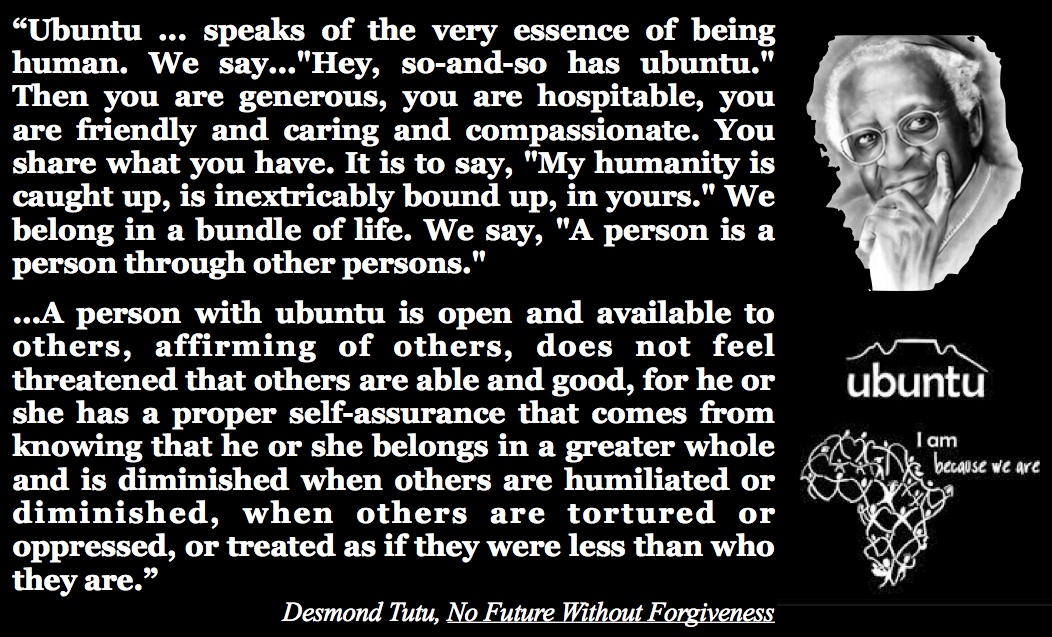
Ubuntu: A Person Is A Person Through Other Persons

Ubuntu -- pastordawn.com

colemansSermon for the Twentieth Sunday after Pentecost:

Luke 17:5-10 – October 6, 2013

Jesus’ Parable of the Mustard Seed

I am indebted to Peter Rollins for his modern parable “Finding Faith” found in his book The Orthodox Heretic

Listen to the sermon here: 

Watch Desmond Tutu describes Ubuntu

“Isness is God” – Meister Eckhart

Isness IS God Eckhart Fox Pastor Dawn

Back in the 19th century, Rudolf Otto described the Holy One that we encounter as: “mysterium, tremendum et fascinans.” “Mysterium” captures the indescribable nature of the Holy. “Tremendum” …we get our word tremble from this; and in the presence of the Holy we tremble because the Holy is so far beyond our abilities to cope with. And yet we are “facinans,” fascinated to the point where we long to return over and over again into the presence of the Holy. Sadly, the image of God that has been created for us by religion can’t possibly contain all that the Holy IS.  images

In his book  “Insurrection” Peter Rollins insists that, for a multitude of reasons we are all too willing to settle for what Bonheoffer called the God of Religion. For Bonheoffer, the Church approached God as a “deus ex machina.” God was merely an idea clumsily dropped into our world in order to fulfill a task. God was introduced into the world on our terms in order to resolve a problem rather than expressing a lived reality. The result is a God who simply justifies our beliefs and helps us sleep comfortable at night. God is brought into the picture only when we face a problem of some kind that doesn’t lend itself to solution by other means. This “deus ex machina” falls far short of the God we meet in the Thin Places of our lives; those places or events in which we encounter the Divine. Only by letting go of the god we have created for ourselves can we begin to describe the encounter with the ONE who IS. 


The Church is Like a Desert in an Oasis: Peter Rollins

Crucified Identities Peter Rollins PastorDawn

Pyrotheology – Peter Rollins

IMG_1959

Peter Rollins recently spent a weekend lecturing at Holy Cross. His refreshing perspective and keen insights were a gift to our community. We learn a great deal from Pete and our conversation continues. Here are several new videos that will give you a taste of Pete’s work.