As some of you know, I had a short vacation. I booked the last week of May for a little stay-cation and we had all sorts of plans for the week. Unfortunately, those plans all came to naught because Carol was sick with bronchitis. So, in between playing nurse-maid, I was able to read a few books and catch up on all sorts of movies and tv shows. One of the most incredible dramas that I was able to watch happened toward the end of my week off, when I watched 13-year-old Arvind Mahankali win the 86th annual Scripps National Spelling Bee. Spelling Bees always freaked me out when I was a kid, because I have never been able to spell. I used to come down with a mysterious version of the flue whenever a spelling bee was scheduled and the symptoms of this strange flue always convinced my mother to keep me home from school. But I’ve really been missing out all these years because spelling bees are really incredibly exciting. Now even though young Arvind is only 13, this was not the first time that he has been a finalist. Arvind finished in third place in both 2011 and 2012 and both times he was eliminated on German-derived words. So, after correctly spelling “tokonoma” a Japanese derived word that isn’t even in my spell-check, Arvind was the last speller standing when his inquisitors announced the word that stood between him and the championship: “Knaidel.” When Arvind asked for the derivation of the word his quizzer revealed that it was German-derived-Yiddish. The audience groaned. But Arvind was prepared. Indeed, when he was interviewed after the competition he revealed that he had indeed studied this word. Which you can see in the instant reply of the event, when Arvind smiles and nods slightly when the definition of the word was given to him. The roar that went up from the crowd when Arvind correctly spelled a word that would have surely stumped me.
I have always been a lover of words. As a young child, I loved learning new words. Each new word opened up a whole new way of expressing reality. To this very day I like nothing better than learning a new word so that I can better express myself and the world around me. Selecting just the right words each week with which to comment upon the connections between the written words on the pages of scripture with our reality is one of the joys and the torments of my life’s vocation. When I discover just the right words to shed some light on a particular text, all is well in my world, and there’s such relief when I can string together the words. But there are also those days and nights when words fail and I am left staring at a blank computer screen. Fortunately for us, our worship does not stand or fall on the quality of the words I string together in a sermon. Our liturgy is filled with music and the words of the songs we sing are all designed to shed light upon the connections between the scriptures we read and the reality of our lives. So, whenever I can’t find the right words for a sermon I often find myself review the music I have chosen for our liturgy.
Yesterday, when my blank computer screen caused me to begin to sing, the African American spirituals that we’re singing today, sent me on an internet search for a song I remember from my childhood. It’s a country and western piece that I hear in my head being sung by none other than Johnny Cash and his wife June Carter. The words go like this:Continue reading →
The song sung prior to the Gospel is Jann Aldridge-Clanton’s “Welcome New Wineskins” sung to the tune of Blessed Assurance. (Inclusive Hymns for Liberating Christians). As for my appropriation of the Beach Boys, “Help Me Rhonda”…my apologies! I am indebted to Christopher B. Zeichmann’s article “Rethinking the Gay Centurion” in The Bible and Critical Theory Vol 11 #1, 2015.
I don’t remember the first time I ever saw him. I was barely 17 months old when my brother Alan arrived. Despite the fact that he ruined my gig as an only child, Alan and I grew close over the years. We moved around a lot so we became one another’s best friends. But we went our separate ways when we became teenagers. When I tell the stories, I say that we went our separate ways because Alan became preoccupied with sports. I suspect that when Alan tells the stories, he says that we went our separate ways because I became preoccupied with the church. Either way you tell it, family and friends used to say that it was hard to believe that we grew up in the same household. Alan developed a reputation for being a bit of a redneck. I developed a reputation for being a bit of a radical. Alan drove four-wheel-drives and went hunting. I drove old beat up cars and lived at an ecumenical retreat centre. Alan learned a trade, settled down and raised a family. I travelled the world and didn’t get around to figuring out what I was going to be when I grew up, I went back to school at the age of 30.
Alan and I didn’t get around to understanding one another until we were in our mid-40’s. When I grew to appreciate the gentle man that he has become and Alan began to respect the person I’ve become. We still love to talk politics, but these days we tend to agree more than we disagree, I’m not sure who mellowed, the redneck or the radical. We don’t talk much about religion, though. Growing up, Alan would claim to be an atheist, and scoffed at my involvement with the church. These days, Alan, suggests he is an agnostic, and although he’s come to respect my life in the church, he still scoffs at the hypocrisy of the church.
I still remember the very first time that I saw Manjit. Her face was the colour of pure milk chocolate. Her jet-black hair was long and wavy. She sat at the very back of the classroom. When the teacher introduced me to Manjit, her toothy grin welcomed me. We were twelve years old. I was the new kid in town and Manjit was the only East Indian in the class. We were to share a double-desk for the remainder of the school year. I remember my first trip to Manjit’s home. A science project needed our attention. I can still smell the aroma of Manjit’s home where exotic curries released their pungency into the air. Over several meals at Manjit’s, I learned to like my food hot and spicy. Manjit’s mother would blend her own spices and she never forgot to send a package or two of her specially blended curries home with me.
Manjit is a gentle soul who introduced me to the wonders of her faith. Manjit is a Hindu. Manjit never tried to encourage me to become a Hindu. Although over the years she would remind me of the Hindu saying that admonishes Hindus to be better Hindus, Muslims to be better Muslims, Jews to be better Jews, Buddhists to be better Buddhists, and Christians to be better Christians. Manjit grew into a kind and gentle woman. She works as a social worker in Vancouver’s rough east-end neighborhoods. The last time I saw Manjit she was patiently guiding the students of a confirmation class that I taught, around her Temple. Later that evening Manjit and I talked a long time about Jesus. Manjit told me that she’d always been fascinated with Jesus’ teachings and that she had no problem believing that Jesus is God, but then she explained that Hindus have a thousand god’s.
I can still remember the very first time that Henry walked into my office. A long black beard together with the yarmulke that he wore on his head gave Henry away. So, from the very beginning I knew that Henry was Jewish. But it took a few years of working together before I discovered that in addition to being a graphic artist, Henry is also a rabbi. Henry became a dear friend of mine and over the years he shared so much of his wisdom with me. Many a night Henry and I sat up to the wee hours discussing the Scriptures. Henry even arranged for me to study Hebrew at his Yeshiva. I learned a great deal from Henry. We often talked about Jesus. We rarely agreed about Jesus, but we often talked about him.
Alan, Manjit and Henry, some would call them an unholy Trinity. But to me they are, each of them, sacred. Trinity Sunday is my least favorite Sunday of the Church year. It’s the only festival of the church year that is designed to celebrate not God, nor Jesus, not even the Holy Spirit, but rather a doctrine of the church. The notion that God is One in Three; a doctrine that was created by theologians to explain the inexpressible, a doctrine the church “fathers” began to cast in stone in the words of the Apostle’s, Nicene and Athanasian Creeds. Three Creeds that make up an unholy trinity in and of themselves. Three Creeds that the Lutheran Church continues to hold as articles of the faith. Three Creeds that continue to hold sway in our church.Three Creeds that in my humble opinion make up an unholy trinity. Three Creeds upon which the doctrine of the Trinity rests.
The Apostles’ and Nicene creeds are familiar to most people who’ve spent time in the churches of Christendom. But it’s the 3rd creed of this unholy Trinity that makes Trinity Sunday my least favorite Sunday of the Church year and for me calls into question the entire doctrine of the Trinity. I still remember the first time I actually heard the third creed. I was about 20. I’d been attending church for about five years and I’d already learned to recite the Apostles creed which we used almost every Sunday and the Nicene Creed which we used on the high holy days like Easter, Pentecost and Christmas. But somehow in those five years I never came across the Athanasian Creed. I must have missed a few Trinity Sundays because in the Lutheran Church tradition dictates that on Trinity Sunday the Athanasian Creed be used. So, on this particular Sunday after the Hymn of the Day the pastor instructed us to turn to page 54 in our Lutheran Book of Worship. Continue reading →
This Sunday is Trinity Sunday. In anticipation, preachers all over the world are dutifully pondering the Doctrine of the Trinity desperately searching for something to say to encourage their congregations.
Too many preachers will trot out tired old clichés conjuring up images of triangles, shamrocks around, or point to H20’s ability to appear as water, ice, or steam while still maintaining it’s unified essence. Or have you heard the one about the 3 blind men and the elephant in the room. That old chestnut is trotted out by many a desperate preacher struggling to put flesh on the doctrine of the trinity. But for the life of me I can’t see how 1 blind man touching the elephant’s trunk and presuming that there is a tree in the room, while a second blind man catching wind of the elephant’s ear is convinced that there is some sort of giant fan in the room, while a third man grabs hold of the tail and is sure that he has hold of a rope, helps you to conclude that just because they’re all sharing a room with an elephant you can now confess that God is indeed Father, Son, and Holy Spirit, one God, forever and ever amen. But all sorts of mental gymnastics will be exercised in the vain attempt to make some sort of sense of the doctrine of the Trinity!
On Trinity Sundays, mindful of the fact that trying to explain the doctrine of the Trinity usually leads to heresy: dusty theological books that have not seen the light of day since last Trinity Sunday have been poured over to ensure that the formula’s learned in seminary are repeated correctly and heresy scrupulously avoided. The imaginative among us have attempted to baffle our congregations with our theological intellect, the pragmatic among us have attempted to baffle our congregations with something akin to BS, while the desperate among us have simply tried to survive the Trinity Sunday hoping against hope that no one will notice that we haven’t a clue what we’re talking about.
Perhaps only dear old Dr. Martin Luther possessed the theological integrity sufficient to save a preacher from the perils of preaching on Trinity Sunday. So, before I launch, forth, let me remind you what the instigator of the Reformation had to say on the subject of the Trinity. Martin Luther warned that: “To deny the Trinity is to risk our salvation; to try and explain the Trinity is to risk our sanity.”
I will confess that Martin Luther had much more at stake, literally at stake, than I do, because the truth is that for centuries the punishment for heresy would have found many an ancient preacher burned at the stake. But while the death penalty for heresy has been lifted, the risk to one’s sanity remains.
Now, I will confess that when faced with a particularly difficult theological knot, I prefer to begin by quoting Jesus and not Luther, but alas Jesus remained silent on the issue of the Trinity. So, I did try to find something helpful in the words of the Apostle Paul. But alas, without some really amazing theological gymnastics that are beyond my abilities to comprehend, even the Apostle Paul remains mute on the issue of the Trinity. So keeping in mind Dr. Luther’s dire warning that to, “To deny the Trinity is to risk our salvation; but to try and explain the Trinity is to risk our sanity.”
Let me remind you that the Trinitarian formula appears in Scripture only once, in Matthew 28, during what is called the Great Commission, when Jesus commands the disciples to go forth, baptizing in the name of the Father, and of the Son, and of the Holy Spirit. But the doctrine of the Trinity does not appear in the Bible
– The doctrine of the trinity, as we know it, was first formulated in the fourth century, by a couple of guys named Gregory and a woman called Marcrina.
– The doctrine of the Trinity was then developed over hundreds of years
– The doctrine of the Trinity was at the heart of several wars
– Thousands of Christians were killed because they came down on the loosing side of arguments over the doctrine of the Trinity
– No one has ever been able to adequately explain the Trinity
– Every explanation of the Trinity that I have ever come across includes some form of heresy
By the way, just so we’re clear, I rummaged through some of my previous sermons on the doctrine of the Trinity and I must confess that if this were the twelfth century, an angry mob would be stoking up the fires beneath my feet because based on things I have proclaimed on various Trinity Sundays a charge of Modalism could very successfully be laid against me, as could a charge of Sabellianism. You might be interested to know, that more traditional preachers than I, will no doubt preach sermons this Sunday which will prove them guilty of Arianism or at the very least Subordinationism. All of these heresies in a bygone age would have left us with a severe shortage of clergy in the church, as many of us would be smoldering at the stake for our crimes. Deciding who is right and who is wrong, who is in and who is out is a deadly preoccupation of humanity, a preoccupation that the church has not been able to escape. Continue reading →
It is unusually cold and stormy here today. So, I walked on the treadmill and watched Rob Bell’s latest re-telling of the story of humanity. Well worth watching. To my colleagues who scoff at Bell, I dare you to watch this and not come away with several sermon ideas!!! To those of you who love Rob Bell, you’ll love this. If you’ve never heard of Rob Bell, “where’ve you been?” Enjoy!!! If you know where I can get my hands on a whiteboard like his, hook me up!
If you haven’t had an opportunity to learn from Amy-Jill Levine, don’t miss this opportunity!!! I have travelled far and wide to listen to Professor Levine and she has never failed to open the New Testament in ways that have changed my view of Jesus “The Misunderstood Jew”. Her book “short stories by Jesus” is my go-to for insights into the parables of Jesus. This year our congregation has benefited greatly from “The Jewish Annotated New Testament” edited by Amy-Jill Levine and Marc Zvi Brettler. Jewish New Testament scholars are a rare breed and Amy-Jill Levine is powerfully articulate in her approach to the teachings of the Jewish rabbi that we Christians long to follow. Members of Holy Cross: be sure to sign-up for the road trip we will be taking into the city to be a part of this event!!! For those who will be anywhere near Toronto, follow this link for details. In the meantime allow this video to whet your appetite.
Pentecost is the birthday of the Church. Birthday celebrations lend themselves to the telling of stories. So, we begin with a parable by the radical theologian Peter Rollins. So, sit back and try to imagine that you live not at the beginning of the 21st century but at the middle of the 21st century; say about 2050. The world has changed quite a bit. “It seems that in the future laws will be passed declaring that all those who follow the teachings of Jesus are subversive. Churches have been banned and to be a follower of Jesus is illegal. You have just been accused of being a believer. You’ve been arrested, and dragged before a court. You have been under clandestine surveillance for some time now, and so the prosecution has been able to build up quite a case against you. They begin the trial by offering the judge dozens of photographs that show you attending underground church meetings, speaking at religious events, and participating in various prayer and worship services. After this, they present a selection of items that have been confiscated from your home: religious books that you own, worship CDs, and other Christian artifacts. Then they step up the pace by displaying many of the poems, pieces of prose, and journal entries that you had lovingly written concerning your faith. Finally, in closing, the prosecution offers your Bible to the judge. This is a well-worn book with scribbles, notes, drawings, and underlinings throughout, evidence, if it were needed, that you had read and reread this sacred text many times. Throughout the case you have been sitting silently in fear and trembling. You know deep in your heart that with the large body of evidence that has been amassed by the prosecution you face the possibility of a long imprisonment or even execution. At various times throughout the proceedings you have lost all the confidence and have been on the verge of standing up and denying Christ. But while this thought has plagued your mind throughout the trial, you resist the temptation and remain focused.
Once the prosecution has finished presenting their case the judge proceeds to ask if you have anything to add, but you remain silent and resolute, terrified that if you open your mouth, even for a moment, you might deny the charges made against you. Like Christ you remain silent before your accusers. In response you are led outside to wait as the judge ponders your case. The hours pass slowly as you sit under guard in the foyer waiting to be summoned back. Eventually a young man in uniform appears and leads you into the courtroom so that you may hear the verdict and receive word of your punishment. Once you have been seated in the dock the judge, a harsh and unyielding man, enters the room, stands before you, looks deep into your eyes and begins to speak. “On the charges that have been brought forward I find the accused not guilty.”
“Not guilty?” your heart freezes. Then, in a split second, the fear and terror that had moments before threatened to strip your resolve are swallowed up by confusion and rage. Despite the surroundings, you stand defiantly before the judge and demand that he give an account concerning why you are innocent of the charges in light of the evidence. “What evidence?” asks the judge in shock.
“What about the poems and prose that I wrote?” you ask. “They simply show that you think of yourself as a poet, nothing more.” “But what about the services I spoke at, the times I wept in church and the long, sleepless nights of prayer?” “Evidence that you are a good speaker and an actor, nothing more,” replied the judge. “It is obvious that you deluded those around you, and perhaps at times you even deluded yourself, but this foolishness is not enough to convict you in a court of law.” “But this is madness!” you shout. “It would seem that no evidence would convince you!” “Not so,” replies the judge as if informing you of a great long-forgotten secret. “The court is indifferent toward your Bible reading and church attendance; it has no concern for worship with words and a pen. Continue to develop your theology, and use it to paint pictures of love. We have no interest in such armchair artists who spend their time creating images of a better world. We exist only for those who would lay down that brush, and their life, in a Christlike endeavor to create a better world. So, until you live as Christ and Christ’s followers did, until you challenge this system and become a thorn in our side, until you die to yourself and offer your body to the flames, until then, my friend, you are no enemy of ours.” “
Rollins insists that this parable is true right here and right now. We don’t have to imagine a world were Christianity is illegal for this parable to be true. Rollins insists that: “If you or I were really to take the teachings of Jesus seriously, would we not sooner or later, find ourselves being dragged before the authorities? If we were really to live a life that reflected the subversive and radical message of love that gives a voice to the voiceless and a place to those who are displaced, if we were really to stand up against systemic oppression perpetrated by those in power, then would we not find ourselves on the wrong side of the lawmakers?”Continue reading →
With readings from Julian of Norwich, Julia Ward Howe and the Gospel according to John 17:20-26, our Mothers’ Day was infused by Sophia! I am indebted to John Shelby Spong’s “The Fourth Gospel: Tales of a Jewish Mystic and John Philip Newell’s “Rebirthing of God: Christianity’s Struggle for New Beginnings” for insights beyond my own imaginings.
First Reading Revelations of Love, by Julian of Norwich
Chapter 26:
Again, our Lord showed himself to me, this time more glorious than I had seen him before. I learned that our soul will never find rest until it comes to the fullness of Christ’s joy.
So Christ said, again and again,
“I AM the one.
I AM the one.
I AM the one most honoured.
I AM the one you love.
I AM the one you enjoy.
I AM the one you serve.
I AM the one you long for.
I AM the one you desire.
I AM the one you yearn for.
I AM the one who is everything.
I AM the one whom the holy church preaches and teaches.
I AM the one who showed myself to you.”
There were so many words, I couldn’t understand them all. But the joy I had in listening to those words went far beyond anything I could think or desire. I won’t try to explain them, but, as the grace of God gives you love and understanding, you will know what God means.
Second ReadingThe Founder of Mothers’ Day
Julia Ward Howe’s
Mothers’ Day Proclamation (1870)
Arise, then, women of this day!
Arise, all women who have hearts, whether your baptism be that of water or tears!
Say firmly: “We will not have great questions decided by irrelevant agencies.
Our husbands shall not come to us, reeking with carnage, for caresses and applause.
Our sons shall not be taken from us to unlearn all that we have taught them of charity, mercy and patience.
We women of one country will be too tender of those of another to allow our sons to be trained to injure theirs.”
From the bosom of the devastated earth, a voice goes up with our own.
It says, “Disarm, Disarm!”
The sword of murder is not the balance of justice.
Blood does not wipe out dishonor, nor violence indicate possession.
As men have often forsaken the plow and the anvil at the summons of war, let women now leave all that may be left of home for a great and earnest day of counsel.
Let them meet first, as women, to bewail and commemorate the dead.
Let them solemnly take counsel with each other as to the means whereby the great human family can live in peace, each bearing after his own time the sacred impress, not of Caesars but of God.
In the name of womanhood and of humanity, I earnestly ask that a general congress of women without limit of nationality may be appointed and held at some place deemed most convenient and at the earliest period consistent with its objects, to promote the alliance of the different nationalities, the amicable settlement of international questions, the great and general interests of peace.
SERMON:
When I was just a kid, my mother would ask me a question that would be the beginning of a conversation, a routine of sorts that comes out of my Mom’s own childhood in Northern Ireland. The routine goes something like this. Mom would ask me: “How much do you love me?” and I would answer as I’d been taught to answer: “A big bag of sugar!” To which my Mom would reply, “I love you more, I love you two bags of sugar!” To which I would reply, that I loved my Mom, “Five big bags of sugar!” Over the years I’ve met lots of people from Belfast who measure love in bags of sugar. As near as I can tell this loving conversation has something to do with sugar’s ability to make all things sweet and the fact that over the generations sugar was in short supply because most people simply couldn’t afford to buy sugar. I’ve also been told that during and after the two World Wars sugar was rationed, so a big bag of sugar was more sugar than most people ever saw. Sugar was a much sought after satisfying treat, that was essential to a happy life, so measuring love in bags of sugar is something that to this day, my great-nieces and nephews still learn from their elders. But these days even children know that sugar isn’t what it used to be. We all know too well the dangers of a big bag of sugar. Sugar in large quantities is bad for us! Loving someone today, often means limiting their sugar intake. I suspect that expressing love in terms of bags of sugar will soon go the way of Ring-around-the-rosie…while children still sing it they have no idea that it is all about the black plague that saw millions of children fall to their death…. Love measured in bags of sugar, like packets full of posey, is a thing of the past…vaguely remembered by only a few. Given a few generations and our ways of expressing things, like language changes over time. Take for example our way of expressing the Divine, the Source of All that IS and all that Ever Shall be, the names we give to the ONE who is responsible for our Creation, the ONE in whom we live and move and have our being, the ONE we call God, has been known by many names over the centuries. The earliest name for the ONE credited with our Creation is quite simply “El”…”El” is if you will, the generic name for “God” El a word found in both the Ancient Sumerian and Canaanite languages translates as, god. In the ancient manuscripts of what we know call the Hebrew Scriptures, but our parents called the Old Testament, the earliest expression used for the God we were raised to worship is, El Shaddai, which is all too often incorrectly translated into English as God Almighty, but which quite literally translates into english as “breasted one” or the more accurate translation, “She Who Has Breasts”. Elohim, often incorrectly translated as LORD, is the feminine plural word for “majesty”. El Shekinah, is the Ancient Hebrew expression for the presence of God, which quite literally means, “she who dwells among us”. Chokhma is another Ancient Hebrew expression which was used to express the feminine spirit of the Divine which was later translated in to Greek as Sophia, we translate as Wisdom. Ruach is the Ancient Hebrew way of expressing the very essence of God, in the Scriptures it is used in Genesis as the Ruach Elohim, which literally translates as the feminine, majestic “breath, wind, or spirit of God, which we now express as the Holy Spirit. All these feminine ways of expressing what is meant by the word God, were supplemented with images of God as a mother eagle, a mother bear, a mother hen, a birthing mother, a suckling mother, a comforting mother, a woman in labour, and yes even as a woman looking for her lost coin; all these feminine ways of expressing the very nature of our God, were lost to us for generations. Slowly, we are rediscovering these old ways of understanding the nature of our God who is LOVE. LOVE infinitely sweeter than any old bag of sugar. So, today as we read the words put into the mouth of Jesus by the anonymous gospel-storyteller that we call John, in which Jesus insists that he and God are ONE, I can’t help wondering about the ways in which this expression has changed over time. Our Gospel text this morning comes from what is commonly called Jesus’ farewell discourse or the High Priestly Prayer. The story-teller we call John puts Jesus in the garden at Gethsemane just before the events that happen on what we call Good Friday. In this discourse Jesus prays for his followers, “I pray also for those who will believe in me through their message, that all may be one, as you, Abba, are in me and I in you; I pray that they may be one in us, so that the world may believe that you sent me. I have given them the glory you gave me that they may be one, as we are one—I in them, you in me—that they may be made perfect in unity. Then the world will know that you sent me, and that you loved them as you loved me. That we may be ONE…so often this fervent prayer has been interpreted as a plea for unity. Listen to what our friend Jack Spong has to say about the all too common ways this discourse has been used by Jesus’ followers: Jack writes: “The “high priestly prayer”..proceeds in three parts. The first is a prayer that Jesus utters for himself, the second is a prayer he prays for the disciples and the third is a prayer that is offered for those throughout history who will believe because of the witness of the disciples. The primary request in this prayer is that unity be achieved among believers. The desired outcome is not ecclesiastical unity,” (that is to say the unity of the church), which is how this prayer has been interpreted by the church. That interpretation, “that usage is always in the service of institutional power. Nor is it content or doctrinal unity, as various councils of the church have so often implied and sought to impose. It is not a unity imposed on any basis from outside the service of any agenda. No, the unity of which this prayer speaks is the oneness of the human with the divine that has been the constant theme of this gospel. It is the unity of the vine with the branches. That unity is found in understanding God, not as an external being, but as the essence of life. John even makes Jesus use the third-person name and title for himself to make his point: Unity comes in knowing “the only true God and Jesus Christ whom you have sent.” The Word of God comes from God, reveals the meaning of God and returns to God. It is a mystical experience of oneness-not a oneness in which individuality is lost, but a oneness in which individuality is affirmed, security is surrendered and new being is entered.” What our friend Jack Spong is trying to open us up to is the way in which Jesus followers understood Jesus to be opening humanity up to a new understanding of what it means to be human. A way of being in the world that understands our origins in the ONE, our existence as ONE, and our passage into the ONE. This radical expression of our humanity as being ONE with the divine, or seeing divinity in humanity changes everything. But most importantly, it changes the way in which we relate to God. God is no longer expressed as some far off distant super-natural being, but rather as an intimate, integral, being, in which we live and move and have our being. I reminded you at the beginning of our worship that today is also the feast day of Julian of Norwich, a 14th century woman who understood this ONEness in the same radical way. Julian of Norwich insisted that we are not just created from afar by a distant Creator. We are born from the very womb of the divine. John Philip Newell writes of Julian: “This is why Julian so loves to refer to God as Mother as well as Father. She sees us as coming forth from the essence of the ONE who is the Source of all things. What does it mean that we are made of God rather than simply by God? In part it means that the wisdom of God is deep within us, deeper than the ignorance of what we have done. It is to say that the creativity of God is deep within us, deeper than any barrenness in our lives or relationships, deeper than any endings in our families or our world. Within us—as a sheer gift of God—is the capacity to bring forth what has never been before, including what has never been imagined before. Above all else, as Julian says, the love-longings of God are at the heart of our being. We and all things have come forth from the ONE. Deep within us are holy, natural longings for oneness, primal sacred drives for union. We may live in tragic exile from these longings, or we may have spent a whole lifetime not knowing how to truly satisfy them, but they are there at the heart of our being, waiting to be born afresh.” We are not just made by God, we are made of God. Think about it. You and I are made of God. When we begin to see our fellow human beings as ONE with God, this has profound implications for how we relate to one another. For as much as you do unto the least of these you do unto me. Jesus is teaching a whole new way of being in the world. Jesus knew this intimacy, this ONEness with God, and sought to instil the wisdom of this Unity, this divinity that finds expression in humanity, into his followers so that all would know the truth of our ONEness in the unity that finds expression in each of us. The implications for how we live together are enormous. Bags and bags of sugar could not even begin to sweeten life in the way our ONEness with the LOVE that we call God offers to those who embrace this unity. God is not an external, distant entity; God is a life we enter, a love we share, the ground in which we are rooted. The call of Christ is not into religion, but into a new mystical oneness. Jack Spong puts it this way: “The good news of the gospel, as John understands it, is not that you—a wretched, miserable, fallen sinner—have been rescued from your fate and saved from your deserved punishment by the invasive power of a supernatural, heroic God who came to your aid. Nowhere does John give credibility to the dreadful, guilt-producing and guis-filled mantra that “Jesus died for my sins.” There is rather an incredible new insight into the meaning of life. We are not fallen; we are simply incomplete. We do not need to be rescued, but to experience the power of an all-embracing love. Our call is not to be forgiven or even to be redeemed; it is to step beyond our limits into a new understanding of what it means to be human. It is to move from a status of self-consciousness to a realization that we share in a universal consciousness. John’s rendition of Jesus’ message is that the essence of life is discovered when one is free to give life away, that love is known in the act of loving and that the call of human life is to be all that each of us can be and then to be an agent of empowering others to be all that they can be.” Jack Spong, like Julian before him, like the anonymous gospel-storyteller we call John, see in Jesus the expression of the ONEness of which we are made. How much do I love you? Well lets just say that once, I spoke like a child, I thought like a child. But when I became an adult, I put the ways of childhood behind me. Where once a bag of sugar, was enough to express my love, now I am beginning to understand that I was not just created by love, I am created of love, a love beyond my ability to imagine, a love in which I live and move and have my being. The love that we call God, El Shaddai, the breasted one, Elohim, majesty, El Shekenia, She Who Dwells Among us, Sohpia, Wisdom, Mother of us all, Yahweh, I will be who I will be. The I AM, in which I live and move and have my being. And just as, if not more importantly, the I AM in which all humanity lives and moves and has being. The implications of this way of expressing Divinity and understanding humanity are as immense as the LOVE that makes us ONE. Amen.
Before I could go to seminary I had to obtain an undergraduate degree. So I enrolled at the University of British Columbia in their religious studies program. In order to obtain a degree in religious studies, we were required to study the religions of the world. My professors and classmates were Islamic, Hindu, Jewish, Christian, Buddhist, atheist, agnostic, and together we explored all sorts of religions, both ancient and modern. I remember registering in a course on ecumenism where I expected that we would study the various movements to restore unity to Christianity. We did that, but we also did so much more. We learned that ecumenism is not just about Christian unity. Ecumenism includes inter-faith dialogue.
During the course I was required to write papers on Hindu-Christian dialogue, as well as a paper concerning what was written about Jesus in the Islamic Qur’an. This course introduced me to the reality that unity does not mean uniformity. In his book entitled “Who Needs God”, Rabbi Harold Kushner writes: “Religion is not primarily a set of beliefs, a collection of prayers, or a series of rituals. Religion is first and foremost a way of seeing. It can’t change the facts about the world we live in, but it can change the way we see those facts, and that in itself can often make a real difference.”
Sadly, over the centuries the religions of the world have shaped the way we see people whose religious practices are different than our own in ways that have made it possible for us to pre-judge our neighbours. Studying the religions of the world broadened my horizons and I actually began to believe that at long last I had escaped the prejudices that were bred into me. Continue reading →
Mothers’ Day is not on the church’s liturgical calendar and yet the statisticians tell us that church attendance on Mothers’ Day is surpassed only by Christmas and Easter. Worship leaders who fail to mark the importance of this day do so at their peril; the same kind of peril that compels so many reluctant offspring to accompany their mothers to church. However, a simple liturgical nod in the direction of mothers or an over-the-top sentimental sermon all too often fails to capture the magnitude of the day’s significance in the history of women. Planning the liturgy is challenging enough, but writing the sermon is a challenge which promises to keep me toiling away into the dark hours of this coming Saturday. So, for my colleagues who share a similar plight: below you will find links to previous attempts to commemorate this day of days. Feel free to share your efforts with me in the comments section. Please! I need all the help you can offer!!!
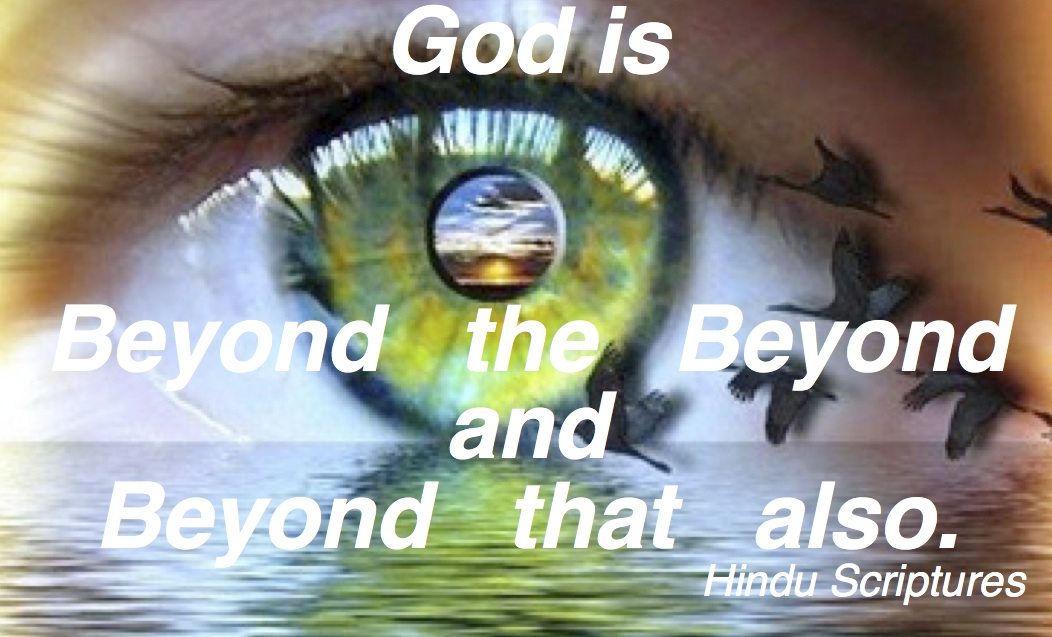
El Shaddai, Eloheim, Rauach, Chokma, Rechem, YAHWEH, these are the ancient biblical Hebrew names for the reality that we call God. El Shaddai which translates as “she – breasted one, ”Eloheim which is the feminine plural for “majesty,” Rauach a feminine word for “wind” “breath” “spirit,” Chokma, a feminine word for “wisdom.” Rechem also a feminine word which translates as “ womb love” mother love, compassion. YAHWEH – I AM, WHO AM or I shall be who I shall be Ancient biblical Hebrew names for the reality that we call God.
During the time of Jesus there was another name for God that was used by the Jewish people: El Shekinah which translates as “she who dwells among us.” There were other words for the reality that we call God which the writers of the New Testament would have been so familiar with; Greek words like: Theos — a feminine noun which translates simply as “God,” Sophia – which is the Greek translation of the Hebrew word Rauach for “Wisdom,” Pnumena – the feminine noun which is the Greek translation of the Hebrew word Chokma which means: wind, breath or spirit. That these names for the reality that we call God are all feminine nouns is remarkable when you look at how these words were translated by the Roman Empire into Latin: Patris et Filii et Spiritus Sancti Father, Son, and Holy Spirit. Stripped of her breasts and her womb-love, the One we call God, the Chokma who Dwells among us, is given the aura of a powerful young Roman God as the word for breasts is translated as “Almighty” and whose Rechem – womb-love is reserved for those who fear HIM.
Yet despite the Empire’s attempt to penetrate the sacred feminine with masculinity’s youthful vigor, (yes, I did mean that pun) this reality we call God will age over the centuries to become a bearded old grandfather-like figure who lives up there somewhere, and woe to those who dare to expose His transgendered history; for God is male and that’s that. The image of the great I AM erected by the male hierarchy to be worshipped and glorified, forever and ever, as Father, Son, and yes, even the nebulous Holy Spirit becomes HE in order to penetrate His Bride the church. No room for talk of breasts or womb as SHE who dwells among us, Chokma, Sophia, Wisdom is banished to the mists of time. That is until women began to be admitted to the sacred halls of the academy; until women began in significant numbers to study the ancient texts and unravel the ancient languages and begin to question the work of their male predecessors and contemporaries. Female academics, female theologians, and female translators’ questions lead to the discover of the long hidden, often denied, and ever present breasts and womb which now that they have been exposed will never again be cast out from their dwelling place among us. Wisdom, Sophia has been emancipated she is woman hear her roar.Continue reading →
When I am an old woman I shall wear purple
With a red hat which doesn’t go, and doesn’t suit me.
And I shall spend my pension on brandy and summer gloves
And satin sandals, and say we’ve no money for butter.
I shall sit down on the pavement when I’m tired
And gobble up samples in shops and press alarm bells
And run my stick along the public railings
And make up for the sobriety of my youth.
I shall go out in my slippers in the rain
And pick the flowers in other people’s gardens
And learn to spit.
You can wear terrible shirts and grow more fat
And eat three pounds of sausages at a go
Or only bread and pickle for a week
And hoard pens and pencils and beermats and things in boxes.
But now we must have clothes that keep us dry
And pay our rent and not swear in the street
And set a good example for the children.
We must have friends to dinner and read the papers.
But maybe I ought to practice a little now?
So people who know me are not too shocked and surprised
When suddenly I am old, and start to wear purple.
Lydia is one of the many mothers of Christianity. Lydia was the first European convert to Christianity. Lydia was the founder of the church at Philippi. The Scriptures tell us that before Paul and Silias proclaimed the Gospel to Lydia, she was a “God Fearer”. God Fearers, was the name given to people who were not Jewish but who were so intrigued with the God that the Jews worshipped that they lived their lives as if they were Jews. Indeed, most God Fearers followed all the Jewish laws except for circumcision. Circumcision, for adult males, living in the first century, when sanitary conditions were primitive and no antibiotics were available could lead to death. So, most male converts to Judaism, were not called Jews but God Fearers. Generally women were given the same designation as their husbands or fathers.
So right from the beginning of the story, Lydia is described in an unconventional way. We are told that Lydia was “a God fearer; a worshipper of God and a dealer in purple.” Now an introduction like that may not seem very unconventional to us but we have to remember that for the writer of the Book of Acts to have described a situation where, Paul and Silias, two strange men in town meet a woman, any woman was in and of itself unconventional.Continue reading →
A sermon based on the readings for the fifth Sunday after Easter
Revelation 21:1-6 and John 13:31-35
Think very carefully about a couple of questions. The questions are simple ones. They are designed to help you form images in your mind; images that will help to shed light on a particular kind of wound. But before I ask the questions, let me give you a definition of the verb that drives both of the questions that I’m going to ask. The verb comes from the Latin verb “tradere” which means to hand over. In English we say: betray. The word betray literally means to hand over to an enemy by treachery or fraud. The word betray can also mean to be unfaithful; to violate trust or to deceive. So, here’s my first question: Have you ever been betrayed? Think about it very carefully. Has someone ever turned you over to the enemy by treachery or fraud? Has someone ever disappointed you; been unfaithful to you, violated your trust, or deceived you? Have you ever been betrayed?
The second question is this: Have you ever betrayed someone? Think about it carefully. Have you ever handed someone over to the enemy? Have you ever let someone down, been unfaithful, violated a trust or deceived someone? Have you ever betrayed someone?
Now take those two questions further: Have you ever been betrayed by someone you love? Have you ever betrayed someone you love? Continue reading →
“Can the ways in which we tell the stories of resurrection transform us into followers of Jesus who embody a way of being in the world that can nourish, ground, and sustain the kind of peace that the world yearns for?” I preached this sermon on the raising of Tabitha years ago, as an attempt to convey the academic essay of New Testament scholar Rick Strelan into the form of a sermon. I believe that it is vital for preachers to convey the wealth of insights that are bandied about in the halls of academia, so that congregations can let go of so many interpretations of scripture that insult their intelligence, so that we can begin to explore the “more-than-literal meaning” (Marcus Borg) of biblical texts. Rick Strelan’s essay appeared in “Biblical Theology Bulletin, May 1, 2009, under the title “Tabitha: the gazelle of Joppa”.
Yesterday, I went for a walk. As I was walking along, minding my own business, a bright light appeared in the sky. The light nearly blinded me and so it took a while for me to figure out what was happening. Suddenly, it was so clear that the light was actually coming from a very large spaceship. I could scarcely believe by eyes. I stood frozen to the spot as the space ship landed in the middle of the road. You’ll never believe what happened after it landed. A couple of little green creatures with giant eyes gout out, took my picture, and then got back in the spaceship and flew off into the farthest reaches of space.
You don’t believe me, do you? You think that I’m making a joke of some sort, or maybe I’ve been working too hard and I’ve finally lost the plot. I know there’s probably nothing that I can say that would convince you that little green men have photographed me. Quite frankly that’s a relief because if you’ll believe that, you’d probably believe anything.
I do find it interesting that you won’t allow yourself to believe that I encountered aliens from another planet, and yet, you’ll suspend your disbelief when I tell you a story from the Bible. Or will you? Take our first lesson from the book of Acts. The miraculous story of how the Apostle Peter raised a disciple named Tabitha from the dead. You all know that when someone is dead, that’s it they are dead. You can pray over them all you want, but they’re never going to sit up, let alone stand up like Tabitha. There’s about as much chance of a person standing up after they’ve actually been dead as there is little green men from outer space landing on the street outside this church. The story of the raising of Tabitha is one of those stories that we wouldn’t believe for a second if it weren’t in the Bible. I suspect that when it comes to stories from the Bible, most of us don’t really believe that they happened exactly the way the Bible says they happened. Or do we?Now maybe you’re the generous type and so you say, “Don’t be too hasty, it could happen if the person wasn’t really dead.” I mean, maybe Tabitha’s friends got it wrong and she just appeared to be dead. The story says that Tabitha died, then her friends washed her body and laid her out in an upper room. Then, since Lydda was near Joppa, the disciples sent two couriers to Peter, who was in Lydda and they asked Peter to head back to Lydda, which was about 10 miles away. That’s a 20 mile round trip on foot with a walking speed of about 3 miles per hour it would take at least 7 hours. She was definitely dead. According to the story Peter sends everyone out of the room, knelt down and prayed and then said, “Tabitha, stand up!” and she did just that.
The story of the raising of Tabitha is one of those stories that we wouldn’t believe for a second if it weren’t in the Bible. I suspect that when it comes to stories from the Bible, most of us don’t really believe that they happened exactly the way the Bible says they happened. Or do we?Continue reading →
Can the ways in which we tell the stories of resurrection transform us into followers of Jesus who embody a way of being in the world that can nourish, ground, and sustain the kind of peace that the world yearns for? In responding to this question, our understanding of the Christ all too often restricts the way in which we tell our stories of resurrection. Richard Rohr’s sermon preached at All Saint’s in Pasadena follows readings from Acts 5:27-32 and John 20:19-31 and pushes us to broaden our visions of the risen Christ.
Recorded February 7, 2013: Marcus Borg and Charles Holt discuss Jesus’ resurrection.During this Season of Easter conversations about the meaning of resurrection are crucial to help us move beyond carefully constructed doctrines which we were once instructed to “believe”. At Holy Cross we are exploring the question: “Can the ways in which we tell the stories of resurrection transform us into followers of Jesus who embody a way of being in the world that can nourish, ground, and sustain the kind of peace that the world yearns for?” Marcus Borg and Charles Holt’s conversation contributes so much to this broader conversation.
On the third Sunday of Easter 2013, Peter Rollins was our guest preacher and took us beyond the surface of the story of Paul’s revelation toward the darkness from which we all too often hide.
The scripture readings can be found here – The Worship Bulletin here
Richard Holloway, the former Primate of the Scottish Episcopal Church, interprets the story of the resurrection not as an historical tale, but as our own story. Holloway has written of his longing for a humbled and broken church. His own humility and brokenness shines through this video as Holloway embodies his own longing.
Our first reading was the traditional gospel story for the Second Sunday of Easter in which we heard the story of Doubting Thomas for John 20:19-31. This was followed by a video in which Richard Holloway retells the story of Peter’s denial and the encounter between the resurrected Jesus and Peter. You can view the video here . This was followed by the gospel reading from John 21:15-20 You can listen to the sermon here
It has been said that, “The shortest between a human being and truth is a story.” It has also been said that the greatest story ever told is the story of resurrection. Like all really good stories, the story of resurrection has been told over and over again as storytellers attempt to convey the truth. We have heard Easter’s story of resurrection so many times that you would think the truth of resurrection would be obvious to us all and yet we struggle to find truth in Easter’s familiar story. Some of us have been shaped by this particular story. Some of us have built our lives around the truth that others have reported to us about this story. Some of us have rejected this story and filed it with all the other idle tales in which we can find no truth. Some of us have moved on from this story convinced that there is no longer any truth to be found. Some of us love to hear this story because it takes us back to familiar truths that inspire a nostalgic sense of well-being. Some of us, are determined to wrestle with this story until it releases all the truth that it harbors in, with, and between the lines which call us toward a new way of being that we long to embrace.
I myself, I am a wrestler. Like Jacob of old, I wrestle with this familiar story determined to get from this ancient tale not just truth but an inkling of the Divine who dwells in, with, through, and beyond all of our stories. The gospel storyteller who we know as John tells Easter’s resurrection story in a particular way, determined to reveal the truth that dwells in him and among the people with whom he dwelled. One of the things that we 21st century truth-seekers are particular fond of is deconstructing stories. We love to take stories apart. Dissecting every line. Examining each and every detail, each and every word so as not to miss a single nuance of the author’s intent. We are also skilled in the imperfect art of attempting to place stories back into their historical context so that we can establish exactly what was going on in the first century lives of the story-teller and his listeners. We look to the historical context in the hope that we can determine the original meaning of the story. Convinced that history can tell us what the story-teller cannot we wrestle with the facts, as best as we can determine them, so that we can be sure that the truth we thought we knew is more than just the summation of our mistaken interpretations.
Together, we have wrestled with Easter’s story of resurrection and together, I must say that we are pretty good wrestlers. We have deconstructed this story, we have applied the historical-critical method, we have approached it from all sorts of angles and employed the best 21st century scholars to aid us in our struggle to wrestle the truth from the piles and piles of dogma, which have been heaped upon it. But this morning, I’d like to approach Easter’s story of resurrection from the perspective, not of wrestlers determined to find the truth, but rather as people touched by the story itself. But even though we are not going to wrestle, like Jacob of old, we run the risk of being touched and even wounded by the truth as the Divine One is revealed and we are compelled by our wounds to walk in a different way.Continue reading →

 Third Sunday after Pentecost












![peter rollins_thumb[1]](https://pastordawn.com/wp-content/uploads/2013/03/peter-rollins_thumb1.jpg)


 pastordawn