A sermon for the Third Sunday of Advent: all around us the world is hustling and bustling toward Christmas. With less and less time devoted to the telling of the Christmas story, perhaps we in the Church might consider changing the lectionary so as to provide more opportunities to engage the birth narrative in Matthew. Advent 3 is a perfect opportunity to substitute two readings into the lectionary. Here’s what happened when we tried this:
Readings Matthew 1:1-17 and Matthew 1:18-24
Listen to the sermon here
It has been said that the shortest distance between humanity and the truth is a story.[1] I would add that, the truth we find in a story teaches about our humanity. So, as we seek to embrace our humanity we would do well to pay close attention to the stories we tell. The unknown writer of the Gospel according to Matthew had a great story to tell and in order to get to the truth of who and what the man Jesus was, he chose a particular way to tell the story so that all those who heard the story would know the truth of who Jesus is in the grand scheme of humanity’s story. Sadly over the centuries that have elapsed since this story was first told have seen the tellers and listeners of this story haggle over the truth. Some have forgotten the power of story to bridge the gap between humanity and truth, and they have insisted that the truth will be found in the absolute accuracy of each and every detail. Fortunately, many more have remembered that stories are just that, they are stories and while we know that events did not actually happen in they way they are told, they happen just that way all the time.
So, as we begin in the beginning of the Gospel, the Good News according to Matthew, let me remind you that we know that the story of Jesus birth did not happen the way it is told in the story, and we know that birth is always happening this way. For the writer of the Gospel according to Matthew was a skilled storyteller and he wrapped the story of Jesus of Nazareth in the stories of his ancestors. Written in the style of his own ancestors the gospel-writer begins his story, with the same words that every one of his listeners would have remembered from the sacred book of Genesis which begins, “In the beginning”. A sort of once upon a time, if you will, the gospel-writer begins with, the genesis of Jesus the Messiah and then proceeds to connect Jesus to the ancestors of the Jewish faith, will making sure that the truth of Jesus’ connection to those outside the faith will also be made clear.
The gospel-writer’s inclusion of the women who Bishop John Shelby has dubbed the “shady ladies” would have alerted Jewish listeners that Jesus is a different kind of Messiah; a Messiah who will transcend race, creed, or clan. Rahab, who was a Canaanite; a foreigner, was known as the mother of Israel for saving Joshua in Canaan, just happened to run a brothel there. Tamar, also a foreigner, was married to Judah’s son who according to Genesis is killed by God, and as was the custom his younger brother married her to ensure that his older brother’s name would be carried on. When that son dies, Tamar is left a childless widow, a fate worse than death in a patriarchal culture. Tamar is known for impersonating a prostitute to trick Judah into knowing her, in the biblical sense of the verb to know, so that her father-in-law could impregnate her.Continue reading →
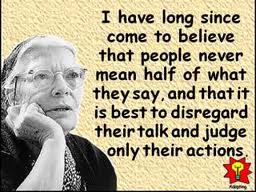
Dorothy Day is a shero of mine! But I will never call her a saint! The tradition of commemorating saints on the day of their death makes today a day for celebrating Dorothy Day! But, Dorothy Day objected, “Don’t call me a saint! I don’t want to be dismissed so easily!”
Dorothy Day died in 1980, at the age of 83. She was one of the greatest religious figures of the century, and one of the most paradoxical. She was a Catholic and she was an anarchist. She condemned poverty and she advocated against it. She founded the Catholic Worker, a loose aggregation of ”houses of hospitality,” communal farms, newspapers and round-table discussions for ”further clarification of thought” — and called her memoirs ”The Long Loneliness.” The movement was wary of authority, yet revered her as its leader.
When she died, a multitude came down to the old dwelling off the Bowery to pay their respects, the way people had come to Catholic Worker houses for soup ever since the Depression. There were Catholic Workers, social workers, migrant workers, the unemployed; addicts, alcoholics, anarchists; Protestants, Jews and agnostics; the devout and the strident and the curious, there to see what a saint looked like.
On this day, I celebrate the life and witness of Dorothy Day a shero, a Christian mystic with all the attributes of a saint!
I didn’t know it at the time, but I actually met John the Baptist when I was fifteen years old. She didn’t look much like you’d imagine John the Baptist would look, but she had that same crazy intensity, that same focus on the fact that we’d better change our ways, we’d better repent, and start doing things differently or we’d be in real serious trouble. Lola was my friend Valerie’s mother and she simply couldn’t stop going on and on about the environment and how we were destroy the earth. At the time, I remember thinking she was a bit of a nut-case and on more than one occasion I wished she’d just shut up about it. I was just a kid, and the earth was just something I took for granted. The earth was just there to provide for our needs. I couldn’t believe how much Lola went on and on about all the stuff we humans were doing to destroy the earth. I just wished she’d leave us along to get on with things, I couldn’t abide her incessant nonsense about how we were going to destroy the planet. All her feeble little attempts to be kind to the earth, made me seriously question her sanity.
I tolerated Lola not just because she was my friend’s mother, but I didn’t really understand her until one day when the three of us were travelling together. We were coming home from church. I had only been going to church for a few months. I was trying hard to understand this whole God thing. So, I went to church a lot. My friend Valerie had persuaded me to start going to church with her and family had become like my second family as they supported me during my first attempts to explore the mysterious world into which I had begun to feel pulled. As we drove home from church, I was feeling a little glum. Try as I might, I couldn’t really understand this church thing; all that singing and praying didn’t really help me to feel closer to God. Mostly I just liked how people at church treated each other. I liked how they went out of their way to help me feel at home. Whether or not God was there, well I really wasn’t sure.
Anyway, we were driving along the road. It was a partly over-cast day on the west coast of British Columbia, just a few clouds. You could see the mountains off in the distance. We were chatting back and forth when all of a sudden Lola pulled the car over to the far side of the road, switched off the engine and got out. Valerie followed her mother out of the car, so I figured I had better do the same. Val and her mother scampered down from the road and onto the beach. When they reached the water’s edge, they stopped and just looked off into the distance. Apart from a tanker-ship making its way across the horizon, I couldn’t see much of anything. Lola had the most amazing expression on her face. She positively glowed with happiness. Valerie wore a similar expression. I must have looked somewhat puzzled because Val smiled at me and said, “Isn’t it the most beautiful thing you have ever seen?” This only confused me more. What were they looking at that had made them stop the car, scamper down the bank and stand there at the water’s edge on a cold autumn evening? Continue reading →
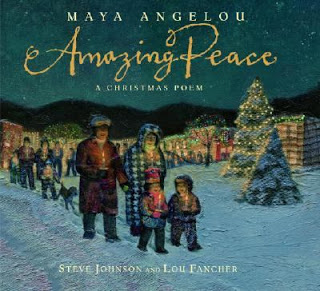
Occasionally we replace one of the Sunday Bible readings with a contemporary. On the First Sunday of Advent three years ago (Advent 1A) we used the poem “Amazing Peace” by Maya Angelou. It was first recited at the lighting of the National Christmas Tree in Washington. Since then it has been illustrated by Steve Johnson and Lou Fancher. The poem captures the longing for peace that permeates the Advent and Christmas seasons.
This sermon is inspired by the work of the Reverend J. Edwin Bacon Jr. whose retelling of the Rev. Dr. Martin Luther King Jr.’s radical sermon “Remaining Awake Through a Great Revolution” inspires my own musings. Bacon is one of my favourite preachers and it is a privilege to be able to adapt and expand upon his work! Our readings included: “The Star Within” a creation story by Dr. Paula Lehman & Rev. Sarah Griffith, Matthew 1:1-17; and Matthew 24:36-44. Listen to the sermon here
Sometimes it feels like a progressive thief has stolen Advent and Christmas from us! Sometimes being a progressive Christian is about as sad as being a who down in Who-ville; why sometimes I even miss old Santa Claus himself and in my nostalgic haze, I long for a simpler time and faith! How are we supposed to celebrate Advent and look forward to the coming of Christ, when some of the best stories of the season never actually happened they way we’ve been lead to believe? In this sermon (preached on Advent 1A – Dec.1, 2013) the beloved myths of a birth long ago are proclaimed as transformational stories that have the power to open to what lies beyond the words to the Word. Readings: Isaiah 2:1-5, “Amazing Peace” by Maya Angelou, Matthew 24:36-44
I couldn’t believe that this was happening to me. You read and hear about it in the newspapers and on TV, but you never expect it to happen to you. You know that it happens all over the place, but you somehow believe that you are immune to the dangers. You take precautions, you’re not stupid, but you can’t live your life in fear. Then one day, when you least expect it, you find yourself face to face with a nightmare.
The back alley of a downtown street sounds like a risky place to be; a place you should never go alone. But when it’s the alley behind your own apartment building, the alley where you park your car, well you take the risk. Sometimes it made me nervous, sometimes I would rush from my car to the apartment because I thought I heard something in the darkness. But most evenings, I never gave the dangers of city life much thought and then one night, when I wasn’t expecting it, it happened. I was half way across the alley when from behind a parked car, he jumped out at me. He grabbed me by the arm and spun me around. There was no time to think – – pure terror filled my mind. He pushed me up against a wall and for a moment just a moment I thought the unthinkable. Every fiber of my being decided immediately to resist and I managed to shake him off. That’s when he pulled out the knife. It wasn’t much of a knife really, just a tiny penknife, but it had the power to capture all my attention. His hand was trembling. I took my eyes off the knife long enough to see that his whole body was trembling. I took a deep breath and looked him in the eyes. His face was filled with fear. Sweat was dripping down from his forehead. He was breathing with a great deal of difficulty. We stood there in the darkness, staring at one another, both of us breathing heavily.
“Money! Money give me your money!” Never did I ever imagine that these words would cause relief. He wasn’t after me; he was after my money. Then I realized that I had no money. But he didn’t believe me. So, I tried to explain that I never carried cash. I use my bankcard for everything. I could see the panic race across his face. He was in bad shape. He needed money. No doubt he needed a fix. But I had no money on me.
What kind of fool walks around in the city without any cash? I decided that if he was in as bad a condition as he looked, I just might be able to convince him. So, I told him that I had about twenty dollars upstairs in my apartment. I begged him to let me go upstairs and get the money for him. He shook his head in confusion, so I went on. If he just let me go upstairs, I’d get his money and then he could be on his way, there might even be more than twenty dollars. The state he was in made it impossible for him to think straight. Why else would he have agreed? He let go of me. I raced to the apartment. It took several attempts before I could get the key in the door, but finally it opened and I dashed inside and pushed the door shut. I raced up the three flights of stairs and into my own apartment grabbed the phone and began explaining to the 911 operator that my attacker was waiting for me down in the alley. By the time the police arrived, he’d figured things out and was long gone. But they picked him up a few hours later. The next morning when I went into the police station to make a formal statement, an officer explained to me just how lucky I was. Often when an addict doesn’t get what they want, things don’t work out quite so well. The officer explained that I probably wouldn’t have to go to court because they had enough other things they could charge him with and I might as well save myself the trouble. Besides this guy knew where I lived. So, I went home vowing to be more careful, to stay alert. To keep watch. The thief in the night changed the way I lived my life in the city. I became much more careful and to this day, I always make sure to have at least twenty dollars in my purse.Continue reading →
This sermon was preached at Holy Cross Lutheran November 28, 2010, sadly racism continues to live on in ways that threaten so many lives and the question of this sermon seems even more urgent today. The readings included Isaiah 2:1-5, “Amazing Peace” by Maya Angelou, and Matthew 24:36-44, during the sermon I read from the Qur’an Sura 19:1-30 which you can find by following the link in the body of the sermon.
While I was studying for an undergraduate degree in Religious Studies at the University of British Columbia, I worked as a volunteer women’s center. Because I was studying the religions of the world, women who were being persecuted as a result of religious belief were often referred to me.
I’d been working with a young woman who was being abused by her father and brothers because they felt that she was adopting Canadian ways and thereby abandoning Islam. I remember visiting her in the hospital emergency room after her brothers had beaten her nearly to death. She told me that the last thing her brother said to her before tossing her out of the back of a van, was that she should consider herself lucky that they had talked their father into letting them beat her, instead of doing what he had ordered in the first place which was to kill her. I sat at her bedside wondering how a brother could do such a thing to his sister. I decided that they must be religious fanatics and I wondered how any religion could drive a father to seek the death of his own daughter.
The next morning I didn’t feel much like going to my Religious Studies Methodology Seminar. The Seminar was comprised of 7 students from various faith traditions along with 4 atheists and 3 agnostics. Together we studied the various methods of studying religion. We were about to embark on the phenomenological approach to the study of religion. “The Phenomenology of Religion” is a fancy academic way of describing the study of actual religious experiences of the divine. As we stumbled to our seats the professor announced that he would be dividing us into groups of two and he wanted us to learn all that we could about our partner’s religious experience. We would have two weeks to come up with a 1,000 words describing on the phenomenology of our partner’s religious life. I was paired with an Imam who was studying Western approaches to religion prior to taking up a position in a local mosque. Ibrahim was a recent immigrant from Pakistan. But he might as well have been from Mars as far as I was concerned. On that day of all days, Muslim men were not exactly my favorite characters. Continue reading →
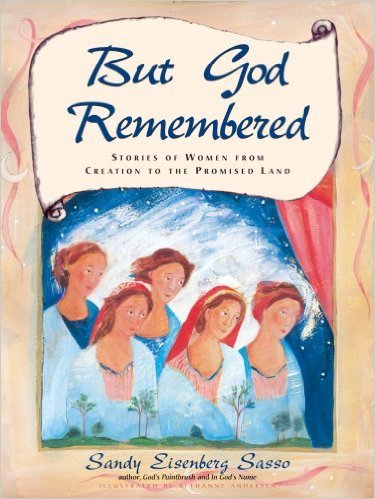
In the preface to her beautiful children’s book, “But God Remembered: Stores of Women from Creation to the Promised Land” Jewish writer Sandy Eisenberg Saso tells this revealing story: “Before God created man and woman, God wanted to create Memory and
Forgetfulness. But the angels protested.
The angel of Song said, ‘Do not create Forgetfulness. People will forget the songs of their ancestors.’
The Angel of Stories said, ‘If you create Forgetfulness, man and woman will forget many good stories.’ The Angel of Names said, ‘Forget songs? Forget stories? They will not even remember each other’s names.’
God listened to the complaints of the angels. And God asked the angels what kinds of things they remembered.
At first, the angels remembered what it was like before the world was formed. Then as the angels talked about the time before time existed, they recalled moments when they did not always agree.
One angel yelled at another, ‘I remember when your fiery sword burned the hem of my robe!’
‘And I remember when you knocked me down and tore a hole in my wing,’ screamed another.
As the angels remembered everything that ever happened, their voices grew louder and louder and louder until the heavens thundered.
God said, ‘FORGET IT!’
And there was Forgetfulness.
All at once the angels forgot why they were angry at each other and their voices became angelic again. And God saw that it was good.
God said, “There are some things people will need to forget.’
The angels objected. ‘People will forget what they should remember.’
God said, ‘I will remember all the important things. I will plant the seeds of remembrance in the soul of My people.’
And so it was that over time people forgot many of the songs, stories and names of their ancestors.
But God remembered.”
As we approach the Season of Advent, I can’t help wondering why the creators of the Revised Common Lectionary (the list of prescribed readings for Sunday worship) have failed to remember the stories and names of our foremothers? John the Baptist will strut across the stage again in this Sunday in churches all over the planet. We have begun a new cycle in the RCL in what is know as Year A the lectionary Gospel readings will focus upon readings from the Gospel according to Matthew. But followers of the RCL will not hear the names of Tamar, Rahab, Ruth, or Bathsheba; no, not even Mary will put in an appearance despite the fact that all of these women are mentioned in the very first chapter of the Gospel according to Matthew! Last year was the same even though the RCL focussed upon the Gospel according to Luke, neither of the women of the Luke’s first chapter make an appearance without a great deal of effort. Unless worship planners are prepared to tinker with the lectionary Elizabeth and Mary will have to cede the stage to John the Baptist. So, all you worship planners and preachers out there, I say to you, “TINKER AWAY! TELL THE STORIES!”
As this is the year of Matthew, why not invite onto centre stage those “Shady Ladies” from Matthew Chapter 1: Tamar, Rahab, Ruth, and Bathsheba, verses 1-17 make an excellent reading! John Shelby Spong is an excellent resource, you can find a transcript of his excellent sermon here. At Holy Cross we will use Matthew 1:1-17 as our first reading and Matthew 18-24 as our Gospel reading. This will allow us to usher Mary onto centre stage. Then on the Fourth Sunday of Advent we will switch over to the Gospel according to Luke for all three readings: First Reading – Luke 1:26-38, Second Reading – Luke 1:39-45, Gospel Reading – 1:46-59.
I am forever hearing people despair about biblical illiteracy as clergy and church-insiders bemoan the collective forgetfulness of our culture. I suspect that the snippets of readings that we hear year after year may be a factor in the gaps of our collective memory when it comes to the women of the New Testament. Let this Advent be different. Invite the women of the gospels onto the stage. John the Baptist will be happy out there in the wilderness until his feast day in June!
I usually have the presence of mind to book my vacation or some sort of continuing education event that takes me far away from the pulpit on Reign of Christ Sunday. Formerly known as “Christ the King Sunday” an attempt to move beyond exclusively male imagery for Christ (in whom there is no east nor west, male nor female) some church-folk have attempted to change the name of this festival to Reign of Christ Sunday. But merely changing the title fails to get beyond the struggles I have with this festival of the church year!!!!
Born in an age that was birthing fascist regimes, this particular festival of the church clings to it’s christian imperialist past. Instituted in 1925, by Pope Pius XI, (you can read the full proclamation here) the festival was designed to remind the world that Christ is the King of the World. The irony of proclaiming Christ as “King” when the life of Jesus of Nazareth positively denies “kingliness” seems lost on the church. The appropriateness of asserting Christ over the religions of the world lacks the kind of humility embodied by Jesus of Nazareth. So, this year I am not prepared to celebrate Christ the King or the Reign of Christ Sunday. Instead, we will take a leaf out of Matthew Fox’s book and craft our worship around the theme of the Quest for the Cosmic Christ.
Years ago, long before I ventured to seminary, Matthew Fox’s book Original Blessing opened me to the wonders of Creation Spirituality. So, I eagerly worked my way through his book The Coming of the Cosmic Christ. I confess that my first reading of Fox’s tome left me in the dust of my own lack of understanding of traditional Christology. But even back then, without the benefit of theological training, I sensed something of the MYSTERY that I had always trust Christ to BE. I have returned to Fox’s work many times over the years and over and over again I have discovered a WISDOM that moves me beyond the limitations of the historical Jesus toward a more holistic vision of Christ, which like Fox I believe, has the potential to move us to a more wholistic relationship with Creation. I trust that the WISDOM of the Cosmic Christ will lead us into the Season of Advent so that we can be about the work of birthing the Cosmic Christ.
a season to scatter stones and a season to gather them;
a season for holding close and a season for holding back;
a season to seek and a season to lose;
a season to keep and a season to throw away;
a season to tear and a season to mend;
a season to be silent and a season to speak;
a season to love and a season to hate;
a season for hostilities and a season for peace.” (Ecclesiastes 3:1-8)
“The birds they sang
at the break of day
Start again
I heard them say
Don’t dwell on what
has passed away
or what is yet to be.
Ring the bells that still can ring
Forget your perfect offering
There is a crack in everything
That’s how the light gets in.” (Anthem by Lenard Cohen)
What a season we are in; a time to grieve, a time to weep, a time to harken back through the ages to seasons when our ancestors spoke of rending their garments.
Tearing their clothing, the fabric that protects them from the elements.
Tearing the fabric that adorns their body, the fashion that identifies them, shows the world who and what they are ripped and torn as they throw themselves down to the ground and wail in their grief.
In these past few days, the sound of rending garments has haunted my very being as if the fabric of civility is torn in two and our hopes and dreams as timid as we allow them to be, are ripped asunder.
Wailing and gnashing of teeth can only begin to express our grief.
What we need is the ululation, that long, wavering, high-pitched scream, the kind of howling that has long since got out of fashion in our civil society.
“We asked for signs
the signs were sent:
the birth betrayed
the marriage spent
Yeah the widowhood
of every government —
signs for all to see.”
Our hopes and dreams of a new season had barely begun to surface.
When our own demons tore the curtain asunder to reveal the reality that white supremacy and male supremacy, are not going gently into the great night.
“Ah the wars they will
be fought again
The holy dove
She will be caught again
bought and sold
and bought again
the dove is never free.”
Women grabbed as once again misogyny is worn as a badge of honour.
Walls erected.
People of colour taunted with lynching ropes.
Our fragile planet groaning under the pressure of our filth, threatened by the ignorance of powerful deniers who now wield the power of the richest purse.
“Ah the wars they will
be fought again
The holy dove
She will be caught again
bought and sold
and bought again
the dove is never free.”
Conversion therapy is on the books again.
Tired tropes of white supremacy.
Muslim bans, deportation squads, treaties broken, pipelines built, clean coal replacing suspicious solar, as our energies are directed and distracted by promises of taking back and making great again.
“The holy dove is never free.
The wars they will be fought again,”
water-boarding and torture back in vogue again.
Even generals cower before visions of their new commander-in-chief, promises to “bomb the shit out of them” as the generals wonder who are “them.”
Let’s build a wall. Let’s build it high.
Let’s dig a moat. Let’s fill that moat with crocodiles.
Let’s keep them out.
What a season this is.
Only the promise of winter can cheer our hearts, the drifting snow, the promised birth.
Let Jesus come.
Let Christmas mirth distract us here.
Jesus saves.
But Christians cheer.
They’ve found their saviour.
“Two Corinthians” is their guy.
Pussies be damned we hear them preach.
What a season this is.
I’ve struggled wondering what to say to you this morning; what hope can I offer?
When the message of the one we profess to follow has been used in ways that have convinced 81% of white evangelicals to vote for change such as this?
The majority of Roman Catholics joined in.
33% of the women who voted cast their lot with a misogynist.
75% percent of those who voted profess to be Christian.
Jesus weeps.
The curtain is torn.
Wars and rumors of wars.
“The holy dove
She will be caught again
bought and sold
and bought again
the dove is never free.
Ring the bells that still can ring
Forget your perfect offering
There is a crack in everything
That’s how the light gets in.”
“Here we stand.”
We Canadians.
Convinced that we are above it all.
Polite and kind are we.
Have a nice day.
Your welcome.
Excuse me.
“Here we stand.”
We who have yet to elect a female prime minister or a prime minister of colour.
Our last prime minister called for a burka ban and a barbaric practices hotline and we had already elected him 3 times.
But we’re not them.
No orange tan, just pretty locks of hair and a name that takes us back to simpler days when the just society, and multiculturalism inspired a mania whose child now feeds our arrogant notions of sunny ways.
We’re not them.
Our fingers point to the racist south while First Nations die in a slow creeping genocide.
It’s been a year since McLeans’ announced that our Indigenous peoples are incarcerated at ten times the rate as other Canadians.
But we are not them, despite the fact that our Indigenous peoples are murdered at more than six times the national average.
NO we are not them, even though our Indigenous peoples must survive on 40% less than the average wage in Canada.
We are not them.
139 active drinking water advisories in 94 First Nations communities across the country, more than 1000 missing and murdered indigenous women and girls and to which we say,
“Have a nice day
your welcome.”
We are not them.
Even if it is true that by almost every measurable indicator Canada’s indigenous population suffers a worse fate and more hardship than the African American population in the United States.
We are not them.
We are not racist.
“The birds they sang
at the break of day
Start again
I heard them say
Don’t dwell on what
has passed away
or what is yet to be.”
There is a season turn turn turn, to every purpose under heaven.
Jesus saves.
And here we stand, right smack in the middle of a season in which the Gospel and the church are associated with bigotry, racism, misogyny, sexual assault, climate change denial, and persecution of people based on ancient myths interpreted as facts.
Here we stand, an inclusive, progressive, science loving, historically critical, knowledge loving family that continues to struggle with the teachings of Jesus, refusing to take the Bible literally while trying to take it seriously.
Here we stand, convinced that we can do no other.
Opening our arms wide, extending a promise of radical welcome.
“Ring the bells that still can ring
Forget your perfect offering
There is a crack in everything
That’s how the light gets in.”
Ring the bells that still can ring:
the bells of justice
the bells of hope
the bells of peace
the bells of joy
“Forget your perfect offering.”
The cracks are there for all to see.
The light shines in.
And still we sing.
And still we stand.
Trusting that every tear will be wiped away.
That all shall be well and all manner of things shall be well.
LOVE will turn our mourning into dancing.
Here we stand for we can do no other.
Ring the bells that can still ring.
The LOVE that is God is the only hope I have to offer you in this strange season that we are in.
The LOVE that is God is the best hope that we have to give.
Despite the fact that my parents named me Dawn, I have never been much of a morning person. Those who know me well would probably agree that I should have been called Dusk instead of Dawn. But Dawn I am and so from time to time, I actually venture out to explore this phenomenon for which I am named. Earlier this week, after a long sleepless night, of tossing and turning, wondering and worrying, I decided that as sleep was eluding me, I might as well give up and get up. The sun was about to rise and so out I went into the quiet world of our little subdivision. We moved into our subdivision nine years ago. The subdivision was built about six years before we moved in, so our little community is only about fifteen years old. Before the subdivision was built, the land was used by a farmer to grow corn. On the fringes of our subdivision, they are expanding further into the cornfields. The neighbourhood is expanding, growing, and changing. The demands of modern life are encroaching on a lifestyle that is disappearing from countrysides all over the planet. Modern subdivisions are built to a pretty standard plan. Before the streets and infrastructure can be developed, some pretty basic problems need to be addressed, not the least of which is water run-off. As near as I can tell, modern developers deal with the problem of drainage by establishing ponds which function as catchment basins for rainwater runoff. At the foot of our subdivision there are four such ponds around which the developers created footpaths so that we suburbanites can at our leisure have someplace to take a walk.
When we first moved in, the ponds weren’t exactly picturesque. Just open pits into which runoff had poured, surrounded by paths and building sites. In the beginning these ponds were more like scares on the landscape and failed to inspire us to wander past very often. Indeed, if we wanted to take a walk, Carol and I would often get in the car and drive to a nicer spot to walk. But over the past nine years something miraculous has happen and in our neck of the woods Mother Nature has healed the Earth’s wounds and those ponds have become a favorite place to walk. Where once there was just muck and the open wounds of the Earth, now there are well healed pathways, beautiful bushes, fruit filled trees, and a whole host of wildfowl. Nature has repaired what we humans came close to destroying.
So, as the sun was rising in the east, I couldn’t help thinking about the natural rhythms and blessings of this life. And because I had been kept awake by worrying about the content of this Reformation sermon, my mind began to think about the similarities between the relationship of nature to the pond which humans created where once there was no pond and the relationship between God and the church humans created where once there was no church.Continue reading →
Recorded Oct.16, 2016: Matthew Fox preaches on Luke 18:1-8 at All Saints Church in Pasadena. Fox defines prayer as, “a radical response to life; a profound or deep response to life.” As such, working for justice is the embodiment of our response.
Before I read our Gospel text I took a few moments to reflect upon the story from the Torah that was our First Reading (Gen.32). I showed the short film below which was created by Jewish scholars to help rabbis teach the stories of the Torah to young children.I use this video to teach the stories of the Torah to our Confirmation students.I think it is important for those of us who follow the teaching of the Rabbi Jesus, to pay attention to the way in which the stories that spoke to Jesus continue to speak to Jewish people here and now. Watch the video and then listen to the sermon here
Our Gospel reading comes to us from a story told by an anonymous writer named Luke, who tells a parable that he attributes to the Rabbi Jesus:According to Luke: “Jesus told the disciples a parable on the necessity of praying always and not losing heart.“Once there was a judge in a certain city who feared no one—not even God.A woman in that city who had been widowed kept coming to the judge and saying, ‘Give me legal protection from my opponent.’For a time the judge refused but finally the judge thought, ‘I care little for God or people, but this woman won’t leave me alone.I’d better give her the protection she seeks or she’ll keep coming and wear me out!’”Jesus said, “Listen to what this corrupt judge is saying. Won’t God then do justice to the chosen who call out day and night?Will God delay long over them?I tell you, God will give them swift justice.But when the Promised One comes, will faith be found anywhere on earth?”
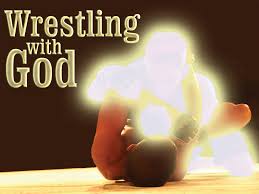
I too have met this tiresome, troublesome, annoyingly, persistent widow who constantly cries out for justice.This woman won’t leave me alone.I must confess that I would rather not have this woman clamouring at my door!Each and every time I encounter this woman, she goes on and on, she wears me out!I cannot go anywhere without seeing this woman.She is everywhere.Pointing to her oppressor and demanding justice.She is on the radio in my car as I go about my business.She is on my computer screen as I try to keep up with the news of the day.She is in my living room as I try to relax flipping channels seeking respite from her persistent cries for justice.She appears in my facbook feed, and tweets at me from my phone, I cannot escape her cries for justice.I am sick and tired of this annoying woman.I cannot escape her shouts for justice. I’m not sure that anything at all can be done to secure justice for this annoying woman.Too much time has passed.There are no witnesses.Boys will be boys.She needs to forgive, forget and move on.Why doesn’t she just leave me alone.There’s nothing that I can do for her.There’s nothing I want to do for her. I have my own troubles.People to see, places to go, things to do.If only she’d leave me alone.Her persistent cries for justice have begun to haunt me and not even sleep gives me respite from her persistent cries for justice.If only she’d stop going on and on and on and on about her oppressor, about the injustice that has been perpetrated against her. Maybe if she would just shut up about it, I wouldn’t have to wrestle with her in the night.Round and round we go, pinning one another down, she demanding justice, me pleading for peace.This wrestling over things beyond my control is wearing me down.I’m starting to wonder who this woman thinks she is.Hell, I’m beginning to wonder who I think this woman is.In the darkness of the night I sometimes wonder if this persistent, complaining woman, is just some trumped up version of myself.In her eyes, I sometimes think I see a glimmer of something far too familiar, something ugly, fearsome, unpleasant, and lurking in my own memories.In the wee hours before dawn, I think I can actually see myself in her. But no, I’m not going there.We are not going there.Women all over the world don’t want to go there.Defenseless, innocent, naive children all over the world we dare not see them in the face of this persistent woman. And then, just when I think that I have her pinned down and I’m about to wrestle something anything out of this insane encounter, the light begins to dawn on me, as I realize that there in the face of this persistent woman is the ONE in whom we all live and breathe and have our being; the ONE whose name eludes us. I awaken to the realization that this place where we have all been, this place where we cannot escape is indeed Peniel, for here and now, in the face of this persistent woman, in the face of every persistent woman, indeed in the face of every persistent man, woman, and child, crying out for justicewe have seen God face to face.It isn’t always pretty, it isn’t always what we want to see or where we want to see it, but it is the face of the ONE that we call God;the face of God shouting, crying, pleading, for justice. Wrestling with the persistent, pleading, ones who continue to demand justice from me, I rise wounded from Peniel – the place where I know that I have seen God face to face, and yet my life has been spared.Limping away, forever changed, knowing that the wound that changes the way I walk in this world is the blessing given to me by those who have the courage to cry out for justice.Transformed by this wound I begin to see that I am at one and the same time both the judge who has the power to create justice and the one who cries out for justice. In this Peniel, is where ever and when ever we have the courage to look into the face of another and see the face of God, and our lives have been preserved.We cannot walk away from an encounter such as this without responding to the ONE in whom we see the face of God, with justice.Whether our role in this life long wrestling match is that of the judge or the seeker of justice, may we see God face to face.
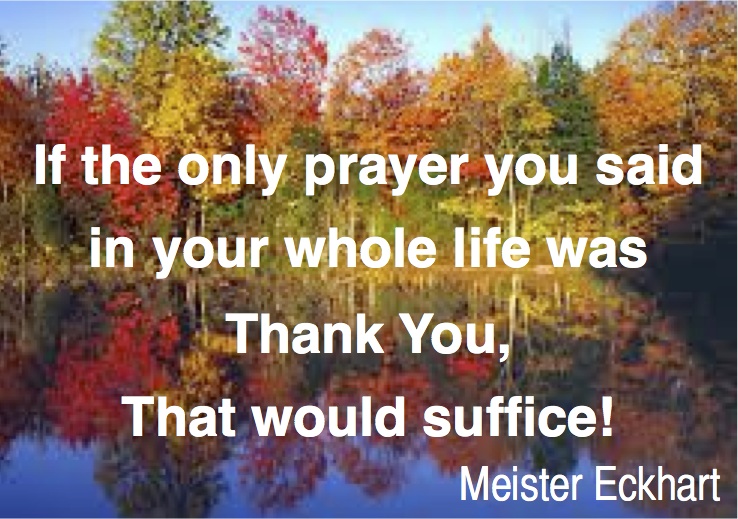
Over the course of the past nine years a group of little people have come into my life. Lovely little people who call me Gran. There are seven of them and participating in their little lives is a source of such great joy. Each stage of their development is a wonder to behold. I particularly enjoy watching their parents as they attempt to teach these little darlings the things that they need to know about being human. One of the first things that we teach little humans is the fine art of saying thank-you. It takes a fair amount of repetition to teach a child to say thank-you. Over and over again, after giving them exactly what they want, we ask, “Can you say thank-you?” and the little darlings repeat the words “Thank-you.” Sometimes all we have to do is ask the question: “What do you say?” in order to hear the words “Thank-you” uttered in such a delightful way as to inspire us to praise them as such good little girls and boys.
Expressing gratitude is a skill that all tiny little people must learn in order to develop into well-rounded human beings. Indeed, scientists insist that being grateful is a prerequisite of happiness. Happy humans it seems, are humans who embody gratitude. But there is more to gratitude than simply saying thank-you. I remember learning that gratitude includes more than simply expressing our thanks. It happened when I was about sixteen and actually noticed the beauty of a sunset and for the first time I realized that I was part of something so much bigger than myself. I know I must have seen the sunset before, but this time I actually saw the sun set. We were driving down the road, my friend Valerie and I were riding in a car driven by her mother, Lola. It was a partly over-cast day on the west coast of British Columbia. Just a few clouds. You could see the mountains off in the distance. We were chatting back and forth when all of a sudden, Lola pulled the car over to the far side of the road, switched off the engine and got out. Valerie followed her mother out of the car, so I figured I had better do the same. Val and her mother scampered down from the road and onto the beach. When they reached the water’s edge, they stopped and just looked off into the distance. Apart from a tanker-ship making its way across the horizon, I couldn’t see much of anything. Lola had the most amazing expression on her face. She positively glowed with happiness. Valerie wore a similar expression. I must have looked somewhat puzzled because Val smiled at me and said “Isn’t it the most beautiful thing you have ever seen?” This only confused me more. What were they looking at that had made them stop the car, scamper down the bank and stand there at the water’s edge on a cold autumn evening.
These happy, glowing, smiling people made me nervous. There they stood grinning from ear to ear. What were they on? And then, I saw it. For the first time in my life, I saw it. It had been there before. But I had never really seen it before. The sky was amazing. The colours were overwhelming. It almost didn’t look real. It looked like someone must have painted it that way. It was magnificent. A work of art. The most beautiful thing I have ever seen. If you’ve never seen a late October, Pacific Coast Sunset before, you’ve missed one of the great wonders of the world. Neither Emily Carr’s paintings nor picture perfect post cards do a western sunset justice.
Believe it or not, even though I had been living on the west coast for about four years, at that point I had never before really noticed just how beautiful a sunset could be. No one in my experience had ever taken the time to stop and look at one. No one had ever pointed one out to me before. I would never have dreamed of stopping a car and getting out to watch as the sun put on a show while setting. So, I stood there. Overwhelmed by it all. Amazed at just how beautiful it was. Wondering just who or what could be responsible for such a spectacular thing as this. Before long my thoughts drifted to the Creator. Actually noticing a magnificent sunset was the beginning of a journey beyond myself as the reality that I am part of something so much bigger than myself continues to permeate my being.
Back then, I expressed my gratitude by very much the same way as my grandchildren are being taught to express their gratitude, simply by saying “Thank-you”. The object of the Thank-you being God. At the time, God was an old bloke up there in the sky somewhere. As my images of God changed over the years, my Thank-you’s continued to be expressed to my ever-changing images of God. But I must confess, that it was a whole lot easier to say thank-you to God when God was some big guy up there, out there somewhere? It was so much easier when I thought of God as “Father” or even as “Mother” to express my gratitude by simply mimicking the behaviour that I’d been taught as a child, “Can you say “Thank-you” Oh yes indeed I can say thank-you. “God is great, God is God, let us thank him for our food. By his hand we must be fed, Give us Lord Our Daily Bread.”Continue reading →
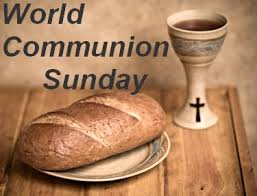
This sermon is inspired by, infused with, and indebted to the work of Kurt Struckmeyer whose essay “The Words of the Eucharist” articulates communion in terms of “liberation” and pointed me to the work of the Roman Catholic liturgist Gabe Huck; with just a little Martin Luther thrown in to insure that “this is most certainly true.” The readings included 1 Corinthians 11:23-26, Mark 14:22-25 and Luke 22:14-20 – listen to the sermon here
A conversation sermon on Jesus’ parable of the Rich Person. This parable has often been interpreted in ways that fail to see beyond the parable to the hell of our making to the possibility of creating heaven here and now. The website referred to in the in the conversation is http://www.globalrichlist.com Listen to the sermon/conversation here
John 10:22-31 The time came for Hanukkah, the Feast of Dedication, in Jerusalem. It was winter, and Jesus was walking in the Temple area, in Solomon’s Porch, when the Temple authorities surrounded him and said, “How long are you going to keep us in suspense? If you really are the Messiah, tell us plainly.” Jesus replied, “I did tell you, but you don’t believe. The work I do in my Abba’s name gives witness in my favour, but you don’t believe because you’re not my sheep. My sheep hear my voice. I know them and they follow me. I give them eternal life, and they will never be lost. No one will ever snatch them from my hand. Abba God, who gave them to me, is greater than anyone, and no one can steal them from Abba God. For Abba and I are One.” With that, the Temple authorities reached again for rocks to stone him.
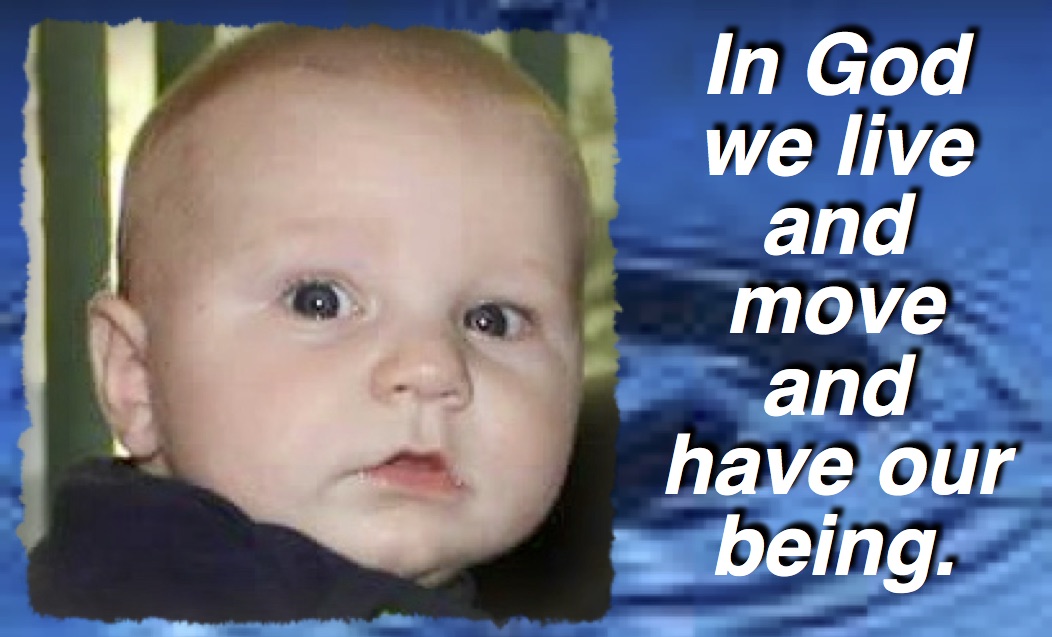
With that, the Temple authorities reached again for rocks to stone Jesus. Welcome home. On this Homecoming Sunday, we are reminded that home is not always a safe place. The buffalo have ceased their roaming, the deer and the antelope no longer play, and all too often is heard a discouraging word. Welcome home. As many of us know all too well, home may be where the heart is, but home is also a place where the most cutting of family arguments can wound even those of us who’s strength of character has lead us far from home. Jesus never faired well at home. Whether it was his home in Nazareth where his neighbours wanted to toss him off a cliff, or his spiritual home in Jerusalem, where the Temple authorities reached again for rocks to stone him, Jesus words, his teaching, his way of being in the world made the people at home so angry they could kill him. There was something about this fellow Jesus that got on people’s nerves. I mean the nerve of the fella, imagine insisting that he, Jesus, and Abba are ONE. Bad enough that Jesus had the audacity to call God Abba, “daddy” as if he and the Creator are on intimate terms, but then to suggest that God, the Creator of all that IS, and all that ever shall be, to insist that he and God are ONE, well is it any wonder that the Temple authorities reached again for rocks to stone him. After all the Temple authorities are charged with the solemn responsibility of preserving good order. Every home needs rules and when it comes to the rules the Temple authorities know the rules backwards and forwards, and this guy Jesus seems incapable of sticking to the rules. Everyone knows that according to the rules God is up there and out there, beyond us and from time to time God comes down here and the best place to find God is in God’s house, and in God’s house we have rules about who, how, and when people can approach the ONE who IS the source of all life. God’s house has rules for a reason. Without rules there is chaos and chaos is the very thing that the Creator established creation for. In our earliest myths we imagined that in the beginning there was chaos and God’s Spirit hovered over the chaos and said, “Let there be light!” and so began the slow and steady evolution out of the muck and the mire of chaos and into the natural order of things, with God up there in the heavens and we earth creatures down here, going about our business, and remembering to pay homage from time to time to the ONE who makes it possible for us all to feel at home here in creation. Then along comes Jesus, suggesting that God is not safely out of reach but that indeed God is ONE with him, why the next thing you know people will be imagining all sorts of things, and some one will suggest that we are all ONE with God. Quick find some rocks so we can stone this guy before things get out of control. After all our home is our castle, and we need to stay in control of the castle lest our carefully held ways of doing things devolves into chaos. We’ve got to keep God safe from such ideas.Ideas are far too dangerous to be allowed to infect the masses, pardon the pun. If ideas are allowed to fester, the next thing you know we won’t recognize our homes anymore and we’ll have to find new ways of living together.Get me a rock, will you? I can’t stand it when my home is threatened by an idea; especially an idea that is so dangerous that it threatens my image of who I am by suggesting that the god I worship and adore might be something other than who or how I want god to be. If you don’t believe me, just look at our neighbours in the United Church of Canada. If only they’d reached for their stones a little sooner, then that Greta Vosper woman would never have gotten all the attention she’s getting now and she’d never have been able to infect their house with ideas about God being dead. JEEZUS H CHRIST! Just imagine what might happen if people are allowed to suggest that God is dead! Ok, I know, I am grossly over-simplifying things here.But we are at home here aren’t we. We’re family and we don’t have to spell everything out do we.We know who we are and whose we are. Whether we say it out loud in here, where we all know what we mean, our whisper it out there where people might not understand, we know that God being dead is precisely the foundation upon which many of our homes have been built for generations. Jesus said, “I and Abba are ONE.” and we all know how that worked out. Jesus was executed by the state, aided and abetted by the Temple authorities, Jesus died at the hands of those who firmly believed that he was a troublemaker capable of creating chaos. Jesus died believing that he was ONE with God. We have been taught to believe that JESUS and God are ONE, so dear friends and family, here in this house we can safely say that God did indeed die. God died and was buried. The good news is that we also believe that death does not have the final word. God is dead. Long live God! For we in this house know the sweet beauty of resurrection. We know that God dies over and over again, precisely because we know that when Jesus said, “I and Abba are ONE.” Jesus pulled God out of the heavens and the faraway God of our ancestors was reborn as the Abba whose intimacy with us is so palpable that we can say that Abba and I are ONE. We are ONE with God. The community of people who followed Jesus after his death understood this. The Apostle Paul understood that God was no longer up, there, far away, distant, beyond our reach, or tucked away in the Holy of Holies. The Apostle Paul, knew that that particular God died upon the cross with Jesus, but death did not have the final word. The power of the resurrection empowers us to know that God is the ONE in whom we live and move and have our being. We are ONE with God and this dear family means chaos. For if we are ONE with God, then those people out there, those other humans, indeed all those other beings, in fact creation itself, is ONE with God. That means that every life is precious, including the life of this planet. That means that all the walls in the world won’t be able to separate us from the ONE in whom live and move and have our being. It means that even the biggest, baddest, most scary ones out there, are ONE with God. How will we know how to be in the world when each and everyone we meet is kin? God is Dead! Our lovely, God, the one we created in our image, the one who we safely tucked away up in heaven, the one we allowed to come into our sanctuaries only if he behaved and followed our rules, that god, the image formed by the art and thought of mortals, is dead. Long live God. Long live the ONE in whom we live and move and have our being. Long live the ONE with whom we are ONE. We can throw all the stones we want at the Gretas of this world, who dare to point out that our images of the ONE are for all intents and purposes dead, but our rocks won’t help us preserve the order that we are counting on to save us from chaos. Life is chaotic. Our rules, regulations, and houses can offer us sanctuary from time to time from the chaos, but the rules and regulations, the carefully held beliefs, the doctrines and the dogma, even the images we hold dear cannot save us. We can toss all the rocks we want, but alas, the ONE in whom we live and move and have our being, lives and dies over and over and over again, in, with, through, and beyond us, that’s the beauty of the chaos that the light brings into view. The ONE in whom we live and move and have our being is more than we can begin to imagine. The “Idea of the Holy” is in and of ITSELF, “Mysterium, Tremendum, et Facinans” (Rudolf Otto) Mysterious, Tremendous, and Fascinating. Take and eat. Taste and see for LIFE in the ONE is Mysterious, Tremendous and Fascinating. Chaotic, always transforming, ever changing, awe-inspiring, terrifying, delicious, pungent, devastating, jaw-droopingly real, compelling, exhausting, dangerous, sublime, enchanting, revolting, magnificent, challenging, refreshing, frightening, unimaginable, surprising, beyond our ability to express, and yet this Chaos of which we are ONE, is home. So, welcome home. Take and eat. Taste and see. For it is, in the words of our ancestors, good, very good. And be prepared, because the ONE in whom we live and move and have our being, lives and dies, over and over again. For we dear family are the people of the resurrection. We are the ones who proclaim, “God has died. God is risen. God will come again and again, and again.” Welcome home: Taste and see. For God is God. Can I get an Amen?
I am indebted to two beloved seminary professors for the formation of this sermon: Dr. Donna L. Seamone and Dr. Ed Riegert. All preachers stand on the shoulders of those who have gone before us!!!
Jesus was and is an absolute fool! An absolute fool, I tell you! Among the teachings of Jesus, the parables of the lost and found are so well known, so familiar that we are in peril of failing to hear the foolishness they advocate.
Although only a few of us have had the opportunity to tend a flock of sheep, most of us at one time or another have been responsible for the welfare of a flock. Whether that flock be sheep or co-workers, clients, customers, students, friends, or children none but the foolish among us would leave 99 to the perils and dangers of the wilderness in order to go looking for one idiot who’d been stupid enough to get themselves lost.
We may not keep our coins at home, but I daresay that most of us have felt the sting of loosing a drachma or two or three in this recession. Only a fool would waste a moment searching for our losses when our portfolio’s are so full. I dare say that if we managed to find or recoup our loss, we’re hardly likely to invite the neighbourhood to a party that would in all likelihood eat up more than we had found. Continue reading →













 pastordawn