YAHWEH said to Moses: “See, there is a place by me where you shall stand on the rock; and while my glory passes by I will put you in a cleft of the rock, and I will cover you with my hand until I have passed by; then I will take away my hand, and you shall see my back; but my face shall not be seen.”
Memories, stories, imaginings, myths, wonderings, and glimpses are the stuff of truth. Even though I was only a child, I have very vivid memories of my very first trip on an airplane. We lived in Belfast, Northern Ireland and we were moving to Canada. I was terrified and fascinated all at the same time. I don’t know where I heard them first, but words like “frozen,” “north,” “wolves,” “igloos”, and “Eskimos” filled my imagination. I have a vague memory of being told that there wouldn’t be any Eskimos where we were going.
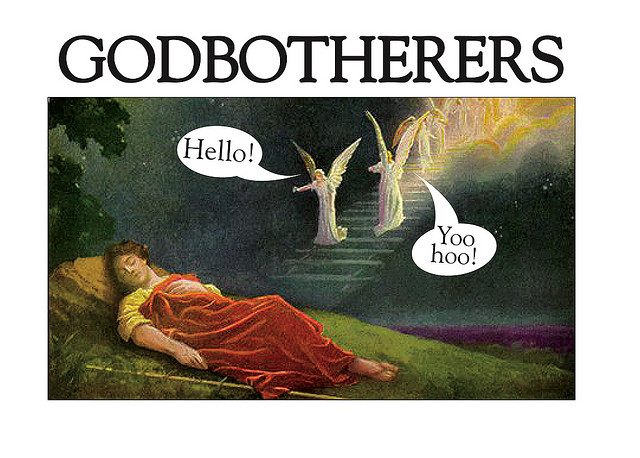
I remember the excitement and the fear about flying up in the sky, higher than the clouds. We’d be so high that we’d be able to look down at the clouds. I just couldn’t wait. I was going up, up into heaven. Visions of angels sitting on clouds, maybe, just maybe I’d catch a glimpse of Jesus playing with all the little children. I never dreamed that I’d see God. God would be clothed in a cloud and if God peaked out I’d hide. I didn’t want to see God. God was way too scary. I wanted to stay well clear of God. God was a scary guy, so scary that you’d probably drop down dead if you saw God. Maybe I shouldn’t look down on the clouds, just incase I caught a glimpse of God, because then I’d never make it back down from heaven. And then, I’d never get to see the Eskimos that I just knew were waiting for me down in Canada!
It wasn’t easy being up there in the sky for the very first time. I couldn’t take my eyes off that little porthole. Even though I knew somewhere deep down inside that I wasn’t really looking out at heaven, I just couldn’t help wondering what was really out there. I remember thinking that maybe just maybe there were angels dancing on those clouds, invisible angels, cause I knew that you became invisible when you died. God was pretty much invisible most of the time. Continue reading →
Canadian Thanksgiving celebrations invite us to remember not just our blessings, but the Source of All that IS. Readings for this Sunday can be found here. Our contemporary reflection was the video “A Good Day” featuring Brother David Steindl-Rast (below)
Below you will find a recording of our second class. The video of the Keynote presentation includes the Youtube video featuring Marcus Borg that was shown during the class together with an audio recording of the class (the audio is stilted in places but if you wait but a moment it will sync with the presentation). Or, below the video you will find an audio recording of the class.
The third class in this series is on Sunday Oct. 19 and will be posted on Oct. 21
When I was a kid, the adults in my life were very fond of telling me how grateful I ought to be because things were so much harder back when they were kids. I’m sure most of us can remember being told by our elders just how tough times were when they were back in the day. My parents, grandparents, aunts and uncles and just about every adult I knew must have grown up poor. Why if I had a nickel for every time I heard someone say, “When I was a kid we were so poor that…..” well I’d have a whole lot of nickels.
Today, when I hear the words, “We were so poor that…” I brace myself for an outrageous claim like…. We were so poor that we couldn’t afford Kraft Dinner. Kraft Dinner, you were lucky, we were so poor that we couldn’t afford dinner, all we had was a cup of cold tea without milk or sugar. Cup of Tea, we were so poor that we only had filthy cracked teacups. Filthy cracked teacups, that’s nothing we were so poor that we couldn’t afford teacups, we used to have to drink our tea out of a rolled up newspaper. That’s nothing we were so poor that all we could we couldn’t afford newspapers so we had to suck our tea from a damp cloth.
Someone always chimes in with, “Well we might have been poor, but you know we were happy in those days. That’s right money can’t buy happiness. We used to live in a tiny house, with holes in the roof. “House? You were the lucky ones we were so poor that we had to live in one room, all 126 of us, with no furniture. Half the floor was missing; we were all huddled together in one corner for fear of falling! Ha! You were lucky to have a room! We used to have to live in a corridor! Ohhh we were so poor we used to dream of living in a corridor! A corridor would have been a palace to us. We used to live in an old water tank on a rubbish tip. We were woken up every morning by having a load of rotting fish dumped all over us!!! Rubbish tip, you were lucky, we were so poor that we lived in a hole in the ground covered by a piece of tarp, but it was a palace to us…especially after we were evicted from our hole in the ground and we had to go live in a lake. Lake, you were lucky to have a lake, there were a 160 of us living in a small cardboard box in the middle of the road. Cardboard, we were so poor we lived for three months in a brown paper back in a septic tank. We used to have to get up at six o’clock in the morning, clean the bag, eat a crust of stale bread, go to work down in the mines for 14 hours a day, week in week out. We had to get up out of that cardboard box at three o’clock in the morning and lick the road clean with our tongues. In case you didn’t recognize it, that was my interpretation of a classic Monty Python sketch, simply called the “We were so poor sketch”. (watch the video below)Continue reading →
Herald of the Divine Feminine, reformer of the church and green prophet! September 17th is the feast day of the Christian mystic Hildegard von Bingen, a woman of great vision, a woman centuries ahead of her time. During her 81 years Hildegard’s talents as an artist, musician, poet, healer and theologian allowed her to produce a wealth of resources for the church which ought not to be ignored. And yet the Roman Catholic Church only got around to officially canonizing this giant of the church this past year.
In 2009, German filmmaker Margarethe von Trotta wrote and directed the movie “Vision”. The DVD version is available from Amazon and I highly recommend it!!!
Matthew Fox’s book “Hildegard of Bingen a Saint for Our Times, Unleashing Her Power in the 21st Century” provides an excellent resource for those who are working to change religious institutions today. You can listen to an interview of Matthew Fox about Hildegard here. Fox describes Hildegard as a Trojan horse whose teachings he hopes will shake up the vatican.
At Holy Cross we have developed an Evening Prayer Service inspired by the work of Hildegard. The worship bulletin and an audio recording of the service are linked below. Enjoy the video of contralto Karen Clark who preforms Hildegard’s antiphon “O Virtus Sapientie”
I am indebted to John Philip Newell’s new book “The Rebirthing of God: Christianity’s Struggle for New Beginnings” for inspiring this sermon. The Season of Creation is a relatively new addition to the Church calender and the first and Gospel readings are those prescribed for Forest Sunday: Genesis 2:4b-23 and John 3:1-16. The contemporary reading is from John Philip Newell. The Scripture reading were taken from ‘the inclusive bible: The First Egalitarian Translation” which opens a new way of understanding both the Genesis story and the Gospel According to John simply by using more inclusive literal translations of the Hebrew and Greek. You can find all three readings here
Krista Tippett’s TED talk from 2010 provides an “important linguistic resurrection” of the word compassion. Tippett sees compassion as kindness, curiosity, empathy, forgiveness and reconciliation, the simple act of presence, a willingness to see beauty in the other, and “for the religious compassion also brings us into the territory of ‘mystery’ encouraging us to see not just beauty but perhaps also to look for the face of God in the moment of suffering, in the face of a stranger, in the face of the vibrant religious other.”
In his book “Meeting Jesus AGAIN for the First Time”, New Testament scholar Marcus Borg writes about the Hebrew word for compassion ‘rakham’ – “The Hebrew word for ‘compassion’ whose singular form means ‘womb’ is often used of God in the Old Testament. It is translated as ‘merciful’ in the characterization of God as ‘gracious and merciful.’ It is present in that quite wonderful expression from the King James Bible the ‘tender mercies’ of God. It is found
in a passage in Jeremiah that has been translated as follows:
“Thus says Yahweh: In Ephraim (Israel) my dear son? my darling child? For the more I speak of him, the more I do remember him. Therefore my womb trembles for him; I will truly show motherly-compassion upon him.
“Thus the Hebrew Bible speaks frequently of God as compassionate, with resonances of ‘womb’ close at hand.
“And so Jesus’ statement ‘Be compassionate as God is compassionate’ is rooted in the Jewish tradition. As an image for the central quality of God, it is striking, To say that God is compassionate is to say that God is ‘like a womb,’ is ‘womblike,’ or, to coin a word that captures the flavor of the original Hebrew, ‘wombish.’ What does it suggest to say that God is like a womb? Metaphoric and evocative, the phrase and its associative image provocatively suggest a number of connotations. Like a womb, God is the one who gives birth to us — the mother who gives birth to us. As a mother loves the children of her womb and feels for the children of her womb, so God loves us and feels for us, for all of her children. In its sense of ‘like a womb,’ compassionate has nuances of giving life, nourishing, caring, perhaps embracing and encompassing. For Jesus, this is what God is like.
“And, to complete the imitatio dei, to ‘be compassionate as God is compassionate’ is to be like a womb as God is like a womb. It is to feel as God feels and to act as God acts: in a life-giving and nourishing way. ‘To be compassionate’ is what is meant in the New Testament by the somewhat more abstract command ‘to love.’ According to Jesus, compassion is to be the central quality of a life faithful to God the compassionate one.”
Tippett’s storytelling helps us to connect with the divine image which exists within our flawed humanity. She insists that the flaws we see in compassionate people liberates us from our modern obsession with perfection and gives us the courage to be compassionate. Tippett paraphrases Albert Einstein to remind us that, “the future of humanity needs this technology as much as it needs all the others that have now connected us and set before us the terrifying and wondrous possibility of actually becoming one human race.”
Among progressive-christians the word ‘panentheism” – literally “all in god” is used to express the notion that, all is in god and god is in all. One way of understanding panentheisim is to expand on Acts 17:28 “In God we live and move and have our being” with a blessing I often use when I lead worship: “God dwells in, with, through, and beyond us.” To imagine the Divine Womb-Love in which we live and move and have our being dwelling in, with, through, and beyond us provides a compelling way of living into our Divine/Human compassionate-selves. As humanity evolves, may it evolve in ways that embody Divine compassion!
For those of you preaching on the text from Genesis 32:3-31:
You may not be able to tell from looking at me. But let me assure you that you are looking at someone who used to be a champion wrestler. Believe it or not, my wrestling skills actually helped me rise to the level of a world champion wrestler. Well, perhaps I should qualify that statement. When I was an amateur wrestler, I was a world-class champion wrestler. But like so many athletes, when my status changed from amateur to professional, I lost my championship status and although I still qualify as a professional wrestler, and I like to see myself as a champion, I’m no longer what you would call world-class.
Like many professional wrestlers my career began when I was but a child. Growing up I had a very clear advantage as I developed my wrestling skills. You see having a brother who was just 18 months younger than me meant that I had ample opportunities to hone my wrestling skills. My brother and I were always at it. I’ve got to say that even though we shared the same weight class for most of our childhood, when it came to world class wrestling holds, I had him beat. I had this wicked arm-hold sleeper, and that together with my full Nelson followed by a knee-arm press, was guaranteed to have my brother screaming uncle and agreeing to be my obedient servant until in no time at all. For years I reigned as the champion of our little world! I was unbeatable. My brother didn’t stand a chance. My reign as world champion would have continued if it weren’t for the abrupt ending of my amateur status.
One morning when I was about 13 and my brother was 9 and a half, we were going at it, and to his credit my bother had me in an ingenious hold. Somehow, he’d managed to secure me with what we professional wrestlers call an arm bar. That’s where you’re opponent wrenches your arm behind your back and applies just enough pressure to cause pain, but not enough to break anything. But just when Alan was approaching the point of no return, I managed with a feat of superhuman strength to rise up, twist around and swing for all I was worth and connect with what I though must be my brothers chest. I expected that such a thrust would have released my arm from Alan’s iron grip. But he still had me. I was about to hit him again, when for no apparent reason Alan released me from his grip. In an instant I wiggled free, spun around and connected with what I figured would be a fatal blow. Just before my blow connected with it’s victim, I realized that I was doomed.
Jack concludes his five day lecture series by explaining the Crucifixion in the fourth Gospel. (filmed June 27, 2014) Our friends at College Street United Church in Toronto will be hosting Jack April 17-18, 2015. I shall post more details when they are available.
Jack explains how the 4th Gospel creates a symbol from the presence of Christ’s mother. This is the fourth lecture of a five lecture series. Filmed June 26, 2014 at the Chautauqua Institution.
On this Canada Day, my wife and I begin our drive across this great land. Each time I make the trip from the east to the west, I am struck by the vastness of this land we call home. This year I take with me the deep impressions left upon my heart by our Synod’s Convention where we explored the Truth and Reconciliation Commission’s work to come to terms with our nation’s shameful history. I know that I shall travel this land with hope-filled eyes, trusting that the work we have begun will open us to the work of reconciliation with our First Nations sisters and brothers. As we celebrate this land, let us remember those whose welcome of our ancestors came at such great cost. Let us find ways to walk together into our future open to the possibilities of reconciliation. Happy Canada Day EVERYONE!
I don’t remember the first time I ever saw him. I was barely 18 months old when my brother Alan arrived. Despite the fact that he ruined my gig as an only child, Alan and I grew close over the years. We moved around a lot so we became one another’s best friends. But we went our separate ways when we became teenagers. When I tell the stories, I say that we went our separate ways because Alan became preoccupied with sports. I suspect that when Alan tells the stories, he says that we went our separate ways because I became preoccupied with the church. Either way you tell it, family and friends used to say that it was hard to believe that we grew up in the same household. Alan developed a reputation for being a bit of a redneck. I developed a reputation for being a bit of a radical. Alan drove four-wheel-drives and went hunting. I drove old beat up cars and lived at an ecumenical retreat centre. Alan learned a trade, settled down and raised a family. I travelled the world and didn’t get around to figuring out what I was going to be when I grew up, I went back to school at the age of 30.
Alan and I didn’t get around to understanding one another until we were in our mid-40’s. When I grew to appreciate the gentle man that he has become and Alan began to respect the person I’ve become. We still love to talk politics, but these days we tend to agree more than we disagree, I’m not sure who mellowed, the redneck or the radical. We don’t talk much about religion, though. Growing up, Alan would claim to be an atheist, and scoffed at my involvement with the church. These days, Alan, suggests he is an agnostic, and although he’s come to respect my life in the church, he still scoffs at the hypocrisy of the church.
I still remember the very first time that I saw Manjit. Her face was the colour of pure milk chocolate. Her jet-black hair was long and wavy. She sat at the very back of the classroom. When the teacher introduced me to Manjit, her toothy grin welcomed me. We were twelve years old. I was the new kid in town and Manjit was the only East Indian in the class. We were to share a double-desk for the remainder of the school year. I remember my first trip to Manjit’s home. A science project needed our attention. I can still smell the aroma of Manjit’s home where exotic curries released their pungency into the air. Over several meals at Manjit’s, I learned to like my food hot and spicy. Manjit’s mother would blend her own spices and she never forgot to send a package or two of her specially blended curries home with me.
Manjit is a gentle soul who introduced me to the wonders of her faith. Manjit is a Hindu. Manjit never tried to encourage me to become a Hindu. Although over the years she would remind me of the Hindu saying that admonishes Hindus to be better Hindus, Muslims to be better Muslims, Jews to be better Jews, Buddhists to be better Buddhists, and Christians to be better Christians. Manjit grew into a kind and gentle woman. She works as a social worker in Vancouver’s rough east-end neighborhoods. The last time I saw Manjit she was patiently guiding the students of a confirmation class that I taught, around her Temple. Later that evening Manjit and I talked a long time about Jesus. Manjit told me that she’d always been fascinated with Jesus’ teachings and that she had no problem believing that Jesus is God, but then she explained that Hindus have a thousand god’s.
I can still remember the very first time that Henry walked into my office. A long black beard together with the yarmulke that he wore on his head gave Henry away. So, from the very beginning I knew that Henry was Jewish. But it took a few years of working together before I discovered that in addition to being a graphic artist, Henry is also a rabbi. Henry became a dear friend of mine and over the years he shared so much of his wisdom with me. Many a night Henry and I sat up to the wee hours discussing the Scriptures. Henry even arranged for me to study Hebrew at his Yeshiva. I learned a great deal from Henry. We often talked about Jesus. We rarely agreed about Jesus, but we often talked about him.
Alan, Manjit and Henry, some would call them an unholy Trinity. But to me they are, each of them, sacred. Trinity Sunday is my least favorite Sunday of the Church year. It’s the only festival of the church year that is designed to celebrate not God, nor Jesus, not even the Holy Spirit, but rather a doctrine of the church. The notion that God is One in Three; a doctrine that was created by theologians to explain the inexpressible, a doctrine the church “fathers” began to cast in stone in the words of the Apostle’s, Nicene and Athanasian Creeds. Three Creeds that make up an unholy trinity in and of themselves. Three Creeds that the Lutheran Church continues to hold as articles of the faith. Three Creeds that continue to hold sway in our church.Three Creeds that in my humble opinion make up an unholy trinity. Three Creeds upon which the doctrine of the Trinity rests.Continue reading →
Leaving Behind the Miraculous Jesus to Welcome the Human Jesus
The celebration of Jesus’ Ascension is a church festival that I have always chosen to ignore. The ancient tradition that has Jesus floating up into the clouds stretches the credibility of the church to such an extent that I’ve always assumed that the less said about the Ascension the better. But I was challenged by a parishioner to try to make some sense out of the Ascension story so that 21st century Christians would not have to check their brains at the door should they happen upon a congregation that still celebrated the day. What follows is a transcript of my attempt to leave behind the miraculous Jesus in order to be better able to welcome the human Jesus down from the clouds. I am indebted to Bishop John Shelby Spong together with Clay Nelson of St Matthew-in-the-city for their liberating insights.
Traditionally, on the 40th day after Easter, the church celebrates the feast of the Ascension. But because so few people in the 21st century are willing to come to church during the week, the Ascension is celebrated by the church on the first Sunday after the feast of the Ascension. Since I have been your pastor we have not celebrated Ascension Sunday. But as this particular Ascension Sunday follows so closely after Jack Spong’s visit with us, I thought that it was about time that rather than avoid the Ascension, I’d like to try to confront it.
Jack has been telling his anti-Ascension story for quite a few years now. Just in case you’ve never heard it or have forgotten it, let me remind you. It seems that Jack was speaking with Carl Sagan, the world-renowned astronomer and astrophysicist. Jack says that Carl Sagan once told him “if Jesus literally ascended into the sky and traveled at the speed of light, then he hasn’t yet escaped our galaxy.”
With that said, let me just say, that the Ascension never actually happened. It is not an historical event. If a tourist with a video camera had been there in Bethany they would have recorded absolutely nothing.
I know what the Nicene Creed says, “Jesus ascended into heaven and is seated at the right hand of the Father.” But like the members of the early church, I do not have a literal understanding of the scriptures. And so, as I do not understand the Bible literally, neither do I understand the Nicene Creed to be a literal interpretation of the faith. Like all creeds the Nicene, Apostles and Athanasian creeds are snapshots of theology as it was at a particular time in history.
We would do well to remember that the Creeds were developed to answer questions about the faith in a time when people understood the cosmos to be comprised of a flat earth, where God resides above in the heavens and located beneath the earth were the pits of hell. I know that the universe is infinite. I also know about gravity. I also know that it is highly unlikely that Jesus had helium flowing through his veins. I’ve flown around the world, and I can tell you that there is no heaven above the clouds. So, I can say with confidence that: The very present Jesus of resurrection faith did not literally elevate into heaven while his disciples looked on.
The writer of the Gospel according to Luke and the Book of Acts are one and the same person. The same writer wrote the Gospel according to Luke to tell the story of the life of Jesus and the Book of Acts to tell the story of the Holy Spirit at work in the followers of Jesus. Although we don’t know who the author was, we do know that he was not an historian. Neither Luke nor Acts are historical accounts. They are both addressed to a character named Theopholus. Theopholus is Greek for lover of God. The books are addressed to the lovers of God, that’s you and me and the author makes it clear that he has written these books so that we, the lovers of God, can believe and have faith. The books were written somewhere near the end of the first century. Somewhere between 50 to 60 years after the death of Jesus. Perhaps between 80 and 95 of this Common Era.
The important question for most biblical scholars is not whether the Ascension actually happened but rather, what did the Ascension mean to the author in his context. And to that question we might add a more pressing question: Given what the Ascension meant in the first century, does it continue to have any relevance for those of us who live in the 21st century?
I believe that the followers of Jesus experiences of Jesus the man were so overwhelming that they saw in him the human face of God. I also believe that in very powerful ways the followers of Jesus continued to experience Jesus presence.
Those powerful experiences of Jesus after his death were so intense that they defied description. Given that Jesus was now dead and gone, yet his presence still seemed to be with them, the followers of Jesus used the Hebrew story of Elijah and Elisha to construct a belief about the Spirit of Jesus continuing to be powerfully among them.
By the time the writer of Luke and Acts got around to writing these stories down, there were different versions of the story being passed around in the early church. The writer of Luke/Acts paints a picture of a re-formed bodily Jesus going up into the heavens in the Ascension and a windy, fiery Spirit coming down at Pentecost. The writer uses powerful familiar Hebrew images to portray the experiences of Jesus’ followers after his death.
In order for us to move beyond the literal and beyond the historical and even beyond the metaphorical meaning to arrive at the meaning that the story of the Ascension can have for us today in this time and in this place, I’d like to tell you two stories that I heard about from a preacher who serves an Anglican parish in Auckland, New Zealand. Clay Nelson is a friend of Jack Spong who tells great stories. The first story is an actual, literal, historically accurate Ascension story followed by a metaphorical Ascension story.
The literal historical Ascension story took place in 1982. But it the story that actually began some twenty years earlier when Larry Walters was just 13 years old and he saw weather balloons hanging from the ceiling of an Army & Navy surplus store. It was then that Larry knew that some day he would be carried up to the heavens by balloons. Sure enough when he was 33 years old, on July 2nd 1982, Larry Walters tied 42 helium-filled balloons to a lawn chair in the backyard of his girlfriend’s house in San Pedro, California. With the help of his friends, Larry secured himself into the lawn chair that was anchored to the bumper of a friend’s car, by two nylon tethers. Larry packed several sandwiches and a six-pack of Miller Lite and loaded his pellet gun so that he could pop a few balloons when he was ready to come down. His goal was to sail across the desert and hopefully make it to the Rocky Mountains in a few days.
But things didn’t quite work out for Larry. When he cut the cord anchoring the lawn chair the second one snapped, launching Larry into the skies above Los Angeles. Instead of leveling off at about 30 feet as he’d planned, Larry rose to 16,000 feet and at that height Larry couldn’t risk shooting any of the balloons. So he stayed up there drifting cold and frightened for more than 14 hours when he found himself in the primary flight approach corridor for LAX.
Legend has it that a Pan Am pilot was the first to spot Larry and quickly radioed the tower telling them that he’d just passed a guy in a lawn chair with a gun. The Federal Aviation Administration was not amused. Larry started shooting out the balloons to start his descent but accidentally dropped the gun. After drifting for a couple of hours he eventually landed in a Long Beach neighbourhood entangled in some power lines. Larry survived without any serious injuries.
Now that is an historically accurate ascension story. It’s a funny story and a true story, but it is not a life changing story. But Larry did inspire a wonderful Australian movie, called Danny Deckchair, which is untrue, is in fact full of truth. Now when a New Zealander recommends an Australian movie, I take notice, so yesterday I watched Danny Deckchair and I do believe that it is a modern metaphorical interpretation of the Ascension.
The movie’s hero, Danny, is a bored labourer who drives a cement mixer. Danny is an unlikely Christ figure whose story is similar to Larry’s. Danny ascends from his backyard in Sydney during a barbecue and lands less than gracefully in a small town in the Australian outback. By this act of departure and arrival everything changes not only for Danny, but also for those he left behind and those he meets in the outback. Danny’s unique departure inspires those at home to take risks of their own: to live life more boldly, to act on their dreams, to become all they can be.
In acting out his dream, Danny finds new confidence and becomes the source of inspiration and affirmation for the townsfolk in the outback who used to see themselves as backwater hicks, but now see the importance of their actions in the life of their town. Everyone is transformed by Danny’s ascension. New Life and love accompany his resurrection.
The writer of Luke/Acts two versions of Jesus’ Ascension are not true like Larry’s lift off but are true like Danny Deckchair. While the event certainly did not happen in a literal way, the story does attempt to capture the quality of a real man whose coming and going in their lives changed them forever. The writer of Luke/Acts Ascension story is not so miraculous after all. The Ascension story is about the joy the disciples felt about the ongoing ever so real presence of Jesus after his death. The God they saw in Jesus they found in themselves. In Jesus’ departure they discovered that they could love as wastefully as he did. They could live abundantly as Jesus did. They could heal and reconcile just as Jesus did. With Jesus pointing the way they had found God and while Jesus was gone, the God that Jesus pointed to was everywhere, even in them.
If we are to move beyond the literal, beyond the historical, beyond the metaphorical to the life-changing meaning of the stories that have been handed down to us, we may just have to give up our tenacious hold upon the notion of Jesus as some sort of miracle worker who defies the laws of gravity, and time and space.
If we are to engage the stories about Jesus in a way that allows those stories to intersect with our lives we will have to embrace Jesus’ humanity. My Kiwi colleague Clay Nelson puts it like this: “If your faith is sustained by a miraculous understanding of Jesus that has to ignore what you know about the real world, then let me ask you: Is it a faith that can sustain you in the real world? Eventually this world of advancing scientific knowledge, that no longer requires a personal God to create, heal and sustain life will make the God we have had irrelevant, if it hasn’t already. I think God would rather be dead than irrelevant. And if God is irrelevant, Jesus, who has been portrayed by the author of Luke/Acts and the church as the incarnation of this God, will suffer the same fate. If he hasn’t already.”
Nelson reminds us that Jesus was human and the human Jesus does not suffer the fate of an irrelevant god..“The human Jesus, instead of only showing us God in all God’s glory, also shows us in all of ours. This Jesus becomes a window through which we can glimpse the mystery of love and life and being we are all called into. This Jesus through his radical love of even his enemies invites us into that mystery that surrounds us and is part of our very being. This Jesus becomes the doorway through which I’m willing to walk into that mystery. For this mystery, I am willing to die to have new life. Mystery makes sense to me, the miraculous doesn’t. The mysterious Jesus inspires me and calls me to new levels of being. The miraculous Jesus helps me as much as telling a child that Santa comes down chimneys. The mysterious Jesus sustains my faith. The miraculous Jesus impedes my faith.”
Like my Kiwi colleague Clay, I no longer need to believe in a miraculous Jesus in order to experience the mysterious Christ who lives and breathes in with and through Christ’s body here and now.
The writer of Luke/Acts is preparing his audience of God lovers for the arrival on the scene of the very Spirit of God that lived and breathed in with and through Jesus.
So, as we approach the celebration of Pentecost, may you find in these stories handed down to us by our ancestors in the faith an inkling of the powerful presence that Jesus’ first followers experienced after Jesus had left them.
May the joy they felt at the realization that the God they saw in Jesus they now found in themselves. May the realizations that those first followers experienced in Jesus’ departure, when they discovered they could love as extravagantly as Jesus did, that they could live as abundantly as Jesus did. That they could bring about healing and reconciliation just as Jesus did.
May these realizations live and breath and have their being in you. May you know the joy of seeing Jesus point the way, the joy of finding God, may you know the God Christ points to who is everywhere, even in you. May you love as extravagantly as Jesus loved. May you live as abundantly as Jesus lived. May you be Christ’s Body here and now, in this place in this time!
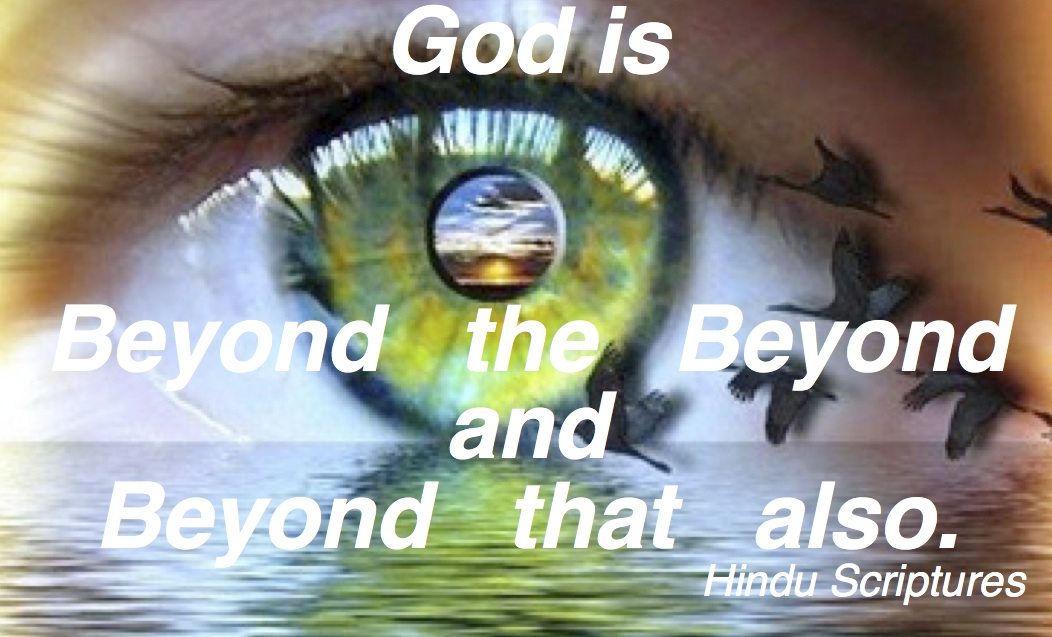
This coming Sunday’s first reading from the book of Acts provides an excellent opportunity to explore a vision of God that has all too often been ignored by institutional Christianity. While doctrines of the Trinity abound, the rich tradition of panentheism that permeates the writings of the mystics is neglected. For those of us who are attempting to reconcile all that we are learning about the realities of the cosmos with our visions of the ONE who lies at the very heart of reality, panentheism provides a way of speaking about God that moves us beyond theistic notions of personifications of the deity toward a deeper awareness of the presence of God in all things together with the assurance that everything is in God.
Let me begin by saying, that panentheism is, in and of itself, an evolving term. The term can be found in the works of German philosopher G.W.F. Hegel, process theologian Alfred North Whithead, and more recently in the work of Juergen Moltmann, Matthew Fox, Philip Clayton and Marcus Borg (for Borg’s ideas about panentheism follow this link). The word itself is made up for three Greek words: pan = all, en = within, theism = god. Panentheism is used to describe God as ONE who is in everything. Panentheism (unlike pantheism) does not stop with the notion that God is in everything, but goes on to posit that everything is God. God is in the universe and God transcends the universe. God is greater than the sum total of the universe. But the universe cannot be separated from God. We are in God and God is in us. God breathes in, with, through, and beyond us.
The term panentheism is proving helpful to Christians in the 21st century who are working to articulate our faith in light of all that we are learning about the universe. It is also invaluable to those of us who have a deep reverence for creation and are seeking ways to live in harmony with creation by treading lightly upon the earth. Panentheism is also a concept present in many faiths and provides us with a common way of speaking together about our Creator. But like all language the term fails to fully capture the nature of the Divine. It is merely a tool to help us think beyond the idols we have created to function as objects of our worship.
The Apostle Paul insisted that God is “the One in whom we live and breath and move and have our being.” (Acts 17:28) As we look towards the heavens, we see an ever expanding new story of who we are. Just as Paul struggled to find ways to articulate the nature of the Divine to his contemporaries, Christians continue in every age to find ways to articulate the nature of the Divine to each new generation. We do not abandon the wisdom that has been offered by those who have gone before us. But we cannot ignore the wisdom that is being revealed to us here and now in our time and place within the communion of saints.
Whenever we try to articulate what God IS, language fails us. For the most part, the institutional church has defined God with words and expected that members of the institution will confess loyalty to those words. Many of the words, with which the institution has traditionally described God, craft an image of God as a supernatural being up there or out there who is responsible for creation and from time to time interferes in the workings of creation. As we continue to learn more and more about the magnitude of creation, both in time and space, our traditional words about God seem ever more puny. While some respond to our ever-expanding knowledge about creation by attempting to make our notions of God fit into the tight little containers that were crafted by our ancestors, some are seeking new ways to speak of the CREATOR OF ALL THAT IS, WAS OR EVER SHALL BE. Often our attempts are as clumsy and as limited as the attempts of our ancestors. But sometimes, sometimes the likes of Tillich breathes new life into the notions of our ancestors and Paul’s description of our God as “the one in whom we live and move and have our being” becomes for us, as Tillich imagines, “the Ground of our Being”.
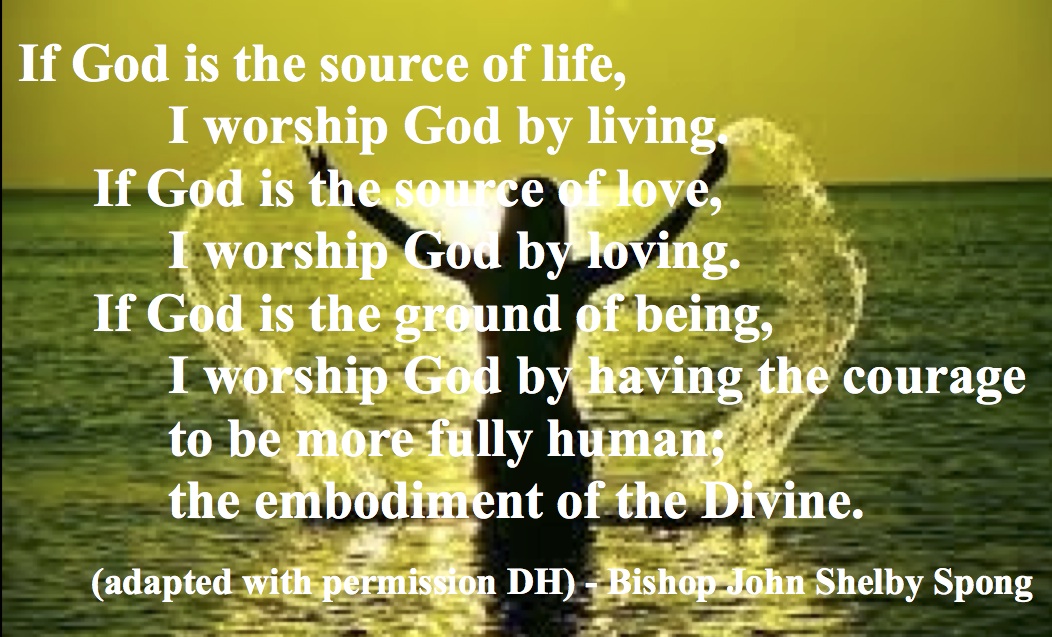
Below is a video that I have shown to Confirmation students (ages 12-15) as we begin to explore the great religious questions that have inspired wisdom seekers from the beginning of human consciousness: Who am I? What am I? Where do I come from? Why am I here? Where am I going? etc. The responses of young people inspire me! I cannot wait to see what they will reveal to us about the nature of our reality! As you watch this video, I offer you a benediction. It is a blessing that I have adapted with permission from the work of John Shelby Spong.
God is the source of life, so worship God by living,
God is the source of love, so worship God by loving.
God is the ground of being, so worship God by having the courage
to be more fully human; the embodiment of the Divine.
Richard Holloway, the former Primate of the Scottish Episcopal Church, interprets the story of the resurrection not as an historical tale, but as our own story. Holloway has written of his longing for a humbled and broken church. His own humility and brokenness shines through this video as Holloway embodies his own longing.
Michael Morwood will speak at Dr. Dennison Secondary School (135 Bristol Road, Newmarket) at Friday at 7:30pm and at Holy Cross Lutheran Church on Saturday & Sunday – tickets will be available at the door! For more about this dynamic thinker follow this link
Christ is Risen! Christ is Risen Indeed! Alleluia! Here we are still in the early days of the fifty daylong celebration of Easter and I’m already wondering how long we should keep chanting that Christ is risen! Sometimes, it seems that after the first flush of Easter Sunday’s excitement, our shouting that Christ is Risen sounds a little like we doth protest too much. The crowds of Easter are pretty much gone and churches all over Christendom are trying to keep up the excitement with the remnant of believers who turn up at church more often than Christmas and Easters. Our shouts of Christ is risen seem a little feeble; almost as if we are trying to convince ourselves that the celebrations of last Sunday actually mean something. After all it’s pretty safe to shout that Christ is risen in church. Nobody is going to challenge us in here about what we mean by that. But what if we were shouting that Christ is risen on the street corners or at work? Would we be comfortable telling people what we mean?
Christ is risen! Are we really willing to shout when it comes to declaring our belief in the resurrection? And if we are willing to shout about the resurrection, what is it that we would be shouting about? After all people have been arguing about the resurrection ever since the rumors about the empty tomb first began and after 21 centuries we still can’t agree what happened to Jesus after he died. Over the centuries the word resurrection has taken on so much baggage that it is difficult for many of us to talk about resurrection because we all bring so much to the conversation whenever we try to discuss it. Most of us grew up believing that we needed to believe in physical resurrection in order to belong. So we have learned to accept that resurrection means the physical resuscitation of a corpse. Yet even the stories that we tell in church don’t necessarily insist that Jesus physically rose from the dead.
The Irish novelist who wrote the famous book about his childhood in Ireland called Angela’s Ashes, also wrote a less famous book about his early years as a teacher in the United States. The book was called T’is and even though it didn’t sell quite as well as his first novel, McCourt’s I love it because it lends some keen insights into a teaching and teaching is one of the things I love about being a pastor. McCourt tells a story about Humpty Dumpty that illustrates some of the difficulties we face when we begin a discussion of the resurrection. McCourt tells his class the story of Humpty Dumpty to his class and for a whole class period there’s a heated discussion of “Humpty Dumpty” itself. (I’m using the term “itself” because no where in this English nursery Rhyme does it indicate what gender Humpty Dumpty is) In McCourt’s class Humpty Dumpty’s gender was automatically assumed to be male. But it was the sixties and so nobody argued about Humpty’s gender when McCourt recited the well known rhyme: “Humpty Dumpty sat on the wall, Humpty Dumpty had a great fall; All the kings horses And all the king’s men Couldn’t put Humpty together again.” Then Frank asked his class what is going on in the nursery rhyme and all the hands shot up to say things like: This egg falls off the wall and if you study biology or physics you know that you can never put an egg back together again. I mean it’s common sense really. That’s when Frank asked the question that set the class at odds with him. “Who says it’s an egg? Of course it’s an egg! Everyone knows that! Where does it say that it’s an egg? The class is thinking. They’re searching the text for egg, any mention, any hint of egg. They just won’t give in. There are more hands and indignant assertions of egg. All their lives they knew this rhyme and there was never any doubt that Humpty Dumpty was an egg. They’re comfortable with the idea of egg and why do teachers have to come along and destroy everything with all this analysis. McCourt insists that he’s not destroying. He just wants to know where they got the idea that Humpty Dumpty is an egg. Because the class insists, it’s in all the pictures and whoever drew the first picture must have known the guy who wrote the poem or he’d never have made it an egg. So Frank says, All right. If you’re content with the idea of egg we’ll let it be but I know the future lawyers in this class will never accept egg where there is no evidence of egg. And so by tacit agreement Humpty Dumpty becomes now and always an egg. (I am indebted to Bernard Brandon Scott’s reminder of the story about Humpty Dumpty in Frank McCourt’s novel “T’is”)
For me the subject of the resurrection of Jesus has a great deal in common with Humpty Dumpty because by some sort of tacit agreement it was decided long ago that the resurrection of Jesus just has to be a physical resuscitation of a corpse; this despite the fact that the earliest writer on the subject of the resurrection, the Apostle Paul denies that the resurrection of Jesus was a physical resuscitation of a corpse.Continue reading →
This Good Friday sermon was born of the theological struggles our congregations has engaged in over the past few years. It mirrors our theological journey. This year members and friends of our congregation engaged in an “Atheism for Lent” study and so the sermon begins with a parable from an atheist critique of Christianity. I am grateful to the members and friends of Holy Cross Lutheran Church for the courage and wisdom they have shared with one another as together we seek to know the unknowable.You can listen to the audio of the sermon or read the manuscript.
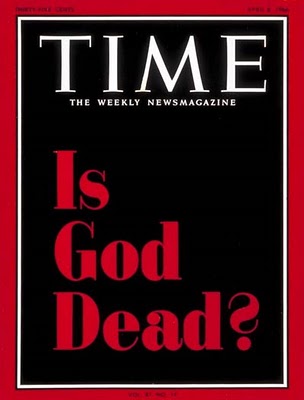
Jesus of Nazareth taught using parables. So, in the shadows of the horrors of the cross, let us turn to a parable; not one of Jesus’ parables, but a modern parable. This parable was first told in 1887. It was reprinted in 1969, in the Time Magazine that bore the iconic “Is God Dead?” cover.
“Have you not heard of that madman who lit a lantern in the bright morning hours, ran to the market-place, and cried incessantly: “I am looking for God! I am looking for God!” As many of those who did not believe in God were standing together there, he excited considerable laughter. Have you lost him, then? said one. Did he lose his way like a child? said another. Or is he hiding? Is he afraid of us? Has he gone on a voyage? or emigrated? Thus they shouted and laughed.
The madman sprang into their midst and pierced them with his glances. “Where has God gone?” he cried. “I shall tell you. We have killed him – you and I. We are his murderers. But how have we done this? How were we able to drink up the sea? Who gave us the sponge to wipe away the entire horizon? What did we do when we unchained the earth from its sun? Whither is it moving now? Whither are we moving now? Away from all suns? Are we not perpetually falling? Backward, sideward, forward, in all directions? Is there any up or down left? Are we not straying as through an infinite nothing? Do we not feel the breath of empty space? Has it not become colder? Is it not more and more night coming on all the time? Must not lanterns be lit in the morning? Do we not hear anything yet of the noise of the gravediggers who are burying God? Do we not smell anything yet of God’s decomposition? Gods too decompose. God is dead. God remains dead. And we have killed him. How shall we, murderers of all murderers, console ourselves? That which was the holiest and mightiest of all that the world has yet possessed has bled to death under our knives. Who will wipe this blood off us? With what water could we purify ourselves? What festivals of atonement, what sacred games shall we need to invent? Is not the greatness of this deed too great for us? Must we not ourselves become gods simply to be worthy of it? There has never been a greater deed; and whosoever shall be born after us – for the sake of this deed he shall be part of a higher history than all history hitherto.”
Here the madman fell silent and again regarded his listeners; and they too were silent and stared at him in astonishment. At last he threw his lantern to the ground, and it broke and went out. “I have come too early,” he said then; “my time has not come yet. The tremendous event is still on its way, still travelling – it has not yet reached the ears of men. Lightning and thunder require time, the light of the stars requires time, deeds require time even after they are done, before they can be seen and heard. This deed is still more distant from them than the distant stars – and yet they have done it themselves.”
It has been further related that on that same day the madman entered various churches and there sang a requiem. Led out and quietened, he is said to have retorted each time: “what are these churches now if they are not the tombs and sepulchres of God?”
This parable first printed in 1882, is known as The Parable of the Mad Man.” It was written by Friderich Nietzsche. One of the characteristics of a parable is that it surprises us with a truth that we already know. God is dead and we have killed him!Continue reading →

 YAHWEH said to Moses: “See, there is a place by me where you shall stand on the rock; and while my glory passes by I will put you in a cleft of the rock, and I will cover you with my hand until I have passed by; then I will take away my hand, and you shall see my back; but my face shall not be seen.”









 pastordawn