This sermon was preached at Holy Cross Lutheran November 28, 2010. The readings included Isaiah 2:1-5, “Amazing Peace” by Maya Angelou, and Matthew 24:36-44, during the sermon I read from the Qur’an Sura 19:1-30 which you can find by following the link in the body of the sermon.
While I was studying for an undergraduate degree in Religious Studies at the University of British Columbia, I worked as a volunteer women’s center. Because I was studying the religions of the world, women who were being persecuted as a result of religious belief were often referred to me.
I’d been working with a young woman who was being abused by her father and brothers because they felt that she was adopting Canadian ways and thereby abandoning Islam. I remember visiting her in the hospital emergency room after her brothers had beaten her nearly to death. She told me that the last thing her brother said to her before tossing her out of the back of a van, was that she should consider herself lucky that they had talked their father into letting them beat her, instead of doing what he had ordered in the first place which was to kill her. I sat at her bedside wondering how a brother could do such a thing to his sister. I decided that they must be religious fanatics and I wondered how any religion could drive a father to seek the death of his own daughter.
The next morning I didn’t feel much like going to my Religious Studies Methodology Seminar. The Seminar was comprised of 7 students from various faith traditions along with 4 atheists and 3 agnostics. Together we studied the various methods of studying religion. We were about to embark on the phenomenological approach to the study of religion. “The Phenomenology of Religion” is a fancy academic way of describing the study of actual religious experiences of the divine. As we stumbled to our seats the professor announced that he would be dividing us into groups of two and he wanted us to learn all that we could about our partner’s religious experience. We would have two weeks to come up with a 1,000 words describing on the phenomenology of our partner’s religious life. I was paired with an Imam who was studying Western approaches to religion prior to taking up a position in a local mosque. Ibrahim was a recent immigrant from Pakistan. But he might as well have been from Mars as far as I was concerned. On that day of all days, Muslim men were not exactly my favorite characters. Continue reading →
Occasionally we replace one of the Sunday Bible readings with a contemporary. On the First Sunday of Advent three years ago (Advent 1A) we used the poem “Amazing Peace” by Maya Angelou. It was first recited at the lighting of the National Christmas Tree in Washington. Since then it has been illustrated by Steve Johnson and Lou Fancher. The poem captures the longing for peace that permeates the Advent and Christmas seasons.
Attention progressive christians who despair over the lectionary!!!
A new Church Year brings a new lectionary resource for progressive christians. This coming Sunday, the church begins a new year. Which for preachers and those who partake of our sermons means the beginning of lectionary readings for “Year A”. For those of you who have been spared the need to know, many of the so-call “mainline” churches follow a three year cycle of readings call the Revised Common Lectionary which include four prescribed readings for each Sunday. During “Year B” the gospel readings are largely drawn from the Gospel According to Matthew.
Theology From Exile is written by Sea Raven, D.Min., an Associate of the Westar Institute (that’s right the home of the Jesus Seminar). In the Introduction Raven declares, “This project is grounded in the paradigm-shifting biblical scholarship of Karen Armstrong, Marcus J. Borg, John Dominic Crossan, Robert Funk, and Amy-Jill Levine, as well as the transformative work of Rev. Dr. Matthew Fox, whose theology of Creation Spirituality has reclaimed Catholic mysticism for post-modern cosmology.” Yippie!!! Yippie only begins to capture my delight at having found this resource!!! In addition to providing a lectionary commentary Raven puts her considerable skills as a worship leader and planner to good use by providing suggestions for liturgical innovations. I only wish I’d discovered Raven’s excellent work last year’s Volume I – The Year of Luke.
For colleagues who have the daunting task of preaching in this the 21st century this resource is a must. For those who listen to sermons, you will find Raven’s work to be an excellent resource for Bible Study!!! Raven in her introduction accurately accesses the current conundrum of christianity which she hopes this provocative series will address: “The continued existence of a Christian “faith” as a religious system of belief is clearly under siege by twenty-first century Biblical scholarship as well as the continuing evolution of scientific knowledge. The question addressed by this series of commentaries is whether and how ancestral scriptures remain relevant and revelatory to twenty-first century cosmology.” Amen! Amen! Amen!
Phil Ochs was an activist/folksinger who died way too soon (1940-1976). I remember back when I was becoming politically aware and making my first forays into the church, at the tender age of fifteen I would lie in the sanctuary of my room and listen as his lyrics moulded me. I rediscovered these lyrics in an old journal. They still ring true. I wonder if the budding progressive movement will be able to re-think christianity before it’s too late?
The Cannons of Christianity
Christian cannons have fired at my days With the warning beneath the holy blaze And bow to our authority Say the cannons of Christianity
Oh the children will be sent to schools Minds of clay are molded to their rules Learn to fear all of eternity Warn the cannons of Christianity
Holy hands will count the money raised Like a king the Lord is richly praised On a cross of diamond majesty Say the cannons of Christianity
Missionaries will travel on crusades The word is given, the heathen souls are saved Conversions to our morality Sigh the cannons of Christianity
Come the wars and turn the rules around To bend your soul on the battle ground And the Lord will march beside me Drone the cannons of Christianity
Cathedral walls will glitter with their gold And the sermons speak through silver robes Building castles amidst the poverty Say the cannons of Christianity
Worship now and wash your sins away Drop the coins, fall to your knees and pray Cleanse the world of all hypocrisy Smile the cannons of Christianity
Christian cannons have fired at my days With the warning beneath the holy blaze And bow to our authority Say the cannons of Christianity
In the past fifteen years, I have only preached on Reign of Christ Sunday twice. I usually have the presence of mind to book my vacation or some sort of continuing education event for this festival of the church year. Formerly known as “Christ the King Sunday” an attempt to move beyond exclusively male imagery for Christ (in whom there is no east or west, male nor female) some church-folk have attempted to change the name of this festival to Reign of Christ Sunday. But neither title gets away seems to suffice in a pluralistic world.
Born in an age that was birthing fascist regimes, this particular festival of the church clings to it’s christian imperialist past. Instituted in 1925, by Pope Pius XI, (you can read the full proclamation here) the festival was designed to remind the world that Christ is the King of the World. The irony of proclaiming Christ as “King” when the life of Jesus of Nazareth positively denies “kingliness” seems lost on the church. The appropriateness of asserting Christ over the religions of the world lacks the kind of humility embodied by Jesus of Nazareth. So, even though it’s too late to book a vacation, I for one would rather not have the task of preaching on this particular festival.
I was tempted to welcome the congregation on Sunday morning with something like: “Welcome to what I hope will be the last celebration of Reign of Christ Sunday here in this place.” But I suspect that between now and Sunday, I will find it within myself to be somewhat more circumspect. I suspect that rather than proclaiming Christ as the King of the World, I will look at the reign of the current rulers of the world and explore the contrasts between their reign and the justice that Jesus of Nazareth lived and died for. This video clip seems like the place from which to begin writing the sermon.
What We Still Don’t Know: “Are We Alone?”, “Why Are We Here?”, “Are We Real?”, fascinating questions explored in three fascinating documentaries with Martin Rees. Lord Rees the Baron of Ludlow, is a cosmologist and astrophysicist who has been the Astronomer Royal since 1995 and the Master of Trinity College, Cambridge. With credentials like his, one might be wary of his ability to communicate with mere mortals. However Rees’ skill at communicating complex scientific concepts to non-scientific minds is remarkable.
Unlike many of his colleagues, Rees does not shy away for mixing science and religion. “I would support peaceful co-existence between religion and science because they concern different domains,” Lord Rees said. “Anyone who takes theology seriously knows that it’s not a matter of using it to explain things that scientists are mystified by.”
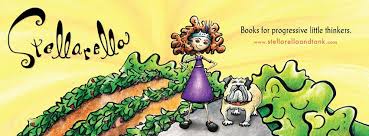
The newly published, “Stellarella It’s Saturday”, story by Deborah W. Dykes, illustrated by Christina Mattison Ebert-Klaven comes with ringing endorsements from John Dominic Crossan and Joan Chittister. With progressives of this calibre singing its praises pre-publication, I ordered several copies sight-unseen for the little ones in my life and I haven’t been disappointed. It is a rare think to find God imagined as a woman!!! So, imagine my delight when I discovered that the shero Stellarella is portrayed as a strong, intelligent, brave little girl! This little book would be a valuable addition to any child’s library. Enjoy!
So, I learned something about myself at our PubNight: I need a manuscript! Even though I had committed the talk I intended to give to memory, when I got up to speak the entire talk disappeared from my memory banks and I was pretty much reduced to babbling. So, for those of you who were there here’s the talk I thought I had committed to memory. For those of you who weren’t there, here’s what you might have missed:
I know that I’m supposed to tell you something that will provoke you into thinking differently about Christianity. But the truth is I’d much rather you thought less about Christianity and more about living. That’s why this little talk was advertised under the title “Beyond Dogma”. You see I happen to believe that there is so much more to life than Christianity. But what do I know really. After all I’m always getting things wrong, especially when it comes to Christianity. I mean ever since I was a kid, I’ve been getting Christianity wrong. I just didn’t get it.
I remember the first so-called “Christian” event I ever went to I must have been five or six years old. It wasn’t church or Sunday School. No the first “Christian” thing I ever went to was a funeral. It was amazing. I’d never been inside a church before. And the first time I saw that guy hanging up there in his underwear, I had absolutely no idea who he was or how he got there. So, I asked my Dad and I simply couldn’t believe it when he told me it was Jesus.
“How did Jesus get up there?” I asked
“He was nailed up there, a long time ago?” Dad answered.
“Why Daddy, why did they nail him up there?”
“So he would die?”
“What? You mean they killed the baby Jesus? Why did they kill the baby Jesus Daddy?”
At this point my mother had had enough! So she tried to baffle me with the facts of the matter. “Jesus died for you, for all of us, because we’ve been bad. Jesus died so that we could all get into heaven?”
“Why Mommy? Why can’t we all just go to heaven? Why doesn’t God just let us in?”
“Because we’ve done bad things. Bad things must be punished. So. Jesus died on the cross so that we wouldn’t have to?”
By this point all I wanted to do was to get out of there. I mean, the murdering so and so’s killed the baby Jesus.Nailed him up there on the cross so that he would die. And all because of something I’d done? It was awful?
I remember watching the guy up at the front. I didn’t even want to ask why he was wearing a dress. And he kept doing this X (crossing himself) And when he did this X he kept mumbling something but I couldn’t figure out what he was saying. So, I spent the rest of the service waiting and watching for him to do this X and trying to figure out what he was saying when he did this X.
Well it wasn’t until we got out to the grave-side where I could get closer to the action that I finally figured out what the guy in the frock was saying when he did this X “In the name of the father and of the son and into the hole he goes!!!” For months after that funeral I would do this X, cross myself and repeat the magic words: “In the name of the father and of the son and into the hole he goes!!!” Now for those of you who don’t recognize it, I stole that routine from the great Irish comedian Dave Allen. I hoped it would make you laugh. But I also hoped that it would help you to think how ridiculous Christianity can be. Most of us have been hanging around Christianity for so long that we can’t or won’t see the humour in it. But it’s not all funny or laughable. It’s full of tragedy as well. Continue reading →
Evolutionary Christian, Michael Dowd preaches through the lenses of evidentiary faith. His refreshing articulation of “God” as the personification of reality points us to a panentheistic understanding of reality (not to be confused with pantheism). Dowd sees right-relationship with reality as the domain of ecology rather than theology.
Michael Dowd, a self-proclaimed Evolutionary Evangelist is committed to spreading the good news that evolution is humanity’s common creation story as he proclaims that science illuminates the evidence with which God is communicating to humans today.
Dean Radin puts the emphasis on relationship in his understanding of the quantum view of the world. “The world begins to look like a giant thought not a giant machine.”
“Dean Radin PHD., is the chief scientist at the Institute of Noetic Sciences and teaches at Sonoma State University. Before joining the research staff at IONS in 2001, he held appointments at AT&T Bell Labs, Princeton University, University of Edinburgh, and SRI International, where he worked on a classified program investigating psychic phenomena for the US government. He is author or coauthor of over 200 technical and popular articles, a dozen book chapters, and three books including the award-winning The Conscious Universe(HarperOne, 1997), Entangled Minds (Simon & Schuster, 2006), and most recently, SUPERNORMAL (Random House, 2013).”
A humble conversation between Tenzin Gyatso, His Holiness the Dalai Lama and Laurence Freeman OSB (Roman Catholic priest and a Benedictine monk of Turvey Abbey in England and Director of the World Community for Christian Meditation).
Peter Rollins, leader of the “radical Christianity movement” challenges many of the religious assumptions and indeed the religiosity of Christianity in this lecture delivered in early November 2013 at the Festival of Dangerous Ideas in Sydney, Australia.
“Rollins argues for a radical and initially disturbing Gospel: we can’t be satisfied, life is tough, and we don’t know the secret. We should attack the idea of God as that which makes us whole, removes our suffering, and offers us the truth. Rollins is less concerned with the question of life after death than with the possibility of a life before death, and his “churches” challenge escapist versions of spirituality, inviting us to embrace complexity, ambiguity and pain. Doubt is part of life, and religion should be able to explore it — instead of presenting an all-singing, all-dancing distraction.”
In October of 1977, I was twenty years old. I was young and adventurous and with a rail pass in my hand, a back pack slung over my shoulders and several hundred dollars worth of American Express Travellers cheques in my pocket, I boarded a train in Zurich, Switzerland, bound for Athens, Greece.
I was tired. Several months of backpacking in Northern Europe had left me weary. In just five days my rail-pass would expire, so I decided to head for Greece, where the living is easy, where the warm sun, blue skies and equally blue waters held the promise of rest and relaxation.
As the train made its way through the Alps, I remembered a similar trip which I had made the year before and I tried to calculate whether my remaining funds would allow me to return to the village of Hannia on the island of Crete. I knew that in Crete I could find work. I planned to mix a lot of rest and relaxation with just a little work and try to live out the winter on the Mediterranean.
As the train rattled through Austria toward what was then Yugoslavia it began to get dark. I was disappointed that my journey through Yugoslavia would be completed in darkness. I remembered my previous journey, by car, through Yugoslavia and how at the time, I had marvelled at the diversity of this strange little country. I remembered men and women driving oxen as they ploughed their fields in much the same way as there ancestors had done. I also remembered my surprise at entering the ultra modern city of Belgrade; the showcase of Tito’s communist regime. I fell asleep pondering the sharp differences between the lives of the poor people in the villages who appeared to live without any modern conveniences at all and the lives of those who inhabited the city of Belgrade with its towering skyscrapers and streets filled with automobiles. Several centuries seemed to co-exist in Yugoslavia.
I was awakened by the sound of people shuffling to find their papers as the train conductor instructed us to get our passports and visas ready for customs inspection. When the Yugoslavian custom officials, with their rifles over their shoulders boarded our train they were preceded by men guided by vicious looking German shepherds. Even though I knew that I had all the right papers and that my back pack contained nothing more offensive than some dirty laundry, the sight of the dogs, guns and uniformed officials struck fear into my heart. I nervously handed over my precious passport to an official who looked younger than my twenty years. He carefully read over the visa which I had obtained in Zurich the day before; a visa that I could not read because it was written in an unfamiliar language and an unfamiliar alphabet. Continue reading →
I am indebted to Joshua S. Goldstein’s book “Winning the War on War: The Decline of Armed Conflict Worldwide” and his brilliant statistical analysis and summation of the successes won by peacekeepers, diplomacy and humanitarian aid.
Our liturgy this Remembrance Sunday was a service of lament. Our readings included a section from Elie Wiesel’s book “Night”. Here you will find a copy of our bulletin which contains the readings as well as the words to Brian Wren’s hymn “The Horrors of Our History” with which our Choir opened our lament. (pdf of the bulletin laid out to be printed double sided on legal paper)
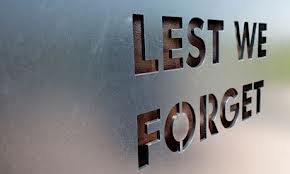
Lest we forget” is a phrase that has become synonymous with Remembrance Day. Sadly, our Remembrance Day commemorations have become disconnected from our history and the vast majority of those of us who observe Remembrance Day have forgotten its origins. Our collective amnesia about the phrase, “Lest we forget” is a case in point. I have always assumed that the phrase was coined to encourage the world not to forget those who have served, fought and in too many cases died to protect our freedoms. While the phrase’s attachment to Remembrance Day has served as a call to collective remembrance, it was coined for a far more humbling purpose than to honour the fallen heroes of foreign wars. The phrase, “Lest we forget” was coined by the great poet laureate of the British Empire Rudyard Kipling, in his daunting poem, “Recessional” written to commemorate Queen Victoria’s Diamond Jubilee in 1897. Kipling’s poem was a sobering call to humility at a time when the British people were basking in the glory of Empire. Recessional served as a reminder that the sun might never set on the British Empire, but God was still in God’s heaven and thus, the sun rises upon the evil as well as the good. Kipling warned those drunk on the excesses of Empire that God was sovereign and not the British people.
The entire poem is addressed to God as a prayer, and serves as a call to the Empire’s powerful Victorians to remember their place.
God of our fathers, known of old—
Lord of our far-flung battle line—
Beneath whose awful hand we hold
Dominion over palm and pine—
Lord God of Hosts, be with us yet,
Lest we forget—lest we forget!
The tumult and the shouting dies—
The Captains and the Kings depart—
Still stands Thine ancient sacrifice,
An humble and a contrite heart.
Lord God of Hosts, be with us yet,
Lest we forget—lest we forget!
Far-called our navies melt away—
On dune and headland sinks the fire—
Lo, all our pomp of yesterday
Is one with Nineveh and Tyre!
Judge of the Nations, spare us yet,
Lest we forget—lest we forget!
If, drunk with sight of power, we loose
Wild tongues that have not Thee in awe—
Such boastings as the Gentiles use,
Or lesser breeds without the Law—
Lord God of Hosts, be with us yet,
Lest we forget—lest we forget!
For heathen heart that puts her trust
In reeking tube and iron shard—
All valiant dust that builds on dust,
And guarding calls not Thee to guard.
For frantic boast and foolish word,
Thy Mercy on Thy People, Lord! Amen.
Amongst the pomp and circumstance of this solemn day, it is all to easy for those of us who aspire to be Christians, to forget who we are and whose we are. For we are a people who follow a man whose life was given to the cause of non-violence; a man who resisted the temptation to fight even in the face of the most brutal occupation army that the world had seen in first century. Jesus of Nazareth refused to take up arms against cruel oppression. Jesus proclaimed a radical new response to violence. Continue reading →
All Saints’ Day is a day for remembering. The word saint simply means “holy”. In the New Testament, all those who believe and were baptized were referred to as saints. It wasn’t until round about the third century that the church began using the word saint to refer to those who had been martyred for the faith. Over time these martyred saints were held up for veneration and people used to pray to them to intercede on their behalf. I’m not going to go into all of the institutional abuses that led Martin Luther and the later reformers to abolish the veneration of the saints. Except to say, that while the Reformation put an end to the veneration of the saints in the protestant churches, it did not abolish the concept of sainthood.
Within the mainline protestant denominations, we use the term in much the same way as it was used in the New Testament to describe the faithful. We talk about the communion of saints to describe all the faithful who have gone before us who now rest in God, together with all the living who walk in faith. So today as we celebrate the saints, we give thanks for all the faithful those living and those who have gone before us.
Today, I remember and rejoice as I give thanks and praise to God for the witness of St. Joyce of Belfast. St. Joyce who in her own way taught her children to love God and to pray always. And so today, I give thanks and praise to God for the life and witness of St. Joyce of Belfast, my Mom, who was the first to teach me the Lord’s Prayer, and who puts flesh on Christ’s command that we love our neighbours as we love ourselves.
Today I remember and give thanks for the life and witness of St. John of Wales, whose life in the church as a choir-boy was followed by long years of self-exile and whose keen wit and lack of patience with hypocrisy instilled in me a desire for honesty and integrity in the articulation and living of the faith. I give thanks for St. John, my Dad, whose open heart has stretched his discerning mind and enabled many to see the humour in this God-given life we live.
Today, I remember and rejoice as I give thanks and praise to God for the witness of St. Valerie of Ladner. St. Valerie so loved and feared God that she dared to reach out and invite a wayward soul to come and worship God. St. Valerie sang God’s praise, rejoiced in the communion of saints and helped a young friend find a home in God’s holy church. And so toady, I give thanks and praise to God for the life and witness of St. Valerie, my high school friend, who was the first to invite me to come and worship God.
Today, I remember and rejoice as I give thanks and praise to God for the witness of St. Wilton of Lunenburg. St. Wilton loved God all the days of his life and served God with gladness and distinction. St. Wilton went far beyond his call as pastor, he opened up the scriptures to those who eagerly sought the truth of God’s Word with love and dedication and he went on to inspire a diligence to scholarship that nurtured the faith of so many young people. And so today, I give thanks and praise to God for the life and witness of St. Wilton, my first pastor, who taught me to be uncompromising in my study of the scriptures, and steadfast in my love for God.
Today, I remember and rejoice as I give thanks and praise to God for the witness of St. Lola of Washington. St. Lola whose appreciation for God’s grace overflowed in her love for the world. St. Lola whose desire to share God’s grace and truth, led her to give of her time and talent to the care and redemption of so many young seekers. St. Lola whose love for God’s creation inspired her to teach so many of us to give thanks to God for all that God has made. And so today, I give thanks and praise to God for the life and witness of St. Lola, my mentor in the faith, who taught me to love as I have been loved.
Today, I remember and rejoice as I give thanks and praise to God for the life and witness of St. Fritz of Chicago. St. Fritz whose dedication to the Word of God was displayed in all he did. St. Fritz who opened so many minds to the beauty of God’s ways, who taught, inspired and entertained as he sought to reveal the wonders of God’s unimaginable grace. St. Fritz who taught me that no question is unaskable for it is God who blessed us with minds and who bids us to use them in our love for God and for one another. And so today, I give thanks and praise to God for the witness of St. Fritz, my friend, who was the first to call me to the ordained ministry of Word and sacrament.
Today, I remember and rejoice as I give thanks and praise to God, for the life and witness of St.s Sharon and Irene of Pt. Roberts, St. Ellen of Lonsdale, St.s Jerry and Daniel of Minnesota, St. Nancy of Seattle, St. Anne of Vancouver, St. Donald of UBC, St.s Carol, John, Eduard, and Donna of Waterloo, and for the great cloud of witness both living and dead who have testified to God’s love in my life.
Toady, I give thanks and praise to God for the cloud of witnesses who gather to worship God and to love one another in the parish I serve. I give thanks for all the glorious saints of Holy Cross who have nourished, challenged and helped me to grow in Christ.
Today, I encourage each and every one of you, to remember and rejoice, as you give thanks to God for the great cloud of witnesses who have been a blessing to you; who have revealed God’s love to you; who have taught you God’s holy Word of truth; who have loved you, nourished you, challenged you and inspired you to love God with all your heart, with all your soul and with all your mind and to love your neighbours as you love yourself.
Who are the saints in your life? Think about the saints who revealed God’s love to you. Remember and rejoice for by their love, they taught you God’s Word, and taught you to celebrate God’s grace. Remember and rejoice in the saints of God, who are responsible for having passed the gifts of faith on to each of us. Saints who you may never read about in the church history books, but saints who by their life and witness managed to reveal a measure of God’s amazing grace to the world.
These saints of God who are so dear to us and so precious to God, are just ordinary folks who in the course of seeking to be faithful followers of Jesus Christ, in striving to love God with all their heart, soul, and mind, they ended up touching our lives in ways that changed us and had a profound effect on who we are today.
Today is a day for remembering and rejoicing in the communion of saints. Today is a day for giving thanks to God for their lives and for the witnesses that they have been and are in our lives. But today is also a day for looking around us to discover our own place in the communion of the saints. Take just a moment to think about how people will remember and give thanks for your sainthood. Whose faith have you nourished? Whose faith will you nourish? How will you nourish people in the faith? What role are you prepared to play in the Communion of Saints?
The Reverend Dr. Otis Moss III says it well listen to St. Otis preach it!
In 1998 the Bishop John Shelby Spong looked around at the state of the church and decided that it was time for a new reformation. Just as the invention of the printing press helped to distribute Martin Luther’s protests, the development of the internet spread Jack’s vision around the world. To those who were hungry for change, they were a breath of fresh air. Fifteen Reformation Day celebrations have elapsed since their publication and while there are pockets of progress within the church, what Jack has coined as the “church alumni” continue to bemoan the recalcitrance of the institution as yet another generation has been lost. While so many have pronounced a judgment of irrelevance upon the institution, a remnant has begun to embrace Jack’s questions. I repost them here in the hope that the Spirit of Reformation lives and more and more communities will enthusiastically embrace the challenges of being Church for the 21st century. I hope you will add your own theses in the Spirit of Semper Reformanda!
Jack posted his Twelve Theses with these words: “Martin Luther ignited the Reformation of the 16th century by nailing to the door of the church in Wittenberg in 1517 the 95 Theses that he wished to debate. I will publish this challenge to Christianity in The Voice. I will post my theses on the Internet and send copies with invitations to debate them to the recognised Christian leaders of the world. My theses are far smaller in number than were those of Martin Luther, but they are far more threatening theologically.”
Today’s Reformation Sunday Liturgy followed the theme Semper Reformanda: Always Reforming! The sermon looked at various protests of the ongoing reformation, including Luther’s 95 Theses, (here) John Shelby Spong’s Twelve Theses,(here) Matthew Fox’s 95 Thesis for the 21st Century, (here) Holy Cross’ Mission Statement (here) and Holy Cross’ Statement of Welcome (here).

 This sermon was preached at Holy Cross Lutheran November 28, 2010. The readings included Isaiah 2:1-5, “Amazing Peace” by Maya Angelou, and Matthew 24:36-44, during the sermon I read from the Qur’an Sura 19:1-30 which you can find by following the link in the body of the sermon.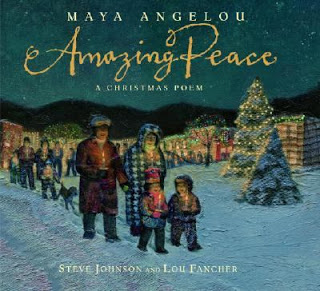






 pastordawn