Re-Conceiving Catholicity in an Evolving World – Ilia Delio

Horsehead Nebula pastorDawn“The words we use should empower the lives we live.” so says Ilia Delio one of the world’s brilliant theologians who is forging a way forward in the world we live in.  With that in mind, Delio reminds us that the word catholicity can be used to define a dynamic principle of attraction or ‘whole-making’ as the cosmos moves toward greater complexity.  If you are unfamiliar with the work of Ilia Delio, as I was until recently, you can find a brief introduction here. Following an exciting Saturday spent with Ilia Delio this spring, I  spent some time this summer revisiting Delio’s book, “The Unbearable Wholeness of Being: God, Evolution, and the Power of Love” which provides a window into Delio’s brilliant quantum theological leap into the 21st century!!! 

In this lecture, recorded at St. Jerome’s University, May 2014, Delio discusses the meaning of Jesus in light of evolution and the relationship between catholicity and Christogenesis through the work of Teilhard de Chardin. 

As humanity evolves, may it evolve in ways that embody Divine compassion!

Krista Tippett’s TED talk from 2010 provides an “important linguistic resurrection” of the word compassion. Tippett sees compassion as kindness, curiosity, empathy, forgiveness and reconciliation, the simple act of presence, a willingness to see beauty in the other, and “for the religious compassion also brings us into the territory of ‘mystery’ encouraging us to see not just beauty but perhaps also to look for the face of God in the moment of suffering, in the face of a stranger, in the face of the vibrant religious other.”  

womblove pastorDawnIn his book “Meeting Jesus AGAIN for the First Time”, New Testament scholar Marcus Borg writes about the Hebrew word for compassion ‘rakham’ – “The Hebrew word for ‘compassion’ whose singular form means ‘womb’ is often used of God in the Old Testament. It is translated as ‘merciful’ in the characterization of God as ‘gracious and merciful.’ It is present in that quite wonderful expression from the King James Bible the ‘tender mercies’ of God. It is found
in a passage in Jeremiah that has been translated as follows:

“Thus says Yahweh:
In Ephraim (Israel) my dear son? my darling child?
For the more I speak of him,
the more I do remember him.
Therefore my womb trembles for him;
I will truly show motherly-compassion upon him.

“Thus the Hebrew Bible speaks frequently of God as compassionate, with resonances of ‘womb’ close at hand.

“And so Jesus’ statement ‘Be compassionate as God is compassionate’ is rooted in the Jewish tradition. As an image for the central quality of God, it is striking, To say that God is compassionate is to say that God is ‘like a womb,’ is ‘womblike,’ or, to coin a word that captures the flavor of the original Hebrew, ‘wombish.’ What does it suggest to say that God is like a womb? Metaphoric and evocative, the phrase and its associative image provocatively suggest a number of connotations. Like a womb, God is the one who gives birth to us — the mother who gives birth to us. As a mother loves the children of her womb and feels for the children of her womb, so God loves us and feels for us, for all of her children. In its sense of ‘like a womb,’ compassionate has nuances of giving life, nourishing, caring, perhaps embracing and encompassing. For Jesus, this is what God is like.

“And, to complete the imitatio dei, to ‘be compassionate as God is compassionate’ is to be like a womb as God is like a womb. It is to feel as God feels and to act as God acts: in a life-giving and nourishing way. ‘To be compassionate’ is what is meant in the New Testament by the somewhat more abstract command ‘to love.’ According to Jesus, compassion is to be the central quality of a life faithful to God the compassionate one.”

Tippett’s storytelling helps us to connect with the divine image which exists within our flawed humanity. She insists that the flaws we see in compassionate people liberates us from our modern obsession with perfection and gives us the courage to be compassionate. Tippett paraphrases Albert Einstein to remind us that, “the future of humanity needs this technology as much as it needs all the others that have now connected us and set before us the terrifying and wondrous possibility of actually becoming one human race.”

Among progressive-christians the word ‘panentheism” – literally “all in god” is used to express the notion that, all is in god and god is in all. One way of understanding panentheisim is to expand on Acts 17:28 “In God we live and move and have our being” with a blessing I often use when I lead worship: “God dwells in, with, through, and beyond us.” To imagine the Divine Womb-Love in which we live and move and have our being dwelling in, with, through, and beyond us provides a compelling way of living into our Divine/Human compassionate-selves.   As humanity evolves, may it evolve in ways that embody Divine compassion!

Divine Feminine and the Sacred Masculine: Calming Our Reptilian Brains – Matthew Fox

Divine Feminine Sacred MasculineI am currently enjoying Matthew Fox’s new book, Meister Eckhart: A Mystic-Warrior for Our Times in which Fox puts Eckhart in conversation with an engaging collection of mystic-wariors. So, it is not surprising that in this short video, I hear echoes of Eckhart.


Who are the Canaanites and Why Should We Care? – Pentecost 10A: a dialogue sermon

Palestinian womanSummer Sundays are laid back at Holy Cross and so we engaged in a dialogue sermon. The Gospel reading from (Matthew 14:21-28) about Jesus’ encounter with the Canaanite woman begged the question inspired by Marcus Borg, “Why did the author of the Gospel According to Matthew write this story the way he did and what can we learn from it?” 

Our readings also included:

Hebrew Scriptures:  Isaiah 56:1, 6-8

Contemporary Reading: from Dorothee Soelle  Quoted from Matthew Fox’s book “Christian Mystics”, New World Library, 2011

“If Jesus of Nazareth was the poor man from Galilee who was tortured to death, then Christ is that which cannot be destroyed, which came into the world with him and lives through us in him. When I say Christ, I always think also of Francis of Assisi and Hildegard of Bingen and Martin Luther King, Jr. and of Ita Ford, the American nun who was murdered in El Salvador – as well as all resistance fighters who are sitting in prison today. Christ is a name which for me expresses solidarity, hence suffering with, struggling with. Christ is the mysterious power which was in Jesus and which continues on and sometimes makes us into “fools in Christ,” who without hope of success and without any objective, share life with others.”

Listen to the dialogue sermon here:

Beneath the Surface: a sermon for Pentecost 9A – Matthew 14:22-33 and 1 Kings19:9-18

BATH QOLReadings included:  1 Kings 19:9-18 in which Elijah hears the still small voice of God and Matthew 14:22-33 in which Jesus walks on water.

Listen to the sermon here:


Hell Is Killing Us! – Philip Gulley

imagineRecently, I have found myself cornered on several occasions by individuals who ask, somewhat accusingly, how and why I continue consider myself to be a Christian if I do not believe in Hell. On these occasions, I have assured my inquisitors that as someone who attempts to follow Jesus, I do indeed believe in “Hell” even if I do not believe in “hell“. The hell that I believe in is a condition here on earth. The Hell that I suspect my inquisitors wish me to affirm does not exist except in the corners of our imaginations. Nor is belief this mythical place called Hell a prerequisite of the faith. Christianity is not about being saved from eternal damnation to the fiery pits of Hell. Christianity is about following the teachings of Jesus with regard to peace through justice in order to create Heaven right here, right now.

Several years ago we at Holy Cross Lutheran began a speaker series entitled ReThinking Christianity and were privileged to host Quakers Philip Gulley and James Mulholland who co-authored “If God Is Love” and “If Grace Is True.” Phil has since gone on to write “If the Church Were Christian” and “The Evolution of Faith.” In addition to his theological works, Phil is a master story-teller whose Harmony series together with Porch Tales stories have cause some to dub him the Quaker Garrison Keillor. Phil has received two Emmy Awards for his Indiana PBS program.

My own ministry has been enhanced by Phil’s work and so it was a happy and timely coincidence that brought a video into my inbox which I had forgotten all about. Phil’s story about Heaven & Hell followed by an interview in which Phil shares his conviction that “Hell is killing us!” say it all so much better than I can. Phil’s gentle manner reveals a way forward for those who wish to leave Hell behind and move on toward building heaven on Earth. Phil’s latest publication “Living the Quaker Way: Timeless Wisdom for a Better Life Today” provides a window into spiritual practices to nourish those who seek to live in peace in a world where so many have chosen to perpetuate Hell on Earth. The book is an essential read for progressives who seek to embody a way of being that will contribute to creating peace. Enjoy!!!


The Fault In Our Stars by John Green: Teen Fiction for all ages

TFIOS pastorDawnIt has been a very long time since I read a novel categorized as “young adult” or “teen” fiction. But when a fourteen-year-old goes out of his way to recommend a novel to his pastor, I pay attention. I was delighted to discover that The Fault In Our Stars portrays young people living with big questions without resorting to easy answers. Indeed, the characters in John Green’s account of living with cancer, refuse to accept easy answers and learn to live with the ambiguity of life’s deepest mysteries even as they cope with the realities of impending death. This is a splendid read for all ages, especially for those of us who have long since left the coping strategies of the varieties of Christianity that are trapped within the limitations of a three tiered universe.  Green brilliantly captures the gallows humour of those who must endure the efforts of care-givers while steadfastly refusing to “buy into the cancer-book genre.” Green’s time as a chaplain in a children’s hospital shows as does his ability to live in the questions. Following the success of the book, which debuted at #1 on the New York Best Seller list, has opened at #1 at the box-office.  But, don’t let that stop you from enjoying this book which will make you laugh, cry, cheer, and think!! I have not yet experienced the movie for fear that it will interfere with my appreciation of the characters who live on in my imagination. Enjoy the first chapter, read by John Green.

The Role and Risk of the Public Intellectual in Church and State: Joan Chittister

joanChittisterFilmed July 14, 2014 at Chautauqua, Sister Joan Chittister explores, as only she can, “the role of the public intellectual (that’s you) in a society crammed with talking points, canned news, and Maddison Avenue politics and politicians.” This lecture is a MUST-VIEW for anyone who engages in public discourse in order to move us beyond intellectual slavery to institutions and tradition!!! Enjoy!!!

The Cross in John: Not Tragedy But Triumph – John Shelby Spong

jack spongJack concludes his five day lecture series by explaining the Crucifixion in the fourth Gospel. (filmed June 27, 2014) Our friends at College Street United Church in Toronto will be hosting Jack April 17-18, 2015. I shall post more details when they are available. 

The Mother of Jesus: A Symbol of Judaism – John Shelby Spong

maryuniversalmaryw.jpgJack explains how the 4th Gospel creates a symbol from the presence of Christ’s mother. This is the fourth lecture of a five lecture series. Filmed June 26, 2014 at the Chautauqua Institution.

Johannian Characters: Literary Creations Not People of History – John Shelby Spong

spong cartoonRecorded last week (June 25) Jack explains the colorful characters who hold dual purposes in the fourth Gospel. Enjoy!

The Fourth Gospel Warns Against Literal Reading: John Shelby Spong

SPONG swirlRecorded last week, June 25, 2014 at Chautauqua: Jack continues to challenge readers to look beyond the page. Enjoy!

Separating the Fourth Gospel: John Shelby Spong

SPONG Living pastordawnRecorded last week (June 25, 2014) at Chautauqua, John Shebly Spong, doing what Jack does best, opening listeners to new ways of understanding the New Testament. Enjoy!

Convictions: How I Learned What Matters Most by Marcus Borg – A Must Read for Those of Us Engaged in the Work of ReThinking Christianity

convictionsMarcus Borg, an elder of today’s progressive Christian movement, has commemorated his 70 birthday with the publication of Convictions: How I Learned What Matters Most. Convictions is destined to become  a primer for all those who seek a succinct articulation of the faith progressives hold in common. In Convictions, Borg constructs a permeable framework within which those who are “living the questions” can explore the contours of the God “in which we live and move and have our being.” As a pastor serving a progressive congregation, I am delighted to have this new resource to share with those who are ReThinking Christianity.

I first encountered Marcus Borg during the summer of 1994, when a friend who was concerned that my preparations for seminary would lead me to a career in a church bereft of intellectual inquiry, gave me a copy of Meeting Jesus Again for the First Time. What a gift it was to meet in Borg a scholar who so simply and authoritatively articulated so much of what I’d been learning in the academy as an under-grad in Religious Studies. Borg’s books quickly became allies in my own quest for ways to express my growing frustration with institutional Christianity which seemed hell-bent on keeping its members ignorant of the exciting and enlightening work of New Testament scholars.  

While sections of Borg’s memoir slip into reactions to the monolithic interpretations of the Jesus story that plague the United States and have served to bolster American Imperialism, those of us who live in the shadows of this Empire will appreciate Borg’s deconstruction of right-wing-christianity. Like his earlier work, Convictions is a must read for professional preachers and teachers who will find in it a review of progressive Christianity that is written in a manner that will inspire us to move beyond merely deconstructing conservative christianity and begin to articulate what it is that “progressives” hold in common.

As a “bit of a memoir” Convictions will engage readers from all walks of life, many of whom will discover in Borg a fellow traveller on an all too familiar journey. As always, Borg manages to express the Christian narrative in ways which embrace the riches of the tradition while opening his readers to current insights from academia into Christianity’s history. Rather than approaching the future with fear, Borg remains open to the ever-expanding knowledge of reality being generated in other fields of human endeavour and points to a way of being in God that does not rely on oversimplified personifications of a deity Borg knows as Mystery.

As an academic, Borg bravely revels his own mystical experiences. I have always suspected that Borg might be a closet mystic and his tentative accounts of his mystical experiences provide welcome insights into the bedrock of Borg’s being. 

I am convinced that Borg’s Convictions will quickly achieve the status of text-book for those of us who seek ways of being Christian in the 21st century. 


A Celebration of Love and Life: a sermon for York PrideFest

PrideFest WorshipToday Holy Cross hosted the York PrideFest worship and it was our great pleasure to welcome members of York Region PFLAG – our readings included Leviticus 19:17-18 and Matthew:34-40 a copy of the service bulletin can be found here

Listen to the sermon here:

Pridefest June 15 2014

The Athanasian Creed and an Unholy Trinity – a sermon for Trinity Sunday

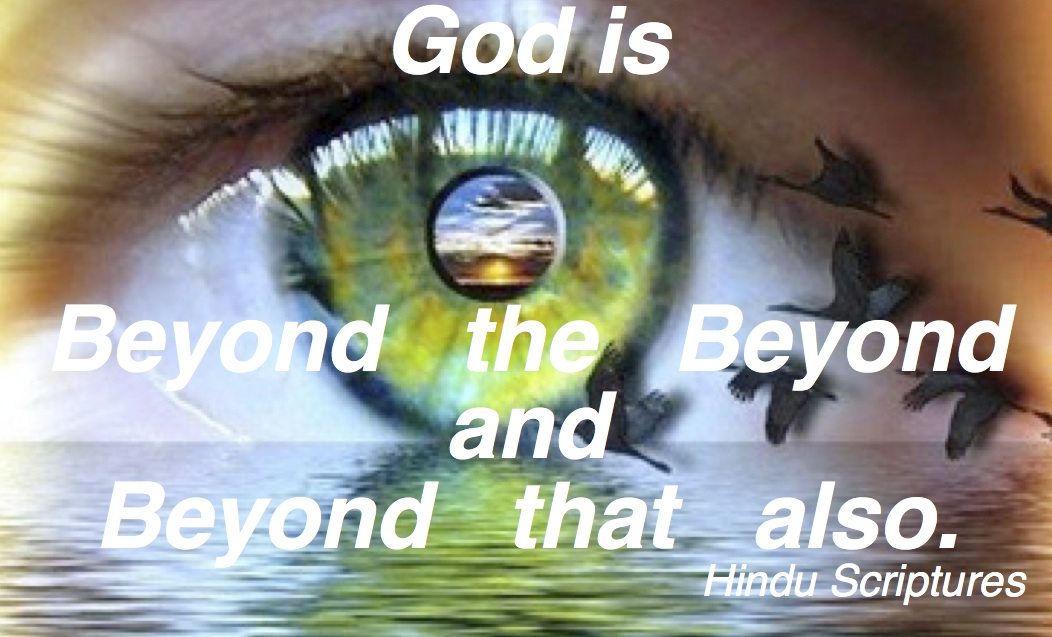
Beyond the Beyond - Dawn Hutchings

I don’t remember the first time I ever saw him. I was barely 18 months old when my brother Alan arrived. Despite the fact that he ruined my gig as an only child, Alan and I grew close over the years. We moved around a lot so we became one another’s best friends. But we went our separate ways when we became teenagers. When I tell the stories, I say that we went our separate ways because Alan became preoccupied with sports.  I suspect that when Alan tells the stories, he says that we went our separate ways because I became preoccupied with the church. Either way you tell it, family and friends used to say that it was hard to believe that we grew up in the same household. Alan developed a reputation for being a bit of a redneck. I developed a reputation for being a bit of a radical. Alan drove four-wheel-drives and went hunting. I drove old beat up cars and lived at an ecumenical retreat centre.  Alan learned a trade, settled down and raised a family. I travelled the world and didn’t get around to figuring out what I was going to be when I grew up, I went back to school at the age of 30.

Alan and I didn’t get around to understanding one another until we were in our mid-40’s. When I grew to appreciate the gentle man that he has become and Alan began to respect the person I’ve become. We still love to talk politics, but these days we tend to agree more than we disagree, I’m not sure who mellowed, the redneck or the radical. We don’t talk much about religion, though. Growing up, Alan would claim to be an atheist, and scoffed at my involvement with the church. These days, Alan, suggests he is an agnostic, and although he’s come to respect my life in the church, he still scoffs at the hypocrisy of the church.

I still remember the very first time that I saw Manjit. Her face was the colour of pure milk chocolate. Her jet-black hair was long and wavy. She sat at the very back of the classroom. When the teacher introduced me to Manjit, her toothy grin welcomed me. We were twelve years old. I was the new kid in town and Manjit was the only East Indian in the class. We were to share a double-desk for the remainder of the school year. I remember my first trip to Manjit’s home. A science project needed our attention. I can still smell the aroma of Manjit’s home where exotic curries released their pungency into the air. Over several meals at Manjit’s, I learned to like my food hot and spicy. Manjit’s mother would blend her own spices and she never forgot to send a package or two of her specially blended curries home with me.

Manjit is a gentle soul who introduced me to the wonders of her faith. Manjit is a Hindu. Manjit never tried to encourage me to become a Hindu.  Although over the years she would remind me of the Hindu saying that admonishes Hindus to be better Hindus, Muslims to be better Muslims, Jews to be better Jews, Buddhists to be better Buddhists, and Christians to be better Christians.  Manjit grew into a kind and gentle woman. She works as a social worker in Vancouver’s rough east-end neighborhoods. The last time I saw Manjit she was patiently guiding the students of a confirmation class that I taught, around her Temple. Later that evening Manjit and I talked a long time about Jesus. Manjit told me that she’d always been fascinated with Jesus’ teachings and that she had no problem believing that Jesus is God, but then she explained that Hindus have a thousand god’s.

I can still remember the very first time that Henry walked into my office. A long black beard together with the yarmulke that he wore on his head gave Henry away. So, from the very beginning I knew that Henry was Jewish. But it took a few years of working together before I discovered that in addition to being a graphic artist, Henry is also a rabbi. Henry became a dear friend of mine and over the years he shared so much of his wisdom with me. Many a night Henry and I sat up to the wee hours discussing the Scriptures. Henry even arranged for me to study Hebrew at his Yeshiva. I learned a great deal from Henry. We often talked about Jesus. We rarely agreed about Jesus, but we often talked about him.

Alan, Manjit and Henry, some would call them an unholy Trinity. But to me they are, each of them, sacred. Trinity Sunday is my least favorite Sunday of the Church year. It’s the only festival of the church year that is designed to celebrate not God, nor Jesus, not even the Holy Spirit, but rather a doctrine of the church. The notion that God is One in Three; a doctrine that was created by theologians to explain the inexpressible, a doctrine the church “fathers” began to cast in stone in the words of the Apostle’s, Nicene and Athanasian Creeds.  Three Creeds that make up an unholy trinity in and of themselves. Three Creeds that the Lutheran Church continues to hold as articles of the faith. Three Creeds that continue to hold sway in our church.Three Creeds that in my humble opinion make up an unholy trinity. Three Creeds upon which the doctrine of the Trinity rests. Continue reading

“Trinity: Image of the Community that is God” Desmond Tutu

Trinity Desmond Tutu - Dawn Hutchings

Tutu: “Isn’t it wonderful that we have this Doctrine of the Trinity that speaks of God as a fellowship, a community. And so, you have this wonderful image of the community that is God, the Trinity. So that, all eternity the One who is called Father pours out all of God’s being into the Son….and the Son returning from all eternity this love and you have this movement between the two that is so tremendous that it is God the Holy Spirit.”

Desmond Tutu received the Templeton Prize in recognition of his lifelong work in advancing spiritual principles of love and forgiveness. This video was made to commemorate the honour.  

Pentecost: A Human Phenomenon

flaming tonguesIn the Spirit of Pentecost, I preached without a manuscript and conscripted the congregation into helping me to describe mystical experiences. The cacophony of voices you will hear captures what happened. If you fast forward past the congregational uproar you will hear a recap using Rudolph Otto’s description of the experience o the Numinous which he describes as “Mysterium, Tremendum et Facinans – Mysterious, Tremendous and Fascinating. 

You can listen to the sermon here

Pleas for the Earth: Chief Seattle

seattleOn this splendid June morning, I am reminded that June 7th is the day the Church commemorates Chief Seattle; a saint of creation! “Chief Seattle, led the Duwamish and Suquamish Tribes as the first Euro-American settlers arrived in the greater Seattle area in the 1850s. Baptized Noah by Catholic missionaries, Seattle was regarded as a “firm friend of the Whites,” who named the region’s future central city in his honour. He was a respected leader among Salish tribes, signing the Point Elliott (Mukilteo) Treaty of 1855, which relinquished tribal claims to most of the area, and opposing Native American attempts to dislodge settlers during the “Indian Wars” of 1855-1856. Chief Seattle retired to the Suquamish Reservation at Port Madison, and died there on June 7, 1866.” Chief Seattle’s please for the Earth echo through the years and call us to a deeper compassion for Creation.

Chief Seattle’s response to a request to sell the land. (1894)

This translation of Chief Seattle’s 1894 Treaty Oration

appeared in the Seattle Sunday Star on Oct. 29, 1887

Yonder sky that has wept tears of compassion upon my people for centuries untold, and which to us appears changeless and eternal, may change. Today is fair. Tomorrow it may be overcast with clouds. My words are like the stars that never change. Whatever Seattle says, the great chief at Washington can rely upon with as much certainty as he can upon the return of the sun or the seasons. The white chief says that Big Chief at Washington sends us greetings of friendship and goodwill. This is kind of him for we know he has little need of our friendship in return. His people are many. They are like the grass that covers vast prairies. My people are few. They resemble the scattering trees of a storm-swept plain. The great, and I presume — good, White Chief sends us word that he wishes to buy our land but is willing to allow us enough to live comfortably. This indeed appears just, even generous, for the Red Man no longer has rights that he need respect, and the offer may be wise, also, as we are no longer in need of an extensive country.

Continue reading

Preparing to Fan the Flames: preaching on Pentecost Sunday

Resources for Pentecost Sunday from previous posts:
Beyond Tribalism – Preaching a 21st Century Pentecost
Celebrating Pentecost in the 21st Century
Pentecost Tongues Aflame with the Prayer attributed to Jesus
Global Engagement, Chaos Theory, the Butterfly Effect and a New Pentecost

fanning flames pastorDawnFanning the Flames: a sermon for Pentecost Sunday:

Pentecost is the birthday of the Church. Birthday celebrations lend themselves to the telling of stories. So, we begin with a parable by the radical theologian Peter Rollins. So, sit back and try to imagine that you live not at the beginning of the 21st century but at the middle of the 21st century; say about 2050. The world has changed quite a bit. “It seems that in the future laws will be passed declaring that all those who follow the teachings of Jesus are subversive. Churches have been banned and to be a follower of Jesus is illegal. You have just been accused of being a believer. You’ve been arrested, and dragged before a court. You have been under clandestine surveillance for some time now, and so the prosecution has been able to build up quite a case against you. They begin the trial by offering the judge dozens of photographs that show you attending underground church meetings, speaking at religious events, and participating in various prayer and worship services. After this, they present a selection of items that have been confiscated from your home: religious books that you own, worship CDs, and other Christian artifacts. Then they step up the pace by displaying many of the poems, pieces of prose, and journal entries that you had lovingly written concerning your faith. Finally, in closing, the prosecution offers your Bible to the judge. This is a well-worn book with scribbles, notes, drawings, and underlinings throughout, evidence, if it were needed, that you had read and reread this sacred text many times. Throughout the case you have been sitting silently in fear and trembling. You know deep in your heart that with the large body of evidence that has been amassed by the prosecution you face the possibility of a long imprisonment or even execution. At various times throughout the proceedings you have lost all the confidence and have been on the verge of standing up and denying Christ. But while this thought has plagued your mind throughout the trial, you resist the temptation and remain focused.

Once the prosecution has finished presenting their case the judge proceeds to ask if you have anything to add, but you remain silent and resolute, terrified that if you open your mouth, even for a moment, you might deny the charges made against you. Like Christ you remain silent before your accusers. In response you are led outside to wait as the judge ponders your case. The hours pass slowly as you sit under guard in the foyer waiting to be summoned back. Eventually a young man in uniform appears and leads you into the courtroom so that you may hear the verdict and receive word of your punishment. Once you have been seated in the dock the judge, a harsh and unyielding man, enters the room, stands before you, looks deep into your eyes and begins to speak. “On the charges that have been brought forward I find the accused not guilty.”

“Not guilty?” your heart freezes. Then, in a split second, the fear and terror that had moments before threatened to strip your resolve are swallowed up by confusion and rage. Despite the surroundings, you stand defiantly before the judge and demand that he give an account concerning why you are innocent of the charges in light of the evidence. “What evidence?” asks the judge in shock.

“What about the poems and prose that I wrote?” you ask. “They simply show that you think of yourself as a poet, nothing more.” “But what about the services I spoke at, the times I wept in church and the long, sleepless nights of prayer?” “Evidence that you are a good speaker and an actor, nothing more,” replied the judge. “It is obvious that you deluded those around you, and perhaps at times you even deluded yourself, but this foolishness is not enough to convict you in a court of law.” “But this is madness!” you shout. “It would seem that no evidence would convince you!” “Not so,” replies the judge as if informing you of a great long-forgotten secret. “The court is indifferent toward your Bible reading and church attendance; it has no concern for worship with words and a pen. Continue to develop your theology, and use it to paint pictures of love. We have no interest in such armchair artists who spend their time creating images of a better world. We exist only for those who would lay down that brush, and their life, in a Christlike endeavor to create a better world. So, until you live as Christ and Christ’s followers did, until you challenge this system and become a thorn in our side, until you die to yourself and offer your body to the flames, until then, my friend, you are no enemy of ours.” “orthodox herretic pastorDawn
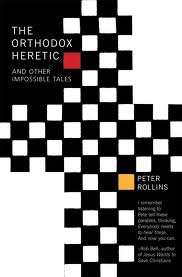
Rollins insists that this parable is true right here and right now. We don’t have to imagine a world were Christianity is illegal for this parable to be true. Rollins insists that: “If you or I were really to take the teachings of Jesus seriously, would we not sooner or later, find ourselves being dragged before the authorities? If we were really to live a life that reflected the subversive and radical message of love that gives a voice to the voiceless and a place to those who are displaced, if we were really to stand up against systemic oppression perpetrated by those in power, then would we not find ourselves on the wrong side of the lawmakers?”

On this the birthday of the church, we would do well to remember the stories our ancestors wove together about what it was like back in the beginning. Sure it was like they were on fire! There they were huddled together in fear. Afraid to go outside, incase the authorities might spot them. Tormented by their grief. Afraid the dream might be over. Some of them were even considering giving up and giving in. The Romans were just too big, too entrenched, too powerful, they didn’t stand a chance against the powers that be. Just look what they did to Jesus. Jesus had dared to speak out. Jesus had dared to challenge it all, the Empire, the religious institution and the culture itself, all in the name of freedom. Jesus had tried to set us free from the oppression of the Empire, from the power of the religious authorities, free from our prejudices, free from the lure of our own self-centeredness. Jesus had tried to let us see that there was so much more to life than survival. Jesus had taught us so much, helped us to question so much. And look where it got him. The powers that be had done their very worst and know Jesus was dead. Sure there were those who insisted that Jesus wasn’t gone, that they felt his presence, that there was no need to give up or given in, that we could still change the world. But, what to do? How do we go on? And then it was as if we were on fire! Suddenly we were alive with all that Jesus had taught us. You should have been there as the flames of justice flashed about igniting us with passion, with courage, with love. Oh we had fire in our bellies! Yes it was chaos back then with everyone from all over the place talking all at once, putting their two cents worth in to the mix. But stuff got done. We changed the world because the very Spirit of God that lived and breathed in Jesus, was living and breathing in us. You should have seen us back then; we were on fire; so much so that people came from far and wide just to try and figure out what had given us the courage to be who we were created to be. Continue reading