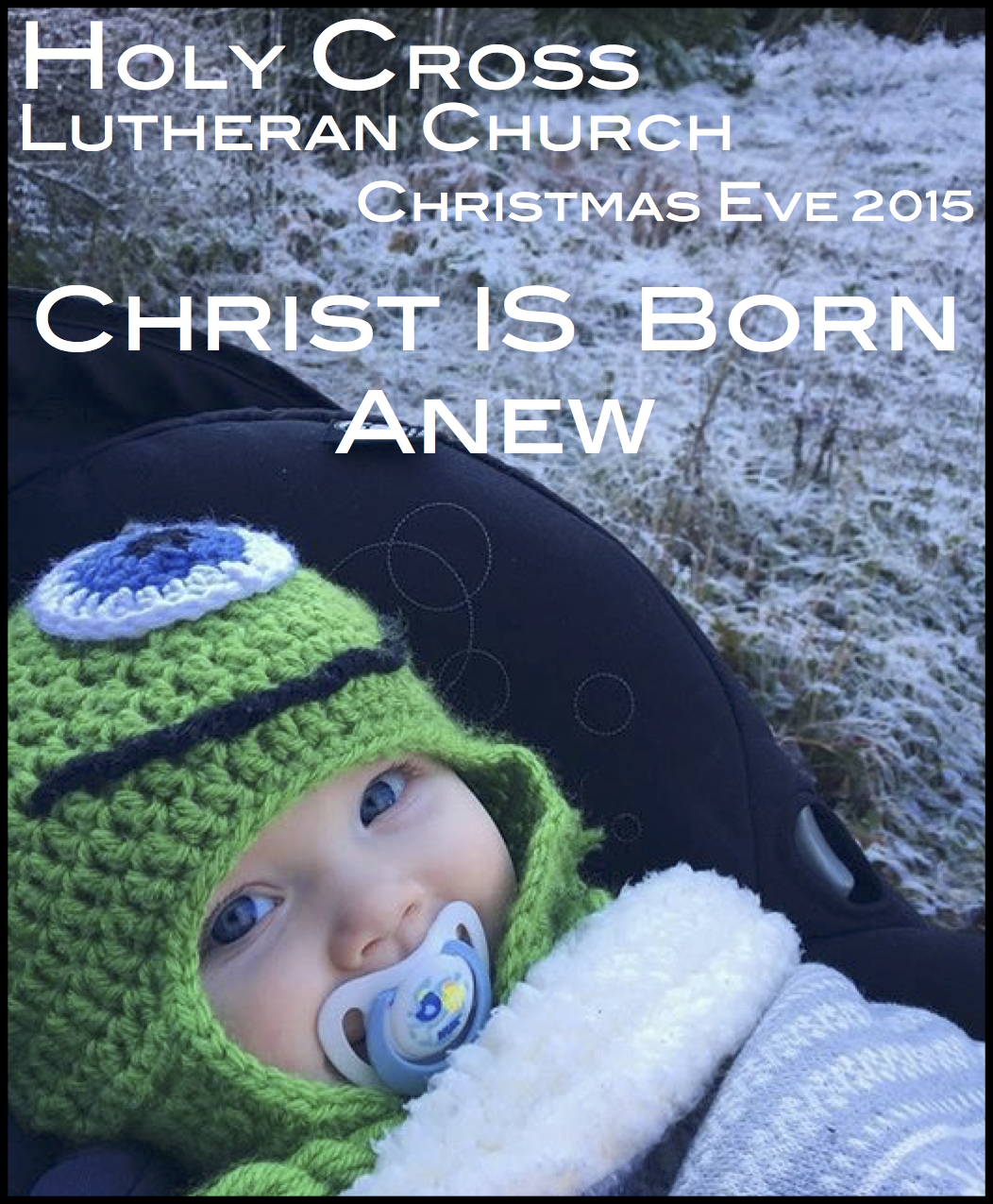
Christ IS Born Anew – Christmas Eve Sermon
Reply

As the clock ticks and we swiftly journey toward Christmas Eve, I suspect many are rushing around trying to finish every last thing. This little video entitled, “The Christmas Scale” reminds me of the importance of the pauses! May you find a moment or two today to slow down, breathe and enjoy the Joy in those pauses.
 This sermon owes much to the work of Richard Rohr whose work opens me to the LOVE who lies at the core of REALITY, the ONE we call God. The source of the story that I tell about a Christmas Eve way back when has been lost to me. I cannot remember when I first heard it. It’s power to open me to the LOVE that is God remains with me and so I treasure the story and tell it so as to open others. To open ourselves to the cosmic nature of the Christ we used different scripture readings. The readings can be found here During the sermon copious amounts of chocolate oranges were smashed open and distributed. You can listen to the sermon here
Christmas Eve is a night when the phrase “way back when” is uttered by storytellers often. I remember way back when I was just a little girl, you know long, long, ago, way back when Christmas celebrations were so different. Way back when I was a child, we didn’t hang fancy, especially dedicated stockings on the chimney with care, in hopes that St. Nicholas soon would be there. No, way back when, people didn’t have the money to waste on special, fancy, Christmas stockings that were only used once a year. Way back when, we just went into our sock draw and pulled out the largest sock we could find and we’d hang it up, in the hope that if we’d been good we’d get some goodies instead of the dreaded lump of coal that our parents had been threatening us with for weeks. Come Christmas morning, way back when, we were happy when our sock was filled not with stocking-stuffers like we have these days, but with the same thing we got every Christmas in our stockings, an apple, an orange, a few toffee’s and a couple of coins. You see way back when, fruit was seasonal and fresh apples and oranges were a real treat. These days we can haul crates of tiny delectable oranges from the grocery store all year long. But way back when, oranges at Christmas were a real treat.
Now I never did like oranges very much, so I would always try to trade my orange with my brother so that I could have two apples instead. You see way back when children were easier to please and Christmas was different. Which leads me to another story. I don’t remember when or where I first heard this story about way back when World War II had just ended and refugees were loaded into camps until the world could figure out what to do with the millions of displaced people. Back then; refugee camps were filled to overflowing with children who’d lost their families during the war. Apparently there was this little boy in a camp in France; we’ll call him Andre. Andre couldn’t have been more than about seven years old and he could barely remember the family he lost almost three years before the war ended. He’d been living in the refugee camp, more of an orphanage really, for almost a year. A few nuns who never could scrap together enough money to feed the children properly ran the camp. But they did there best and the children were, after all was said and done, lucky to be alive. The children hardly noticed that Christmas was approaching until one of the nuns announced that a neighbour had promised to come by on Christmas Eve to drop off a sack of oranges. Andre had only a vague memory of an orange. The year before a stranger had shared an orange with him and he remembered the taste of the three tiny sections of his share of the orange that oozed precious juice down his half starved throat. Andre spent the days leading up to Christmas Eve dreaming of having a whole orange of his very own. He thought about the smell of the orange, dreamed of peeling the orange, and carefully considered whether or not to devour each and every section of the orange all at once or whether he should divided it and save a section or two for Christmas morning. Continue reading
A sermon for the Fourth Sunday of Advent – Luke 1

The quotes in this sermon are from Steven Pinker’s book “The Better Angels of Our Nature” and Joseph Holub’s “Fear Not” The Acclamation sung prior to the sermon is “The Magnificat” from Holden Evening Prayer, by Marty Haugen, featuring Gary Curran and Linda Condy: Listen to the sermon here
 The young woman can still remember one particular Remembrance Day when her words and actions did nothing more than offend someone she loved very much. It was the one and only argument she ever had with her Grandmother and it happened over Remembrance Day. At the time, she was living in London. She remembers thinking that Londoners take Remembrance Day very seriously indeed. More so, she thought, than in her native Canada. She wondered if the blitz had something to do with it.
While most of the poppies people wore were red, she began to see white poppies appear on the lapels of more than just a few people. She read in the newspaper that those who were committed to peace and believed that for the most part, Remembrance Day only serves to glorify war were donning white poppies. You could pretty well draw a dividing line between the generations using the colors of poppies as your guide. Young people, who had never experienced war tended to wear white poppies, while those who were older and who had memories of war, tended to wear red poppies. In many homes poppies in and of themselves managed to start wars.
The idealistic young woman was just twenty and her commitment to peace determined her choice. She was wearing a white poppy the day she traveled up to the Midlands to visit her Grandmother. It was the day before Remembrance Day when she arrived on her Grandmother’s doorstep. She’d forgotten all about the white poppy that adorned her lapel. She couldn’t help thinking that there was something odd about the reception she received from Grandmother. It wasn’t exactly what you would call warm. Her Grandmother was upset about something. But the young woman couldn’t quite figure out what, because her Grandmother appeared to be giving her the silent treatment. She just served dinner and listened quietly as the young woman chatted on about her week in London. Continue reading

Simcoe Landing
Listen to the sermon here
Watch the video that was shown in place of the traditional readings for Reformation: Thomas Berry and the Earth Community here
Gospel Text: John 8:31-36
 The Season of Creation ends today with the commemoration of St. Francis and the rhetoric of election season together with the events chronicled in Paul Moses book “The Saint and the Sultan: The Crusades, Islam, and Francis of Assisi’s Mission of Peace” inspired this sermon.
The reading from St. Francis and the Scripture reading can be found here
Listen to the sermon here
 This long forgotten photograph of my Granda, William Anderson, moved my sermon beyond my miss-remembering as I attempt to respond to Dietrich Bonhoeffer’s question: “Who is Christ actually for us today?” I first encountered the phrase “Jesus Is the Memory of Our Future” on a t-shirt from Holden Village. Readings for this the fourth Sunday of the Season of Creation included: Dietrich Bonhoeffer’s Letters from Prison (to Eberhart Bethge, 1944), Mark 12:28-34, Mark 16: 14-16 – click here to read texts
Listen to the sermon here
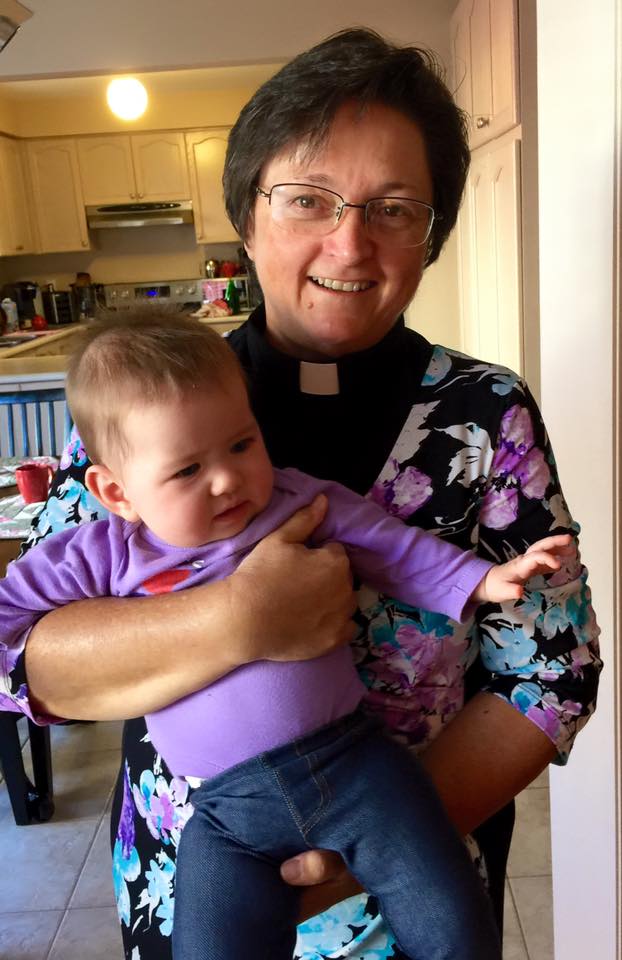
Then Jesus brought a little child into their midst and putting his arm around the child, said to the Twelve, “Whoever welcomes a child such as this for my sake welcomes me. And whoever welcomes me welcomes not me but the One who sent me.” Readings included Exodus 40:34-38, Mark 9:33-37
Listen to the sermon here

Homecoming after a splendid summer respite. Readings Proverbs 1:20-23; Ephesians 4:11-13 and John 8:30-32. I am indebted to Peter Rollins for his excellent insights into the need for church to be a place where we consult our suffering. I highly recommend the short video from which I have quoted which you can view here: Peter Rollins video – Giving the Three Fingers. The story about the starfish on the beach is one I first heard many years ago. There is a version of the story in Marc Gellman’s book “And God Cried, Too: A Kid’s Book of Healing and Hope”
Listen to the sermon here
 Listen to the sermon here
 It is a holiday weekend here in Ontario. So, in the midst of our relaxed worship, I decided not to preach the sermon I had written and simply spoke briefly in response to the video animation which was shown after the reading of the Gospel John 6:24-35. You can watch the video: The Stonecutter here and listen to the recording of my comments here. The sermon which I prepared but did not preach is printed below.
Following the video The Stonecutter (1960) Japanese Folklore view here
Jesus said, “Do not work for the food that perishes, but for the food that endures for eternal life.” Food that endures for eternal life: WOW! Talk about satisfying. Who wouldn’t want some of that? Who isn’t hungry for food that does not perish but lasts for eternal life? No wonder the people cried out to Jesus. “Sir, give us some of that.” To which Jesus replied, “I AM it!” It’s clear that were not talking about ordinary food here. Jesus said to them, “I AM the bread of life. Whoever comes to me will never be hungry, and whoever believes in me will never be thirsty.”
But isn’t hunger and thirst the very stuff of life? Isn’t hunger, thirst, desire, longing, yearning, the very thing that drives us all? Don’t we all hunger for a better, fuller, more satisfying life? Don’t we all want to feed that emptiness that lies within? Aren’t we all looking for something?
If I were to try to tell that ancient Japanese fable in our modern Canadian context what might it sound like? You’re driving along in the car, widows open, listening to some tunes thinking hey look at me, I’ve got it pretty good, when all of a sudden a guy pulls up along side of you in a beautiful in a sleek e-type jag convertible, woe! If I could afford a car like that, just think about how great it would be to pull away from all the other traffic, the wind blowing through my hair, wouldn’t that be great. Well you save your pennies and you finally get the car of your dreams, and your driving along and you see this house, not just any house, but the most beautiful house in the neighbourhood, and you know there’s just got to be a pool in the backyard, and you wonder maybe, just maybe there’s a Jacuzzi in one of the dozen or so rooms and you know that if you could come home to a place like that, well then you’d be really happy. So you work hard and you scrimp and you save and one day, you get your hearts desire and you turn the key in the lock an all of a sudden your living in the house of your dreams. But there’s the pool to clean, and the gardens to maintain, and a lot of rooms that need dusting and you see that your neighbours have a pool boy, a gardener, and a housekeeper and you know if you could only afford to hire some help then you’d be happy. You know that with just a few more bucks in your bank account you’d be happy. So, you wish and you wish and one day you win the 649 and you have millions of dollars, several beautiful cars, lots of staff to keep everything ticking over, and no one to share it with. Continue reading
 I chose to extract two readings from the lectionary to reflect upon sanctuary for refugees. Splitting the prescribed gospel text into the first and second readings and using the epistle text as the Gospel: Mark 6:30-34, Mark 6:53-56, Ephesians 2:11-22. The video which was shown during the sermon, along with the English translation, can be viewed here, listen to the sermon here
 The beheading of John the Baptist is an unusual subject for a beautiful summer morning. However, from time to time the lectionary takes us where we are reluctant to go. Our readings included: Mark 1:1-11, Mark 1:14-15 and Mark 6:14-29
Listen to the sermon here
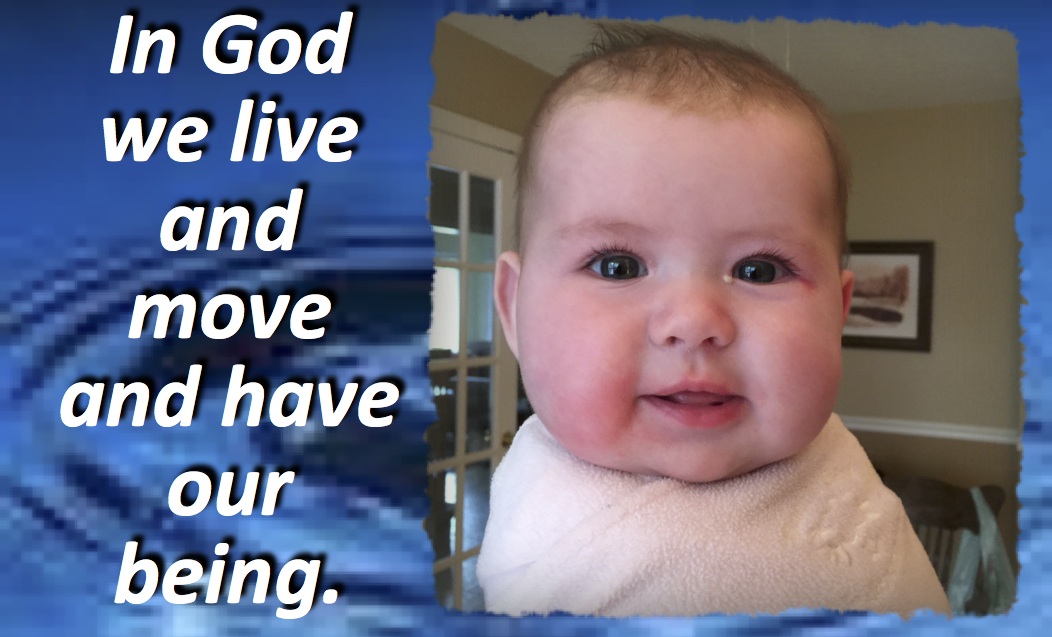 The opportunity to baptize my lovely granddaughter brought with it the task of preparing a sermon on the sacrament of baptism. So, I diligently prepared a carefully thought out sermon for the occasion. Standing in the pulpit after reading the Gospel text from Matthew 19:13-15, the sight of all seven grandchildren challenging the abilities of their parents and grandparents to maintain order and decorum gave me pause. Fortunately our pulpit at Holy Cross is on wheels, so I quickly pushed it aside and reached into my missal for a folder I had placed there so that during the announcements I could draw the attention of our members to some very good news about the success of a child of the congregation. The folder contained a story which I proceeded to tell in place of my carefully prepared sermon. You can listen to the story here. I am indebted to the author, Travis Dermott for providing the good news on this very happy occasion. As promised, the text of the carefully and lovingly prepared, undelivered sermon is provided below.
Listen to the story here
When someone places a newborn human in your arms, it opens you to MORE. Humans have a strange relationship to MORE. Most of us spend our entire lives longing for more, looking for more, hungering for more, desiring more, striving for more, waiting for more, searching for more. Holding a newborn in your arms opens us to the power of MORE. I’m not talking about the more that the world so often gets caught up in seeking, more stuff, more money, more things, more wealth, more land, more resources, more power, more sex, more popularity, more gadgets, more food, more, more, more, more, for me and mine, more. I’m talking about the MORE with a capital M. MORE. The kind of MORE a newborn baby lying in your arms opens us to is the kind of MORE that poets, storytellers, artists, musicians, and messiah’s have been trying to capture for centuries. Holding a newborn in your arms opens us to this MORE because the reality of this new little being connects us to some Beyond ourselves.
Cradling a newborn you can’t help but wonder and marvel at the miracle of life itself. Gently rocking a newborn in your arms opens you to the powers of the cosmos coming together for billions and billions of years to create life. Gazing down at a newborn softly breathing in your arms fills your heart with emotions so powerful that in just an instant you can fall in love. Adoring a newborn in your arms transforms you out of the confines of the ordinary and mundane and into the reaches of time itself as you search for signs of ancestors long gone in tiny features that draw us into futures as yet unknown. And just when you think your heart is going to explode from the shear magnificence of the miracle in your arms, suddenly the newborn in your arms opens up the power of their new little lungs and you can’t help but be stunned by this tiny little creature’s ability to turn your world upside down. Continue reading
Pastor Tom Doherty & Terry Hutchings shared their experiences at the Kairos events which preceded the Truth & Reconciliation Commissions delivery of their report. Our readings included Ezekiel 17:22-24 and Mark 4:26-34. The hymn sung after the sermon, “As One” with words by Gretta Vosper to the familiar Huron Carol – UNE JEUNE PUCELL
The video is a bit choppy at the beginning but settles down in a few moments.
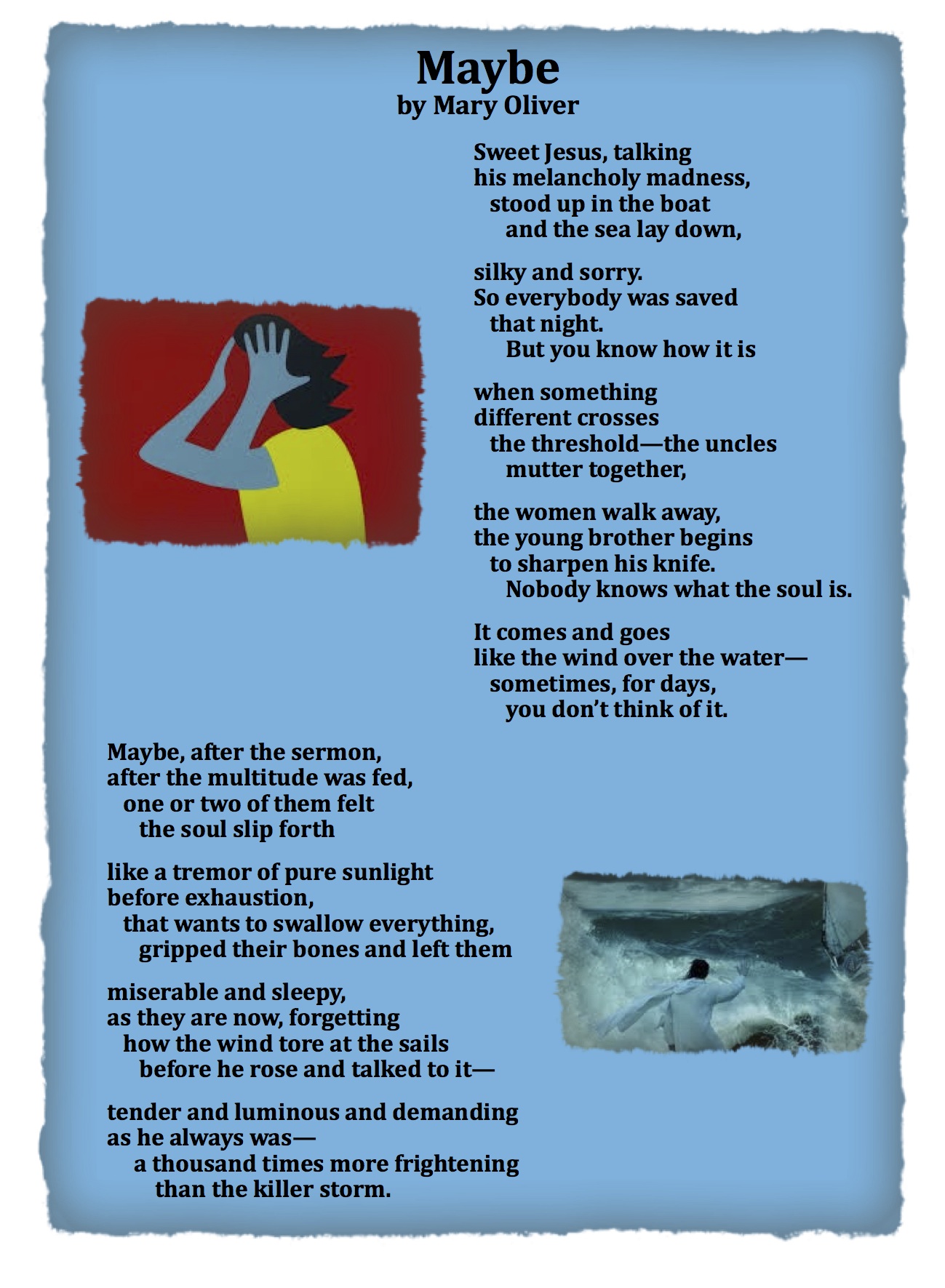
The gospel reading prescribed for this coming Sunday (Mark 3:20-35) paints a daunting picture of the perceptions of the people of Jesus’ hometown. The folks who knew Jesus, including his family worried that he might just be “out of his mind.” This is indeed a contrast to the ways in which Jesus is typically portrayed. This is a dangerous Jesus who ran the risk of being perceived as deranged. In his book “The Underground Church: Reclaiming the Subversive Way of Jesus” Robin Meyers captures some of this danger when he points to Mary Oliver’s poem “Maybe” in which Jesus’ “melancholy madness” is seen by his fellows as more dangerous than a storm. Safely ensconced in our imaginations, Jesus is rarely allowed to threaten the status quo to which we cling for dear life. Are we prepared for the stormy waters that would be stirred up should we take Jesus at his word? Maybe…
 Readings: Psalm 29, Matthew 28:16-20, John 3:1-17
Listen to the sermon here
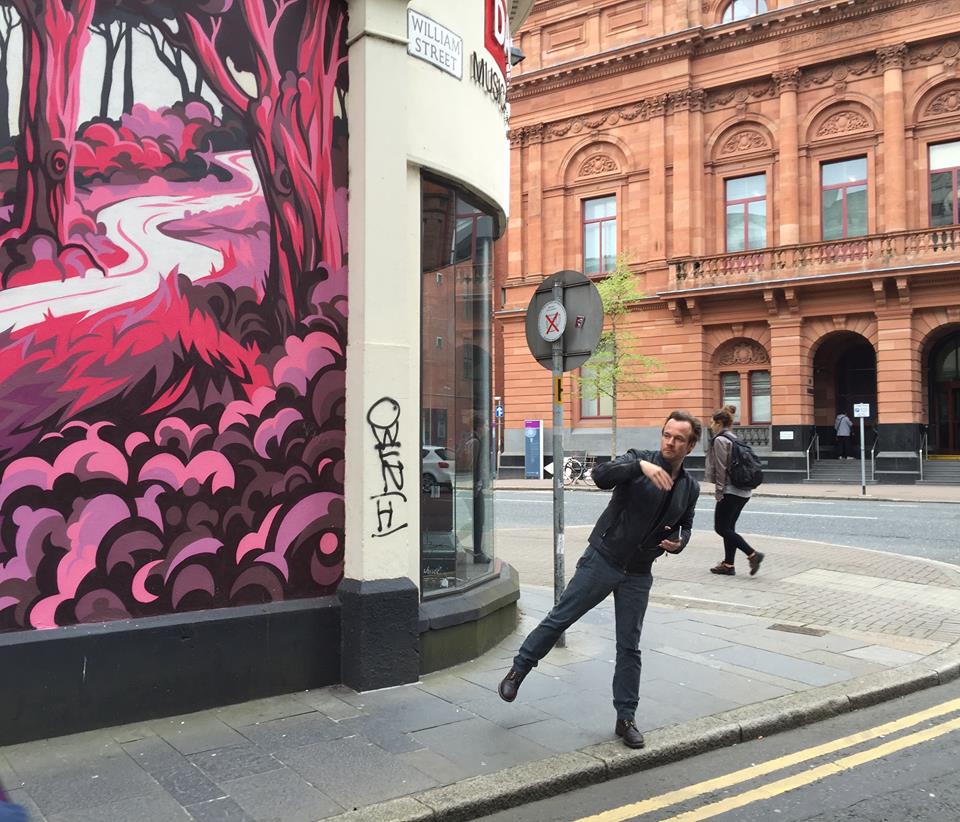 A month ago, I journeyed back to the city where I lived when I was but a child to attend Peter Rollins’ Tricks of the Light Festival. There I was privileged to explore radical theology with about fifty fellow tricksters from around the world. It was an amazing experience which took me into the realm of the Great Beyond. This merry band was collected together by glimpses of magic each of us has garnered from Pete Rollins’ work. Together we encouraged, challenged, comforted and inspired one another to step beyond ourselves, our ideas, our carefully constructed realities, so that we might see visions of the Perhaps that lives in, with, through, and beyond us all. For three amazing days and four rollicking nights we let loose our trickster-selves on the city of Belfast.
Fellow trickster, Laura Landry created the video below which captures the flavour of our experiences together. Iain Archer, who preformed a private concert on the closing night of the festival, provides the musical backdrop and you will see glimpses of the amazing tricksters who spoke at the festival including: John Caputo, Kester Brewin, Barry Taylor, Gladys Ganiel, the God-father of Punk – Terry Hooley, and the man himself – Peter Rollins. A big thank-you to Belfast’s own fearless, intrepid, trickster Adam Turkington not only for keeping Pete from leading us all astray, but for ensuring that each and every one of us enjoyed so many of the sights, sounds, pleasures, and magic of Belfast!
As for Pete, the instigator of this grand adventure, when he’s not inspiring tricksters in the flesh, he’s doing so with his work. Check out his latest book The Divine Magician: The Disappearance of Religion and the Discovery of Faith. But be warned: Pete’s work will inspire you to more than a few tricks of your own!!! As for me, I am forever changed, transformed by the tricks of the light Pete magically creates!!!
 Meister Eckhart’s fervent plea: “I pray God, rid me of God” becomes a sort of mantra for me whenever the task of contemplating the Trinity rolls around on the liturgical calendar. Once again, I have failed to have the foresight to book my holidays so as to avoid the task of preaching on this festival of the church, so I find myself plumbing previous sermons in search of a way through the quagmire of doctrines which threaten to overcome even the most dedicated of preachers. I offer them here to my fellow preachers as my way of saying, “I pray God, rid me of God!!!” Shalom
click on the sermon title
“Trinity: Image of the Community that is God” Desmond Tutu
The Athanasian Creed and an Unholy Trinity
Wolf Blitzer Learned that there are Indeed Atheists in Fox-holes
 pastordawn