Faith as Resistance: Adult Education Class

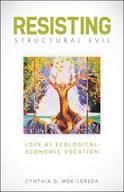
Spiritual DefianceCurrently the Adult Education Class at Holy Cross Lutheran Church is exploring ways in which the church can once again become communities of resistance. We began with an exploration of Cynthia Moe-Lobeda’s book “Resisting Structural Evil Love As Ecological-Economic Vocation” and we have moved on to the excellent work of Robin Meyers whose Beecher Lectures have been published in “Spiritual Defiance: Building a Beloved Community of Resistance”. Below you will find the 3rd lecture in the series, UNDONE: Faith as Resistance to Empire, which we are studying in depth. For those who would like to delve deeper all three Beecher Lectures, along with a brief bio of Robin Meyers, can be found here 
Join us for conversation at 9:15am this Sunday 

It’s about LOVE not creeds!- a sermon for Easter 5B – 1 John 4:7-21

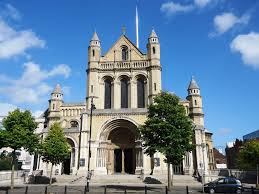
st anne'sListen to the sermon here

The Sheepskin Baggage We Bring to the Text: sermon for Easter 4B – John 10

good shepherdTraditionally the fourth Sunday in Easter is celebrated as Good Shepherd Sunday so it should not surprise us that a pesky lamb shows up. Readings:  Psalm 23, 1 John 3:16-24, John 10:11-18

Listen to the sermon here

What’s a Meta FOR? – a sermon for Easter 4B – John 10:11-18 and Psalm 23

John chapter 10 causes me to remember Mrs Tanner, my grade ten english teacher. I can still see her handwriting all over my carefully crafted compositions. Red ink everywhere as she constantly admonished me not to mix my metaphors. Clearly the writer of the Gospel of John never had the benefit of Mrs. Tanner’s guidance, or he would not have dared to record Jesus words the way he does in his long and rambling I AM passages.

Before we even get to chapter 10, we read that Jesus says:  “I AM the bread of life.”  and “I AM the light of the world.”  In chapter 10, we read, Jesus says, “I AM the gate,” “I AM the Good Shepherd.” Later we will read, that Jesus says, “I AM the Resurrection”, “I AM life.” “I AM the true vine.”  “I AM the way.” “I AM in God.” “I AM in you.”

But in the tenth chapter the writer of the Gospel of John goes all out and has Jesus using not just a metaphor but a mixed metaphor. For in chapter 10, we read that Jesus declared: “I AM the Gate. The gate through which the sheep must pass.” and then mixes it up by saying,  “I AM the Good Shepherd.”

Which is it? Gate or Shepherd, come on, I know your Jesus but I’m trying to understand how Jesus, who is after all, the lamb of God who takes away the sin of the world is both the Gate and the Shepherd.

I wonder if Mrs. Tanner ever took her red pen to the Gospel According to John? If she did, the letters MMX would have appeared all over this Gospel. MMX = mixed metaphor wrong! Looking back, I know that Mrs Tanner was just trying to help us to be more careful about our ideas. But today I would have to ask of her, and indeed of the writer of the Gospel of John, “What’s a meta for?” Continue reading

Christ Appeared on the Road to Emmaus and I Almost Didn’t Recognize Her – a sermon for Easter 3B – Luke 24:36b-48

emergencyMy most memorable journey on the road to Emmaus was taken behind the wheel of a 1981 Oldsmobile, Cutlass, Brougham. I loved that car. It was a thing of beauty. It was a gift from my home congregation so that I could travel back and forth across the country to and from seminary. Despite its propensity to guzzle gas it was the perfect combination of power and elegance. It had the most amazingly plush interior with every imaginable power amenity of its day. It handled like a dream and even though I loved driving that car, neither it nor I faired well on our journey on the road to Emmaus. Five weeks into my Clinical training at the Grand River Hospital and I’d just completed one of the toughest weeks of my life when I set off for Emmaus. Clinical Pastoral Education is what the Church calls it but seminary students have other names for it, like boot camp, torture or hell. Twelve weeks of on the job training in a busy hospital combined with daily psychotherapy, group sessions, and sleep deprivation. It’s all designed to help seminarians put two years of academic study into practice before sending them off on a yearlong internship. Ask most pastors about their Clinical Pastoral Education and they’re likely to sit you down and tell you story after story about how intense an experience it was. Many of my colleagues will tell you that it almost broke them into little pieces, or that it almost destroyed their faith, or that they didn’t think they’d survive, or how they never thought that it was possible to be that scared or insecure for that many hours every day. Boot camp, torture, or hell, it all depended on whether or not you were able to get any sleep or if the demons you faced on the wards managed to destroy whatever self-confidence you might be able to muster.

The week before I set off on the road to Emmaus, wasn’t as bad as all that. I felt like I was just beginning to get the hang of things. I thought that the worst might be over. I’d managed to conquer my fear of being called Chaplain and being expected to help people who were sick, in pain, in distress, or dying. Why that week I’d even managed to help one or two of my patients. Those nagging doubts that haunted me during the first month of Clinical training were beginning to fade. It was becoming easier to believe that God was there in the midst of all the turmoil. I thought that maybe just maybe I could do the job and the terror wasn’t quite so intense when my pager went off. I remember saying to a colleague that maybe we’d be able to get through our Clinical training without coming up against the inevitable crisis of the faith that so many of our fellow students had warned us about. I wasn’t even nervous about having pulled the short straw for the long-weekend shift. 72 hours as the on-call emergency chaplain for the entire hospital. I felt like I was ready; that with God’s help, I could face anything that came my way.

I wasn’t particularly nervous when my pager went off and I calmly dialed the operator who announced that there’d been an MVA and six patients were on route; two of them were vital signs absent. MVA – Multiple vehicle accident. Vital signs absent = that usually means dead, but only a doctor can actually pronounce death so patients without vital signs are transported to the hospital before being pronounced dead. Continue reading

Practicing Resurrection: Forgiveness – a sermon for the Second Sunday of Easter

Practicing Resurrection pastordawnOur first reading was the traditional gospel story for the Second Sunday of Easter in which we heard the story of Doubting Thomas for John 20:19-31. This was followed by a video in which Richard Holloway retells the story of Peter’s denial and the encounter between the resurrected Jesus and Peter. You can view the video here . This was followed by the gospel reading from John 21:15-20

Listen to the sermon here

PRACTICING RESURRECTION – a sermon for the 2nd Sunday of Easter

resurrectionFor this sermon I used a video within the sermon to help illustrate resurrection. You can view the video within the written text of the sermon below or listen to the audio version provided. I am indebted to the work of James Rowe Adams for much of the New Testament Scholarship in this sermon.

The Scripture texts were John chapter 20:19-31 and Acts 4:32-35

Audio Version of the Sermon click here

Practicing Resurrection

Christ is Risen! Christ is Risen indeed!  Alleluia! So, Christ is Risen!  So What???What can it possibly mean to you and to me, that a rag-tag bunch of Jesus’ followers gathered together in an upper-room and talked about their experiences of Jesus and decided that not even death could extinguish the life that they experienced in Jesus? What difference does it make to you or to I that Christ is risen? The truth is that it can make absolutely no difference what so ever. Now there are a whole lot of people who will tell you that the important thing about resurrection is that you believe it. Those same folks absolutely love the story of doubting Thomas. And so every year on the second Sunday of Easter we read the story of doubting Thomas as a kind of inoculation against Thomas’ disease.

I sometimes think that the designers of the lectionary were trying to build up our resistance to doubt. Having problems believing in resurrection, well don’t do what Thomas did, don’t doubt, because you’ll be proven wrong. Jesus is alive, the wounds in his hands proved that to Doubting Thomas, so have no doubt about it the resurrection happened!  Believe in the resurrection!

The trouble with believing in stuff is that it belief can make absolutely no difference what so ever. I can believe in justice for all, but unless I’m prepared to seek justice, to be fair, or to resist injustice, it makes absolutely no difference what so ever. You can shout, “Christ is risen!” all you want but unless you are willing to live it, the resurrection means very little at all. In order to live the resurrection you have to begin practicing resurrection. In order to practice something, you have to know what it looks like, what it sounds like, or what it feels like.

I’ve been trying to figure out how to show you what resurrection looks like in the flesh. Then I remembered a video that’s been doing the rounds on the internet, so I want you to watch this modern miracle of resurrection.

WATCH THE VIDEO CLIP FROM:  Alive Inside

Christ is Risen! Christ is Risen indeed!  Alleluia!  Almost 2000 years ago, a bunch of rag-tag Jesus followers were huddled together in fear. Their beloved leader had been brutally executed by the powers that be and they were terrified that they would be next. Paralyzed by their fear, hiding behind a locked door, something happened that gave them the strength to burst forth from their own tomb and change the world. Continue reading

Words Will Always Fail Us: an Easter Sermon

Christ Is Risen in Us pastordawnLast year Michael Morwood preached an Easter sermon at Holy Cross in which I was reminded that the followers of Jesus, in all likelihood, told their resurrection stories using details they found in the scriptures of their ancestors. Michael’s words (you can listen here to Michael’s sermon here) provided the inspiration for this sermon. Our readings included Mark 16:1-8; 1 Corinthians 15:35-44 and John 20:1-18. The reference to the prophet Hosea is found in chapter 6:1-2. 

You can listen to the sermon here

Is God Coming Back to Life? – an Easter Sermon from 2014 – with links to previous sermons

time god coversThis sermon is the second of a two parter which began on Good Friday (you can find that sermon here). It is the fruit of conversations that have been going on at Holy Cross Lutheran Church for a number of months. I am indebted to the members of the congregation for their courage, wisdom and curiosity which they so graciously share. I am indebted to Dom Crossan, Jack Spong, Barbara Brown Taylor, Michael Morwood, and Dick Rauscher whose work has inspired and emboldened me in my preaching. You can listen to the sermon below and I have also provided the manuscript (which is never quite the same as what comes out from the pulpit) Shalom. 

Links to previous sermons:  Easter: Yes, Yes, Yes, Laugh – here 

Easter: The Greatest Story Ever Told – here

I Plead Guilty to Denying the Resurrection – But I aint’ leaving – here

Preparing to Preach on Resurrection: Giving up the notion of a physical resuscitation. here

Approaching Resurrection: What Did Paul Actually Say – here

A Resurrection Story In Memory of Nellie, My Gran – here

On Good Friday we gathered here to grieve the death of God. I began my Good Friday sermon with the Parable of the Mad Man that was written by Frederich Nietzsche back in 1882. The mad man in the parable goes around announcing that God is dead. The parable gained notoriety 1966 when an issue of Time Magazine asked the question: Is God Dead? The question appeared on the cover of the magazine and created quite a stir. It referenced Nietzsche’s parable as the inspiration behind the “God is dead movement” which insisted that “man” has killed God because “man” has evolved beyond our need for gods.

So, on Good Friday my sermon took a long hard look at the god who is indeed dead. In my sermon, I grieved the death of The Father-god, the Sky-god, God the grand puppeteer, who watches over us like a kindly shepherd, and listens to us, and interferes on our behalf, and judges us and longs to welcome us into heaven, but is willing to let us languish in hell if need be.

I pointed out that parables like the parable of the mad man are stories that tell us what we already know and Nietzsche’s Mad Man was right, this god that so many of us have loved and worshipped for so many years is indeed dead; sacrificed on the altars of reality.All that we have learned about the cosmos; all the scientific breakthroughs, our technologies, our philosophies, biblical scholarship and our evolving theologies have killed the personification of god that we once worshipped and adored.

I looked upon the cross and I wept because the death of the personified god is not easy to bear and I miss the Father-god because I really did love him, and he really did save me. For most of my life the personification of God was the only way I had of knowing anything of the Force that lies at the very heart of reality. God is dead; the Father God, the Sky God, the kindly Shepherd that I was counting on to make me lie down in green pastures, is dead. Our science, technology, philosophy, history, and our theologies have killed this personified deity that we both feared and adored.  God is dead and we have killed him.  Continue reading

I Will Remember You – Maundy Thursday sermon

Maundy Thursday

Pastor Tom Doherty’s Maundy Thursday meditation opened us to the pain and joy of memory. Listen to the sermon here

PREPARING TO PREACH ON GOOD FRIDAY. Searching beyond the talk of sacrifice to see the Good News.

The Church’s Good Friday obsession with talk of  “sacrifice for sin” has been breed into the bones of this particular preacher.  I have been trained to speak the language of the Church.  I know full well the many doctrines of atonement that have been proposed to explain the reasons Jesus died upon a cross.  I’ve been studying the historical context and the theological consequences of Jesus’ death for more years than I care to admit.   Yet every year, I find myself wanting to book a vacation or call in sick so that I can avoid the awesome task of preaching on Good Friday.

I’ve put it off tackling the Good Friday texts as long as I dare.  So, I picked up my copy of “The Last Week” by John Dominic Crossan and Marcus Borg, together with my copies of John Shelby Spong’s “Resurrection: Myth or Reality” and “Jesus for the Non Religious” as well as Marcus Borg’s final book “Convictions” and Dom Corssan’s new book “How to Read the Bible and Still Be Christian and spent the day in pursuit of a sermon.

What follows is not the sermon I will preach on Good Friday, but rather, the notes I made a few years ago to remind myself not to fall into the trap of talking about the events surrounding Jesus’ death in the way I was trained to speak of those events.  I offer up my notes hoping that those who are engaged in the struggle of grappling with how to talk about the cross in the 21st century might find some solace in a fellow struggler’s ruminations.  For those of you who don’t have to come up with a sermon for Good Friday, I offer these notes as my humble attempt to see beyond the rhetoric about the cross to the Good News. As always I am indebted to Marcus, Dom. and Jack for their scholarship. 

There are many ways in which our focus upon the cross is disturbing.   Not the least of which is the way in which we as Christians tend to talk about the crucifixion as Jesus’ passion.  I have always thought it a tragedy that we should describe the events of Jesus’ crucifixion as Jesus’ passion. I’ve always understood talk of an individual’s passion to be concern with those things that people lived for. And so to insist that Jesus’ lived to die a horrible death might sooth those who seek to turn Jesus into some sort of preordained blood sacrifice.

But for those of us who look to Jesus in search of the face of God, such talk seems is indeed a crime against divinity. For what kind of petty, sadistic god would engineer the birth of, foster the life of, and then engineer the death of a beloved child. Surely such a god is no more than a wicked illusion of our own making. I wonder what Jesus himself would make of the god we have created. I wonder what Jesus himself would make of our Good Friday commemorations? I suspect that if Jesus is anything like the accounts of his life suggest, he would be mortified, and I mean that literally…I think that Jesus would be mortified …mortified ie shamed to death…of what has become of his life’s passion; for if Jesus’ was passionate about anything, he was passionate about life. Jesus declared, “I have come so that you may have life and live it abundantly.” Jesus’ passion was about living. Living fully, abundantly.  Continue reading

Journeying Toward Resurrection: John Philip Newell


snowdropsA powerful series contemplating resurrection in ever deepening ways in order to explore what a risen christianity might look like in terms of its offering of healing and blessing for the earth. Created by John Philip Newell a poet, pastor and scholar who opens our eyes o a vision beyond doctrines and dogmas that fail to proclaim the wonders of the universe in which we live.  “Christianity will rise again to the extent that we remember the sacredness of everything that has been born in the universe.”

Mary Speaks: “The Testament of Mary” and “The Confession Stone” a Midrash for Palm Sunday

Palm Sunda 2015Judas, Peter, Pilate, Caiaphas, and John – these are the names most often heard in the stories we hear during Holy Week….the men who failed Jesus or who conspired against Jesus, their names we hear during this holiest of weeks. But what of the women who stood by Jesus, who wept for Jesus, who bore witnesses to the betrayal, the trial, the execution, and the death of Jesus. Where are their stories during this week of weeks? For centuries, the church has failed to listen to the voices of the women whose lives were intertwined with Jesus’ life. The stories of these faithful women have been hidden in the mists of time. This Palm Sunday we turned to one of those women; to Mary the mother of Jesus. Her voice has been silenced by the church. She has been confined to works of art that speak not with words. 

So, as we enter Holy Week we turn to two new works of art that give voice to Mary’s story. Anne Keith and I will do our best to give voice to Mary’s story using the words of the Irish writer Colm Tóibín whose book, “The Testament of Mary” imagines Mary as an old woman, nearing the end of her life, looking back on the life of her beloved child Jesus. You will hear cynicism in the voice of Mary who is visited by the men who will tell her son’s story; men who are determined to make a particular meaning out of Jesus life and death. Mary does not share their enthusiasm for the tragedy that robbed her of her child, nor will she twist her own story to suit their needs.

Mary’s voice will also come to you through music. Mezzo soprano, Linda Condy, accompanied by our Musical Director: Marney Curran, B.S.M., A.R.C.T., will preform “The Confession Stone: Songs of Mary” composed by Canadian Robert Fleming based on the poems of Owen DodsonOwen Dodson was an African-American poet whose work is part of what has been dubbed the Harlem Renaissance. Dodson’s poetry brings a lively humanity to the Mary empowering her voice to evoke the passion of a mother’s loss.

Both Owen Dodson and Colm Tóibín provide a powerful midrash with which to begin our Holy Week. 

Jesus: Human or Divine? – A Question for Palm Sunday

SPONG Living pastordawn“….when he returned to the city…Jesus entered the Temple precincts and began teaching. The chief priests and the elders of the people came to him and said, ‘By what authority are you doing what you do? Who gave you this authority?’ And I,” replied Jesus, ‘Will ask you a single questions; if you give me the answer, I will tell you my authority for these actions. What was the origin of John’s right to baptize? Was it divine or was it human?” They discussed it among themselves and said, ‘If we say, ‘divine,’ he will respond, ‘Then why did you refuse to believe him?” But if we say ‘human’ we have the people to fear, for they regard John as a prophet,’ So they replied to Jesus, “We don’t know.” (Matthew 23:23-27)

Divine or human? We don’t know? Really? Of course we know? Divine or Human? You bet we know! We’re just afraid to say. These few verses are usually ignored during the lead up to the big events of Holy Week. It seems to me, that they may well provide those of us who live in the 21st century about as much angst as they provided to people of the first century, but for entirely different reasons. I think perhaps, the writer of the gospel according to Matthew, whoever he was, may have been messing with his first century audience. “Human or divine?” was just as much of a loaded question in the first century as it is in the 21st century but for entirely different reasons. The writer of the Gospel According to Matthew may have placed the question in the mouth of Jesus, but today, just as I’m sure it did all those centuries ago, the question echoes back and forth between Jesus and the listeners to the narrative until it is not so much about John the Baptist’s authority to baptize as it is about Jesus himself. Which is exactly what the author designed the interchange to do in the hearts and minds of his listeners. “By what authority are you doing what you do? Who gave you this authority?”

In good rabbinic style the author of this text has Jesus reply to a question with a question. “I will ask you a single question; if you give me the answer, I will tell you my authority for these actions.” Do you want to know why I came riding in here on an ass? Do you want to know what gives me the right to mock your notions of Messiah? Do you want to know by whose authority I rube the Roman’s noses in it, parading into town mocking their leadership with a farce designed to make you laugh at the way they dare to laud their power over us? Do you want to know what or who gives me the right to march into the Temple at Passover and turn the place upside down, attacking the financial system that lies at the heart of our peoples’ collaboration with Roman oppression? Do you really want to know by whose authority I challenge the injustice that surrounds us? Do you really want to know? Well I’ll tell you if you answer me this? “What was the origin of John’s right to baptize? Come on you tell me. Was it divine or was it human?” They lopped of John’s head for daring to challenge injustice. Served it up on a silver platter for the crime of challenging Roman authority. Do you really want to challenge my authority? Human or divine? Come on tell me, I dare you.

They discussed it among themselves and they knew they were trapped. “If we say, ‘divine,” he will respond, ‘Then why did you refuse to believe him?” But if we say, ‘human” we have the people to fear, for they regard him as a prophet.” So they replied to Jesus, “We don’t know?”

Human or divine? We don’t know. Of course they knew! They know and we know. We are just afraid to say. Because if we say, we know full well what the next question will be and we don’t want to go there. Human or divine may not be a 21st century question. It is a question that has different implications in our day than it did back when the writer of the Gospel According to Matthew put it into the mouth of Jesus. To question someone’s authority in the first century meant pretty much what it does today. We, like our first century ancestors in the faith, want to know if Jesus has the right stuff to challenge the system. If Jesus has the right stuff; then maybe just maybe he’s worth paying attention to. Show us your credentials Jesus. We want to know who you are before we take any advice from you; especially advice that will have us taking a stand against the powers that be. Continue reading

Faith and Begorrrah – A St. Patrick’s Day Sermon

Tomorrow is  St. Patrick’s Day and I was asked about the sermon I preached two years ago when the celebration fell upon a Sunday. The person who asked about the sermon remembered laughing a lot during its delivery and encouraged me to re-post it. So, pour yourself a glass of your favourite tipple, sit back and enjoy a laugh.

Readings:  Numbers 27: 1-11; Acts 13:44-51; John 12:1-8

guinnessbeerSt. Patrick’s Day doesn’t often fall on a Sunday, but as our congregation’s Annual Meeting would begin immediately following our worship service, I decided to be somewhat playful and irreverent with a sermon designed encourage folk to think beyond words on a page. The first reading brought the wonderful story of the Daughters of Zelophehad to church and as this reading does not appear in the Revised Common Lectionary it was fun to play withirish these feisty women. The reading from the book of Acts is actually the prescribed reading for the commemoration of St. Patrick and the Gospel text is prescribed for Lent 5C. The Guinness was just for fun! Enjoy.

Read a transcript of the sermon here

Listen to the sermon

https://pastordawn.com/wp-content/uploads/2013/03/st_patricks_sermon.m4a

Approaching the Resurrection – What Did Paul Actually Say?

trouble with resurrection

Far too many preachers stumble into the celebration of Easter without doing our homework. Resurrection is a central tenant of the Christian faith and Easter is the primary celebration of resurrection and yet, too many of us fail to open ourselves to current scholarship surrounding the doctrine of resurrection. Questions about the nature of the resurrection ought to send us back to the words of the Apostle Paul. Bernard Brandon Scott is a charter member of the Jesus Seminar. His book “The Trouble with Resurrection” is a must read for those who preach during the Easter Season.

If you are planning to write a sermon or listen to a sermon this Easter, this video provides essential background information about the words of the Apostle Paul on the nature of the resurrection which may surprise you. Scott’s treatment of 1 Cor. 15 provides a new understanding of resurrection which is compelling as well as liberating.


“I Am Woman” – a sermon for International Women’s Day

International Women's Day

Gospel Reading:  John 2:13-22  and I Am Woman by Helen Reddy

Listen to the sermon here

Resisting Structural Evil: Love As Ecological-Economic Vocation by Cynthia D. Moe-Lobeda

Resisting Structural EvilIn the midst of teaching an adult education class on evil from the perspective of progressive Christianity, I was contacted by Dr. Cynthia Moe-Lobeda who had come across this website and wondered if I would be interested in her new book. What followed has been a splendid introduction to the work of a progressive christian ethicist who, despite the fact that she just happens to be Lutheran, I have failed to discover before now! That our little class just happens to be struggling with the problems of systemic evil and looking for signs of hope in the midst of our entanglement with institutions and structures which bind us up in evil that is hurting, oppressing, and condemning whole populations to poverty, prompted me to latch on to Dr. Moe-Lobeda’s invitation to take a look at her new book, if only for the resonance of the title  Resisting Structural Evil: Love as Ecological-Economic Vocation with our current struggles.

Dr. Moe-Lobeda’s resume includes her work as Wismer Professor of Gender and Diversity Studies at Seattle University where she teaches Christian ethics and lectures and consults international on climate justice, economic globalization, white privilege, moral agency, Earth ethics, and being public church. 

ResistingstructuralevilResisting Structural Evil is a must read for those of us who are seeking ways to live in a world where we benefit from systems beyond our control which oppress and abuse whole populations and threaten entire ecosystems. Confronting the evil in which we are all implicated is a task so daunting that many of us are loath to engage the powers of evil lest we be overwhelmed by the multitude of problems in the world. Dr. Moe-Lobeda’s work provides a framework for a spirituality which can nurture and sustain us as we embrace our call to resist evil. After reading her excellent articulation of the moral crisis, enriched by Moe-Lobeda’s ability to embody ethics with stories that resonate with our deep hunger for justice, structural evils are unmasked with an eye to countering hopelessness. Sowing seeds of hope with a spirituality of love that is capable of engaging both Mystery and reality is not for the feint of heart. Yet, Moe-Lobeda’s carefully laid out, totally approachable, framework for the kind of morality capable of  responding to the vision of justice which permeates her work, provides the reader with the courage to see new ways of being Love in the world!

Our little class has already benefited from Dr. Cynthia Moe-Lobeda’s invitation to resist structural evil. We began by devoting ourselves to unpacking the wisdom is the lecture she gave to the Common Good Cafe at University Temple United Methodist Church in Seattle, WA. entitled A Spirituality of Resistance. The talk provides a wonderful overview of Dr. Moe-Lobeda’s important work. Watch the video and see for yourself. Then, order her book! I know that we will be spending more time working with her book as we digest the rich nourishment of her wisdom!     

Too Often Christianity’s Cross-Eyed Perspective Distorts the Good News that God is LOVE: a sermon for the Second Sunday of Lent – Mark 8:27-38

fish necklacesThat I should serve as the pastor of a church called Holy Cross is ironic. You see for years and years, before I ever dreamed of being the pastor of a church named Holy Cross, I’ve been trying to figure out how crosses became so popular. Personally, I can’t abide crosses! I hate them! I can’t abide the glorification of an instrument of torture and death! I have never understood why crosses are worn as jewelry! People would never dream of wearing an electric chair around their neck. I cannot for the life of me, imagine that any of Jesus’ followers would have ever considered wearing the symbol of Roman tyranny and persecution around their necks.

The early followers of the way; the first Christians used the fish as the symbol of their faith. For a very long time, I used to wear a simple fish necklace that a little girl made for me. Just before I went to seminary, my friend gave me a slightly more elaborate necklace with even more fish on it. Before I was ordained, I insisted that I’d never wear a cross. But then as an ordination gift my wife Carol had her son design a cross that is made up of fish and I must admit that it’s difficult to see this fish cross as an instrument of torture. But then I read a passage like the Gospel text from Mark 8:27-38 and once again the cross becomes a symbol of torture. In this text, the gospel-storyteller we call Mark has Jesus insist that, “If any want to become my followers let them deny themselves and take up their cross an follow me.” All I can say is “Woa, wait just a minute Jesus. Take up my cross and follow you. Wait a minute; I know where you’re going. You’re on your way to Jerusalem and I know exactly what’s going to happen when you get there. You are going to stir things up, get yourself into trouble, upset the powers that be and the next thing you know they are going to nail you to the cross and you are going to suffer and die. If I pick up my cross and follow Jesus, I’m going to end up right there with Jesus, hanging from my cross, suffering and dying and for what? What’s it all about Jesus? Why are you so hell-bent on getting yourself crucified and why do you want me to join you?” Continue reading

Parables Ancient and Modern: Lenten Evening Prayer with readings from the Orthodox Heretic

Orthodox HereticA series of Lenten Evening Prayer Services which use readings from the Parables of Jesus together with readings from Peter Rollins’ “The Orthodox Heretic and Other Impossible Tales.” Prayers are drawn from the writings of the Christian Mystics. Each service includes the worship bulletin as well as an audio recording of the service at Holy Cross Lutheran Church. 

One:  NO CONVICTION

A Copy of the worship bulletin can be found here – it is designed to be printed double-sided and folded into a booklet.

Listen to the worship service here (service begins at the 48 sec. mark)

Peter Rollins reads NO CONVICTION

Two:  Translating the Word

A copy of the worship bulletin can be found here – it is designed to be printed double-sided and folded into a booklet.

Listen to the worship service here

 Three: Great Misfortune

Evening Prayer a copy of the worship bulletin can be found here – it is designed to be printed double-sided and folded into a booklet.

Listen to the worship service here

Four: The Book of Love

 Evening Prayer a copy of the worship bulletin can be found here – it is designed to be printed double-sided and folded into a booklet.

Listen to the worship service here

Five: Betrayal

Evening Prayer a copy of the worship bulletin can be found here – it is designed to be printed double-sided and folded into a booklet.

Listen to the worship service here