Ash Wednesday – Stardust

purple universe“Remember that you are dust and to dust you shall return.” are the words that are spoken during Ash Wednesday’s Imposition of Ashes. I have always thought of the dust of the earth, funerals, and death during this age-old ritual. But last year during our worship, we added a new reading to our Ash Wednesday Liturgy. This new creation story embraces a perspective on reality that is all together different than that of our ancestors in the faith. This new perspective turned my thoughts toward life and eternity.

More and more I have come to believe that unless our worship together can embrace reality as it is viewed in the 21st century, we will fail in our efforts to make worship relevant in the 21st century.   

The Star Within

a creation story by Dr. Paula Lehman & Rev. Sarah Griffith

In the beginning, the energy of silence rested over an infinite horizon of pure nothingness.

The silence lasted for billions of years, stretching across aeons that the human mind cannot even remotely comprehend.

 Out of the silence arose the first ripples of sound, vibrations of pure energy that ruptured the tranquil stillness as a single point of raw potential, bearing all matter, all dimension, all energy, and all time: exploding like a massive fireball.

It was the greatest explosion of all time!

An irruption of infinite energy danced into being. It had a wild and joyful freedom about it, and like a dance it was richly endowed with coherence, elegance, and creativity.

The universe continued to expand and cool until the first atoms came into being. The force of gravity joined the cosmic dance; atoms clustered into primordial galaxies.

Giant clouds of hydrogen and helium gases gathered into condensed masses, giving birth to stars!

Generations of stars were born and died, born and died, and then our own star system, the solar system, was formed from a huge cloud of interstellar dust, enriched by the gifts of all those ancestral stars.

Planet Earth condensed out of a cloud that was rich in a diversity of elements.

Each atom of carbon, oxygen, silicon, calcium, and sodium had been given during the explosive death of ancient stars. These elements, this stuff of stars, included all the chemical elements necessary for the evolution of carbon-based life.

With the appearance of the first bacteria, the cosmic dance reached a more complex level of integration.

Molecules clustered together to form living cells!

Later came the algae, and then fish began to inhabit the waters!

Thence the journey of life on land and in the sky.

Insects, amphibians, birds, reptiles, and mammals: all flourished and diversified and elaborated the themes of life. And now it is our time, too.

This is our story.

The story of our beginning, our cosmology.

And so we commence our Lenten Journey this night – this Ash Wednesday, with open hearts in the midst of our Creator.

As we partake in our daily things of life may we see them as sacred.

May we be empowered to perform simple acts of concern and love, and real works of reform and renewal.

Let us love deeply the earth which gives us
 air to breathe, water to drink, and food to sustain us.

May we remember that life is begotten from stardust, radiant in light and heat.

We are all one – all of creation, all that now live, 
all that have ever lived.

Remember we are stardust, and to stardust we return.

Remember we are part of the great mystery.

Remember we are stardust and to stardust we return!


Transfiguration: Just An Old-Fashioned Love Song

Truly Madly DeeplyThe mythical stories of Jesus’ transfiguration remind me of old-fashioned love songs. You know the kind of songs that were playing on the radio when you first met, and when you hear them, you are instantly taken back to the days when you first fell in love.  My wife Carol and I we have a love song and whenever our song comes on the radio, well, I swoon. “Truly, Madly, Deeply” by a group called Savage Garden; it doesn’t matter where or when, but if “Truly, Madly, Deeply” begins to play, well we are transported back to those early days. The words of the chorus are particularly appropriate for Transfiguration: “I wanna stand with you on a mountain, I wanna bathe with you in the sea.” Now I won’t go on because the lyrics of this particular love song are embarrassing. But I wanna talk to you about love songs and more particularly about standing on a mountain. How many of you have been to a mountaintop? I’ve been to the mountaintop! It’s so beautiful up there on top of the mountain. You can see forever up there. You can breathe deeply and feel the very Spirit of God breathing in you. It all makes sense up there on the mountaintop! It is so beautiful that you just never want to leave. There is nothing quite like being on top of the world.

I still remember some of my first mountaintop experiences in church. I didn’t begin to attend church until I was fifteen. So, it took me a while to get to the top of the mountain but I can still remember exactly what it felt like. Those trips up to the top of the mountain, the way I felt up there in the clouds, well it’s those mountaintop experiences that kept me coming to the church. It’s the Jesus that I met all those years ago that made me stay. The Jesus that I met all those years ago was simply amazing. I fell in love with Jesus and that love took me to great heights.  The church I attended back then, was a lot like this place. The congregation was small and they loved to sing and they could certainly sing! All our trips up to the mountaintop began with a song. Singing those songs together lifted us up to the mountain and opened us up in ways that let us see Jesus. “And we walked with him and we talked with him, and he told us we were his own and the joy we shared as we tarried there, none other has ever known.” When that congregation sang they could take me to places I’d never dreamed. I knew that there in the midst of all that singing that, “Just as I am without one plea,” “God’s Amazing Grace would save a wretch like me,” and I learned from all that singing, “What a friend we have in Jesus, all our sins and grief to bear,” as each Sunday we washed ourselves “in the blood of the Lamb.”

I didn’t know it then, because I was in the fresh flush of my love affair with Jesus, but those old songs, those old songs molded and shaped me in the faith. I don’t remember the words of the sermons I heard, but I can remember each and every word of those old hymns that we sang. Today, I must confess that as a preacher it saddens me to say it, but it is most certainly true, that people don’t go home humming the sermon. No, no matter how eloquent the preacher, the people will always go home humming they hymns and not the sermon. Those mountaintop experiences that I remember from my early days in the church, each and every single one of those mountaintop experiences were punctuated by hymns. Those old hymns molded and shaped me in the faith. Those old hymns taught me the faith of the generations that went before me, they nurtured my developing faith, and in so very many ways they came to define my faith. Continue reading

The Power of Love: a sermon for Epiphany 7A – Matthew 5:38-48

love enemies erlander

This sermon is a departure from my usual style; a teaching sermon, working without a manuscript. Using Keynote various images where projected to assist in setting the context for Jesus teaching on non-violent resistance. My a reflection on the creative and transformational power of love explores the tactics of empires that dehumanize enemies. The two video presentations in the Keynote point to the power of seeing the humanity of our enemies. The audio of the sermon is included below as is the Keynote that accompanied it.

Listen to the sermon: 

vimeo 9761188 w=600&h=337]

[vimeo 64250360 w=600&h=337]

Parables Ancient and Modern: Lenten Evening Prayer with readings from the Orthodox Heretic

Orthodox HereticA series of Lenten Evening Prayer Services which use readings from the Parables of Jesus together with readings from Peter Rollins’ “The Orthodox Heretic and Other Impossible Tales.” Prayers are drawn from the writings of the Christian Mystics. Each service includes the worship bulletin as well as an audio recording of the service at Holy Cross Lutheran Church. 

One:  NO CONVICTION

A Copy of the worship bulletin can be found here – it is designed to be printed double-sided and folded into a booklet.

Listen to the worship service here (service begins at the 48 sec. mark)

Peter Rollins reads NO CONVICTION

Two:  Translating the Word

A copy of the worship bulletin can be found here – it is designed to be printed double-sided and folded into a booklet.

Listen to the worship service here

 Three: Great Misfortune

Evening Prayer a copy of the worship bulletin can be found here – it is designed to be printed double-sided and folded into a booklet.

Listen to the worship service here

Four: The Book of Love

 Evening Prayer a copy of the worship bulletin can be found here – it is designed to be printed double-sided and folded into a booklet.

Listen to the worship service here

Five: Betrayal

Evening Prayer a copy of the worship bulletin can be found here – it is designed to be printed double-sided and folded into a booklet.

Listen to the worship service here

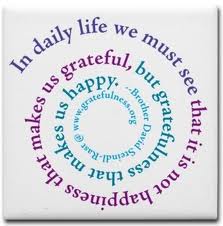
Want To Be Happy? Be Grateful! – David Steindl-Rast

gratefulness Steindl-Rast“If you think its happiness that makes you grateful, think again! It is gratefulness that makes us happy.”

Atheism for Lent

Atheism for LentFor more details click on this link:  ATHEISM for LENT details

Atonement? – John Shelby Spong

Jack speaking at Holy Cross

Jack speaking at Holy Cross

Bishop John Shelby Spong’s weekly column continues to provide so very much wisdom. Today Jack responded to a reader’s question about “atonement” and the nature of God. Jack is succinct, insightful, wise and inspirational in his response. If you don’t subscribe to Jack’s weekly column, you can find the details here

Question:

God is defined as an Almighty being. An Almighty being does not require atonement (for “sins”). Therefore if God requires atonement as the Bible says, he is imperfect and not Almighty. Does this make sense? In other words, philosophically, the need for atonement indicates a lack of something, which detracts from the perfection which God should have. I would appreciate your thoughts.    

 Answer:   Dear Raymond,

I don’t think that elementary equations in logic are the way to do theology. So let me start my answer by looking at your givens. “God is defined as an Almighty being.” By whom and on what authority? The traditional idea of God present at the heart of Christianity certainly tends to express this, but is it accurate? Can God ever be defined by human beings? Are the limits of the human brain able to be transcended sufficiently so that the fullness and mystery of God can be embraced and articulated? I do not think so.

I consider the popular definition of God as “a being,” who lives in a realm that is external to this world and who is equipped with supernatural power, to be not only inadequate but idolatrous. That is the meaning of theism. If theism as the definition of God becomes inadequate, then the only alternative is atheism. If, however, theism is an inadequate or even inaccurate attempt to define God, then atheism is simply a conviction that the theistic definition, not God, but the theistic definition of God, is not a proper way to understand the holy. In that sense I am certainly not a theist, but I am not an atheist either. The fact that I reject the theistic definition of God does not mean that I reject the reality of the God experience.

Your second given assumes that atonement is the experience of bringing God and human life into a state of oneness, and that somehow this is the goal of religion in general and Christianity in particular. I think atonement theology is bankrupt in that it is built upon a definition of human life as sinful and fallen and then it proceeds to portray God as a rescuer and the savior of the fallen, sinful life.

When I look at the origins of human life, I do not see an original perfection broken by original sin and the subsequent need for divine intervention to save the sinner. I see rather evolving life that went from single cells to complex self-conscious human beings. If there was no original perfection, there was no fall from perfection and therefore no need for a savior and the whole system collapses.

I see God as a presence and a power that leads to expanded life, expanded love and expanded being, and even the experience of an expanded consciousness. Atonement is not the word to characterize this understanding of either God or life. So, rather than worrying about whether God can be understood in terms of atonement, I would prefer to remove atonement from the Christian vocabulary altogether. I hope these brief comments will serve to open up new possibilities in your theological thinking.

My best, John Shelby Spong

Atonement? – John Shelby Spong

Jack speaking at Holy Cross

Jack speaking at Holy Cross

Bishop John Shelby Spong’s weekly column continues to provide so very much wisdom. Today Jack responded to a reader’s question about “atonement” and the nature of God. Jack is succinct, insightful, wise and inspirational in his response. If you don’t subscribe to Jack’s weekly column, you can find the details here

Question:

God is defined as an Almighty being. An Almighty being does not require atonement (for “sins”). Therefore if God requires atonement as the Bible says, he is imperfect and not Almighty. Does this make sense? In other words, philosophically, the need for atonement indicates a lack of something, which detracts from the perfection which God should have. I would appreciate your thoughts.    

 Answer:   Dear Raymond,

I don’t think that elementary equations in logic are the way to do theology. So let me start my answer by looking at your givens. “God is defined as an Almighty being.” By whom and on what authority? The traditional idea of God present at the heart of Christianity certainly tends to express this, but is it accurate? Can God ever be defined by human beings? Are the limits of the human brain able to be transcended sufficiently so that the fullness and mystery of God can be embraced and articulated? I do not think so.

I consider the popular definition of God as “a being,” who lives in a realm that is external to this world and who is equipped with supernatural power, to be not only inadequate but idolatrous. That is the meaning of theism. If theism as the definition of God becomes inadequate, then the only alternative is atheism. If, however, theism is an inadequate or even inaccurate attempt to define God, then atheism is simply a conviction that the theistic definition, not God, but the theistic definition of God, is not a proper way to understand the holy. In that sense I am certainly not a theist, but I am not an atheist either. The fact that I reject the theistic definition of God does not mean that I reject the reality of the God experience.

Your second given assumes that atonement is the experience of bringing God and human life into a state of oneness, and that somehow this is the goal of religion in general and Christianity in particular. I think atonement theology is bankrupt in that it is built upon a definition of human life as sinful and fallen and then it proceeds to portray God as a rescuer and the savior of the fallen, sinful life.

When I look at the origins of human life, I do not see an original perfection broken by original sin and the subsequent need for divine intervention to save the sinner. I see rather evolving life that went from single cells to complex self-conscious human beings. If there was no original perfection, there was no fall from perfection and therefore no need for a savior and the whole system collapses.

I see God as a presence and a power that leads to expanded life, expanded love and expanded being, and even the experience of an expanded consciousness. Atonement is not the word to characterize this understanding of either God or life. So, rather than worrying about whether God can be understood in terms of atonement, I would prefer to remove atonement from the Christian vocabulary altogether. I hope these brief comments will serve to open up new possibilities in your theological thinking.

My best, John Shelby Spong

The Role of the Church in Our New Multicultural World: Walter Brueggemann

A Passionate Commitment to the Christian Vision: John Dominic Crossan

Advice to preachers from the best New Testament scholar I’ve ever met!!! What a preacher needs to have, at a bare minimum, is a “passionate commitment to the Christian vision!” If you don’t have that, stick to worrying about the church’s leaky roof and stay out of the pulpit! Perhaps, it’s his Irish lilt that allows him to make inflammatory statements sound like ordinary common sense.  Dom’s passion for the Christian vision comes through in his articulation of the Jesus’  vision of peace through justice.  Enjoy this interview recorded on Dec. 16, 2013

Contemplating the Beatitudes: preparing to preach on Matthew 5:1-12; Epiphany 4A

The gospel reading for this coming Sunday is Matthew 5:1-12, known as the Beatitudes. The reading is so familiar that we all too often read the beatitudes as if they were a  prescription. However, when read as a description they take on a whole new meaning. Jesus climbed up above the crowd, looked around and saw the poor, the grieving, the gentle, those who were hungry and thirsty for justice, the merciful, the righteous, the peacemakers and the persecuted; and Jesus comforted, uplifted and inspired them with the truth that they are blessed. Jesus was not telling the crowd how to live he was recognizing and affirming who they are. Can we hear this affirmation of our lives? As I prepare to preach on this text, I see the faces my congregation and I know that they are blessed for they too are the poor, the grieving, the gentle, those who are hungry and thirsty for justice, the merciful, the righteous, the peacemakers and the persecuted. The Good News is that the Kindom of Heaven is theirs. 

Walk With Me: Mary Youngblood

Following Wherever Christ Leads: a sermon for Epiphany 3A

IMG_0635

This afternoon our congregation is hosting a Blanket Exercise designed to help us to listen to the histories of Canada’s First Nations. Our worship was designed to open us so that we might engage in the exercise with open hearts, ears and minds. Our readings included Acts 10:9-16, 2 Corinthians 5:17-20 and Matthew 4:12-13.

Birdsong, Human Creativity, Richard Holloway and Richard Maybey

hollowayIf you are familiar with postings on this blog, you will know just how brilliant I think Richard Holloway is. If you don’t know about this amazing, iconoclastic, barmy former Anglican primate and self-described “agnostic Christian”,  you can begin reading about him here and here

Children Praying a New Story by Michael Morwood

Children PrayingMichael Morwood is an “Adult Faith Educator” whose various books help adults to “re-imagine and re-evaluate their faith in light of the contemporary ‘story’ about our universe.” In Children Praying A New Story, Morwood turns his attention to the task of education children from the perspective of a thinking twenty-first century Christian. Morwood offers insights about teaching children to pray, not to an external, listening Deity but to the Source and Ground of our being. This book has helped me as I craft the prayers of our congregation and I know that parents, grandparents and anyone who is engaged with children and their spirituality will find inspiration in Morwood’s approach. We are looking forward to hearing from Michael Morwood in person; when he visits Holy Cross the weekend of May 2-4. 

Following Prostitutes and Christ – a sermon for Epiphany 3A – Matthew 4:12-23

Vancouver's east endWhen I was in my early twenties, I grew weary of sharing space and I decided that I wanted an apartment all to myself, despite the fact that I couldn’t really afford an apartment all to myself. But I was determined and that’s how I ended up living in a very rough neighborhood in the east end of Vancouver. My parents weren’t’ very happy about the neighbourhood and worried about the unsavory characters that lived in the run-down building where I found a spacious one bedroom apartment that I could just about afford. The apartment was just a couple of blocks away from the office where I worked, so I was able to walk to work. I ignored all the warnings of my family and friends and I convinced myself that I could handle anything that came my way.

In my heart of hearts I was rather pleased to be living in such a poor rough and tumble neighbourhood. I was young and foolish and the neighbourhood was exciting. Every Sunday I would make the trip back to my home church in the suburbs. Sometimes I would make a second trip out during the week to attend a Bible study. Like so many young people, I was harsh in my criticisms of the elaborate life-styles of my elders. At bible studies, I was always bringing up the plight of the poor and the oppressed and challenging people to do something. Various members of my own family often accused me of being a bleeding heart liberal. I wore their criticism with a certain amount of pride, convinced that I was living out my beliefs.

Although I walked to work each day, I didn’t know any of my neighbours, until one morning I was surprised by a knock on my apartment door. I wondered how anyone would get past the lock on the front door. So, I peered through the peephole and was relieved when I saw a young woman at my door. I unbolted the door and in swept Brenda. Brenda was all smiles and laughter as she explained that she and her roommates were out of coffee and she wondered if I might be able to lend them some coffee.  When I explained that I had just used up the last of my coffee making my own morning brew, Brenda told me not to worry, she and her roommates would be happy to join me. When Brenda returned, she introduced her roommates, Janice and Sue and we all sat down together for our morning coffee. Continue reading

Let Freedom Ring Through You!

Martin Luther King2

Epiphany 2A; John 1:29-42 Jan.19, 2014.  A sermon in celebration of the life and witness of the Rev. Dr. Martin Luther King, Jr.

A pdf of the worship bulletin here:

The audio includes the Acclamation, sermon and Hymn of the Day:

Listen to the sermon:

https://pastordawn.com/wp-content/uploads/2014/01/epiphany_2a-mlk.m4a

Let Freedom Ring

MLK FREEDOMWednesday would have been Martin Luther King’s 85 birthday and on Monday our neighbours to the south will celebrate Martin Luther King day. So, this Sunday our worship will commemorate the life and witness of this martyr of the faith. I know that there are some who say that as Canadians we don’t celebrate MLK Day. However, the gospel reading assigned for tomorrow includes Jesus’ early followers first attempts to figure out who Jesus was and hints at what it might mean to follow Jesus. While we have many images of what a follower of Jesus looks like, the life and witness of Martin Luther King, Jr. provides a concrete example of what it actually looks like to follow Jesus.  We will spend some time exploring what our lives might look like should we have the courage to follow Jesus. 

We will sing as our Hymn of the Day what was once known as “The Negro National Anthem,” Lift Every Voice and Sing. I have known a good many people who insist that “white people” ought not to sing this particular hymn. For a time I shared their reluctance, knowing that I have absolutely no idea what it means to live as a person of colour in a predominately white culture. However, over the years I have been convinced that Left Every Voice and Sing speaks to Dr. King’s dream of a world in which we are all freed from the shackles imposed upon us by the colour of our skin. The empathy engendered by this powerful hymn opens us to the possibilities inherent in Dr. King’s dream. 

This video of the ‘ Negro National Anthem’ was originally screened at the historic African-American Church Inaugural Ball in Washington, DC on January 18th, 2009. Many of the esteemed individuals featured in this video in attendance and we presented with the ‘ Keepers of the Flame’ award for the monumental contributions to social justice. This version of the song was performed by the Grace Baptist Church Cathedral Choir, conducted by Derrick James.  While Canadians might balk at the overtly “American” images, we would do well to remember the history we share with our American cousins and the work that both countries need to engage in in order to move us closer to realizing Dr.King’s dream.

I include this pdf of tomorrow’s worship bulletin here, which includes preambles to some of the music we will be singing. Worship begins at 10:45am

Why Should We Pursue Happiness? Karen Armstrong

happiness 4Happiness, the word comes to us from the word for “happenstance,” is not something that happens to us. In her own expansive style, Karen Armstrong explores the contours of happiness.

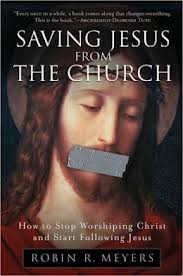
UNDONE: Faith as Resistance to Ego, Orthodoxy and Empire: Robin Meyers

Underground churchRobin Meyers gives the 2013 Beecher Lectures at Yale Divinity School. “The three lectures, given by Meyers, are entitled “UNDONE: Faith as Resistance to Ego, Orthodoxy, and Empire.” Instead of conceiving of the church as an institution that promotes faith as a belief system, defending doctrinal claims as essential to salvation and good works, UCC pastor and author Robin Meyers will make the case that the Jesussaving church Movement was in the beginning, and must be again, a Beloved Community of Resistance. Confronting our illusions with help from Kierkegaard, and drawing the poetry of Anna Kamienska, each lectures will focus on three areas that demand resistance: ministry as performance (ego), ministry as right belief and worship (orthodoxy), and ministry as sentimental surrender to the status quo (Empire).”

God Is a River – Peter Mayer

riverPeter Mayer, one of my favourite folk singers, captures a hint of the essence of God when he sings. This morning our worship celebrates the baptism of Jesus and with so much water everywhere around us, the image of God as a river strikes some chords that I find both refreshing and challenging.