Who are the Canaanites and Why Should We Care? – Pentecost 10A: a dialogue sermon

Palestinian womanSummer Sundays are laid back at Holy Cross and so we engaged in a dialogue sermon. The Gospel reading from (Matthew 14:21-28) about Jesus’ encounter with the Canaanite woman begged the question inspired by Marcus Borg, “Why did the author of the Gospel According to Matthew write this story the way he did and what can we learn from it?” 

Our readings also included:

Hebrew Scriptures:  Isaiah 56:1, 6-8

Contemporary Reading: from Dorothee Soelle  Quoted from Matthew Fox’s book “Christian Mystics”, New World Library, 2011

“If Jesus of Nazareth was the poor man from Galilee who was tortured to death, then Christ is that which cannot be destroyed, which came into the world with him and lives through us in him. When I say Christ, I always think also of Francis of Assisi and Hildegard of Bingen and Martin Luther King, Jr. and of Ita Ford, the American nun who was murdered in El Salvador – as well as all resistance fighters who are sitting in prison today. Christ is a name which for me expresses solidarity, hence suffering with, struggling with. Christ is the mysterious power which was in Jesus and which continues on and sometimes makes us into “fools in Christ,” who without hope of success and without any objective, share life with others.”

Listen to the dialogue sermon here:

Deep Peace: John Philip Newell

Inner Peace KempisAs news of wars and rumours of war penetrate our consciousness, it is so very tempting to give in to the cynicism of our age. While our hearts grieve for our broken world, let us remember that while we cannot control the actions of others, we can control how we react to the actions of others. Let us not fall into temptation. Let us live in hope. Let us pause in the gentleness of this summer morning to turn our being toward the dream of peace. Shalom, Salam, Santi, Pax, Udo, Santi, Axsti, Salmu, Sith, Paix, Peace….

Two videos which present John Philip Newell’s interpretation of the Celtic prayer for Deep Peace

Beneath the Surface: a sermon for Pentecost 9A – Matthew 14:22-33 and 1 Kings19:9-18

BATH QOLReadings included:  1 Kings 19:9-18 in which Elijah hears the still small voice of God and Matthew 14:22-33 in which Jesus walks on water.

Listen to the sermon here:


Hell Is Killing Us! – Philip Gulley

imagineRecently, I have found myself cornered on several occasions by individuals who ask, somewhat accusingly, how and why I continue consider myself to be a Christian if I do not believe in Hell. On these occasions, I have assured my inquisitors that as someone who attempts to follow Jesus, I do indeed believe in “Hell” even if I do not believe in “hell“. The hell that I believe in is a condition here on earth. The Hell that I suspect my inquisitors wish me to affirm does not exist except in the corners of our imaginations. Nor is belief this mythical place called Hell a prerequisite of the faith. Christianity is not about being saved from eternal damnation to the fiery pits of Hell. Christianity is about following the teachings of Jesus with regard to peace through justice in order to create Heaven right here, right now.

Several years ago we at Holy Cross Lutheran began a speaker series entitled ReThinking Christianity and were privileged to host Quakers Philip Gulley and James Mulholland who co-authored “If God Is Love” and “If Grace Is True.” Phil has since gone on to write “If the Church Were Christian” and “The Evolution of Faith.” In addition to his theological works, Phil is a master story-teller whose Harmony series together with Porch Tales stories have cause some to dub him the Quaker Garrison Keillor. Phil has received two Emmy Awards for his Indiana PBS program.

My own ministry has been enhanced by Phil’s work and so it was a happy and timely coincidence that brought a video into my inbox which I had forgotten all about. Phil’s story about Heaven & Hell followed by an interview in which Phil shares his conviction that “Hell is killing us!” say it all so much better than I can. Phil’s gentle manner reveals a way forward for those who wish to leave Hell behind and move on toward building heaven on Earth. Phil’s latest publication “Living the Quaker Way: Timeless Wisdom for a Better Life Today” provides a window into spiritual practices to nourish those who seek to live in peace in a world where so many have chosen to perpetuate Hell on Earth. The book is an essential read for progressives who seek to embody a way of being that will contribute to creating peace. Enjoy!!!


Returning to the blog after a summer break!

After a splendid summer break it’s time to return to regular posting. I begin with a Friendship Blessing from John O’Donohue

Friendship Blessing pastorDawn

Celtic Night Prayer

Video: Halianna Burhans: Music:  Rev. Will Burhans – Weight of Grace Text: John Philip Newell, Celtic Benediction: Morning and Night Prayer

Wrestling With the Almighty: Locating Our Very Selves in the Sacred Story (Genesis 32:3-31)

Godbotherers

For those of you preaching on the text from Genesis 32:3-31:

You may not be able to tell from looking at me. But let me assure you that you are looking at someone who used to be a champion wrestler. Believe it or not, my wrestling skills actually helped me rise to the level of a world champion wrestler. Well, perhaps I should qualify that statement. When I was an amateur wrestler, I was a world-class champion wrestler. But like so many athletes, when my status changed from amateur to professional, I lost my championship status and although I still qualify as a professional wrestler, and I like to see myself as a champion, I’m no longer what you would call world-class.

Like many professional wrestlers my career began when I was but a child. Growing up I had a very clear advantage as I developed my wrestling skills. You see having a brother who was just 18 months younger than me meant that I had ample opportunities to hone my wrestling skills. My brother and I were always at it. I’ve got to say that even though we shared the same weight class for most of our childhood, when it came to world class wrestling holds, I had him beat. I had this wicked arm-hold sleeper, and that together with my full Nelson followed by a knee-arm press, was guaranteed to have my brother screaming uncle and agreeing to be my obedient servant until in no time at all. For years I reigned as the champion of our little world! I was unbeatable. My brother didn’t stand a chance. My reign as world champion would have continued if it weren’t for the abrupt ending of my amateur status.

One morning when I was about 13 and my brother was 9 and a half, we were going at it,  and to his credit my bother had me in an ingenious hold. Somehow, he’d managed to secure me with what we professional wrestlers call an arm bar. That’s where you’re opponent wrenches your arm behind your back and applies just enough pressure to cause pain, but not enough to break anything. But just when Alan was approaching the point of no return, I managed with a feat of superhuman strength to rise up, twist around and swing for all I was worth and connect with what I though must be my brothers chest. I expected that such a thrust would have released my arm from Alan’s iron grip. But he still had me. I was about to hit him again, when for no apparent reason Alan released me from his grip. In an instant I wiggled free, spun around and connected with what I figured would be a fatal blow. Just before my blow connected with it’s victim, I realized that I was doomed.

Continue reading

The Fault In Our Stars by John Green: Teen Fiction for all ages

TFIOS pastorDawnIt has been a very long time since I read a novel categorized as “young adult” or “teen” fiction. But when a fourteen-year-old goes out of his way to recommend a novel to his pastor, I pay attention. I was delighted to discover that The Fault In Our Stars portrays young people living with big questions without resorting to easy answers. Indeed, the characters in John Green’s account of living with cancer, refuse to accept easy answers and learn to live with the ambiguity of life’s deepest mysteries even as they cope with the realities of impending death. This is a splendid read for all ages, especially for those of us who have long since left the coping strategies of the varieties of Christianity that are trapped within the limitations of a three tiered universe.  Green brilliantly captures the gallows humour of those who must endure the efforts of care-givers while steadfastly refusing to “buy into the cancer-book genre.” Green’s time as a chaplain in a children’s hospital shows as does his ability to live in the questions. Following the success of the book, which debuted at #1 on the New York Best Seller list, has opened at #1 at the box-office.  But, don’t let that stop you from enjoying this book which will make you laugh, cry, cheer, and think!! I have not yet experienced the movie for fear that it will interfere with my appreciation of the characters who live on in my imagination. Enjoy the first chapter, read by John Green.

The Role and Risk of the Public Intellectual in Church and State: Joan Chittister

joanChittisterFilmed July 14, 2014 at Chautauqua, Sister Joan Chittister explores, as only she can, “the role of the public intellectual (that’s you) in a society crammed with talking points, canned news, and Maddison Avenue politics and politicians.” This lecture is a MUST-VIEW for anyone who engages in public discourse in order to move us beyond intellectual slavery to institutions and tradition!!! Enjoy!!!

The Cross in John: Not Tragedy But Triumph – John Shelby Spong

jack spongJack concludes his five day lecture series by explaining the Crucifixion in the fourth Gospel. (filmed June 27, 2014) Our friends at College Street United Church in Toronto will be hosting Jack April 17-18, 2015. I shall post more details when they are available. 

The Mother of Jesus: A Symbol of Judaism – John Shelby Spong

maryuniversalmaryw.jpgJack explains how the 4th Gospel creates a symbol from the presence of Christ’s mother. This is the fourth lecture of a five lecture series. Filmed June 26, 2014 at the Chautauqua Institution.

Johannian Characters: Literary Creations Not People of History – John Shelby Spong

spong cartoonRecorded last week (June 25) Jack explains the colorful characters who hold dual purposes in the fourth Gospel. Enjoy!

The Fourth Gospel Warns Against Literal Reading: John Shelby Spong

SPONG swirlRecorded last week, June 25, 2014 at Chautauqua: Jack continues to challenge readers to look beyond the page. Enjoy!

Separating the Fourth Gospel: John Shelby Spong

SPONG Living pastordawnRecorded last week (June 25, 2014) at Chautauqua, John Shebly Spong, doing what Jack does best, opening listeners to new ways of understanding the New Testament. Enjoy!

Only in Canada Eh? – Canayjuns, Injuns, Paula Deen, the N-Word, and Racism – a sermon for Canada Sunday

1st Nations' CanadaOn this Canada Day, my wife and I begin our drive across this great land. Each time I make the trip from the east to the west, I am struck by the vastness of this land we call home. This year I take with me the deep impressions left upon my heart by our Synod’s Convention where we explored the Truth and Reconciliation Commission’s work to come to terms with our nation’s shameful history. I know that I shall travel this land with hope-filled eyes, trusting that the work we have begun will open us to the work of reconciliation with our First Nations sisters and brothers.  As we celebrate this land, let us remember those whose welcome of our ancestors came at such great cost. Let us find ways to walk together into our future open to the possibilities of reconciliation. Happy Canada Day EVERYONE!

Here’s a re-posting of a sermon preached last Canada Day which explores some of the work that lies before us:
I am indebted to Father Jim O’Shea for his article in the Huffpost and to Robert LoveLace for his parable about Chickens which appeared in The Rabble.

Listen to the sermon here

World Pride and Jesus: a sermon for the Third Sunday after Pentecost – Matthew 10:37-42

world prideThis week as the city of Toronto welcomes millions to the World Pride Celebration, it is so very appropriate that the lectionary provides a reading that has the potential to open us up to a more radical understanding of what WELCOME might mean for those who yearn to follow Jesus. This sermon on Matthew 10:37-42 uses two stories to posit questions about who Jesus might be. The context of World Pride provides us all with an invitation to welcome the ONE who comes to us in all sorts of shapes, sizes, and gender-identities. The imagined conversation with Jesus is taken from New Zealand preacher Clay Nelson’s excellent sermon on this text entitled “I Know I Am a Priest, But Am I A Christian?”.

There’s a story that I learned years ago when I was exploring the riches of the Buddhist religion and rediscovered in Wayne Muller’s LEGACY OF THE HEART. (p. 136) 

There once was…. “A young widower, who loved his five-year-old son very much, was away on business, and bandits came, burned down his whole village, and took his son away. When the man returned, he saw the ruins and panicked. He took the charred corpse of an infant to be his own child, and he began to pull his hair and beat his chest, crying uncontrollably. He organized a cremation ceremony, collected the ashes, and put them in a very beautiful velvet pouch.  Working, sleeping, or eating, he always carried the bag of ashes with him. One day his real son escaped from the robbers and found his way home. He arrived at his father’s new cottage at midnight, and knocked at the door. You can imagine, at that time, the young father was still carrying the bag of ashes and crying. He asked, “Who is there?” And the child answered, “It’s me, Papa. Open the door, it’s your son.”

In his agitated state of mind the father thought that some mischievous boy was making fun of him, and he shouted at the child to go away, and continued to cry. The boy knocked again and again, but the father refused to let him in. Some time passed, and finally the child left. From that time on, father and son never saw one another. Continue reading

Convictions: How I Learned What Matters Most by Marcus Borg – A Must Read for Those of Us Engaged in the Work of ReThinking Christianity

convictionsMarcus Borg, an elder of today’s progressive Christian movement, has commemorated his 70 birthday with the publication of Convictions: How I Learned What Matters Most. Convictions is destined to become  a primer for all those who seek a succinct articulation of the faith progressives hold in common. In Convictions, Borg constructs a permeable framework within which those who are “living the questions” can explore the contours of the God “in which we live and move and have our being.” As a pastor serving a progressive congregation, I am delighted to have this new resource to share with those who are ReThinking Christianity.

I first encountered Marcus Borg during the summer of 1994, when a friend who was concerned that my preparations for seminary would lead me to a career in a church bereft of intellectual inquiry, gave me a copy of Meeting Jesus Again for the First Time. What a gift it was to meet in Borg a scholar who so simply and authoritatively articulated so much of what I’d been learning in the academy as an under-grad in Religious Studies. Borg’s books quickly became allies in my own quest for ways to express my growing frustration with institutional Christianity which seemed hell-bent on keeping its members ignorant of the exciting and enlightening work of New Testament scholars.  

While sections of Borg’s memoir slip into reactions to the monolithic interpretations of the Jesus story that plague the United States and have served to bolster American Imperialism, those of us who live in the shadows of this Empire will appreciate Borg’s deconstruction of right-wing-christianity. Like his earlier work, Convictions is a must read for professional preachers and teachers who will find in it a review of progressive Christianity that is written in a manner that will inspire us to move beyond merely deconstructing conservative christianity and begin to articulate what it is that “progressives” hold in common.

As a “bit of a memoir” Convictions will engage readers from all walks of life, many of whom will discover in Borg a fellow traveller on an all too familiar journey. As always, Borg manages to express the Christian narrative in ways which embrace the riches of the tradition while opening his readers to current insights from academia into Christianity’s history. Rather than approaching the future with fear, Borg remains open to the ever-expanding knowledge of reality being generated in other fields of human endeavour and points to a way of being in God that does not rely on oversimplified personifications of a deity Borg knows as Mystery.

As an academic, Borg bravely revels his own mystical experiences. I have always suspected that Borg might be a closet mystic and his tentative accounts of his mystical experiences provide welcome insights into the bedrock of Borg’s being. 

I am convinced that Borg’s Convictions will quickly achieve the status of text-book for those of us who seek ways of being Christian in the 21st century. 


A Celebration of Love and Life: a sermon for York PrideFest

PrideFest WorshipToday Holy Cross hosted the York PrideFest worship and it was our great pleasure to welcome members of York Region PFLAG – our readings included Leviticus 19:17-18 and Matthew:34-40 a copy of the service bulletin can be found here

Listen to the sermon here:

Pridefest June 15 2014

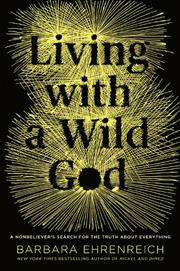
Living with a Wild God: A Nonbeliever’s Search for the Truth About Everything by Barbara Ehrenreich

Living with a Wild GodAfter listening to my sermon from this past Sunday, a blog follower recommended Barbara Ehrenreich’s latest book, Living with a Wild God. The suggestion that my tentative attempts to express my personal mystical experiences might be improved by reading Enrenreich’s  engaging memoir, which chronicles her own encounters with the inexpressible, propelled me into a sleepless night of reading as I devoured Erenreich’s stellar work that recounts her epic quest to make sense out of experiences that are so often never spoken of.

Suggesting that I turn to Erenreich for enlightenment is like suggesting that I return to an wise, familiar friend. I first encountered Enrenreich’s thinking way back in the late seventies when I was growing into the radical feminist movement and “For Her Own Good” awakened me to Enrenreich’s genius and introduced me to a way of articulating my own innate suspicions of the advice that was coming my way. Enrenreich’s wit left me hoping that I might grow up to become a careful thinker who could use incisive humour to move mountains. Recently her exploration of the darker side of positive thinking caused me to cheer out loud as I turned page after page of “Smile or Die,”  in which Enrenreich’s observations revealed “How Positive Thinking Fooled America and the World”

I never would have imagined that Enrenreich would pen a “spiritual” memoir that reveals her personal mystical experiences. The book chronicles the mature, dare I say curmudgeonly  adult’s relationship with her teenage self. While Enrenreich herself is mortified by the word “spiritual” the epiphanies of her younger self reveal so very much about the human quest for meaning. Enrenreich enjoyed an earlier career as a molecular biologist and her rational approach toward the examination of her experiences is priceless! The book speaks of the unspeakable in ways that defy easy or esoteric answers. As always Enrenreich’s considerable writing skills provide a compelling window into the human condition as she attempts to make meaning out of her experiences while steadfastly refusing to glorify her epiphanies. Will I doubt that either theists or atheists will be pleased with the book, those of us who are willing to live in the questions can’t help but applaud Enenreich’s courage!   Enjoy CBC’s Mary Hynes interview in which Enreneich exhibits her characteristic surliness that makes her writing so engaging and refreshing!